Moab Travel Guide 2026: Ultimate Planning Resource
Moab stands as the adventure capital of the American Southwest, serving as the gateway to both Arches and Canyonlands National Parks while offering world-class mountain biking, rock climbing, and off-roading against a backdrop of towering red rock formations. This comprehensive guide provides everything needed to plan an unforgettable 2026 visit, from budget breakdowns and accommodation strategies to activity recommendations and seasonal timing considerations that maximize your desert Southwest experience.
Key Takeaways for Moab 2026
- Budget Planning 2026: Daily costs range from $150-220 per person for budget travelers (two sharing accommodations) to $255-375 for mid-range comfort, with luxury experiences reaching $420-695 per person daily, making Moab accessible across all budget levels.
- Best Visiting Windows 2026: April through May and September through October offer the ideal combination of comfortable temperatures (60-80°F), manageable crowds, and full activity access, while avoiding summer’s extreme heat (90-110°F) and winter’s limited hours and services.
- Essential National Park Access 2026: The America the Beautiful annual pass ($80) pays for itself in three days when visiting both Arches and Canyonlands National Parks (each $30 per vehicle for seven days), with early morning entry (before 8 AM) crucial for avoiding parking overflow during peak seasons.
- Adventure Activity Hub: Moab’s legendary mountain biking on trails like the Slickrock Trail, white-water rafting on the Colorado River, and extensive off-road vehicle trails create an outdoor recreation destination without parallel in the Southwest, requiring advance reservations for guided experiences during spring and fall 2026.
- Accommodation Strategy 2026: Book 3-6 months ahead for spring and fall visits to secure reasonable rates ($80-240 per night depending on tier), as Moab’s limited lodging inventory creates premium pricing during peak seasons, with early booking essential for holiday weekends like Easter and Labor Day.
- Transportation Requirements: A personal vehicle or rental car is absolutely essential for Moab exploration, as national parks sit 5-30 miles from town, trailheads scatter across vast distances, and no public transportation serves the area, making a high-clearance vehicle valuable for accessing unpaved roads and remote areas.
People Also Ask About Moab Travel 2026
How much does a trip to Moab cost per day in 2026?
Daily costs in Moab range from $150-220 per person for budget travelers sharing accommodation to $255-375 for mid-range comfort and $420-695 for luxury experiences. Budget travelers stay in basic motels ($80-120 per night), eat at casual restaurants ($45-65 daily for meals), split rental car costs ($40-55 daily including gas), and focus on national park exploration ($25-40 daily for passes and basic activities). Mid-range visitors enjoy comfortable hotels ($160-240 per night), dine at local breweries and restaurants ($70-100 daily), maintain similar transport costs ($45-60), and add guided tours like rafting or canyoneering ($60-95 daily averaged). Luxury travelers book upscale resorts ($300-500 per night), experience fine dining ($110-165 daily), rent premium vehicles ($60-80 daily), and invest in private tours and unique experiences ($100-200 daily). These ranges assume two people sharing accommodation, with solo travelers paying higher per-person rates due to single-occupancy hotel costs. A typical 5-day mid-range trip totals approximately $1,275-1,875 per person including accommodation, meals, transport, and activities.
What is the best month to visit Moab in 2026?
April, May, September, and October represent the optimal months for Moab visits in 2026, offering daytime temperatures between 60-85°F perfect for hiking and outdoor activities, with September and early October providing the absolute best combination of weather, reduced crowds, and full service availability. Spring months (April-May) feature comfortable conditions and wildflower blooms but attract larger crowds during Easter and spring break periods, requiring advance booking and early morning national park entry to secure parking. Fall months (September-October) deliver ideal hiking weather with warm days and cool evenings, fewer visitors than spring, and spectacular autumn colors in the La Sal Mountains visible from many viewpoints. June through August brings extreme heat with temperatures regularly exceeding 100°F, making midday hiking dangerous and limiting activity windows to early morning and evening, though this period offers the lowest accommodation rates and smallest crowds. Winter months (November-March) see reduced services, limited tour operations, and unpredictable weather including occasional snow, but provide solitude and dramatically lower costs for those comfortable with cold-weather camping and hiking.
How many days do you need in Moab in 2026?
A minimum of 4-5 days allows proper exploration of Moab’s primary attractions without rushing, with 6-7 days ideal for experiencing both national parks thoroughly plus iconic activities like rafting, mountain biking, and scenic flights. A 4-day itinerary typically includes one full day in Arches National Park covering Delicate Arch, Devils Garden, and Windows Section, one full day in the Island in the Sky district of Canyonlands exploring Mesa Arch and Grand View Point, one day for an adventure activity like white-water rafting or the Slickrock bike trail, and one day for scenic drives such as Highway 128 or the Needles district of Canyonlands. Adding 2-3 additional days enables deeper exploration of Canyonlands’ remote Needles and Maze districts, multiple adventure activities, visits to Dead Horse Point State Park, and time for rest between physically demanding days. First-time visitors focusing exclusively on national park highlights can accomplish a satisfying visit in 3 days, while outdoor enthusiasts seeking the full range of Moab’s offerings benefit from a full week or more. Weekend trips from regional cities work for quick adventure fix visits, though the 4-6 hour drives from Denver, Las Vegas, or Salt Lake City make such short visits challenging.
Is Moab expensive to visit in 2026?
Moab presents moderate to high costs compared to other Utah destinations, with accommodation representing the primary expense driver as limited hotel inventory in a small town creates premium pricing during peak seasons (spring and fall 2026). Budget travelers spending $150-220 per person daily find value through camping or basic motels, self-catering meals from grocery stores, and self-guided national park exploration, making Moab accessible for cost-conscious visitors willing to forgo guided experiences. Mid-range travelers at $255-375 daily experience reasonable value given the world-class outdoor recreation access, with costs comparable to other major national park destinations like Yellowstone or Grand Canyon. The major expense advantage comes from relatively affordable national park entry ($30 per vehicle for seven days, or $80 for an annual America the Beautiful pass covering both parks plus hundreds nationwide), making the core attraction access very economical. Costs escalate during Easter week, spring break, and early October when accommodation rates can double from winter lows, with holiday weekends requiring booking 6+ months ahead at premium rates. Off-season visits (November-March) reduce costs by 30-50% across accommodation and some activities, though many tour operators close and weather limits hiking options, creating value opportunities for flexible travelers comfortable with winter conditions.
Extended multi-day tours – 5+ days
Featured Utah Multi-Day Tour Packages
3 days
Utah 3-Day Discovery Tour
- ✓ Comprehensive Utah experience
- ✓ Expert local guides included
- ✓ All accommodation included
- ✓ Transportation provided
5 days
Utah 5-Day Highlights Experience
- ✓ Comprehensive Utah experience
- ✓ Expert local guides included
- ✓ All accommodation included
- ✓ Transportation provided
7 days
Utah 7-Day Cultural Journey
- ✓ Comprehensive Utah experience
- ✓ Expert local guides included
- ✓ All accommodation included
- ✓ Transportation provided
10 days
Utah 10-Day Complete Adventure
- ✓ Comprehensive Utah experience
- ✓ Expert local guides included
- ✓ All accommodation included
- ✓ Transportation provided
Multi-day tour packages powered by TourRadar. Prices and availability subject to change.
Introduction to Moab Travel Planning 2026
Moab’s transformation from a quiet uranium mining town to the adventure capital of the American Southwest represents one of the most dramatic tourism success stories in the United States. Situated along the Colorado River in southeastern Utah, this community of approximately 5,300 residents welcomes over one million annual visitors drawn by unparalleled access to red rock landscapes, two of America’s most spectacular national parks, and adventure recreation opportunities ranging from world-championship mountain biking to white-water rafting through ancient canyons. The dramatic sandstone formations surrounding Moab—including the iconic Delicate Arch, Mesa Arch, and Fisher Towers—create a landscape that appears more Martian than terrestrial, with erosion-sculpted rock in shades ranging from deep crimson to pale orange providing an otherworldly backdrop for outdoor pursuits.
Planning a 2026 Moab visit requires understanding several key factors that distinguish this destination from other national park gateway towns. First, Moab’s geography creates both opportunity and limitation—while serving as the only developed community within reasonable distance of Arches and Canyonlands National Parks, the town’s remote location means limited accommodation inventory and services concentrated in a compact downtown area. This scarcity drives premium pricing during peak seasons (April-May and September-October) when demand far exceeds supply, making advance booking essential for securing reasonable rates and preferred lodging. Second, Moab’s climate follows a high-desert pattern with extreme seasonal variation, from pleasant spring and fall conditions ideal for hiking to brutal summer heat regularly exceeding 105°F that restricts outdoor activity to early morning and evening hours. Understanding these seasonal patterns proves crucial for timing your visit to match your activity priorities and heat tolerance.
The third critical planning factor involves transportation and geography. Moab requires personal vehicle access—the nearest commercial airport sits 110 miles away in Grand Junction, Colorado, with most visitors flying into Salt Lake City (235 miles), Las Vegas (450 miles), or Denver (350 miles) and renting vehicles for the scenic drive. Once in Moab, a car remains essential for accessing national parks, trailheads, and dispersed recreation areas, with many of the region’s most spectacular destinations requiring high-clearance or four-wheel-drive vehicles to reach. This transportation requirement shapes both trip budgets (rental cars and fuel costs) and logistics (one-way rentals from distant airports carry hefty fees). Finally, the sheer abundance of recreation opportunities demands strategic prioritization—attempting to experience everything Moab offers in a short visit results in exhaustion rather than enjoyment, making advance planning and realistic daily itineraries essential for maximizing satisfaction while maintaining energy levels throughout your stay.
This comprehensive guide addresses every aspect of Moab travel planning for 2026, from detailed budget breakdowns across three spending tiers to seasonal timing strategies, accommodation neighborhood comparisons, must-see attraction prioritization, adventure activity options, dining recommendations, and practical logistics including vehicle requirements, packing essentials, and safety considerations. Whether planning your first Moab visit focused on national park photography or returning for advanced technical canyoneering, the information provided enables confident decision-making and efficient resource allocation to create your ideal Colorado Plateau adventure.
Understanding Moab’s Location and Geography 2026
Moab occupies a strategic position in southeastern Utah’s canyon country, situated at an elevation of 4,025 feet along the Colorado River where the river cuts through the red sandstone formations that define the region. The town sits in a valley flanked by towering rock walls, with the Book Cliffs rising to the north, the La Sal Mountains providing a snow-capped backdrop to the east (reaching 12,721 feet at Mount Peale), and endless expanses of slickrock desert extending south and west. This geographic setting creates both the spectacular scenery that draws visitors and the climatic extremes that shape visit timing, with the valley location trapping heat during summer months while the high-desert elevation produces dramatic temperature swings between day and night throughout the year.
The proximity to two national parks defines Moab’s identity as a gateway community. Arches National Park entrance sits just 5 miles north of downtown Moab via US Highway 191, making it easily accessible for multiple visits during a stay without significant driving time investment. Canyonlands National Park’s Island in the Sky district lies 32 miles northwest via Highway 191 and Highway 313, requiring 45-60 minutes driving time to reach the entrance station. The more remote Needles district of Canyonlands sits 75 miles south of Moab via Highway 191 and Highway 211, representing a 90-minute drive that makes it better suited for full-day excursions or overnight camping trips. Dead Horse Point State Park, offering some of the Colorado Plateau’s most dramatic overlook views, sits just 23 miles from Moab en route to the Island in the Sky, making it an excellent addition to Canyonlands visits.
Moab’s isolation from major metropolitan areas shapes travel logistics and costs. The nearest substantial city is Grand Junction, Colorado (110 miles east), itself a small regional center rather than a major airport hub. Salt Lake City, Utah’s capital and largest city, sits 235 miles north—a 3.5-4 hour drive along Interstate 70 and Highway 191 through dramatic canyon and mountain scenery. Las Vegas lies approximately 450 miles southwest (6-7 hours driving), while Denver sits 350 miles northeast (5.5-6 hours). These distances mean most visitors face either long scenic drives or expensive connecting flights to reach Moab, with the drive option generally providing better value while enabling vehicle access upon arrival rather than requiring rental car costs at regional airports.
The geography surrounding Moab encompasses multiple distinct landscape zones, each offering unique recreation opportunities. The Moab Valley itself features relatively level terrain along the Colorado River, providing riverside camping, rafting launch points, and scenic byways like Highway 128 that follows the river through magnificent red rock canyons. The slickrock desert extending west and south of town consists of exposed Navajo Sandstone formations creating the famous mountain biking terrain and hiking trails that established Moab’s reputation among outdoor enthusiasts. The high La Sal Mountains to the east offer alpine hiking, aspen groves spectacular during fall color season, and cool temperatures providing summer heat escape, accessed via La Sal Mountain Loop Road. Understanding these geographic zones enables strategic activity planning based on seasonal conditions—seeking high-elevation refuge during summer heat or exploring low-desert formations during comfortable spring and fall temperatures.
Best Time to Visit Moab 2026: Seasonal Planning Guide
Moab’s seasonal patterns create dramatically different experiences across the year, with timing decisions profoundly affecting everything from activity comfort and crowd levels to accommodation costs and service availability. The spring season running from mid-March through May represents Moab’s primary peak period, attracting the largest visitor numbers drawn by comfortable daytime temperatures (60-80°F), blooming desert wildflowers, and full availability of guided tours and services. April and May particularly see intense visitation, with Easter week, spring break periods, and extended weekends creating accommodation shortages and national park parking overflow that requires early morning arrival (before 8 AM) to secure spots at popular trailheads like Delicate Arch and Devils Garden.
Fall months from September through October rival spring as ideal visiting windows while typically offering advantages of reduced crowds and more stable weather patterns. September maintains warm temperatures (70-85°F daytime) excellent for all outdoor activities, with early morning and evening comfort that makes sunrise and sunset photography expeditions pleasant rather than the endurance tests they become in summer. October brings cooler conditions (60-75°F) ideal for strenuous hiking and mountain biking, with fall colors appearing in the La Sal Mountains providing beautiful backdrops visible from viewpoints throughout the region. The period from mid-September through mid-October particularly offers the sweet spot of declining summer heat, manageable visitor numbers, and full service availability before some tour operators begin reducing schedules for the off-season.
Summer months from June through August present significant challenges for Moab visitors, with daytime high temperatures regularly exceeding 100°F and frequently reaching 105-110°F during July and August heat waves. These extreme conditions make midday hiking dangerous due to heat exhaustion and dehydration risks, with the exposed slickrock terrain offering no shade and radiating intense heat that raises effective temperatures well above air temperature readings. Summer visitors must restrict strenuous activities to early morning hours (before 10 AM) and evening (after 6 PM), spending midday at swimming holes along the Colorado River, in air-conditioned museums and shops, or resting at accommodations. The summer advantage comes through dramatically reduced accommodation rates (30-50% below spring peaks), smallest crowd levels of the active season, and extended daylight hours enabling very early starts and late evening activities when temperatures become tolerable. Visitors from even hotter climates (Phoenix, Las Vegas) may find Moab summer conditions acceptable given their heat acclimation.
Winter months from November through March transform Moab into a quiet destination with a fraction of peak season crowds, reduced costs, and unique opportunities for those comfortable with cold-weather recreation. Daytime temperatures range from 30-50°F with nighttime lows frequently dropping below freezing, creating conditions suitable for hiking with proper layering but too cold for water-based activities. Winter brings unpredictable weather including occasional snowstorms that can temporarily close roads to Canyonlands’ higher elevation districts and make hiking trails icy and hazardous. Many guided tour operators close for winter, with rafting companies ceasing operations and some adventure tour businesses operating reduced schedules. The rewards for winter visitors include accommodation rates at yearly lows (often 40-60% below spring peaks), near-solitude at national park viewpoints and trails, dramatic snow-dusted red rock photography, and the unique experience of the region without summer crowds. Flexibility with itineraries proves essential, as weather can force day-of activity changes.
Specific monthly considerations for 2026 visits include several key dates and patterns. Easter 2026 falls on April 20, creating the year’s single busiest weekend with accommodation prices at their absolute peak and national park congestion at maximum levels—visitors who can avoid Easter week will find significantly better value and experience. Spring break varies by school district but generally spans mid-March through mid-April, creating sustained high demand throughout this period. The Moab Jeep Safari, a major off-road vehicle event, runs April 5-13, 2026, bringing thousands of off-roaders and creating accommodation scarcity and premium pricing during this week. Memorial Day weekend (May 24-26) and Labor Day weekend (September 5-7) both see high visitation but less extreme than Easter. The shoulder periods of early March, late May into early June, and November offer the best combination of reasonable weather, manageable crowds, and value pricing for budget-conscious travelers willing to accept some weather uncertainty.
Moab Accommodation Costs and Lodging Options 2026
Accommodation in Moab ranges from $80-120 per night for budget motels to $160-240 for mid-range hotels and $300-500+ for luxury resorts, with rates varying dramatically by season and availability requiring 3-6 month advance booking during spring and fall peak periods. The town’s limited lodging inventory concentrated in a small geographic area creates supply constraints during high season that drive premium pricing and frequent sellouts during holiday weekends and special events. Understanding Moab’s accommodation landscape and booking strategically enables securing appropriate lodging within budget while positioning yourself conveniently for daily activities.
Budget Accommodation Options in Moab 2026 ($80-120 Per Night)
Budget travelers find adequate options through independent motels, older chain properties, and camping facilities providing basic amenities at accessible price points. The Moab Valley Inn, Super 8, and similar properties along Main Street offer rooms in the $80-100 range during off-peak periods (winter and summer), rising to $120-140 during spring and fall demand. These properties provide clean rooms with basic furnishings, small bathrooms, parking, and air conditioning but lack amenities like pools, hot tubs, or on-site dining. Location advantages include walkability to downtown restaurants and shops, though rooms facing Main Street experience traffic noise from the constant stream of off-road vehicles and motorcycles during peak season.
Camping represents the most economical accommodation option, with developed campgrounds charging $25-35 per night for sites with basic amenities. Devils Garden Campground inside Arches National Park offers the ultimate convenience location at $25 per night for non-electric sites, though securing reservations requires booking exactly six months in advance at 8 AM Mountain Time when slots open—sites sell out within minutes for March through October dates. Bureau of Land Management dispersed camping areas along Highway 128 and other designated zones provide free camping for those with self-contained setups including portable toilets, creating the absolute lowest-cost option while requiring comfort with primitive conditions and distance from town amenities.
Hostel options remain limited in Moab with Lazy Lizard Hostel and Up the Creek Campground offering dormitory-style beds and basic cabins in the $35-55 range, providing budget accommodations for solo travelers and those prioritizing cost savings over privacy. These properties attract a younger, international backpacker crowd creating social atmosphere and opportunities to connect with fellow adventurers for activity partnerships. Locations sit within walking distance of downtown, though facilities tend toward basic with shared bathrooms and minimal amenities beyond the essentials.
Mid-Range Accommodation in Moab 2026 ($160-240 Per Night)
Mid-range properties cluster along Main Street and nearby side streets, offering comfortable rooms with modern amenities, swimming pools, and convenient downtown access. Chains including Hampton Inn, Holiday Inn Express, Best Western Plus, and Fairfield Inn occupy this tier with rooms ranging $160-200 during shoulder seasons (early spring, late fall, winter) and $200-240 during peak spring and fall months. These properties provide reliable quality with recently renovated rooms, complimentary breakfast buffets adding $15-20 daily value per person, fitness centers, pools and hot tubs for post-hike relaxation, and on-site parking for vehicles including those with bike racks and roof cargo boxes common among Moab visitors.
Independent properties like Aarchway Inn and Adobe Abode offer mid-range accommodations with more local character than national chains, featuring Southwestern architectural elements, locally sourced room furnishings, and personalized service from owner-operators familiar with area recreation. Rates typically run $180-220 during peak season, with location advantages including quieter side-street positions away from Main Street traffic while maintaining easy walking access to restaurants and outfitters. Many of these properties offer themed rooms celebrating local landmarks and history, creating more distinctive accommodations than standardized chain offerings.
Vacation rental homes and condominiums provide excellent value for groups and families, with 2-3 bedroom properties renting for $200-300 per night during peak season—expensive for couples but economical when divided among 4-6 people. Rental homes offer full kitchens enabling self-catering to reduce dining costs, living spaces for group gathering and trip planning, laundry facilities valuable during extended stays, and private parking for multiple vehicles. Properties in residential neighborhoods away from downtown provide quieter evening environments and more authentic local experience while requiring 5-10 minute drives to reach restaurants and trailheads.
Luxury Accommodation in Moab 2026 ($300-500+ Per Night)
Luxury accommodations in Moab focus on boutique properties, upscale resorts, and high-end vacation homes rather than traditional luxury hotel chains. Sorrel River Ranch Resort & Spa sits 17 miles northeast of Moab along Highway 128, offering rooms and luxury cabin suites at $350-500+ per night with private patios facing the Colorado River and Castle Valley red rock formations. On-site amenities include a full-service spa, riverside pool, guided horseback riding, and fine dining restaurant serving locally sourced cuisine, creating a complete resort experience without requiring trips into town. The remote location along the Colorado River provides tranquil atmosphere and spectacular scenery while requiring 25-minute drives to reach national park entrances.
Red Cliffs Lodge, another Highway 128 resort property, offers similar luxury positioning at $300-450 per night with riverfront rooms, winery, full-service restaurant, museum featuring Western movie memorabilia, and horse ranch offering trail rides through Castle Valley. The property serves as wedding and event venue giving it romantic atmosphere, with some rooms featuring private hot tubs on riverside patios and upgraded units providing separate living areas ideal for families or groups wanting space beyond standard hotel configurations.
High-end vacation homes in the $400-600 per night range offer luxury accommodations for groups and families wanting resort amenities with private home comfort. These properties feature gourmet kitchens, multiple bedroom suites with private bathrooms, outdoor spaces with hot tubs and fire pits positioned for red rock views, and upscale furnishings throughout. Properties in Spanish Valley south of town and along Highway 128 provide spectacular settings away from downtown density while requiring personal vehicle access to reach all destinations.
Strategic Booking Advice for Moab Accommodations 2026
Booking timeline proves critical in Moab given the limited room inventory relative to demand during peak seasons. For Easter week 2026 (April 14-20) and Moab Jeep Safari week (April 5-13), book 6-9 months in advance to secure rooms at reasonable rates, as last-minute availability becomes scarce and remaining rooms command premium prices 50-100% above typical rates. For general spring season (April-May) and fall season (September-October) visits, book 3-4 months ahead to ensure adequate selection and avoid price escalation. Summer visits (June-August) and winter visits (November-March) allow 4-6 week advance booking while still finding good availability and rates.
Weekday versus weekend patterns create pricing variation even during peak seasons, with Thursday-Saturday nights commanding premiums while Sunday-Wednesday nights offer better value. Visitors with flexible schedules benefit from Sunday-Thursday trips avoiding the weekend surge, potentially saving $30-60 per night on identical accommodations. Extended stays of 5+ nights often qualify for discounted rates at independent properties willing to negotiate, particularly during shoulder seasons when occupancy runs below capacity.
Location tradeoffs within Moab involve balancing downtown walkability against noise considerations. Main Street properties provide easy restaurant access and evening stroll convenience but experience constant traffic noise from vehicles, motorcycles, and off-road vehicles particularly during spring and fall peak seasons. Side street properties just one block from Main Street reduce noise substantially while maintaining 2-3 minute walks to downtown dining and shopping. Properties along Highway 191 north or south of downtown require short drives to restaurants but offer quieter evening environments and often include parking advantages for larger vehicles and trailers common among Moab visitors.
Food and Dining Costs in Moab 2026
Dining costs in Moab range from $45-65 per person daily for budget-conscious eating to $70-100 for mid-range restaurant meals and $110-165 for upscale dining experiences, with the small-town restaurant scene offering quality that exceeds typical tourist gateway expectations. The concentration of outdoor recreation enthusiasts creates demand supporting brewpubs, cafes, and restaurants focused on fresh ingredients and substantial portions suited to post-activity appetites, while the limited number of establishments means advance reservations prove essential for popular restaurants during peak spring and fall seasons.
Budget Dining Options in Moab 2026 ($45-65 Per Person Daily)
Budget travelers minimize dining costs through strategic grocery shopping, breakfast preparation, and selective restaurant meals focused on lunch and value-oriented establishments. City Market grocery store on Main Street provides full supermarket selection enabling self-catering for breakfast and packed trail lunches, with costs running $8-12 for substantial breakfast provisions (eggs, bread, fruit, yogurt) and $10-15 for sandwich fixings and trail snacks adequate for a day’s hiking. Preparing breakfast at accommodations with refrigerators and basic kitchenettes saves $10-15 per person versus restaurant breakfasts while providing flexibility for early national park departures before restaurants open.
Lunch options balancing cost and convenience include Quesadilla Mobilla food truck serving $10-13 generously sized quesadillas, Peace Tree Juice Cafe offering $12-15 smoothies and wraps suited for post-morning-hike refueling, and Moab Diner providing classic American breakfast and lunch at $10-14 per meal with hearty portions feeding active appetites. These establishments deliver quality and quantity without the price premiums of dinner-focused restaurants, making them ideal for the main daytime meal.
Budget dinner strategies include pizza from Moab Brewery or Pasta Jay’s at $15-20 per person for substantial meals including drinks, with portions sized for sharing and leftovers. Taco stands and Mexican restaurants including El Charro Loco and Fiesta Mexicana offer $12-16 combination plates with generous portions, rice and beans, and salsa bar access creating filling meals below typical tourist town prices. Cooking dinner at accommodations with kitchen facilities reduces costs to $10-15 per person while enabling schedule flexibility for evening activity and sunset photography without restaurant reservation constraints.
Mid-Range Dining in Moab 2026 ($70-100 Per Person Daily)
Mid-range diners enjoy Moab’s local restaurant scene with breakfast, lunch, and dinner at sit-down establishments balancing quality, atmosphere, and reasonable pricing. Breakfast at Eklecticafe, Love Muffin Cafe, or Jailhouse Cafe runs $12-18 per person for creative breakfast dishes, fresh-baked pastries, quality coffee, and relaxed morning atmosphere perfect for trip planning over extended meals. These cafes attract outdoor recreation crowds creating energetic ambiance and opportunities to overhear trail conditions and activity recommendations from fellow diners.
Lunch costs increase to $15-22 per person at brewpubs including Moab Brewery and Proper Burger with outdoor seating, local craft beers, burgers, salads, and sandwiches suited for midday refueling. These establishments provide air-conditioned refuge during hot summer days and social atmosphere for connecting with other visitors, with lunch timing flexibility avoiding the dinner reservation competition while enjoying similar menus at slightly lower price points.
Dinner at mid-range restaurants including Sunset Grill (housed in historic uranium king’s mansion with spectacular overlook views), Miguel’s Baja Grill, or Desert Bistro costs $30-45 per person including appetizers, entrees, and drinks. Sunset Grill particularly merits the premium pricing through combination of quality Southwestern cuisine, extensive wine selection, and sunset views over Moab Valley and surrounding red rock formations from the cliff-top terrace location. Reservations prove essential during spring and fall peak season, with booking 2-3 days ahead recommended for weekend dinners.
Mid-range daily totals assuming cafe breakfast ($15), casual lunch ($18), and restaurant dinner ($40) plus coffee and snacks ($10) reach approximately $75-95 per person, providing varied dining experiences celebrating Moab’s local food scene while maintaining reasonable budgets.
Upscale Dining in Moab 2026 ($110-165 Per Person Daily)
Upscale dining focuses on Moab’s finest restaurants and resort dining rooms offering refined cuisine, extensive wine lists, and elevated atmosphere. Breakfast at resort properties including Sorrel River Ranch or Red Cliffs Lodge runs $18-25 per person for farm-to-table preparations featuring locally sourced ingredients, with riverside dining settings and attentive service creating leisurely morning experiences.
Lunch at upscale cafes and bistros including Spoke on Center or Garage on Main costs $20-28 per person for creative salads, specialty sandwiches, and locally roasted coffee, with emphasis on organic ingredients and presentations suited to food-focused travelers. These establishments attract discerning diners willing to pay premiums for quality ingredients and culinary creativity beyond typical tourist fare.
Dinner reservations at Desert Bistro, the region’s most acclaimed restaurant, run $60-85 per person for multi-course meals featuring seasonal ingredients, creative preparations blending Southwestern and international influences, and curated wine pairings. The intimate dining room and courtyard create romantic atmosphere for special occasion meals, with reservation requirements spanning one week ahead during peak season. River Grill at Sorrel River Ranch offers similar upscale dining at $55-75 per person with riverfront setting enhancing the experience, though requiring 25-minute drives from downtown Moab accommodations.
Dining Neighborhood Patterns and Local Recommendations 2026
Moab’s restaurant concentration along Main Street between 100 North and 400 South creates a compact dining district walkable from most downtown accommodations. The northern section near Eklecticafe and Love Muffin features breakfast specialists and cafes, while the central blocks around Center Street contain the densest concentration of lunch and dinner options including Moab Brewery, Miguel’s, and Sunset Grill (up the hill). Southern Main Street transitions toward fast food chains and takeout options serving budget travelers and those seeking quick meals between activities.
Local dining culture emphasizes early dinners suited to adventurers starting days with sunrise national park visits and ending with sunset activities, with peak restaurant traffic occurring 5:30-7:30 PM. Arriving for 5:00 PM seating often avoids reservation requirements even at popular establishments, while post-8:00 PM diners find quieter atmosphere and easier walk-in availability. The outdoor recreation crowd creates casual dress codes even at upscale restaurants, with hiking boots and athletic wear perfectly acceptable at all but the most formal establishments like Desert Bistro where smart casual becomes the standard.
Transportation Costs and Logistics in Moab 2026
Transportation represents a significant cost component for Moab visits, with vehicle requirements driving budgets through rental fees, fuel costs, and potential high-clearance or 4WD needs for accessing remote areas. Daily transportation costs range from $40-55 per person (sharing rental car expenses) for budget travelers to $45-60 for mid-range visitors and $60-80 for those renting premium vehicles or arranging private transfers. Understanding Moab’s transportation requirements and available options enables strategic planning that balances access needs against budget constraints.
Getting to Moab 2026: Airport and Driving Options
Moab’s nearest commercial airport sits in Grand Junction, Colorado, 110 miles east via Interstate 70 and Highway 191, offering limited flight connections primarily through Denver and Dallas on United and American Airlines. Rental cars at Grand Junction run $45-75 per day for economy through mid-size vehicles, with the 2-hour drive to Moab following scenic Highway 128 along the Colorado River or faster Interstate 70 to Highway 191 route through high desert terrain. The Grand Junction option works well for visitors from East Coast origins connecting through Denver or Dallas, minimizing total flight time while providing direct vehicle access upon arrival.
Salt Lake City International Airport, Utah’s largest airport hub, sits 235 miles northwest of Moab requiring 3.5-4 hours driving time via Interstate 15 south to Spanish Fork, then US Highway 6 through Price to Interstate 70, and south on Highway 191 to Moab. This route crosses diverse terrain from the Wasatch Front through the dramatic Price River Canyon, across the high desert Book Cliffs, and descends into Moab Valley, offering spectacular scenery that makes the longer drive more engaging than highway slogs. Rental car rates at Salt Lake City run $40-65 per day for standard vehicles with much wider selection than Grand Junction, while the major airport hub provides numerous non-stop flight options from across North America reducing total travel time despite longer driving distances.
Las Vegas serves as another popular gateway sitting 450 miles southwest of Moab, with the 6-7 hour drive crossing southern Utah’s spectacular canyon country including passage near Zion National Park. This option suits West Coast travelers and those combining Moab with Las Vegas or other Southwest destinations, with rental rates competitive to Salt Lake City at $40-70 per day. The extended driving time makes this viable primarily for road trip itineraries incorporating multiple destinations rather than direct Moab-focused visits. Denver sits 350 miles northeast requiring 5.5-6 hours driving through the Colorado Rockies via Interstate 70, offering another hub option for East Coast and Midwest travelers.
Driving from regional cities provides cost-effective access for those within reasonable distances. Phoenix sits 590 miles south (8-9 hours), Albuquerque 380 miles southeast (6 hours), and Colorado Front Range cities (Denver, Colorado Springs, Fort Collins) 325-375 miles northeast (5-6 hours), making Moab accessible for long weekend trips from these metropolitan areas. Fuel costs for these drives run $80-140 round trip depending on vehicle efficiency and current gas prices, comparing favorably to flight and rental car combinations while providing vehicle access throughout the Moab stay.
Rental Vehicle Requirements and Costs for Moab Exploration 2026
Standard passenger cars suffice for Moab visitors focusing on paved national park roads, downtown access, and primary scenic drives including Highway 128, Highway 279 (Potash Road), and La Sal Mountain Loop Road. Economy and compact cars rent for $40-55 per day during off-peak seasons, rising to $55-75 during spring and fall when demand increases. Mid-size sedans and compact SUVs at $50-65 per day (off-peak) or $70-90 (peak season) provide more comfortable highway driving for the long access routes from distant airports while maintaining reasonable fuel economy for extensive daily driving around the Moab area.
High-clearance vehicles or SUVs become necessary for adventurous visitors seeking access to unpaved roads including Shafer Trail, White Rim Road, and numerous backcountry areas in Canyonlands National Park. Standard SUVs rent for $65-85 per day (off-peak) or $90-120 (peak), with many Moab visitors justifying the premium through enhanced capability to reach dramatic viewpoints and trailheads inaccessible to standard cars. The clearance enables confident navigation of rocky, rutted roads common in the region while providing cargo capacity for camping gear, bikes, and outdoor equipment typical of Moab adventures.
Four-wheel-drive vehicles open access to the most remote and spectacular areas including Canyonlands’ Maze District, numerous technical off-road trails, and backcountry camping sites far from developed areas. 4WD vehicles rent for $85-110 per day (off-peak) or $120-160 (peak season), representing significant expense justified only for visitors specifically planning technical off-road routes or extended backcountry exploration. Jeep Wranglers, 4Runner-class SUVs, and full-size pickups dominate this category, with local specialty outfitters including Farabee 4×4 Rentals offering off-road equipped vehicles including lifted suspensions, off-road tires, and recovery gear suited to extreme terrain.
Fuel Costs and Driving Distances in Moab Area 2026
Moab area fuel costs typically run $0.30-0.50 per gallon above national averages due to the remote location and limited competition, with prices in the $3.70-4.20 per gallon range for regular unleaded during 2026 (subject to market fluctuations). A typical 5-day Moab visit involves approximately 250-350 miles of driving including airport transfers from Grand Junction or Salt Lake City, multiple national park visits, scenic byway exploration, and daily downtown trips. Assuming a standard SUV averaging 24 mpg, this totals 12-15 gallons or $45-60 in fuel costs per vehicle, translating to $22-30 per person for couples sharing driving costs.
Specific driving distances from Moab include Arches National Park entrance (5 miles north, 10 minutes), Devils Garden trailhead in Arches (23 miles from Moab, 35 minutes), Island in the Sky visitor center in Canyonlands (40 miles northwest, 60 minutes), Needles District visitor center in Canyonlands (75 miles south, 90 minutes), Dead Horse Point State Park (23 miles northwest, 35 minutes), and La Sal Mountain Loop Road complete circuit (60 miles, 2.5 hours). These distances demonstrate the vehicle-dependent nature of Moab exploration, with even nearby Arches requiring short drives and more distant Canyonlands districts involving substantial driving investments for each visit.
Alternative Transportation Options in Moab 2026
Public transportation remains essentially non-existent in Moab, with no bus service, shuttle routes, or other car-free options for reaching national parks and trailheads. A seasonal shuttle operates in Arches National Park during peak spring season (typically April-May) connecting visitors from a park-and-ride lot to Devils Garden and other primary trailheads, implemented to address parking overflow at popular destinations. This shuttle runs free for park pass holders and provides the only car-free national park access option, though still requiring personal vehicles to reach the park entrance and shuttle parking area.
Bicycle transportation offers limited utility for Moab exploration given the long distances to national parks, lack of bicycle infrastructure on high-speed highways, and extreme summer heat making extended road cycling dangerous. Mountain bikes serve recreation purposes on world-class trail networks but don’t substitute for motorized transportation to access trailheads and navigate between dispersed activity areas. E-bike rentals from shops including Poison Spider Bicycles and Chile Pepper Bikes cost $75-120 per day, providing assisted pedaling for those wanting car-free downtown transportation and access to nearby areas like Highway 128, though still inadequate for national park visits.
Organized tour transportation through adventure tour companies provides the only truly car-free Moab experience option, with multi-day packages including accommodation, meals, transportation to activities, and guided experiences eliminating rental vehicle needs. These packages run $1,200-2,500+ per person for 3-5 day itineraries, representing premium pricing justified only for visitors specifically seeking all-inclusive experiences or those unable to drive due to physical limitations. Most Moab visitors find personal vehicle access essential for independent exploration, schedule flexibility, and budget management.
Complete Daily Budget Breakdown by Tier 2026
Understanding complete daily costs across three budget tiers enables realistic trip planning and prevents the surprise overruns that occur when visitors underestimate total expenses. These comprehensive breakdowns account for all major spending categories including accommodation, meals, transportation, and activities, with each tier representing distinct traveler profiles and comfort expectations.
Budget Tier Daily Costs Moab 2026 ($150-220 Per Person Daily)
Budget travelers minimize costs through strategic choices across all spending categories while maintaining access to Moab’s primary attractions and experiences. Accommodation at budget motels or campgrounds ranges $80-120 per night with per-person costs of $40-60 (two sharing hotel room) or $12-18 (two sharing campsite). Meals total $45-65 daily through self-catering breakfast ($10-12), packed trail lunch ($10-15), and budget restaurant dinner ($15-20) plus snacks and beverages ($10-18). Transportation costs of $40-55 per person include rental car share ($25-35 daily portion), fuel ($15-20 daily), and parking fees where applicable. Activities and attractions average $25-40 daily including national park entry amortized across stay, self-guided hiking and exploration, and occasional budget-friendly activities like scenic drives.
Daily low-end total: accommodation $40, meals $45, transport $40, activities $25 = approximately $150 per person. Daily high-end total: accommodation $60, meals $65, transport $55, activities $40 = approximately $220 per person. Budget travelers spending $150-220 daily experience authentic Moab through self-directed exploration, basic but comfortable accommodation, and substantial cost savings enabling extended stays or budget allocation to occasional splurge activities.
Mid-Range Tier Daily Costs Moab 2026 ($255-375 Per Person Daily)
Mid-range travelers balance comfort and experience quality against reasonable budget management, occupying the sweet spot of value-oriented Moab visits. Accommodation at mid-range chain hotels or nice independent properties costs $160-240 per night, translating to $80-120 per person (two sharing) with complimentary breakfast included adding $15-18 daily value. Meals beyond breakfast total $70-100 daily including cafe or casual lunch ($15-22), restaurant dinner ($35-45), and coffee/snacks/beverages throughout the day ($20-33). Transportation maintains similar costs to budget tier at $45-60 per person through rental car share ($30-40) and fuel ($15-20), with mid-range travelers potentially renting slightly larger or more comfortable vehicles. Activities and guided experiences average $60-95 daily including amortized national park entry, one guided half-day activity every few days (rafting, mountain bike tour, canyoneering), and equipment rentals for self-guided adventures.
Daily low-end total: accommodation $80, meals $70, transport $45, activities $60 = approximately $255 per person. Daily high-end total: accommodation $120, meals $100, transport $60, activities $95 = approximately $375 per person. Mid-range travelers at $255-375 daily enjoy comfortable hotels with pools and amenities, quality restaurant meals showcasing local cuisine, and enhanced experiences through occasional guided tours while maintaining reasonable overall budgets suitable for week-long stays.
Luxury Tier Daily Costs Moab 2026 ($420-695 Per Person Daily)
Luxury travelers prioritize comfort, unique experiences, and premium services across all trip elements, willing to invest substantially for convenience and quality. Accommodation at resort properties like Sorrel River Ranch or Red Cliffs Lodge ranges $300-500 per night, creating per-person costs of $150-250 (two sharing luxury suite or cabin) with upscale amenities including spas, fine dining, and concierge services. Meals at resort restaurants and Moab’s finest establishments total $110-165 daily including resort breakfast ($20-25), upscale lunch ($25-35), fine dining dinner ($55-85), and premium beverages/wine ($10-20). Transportation costs increase to $60-80 per person through premium vehicle rentals ($40-50 daily share) and higher fuel consumption in larger SUVs or 4WD trucks ($20-30 daily), with some luxury travelers arranging private transportation services. Activities and experiences at $100-200 daily emphasize private guides, helicopter tours, premium equipment, and exclusive access experiences unavailable to budget travelers.
Daily low-end total: accommodation $150, meals $110, transport $60, activities $100 = approximately $420 per person. Daily high-end total: accommodation $250, meals $165, transport $80, activities $200 = approximately $695 per person. Luxury travelers investing $420-695 daily receive resort-quality accommodation in spectacular settings, exceptional dining experiences, private or small-group guided adventures, and premium services throughout their stay, creating memorable Moab experiences with minimal logistical stress or compromise.
Arches National Park Complete Guide 2026
Arches National Park entrance sits just 5 miles north of downtown Moab via US Highway 191, providing easy access to over 2,000 natural sandstone arches including the iconic Delicate Arch featured on Utah license plates and countless tourist photographs. The park charges $30 per vehicle for a seven-day pass, or visitors can use the America the Beautiful annual pass ($80) providing access to all national parks nationwide. Entry requirements for 2026 include potential timed entry reservations during peak season (April-May) when parking at popular trailheads reaches capacity by 9 AM, making early arrival (before 8 AM) or late afternoon entry (after 4 PM) essential for avoiding turned-away disappointment during the busiest periods.
Arches Essential Viewpoints and Short Trails 2026
Park Avenue Trail (1 mile one-way with shuttle) provides an excellent introduction to Arches’ massive rock formations, descending from the Park Avenue viewpoint through a canyon lined with towering sandstone fins resembling Manhattan skyscrapers. The trail follows the canyon floor past Courthouse Towers and other formations before reaching a lower trailhead where shuttling between vehicles allows one-way hiking, though most visitors simply walk out-and-back for 2-mile round trips requiring 45-60 minutes.
Balanced Rock stands as one of the park’s most photographed features, with a massive boulder seemingly defying gravity atop a narrow pedestal. The 0.3-mile loop trail around Balanced Rock’s base takes 15-20 minutes while providing close-up appreciation of the 128-foot tall formation and surrounding landscape. This stop works well as a quick stretch during drives between longer hikes, with parking readily available except during peak morning hours.
Windows Section contains the highest density of dramatic arches accessible via relatively easy trails, making it essential for visitors with limited time or mobility. North Window, South Window, and Turret Arch all sit within 1 mile of the parking area via the Windows Loop Trail (1 mile round trip, 30-40 minutes), while Double Arch sits 0.5 miles from the parking area via a separate trail taking 20-25 minutes round trip. These massive arches frame spectacular views and create excellent photography opportunities from mid-morning through sunset, with the short trail distances enabling multiple visits during a single day for different lighting conditions.
Delicate Arch Trail: Arches’ Signature Hike 2026
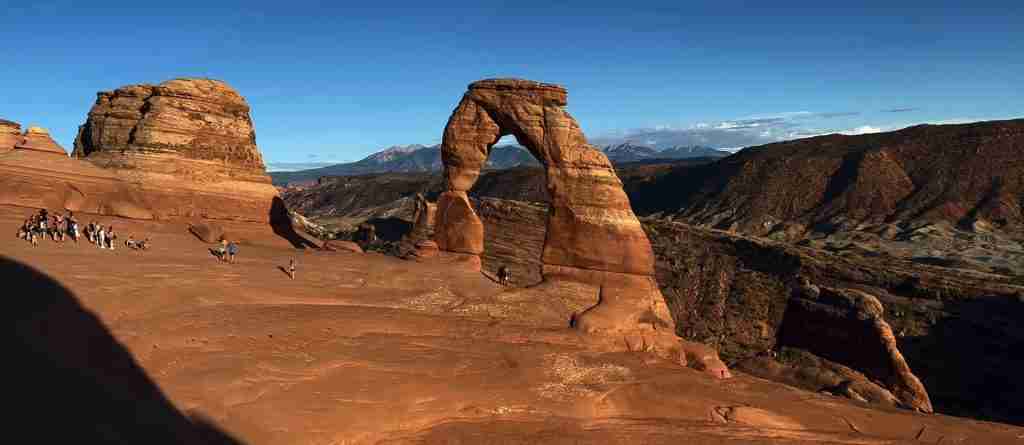
Delicate Arch stands as Utah’s most famous natural landmark, with the 3-mile round trip trail to its base representing Arches National Park’s most popular and rewarding hike. The trail gains 480 feet of elevation through exposed slickrock requiring 1.5-2.5 hours round trip depending on pace and crowd navigation. Starting from Wolfe Ranch trailhead, the route crosses a footbridge over seasonal wetlands before climbing gradually through red rock dunes and ascending the final steep slickrock slope to the arch.
The hike’s difficulty comes primarily from exposure—the entire trail traverses open slickrock with no shade and painted trail markers rather than developed tread. Summer temperatures make this hike dangerous during midday hours, with heat reflecting off red rock surfaces creating effective temperatures well above air temperature readings. Spring and fall remain ideal for Delicate Arch hikes, with sunrise starts (requiring headlamps for the dark approach) rewarded by golden light on the arch and manageable temperatures even during warmer months.
Parking at Wolfe Ranch fills completely by 8:30-9:00 AM during spring and fall peak seasons, with rangers turning away vehicles until spaces become available as afternoon hikers return. Strategies for avoiding parking disappointment include pre-dawn starts for sunrise lighting, late afternoon starts for sunset conditions, or midday hikes during less crowded summer months when heat deters most visitors. The arch itself sits on a cliff edge with dramatic drop-offs requiring careful positioning for photographs, with rangers regularly emphasizing the dangers of approaching the arch’s edge where fatal falls have occurred.
Devils Garden and Extended Hiking in Arches 2026
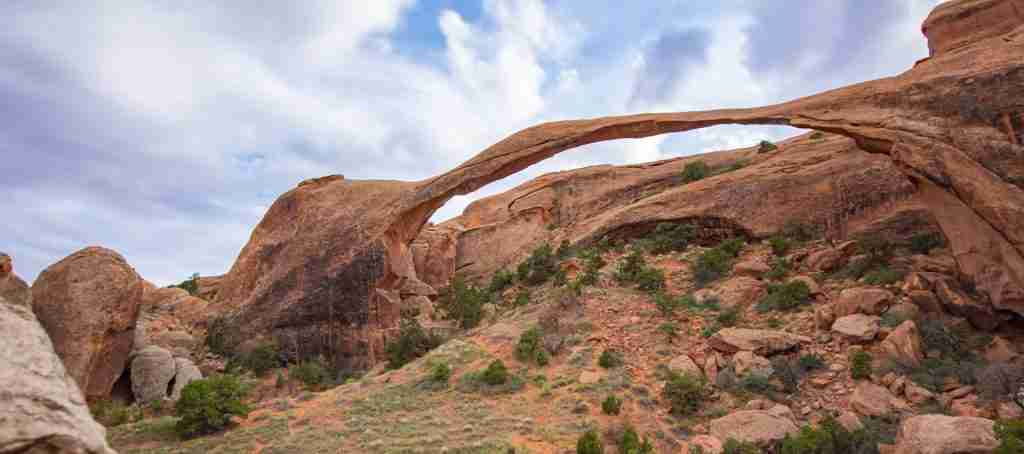
Devils Garden trailhead at the end of the main park road provides access to Landscape Arch and an extended trail network reaching 7-8 miles round trip for those hiking to Dark Angel and beyond. Landscape Arch, one of the world’s longest natural arches at 290 feet, sits just 1.6 miles round trip from the trailhead via a relatively flat, well-maintained trail taking most visitors 45-60 minutes. This destination works well for families and those seeking impressive arch formations without the exposure and exertion of Delicate Arch.
Continuing beyond Landscape Arch, the Devils Garden primitive loop adds significant difficulty through narrow rock fins, steep slickrock slopes, and exposure requiring scrambling and careful route-finding. The full loop passing Partition Arch, Navajo Arch, Double O Arch, and Dark Angel totals 7.2 miles with 550 feet elevation gain requiring 3.5-5 hours depending on pace. This extended route rewards confident hikers with dramatic fin formations, spectacular arches away from crowds, and varied terrain showcasing Arches’ geological diversity, though the primitive sections necessitate good physical condition and comfort with exposure.
Devils Garden parking fills second only to Delicate Arch during peak season, reaching capacity by 9-10 AM during spring and fall. The park’s peak season shuttle (when operating) provides overflow parking solutions by transporting visitors from a dedicated lot near the visitor center to Devils Garden and other popular trailheads, though personal vehicle access remains the norm outside the busiest weeks.
Scenic Drives and Photography Locations in Arches 2026
The main park road provides numerous pullouts and viewpoints accessible without hiking, making Arches suitable for visitors with mobility limitations or those incorporating park visits between other activities. La Sal Mountains Viewpoint offers spectacular views east toward the snow-capped peaks rising above the red rock desert, creating dramatic landscape contrasts ideal for photography. Courthouse Towers Viewpoint, accessible immediately after entering the park, frames massive formations against big sky backgrounds perfect for introducing Arches’ scale and geological character.
Sunset timing considerations emphasize western-facing formations including Delicate Arch, Windows Section arches, and Balanced Rock, all of which glow in warm evening light during the 1-2 hours before sunset. Lower Delicate Arch Viewpoint provides a distant view of the arch without the Wolfe Ranch trail hike, though the arch appears much smaller from this perspective and lacks the dramatic cliff-edge position visible from the trail. Sunrise opportunities favor eastern-facing features including Park Avenue and sections of Devils Garden, though most visitors prefer sunset timing for the warmer color temperatures and less dramatic wake-up time requirements.
Photography strategy involves planning multiple park visits during a stay to capture different features under ideal light, rather than attempting to photograph everything during a single visit. Morning light favors eastern features and cooler air temperatures for comfortable hiking, while evening light creates the classic Arches glow on western formations but requires managing crowds at popular sunset viewpoints where photographers compete for positions.
Canyonlands National Park Exploration 2026
Canyonlands National Park sprawls across 337,598 acres divided into four distinct districts—Island in the Sky, Needles, Maze, and rivers—with no through roads connecting the districts. This geography requires strategic decisions about which district(s) to visit based on available time, with Island in the Sky providing the most accessible dramatic scenery while Needles and Maze reward more adventurous visitors with remote wilderness experiences. The same $30 per vehicle entrance fee (or America the Beautiful pass) provides access to all Canyonlands districts for seven days, with separate entrance stations for Island in the Sky (32 miles from Moab) and Needles (75 miles from Moab).
Island in the Sky District Overview 2026
Island in the Sky represents Canyonlands’ most visited district, featuring a mesa-top plateau 1,000 feet above the surrounding terrain providing spectacular overlook views of the Colorado and Green River confluence, distant La Sal and Abajo Mountains, and endless canyon systems extending to the horizon. The drive from Moab via Highway 191 north and Highway 313 west takes 45-60 minutes, climbing through switchbacks to reach the Island in the Sky mesa top at approximately 6,000 feet elevation.
Mesa Arch stands as Island in the Sky’s signature feature, with a short 0.5-mile round trip trail taking 15-20 minutes to reach an arch dramatically framing canyon views and the La Sal Mountains beyond. Sunrise at Mesa Arch attracts photographers seeking the famous glow effect when the rising sun illuminates the underside of the arch in deep orange while the canyon background remains in shadow—this conditions occurs roughly 20-30 minutes after sunrise during spring and fall, creating a narrow optimal window. The tiny parking area accommodates perhaps 15 vehicles, making pre-dawn arrival essential during peak season when 50+ photographers compete for arch-side positions.
Grand View Point Overlook at the southern end of the Island in the Sky road provides the district’s most expansive vista, with views stretching over 100 miles on clear days to the Maze District, Needles District, and beyond. The 2-mile round trip trail along the canyon rim extends the overlook experience for those wanting to escape crowds at the main viewpoint parking area, though the additional distance provides similar views rather than dramatically different perspectives. Sunset at Grand View Point creates spectacular conditions with formations glowing in warm light, though Mesa Arch typically receives more visitor attention for sunrise conditions.
Island in the Sky Hiking Trails 2026
Upheaval Dome Trail offers two overlook options viewing a massive crater-like geological formation of uncertain origin—meteor impact or salt dome collapse remain debated explanations. The first overlook sits 0.8 miles from the trailhead requiring 20-30 minutes, while the second overlook adds another 0.5 miles and provides better perspective on the dome’s circular structure. The 2.6-mile round trip to both overlooks takes most visitors 1.5-2 hours with modest elevation changes through pinyon-juniper forest before emerging at the crater rim.
Whale Rock Trail (1 mile round trip, 30-45 minutes) climbs a slickrock dome providing 360-degree views of Island in the Sky mesa and surrounding canyon country from an elevated position. The trail follows cairns up moderate slickrock slopes requiring attention to route but offering no technical challenges, with the summit views encompassing the full scope of Canyonlands’ vastness. This hike works well as a morning warm-up or afternoon closure to Island in the Sky visits, providing more intimate engagement with the terrain than overlook viewing.
White Rim Road represents Island in the Sky’s extended adventure opportunity, with a 100-mile unpaved loop circling below the mesa rim requiring 2-3 days to complete via mountain bike or high-clearance 4WD vehicle. Permits required for overnight camping cost $30 and must be reserved well ahead during spring and fall prime seasons. Single-day White Rim excursions via Shafer Trail descending from Island in the Sky mesa or Potash Road (Highway 279) ascending from the Colorado River provide tastes of the route’s spectacular scenery without the full multi-day commitment, though most visitors admire White Rim Road from Island in the Sky overlooks rather than attempting to drive it.
Needles District Exploration 2026
The Needles District sits 75 miles south of Moab via Highway 191 south and Highway 211 west, requiring 90 minutes driving time to reach the entrance station. This district features dramatically eroded sandstone pinnacles called “needles,” extensive hiking trail networks, backcountry camping opportunities, and significantly fewer visitors than Island in the Sky despite offering equally spectacular scenery for those willing to invest the longer driving time.
Cave Spring Trail (0.6 miles, 30 minutes) near the visitor center provides excellent Needles introduction through historical cowboy camp remains, pictographs under rock alcoves, and ladder climbs through narrow canyons demonstrating the terrain’s character. This short hike works well for arrival-day orientation or as an easy family outing before attempting longer Needles trails requiring more significant time and energy investments.
Chesler Park Loop Trail (11 miles, 5-7 hours) represents the Needles District’s classic day hike, passing through Joint Trail’s narrow slot-like passages, circling Chesler Park meadow surrounded by needles formations, and providing immersive canyon wilderness experience far from crowds. The trail requires good fitness and full-day commitment but rewards prepared hikers with some of Canyonlands’ most distinctive terrain. Shorter options include the 5.5-mile Joint Trail out-and-back or the 5.2-mile Chesler Park from Elephant Hill trailhead.
Druid Arch Trail (11 miles round trip, 5-7 hours) reaches a massive arch resembling Stonehenge monoliths, passing through Elephant Canyon’s spectacular red rock narrows along the way. This strenuous hike appeals to visitors seeking arch formations in wilderness settings rather than roadside viewpoints, with the extended distance and limited visitor numbers creating solitude impossible to find at Arches National Park’s popular features. The trail requires early starts during warm months as the canyon provides limited shade and summer temperatures make afternoon hiking dangerous.
Canyonlands Backcountry and Remote Areas 2026
The Maze District represents Canyonlands’ most remote and challenging section, sitting west of the Green and Colorado Rivers with access only via high-clearance 4WD vehicles navigating rough roads for 60+ miles from the nearest pavement. This district attracts experienced backcountry adventurers seeking multi-day wilderness experiences far from any services or assistance, with ranger stations requiring 4-6 hours driving to reach from the Maze. Most Moab visitors skip the Maze entirely given the specialized vehicle requirements, extended time commitments, and advanced outdoor skills needed for safe exploration.
The Rivers District encompasses the Colorado and Green Rivers themselves, accessible primarily via rafting trips rather than road or trail. Multi-day rafting expeditions through Cataract Canyon downstream from the confluence provide wilderness river running with major rapids and camping on riverside beaches, though these trips require 5-7 day commitments, specialized equipment or guide services, and permits obtained through lottery systems. Single-day rafting trips on the calmer sections upstream from the confluence provide tamer introduction to the rivers, offered by Moab-based outfitters including NAVTEC Expeditions and Adrift Adventures.
Moab Adventure Activities and Outdoor Recreation 2026
Moab’s reputation as an adventure capital stems from world-class mountain biking, technical rock climbing, white-water rafting, canyoneering, and off-road vehicle trails attracting enthusiasts from around the globe. These activities range from accessible introductory experiences through guided tours to expert-level challenges requiring specialized skills and equipment. Understanding the activity landscape enables strategic selection matching your abilities, interests, and available time to maximize Moab’s outdoor recreation opportunities.
Mountain Biking in Moab 2026
Moab mountain biking attracts riders from beginner to expert level with trail networks ranging from smooth dirt paths to technical slickrock routes requiring advanced skills and nerve. The Slickrock Bike Trail stands as Moab’s most famous ride, with the 10.5-mile main loop featuring continuous climbs and descents over petrified sand dunes creating a roller coaster experience through surreal lunar-like terrain. The trail requires intermediate to advanced skills for safely navigating steep slickrock slopes marked only by dotted white lines, with most riders completing the loop in 2-4 hours depending on fitness and technical ability. A 2.3-mile practice loop near the trailhead provides skill assessment opportunity before committing to the full route.
Gemini Bridges Trail (14 miles one-way, 3-5 hours) offers spectacular scenery combining dirt roads and slickrock sections suitable for intermediate riders, ending at massive natural bridges visible from viewpoint platforms. The route works well for shuttle rides positioning vehicles at both endpoints to avoid retracing the full distance, with several Moab bike shops offering shuttle services for $25-35 per person. The trail’s highlight section includes views of the bridges and surrounding canyon country from varied perspectives along the route.
Porcupine Rim Trail (15 miles, 4-6 hours) presents Moab’s most challenging and rewarding single-track route, descending from the La Sal Mountains through aspen and pine forest before emerging onto exposed cliffside slickrock with dramatic Colorado River views 2,000 feet below. This expert-level trail requires shuttle to the upper trailhead via the La Sal Mountain Loop Road, with most riders shuttling vehicles or hiring shuttle services rather than attempting the significant elevation gain required for round-trip riding. The exposure and technical difficulty make this route suitable only for highly skilled riders comfortable with consequences of errors on narrow slickrock sections above massive cliff faces.
Bike rental costs in Moab range from $65-85 per day for quality hardtail mountain bikes to $90-140 for full-suspension models suited to Moab’s technical terrain, with multi-day rentals qualifying for discounted rates. Guided mountain bike tours through companies including Poison Spider Bicycles and Western Spirit Cycling cost $130-180 per person for half-day excursions and $190-280 for full-day rides including transportation, guide service, snacks, and equipment. These guided options benefit riders unfamiliar with Moab trail systems or those wanting shuttle logistics handled while learning advanced slickrock riding techniques from experienced local guides.
Rock Climbing and Canyoneering in Moab 2026
Moab rock climbing spans from moderate sport routes on solid sandstone to cutting-edge desert towers requiring advanced aid climbing skills and multi-day commitments. Popular climbing areas including Wall Street, Potash Road crags, and Indian Creek offer hundreds of routes from 5.6 to 5.14 difficulty on high-quality Wingate and Entrada sandstone formations. The soft, erosion-prone nature of Moab sandstone requires different techniques than granite or limestone climbing, with emphasis on gentle movement and careful placement testing rather than aggressive pulling on holds.
Guided rock climbing introductions through outfitters including Desert Highlights and Moab Cliffs & Canyons cost $140-180 per person for half-day beginner courses teaching basic techniques on moderate routes suited to first-time climbers. Full-day guided climbs at $220-300 per person provide more extensive instruction and the opportunity to attempt multiple routes developing skills throughout the day. Advanced climbers seeking classic tower ascents including Castleton Tower, Ancient Art, or Sister Superior benefit from guide services at $350-500 per person for full-day technical climbs requiring specialized aid climbing and route-finding skills.
Canyoneering combines hiking, scrambling, rappelling, and problem-solving to descend narrow slot canyons throughout the Moab region. Beginner-friendly canyons including Granary Canyon and Ephedra’s Grotto provide introduction to basic rappelling and downclimbing techniques, while advanced routes like Leprechaun Canyon and Bluejohn Canyon (site of the Aron Ralston incident portrayed in “127 Hours”) demand expert skills and extensive experience. Guided canyoneering trips cost $150-200 per person for half-day beginner canyons and $250-400 for full-day technical descents, with guides providing all rappelling equipment, instruction, and safety management for groups descending challenging terrain requiring precise technical execution.
White-Water Rafting on the Colorado River 2026
Colorado River rafting offers introduction to river running on calm scenic sections and advanced white-water challenges through Cataract Canyon’s class III-IV rapids depending on seasonal water flows. Half-day scenic float trips on the Fisher Towers section cost $75-95 per person (adults), providing 3-4 hours on calm water passing beneath massive sandstone towers while guides share geology and human history narratives. These trips suit families with children as young as 4-5 years and visitors seeking relaxing river experiences without the excitement (and risk) of significant rapids.
Full-day Colorado River trips combining scenic floating with moderate rapids cost $145-180 per person, typically running the Westwater Canyon section where the river cuts through ancient metamorphic rock creating class III rapids interspersed with calm pools. These trips require reasonable fitness for managing 6-8 hours on the river with brief hikes to riverside features, with minimum age requirements typically set at 10-12 years depending on seasonal water flows affecting rapid intensity.
Multi-day Cataract Canyon expeditions through the most challenging whitewater section downstream from the Colorado-Green confluence run $1,200-1,800 per person for 3-4 day trips including riverside camping, meals, and guide services. Spring runoff (May-June) creates the most dramatic rapids with enormous waves and holes demanding expert guide skill for safe passage, while late summer lower flows reduce rapid intensity while maintaining exciting whitewater character. These extended trips appeal to adventurous visitors wanting multi-day wilderness immersion and serious whitewater thrills, with advance reservations essential as outfitter permits limit trip frequencies through the canyon.
Off-Road Vehicle and Jeep Tours in Moab 2026
Moab’s off-road trail network attracts 4WD enthusiasts and UTV riders seeking technical challenges on world-famous routes including Hell’s Revenge, Fins and Things, and Poison Spider Mesa. Hell’s Revenge Trail represents Moab’s most popular 4WD route, with 6.5 miles of slickrock domes, ledges, and bowls requiring high-clearance 4WD vehicles and driver skills for safely navigating steep angles and exposed sections. The trail typically takes 2-3 hours to complete, passing numerous overlook viewpoints above the Colorado River and Arches National Park while providing constant technical driving challenges.
Guided Jeep tours eliminate the need to rent specialty vehicles while providing experienced driver/guides familiar with route navigation and vehicle positioning for obstacles. Half-day Jeep tours cost $95-130 per person covering routes like Hells Revenge or Fins and Things, while full-day excursions at $180-220 per person venture to more remote areas including Gemini Bridges or Hurrah Pass. Sunset tours command premium pricing at $110-145 for shorter evening excursions timed to dramatic light on red rock formations.
UTV (side-by-side) rentals provide alternative off-road access for groups and families, with 2-seat models renting for $250-350 per day and 4-seat models at $400-550 daily. These vehicles require valid driver’s licenses but less driving skill than full-size 4WD vehicles given the lower centers of gravity and roll cage protection. Most rental companies provide route recommendations and trail maps while requiring security deposits of $1,000-2,000 to cover potential damage from rollovers or undercarriage strikes on difficult obstacles.
Sample Moab Itineraries for Different Trip Lengths 2026
Sample itineraries demonstrate how to structure Moab visits for maximum efficiency and satisfaction across different trip lengths and interest emphases. These examples provide frameworks for daily activity selection, budget allocation, and timing strategies while remaining flexible for personal preferences and weather adaptations.
Moab 3-Day Budget Itinerary 2026
Day 1 arrives Moab midday via Grand Junction or Salt Lake City, checking into budget motel at $90-110 per night with per-person cost of $45-55 (two sharing). Late afternoon Arches visit explores Windows Section for North Window, South Window, and Double Arch trails requiring 1-1.5 hours total hiking before sunset at Delicate Arch Viewpoint. Picnic dinner from grocery store costs $12-15 per person. Day 1 total approximately $75-85 per person including accommodation share, food, fuel.
Day 2 begins before 8 AM for Delicate Arch hike avoiding parking overflow, completing the 3-mile round trip before midday heat. Return to Moab for lunch at budget restaurant ($12-15). Afternoon activities include mountain bike rental ($70 shared) on beginner trails or free Colorado River scenic drive along Highway 128. Dinner at Moab Brewery costs $18-22. Day 2 total approximately $135-145 per person including accommodation, meals, activity share, fuel.
Day 3 packs breakfast and lunch from grocery store ($12-15 combined). Drive to Canyonlands Island in the Sky (45 minutes) for Mesa Arch sunrise, Grand View Point, Upheaval Dome overlook, and Whale Rock trail totaling 4-5 hours in park. Return to Moab for early afternoon departure. Day 3 total approximately $45 per person for food and fuel, no accommodation on checkout day.
3-Day Budget Trip Total: Accommodation $90-110 per person (two nights sharing), food $95-110, activities $35, fuel/transport $33, national parks $30 shared ($15 per person). Complete trip approximately $265-300 per person.
Moab 5-Day Mid-Range Itinerary 2026
Day 1 arrives early afternoon, checking into mid-range hotel at $190-220 per night ($95-110 per person sharing) with complimentary breakfast included for Days 2-5. Late afternoon Arches exploration covers Park Avenue, Balanced Rock, Windows Section before sunset. Dinner at Miguel’s costs $35-40. Day 1 total approximately $145-160 per person.
Day 2 uses hotel breakfast, departs pre-dawn for Delicate Arch sunrise hike. Midday hotel rest during heat, lunch at Moab Brewery ($20). Afternoon Devils Garden hike to Landscape Arch and beyond (3-4 hours). Pool relaxation before dinner at Sunset Grill ($45-50). Day 2 total approximately $170-185 per person.
Day 3 hotel breakfast, half-day Colorado River rafting scenic float ($85 per person) departing 8:30 AM. Rafting includes lunch or separate lunch provided ($15). Afternoon mountain bike rental on intermediate trails ($80 per day, 3-4 hours riding). Dinner at Desert Bistro ($55-65). Day 3 total approximately $335-350 per person.
Day 4 hotel breakfast, full day Canyonlands Island in the Sky including Mesa Arch, Grand View Point, Upheaval Dome trail, Whale Rock. Packed lunch from grocery store or Moab midday break ($15-20). Sunset at Dead Horse Point State Park ($10 per vehicle entry). Dinner at Proper Burger ($25-30). Day 4 total approximately $165-180 per person.
Day 5 hotel breakfast, morning La Sal Mountain Loop Road scenic drive (2.5 hours) with viewpoint stops and optional short hikes. Lunch downtown ($18-22) before early afternoon departure. Day 5 total approximately $35-40 per person for meals and fuel.
5-Day Mid-Range Trip Total: Accommodation $380-440 per person (4 nights), food $225-245 (hotel breakfasts plus other meals), activities $165 (rafting plus bike), fuel/transport $53, national parks $35 (Dead Horse Point plus America the Beautiful pass share). Complete trip approximately $860-940 per person.
Moab 7-Day Comprehensive Itinerary 2026
A week-long Moab visit enables thorough exploration of both national parks, multiple adventure activities, rest days, and deeper engagement with the region’s recreation opportunities. Day 1 arrives and settles in with evening orientation. Day 2 focuses on Arches including Delicate Arch, Windows, Devils Garden. Day 3 adventure activity day with rafting or mountain biking plus second activity or relaxation. Day 4 explores Canyonlands Island in the Sky district thoroughly. Day 5 ventures to Needles District for extended day trip. Day 6 includes scenic drives (Highway 128, La Sal Loop) and optional activities. Day 7 morning departure or final half-day activities before travel.
Budget 7-day total: accommodation $270-330 per person (6 nights budget motel sharing), food $315-455, activities $105-175, transport $75-95, national parks $40. Complete budget trip approximately $805-1,095 per person.
Mid-range 7-day total: accommodation $570-660 per person (6 nights mid-range hotel sharing), food $490-700, activities $330-570, transport $90-120, national parks $40. Complete mid-range trip approximately $1,520-2,090 per person.
Luxury 7-day total: accommodation $900-1,500 per person (6 nights luxury resort sharing), food $770-1,155, activities $700-1,400, transport $120-160, national parks $40. Complete luxury trip approximately $2,530-4,255 per person.
Money-Saving Strategies for Moab Visits 2026
Strategic planning enables significant cost reductions without sacrificing Moab experience quality through timing optimization, activity selection, accommodation choices, and dining approaches that maximize value across budget categories. Shoulder season visits during early March, late May, and November provide 20-35% accommodation savings versus peak periods while maintaining reasonable weather. The America the Beautiful annual parks pass ($80) pays for itself in three days visiting Arches and Canyonlands. Weekday-focused trips avoiding Friday-Saturday nights save $25-50 per night during peak seasons. Camping at BLM dispersed sites provides free accommodation for equipped travelers. Self-catering breakfast and packed lunches saves $25-35 per person daily versus restaurant meals. Self-guided hiking and national park exploration provides free recreation beyond entry fees. Equipment rentals for single-day use cost less than guided tours—mountain bike rentals at $70-85 versus $130-180 guided tours.
Hidden Costs and Additional Expenses in Moab 2026
Beyond obvious costs, Moab visits involve numerous smaller expenses that compound into significant budget impacts. Fuel prices run $0.30-0.50 per gallon above national averages, adding $15-30 to typical week’s fuel costs. Rental car ancillary fees including insurance ($15-25 daily), additional drivers ($10-15 daily), and underage surcharges ($25-35 daily) add $30-50+ per day to base rates. One-way rental fees between different airports range $100-400+. Gear rentals or purchases for hiking boots ($15-20 daily rental or $60-90 purchase), trekking poles ($8-12 daily or $30-60 purchase), and hydration packs ($10-15 daily or $35-75 purchase) add equipment costs. Restaurant tipping at 18-20% adds $7-12 to typical $35-50 dinners, compounding to $80-150 per person for week-long visits. Laundry costs run $10-15 per load at coin laundromats. Souvenir and gear purchases often exceed initial budgets by $50-150. Medical costs for common injuries including urgent care visits at $150-300 and over-the-counter supplies totaling $25-50 require budgeting.
Frequently Asked Questions About Moab Travel 2026
Do I need a 4WD vehicle for visiting Moab in 2026?
A standard passenger car or basic SUV suffices for 90% of Moab visitors focusing on paved national park roads, downtown access, and primary scenic byways including Highway 128 and La Sal Mountain Loop Road. Both Arches and Canyonlands Island in the Sky maintain fully paved roads accessible to any vehicle type, while the majority of popular trailheads sit near paved parking areas requiring no special clearance. High-clearance or 4WD vehicles become necessary only for visitors seeking backcountry access to unpaved roads including Shafer Trail, White Rim Road, Needles District backcountry routes, and numerous technical off-road trails like Hell’s Revenge or Poison Spider Mesa. The rental cost premium for 4WD vehicles ($30-50 per day above standard car rates) justifies itself only when specifically planning these off-road excursions, otherwise representing unnecessary expense for conventional Moab exploration.
Can I visit Moab without camping in 2026?
Moab offers abundant hotel, motel, and vacation rental accommodation making camping entirely optional for visitors preferring indoor lodging comfort and amenities. Mid-range hotels at $160-240 per night provide comfortable bases with pools, breakfast, and convenient downtown locations, while budget motels at $80-120 accommodate cost-conscious travelers seeking basic shelter without camping equipment or outdoor sleeping requirements. Camping represents one accommodation option chosen by some visitors for cost savings, outdoor immersion, or RV travel logistics, but in no way constitutes a requirement for Moab visits. The town’s concentration of lodging options along Main Street creates easy access to restaurants, shops, and services while positioning visitors within 5-35 minutes of national park entrances depending on which district you’re visiting. Families, seniors, international visitors, and anyone preferring conventional accommodation will find excellent options across all budget levels without any need to consider camping alternatives.
Is Moab suitable for non-hikers in 2026?
Moab provides substantial non-hiking recreation through scenic drives, Jeep tours, rafting excursions, scenic flights, and short viewpoint walks requiring minimal physical exertion while still delivering spectacular red rock scenery. Arches National Park’s main road connects to numerous overlooks including Balanced Rock, Park Avenue Viewpoint, and Windows Section parking areas all accessible with minimal walking (under 0.5 miles), while Canyonlands Island in the Sky features roadside viewpoints at Grand View Point and Green River Overlook requiring only parking and short strolls to overlook edges. Guided Jeep tours transport non-hikers to remote viewpoints and technical terrain inaccessible via standard vehicles while eliminating any walking requirements beyond stepping in and out of vehicles at stops. Colorado River scenic float trips provide riverside scenery appreciation without hiking, while helicopter and airplane tours showcase the region’s vast canyonlands from aerial perspectives requiring zero physical activity. Non-hikers will miss some signature experiences including Delicate Arch close-up views, but can still enjoy exceptional Moab scenery through vehicle-based exploration and guided tours emphasizing motorized access over foot travel.
What should I pack for Moab in different seasons of 2026?
Spring and fall Moab packing requires layering systems for temperature swings from 40°F morning lows to 75-85°F afternoon highs, including lightweight base layers, fleece or insulated mid-layers, windbreaker shells, shorts and long pants, and sun protection through wide-brimmed hats and high-SPF sunscreen. Summer visits demand sun protection emphasis through UPF-rated clothing, additional sunscreen, large water carrying capacity (3-4 liters per person for full-day hikes), and lightweight moisture-wicking fabrics for the 95-110°F heat. Winter packing shifts to insulated layers for 30-50°F daytime temperatures, warm hats and gloves, waterproof shells for occasional snow or rain, and microspikes or traction devices for icy trail conditions particularly on north-facing slopes and higher Canyonlands elevations. All seasons require sturdy hiking boots or trail shoes with aggressive tread for slickrock terrain, comprehensive first aid kits including blister treatments and pain relievers, headlamps for pre-dawn starts or post-sunset activities, and electrolyte replacement supplies for the dry climate causing increased dehydration versus humid regions. Seasonal-specific items include insect repellent for May-June when gnats emerge, and cold-weather sleeping bags rated to 20-30°F for shoulder-season camping when overnight temperatures drop below freezing.
How far in advance should I book Moab accommodation for 2026?
Easter week (April 14-20, 2026) and Moab Jeep Safari week (April 5-13, 2026) require 6-9 months advance booking to secure rooms at reasonable rates, as these represent the year’s absolute peak demand periods when accommodation sells out months ahead and remaining rooms command 50-100% premiums over standard rates. General spring season (April-May) and fall season (September-October) benefit from 3-4 months advance booking ensuring good selection and avoiding the price escalation that occurs as availability tightens approaching arrival dates. Summer visits (June-August) and winter visits (November-March) allow more flexibility with 4-6 week advance booking typically providing adequate availability and competitive rates, with winter particularly offering opportunities for last-minute bookings at negotiated rates when properties seek to fill inventory during slow periods. Extended holiday weekends including Memorial Day (May 24-26), Independence Day (July 4), and Labor Day (September 5-7) warrant 2-3 month booking windows similar to general peak season planning. The booking timeline directly impacts total costs as early reservations secure lower rates before seasonal premiums apply, while last-minute bookings during peak periods often face severe rate inflation or complete unavailability forcing expensive alternatives or trip postponement.
What are the cell phone and internet connectivity conditions in Moab area 2026?
Downtown Moab maintains good cell coverage across major carriers including Verizon, AT&T, and T-Mobile, with 4G LTE or 5G service supporting standard phone, text, and data usage throughout the developed town area and along US Highway 191 corridor. Coverage degrades rapidly when leaving town, with portions of Arches National Park maintaining intermittent service near the visitor center and entrance but losing signal in Devils Garden and other remote park areas. Canyonlands National Park generally offers no cell service across all districts, with visitors unable to make calls or use data throughout Island in the Sky, Needles, and Maze areas requiring offline navigation and emergency planning. Scenic byways including Highway 128 (Colorado River corridor), Highway 279 (Potash Road), and La Sal Mountain Loop Road experience extended no-service sections requiring downloaded offline maps and music for the drives. Hotels and vacation rentals universally provide Wi-Fi for guests, while coffee shops and restaurants in downtown Moab offer free Wi-Fi to customers enabling trip planning, reservation changes, and communication during downtown visits. Visitors planning extensive backcountry travel should consider satellite communication devices including Garmin inReach or SPOT for emergency communication capability beyond cell coverage areas, available for rent at $15-25 per day from Moab outdoor retailers.
Are Moab restaurants and activities suitable for vegetarians and vegans in 2026?
Moab’s outdoor recreation culture supports numerous restaurants offering substantial vegetarian and vegan options beyond basic salads, with establishments including Love Muffin Cafe, Eklecticafe, Peace Tree Juice Cafe, and Desert Bistro featuring dedicated vegetarian/vegan menu sections with creative preparations emphasizing fresh ingredients and satisfying portions. Moab Brewery, Miguel’s Baja Grill, and Pasta Jay’s all include vegetarian pasta, burrito, and pizza options suitable for non-meat eaters, while most restaurants willingly modify dishes to accommodate dietary restrictions when requested. Vegan visitors find more limited but still workable options with careful restaurant selection and modification requests, though the small-town setting means fewer exclusively vegan establishments compared to major metropolitan areas. Grocery provisioning at City Market provides excellent resources for self-catering vegetarian and vegan meals, with produce, plant-based proteins, and dairy alternatives available for visitors preparing meals at vacation rentals or campgrounds. Guided activity food provisions (rafting trip lunches, tour snacks) typically accommodate vegetarian requests when noted during booking, though vegan options may require more specific coordination to ensure plant-based preparation. Overall, vegetarians experience minimal difficulty finding satisfying meals in Moab, while vegans benefit from advance restaurant research and self-catering capabilities for maximum dining satisfaction and variety.
What photography equipment and techniques work best for Moab in 2026?
Wide-angle lenses (16-35mm full-frame equivalent) prove essential for Moab landscape photography, capturing the massive scale of arch formations, canyon vistas, and expansive desert scenery that define the region’s visual character. Tripods enable long exposures for pre-sunrise and post-sunset conditions while supporting careful composition on iconic features including Delicate Arch and Mesa Arch where photographer crowds compete for limited positions. Polarizing filters reduce glare on red rock surfaces while enhancing blue skies, though requiring careful rotation to avoid unnatural darkening effects on ultra-wide compositions. Morning and evening golden hours provide optimal lighting for red rock formations with warm tones emphasizing the stone’s natural orange-red colors, while harsh midday sun creates blown highlights and flat lighting generally unsuited to quality landscape photography. Specific technique considerations include bracketing exposures for high-dynamic-range scenes common in slot canyons and arch features, using graduated neutral density filters to balance bright skies against darker foreground elements, and incorporating foreground interest including desert vegetation, rock textures, or water features to add depth to wide vista compositions. Star photography opportunities in Moab’s dark sky areas require fast wide-angle lenses (f/2.8 or faster), high ISO capability (3200-6400), and knowledge of night sky conditions including moon phases affecting available darkness. Drone photography requires Federal Aviation Administration registration plus specific permits for national park overflight generally prohibited in Arches and Canyonlands, though permissible in surrounding Bureau of Land Management areas outside park boundaries with proper authorization and responsible operation respecting wildlife and other visitors.
What are the dangers and safety considerations for Moab in 2026?
Heat exhaustion and dehydration represent Moab’s primary safety hazards, with the dry desert climate and intense sun creating rapid fluid loss particularly during summer when temperatures exceed 100°F and winter humidity drops below 15%. Hikers should carry 1 liter of water per hour of activity, recognize symptoms including headache, nausea, and decreased urination, and retreat to shade immediately when experiencing heat-related distress. Flash flood risks affect slot canyons and drainage systems particularly during July-September monsoon season, with distant thunderstorms creating wall-of-water hazards in narrow canyons miles from rainfall sources requiring constant weather monitoring and immediate evacuation to high ground when storms threaten. Cliff edge dangers at Delicate Arch, Grand View Point, and numerous overlooks claim lives through falls resulting from unsafe photography positioning, running or horseplay near edges, and inadequate supervision of children in exposed areas—maintaining safe distance from all cliff edges and avoiding risk-taking for photographs prevents these tragic accidents. Wildlife hazards remain minimal in Moab with occasional rattlesnake encounters requiring awareness and giving snakes space to retreat rather than approaching for photographs or attempting to move them from trails. Navigation challenges in unmarked backcountry areas necessitate GPS devices, downloaded offline maps, and route-finding skills for adventures beyond maintained trails, with numerous search-and-rescue operations each year retrieving lost hikers who ventured off-trail without proper navigation tools or experience. Medical access in Moab includes a small hospital for basic emergency care, though serious injuries requiring specialized treatment necessitate helicopter evacuation to Grand Junction or Salt Lake City creating potential five-figure medical bills for uninsured visitors—comprehensive travel insurance covering emergency evacuation provides critical financial protection against these catastrophic costs. The remote location means extended emergency response times for backcountry incidents, emphasizing the importance of self-sufficiency, conservative risk assessment, and satellite communication devices for areas beyond cell coverage where calling for help via mobile phone proves impossible.
Can I visit Moab as a day trip from other destinations in 2026?
Day trips to Moab prove impractical from most regional cities given the extended driving distances from population centers—Salt Lake City sits 235 miles away requiring minimum 7 hours round-trip driving before any activity time, while Denver (350 miles), Las Vegas (450 miles), and Phoenix (590 miles) create completely unrealistic day-trip scenarios requiring 10+ hours driving with minimal time for actual Moab exploration. Visitors based in these distant cities should plan minimum 2-3 night Moab stays to justify the long access drives, or incorporate Moab as one multi-day stop in larger Southwest road trip itineraries visiting multiple national parks across Utah and northern Arizona. The closest realistic day-trip base would be Green River (52 miles north, 50 minutes), though even this nearby town offers limited accommodation and dining versus staying in Moab itself, making the marginal savings questionable given the reduced experience quality from commuting rather than being based in the recreation hub. Moab instead serves as an ideal base for day trips to surrounding attractions including Canyonlands’ Needles District (75 miles, 90 minutes), Dead Horse Point State Park (23 miles, 35 minutes), and various scenic byways including Highway 128 and La Sal Mountain Loop Road all easily accessible for day excursions while maintaining Moab accommodation and dining access. The geography and distances make Moab a destination requiring minimum 2-3 night stays for worthwhile experiences rather than a day-trip add-on to visits elsewhere in the Southwest.