Bryce Canyon Travel Guide 2026: Ultimate Planning Resource
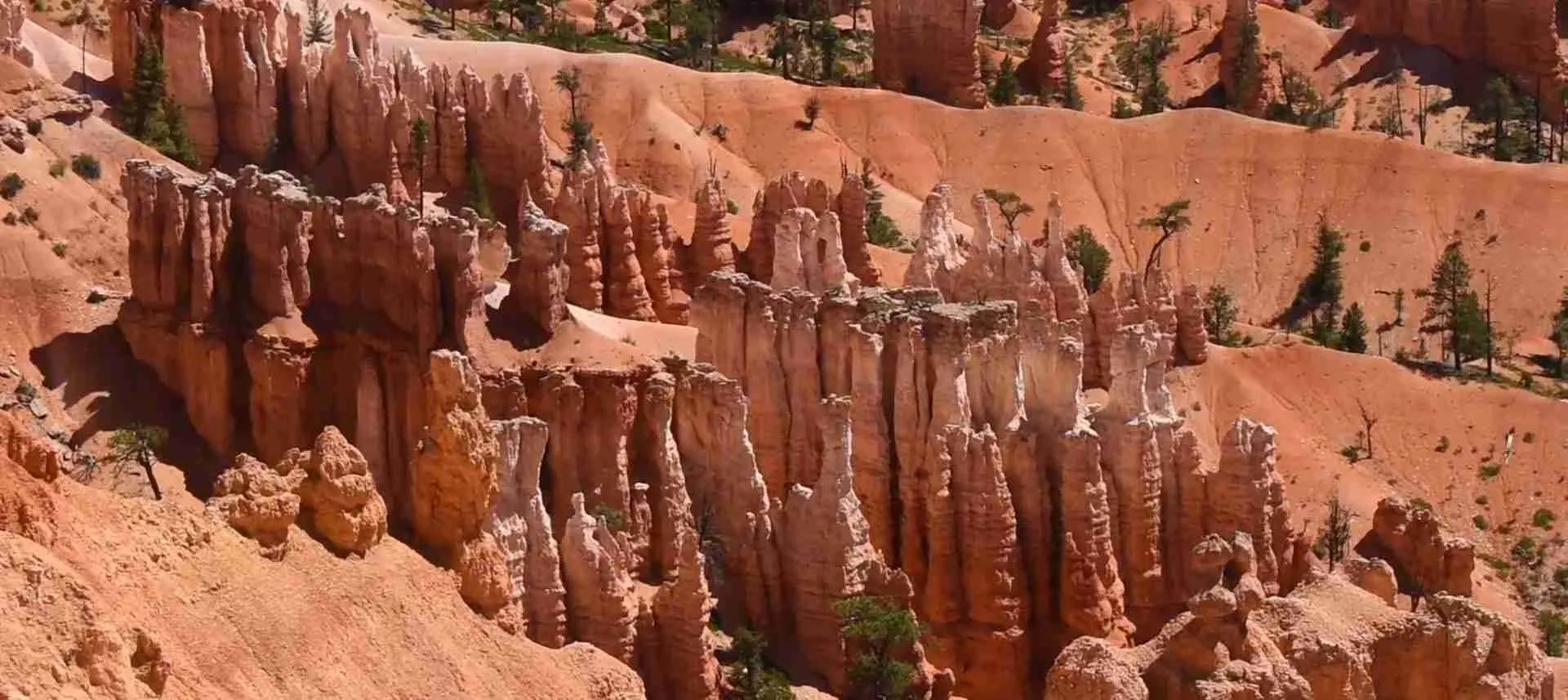
Bryce Canyon National Park stands as one of Utah’s most extraordinary natural wonders, where erosion has carved thousands of otherworldly rock spires called hoodoos into brilliant amphitheaters of orange, pink, and cream. Rising to 8,000-9,000 feet elevation in southern Utah, this high-altitude park transforms across seasons from snow-dusted winter wonderland to wildflower-filled summer paradise. Whether you’re planning a quick weekend escape or an extended exploration of Utah’s Mighty 5 national parks, understanding 2026’s new fee structures, seasonal patterns, and budget realities helps you craft the perfect visit to this geological masterpiece.
Key Takeaways for Bryce Canyon 2026
- NEW 2026 Fee Structure: International visitors (non-U.S. residents age 16+) now pay a $100 per-person surcharge in addition to standard entrance fees. The International Annual Pass at $250 covers this fee for everyone in your vehicle and is cost-effective for multi-park trips combining Bryce, Zion, and Grand Canyon.
- Daily Costs Per Person: Budget travelers need $60-85 per person daily (two sharing budget hotel or camping), mid-range travelers spend $155-225 per person daily (two sharing mid-range hotel), and luxury visitors invest $340-480 per person daily (two sharing premium accommodations). These ranges include accommodation, meals, park entry, and activities.
- Best Months to Visit 2026: May and September-October offer ideal conditions with comfortable temperatures (50-70°F), functional shuttle system, fewer crowds than summer, and all trails open. Avoid Memorial Day weekend and July-August for minimal crowding. December-February rewards winter enthusiasts with snow-covered landscapes and 90% fewer visitors.
- High Elevation Impacts: At 8,000-9,000 feet, Bryce Canyon experiences colder temperatures and unpredictable weather compared to Zion and Arches. Snow possible from October through May, with dramatic temperature swings between day (70°F) and night (30°F) even in summer. Bring layers regardless of season.
- Multi-Park Savings: Most visitors combine Bryce with Zion (1.5 hours southwest) and Grand Canyon North Rim (2.5 hours south). The America the Beautiful Pass ($80 for U.S. residents, $250 for international visitors) pays for itself after visiting three fee-charging parks and covers all passengers in your vehicle.
- Shuttle System and Accessibility: Free park shuttles operate mid-April through mid-October, reducing traffic congestion and providing easy access to major viewpoints. However, the 18-mile scenic drive remains open year-round for personal vehicles, making winter visits accessible despite limited shuttle service.
People Also Ask About Bryce Canyon 2026
How much does a trip to Bryce Canyon cost in 2026?
A 3-day Bryce Canyon trip costs $180-255 per person for budget travelers (camping or budget hotels, self-catered meals), $465-675 per person for mid-range comfort (hotels, restaurant meals), or $1,020-1,440 per person for luxury experiences (premium lodging, fine dining, guided tours). These totals assume two people sharing accommodation, include park entrance fees, meals, local transport, and basic activities. International visitors add $100 per person (age 16+) to park entry unless purchasing the $250 International Annual Pass covering multiple parks.
What is the best time to visit Bryce Canyon in 2026?
The best time to visit Bryce Canyon in 2026 is mid-May through early June or September through early October. These shoulder seasons offer comfortable daytime temperatures (50-70°F), operational park shuttles, fully open trails and facilities, and 40-60% fewer crowds than July-August peak. Late May brings wildflowers, while September-October showcases golden aspens contrasting against red rock. Avoid Memorial Day weekend (park at capacity) and July-August if you prefer solitude. Winter visitors (December-February) enjoy snow-dusted landscapes and minimal crowds but must prepare for freezing temperatures and potential road closures.
Is Bryce Canyon worth visiting compared to Zion and Grand Canyon?
Bryce Canyon absolutely merits a visit and offers dramatically different scenery than Zion or Grand Canyon. While Zion features towering canyon walls and the Grand Canyon showcases vast horizontal expanse, Bryce presents a vertical forest of delicate hoodoo spires in brilliant colors. The park is more compact (visiting all major viewpoints takes 2-4 hours by car), making it ideal for travelers with limited time. Most visitors spend 1-2 days at Bryce, combining it with Zion (1.5 hours away) or Grand Canyon North Rim (2.5 hours) for a comprehensive southern Utah experience. The unique geology found nowhere else on Earth makes Bryce an essential stop on any Utah itinerary.
What are the must-see viewpoints and trails at Bryce Canyon in 2026?
Essential viewpoints include Sunrise Point, Sunset Point, Inspiration Point, and Bryce Point, all accessible via the free shuttle or scenic drive along the rim. For hiking, the Queen’s Garden Trail (1.8 miles roundtrip, moderate) provides the easiest descent into the hoodoos, while the Navajo Loop (1.3 miles, moderate-strenuous) features the iconic Wall Street section with towering pines growing between narrow canyon walls. Combining both trails creates the popular Figure-8 loop (3 miles total). Advanced hikers tackle the Fairyland Loop (8 miles) or Peekaboo Loop (5.5 miles) for fewer crowds and spectacular scenery. Arrive at viewpoints before 9 AM or after 4 PM to avoid peak congestion and capture optimal lighting for photography.
Extended multi-day tours – 5+ days
Featured Utah Multi-Day Tour Packages

3 days
Utah 3-Day Discovery Tour
- ✓ Comprehensive Utah experience
- ✓ Expert local guides included
- ✓ All accommodation included
- ✓ Transportation provided
5 days
Utah 5-Day Highlights Experience
- ✓ Comprehensive Utah experience
- ✓ Expert local guides included
- ✓ All accommodation included
- ✓ Transportation provided
7 days
Utah 7-Day Cultural Journey
- ✓ Comprehensive Utah experience
- ✓ Expert local guides included
- ✓ All accommodation included
- ✓ Transportation provided

10 days
Utah 10-Day Complete Adventure
- ✓ Comprehensive Utah experience
- ✓ Expert local guides included
- ✓ All accommodation included
- ✓ Transportation provided
Multi-day tour packages powered by TourRadar. Prices and availability subject to change.
Introduction to Bryce Canyon National Park 2026
Bryce Canyon National Park operates year-round as one of Utah’s five extraordinary national parks, but 2026 brings significant changes for international visitors and new considerations for all travelers planning this southern Utah adventure. Located in southwestern Utah approximately 270 miles from both Las Vegas and Salt Lake City, Bryce sits at a dramatic elevation of 8,000-9,000 feet on the Paunsaugunt Plateau, creating weather patterns and temperatures distinctly cooler than neighboring Zion National Park.
The park’s defining feature is not actually a canyon but a series of natural amphitheaters carved into the eastern edge of the plateau, where erosion has sculpted thousands of hoodoos—tall, thin spires of rock in brilliant shades of red, orange, pink, and cream. These geological formations, combined with the park’s high elevation and dark night skies, create one of the most photographed and distinctive landscapes in the American Southwest.
Understanding Bryce Canyon’s 2026 landscape requires attention to several new realities. The National Park Service implemented a non-resident fee structure beginning January 1, 2026, charging international visitors an additional $100 per person (age 16 and older) beyond standard entrance fees. This change reflects a broader policy shift affecting 11 of America’s most-visited national parks, including Zion and Grand Canyon, and significantly impacts budget planning for overseas visitors. The new America the Beautiful International Annual Pass ($250) addresses this surcharge by covering all passengers in a private vehicle at any national park for one year, making it cost-effective for anyone visiting multiple parks.
The park’s compact size relative to other major southwestern destinations means most visitors experience the highlights in 1-2 days. The 18-mile scenic drive along the canyon rim connects all major viewpoints, while the park’s trail system ranges from easy rim walks to challenging descents into the amphitheaters. The free shuttle system, operating mid-April through mid-October, reduces traffic congestion and environmental impact while providing convenient access to the most popular areas near Bryce Amphitheater.
Seasonal variation at Bryce Canyon exceeds that of lower-elevation parks. Summer temperatures (June-September) range from pleasant 70-80°F days to chilly 40-50°F nights, while winter brings frequent snow and daytime highs often below freezing. This dramatic range stems from the park’s high elevation and creates distinct experiences across seasons. Summer visitors encounter the busiest crowds—60% of annual visitation occurs June through September—but enjoy the longest days, warmest weather, and full ranger program schedules. Shoulder season travelers in May and September-October benefit from comfortable temperatures, operational shuttles and facilities, and significantly reduced crowds. Winter enthusiasts discover a transformed landscape of snow-covered hoodoos, cross-country skiing opportunities, and near-solitude on trails, though some roads and facilities close.
Most travelers combine Bryce Canyon with other Utah destinations. Zion National Park lies 1.5 hours southwest via scenic Highway 12 and 89, while Grand Canyon North Rim sits 2.5 hours south. This proximity makes Bryce an essential component of “Mighty 5” road trips encompassing Utah’s five national parks or “Grand Circle” itineraries connecting southwestern natural wonders. The small communities of Bryce Canyon City (adjacent to the park entrance), Tropic (11 miles east), and Panguitch (24 miles northwest) provide lodging, dining, and services, with options ranging from budget motels to the historic Lodge at Bryce Canyon inside the park.
Planning for 2026 requires understanding both universal park realities and current-year specifics. The park operates without reservation requirements (unlike Zion during peak periods), but parking lots fill by mid-morning during summer weekends. The shuttle system alleviates this pressure by allowing visitors to park in Bryce Canyon City and ride into the park. Altitude affects physical exertion—trails that would feel moderate at sea level become more challenging at 8,000+ feet, particularly for visitors arriving from lower elevations. Cell service remains limited throughout the park and surrounding areas, making downloaded maps and offline navigation essential.
The following sections break down every aspect of planning your 2026 Bryce Canyon visit: detailed cost analyses across budget tiers, seasonal weather patterns and crowd levels, accommodation options from campgrounds to luxury lodges, transportation strategies, hiking trail recommendations, photography tips, and practical logistics from what to pack to where to fill your gas tank. Whether you’re planning a quick day trip, an extended backcountry adventure, or a family vacation, this guide provides the specific, current information you need to maximize your Bryce Canyon experience.
Understanding Bryce Canyon Entrance Fees and Passes 2026
Bryce Canyon’s fee structure changed significantly on January 1, 2026, with the introduction of non-resident surcharges for international visitors. Understanding these fees helps you choose the most cost-effective access option for your specific situation.
Standard Entrance Fees 2026
For U.S. citizens and permanent residents, entrance fees remain straightforward. A private vehicle pass costs $35 and covers all passengers in one non-commercial vehicle for seven consecutive days. This represents excellent value for groups and families, as there’s no per-person charge beyond the flat vehicle fee. Motorcyclists pay $30 for seven-day access, while individuals entering on foot, bicycle, or as part of a commercial tour group pay $20 per person for seven days.
These fees apply to Bryce Canyon specifically. If you’re also visiting Zion, Grand Canyon, or other fee-charging parks, annual passes become more economical than purchasing individual entry at each location.
International Visitor Non-Resident Fee 2026
Beginning January 1, 2026, non-U.S. residents aged 16 and older must pay a $100 per-person surcharge in addition to standard entrance fees at eleven of America’s most-visited national parks, including Bryce Canyon. This surcharge applies to each qualifying individual regardless of how you enter—whether in a private vehicle, on foot, or as part of a tour group. Children under 16 are exempt from this surcharge.
For a family of four international visitors (two adults, two teens aged 16-17) arriving in a private vehicle, the total entry cost becomes: $35 vehicle fee + ($100 × 4 people) = $435 for seven-day access. This represents a substantial increase from pre-2026 pricing and makes the International Annual Pass essential for anyone visiting multiple parks.
The surcharge applies even on U.S. fee-free days. Unlike U.S. residents who receive complimentary entry on specific 2026 dates (Memorial Day, Independence Day weekend, and several commemorative dates), international visitors must pay both the entrance fee and the non-resident surcharge regardless of the calendar.
America the Beautiful Passes 2026
Several annual pass options provide better value than single-entry fees for frequent park visitors or multi-park trips.
The America the Beautiful Annual Pass costs $80 for U.S. residents and covers entrance fees for the pass holder and all passengers in a private vehicle at all national parks and federal recreation sites for one year from purchase date. At Bryce Canyon, this pass pays for itself after three visits. For multi-park road trips, it becomes economical after visiting just two or three fee-charging parks. The pass covers two motorcycles if traveling by bike.
The America the Beautiful International Annual Pass costs $250 for non-U.S. residents and covers both entrance fees and the $100 per-person non-resident surcharge for the pass holder and all passengers in a private vehicle for one year. This pass represents exceptional value for international visitors planning to see multiple parks. Consider this scenario: A couple visiting Bryce, Zion, and Grand Canyon without the pass would pay ($35 + $200) at each park = $705 total. With the International Pass at $250, they save $455. The pass pays for itself after visiting just two of the eleven parks charging the surcharge.
The Bryce Canyon Annual Pass costs $35 and provides unlimited entry to Bryce Canyon specifically for one year. This park-specific pass makes sense only for locals making frequent visits to Bryce alone, as it doesn’t cover other parks and costs the same as a single vehicle entry.
Senior citizens age 62 and older qualify for the America the Beautiful Senior Pass at $80 for an annual pass or $10 for a lifetime pass (U.S. residents only). U.S. military members, veterans, and Gold Star Families receive free annual passes. Permanently disabled U.S. residents receive free lifetime passes.
All passes are now available in digital format through Recreation.gov, eliminating the need for physical cards and allowing instant purchase and use. You can also purchase passes in person at any park entrance.
Camping and Backcountry Fees 2026
Park entrance fees cover day use but not overnight camping. Developed campground sites at North Campground and Sunset Campground cost $20 per night for standard sites, with some pull-through RV sites available at slightly higher rates. Reservations are accepted for North Campground through Recreation.gov, while Sunset Campground operates primarily first-come, first-served.
Backcountry overnight permits cost $5-15 depending on group size and must be obtained in person at the visitor center no more than 48 hours in advance. Permits are not available online or by mail.
Fee-Free Days 2026 for U.S. Residents
The National Park Service designates specific dates in 2026 when entrance fees are waived for U.S. citizens and permanent residents. These fee-free days include Memorial Day, Independence Day weekend, and several dates tied to U.S. history and the National Park Service anniversary. However, these waivers apply only to U.S. residents—international visitors must still pay both entrance fees and the $100 non-resident surcharge on these dates.
Fee-free days typically bring significantly larger crowds, particularly at popular viewpoints and trailheads. Arrive before 8 AM if visiting on these dates to secure parking and enjoy relative solitude.
Bryce Canyon Accommodation Costs and Options 2026
Lodging near Bryce Canyon ranges from $20 camping sites to $300+ luxury hotel rooms, with location, amenities, and seasonal timing dramatically affecting prices. Understanding where to stay and what you’ll pay helps you balance comfort, convenience, and budget.
Inside the Park: The Lodge at Bryce Canyon
The Lodge at Bryce Canyon stands as the only lodging within park boundaries, providing unmatched convenience for sunrise viewing and evening hoodoo photography. This historic property, designed by architect Gilbert Stanley Underwood in the 1920s, offers Western Cabins, motel-style rooms, and Main Lodge suites.
Rooms at the Lodge range $220-340 per night during peak season (May-October), with cabins at the higher end and motel rooms starting around $220. These rates reflect the premium for staying inside the park—you’re paying for the ability to walk to canyon rim viewpoints in minutes and avoid daily entrance queues. Reservations open one year in advance and book quickly for summer dates, particularly cabins with gas fireplaces. Check-in begins at 4 PM and checkout is 11 AM.
The Lodge operates seasonally, with different sections opening at different times. Main Lodge and Sunset Motel operate March 1 through November 30, Sunrise Motel runs March 27 through November 9, and Western Cabins are available May 1 through October 15 (weather dependent). Book well in advance—July and August often sell out by February.
Staying at the Lodge eliminates daily driving but comes with trade-offs. There’s no WiFi or television in rooms (intentionally, for a “unplugged” experience), dining options are limited to the Lodge restaurant and seasonal pizzeria, and prices run 30-50% higher than comparable accommodations in nearby towns. For photographers and early risers, the convenience justifies the premium. For budget-conscious travelers, external lodging provides better value.
Bryce Canyon City: Immediate Park Access
Bryce Canyon City sits directly outside the park entrance, offering the closest accommodations to Bryce Amphitheater while maintaining significantly lower rates than the Lodge. This small community centers around the Best Western Plus Ruby’s Inn complex but includes numerous independent properties.
Budget options like Bryce View Lodge and smaller motels charge $70-110 per night during summer, providing basic rooms with standard amenities (WiFi, parking, coffee makers, microwaves). Mid-range properties including Best Western Plus Ruby’s Inn and Best Western Plus Bryce Canyon Grand Hotel run $140-200 per night with added features like indoor pools, on-site restaurants, and package deals combining lodging with activities like horseback riding or ATV tours.
Staying in Bryce Canyon City puts you 1-3 miles from the park entrance, close enough to make multiple daily visits practical. The free park shuttle picks up at several Bryce Canyon City locations during operating season (mid-April through mid-October), eliminating the need to drive into the park. Several restaurants, gift shops, and the General Store provide dining and supplies within walking distance of most hotels.
Summer rates (June-September) peak 40-60% above shoulder season (April-May, October-November). A room costing $90 in May jumps to $150 in July. Winter rates (November-March) drop to $70-100 even at mid-range properties, though many reduce services and some close entirely during the coldest months.
Tropic: Scenic Alternative 11 Miles East
Tropic, a small town 11 miles east of the park entrance via Highway 12, offers budget-friendly accommodations with stunning views of Bryce Canyon’s eastern escarpments. This quiet community provides a more relaxed base for visitors not needing immediate park access.
Properties like Bryce Canyon Inn, Stone Canyon Inn, and various bed-and-breakfasts charge $80-140 per night for rooms and cabins. Many include kitchenettes, allowing self-catering to reduce dining costs. The town features several restaurants, including the acclaimed Stone Canyon Inn restaurant and Bryce Canyon Pines, plus a small market for basic groceries.
Tropic positions you well for exploring not just Bryce but also Grand Staircase-Escalante National Monument and the scenic Highway 12 corridor. The 11-mile drive to Bryce’s entrance takes 15-20 minutes, making multiple daily park visits feasible. No shuttle service connects Tropic to the park, requiring personal transportation.
Panguitch and Cannonville: Budget-Friendly Distance
Panguitch (24 miles northwest) and Cannonville (8 miles southeast) provide the most budget-friendly hotel options, with rooms starting at $60-80 per night even during summer. These towns serve as practical bases for travelers prioritizing cost savings over immediate park access.
Panguitch offers the widest selection, including national chains (Days Inn, Quality Inn, Best Western) and local motels. The town provides full services including supermarkets, gas stations, restaurants, and outdoor gear shops. Cannonville is quieter and smaller, with limited dining but proximity to Kodachrome Basin State Park.
The trade-off for lower rates is driving time—Panguitch sits 35-45 minutes from Bryce’s entrance, while Cannonville is 15-20 minutes away. Budget at least $10-15 daily for additional fuel costs. These locations work well for multi-day road trips where you’re visiting Bryce for 1-2 days within a longer itinerary.
Camping at Bryce Canyon 2026
Two developed campgrounds inside the park provide the most economical accommodation option at $20 per night. North Campground and Sunset Campground offer approximately 100 sites each with potable water, flush toilets, and fire pits. Sites accommodate tents and RVs (no hookups), with some pull-through spaces available for larger vehicles.
North Campground sits closest to the visitor center and operates year-round, though water gets shut off in winter and only limited sites remain open in snow season. This campground accepts reservations through Recreation.gov (highly recommended for May-September), with some sites held for first-come, first-served. Sunset Campground operates seasonally (May-September) and primarily offers first-come, first-served sites, filling by early afternoon during peak summer.
Campground reservations open six months in advance. Summer weekends book within hours of opening, particularly holiday weekends. Weekdays offer better availability. Arrive by 10 AM if attempting first-come, first-served during June-August.
Private campgrounds near Bryce Canyon City (Ruby’s Inn Campground, Bryce Canyon Pines Campground) charge $30-50 per night but include hookups, showers, and laundry facilities. KOA and similar RV-focused properties run $50-80 per night for full-service sites.
Dispersed camping on Bureau of Land Management (BLM) and Forest Service lands surrounding the park is free and legal where not posted otherwise. Popular dispersed areas lie along Forest Roads near Red Canyon, approximately 10-15 miles from Bryce’s entrance. These spots lack amenities but provide solitude and zero cost for self-sufficient campers.
Alternative Lodging: Vacation Rentals and Unique Stays
Vacation rentals through Airbnb and VRBO range $120-250 per night for entire homes or cabins near Bryce, typically sleeping 4-6 people. These properties make sense for families or small groups, offering full kitchens (reducing dining costs), multiple bedrooms, and more space than hotel rooms. Properties near Tropic and Bryce Canyon City provide the best access.
Unique accommodations include glamping options like Under Canvas Bryce Canyon ($250-400 per night for safari-style tents with beds and heat) and dome structures ($180-280 per night) offering elevated camping experiences with hotel-like amenities. These properties target travelers seeking distinctive experiences willing to pay premium prices.
Booking Strategy for 2026
Reserve accommodations 3-6 months in advance for summer travel (June-September), particularly for July-August and holiday weekends. Shoulder season (April-May, September-October) offers more flexibility, though popular properties still book 1-2 months out. Winter visitors can often book just days in advance except during holiday periods.
Watch for cancellations if preferred properties show no availability. The Lodge at Bryce Canyon and park campgrounds regularly post cancellations as travelers adjust plans, particularly 2-3 weeks before arrival dates when cancellation fees kick in.
Compare total costs when evaluating options. A $140 hotel in Bryce Canyon City versus a $220 Lodge room seems like an $80 savings, but factor in time, convenience, and the value of sunrise access when making decisions. For a 2-night stay, that’s $160 savings versus the ability to walk to Sunrise Point at dawn without driving.
Dining and Food Costs at Bryce Canyon 2026
Food expenses at Bryce Canyon vary dramatically based on your approach, ranging from $15 per person daily for self-catering to $70-90 for all restaurant meals. Understanding your options across budget levels helps you plan realistic daily costs while maintaining the dining experience you prefer.
Self-Catering and Budget Dining Strategies
The most economical approach combines grocery shopping before arriving at Bryce with simple meal preparation. Stock up at supermarkets in Panguitch (24 miles) or larger towns like Cedar City (80 miles) where prices run 20-30% below the limited options near the park. A cooler stocked with sandwich ingredients, fruit, snacks, and breakfast items keeps daily food costs at $15-25 per person.
The General Store at Ruby’s Inn in Bryce Canyon City sells basic groceries, camping supplies, and prepared foods, though prices run 30-40% above normal supermarket rates. Expect to pay $8-10 for a sandwich, $3-4 for granola bars, and $6-8 for a gallon of milk. Use this option for forgotten items or last-minute needs rather than primary grocery shopping.
Most budget hotels and all vacation rentals provide mini-fridges and microwaves, allowing you to prepare simple breakfasts (cereal, fruit, toast) and lunches (sandwiches, wraps) while budgeting for one restaurant dinner. Many campgrounds and picnic areas inside the park offer tables and fire pits for preparing meals outdoors.
Pack substantial snacks for hiking. The high elevation and physical exertion increase caloric needs, and no food services exist along trails. Energy bars, trail mix, jerky, and fruit sustain you during 3-4 hour hikes without requiring restaurant stops.
Casual Dining Options Near Bryce Canyon
Casual restaurants near the park serve hearty American fare at moderate prices. Expect to spend $15-25 per person for breakfast or lunch, $20-35 for dinner including a drink.
Bryce Canyon Pines Restaurant, located 6 miles from the park entrance, specializes in home-style cooking with breakfast running $12-18 (eggs, pancakes, breakfast burritos), lunch $15-22 (burgers, sandwiches, elk burgers), and dinner $20-30 (steaks, trout, ribs). Their homemade pies ($6-8 per slice) earn consistent praise. Hours vary seasonally—closed January-early February, then noon-8 PM through March, expanding to 7 AM-9 PM April-October.
Ruby’s Inn operates several dining venues including Cowboys Buffet & Steak Room with buffet service at $20-27 for adults (breakfast, lunch, and dinner) and full menu options running $18-32 for dinner entrees. The Canyon Diner offers quick service pizza and burgers at $10-16 per person. Ebenezer’s Barn & Grill combines Western dinner theater with chuckwagon-style meals at $26-32 per person including show (pulled pork, chicken, or steak with sides and dessert).
Inside the park, the Lodge at Bryce Canyon Restaurant serves three meals daily with dinner entrees ranging $26-32 (buffalo sirloin, trout, pork tenderloin, elk chili). Reservations aren’t accepted, resulting in 20-45 minute waits during dinner hours (6-8 PM). Breakfast and lunch run $12-18 per person. Valhalla Pizzeria & Coffee Shop near the Lodge offers more casual options—pizza ($16-24 for medium), salads ($10-14), and coffee bar items ($4-7)—with shorter wait times and patio seating during summer.
Tropic restaurants include Stone Canyon Inn (upscale, $28-38 dinner entrees, reservations recommended) and smaller cafes offering $12-20 lunch options. Panguitch provides the widest variety including chain restaurants (Pizza Hut, Subway) at standard national pricing and local diners serving $10-18 meals.
Fine Dining and Special Experiences
Stone Canyon Inn in Tropic stands as the region’s premier fine dining destination, featuring locally sourced ingredients and creative preparations in an intimate setting with canyon views. Dinner entrees run $28-42, with a full meal including appetizer, entree, and dessert totaling $50-70 per person before drinks. Reservations are essential, particularly on summer weekends.
The Lodge at Bryce Canyon Restaurant, while not technically fine dining, offers the most upscale in-park experience with sustainably sourced ingredients and regional specialties. The ambiance of the historic lodge and convenience of walking from your room justify the $26-32 entree prices for many visitors seeking a special dinner without driving.
Ebenezer’s Barn & Grill dinner show ($26-32 per person) provides entertainment value beyond just dining—90 minutes of Western music and comedy alongside your meal makes this a popular family activity combining dinner with evening plans.
Daily Meal Cost Breakdowns by Budget Level
Budget approach (self-catered + one restaurant meal): Breakfast from groceries $4-6, packed lunch $6-8, casual dinner out $20-25. Daily total $30-40 per person.
Mid-range approach (mix of self-catered and restaurants): Breakfast from groceries or cafe $8-12, lunch restaurant $15-22, dinner restaurant $25-35. Daily total $48-70 per person.
Comfort approach (all restaurant meals): Breakfast restaurant $12-18, lunch restaurant $16-24, dinner at Lodge or upscale venue $28-40. Daily total $56-82 per person.
These ranges assume one person eating alone. Couples and families splitting appetizers, desserts, or large entrees reduce per-person costs by 10-20%. Children’s menus at most restaurants run $8-12 for main courses.
Beverages and Additional Costs
Utah has unique alcohol laws affecting availability and pricing. Beer (up to 5% ABV) is sold at grocery stores and gas stations for $8-12 per six-pack. Wine and spirits require state liquor stores, found in Panguitch and larger towns but not in Bryce Canyon City or Tropic. Most restaurants near the park have beer and wine licenses but limited selections and higher markups ($6-9 for beer, $8-14 for wine by the glass).
Coffee shops near the park charge $4-6 for specialty drinks. Bring a travel mug and make coffee at your hotel to save $10-15 daily per person. Water is free at park facilities and restaurants—bring reusable bottles and refill rather than buying $3-4 bottled water.
Money-Saving Dining Tips for Bryce Canyon
Shop for groceries in larger towns before arriving at Bryce. Panguitch supermarkets offer full selections at normal pricing, while Cedar City (80 miles) provides even wider choices if you’re driving from that direction.
Make breakfast your largest self-catered meal. Hotel breakfast bars, when included, provide substantial fuel for morning hikes. Supplement with fruit, yogurt, and granola from grocery stores for $3-5 per person.
Pack substantial trail lunches rather than returning to restaurants mid-day. Sandwiches, wraps, cheese, crackers, and fruit keep you hiking longer and save $15-22 per person daily.
Book accommodations with kitchenettes (common in Tropic cabins and vacation rentals) to prepare 2-3 dinners yourself, eating out only 1-2 nights. A $35 grocery store meal for two beats an $80 restaurant dinner.
Visit during shoulder season when some properties offer meal package deals. Ruby’s Inn occasionally bundles lodging with breakfast or dinner credits at better rates than paying separately.
Drink water instead of sodas and alcohol. A family of four saves $15-25 per restaurant meal ordering water versus beverages.
Transportation Costs and Getting to Bryce Canyon 2026
Reaching Bryce Canyon requires personal transportation for most visitors, as public transit connections don’t exist to this remote corner of southern Utah. Understanding driving routes, distances, rental costs, and fuel budgets helps you plan realistic transportation expenses.
Driving to Bryce Canyon: Routes and Distances
Bryce Canyon sits approximately equidistant (270 miles, 4.5 hours) from Las Vegas and Salt Lake City, Utah’s two major airports. Most visitors fly into one of these cities and drive to Bryce as part of a larger Utah road trip.
From Las Vegas, take I-15 north to Utah State Route 9 east through Zion National Park (or alternate via SR-14 if not visiting Zion), then US-89 north to SR-12 east, finally turning south on SR-63 into Bryce. This route covers 270 miles and takes 4.5 hours without stops, passing through St. George, Hurricane, and several smaller towns with gas and food services. Many visitors stop at Zion (2.5-3 hours from Las Vegas) for 1-2 days before continuing to Bryce.
From Salt Lake City, drive south on I-15 to SR-20 east (exit 95), then US-89 south to SR-12 east, ending at SR-63 south into Bryce. This 270-mile journey takes 4.5 hours direct, though most travelers break the drive with stops or overnight stays in Provo, Spanish Fork, or communities along US-89.
The shortest approach from major population centers is Cedar City (80 miles west, 1.5 hours), which connects via SR-14 to US-89 to SR-12. St. George (125 miles southwest, 2.5 hours) serves as another hub with multiple approaches to Bryce.
All routes to Bryce traverse mountain roads with elevation changes exceeding 4,000 feet. Winter driving (November-March) can require chains or 4WD during active snowstorms, though highways are generally plowed and maintained. Check Utah Department of Transportation road conditions at udottraffic.utah.gov before winter travel.
Car Rental Costs 2026
Rental cars at Las Vegas and Salt Lake City airports cost $45-85 per day for compact or mid-size vehicles during summer peak season, dropping to $30-60 per day in shoulder seasons (April-May, September-October). Weekly rates average $280-450 for economy cars, $350-550 for mid-size or SUVs. Add 10-15% for taxes and fees.
SUVs and 4WD vehicles rent for $60-95 per day ($400-650 weekly), necessary only if planning significant unpaved road exploration or winter travel. Standard cars handle all paved roads to and within Bryce Canyon perfectly well.
Book rentals 2-3 months in advance for summer travel to secure better rates and vehicle availability. Last-minute summer rentals in Las Vegas can jump to $100+ daily during major conventions or events. Salt Lake City generally maintains more stable pricing.
Insurance adds $15-30 per day if purchasing through the rental company. Check whether your personal auto insurance or credit card provides rental coverage before buying redundant protection. International visitors should verify insurance requirements, as U.S. coverage rules differ from other countries.
Fuel Costs for Bryce Canyon Trips
Gasoline prices in southern Utah average $3.80-4.40 per gallon in 2026, with highest prices at stations immediately near national parks. A round-trip from Las Vegas to Bryce (540 miles) consumes approximately 27 gallons in a vehicle averaging 20 MPG, costing $105-120 in fuel. Salt Lake City to Bryce round-trip runs similar mileage and costs.
Fill up in larger towns (St. George, Cedar City, Panguitch) where prices run $3.80-4.00 per gallon. Stations in Bryce Canyon City charge $4.20-4.60 per gallon, a 40-60 cent premium for convenience. The nearest gas to the park entrance sits 1 mile north in Bryce Canyon City—no fuel is available inside the park.
Budget $10-15 per day for local driving between lodging, the park, and nearby attractions like Red Canyon or Kodachrome Basin State Park. Multi-park road trips combining Zion, Bryce, and Grand Canyon North Rim add 300-400 miles ($50-75 in fuel) to your overall budget.
Electric vehicle charging infrastructure remains limited near Bryce Canyon. The nearest Level 2 chargers are in Panguitch and Cedar City, with DC fast chargers available in St. George and Cedar City only. Plan EV road trips carefully, as range anxiety becomes real in this remote region.
In-Park Transportation: The Free Shuttle System
Bryce Canyon operates a free shuttle system from mid-April through mid-October, connecting the shuttle staging area outside the park with major viewpoints along Bryce Amphitheater. Shuttles run every 10-15 minutes from approximately 8 AM to 8 PM (hours extend slightly during summer peak), with earlier service during high season.
The shuttle provides several advantages: eliminates parking competition at crowded viewpoints, reduces traffic congestion and emissions, and allows one-way hiking by boarding at one trailhead and departing from another. The system is entirely free—included with your park entrance fee.
Park your vehicle at the shuttle staging area in Bryce Canyon City or at the visitor center inside the park, then use shuttles for all transportation along the main amphitheater route. Personal vehicles can drive the 18-mile scenic drive at any time, but parking at major viewpoints fills by 9-10 AM during summer.
Outside shuttle season (late October through mid-April), you must drive your personal vehicle to access viewpoints. Winter road conditions are generally good along the main scenic drive, though Rainbow Point Road (the southern section) may close temporarily after heavy snowfall.
Alternative Transportation: Tours and Shuttles from Nearby Cities
Commercial tour operators offer transportation from Las Vegas, St. George, and other regional cities to Bryce Canyon, eliminating the need for rental cars. These tours typically combine Bryce with Zion and cost $180-280 per person for full-day trips or $400-650 for multi-day packages including lodging and park entries.
Private shuttle services connect St. George and Cedar City to Bryce Canyon for $80-120 per person each way, practical for visitors flying into St. George or planning to explore southern Utah without renting a car. These services require advance booking and often have minimum passenger requirements.
Guided van tours from Las Vegas visiting Bryce, Zion, and Antelope Canyon over 2-3 days cost $400-650 per person including transportation, lodging, and park fees. These packages provide value for solo travelers or couples who would otherwise pay for a rental car, fuel, and full hotel rooms.
Budgeting Transportation Costs: Complete Examples
Solo traveler, 3 days from Las Vegas: Car rental $180 (3 days mid-size), fuel $120 (round-trip + local), park entry $35. Total $335.
Couple, 5 days from Salt Lake City: Car rental $280 (5 days compact), fuel $140 (round-trip + local), park entry $35 (one vehicle covers both). Total $455 or $228 per person.
Family of four, week-long Mighty 5 road trip from Las Vegas: SUV rental $550 (7 days), fuel $280 (1,200 miles mixed driving), America the Beautiful Pass $80 (covers all parks). Total $910 or $228 per person.
International couple, 4 days from Las Vegas combining Zion and Bryce: Car rental $220, fuel $85, International Annual Pass $250 (covers both parks + future visits). Total $555 or $278 per person.
These examples include only direct transportation costs. Add parking fees if staying in Las Vegas or Salt Lake City before/after your trip ($15-35 daily at airport hotels).
Activity and Tour Costs at Bryce Canyon 2026
Beyond park entry and self-guided hiking, numerous commercial tours, activities, and experiences enhance your Bryce Canyon visit. Understanding costs across activity types helps you budget for guided experiences versus independent exploration.
Self-Guided Exploration: Minimal Additional Costs
The majority of Bryce Canyon’s attractions require no fees beyond park entry. All major viewpoints (Sunrise, Sunset, Inspiration, Bryce Point), the full trail system, ranger-led programs, and scenic drives are included with your $35 entrance fee. This represents exceptional value—you can experience the park’s highlights over 2-3 days spending nothing beyond your initial entry.
Self-guided audio tours provide narrated context for the scenic drive at $10-30 per tour, purchased through apps like GyPSy Guide or Shaka Guide. These tours work offline, offering professional narration at each viewpoint without requiring tour group schedules. One tour purchase covers your entire vehicle.
Ranger-led programs are free and run daily during summer, including guided hikes, geology talks, evening campfire programs, and night sky viewing sessions. Check schedules at the visitor center or on bulletin boards throughout the park. Full Moon hikes (limited capacity, advance registration required) provide unique evening experiences at no cost beyond park entry.
Guided Hiking Tours
Professional hiking guide services offer half-day to multi-day experiences with local experts who provide geological interpretation, wildlife spotting, and access to lesser-known areas.
Half-day guided hikes (3-4 hours) cost $90-149 per person for small group tours, with private tours running $300-450 for 1-4 people. These excursions typically explore the Queen’s Garden/Navajo Loop combination, Fairyland Loop, or Peekaboo Loop with detailed interpretation of geology, ecology, and human history. Guides provide water, snacks, and hiking poles if needed.
Full-day tours (6-8 hours) range $180-240 per person, often combining Bryce hiking with visits to nearby attractions like Red Canyon, Kodachrome Basin, or Grand Staircase-Escalante. Private full-day guides charge $500-700 for up to 4 people.
Multi-day guided hiking packages, including the popular 5-day Zion/Bryce/Grand Staircase tour, cost $1,999-2,499 per person including lodging, most meals, all transportation, and expert guides. These all-inclusive packages eliminate planning stress and provide deeper regional context than self-guided trips.
Specialty tours target specific interests: sunrise photography tours ($120-180 per person for 3 hours), wildflower identification hikes ($110-160 per person), or geology-focused explorations ($140-200 per person). Winter snowshoe tours run $80-130 per person for half-day experiences.
Horseback Riding
Canyon Trail Rides operates the official horseback concession inside Bryce Canyon, offering two routes departing from near Sunrise Point. The 2-hour ride descends into Bryce Amphitheater along the Peekaboo Loop Trail, costing $85 per person. The shorter 1.5-hour ride explores the rim area at $65 per person. Reservations are strongly recommended as rides often sell out, particularly during summer weekends.
Rides depart multiple times daily April through October (weather dependent), with no rides during winter. Minimum age is 7 years old, maximum weight 220 pounds, and riders must be comfortable on horseback as terrain includes moderate inclines and uneven trails.
Private horseback tours from ranches near Bryce Canyon City explore areas outside the park at $90-150 per person for 2-3 hour rides. These tours provide more flexibility in timing and route but lack the unique experience of riding among the hoodoos inside the park.
Scenic Flights
Helicopter tours provide aerial perspectives of Bryce Canyon’s amphitheaters and surrounding plateaus. Flights depart from Bryce Canyon Airport and nearby private helipads, with 30-minute tours covering Bryce Amphitheater and Red Canyon costing $180-240 per person. Longer 60-minute flights extending to Grand Staircase-Escalante and Zion run $350-450 per person.
Fixed-wing airplane tours offer more economical options at $130-180 per person for 30-40 minute flights, though helicopters provide better maneuverability for viewing specific formations. All flights require minimum passenger numbers (typically 2-3 people) and may cancel for weather or insufficient bookings.
Book scenic flights for early morning or late afternoon to capture optimal lighting. Midday flights face harsh overhead sun that washes out the rock colors in aerial photos.
Stargazing Programs
Bryce Canyon holds International Dark Sky Park certification, recognizing exceptionally dark night skies ideal for stargazing. Commercial astronomy tours operate year-round (weather permitting), providing telescopes, expert guides, and sometimes astrophotography instruction.
Guided stargazing sessions run $60-90 per person for 90-120 minutes, including telescope viewing of planets, galaxies, and nebulae, plus laser-guided constellation identification and night sky photography tips. Tours provide warm beverages and blankets as temperatures drop significantly after sunset regardless of season.
The park’s own ranger-led astronomy programs are free and run several times weekly during summer, though they don’t include the high-end telescope equipment and personalized instruction of commercial tours. Check the visitor center for ranger program schedules.
New Moon periods (when the moon isn’t visible) provide the darkest skies and best stargazing conditions. Consult lunar calendars when planning visits if astronomy is a priority.
ATV and Off-Road Tours
All-terrain vehicle (ATV) tours explore public lands and scenic areas surrounding Bryce Canyon, operating outside park boundaries where motorized off-road travel is permitted. Tours typically last 2-4 hours and cost $120-200 per person for guided experiences on private property and BLM land.
Popular routes include Red Canyon trails, Grand Staircase-Escalante backcountry, and mountain routes offering views toward Bryce’s cliffs from unique angles. Most operators provide all equipment (ATVs, helmets, goggles) and instruction for beginners.
These tours appeal primarily to visitors seeking motorized adventure rather than hiking-focused experiences, and they generate controversy among some environmentalists concerned about off-road impacts on public lands.
E-Bike Tours
Electric bike tours inside Bryce Canyon provide pedal-assisted access to viewpoints and trails, covering more ground than hiking while remaining quieter and less impactful than motorized tours. E-bike tours run $100-140 per person for 3-4 hour guided experiences, including bike rental, helmet, and guide instruction.
Tours typically combine rim cycling on paved paths with optional short hikes at specific viewpoints. The pedal-assist feature makes elevation changes manageable for riders of varying fitness levels, though you should be comfortable riding a bicycle.
Independent e-bike rentals (without guides) cost $45-75 per day, available at shops in Bryce Canyon City. You can bring your personal bicycle into the park at no additional charge beyond entrance fees.
Photography Workshops
Professional photography workshops cater to everyone from beginners learning camera basics to advanced photographers refining composition and technique. Workshops run $150-280 per person for half-day sessions, $350-500 for full-day instruction.
Sunrise and sunset workshops focus on capturing optimal light on the hoodoos, teaching composition, exposure bracketing for high-contrast scenes, and post-processing techniques. Instructors help participants find less-crowded vantage points and explain how to read weather and light conditions.
Multi-day photography workshops (3-5 days) cost $1,200-2,200 per person, often including lodging, some meals, and permits for shooting during ranger-restricted hours at premier locations. These intensive programs suit serious photographers willing to invest in skill development.
Winter Activities: Snowshoeing and Cross-Country Skiing
Winter transforms Bryce Canyon into a snow-sports destination, with miles of trails accessible for snowshoeing and cross-country skiing. Equipment rentals at Ruby’s Inn cost $18-25 per day for snowshoes or Nordic skis with poles.
Ranger-led snowshoe hikes are free (snowshoes provided if needed) and run several times weekly during winter, introducing participants to winter ecology and frozen landscapes. Registration is first-come at the visitor center, with group size limited to 20-25 people.
Guided private snowshoe tours cost $80-130 per person for half-day experiences with professional guides teaching winter safety and providing interpretation of the transformed landscape.
Complete Daily Budget Breakdowns for Bryce Canyon 2026
Understanding realistic daily costs across spending levels helps you plan accurately and avoid budget surprises. These breakdowns include accommodation, meals, park access, local transportation, and activities for different travel styles.
Budget Traveler Daily Costs 2026
Budget travelers camping or staying in economy hotels, self-catering most meals, and focusing on free hiking and viewpoint activities spend $60-85 per person daily assuming two people sharing accommodation costs.
Accommodation: Developed campground $20 per night or budget motel $70-90 per night. Per person share (two people splitting): $10 for camping or $35-45 for motel.
Meals: Breakfast from groceries $4-6, packed lunch from grocery store ingredients $6-8, one casual restaurant dinner $20-25. Daily food total $30-40 per person.
Park entrance: $35 vehicle pass divided by number of days (3-day trip = $12 per day, 5-day trip = $7 per day) and number of people (two people = $6 per person for 3 days, $4 per person for 5 days). Using 3-day trip example: $6 per person daily.
Local transportation: Minimal fuel for driving between campground and park (shuttle available during season). $5-10 per person daily.
Activities: Free hiking, ranger programs, self-guided exploration. $0.
Budget daily total: Camping option $51-64 per person. Budget motel option $76-99 per person. Round to $60-85 per person daily range accounting for variation in meal and lodging choices.
Mid-Range Traveler Daily Costs 2026
Mid-range travelers staying in comfortable hotels, eating most meals at casual restaurants, and adding some guided activities spend $155-225 per person daily assuming two sharing accommodation.
Accommodation: Mid-range hotel in Bryce Canyon City or Tropic $140-200 per night. Per person share (two people): $70-100.
Meals: Restaurant breakfast $10-14, restaurant lunch $16-22, restaurant dinner $25-35. Daily food total $51-71 per person.
Park entrance: Using 3-day trip example with vehicle pass: $6 per person daily. (Longer trips reduce this to $3-5 daily.)
Local transportation: Fuel for daily driving between hotel and park, possible trips to nearby sites. $8-12 per person daily.
Activities: One guided activity every 2-3 days averages $20-30 per person daily (half-day guided hike $110 divided across group and amortized over 3 days, ranger-led programs free, audio tour $15 one-time).
Mid-range daily total: $155-219 per person. Round to $155-225 accounting for daily variations.
Luxury Traveler Daily Costs 2026
Luxury travelers staying at The Lodge at Bryce Canyon or premium accommodations, dining at upscale restaurants, and booking multiple guided experiences spend $340-480 per person daily assuming two sharing accommodation.
Accommodation: The Lodge at Bryce Canyon or premium cabin $220-340 per night. Per person share (two people): $110-170.
Meals: Full restaurant breakfast $14-20, lunch at Lodge or nice restaurant $20-28, upscale dinner $32-48. Daily food total $66-96 per person.
Park entrance: $6 per person daily (3-day trip with vehicle pass).
Local transportation: Minimal if staying at the Lodge (walking distance to viewpoints). $0-5 per person daily.
Activities: Guided hike or horseback ride $85-150 per person, scenic flight or photography workshop every 2-3 days averages $60-90 daily, stargazing tour averaged over stay $20-30 daily. Activity total $165-270 per person daily.
Luxury daily total: $347-527 per person. Round to $340-480 representing typical luxury travel patterns at Bryce Canyon.
International Visitor Adjustments 2026
International visitors (non-U.S. residents age 16+) add $100 per person to park entrance costs unless purchasing the International Annual Pass at $250. For a 3-day visit, two international visitors pay ($35 vehicle fee + $200 surcharge) = $235 total, or $78 per person for the 3-day period, averaging $26 per person daily. This compares to $6 per person daily for U.S. residents.
Alternatively, purchasing the International Annual Pass at $250 covers both visitors for Bryce plus all other national parks visited within one year. If also visiting Zion and Grand Canyon (common itinerary), the pass saves ($235 at each of three parks = $705) minus $250 pass cost = $455 savings. Budget International Pass cost at $125 per person if splitting between two travelers, then amortize across all parks visited.
For a Bryce-only trip, international budget travelers spend $86-111 per person daily (adding $26 for non-resident fee), mid-range $181-251, luxury $366-506.
Solo Traveler Considerations
Solo travelers pay full hotel room rates without splitting costs, significantly increasing accommodation expenses. A $140 hotel room costs $140 for one person versus $70 per person for two sharing.
Solo budget traveler: Camping $20 per night or motel $70-90 (no sharing) = $20-90 accommodation. Meals $30-40, park entry $12 per day (3-day trip, one person in vehicle still pays $35), transport $5-10, activities $0. Daily total $67-152, significantly higher than couples splitting accommodation.
Hostels don’t exist near Bryce Canyon, and dormitory-style options are extremely limited. Solo travelers either camp (lowest cost) or pay full hotel rates. Joining group tours with included accommodation ($400-650 for multi-day packages) can prove more economical than independent travel for solo visitors.
Family of Four Budget Examples
Families benefit from vehicle pass structure (flat $35 covers entire family) and can share accommodation more efficiently than couples.
Budget family (4 people, camping): Campsite $20 per night, family groceries $60-80 daily (higher than $30-40 per adult due to children’s needs and snacks), vehicle pass $9 daily (3-day trip), minimal activities. Daily total $89-109, or $22-27 per person.
Mid-range family (vacation rental with kitchen): Rental $180-250 per night, mix of groceries ($40 daily) and restaurant meals ($80-120 daily for family), vehicle pass $9 daily, some paid activities. Daily total $309-479, or $77-120 per person.
Families reduce per-person costs through shared accommodation and vehicle passes but face higher absolute spending than couples. Budget carefully for snacks, children’s menu items, and activity costs that add up quickly with multiple kids.
Best Time to Visit Bryce Canyon in 2026: Month-by-Month Guide
Bryce Canyon’s high elevation (8,000-9,000 feet) creates distinct seasonal experiences, with weather, crowds, and available services varying dramatically across the year. Understanding monthly patterns helps you choose the timing that matches your priorities.
Spring at Bryce Canyon: March, April, May 2026
Spring brings highly variable weather as winter releases its grip slowly at this elevation. March remains firmly winter-like, with daytime highs averaging 40-50°F and nighttime lows often below freezing. Snowstorms remain common, and some trails stay snow-covered or muddy. The park sees minimal crowds (15-20% of summer levels), and many lodges and restaurants operate on reduced hours or remain closed until mid-April.
April marks the transition from winter to spring, with unpredictable daily conditions. You might experience a sunny 65°F afternoon perfect for hiking, followed by a snow shower the next morning. This unpredictability deters many visitors, keeping crowds light even as temperatures moderate. Average highs reach 50-55°F with lows around 25-30°F. The shuttle system typically begins operation in mid-April, and most services in Bryce Canyon City reopen for the season.
May offers the first consistently pleasant weather, with daytime highs reaching 60-70°F and nights still dipping to 35-45°F. Wildflowers begin blooming in meadows and along trails, adding seasonal color to the red rock landscape. Crowds increase but remain 40-50% below summer peaks, making May one of the best months for balancing good weather with manageable visitor numbers. All trails are typically accessible by late May as snowmelt completes. The Lodge at Bryce Canyon opens for the season May 1 (cabins and some rooms; other sections open earlier).
Summer at Bryce Canyon: June, July, August 2026
Summer brings the warmest weather, longest days, and by far the largest crowds to Bryce Canyon. June sees daytime highs of 70-75°F with cool nights (40-50°F), providing ideal hiking conditions. The temperature spread between day and night remains significant—bring layers even for summer visits. Crowds build rapidly through June, with parking lots filling by 9-10 AM on weekends and popular trailheads becoming congested by mid-morning.
July and August represent peak season, with daytime temperatures reaching 75-85°F (occasionally higher), though the high elevation keeps conditions more comfortable than lower-desert parks like Arches. Nights remain cool at 45-55°F, perfect for sleeping. These months account for 35-40% of annual visitation, creating crowded conditions at all major viewpoints and on popular trails like the Navajo Loop and Queen’s Garden. Arrive before 8 AM to secure parking and enjoy relative solitude. Afternoon thunderstorms occur several times weekly during July-August monsoon season, typically building around 2-4 PM and lasting 30-60 minutes. These storms can be dramatic but rarely impact all-day plans if you start early.
Summer offers maximum daylight (sunrise around 6 AM, sunset around 9 PM), full ranger program schedules, all facilities and trails open, and generally stable weather for trip planning. The trade-offs are significant crowds, higher lodging rates (50-70% above shoulder season), and the need for advance reservations for everything from campgrounds to restaurant tables.
Fall at Bryce Canyon: September, October, November 2026
Fall presents the most compelling case for visiting Bryce Canyon, with September rivaling May for optimal conditions. Early September extends summer weather patterns (70-75°F days, 45-50°F nights) but with noticeably lighter crowds as families return to school. By mid-September, visitor numbers drop 30-40% from August peaks while weather remains excellent. Aspen trees begin turning golden in higher elevations, creating stunning contrast against red rock.
October stands as many experienced visitors’ favorite month, offering daytime temperatures of 55-65°F, crisp nights around 30-40°F, and fall colors at their peak. Crowds thin to 50-60% below summer levels, making for pleasant trail experiences without solitude-destroying congestion. Early October still sees full services at most properties and restaurants, while late October marks transitions as some facilities reduce hours or close for winter. The shuttle typically ends operation in mid-October, requiring personal vehicle use thereafter.
November signals winter’s arrival, with daytime highs dropping to 40-50°F and nights often below freezing. Snowfall becomes common, though the scenic drive generally remains open (Rainbow Point Road may close temporarily after heavy snow). Crowds virtually disappear (15-20% of summer numbers), providing near-solitude on trails and at viewpoints. Many lodges and restaurants close or operate limited hours. Only winter-rated accommodation remains fully operational.
Winter at Bryce Canyon: December, January, February 2026
Winter transforms Bryce Canyon into a snow-covered wonderland visited by only the hardiest travelers. Daytime highs average 30-45°F with nights dropping to 10-25°F. Snowfall occurs frequently, with accumulations ranging from dustings to major storms depositing 12+ inches. The park remains open 24 hours daily year-round, though some roads may close temporarily during or immediately after heavy snow.
December through February see the smallest crowds—only 8-12% of summer visitation—rewarding winter travelers with extraordinary solitude. Snow-covered hoodoos create magical landscapes, particularly stunning on clear blue-sky days following storms. Cross-country skiing and snowshoeing become primary activities, with trails accessible year-round along the rim and into amphitheaters for those with appropriate equipment and winter backcountry skills.
Most services in Bryce Canyon City reduce to minimal operations. Ruby’s Inn remains open year-round with restaurant service and winter activity rentals (snowshoes, cross-country skis). The visitor center operates with reduced hours. North Campground stays open but provides no water (shut off to prevent freezing), and only a small section remains accessible.
Winter visiting requires proper preparation: insulated winter clothing, microspikes or crampons for icy trails, 4WD or chains during active storms, and experience driving in snow. The reward for this effort is experiencing Bryce in its most pristine state, often having entire viewpoints to yourself for 30-60 minutes at a time.
Special Events and Seasonal Programs 2026
Bryce Canyon hosts several annual events worth timing your visit around. The Bryce Canyon Winter Festival (mid-February) offers cross-country ski clinics, snowshoe tours, archery lessons, and ice sculpting demonstrations spread across a long weekend. This family-friendly event introduces winter recreation in a supportive environment with equipment rentals and instruction included.
The park celebrates National Park Week in April with special ranger programs and educational events. Astronomy programs run year-round during new moon periods, with summer programs scheduled several times weekly and winter programs monthly. Check the park calendar at nps.gov/brca for current year schedules.
Choosing Your Visit Month: Decision Matrix
Visit in May or September-early October for the best overall experience balancing weather, crowds, and services. These shoulder months provide comfortable temperatures, operational shuttles and full trail access, significantly lighter crowds than summer, and moderate lodging rates. May offers wildflowers, September-October brings fall colors.
Visit in June or late August for summer weather with marginally fewer crowds than July peak. Early June sees summer conditions building, while late August captures the last warm weather as visitor numbers decline.
Visit in July-early August if summer vacation schedules dictate your timing or if you want the full range of ranger programs and evening activities. Accept that you’ll share the park with maximum crowds and need advance planning for all bookings.
Visit in March-April or November if you have flexible schedules and don’t mind weather uncertainty. Spring may deliver perfect 65°F days or snow showers; fall provides crisp conditions or early winter storms. Rewards include near-empty trails and the lowest accommodation rates.
Visit in December-February only if you specifically seek winter conditions, have appropriate gear and winter backcountry experience, and value solitude over convenience. Winter at Bryce delivers extraordinary beauty but requires significant preparation.
Where to Stay Near Bryce Canyon: Neighborhood Comparisons 2026
Choosing your base location for Bryce Canyon exploration involves balancing proximity, pricing, amenities, and atmosphere. Each nearby community offers distinct advantages depending on your priorities and travel style.
Staying Inside Bryce Canyon: The Lodge at Bryce Canyon
The Lodge at Bryce Canyon provides unmatched convenience for serious photographers and early risers, with rooms just a 3-5 minute walk from canyon rim viewpoints. This historic property allows you to experience sunrise without driving, return to your room for midday rest, and catch sunset from premier vantage points. The rustic elegance and National Historic Landmark status add character missing from standard hotels.
Advantages: Unbeatable location for sunrise/sunset photography, no daily driving or entrance queues, access to trails and viewpoints within minutes, historic atmosphere, on-site restaurant and pizzeria. Disadvantages: Premium pricing ($220-340 nightly), no WiFi or TV (intentional disconnect policy), limited dining variety, books far in advance (reserve 6-12 months out for summer), seasonal operation only.
Best for: Photographers prioritizing golden hour access, visitors seeking immersive park experiences, travelers willing to pay for maximum convenience, couples seeking romantic historic lodging, anyone who values walking to viewpoints over driving.
Bryce Canyon City: Closest External Option
Bryce Canyon City (essentially the Ruby’s Inn complex and surrounding properties) sits 1-3 miles from the park entrance, providing the closest accommodation outside park boundaries. This small community built around the historic Ruby’s Inn offers everything from budget motels to mid-range hotels, plus restaurants, shops, gas stations, and activity booking services all within walking distance.
Accommodations here range $70-200 per night depending on property level and season. Best Western Plus Ruby’s Inn anchors the area with 368 rooms, indoor pool, multiple restaurants, and on-site horseback riding/ATV booking. Smaller properties like Bryce View Lodge offer basic rooms at lower rates. The free park shuttle picks up at several locations during operating season, eliminating parking challenges inside the park.
Advantages: Closest external lodging to park, shuttle access during season, wide range of services and dining within walking distance, doesn’t require driving through park entrance daily, strong WiFi and modern amenities. Disadvantages: Feels somewhat commercial and developed compared to smaller towns, still costs 20-40% more than Panguitch or Cannonville, can feel crowded during peak summer.
Best for: Travelers wanting very short drives to park entrance, families benefiting from activity booking convenience, visitors who prefer walking to restaurants and shops, anyone arriving without extensive pre-research (everything you need is here).
Tropic: Scenic Small-Town Base
Tropic sits 11 miles (15-20 minutes) east of Bryce via scenic Highway 12, offering a quieter, more residential atmosphere than Bryce Canyon City. This small town provides stunning views of Bryce’s eastern cliffs from many properties, with accommodations ranging from budget motels to upscale bed-and-breakfasts and the acclaimed Stone Canyon Inn.
Lodging costs $80-140 per night across most properties, often including kitchenettes that enable self-catering to reduce meal expenses. Several vacation rentals sleep 4-6 people for $150-250 nightly, working well for families or small groups. Dining options include the upscale Stone Canyon Inn restaurant, Bryce Canyon Pines (casual American), and a small market for groceries.
Advantages: Quieter than Bryce Canyon City, often 20-30% less expensive for comparable quality, many properties include kitchenettes or full kitchens, excellent views of Bryce cliffs, good access to Grand Staircase-Escalante and scenic Highway 12, more authentic small-town atmosphere. Disadvantages: Requires 30-40 minutes round-trip driving daily to park, no shuttle access (personal vehicle required), limited restaurant variety, smaller lodging selection than Bryce Canyon City.
Best for: Budget-conscious travelers comfortable with short drives, families and groups wanting kitchen facilities, visitors exploring Highway 12 scenic corridor or Grand Staircase-Escalante, travelers preferring quiet towns over commercial areas, anyone prioritizing cost savings over maximum convenience.
Panguitch: Budget-Friendly Full-Service Town
Panguitch, located 24 miles (35-40 minutes) northwest of Bryce, serves as the region’s most developed town with full services including supermarkets, chain hotels, local restaurants, gas stations, and outdoor gear shops. This historic Mormon settlement provides the widest lodging selection and lowest average prices in the Bryce Canyon area.
Accommodation costs range $60-120 per night, with national chains (Best Western, Days Inn, Quality Inn) offering predictable quality and loyalty program points. Local motels provide basic rooms at $60-80 nightly even during summer peak. The town features 8-10 restaurants including chains (Pizza Hut, Subway) and local diners serving $10-18 meals.
Advantages: Lowest lodging costs in region, widest restaurant selection, full supermarket for grocery shopping, all services available (pharmacy, medical clinic, mechanics), predictable chain hotel quality, good access to Cedar Breaks National Monument and Panguitch Lake. Disadvantages: 70-80 minutes daily round-trip driving to Bryce (add $10-15 daily fuel costs), no convenient park access for sunrise photography, feels less connected to park experience, less scenic surroundings than smaller towns.
Best for: Extreme budget travelers prioritizing lowest costs, multi-park road trippers spending 1-2 days at Bryce within longer itineraries, visitors wanting full-service town amenities, travelers needing medical services or extensive shopping, anyone uncomfortable with very small towns.
Cannonville and Henrieville: Ultra-Quiet Rural Options
Cannonville (8 miles southeast) and Henrieville (13 miles southeast) represent the quietest, most rural lodging options near Bryce. These tiny communities offer limited but distinctive accommodation, particularly appealing to visitors seeking peace and solitude after days of park crowds.
Cannonville provides access to Kodachrome Basin State Park and sits 15-20 minutes from Bryce’s entrance. Limited lodging includes Grand Staircase Inn and a few vacation rentals at $90-160 per night. Henrieville’s options are even more sparse, with the historic Kiva Koffeehouse and a handful of cabins.
Advantages: Maximum quiet and solitude, proximity to Kodachrome Basin and Grosvenor Arch, authentic rural atmosphere, often lower prices than Bryce Canyon City. Disadvantages: Very limited dining and services (essentially none in Henrieville), requires driving for all meals and activities, 30-40 minutes to Bryce entrance, limited lodging selection.
Best for: Visitors specifically exploring Grand Staircase-Escalante region in addition to Bryce, travelers craving complete quiet and rural solitude, self-sufficient visitors bringing most supplies, photographers accessing Kodachrome Basin and slot canyons.
Choosing Your Base: Location Decision Matrix
Stay at The Lodge if budget allows and you prioritize sunrise/sunset photography, don’t mind paying premium rates for unmatched convenience, booked 6+ months in advance, and value historic atmosphere over modern amenities.
Stay in Bryce Canyon City if you want closest external access (2-5 minutes to entrance), prefer having restaurants and shops walkable from your hotel, value park shuttle access during season, and are comfortable paying moderate premiums for convenience.
Stay in Tropic if seeking quiet small-town atmosphere with scenic views, want 20-30% cost savings versus Bryce Canyon City, prefer accommodations with kitchenettes for self-catering, plan to explore Highway 12 and Grand Staircase-Escalante, and don’t mind 30-40 minutes daily round-trip driving.
Stay in Panguitch if minimizing accommodation costs is top priority, appreciate full-service town amenities and restaurant variety, are part of multi-park road trip spending just 1-2 days at Bryce, or need specific services (medical, extensive shopping) unavailable in smaller towns.
Hiking Trails and Outdoor Activities at Bryce Canyon 2026
Bryce Canyon’s trail system ranges from easy rim walks suitable for all fitness levels to strenuous backcountry routes requiring significant endurance. Understanding difficulty levels, seasonal considerations, and time requirements helps you choose hikes matching your abilities and schedule.
Easy Rim Trails: Accessible Viewpoint Walking
The Rim Trail extends 11 miles along Bryce Amphitheater’s edge from Fairyland Point to Bryce Point, with the most popular sections between Sunrise and Sunset Points (1 mile) and Sunset to Inspiration Points (0.75 miles). These paved or hard-packed segments offer spectacular views with minimal elevation change, accessible for wheelchairs and strollers in many sections.
The Sunset to Sunrise section can be walked in 20-30 minutes but most visitors take 45-60 minutes, stopping frequently for photos and viewpoint interpretation. This represents the quintessential Bryce experience—walking along the canyon rim with ever-changing perspectives of the hoodoo forests below. Early morning (before 9 AM) or late afternoon (after 5 PM) provide the best lighting and smallest crowds.
Bristlecone Loop Trail near Rainbow Point (1 mile, easy) circles through ancient bristlecone pine forest at the park’s highest elevation (9,100 feet). The trail interpretive signs explain these trees’ extreme longevity (some exceeding 1,600 years old) and adaptations to harsh conditions. This trail works well for families with young children or visitors seeking gentle walking without crowds.
Moderate Trails: Descending Into the Hoodoos
Queen’s Garden Trail (1.8 miles roundtrip, 320 feet elevation change) provides the easiest descent into Bryce Amphitheater, dropping from Sunrise Point into a garden of hoodoos with the trail’s namesake formation resembling Queen Victoria. The trail is well-maintained with gentle switchbacks, taking 45-60 minutes roundtrip for most hikers. This represents the ideal introduction to hiking among the hoodoos rather than just viewing from above.
Navajo Loop Trail (1.3 miles, 550 feet elevation change) descends from Sunset Point through dramatic formations including Wall Street, where towering Douglas firs grow in an impossibly narrow corridor between vertical rock walls. This loop is more strenuous than Queen’s Garden due to steeper sections, particularly the return climb from the canyon floor. Allow 60-90 minutes for the full loop.
The classic Figure-8 combination connects Queen’s Garden and Navajo Loop for a 3-mile hike experiencing the best of both trails. Most hikers complete this in 2-3 hours, starting at Sunset Point, descending the Navajo Loop to Wall Street, connecting along the canyon floor to Queen’s Garden, then ascending back to Sunrise Point and walking the rim back to Sunset Point. This route maximizes scenery while limiting repeated elevation gain.
Strenuous Day Hikes: Challenging Routes for Strong Hikers
Fairyland Loop Trail (8 miles, 1,500 feet cumulative elevation change) explores the northern section of Bryce Amphitheater, offering spectacular scenery with far fewer crowds than Navajo Loop or Queen’s Garden. This strenuous trail takes 4-5 hours for fit hikers, passing through varied terrain including hoodoo forests, pine groves, and open amphitheater views. Start early—this exposed trail can become uncomfortably hot on summer afternoons.
Peekaboo Loop Trail (5.5 miles, 1,500 feet elevation change) cuts through the heart of Bryce Amphitheater, providing close-up encounters with dramatic formations and connecting viewpoints via canyon-floor routes. This trail shares sections with horseback riding tours, meaning you’ll encounter trail dust and occasional horse parties. Strong hikers complete Peekaboo in 3-4 hours, though many take longer for photography stops.
Hat Shop Trail (4 miles roundtrip, 900 feet descent/ascent) ventures into hoodoos capped with harder rock “hats,” creating mushroom-like formations. This trail sees relatively light use despite spectacular scenery, primarily because it requires retracing your steps (out-and-back rather than loop) and involves significant elevation change. Budget 3-4 hours.
Advanced Backcountry Routes: Multi-Day Adventures
Under-the-Rim Trail (23 miles point-to-point) traverses the length of the park below the main amphitheater rim, connecting Bryce Point to Rainbow Point through remote canyons and pine forests. This backpacking route requires 2-3 days, with designated campsites scattered along the route. Permits ($5-15) are required and must be obtained in person at the visitor center no more than 48 hours before departure.
Riggs Spring Loop (8.8 miles) provides a shorter overnight option or very long day hike, descending from Rainbow Point through ponderosa pine forest to backcountry campsites, then climbing back to Yovimpa Point. This loop receives far less traffic than front-country trails, offering solitude and wildlife viewing opportunities (mule deer, elk) in exchange for significant physical effort.
Winter Hiking and Snowshoeing
Most trails remain open during winter, though conditions change dramatically. The Rim Trail becomes a snowshoe route, accessible year-round with appropriate footwear. The section between Inspiration and Bryce Points closes in winter due to dangerous snow cornices (overhanging snow formations that can collapse).
Descending into the amphitheater on trails like Navajo Loop or Queen’s Garden requires microspikes or crampons due to ice on switchbacks. Only experienced winter hikers should attempt these routes in snow conditions—the combination of elevation gain, ice, and altitude makes winter canyon hikes genuinely challenging.
Cross-country ski routes cover rim roads closed to vehicles in winter, offering miles of Nordic skiing with spectacular views. Ski rentals are available at Ruby’s Inn ($18-25 daily).
Hiking Strategy: Time of Day and Trail Selection
Start hikes early, particularly during summer when afternoon thunderstorms build around 2-4 PM. Descending into the amphitheater during a thunderstorm is dangerous—lightning, flash flooding in narrow canyons, and slippery trails create genuine hazards. A 7 AM start on the Figure-8 loop puts you back at the trailhead by 10 AM before crowds peak and weather builds.
Choose shaded trails during midday heat. Wall Street section of Navajo Loop remains shaded until late afternoon, while open sections of Fairyland Loop bake in full sun. Morning sun illuminates the amphitheater’s east-facing walls beautifully, making eastward views optimal before noon.
Consider elevation when planning. Bryce sits at 8,000-9,000 feet, where oxygen levels are 25% lower than sea level. Trails that would feel moderate at lower elevations require more effort here. Take frequent breaks, stay hydrated, and don’t overestimate your abilities.
Safety Considerations and Regulations
Carry more water than you think you need—1 liter per 2 hours minimum, 2 liters for strenuous hikes. No water sources exist along trails. Dehydration happens quickly at this altitude in dry air, particularly during summer.
Watch for ice on shaded sections from October through May. North-facing trail segments can remain icy weeks after storms clear. Microspikes or YakTrax provide essential traction during these conditions.
Stay on designated trails to prevent erosion and protect fragile desert soils. Creating new trails or shortcuts damages delicate cryptobiotic soil crusts that take decades to recover.
Dogs are not permitted on any unpaved trails in Bryce Canyon, though they’re allowed on paved rim sections and in campgrounds. Nearby public lands (Red Canyon, BLM areas) welcome dogs on trails if you want to hike with pets.
Photography at Bryce Canyon: Locations and Techniques 2026
Bryce Canyon ranks among North America’s most photographed landscapes, with dramatic lighting, unique geology, and endless compositional opportunities. Understanding optimal times, locations, and techniques helps you capture memorable images.
Sunrise Photography: Golden Hour at the Amphitheater
Sunrise brings the day’s finest light to Bryce Canyon, with warm tones illuminating east-facing hoodoos while west-facing formations remain in shadow, creating dramatic depth and contrast. Sunrise Point earns its name, providing premiere access to illuminated formations as the sun breaks the eastern horizon.
Arrive 45 minutes before sunrise to claim positions and set up. Summer sunrise occurs around 6 AM, winter around 7:30 AM. The minutes before actual sunrise often provide better light than the moment the sun appears—the pre-sunrise glow creates even illumination without harsh shadows.
Inspiration Point offers elevated perspectives of the southern amphitheater, with upper viewpoints accessible via short staircases providing varied angles. Bryce Point presents the broadest view of the main amphitheater, ideal for panoramic compositions.
Camera settings for sunrise: Start with ISO 400, f/11 for good depth of field, and adjust shutter speed based on lighting. Bracket exposures if shooting JPEGs (shoot 3 frames at -1, 0, +1 exposure compensation) to ensure proper exposure as light changes rapidly. Use tripods for sharp images at slower shutter speeds.
Sunset and Evening Photography
Sunset illuminates west-facing hoodoos while casting east-facing formations into shadow, creating the inverse of sunrise lighting. Sunset Point provides excellent sunset photography despite its potentially confusing name—it works for both sunrise and sunset views.
Paria View overlooks the southern amphitheater with fewer crowds than major viewpoints, offering solitude for sunset photography. Rainbow Point faces west, capturing late-day light on distant plateaus and cliffs extending toward Zion.
Blue hour (20-40 minutes after sunset) transforms the landscape as artificial light disappears and remaining sky glow creates soft, even lighting. Long exposures (15-30 seconds at f/11, ISO 400-800) during blue hour produce ethereal images of hoodoos against purple skies.
Midday Photography Strategies
Conventional wisdom suggests avoiding midday photography due to harsh overhead light, but Bryce Canyon’s vertical relief creates opportunities even at noon. Descend into the amphitheater on trails like Navajo Loop—Wall Street remains shaded until late afternoon, allowing dramatic images of sunlight filtering through the narrow corridor.
Overcast days provide excellent photography conditions any time of day. Cloud cover eliminates harsh shadows and creates even lighting that allows capturing both bright rock faces and shadowed recesses in a single exposure. Don’t skip photography on cloudy days—some of the most dramatic Bryce images feature stormy skies and moody lighting.
Winter Photography: Snow-Covered Landscapes
Snow transforms Bryce into a black-and-white photographer’s dream, with white snow contrasting against orange-red hoodoos and deep blue skies. The best winter images occur 1-3 days after major snowstorms when snow remains on formations but the sun has returned for dramatic lighting.
Cold temperatures drain camera batteries quickly—carry spares in inside pockets close to body heat. Condensation forms when bringing cold cameras into warm buildings—place cameras in sealed plastic bags before entering heated spaces to prevent moisture damage.
Night Sky and Astrophotography
Bryce Canyon’s International Dark Sky Park status makes it exceptional for astrophotography. New moon periods (when the moon is not visible) provide the darkest skies, though any night away from full moon works well.
Capture Milky Way arcs over hoodoos using wide-angle lenses (14-24mm), 20-30 second exposures, f/2.8 or wider apertures, and ISO 3200-6400. Focus manually on a bright star, using live view and magnification to ensure sharp focus. Compose with interesting foreground elements (hoodoo silhouettes, twisted pines) to anchor the star field.
Bring red headlamps to preserve night vision while adjusting camera settings. Allow 20-30 minutes for eyes to fully adjust to darkness—this adaptation reveals fainter stars invisible when first exiting vehicles.
Composition Techniques for Bryce Canyon
Use foreground elements to add depth. Include twisted pine branches, smaller hoodoo formations, or rock textures in the foreground to create three-dimensional compositions rather than flat landscape views.
Shoot vertical formats to emphasize the towering nature of hoodoos. While landscape orientation works for broad amphitheater views, portrait orientation better captures individual formations’ height.
Look for patterns and repetition. The thousands of hoodoos create natural rhythm—compose images emphasizing this repetition for graphic, abstract interpretations of the landscape.
Wait for clouds. Blue skies are pleasant but boring in photographs—dramatic clouds add interest and anchor compositions. Partly cloudy days often produce the best images.
Explore lesser-known viewpoints. While Sunset and Sunrise Points are popular for good reason, Paria View, Agua Canyon, and Natural Bridge offer unique perspectives without crowds obscuring your compositions.
Practical Travel Tips and Logistics for Bryce Canyon 2026
Success at Bryce Canyon depends on understanding practical details from cell service to altitude adjustment. These operational tips help you avoid common problems and frustrations.
Cell Service and Internet Connectivity
Cell phone coverage is limited throughout the Bryce Canyon area. Verizon provides the best coverage with service at the visitor center and some major viewpoints, though signal strength varies. AT&T and T-Mobile have minimal coverage inside the park and surrounding communities. Don’t rely on your phone for navigation or emergency communication while hiking.
Download offline maps before arriving. Google Maps, Gaia GPS, and AllTrails allow downloading map areas for offline use. The official NPS Bryce Canyon app includes trail maps and ranger program schedules accessible without cell service.
Most hotels and lodges in Bryce Canyon City offer WiFi, though speeds can be slow during peak occupancy. The Lodge at Bryce Canyon intentionally provides no WiFi in rooms to encourage digital disconnection, though limited WiFi is available in the main lodge building.
Altitude Adjustment and Health Considerations
Bryce Canyon’s 8,000-9,000 foot elevation affects most visitors, particularly those arriving from sea level or low elevations. Symptoms of mild altitude sickness include headaches, fatigue, shortness of breath, and difficulty sleeping. These symptoms typically resolve within 24-48 hours as your body adjusts.
Take it easy your first day. Don’t attempt strenuous hikes immediately after arriving from much lower elevations. Walk the rim trails, acclimatize gradually, and save demanding hikes for your second or third day.
Drink more water than usual. The dry air and elevation increase dehydration risk. Aim for 3-4 liters daily, more if hiking strenuously. Headaches and fatigue often result from dehydration rather than pure altitude effects.
Sunscreen is essential at this elevation where UV intensity increases 8-10% per 1,000 feet of elevation gain. Use SPF 30+ and reapply every 2 hours when hiking. Combine with wide-brimmed hats and long sleeves for maximum protection.
What to Pack for Bryce Canyon
Layered clothing is mandatory regardless of season due to dramatic temperature swings. Summer visits require warm jackets for cool mornings (40-50°F) that can warm to 75-85°F by afternoon. Pack lightweight layers that can be added or removed easily: base layer, insulating fleece or down jacket, wind-resistant outer shell.
Winter visits demand serious cold-weather gear: insulated parka, warm base layers, insulated pants or snow pants, winter boots rated for sub-zero temperatures, insulated gloves, and warm hats. Temperatures can drop below 0°F on winter nights.
Footwear requirements vary by activity. Well-broken-in hiking boots or trail runners work for most trails. Winter hiking requires boots compatible with microspikes or crampons. Sandals or comfortable walking shoes suffice for rim walking and around-town activities.
Bring a reliable water bottle or hydration bladder—single-use plastic bottles create waste and cost more over time. A 2-liter capacity suits most day hikes.
Headlamps or flashlights become essential for winter visitors when darkness falls by 5:30 PM and for anyone attempting night sky viewing or early morning photography.
Grocery Shopping and Supplies
The nearest full-service supermarket is in Panguitch (24 miles, 35-40 minutes), offering the widest selection and normal pricing. Stock up here before arriving at Bryce if planning to self-cater meals. Cedar City (80 miles, 1.5 hours) has even more options including Walmart, Smith’s, and local grocers, suitable for major provisioning before starting Utah road trips.
The General Store at Ruby’s Inn in Bryce Canyon City carries limited groceries at premium prices—useful for forgotten items or last-minute needs, but plan on paying 30-40% more than supermarkets.
Gas Stations and Fuel Planning
The nearest gas station sits 1 mile from the park entrance in Bryce Canyon City. Prices run $4.20-4.60 per gallon, significantly higher than larger towns. No fuel is available inside the park.
Fill up in Panguitch ($3.80-4.00 per gallon) or larger towns if approaching from those directions to save $8-15 on a tank. However, arriving on fumes to save $10 isn’t worth the risk—fill up in Bryce Canyon City if your fuel gauge shows less than 1/4 tank, as the nearest alternative fuel sources are 20+ miles away.
Medical Services and Emergencies
The nearest hospital is Garfield Memorial Hospital in Panguitch (24 miles), providing emergency services 24/7. Park rangers are trained as Emergency Medical Technicians (EMTs) and can provide initial response for injuries or medical emergencies inside the park. Call 911 for emergencies, though cell service limitations may require using landlines at the visitor center or Lodge.
Pharmacies are located in Panguitch only—no pharmacy exists in Bryce Canyon City or smaller communities. Bring adequate supplies of prescription medications plus 2-3 days extra in case of travel delays.
Pet Policies and Restrictions
Dogs and other pets are not permitted on any unpaved trails in Bryce Canyon National Park, though they’re allowed on paved portions of the Rim Trail, in campgrounds, and along roads where vehicles can travel. Pets must be leashed at all times (6-foot leash maximum).
This restriction exists to protect wildlife and ecosystems—pets disturb native animals and can spread non-native plant seeds on their fur. If traveling with dogs and wanting to hike unpaved trails, nearby Red Canyon (BLM land, 10 miles from Bryce entrance) welcomes leashed dogs on all trails.
The Lodge at Bryce Canyon does not accept pets except service animals. Many hotels in Bryce Canyon City welcome pets for $15-25 nightly fees. Confirm pet policies when booking.
Accessibility Information
Wheelchair-accessible viewpoints include Sunrise Point, Sunset Point, Inspiration Point, Bryce Point, Paria View, and Rainbow Point. The paved Rim Trail between Sunrise and Sunset Points is wheelchair accessible, providing 1 mile of rim walking with spectacular views.
Accessible parking is available at all major viewpoints. The visitor center, restrooms at developed areas, and all park shuttles are wheelchair accessible.
Descending into the amphitheater on trails is not wheelchair accessible due to steep grades, steps, and uneven surfaces. However, the accessible rim trail provides excellent canyon views without trail descents.
Day Trips and Extended Itineraries from Bryce Canyon 2026
Bryce Canyon’s location in southern Utah positions you perfectly for exploring the broader region. Most visitors combine Bryce with nearby parks and attractions, creating multi-day itineraries showcasing the area’s geological diversity.
Zion National Park: Classic Combination Day Trip
Zion National Park lies 1.5 hours (85 miles) southwest of Bryce via scenic Highway 12 and US-89. These two parks complement each other perfectly—Zion features towering vertical canyon walls and the Virgin River, while Bryce showcases intricate hoodoo spires. Most Utah visitors combine both parks in 3-5 day itineraries.
Driving from Bryce to Zion takes you through Red Canyon (spectacular rock formations, free entry) and past historic Mormon settlements. Allow 2 hours including scenic stops. Zion requires timed entry reservations during peak season (April-October) for private vehicles, so book these in advance through Recreation.gov.
A full day trip from Bryce to Zion allows 5-6 hours in Zion for shuttle rides through Zion Canyon, hiking the Riverside Walk or Lower Emerald Pools, and viewing from Temple of Sinawava. Advance planning is essential—Zion parking fills by 8 AM during summer, and shuttle reservations are required for park access April-October.
Most travelers spend 1-2 nights based in or near Zion as a separate segment of their Utah trip rather than day-tripping from Bryce. This approach provides fuller Zion exploration including major hikes like Angels Landing or The Narrows.
Grand Staircase-Escalante National Monument: Remote Beauty
Grand Staircase-Escalante National Monument encompasses 1.9 million acres of remote canyons, plateaus, and colorful rock formations immediately southeast and east of Bryce. Highway 12, one of America’s most scenic drives, crosses the monument between Bryce and Capitol Reef National Park.
Day trip highlights from Bryce include Kodachrome Basin State Park (20 miles, 30 minutes), featuring 67 sandstone spires in a tight basin; Grosvenor Arch (30 miles, 45 minutes), a stunning double arch reaching 152 feet high; and Devils Garden Outstanding Natural Area (25 miles, 40 minutes), showcasing hoodoos rivaling Bryce’s formations without crowds.
Slot canyon adventures require more commitment. Zebra Slot Canyon and Tunnel Slot Canyon lie 50 miles (1.5 hours) from Bryce, accessed via dirt roads requiring high-clearance vehicles. These technical adventures need proper equipment, navigation skills, and awareness of flash flood risks.
Scenic Highway 12 driving from Bryce toward Escalante and Boulder provides spectacular views without hiking. Budget 3-4 hours for the drive alone to allow frequent scenic stops. The stretch over Boulder Mountain peaks at 9,400 feet with sweeping views across the Escalante region.
Red Canyon: Quick Geology Preview
Red Canyon sits directly along Highway 12 between Panguitch and Bryce, just 10 miles from Bryce’s entrance. This Forest Service area provides brilliant red rock formations similar to Bryce but without entrance fees or crowds. Multiple hiking trails range from 0.5 to 3.5 miles, offering close encounters with hoodoos and arches.
The Red Canyon Visitor Center operates seasonally (Memorial Day-Labor Day) with trail information and geology exhibits. Highway 12 passes through two red rock tunnels here, making the drive itself scenic even without stopping.
Most visitors stop at Red Canyon while driving between Panguitch and Bryce rather than making it a separate destination. Budget 30-90 minutes for a quick walk or longer hike.
Grand Canyon North Rim: South to Arizona
Grand Canyon’s North Rim sits 150 miles (2.5-3 hours) south of Bryce via US-89 and Arizona State Route 67. The North Rim operates seasonally only (mid-May through mid-October, exact dates vary by snow), receives 10% of Grand Canyon’s total visitation, and provides dramatically different perspectives than the South Rim.
This makes an ambitious but feasible day trip from Bryce, departing by 7 AM, arriving at North Rim by 10 AM, enjoying 5-6 hours exploring viewpoints and trails, then returning to Bryce by 7-8 PM. However, most travelers overnight at the North Rim or in Kanab (50 miles from North Rim) to reduce driving stress.
The route passes through Kanab, Utah, a small town with services, lodging, and access to Coral Pink Sand Dunes State Park. This makes a good lunch stop or overnight base.
Cedar Breaks National Monument: High-Altitude Amphitheater
Cedar Breaks National Monument, located 60 miles (1.5 hours) from Bryce near Cedar City, features a natural amphitheater similar to Bryce but at 10,000+ feet elevation. The monument showcases brilliant rock colors and unique alpine ecology.
Cedar Breaks operates seasonally (typically late May-October, snow-dependent) with limited facilities. The 5-mile scenic drive connects three major viewpoints overlooking the amphitheater. Trails include the Alpine Pond Trail (2 miles roundtrip, easy) through wildflower meadows and bristlecone pine forest.
This makes a good day trip when combined with Cedar City (restaurants, shopping, Shakespeare Festival in summer). Expect cooler temperatures than Bryce due to higher elevation—bring jackets even in summer.
Multi-Day Itinerary: The Mighty 5 Road Trip
Utah’s Mighty 5 road trip visits all five national parks: Zion, Bryce Canyon, Capitol Reef, Arches, and Canyonlands. The classic route requires 7-10 days minimum, allowing 1-2 days per park plus driving time.
Sample 8-day itinerary: Day 1 arrive Las Vegas, drive to Zion (2.5 hours). Days 2-3 explore Zion. Day 4 drive to Bryce (1.5 hours), afternoon at Bryce. Day 5 full day Bryce plus scenic Highway 12. Day 6 drive to Capitol Reef via Highway 12 (2.5 hours), explore Capitol Reef. Day 7 drive to Arches/Canyonlands area (3 hours), explore Arches. Day 8 morning at Canyonlands, afternoon drive to Las Vegas (6 hours) for flights home.
This itinerary covers 900+ miles total driving. Budget $280-380 for fuel plus $80 America the Beautiful Pass covering all five parks. Accommodation costs vary dramatically ($60-200 per night per room) depending on budget level and specific towns chosen.
Frequently Asked Questions About Bryce Canyon 2026
Can you visit Bryce Canyon without paying the entrance fee?
No, Bryce Canyon requires entrance fees for all visitors except on designated fee-free days (U.S. residents only) and holders of valid annual passes. The park has no legal way to view the famous amphitheaters without paying. However, nearby public lands including Red Canyon offer similar geology at no cost, and many viewpoints along Highway 12 provide distant views of Bryce’s cliffs from outside park boundaries.
How many days should you spend at Bryce Canyon?
Most visitors spend 1-2 days at Bryce Canyon, which provides sufficient time to drive the scenic route, walk the rim trail, hike at least one trail descending into the amphitheater (Queen’s Garden or Navajo Loop), and experience sunrise or sunset from major viewpoints. Serious hikers and photographers prefer 2-3 days to explore longer trails like Fairyland Loop or Peekaboo Loop and capture optimal lighting conditions. Day-trippers can see highlights in 4-5 hours but miss deeper exploration and lighting variety.
What’s the difference between the America the Beautiful Pass and the International Annual Pass?
The standard America the Beautiful Pass ($80) covers entrance fees at all U.S. national parks for one year for U.S. citizens and permanent residents, covering the pass holder and all passengers in a private vehicle. The International Annual Pass ($250) serves the same function for non-U.S. residents but additionally covers the $100 non-resident surcharge at eleven popular parks including Bryce, Zion, and Grand Canyon. International visitors should calculate costs: visiting 2-3 parks with the surcharge makes the $250 pass cost-effective versus paying the $100 surcharge at each park.
Are there mountain lions or bears at Bryce Canyon?
Mountain lions inhabit the Bryce Canyon area but sightings are extremely rare. These solitary predators avoid humans and pose minimal risk to park visitors. Black bears occasionally pass through the park but are uncommon at Bryce compared to Yellowstone or Yosemite. Proper food storage is still required—use bear boxes at campgrounds and don’t leave food in vehicles. Mule deer, elk, prairie dogs, and various bird species represent the wildlife you’re most likely to encounter.
Can you see Bryce Canyon and Zion in one day?
Physically possible but not recommended. The parks sit 85 miles (1.5 hours) apart, meaning round-trip driving from one park to both locations requires 3+ hours, leaving just 5-6 hours split between two extraordinary destinations. Most visitors feel rushed and unsatisfied trying to combine both in a single day. A better approach dedicates at least one full day to each park. If truly limited to one day total, choose one park and explore it properly rather than attempting both superficially.
What’s the best trail for families with young children?
The Rim Trail between Sunset and Sunrise Points (1 mile, paved, minimal elevation change) works perfectly for families with young children, strollers, or limited mobility. For families wanting to experience hiking among the hoodoos, Queen’s Garden Trail (1.8 miles roundtrip, moderate) provides the gentlest descent into the amphitheater with wide trails and gradual switchbacks manageable for most children ages 6 and up. Turn around at any point if children tire—the trail offers spectacular views even without completing the full route.
Is altitude sickness a real concern at Bryce Canyon?
Yes, though usually mild. Bryce’s 8,000-9,000 foot elevation causes noticeable physical effects for visitors arriving from sea level or low elevations. Common symptoms include headaches, fatigue, shortness of breath during exertion, and difficulty sleeping the first night. These typically resolve within 24-48 hours as your body adjusts. Stay well-hydrated (3-4 liters daily), avoid alcohol the first night, and don’t attempt strenuous hikes immediately after arriving. Severe altitude sickness is rare at Bryce’s elevation but anyone with heart or respiratory conditions should consult physicians before visiting.
Can you drive your own car through Bryce Canyon or must you use shuttles?
You can drive your personal vehicle year-round on all park roads. The free shuttle system operates mid-April through mid-October as a convenience to reduce parking congestion, but it’s optional, not mandatory like Zion’s shuttle during peak season. Many visitors prefer driving to control timing and avoid shuttle waits, particularly if visiting early morning or late afternoon when crowds are lighter. The shuttle becomes most valuable during summer midday when parking lots fill at popular viewpoints.
What’s the closest major airport to Bryce Canyon?
Las Vegas (LAS) and Salt Lake City (SLC) both sit approximately 270 miles (4.5 hours) from Bryce Canyon and serve as the primary gateways. Las Vegas offers more direct flights from more cities and is better positioned for visitors combining Bryce with Zion and Grand Canyon North Rim. Salt Lake City works well for itineraries including northern Utah parks (Arches, Canyonlands, Capitol Reef). Smaller regional airports include St. George (SGU, 125 miles, 2.5 hours) and Cedar City (CDC, 80 miles, 1.5 hours), though these have limited flight schedules and often cost more than Vegas or Salt Lake City flights.
Are there restaurants inside Bryce Canyon National Park?
The Lodge at Bryce Canyon operates the only full-service restaurant inside park boundaries, serving breakfast, lunch, and dinner daily during its seasonal operation (early May-late October, exact dates vary). Reservations aren’t accepted, resulting in waits during peak dinner hours. Valhalla Pizzeria & Coffee Shop near the Lodge offers casual pizza, salads, and coffee bar items during summer. No other dining exists inside the park—Bryce Canyon City (1 mile outside the entrance) provides multiple restaurant options ranging from casual diners to buffet dining.