Mexico City Walking Tours & Routes 2026: Self-Guided Walks
Key Takeaways
- The Historic Center UNESCO World Heritage zone covers 1.5 square kilometers with 3-4 hour walking routes connecting the Zócalo, Templo Mayor, Palace of Fine Arts, and colonial architecture requiring moderate fitness for cobblestone navigation
- Free walking tours operate daily at 10 AM and 2 PM from the Zócalo lasting 2.5-3 hours with tip-based compensation ($10-15 suggested per person in 2026), covering major historic center highlights with English-speaking guides
- Roma Norte and Condesa neighborhoods offer 2-3 hour self-guided architectural walks through tree-lined streets showcasing Art Nouveau and Art Deco buildings, boutique shops, and café culture within compact 2-kilometer loops
- Start walking tours 8-9 AM to avoid midday heat and afternoon crowds, with most major sites opening 9-10 AM allowing strategic timing for interior visits during extended routes
- Comfortable walking shoes with ankle support prove essential for uneven cobblestones, concrete sidewalks with occasional damage, and 10,000-15,000 daily steps across typical full-day walking itineraries
- Combine walking routes with metro connections between neighborhoods, using metro’s $0.25 fare for efficient repositioning while dedicating 2-4 hour blocks to intensive pedestrian exploration of compact districts
Introduction: Discovering Mexico City on Foot in 2026
Mexico City rewards pedestrian exploration through its historic center’s colonial architecture, residential neighborhoods showcasing early 20th-century urbanism, and public spaces where contemporary chilango culture unfolds in markets, plazas, and street life inaccessible to tour buses or even taxi passengers moving rapidly between isolated destinations. Walking reveals Mexico City’s extraordinary density of architectural styles from 16th-century colonial through Art Nouveau and contemporary interventions, provides spontaneous encounters with street food vendors and neighborhood shops, and enables photography at personally optimal moments rather than tour schedule constraints limiting creative control and cultural immersion available through self-paced exploration.
The city’s walkability varies dramatically by district with the UNESCO Historic Center, Roma, Condesa, Coyoacán, and Polanco offering excellent pedestrian infrastructure including wide sidewalks, regular street crossings, and concentrated attractions within 1-2 kilometer zones. These neighborhoods support multi-hour walking tours connecting museums, churches, markets, and architectural landmarks through enjoyable pedestrian routes requiring minimal navigation expertise beyond basic map reading and occasional direction requests from friendly locals. In contrast, peripheral areas often lack sidewalks, crosswalks, or pedestrian-friendly street design making walking impractical or unsafe outside the tourist-residential neighborhoods where infrastructure accommodates foot traffic alongside vehicle circulation.
Organized walking tours and self-guided routes both deliver valuable Mexico City experiences with different advantages: free walking tours (tip-based) provide professional English-language guides contextualizing sites through historical narratives and cultural insights for $10-15 suggested gratuity per person, while independent exploration using downloaded maps, guidebook routes, or GPS navigation enables flexible pacing, spontaneous detours, and extended time at locations matching personal interests. The following routes balance comprehensive neighborhood coverage with realistic timing expectations, strategic positioning near metro stations for easy access, and integration of major attractions, hidden gems, and authentic local experiences creating memorable pedestrian journeys through one of the world’s most culturally dense urban landscapes.
People Also Ask About Mexico City Walking Tours 2026
Is Mexico City walkable for tourists in 2026?
Mexico City’s main tourist neighborhoods including the Historic Center, Roma, Condesa, Polanco, and Coyoacán offer excellent walkability with proper sidewalks, pedestrian crossings, and concentrated attractions within 1-2 kilometer zones supporting 2-4 hour walking tours without vehicle transportation. The Historic Center’s 1.5 square kilometer UNESCO zone contains dozens of colonial buildings, museums, and churches accessible through interconnected streets and pedestrian corridors, while Roma-Condesa’s tree-lined residential blocks create pleasant walking environments with regular café stops, shade, and neighborhood atmosphere. Mexico City’s size (9 million metropolitan residents across vast area) prevents walking between distant neighborhoods requiring metro or Uber connections, though within each district pedestrian exploration delivers the most intimate cultural encounters and architectural appreciation unavailable through vehicle-based touring.
How much do walking tours cost in Mexico City in 2026?
Free walking tours operate tip-based with suggested gratuities of $10-15 per person in 2026 for standard 2.5-3 hour historic center or neighborhood tours led by English-speaking guides, while paid specialty tours cost $25-45 per person for focused experiences like street food walks, architectural deep dives, or extended routes with museum entries. Check tour operator websites and meetup locations for current information as details may vary. The free tour model expects tips reflecting guide quality and tour value, with $10 representing basic appreciation and $15-20 for exceptional guides providing engaging narratives, answering questions thoroughly, and creating memorable group experiences. Specialty food tours at $40-60 include tastings worth $15-20 plus guide expertise, while private walking tours cost $80-150 for 2-4 hour personalized experiences accommodating 1-6 participants with flexible routes matching specific interests.
What is the best walking tour in Mexico City for first-time visitors in 2026?
The Historic Center free walking tour provides optimal first-time introduction covering the Zócalo, Metropolitan Cathedral, Templo Mayor ruins, Palace of Fine Arts, and major colonial buildings during 2.5-3 hours with English-speaking guides contextualizing Mexico’s history from Aztec empire through colonial period to modern nation. Tours depart daily at 10 AM and 2 PM from the Zócalo (meeting at cathedral steps) with no advance booking required, operating year-round except major holidays, and accommodating 15-30 participants in groups moving at moderate pace suitable for varied fitness levels. The comprehensive introduction orients visitors to central geography, provides historical framework for understanding sites encountered during subsequent independent exploration, and delivers professional cultural context for tip-based cost of $10-15 per person making it outstanding value for budget-conscious travelers seeking expert guidance without fixed tour pricing.
How long does it take to walk the Historic Center of Mexico City in 2026?
The Historic Center requires 3-4 hours for comprehensive walking covering the main Zócalo area, Templo Mayor archaeological site, Palace of Fine Arts, and colonial streets radiating from the central plaza, with extended routes to 5-6 hours when including museum interiors, market visits, and neighborhood edges beyond the core UNESCO zone. A condensed 90-minute highlight walk connects the Zócalo, cathedral exterior, and Alameda Central park hitting major landmarks without museum entries, while full-day explorations dedicating 6-8 hours incorporate multiple museums, extended market time, and meal breaks creating thorough immersion in the historic district. The compact 1.5 square kilometer UNESCO zone allows efficient walking between sites though crowds, photo stops, and interior visits extend timing beyond pure distance-based calculations, with morning starts at 8-9 AM recommended for optimal light, manageable crowds, and energy for afternoon museum visits or neighborhood expansion beyond central area.
Extended multi-day tours – 5+ days
Featured Mexico City Multi-Day Tour Packages

1 days
Teotihuacan Pyramids & Temples from Mexico city
- ✓ Comprehensive Mexico City tour
- ✓ Expert local guides included
- ✓ All accommodation arranged
- ✓ Transportation provided

4 days
Welcome to Mexico City 4D/3N
- ✓ Comprehensive Mexico City tour
- ✓ Expert local guides included
- ✓ All accommodation arranged
- ✓ Transportation provided
2 days
Colonial Adventure: Taxco, Pre-Hispanic Mine, Puebla & Cholula in 2 Days
- ✓ Comprehensive Mexico City tour
- ✓ Expert local guides included
- ✓ All accommodation arranged
- ✓ Transportation provided
2 days
Teotihuacan Early Access & Prehispanic Mexico Walking Tour: A 2-Day Journey Through Time
- ✓ Comprehensive Mexico City tour
- ✓ Expert local guides included
- ✓ All accommodation arranged
- ✓ Transportation provided
Multi-day tour packages powered by TourRadar. Prices and availability subject to change.
Essential Walking Information for 2026
Best Times for Mexico City Walking Tours
Morning walks beginning 8-9 AM provide optimal conditions with cooler temperatures, morning light ideal for photography, fewer crowds at major sites before 10 AM tour bus arrivals, and energy for extended 3-4 hour routes before afternoon fatigue sets in. Most museums and churches open 9-10 AM allowing strategic timing with exterior architectural viewing during approach walks, then interior visits upon opening when galleries remain uncrowded and staff available for questions. Midday walks 12-3 PM face maximum heat exposure, crowded sidewalks around lunch spots, and post-meal energy dips affecting enjoyment of physically demanding routes, though some travelers prefer afternoon starts allowing leisurely hotel mornings and post-walk dinner plans versus returning to accommodations for afternoon rest after morning exertion.
Evening walks 5-7 PM capture golden hour lighting for photography, cooler temperatures as shadows lengthen, and transition to Mexico City’s vibrant nightlife with restaurants opening, plazas filling with local families, and street performers beginning evening shows. The Historic Center takes on different character after 6 PM when office workers depart and evening economy activates, while Roma-Condesa neighborhoods peak 7-10 PM with restaurant crowds, bar openings, and social atmosphere showcasing chilango lifestyle. Avoid walking alone after 10 PM even in safe neighborhoods, use well-lit main streets rather than residential blocks after dark, and consider Uber for returns after late dinners or drinks when pedestrian traffic decreases and comfort with unfamiliar nighttime navigation drops regardless of actual safety conditions in tourist areas.
What to Wear and Bring
Comfortable walking shoes with ankle support and cushioned soles prove essential for Mexico City’s uneven cobblestones in the Historic Center and concrete sidewalks throughout other neighborhoods, with 10,000-15,000 steps typical during full-day walking itineraries covering 8-12 kilometers total distance. Break in new shoes before travel preventing blisters during multi-hour routes, choose closed-toe designs protecting feet from dropped items or uneven surfaces, and pack backup shoes for afternoon changes during extended hotel breaks between morning and evening walking sessions allowing foot recovery and blister treatment if needed.
Layer clothing accommodating temperature variations from cool 55-65°F morning starts to 75-85°F afternoon peaks depending on season, with light jackets, sweaters, or long sleeves easily removed and carried in small backpacks as temperatures rise. Sun protection including wide-brimmed hats, sunglasses, and SPF 50+ sunscreen prevents burns at 7,350 feet altitude where UV intensity exceeds sea-level locations by 20-30%, with January-April dry season delivering uninterrupted sun exposure throughout full days versus May-October rainy season when afternoon clouds provide natural relief but requiring compact umbrellas or rain jackets. Bring reusable water bottles (1-2 liters minimum) refilling at hotels, restaurants, or convenience stores as Mexico City’s altitude and walking exertion increases dehydration risk requiring conscious fluid intake beyond typical tourist awareness.
Safety and Navigation Tips
Secure valuables in zippered bags or interior pockets, avoid displaying expensive phones or cameras unnecessarily when not actively using them, and maintain awareness in crowded areas like markets where opportunistic pickpockets target distracted tourists. Walking main commercial and tourist streets during daytime carries minimal risk with regular police presence, though residential side streets merit caution when deserted or after dark even in generally safe neighborhoods like Roma where decreased foot traffic creates less social oversight deterring crime. Cross streets at designated crosswalks using traffic signals, as Mexico City drivers rarely yield to pedestrians outside marked zones and aggressive driving culture makes jaywalking dangerous compared to pedestrian-priority European or North American cities.
Download offline maps through Google Maps or Maps.me before starting walks as cellular data coverage occasionally drops in buildings or underground metro transfers, ensuring navigation capability when GPS connectivity interrupts. Learn basic Spanish direction phrases (¿Dónde está…? for “Where is…?”, derecha/izquierda for right/left, todo recto for straight ahead) facilitating local assistance when lost, with Mexican hospitality generally producing helpful responses to polite inquiries from tourists struggling with navigation. Carry printed maps or screenshots of route highlights as backup when phone batteries die or technology fails during extended walking days, with hotel staff providing neighborhood maps and marking optimal routes, must-see sites, and areas avoiding during your pedestrian exploration planning.
Historic Center Walking Routes for 2026
Classic Zócalo to Alameda Central Walk (3-4 hours)
Begin at the Zócalo, Latin America’s largest plaza measuring 240m x 240m, arriving 8-9 AM for morning light and minimal crowds. Start with the Metropolitan Cathedral (free entry, opens 8 AM daily) spending 30-40 minutes exploring the baroque-churrigueresque interior, viewing the Altar of the Kings, descending to the crypt, and observing the building’s foundation work addressing subsidence from the former lakebed. Exit and circle the cathedral’s exterior appreciating the facade’s architectural evolution across 250 years of construction 1573-1813, then walk to the plaza’s east side for the National Palace (free entry with ID, opens 9 AM Tuesday-Sunday) viewing Diego Rivera murals depicting Mexican history across the main staircase and second-floor corridors, requiring 45-60 minutes for thorough viewing.
Exit the National Palace and walk 100 meters north to Templo Mayor archaeological site (entry $5, opens 9 AM Tuesday-Sunday) where Aztec temple ruins and excellent museum require 90 minutes minimum for combined outdoor site and indoor gallery viewing. Continue west from Templo Mayor along Calle Guatemala viewing colonial buildings and artisan shops, turning south on Calle Argentina passing the Secretaría de Educación Pública (free entry, weekdays 9 AM – 5 PM) with its Diego Rivera murals spanning three courtyards worth 30-minute detour for mural enthusiasts. Proceed west to Calle Cinco de Mayo, Mexico City’s pedestrian shopping corridor, walking 800 meters to the Torre Latinoamericana observation deck (entry $9, opens 9 AM daily) for panoramic city views from the 44th floor, or continuing directly to Alameda Central park.
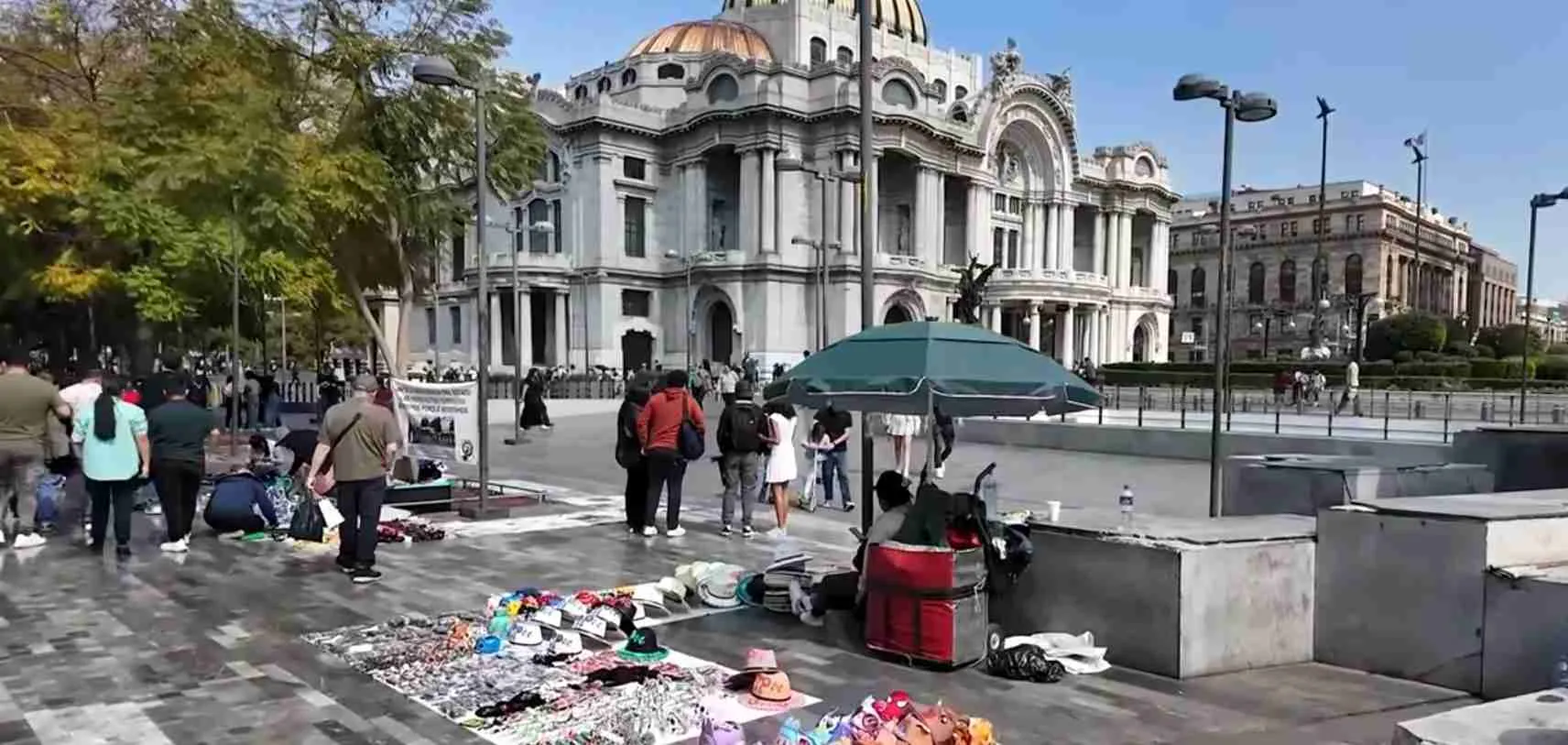
The Palace of Fine Arts anchors Alameda Central’s east end with its Art Nouveau-Art Deco exterior and marble interior housing murals by Mexico’s greatest 20th-century artists (entry $5, opens 10 AM Tuesday-Sunday). Spend 60 minutes touring permanent mural collections and rotating contemporary art exhibitions, then walk through Alameda Central’s tree-lined paths, fountains, and monuments including the Hemiciclo a Juárez memorial. Conclude the route at the Palacio de Correos (Postal Palace, free entry 9 AM – 5 PM Monday-Friday) whose magnificent interior features Art Nouveau ironwork, marble staircases, and golden elevator cage creating Instagram-worthy architectural photography opportunities. This core route covers 3.5 kilometers walking distance plus 3-4 hours site time, allowing lunch breaks at historic center restaurants or markets before afternoon museum visits or return to accommodations.
Expanded Historic Center Route with Markets (5-6 hours)
Build upon the classic route by adding La Merced Market, Mexico City’s largest traditional market three blocks south of the Zócalo, where 4,000+ stalls sell produce, meats, prepared foods, and household goods creating sensory overload of colors, smells, and authentic market culture. Arrive 9-10 AM when market activity peaks, walking interior corridors observing merchandise diversity, sampling street food from market stalls ($3-5 for quesadillas, tacos, tamales), and photographing the organized chaos of wholesalers, retailers, and shoppers negotiating daily commerce. Exercise standard market caution securing bags and avoiding jewelry or phone displays in dense crowds, though violent crime remains rare and vendors generally friendly toward curious tourists documenting traditional market traditions threatened by supermarket expansion in contemporary Mexico.
Continue the expanded route including Calle Madero pedestrian corridor connecting the Zócalo to Alameda Central, where colonial buildings house restaurants, shops, and the Casa de los Azulejos (House of Tiles) featuring Talavera-covered facade and interior courtyard restaurant worth 20-minute photo stop. Add the Franz Mayer Museum ($4 entry, opens 10 AM Tuesday-Sunday) near Alameda Central displaying decorative arts collections in a restored colonial monastery, or the Museum of Memory and Tolerance ($7 entry, opens 9 AM Tuesday-Sunday) with Holocaust exhibits and human rights programming providing sobering counterpoint to the architectural and artistic focus dominating most historic center routes.
Extend further north to the Plaza de las Tres Culturas showcasing Aztec temple ruins, colonial church, and modern apartment towers symbolizing Mexico’s three cultural layers (pre-Hispanic, colonial, contemporary) in single location 2 kilometers north of the Zócalo. Access via metro Line 3 to Tlatelolco station or 25-minute walk from central area, viewing the plaza’s architectural juxtaposition and controversial history as site of the 1968 student massacre. Return to central area via metro or walk south through neighborhoods transitioning from tourist center to working-class districts observing authentic daily life beyond the polished historic core marketed to visitors, though maintaining vigilance as gentrification levels decrease and street conditions vary block by block in these peripheral zones.
Sunday Historic Center Special Route
Sundays transform the Historic Center with special programming including bicycle circulation on Paseo de la Reforma (cars banned 8 AM – 2 PM), free museum days at many institutions though creating larger crowds, and enhanced street life with families occupying plazas and street vendors expanding operations. Start with the Sunday bicycle program renting bikes at Reforma stations for $1-2 hourly, cycling the 12-kilometer loop from Chapultepec Park through the Historic Center and back, or focus walking routes on free-entry museums including the National Art Museum (MUNAL, normally $5), Palace of Fine Arts permanent collection (temporary exhibitions still charged), and Chapultepec Castle (free Sunday entry though long queues form by 10 AM).
The Zócalo hosts special Sunday events including indigenous dance performances, political demonstrations, and cultural programming creating vibrant atmosphere though sometimes restricting plaza access during setup or major gatherings. Visit the Tianguis Cultural del Chopo alternative market (open Saturdays but extending Sunday activities) north of the Historic Center near San Fernando metro station, where punk rockers, goths, and counterculture enthusiasts trade vinyl records, vintage clothing, and subcultural items creating bohemian atmosphere distinct from mainstream tourism corridors. Sunday dining presents challenges as many restaurants close or operate limited hours, requiring advance research or acceptance of reduced options compared to weekday variety and availability.
Roma Norte Walking Route for 2026 (2-3 hours)
Begin at Glorieta de los Insurgentes metro station (Lines 1 and B), walking south on Insurgentes Avenue 5 minutes to Álvaro Obregón, Roma Norte’s main commercial corridor. Turn west on Álvaro Obregón walking 800 meters through the neighborhood’s heart passing cafes, boutiques, galleries, and restaurants showcasing Roma’s transformation from aristocratic early 20th-century suburb to contemporary creative district. The street’s wide sidewalks, tree canopy providing shade, and frequent café tables invite pauses for coffee, people watching, and neighborhood atmosphere observation while resting feet between walking segments.
Turn north on Orizaba Street walking past the iconic Edificio Balmori at Colima 240, an Art Nouveau apartment building with ornate facade and turret creating Roma’s most photographed architectural landmark. Continue north to Plaza Río de Janeiro, Roma’s circular tree-lined plaza with Fuente de Cibeles replica fountain at center, surrounded by restaurants, bars, and the Casa Lamm cultural center (free entry to courtyards, café, bookstore) hosting rotating art exhibitions in a restored Porfirian mansion. Walk the plaza’s perimeter observing Art Nouveau and Art Deco buildings, then exit east on Durango Street toward Plaza Luis Cabrera, another of Roma’s intimate neighborhood plazas with weekend markets, outdoor restaurants, and local families creating community focal point away from Álvaro Obregón’s tourist-commercial energy.
Loop back west on Córdoba Street viewing residential architecture representing Roma’s early 1900s development period when wealthy families built European-inspired mansions and apartments, with notable buildings clustered along Córdoba, Jalapa, and Orizaba streets showcasing varied interpretations of Art Nouveau, neoclassical, and eclectic styles. Conclude at Parque México’s northern edge (10-minute walk south from Plaza Luis Cabrera) transitioning from Roma into adjacent Condesa neighborhood, or walk east toward Mercado Roma, the upscale food hall at Querétaro 225 where artisanal vendors, chef counters, and rooftop terrace provide lunch or snack options before continuing exploration. This 3-kilometer core route requires 2-3 hours including photo stops and plaza pauses, extending to 4-5 hours with museum visits, extended café breaks, or shopping at neighborhood boutiques selling local designers and international brands unavailable in mall locations.
Condesa Walking Route for 2026 (2-3 hours)
Start at Parque México’s southern entrance near Nuevo León and Amsterdam Avenue, walking clockwise around the oval park’s 1.2-kilometer perimeter path lined with mature trees, Art Deco fountains, and sculptures creating Condesa’s green centerpiece. The park, designed on the former Condesa horse racing track (the oval remains visible in layout), contains children’s playgrounds, exercise equipment, weekend vendors, and dog walkers epitomizing chilango park culture where outdoor socializing extends from early morning joggers through late evening social gatherings. Exit at the northeast corner walking east on Michoacán Street past cafes, bookstores, and the Cine Tonalá cultural venue screening art films and hosting live music, then turn north on Juan Escutia viewing Art Deco apartment buildings from the 1920s-30s representing Condesa’s development peak.
Continue north to Parque España, Condesa’s linear park running 600 meters along the former Acequia Real canal with fountains, benches, and tree cover creating shaded walking corridor perpendicular to Parque México’s oval. Walk the park’s length observing apartment facades, then loop back south on Amsterdam Avenue’s outer loop passing restaurants, bars, and ice cream shops clustered around the park creating Condesa’s densest commercial activity. Notable stops include Panadería Rosetta for pastries and coffee, Blend Station for specialty coffee, or any of dozens of restaurants representing Mexico City’s culinary sophistication in this compact neighborhood where dining density rivals Manhattan or Paris concentration within 8-block radius.
Extend the Condesa route by continuing south across Avenida Insurgentes into Hipódromo neighborhood, Condesa’s lesser-known extension featuring similar Art Deco architecture but quieter residential feel with fewer tourists and more local daily life. Walk south on Amsterdam to Plaza Popocatépetl, a small triangular park anchoring Hipódromo’s commercial node, then explore surrounding streets including Sonora, Guanajuato, and Tehuantepec viewing neighborhood architecture and corner shops serving local residents. Return north to central Condesa via Tamaulipas Street passing Cicatriz Café, Lardo, and Fonda Fina among other respected neighborhood restaurants, concluding the expanded route at Parque México for final rest or plaza time before metro departure from Chilpancingo (Line 9) or Patriotismo (Line 9) stations.
Combined Roma-Condesa Walk for 2026 (4-5 hours)
Join Roma Norte and Condesa routes in comprehensive exploration covering both neighborhoods’ highlights across 6-7 kilometer route requiring full afternoon or morning commitment. Begin at Insurgentes metro (Lines 1 and B), walk south into Roma Norte following the previous Roma route to Plaza Luis Cabrera, then continue south across Avenida Chapultepec into Condesa arriving at Parque México’s northern edge. Walk the Parque México perimeter, explore surrounding commercial streets, and continue to Parque España before looping back north through Condesa’s restaurant district toward Roma.
Return via different streets from your southern approach, walking north on Michoacán or Nuevo León through Condesa’s residential core then crossing back into Roma via side streets like Mazatlán or Medellín observing architectural transitions between neighborhoods. Stop at Mercado Roma for lunch or refreshments, visit Casa Lamm for art exhibitions, or pause at multiple cafes throughout the route breaking the extended walking into manageable segments. The combined route showcases Mexico City’s most livable neighborhoods in single comprehensive walk demonstrating urban design principles creating pedestrian-friendly density, mixed-use development, and preserved architectural heritage generating neighborhood vitality absent from car-dependent suburbs or purely commercial districts.
Conclude the combined route at Glorieta de Cibeles fountain at the Roma-Condesa border, a major traffic circle with replica Spanish fountain marking the traditional boundary between neighborhoods. Rest at surrounding benches or café tables before metro return, or extend into evening exploring the area’s exceptional restaurant and bar scene concentrated within 10-minute radius of this central location. The full combined route requires 4-5 hours walking time plus 1-2 hours for meals, museum visits, or extended café stops, creating comprehensive half-day or full-day neighborhood immersion showcasing why many Mexico City visitors allocate more time to these residential districts than the Historic Center’s monumental attractions.
Coyoacán Walking Route for 2026 (2-3 hours)
Access Coyoacán via metro Line 3 to Coyoacán station, then 15-minute walk south to the historic center, or take metro to Viveros (Line 3) for 10-minute walk reaching the neighborhood from the north. Begin at the interconnected Jardín Centenario and Plaza Hidalgo where weekend craft markets operate Friday-Sunday, street food vendors sell esquites (corn cups) and churros, and locals gather around the 16th-century San Juan Bautista Church anchoring the colonial plaza layout. Spend 30-45 minutes absorbing plaza atmosphere, visiting the church interior, and exploring surrounding arcades with cafes, bookstores, and tourist-oriented shops before venturing into residential streets.
Walk 10 minutes north on Allende Street to the Frida Kahlo Museum (Casa Azul) at Londres 247, the cobalt blue house where Mexico’s most famous artist lived most of her life (entry $13, book timed entry online to avoid queues). After the museum visit requiring 60-75 minutes, walk 5 minutes to the Leon Trotsky Museum at Río Churubusco 410 (entry $4) viewing the fortified house where the exiled revolutionary lived 1939-1940 before assassination. These two museums anchor Coyoacán’s cultural offerings combining artistic achievement and political intrigue in adjacent locations creating thematic pairing unique in Mexico City museum landscape.
Return to the central plazas via different streets like Francisco Sosa, Coyoacán’s most beautiful colonial street lined with historic buildings, walls concealing mansion courtyards, and occasional contemporary insertions maintaining the neighborhood’s architectural evolution. Walk west from the plaza along Higuera Street to the Mercado Coyoacán for traditional market atmosphere and lunch options ($8-15 for complete meals at market food stalls), then explore residential streets north of the plazas including Malintzin, Aguayo, and Cuauhtémoc viewing neighborhood architecture and daily life in this formerly independent colonial town absorbed into greater Mexico City during 20th-century urban expansion. Conclude the route back at central plazas for café time, ice cream at one of several heladerías, or bookstore browsing at venues like Porrúa before evening return to central neighborhoods via metro from Coyoacán or Viveros stations.
Free Walking Tour Options for 2026
Historic Center Free Tours
Multiple operators provide free Historic Center tours on tip-based compensation model, meeting at the Zócalo (typically at cathedral steps) daily at 10 AM and 2 PM with no advance booking required. Tours last 2.5-3 hours covering the Zócalo, Metropolitan Cathedral exterior, Templo Mayor site exterior, Palace of Fine Arts exterior, and major colonial streets with historical narratives spanning Aztec origins through contemporary Mexico City. Guides work for tips only with suggested gratuities $10-15 per person reflecting tour quality, group size, and personal budget, though some participants tip more generously ($20+) for exceptional guides while others contribute less ($5-8) when budget constrained or service quality disappointed expectations.
Major free tour operators include Estacion Mexico Free Walking Tours, Free Walking Tours Mexico City, and Mexico Free Walking Tour, each offering similar routes with guide quality varying by individual guide rather than company affiliation. Check TripAdvisor or Google reviews for recent feedback on specific guides, arrive 10-15 minutes before departure time for introductions and group organization, and expect groups of 15-30 participants creating manageable sizes for hearing guides and asking questions while maintaining social dynamics versus overwhelming crowd feeling of poorly managed tours with 50+ participants straining guide attention and group cohesion.
Roma-Condesa Architecture Tours
Free walking tours focusing on Roma-Condesa Art Nouveau and Art Deco architecture depart Glorieta de Cibeles fountain typically Saturday-Sunday at 11 AM, covering both neighborhoods’ highlights during 2.5-3 hour walks with architectural emphasis. These tours attract smaller groups (10-20 participants) with guides often having architecture or art history backgrounds providing deeper technical context than general Historic Center tours, though operating less frequently (weekends only) requiring schedule coordination. Tip expectations remain similar at $10-15 per person with architecture enthusiasts sometimes tipping more generously ($15-20) for specialized expertise exceeding general tour guide knowledge.
Street Food Walking Tours (Paid Specialty)
Paid street food tours cost $40-60 per person including 5-7 tastings at markets, street stands, and neighborhood taquerías during 3-4 hour walking routes through the Historic Center or Roma-Condesa areas. Tour costs $40-60 in 2026, check operator websites for current rates as pricing may vary seasonally. These specialty tours provide food value ($15-20 worth of tastings), cultural context about Mexican cuisine, safe venue selection eliminating concerns about street food hygiene for nervous first-timers, and guided market navigation teaching participants how to order and what to try during subsequent independent explorations. Major operators include Eat Like a Local, Sabores Mexico Food Tours, and Club Tengo Hambre, with advance booking required (typically 2-7 days ahead) as tours limit group sizes to 12-15 participants maintaining intimacy and allowing guide interaction impossible in larger formations.
Practical Walking Tour Tips for 2026
Hydration and Snacks
Carry 1-2 liter reusable water bottles refilling at hotels, restaurants, or convenience stores before and during walks, as Mexico City’s 7,350-foot altitude increases dehydration risk beyond sea-level expectations particularly during physical activity. Drink 8-10 glasses daily minimum with additional intake during walking days, monitoring for early dehydration signs including headache, fatigue, or dizziness requiring immediate water consumption and shaded rest. Bring energy snacks like granola bars, nuts, or dried fruit supplementing larger meals and providing quick energy during extended routes when restaurant stops prove inconvenient or timing doesn’t align with meal schedules, though Mexico City’s abundant street food vendors offer alternative snacking options at frequent intervals along most tourist walking routes.
Photography Etiquette and Tips
Photograph architecture, street scenes, and public spaces freely though requesting permission before photographing individuals, market vendors’ merchandise displays, or interior courtyards where residents retain privacy expectations despite architectural interest. Churches allow exterior photography always though interior photography rules vary by institution with some prohibiting flash, tripods, or any photography during masses requiring discretion and respect for religious activities. The Historic Center’s pedestrianized zones enable easy photography without vehicle traffic concerns, while Roma-Condesa’s residential streets require awareness of passing cars and sidewalk obstacles when composing shots or reviewing images on camera screens creating distraction from surroundings.
Morning light 8-10 AM provides optimal conditions for architectural photography with directional illumination revealing building details, while golden hour 5-7 PM creates warm tones enhancing colorful colonial facades and Art Deco details. Midday overhead sun produces harsh shadows and washed-out colors requiring shade-seeking or black-and-white photography approaches emphasizing form over color. Bring extra phone batteries or power banks maintaining charge through full-day walking and extensive photography, as GPS navigation combined with frequent photo capturing rapidly depletes batteries leaving travelers without navigation or documentation capabilities during final route segments or evening returns.
Rest and Recovery Strategies
Build rest stops into walking routes every 60-90 minutes sitting in plazas, churches (quiet reverent rest spaces), or cafes allowing foot recovery, bathroom access, and mental breaks from constant stimulation and navigation demands. Extended walking days benefit from midday hotel returns for 2-3 hour breaks including lunch, shoe changes, shower, and horizontal rest before evening walks resuming with restored energy and fresh mindset. Alternating walking days with less physical activities like museum-focused days, rest days, or vehicle-based excursions prevents overuse injuries, foot problems, and general exhaustion that multi-day intensive walking creates when travelers push through fatigue rather than recognizing body signals requiring moderation and recovery time.
Treat minor foot issues immediately before they escalate into major problems, with pharmacies selling blister treatments, pain relievers, and foot care products throughout tourist neighborhoods. Consider afternoon cab or metro returns when feet hurt badly rather than walking hotel returns creating additional damage and next-day walking impairment, accepting small transportation costs ($3-5 Uber rides) versus jeopardizing remaining trip days through stubborn insistence on walking everywhere regardless of physical consequences. Mexico City’s extraordinary walkability makes foot health paramount for trip enjoyment, with comfortable shoes, appropriate pacing, and intelligent rest strategy enabling multi-day pedestrian exploration sustaining energy and enthusiasm versus exhaustion and injury cutting short the urban discovery this remarkable capital enables through patient, moderate walking approaches.
Frequently Asked Questions About Mexico City Walking Tours
Do I need to book free walking tours in advance?
Free walking tours require no advance booking with participants simply arriving at specified meeting points (typically Zócalo cathedral steps for Historic Center tours) 10-15 minutes before departure times of 10 AM and 2 PM daily. Groups accommodate all arrivals though some tours limit sizes at 30 participants for guide interaction quality, potentially requiring overflow groups with second guides when demand exceeds single-group capacity. The no-booking model provides flexibility for same-day decisions based on weather, energy levels, and schedule changes, though arriving early (15-20 minutes before departure) secures positions when tour capacity limits might exclude late arrivals during peak tourist season December-March when demand maxim izes.
Are Mexico City sidewalks wheelchair accessible?
Historic Center sidewalks present significant accessibility challenges with narrow widths, uneven cobblestones, occasional missing sections, and rare curb cuts making wheelchair navigation difficult or impossible on many routes. Major thoroughfares like Avenida Madero maintain better conditions though still falling short of ADA-equivalent standards, while secondary colonial streets often lack proper sidewalks entirely requiring street-level travel sharing space with vehicles. Roma-Condesa neighborhoods offer moderately better accessibility with wider concrete sidewalks and some curb cuts, though still presenting obstacles including tree roots creating uneven surfaces, parked cars blocking paths, and construction zones temporarily eliminating passage forcing street detours creating safety concerns for mobility-limited visitors.
Can I do walking tours with young children?
Walking tours with children under 8 present challenges from extended duration (2-3+ hours), lack of child-specific content in standard tours, and stamina requirements exceeding most young children’s comfortable limits particularly in heat or on uneven surfaces. Consider shortened self-guided routes focusing on plazas with playgrounds (Parque México, Alameda Central), breaking full routes into 45-60 minute segments with frequent stops, and utilizing strollers where sidewalk conditions permit though Historic Center cobblestones make strollers impractical requiring baby carriers for infants. Children 8+ handle standard walking tours better though may bore during extended historical narratives suggesting family-focused paid tours with child-appropriate content, activity breaks, and parent-child pacing versus adult-oriented free tours maintaining steady movement and dense information delivery unsuited to short attention spans.
What should I do if I get lost during self-guided walks?
Download offline maps through Google Maps or Maps.me before walks ensuring navigation capability when cellular data drops, mark your hotel location prominently allowing quick route calculation back to accommodation from any position, and learn basic Spanish direction phrases for local assistance. Mexico City residents generally respond helpfully to polite inquiries with many young people speaking some English particularly in tourist neighborhoods, while showing phone maps or written addresses facilitates communication when language barriers limit verbal explanations. Major landmarks like the Zócalo, Glorieta de Insurgentes, or Parque México serve as navigation anchors recognizable to taxi or Uber drivers when verbal address communication fails, enabling transportation back to starting points or accommodations when thoroughly disoriented and requiring assistance beyond what maps provide.
Are evening walking tours safe in Mexico City?
Evening walks through main tourist areas including the Historic Center’s major streets, Roma-Condesa commercial corridors, and Polanco remain generally safe with consistent pedestrian traffic, restaurant activity, and police presence until 10-11 PM. Avoid isolated residential streets, parks after dark, and deserted areas even in safe neighborhoods where decreased foot traffic reduces social oversight, using main illuminated thoroughfares and Uber for returns after 11 PM when pedestrian numbers drop and comfort with nighttime navigation decreases. Women traveling alone should exercise additional caution with evening walks, considering group tours or companions for after-dark exploration, though millions of chilangos navigate evening streets safely daily suggesting reasonable precautions enable night activities without paranoia preventing restaurant dinners, bar visits, or evening plaza atmosphere unique to Latin American urban culture extending well past North American or European comfort zones with late-night public space usage.
How much walking is involved in a typical Mexico City day?
Full-day Mexico City exploration involves 10,000-15,000 steps (8-12 kilometers) combining walking tours with museum interiors, metro station navigation, and neighborhood exploration between major sites, requiring moderate fitness and appropriate footwear preventing blisters and fatigue. Dedicated walking tour days focusing on single neighborhoods like Historic Center or Roma-Condesa cover 5-8 kilometers over 3-5 hours, while comprehensive multi-neighborhood days can reach 15-20 kilometers when adding metro walks and connection distances between primary destinations. Build rest days or reduced-walking days into multi-day Mexico City stays preventing overuse injuries and exhaustion, with museum-focused days, day trips using transportation, or afternoon hotel rest breaks balancing intensive walking days maintaining sustainable energy levels across extended visits.
What is the best neighborhood for walking in Mexico City?
The Historic Center provides the highest concentration of major attractions within walkable distance though dealing with crowds, traffic, and urban grit making it intense rather than relaxing pedestrian environment. Roma-Condesa offers the most pleasant walking experience combining tree-lined streets, architectural interest, café culture, and neighborhood atmosphere without overwhelming tourist crowds or vehicle dominance creating enjoyable strolling independent of must-see sites. Coyoacán delivers colonial charm, cultural attractions (Frida Kahlo Museum), and intimate scale though requiring more walking between dispersed sites compared to Roma-Condesa’s compact density. Choose neighborhoods matching priorities: Historic Center for maximum cultural density, Roma-Condesa for lifestyle immersion and pleasant urban walking, Coyoacán for colonial atmosphere and specific museums, Polanco for upscale shopping and dining within walking-friendly layout.
How do Mexico City walking tours compare to other major cities?
Mexico City walking tours offer exceptional value through free tip-based models delivering professional guided experiences for $10-15 versus $20-40 fixed-price tours common in European or North American cities, while covering comparable architectural and historical content spanning 500+ years of continuous urban development. The city’s extraordinary density of baroque architecture, Art Nouveau-Art Deco neighborhoods, and pre-Hispanic archaeological sites within urban fabric creates unique combinations unavailable in purely colonial, industrial, or modern cities lacking such temporal and cultural layering. Challenges include altitude affecting stamina, traffic and pollution detracting from pedestrian comfort versus European pedestrian zones, and uneven infrastructure compared to first-world sidewalk conditions, though passionate guides, affordability, and content richness overcome infrastructure limitations creating memorable walking experiences rivaling world-class capitals.
Can I combine walking tours with public transportation?
Metro connections enable efficient multi-neighborhood walking days using $0.25 rides repositioning between districts like Historic Center and Roma-Condesa (15 minutes via Line 1) or Coyoacán and central areas (20 minutes via Line 3), dedicating 2-4 hour blocks to intensive walking within each neighborhood before metro transport to next destination. This strategy maximizes geographic coverage while maintaining focused pedestrian exploration within compact zones versus attempting to walk 5-10 kilometer distances between neighborhoods consuming hours better spent on site engagement. Calculate 15-20 minute metro connections including platform waits, train time, and station exits when planning multi-neighborhood days, allowing breaks between walking segments for subway rest, bathroom access, and mental transition between districts rather than continuous all-day walking creating exhaustion and diminishing returns on cultural absorption and authentic neighborhood observation.
What makes a good walking tour guide?
Exceptional guides combine historical knowledge with engaging storytelling, answering questions thoroughly, maintaining appropriate pacing for group fitness levels, and projecting enthusiasm for subjects creating contagious interest versus rote fact recitation. Good guides demonstrate cultural sensitivity, acknowledge Mexico’s complex history honestly, and provide contemporary context connecting historical narratives to current Mexican life rather than treating city as static museum. Practical skills include clear speaking voices audible to 20-person groups, strategic positioning for site visibility and photography opportunities, time management delivering promised content within advertised durations, and graceful handling of disruptions from weather, crowd conditions, or individual participant needs requiring flexibility beyond rigid script adherence making tours feel alive and responsive rather than mechanical and predetermined.