
Meteora Best Tours 2026: Complete Guide to Monasteries, Hiking & Sunset Experiences
Meteora’s cliff-top monasteries and towering rock formations demand strategic tour selection to maximize your experience of this UNESCO World Heritage Site. From half-day sunset tours starting at €25 to comprehensive multi-day packages, choosing the right tour determines whether you’ll fight crowds at Great Meteoron or discover hidden hermit caves with expert local guides who know precisely when each monastery welcomes fewer visitors.
Key Takeaways: Meteora Tours 2026
- Half-day tours cost €25 per person and cover 3 monasteries with sunset or hiking options, providing excellent value for time-constrained travelers visiting Meteora in 2026
- Monastery entrance fees are €5 per site (free for children under 12), payable only in cash at each monastery entrance
- Day trips from Athens start at €59-60 per person including transportation, though the 12-hour journey limits time at Meteora to approximately 4 hours
- Morning hiking tours (€25) avoid peak crowds at popular monasteries between 10:00-14:00 when tour buses create parking congestion
- Small-group tours limited to 10 participants provide personalized experiences and access to hidden trails most visitors never discover
- Sunset tours departing 16:00-17:00 offer optimal photography lighting and significantly smaller crowds than midday visits
People Also Ask About Meteora Tours 2026
How much do Meteora tours cost in 2026?
Half-day Meteora tours cost €25 per person in 2026 for standard monastery, sunset, or hiking experiences departing from Kalambaka or Kastraki. Day trips from Athens range €59-60 per person including round-trip transportation and guided monastery visits. E-bike tours start around €47 per person for 4-hour experiences, while private tours command premium pricing typically 2-3 times higher than group rates. Multi-day packages combining accommodation, meals, and multiple tour experiences range €150-300 per person depending on hotel category and included activities. Adventure tours like the Great Saint hiking and scramble experience cost more due to specialized equipment and limited group sizes of 3 participants per guide.
What’s the best Meteora tour for first-time visitors in 2026?
First-time visitors to Meteora in 2026 should book the half-day monastery sightseeing tour (€25) departing mid-morning around 09:00-10:00 from Kalambaka accommodations. This tour visits 3 of the 6 active monasteries chosen based on daily opening schedules, provides exterior views of all monastery sites, includes transportation between widely-spaced locations, and delivers expert guide commentary about Byzantine history and monastic traditions. The tour typically visits Great Meteoron or Varlaam (the two largest), one smaller monastery like Rousanou or Agios Nikolaos, and includes photo stops at optimal viewpoints. Total duration spans 4 hours, returning visitors to Kalambaka by early afternoon for independent exploration or connection with sunset tours. This combination of breadth and depth provides comprehensive Meteora orientation without the exhaustion of attempting self-guided visits across the sprawling monastery circuit.
Are sunset tours worth it in Meteora 2026?
Sunset tours in Meteora represent exceptional value at €25 per person in 2026, offering dramatically improved photography conditions, significantly reduced crowds compared to midday visits, and access to optimal viewpoints that independent visitors struggle to locate. Tours depart 16:00-17:00 depending on seasonal sunset timing, visit one monastery interior (typically Agios Stefanos or Agios Nikolaos), explore hermit caves at Bandovas, and position participants at secret sunset viewpoints away from the crowded Great Meteoron and Varlaam parking areas where most tourists congregate. The soft golden-hour lighting transforms the limestone pinnacles, creating photography opportunities impossible during harsh midday sun. Temperatures drop 5-10°C from afternoon peaks, making summer visits more comfortable. Tour guides time arrivals precisely to avoid overlapping with other groups at sunset spots, ensuring unobstructed views as the sun drops behind the Pindos Mountains.
Do I need a guide for Meteora or can I visit independently in 2026?
Independent Meteora visits work for photographers prioritizing specific viewpoints and travelers comfortable navigating winding mountain roads, but guided tours provide superior value for most visitors in 2026. Guides know which 3 monasteries open each day (each closes different days), navigate limited parking at Great Meteoron, Varlaam, and Agios Stefanos where independent visitors face 30-60 minute waits during peak hours (10:00-14:00), access hidden hermit caves and historical monks’ paths unmarked on tourist maps, and explain Byzantine fresco symbolism and monastic traditions that transform monastery visits from sightseeing to cultural education. The €25 tour cost equals roughly one hour of car rental plus fuel, yet eliminates navigation stress, parking frustration, and the common mistake of arriving at closed monasteries. Self-guided visits make sense for photographers staying multiple days who can visit at dawn and dusk when tours don’t operate, or travelers specifically seeking solitary contemplation rather than historical context.
Extended multi-day tours – 5+ days
Featured Meteora Multi-Day Tour Packages
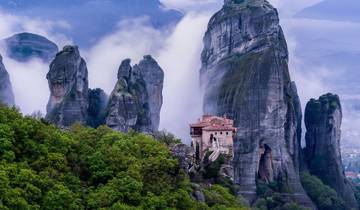
2 days
Two Days Tour from Athens to Meteora
- ✓ Comprehensive Meteora tour
- ✓ Expert local guides included
- ✓ All accommodation arranged
- ✓ Transportation provided

6 days
6 Days in Athens, Sightseeing Tourist Bus, Delphi and Meteora Tour & Day Cruise.
- ✓ Comprehensive Meteora tour
- ✓ Expert local guides included
- ✓ All accommodation arranged
- ✓ Transportation provided

2 days
2-Day Delphi & Meteora Tour
- ✓ Comprehensive Meteora tour
- ✓ Expert local guides included
- ✓ All accommodation arranged
- ✓ Transportation provided
5 days
5-Day Journey Through Classical Greece
- ✓ Comprehensive Meteora tour
- ✓ Expert local guides included
- ✓ All accommodation arranged
- ✓ Transportation provided
Multi-day tour packages powered by TourRadar. Prices and availability subject to change.
Introduction: Planning Your Meteora Tour Experience 2026
Meteora’s transformation from medieval monastic refuge to international tourism destination creates a complex landscape where tour selection determines experience quality more than at most UNESCO sites. The six active monasteries perch on limestone pillars spread across 5 kilometers of winding mountain roads, each opening different days on rotating schedules, creating logistical challenges that guided tours navigate expertly while independent visitors often solve through frustrating trial and error.
Tour operators based in Kalambaka and Kastraki have refined their offerings through decades of experience, identifying optimal timing to avoid the tour bus congestion that plagues Great Meteoron and Varlaam between 10:00-14:00, discovering hidden trails to hermit caves that predate the monasteries by centuries, and maintaining relationships with monastery communities that provide cultural context unavailable through self-guided visits. The best tours balance efficiency with depth—visiting enough sites to provide comprehensive understanding while allowing sufficient time at each location for genuine engagement rather than rushed photography.
The 2026 Meteora tour market segments clearly into half-day local experiences (€25), full-day Athens excursions (€59-60), specialized adventure activities (hiking, e-biking, rock climbing), and multi-day packages incorporating regional destinations. Understanding these categories and their distinct advantages allows travelers to match tours to their specific interests, fitness levels, time constraints, and budget priorities.
This guide provides detailed analysis of each tour category with verified 2026 pricing, identifies optimal combinations for different visitor profiles, explains booking strategies that maximize value, and reveals insider knowledge about timing, crowds, and hidden experiences that separate exceptional Meteora visits from merely adequate ones.
Understanding Meteora Monastery Visits in 2026
Meteora’s six active monasteries—Great Meteoron, Varlaam, Rousanou, Agios Nikolaos Anapafsas, Agios Stefanos, and Holy Trinity—function as living religious communities first and tourist attractions second, creating visiting protocols that differ significantly from typical heritage sites. Each monastery charges €5 entrance fee (children under 12 free) payable only in cash at the entrance, maintains strict dress codes enforced without exception, and closes on specific weekdays on rotating schedules that change seasonally.
The €5 monastery entrance fee supports ongoing conservation of Byzantine frescoes, maintenance of precarious access staircases (140-300+ steps depending on monastery), and sustenance of the small monastic communities still residing in these structures. Visitors planning to enter all six monasteries budget €30 per person for entrance fees, though most tourists visit 3-4 monasteries during standard stays, spending €15-20 on admissions. This fee structure rewards guided tours that pre-select the best combination of open monasteries rather than independent visitors who might drive to closed sites.
Opening hours vary significantly between summer (April 1-October 31) and winter seasons. Great Meteoron operates 09:30-15:00 in summer, closing Tuesdays and expanding closure to Tuesdays, Wednesdays, and Thursdays in winter when hours contract to 09:30-14:00. Varlaam opens 09:00-16:00 summer (closed Fridays) and 09:30-15:00 winter (closed Thursdays and Fridays). Rousanou maintains 09:00-16:00 summer hours closing Wednesdays, reducing to 09:00-14:00 winter with same closure day. This complexity explains why organized tours deliver superior value—guides track daily schedules and route tours around closures.
Dress code enforcement remains absolute in 2026. Women must wear skirts or dresses covering knees (trousers prohibited even if modest), with shoulders covered by tops or shawls. Men require long trousers and sleeved shirts covering shoulders. Monasteries provide wrap-around skirts at entrances for women lacking appropriate attire, but this adds time and minor embarrassment that proper preparation avoids. Tour operators remind participants about dress codes in confirmation communications, reducing denial-of-entry incidents.
Photography policies permit exterior and courtyard photography freely but restrict interior church photography in most monasteries. Great Meteoron and Varlaam allow interior photography without flash, while smaller monasteries prohibit all interior images to preserve sacred space atmosphere. Guides explain these distinctions and identify optimal exterior photography angles that capture architectural details and dramatic cliff positions.
Half-Day Meteora Tours 2026: Core Options and Pricing
Half-day Meteora tours priced at €25 per person represent the most popular option for 2026 visitors, offering excellent value through 4-hour guided experiences covering 3 monastery visits, transportation between sites, expert local guides, and hotel pickup/drop-off from Kalambaka and Kastraki accommodations. Tours operate morning (departing 09:00-10:00) and afternoon/sunset (departing 16:00-17:00) schedules, allowing visitors to combine both for comprehensive full-day coverage or select timing matching energy levels and photography priorities.
Morning monastery tours departing 09:00 provide advantages for visitors prioritizing interior access and detailed exploration. Guides select the optimal combination of 3 monasteries from daily opening schedules, typically including one major monastery (Great Meteoron or Varlaam), one medium-sized site (Rousanou or Agios Nikolaos), and one smaller monastery chosen for specific features like accessible entry (Agios Stefanos via bridge) or dramatic positioning (Holy Trinity). The €25 cost covers guide services, transportation, and organizational efficiency—visitors avoid navigation stress, parking difficulties, and confusion about which sites open each day.
These tours spend approximately 45 minutes at each monastery including entrance time, interior exploration, and photography. Great Meteoron visits include the katholikon (main church) with 16th-century frescoes, the old kitchen preserved with medieval implements, the ossuary displaying monks’ skulls arranged in patterns, and the museum housing Byzantine manuscripts and ecclesiastical vestments. Guides provide 15-20 minutes of historical context and architectural explanation, then allow 25-30 minutes for independent exploration and photography.
Group sizes typically range 8-10 participants for standard tours, small enough for personalized attention yet large enough to maintain €25 per person pricing. Premium small-group options limited to 4-6 participants cost €40-50 per person but provide enhanced guide interaction and flexibility for photography stops. Private tours for 2-4 people range €120-180 total (€30-60 per person depending on group size) with customizable itineraries allowing visits to specific monasteries or extended time at preferred sites.
Tour operators provide pickup from Kalambaka hotels, guesthouses, and Airbnb accommodations, with Kastraki village pickups included for properties in that nearby community. Pickup timing typically occurs 5-10 minutes before stated tour departure, so participants should wait ready in hotel lobbies or visible street locations 10 minutes early. Tours return to original pickup locations approximately 4 hours after departure, allowing afternoon flexibility for additional activities or rest.
Sunset Tours Meteora 2026: Timing, Pricing and Photography
Sunset tours departing 16:00-17:00 (timing adjusted seasonally for sunset variations) provide Meteora’s most dramatic visual experiences at the €25 per person price point matching morning tours. These specialized tours prioritize photography viewpoints, visit one monastery interior (typically Agios Stefanos or Agios Nikolaos chosen for operational hours and positioning), explore hermit caves predating monastery construction, and culminate at secret sunset viewpoints known to local guides but unmarked for independent visitors.
The tour structure balances cultural content with photography optimization. Departures begin with visits to Bandovas hermit caves, natural rock shelters inhabited by Orthodox hermits from the 11th-13th centuries before monastery construction began. Guides explain the progression from solitary hermitage to organized monastic communities, pointing out hand-carved niches for icons, smoke-blackened ceilings from centuries of candles, and narrow passages connecting cave systems. This 30-minute segment provides historical foundation that enriches subsequent monastery visits.
One monastery visit during sunset tours focuses on accessible options requiring minimal stair climbing to maximize time for sunset positioning. Agios Stefanos connects via small bridge rather than staircases, making it ideal for sunset tour pacing. The monastery houses remarkable frescoes, offers panoramic views toward Kalambaka and the Pindos Mountains, and includes a small museum displaying ecclesiastical artifacts. The €5 entrance fee applies as with all monastery visits, paid individually in cash.
The Byzantine Church of the Assumption of Virgin Mary in old Kalambaka receives brief stops on some sunset tour itineraries, showcasing 11th-century frescoes and demonstrating Meteora’s broader religious significance beyond the cliff-top monasteries. This 15-minute visit provides context about the region’s Christian heritage spanning centuries before and after monastery construction.
Sunset viewpoint positioning represents the tour’s culmination and primary value proposition beyond the €25 base cost. Guides select locations based on seasonal sun position, typically choosing elevated rock platforms offering 180-degree views of monastery silhouettes against sunset colors. Popular sites like Great Meteoron parking areas attract hundreds of tourists jostling for positions, while guide-known alternatives accommodate groups of 10-12 in peaceful settings with unobstructed views. Arrival timing occurs 20-30 minutes before sunset, allowing participants to select positions, set up cameras, and watch gradual light transitions.
Photography conditions during golden hour (final hour before sunset) transform Meteora’s limestone pinnacles from harsh midday gray to warm amber and orange tones that emphasize texture and dimensionality. The soft directional light creates dramatic shadows highlighting rock formations and monastery architecture. Guides familiar with photography advise on camera settings, optimal angles, and composition techniques maximizing the spectacular natural lighting. Sunset timing varies from approximately 17:00 in winter to 21:00 in summer, with tour departure times adjusted accordingly throughout the year.
Temperature advantages make sunset tours particularly valuable during summer 2026 visits. Afternoon temperatures in July-August reach 35-38°C (95-100°F), dropping to 25-28°C (77-82°F) by sunset as valley breezes develop. This 10°C cooling improves comfort dramatically compared to midday monastery visits when sun exposure and stair climbing combine for exhausting conditions. Evening tours also avoid the 10:00-14:00 peak when tour bus traffic creates parking congestion at major monasteries.
Hiking and Adventure Tours Meteora 2026
Hiking tours priced at €25 per person provide active alternatives to bus-based monastery circuits, following historical footpaths used by monks for centuries while accessing viewpoints and hermit caves invisible from roads. These 4-5 hour experiences cover approximately 7 kilometers with 200 meters elevation gain through moderate terrain suitable for reasonably fit participants without technical climbing experience.
Standard hiking tours depart 09:00 from Kalambaka or Kastraki accommodations, beginning with short bus transfer to trail starting points near Doupiani rock formations. Guides lead groups of 8-10 participants along established paths through forests and between rock pillars, explaining geological formation processes that created Meteora’s unique landscape over 60 million years. Early morning timing provides cooler temperatures for physical exertion and positions hikers at monasteries before tour bus arrivals create congestion.
Trail routes typically include visits to Ypapanti monastery ruins, small abandoned structures offering glimpses of monastic life before tourism development, and approach one major monastery (Great Meteoron or Varlaam) via traditional monk footpaths rather than modern vehicle roads. These ancient pathways involve stone staircases cut directly into rock faces, some sections quite steep but equipped with handrails and recently maintained for safety. The physical effort creates rewarding sense of achievement absent from bus-delivered visits.
Monastery visits during hiking tours follow the same €5 entrance fee structure as bus tours, with participants paying individually in cash at monastery gates. Guides coordinate timing to ensure visited monasteries operate on hiking tour days, avoiding the disappointment of reaching closed sites after significant physical effort. Interior visits last 30-40 minutes including guide explanations and independent exploration time.
The Great Saint hiking and scramble tour represents Meteora’s premier adventure experience for fit participants seeking challenge beyond standard hiking. Priced higher than basic tours due to specialized equipment and limited group size (3 participants per mountain guide maximum), this experience ascends the tallest rock pillar in Meteora through combination of hiking, easy scrambling requiring hands for balance, and via ferrata sections with safety cables and harnesses. Duration spans 3-3.5 hours with 400 meters elevation gain over approximately 3 kilometers.
Safety equipment including harnesses, helmets, and via ferrata gear is provided and fitted by professional mountain guides certified in technical climbing instruction. No previous climbing experience is required, but participants must demonstrate good physical fitness, comfort with heights, and sure-footedness on rocky terrain. The minimum age varies by operator but typically starts at 8-10 years for children demonstrating appropriate maturity and physical capability.
Summit views from Great Saint reveal panoramic perspectives across Meteora’s rock forest, the Thessalian Plain extending toward distant mountains, and monastery complexes from unique elevated angles impossible to achieve elsewhere. The accomplishment of reaching this dramatic summit through physical effort rather than vehicular access creates memorable experiences that participants consistently rate as Meteora visit highlights.
E-bike tours starting around €47 per person (prices vary by operator and tour length) provide middle-ground options between bus tours and hiking, covering greater distances than walking while maintaining outdoor engagement and physical activity. Electric pedal-assist technology allows participants to tackle Meteora’s hilly terrain without the exhaustion of traditional cycling, making these tours accessible to moderate fitness levels.
Typical e-bike routes span 15-20 kilometers over 4 hours, visiting all six monastery exteriors for photography, entering 1-2 monastery interiors (entrance fees additional), exploring Kastraki village and surrounding countryside, and accessing viewpoints via country roads closed to cars. Small group sizes (usually 6-10 participants) allow guides to adjust pacing for different fitness levels while maintaining cohesive tour timing.
Day Trips from Athens to Meteora 2026
Day trips from Athens to Meteora start at €59-60 per person in 2026, providing budget-conscious access to this UNESCO site for travelers based in the capital without overnight accommodation costs. However, the journey requires realistic expectation management—round-trip transportation consumes 8-9 hours of a typical 13-14 hour tour, limiting actual Meteora exploration to 4-5 hours compressed into midday periods when crowds and heat reach their peak.
Standard Athens day trip itineraries depart 07:00-08:00 from central meeting points near Larissis Station (some operators offer hotel pickups for premium pricing). Modern air-conditioned coaches equipped with WiFi and USB charging ports make the 350-kilometer journey to Kalambaka in approximately 4.5 hours including one rest stop. The route traverses the Thessalian Plain with views of agricultural landscapes and distant mountains, arriving Meteora around 12:00-12:30.
Meteora exploration during Athens day trips typically includes visits to 3 monasteries chosen from daily opening schedules, with approximately 30-40 minutes allocated per site including entrance time, interior exploration, and photography. Tour guides provide historical context and monastery explanations similar to local half-day tours, though compressed timeframes reduce opportunities for detailed discussion and questions. The €5 per monastery entrance fee applies as additional cost beyond the €59-60 base tour price.
Lunch options vary by operator and tour package. Budget tours starting at €59 designate 45-60 minute breaks in Kalambaka where participants purchase meals independently at tavernas (budget €10-15 for lunch). Premium tour packages priced €75-90 include traditional Greek lunch at selected restaurants, eliminating meal planning stress and providing guaranteed seating during busy midday periods. Included lunches typically feature regional specialties, Greek salad, bread, and soft drinks or house wine.
Return journeys depart Meteora 16:00-17:00, arriving Athens 21:00-22:00 depending on traffic conditions. This timing positions travelers back in the capital for late dinner but eliminates evening activities, making these tours most suitable for visitors with limited Greece itinerary time who prioritize Meteora inclusion despite abbreviated experience depth.
Alternative transportation approaches provide greater flexibility while requiring more planning. Independent train travelers from Athens reach Palaiofarsala station (approximately 4 hours) then transfer to connecting bus service to Kalambaka, though this option was disrupted by 2023 storm damage affecting rail infrastructure. Current travelers should verify train service restoration status or consider the direct coach service from Athens to Meteora departing Larissis Station 08:00, arriving Kalambaka 12:30, offered by some tour operators for €30-35 one-way.
Multi-day packages combining Athens departure, overnight Meteora accommodation, comprehensive site visits, and return transportation provide superior value for travelers with schedule flexibility. Two-day/one-night packages priced €150-200 per person (based on double occupancy) include round-trip train or bus transportation, mid-range hotel accommodation, sunset tour on arrival day, morning hiking or monastery tour second day, and all necessary transfers. This approach eliminates the exhausting 13-14 hour day trip schedule while allowing sunset and sunrise photography impossible on single-day excursions.
Specialized Tour Experiences Meteora 2026
Rock climbing tours and via ferrata experiences cater to adventure travelers seeking active engagement with Meteora’s dramatic rock formations beyond hiking and scrambling. Professional climbing guides certified by international mountaineering organizations lead half-day and full-day climbing experiences priced €80-120 per person depending on difficulty level, route selection, and participant-to-guide ratios.
Beginner climbing experiences introduce fundamental techniques on easier routes graded 4-5a on the French climbing scale, with top-rope protection eliminating serious fall risks. These 4-hour sessions include equipment fitting (harnesses, helmets, climbing shoes, all provided), basic instruction in belaying and climbing movement, and supervised climbs on 2-3 routes of progressive difficulty. Prior climbing experience is not required—guides adapt instruction to complete beginners while ensuring safety through redundant protection systems.
Intermediate and advanced climbers access more challenging routes throughout Meteora’s rock formations, with multi-pitch climbs ascending 100-200 meters requiring 6-8 hours including approach hikes and descent. These experiences demand previous climbing competency and comfort with exposure, as routes may include sections of 5c-6b difficulty with sustained vertical or overhanging terrain. Guide-to-client ratios decrease to 1:2 or 1:3 for advanced routes, increasing costs but ensuring appropriate supervision for technical climbing demands.
Photography tours specifically designed for serious photographers provide expert guidance on optimal locations, timing, and techniques for capturing Meteora’s dramatic landscapes. These specialized experiences priced €100-150 per person include sunrise and sunset positioning at lesser-known viewpoints, access to private land offering unique perspectives, technical advice on camera settings and composition, and small group sizes (typically 4-6 participants maximum) allowing individual attention.
Professional photographer guides familiar with Meteora’s seasonal light patterns, weather conditions, and crowd movements position participants at locations yielding distinctive images rather than replicating common tourist perspectives. Tours typically span 5-6 hours covering either sunrise (04:30-10:30 depending on season) or sunset (15:00-21:00), or full-day packages combining both golden hours for comprehensive coverage.
Food and wine tours explore Meteora’s emerging culinary scene and regional wine production, combining cultural heritage visits with gastronomic experiences. These tours priced €80-110 per person visit family-owned wineries in the Meteora PDO (Protected Designation of Origin) zone, local dairies producing regional cheeses, and traditional tavernas serving specialties like kontosouvli (slow-roasted pork) and trahanas (fermented wheat and milk soup).
Wine tastings at wineries surrounding Kalambaka introduce indigenous Greek grape varieties including Limniona, Mavroudi, and Bekari, with winemakers explaining how Meteora’s unique microclimate influences grape characteristics. Tastings typically include 4-6 wines paired with local cheeses, olives, and traditional preserves. Tours include transportation to multiple locations, eliminating drinking-and-driving concerns while allowing participants to sample wines freely.
Tour Combinations and Multi-Day Planning 2026
Strategic tour combinations maximize Meteora experiences while avoiding redundancy and fatigue. The most popular pairing combines morning hiking tour with afternoon sunset tour, providing active outdoor engagement followed by contemplative photography experience. This combination costs €50 total (€25 per tour), covers 8 hours of guided activity, and delivers comprehensive perspectives ranging from physical trail engagement to dramatic viewpoint photography.
Morning hiking tours departing 09:00 return participants to accommodations by 13:00-13:30, allowing 2.5-3 hours for lunch, rest, and preparation before 16:00-17:00 sunset tour pickup. This schedule works well for fit travelers comfortable with sustained activity, though less active visitors might find the combination exhausting, particularly in summer heat. Alternative pairings space tours across multiple days, combining morning monastery tour one day with sunset photography tour the following evening.
Three-day Meteora itineraries allow comprehensive exploration without daily tour fatigue. Recommended structures include: Day 1 afternoon arrival with sunset tour providing initial orientation; Day 2 morning hiking tour followed by independent afternoon exploration of Kalambaka town, local museums, and Theopetra Cave archaeological site; Day 3 morning monastery tour visiting sites missed on earlier days, followed by afternoon departure. This pacing balances guided experiences with independent exploration and rest periods.
Multi-day packages offered by local operators bundle accommodations, tours, and meals into comprehensive experiences priced €180-350 per person for 2-3 night stays. These packages typically include: mid-range hotel accommodation with breakfast; choice of guided tours (usually 2-3 tours from operator’s offerings); some meals at selected tavernas; and all necessary ground transportation. Package pricing provides 15-20% savings compared to booking components separately while eliminating planning complexity.
Premium multi-day experiences priced €400-600 per person upgrade accommodations to boutique hotels with monastery views, include private tours rather than group experiences, add specialized activities like rock climbing or photography workshops, and incorporate day trips to nearby destinations like Trikala’s old town, Pyli waterfalls, or Elati mountain village. These packages cater to travelers prioritizing comfort and exclusivity over budget optimization.
Booking Your Meteora Tours 2026: Strategies and Timing
Tour booking timing significantly impacts availability and pricing in 2026. Popular sunset and hiking tours fill completely during peak season (May-October) when advance bookings 2-4 weeks prior prove essential. Last-minute bookings within 2-3 days of desired tour dates often encounter sold-out status or limited group options, particularly for preferred morning or sunset departure times. Booking 7-14 days ahead ensures availability while maintaining some schedule flexibility.
Early booking discounts appear frequently in 2026 operator promotions, with some companies offering 10% reductions for tours booked 30+ days ahead or during shoulder season periods (March-April, November). The “EARLYBIRD26” promotional code mentioned by multiple operators provides these discounts when applied during online booking processes. However, these discounts typically exclude peak period dates (Easter week, July-August, major Greek holidays) when demand supports full pricing.
Direct booking through local Meteora operators rather than international aggregator platforms (Viator, GetYourGuide) often yields better pricing and more responsive customer service. Local companies like Visit Meteora, Meteora Thrones Travel Center, and other Kalambaka-based operators price tours at €25 for half-day experiences, while the same tours on aggregator platforms sometimes appear at $30-35 (approximately €27-32) after currency conversion and platform fees. Direct booking also facilitates communication about special requests, dietary restrictions, or itinerary customizations.
Cancellation policies vary by operator but typically allow free cancellation 24 hours before tour departure for full refund. This flexibility permits booking multiple tour options while weather forecasts remain uncertain, then canceling unwanted tours as conditions clarify. Some operators impose stricter cancellation windows (48-72 hours) or charge partial fees for cancellations within 24 hours, so reviewing specific policy terms before booking prevents surprise charges.
Weather-related cancellations initiated by operators (usually for hiking and adventure tours during rain or high winds) result in automatic full refunds or alternative date rescheduling without penalty. Monastery-focused bus tours operate in most weather conditions except severe storms, while hiking tours cancel when trails become dangerously slippery or lightning risks emerge. Operators typically notify participants 12-24 hours before scheduled departures about weather cancellations, though last-minute changes can occur.
Group booking discounts for parties of 6+ participants reduce per-person costs by 10-15% when arranged directly with operators rather than through online platforms. Private tour upgrades for 2-4 people cost €120-180 total regardless of participant count, making them cost-effective for couples (€60-90 per person) compared to €25 group tour pricing, while groups of 4 achieve near-parity (€30-45 per person) while gaining itinerary customization flexibility.
Payment methods accepted vary by operator size and platform. Major local operators accept credit cards through secure online booking systems, while smaller family-run companies may require bank transfers or PayPal payments. Some operators request partial deposits (25-50%) at booking with balance due on tour day, while others charge full payment immediately. Tour day payments for monastery entrance fees (€5 per site) and optional gratuities must be cash in euros, as monasteries don’t accept cards.
What to Bring on Meteora Tours 2026
Appropriate footwear determines tour comfort and safety significantly. Hiking tours require proper hiking boots or trail running shoes with ankle support and aggressive tread for rocky, sometimes steep terrain. Monastery-focused bus tours permit casual walking shoes or sneakers sufficient for 140-300 steps at each monastery and short walks between parking areas and entrances. Sandals, flip-flops, and high heels create safety hazards on monastery staircases and violate dress codes in some cases.
Clothing must satisfy monastery dress code requirements while providing comfort for physical activity and variable temperatures. Women should wear long skirts or dresses covering knees (monasteries provide wrap-around skirts but bringing appropriate clothing avoids delays), with shoulders covered by tops or shawls. Lightweight, breathable fabrics work best for summer heat while maintaining modesty. Men require long trousers (not shorts) and shirts with sleeves covering shoulders. Layering proves essential as temperatures vary significantly between valley floor heat and breezier elevated monastery positions.
Sun protection becomes critical during summer tours when exposure combines with stair climbing and open viewpoint positioning. High SPF sunscreen (50+ recommended), wide-brimmed hats, and sunglasses prevent burns and heat discomfort during 4-5 hour outdoor experiences. Sunset tours require less sun protection than midday monastery visits but still involve 2-3 hours of sun exposure before sunset itself.
Water requirements increase substantially in summer heat, particularly for hiking tours. Participants should carry minimum 1 liter (1.5-2 liters for hiking tours) in reusable bottles, as monasteries lack water fountains and surrounding areas contain no cafes or shops. Some tour operators provide water bottles, but confirming this detail during booking prevents dehydration issues. Monastery visits permit water bottles inside churches and museums, though drinking during active prayer services shows disrespect.
Cash in small denominations (€5 and €10 notes) proves essential for monastery entrance fees paid individually at each site. Calculating needed amounts before tours prevents change-making difficulties at monastery cashiers who stock limited small bills. Budget €15-30 depending on planned monastery visits (3-6 sites). Additional cash covers optional tour guide gratuities (€2-5 per person for standard group tours, €10-20 for exceptional private tour experiences) and any refreshments during breaks.
Camera equipment for photography tours should include wide-angle lenses for monastery architecture and landscape vistas, telephoto lenses (70-200mm) for isolating details and distant monastery compositions, and sturdy tripods for sunset low-light conditions. Tour guides provide composition advice but assume participants bring appropriate equipment. Smartphone cameras capture adequate casual memories but limit creative control compared to DSLR or mirrorless systems.
Small backpacks or daypacks carry water, snacks, extra layers, and cameras comfortably during tours. Monastery stairs make large backpacks awkward and tiresome, so 15-20 liter capacity provides optimal balance between carrying capacity and maneuverability. Tours don’t include storage facilities, so participants carry everything throughout experiences.
Best Time to Book Meteora Tours 2026
Spring season (April-May) provides optimal conditions for Meteora tours in 2026, combining comfortable temperatures (18-24°C daytime), blooming wildflowers adding color to rock formations, manageable tourist crowds smaller than summer peaks, and reliable weather with minimal rain compared to winter months. Early spring bookings (April) encounter fewer visitors than May as European school holidays haven’t commenced, though Easter week (dates vary annually based on Orthodox calendar) attracts Greek domestic tourists creating temporary crowding.
Summer (June-August) delivers peak tourist season with maximum crowds, highest temperatures (30-38°C), longest daylight hours enabling extended photography opportunities, and completely dry weather eliminating rain concerns. Tour availability expands during summer as operators add departure times and guides to accommodate demand, though popular sunset tours still sell out requiring advance booking. Heat management becomes essential—morning tours prove more comfortable than midday experiences, sunset tours provide relief from afternoon heat, and hiking tours demand excellent hydration and fitness.
Autumn (September-October) matches spring’s appeal with comfortable temperatures, spectacular fall foliage coloring forests between rock formations (particularly late October-early November), reduced crowds as summer visitors depart, and stable weather before winter storms commence. September maintains summer tour schedules and prices, while October transitions to shoulder season with occasional early-booking discounts and fewer daily tour departures as demand decreases.
Winter (November-March) attracts minimal tourists, offers dramatic photography when rare snow blankets monasteries and rocks, provides cheapest accommodation and tour pricing, but faces challenges from reduced tour schedules (many hiking tours suspend operations), shortened monastery opening hours, potential weather cancellations, and cold temperatures (0-10°C) requiring substantial layering. Winter visits suit photographers seeking unique conditions and travelers prioritizing solitude over optimal weather, though tour selection narrows significantly.
Weekly patterns within any season show weekends (Saturday-Sunday) attracting maximum crowds as Greek domestic tourists from Thessaloniki and Athens add to international visitors, creating parking congestion and busier monasteries. Midweek tours (Tuesday-Thursday) encounter fewer fellow visitors, though monastery closure schedules eliminate some sites these days. Monday and Friday strike optimal balance with moderate crowds and most monasteries operating.
Transportation to Meteora for Tour Participation 2026
Reaching Kalambaka, Meteora’s base town, requires understanding Greece’s transportation infrastructure and recent disruptions affecting traditional routes. The 2023 storm damage to rail lines between Athens and Meteora created ongoing complications, with travelers needing to verify current train service status before planning. As of early 2026, some routes require train-to-bus transfers at Palaiofarsala rather than direct rail service to Kalambaka station.
Direct coach services provide reliable alternatives, with operators running modern air-conditioned buses from Athens Larissis Station to Kalambaka departing 08:00 and arriving 12:30. This €30-35 one-way service (€55-65 round-trip) offers guaranteed seating, WiFi connectivity, USB charging, and comfortable journey conditions competitive with train travel. Return services depart Kalambaka mid-afternoon allowing same-day return to Athens, though overnight stays enable superior Meteora experiences.
Car rental from Athens, Thessaloniki, or other Greek cities provides maximum flexibility for Meteora access and touring, though 350 kilometers from Athens translates to 4-5 hour driving through mountainous terrain. Rental costs range €30-50 daily for economy vehicles, plus fuel expenses of approximately €45-60 for round-trip Athens-Meteora journey. Drivers comfortable with winding mountain roads and European driving norms find this option liberating, accessing Meteora at any hour and enabling side trips to nearby destinations. However, parking challenges at monasteries during peak hours and winding narrow roads between sites create frustrations that guided tours eliminate.
Thessaloniki-based travelers face shorter distances (230 kilometers, 2.5-3 hours driving) with bus services operating several times daily (€15-20 one-way) and potentially restored train connections depending on infrastructure repair progress. This northern approach route traverses beautiful mountainous scenery and avoids Athens traffic congestion.
Accommodation location within Kalambaka or Kastraki affects tour pickup convenience. Hotels in central Kalambaka provide easy access for all tour operators, while Kastraki village properties 2 kilometers from Kalambaka center may require confirmation that specific operators include Kastraki pickups. Most established tour companies service both communities, but smaller operators sometimes restrict pickups to Kalambaka only. Verifying pickup inclusion during booking prevents morning confusion and rushing.
Meteora Tours for Families with Children 2026
Family-friendly Meteora tours accommodate children’s energy levels, attention spans, and safety requirements while providing engaging experiences that hold young interest. Standard monastery bus tours work well for families with children ages 6+ who can manage 140-300 monastery stairs and maintain attention during 30-40 minute site visits. Tour operators don’t enforce minimum age requirements for bus tours but recommend realistic assessment of children’s capabilities.
The €25 tour pricing applies to children ages 12+ (matching monastery entrance fee age threshold), while children under 12 tour for free on most operators’ group tours, though some companies charge reduced rates of €10-15 for children under 12 to cover transportation costs. Family groups of 4-6 benefit from private tour options (€120-180 total) providing flexibility to adjust pacing, add rest stops, or modify itineraries when children show fatigue or disinterest.
Monastery stairs present the primary physical challenge for young children. Great Meteoron and Holy Trinity require 300+ steps with intermediate landings but no elevators or alternative access. Agios Stefanos connects via bridge without stairs, making it ideal for families with young children or strollers (though strollers cannot enter monastery interiors and must be left secured outside). Guides familiar with family groups pace climbs appropriately, allowing rest breaks and maintaining encouraging attitudes that motivate children.
Engagement strategies help children connect with Meteora’s history and architecture beyond simple sightseeing. Guides skilled with family groups explain monastery construction using dramatic storytelling about monks hauling materials in nets winched up cliffs, describe ancient hermit cave dwellers seeking spiritual isolation, and point out architectural details like defensive walls and retractable wooden ladders. Some operators provide scavenger hunt worksheets helping children identify specific frescoes, architectural elements, or viewpoint landmarks.
Sunset tours particularly appeal to families as gentler pacing, cooler temperatures, and photogenic dramatic light create positive experiences without midday heat exhaustion and crowding. The hermit cave visits on sunset itineraries capture children’s imaginations, while sunset viewpoint positioning allows rest time after earlier walking and climbing.
Safety considerations for family tours include ensuring children stay with group during monastery visits (rock formations create dangerous fall risks if children wander), maintaining hydration particularly for young children who may not self-regulate water consumption, and protecting against sun exposure through hats, sunscreen, and periodic shade breaks. Tour operators welcome questions about child-specific concerns during booking processes and can recommend most suitable tour options for different family configurations.
Accessibility and Mobility Considerations Meteora Tours 2026
Meteora’s dramatic cliff-top monastery locations create inherent accessibility challenges that limit options for visitors with mobility impairments, though some tours and sites accommodate wheelchairs and limited mobility better than others. Understanding accessibility realities before booking prevents disappointment and allows realistic trip planning.
Agios Stefanos monastery provides the most accessible Meteora experience, connecting to parking areas via bridge rather than staircases. This design allows wheelchair users and visitors with canes or walkers to access monastery grounds, though interior spaces include some steps limiting total accessibility. Tour operators can arrange private tours specifically visiting Agios Stefanos for maximum mobility-impaired access, supplemented by viewpoint stops requiring minimal walking.
All other monasteries require significant stair climbing ranging from 140 steps at Rousanou and Agios Nikolaos to 300+ at Great Meteoron and Holy Trinity. These ancient stone staircases lack elevators, chair lifts, or alternative access methods, creating absolute barriers for wheelchair users and substantial challenges for visitors with moderate mobility limitations. Handrails assist on most sections, but uneven steps, steep grades, and exposure to heights prove difficult for many visitors.
Modified tour options for limited-mobility visitors focus on external viewpoint photography rather than monastery interior access. Private tours can create itineraries visiting panoramic viewpoints accessible by vehicle, driving the monastery circuit for exterior architecture appreciation, and visiting Agios Stefanos for the single accessible interior experience. These adapted tours cost similar to standard private tours (€120-180 for groups of 2-4) but require advance communication about specific accessibility needs.
Walking distances between tour bus parking areas and monastery entrances vary significantly. Some monasteries place parking lots 50-100 meters from entrances via level or gently sloped paved paths, while others require 200+ meter approaches with moderate inclines. Tour operators familiar with accessibility concerns can identify most manageable approaches and time visits to avoid crowded periods when slow walking creates pressure from following tourists.
Photography Tips for Meteora Tours 2026
Optimal photography timing separates exceptional Meteora images from mediocre tourist snapshots. Golden hour periods (first hour after sunrise, final hour before sunset) provide soft directional light that emphasizes rock texture and monastery architecture while painting scenes in warm tones. Summer sunrise occurs 06:00-06:30, sunset 20:30-21:00, with winter counterparts at 07:30 sunrise and 17:00-17:30 sunset. Specialized photography tours position participants at prime locations during these crucial periods.
Wide-angle lenses (16-35mm full-frame equivalent) capture monastery-rock relationship compositional elements that define Meteora’s dramatic character. These focal lengths work well for including foreground rocks, monastery structures, and background sky in single frames that convey scale and context. Standard zoom lenses (24-70mm) provide versatility for both wide establishing shots and tighter architectural detail compositions.
Telephoto lenses (70-200mm or longer) isolate distant monastery details, compress perspective to emphasize rock formations stacking behind monasteries, and photograph monks or visitors on distant balconies adding human scale to vast landscapes. Sunset photography particularly benefits from telephoto focal lengths that enlarge sun position relative to monastery silhouettes.
Tripod usage proves essential for low-light photography during early morning, late evening, or monastery interiors (where permitted). Sturdy tripods stabilize cameras for long exposures capturing motion blur in passing clouds while maintaining sharp architecture, enable HDR bracketing sequences for balancing bright skies with shadowed rock faces, and facilitate careful composition refinement. Lightweight travel tripods weighing 1-2 kilograms provide adequate stability while remaining portable during hiking-based photography tours.
Composition techniques specific to Meteora include using foreground rock formations or vegetation to frame distant monasteries, positioning horizon lines according to rule-of-thirds principles rather than center-frame, incorporating human figures (monks, visitors) for scale reference, and utilizing natural leading lines created by rock edges and monastery walls. Guides on photography-focused tours provide location-specific composition advice based on seasonal sun angles and current atmospheric conditions.
Interior monastery photography faces restrictions varying by specific site. Great Meteoron and Varlaam permit photography without flash in churches and museums, allowing documentation of remarkable Byzantine frescoes and religious artifacts. Smaller monasteries prohibit all interior photography to preserve sacred atmosphere and prevent flash damage to centuries-old frescoes. Guides explain photography policies at each location, though respectful observation serves some purposes better than comprehensive photographic documentation.
Weather Considerations for Meteora Tours 2026
Summer weather in Meteora (June-August) delivers consistently hot, dry conditions with daytime temperatures reaching 32-38°C (90-100°F) in July-August. Rain occurs rarely (1-2 days per month) and doesn’t significantly impact tour scheduling, though afternoon thunderstorms occasionally develop in late summer. Heat management strategies include scheduling morning or sunset tours rather than midday experiences, increasing water consumption to 2+ liters during tours, wearing lightweight breathable fabrics, and applying high-SPF sunscreen every 2 hours.
Spring weather (April-May) provides more variable conditions with temperatures ranging 15-25°C (59-77°F), occasional rain showers (5-7 rainy days per month), and beautiful wildflower blooms adding color to landscapes. Light rain jackets prove useful for spring tours, though severe weather causing cancellations remains uncommon. April temperatures may still feel cool during early morning or evening tours, requiring layering capability.
Autumn weather (September-October) mirrors spring with comfortable temperatures declining gradually from summer peaks, increasing rain frequency toward late October (4-6 rainy days per month), and spectacular fall foliage particularly in forests between rock formations. September maintains summer-like conditions while October transitions toward winter, with mountain regions receiving occasional early snow by late October.
Winter weather (November-March) brings cold temperatures (0-10°C / 32-50°F), increased rain (8-10 days per month), and occasional snow creating dramatic but challenging photography conditions. Snow accumulations rarely persist more than 2-3 days at valley floor elevations but can create hazardous conditions on monastery access stairs and hiking trails. Many hiking tours suspend operations November-March due to slip risks, though monastery bus tours continue with weather-dependent modifications.
Wind patterns affect comfort during tours significantly, particularly at exposed viewpoints and monastery balconies elevated 300+ meters above valley floors. Spring and autumn experience strongest winds averaging 20-30 km/h with gusts reaching 40-50 km/h during weather system passages. These conditions make sunrise and sunset photography challenging (tripod stability issues) and create uncomfortable windchill despite moderate air temperatures. Summer winds remain generally calm except during rare thunderstorm development.
Cultural Etiquette and Monastery Behavior 2026
Respectful monastery behavior acknowledges these sites’ primary function as active religious communities rather than tourist attractions. Monks and nuns reside in these structures continuing centuries-old Orthodox traditions, conducting daily prayers, maintaining buildings and grounds, and serving religious vocations that tourism supports financially but occasionally disrupts spiritually. Visitors demonstrating cultural sensitivity through appropriate behavior, modest dress, and quiet contemplation receive warmer welcome and richer experiences.
Silence or whispered conversation inside monastery churches and chapels respects ongoing prayer and contemplation occurring in these sacred spaces. While organized tours create inevitable noise through group movements and guide explanations, minimizing loud talking, laughter, or mobile phone conversations demonstrates consideration for monastic residents and other visitors seeking spiritual experiences. Churches particularly warrant silence as active worship spaces housing remarkable Byzantine frescoes and religious artifacts deserving reverent appreciation.
Photography restrictions protect sacred space atmosphere and prevent flash damage to centuries-old frescoes painted with natural pigments susceptible to light degradation. Interior photography permissions vary by monastery, with guides explaining specific policies at each location. Exterior photography remains unrestricted, allowing documentation of architecture, viewpoints, and grounds without limitation. Photographing monks or nuns requires permission requested respectfully and accepted graciously if declined—these individuals choose monastic life partly for privacy from worldly attention.
Donations contribute directly to monastery maintenance, fresco conservation, and monastic community sustenance. Small donation boxes positioned near monastery entrances accept voluntary contributions beyond required entrance fees. Suggested donations range €2-5 per visit for travelers finding value in monastery access and cultural preservation. These funds support ongoing conservation requiring specialized expertise and expensive materials for Byzantine fresco restoration.
Physical contact with frescoes, icons, or religious artifacts damages precious heritage and violates fundamental preservation principles. Visitors should maintain minimum 50-centimeter distance from frescoed walls, avoid leaning on or touching painted surfaces, and refrain from handling liturgical items or manuscripts displayed in museums. Guards and monks monitor behavior and may issue warnings or request visitors leave if touching occurs despite prohibition.
Appropriate interaction with monks and nuns acknowledges their religious vocations while allowing natural human connection. Brief greetings, questions about monastery history or daily life (when time permits), and expressions of appreciation for their stewardship demonstrate respectful interest. Extended conversations or photograph requests should recognize monks’ time constraints and spiritual priorities—these individuals balance welcoming visitors with maintaining contemplative practices and community responsibilities.
Alternative Activities Near Meteora 2026
Theopetra Cave, located 5 kilometers south of Kalambaka, provides fascinating archaeological experiences complementing monastery cultural heritage. This limestone cavern hosted continuous human habitation spanning 50,000 years from Paleolithic hunter-gatherers through Neolithic agricultural communities, yielding crucial evidence about prehistoric Greece. Archaeological excavations uncovered the world’s oldest known man-made structure—a 23,000-year-old stone wall blocking cave entrance for climate protection.
Cave visits operate limited schedules (typically Wednesday-Sunday 09:00-15:00, confirm current hours) with €2 entrance fee providing access to illuminated pathways through excavation areas displaying stratified soil layers documenting millennia of occupation. Interpretive signage explains archaeological findings and prehistoric lifestyle evolution, though English translations vary in quality. The 30-45 minute self-guided visit works well as afternoon activity after morning monastery tours or between tour combinations.
Kalambaka old town exploration reveals traditional Greek architecture, Byzantine churches, and local life beyond tourist-focused monastery circuit. The Byzantine Church of the Assumption of Virgin Mary contains 11th-century frescoes predating monastery construction, demonstrating Meteora’s longstanding Christian significance. The church operates irregular hours but often opens 09:00-13:00 and 17:00-19:00, with free admission welcoming respectful visitors. Old town tavernas serve traditional Thessalian cuisine away from tourist concentrations, with excellent gyros, souvlaki, and moussaka at prices 20-30% below monastery-area restaurants.
Kastraki village maintains more traditional character than Kalambaka with stone houses, narrow lanes, and fewer tourist services creating authentic Greek mountain village atmosphere. The 2-kilometer walk or quick drive from Kalambaka to Kastraki passes through beautiful countryside with monastery views, offering pleasant afternoon strolls. Village tavernas like Taverna Gardenia and Taverna Vrachos serve excellent regional specialties including lamb kleftiko, local sausages, and house wines at reasonable prices (€8-15 for main courses).
River Pinios walking paths along Kalambaka’s eastern edge provide gentle 2-4 kilometer routes through riparian vegetation with mountain and rock formation views. These paths suit morning or evening walks when temperatures moderate, offering birdwatching opportunities and peaceful respites from tourist activity. No formal trail markings exist, but obvious pathways follow riverbanks with occasional benches for rest stops.
Trikala city, 20 kilometers south of Kalambaka, offers urban amenities, shopping districts, and cultural attractions absent in smaller Kalambaka. The city’s beautifully restored old town features pedestrianized streets, Ottoman-era architecture, and the restored Litheos River flowing through the city center. Trikala’s mill district preserves industrial heritage through converted warehouses housing cafes, restaurants, and cultural spaces. Local buses connect Kalambaka and Trikala frequently (€2.50, 25 minutes) for travelers seeking urban variety during Meteora stays.
Frequently Asked Questions: Meteora Tours 2026
How many monasteries should I visit in Meteora?
Most visitors find 3-4 monasteries provide optimal balance between comprehensive understanding and avoiding repetition, as each monastery shares similar Byzantine architectural styles, Orthodox religious functions, and historical contexts while featuring unique characteristics like specific fresco artists, accessibility levels, or panoramic viewpoints. Standard half-day tours visit 3 monasteries selected from daily opening schedules, covering approximately 4 hours including transportation and providing sufficient diversity without exhaustion. Attempting all 6 monasteries in single days creates rushed experiences where fatigue diminishes appreciation for later visits. Multi-day stays allow comfortable pacing visiting 2-3 monasteries daily with rest periods and alternative activities. Great Meteoron and Varlaam represent must-visit priorities as the largest and most historically significant sites, complemented by one smaller monastery like Rousanou (dramatic positioning), Holy Trinity (James Bond film location), or Agios Stefanos (accessible via bridge). Photography enthusiasts and architecture scholars may pursue all 6 monasteries across 2-3 days for comprehensive documentation, while general cultural tourists achieve satisfying experiences through 3-4 carefully selected sites.
Can I visit Meteora monasteries independently without a tour?
Independent Meteora monastery visits work successfully for self-sufficient travelers with rental cars who research monastery opening schedules, understand Greek road navigation, and feel comfortable managing logistics without guide assistance. This approach provides flexibility for timing, photography positioning, and pace control that group tours don’t offer. However, independent visits encounter challenges including: complex monastery opening schedules varying by season and weekday requiring careful pre-visit research; limited parking at Great Meteoron, Varlaam, and Agios Stefanos during peak hours (10:00-14:00) creating 30-60 minute waits; winding narrow roads between monasteries that stress some drivers; and lack of historical context and fresco interpretation that knowledgeable guides provide. Independent visitors miss access to hidden hermit caves, historical monks’ trails, and secret viewpoints that guides know but tourist maps don’t indicate. The €25 tour cost roughly equals 1-2 hours car rental plus fuel, making tours financially competitive while eliminating navigation stress. Self-guided visits make most sense for photographers staying multiple days who can visit at dawn/dusk when tours don’t operate, travelers specifically seeking solitary contemplation, or visitors returning to Meteora who covered basic orientation during previous guided experiences.
What’s included in the €25 tour price?
The €25 per person standard tour price for half-day Meteora experiences includes: professional English-speaking guide services throughout 4-hour duration; comfortable air-conditioned minibus or van transportation between Kalambaka/Kastraki hotels and all visited sites; hotel pickup and drop-off from accommodations in both communities; visit to 3 monasteries chosen from daily opening schedules; stops at panoramic viewpoints for photography; and tour operator’s organizational expertise navigating schedules, parking, and logistics. The tour price specifically excludes: monastery entrance fees (€5 per site paid individually in cash); food and beverages during tours; optional gratuities for guides (€2-5 per person customary for standard service, more for exceptional experiences); and personal expenses. Some sunset tours include visit to hermit caves and Byzantine church as additional experiences beyond monastery visits, while hiking tours may include visit to only 1-2 monasteries but add 7-kilometer trail experiences. Private tour prices (€120-180 total for groups of 2-4) include same basic services but eliminate group size dilution of guide attention and permit itinerary customization. Specialty tours like rock climbing or photography workshops charge premium pricing (€80-150 per person) reflecting specialized guide expertise and equipment provision.
How difficult is the Meteora hiking tour?
Standard Meteora hiking tours rate as moderate difficulty suitable for reasonably fit participants without technical climbing experience, covering approximately 7 kilometers over 4-5 hours with 200 meters cumulative elevation gain through varied terrain including forest paths, stone staircases, and some steep rocky sections. Participants should comfortably walk 2-3 hours continuously, manage uneven surfaces requiring attention to foot placement, and tolerate exposure on sections where trails pass cliff edges with safety railings. The hiking pace accommodates mixed fitness levels with rest stops every 45-60 minutes and guides adjusting speed to group capabilities. Participants aged 8-75 successfully complete these tours when maintaining regular physical activity, though extremely sedentary individuals may struggle with sustained uphill sections and stair climbing. The Great Saint hiking and scramble tour increases difficulty substantially to moderate-challenging with hands-on rock scrambling, via ferrata cable sections, and 400-meter elevation gain requiring good fitness, comfort with heights, and sure-footedness on exposed terrain. This advanced experience suits athletic participants seeking adventure beyond standard hiking. Tour operators assess participant fitness through booking questions and may recommend alternative options if hiking appears beyond capabilities based on age, experience descriptions, or disclosed health conditions. Most standard hiking tour participants report finding the experience challenging but achievable, with the physical effort enhancing satisfaction and providing different Meteora perspectives than bus-delivered monastery visits.
When do Meteora monasteries open and close in 2026?
Meteora monastery opening hours vary by specific monastery, season, and weekday, creating complex schedules that guided tours navigate expertly while frustrating independent visitors. Summer season (April 1-October 31) provides longer hours: Great Meteoron operates 09:30-15:00 closing Tuesdays; Varlaam opens 09:00-16:00 closing Fridays; Rousanou maintains 09:00-16:00 closing Wednesdays; Agios Nikolaos offers 09:00-15:30 hours closing Fridays; Agios Stefanos operates 09:00-13:30 and 15:30-17:30 closing Mondays; Holy Trinity opens 09:00-17:00 closing Thursdays. Winter season (November 1-March 31) contracts hours significantly: Great Meteoron reduces to 09:30-14:00 closing Tuesdays, Wednesdays, and Thursdays; Varlaam operates 09:30-15:00 closing Thursdays and Fridays; other monasteries similarly reduce hours while maintaining seasonal closure days. These schedules change annually and may vary from published times during Orthodox holidays or special monastic observances. Every Saturday and Sunday all 6 monasteries open regardless of normal weekday closures, making weekends optimal for independent visitors attempting comprehensive coverage despite higher crowd levels. Guided tour operators monitor current schedules daily and route tours around closures, visiting 3 monasteries guaranteed open on tour dates. Independent visitors should verify exact hours through monastery websites, local tourism offices, or hotel staff immediately before visits to avoid disappointment from arriving at closed sites after navigating mountain roads.
Is Meteora suitable for young children?
Meteora offers family-friendly tour options suitable for children ages 6+ who can manage significant stair climbing (140-300 steps per monastery), maintain attention during 30-40 minute site visits with historical explanations, and endure 4-hour tour durations in potentially hot weather. Children under 12 tour free on most group tours and enter monasteries without paying the €5 entrance fee, making family visits economically attractive. Agios Stefanos monastery accessed via bridge rather than stairs works best for families with young children, strollers, or toddlers not yet comfortable with extensive climbing. Standard monastery bus tours provide easier experiences than hiking tours for families, eliminating sustained physical exertion while delivering comprehensive monastery access. Parents should realistically assess children’s capabilities before booking—monastery visits lack interactive elements or child-specific programming, relying on architectural beauty and historical interest that may not engage young minds. Successful family strategies include: breaking tours across multiple days rather than marathon single-day attempts; scheduling morning or sunset tours when temperatures moderate; bringing substantial snacks and water for energy maintenance; using age-appropriate storytelling about monks’ challenging lives and dramatic construction methods to spark interest; allowing children to choose which monasteries to enter based on exterior appeal; and maintaining realistic expectations about attention spans and genuine interest levels. Private family tours permit pacing adjustments, additional rest stops, and abandoning itinerary elements if children show fatigue or disinterest, providing flexibility worth premium pricing for some families.
What should I wear to Meteora monasteries?
Monastery dress codes enforced strictly in 2026 require women to wear long skirts or dresses covering knees (trousers prohibited even if modest) with shoulders covered by tops, blouses, or shawls, while men must wear long trousers (not shorts) and shirts with sleeves covering shoulders. Sleeveless tops, shorts, short skirts, and revealing clothing result in denied entry without exception. Monasteries provide wrap-around skirts at entrances for women lacking appropriate attire, but bringing suitable clothing avoids delays and potential embarrassment. Lightweight, breathable fabrics in natural fibers work best for summer heat while maintaining modesty—cotton or linen long skirts keep women cooler than synthetic materials, while loose-fitting trousers provide men comfort during stair climbing and monastery exploration. Layering allows temperature adaptation as valley floor heat contrasts with breezier monastery elevations. Footwear should prioritize safety and comfort over fashion—monastery stairs with uneven stones and worn treads create slip hazards for sandals, flip-flops, or high heels, while hiking boots, trail runners, or sturdy walking shoes with good tread provide secure footing. Women can wear sandals for bus tours if comfortable managing stairs, though closed-toe shoes prove safer. Sun protection through wide-brimmed hats and sunglasses complements modest clothing for summer tours, though hats should be removed inside monastery churches respecting Orthodox traditions. Small scarves or shawls serve dual purposes covering shoulders for monastery entry while providing sun protection during outdoor portions.
How much does a complete Meteora visit cost in 2026?
Complete Meteora visit costs in 2026 vary significantly based on tour selection, accommodation choices, and length of stay, with typical 2-day/1-night experiences ranging €180-350 per person covering essential components. Basic budget breakdown for comprehensive coverage includes: round-trip transportation from Athens via coach (€55-65 if not driving own vehicle); mid-range accommodation in Kalambaka for 1-2 nights (€50-80 per night in double room); two half-day tours covering monasteries, sunset, and hiking (€50 total); monastery entrance fees for 3-4 sites (€15-20); meals including 2 dinners, 2 lunches, 2 breakfasts if not hotel-included (€60-80 for taverna dining); and incidental expenses like water, snacks, souvenirs (€10-20). This totals approximately €240-315 per person for 2-day comprehensive visit staying mid-range accommodations and selecting standard group tours. Budget travelers reducing costs through hostel accommodation (€25-35 per night in dormitory), economical meal choices (€35-50 for same dining), and selecting single tour rather than combinations achieve €160-200 total costs. Premium experiences upgrading to boutique hotels with monastery views (€120-180 per night), selecting private tours (€60-90 per person assuming couples), dining at upscale restaurants (€100-130 for all meals), and adding specialty activities like rock climbing or photography workshops reach €400-550 per person for equivalent 2-day stays. Single-day visits from Athens via organized day trip (€59-60) plus monastery entrance fees (€15-20) provide most economical Meteora access at €74-80 total but sacrifice overnight experiences, sunrise/sunset photography, and deeper site engagement that justify higher investments for most travelers.
Can I take photos inside Meteora monasteries?
Interior photography permissions vary by specific monastery, with Great Meteoron and Varlaam allowing photography inside churches and museums without flash, while Rousanou, Agios Nikolaos, Holy Trinity, and Agios Stefanos prohibit all interior photography to preserve sacred atmosphere and prevent light damage to Byzantine frescoes. Guides explain specific policies at each visited monastery, clearly indicating where photography is permitted, where it’s prohibited, and whether flash restrictions apply in allowed locations. Exterior photography remains completely unrestricted at all monasteries, allowing unlimited documentation of architecture, cliff positioning, viewpoints, courtyards, and surrounding landscapes. Photographing monks or nuns requires advance permission requested politely and accepted graciously if declined—these religious individuals choose monastic vocations partly for withdrawal from worldly attention and may prefer privacy over tourist documentation. Interior photography where permitted should use natural light or high ISO settings rather than flash, which damages centuries-old frescoes painted with natural pigments susceptible to light degradation. Respectful photographers minimize disruption to other visitors and any ongoing religious services by avoiding excessive movements, position changes, or time spent framing shots in crowded spaces. Silent shutter modes reduce camera noise in quiet contemplative environments. Video recording faces similar restrictions to photography—permitted in same locations but prohibited where still photography is banned. Visitors seeking comprehensive photographic documentation should prioritize monasteries allowing interior photography (Great Meteoron and Varlaam first), accepting that complete interior coverage of all monasteries isn’t possible while respecting preservation priorities and sacred space sanctity.
What’s the difference between morning and sunset Meteora tours?
Morning monastery tours departing 09:00-10:00 prioritize comprehensive monastery interior access and detailed historical education, visiting 3 monasteries chosen from daily opening schedules with approximately 45 minutes per site including guide explanations, independent exploration, and photography time. These tours position visitors at monasteries during cooler morning hours before midday heat peaks, though overlapping with tour bus arrivals from Athens around 12:00-13:00 creates increasing crowds through morning progression. Morning tours work best for visitors prioritizing cultural education, architectural details, and thorough monastery documentation rather than photography in optimal lighting conditions. Sunset tours departing 16:00-17:00 emphasize photography experiences and dramatic viewpoints, visiting only 1 monastery interior but adding hermit cave exploration, Byzantine church visits in some itineraries, and carefully-timed positioning at secret sunset viewpoints providing unobstructed views as golden hour light transforms the landscape. Temperatures during sunset tours decrease 5-10°C from afternoon peaks, creating more comfortable conditions for summer visits. Crowds diminish as day-trippers from Athens depart and monastery visitors thin out, allowing more solitary viewpoint experiences. Sunset tours appeal strongly to photographers prioritizing optimal lighting over quantity of monastery visits, travelers seeking contemplative experiences rather than packed itineraries, and anyone visiting during hot summer months when afternoon/evening timing proves more comfortable than midday exposure. The tours complement each other excellently—morning provides educational foundation and comprehensive coverage while sunset delivers photographic excellence and dramatic natural beauty. Visitors with 2+ days in Meteora often book both tour types for complete experiences, while single-day visitors choose based on whether cultural education or photographic beauty matters more for their Meteora memories.