Manchester Food Guide: Curry Mile, Street Food & Best Restaurants
Manchester’s culinary landscape reflects its industrial heritage and multicultural spirit, from the legendary Curry Mile’s South Asian flavors to cutting-edge street food markets in converted Victorian mills. The city offers exceptional dining experiences across every budget, with internationally recognized restaurants, vibrant food halls, and neighborhood gems that rival any European food capital.
Key Takeaways: Manchester’s Essential Food Experiences
- The Curry Mile Legacy: Wilmslow Road through Rusholme hosts the United Kingdom’s largest concentration of South Asian restaurants, with over 70 establishments representing Indian, Pakistani, Bangladeshi, Sri Lankan, and Middle Eastern cuisines open until the early morning hours.
- Industrial Food Hall Revolution: Historic market buildings like Mackie Mayor, Altrincham Market, and Freight Island have transformed into destination food halls featuring independent vendors, craft beverages, and communal dining spaces that define Manchester’s contemporary food culture.
- Neighborhood Dining Districts: Ancoats and the Northern Quarter concentrate the city’s most innovative restaurants, including Michelin-starred Mana, while traditional neighborhoods preserve authentic international cuisines from Vietnamese to Eritrean.
- Exceptional Value Dining: Budget-conscious diners find substantial meals at Arndale Market vendors, Curry Mile establishments, and traditional pubs, with quality street food and ethnic cuisine available at lower prices than London or other major UK cities.
- Diverse Culinary Influences: Manchester’s immigrant communities have created authentic food corridors beyond the Curry Mile, with Oldham Road’s Vietnamese restaurants, Chorlton’s Spanish tapas, and citywide Caribbean, African, and East Asian establishments reflecting the city’s global connections.
- Student-Friendly Food Culture: Proximity to major university campuses ensures affordable, late-night dining options throughout Rusholme, Fallowfield, and the city center, with many establishments catering to international student populations with authentic flavors and budget pricing.
People Also Ask About Manchester Food
What Is Manchester’s Curry Mile and Why Is It Famous?
The Curry Mile is the popular name for a half-mile stretch of Wilmslow Road running through Rusholme in south Manchester. This concentration of over 70 South Asian and Middle Eastern restaurants, takeaways, dessert houses, and shisha lounges represents the largest such cluster in the United Kingdom. The area earned its reputation beginning in the 1950s and 1960s when immigrant workers from South Asia established restaurants as gathering places for the textile industry workforce. Today the Curry Mile remains extraordinarily busy into early morning hours, particularly during weekends when students from nearby University of Manchester and Manchester Metropolitan University campuses join local communities and visitors seeking authentic subcontinental cuisine. The street’s cultural significance extends beyond food to include specialty grocers, sweet centers, and late-night dessert parlors that create a vibrant atmosphere unlike anywhere else in Britain.
Where Are Manchester’s Best Street Food Markets Located?
Manchester’s premier street food markets include Mackie Mayor in the Northern Quarter (housed in a restored Grade II listed 1858 market hall), Altrincham Market (operating since the 1870s in the town’s historic market house), Freight Island at Depot Mayfield (a large-scale industrial venue near Piccadilly Station featuring multiple vendors and live entertainment), and Arndale Market in the city center (offering diverse international cuisines in a no-frills setting). Additional notable venues include Kargo MKT in Salford Quays (the region’s largest food hall with 19 independent kitchens), Piccadilly Gardens Street Food Market (Wednesday through Saturday outdoor market), and GRUB (formerly at Red Bank, relocating with rotating vendor lineups). These markets span from budget-friendly quick meals to craft beer pairings and artisanal preparations, with most offering communal seating and a casual atmosphere suitable for groups with varying preferences.
How Much Does Dining Out Cost in Manchester?
Manchester dining costs range from budget street food at £5-8 per meal to fine dining exceeding £80 per person. Budget restaurants and casual eateries charge £9-15 for main courses, while mid-range establishments typically price mains at £15-25. Curry Mile restaurants offer exceptional value with substantial curries, rice, and naan for £8-12, while Arndale Market vendors provide international street food at £6-10. A three-course meal for two at a mid-range restaurant averages £51-102, coffee runs £2-4, and local draft beer costs £4-6 in most pubs. Fine dining experiences at restaurants like Mana involve tasting menus starting around £80 per person before beverages. Manchester generally offers better value than London, with quality ingredients and generous portions making it an affordable food destination compared to other major UK cities.
Which Manchester Neighborhoods Have the Best Restaurants?
Ancoats and the Northern Quarter form Manchester’s most concentrated dining district, featuring Michelin-starred Mana alongside innovative establishments like Erst, Rudy’s Neapolitan Pizza, and Sud pasta restaurant. The Curry Mile in Rusholme dominates for South Asian cuisine with legendary spots including Mughli, MyLahore, and Sanam sweet center. Chorlton offers independent cafes, Spanish tapas at Bar San Juan, and neighborhood restaurants with a bohemian atmosphere. The city center around Spinningfields and Deansgate concentrates upscale dining and international chains, while Canal Street and Chinatown provide specialized cuisines. Oldham Road on the Ancoats edge houses authentic Vietnamese restaurants in family-run establishments. Each neighborhood develops distinct culinary character based on historical immigration patterns, student populations, and urban regeneration initiatives that have transformed former industrial spaces into dining destinations.
Extended multi-day tours – 5+ days
Featured Manchester Multi-Day Tour Packages

3 days
Manchester 3-Day Discovery Tour
- ✓ Comprehensive Manchester experience
- ✓ Expert local guides included
- ✓ All accommodation included
- ✓ Transportation provided

5 days
Manchester 5-Day Highlights Experience
- ✓ Comprehensive Manchester experience
- ✓ Expert local guides included
- ✓ All accommodation included
- ✓ Transportation provided
7 days
Manchester 7-Day Cultural Journey
- ✓ Comprehensive Manchester experience
- ✓ Expert local guides included
- ✓ All accommodation included
- ✓ Transportation provided
10 days
Manchester 10-Day Complete Adventure
- ✓ Comprehensive Manchester experience
- ✓ Expert local guides included
- ✓ All accommodation included
- ✓ Transportation provided
Multi-day tour packages powered by TourRadar. Prices and availability subject to change.
Introduction: Manchester’s Culinary Evolution
Manchester’s food culture reflects the city’s transformation from industrial powerhouse to contemporary cultural capital. The legacy of cotton mills and Victorian prosperity remains visible in repurposed market halls now hosting artisanal food vendors, while immigrant communities from South Asia, East Asia, the Caribbean, Africa, and the Middle East have created authentic culinary neighborhoods that preserve traditional recipes and techniques. This combination produces a dining scene characterized by genuine diversity rather than superficial multiculturalism, with third-generation restaurant families operating alongside ambitious young chefs pushing boundaries in converted warehouse spaces.
The city’s geographical position at the heart of England’s industrial north connects it to quality British ingredients from nearby Lancashire farms, Peak District game, and Cheshire dairies, while its international airport and diverse population ensure access to specialty imports and global culinary trends. Manchester’s large student population supports affordable dining options and late-night food culture, while professional workers and tourists sustain upscale establishments that have earned critical recognition including Michelin stars absent from the city for four decades.
Understanding Manchester’s food landscape requires exploring distinct culinary districts that developed organically around immigrant communities, student housing, and urban regeneration projects. The Curry Mile represents post-war South Asian immigration and textile industry heritage. Ancoats showcases contemporary urban renewal transforming Victorian mills into luxury flats with ground-floor restaurants. The Northern Quarter preserves independent spirit with quirky cafes and experimental venues. Traditional working-class neighborhoods maintain authentic ethnic restaurants serving communities rather than tourists. This guide navigates these overlapping food worlds, from legendary institutions to emerging talent, street food to fine dining, helping visitors and residents discover Manchester’s exceptional culinary offerings.
The Curry Mile: Manchester’s South Asian Culinary Heart
The stretch of Wilmslow Road known as the Curry Mile represents Britain’s most concentrated South Asian dining district and Manchester’s most famous food destination. This approximately 800-meter corridor through Rusholme houses over 70 establishments specializing in Indian, Pakistani, Bangladeshi, Sri Lankan, and Middle Eastern cuisines, creating a sensory experience of neon signs, aromatic spices, and bustling energy that extends well past midnight every night of the week. The area’s significance transcends individual restaurants to encompass an entire cultural ecosystem of sweet centers, shisha lounges, specialty grocers, and community gathering spaces.
The Curry Mile emerged in Manchester’s post-war period when workers from the Indian subcontinent arrived to support the textile industry. Initial restaurants served as meeting places for immigrant workers craving familiar flavors far from home. As communities established themselves and grew, restaurants expanded to serve second and third generations while attracting students from nearby University of Manchester campuses who discovered authentic subcontinental cuisine at affordable prices. The proximity to educational institutions ensures consistent foot traffic and late-night demand, while the concentration of competing restaurants maintains quality through natural selection—mediocre establishments cannot survive when excellent alternatives operate next door.
What distinguishes the Curry Mile from typical Indian restaurant districts in other British cities is authenticity and regional specialization. Rather than serving generic “curry house” menus designed for British tastes, many establishments focus on specific regional cuisines—Punjabi karahi specialists, Hyderabadi biryani masters, Bangladeshi fish curries, Pakistani street food vendors. Chefs trained in Lahore, Delhi, Dhaka, and Colombo prepare dishes using traditional techniques and spice blends, often importing specialty ingredients unavailable elsewhere in the region. This commitment to authenticity attracts diners from across Northwest England willing to travel specifically for genuine flavors impossible to find in their local high street curry houses.
Essential Curry Mile Restaurants and Specialties
Mughli stands among the Curry Mile’s most celebrated establishments, having served traditional North Indian and Pakistani Mughlai cuisine for nearly 25 years. The restaurant gained national recognition through celebrity visitors including actor Jared Leto and chef Nigel Slater, but maintains its reputation through consistently excellent charcoal pit and clay oven preparations. Mughli specializes in street food dishes alongside classic curries, with the kitchen’s charcoal techniques imparting distinctive smoky flavors that differentiate their dishes from standard curry house preparations. The restaurant occupies a prominent position on the strip and typically requires reservations during peak hours, though the quality justifies advance planning.
MyLahore represents the modern evolution of Curry Mile dining, combining traditional flavors with contemporary ambiance. The bright, fresh interior and modern design aesthetic appeal to younger diners while the varied menu extends beyond strict curry offerings to include burgers, barbecue grills, and continental favorites alongside high-quality curries, bhajis, samosas, and pakoras. This versatility makes MyLahore suitable for groups with varying preferences and introduces younger generations to South Asian cuisine in settings less intimidating than traditional establishments. The restaurant chain has expanded beyond Manchester, but the Curry Mile location maintains connection to the area’s heritage while demonstrating how Pakistani cuisine evolves for new audiences.
Sanam sweet center, operating since 1963, specializes in authentic Indian, Pakistani, and Middle Eastern desserts and sweets that represent the Curry Mile’s most distinctive offerings. The name translates as “loved one,” reflecting the passion evident in every dish. While Sanam serves traditional savory foods including curries and grilled meats, the sweet center draws crowds seeking gulab jamun, jalebi, barfi, and specialty confections impossible to find elsewhere in Manchester. Weekend afternoons see the restaurant packed with families purchasing boxed sweets for celebrations or simply indulging in melt-in-mouth desserts that justify queuing for available seats. The establishment demonstrates how the Curry Mile functions as cultural center rather than merely restaurant district—Sanam supplies the sweet treats that mark weddings, festivals, and community celebrations.
Lahori Karahi (formerly Sangam) focuses on cuisine from across the Indian subcontinent including India, Pakistan, Bangladesh, Sri Lanka, and Nepal. Established over 20 years ago, the restaurant emphasizes high-quality ingredients and experienced chef preparation. The Lahori Choice menu allows diners to customize dishes including spice levels, accommodating both adventurous eaters seeking authentic heat and cautious diners preferring milder preparations. Specialty dishes include nehari (slow-cooked meat stew), haleem (wheat and meat porridge), and lahori chana (spiced chickpeas), with changing daily specials supplementing the substantial regular menu. This approach to regional specialization and customization represents the Curry Mile’s strength—restaurants cater to knowledgeable diners familiar with specific regional dishes rather than offering generic “curry” menus.
Akbar’s, though located on Liverpool Road in the city center rather than the Curry Mile proper, deserves mention for Manchester South Asian dining. The restaurant’s no-booking policy for parties of six or fewer creates inevitable waits, particularly weekends, but the buzzing atmosphere and show-stopping hanging naan breads justify the patience. The menu features classic takeaway favorites including seekh kebabs, vegetable pakora, dopiaza, and rogan josh prepared with quality exceeding typical curry houses. The properly buzzy, sociable space attracts everyone from students to celebrities, creating democratic dining where excellent food matters more than pretentious ambiance. The hanging naan breads—large enough for sharing and visually impressive—have become Instagram staples while actually tasting excellent.
Beyond Curry: Curry Mile’s Diverse Offerings
The Curry Mile extends beyond Indian and Pakistani restaurants to encompass Middle Eastern, Afghan, Persian, and fusion establishments that reflect Manchester’s broader international population. Ariana serves Afghan and Persian cuisine including ashak (Afghan dumplings) and reportedly the finest mango lassi on the entire strip. The restaurant introduces diners to Central Asian flavors distinct from subcontinental preparations, with rice dishes, grilled meats, and unique spice profiles that reward adventurous ordering.
Falafel specialists including Jaffas, Falafel, and Go Falafel provide quick, affordable vegetarian meals centered on fresh hummus and crispy falafel wraps that surpass supermarket versions by such margins that first-time tasters recognize immediately what fresh preparation achieves. These establishments cater to students seeking budget meals and vegetarians appreciating Middle Eastern cuisine’s natural plant-based focus. Late operating hours—many remain open past midnight—make them essential post-pub options.
Chit n’ Chaat represents the Curry Mile’s street food evolution, serving South Indian dosas, Indo-Chinese fusion dishes, chaat (savory snacks), Bombay burgers, and grilled sandwiches rather than traditional curry house offerings. This approach targets younger diners raised on diverse street food cultures and seeking lighter, more varied options than heavy curry dinners. The menu’s range allows groups to order multiple small plates for sharing, creating more social dining experiences than individual curry orders.
Dessert culture distinguishes the Curry Mile from other restaurant districts. Beyond Sanam, establishments like Moonlight and Heavenly Desserts serve Western-style sweet treats including soft cookie dough, waffles, cakes, ice cream, and gelato until 1 AM. Syria Sweets specializes in traditional Arabic and Middle Eastern confections including konafa (sweet cheese pastry) and baklawa, with beautifully arranged sweet trays suitable for gifts or celebrations. This late-night dessert culture supports the area’s social function—after dinner at one restaurant, groups move to dessert parlors, then perhaps shisha lounges, creating evening-long experiences rather than single-restaurant visits.
Navigating the Curry Mile: Practical Guidance
The Curry Mile operates along Wilmslow Road in Rusholme, approximately two miles south of Manchester city center. Public transport access is excellent via multiple bus routes along Oxford Road, with the Aquatics Centre and Moseley Road stops placing visitors at the heart of the district. The area sits within walking distance of University of Manchester campuses, making it easily accessible for students and visitors staying in university accommodation. Street parking proves challenging due to high demand and resident permit zones, but several car parks including those on Thurloe Street provide alternatives for drivers.
Operating hours distinguish the Curry Mile from most UK restaurant districts. Many establishments remain open until 2 AM or later, particularly weekends when student nightlife fuels demand for late meals. This makes the area ideal for dinner after evening activities, post-theater dining, or simply experiencing Manchester’s nighttime energy. The late hours also mean crowds vary significantly by time—early evening sees families and older diners, while midnight onwards skews heavily toward young people and students.
Pricing across the Curry Mile remains remarkably affordable compared to city center restaurants. Substantial curry meals with rice, naan, and sides typically cost £8-12 per person. Street food wraps and light meals run £5-7. Sweet treats and desserts range £3-6. Most restaurants welcome groups and families, with sharing platters and family-size portions common. Many establishments operate on a cash-preferred basis, though most now accept cards. Service charges are not automatically added, with tipping discretionary—rounding up bills or leaving 10% for good service is standard practice.
The Curry Mile’s atmosphere embraces sensory intensity—bright neon signs compete for attention, aromatic spice blends drift from kitchens and doorways, crowds navigate narrow pavements, and music from multiple venues creates overlapping soundscapes. This vibrancy appeals to some visitors as authentic cultural experience while overwhelming others preferring quieter dining. Timing visits for early evening captures the energy with smaller crowds, while midnight onwards provides full immersion in the area’s unique late-night culture. The district’s safety benefits from constant activity and police presence, though standard urban awareness applies during late hours.
Manchester’s Street Food Markets and Food Halls
Manchester pioneered the British food hall revival that has since spread nationwide, transforming historic market buildings and industrial spaces into destinations featuring independent food vendors, craft beverages, and communal dining. These venues solve the perennial group dining dilemma—everyone eats what they want from different vendors while sitting together—while supporting small food businesses unable to afford standalone restaurant leases. The converted Victorian buildings and warehouses provide architectural drama that chain restaurants cannot match, with exposed beams, original brickwork, and soaring ceilings creating atmospheric settings for casual meals.
Mackie Mayor: Northern Quarter’s Food Hall Pioneer
Mackie Mayor occupies a magnificently restored Grade II listed building dating from 1858 in the Northern Quarter on Swan Street, just down from Band on the Wall music venue. The transformation preserved the original Smithfield Market structure while installing contemporary food vendors and a substantial communal seating area beneath soaring arched windows. The venue concentrates quality over quantity with roughly ten carefully selected vendors offering wood-fired pizza, quality burgers, fresh seafood, charcuterie, and craft beers. Natural light streaming through period windows creates an airy atmosphere unusual in food halls, while the historic architecture provides visual interest that modern constructions cannot replicate.
Vendor selection emphasizes local producers and quality ingredients rather than maximizing variety. The fish counter sources from sustainable fisheries, the burger stand grinds quality beef blends, the pizza oven produces proper Neapolitan-style pies with blistered crusts. Craft beer selection includes rotating local breweries alongside established favorites. Prices reflect the quality focus—this is not budget street food but rather accessible upscale casual dining. A meal with drinks typically runs £15-25 per person, positioning Mackie Mayor as special occasion or weekend destination rather than daily lunch option.
The communal seating arrangement creates social atmosphere where solo diners feel comfortable alongside groups celebrating occasions. The venue attracts a mix of ages and backgrounds, from young professionals grabbing after-work drinks to families enjoying weekend lunches. Evening atmospheres lean toward buzzing and lively as the bar trade increases, while daytime offers more relaxed energy suitable for working on laptops between meals. The central location makes it convenient for city center activities, whether shopping in the Northern Quarter’s independent boutiques or catching shows at nearby venues.
Altrincham Market: Award-Winning Suburban Food Destination
Altrincham Market, located in the market hall that has stood since the 1870s in this town south of Manchester city center, sparked the region’s food hall movement and remains among its finest examples. A tram ride from the city makes the journey straightforward, while the market’s quality and variety justify traveling specifically to eat there. The transformation from traditional market selling discounted goods to artisanal food hall pioneered the model now replicated across Manchester and beyond.
Vendor range spans established operations like Honest Crust wood-fired pizzeria, Tender Cow steakhouse, and Great North Pie Co. alongside coffee roasters, chocolatiers, wine merchants, and produce stalls. This combination of prepared food vendors and ingredient sellers creates a complete food shopping experience—diners enjoy exceptional pizza then purchase bread, meat, or vegetables to cook at home. The venue includes the Covered Market, Market Square, and original Market House, with different sections offering varying atmospheres from bustling food court to quieter produce market.
Altrincham Market’s success stems from consistently high standards across vendors combined with reasonable pricing that attracts locals as regular destination rather than special occasion venue. Families visit for Saturday lunch, couples grab Friday evening pizza and wine, workers stop for quality coffee. The community atmosphere reflects the venue’s role as town center gathering place rather than tourist attraction, though visitors from Manchester and beyond appreciate the quality. Arriving before peak lunch or dinner rushes ensures easier seating in the popular Market House section.
Freight Island: Festival Atmosphere Meets Street Food
Freight Island operates on a completely different scale from traditional food halls, occupying the massive former Mayfield depot site adjacent to Piccadilly Station. This open-air venue combines street food vendors with bars, live music stages, and event spaces across an industrial setting that accommodates hundreds of diners simultaneously. The festival-like atmosphere includes DJ performances, seasonal events like fireworks displays, and outdoor seating that makes the venue particularly appealing during warmer months when the space comes alive with crowds enjoying food and entertainment.
Food vendor roster changes periodically but typically includes approximately ten to fifteen operations offering everything from gourmet burgers and wood-fired pizza to Venezuelan arepas and Vietnamese cuisine. Standout regular vendors include Madre (frequently cited as Manchester’s best tacos), Patterson’s Fried Chicken, Voodoo Ray’s pizza, Burgerism, and Mi & Pho. Multiple bars ensure drink options from craft beer to cocktails, with the taproom focusing on quality selections. The scale allows different zones—some quieter for conversation, others near stages for music-focused evenings.
Pricing runs higher than budget street food markets but remains reasonable for the quality, with meals typically £10-15 before drinks. The venue works best for groups comfortable with louder environments and interested in entertainment beyond food. Weekend evenings draw large crowds requiring patience at popular vendors, though the massive space prevents the cramped feeling of smaller food halls. Accessibility from Piccadilly Station makes it convenient for visitors, while the Mancunian Way views remind diners of the venue’s unique urban position.
Arndale Market: Budget Street Food in the City Center
Arndale Market occupies space inside the Arndale shopping center in the heart of Manchester’s city center, providing no-frills street food from independent vendors at wallet-friendly prices. The market lacks the architectural drama or artisanal aesthetic of venues like Mackie Mayor, instead offering straightforward value—quality food fast and affordable. This approach attracts city workers grabbing quick lunches, students on tight budgets, and shoppers needing refueling during Arndale marathons.
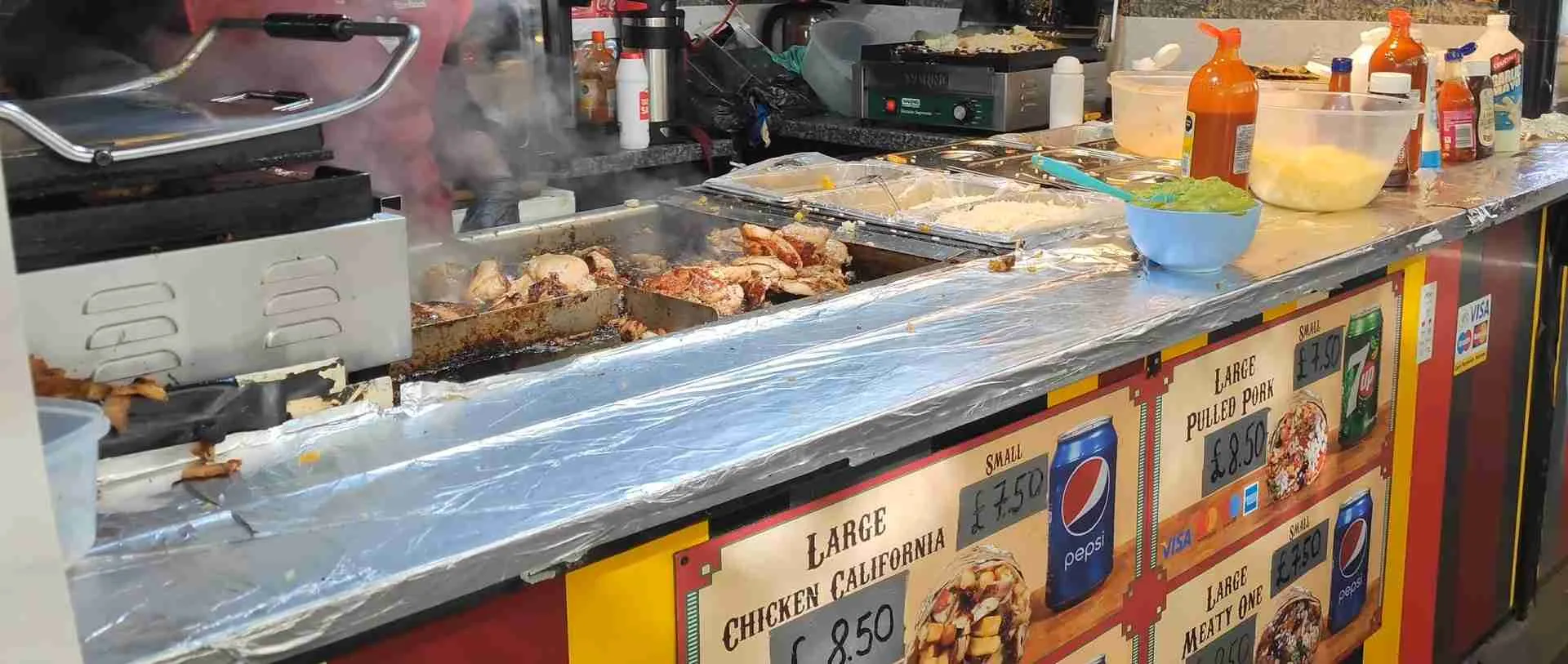
Vendor variety spans Caribbean jerk chicken, fresh sushi, vegan curries, Korean cuisine, and the cult-favorite salt and pepper chicken boxes. Pancho’s Burritos achieves legendary status for massive burritos, tacos, and nachos at prices that make them student staples. Viet Shack serves aromatic Vietnamese pho and banh mi that rival pricier restaurants. The diverse selection ensures groups find options regardless of dietary restrictions or preferences. Most vendors price mains £6-10, making the market Manchester’s best value for satisfying meals in the city center.
The atmosphere embraces high-turnover efficiency rather than lingering over meals. Seating is functional, décor minimal, and crowds constant during peak hours. This works perfectly for quick stops between activities but less well for leisurely dining experiences. The market’s position inside the Arndale means easy access during shopping trips or as shelter during Manchester’s frequent rain. Operating hours align with the shopping center, providing reliable lunch and early evening options but closing before late-night demand.
Additional Notable Food Markets
Kargo MKT in Salford Quays represents the region’s largest food hall with 19 independent kitchens operating simultaneously. The massive space offers exceptional global variety from Burmese cuisine at Nila’s to Palestinian dishes at Baity, Caribbean boxes from Jerk Junction, and Italian subs from Ad Maiora. The Salford Quays location makes it ideal for combining with visits to The Lowry arts center or Imperial War Museum North.
Piccadilly Gardens Street Food Market operates Wednesday through Saturday as open-air market stalls in Piccadilly Gardens, the city center’s main public square. The exposed setting means weather dependency, but the convenient location and rotating vendor roster provide variety for office workers and visitors. Offerings span halloumi fries, dim sum, Yorkshire pudding wraps, Caribbean curries, and Indian specialties at street food prices.
GRUB previously operated at Red Bank as a street food pioneer known for rotating vendor lineups, vegan options, and family-friendly atmosphere. The operation is relocating and reimagining concepts for new venues and events. When settled in new locations, GRUB’s model of supporting emerging food businesses and emphasizing craft beer alongside quality street food will continue serving Manchester’s food scene.
Levenshulme Market runs Saturdays as community-operated market combining food stalls with arts, crafts, and community atmosphere. The eclectic vendor mix includes African street food, handmade bagels, and various international cuisines reflecting the neighborhood’s diversity. The market functions more as community event than pure dining destination, with the social aspect and supporting local producers as important as the food itself.
Ancoats and Northern Quarter: Manchester’s Restaurant Heartland
Ancoats and the Northern Quarter form the city’s most concentrated and dynamic restaurant district, where Victorian industrial architecture houses everything from Michelin-starred fine dining to Vietnamese family restaurants. The neighborhoods blur together geographically, with Great Ancoats Street forming a nominal boundary that diners cross repeatedly within single meals—drinks in the Northern Quarter, dinner in Ancoats, dessert back across the border. Understanding these areas means appreciating how former textile mills and warehouses have transformed into residential and commercial spaces while retaining architectural character that makes dining there feel special regardless of price point.
Ancoats: From Industrial Suburb to Culinary Destination
Ancoats earned designation as the world’s first industrial suburb during Manchester’s textile boom, with massive mills employing thousands of workers producing cotton goods for global markets. The industry’s decline left abandoned factories and derelict spaces that urban regeneration projects have transformed into luxury flats with ground-floor restaurants and cafes. The area’s renaissance centered on Cutting Room Square, where canal-side dining created Manchester’s most photogenic food quarter. Marina views, historic architecture, and pedestrian-friendly streets make Ancoats feel like a distinct neighborhood rather than city center extension.
The restaurant scene spans exceptional pizza at Rudy’s Neapolitan Pizza (the original location that sparked the mini-chain), fresh pasta at Sud, Mediterranean small plates at Canto and Erst, upscale British dining at The Counter House, and Michelin-starred tasting menus at Mana. This concentration of quality within walking distance allows progressive dining—start with drinks and small plates at one venue, move to another for mains, finish with dessert elsewhere. The compact area makes this feasible without requiring taxis, creating natural flow between establishments.
Beyond trendy Cutting Room Square, Oldham Road’s less glamorous stretch houses authentic Vietnamese restaurants that locals treasure for genuine flavors at lower prices than contemporary spots. Family-run establishments like Viet Shack and Nam serve traditional pho, banh mi, and regional specialties to communities seeking authentic tastes, with décor and atmosphere secondary to food quality. These restaurants demonstrate how Ancoats accommodates both destination dining and neighborhood authenticity.
Mana: Manchester’s Michelin Star Returns
Simon Martin’s Mana brought a Michelin star back to Manchester’s city center in 2020 after more than four decades without recognition at this level. The restaurant operates on Great Ancoats Street in a carefully designed space that balances formality with approachability. Tasting menus extend to at least twelve courses with theatrical presentations involving smoke, temperature contrasts, and visual drama that heighten anticipation beyond mere eating. Common ingredients include eel, duck, and langoustines transformed through techniques that intensify flavors and textures to levels that surprise even experienced diners.
Japanese and East Asian influences appear throughout the menu in dishes like savory chawanmushi (steamed egg custard) and kakigori (shaved ice) desserts. The wine list ranges from show-stopping rare bottles to surprisingly affordable selections, with sommelier guidance available for pairing recommendations. The entire experience justifies the investment for special occasions or serious food enthusiasts willing to spend approximately £80-100 per person before beverages. Booking substantially in advance is essential, with popular times filling months ahead.
Mana’s success validates Manchester’s culinary maturation beyond pub grub and curry houses into serious fine dining. The restaurant attracts food tourists from across Britain and internationally while maintaining appeal for local celebrations. The Michelin star places Manchester on culinary maps alongside Birmingham, Leeds, and other regional cities building reputations beyond London’s traditional dominance. For the broader Ancoats restaurant scene, Mana’s presence elevates the entire neighborhood’s profile and attracts food-focused visitors who discover other excellent establishments during their visits.
Pizza Excellence: Rudy’s and Beyond
Rudy’s Neapolitan Pizza transformed Manchester pizza when the original Ancoats location opened in 2015 on Cutting Room Square. The restaurant’s no-booking policy creates regular queues outside, particularly during peak hours, but the soft, blistered Neapolitan-style pizzas with properly charred crusts justify the wait. The menu stays focused on traditional preparations rather than creative toppings, letting dough quality and wood-fired technique shine. Success led to expansion across Manchester and Northwest England, but the Ancoats original maintains special status among pizza enthusiasts who remember when it stood alone offering this quality.
The restaurant occupies a corner position with indoor seating and outdoor tables overlooking the square and marina. Atmosphere is casual and buzzy, with rapid table turnover keeping queues moving. Prices remain reasonable at approximately £10-14 for pizzas, making it accessible for regular visits rather than special occasions. The no-booking policy means timing visits strategically—arrive well before or after peak dinner hours to minimize waits, or accept that 20-30 minute queues are part of the authentic experience.
Noi Quattro provides an alternative Neapolitan pizza experience, also in the Northern Quarter, with similar quality but accepting bookings that appeal to diners preferring guaranteed seating. The restaurant’s location makes it convenient for combining with Northern Quarter bar-hopping or shopping. Both establishments demonstrate how specific cuisine types reach excellence in Manchester through operator dedication and quality ingredients rather than requiring London addresses.
Fresh Pasta at Sud
Sud occupies a corner position on Blossom Street opposite the stylish Blossom Street Social wine bar, creating natural progression from drinks to dinner. The pasta restaurant focuses intensely on a short menu where every item achieves excellence. Diners struggle choosing between options knowing all will satisfy, with house-made pasta cooked to proper texture and sauced with carefully balanced flavors that respect Italian traditions while using quality British ingredients where appropriate.
Portions are substantial—this is not dainty fine dining but rather generous Italian-American-style servings that leave diners satisfied and unable to contemplate dessert. The restaurant works well for dates, friend gatherings, or family meals, with the focused menu preventing decision paralysis while ensuring quality across choices. Booking is advisable, particularly weekends when the combination of location, reputation, and quality fills the space. Prices position Sud as special occasion dining rather than casual weeknight option, though the value for quality and portion size justifies the investment.
Northern Quarter Independent Spirit
The Northern Quarter predates Ancoats’ restaurant renaissance as Manchester’s creative and independent district. The area’s character developed around record shops, vintage clothing stores, independent cafes, and quirky bars that attracted artists, musicians, and young people seeking alternatives to mainstream city center offerings. Restaurants here reflect that independent spirit, with operators pursuing personal visions rather than following corporate formulas or chasing trends.
Federal Bar & Kitchen achieves near-constant queues for Australian-inspired brunch, particularly weekend mornings when the small space fills with diners seeking substantial breakfast and coffee. The menu’s focus on fresh ingredients, interesting combinations, and generous portions makes the wait worthwhile for brunch enthusiasts. Evening service offers similar quality applied to dinner menus, though brunch remains the signature experience.
BAB elevates kebabs beyond late-night takeaway status into proper restaurant offerings with house-made marinades, quality meats, creative vegetarian options, and meze including goat cheese bonbons and Greek-style meatballs. The restaurant demonstrates how traditional “ethnic” foods receive upscale treatment when operators apply care and quality ingredients. Lunch service offers streamlined menus for quick meals, while full evening service encourages lingering over multiple courses.
Bundobust brings Indian street food and craft beer together in a vegetarian concept that shouldn’t work but absolutely does. The restaurant chain started in Leeds before expanding to Manchester, with locations proving that quality vegetarian Indian food paired with local craft beers appeals far beyond vegetarian communities. Small plates encourage ordering multiple items for sharing, with the beer menu rotating to highlight regional breweries.
Evelyn’s occupies a stunning corner site with floor-to-ceiling windows providing natural light and people-watching opportunities. The restaurant serves Mediterranean-influenced cuisine in a beautiful dining room that works equally well for dates, celebrations, or simply treating oneself to exceptional food in an elegant setting. The space captures Northern Quarter energy while providing refinement that elevates it beyond the area’s typical casual aesthetic.
Traditional Pubs and British Dining
Manchester’s pub culture remains strong despite restaurant proliferation, with traditional establishments serving quality British food alongside real ales and craft beers. The city’s working-class heritage and strong community bonds preserve pubs as social centers rather than purely dining destinations, though many now offer food quality rivaling dedicated restaurants.
Historic Pubs with Character
The Crown and Kettle on Great Ancoats Street features an extraordinary ornate ceiling that makes it Grade II listed, providing architectural interest alongside traditional pub atmosphere. The establishment demonstrates how historic pubs adapt to changing neighborhoods, serving new residential populations while maintaining character that attracts visitors seeking authentic Manchester experiences. Traditional pub food appears alongside contemporary menu items, with real ales and local craft beers anchoring the drink selection.
Proper British pub classics remain available throughout Manchester at establishments ranging from historic city center pubs to neighborhood locals. Sunday roasts featuring quality meats, Yorkshire puddings, roast potatoes, and seasonal vegetables provide weekly rituals for many residents. Prices typically run £12-18 for substantial roast dinners, offering value compared to restaurants while maintaining social pub atmosphere. Many pubs now accommodate bookings for Sunday lunch, advisable for popular establishments that fill quickly.
Modern British Dining
Modern British cuisine appears at various price points across Manchester, from casual gastropubs to upscale restaurants reinterpreting traditional dishes. TNQ (The Northern Quarter Restaurant) exemplifies this approach, sourcing quality British ingredients and applying contemporary techniques to create dishes that honor culinary heritage while feeling fresh and innovative. Seasonal menu changes reflect ingredient availability and chef creativity, with the three-month rotation ensuring variety for regular diners.
The Manchester Egg has achieved local fame as culinary invention—a pickled egg coated in black pudding and sausage meat, wrapped in panko breadcrumbs, and deep-fried until golden. This playful take on the Scotch egg appears on multiple restaurant menus, representing how Manchester’s food scene balances innovation with comfort food accessibility. Black pudding (blood sausage) and “Manchester caviar” (mushy peas) remain available for those seeking authentic regional specialties.
International Cuisines Beyond South Asian
Manchester’s immigrant communities and international connections create authentic ethnic restaurants serving cuisines from every inhabited continent. These establishments operate primarily for community members seeking familiar flavors, with visitor appeal as secondary consideration. This orientation ensures authenticity often superior to restaurants in tourist districts where menus adapt to presumed Western preferences.
Vietnamese Dining Excellence
Vietnamese cuisine concentrates along Oldham Road on the Ancoats edge, with family-run establishments serving pho, banh mi, and regional specialties to Manchester’s substantial Vietnamese community. Viet Shack achieves particular recognition for aromatic broths, fresh ingredients, and authentic preparations that locals compare favorably to restaurants in Vietnam. The simple setting focuses attention on food quality, with modest prices making it accessible for regular visits. A substantial meal with drinks typically costs £15-20 per person.
Nam Restaurant, named after its owner who operates the establishment, provides quality Vietnamese food in slightly more upscale surroundings than bare-bones Oldham Road spots. The welcoming staff and comfortable atmosphere make it suitable for introducing Vietnamese cuisine to unfamiliar diners while maintaining authenticity that satisfies community members. The restaurant accommodates larger groups and celebrations, with family-style sharing encouraged through menu design and portion sizes.
East Asian Variety
Hong Thai combines Hong Kong classics and Thai favorites including pad thai, curries, and regional specialties like khao soi curry noodle soup from northern Thailand. The restaurant achieves exceptional value—two mains, a starter, and soft drinks typically cost around £30 total with substantial portions. This combination of quality and affordability creates intense popularity requiring early arrival, particularly weekend evenings when queues form well before 7 PM. The no-booking policy means timing visits strategically or accepting waits.
Japanese cuisine appears at various price points from casual spots like Takoyaki Masters (specializing in octopus dumplings) to serene teahouse Cha-ology, where peaceful atmosphere is maintained through firm rules prohibiting laptops, selfies, and strong perfume. Quality Japanese tea and seasonal treats provide authentic experiences for tea ceremony enthusiasts and those seeking quiet spaces in the bustling city. The teahouse represents Manchester’s culinary diversity extending beyond typical restaurant formats into specialized cultural experiences.
Chinese restaurants range from Chinatown’s traditional establishments to modern concepts like Tattu featuring dramatic interiors and contemporary takes on Chinese cuisine. Dim sum specialists provide weekend brunch options, while Sichuan restaurants offer authentic heat levels that challenge spice enthusiasts. The variety ensures finding everything from familiar takeaway-style preparations to regional Chinese cuisines rarely encountered outside major metropolitan areas.
African and Caribbean Flavors
Caribbean restaurants dot the city with Rita’s Reign achieving particular recognition for hearty Afro-Caribbean rice boxes featuring jerk chicken, curry goat, and vegetarian options served with jollof rice and homemade slaws. The generous portions and bold flavors attract diverse crowds seeking comfort food with authentic spice profiles. The operation expanded to Christmas Markets with festive fusion offerings, demonstrating how successful street food vendors transition into broader recognition.
Eritrean and Ethiopian restaurants appear in various neighborhoods, with Asmara Bella in the Northern Quarter providing injera-based communal dining experiences. The spongy flatbread serves as edible plate for various stews and curries, with eating by hand encouraged as authentic cultural practice. The unfamiliar format and flavors attract adventurous diners while serving homesick immigrants seeking familiar tastes.
Spanish and Mediterranean
Tapas culture thrives in Manchester with Evuna in the Northern Quarter offering Spanish small plates, charcuterie, and wine in atmospheric surroundings. The restaurant demonstrates how Mediterranean dining culture translates to British contexts, with sharing plates and multiple courses encouraging social eating rather than individual main course focus. Spanish ham selections, authentic tortilla española, and carefully sourced ingredients maintain connections to Spanish culinary traditions.
Bar San Juan in Chorlton achieves Tripadvisor Traveller’s Choice recognition for authentic Spanish atmosphere, sangria, and traditional tapas. The family-owned independent restaurant creates vacation-in-Spain feelings through décor, food quality, and service style. Standouts include Galician octopus, Manchego cheese with quince jelly, and patatas bravas prepared with attention to traditional techniques.
Budget Dining and Money-Saving Strategies
Manchester accommodates tight budgets through ethnic restaurants, market vendors, and lunch specials that provide substantial quality meals at prices well below London equivalents. Understanding where value exists and how to maximize limited funds allows everyone from students to budget travelers to eat well without financial stress.
Exceptional Value Locations
The Curry Mile provides Manchester’s best budget dining value, with complete curry meals including rice, naan, and accompaniments costing £8-12 at quality establishments. Student-oriented restaurants price even lower, with lunch specials and takeaway discounts reducing costs further. The late operating hours mean budget diners access substantial meals after expensive city center restaurants have closed, with the social atmosphere adding value beyond mere sustenance.
Arndale Market vendors compete on price while maintaining quality, with most mains priced £6-10 and many offering lunch specials £5-7. Pancho’s Burritos achieves legendary status among students for enormous portions at under £10, while Vietnamese pho and Korean bibimbap provide filling international options at similar prices. The market’s convenience makes it ideal for combining budget meals with city center activities or shopping.
Supermarkets along the Curry Mile stock spices, rice, vegetables, and specialty ingredients at prices substantially below mainstream supermarkets, with quality often superior for items serving Asian communities. Budget-conscious cooks shopping at Worldwide Manchester Superstore or similar establishments reduce meal costs while accessing authentic ingredients unavailable elsewhere in the region. This strategy particularly benefits students and long-term visitors preparing their own meals.
Timing Strategies for Savings
Lunch specials at upscale restaurants provide access to quality dining at reduced prices. Many establishments in tourist areas and business districts offer “menu of the day” lunch options with fixed prices substantially below evening à la carte costs. Eating the main meal at lunch and having lighter dinners maximizes this advantage while aligning with Mediterranean dining patterns.
Pre-theater menus near performance venues offer multi-course meals with time restrictions that suit diners attending shows. These represent genuine value rather than cheap options, with restaurants using fixed menus to reduce kitchen complexity while filling tables during periods that might otherwise sit empty. Booking is advisable, with arrival time commitments ensuring kitchens can prepare efficiently.
Food hall and market visiting during off-peak hours—mid-afternoon between lunch and dinner rushes—sometimes yields vendor discounts on prepared items approaching sell-by times. While not guaranteed, befriending regular vendors and visiting consistently can produce relationships where vendors offer end-of-day bargains rather than discarding prepared items. This strategy works best at markets with closing times rather than 24-hour operations.
Free Water and BYOB Policies
Tap water is free in all licensed establishments by law, with no obligation to purchase bottled water despite some restaurant pressure tactics. Requesting tap water saves £3-5 per person, meaningful savings for budget-conscious diners. Carrying a reusable water bottle reduces waste while ensuring hydration without purchasing drinks throughout the day.
Some restaurants, particularly ethnic establishments outside city center tourist zones, permit BYOB (bring your own bottle) either without corkage fees or with minimal charges £2-5 per bottle. This allows enjoying restaurant food while avoiding marked-up wine prices. Calling ahead confirms policies and prevents embarrassment, with ethnic restaurants more likely to accommodate than upscale establishments. Purchasing wine from supermarkets or off-licenses beforehand reduces total dining costs substantially.
Dietary Accommodations and Special Diets
Manchester’s restaurant scene accommodates vegetarian, vegan, halal, kosher, gluten-free, and allergy-based dietary restrictions with increasing sophistication. The city’s large Muslim population ensures halal availability extends far beyond specialized restaurants, while growing awareness of dietary restrictions means most establishments now offer options beyond basic accommodation.
Vegetarian and Vegan Dining
Dedicated vegetarian and vegan restaurants include Bundobust (Indian street food), Purezza (plant-based pizza), and various cafes throughout the Northern Quarter and Chorlton. The prevalence of Indian and Pakistani restaurants guarantees vegetarian options almost everywhere given these cuisines’ long vegetarian traditions. Curry Mile establishments prepare vegetables, lentils, and paneer dishes with the same care as meat preparations, providing substantial vegetarian meals rather than afterthought salads.
Vegan options have expanded dramatically across all restaurant types, with many establishments now offering dedicated vegan menus or clearly marking vegan dishes. Chinese restaurants accommodate with Buddhist vegetarian traditions, Italian spots offer vegan pizza and pasta, and street food vendors include plant-based versions of signature items. The growing vegan population ensures options continue expanding, with quality improving as chefs develop skills beyond simply removing animal products.
Halal Dining
The Curry Mile and surrounding Rusholme area operate almost entirely on halal principles given the predominantly Muslim ownership and clientele. Diners can assume halal availability throughout this district unless specifically indicated otherwise. Beyond Rusholme, many Turkish, Middle Eastern, Pakistani, and Bangladeshi restaurants operate halal, with clear signage indicating certification. The prevalence means Muslim visitors and residents access extensive dining options without advance research or worry about compliance.
Gluten-Free and Allergy Accommodation
Gluten-free awareness has improved significantly, with many pizza restaurants now offering gluten-free bases and pasta restaurants providing gluten-free pasta options. However, quality varies—some establishments treat gluten-free as afterthought with inferior products, while others source premium gluten-free ingredients and prepare with the same care as standard items. Restaurants with dedicated gluten-free menus or specific staff training provide better experiences than those simply offering token options.
Allergy accommodation requires communicating directly with restaurant staff, ideally when booking or upon arrival rather than when ordering. Most establishments take allergies seriously given legal liability concerns and genuine care for customer safety. However, complex allergies or multiple restrictions may limit options at some venues, with simpler restaurants sometimes better equipped to guarantee safe preparation than complex kitchens handling numerous ingredients. Ethnic restaurants often accommodate allergies well given traditional cooking practices using whole ingredients rather than processed products containing hidden allergens.
Coffee Culture and Bakeries
Manchester’s coffee scene rivals any UK city outside London, with independent roasters, specialty cafes, and third-wave coffee culture thriving alongside traditional greasy spoons and chain outlets. The student population and young professional demographics support quality coffee businesses willing to educate customers about origins, processing methods, and brewing techniques.
Specialty Coffee and Roasters
Pollen Bakery in Ancoats combines exceptional sourdough and Viennoiserie pastries with quality coffee in a canal-side setting that becomes particularly popular during sunny weather. Queues form regularly for the patisseries and breads, with locals rating it among Manchester’s finest bakeries. The restaurant section serves breakfast and lunch using the same quality ingredients and attention to detail evident in baked goods.
Northern Soul appears multiple times across the city, providing specialty coffee and simple food in minimal surroundings that let coffee quality speak. The roastery supplies various cafes and restaurants while operating retail locations where coffee enthusiasts purchase beans for home brewing. The focus remains squarely on coffee rather than elaborate food menus, appealing to purists seeking exceptional espresso and filter coffee.
Companio operates as small artisan bakery in Ancoats, producing sourdough breads and pastries in small batches using traditional techniques. The tiny space focuses on quality over scale, with limited daily production selling out regularly. This artisanal approach attracts customers willing to time visits around baking schedules and accept limited selection in exchange for exceptional quality.
Café Culture for Working and Socializing
Independent cafes throughout the Northern Quarter, Ancoats, and Chorlton provide working spaces with quality coffee, free wifi, and laptop-friendly attitudes. These establishments balance between encouraging lingering customers and maintaining table turnover, with peak hours sometimes limiting laptop use to allow lunch customers access. Understanding café etiquette—purchasing regularly if occupying space for hours, being aware of crowding during peaks—maintains positive relationships with staff and ensures continued welcome.
The cafe culture extends beyond coffee to include tea specialists, juice bars, and bakeries serving breakfast and lunch alongside beverages. Federal’s Australian-influenced brunch culture sparked widespread adoption of avocado toast, açai bowls, and substantial breakfast plates that blur the line between café and restaurant. Many cafes now serve as all-day destinations rather than simple morning coffee stops.
Seasonal Events and Food Festivals
Manchester’s food calendar includes seasonal markets, pop-up events, and festivals celebrating specific cuisines or culinary themes. These temporary offerings provide opportunities to sample vendors before they establish permanent locations and discover emerging food trends before mainstream adoption.
Manchester Christmas Markets
The Manchester Christmas Markets represent the city’s largest annual food event, filling streets with stalls serving festive foods, international specialties, and seasonal beverages from mid-November through December. The markets return to Albert Square after years of absence, with additional locations throughout the city center creating Manchester’s most concentrated temporary food festival.
Food highlights include Great North Pie Co.’s pie and mash bar (their first sit-down service after years selling take-home pies), Hong Kong French toast, loaded roast potatoes from Roastie Haus, Rita’s Reign’s Afro-Caribbean fusion boxes, and Waffle Kart’s Chinese waffle sandwiches. The markets combine German Christmas market traditions with British favorites and international street food, creating eclectic offerings impossible to sample in single visits.
Drink stalls serve mulled wine, hot chocolate, craft beers, and seasonal cocktails alongside food vendors. The festive atmosphere with lights, music, and crowds creates special occasion feel that justifies higher prices than standard street food. Timing visits for weekday afternoons avoids the worst crowds while maintaining festive energy, with late-night weekend visits providing full Christmas market experience at the cost of navigating intense crowds.
Neighborhood Food Events
Levenshulme Market’s Saturday operations combine food vendors with arts, crafts, and community atmosphere that makes visiting feel like supporting local culture rather than simply shopping. The eclectic vendor mix changes over time as new businesses launch and others graduate to permanent locations. The community-run model ensures profits support neighborhood initiatives rather than corporate interests.
Stockport’s Foodie Friday occurs monthly as evening market featuring street food vendors, craft ales, live music, and party atmosphere. The event demonstrates how suburbs develop their own food cultures distinct from city center offerings, with regular attendees treating it as social occasion as much as dining opportunity. The historic Produce Hall provides architectural backdrop that converts skeptics expecting bland suburban markets.
Practical Dining Information
Successfully navigating Manchester’s restaurant scene requires understanding reservation policies, payment expectations, service cultures, and practical considerations that affect dining experiences. These operational details matter as much as food quality for ensuring enjoyable meals without frustration or unexpected complications.
Reservations and Walk-Ins
Reservation policies vary dramatically by establishment type and price point. Fine dining restaurants like Mana require advance booking, often weeks or months ahead for peak times. Mid-range restaurants in Ancoats and the Northern Quarter increasingly accept bookings through online platforms, with weekend evenings filling quickly. Budget ethnic restaurants and Curry Mile establishments typically operate walk-in only, with queues during peak hours but relatively quick turnover.
Several popular establishments maintain no-booking policies as deliberate choice—Rudy’s Pizza and Federal both create queues that become part of their brand identity. Understanding these policies prevents disappointment, with timing visits strategically (arriving early or late, visiting weekdays) minimizing waits. Some restaurants accept bookings for larger parties while remaining walk-in for couples and small groups, worth confirming when planning group dinners.
Online booking platforms including OpenTable and Resy now serve many Manchester restaurants, providing convenient reservation management and often allowing special requests like dietary restrictions to be communicated in advance. However, calling restaurants directly sometimes produces better results for complex requests or large parties, with speaking to actual staff allowing detailed discussion impossible through automated systems.
Payment Methods and Tipping
Card payment is now standard at most Manchester restaurants, though some Curry Mile establishments and market vendors prefer cash. Carrying some cash prevents issues at cash-only venues and allows paying at vendors without minimum card amounts. Contactless payment limits have increased substantially, making even large meals payable without PIN entry in many cases.
Service charges appear inconsistently—upscale restaurants often add 12.5% service charges automatically, while casual establishments leave tipping discretionary. Always check bills before adding additional gratuity to avoid double-tipping. When service charges are not included, 10-15% represents standard tipping for good service at table service restaurants. Street food vendors, takeaway counters, and fast casual establishments don’t typically receive tips, though tip jars increasingly appear at checkout counters with discretionary contributions welcome but not expected.
Splitting bills requires establishing approach at booking or arrival—some restaurants accommodate complex splits easily, others prefer single payment with diners settling among themselves. Large groups should confirm splitting policy in advance to avoid awkward discussions when bills arrive. Many restaurants now allow splitting payments across multiple cards, though this service varies by establishment and point-of-sale system capabilities.
Dining Hours and Late-Night Options
British dining hours traditionally concentrate between noon-2 PM for lunch and 6-9 PM for dinner, though Manchester’s international influences and student population extend these windows. Many restaurants now serve food continuously from late morning through late evening, with kitchen closure times varying by establishment. Confirming kitchen hours prevents arriving to find kitchens closed despite dining rooms remaining open for drinks.
Late-night dining distinguishes Manchester from smaller British cities, with the Curry Mile operating until 2 AM or later and various city center establishments serving past midnight. Street food markets vary—Arndale Market follows shopping center hours, while venues like Freight Island operate into late evening during events. The availability of quality food beyond standard British pub hours accommodates shift workers, international visitors adjusting to time zones, and simply those preferring dining at unconventional hours.
Accessibility and Family Dining
Accessibility varies by building age and renovation approach—many Victorian buildings housing restaurants predate accessibility requirements, with narrow doorways, stairs, and small bathrooms creating challenges for wheelchair users or those with mobility issues. Newer venues and recently renovated spaces generally provide better accessibility, though calling ahead to confirm specific requirements prevents wasted journeys. Ground floor restaurants in modern buildings typically offer best accessibility, while historic buildings often present barriers despite operators’ best intentions.
Family dining receives mixed welcome depending on establishment style and timing. Family-friendly venues like pizza restaurants, casual ethnic establishments, and food halls accommodate children readily with high chairs, children’s menus, and tolerant atmospheres. Fine dining restaurants and romantic venues may discourage young children through pricing, formal atmosphere, and adult-focused experiences, though explicit restrictions are rare. Weekend lunchtimes generally see more family acceptance than evening services, with establishments tolerating higher noise levels and activity when dining rooms contain multiple family groups.
Frequently Asked Questions
Is Manchester Good for Vegetarian and Vegan Food?
Manchester offers excellent vegetarian and vegan dining options across price points and cuisine types. Dedicated vegan restaurants like Bundobust and Purezza provide entirely plant-based menus, while Indian and Pakistani restaurants on the Curry Mile serve extensive vegetarian selections rooted in long culinary traditions. Most contemporary restaurants now include substantial vegan options rather than token salads, with many chefs treating plant-based cooking as culinary challenge deserving creativity rather than mere accommodation. The growing vegan population ensures continued expansion of options, with street food vendors, cafes, and upscale restaurants all developing plant-based offerings that satisfy vegetarians and vegans while appealing to omnivores seeking variety.
Where Can I Find Authentic International Cuisine in Manchester?
Authentic international cuisine concentrates in specific neighborhoods serving immigrant communities rather than tourist districts. The Curry Mile provides genuine South Asian flavors with regional specialization—Punjabi, Bangladeshi, Pakistani, Sri Lankan—rather than generic curry house menus. Oldham Road’s Vietnamese restaurants serve Manchester’s Vietnamese community with traditional pho, banh mi, and regional specialties. Chinatown offers authentic Chinese regional cuisines beyond standard takeaway offerings. Caribbean restaurants appear throughout the city, with Moss Side and areas around the Curry Mile particularly strong. Ethiopian and Eritrean establishments operate in various neighborhoods, while Spanish tapas in Chorlton and Turkish restaurants citywide provide Mediterranean authenticity. The key is seeking restaurants in neighborhoods where relevant immigrant communities actually live and eat, avoiding tourist-oriented city center establishments designed for British palates.
How Late Can I Get Food in Manchester?
Manchester provides substantially later dining options than most British cities outside London. The Curry Mile operates until 2 AM or later most nights, with many establishments remaining open until 4 AM weekends. City center kebab shops, pizza places, and fast food outlets serve past midnight, while some street food markets like Freight Island operate into late evening during events. Traditional pubs generally stop serving food around 9-10 PM, though some extend kitchen hours for events. Dessert parlors on the Curry Mile remain open until 1 AM, providing sweet options after dinner elsewhere. The late hours accommodate nightlife, shift workers, international visitors, and simply those preferring dining outside conventional times. The combination of student population and multicultural influences creates late-night food culture impossible in smaller cities.
Are Manchester Restaurants Expensive Compared to Other UK Cities?
Manchester dining costs significantly less than London while remaining comparable to or slightly higher than other northern cities like Leeds, Liverpool, or Newcastle. Budget meals at ethnic restaurants and street food markets cost £5-10, mid-range restaurants charge £15-25 for mains, and fine dining reaches £50-80 per person before drinks. The Curry Mile provides exceptional value with quality meals at £8-12, while food halls offer variety at reasonable prices. Compared to London, expect savings of 20-30% on equivalent quality and style, with particularly significant differences in casual and mid-range dining. The city’s competitive restaurant scene prevents excessive pricing, while lower commercial rents than London allow operators to maintain reasonable prices without sacrificing quality. Budget-conscious travelers find Manchester significantly more affordable than capital cities while still accessing diverse, high-quality dining experiences.
Do I Need to Book Restaurants in Advance in Manchester?
Booking requirements vary by restaurant type and timing. Fine dining establishments like Mana require advance reservations, often weeks ahead for weekend evenings. Popular mid-range restaurants in Ancoats and the Northern Quarter benefit from bookings, particularly Friday and Saturday evenings when walk-ins may face substantial waits or unavailability. Budget ethnic restaurants, Curry Mile establishments, and most Asian restaurants operate walk-in only without accepting reservations, though peak hours create queues that dissipate relatively quickly given rapid table turnover. Several trendy venues maintain no-booking policies as deliberate choice, with queuing part of the experience. For special occasions or large groups, booking in advance prevents disappointment and ensures preferred timing. Weekday dining and off-peak hours often accommodate walk-ins even at popular venues that fill weekends.
What Should I Try on the Curry Mile?
Essential Curry Mile experiences include charcoal-grilled dishes at Mughli showcasing Mughlai cuisine’s distinctive smoky flavors, fresh sweets and desserts at Sanam sweet center particularly gulab jamun and jalebi, South Indian street food at Chit n’ Chaat including dosas and Bombay burgers, Pakistani specialties like nihari and haleem at Lahori Karahi, and late-night desserts at Moonlight or Heavenly Desserts. Beyond specific restaurants, try regional specializations rather than standard curry house offerings—seek Hyderabadi biryani, Bengali fish curries, Punjabi karahi, Sri Lankan hoppers. Fresh falafel wraps from Jaffas or Go Falafel provide Middle Eastern contrast to South Asian dominance. Finish meals with traditional desserts and perhaps shisha at one of numerous lounges. The Curry Mile rewards adventurous ordering and willingness to try unfamiliar regional dishes rather than defaulting to familiar tikka masala and korma standards available anywhere.
Which Manchester Food Markets Are Worth Visiting?
Mackie Mayor in the Northern Quarter offers the most architecturally impressive food hall experience in a beautifully restored Victorian market building with quality vendors and craft beverages. Altrincham Market provides the most complete experience combining food vendors with produce shopping in a historic suburban market that sparked Manchester’s food hall movement. Freight Island delivers festival atmosphere with street food, live music, and massive scale near Piccadilly Station, ideal for groups wanting entertainment beyond dining. Arndale Market serves best value with diverse international street food at budget prices in no-frills city center setting. Levenshulme Market creates community atmosphere combining food with arts and crafts on Saturday mornings. Each market offers distinct character and appeals to different priorities—architecture and quality versus value and variety versus entertainment and scale versus community atmosphere.
Is Manchester Good for Date Night Restaurants?
Manchester excels for date night dining across budgets and styles. Romantic upscale options include Evelyn’s for Mediterranean small plates in beautiful Northern Quarter setting with floor-to-ceiling windows, Canto for intimate tapas in Ancoats, and Mana for special occasion Michelin-starred tasting menus. Mid-range romance appears at Sud for cozy pasta dinners, Rudy’s for relaxed pizza dates, and various tapas restaurants creating sharing-plate intimacy. Budget-friendly dates succeed at Curry Mile restaurants offering exotic flavors and late hours, Bundobust for vegetarian Indian street food and craft beer, or picnic-style meals from Pollen Bakery enjoyed canal-side in Ancoats. The diversity ensures finding appropriate settings for first dates requiring safety in busy venues, anniversary celebrations deserving special treatment, or casual dates prioritizing conversation over formal service. Many restaurants offer intimate corners despite busy atmospheres, while reserving tables at quieter times or requesting specific seating enhances romantic potential.
Where Do Manchester Locals Actually Eat?
Manchester locals favor neighborhood restaurants over tourist-oriented city center establishments, with authentic ethnic cuisines in immigrant communities particularly valued. Oldham Road Vietnamese restaurants attract locals seeking genuine flavors at lower prices than trendy Ancoats equivalents. Curry Mile restaurants serve substantial South Asian and Middle Eastern populations alongside students and adventurous diners. Chorlton’s independent cafes and restaurants draw locals preferring bohemian atmosphere over Northern Quarter trendiness. Suburban food halls like Altrincham Market function as community gathering spaces rather than tourist destinations. Traditional pubs throughout the city maintain loyal local followings based on quality Sunday roasts, real ales, and community atmosphere rather than tourist appeal. Street food markets attract locals during off-peak hours when value seekers avoid weekend crowds. Understanding the distinction between restaurants courting tourists and those serving local communities reveals Manchester’s authentic food culture beyond marketed experiences.
Can I Find Halal Food Easily in Manchester?
Manchester’s substantial Muslim population ensures halal availability throughout the city, particularly around the Curry Mile where nearly all restaurants operate entirely halal given predominantly Muslim ownership and clientele. Turkish, Middle Eastern, Pakistani, Bangladeshi, and many Indian restaurants maintain halal certification, with clear signage indicating compliance. Beyond ethnic restaurants, some mainstream establishments now offer halal options or entire halal menus, recognizing the significant Muslim market. Street food vendors at markets often provide halal choices, with Arndale Market particularly strong for diverse halal offerings. The concentration means Muslim visitors and residents access extensive dining variety without advance research or concern about compliance, a significant advantage over many British cities where halal options remain limited to specific restaurants. When uncertain, asking staff directly produces clear answers, with Muslim-owned establishments universally understanding and accommodating these requirements.