Malta Museums & Galleries 2026: Ultimate Cultural Guide
Malta’s museums and galleries preserve 7,000 years of Mediterranean history within baroque palaces, star-shaped fortresses, and purpose-built cultural centers across three islands. From Neolithic temple artifacts in Valletta’s National Museum of Archaeology to Caravaggio’s only signed masterpiece in St John’s Co-Cathedral, Malta’s cultural institutions offer extraordinary depth for an archipelago of 316 square kilometers.
Key Takeaways About Malta Museums 2026
- Major Museum Pricing in 2026: Individual Heritage Malta sites cost €6-10 per adult, St John’s Co-Cathedral charges €15 separately, while the Heritage Malta Multisite Pass covers 25+ sites for 30 days at significant savings
- Valletta Museum Concentration: Six world-class museums operate within Valletta’s 0.55 square kilometer fortified capital, all within 10-15 minute walking distance of each other
- Malta Biennale 2026 Opportunity: The contemporary art biennial runs March 14 – May 29, 2026, across 11 Heritage Malta sites, with special combo tickets and free guidebooks transforming museums into exhibition venues
- Museums by Candlelight Event: On June 6, 2026, six major Valletta museums open 7:00 PM to midnight with candlelit interiors, live performances, and €6 all-access tickets
- Strategic Pass Advantages: Visitors planning 3+ Heritage Malta museum visits save money with multisite passes, while serious culture enthusiasts benefit from annual Heritage Malta membership
- Year-Round Operating Schedule: Most major museums operate daily March-October with extended hours, reducing to closed Tuesdays January-February, with all Heritage Malta sites closed January 1, Good Friday, and December 24, 25, and 31
People Also Ask About Malta Museums 2026
How much does visiting Malta museums cost per day in 2026?
Museum admission costs in Malta range €6-15 per site in 2026, with Heritage Malta sites charging €6-10 and St John’s Co-Cathedral at €15. Visitors exploring three Heritage Malta museums daily without a pass spend €18-30, while those purchasing the Heritage Malta Multisite Pass (valid 30 days) significantly reduce per-day costs when visiting multiple sites. The Malta Biennale 2026 combo ticket provides access to 11 museums during March 14 – May 29, 2026, offering the best value for culture-focused visits during this period.
Which Malta museums are essential for first-time visitors in 2026?
First-time visitors should prioritize St John’s Co-Cathedral for Caravaggio’s masterpiece and baroque opulence, the National Museum of Archaeology for prehistoric Maltese artifacts including the Sleeping Lady, MUZA for Mediterranean art spanning five centuries, and Fort St Elmo’s National War Museum for military history from the Great Siege through World War II. These four institutions provide comprehensive understanding of Malta’s archaeological, artistic, religious, and military heritage. All operate in Valletta within walking distance, allowing efficient full-day or two-half-day museum itineraries.
When do Malta museums have the best visiting conditions in 2026?
Malta museums offer optimal visiting conditions March-May and September-October 2026 when weather remains pleasant, tourist crowds stay moderate, and museums operate full daily schedules. Summer months June-August bring heat, larger tour groups, and potential capacity restrictions at popular sites like St John’s Co-Cathedral. Winter months November-February feature smallest crowds and lowest accommodation costs but some Heritage Malta sites close Tuesdays and reduce operating hours. The Malta Biennale period March 14 – May 29, 2026, adds contemporary art exhibitions to standard collections, enhancing cultural value during spring shoulder season.
Do Malta museums require advance ticket reservations in 2026?
St John’s Co-Cathedral strongly recommends online advance booking during peak season April-October 2026, as walk-up entry may face capacity restrictions protecting the delicate baroque interior. Most Heritage Malta sites accept walk-up visitors without reservation except special events like Museums by Candlelight June 6, 2026, which requires pre-booking. The Ħal Saflieni Hypogeum, Malta’s underground Neolithic burial complex, mandates advance reservation through Heritage Malta’s website due to strict 80-visitor daily limits for preservation. Malta Biennale 2026 exhibitions March 14 – May 29 operate on standard museum admission without separate reservations.
Extended multi-day tours – 5+ days
Featured Malta Multi-Day Tour Packages
3 days
Malta 3-Day Discovery Tour
- ✓ Comprehensive Malta experience
- ✓ Expert local guides included
- ✓ All accommodation included
- ✓ Transportation provided
5 days
Malta 5-Day Highlights Experience
- ✓ Comprehensive Malta experience
- ✓ Expert local guides included
- ✓ All accommodation included
- ✓ Transportation provided
7 days
Malta 7-Day Cultural Journey
- ✓ Comprehensive Malta experience
- ✓ Expert local guides included
- ✓ All accommodation included
- ✓ Transportation provided
10 days
Malta 10-Day Complete Adventure
- ✓ Comprehensive Malta experience
- ✓ Expert local guides included
- ✓ All accommodation included
- ✓ Transportation provided
Multi-day tour packages powered by TourRadar. Prices and availability subject to change.
Introduction: Malta’s Museum Landscape in 2026
Malta’s museum sector in 2026 presents visitors with 30+ institutions spanning archaeological sites, art galleries, military fortifications, and specialized collections across Malta, Gozo, and Comino. The archipelago’s small geographic scale concentrates exceptional cultural density, particularly in Valletta where six major museums operate within the 0.55 square kilometer fortified capital built by the Knights of St John following the 1565 Great Siege.
Heritage Malta, the national agency managing Malta’s cultural patrimony, operates 25 museums and archaeological sites across the archipelago, while independent institutions like St John’s Co-Cathedral Foundation maintain additional properties. This organizational structure creates a two-tier pricing system: Heritage Malta sites follow unified admission policies with multisite passes, while independent museums maintain separate pricing. The Malta Biennale 2026, running March 14 through May 29, transforms 11 Heritage Malta sites into contemporary art venues alongside permanent collections, making spring 2026 particularly significant for museum visitors.
Malta’s museum collections reflect the archipelago’s strategic Mediterranean position, documenting continuous human occupation from 5900 BCE Neolithic temple builders through Phoenician traders, Roman administrators, Byzantine governors, Arab settlers, Norman conquerors, Knights Hospitaller, French revolutionaries, British colonizers, and modern independence. This layered history manifests in museum collections containing UNESCO-listed Neolithic artifacts, baroque religious art rivaling European cathedral treasuries, military collections documenting medieval sieges and 20th century warfare, and contemporary Maltese artistic production engaging with Mediterranean cultural crossroads.
Planning effective museum visits in Malta requires understanding geographic distribution. Valletta dominates with premier institutions accessible on foot, while secondary clusters exist in medieval Mdina, maritime Birgu, and rural Gozo. Museums operate year-round with seasonal schedule variations, closed public holidays, and special events like Museums by Candlelight transforming evening visits. Admission strategies range from individual site tickets to comprehensive multisite passes, with optimal choices depending on visit duration and museum priorities.
Valletta Museums 2026: The Capital’s Cultural Core
Valletta concentrates Malta’s premier museums within its compact baroque grid, allowing visitors to explore world-class collections without vehicular transport. The capital’s six major museums – St John’s Co-Cathedral, MUZA, National Museum of Archaeology, Fort St Elmo and National War Museum, Grand Master’s Palace, and Underground Valletta – operate within 10-15 minute walks of each other, connected by the spine of Republic Street and radiating side streets.
St John’s Co-Cathedral: Baroque Masterpiece & Caravaggio Collection 2026
St John’s Co-Cathedral, completed in 1578 as the Knights of St John’s conventual church, houses the most valuable artistic collection on the archipelago despite its austere fortress-like exterior. The cathedral’s interior explodes with gilded baroque decoration, marble tombstone floors commemorating 400 Knights, Mattia Preti ceiling frescoes depicting St John’s life, and most significantly, Caravaggio’s The Beheading of St John the Baptist – the artist’s only signed work and largest painting at 3.7 × 5.2 meters.
Admission costs €15 for adults in 2026, with concessions at €12 for seniors and students, check the official website for current rates as pricing may vary. Children under 12 enter free when accompanied by paying adults. The entrance fee includes handheld audio guides available in 11 languages with 20 interpretive stops. Tickets remain valid for seven days from selected visit date, allowing flexible scheduling.
The cathedral operates Monday through Saturday 9:00 AM – 4:45 PM with last admission at 4:00 PM, providing visitors 45 minutes before closure. The institution closes Sundays for religious services and public holidays. Peak visiting times occur 10:00 AM – 2:00 PM when tour groups concentrate, while optimal quiet viewing windows exist at opening 9:00 AM or late afternoon 3:30-4:00 PM. Photography without flash is permitted throughout, though tripods and selfie sticks remain prohibited.
The oratory containing Caravaggio’s masterpiece restricts capacity to 52 visitors simultaneously for preservation, creating occasional queues during busy periods. The museum extension remains closed throughout 2026 for refurbishment, temporarily limiting exhibition space. Visitors planning photography should note that the cathedral’s delicate marble tombstone floors restrict stiletto heels and narrow heels, with protective slippers available for purchase at entrance.
Beyond Caravaggio, the cathedral’s nine chapels dedicated to the Order’s eight langues (national divisions) showcase distinct artistic programs. The Italian chapel features intricate stone carving, the German chapel displays heraldic shields, while the Aragonese chapel presents elaborate marble work. The museum collection, when reopened post-2026, contains Flemish tapestries, illuminated manuscripts, liturgical silver, and vestments documenting the Order’s 268-year Malta residence.
MUZA – The National Community Art Museum 2026
MUZA, opened in 2018 in the Auberge d’Italie, serves as Malta’s premier art museum with 15,000+ works spanning the 15th through 21st centuries. The institution succeeded the former National Museum of Fine Arts, expanding exhibition space and modernizing presentation within the historic Knights’ residence designed by Girolamo Cassar in 1574.
General admission costs €10 for adults in 2026, with reduced rates for seniors, students, and youths. The museum operates daily March-October 10:00 AM – 6:00 PM with last admission 5:30 PM, while November-February reduces to 9:00 AM – 5:00 PM daily with last admission 4:30 PM. January-February sees further reduction with Tuesday closures. MUZA participates in Heritage Malta’s multisite pass system, making it accessible through combo tickets.
The permanent collection follows chronological arrangement from medieval Maltese painting through contemporary works, emphasizing the archipelago’s position as Mediterranean artistic crossroads. Highlights include Mattia Preti’s baroque masterworks painted during his Malta residence, Antoine de Favray’s 18th century portraits of Knights and Maltese nobility, Edward Caruana Dingli’s nationalist paintings, and contemporary Maltese artists engaging with Mediterranean identity. The collection’s strength lies in documenting specifically Maltese artistic production rather than presenting international masterworks, offering insight into how island artists interpreted and adapted European movements.
MUZA’s thematic displays explore four key concepts: The Mediterranean, Europe, Empire, and The Artist. These frameworks contextualize Maltese artistic development within broader geographic and political forces shaping the archipelago. Special exhibitions rotate quarterly, often featuring contemporary Maltese artists or thematic explorations of collection segments. During Malta Biennale 2026, March 14 – May 29, MUZA serves as a primary venue for international contemporary art installations alongside permanent collections.
The Auberge d’Italie building itself merits attention, with restored 16th century architecture including the grand staircase, piano nobile galleries, and courtyard. Air-conditioned galleries provide respite during summer visits, while the museum shop offers quality art books, exhibition catalogs, and locally-designed merchandise. MUZA requires approximately 90-120 minutes for comprehensive viewing, with 60 minutes sufficient for highlights-focused visits.
National Museum of Archaeology 2026: Malta’s Prehistoric Heritage
The National Museum of Archaeology, housed in the Auberge de Provence since 1958, presents Malta’s extraordinary Neolithic heritage including UNESCO World Heritage-listed artifacts from megalithic temple sites. The museum’s collection spans 7,000 years from first human settlement circa 5900 BCE through Phoenician, Roman, and medieval periods, though its international reputation rests on Neolithic temple culture materials.
Admission follows Heritage Malta standard pricing at €10 for adults, with the museum included in all Heritage Malta multisite passes and combo tickets. Operating hours mirror MUZA schedules: daily March-October 10:00 AM – 6:00 PM, November-February 9:00 AM – 5:00 PM with Tuesday closures January-February. The museum participates in special events including Malta Biennale 2026 and Museums by Candlelight June 6, 2026.
The museum’s star attractions include the Sleeping Lady of Ħal Saflieni, a 3000 BCE terracotta figurine discovered in the underground Hypogeum; the Venus of Malta, a corpulent limestone fertility figure from Ħaġar Qim temple; and elaborate decorative temple elements including spiral reliefs, animal carvings, and altar screens. These artifacts represent the world’s oldest freestanding stone architecture, predating Egyptian pyramids and Stonehenge by centuries. Display cases organize materials by archaeological site, allowing visitors to understand individual temple complexes before visiting actual locations across Malta.
Bronze Age galleries present daggers, pottery, and funerary goods documenting the mysterious population replacement following temple culture’s collapse circa 2500 BCE. Phoenician and Roman sections, though smaller, contain high-quality ceramics, jewelry, and inscriptions. The Gran Salon, the museum’s largest space, showcases architectural elements too substantial for standard galleries, including complete temple doorways and massive limestone altar screens.
Visitors planning temple site visits should allocate 75-90 minutes at the archaeology museum first, as context provided enhances field site understanding. Audio guides available in multiple languages explain artifact significance and archaeological context. The museum’s central Valletta location makes it ideal for morning visits before midday heat, with overflow to Republic Street cafes for lunch before continuing cultural exploration.
Fort St Elmo & National War Museum 2026
Fort St Elmo, Malta’s most strategically significant fortification, guards the peninsula tip separating Marsamxett and Grand Harbours. Built 1552 as a star fort, expanded through centuries, and restored comprehensively 2015, the fortress now houses the National War Museum covering 7,000 years of Maltese military history across seven exhibition sections.
Admission costs €10 for adults in 2026, with reduced rates at €8 for seniors, students, and youths, and €6 for children 6-11. The €10 adult admission includes both fort access and National War Museum entry. Heritage Malta multisite passes cover Fort St Elmo, making it accessible through combo tickets. The site operates daily, though visitors should note that regular admission begins 12:00 PM onwards on In Guardia performance dates, when the fort hosts historical reenactments of Knights-era military drills.
Operating hours follow Heritage Malta schedules with seasonal variations. The fort requires 90-150 minutes for comprehensive exploration, with at least 90 minutes recommended for meaningful museum engagement plus fort rampart walks. The extensive grounds include two chapels dedicated to St Anne, parade grounds, barracks, and defensive bastions offering spectacular harbor views.
Museum galleries chronicle Malta’s military significance from Bronze Age fortifications through Knights Hospitaller defenses, British colonial military infrastructure, and World War II’s pivotal Malta convoys and air raids. Star exhibits include Gloster Sea Gladiator N5520 “Faith,” one of three biplanes defending Malta in 1940; Roosevelt’s Jeep “Husky” used during Malta visits; the George Cross awarded to the entire Maltese population in 1942 for collective wartime bravery; and extensive Ottoman and Knights’ armor collections from the 1565 Great Siege.
The Great Siege section merits particular attention, as Fort St Elmo bore the brunt of Ottoman assault for 31 days before falling June 23, 1565. The Knights’ 1,500 defenders held against 40,000 Ottoman forces, delaying the invasion long enough for Spanish relief forces to arrive and break the siege. Archaeological evidence of this desperate defense remains visible in fort architecture, with museum displays contextualizing the Mediterranean power struggle that made Malta’s retention strategically vital for Christian Europe.
World War II galleries document Malta’s role as Britain’s unsinkable aircraft carrier threatening Axis supply lines to North Africa. The archipelago suffered 3,000+ air raids, earning its George Cross for civilian endurance. Museum displays recreate wartime civilian life, underground shelters, convoy operations, and the Illustrious Blitz – named for the damaged HMS Illustrious aircraft carrier that sought refuge in Grand Harbour while under sustained Luftwaffe attack.
Fort St Elmo provides wheelchair accessibility through ramps and elevators to most areas, though some defensive positions require stairs. The site includes gift shop, food and beverage service in summer months, and designated seating areas. Photography is permitted throughout without flash. Summer visits should schedule early morning or late afternoon to avoid midday heat on exposed ramparts, while shoulder seasons offer comfortable exploration conditions with smaller crowds.
Grand Master’s Palace 2026: Seat of Maltese Power
The Grand Master’s Palace, serving as Malta’s presidential residence and parliamentary seat, opened 85% of its historic spaces to public visitation following extensive restoration completed before 2026. Built 1571 as the Knights’ administrative headquarters, the palace functioned as British governor’s residence during colonial rule and continues as national government center after independence. This working palace status makes it the only European executive residence substantially open to tourists.
Palace admission follows Heritage Malta pricing and operates within the multisite pass system. The State Rooms and Palace Armoury form separate exhibition areas, both accessible through general Heritage Malta tickets. Operating hours align with other Heritage Malta sites: daily March-October 10:00 AM – 6:00 PM, reduced winter schedule November-February. Parliamentary sessions may occasionally restrict access to certain areas, with advance notices posted on Heritage Malta’s website.
The State Rooms showcase 450 years of continuous governmental use through original furnishings, tapestries, portraits, and architectural details. The Tapestry Chamber displays Gobelins tapestries depicting exotic scenes commissioned by Grand Master Ramon Perellos. The Throne Room, still used for state ceremonies, preserves its minstrels’ gallery and elaborate ceiling decoration. The Ambassadors’ Room features trompe-l’oeil frescoes creating illusory balconies and architectural elements. These rooms document the Knights’ sophisticated court culture rivaling European monarchies.
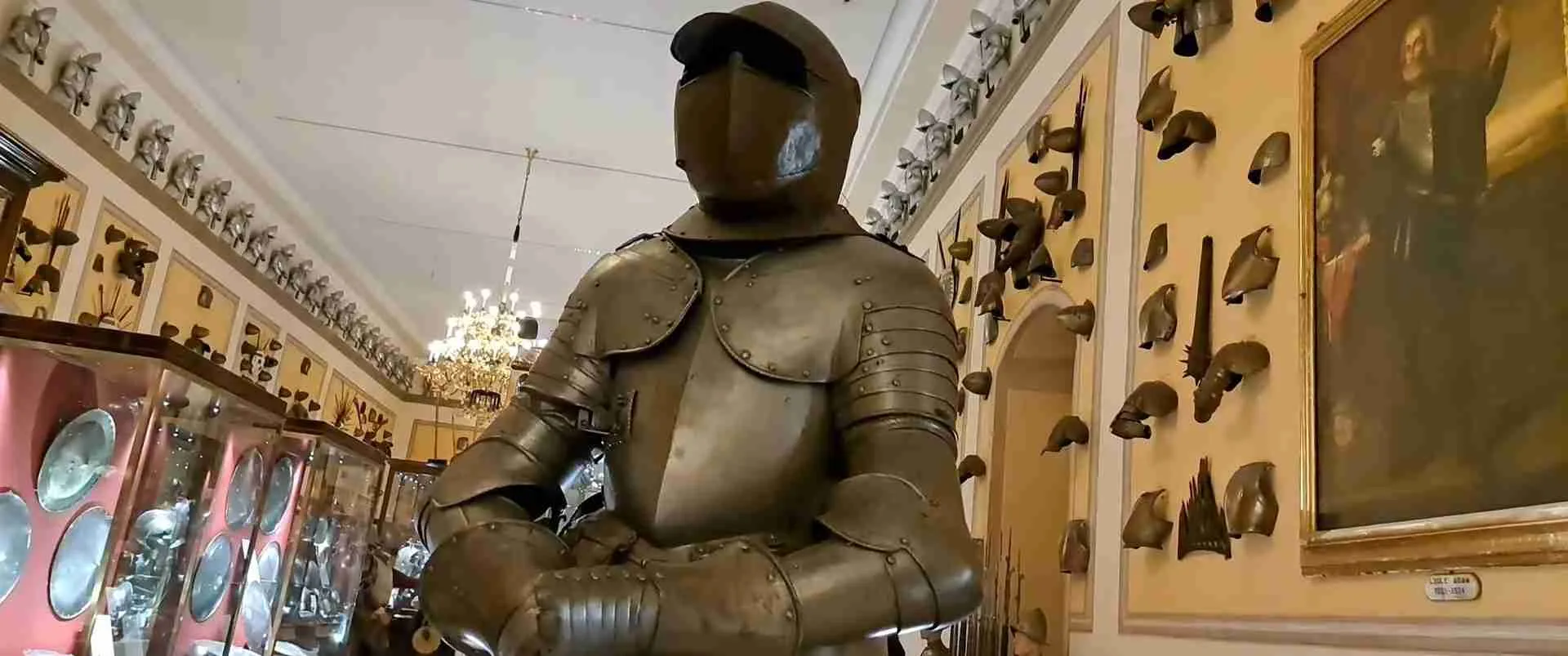
The Palace Armoury contains one of the world’s most important historical arms collections with 5,700+ pieces from the Knights’ era. Suits of armor stand in formation, presenting the full range of Knight defensive equipment from ceremonial parade armor to functional battlefield protection. Weaponry displays include swords, polearms, muskets, and cannons, many decorated with elaborate engraving and inlay work. The collection emphasizes 16th-17th century European military technology at its zenith, before gunpowder weapons rendered traditional armor obsolete.
Courtyard Neptune Fountain and clock tower merit attention as visitors move between palace sections. The courtyards demonstrate Maltese baroque adaptation of Italian palazzo architecture to local limestone construction and Mediterranean climate. Summer concerts occasionally use courtyards as performance venues, combining cultural programming with architectural setting.
Underground Valletta 2026: Wartime Shelter Complex
Underground Valletta, opened 2020 as Heritage Malta’s newest museum, presents the World War II shelter network excavated beneath Valletta’s streets to protect civilians during sustained Axis bombing campaigns. These hand-cut limestone tunnels and chambers, extending beneath multiple city blocks, provided refuge for thousands during air raids that destroyed 35% of Valletta’s buildings between 1940-1943.
Standard Heritage Malta admission pricing applies with multisite pass inclusion. The museum operates daily except Monday-Tuesday closures in winter months. Guided tours run at scheduled intervals throughout the day, with maximum group sizes for safety in underground spaces. Tours last approximately 45 minutes, covering 400 meters of tunnel network with frequent stairs and uneven surfaces. Visitors should wear comfortable closed-toe shoes and bring light jackets, as underground temperatures remain cool year-round at 16-18°C regardless of surface conditions.
The shelter complex preserves original features including sleeping platforms, ventilation systems, water storage, first aid stations, and community spaces where families lived during extended raids. Interpretive displays use photographs, recorded testimonies, and physical artifacts to recreate wartime underground life. The claustrophobic passages and basic facilities convey the hardship of shelter existence more effectively than conventional museum displays, creating powerful emotional connection to civilian wartime experience.
Audio-visual presentations within the tunnels screen historical footage of bombing raids, convoy operations, and daily civilian struggles. The museum contextualizes Malta’s strategic importance during the North African campaign, when the archipelago’s position astride Axis supply routes made it both vital to Allied Mediterranean strategy and target for elimination. Malta’s survival against sustained assault directly influenced the El Alamein campaign and subsequent Allied North African victories.
Mdina Museums 2026: Medieval Capital Cultural Sites
Mdina, Malta’s medieval fortified capital before Valletta’s construction, contains three significant museums within its compact walled perimeter. The silent city’s pedestrianized streets, baroque palaces, and cathedral complex create atmospheric settings for cultural institutions documenting Malta’s pre-Knights history and religious heritage.
St Paul’s Cathedral & Cathedral Museum Mdina 2026
St Paul’s Cathedral, Mdina’s baroque centerpiece rebuilt 1697 following earthquake damage to earlier Norman structure, serves as one of Malta’s two co-cathedrals alongside St John’s in Valletta. The cathedral and adjacent museum operate as combo ticketed venue, with adult admission approximately €10-12 covering both sites, check at Cathedral Museum for current combo pricing.
The cathedral interior presents Malta’s finest baroque religious architecture outside Valletta, with Lorenzo Gafa design featuring elaborate marble floors, painted dome by Mattia Preti’s students, and side chapels housing Maltese noble family patronage art. The main altar’s altarpiece, depicting St Paul’s shipwreck on Malta, references the apostle’s Acts of the Apostles account of 60 CE arrival that Christianized the archipelago. Carved wooden choir stalls, silver altar furniture, and marble pulpit demonstrate the wealth directed to Malta’s original episcopal seat.
The Cathedral Museum, housed in baroque seminary buildings, contains one of Malta’s finest art collections outside MUZA. Albrecht Dürer woodcut prints form the museum’s most internationally significant holdings, with complete sets of religious print series rarely found outside major European institutions. Maltese coins spanning 2,000 years document monetary systems from Punic through modern periods. Silver church plate collections demonstrate baroque goldsmiths’ craft, while religious vestments display elaborate embroidery techniques.
The museum’s highlight is the trompe-l’oeil dome, a painted architectural illusion creating the impression of three-dimensional cupola on flat ceiling. Paintings include works by Mattia Preti and his circle, Sicilian baroque masters, and local Maltese artists. Church treasures include reliquaries, processional crosses, and illuminated choir books used in cathedral liturgy through centuries.
National Museum of Natural History Mdina 2026
The National Museum of Natural History occupies Palazzo Vilhena, a baroque palace built 1726 as Grand Master Antonio Manoel de Vilhena’s summer residence. The museum documents Malta’s geology, paleontology, flora, fauna, and natural history through collections accumulated since the 19th century.
Heritage Malta operates the museum with standard admission pricing, though the Rabat Day Ticket combo provides access to this museum plus Domvs Romana and St Paul’s Catacombs at reduced combined rates. The museum participates in multisite passes and opens daily except Tuesday closures in winter months. Visitors allocate 45-60 minutes for comprehensive viewing, with exhibits suitable for families with children interested in natural sciences.
Geology displays explain Malta’s limestone formation from compressed coral reefs during the Oligocene-Miocene epochs, the archipelago’s separation from Sicily, and ongoing erosion creating Malta’s dramatic coastal cliffs. Fossil collections include extinct dwarf elephants and hippopotami that reached Malta during ice age low sea levels, then evolved into miniature species on the isolated archipelago. These endemic species died out with human arrival, though their bones remain in caves like Għar Dalam.
Flora and fauna galleries present Malta’s biodiversity, emphasizing endemic species and migration patterns. The archipelago’s Mediterranean position makes it critical stopover for bird migrations between Europe and Africa, with 389 recorded species despite limited resident bird populations. Endemic plant species adapted to Malta’s alkaline soil, limestone substrate, and limited rainfall demonstrate evolutionary responses to island constraints. Mineral collections showcase local geology’s commercial and construction uses through millennia.
Palazzo Falson Historic House Museum 2026
Palazzo Falson, a 13th century Norman palazzo restored as house museum, presents the private collection of Captain Olof Frederick Gollcher, Swedish-Maltese artist, philanthropist, and collector who bequeathed his residence and collections to the nation upon his 1962 death. The museum offers rare glimpse into aristocratic collecting practices and domestic life in medieval palace architecture.
Admission costs approximately €10 for adults, operating as independent museum outside Heritage Malta system. The palazzo opens daily except Mondays, with guided tours recommended to understand collection context and building history. Visitors should allocate 75-90 minutes for complete tour including all floors and courtyard spaces.
Gollcher’s collection spans furniture, silver, paintings, jewelry, Oriental rugs, armor, books, and manuscripts accumulated over decades of passionate collecting. Highlights include Renaissance and baroque paintings, Maltese silver crafted by local goldsmiths, elaborate inlaid furniture demonstrating Sicilian baroque woodworking, and rare books including illuminated manuscripts. The collection’s strength lies in quality and diversity, showcasing one individual’s refined aesthetic judgment across multiple artistic disciplines.
The palazzo building itself provides architectural interest, with original Norman structural elements including pointed arches, massive limestone walls, and medieval room configurations preserved within later baroque modifications. Period room settings present collection objects in domestic context rather than museum vitrines, recreating aristocratic residence atmosphere. Rooftop terraces provide Mdina panoramas extending across Malta’s interior to distant coastal views.
Birgu (Vittoriosa) Museums 2026: Maritime Heritage
Birgu, one of Valletta’s Three Cities across Grand Harbour, served as the Knights’ first Malta headquarters before Valletta’s construction. The maritime city’s museums focus on naval history, inquisition tribunals, and fortification architecture documenting Malta’s military-religious heritage.
Malta Maritime Museum 2026
The Malta Maritime Museum, housed in former British naval bakery on Birgu waterfront, chronicles the archipelago’s 7,000-year maritime history from prehistoric seafarers through modern merchant shipping. The museum’s strategic location in Grand Harbour, Malta’s premier natural anchorage that shaped Mediterranean naval history, enhances exhibitions documenting seaborne trade, naval warfare, and shipbuilding traditions.
Heritage Malta operates the museum with standard admission and multisite pass inclusion. Operating hours follow seasonal schedules with possible Tuesday winter closures. The museum requires 90 minutes for thorough viewing, with shorter visits possible focusing on specific periods like Knights-era galleys or World War II naval operations. Ferry services from Valletta to Birgu provide scenic Grand Harbour crossings, though buses also serve the Three Cities.
Permanent exhibitions span prehistory through present, with particular strength in Knights Hospitaller naval traditions. Full-scale galley section recreates the rowing banks, armaments, and cramped conditions of 16th century oared warships that dominated Mediterranean naval warfare until sailing ship supremacy. Ship models present Malta-built vessels from traditional luzzu fishing boats through 18th century ships-of-the-line constructed in Grand Harbour dockyards. The model collection includes famous vessels associated with Malta including HMS Victory and HMS Hibernia.
British naval period galleries document Grand Harbour’s role as Royal Navy Mediterranean Fleet headquarters through 164 years of colonial administration. Uniforms, weapons, navigational instruments, and personal artifacts tell stories of seamen serving in Maltese waters. World War II exhibits examine convoy operations that kept Malta supplied during sustained siege, with particular attention to Operation Pedestal, the August 1942 convoy that delivered critical fuel supplies enabling continued resistance.
Maritime art collections include ship portraits, harbor views, and seafaring scenes by Maltese and visiting artists. The museum’s figureheads, salvaged from wrecked vessels, demonstrate decorative woodcarving traditions. Navigation and cartography sections trace technological developments from ancient Mediterranean sailing through modern GPS systems, with particular attention to Maltese contributions to hydrographic surveys.
Inquisitor’s Palace 2026
The Inquisitor’s Palace served as headquarters for the Roman Inquisition’s Malta tribunal from 1574 until inquisition abolition in 1798. This rare preserved inquisition building maintains original courtrooms, prison cells, torture chambers, and administrative offices documenting the institution’s operations over 224 years. The palazzo also housed civil law courts during British colonial period, adding judicial history layers.
Heritage Malta manages the museum with standard pricing and multisite pass inclusion. The palace opens daily except possible winter Tuesday closures, requiring approximately 75-90 minutes for complete visit including all floors and courtyard. Audio guides available in multiple languages provide essential context for understanding inquisition procedures, legal frameworks, and social context.
The ground floor tribunal courtroom retains original furnishings including inquisitor’s bench, witness stands, and scribe desks where accusations, testimonies, and sentences were recorded in Latin. Display cases contain actual inquisition documents, including accusations of heresy, witchcraft, religious crimes, and moral offenses judged by successive inquisitors appointed from Rome. These primary sources reveal inquisition concerns ranging from theological deviation through prohibited books to sexual transgressions and magic practices.
Prison cells demonstrate detention conditions for accused awaiting trial or serving sentences. Underground cells held serious offenders in harsh conditions, while upper floor cells provided slightly better circumstances for minor offenders or cooperative witnesses. Graffiti carved by prisoners remains visible on cell walls, documenting names, dates, and desperate prayers. The palace torture chamber, though rarely used by Malta inquisition standards compared to continental European tribunals, displays instruments and documentation of “rigorous examination” authorized in specific cases.
The inquisitor’s private apartments demonstrate the office holder’s status as papal representative with diplomatic immunity and sovereign authority over religious law. Baroque frescoed ceilings, elaborate furnishings, and domestic chapel contrast sharply with prison cell austerity, emphasizing social hierarchies governing inquisition operations. The palace rooftop provides harbor views explaining Birgu’s strategic importance.
Fort St Angelo 2026
Fort St Angelo, crowning the Birgu peninsula tip between Grand Harbour and Dockyard Creek, ranks as Malta’s most historically layered fortification. Continuously occupied from Bronze Age through 2015 British military departure, the fort served Knights as headquarters fort, Ottomans during Great Siege assault, British as Mediterranean Fleet naval operations center, and now Heritage Malta as museum-fort hybrid.
Standard Heritage Malta admission applies with multisite pass coverage. The fort opens daily, though naval continuing presence in certain areas restricts some sections. Visitors should allocate 90-120 minutes for comprehensive exploration including multiple defensive levels, chapel, and harbor overlook positions. The In Guardia historical reenactment performances occur select Sundays at Fort St Angelo, with special ticketing combining fort admission and performance access.
Fort architecture demonstrates continuous defensive adaptation across 800 years. Medieval fortifications form the base, with Knights-era baroque military architecture layering above, and British 19th-20th century modifications adding final elements. Walking the ramparts reveals Grand Harbour panoramas explaining Malta’s strategic Mediterranean position controlling sea lanes between Europe, Africa, and Middle East.
The fort’s Great Siege role as the Knights’ last bastion provides historical drama. When Fort St Elmo fell to Ottoman forces June 23, 1565, Fort St Angelo became the Order’s final defensive position. The siege culminated with Spanish relief fleet arrival September 7, breaking the Ottoman naval blockade and forcing Turkish withdrawal. Fort galleries document this desperate resistance through artifacts, reconstructions, and interpretive displays.
British naval period exhibits examine Fort St Angelo as HMS Egmont, a “stone frigate” Royal Navy shore establishment commanding Mediterranean Fleet operations. World War II sections document the fort’s role coordinating convoy defenses and surviving sustained Axis bombardment. The fort suffered severe bomb damage but remained operational throughout the siege, symbolizing Maltese resistance that earned the George Cross.
Gozo Museums 2026: Rural Island Cultural Sites
Gozo, Malta’s rural sister island 20 minutes by ferry from Ċirkewwa, maintains distinct cultural identity reflected in specialized museums documenting agricultural heritage, prehistory, and military history. Gozo’s museums complement mainland institutions by presenting rural Maltese life often overlooked in Valletta-centric narratives.
Citadel Museums Complex Victoria 2026
The Citadel, Gozo’s fortified capital crowning Victoria’s hilltop, contains four Heritage Malta museums within its medieval walls: Gran Castello Historic House, Old Prison, Citadel Cultural Centre, and Citadel Visitor Centre. The Ċittadella Combo Ticket provides one-time admission to all four sites valid 30 days from first use at reduced combined pricing versus individual entries.
The combo ticket operates within Heritage Malta’s system, with all sites following standard seasonal opening hours. The Citadel requires 2-3 hours for comprehensive museum exploration plus time wandering medieval streets, bastions, and rampart walks. Visitors accessing Gozo via Ċirkewwa-Mġarr ferry (45 minutes) or fast ferry from Valletta (25 minutes) should plan full-day Gozo visits combining Citadel museums with other island attractions like Ġgantija temples, coastal features, and traditional villages.
Gran Castello Historic House recreates Gozitan aristocratic domestic life through period furnishings, demonstrating rural baroque living standards contrasting with Valletta’s urban sophistication. The Old Prison preserves cells where criminals and debtors served sentences under Knights and British rule, with prisoner graffiti carved into soft limestone walls documenting names, dates, and detention circumstances. The Citadel Cultural Centre hosts rotating exhibitions on Gozitan history, traditional crafts, and contemporary art, providing dynamic complement to permanent collections.
The Citadel Visitor Centre provides comprehensive Gozo introduction through multimedia exhibits covering geology, ecology, history, and culture. Interactive displays explain Gozo’s agricultural traditions, fishing heritage, lacemaking and weaving crafts, religious festivals, and distinct dialect variations. The center functions as orientation point before exploring Gozo’s scattered attractions across the 67 square kilometer island.
Beyond museums, the Citadel itself merits exploration as architectural monument. Medieval fortification walls, bastions added during Knights’ rule, and cathedral dominating the interior plaza create atmospheric setting for museums. Rampart walks provide panoramic views across Gozo’s patchwork agricultural landscape to coastal cliffs and azure Mediterranean waters. The adjacent streets preserve traditional streetscapes with limestone buildings, narrow passages, and baroque palazzos housing local families.
Ġgantija Archaeological Park & Museum 2026
Ġgantija temples, twin megalithic structures in Xagħra parish built 3600-3200 BCE, rank among humanity’s oldest freestanding stone buildings. UNESCO World Heritage designation recognizes these Neolithic monuments predating Egyptian pyramids by 1,000 years and Stonehenge by 1,500 years. Heritage Malta manages the site with modern interpretation center contextualizing the temples within Malta’s broader megalithic temple culture.
Standard Heritage Malta admission applies with multisite pass inclusion. The site opens daily year-round, with interpretation center providing essential context before temple viewing. Visitors allocate 75-90 minutes for complete experience including museum exhibits and temple complex exploration. The temples lack shade, making morning or late afternoon visits preferable during summer heat.
The name Ġgantija derives from Maltese word for giant, reflecting folk legends attributing construction to supernatural beings given the monuments’ massive scale. The larger south temple measures 25 meters, with some megaliths exceeding 5 meters height and 50 tons weight. Stone blocks, quarried from coralline limestone formations kilometers away, were transported and positioned using wooden rollers, ropes, and lever systems, then fitted without mortar to create structures surviving 5,500+ years.
Temple layouts follow standard Maltese megalithic pattern: trilithon entrance leading to central corridor with semi-circular apses branching right and left, suggesting processional routes for religious rituals. Archaeological excavations recovered pottery, animal bones, stone altars, and figurines indicating fertility cult practices. The interpretation center displays original artifacts while contextualizing Ġgantija within broader temple period spanning 3600-2500 BCE when Malta supported sophisticated Neolithic society predating Bronze Age cultural transformations.
Recent archaeological investigations employ ground-penetrating radar revealing additional buried structures around visible temples, suggesting Ġgantija formed larger religious complex than surface monuments indicate. Ongoing research examines astronomical alignments, acoustic properties, and social organization required to construct monuments demanding thousands of person-hours labor from small-population agricultural communities.
Ta’ Kola Windmill Museum 2026
Ta’ Kola Windmill, an 18th century grain mill in Xagħra restored as rural life museum, documents Gozitan agricultural traditions and traditional architecture. This working windmill represents technology introduced during Knights’ rule to mechanize grain processing previously accomplished through hand-powered millstones.
Heritage Malta operates the windmill with standard admission included in multisite passes. Opening hours may be reduced compared to major museums, with possible closures certain weekdays during winter low season. The windmill requires approximately 45 minutes for complete visit including all floors from grain storage cellar through machinery levels to cap viewing platform.
The windmill machinery, restored to operational condition though not regularly run for preservation, demonstrates grain processing from wheat delivery through milling to flour collection. Massive millstones, wooden gears transferring power from wind-turned sails, and adjustable cap allowing sail orientation toward prevailing winds showcase pre-industrial engineering ingenuity. Interpretive displays explain miller’s specialized knowledge managing wind power, grain processing, and quality control.
Period rooms recreate 19th century Gozitan rural domestic life, with traditional furniture, agricultural tools, household implements, and costume demonstrating self-sufficient agricultural community life. The windmill served dual functions as grain processing facility and miller’s residence, combining productive labor and domestic space within integrated structure. Collections include weaving equipment, pottery, cooking vessels, and religious artifacts documenting rural Catholic piety central to Gozitan identity.
Specialized Museums 2026: Niche Collections Across Malta
Beyond major institutions, Malta supports specialized museums documenting aviation history, classic automobiles, Roman domestic life, prehistoric caves, and World War II operations, offering targeted deep dives into specific historical aspects.
Malta Aviation Museum Ta’ Qali 2026
The Malta Aviation Museum, located on former RAF Ta’ Qali airfield converted to craft village, presents Malta’s aviation history through restored aircraft, engines, equipment, and documentation covering civilian and military aviation from pioneering flights through modern commercial operations.
The museum operates independently with admission approximately €10 for adults. Opening hours typically run daily mornings and afternoons, though visitors should verify current schedules before visiting. The hangar setting accommodates full-scale aircraft requiring approximately 90 minutes for complete viewing including all exhibits and aircraft interiors accessible to visitors.
Aircraft collections emphasize Malta’s World War II role as RAF base defending Mediterranean convoy routes and attacking Axis shipping to North Africa. Restored examples include Hawker Hurricane, Supermarine Spitfire variants, and Bristol Beaufighter, all types that defended Malta during 1940-1943 siege. The museum’s Spitfire Mark IX flew actual combat missions from Ta’ Qali, adding historical authenticity. Aircraft restorations demonstrate painstaking work recovering wrecked planes and sourcing period-correct components.
Beyond military aircraft, collections document Malta’s commercial aviation history including early imperial airways flying boat services connecting Europe to Africa through Malta’s harbors. Engines, propellers, instruments, and cockpit equipment from various eras show technological evolution. The museum emphasizes Malta’s strategic aviation importance: its Mediterranean position made it natural stopover for intercontinental routes while its proximity to Sicily and North Africa positioned it for aerial warfare during World War II.
Malta Classic Car Collection Qawra 2026
The Malta Classic Car Collection, a private museum in Qawra displaying 100+ vintage automobiles and motorcycles, presents automotive evolution through pristine restored examples from pioneering vehicles through 1980s classics. The collection emphasizes British and American marques popular in Malta during colonial and post-independence periods.
Admission costs approximately €10 for adults with flexible visiting allowing extended viewing time. The museum opens daily year-round, housed in purpose-built climate-controlled facility protecting valuable vehicles. Car enthusiasts allocate 75-120 minutes depending on interest depth, with guided tour options providing technical details and ownership histories.
Collection highlights include 1955 Jaguar C-Type, 1960s Ford Thunderbirds, 1970s American muscle cars, British sports cars spanning MG through Triumph, and rare European exotics. Motorcycles range from pioneering early 20th century examples through iconic postwar British bikes. Each vehicle maintains running condition where feasible, representing significant restoration investment. Display boards provide manufacturing history, technical specifications, and Malta connection contextualizing vehicles within local automotive culture.
Domvs Romana Rabat 2026
Domvs Romana, Heritage Malta museum built around excavated Roman townhouse remains, documents Malta’s Roman period through in situ architectural ruins, elaborate floor mosaics, and artifact collections from Mdina-Rabat area Roman settlement. The site demonstrates wealthy Roman domestic architecture adapted to Mediterranean climate and Malta’s limestone building traditions.
The museum follows Heritage Malta admission pricing with multisite pass inclusion and participates in Rabat Day Ticket combo with St Paul’s Catacombs and Natural History Museum. Standard seasonal opening hours apply with possible winter Tuesday closures. Visitors allocate 60 minutes for comprehensive viewing including mosaic galleries and Roman artifact collections.
The central attraction comprises well-preserved floor mosaics from late 1st century BCE Roman villa, discovered during 1881 construction work. Geometric and figural mosaics demonstrate Roman luxury standards transplanted to Malta during Republican and early Imperial periods. The villa’s layout, partially excavated, reveals Roman domestic spatial organization including peristyle courtyard, reception rooms, and service areas. Architectural fragments, column capitals, and decorative elements show Roman craftsmanship working in local globigerina limestone.
Collections include pottery, glassware, oil lamps, statuary, and personal items documenting Roman daily life. Display cases organize materials chronologically from Republican conquest 218 BCE through Byzantine period, showing cultural continuity and transformations. The museum contextualizes Malta’s Roman integration into empire-wide commercial and administrative networks, with evidence of North African trade connections, Italian imports, and local production adapting Roman forms to Maltese resources.
St Paul’s Catacombs Rabat 2026
St Paul’s Catacombs, the largest accessible early Christian burial complex in Malta, presents underground burial chambers carved into soft limestone between 4th-9th centuries CE. Heritage Malta manages this archaeological site documenting Malta’s early Christian community and funerary practices adopted after apostle Paul’s legendary 60 CE shipwreck introduced Christianity to the archipelago.
Standard Heritage Malta admission applies with inclusion in Rabat Day Ticket combo and multisite passes. The catacombs open daily except winter Tuesday closures, requiring approximately 45-60 minutes for guided or self-guided underground exploration. The site maintains constant cool temperature year-round, making it comfortable during summer heat while requiring light jackets during winter visits.
The catacomb complex extends over 2,000 square meters of underground passages and burial chambers connected to surface through shaft entrances. Early Christians carved tomb niches into corridor walls following Roman burial customs adapted to Christian theology. Various tomb types appear: loculi (simple wall niches), arcosolia (arched recesses), and table tombs used for funerary feasts honoring deceased. Painted symbols including doves, anchors, and fish identify Christian burials, while scratched inscriptions record names and dates.
The catacombs demonstrate transition from Roman cremation to Christian inhumation, with theology of bodily resurrection requiring intact burial. Social status divisions manifest in tomb elaboration: simple niches for common faithful, while wealthy Christians commissioned decorated chambers with frescoed walls and architectural details. The site continued operating through Byzantine period until Arab conquest 870 CE introduced Islamic burial practices ending Christian catacomb use.
Lascaris War Rooms Valletta 2026
The Lascaris War Rooms, underground World War II command center beneath Valletta’s Upper Barrakka Gardens, operated as British Mediterranean command headquarters coordinating Allied operations across Mediterranean and North Africa from 1940-1979. Now preserved as museum by Wirt Artna foundation, the tunnels recreate wartime operations through original equipment, maps, and interpretive displays.
Independent operation outside Heritage Malta system charges approximately €10 adult admission. The war rooms open daily year-round with guided tours departing at scheduled intervals. Tours last approximately 45 minutes covering multiple tunnel levels, operations rooms, and communication centers. The underground setting maintains cool temperatures requiring light layers regardless of surface weather.
The complex housed Combined War Headquarters coordinating Royal Navy Mediterranean Fleet operations, RAF Malta air defenses, and army garrison activities. The Fighter Sector Operations Room managed RAF fighter squadrons defending against Axis air raids through 1940-1943 Malta siege. Wall maps tracked convoy routes, enemy bomber formations, and defensive fighter deployments in real-time, with officers directing responses to developing situations. Preserved plotting tables, status boards, and communication equipment demonstrate 1940s command and control technology.
Tours emphasize June 1943 Operation Husky planning, the Allied invasion of Sicily coordinated from these tunnels. General Eisenhower and field commanders used Lascaris as operational headquarters while assembling invasion forces and finalizing attack plans. Post-war, the tunnels continued NATO operations tracking Soviet submarine movements through Mediterranean during Cold War, remaining operational until 1977 British military withdrawal from Malta.
Museum Pass Strategies 2026: Maximizing Cultural Value
Malta’s museum pass options significantly reduce admission costs for visitors planning multiple cultural attractions. Understanding pass types, coverage, and economics enables strategic planning matching individual itineraries to optimal ticketing approaches.
Heritage Malta Multisite Pass 2026
The Heritage Malta Multisite Pass provides unlimited admission to 25+ Heritage Malta museums and archaeological sites over 30 days from first use. The pass covers virtually all major state-operated museums including MUZA, National Museum of Archaeology, Fort St Elmo, Grand Master’s Palace, Ġgantija temples, and numerous other archaeological sites across Malta, Gozo, and Comino.
Adult multisite pass pricing for 2026 offers substantial savings compared to individual site admissions. Calculating break-even points: individual Heritage Malta sites cost €6-10 per entry, while comprehensive multisite pass pricing (check Heritage Malta website for current rates) typically recovers costs after visiting 3-5 sites depending on specific sites chosen. Visitors planning to explore Malta’s museums seriously over 1-2 week stays benefit significantly from multisite pass economics.
The 30-day validity period accommodates extended visits including return trips to favorite sites or revisiting museums with temporary exhibitions changing during stay. Pass holders can spontaneously visit sites without concern for admission costs, encouraging exploration of smaller museums that might be skipped when purchasing individual tickets. The pass excludes independently operated museums like St John’s Co-Cathedral, Palazzo Falson, and private collections requiring separate admission.
Purchase options include online advance purchase through Heritage Malta website with email confirmation, or on-site purchase at any Heritage Malta museum or site. Online purchase proves convenient for advance planning, while on-site purchase works for spontaneous decisions after arriving at first museum visit. Passes are non-transferable personal tickets requiring presentation at each site visit.
Regional Combo Tickets 2026
Heritage Malta offers regional combo tickets grouping geographically proximate sites at reduced combined pricing versus individual admissions. The Rabat Day Ticket combines Domvs Romana, St Paul’s Catacombs, and National Museum of Natural History in Mdina-Rabat area. The Ċittadella Combo Ticket covers four museums within Gozo’s Victoria citadel. Regional combos suit visitors focusing itineraries around specific areas rather than archipelago-wide exploration.
Rabat Day Ticket pricing for 2026 offers adults €8 access to three sites normally costing €12 individually, representing 33% savings. Seniors, students, and children receive proportional discounts. The ticket requires single-day use, encouraging efficient back-to-back visits within Mdina-Rabat compact area walkable in minutes. Morning museum visits followed by Mdina lunch and afternoon exploration creates natural day itinerary maximizing combo ticket value.
Ċittadella Combo Ticket provides 30-day validity like multisite passes, though covering only Gozo citadel museums rather than island-wide sites. The extended validity accommodates multi-day Gozo visits or return ferry trips for visitors using Malta as base. Gozo day-trippers can complete citadel museums in 2-3 hours, leaving afternoon for other Gozo attractions like Ġgantija temples, Ramla Bay, or traditional villages.
Malta Biennale 2026 Combo Ticket
The Malta Biennale 2026 combo ticket, valid March 14 – May 29, 2026, provides single entry to 11 participating Heritage Malta sites hosting contemporary art installations alongside permanent collections. The biennale ticket includes Grand Master’s Palace, MUZA, National Museum of Archaeology, Fort St Elmo and National War Museum in Valletta; Fort St Angelo, Malta Maritime Museum, Inquisitor’s Palace, and Old Armoury in Birgu; plus Citadel Cultural Centre, Ġgantija Archaeological Park, and Ta’ Kola Windmill in Gozo.
Pricing offers value for spring 2026 visitors interested in contemporary art overlaying historical collections. The ticket includes complimentary official Malta Biennale guidebook providing exhibition context, artist information, and thematic frameworks. Purchase options include online through maltabiennale.art and heritagemalta.mt websites, or on-site at most participating venues except Birgu Old Armoury, Ta’ Kola Windmill, and Malta Maritime Museum.
The biennale presents international contemporary artists creating site-specific installations responding to Malta’s historical spaces and collections. Previous biennale editions featured major international names alongside Maltese contemporary artists, with installations activating museum spaces through unexpected juxtapositions of ancient artifacts and contemporary art. The 2026 edition theme and confirmed artists will be announced through official channels closer to March 14 opening.
Third-Party Multi-Attraction Passes 2026
Commercial tourism operators offer multi-attraction passes bundling Heritage Malta sites with hop-on-hop-off bus transportation, harbor cruises, and privately-operated attractions. The iSeeMalta Pass and similar products combine museum admissions with transportation infrastructure, creating convenience for visitors prioritizing efficient sightseeing over deep cultural engagement.
These passes typically provide 3-day or 7-day validity covering 20+ attractions including Fort St Elmo, Ħaġar Qim temples, St Paul’s Catacombs, and transportation options. Pricing structures vary based on duration and attraction inclusions, generally exceeding Heritage Malta multisite pass costs but adding transportation value. Economics favor visitors new to Malta prioritizing broad coverage and using hop-on-hop-off buses as primary transport versus those with focused museum interests using public buses.
Third-party passes usually exclude St John’s Co-Cathedral, MUZA, and other premium museums requiring separate admission. Coverage limitations require careful comparison against Heritage Malta passes before purchase. The convenience of bundled transportation appeals to visitors uncomfortable with Malta’s public bus system or preferring narrated sightseeing over independent exploration.
Special Events & Exhibitions 2026
Malta’s museum calendar includes recurring annual events, temporary exhibitions, and special programming transforming standard museum experiences into distinctive cultural events. Planning visits around these occasions provides enhanced value and unique access to collections.
Malta Biennale 2026: March 14 – May 29
The Malta Biennale, launched 2023 as contemporary art festival, returns for its second edition March 14 – May 29, 2026, transforming 11 Heritage Malta sites into exhibition venues hosting international contemporary art installations. The biennale model combines established collections with temporary contemporary works, creating dialogues between historical artifacts and current artistic production.
Maurizio Cattelan headlines the 2026 edition as featured artist, bringing his provocative conceptual practice to Malta’s historical settings. Additional confirmed artists and exhibition themes will be announced through official channels as March opening approaches. The biennale operates under umbrella theme exploring Malta’s Mediterranean position as cultural crossroads, with artists engaging archipelago history, identity, and contemporary relevance.
Participating venues span Valletta (Grand Master’s Palace, MUZA, National Museum of Archaeology, Fort St Elmo), Birgu (Fort St Angelo, Malta Maritime Museum, Inquisitor’s Palace, Old Armoury), and Gozo (Citadel Cultural Centre, Ġgantija Archaeological Park, Ta’ Kola Windmill). This geographic distribution encourages visitors to explore beyond Valletta tourist circuits, discovering secondary cities and rural sites through contemporary art programming.
The Malta Biennale 2026 combo ticket provides cost-effective access to all participating venues during the exhibition period, with complimentary guidebook explaining curatorial concepts and artist profiles. Standard Heritage Malta multisite passes also cover biennale venues, though separate biennale tickets include exhibition-specific materials enhancing engagement. Opening week March 14-21 typically features artist talks, panel discussions, and special programming concentrated around exhibition launch.
Museums by Candlelight Valletta: June 6, 2026
Museums by Candlelight, Heritage Malta’s atmospheric evening event, returns June 6, 2026, opening six Valletta cultural sites from 7:00 PM to midnight with candlelit interiors, live music performances, and theatrical presentations. The 2026 edition expands to include Fort St Elmo and National War Museum for the first time, joining National Museum of Archaeology, Grand Master’s Palace, MUZA, Church of St Catherine of Italy, and St John’s Co-Cathedral in the largest program yet.
General admission tickets cost €6 for all six sites, representing extraordinary value compared to standard daytime admission totaling €50+ for the same venues. Heritage Malta members enter free but must pre-book. Tickets purchase online through Heritage Malta website, at any Heritage Malta museum, or at participating venue doors on event night subject to availability. Previous editions sold out, making advance booking advisable.
The candlelit atmosphere transforms familiar museum spaces into magical evening environments. Flickering candlelight animates baroque architecture, casting dramatic shadows on frescoed ceilings and marble floors while live musical performances echo through galleries. Each venue programs specific entertainment: early music ensembles in St John’s Co-Cathedral, contemporary acoustic performances in MUZA, and historical reenactments at Fort St Elmo. Visitors move freely between venues throughout the evening, experiencing Valletta’s cultural patrimony under unique conditions impossible during standard operating hours.
Event logistics require consideration: all six venues cluster within Valletta’s compact grid, allowing efficient walking between sites. Dress codes apply for churches, requiring covered shoulders and knees. Venues contain multiple staircases and uneven surfaces, with some areas inaccessible to visitors with mobility limitations. The event works best for older children and adults appreciating historical ambiance over interactive museum engagement. Walking between venues through Valletta’s illuminated baroque streets at night becomes part of the experience, with the fortified capital transformed into atmospheric stage.
Notte Bianca Valletta: October 2026
Notte Bianca, Malta’s annual all-night cultural festival, transforms Valletta into open-air performance and exhibition venue each October with museums, churches, palazzos, and public spaces hosting free programming from sunset to sunrise. While 2026 specific dates await announcement, the festival typically occurs first Saturday of October, mobilizing entire capital for 12-hour cultural celebration.
Major museums extend hours offering free admission during Notte Bianca, providing rare opportunity to visit St John’s Co-Cathedral, MUZA, National Museum of Archaeology, and Grand Master’s Palace without entrance fees. This represents substantial savings and draws massive crowds, with museums packed throughout evening and overnight hours. Serious viewing proves challenging amid festival atmosphere, but the experience of Valletta en masse creates memorable cultural immersion.
Beyond museums, Notte Bianca programs street performances, musical concerts on multiple outdoor stages, theatrical productions in historic courtyards, contemporary art installations in public squares, and guided architecture tours revealing normally-closed baroque palazzos. Food vendors, craft demonstrations, and local product markets activate streets between performance venues. The festival emphasizes Maltese culture alongside international programming, showcasing local musicians, artists, and performers.
Temporary Exhibitions Throughout 2026
Major museums rotate temporary exhibitions quarterly, supplementing permanent collections with focused thematic displays, international loans, and contemporary art projects. MUZA typically presents 3-4 temporary exhibitions annually featuring Maltese contemporary artists, thematic explorations of collection segments, or traveling exhibitions from international partners. These shows occupy dedicated temporary exhibition galleries separate from permanent displays, allowing concurrent viewing.
Heritage Malta announces temporary exhibition schedules through its website and social media channels approximately 6-8 weeks before opening. Exhibition-specific events including curator talks, artist discussions, and educational programs provide enhanced engagement opportunities beyond standard viewing. Some temporary exhibitions carry supplemental admission fees added to standard museum entry, though most operate within regular Heritage Malta admission structures.
Practical Planning for Malta Museums 2026
Seasonal Operating Schedules 2026
Heritage Malta museums follow two distinct seasonal schedules dividing the calendar year. March through October high season brings daily operations 10:00 AM – 6:00 PM with last admission 5:30 PM across most sites. November through February low season reduces hours to 9:00 AM – 5:00 PM daily with last admission 4:30 PM. January-February further restricts schedules with Tuesday closures at many sites, while all Heritage Malta museums close January 1, Good Friday, December 24, 25, and 31.
St John’s Co-Cathedral maintains year-round Monday-Saturday 9:00 AM – 4:45 PM schedule with last admission 4:00 PM, closing Sundays and public holidays. Independent museums like Palazzo Falson, Malta Aviation Museum, and Classic Car Collection set individual schedules, typically opening daily except Mondays with reduced winter hours. Visitors should verify current schedules through museum websites or Heritage Malta portal before planning specific visit days.
Peak visiting periods occur mid-morning through mid-afternoon when cruise ship passengers and tour groups concentrate. Optimal quiet viewing windows exist at opening hour when museums first open, or final admission period when tour groups have departed and independent visitors enjoy uncrowded galleries. Summer heat makes air-conditioned museums particularly attractive during midday peak temperatures, creating afternoon crowds that dissipate toward closing time.
Transportation Between Museums 2026
Valletta’s compact size enables walking between all capital museums without vehicular transport. St John’s Co-Cathedral, MUZA, National Museum of Archaeology, and Grand Master’s Palace cluster within 400-meter radius along Republic Street spine, requiring 5-10 minutes walking between venues. Fort St Elmo sits 15 minutes walk from city center at peninsula tip, combining museum visit with rampart walks and harbor viewpoints.
Mdina-Rabat museums concentrate within medieval walled city and adjacent town, again accessible entirely on foot with maximum 5-minute walks between St Paul’s Cathedral, Cathedral Museum, Palazzo Falson, National Museum of Natural History, Domvs Romana, and St Paul’s Catacombs. Buses connect Valletta and Mdina, with route 51, 52, 53 operating frequent service throughout the day.
Three Cities museums in Birgu require either ferry from Valletta (scenic Grand Harbour crossing with excellent fort and city views) or bus connections. Ferry service operates regularly from Valletta waterfront to Birgu landing, taking approximately 15 minutes. Buses from Valletta to Birgu include routes 1, 2, 3, and 4, though ferry provides more direct and atmospheric transport. Within Birgu, Malta Maritime Museum, Inquisitor’s Palace, and Fort St Angelo require walking with some uphill grades.
Gozo museums necessitate ferry from Ċirkewwa to Mġarr (6 AM – 10 PM, 25 minutes crossing) followed by buses to Victoria citadel or Xagħra for Ġgantija temples. Fast ferry from Valletta to Mġarr operates during summer months, reducing crossing to 45 minutes direct. Rental cars provide flexibility for Gozo museum visits combined with coastal and rural exploration, though public buses serve major museums adequately for patient travelers.
Accessibility Considerations 2026
Modern museums like MUZA and National Museum of Archaeology provide full wheelchair accessibility with elevators, ramped entrances, and accessible restrooms. Historic buildings converted to museums face architectural constraints limiting full accessibility. St John’s Co-Cathedral accommodates wheelchairs though some areas remain restricted due to narrow passages and steps. Grand Master’s Palace provides reasonable accessibility to ground floor State Rooms and Armoury, while upper floors prove challenging.
Fort St Elmo and Fort St Angelo employ chair lifts and ramps providing access to most areas despite historic fortification architecture with inherent stairs and ramparts. Some defensive positions and upper battery levels remain inaccessible without stair climbing. The Lascaris War Rooms, carved into underground tunnels, present access challenges for visitors with mobility limitations, with numerous stairs throughout the complex.
Archaeological sites like Ġgantija temples and Ħaġar Qim operate on outdoor terrain with uneven stone surfaces, requiring sturdy footwear and ability to navigate irregular paths. Protective viewing platforms provide sightlines to temple interiors without requiring navigation of archaeological remains. Heritage Malta’s website indicates specific accessibility information for each site, while staff at museum entrances can provide current access details.
Audio guides, available at most major museums in 10+ languages, enhance accessibility for hearing visitors while providing detailed interpretation exceeding standard text panels. Touch-enabled displays at National Museum of Archaeology and selected other venues accommodate visually impaired visitors. Heritage Malta continues expanding accessibility features across its network, though historic building constraints limit universal accessibility achievement.
Photography Policies 2026
Photography without flash is generally permitted throughout Heritage Malta museums for personal non-commercial use. St John’s Co-Cathedral allows photography excluding flash, tripods, and selfie sticks that could damage delicate marble tombstone floors. MUZA permits photography in permanent collection galleries while restricting some temporary exhibitions where loaned works carry photography prohibitions from lending institutions.
Archaeological sites encourage photography documenting visits and sharing Malta’s heritage. Underground sites like St Paul’s Catacombs and Lascaris War Rooms restrict flash photography protecting sensitive painted surfaces and visitor experience in confined spaces. Some museums prohibit commercial photography, filming, or photography intended for publication without advance permission and potential fees.
Social media sharing remains encouraged, with museums welcoming visitor posts promoting collections and exhibitions. Museums maintain active social media presence showcasing collections, announcing programs, and engaging with visitor posts. Photography policies may change for special exhibitions or conservation concerns, with current restrictions posted at entrances and included in admission ticket terms.
Museum Dining & Amenities 2026
Museum Cafes and Restaurants
MUZA operates rooftop cafe with harbor views, offering coffee, light meals, pastries, and beverages during museum hours. The cafe provides climate-controlled respite during museum visits, particularly welcome during summer heat. Seating indoors and covered outdoor terrace accommodate various weather conditions. Prices reflect museum cafe premiums though remain moderate by tourist area standards, with coffee €3-4 and light meals €8-12.
Fort St Elmo’s courtyard cafe operates seasonal schedule serving cold drinks, ice cream, sandwiches, and snacks primarily during summer months when fort attracts maximum visitors. The exposed courtyard setting provides fort ambiance though lacks air conditioning. Several cafes cluster immediately outside Heritage Malta museums, particularly along Republic Street near National Museum of Archaeology and Grand Master’s Palace, offering quick coffee stops or meal breaks between venues.
Museums lacking dedicated cafes sit within walking distance of Valletta, Mdina, or Birgu dining establishments. The compact scales allow exiting museums for nearby restaurants, cafes, or takeaway options before returning to continue cultural exploration. Many visitors combine morning museum visits with lunch breaks at nearby restaurants before afternoon museum sessions, managing energy levels across full-day cultural itineraries.
Gift Shops and Museum Shops 2026
Major museums operate gift shops selling exhibition catalogs, art books, replicas of collection highlights, locally-designed merchandise, and traditional Maltese crafts. MUZA’s shop emphasizes art publications and contemporary design objects, while National Museum of Archaeology stocks replica Neolithic figurines, temple-themed jewelry, and archaeological reference books. Fort St Elmo’s military museum shop focuses on military history publications, replica armor and weapons, and Malta siege-related materials.
Quality varies significantly between museum shops, with major Heritage Malta venues offering curated selections complementing collections versus smaller sites with generic souvenir assortments. Serious collectors seek exhibition catalogs documenting temporary shows, as these publications often go out of print and appreciate in secondary markets. Local artist collaborations produce museum-exclusive merchandise unavailable elsewhere, particularly handcrafted jewelry inspired by archaeological artifacts.
Museum shops accept credit cards and cash, with prices marked in euros. Heritage Malta members receive 15% discount on official guidebooks purchased at any site shop, a modest benefit partially offsetting membership costs for book collectors. Museums lacking dedicated shops typically sell basic postcards, guidebooks, and small souvenirs at admission desks.
Money-Saving Strategies for Malta Museums 2026
Heritage Malta Membership for Extended Stays
Annual Heritage Malta membership provides unlimited free admission to all 25+ Heritage Malta sites over 12 months plus exclusive member events, exhibition previews, and discounts on museum shops and publications. Membership costs significantly more than multisite passes but becomes economical for visitors staying 3+ weeks or making repeat Malta trips within the year.
Membership includes immediate family members, making it particularly valuable for families planning extended cultural exploration. Member exclusive events include curator talks, behind-the-scenes tours, special exhibition openings before public access, and evening programs in museums closed to general visitors. The membership card functions as skip-the-line pass at busy venues, providing direct entry without queuing at ticket desks.
Serious museum visitors evaluating membership versus multisite pass should calculate: multisite pass covers approximately 5-7 individual site visits before exceeding cost, while membership requires roughly 12-15 visits for equivalent value based on standard admission prices. The additional member benefits, exclusive events, and shop discounts add value beyond simple admission calculations. Purchase options include online through Heritage Malta website or on-site at any Heritage Malta museum.
Free Admission Opportunities
Children age 5 and younger enter all Heritage Malta sites free without tickets. Students with valid international student ID cards receive reduced admission at all museums, typically 30-40% below adult rates. Some universities maintain partnerships with Heritage Malta providing free access for enrolled students, though this requires verification at admission desk with student documentation.
International Museum Day, celebrated globally each May 18, provides free Heritage Malta museum admission to all visitors as participation in worldwide museum access initiative. Museum opening hours extend on this day, with special programming including tours, workshops, and demonstrations supplementing standard exhibitions. The event draws large crowds as Maltese families and visitors take advantage of free access, making advance arrival advisable for popular venues.
European Heritage Days, occurring annually in September, likewise offers free Heritage Malta admission alongside special tours of normally-closed buildings and archaeological sites. The event emphasizes heritage preservation and public access to cultural patrimony, with expanded programming beyond standard museum offerings. Specific 2026 dates will be announced through Heritage Malta channels several months in advance.
Strategic Timing for Reduced Crowds and Costs
November through February low season brings smallest crowds and reduced accommodation costs though some museums implement Tuesday closures and shorter hours. The mild Mediterranean winter remains comfortable for museum touring, with daytime temperatures 12-18°C avoiding summer heat stress. This period suits visitors prioritizing uncrowded museum experiences and photography without crowds blocking sightlines.
Shoulder seasons March-May and September-October optimize weather, crowds, and museum operating hours. Spring brings Malta Biennale programming during March 14 – May 29, 2026, adding contemporary art value to museum visits. Fall presents harvest festivals, Notte Bianca cultural event, and pleasant Mediterranean autumn conditions. Both shoulder periods see full museum operating hours without peak summer crowds or winter closures.
Early morning museum visits immediately at opening hour provide optimal conditions before tour groups arrive. Late afternoon final admission periods offer uncrowded galleries as departing visitors create space. Midday 12:00 PM – 2:00 PM sees peak crowding as cruise passengers and tour groups concentrate, making this period least favorable for quality museum experiences.
Museums for Different Visitor Types 2026
Family-Friendly Museums with Children
The National Museum of Archaeology engages children through prehistoric artifacts including oversized temple stones, ancient tools, and figurines sparking imagination about Malta’s first inhabitants. Interactive displays explain archaeological methods and temple construction techniques. The museum’s compact size prevents young visitor fatigue while providing substantive content. Children under 12 enter free when accompanied by adults, making family visits economical.
Fort St Elmo attracts children interested in military history, knights, and fortifications. The extensive outdoor spaces allow movement between indoor galleries, while rampart walks provide harbor views and exploration opportunities. The George Cross display, historic aircraft, and armor collections particularly engage young visitors. Summer In Guardia reenactments with costumed knights performing military drills add experiential dimension beyond standard museum touring.
Malta Aviation Museum appeals to children fascinated by aircraft, with cockpit access in select planes allowing hands-on engagement. The hangar setting provides space for movement while displaying full-scale aircraft. The museum’s emphasis on World War II history suits older children studying this period, providing tangible connection to textbook content.
Museums requiring extended quiet viewing like MUZA’s art galleries or specialized collections prove challenging for young children. The Lascaris War Rooms underground tunnels and Inquisitor’s Palace prison cells present disturbing content potentially inappropriate for sensitive children. Families should assess individual children’s interests and temperaments when selecting museums, prioritizing sites matching developmental stages and attention spans.
Art and Culture Enthusiasts
Art-focused visitors prioritize St John’s Co-Cathedral for Caravaggio’s masterpiece and Mattia Preti ceiling frescoes, MUZA for comprehensive Maltese art spanning five centuries, and Cathedral Museum Mdina for Albrecht Dürer prints and baroque religious art. This combination provides Malta’s premier fine art collections covering baroque masters, religious art traditions, and modern Maltese artistic production.
Malta Biennale 2026, operating March 14 – May 29, adds contemporary art layer to historical collections across 11 sites. The biennale engages international contemporary artists creating site-specific installations responding to Malta’s history and cultural position. Art enthusiasts visiting during this period should allocate extended time for biennale venues, as contemporary installations overlay permanent collections requiring comprehensive viewing sessions.
MUZA’s temporary exhibition program rotates quarterly, featuring Maltese contemporary artists and thematic collection displays. Art visitors should check current temporary exhibitions before visiting, as these shows often present collection segments not visible in permanent displays or introduce contemporary artistic practices engaging with museum spaces. The museum shop stocks quality art books, exhibition catalogs, and contemporary design objects appealing to art collectors.
History and Military Enthusiasts
Military history visitors concentrate on Fort St Elmo’s National War Museum for comprehensive Malta warfare documentation, Fort St Angelo for Knights and British military history, Lascaris War Rooms for World War II operations center preservation, and Malta Aviation Museum for aircraft and aviation history. This circuit covers Malta’s layered military heritage from Knights’ galleys through modern air power.
The Great Siege of 1565 receives extensive treatment across multiple museums, with Fort St Elmo presenting the siege from Ottoman assault perspective, Fort St Angelo documenting Knights’ final defensive bastion, and Grand Master’s Palace contextualizing the Order’s military-religious organization. World War II coverage appears at National War Museum, Lascaris War Rooms, and Malta Aviation Museum, documenting aerial siege, convoy operations, and defensive strategies earning Malta’s George Cross.
Malta Maritime Museum in Birgu supplements military collections with naval history spanning Phoenician traders through British Mediterranean Fleet operations. The museum’s ship models, maritime paintings, and navigation equipment document Malta’s strategic harbor importance across millennia. Combined with fort museums, maritime exhibitions provide comprehensive understanding of Malta’s Mediterranean military significance.
Archaeological and Prehistory Specialists
Archaeological focus requires National Museum of Archaeology for artifact collections, Ġgantija temples for in situ Neolithic megalithic architecture, Ħaġar Qim and Mnajdra temples for additional temple complexes, and Ħal Saflieni Hypogeum (advance booking required, limited daily visitors) for underground burial chambers. This combination documents Malta’s UNESCO-listed temple culture spanning 3600-2500 BCE.
The National Museum contextualizes temple artifacts before field site visits, providing essential background on construction techniques, religious practices, and material culture. Museum displays organize artifacts by archaeological site, allowing visitors to understand individual temple complexes before visiting actual locations. The Sleeping Lady, Venus of Malta, and elaborate altar screens represent world-class Neolithic sculpture deserving extended viewing.
Ġgantija temples on Gozo present Malta’s best-preserved megalithic structures, with massive orthostats and complex layouts visible in situ. The site interpretation center provides context before temple viewing, with recent archaeological investigations revealing additional buried structures around visible monuments. Serious archaeological visitors combine museum and field site visits over multiple days, understanding temple culture through complementary indoor and outdoor experiences.
Frequently Asked Questions About Malta Museums 2026
How much does it cost to visit Malta’s major museums in 2026?
Individual Heritage Malta museum admission costs €6-10 per adult site in 2026, with National Museum of Archaeology, MUZA, and Fort St Elmo charging €10, while smaller sites charge €6-8. St John’s Co-Cathedral, operated independently, charges €15 for adults. The Heritage Malta Multisite Pass provides unlimited admission to 25+ Heritage Malta sites over 30 days, recovering costs after approximately 3-5 individual site visits depending on specific museums chosen. Regional combo tickets like the Rabat Day Ticket (€8 for three sites) and special event passes provide additional savings options.
Which Malta museums require advance ticket reservations?
St John’s Co-Cathedral strongly recommends online advance booking April-October 2026 as walk-up entry may face capacity restrictions protecting the delicate baroque interior. The Ħal Saflieni Hypogeum mandates advance reservation through Heritage Malta’s website due to strict 80-visitor daily limits for preservation. Special events like Museums by Candlelight June 6, 2026 require pre-booking as previous editions sold out. Most Heritage Malta museums accept walk-up visitors without reservation during standard operating hours, though lines may develop at popular venues during peak midday periods.
What are the best months to visit Malta museums in 2026?
March through May and September through October provide optimal museum visiting conditions in 2026, combining pleasant weather, moderate crowds, and full daily operating schedules. The Malta Biennale period March 14 – May 29, 2026 adds contemporary art exhibitions to standard collections, enhancing cultural value during spring. Summer months June-August bring heat and larger crowds but offer extended evening events like Museums by Candlelight June 6. Winter November-February features smallest crowds and lowest costs though some sites close Tuesdays and reduce operating hours.
How many days should I dedicate to Malta museums?
Comprehensive Malta museum coverage requires 4-5 full days across Valletta, Mdina-Rabat, Birgu, and Gozo. Efficient visitors focusing on premier institutions can cover Valletta’s six major museums in 2 full days with early starts and strategic timing. Adding Mdina museums, Birgu maritime and military sites, and Gozo’s Ġgantija temples extends to 4 days. Casual visitors prioritizing highlights can see St John’s Co-Cathedral, National Museum of Archaeology, MUZA, and Fort St Elmo in 1.5 intensive days, sacrificing depth for efficiency. Museum visits should be balanced with Malta’s beaches, coastal features, and traditional villages for well-rounded experiences.
Are Malta museums accessible for visitors with mobility limitations?
Modern museums like MUZA and National Museum of Archaeology provide full wheelchair accessibility with elevators, ramped entrances, and accessible restrooms. Historic fortifications like Fort St Elmo and Fort St Angelo employ chair lifts and ramps accessing most areas despite architectural constraints, though some defensive positions require stairs. St John’s Co-Cathedral accommodates wheelchairs in main areas with some restrictions in narrow side chapels. Underground sites like Lascaris War Rooms and St Paul’s Catacombs present access challenges with numerous stairs throughout. Heritage Malta’s website indicates specific accessibility information for each site.
What museum pass provides the best value for 2026 visitors?
The Heritage Malta Multisite Pass offers best value for visitors planning 3+ Heritage Malta museum visits over stays up to 30 days. The pass covers unlimited admission to 25+ sites including all major museums, recovering costs after approximately 3-5 individual visits depending on specific sites chosen. The Malta Biennale 2026 combo ticket provides specialized value March 14 – May 29 for contemporary art enthusiasts visiting 11 participating venues. Annual Heritage Malta membership suits extended stays 3+ weeks or repeat visitors within 12 months, providing unlimited access plus exclusive events and shop discounts.
Can I photograph inside Malta museums?
Photography without flash is generally permitted throughout Heritage Malta museums for personal non-commercial use. St John’s Co-Cathedral allows photography excluding flash, tripods, and selfie sticks that could damage delicate surfaces. Some temporary exhibitions at MUZA restrict photography where loaned works carry prohibitions from lending institutions. Underground sites like St Paul’s Catacombs prohibit flash protecting sensitive painted surfaces. Social media sharing is encouraged, with museums welcoming visitor posts. Commercial photography requires advance permission and potential fees.
What time should I visit museums to avoid crowds?
Opening hour 9:00-10:00 AM provides optimal uncrowded conditions before tour groups arrive at major museums. Late afternoon final admission periods 3:30-4:00 PM offer quiet viewing as departing visitors create space. Midday 12:00 PM – 2:00 PM sees peak crowding when cruise passengers and tour groups concentrate. Summer months bring larger overall crowds, while shoulder seasons March-May and September-October provide moderate visitor levels with full operating hours. Winter November-February features smallest crowds though reduced hours and Tuesday closures at some sites.
Are museum audio guides included in admission prices?
St John’s Co-Cathedral includes handheld audio guides with 20 interpretive stops in €15 adult admission, available in 11 languages. Most Heritage Malta museums provide audio guides as separate rental fees typically €2-3 beyond standard admission, available at entrance desks. National Museum of Archaeology and Fort St Elmo offer detailed multilingual audio tours enhancing exhibits beyond text panels. Some smaller museums lack audio guide infrastructure, relying on interpretive panels and printed guidebooks available for purchase at museum shops.
What special museum events occur in Malta during 2026?
The Malta Biennale contemporary art festival March 14 – May 29, 2026 transforms 11 Heritage Malta sites into exhibition venues with special combo tickets and included guidebooks. Museums by Candlelight June 6, 2026 opens six Valletta museums 7:00 PM to midnight with €6 all-access tickets covering candlelit interiors and live performances. Notte Bianca, Malta’s all-night cultural festival typically first Saturday October, provides free museum admission alongside city-wide programming. International Museum Day May 18 offers free Heritage Malta admission, while European Heritage Days in September likewise waives entrance fees.