Malta 5-Day Itinerary 2026: First-Time Visitor Complete Guide
Malta packs extraordinary diversity into a tiny Mediterranean archipelago, offering first-time visitors a perfect blend of ancient history, stunning coastlines, and vibrant culture across a manageable five-day exploration. This compact nation features three UNESCO World Heritage Sites, prehistoric temples older than Stonehenge, and crystal-clear waters surrounding limestone cliffs, all connected by efficient public transport that makes independent travel straightforward and rewarding.
Key Takeaways:
- Optimal Duration 2026: Five days provides comprehensive coverage of Malta’s main island attractions including Valletta, Mdina, the Three Cities, and key archaeological sites, with an optional Gozo day trip extension for those seeking island variety beyond the standard itinerary.
- Budget Planning 2026: Budget travelers require €68-96 per person daily (two sharing accommodation), mid-range visitors spend €170-232 daily, and luxury travelers invest €340-510 daily, with five-day totals ranging €340-480 budget, €850-1,160 mid-range, and €1,700-2,550 luxury per person.
- UNESCO World Heritage Sites: Malta contains three UNESCO designations covering the fortified City of Valletta, the underground Ħal-Saflieni Hypogeum prehistoric temple, and seven Megalithic Temple sites scattered across the islands, representing some of the world’s oldest freestanding structures dating to 3600-2500 BC.
- Transportation Strategy 2026: The seven-day Tallinja Explore Card at €25 provides unlimited bus travel across Malta and Gozo, representing the most economical transport solution for visitors covering multiple daily destinations throughout a five-day itinerary without vehicle rental complications.
- Booking Priorities 2026: The Ħal-Saflieni Hypogeum requires advance booking three months ahead through Heritage Malta’s website, with standard tickets at €35 and extremely limited daily capacity making this the single most critical advance reservation for any Malta itinerary.
- Seasonal Considerations 2026: April-May and September-October offer ideal conditions with pleasant temperatures 20-26°C, moderate crowds, and 20-30% lower accommodation costs compared to peak summer June-August when temperatures exceed 30°C and tourist volumes strain popular sites significantly.
People Also Ask About Malta 5-Day Itinerary 2026
How Much Does a 5-Day Malta Trip Cost Per Person in 2026?
Five days in Malta costs €340-480 per person for budget travelers sharing accommodation, €850-1,160 for mid-range comfort, and €1,700-2,550 for luxury experiences. Budget travelers stay in hostels at €25-35 per person nightly, eat at local eateries and pastizzerias for €28-41 daily meals, use the €25 unlimited bus pass, and visit primarily free attractions with selective paid sites averaging €10-15 daily. Mid-range travelers occupy comfortable hotels at €65-90 per person (two sharing double rooms), dine at traditional restaurants for €60-77 daily, combine buses with occasional taxis for €15-20 daily transport, and include all major attractions and tours at €30-45 daily. Luxury visitors enjoy upscale hotels at €140-200 per person, fine dining at €100-150 daily, private transfers at €40-60 daily, and premium guided experiences at €60-100 daily, creating comprehensive five-day totals across all budget tiers.
Is 5 Days Enough Time to See Malta in 2026?
Five days provides sufficient time to experience Malta’s essential highlights including two full days exploring Valletta and the Three Cities, a day visiting Mdina and the western coast, a day dedicated to ancient temples and southern fishing villages, and a flexible fifth day for Gozo or additional Malta exploration based on individual interests. This duration covers all three UNESCO World Heritage Sites, allows time for beach relaxation, includes multiple swimming opportunities at Malta’s distinctive rocky bays, and maintains a comfortable pace without excessive daily rushing between attractions. Visitors seeking comprehensive coverage of both Malta and Gozo thoroughly might prefer seven days, while those focusing exclusively on Malta’s main island historical sites find five days entirely adequate for a satisfying first visit without feeling rushed or missing major attractions.
What’s the Best Base Location for a 5-Day Malta Itinerary 2026?
Sliema serves as the optimal base for first-time visitors executing a five-day Malta itinerary in 2026, offering excellent bus connections to all major destinations, a wide accommodation range across all budget tiers, a pleasant waterfront promenade for evening relaxation, and proximity to both Valletta via frequent ferry service and the main Valletta bus terminus for island-wide routes. Alternative base options include staying directly in Valletta for maximum historical immersion and zero commute time to the capital’s attractions, though accommodation options prove more limited and generally pricier, or St. Julian’s for a more resort-oriented atmosphere with extensive dining and nightlife options adjacent to Sliema. Budget travelers specifically benefit from Bugibba or Qawra in the north, where accommodation costs run 15-25% below Sliema rates while maintaining solid bus connectivity to major sites, though these areas feel less central for comprehensive island exploration compared to Sliema’s strategic mid-island positioning.
Do I Need to Rent a Car for 5 Days in Malta 2026?
Most first-time visitors do not need to rent a car for a five-day Malta itinerary in 2026, as Malta’s comprehensive bus network connects all major tourist attractions, the compact island size means no destination exceeds 90 minutes by bus from central locations, and the €25 unlimited seven-day bus pass provides exceptional value compared to car rental costs averaging €35-50 daily plus fuel and parking charges. Public buses reach Valletta, Mdina, the Three Cities, all temple sites, major beaches, and the Cirkewwa ferry terminal for Gozo day trips, with routes operating every 15-30 minutes on major corridors during daylight hours. Car rental proves beneficial primarily for visitors seeking maximum flexibility to explore remote coastal areas, planning extensive time in rural Gozo where bus frequency drops significantly, or traveling with young children or mobility limitations making frequent bus transfers challenging, but the majority of first-time itineraries function perfectly well using the efficient and economical public transport system combined with occasional strategic taxi use through Bolt or eCabs for specific convenience situations.
Extended multi-day tours – 5+ days
Featured Malta Multi-Day Tour Packages
8 days
Malta and Gozo Small Group 8 Days Tour
- ✓ Comprehensive Malta tour
- ✓ Expert local guides included
- ✓ All accommodation arranged
- ✓ Transportation provided

8 days
Malta and Gozo Discovery
- ✓ Comprehensive Malta tour
- ✓ Expert local guides included
- ✓ All accommodation arranged
- ✓ Transportation provided
5 days
Malta Discovery Private Tour
- ✓ Booking needs min. 2 travelers
6 days
Magnificent Malta Premium 5 Nights | 6 days
- ✓ Comprehensive Malta tour
- ✓ Expert local guides included
- ✓ All accommodation arranged
- ✓ Transportation provided
Multi-day tour packages powered by TourRadar. Prices and availability subject to change.
Introduction to Malta 5-Day Itinerary Planning 2026
Malta stands as one of the Mediterranean’s most concentrated repositories of human history, compressing over 7,000 years of continuous civilization into an archipelago measuring merely 27 kilometers in length. This extraordinary density of historical layers creates ideal conditions for first-time visitors seeking comprehensive cultural immersion without the logistical complexity of larger European destinations requiring extensive travel between separated attractions.
The Maltese islands occupy a strategic Mediterranean position between Sicily and North Africa, a location that attracted successive civilizations from Neolithic temple builders through Phoenicians, Romans, Arabs, Normans, and the Knights of St. John, each leaving distinct architectural and cultural imprints visible throughout the modern landscape. This remarkable historical continuity achieved UNESCO recognition through three separate World Heritage designations covering Valletta’s Renaissance fortifications, the prehistoric Hypogeum underground sanctuary, and seven megalithic temple complexes representing humanity’s earliest known freestanding stone architecture predating Egypt’s pyramids by over 1,000 years.
Five days represents the minimum duration required to experience Malta’s essential highlights at a comfortable pace while maintaining time for spontaneous beach visits, leisurely meals, and the inevitable discovery of unexpected historical gems hidden throughout Valletta’s baroque streets and Malta’s fortified towns. This itinerary balances major UNESCO sites with local fishing villages, prehistoric archaeology with medieval cities, museum visits with swimming opportunities, and structured sightseeing with unscheduled exploration time that allows travelers to develop their own relationship with Malta’s distinctive Mediterranean character.
The 2026 travel landscape presents several advantages for Malta visitors including enhanced bus service reliability following infrastructure improvements, expanded ticketing options through the Tallinja mobile application, increased accommodation variety across all price ranges particularly in previously underserved budget segments, and growing restaurant diversity beyond traditional Maltese cuisine into contemporary Mediterranean fusion offerings appealing to varied culinary preferences. These improvements strengthen Malta’s position as an accessible destination for independent travelers seeking cultural depth without requiring extensive advance planning or complex logistics.
This comprehensive five-day itinerary provides day-by-day routing covering all three UNESCO World Heritage Sites, strategic transportation guidance using Malta’s efficient bus network, accommodation recommendations across budget, mid-range, and luxury tiers, realistic time allocations preventing overscheduled days, weather-appropriate activity sequencing, and practical contingencies for common first-visitor scenarios including Hypogeum booking failures, unexpected weather changes, or discovering personal preferences requiring itinerary adjustments during the actual trip. The framework remains flexible enough to accommodate individual interests while ensuring coverage of Malta’s essential historical, cultural, and natural attractions within the five-day timeframe.
Understanding Malta’s Three UNESCO World Heritage Sites 2026
Malta achieved UNESCO World Heritage recognition through three distinct designations representing different historical periods and architectural achievements. The City of Valletta received inscription in 1980 as one of the most concentrated historic areas in the world, containing 320 monuments within 55 hectares. The Ħal-Saflieni Hypogeum underground temple gained recognition in 1980 as a unique Neolithic structure without parallel anywhere globally. The Megalithic Temples of Malta received designation in 1980 (initially only Ġgantija) with later expansion to include all seven major temple sites as a single World Heritage property representing humanity’s earliest monumental architecture.
The City of Valletta represents Renaissance military architecture at its most sophisticated, designed by Francesco Laparelli and constructed by the Knights of St. John following the Great Siege of 1565 as an impregnable fortress capital. The entire city functions as a unified defensive system where every building, street, and public space contributes to the overall fortification strategy while simultaneously creating a baroque urban environment of exceptional beauty. Valletta’s 16th-century street grid remains perfectly intact, with uniform building heights, coordinated facade treatments, and integrated fortification elements creating an urban ensemble of remarkable architectural coherence rarely preserved so completely in European cities.
The Ħal-Saflieni Hypogeum stands as the world’s only known prehistoric underground temple, carved entirely from living rock between 3600-3000 BC across three subterranean levels reaching 10.6 meters below ground. This extraordinary complex demonstrates sophisticated engineering including corbelled ceiling construction, acoustic chambers designed to amplify sound, decorative red ochre paintings with spiral motifs, and architectural elements precisely replicating above-ground temple features in carved stone. The Hypogeum functioned simultaneously as sacred temple and burial necropolis, with archaeological excavations revealing approximately 7,000 individuals interred within its chambers alongside grave goods, pottery, and the famous “Sleeping Lady” figurine now displayed in Valletta’s National Museum of Archaeology.
The Megalithic Temples of Malta encompass seven temple sites constructed between 3600-2500 BC, making them humanity’s oldest known freestanding stone structures predating Stonehenge by 1,000 years and Egypt’s pyramids by 500-1,000 years. These temples demonstrate remarkable architectural sophistication including megalithic construction using stones exceeding 20 tons, precise astronomical alignments, complex multi-apsidal plans, decorative stone carvings, and evidence of sophisticated religious rituals conducted by a civilization that mysteriously disappeared around 2500 BC leaving no written records explaining their culture or the temples’ ultimate abandonment.
The seven designated temple sites include Ġgantija on Gozo featuring the best-preserved temple structures with walls standing over six meters high, Ħaġar Qim and Mnajdra overlooking dramatic coastal cliffs with exceptional decorative stonework and astronomical alignments, Tarxien containing the richest collection of decorative carvings including spiral motifs and animal reliefs, Ta’ Ħaġrat and Skorba representing earlier temple building phases showing architectural evolution, and Ggantija’s distinctive double-temple layout demonstrating the standard architectural pattern replicated across all major sites. Each temple location provides unique insights into Neolithic Malta’s sophisticated civilization through architectural features, decorative elements, and landscape relationships revealing complex religious beliefs and social organization.
Pre-Departure Planning Essentials 2026
Successful Malta itinerary execution requires advance booking of the Ħal-Saflieni Hypogeum tickets through Heritage Malta’s official website three months before travel dates. This underground temple admits only 80 visitors daily in groups of 10 people per hour, with tickets regularly selling out months ahead particularly during April-October peak season. Standard advance tickets cost €35 per person in 2026, while last-minute walk-up tickets when available cost €50 and must be purchased the day before at Fort St. Elmo in Valletta starting at 9:00 AM with extremely limited availability. Visitors without advance Hypogeum tickets should attempt walk-up purchases as a backup option but must accept that this archaeological site may prove unavailable during their Malta visit if advance planning fails.
Accommodation booking should occur 2-3 months ahead for April-October visits and 4-6 weeks ahead for November-March off-season travel. Sliema offers the broadest accommodation range from €40 budget guesthouses through €180 mid-range hotels to €300+ luxury properties, combined with excellent bus connections and waterfront atmosphere. Valletta provides maximum historical immersion with boutique hotels €120-250 nightly occupying restored 16th-century townhouses, though fewer budget options exist and advance booking proves essential due to limited inventory. St. Julian’s and neighboring Paceville cater primarily to resort-oriented visitors with larger hotel properties €80-200 nightly and concentrated nightlife, while northern Bugibba and Qawra offer budget-friendly options €50-100 nightly with adequate bus service though less central positioning for comprehensive island exploration.
Transportation planning centers on the Tallinja seven-day Explore Card costing €25 for unlimited bus travel across Malta and Gozo throughout the five-day itinerary plus two buffer days. This card provides substantial savings compared to single journey tickets at €2 winter or €2.50 summer rates, which would cost €40-50+ across a typical five-day itinerary involving 4-6 daily bus trips. The Explore Card can be purchased at Malta International Airport’s Tallinja sales office located in the arrivals hall operating 8:00 AM-8:00 PM daily, at the main Valletta bus terminus, at Bugibba terminal, or at authorized retailers across the islands. The Tallinja mobile application allows real-time bus tracking, journey planning, and digital card top-ups, though the physical seven-day card remains the most economical option for short-term visitors.
Flight booking typically offers best value 8-12 weeks before departure for European routes and 3-4 months ahead for intercontinental connections. Malta International Airport receives direct service from most major European cities through a combination of full-service carriers and budget airlines including Ryanair, Wizz Air, and easyJet. Peak summer months June-August see significantly higher airfares and fuller flights, while shoulder seasons April-May and September-October provide better flight availability and pricing alongside more pleasant weather conditions. Winter months November-March offer the lowest airfares but bring unpredictable weather including occasional rain and cooler temperatures 12-18°C that may limit beach activities though historical sightseeing remains entirely viable.
Travel insurance should include medical coverage, trip cancellation protection, and baggage loss provisions. European Union citizens require only a valid passport or national identity card for Malta entry, while many other nationalities including United States, Canada, Australia, and most developed countries receive visa-free entry for stays up to 90 days within 180 days under Schengen Agreement provisions. Visitors should verify current entry requirements through official government sources as regulations periodically change, and ensure passports contain at least six months validity beyond the intended departure date from Malta as standard international travel practice.
Essential items for packing include sun protection rated SPF 30+ for intense Mediterranean sun exposure year-round, comfortable walking shoes with good sole support for extensive pavement walking on Valletta’s steep streets, modest clothing covering shoulders and knees for church visits including St. John’s Co-Cathedral requiring strict dress codes, reef-safe water shoes for rocky beach entries prevalent at most Malta swimming locations, and a reusable water bottle as tap water throughout Malta is safe for drinking though heavily chlorinated requiring adaptation for some visitors’ palates. Summer visitors June-September should pack light breathable fabrics as temperatures regularly exceed 30°C with high humidity, while spring and autumn travelers need light layers for variable conditions including occasional cool evenings.
Day 1: Valletta UNESCO World Heritage City 2026
Begin your Malta exploration in Valletta, the fortified Renaissance capital inscribed as a UNESCO World Heritage Site for its exceptional concentration of 320 monuments within 55 hectares representing one of the most unified baroque urban ensembles surviving anywhere in Europe. Valletta occupies a narrow limestone peninsula jutting into the Grand Harbour, with fortification walls surrounding the entire city perimeter and a precisely planned 16th-century street grid remaining perfectly intact without significant modern alterations or inappropriate development compromising the historical streetscape integrity.
Start at Upper Barrakka Gardens opening at 7:00 AM, elevated terraces offering panoramic views across the Grand Harbour to the Three Cities and providing orientation to Malta’s strategic harbor geography that attracted successive civilizations for millennia. The gardens feature baroque arches, bronze statues, and formal plantings creating a pleasant introduction to Valletta’s layered history. At 12:00 noon, witness the midday gun salute fired from the Saluting Battery directly below the gardens, a tradition maintained by the Malta Armed Forces continuing centuries-old harbor defense protocols adapted as contemporary tourism spectacle.
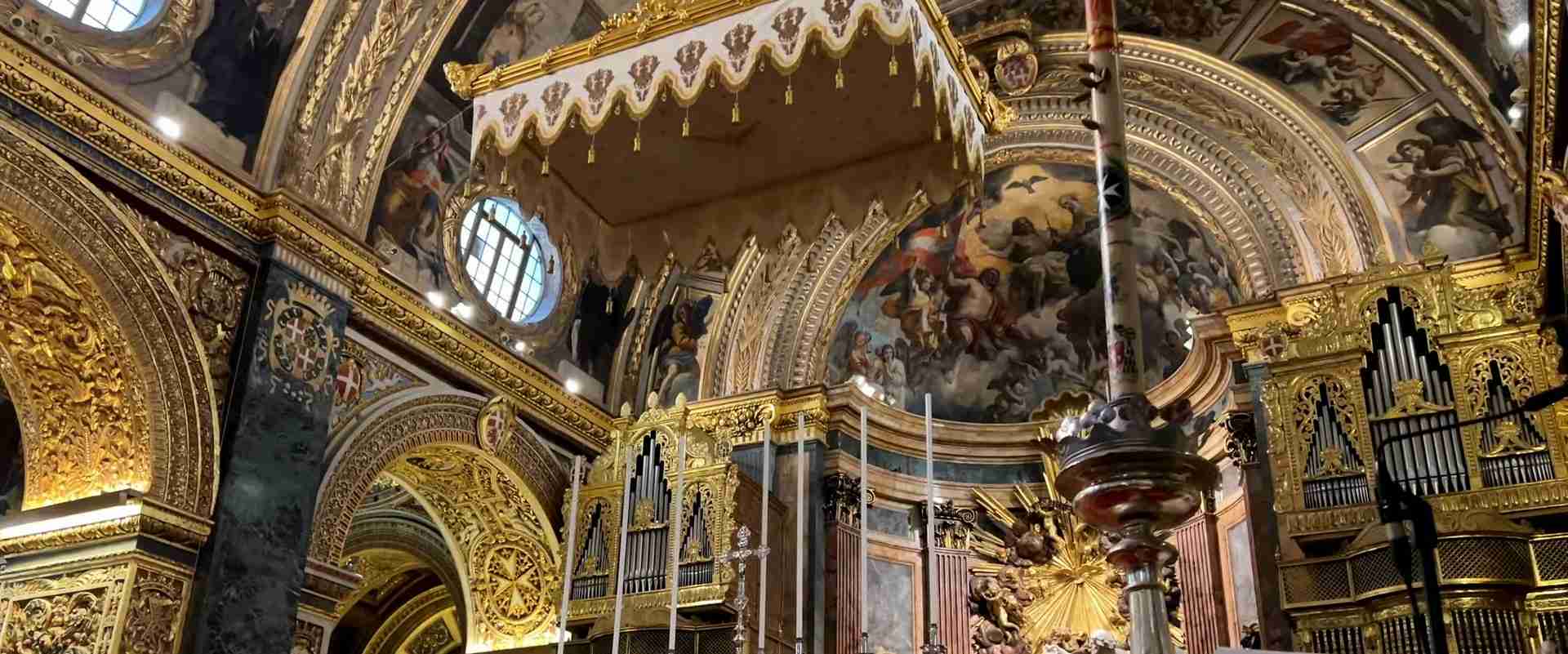
Proceed to St. John’s Co-Cathedral, the conventual church of the Knights of St. John completed in 1577 and representing one of Europe’s finest baroque interiors despite an austere external facade. The cathedral interior features floor-to-ceiling decoration including intricate marble floor tombstones covering 400 knights’ graves, gilded barrel-vaulted ceiling paintings depicting the life of St. John the Baptist, ornate side chapels dedicated to the Knights’ eight langues or national divisions, and Caravaggio’s masterpiece “The Beheading of St. John the Baptist” displayed in the Oratory alongside his “Saint Jerome Writing.” Cathedral admission costs €15 per person in 2026, with audio guides included in the ticket price providing detailed explanation of the baroque decoration, Knights’ history, and artistic significance throughout the one-hour recommended visit duration. Strict dress codes require shoulders and knees covered, with enforcement at entry preventing inappropriately dressed visitors from accessing the cathedral interior.
Continue through Valletta’s grid streets to the National Museum of Archaeology housed in the Auberge de Provence, the Knights’ lodge constructed in 1571 for the French langue. This museum contains Malta’s premier collection of Neolithic artifacts including pottery, figurines, carved stones, and architectural elements recovered from temple sites and the Hypogeum, providing essential context for understanding Malta’s prehistoric UNESCO sites before visiting the physical locations. The museum’s star exhibits include the “Sleeping Lady” figurine from the Hypogeum, the “Venus of Malta” figurines demonstrating prehistoric artistic sophistication, and extensive material culture revealing daily life details of temple-building civilizations. Museum admission costs €10 per person, with a typical visit lasting 60-90 minutes depending on interest level in prehistoric archaeology and detailed label reading preferences.
Break for lunch at a traditional Valletta restaurant or pastizzeria, with lunch meals ranging €15-30 per person at mid-range establishments or €5-10 for pastizzi and other Maltese street food options from local bakeries scattered throughout Valletta’s side streets. Pastizzi are savory ricotta or pea-filled flaky pastries costing €0.50-1.00 each and representing Malta’s most iconic budget food option, while traditional restaurants offer rabbit stew, lampuki fish pie, bragioli beef olives, and other Maltese specialties showcasing the cuisine’s Italian, Arabic, and British colonial influences in distinctive local preparations.
Afternoon exploration continues to Casa Rocca Piccola, a 16th-century noble palace remaining inhabited by the de Piro family and offering rare access to aristocratic domestic architecture and lifestyle across five centuries. Guided tours occurring throughout the afternoon showcase private chapels, historic furnishings, family portraits, underground shelters used during World War II bombing, and personal collections revealing Maltese noble life from the Knights’ era through contemporary times. Tours cost €10 per person and last approximately 45 minutes, providing intimate contrast to Valletta’s grand public monuments and military fortifications through preserved private domestic spaces rarely accessible in most historic cities.
Walk along Republic Street, Valletta’s main commercial thoroughfare running the peninsula’s length, observing baroque palaces housing government offices, historic shops maintaining traditional trades, and public squares punctuating the uniform street grid. Stop at St. George’s Square dominated by the Grand Master’s Palace, the Knights’ administrative headquarters now serving as Malta’s Presidential Palace with sections open to the public housing the State Rooms and the Palace Armoury. Palace admission costs €12 per person, though exterior appreciation and square atmosphere provide satisfactory experience for visitors managing time or budget constraints.
Conclude the day at the waterfront for sunset views from the Valletta Waterfront promenade below the fortification walls, where restored 18th-century warehouses now contain restaurants and cafes offering dinner options ranging €25-45 per person for three-course meals with wine at establishments overlooking the Grand Harbour illuminated by spotlights after dark. The waterfront area comes alive in evenings with locals and tourists promenading along the quayside, creating pleasant atmosphere for concluding the first full day of Malta exploration.
Day 1 Budget Breakdown (Per Person, Two Sharing):
- Accommodation: €25-35 budget, €65-90 mid-range, €140-200 luxury
- St. John’s Co-Cathedral: €15
- National Museum of Archaeology: €10
- Casa Rocca Piccola: €10
- Meals: €28-41 budget (pastizzi breakfast, lunch, casual dinner), €60-77 mid-range (sit-down meals), €100-150 luxury (upscale restaurants)
- Transport: Included in €25 seven-day Explore Card (€5 per day)
- Daily Total: €93-116 budget, €165-227 mid-range, €340-525 luxury
Day 2: The Three Cities and Grand Harbour 2026
Dedicate the second day to exploring the Three Cities across the Grand Harbour from Valletta, a collective name for the historic fortified towns of Vittoriosa (Birgu), Senglea (Isla), and Cospicua (Bormla) that predate Valletta as the Knights of St. John’s original Malta headquarters from 1530-1565. These atmospheric towns offer quieter exploration compared to tourist-busy Valletta while containing exceptional architectural heritage, maritime museums, baroque churches, and waterfront promenades providing alternative perspectives across the Grand Harbour to Valletta’s fortifications visible throughout the day.
Begin with the ferry from Valletta’s waterfront to the Three Cities, a brief crossing taking 12 minutes and providing harbor views impossible to appreciate from land. Ferries operate every 30 minutes from 7:00 AM through evening hours, with tickets included in the seven-day Tallinja Explore Card. Alternatively, reach the Three Cities via bus routes 1, 2, 3, or 4 from Valletta bus terminus to Vittoriosa, Senglea, or Cospicua, though the ferry offers more atmospheric arrival and better photo opportunities during the Grand Harbour crossing.
Start in Vittoriosa, the most historically significant of the Three Cities serving as the Knights’ headquarters during the Great Siege of 1565 when Ottoman forces unsuccessfully attempted to capture Malta in four months of intensive bombardment and assault. Walk through the narrow streets lined with auberges (Knights’ lodges) predating Valletta’s construction, with limestone townhouses displaying characteristic Maltese balconies and door knockers indicating original owners’ professions and social status through decorative metalwork designs.
Visit the Malta Maritime Museum located in the old Royal Naval Bakery, showcasing Malta’s extensive maritime history from Phoenician traders through British Royal Navy presence ending in 1979 with Malta’s military neutrality declaration. Museum exhibits include model ships, navigation instruments, naval uniforms, photographs documenting Malta’s World War II harbor operations as a crucial Mediterranean base, and artifacts revealing maritime trade patterns connecting Malta to broader Mediterranean commercial networks across millennia. Admission costs €5 per person with typical visits lasting 60-75 minutes depending on interest in naval history and technological development of Mediterranean shipping.
Continue to the Inquisitor’s Palace, a 16th-century palace serving as headquarters for the Catholic Inquisition in Malta from 1574-1798 and offering rare preserved insights into Inquisition operations and daily life across two centuries. The palace contains tribunal rooms, prison cells with prisoners’ graffiti still visible on stone walls, the Inquisitor’s private apartments, and exhibitions explaining the Inquisition’s theological role, judicial procedures, and social impact on Maltese society. Admission costs €10 per person, with guided tours available providing context often missing from self-guided exploration of rooms requiring historical knowledge to fully appreciate the palace’s significance and function within the Knights’ Malta.
Walk along the Vittoriosa waterfront to the marina area where restored traditional Maltese boats called luzzus and dghajsas are moored, their distinctive eye of Osiris painted on bows representing continuity of Phoenician maritime traditions surviving through millennia. The waterfront features several cafes and restaurants offering lunch options €15-30 per person with harbor views, or continue to Senglea for additional exploration before the midday meal break.
Cross into Senglea via the bridge connecting the two peninsulas, walking to the Gardjola Gardens at the peninsula’s fortified tip. This small garden features the distinctive Gardjola watchtower with carved eyes and ears symbolizing eternal vigilance, offering 180-degree harbor panoramas encompassing both Valletta and Vittoriosa from this strategic fortification viewpoint used for monitoring harbor approaches during the Knights’ defensive operations. The gardens provide quiet respite from sightseeing and excellent photo opportunities capturing the Grand Harbour’s architectural ensemble impossible to photograph from any single vantage point.
After lunch, visit Fort St. Angelo if open to public access (opening hours vary with ongoing restoration work), the massive fortification dominating the Vittoriosa peninsula’s tip and serving as the Knights’ headquarters during the Great Siege. Fort admission when available costs €10 per person, with rampart walks providing additional harbor viewpoints and internal exhibitions explaining the fort’s military architecture and siege history. If the fort remains closed for restoration, substitute a visit to the Church of St. Lawrence, Vittoriosa’s victory church where the Knights thanked God for their Great Siege survival and where the Order’s sacred relics were preserved until Valletta’s construction.
Conclude the afternoon with optional water taxi rides from the Three Cities waterfront around the Grand Harbour, traditional Maltese dghajsa boats offering 30-minute harbor tours at €10-15 per person providing water-level perspectives of the massive fortification walls, historic dockyard facilities, and contemporary marina developments impossible to appreciate fully from land vantage points. These traditional boats operate weather permitting with departures throughout the day from various waterfront locations, negotiating prices directly with boat operators before embarking on the harbor tour.
Return to your accommodation base via ferry or bus for evening relaxation, or remain in Vittoriosa for dinner at waterfront restaurants offering quieter atmosphere and often better value compared to equivalent Valletta dining establishments, with three-course dinners ranging €20-35 per person at local restaurants frequented by area residents rather than primarily targeting day-tripping tourists.
Day 2 Budget Breakdown (Per Person, Two Sharing):
- Accommodation: €25-35 budget, €65-90 mid-range, €140-200 luxury
- Malta Maritime Museum: €5
- Inquisitor’s Palace: €10
- Fort St. Angelo (if accessible): €10
- Optional dghajsa harbor tour: €10-15
- Meals: €28-41 budget, €60-77 mid-range, €100-150 luxury
- Transport: Included in seven-day Explore Card
- Daily Total: €93-116 budget, €160-222 mid-range, €335-525 luxury
Day 3: Mdina, Rabat, and Western Malta 2026
Dedicate the third day to exploring Malta’s medieval capital Mdina and the surrounding western region containing rural landscapes, craft villages, dramatic coastal cliffs, and quieter towns showcasing Maltese life beyond the Grand Harbour metropolitan concentration. This day involves more extensive bus travel reaching Malta’s interior and western coast, requiring early starts and comfortable shoes for significant walking across varied terrain from fortified hilltop towns to coastal clifftops.
Begin with bus routes 50, 51, 52, or 53 from Valletta or main resort areas to Mdina, Malta’s original capital occupied continuously since Phoenician times and fortified by successive civilizations into the preserved medieval and baroque citadel visible today. The bus journey takes approximately 45-60 minutes depending on route and traffic conditions, traversing agricultural valleys and residential districts providing glimpses of everyday Maltese life away from coastal tourist concentrations.
Enter Mdina through the baroque Main Gate constructed in 1724, immediately stepping into the “Silent City” where vehicular traffic remains severely restricted preserving medieval atmosphere along narrow limestone streets lined with noble palaces displaying elaborate balconies, decorative doorways, and family coats of arms carved into facades. Mdina occupies a strategic hilltop plateau commanding views across Malta’s interior to distant coastlines, a defensive position utilized for over 3,000 years by successive rulers recognizing the location’s military and administrative advantages.
Visit Mdina Cathedral, the baroque reconstruction completed in 1702 following earthquake damage to the earlier Norman structure, dedicated to St. Paul who according to tradition shipwrecked on Malta in 60 AD converting the islands to Christianity. Cathedral admission costs €10 per person including entry to the adjacent Cathedral Museum housing religious art, silver liturgical objects, illuminated manuscripts, and Mattia Preti paintings alongside Albrecht Dürer woodcut prints from the cathedral’s historic collection. The cathedral’s richly decorated interior features marble floors, gilded baroque altarpieces, and frescoes depicting St. Paul’s Malta shipwreck and missionary activities during his three-month island stay recorded in the Acts of the Apostles.
Walk Mdina’s ramparts for panoramic views across Malta’s rural interior toward Mosta, Naxxar, and the distant Mediterranean coastline, with several bastions providing elevated viewing platforms perfect for understanding Malta’s compact geography and strategic harbor positioning visible from this central elevated location. The fortification walls enclose merely 0.9 square kilometers yet contain exceptional architectural concentration creating intimate historic atmosphere completely distinct from the commercial bustle characterizing modern Valletta and coastal resort areas.
Exit Mdina into adjacent Rabat for lunch and exploration of the Roman catacombs and St. Paul’s Grotto, the traditional site where the apostle allegedly resided during his Malta sojourn. The catacombs include St. Paul’s Catacombs and St. Agatha’s Catacombs, both offering guided tours through underground burial complexes dating to Roman and early Christian periods. Catacomb admission costs €6 per person each site, though visitors with limited time or budget can visit only St. Paul’s Catacombs as the more extensive and archaeologically significant complex. These subterranean chambers demonstrate early Christian burial practices, feature ancient frescoes depicting religious themes, and preserve inscriptions revealing the social composition of Malta’s Roman-era population through funerary dedications.
Break for lunch at Rabat’s local restaurants or cafes offering meals €12-25 per person, or pack a picnic from Mdina shops for consumption in Howard Gardens adjacent to the fortifications providing shaded outdoor dining with pleasant views across agricultural valleys. Maltese ftira sandwiches filled with tuna, capers, olives, tomatoes, and local cheese cost €5-8 and provide satisfying portable lunch options perfect for continuing exploration without extended restaurant stops.
Afternoon options include visiting the Ta’ Qali Crafts Village (accessible by bus route 53) showcasing traditional Maltese crafts including glassblowing, pottery, lace-making, and silver filigree work, or continuing to Malta’s western coast to explore Dingli Cliffs reaching 250 meters above sea level as Malta’s highest point offering dramatic coastal views and walking paths along cliff edges. Dingli Cliffs access requires bus route 201 from Rabat (limited frequency requiring schedule checking) or combination bus and walking totaling approximately 5 kilometers from the nearest bus stop, making this destination more suitable for visitors comfortable with countryside walking and flexible schedules accommodating infrequent bus services.
Alternative afternoon options include returning via bus route 186 to Mosta to visit the Mosta Dome, a massive 19th-century parish church featuring one of the world’s largest unsupported domes inspired by Rome’s Pantheon and famous for a World War II miracle when a German bomb penetrated the dome during Mass in 1942 but failed to detonate, sparing the 300 congregants assembled below. Church admission is free though donations are appreciated, with the unexploded bomb replica displayed in the adjacent museum providing tangible connection to Malta’s wartime experiences.
Return to your accommodation base in late afternoon via direct buses from Mdina/Rabat to all major Maltese towns and resort areas, with journey times ranging 30-60 minutes depending on destination. The day’s extensive walking and bus travel justifies an evening of relaxation near accommodation rather than additional exploration, with dinner at local restaurants offering well-earned rest after the day’s full itinerary.
Day 3 Budget Breakdown (Per Person, Two Sharing):
- Accommodation: €25-35 budget, €65-90 mid-range, €140-200 luxury
- Mdina Cathedral and Museum: €10
- St. Paul’s Catacombs: €6
- Meals: €28-41 budget, €60-77 mid-range, €100-150 luxury
- Transport: Included in seven-day Explore Card
- Daily Total: €69-92 budget, €141-183 mid-range, €316-506 luxury
Day 4: Ħal-Saflieni Hypogeum and Megalithic Temples 2026
Reserve the fourth day for Malta’s prehistoric UNESCO World Heritage Sites including the underground Ħal-Saflieni Hypogeum and multiple megalithic temple complexes representing humanity’s oldest freestanding stone architecture. This day requires advance Hypogeum booking three months ahead, though visitors without Hypogeum tickets can substitute additional temple sites creating a comprehensive prehistoric archaeology day showcasing the remarkable Neolithic civilization that flourished on Malta 5,500 years ago.
The Ħal-Saflieni Hypogeum tour begins at your scheduled time (tours operate hourly from 9:00 AM through 4:00 PM), requiring arrival 15 minutes early at the visitor center in Paola. Standard admission costs €35 per person in 2026, with last-minute tickets when available costing €50 purchased the day before from Fort St. Elmo or other designated outlets. Tours last exactly 60 minutes including a 15-minute audiovisual introduction followed by 45 minutes of guided exploration through the underground chambers, with strict capacity limits of 10 people per tour ensuring intimate access to this fragile archaeological site.
The Hypogeum tour descends through three underground levels carved entirely from solid limestone between 3600-3000 BC, showcasing chambers including the Main Chamber with carved trilithon doorways, the Oracle Room featuring distinctive red ochre spiral paintings and acoustic properties amplifying sound, the Holy of Holies with corbelled ceiling demonstrating sophisticated engineering predating similar techniques elsewhere by centuries, and glimpses into the Lower Level where approximately 7,000 individuals were buried in this combined temple and necropolis functioning across 500 years before mysterious abandonment around 2500 BC. Photography remains strictly prohibited throughout the underground chambers due to conservation concerns regarding flash damage to ancient ochre paintings and increased humidity from visitor presence already threatening this unique archaeological treasure.
After the Hypogeum tour, walk five minutes to the nearby Tarxien Temples, a megalithic complex discovered in 1914 when a farmer’s plow struck buried stones leading to excavation revealing one of Malta’s richest temple sites. Tarxien admission costs €10 per person with tickets sold at the on-site Heritage Malta facility, allowing self-guided exploration of three interconnected temples featuring Malta’s finest prehistoric stone carvings including spiral designs, animal reliefs depicting bulls, goats, and sows, fragmentary colossal statue originally standing over 2.5 meters tall, and decorative screens with intricate geometric patterns demonstrating prehistoric artistic sophistication far exceeding simple utilitarian stone working.
Break for lunch at a nearby Paola or Tarxien restaurant, or continue via bus to Marsaxlokk traditional fishing village for lunch at waterfront restaurants specializing in fresh seafood. Marsaxlokk offers Malta’s most picturesque harbor lined with colorful luzzus (traditional fishing boats) and excellent seafood restaurants serving grilled fish, octopus, calamari, and mixed seafood platters at prices €15-35 per person depending on market prices and restaurant selection. The village maintains authentic fishing character despite tourist presence, with local fishermen still operating from the harbor and a large Sunday fish market attracting Maltese families shopping for weekly seafood supplies.
Afternoon exploration continues to Ħaġar Qim and Mnajdra temple complexes located on dramatic clifftops overlooking the Mediterranean near the village of Qrendi. These temples occupy exceptional landscape settings with Mnajdra featuring precise astronomical alignments where equinox and solstice sunrise illuminations strike specific temple features demonstrating sophisticated astronomical knowledge and ceremonial calendars. Joint admission to both temple sites costs €10 per person, with a protective tent structure now covering Ħaġar Qim to prevent further weathering damage from salt spray and rain that eroded significant decorative carving detail before modern conservation interventions.
Reach Ħaġar Qim via bus routes 74 or 38 from various southern towns, though bus frequency proves limited requiring schedule consultation and acceptance that return buses may require waiting 60+ minutes if visiting timing doesn’t align with the infrequent service. Alternatively, budget for a taxi from Marsaxlokk to Ħaġar Qim costing approximately €15 one-way through Bolt or eCabs, with the temples’ isolated clifftop location making public transport access challenging without careful schedule coordination or willingness to walk several kilometers from the nearest regular bus routes.
After temple exploration, return to accommodation areas via bus or prearranged taxi pickup, or continue to the nearby Blue Grotto for optional boat tours through coastal caves and rock formations. Blue Grotto boat tours operate weather permitting, lasting approximately 20-25 minutes at €10 per person providing access to sea caves displaying luminous blue water effects created by sunlight reflection through underwater openings. Afternoon timing provides optimal light conditions for the blue color effects that give the location its name, though rough seas frequently prevent boat operations particularly during winter months November-March when Mediterranean storm systems create dangerous swells along Malta’s exposed southern coastline.
Return to accommodation for evening relaxation after the day’s extensive prehistoric archaeology immersion, with simple dinner options preferable after the intense cultural and educational experiences throughout the day’s UNESCO World Heritage Site explorations.
Day 4 Budget Breakdown (Per Person, Two Sharing):
- Accommodation: €25-35 budget, €65-90 mid-range, €140-200 luxury
- Ħal-Saflieni Hypogeum: €35
- Tarxien Temples: €10
- Ħaġar Qim and Mnajdra Temples: €10
- Optional Blue Grotto boat tour: €10
- Meals: €28-41 budget, €60-77 mid-range, €100-150 luxury
- Transport: Included in seven-day Explore Card, potential taxi €15-30 if needed for remote temple sites
- Daily Total: €108-141 budget, €185-262 mid-range, €355-560 luxury
Day 5: Gozo Day Trip or Additional Malta Exploration 2026
The fifth day offers flexibility between a full-day Gozo excursion exploring Malta’s quieter sister island or additional Malta exploration visiting sites missed during previous days, selecting beaches for extended relaxation, or revisiting favored locations with deeper exploration time. Both options provide worthwhile experiences completing the five-day Malta itinerary with either geographical expansion into Gozo’s rural landscapes and additional UNESCO temples or temporal expansion allowing unhurried appreciation of Malta mainland attractions deserving more attention than rapid initial passes provide.
Option A: Gozo Day Trip 2026
For visitors selecting the Gozo day trip option, begin with early morning bus to Cirkewwa ferry terminal in northern Malta, reachable via multiple bus routes from all major towns with journey times ranging 60-90 minutes depending on origin location. The Gozo Channel ferry operates year-round with crossings every 45 minutes in summer and every 90 minutes in winter, taking 25 minutes between Cirkewwa and Mġarr Harbor on Gozo. Ferry tickets for foot passengers cost €4.65 return per person paid only on the return journey from Gozo, with the outbound crossing from Malta to Gozo free.
Upon arrival at Mġarr Harbor, catch the bus to Victoria (Rabat), Gozo’s capital town located centrally for accessing island attractions via Gozo’s more limited bus network. Victoria centers on the massive Cittadella, a fortified citadel occupying the hilltop above the modern town and offering panoramic views across Gozo’s rural landscape to distant coastlines. The Cittadella underwent major restoration completed in recent years, with bastions, museums, and baroque cathedral all accessible within the fortification complex charging combined admission €6 per person or free entry to the exterior fortifications and viewpoints without museum access.
After Victoria exploration, options include visiting the Ġgantija Temples near Xagħra village, a UNESCO World Heritage megalithic temple site featuring the best-preserved Neolithic structures anywhere on the Maltese islands with temple walls standing over six meters high. Ġgantija admission costs €10 per person, with the name meaning “giant’s tower” referring to local legends claiming only giants could have moved the massive stones comprising these 5,500-year-old structures predating Malta’s mainland temples by several centuries and representing the earliest phase of megalithic architecture on the islands.
Gozo’s limited bus frequency makes comprehensive single-day exploration challenging without private transport, typically constraining day-trippers to Victoria plus one or two additional destinations rather than attempting complete island coverage. Alternative options include visiting Dwejra for coastal scenery at the former Azure Window site where the iconic natural arch collapsed in 2017 but surrounding cliffs and the Inland Sea remain dramatic, or the traditional fishing harbor at Xlendi for lunch at waterfront restaurants. Organized half-day or full-day Gozo tours averaging €45-70 per person provide efficient multi-site visits if maximizing destination coverage takes priority over independent exploration flexibility and budget considerations.
Return to Mġarr Harbor in late afternoon catching the ferry back to Malta with sufficient time for the return bus journey to accommodation areas, arriving early evening with the full day dedicated to Gozo exploration providing alternative island character and geographic expansion beyond Malta’s more densely developed main island.
Option B: Additional Malta Exploration 2026
Visitors choosing to remain on Malta’s main island for the fifth day can select from numerous options including beach relaxation, additional historical sites, shopping districts, or returning to favored locations for deeper exploration without rushing between multiple daily destinations.
Beach options include Golden Bay and Ghajn Tuffieha in northwest Malta offering Malta’s finest sandy beaches with infrastructure including sun lounger rentals €6-10, snack bars, and restroom facilities, reachable via bus route 44, 101, or 223 with journey times 60-90 minutes from central areas. Alternative sandy beaches include Mellieħa Bay in the far north or Ghadira Bay adjacent to Mellieħa offering shallower water particularly suitable for families with young children. Rocky beach swimmers prefer Peter’s Pool near Marsaxlokk providing deep water swimming and cliff jumping, or St. Peter’s Pool and surrounding coves offering clearer water though requiring scrambling over rocks for water access lacking sandy entry points.
Historical site options include visiting Fort Rinella near Kalkara housing a massive 100-ton Victorian-era Armstrong gun, the only surviving example of this weapon type worldwide, with costumed interpreters conducting cannon firing demonstrations and military history presentations. Fort admission costs €10 per person with demonstrations scheduled at specific times requiring advance confirmation of operating schedules.
Alternative historical exploration includes the Malta Aviation Museum at Ta’ Qali showcasing aircraft and aviation equipment used in Malta from World War II through contemporary periods, or the National War Museum at Fort St. Elmo in Valletta focusing on Malta’s World War II experiences including the George Cross awarded to Malta collectively for civilian courage during intensive Axis bombing campaigns 1940-1943. War Museum admission costs €10 per person providing comprehensive coverage of Malta’s strategic role as a Mediterranean fortress controlling sea lanes between Europe and Africa across numerous historical periods.
Shopping and commercial exploration centers on Sliema’s seafront promenades lined with boutiques, cafes, and the massive Point Shopping Mall, or Valletta’s Republic Street for traditional shops, local crafts, and souvenir purchases including Maltese lace, glasswork, honey, wine, and filigree jewelry representing distinctive local craft traditions. Visitors should allocate final-day time for any desired shopping activities as most retail operations close Sundays when family-oriented Maltese society prioritizes church attendance and family gatherings over commercial activities.
The flexible fifth day allows personalization based on individual interests, energy levels after four days of intensive sightseeing, weather conditions on the specific day requiring adaptation to maximize comfort and enjoyment, and discovery of personal preferences emerging during the prior four days suggesting specific directions for the final full day of Malta exploration before departure preparations.
Day 5 Budget Breakdown (Per Person, Two Sharing):
- Accommodation: €25-35 budget, €65-90 mid-range, €140-200 luxury
- Gozo ferry return: €4.65
- Ġgantija Temples (if visiting Gozo): €10
- Cittadella museums (if visiting Gozo): €6
- Alternative Malta admission fees: €10-15 (various attractions if remaining on Malta)
- Meals: €28-41 budget, €60-77 mid-range, €100-150 luxury
- Transport: Included in seven-day Explore Card
- Daily Total: €68-107 budget, €160-218 mid-range, €335-531 luxury
Accommodation Recommendations by Budget Tier 2026
Malta offers comprehensive accommodation options across all budget tiers from €20 hostel dormitories through €400+ nightly luxury hotels, with location choices significantly affecting both price points and daily convenience for executing sightseeing itineraries. First-time visitors should prioritize accommodation locations offering strong bus connectivity to major attractions, which typically means choosing bases in Sliema, Valletta, St. Julian’s, or northern Bugibba-Qawra areas rather than more isolated coastal or rural locations requiring more complex transportation logistics.
Budget Accommodation €40-70 Per Night (€20-35 Per Person Two Sharing)
Budget accommodation concentrates primarily in Sliema, St. Paul’s Bay, Bugibba, and Qawra, with limited but high-quality options in Valletta itself. Hostel dormitories cost €20-30 per bed nightly providing basic shared accommodation with communal facilities, while budget hotels and guesthouses offering private double rooms with ensuite bathrooms range €40-70 nightly depending on location, season, and booking timing. Budget properties typically provide minimal services beyond the accommodation itself, with breakfast often excluded though many budget hotels offer optional breakfast surcharges €5-8 per person if desired.
Sliema budget options include numerous small guesthouses and budget hotels occupying upper floors of residential buildings, offering clean basic rooms with air conditioning (essential in summer), WiFi connectivity, and locations within walking distance of waterfront promenades, supermarkets, and bus stops providing efficient access throughout Malta. Book budget accommodation 2-3 months ahead for summer peak season as the limited inventory sells quickly, while off-season November-March often allows booking flexibility within 2-4 weeks of arrival dates.
Bugibba and Qawra in northern Malta offer Malta’s most economical accommodation concentrations, with €40-60 nightly rates common even during peak summer months reflecting these areas’ less central positioning and more package-tourism character compared to fashionable Sliema or historic Valletta. Budget travelers willing to accept 60-75 minute bus journeys to Valletta find excellent value in northern accommodations, with numerous supermarkets, casual restaurants, and local amenities serving long-stay visitors and creating authentic neighborhood character absent in more polished tourist areas.
Mid-Range Accommodation €130-180 Per Night (€65-90 Per Person Two Sharing)
Mid-range accommodation spans three-star and four-star hotels, boutique guesthouses, and quality aparthotels offering enhanced services, better locations, superior furnishings, and typically included breakfast buffets. These properties occupy Sliema’s waterfront districts, Valletta’s restored baroque townhouses, St. Julian’s resort areas, and Mellieħa’s northern bay, providing comfortable bases combining convenience with character appropriate for travelers seeking solid quality without luxury pricing.
Sliema mid-range hotels concentrate along the waterfront promenades, offering sea-view rooms, breakfast terraces, small rooftop pools, and lobby bars creating pleasant resort atmosphere while maintaining walking access to ferry terminals, bus stops, shopping districts, and restaurant concentrations. €130-180 nightly rates in this category typically include breakfast buffets, air-conditioned rooms with balconies, modern bathrooms, and WiFi, with some properties offering small fitness facilities and business centers serving extended-stay visitors.
Valletta boutique hotels convert historic 16th-century townhouses into atmospheric accommodations featuring exposed limestone walls, traditional Maltese tiles, period furniture, and intimate scales rarely exceeding 10-15 rooms creating personalized service impossible in larger properties. Valletta mid-range accommodation costs €140-200 nightly reflecting limited inventory, UNESCO World Heritage location premiums, and recent restoration investments transforming previously deteriorated historic buildings into contemporary comfort standards while preserving architectural heritage. These properties place guests literally inside Malta’s fortified capital, eliminating daily commutes and allowing evening enjoyment of Valletta’s illuminated streets after day-tripper crowds depart.
Luxury Accommodation €280-400+ Per Night (€140-200+ Per Person Two Sharing)
Luxury accommodation encompasses five-star beach resorts, historic palazzo hotels, and contemporary design properties offering comprehensive services including multiple restaurants, spa facilities, infinity pools, concierge services, and premium amenities justifying €280-400+ nightly rates through exceptional experiences beyond mere comfortable sleeping arrangements. Luxury properties concentrate in St. Julian’s resort district, Valletta’s restored palazzos, and select coastal locations offering private beach access or dramatic clifftop positions.
St. Julian’s luxury hotels occupy beachfront positions along Spinola Bay and St. George’s Bay, featuring extensive facilities including multiple swimming pools (indoor and outdoor), full-service spas, several restaurant options, private beach clubs, and room categories ranging from standard sea-view rooms through suites with terraces, jacuzzis, and separate living areas. These properties cater primarily to international package tourists and business travelers, offering polished international hotel standards while incorporating Maltese design elements and local cuisine options alongside international menus.
Valletta luxury hotels convert grand baroque palaces into exclusive accommodations often containing fewer than 30 rooms, with rates €300-500+ nightly buying exceptional historical settings, personalized service, rooftop pools overlooking Grand Harbour, Michelin-quality restaurants, and interiors blending contemporary luxury with preserved architectural features creating unique stays impossible to replicate outside Malta’s UNESCO World Heritage fortified capital. These properties attract travelers prioritizing distinctive historical experiences over conventional resort amenities, with premium pricing reflecting exclusive positioning within Malta’s most significant heritage location.
Transportation and Logistics Guide 2026
Malta’s public bus network operated by Malta Public Transport under the Tallinja brand provides comprehensive island coverage reaching virtually every town, village, beach, and attraction across Malta and Gozo. The hub-and-spoke system centers on Valletta’s main bus terminus just outside City Gate, with most routes passing through this central interchange enabling connections between any two island locations though often requiring Valletta transfers adding 30-60 minutes compared to direct routings impossible given Malta’s route structure.
The seven-day Tallinja Explore Card costing €25 represents optimal value for five-day itineraries, providing unlimited travel on all standard bus routes including transfers within two-hour windows on single journeys, access to night buses operating Friday-Saturday after 11:00 PM, and validity across both Malta and Gozo eliminating separate ticketing concerns. The card activates upon first use and remains valid for exactly seven consecutive days, creating two buffer days beyond the five-day itinerary allowing arrival and departure day transport without purchasing additional tickets. Purchase Explore Cards at Malta International Airport’s Tallinja sales office in the arrivals hall, at the Valletta bus terminus office, or at authorized retailers identified by Tallinja signage throughout major towns.
Single journey tickets cost €2.00 during winter months (mid-October through mid-June) and €2.50 during summer months (mid-June through mid-October), with each ticket valid for two hours including unlimited transfers on different routes within that window. Payment options include cash directly to the bus driver (exact change appreciated as drivers carry limited coins), contactless bank cards tapped on the card reader when boarding, or prepaid Tallinja cards topped up electronically at machines or through the mobile application. The 12-journey card costing €19 provides moderate savings for visitors making fewer than 20 total bus trips, though the seven-day unlimited Explore Card offers better value for typical tourist usage patterns involving 4-6 daily bus trips across a five-day Malta visit.
Bus frequency varies dramatically by route and time, with major corridors between Valletta, Sliema, St. Julian’s, and Bugibba operating every 10-15 minutes throughout daylight hours, while routes serving smaller villages or remote coastal areas may run only every 60-90 minutes requiring careful schedule consultation. The Tallinja mobile application provides real-time bus tracking showing actual arrival times rather than published schedules, journey planning calculating optimal routes including necessary transfers, and nearest bus stop location using smartphone GPS reducing confusion navigating Malta’s numerous bus stops often lacking clear signage indicating which routes serve each location.
Taxis operate through traditional white taxi services and app-based providers Bolt and eCabs, with Bolt typically offering 20-40% lower fares than traditional taxis on equivalent journeys. Bolt operates comprehensively across Malta though availability drops significantly on Gozo where traditional taxis remain the primary option. Typical Bolt fares include airport to Sliema €15-20, Valletta to Mdina €18-25, and Sliema to Mellieħa €25-35, with surge pricing during Friday-Saturday evenings and major festivals potentially doubling base rates creating substantial cost variation requiring fare checking before confirming bookings. eCabs provides advance booking options useful for early morning airport transfers or guaranteed pickup times when apps might show limited driver availability.
Car rental costs average €35-50 daily for economy vehicles from international chains and local operators, with summer peak season rates reaching €60-80 daily reflecting high demand and limited vehicle inventory. Rental vehicles require valid driving licenses from travelers’ home countries, with EU/EEA licenses valid directly while other nationalities require International Driving Permits obtained before Malta arrival. Malta drives on the left side following British colonial tradition, with narrow village streets, aggressive local driving culture, and severe parking limitations in tourist areas making vehicle rental more stressful than convenient for visitors unfamiliar with left-side driving and small island navigation challenges. First-time Malta visitors typically find public bus reliance more relaxing and economical despite longer journey times compared to self-driving alternatives.
The Gozo Channel ferry connecting Cirkewwa on Malta’s northern tip with Mġarr Harbor on Gozo operates 24/7 year-round with crossings every 45 minutes during daylight hours and reduced frequency overnight. Foot passenger return tickets cost €4.65 per person paid only on the Gozo-to-Malta return journey, while vehicles cost €15.70 return for cars up to 5 meters length plus driver with additional passengers charged foot passenger rates. Ferry reservations prove unnecessary for foot passengers who simply join the queue, while drivers during peak summer weekends may face 1-2 hour waits without advance online booking through Gozo Channel’s website securing specific crossing times.
Alternative fast ferry service operates between Valletta’s Lascaris Wharf and Mġarr Harbor on Gozo, with the 45-minute catamaran crossing costing €7.50 each way providing more convenient access for Valletta-based visitors avoiding the lengthy bus journey to Cirkewwa. This service operates seasonally with reduced winter schedules, requiring advance booking through Gozo Highspeed’s website particularly for summer weekend sailings when capacity fills quickly with day-trippers and Gozo residents commuting for shopping or services unavailable on the smaller island.
Food and Dining Strategy 2026
Maltese cuisine blends Mediterranean influences from Italian, Arabic, and British colonial traditions into distinctive local dishes featuring rabbit, lampuki fish, honey, capers, and sun-dried tomatoes alongside imported ingredients creating varied dining options from traditional Maltese restaurants through international cuisines reflecting Malta’s cosmopolitan modern character. Dining costs span wide ranges from €0.50 pastizzi snacks through €50+ fine dining tasting menus, with strategic meal planning balancing authentic local experiences with budget management across the five-day itinerary.
Budget dining centers on pastizzerias selling Malta’s iconic savory pastries filled with ricotta or mushy peas at €0.50-1.00 each, providing quick inexpensive breakfast or snack options found throughout every Maltese town. Traditional pastizzerias open early morning serving takeaway pastries alongside coffee to workers commuting to jobs, creating authentic local atmosphere distinctly different from tourist-oriented cafe culture in resort districts. Multiple pastizzi typically constitute adequate breakfast for €2-3 total, while lunch combinations of pastizzi, ftira sandwiches, and local soft drinks cost €5-8 providing filling midday meals without restaurant time commitments.
Casual lunch restaurants offer Maltese ftira (traditional flatbread sandwiches), pizza, pasta, and daily specials ranging €10-18 per person including drinks, with many establishments providing lunch-specific menus at reduced prices compared to evening dinner service. Trabuxu bistros serve traditional Maltese small plates including bigilla (broad bean paste), ġbejna (sheep milk cheeselets), and rabbit dishes in casual atmospheric settings at €15-25 per person for complete meals including house wine. These establishments occupy Valletta’s side streets and Three Cities alleyways, creating authentic dining experiences away from main tourist corridors while maintaining English-language menus and tourist-friendly service standards.
Mid-range restaurants charge €20-35 per person for three-course meals including wine, featuring traditional Maltese dishes including stuffat tal-fenek (rabbit stew), bragioli (beef olives), lampuki pie, and ross fil-forn (baked rice) alongside Italian-influenced pasta, risotto, and seafood preparations. Seafood restaurants in fishing villages like Marsaxlokk, Marsaskala, and Xlendi on Gozo command premium prices €25-45 per person depending on market rates and catch quality, with grilled fish typically priced by weight requiring clarification before ordering to avoid bill surprises from expensive species or larger portions than anticipated.
Fine dining establishments in Valletta and upscale hotels offer contemporary Mediterranean cuisine, chef tasting menus, and wine pairings at €50-80+ per person, showcasing local ingredients through modern techniques and international influences attracting food-focused travelers seeking culinary excellence alongside historical sightseeing. Several Malta restaurants hold Michelin recognition or appear in international dining guides, creating opportunities for memorable meals justifying premium pricing through exceptional cooking, service, and atmospheric historic settings impossible to replicate outside Malta’s unique fortified capital and baroque palazzos.
Supermarkets including Lidl, Welbee’s, and local chains provide self-catering options for breakfast preparation and picnic lunches, with food prices generally comparable to Western European averages though some imported specialty items cost premium prices reflecting Malta’s island geography requiring everything to arrive by sea or air freight. Accommodation with kitchen facilities enables significant meal cost savings particularly for breakfast and lunch, while maintaining restaurant dinner experiences showcasing Maltese cuisine and providing cultural immersion impossible through supermarket shopping alone.
Beverage costs include €2-3 for coffee at standard cafes, €4-6 for local beer Cisk or wine by the glass, and €7-13 for cocktails at bars and clubs with prices varying significantly between local establishments and tourist-oriented venues along Paceville’s nightlife strip. Tap water throughout Malta is safe for drinking though heavily chlorinated requiring taste adaptation, while bottled water costs €0.50-2.00 depending on purchase location with supermarket multipacks providing most economical hydration solutions for sightseeing days requiring constant water consumption in Mediterranean heat.
Money-Saving Strategies for Malta 2026
Strategic planning reduces Malta costs substantially while maintaining satisfying experiences covering all essential attractions and activities within the five-day itinerary. The most significant savings derive from accommodation timing, transportation choices, meal strategies, and attraction prioritization balancing paid admissions with free experiences offering comparable cultural and scenic value without ticket costs.
Accommodation savings begin with visiting during shoulder seasons April-May or September-October when hotel rates drop 20-30% below peak summer June-August pricing while weather remains excellent with temperatures 22-28°C and manageable tourist crowds. Booking 8-12 weeks ahead secures better rates and wider selection compared to last-minute booking when remaining inventory commands premium prices, though last-minute deals occasionally appear for unsold rooms particularly during off-season periods when hotels prefer discounted occupancy over empty rooms generating zero revenue.
Accommodation location choices significantly impact daily budgets, with northern Bugibba-Qawra hotels costing €40-60 nightly compared to €80-120 for equivalent quality in Sliema, creating €200-300 five-night savings offsetting the less central positioning and slightly longer bus journeys to Valletta and southern attractions. Travelers prioritizing budget over convenience maximize savings through northern accommodation bases, while those valuing location convenience and evening promenade access justify Sliema’s premium positioning despite higher nightly rates.
Transportation savings center entirely on the €25 seven-day Explore Card providing unlimited bus travel compared to single tickets totaling €40-60+ across typical five-day usage patterns. Even visitors making only 15-20 total bus trips during the five days (3-4 daily) save €10-20 through the unlimited card, while active sightseers making 25-30+ trips (5-6 daily visiting multiple sites) save €25-40 compared to per-ride payment methods. The savings calculation becomes even more favorable considering the stress reduction from not managing individual ticket purchases or carrying exact change for each bus boarding throughout the trip.
Meal savings derive from strategic pastizzi and ftira consumption for breakfast and lunch reserving restaurant spending for single daily dinners showcasing Maltese cuisine at traditional establishments. Budget travelers can execute entire five-day itineraries spending merely €15-25 daily on meals through careful pastizzi breakfasts, picnic lunches from supermarkets, and casual dinner restaurants in residential neighborhoods rather than tourist-priced Valletta establishments. Mid-range travelers dining at restaurants for all meals easily spend €60-80 daily per person, creating €225-275 five-day differential between strategic and unrestricted dining approaches without significantly compromising food quality or cultural authenticity.
Free attraction alternatives reduce admission costs substantially through selective museum visits balanced with complimentary experiences. Walking Valletta’s streets, Upper Barrakka Gardens, Mdina’s fortification ramparts, Marsaxlokk harbor, and numerous beaches cost nothing while providing authentic Malta experiences comparable to paid museums and guided tours. Visitors can experience comprehensive Malta itineraries spending merely €60-80 total on paid attractions across five days through careful selection of essential sites like St. John’s Co-Cathedral, the Hypogeum, and one temple complex while substituting free alternatives for secondary museums offering incremental rather than essential experiences.
Heritage Malta offers multisite passes providing admission to five sites within 30 days for €50, creating modest savings for visitors planning extensive museum visits beyond the standard first-time itinerary though most five-day visitors find individual ticket purchases more economical given limited time preventing exhaustive museum coverage. The multisite pass proves valuable primarily for repeat visitors or extended stays exceeding standard five-day tourist itineraries when comprehensive museum exploration becomes feasible without sacrificing outdoor experiences, beach time, and the spontaneous discoveries essential to satisfying Malta visits.
Seasonal Considerations and Best Times to Visit 2026
Malta’s Mediterranean climate creates distinct seasonal patterns affecting temperatures, precipitation, tourist crowds, pricing, and activity feasibility across the calendar year. Understanding seasonal variations enables strategic timing decisions balancing weather preferences, budget constraints, crowd tolerance, and specific activity priorities determining optimal visit periods for individual traveler circumstances and interests.
Spring months April-May provide exceptional conditions combining pleasant temperatures 20-26°C, minimal rainfall probability below 10%, moderate tourist crowds, blooming wildflowers carpeting countryside in colorful displays peaking mid-April through early May, and accommodation costs 15-25% below peak summer rates. These shoulder months represent optimal timing for first-time visitors seeking comprehensive sightseeing without intense heat stress, though sea temperatures 16-19°C remain cool for extended swimming requiring adaptation for cold-sensitive swimmers accustomed to warmer tropical waters.
Summer months June-August deliver guaranteed sunshine, sea temperatures 22-26°C perfect for swimming, maximum daylight hours enabling extended evening exploration, and vibrant festival atmosphere with village festas celebrating patron saints through fireworks, processions, and outdoor celebrations occurring most weekends. However, summer brings intense heat regularly exceeding 30°C with minimal shade along fortification walls and archaeological sites causing significant discomfort during midday hours, maximum tourist crowds straining popular attractions particularly cruise ship days in Valletta, and peak accommodation costs often double winter rates reducing budget travel feasibility substantially.
Autumn months September-October extend summer swimming conditions with sea temperatures remaining 23-25°C through October, while air temperatures moderate to comfortable 24-28°C reducing heat stress during walking tours and outdoor sightseeing. Autumn represents ideal timing for visitors seeking beach and cultural balance, with prices dropping 20-30% after August peak though remaining above winter rates, and tourist crowds diminishing significantly after school terms resume across Europe though weekends maintain higher visitor volumes particularly in early September.
Winter months November-March present Malta’s least predictable weather with rainfall probability increasing to 30-40% on any given day, cooler temperatures 12-18°C occasionally feeling cold given typical Mediterranean clothing expectations, and occasional strong winds creating rough seas preventing boat tours and making coastal walks uncomfortable. However, winter offers lowest accommodation costs often 40-50% below summer peaks, minimal tourist crowds enabling intimate museum experiences and table availability at restaurants without reservations, and opportunities experiencing authentic Maltese daily life absent tourist-season commercial emphasis. Winter timing suits budget travelers prioritizing costs over guaranteed beach weather, history-focused visitors satisfied with museum and architectural exploration without swimming opportunities, and travelers seeking genuine cultural immersion beyond superficial tourist interactions dominating high season.
Specific timing considerations include avoiding Christmas-New Year when many establishments close for family holidays and remaining open properties charge premium rates, targeting Holy Week for distinctive religious processions and celebrations though expect reduced restaurant hours and some attraction closures Good Friday through Easter Monday, and scheduling around major festivals including Malta International Arts Festival in July, Notte Bianca in October, and various village festas if seeking cultural events or avoiding them if preferring quieter sightseeing conditions.
Practical Travel Tips and Local Customs 2026
Malta’s blend of Mediterranean, British, and unique local customs creates distinctive cultural environment requiring awareness of specific practical considerations, local etiquette, and behavioral expectations ensuring smooth travel experiences and respectful interaction with Maltese society throughout the five-day visit.
Language practicalities center on English’s official status alongside Maltese, with virtually all tourist services, museums, restaurants, and shops operating in English eliminating communication barriers for English-speaking visitors. Maltese language (Malti) derives from Arabic roots with Italian, English, and Sicilian influences creating a unique Semitic language using Latin script, though learning even basic Maltese phrases proves challenging for brief visits and unnecessary for successful trip execution. However, attempting “bonġu” (good morning) or “grazzi” (thank you) demonstrates cultural respect appreciated by locals despite English proficiency making these phrases functionally unnecessary.
Currency exclusively uses euros since Malta joined the Eurozone in 2008, with ATMs widely available throughout tourist areas dispensing euros at standard international withdrawal fees. Credit cards gain acceptance at virtually all hotels, restaurants, museums, and shops, though smaller pastizzerias and market vendors may prefer cash particularly for small purchases under €10. Carrying €50-100 cash provides security for cash-only situations without requiring excessive amounts risking loss or theft, with additional cash easily obtained from any of Malta’s numerous ATMs operated by major banks including HSBC, Bank of Valletta, and BNP Paribas.
Tipping practices follow European continental norms with service charges typically included in restaurant bills eliminating tipping obligations, though rounding up bills or leaving small amounts €2-5 for exceptional service is appreciated without being expected. Taxi drivers appreciate rounding up fares to the nearest euro though formal tipping proves unnecessary, while hotel porters and cleaning staff rarely receive tips in mid-range properties though luxury hotels follow international tipping conventions with €2-5 appropriate for services rendered.
Dress codes remain generally casual with shorts and t-shirts acceptable throughout tourist areas during summer months, though churches strictly enforce modest dress requiring covered shoulders, knees, and midriffs for entry. St. John’s Co-Cathedral in Valletta maintains particularly strict enforcement refusing entry to inappropriately dressed visitors without exception, making strategic wardrobe planning essential for comprehensive sightseeing itineraries including significant church visits. Light scarves carried in daypack provide emergency coverage for impromptu church visits during walking tours discovering unexpected baroque treasures throughout Maltese towns.
Photography permissions generally allow unrestricted photography at outdoor sites and most museums with notable exceptions including the Hypogeum where photography remains strictly prohibited due to conservation concerns, St. John’s Co-Cathedral Oratory where Caravaggio paintings require special arrangements for professional photography, and occasional temporary exhibitions imposing photography bans for copyright reasons. Always check signage or ask permission when uncertain about photography rules, particularly in churches where religious services require respectful behavior avoiding flash photography disturbing worshippers regardless of technical permission for tourism photography.
Safety considerations remain minimal as Malta ranks among Europe’s safest destinations with violent crime virtually absent from tourist areas, though pickpocketing occasionally occurs in crowded Valletta locations and bus termini during peak season requiring basic precautions securing valuables and maintaining awareness in dense crowds. Swimming safety requires caution at rocky beaches lacking lifeguard supervision, with strong currents occasionally dangerous particularly along exposed northern coastlines during windy conditions creating rough seas unsuitable for casual swimmers unfamiliar with Mediterranean coastal conditions.
Sunday closures affect many shops, museums, and services as Catholic Malta maintains traditional Sunday family emphasis, though restaurants, major museums, and tourist attractions typically operate normal hours. Planning Sunday activities around open attractions and restaurant reservations prevents disappointment discovering desired sites closed upon arrival, while treating Sundays as beach or relaxation days creates pleasant itinerary rhythm alternating intensive sightseeing with slower-paced recovery time.
Public toilets remain scarce outside major museums and tourist complexes, with cafe and restaurant facilities providing the primary toilet access throughout sightseeing days. Purchasing drinks or snacks establishes legitimate customer status justifying facility use, though most establishments tolerate brief toilet visits from non-customers during emergency situations provided polite approach and genuine need rather than habitual free-riding on hospitality services.
Sample Budget Breakdowns for Three Travel Styles 2026
Comprehensive budget planning requires realistic cost estimates across accommodation, meals, transport, attractions, and contingencies, with sample budgets for three distinct travel styles demonstrating achievable ranges and strategic choices enabling five-day Malta itineraries matching varied financial circumstances and comfort preferences.
Budget Travel Style €340-480 Per Person for Five Days
Budget travelers share hostel dormitories or budget guesthouses at €25-35 per person nightly (two sharing private rooms), eat pastizzi breakfasts, picnic lunches, and casual restaurant dinners for €28-41 daily, utilize the €25 seven-day bus pass plus occasional walking, and selectively visit essential paid attractions while substituting free alternatives for secondary sites.
Five-Day Budget Breakdown:
- Accommodation: €25-35 × 5 nights = €125-175
- Meals: €28-41 × 5 days = €140-205
- Transport: €25 seven-day Explore Card = €25
- Attractions: Hypogeum €35, St. John’s Co-Cathedral €15, museums €20-30, temples €10-15 = €80-95 total selective visits
- Contingencies and miscellaneous: €20-30
- Total: €390-530 per person for five days
This budget enables comprehensive five-day itineraries covering all essential Malta attractions through strategic choices prioritizing authentic experiences over convenience and comfort, requiring acceptance of longer bus journeys, shared facilities, simple meals, and selective rather than exhaustive attraction visits focusing on highest-value sites delivering maximum cultural return per euro invested in admission fees.
Mid-Range Travel Style €850-1,160 Per Person for Five Days
Mid-range travelers occupy comfortable hotels at €65-90 per person nightly (two sharing), dine at traditional restaurants for most meals spending €60-77 daily, combine buses with occasional taxis for convenience at €15-20 daily average, and visit all major attractions plus selected tours without financial constraints limiting cultural access.
Five-Day Mid-Range Breakdown:
- Accommodation: €65-90 × 5 nights = €325-450
- Meals: €60-77 × 5 days = €300-385
- Transport: €25 bus pass plus €50-75 taxi supplements = €75-100 total
- Attractions: All major sites €120-150 plus optional tours €30-50 = €150-200 total
- Contingencies and miscellaneous: €50-75
- Total: €900-1,210 per person for five days
This budget provides comfortable Malta experiences balancing quality accommodation and dining with comprehensive sightseeing and occasional convenience upgrades through taxis or guided tours, eliminating financial stress while maintaining reasonable spending discipline preventing luxury-tier expenses on unnecessary premium services offering marginal value improvements over solid mid-range alternatives.
Luxury Travel Style €1,700-2,550 Per Person for Five Days
Luxury travelers stay in five-star hotels or historic palazzos at €140-200 per person nightly (two sharing), dine at upscale restaurants for €100-150 daily, utilize private transfers and taxis avoiding public buses at €40-60 daily, and experience premium tours, private guides, and comprehensive attraction access without budget limitations affecting choices.
Five-Day Luxury Breakdown:
- Accommodation: €140-200 × 5 nights = €700-1,000
- Meals: €100-150 × 5 days = €500-750
- Transport: Private airport transfers plus daily taxis = €200-300 total
- Attractions and experiences: All sites plus private tours, exclusive experiences, spa treatments = €250-400
- Contingencies and shopping: €100-150
- Total: €1,750-2,600 per person for five days
This budget delivers exceptional Malta experiences through premium accommodation in UNESCO World Heritage settings, fine dining showcasing contemporary Mediterranean cuisine, effortless transportation eliminating public bus complexities, and exclusive access including private guides, after-hours museum visits, or customized experiences impossible on constrained budgets, justifying premium spending through genuinely superior quality rather than mere luxury branding on equivalent standard services.
Extending Your Malta Itinerary: 7-Day and 10-Day Options 2026
While five days provides satisfying first-time Malta coverage, additional time enables deeper exploration including comprehensive Gozo visits, beach relaxation without sightseeing pressure, revisiting favored sites with more leisure, and discovering lesser-known attractions missed during standard five-day routings requiring rapid multi-site daily progressions.
Seven-day itineraries add two days enabling either two full Gozo days exploring the island thoroughly including remote locations and rural areas, or one Gozo day plus one Malta beach/relaxation day and deeper Valletta exploration including previously rushed or skipped secondary museums and neighborhoods. Seven days removes the perpetual time pressure characterizing five-day itineraries, creating more sustainable pacing with morning sightseeing, afternoon beach time, and evening restaurant experiences without exhausting daily schedules rushing between multiple attractions sacrificing genuine appreciation for superficial checklist completion.
Ten-day itineraries permit comprehensive Malta and Gozo coverage including multiple beach days, extensive Gozo exploration spanning three days, secondary Malta attractions including Fort Rinella and aviation museum, possible Comino day trips for Blue Lagoon swimming, and abundant unscheduled time for spontaneous discoveries, leisurely meals, and the inevitable re-visits to favorite locations deserving additional attention impossible during initial brief encounters. Ten days transitions from tourist itinerary to temporary resident experience, enabling routine development, favorite restaurant discoveries, and deeper cultural understanding emerging only through extended presence beyond surface-level tourist interactions dominating shorter visits.
Additional days should prioritize relaxation and spontaneity over relentless attraction accumulation, as Malta’s greatest pleasures often derive from unhurried experiences including long seafood lunches watching harbor activity, sunset aperitivos along fortification walls, chance conversations with locals revealing insights impossible from guidebooks, and simply existing within Malta’s distinctive Mediterranean atmosphere without perpetual obligation to photograph, document, and rush toward the next scheduled destination on an overambitious daily itinerary.
Frequently Asked Questions Malta 5-Day Itinerary 2026
What is the Best Area to Stay in Malta for First-Time Visitors 2026?
Sliema represents the optimal base for first-time five-day Malta itineraries in 2026, combining excellent bus connectivity to all major attractions, wide accommodation selection across budget through luxury tiers, pleasant waterfront promenades for evening relaxation, and central positioning enabling efficient access to Valletta, Three Cities, Mdina, temples, and ferry terminals without excessive travel time accumulation. Sliema offers frequent bus departures to Valletta every 10-15 minutes from multiple stops along the waterfront, plus direct routes to all major destinations eliminating complex transfers required from more isolated locations. Alternative strong bases include Valletta itself for maximum historical immersion though with higher accommodation costs and limited inventory, St. Julian’s for resort atmosphere and extensive dining variety, or northern Bugibba-Qawra for budget-conscious travelers accepting 60-75 minute Valletta commutes in exchange for 20-30% lower accommodation costs compared to equivalent Sliema properties.
Can You Visit All Three UNESCO Sites in Malta Within 5 Days in 2026?
Yes, five days provides sufficient time to visit all three UNESCO World Heritage Sites with the proposed itinerary allocating Day 1 to Valletta (UNESCO fortified city), Day 2 to the Three Cities within Valletta’s broader UNESCO zone, and Day 4 specifically to the Ħal-Saflieni Hypogeum and Megalithic Temples representing the two non-Valletta UNESCO designations. This distribution creates comfortable pacing without rushed single-day attempts covering all three major heritage zones, while providing buffer days for Mdina, Gozo, and flexible exploration accommodating weather changes, personal preferences emerging during the trip, or simply slower sightseeing speeds than initially anticipated in the planning phase. The critical constraint involves advance Hypogeum booking required three months ahead due to extremely limited daily capacity, with visitors lacking Hypogeum tickets needing to substitute additional temple sites including Ġgantija on Gozo to achieve comprehensive UNESCO coverage despite missing the underground sanctuary’s unique archaeological significance.
How Much Should I Budget Daily for Food in Malta 2026?
Daily food budgets in Malta 2026 range €28-41 per person for budget travelers, €60-77 for mid-range comfort, and €100-150 for luxury dining experiences. Budget allocation typically covers pastizzi or cafe breakfast €3-8, casual lunch at local restaurants or picnics €10-18, and traditional restaurant dinner €15-25, with beverages adding €5-10 daily including coffee, soft drinks, and beer or wine at casual establishments. Mid-range dining allocates €10-15 breakfast at hotels or cafes, €20-30 sit-down lunch at traditional restaurants, and €30-40 dinner at quality establishments with house wine, creating total daily spending €60-85 enabling varied restaurant experiences showcasing Maltese cuisine without financial stress. Luxury dining invests €15-20 in upscale breakfast venues, €30-50 in contemporary lunch establishments, and €50-80+ in fine dining restaurants with premium wines and chef tasting menus, permitting culinary exploration as primary travel experience rather than functional necessity between sightseeing activities. Self-catering strategies using supermarkets for breakfast and lunch reduce daily food costs to €15-25 even at mid-range accommodation standards, though sacrificing cultural immersion and spontaneous dining discoveries fundamental to satisfying Malta experiences.
Is Malta Expensive Compared to Other Mediterranean Destinations in 2026?
Malta positions in the mid-range for Mediterranean costs in 2026, proving more expensive than Greece, Turkey, or mainland Portugal but significantly cheaper than Italy’s major cities, French Riviera, or coastal Spain’s premium resorts. Daily budgets averaging €68-96 budget, €170-232 mid-range, and €340-510 luxury place Malta roughly equivalent to Croatian coastal destinations or Spanish islands like Mallorca while costing 20-30% less than comparable Italian cities like Florence or Rome for equivalent accommodation and dining quality. Malta’s compact size creates efficiency advantages reducing transport costs compared to larger Mediterranean destinations requiring expensive inter-city travel or vehicle rentals essential for comprehensive exploration, while the Eurozone currency eliminates exchange rate uncertainties and transaction fees affecting travelers visiting Turkey or other non-Euro Mediterranean nations. Overall, Malta delivers strong value through exceptional historical density, UNESCO World Heritage concentration, and accessible culture requiring minimal language skills or cultural navigation compared to less tourist-ready Mediterranean alternatives where communication challenges and unfamiliar customs create additional costs through inefficiency, confusion, or inadvertent cultural mistakes requiring expensive corrections.
What Should I Pack for a 5-Day Malta Trip in 2026?
Essential Malta packing includes comfortable walking shoes with excellent sole support for extensive pavement walking on Valletta’s steep streets, sun protection rated SPF 30+ for intense year-round Mediterranean sun exposure, modest clothing covering shoulders and knees for church visits enforcing strict dress codes particularly at St. John’s Co-Cathedral, reef-safe water shoes for rocky beach entries lacking sandy approaches, reusable water bottle for hydration during hot sightseeing days, light layers for variable spring and autumn conditions including occasional cool evenings, daypack for carrying water, sunscreen, camera, and shopping throughout daily explorations, basic first aid supplies including blister treatment inevitable from extensive walking, international plug adapter for UK-style three-prong sockets (Type G) used throughout Malta following British electrical standards, and copies of travel documents including passport, accommodation confirmations, and insurance details stored separately from originals. Summer travelers June-September should pack exclusively light breathable fabrics as temperatures regularly exceed 30°C with high humidity, while winter visitors November-March require light jacket for cooler temperatures 12-18°C and possible rain gear for occasional precipitation. Swimming appropriate throughout April-November, requiring swimsuit, beach towel, and snorkel equipment for Malta’s excellent coastal snorkeling at rocky bays though beach facilities typically offer towel and equipment rentals if traveling light.
Can I Do a Day Trip to Sicily from Malta in 2026?
Sicily day trips from Malta prove theoretically possible but practically inadvisable within standard five-day itineraries due to travel time consuming 90 minutes each direction via fast ferry, expensive ticket costs €75-100 return per person, limited ferry schedules restricting Sicily time to merely 4-6 hours insufficient for meaningful exploration, and exhausting logistics detracting from Malta experiences already requiring five full days for satisfying coverage. The Valletta-Catania or Valletta-Pozzallo ferry services operate 1-3 times weekly depending on season with departure times often incompatible with day trip logistics, while weather cancellations particularly during winter months create unreliable scheduling risking wasted travel days without guaranteed service. Visitors specifically seeking Malta-Sicily combination trips should allocate minimum 8-10 days permitting multi-day Sicily visits justifying ferry crossing investments, or alternatively visit Sicily independently as a separate destination warranting dedicated time rather than rushed day trip frustration attempting impossible tourist activity coverage within limited hours.
Are Beaches in Malta Sandy or Rocky in 2026?
Malta’s beaches divide between limited sandy beaches concentrated in northern Malta at Golden Bay, Ghajn Tuffieha, Mellieħa Bay, and Ghadira Bay plus isolated southern locations, versus predominant rocky coastlines with swimming platforms, ladder access, and distinctive limestone formations characterizing most Maltese coastal access points. Rocky beaches including St. Peter’s Pool, Peter’s Pool near Marsaxlokk, and numerous unnamed coves offer crystal-clear water visibility superior to sandy beaches where wave action creates turbidity, though requiring reef-safe water shoes for comfortable entry across sharp limestone and sea urchin territories. Sandy beaches provide family-friendly infrastructure including sun lounger rentals, changing facilities, snack bars, and lifeguard supervision during summer season, attracting larger crowds and commanding higher informal parking fees during peak months. Rocky coast swimmers escape crowds while accepting more challenging access requiring scrambling over rocks, deeper water without gradual depth progression, and minimal infrastructure beyond the swimming experience itself. First-time Malta visitors should budget beach time at both sandy and rocky locations experiencing the distinctive character each coastal type provides rather than limiting beach visits exclusively to familiar sandy paradigms missing Malta’s unique limestone coastal geology creating exceptional snorkeling and swimming despite absence of conventional sandy beach amenities.
Do I Need Travel Insurance for Malta 2026?
Comprehensive travel insurance remains strongly advisable for Malta trips despite Malta’s EU membership providing some European Health Insurance Card (EHIC) coverage for EU citizens, as insurance protects against trip cancellation costs, medical expenses exceeding EHIC coverage, emergency medical evacuation, lost luggage, and unexpected situations requiring costly solutions without insurance coverage. Standard travel insurance costs approximately €30-50 per person for five-day Malta coverage, providing financial protection for scenarios including flight cancellations, accommodation prepayment losses from trip interruption, medical treatments required during Malta visit, and theft or damage to belongings during travel. Non-EU travelers lack EHIC benefits requiring full private medical coverage through travel insurance, with United States visitors particularly vulnerable to substantial medical costs without comprehensive insurance given American health insurance typically excluding international coverage. Specific insurance considerations for Malta include coverage for water sports if planning diving or jet skiing, rental vehicle excess coverage if driving despite public transport adequacy, and cancellation coverage protecting expensive advance purchases including Hypogeum tickets that become non-refundable once secured through Heritage Malta’s booking system. Budget travelers especially benefit from insurance protecting prepaid expenses that would prove financially devastating to lose through trip cancellation, while luxury travelers should ensure coverage limits adequately protect high-value bookings at premium hotels and experiences.
How Many Days is Enough for Gozo in 2026?
Gozo requires minimum one full day for surface coverage visiting Victoria’s Cittadella, Ġgantija UNESCO temples, and one coastal location, while two days enables more comprehensive exploration including Dwejra coastal scenery, Xlendi fishing harbor, Ramla Bay beach, Ta’ Pinu Basilica, and rural villages showcasing authentic Gozo character beyond main tourist sites. Single-day Gozo trips from Malta work satisfactorily for first-time visitors seeking geographical diversity within five-day Malta itineraries, accepting the compromise of superficial Gozo coverage versus deeper Malta exploration that additional Gozo days would sacrifice. Extended Gozo visits spanning 3-4 days appeal primarily to travelers seeking rural Mediterranean tranquility, agritourism experiences, excellent diving, and escape from Malta’s busier main island atmosphere, though most first-time visitors find single-day Gozo excursions provide adequate sampling of the island’s distinctive character without requiring accommodation changes or extensive time investment better allocated to Malta’s richer UNESCO heritage and superior transportation connectivity. Visitors particularly drawn to Gozo’s quieter atmosphere should consider basing accommodation on Gozo rather than day-tripping from Malta, enabling evening appreciation of village life and authentic rural experience impossible during rushed day trips constrained by ferry schedules and bus timing pressures.
What is the Best Way to Book Hypogeum Tickets 2026?
Book Ħal-Saflieni Hypogeum tickets exclusively through Heritage Malta’s official website exactly three months before desired visit dates when new availability releases at midnight Malta time, with popular dates particularly April-October selling out within hours or days requiring immediate booking action when the three-month advance window opens. The booking system operates online only at Heritage Malta’s website, requiring advance credit card payment and email confirmation providing admission vouchers printed or displayed on smartphones at the Hypogeum visitor center 15 minutes before scheduled tour times. Alternative last-minute ticket options exist for walk-up purchases at €50 versus standard €35 advance rates, available the day before desired visits from Fort St. Elmo in Valletta starting 9:00 AM, Gozo Museum of Archaeology until 12:00 PM, or the National Museum of Archaeology and Hypogeum itself after 12:00 PM, though availability remains extremely limited particularly during peak season with most walk-up attempts failing to secure tickets. Visitors unable to secure Hypogeum tickets should immediately substitute comprehensive temple visits including Tarxien, Ħaġar Qim, Mnajdra, and potentially Ġgantija on Gozo creating alternative prehistoric archaeology experiences partially compensating for the Hypogeum’s unique underground character impossible to replicate at any other site worldwide. Never purchase Hypogeum tickets through unofficial resellers or tour operators claiming guaranteed access, as Heritage Malta maintains strict ticket controls preventing secondary market transfers and invalidating tickets obtained through unauthorized channels.