
Madrid Walking Tours & Routes 2026: Best Self-Guided Walks
This comprehensive guide presents six meticulously planned self-guided walking routes for 2026, each designed around specific themes and interests. From the ceremonial grandeur of Habsburg Madrid to the bohemian charm of Malasaña’s creative district, these routes provide detailed navigation, timing strategies, cost breakdowns, and insider tips that ensure your walking exploration succeeds. Whether you have a single day or a full week, these thematic walks connect Madrid’s UNESCO heritage with neighborhood authenticity, offering the city’s best experiences through the simple pleasure of walking.
Key Takeaways
- Madrid’s compact historic center makes it perfect for self-guided walking tours, with most major UNESCO sites and attractions within 3-5 km of each other in the city core
- The Royal Route covers 4.2 km and takes 3-4 hours, connecting Palacio Real, Plaza Mayor, and Puerta del Sol with €15-20 total costs in 2026 including strategic museum entries
- The Golden Triangle Art Walk links Prado, Reina Sofía, and Thyssen museums in a 2.8 km route, with combined tickets at €32 saving 25% versus individual entries in 2026
- Early morning walks (8-10 AM) provide optimal lighting for photography and avoid peak tourist crowds at major monuments, with most routes best experienced Tuesday-Thursday
- Free walking tour apps and downloadable maps eliminate the need for paid group tours, saving €20-30 per person while offering complete flexibility for your 2026 Madrid exploration
- The Literary Quarter walk through Barrio de las Letras reveals Madrid’s Golden Age heritage in a compact 1.8 km loop, requiring just 90 minutes with minimal costs beyond refreshments
Introduction: Walking Madrid in 2026
Madrid reveals its treasures best on foot, where centuries of history unfold across elegant boulevards, hidden plazas, and narrow medieval lanes. The Spanish capital’s UNESCO World Heritage landscape—from the Royal Palace’s grandeur to the Paseo del Prado’s cultural corridor—connects through walkable distances that reward independent exploration. Self-guided walking tours offer complete freedom to pause at captivating details, adjust your pace to energy levels, and discover unexpected corners that organized groups rush past.
Walking Madrid in 2026 requires strategic planning to maximize your experience across the city’s diverse neighborhoods. The compact historic center concentrates major attractions within a 5 km radius, making multiple themed walks feasible during a single visit. Understanding route distances, optimal timing, entry costs, and strategic rest stops transforms casual strolling into comprehensive urban discovery that captures Madrid’s essence across royal heritage, artistic excellence, and vibrant contemporary culture.
People Also Ask About Madrid Walking Tours 2026
How much does a self-guided walking tour cost in Madrid in 2026?
Self-guided walking in Madrid costs €15-40 per day in 2026 depending on route and inclusions. The basic Royal Route requires €12-15 for strategic museum entries and refreshments. The Golden Triangle Art Walk costs €32-40 including the combined museum ticket (€32 for all three museums versus €42 individually, check museum websites for current official rates). Literary Quarter and Malasaña routes require just €8-12 for coffee stops and refreshments. Most self-guided routes save €20-30 per person compared to organized group tours while offering complete flexibility.
What is the best self-guided walking route for first-time visitors to Madrid in 2026?
The Royal Madrid route serves as the perfect introduction for 2026 first-time visitors, covering 4.2 km in 3-4 hours with Madrid’s most iconic landmarks. Starting at Palacio Real and ending at Retiro Park, this route connects Plaza Mayor, Puerta del Sol, and the Prado Museum corridor while passing through diverse neighborhoods that showcase Madrid’s architectural evolution. The route requires moderate fitness with minimal elevation changes, includes strategic rest stops every 45-60 minutes, and provides comprehensive city orientation that helps plan subsequent explorations.
Can you walk between Madrid’s major museums in 2026?
Madrid’s three major art museums form the “Golden Triangle” along Paseo del Prado, connected by a pleasant 2.8 km walk requiring just 30-35 minutes total. The Prado Museum to Reina Sofía Museum walk covers 1.1 km in 12-15 minutes through tree-lined boulevards. Thyssen-Bornemisza Museum sits between them, just 600 meters from the Prado. All three museums are fully accessible by foot with flat, paved routes and strategic rest stops. The combined museum ticket at €32 in 2026 includes all three locations, making the art walk both convenient and economical.
Are Madrid’s walking routes safe for solo travelers in 2026?
Madrid ranks among Europe’s safest capitals for walking, with all recommended routes traversing well-populated areas with consistent foot traffic throughout the day. The historic center, royal district, and museum corridor maintain strong security presence and excellent lighting. Standard urban precautions apply: keep valuables secure, stay aware of surroundings, and avoid isolated areas after dark. Solo travelers should stick to main routes during evening hours, though neighborhoods like Malasaña and Chueca remain lively and safe until late. Emergency services respond quickly throughout the city center, and most locals speak some English if assistance is needed.
Extended multi-day tours – 5+ days
Featured Madrid Multi-Day Tour Packages
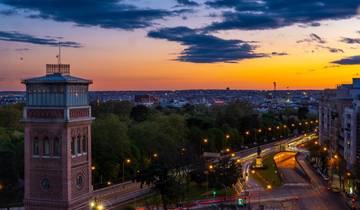
7 days
7 Days in Madrid: Echoes of Empire: Madrid, Ávila & Segovia
- ✓ Comprehensive Madrid tour
- ✓ Expert local guides included
- ✓ All accommodation arranged
- ✓ Transportation provided

4 days
Madrid: Cultural Experience with Toledo Half-day tour, City Break
- ✓ Comprehensive Madrid tour
- ✓ Expert local guides included
- ✓ All accommodation arranged
- ✓ Transportation provided
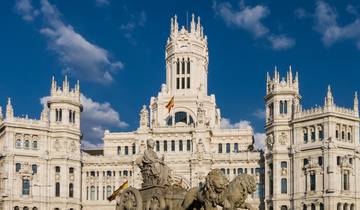
5 days
5-Day Madrid Including Toledo, Avila and Segovia
- ✓ Comprehensive Madrid tour
- ✓ Expert local guides included
- ✓ All accommodation arranged
- ✓ Transportation provided
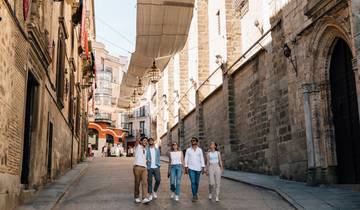
2 days
Segovia, Avila and Toledo in 2 days from Madrid
- ✓ Comprehensive Madrid tour
- ✓ Expert local guides included
- ✓ All accommodation arranged
- ✓ Transportation provided
Multi-day tour packages powered by TourRadar. Prices and availability subject to change.
Essential Planning Information 2026
Walking Season and Weather Patterns
Madrid’s walking season extends year-round, though spring (March-May) and fall (September-November) provide optimal conditions in 2026. Spring temperatures range 15-24°C with minimal rainfall and excellent lighting for photography. Summer (June-August) brings intense heat reaching 35-40°C, requiring early morning walks (7-10 AM) or evening routes (after 7 PM). Fall offers comfortable 12-20°C temperatures with clear skies and reduced crowds as summer tourism declines. Winter (December-February) sees 5-12°C temperatures—cold but manageable with proper layers—and dramatic winter light that enhances architectural photography.
Rainfall remains minimal across all seasons, averaging just 6-8 rainy days per month even in wettest periods (November, April). Madrid’s high elevation (650 meters) creates dry continental climate with low humidity and excellent visibility. Morning fog occasionally occurs in winter, clearing by 10 AM. Wind can be brisk along Paseo del Prado’s open boulevards, requiring windbreakers in cooler months. The city’s microclimate means Centro and Salamanca districts run 2-3°C cooler than outlying areas due to tree cover and building shade.
Best Times for Walking Tours 2026
Tuesday through Thursday provide the best walking conditions in 2026, with reduced crowds at major monuments and museums offering extended hours. Early morning walks (8-10 AM) capture optimal light for photography while avoiding peak tourist congestion at Plaza Mayor and Palacio Real. Late afternoon walks (4-7 PM) benefit from golden hour lighting and cooling temperatures in summer months. Weekend walks face heavier crowds, particularly Sundays when locals fill parks and plazas, though this creates vibrant atmosphere for neighborhood routes.
Avoid walking tours during August, when many Madrid businesses close for summer holidays and temperatures peak at uncomfortable levels. Christmas season (December 15-January 6) brings festive decorations and markets but also heavy crowds around Plaza Mayor and Puerta del Sol. Holy Week (March 23-30, 2026) features processions that may temporarily close certain routes. Check local event calendars before planning walks, as marathons, protests, or official ceremonies occasionally restrict access to major thoroughfares.
Physical Requirements and Accessibility
Madrid’s walking routes require moderate fitness levels, with most routes covering 3-6 km over 3-5 hours including stops. The historic center features predominantly flat terrain with gentle slopes and wide sidewalks. Royal Palace area includes one steep section (Cuesta de la Vega) gaining 30 meters elevation over 200 meters distance—manageable but challenging for those with mobility limitations. All routes include strategic rest stops every 45-60 minutes at cafes or park benches.
Wheelchair accessibility varies by route. The Golden Triangle Art Walk offers complete wheelchair access with smooth, wide pavements and curb cuts. Royal Madrid route includes cobblestone sections around Plaza Mayor requiring careful navigation. Malasaña and Literary Quarter feature narrow sidewalks and occasional steps that challenge wheelchair users. All major museums and monuments provide wheelchair access with advance notification. Rest stops along routes include accessible restrooms at museums, department stores, and major hotels.
Navigation and Technology Resources 2026
Google Maps provides reliable real-time navigation throughout Madrid, with offline maps downloadable for areas without consistent cellular coverage. The official Madrid Tourism app offers free self-guided walking routes with audio commentary in eight languages, covering major monuments and historic neighborhoods. CityMapper app includes walking time estimates, rest stop suggestions, and integration with metro connections for route modifications.
Free WiFi is available at major museums, tourist information points, and many cafes along routes, though coverage remains inconsistent in older neighborhoods. Mobile coverage is excellent throughout the city center across all major carriers. Download offline maps and route details before starting walks to ensure continuous navigation. Many museums and monuments offer free WiFi for visitors, allowing route adjustments and restaurant reservations during rest stops.
Route 1: Royal Madrid Walk 2026
Route Overview and Highlights
The Royal Madrid walk traces the Habsburg and Bourbon dynasties’ architectural legacy across 4.2 km, connecting the city’s most iconic royal monuments. Starting at the magnificent Palacio Real and concluding at Retiro Park, this route passes through Plaza de Oriente, Teatro Real, Plaza Mayor, Puerta del Sol, and the Prado Museum corridor. The walk requires 3-4 hours including brief stops at key monuments, with options to extend the experience through museum entries or shorten it by eliminating the Retiro Park finale.
This route showcases Madrid’s evolution from Habsburg capital to Bourbon powerhouse, with architectural styles spanning austere 16th-century civic buildings to ornate 18th-century royal palaces. The walk reveals urban planning that transformed a medieval town into a European imperial capital, where broad ceremonial boulevards replaced narrow medieval lanes. Key highlights include the western facade of Palacio Real (considered superior to Versailles by many architectural historians), the arcaded elegance of Plaza Mayor, and the museum-lined Paseo del Prado—Madrid’s UNESCO World Heritage cultural corridor.
Detailed Walking Directions 2026
Begin at Plaza de Oriente, accessible via Opera metro station (Lines 2, 5, R). Face the western facade of Palacio Real, where morning light (8-11 AM) illuminates the limestone baroque architecture most dramatically. Walk along the plaza’s northern edge past the Teatro Real opera house, admiring the equestrian statues of Spanish monarchs lining the gardens. Continue east along Calle Arenal for 400 meters to Puerta del Sol, Madrid’s geographic center and traditional meeting point.
From Puerta del Sol, walk southwest 250 meters along Calle Mayor to Plaza Mayor, entering through the northwestern Arco de Cuchilleros. Circle the plaza clockwise, noting the frescoed Casa de la Panadería on the northern side. Exit through the southern Arco de Toledo and continue along Calle Toledo for 300 meters, then turn left on Calle Segovia to reach the Basílica de San Francisco el Grande (brief exterior viewing). Return to Plaza Mayor via Calle Cava Baja, Madrid’s oldest street lined with traditional taverns.
From Plaza Mayor, walk east along Calle Atocha for 1.2 km—a gradual descent through increasingly elegant neighborhoods. This section passes the historic Congreso de los Diputados (Spanish Parliament) on your right after 600 meters. Continue straight to reach Paseo del Prado, turning left to walk along Madrid’s museum mile. The route concludes 800 meters north at Retiro Park’s main entrance (Puerta de Alcalá), where the crystalline Palacio de Cristal offers a refreshing finale.
Strategic Stops and Entry Points
Palacio Real (Royal Palace) opens daily at 10 AM, with entry tickets at €13 in 2026 (check patrimonionacional.es for current official rates). Allocate 60-90 minutes for a complete interior tour covering the throne room, royal armory, and state apartments. Skip interior entry if time is limited—the exterior architecture and surrounding gardens provide sufficient context for the route’s royal theme. Morning entry (10-11 AM) avoids peak afternoon crowds.
Plaza Mayor requires no entry fee but time your visit for 9-10 AM or 4-5 PM to avoid midday crowds. The plaza’s arcades shelter traditional shops selling everything from religious artifacts to gourmet ham, though prices target tourists. Climb to the rooftop terrace of Galerías Canalejas (accessible via Calle Mayor) for free elevated views over the plaza’s red-tile roofscape. Allow 20-30 minutes to circle the plaza and absorb the atmosphere.
Retiro Park entry is free, with the route concluding at Puerta de Alcalá—the park’s monumental eastern entrance. Walk 300 meters into the park to reach Palacio de Cristal, an iron-and-glass exhibition hall hosting free rotating art installations. The park offers multiple refreshment kiosks and shaded rest areas. Visit between 8-10 AM in summer for coolest temperatures, or 4-6 PM in cooler months for optimal light filtering through the Crystal Palace’s transparent walls.
Rest Stops and Refreshment Options 2026
Café de Oriente sits opposite Palacio Real, offering terrace seating with palace views and traditional Spanish breakfast. Expect €8-12 for coffee and pastries. The location and views justify slightly elevated prices. Service begins at 8:30 AM, making it perfect for pre-walk fortification.
In Plaza Mayor, avoid overpriced terrace restaurants (€15-20 for basic sandwiches) and instead walk to nearby Mercado de San Miguel (250 meters east). This gourmet market offers standing-room tapas at €3-5 per portion, with excellent wine selection at €3-4 per glass. Budget €12-18 for a substantial mid-walk break with multiple tapas tastings. Opens daily at 10 AM.
Along Paseo del Prado, the Prado Museum cafeteria (accessible without museum entry from the south entrance) serves coffee €2.50, sandwiches €6-8, and fresh salads €9-12. The Retiro Park area features multiple food trucks near Puerta de Alcalá selling ice cream (€3-5), cold drinks (€2-3), and light snacks. Budget €10-15 total for refreshments along this section.
Cost Summary for Royal Madrid Walk 2026
Palacio Real entry €13, breakfast/coffee €8-12, mid-route snacks €10-15, cold drinks €4-6. Total route cost: €35-46 per person (excluding optional museum entries at Prado). Add €15 for Prado Museum quick visit if time permits. The route requires no transportation costs—entirely walkable from any central Madrid accommodation. Budget-conscious walkers can reduce costs to €20-25 by bringing water bottles and skipping formal restaurant stops, purchasing snacks from supermarkets instead.
Route 2: Golden Triangle Art Walk 2026
Museum Route and Strategic Planning
The Golden Triangle Art Walk connects Madrid’s three premier art museums—Prado, Reina Sofía, and Thyssen-Bornemisza—along a 2.8 km cultural corridor designated as UNESCO World Heritage in 2021. This route requires a full day (6-8 hours) to properly experience all three collections, or a focused half-day (3-4 hours) visiting two museums plus walking between them. The museums cluster along Paseo del Prado and nearby streets, making transitions between collections easy and pleasant through tree-lined boulevards and elegant urban spaces.
Strategic planning maximizes the art walk experience in 2026. The Paseo del Arte combined ticket costs €32 and grants one visit to each museum within a 365-day period (versus €15 Prado + €12 Reina Sofía + €13 Thyssen individually = €40, saving €8). Purchase online at paseodelarte.com to skip ticket lines. Visit museums in this sequence: Prado (9:30 AM opening), lunch break (1:30-3 PM), Thyssen (3-5 PM), late afternoon walk to Reina Sofía (5-7 PM). This timing follows energy levels and avoids peak crowds while taking advantage of Reina Sofía’s extended evening hours (closed Tuesdays).
Walking Route Between Museums
Begin at Museo del Prado’s main entrance (Puerta de Velázquez) on Paseo del Prado. After completing your Prado visit, exit and walk north 600 meters along Paseo del Prado’s western sidewalk, passing Fuente de Neptuno fountain at Plaza Cánovas del Castillo. The Thyssen-Bornemisza Museum occupies a renovated palace on Paseo del Prado’s west side, with main entrance at number 8. This 8-minute walk offers shade from London plane trees and opportunities to photograph neo-classical architecture lining the boulevard.
From Thyssen to Reina Sofía requires 1.1 km walking south along Paseo del Prado, then west on Calle Santa Isabel. Follow Paseo del Prado south past the Prado’s main entrance, continuing to Glorieta del Emperador Carlos V roundabout. Walk around the roundabout’s western edge and continue straight along Calle Santa Isabel for 200 meters to Reina Sofía’s main entrance. This 15-minute walk passes Atocha railway station—worth a brief detour to see the interior tropical garden occupying the old station hall.
Museum Visit Strategies 2026
The Prado Museum requires 2-3 hours for highlights (Velázquez, Goya, Bosch, Rubens rooms) or 4-5 hours for comprehensive viewing. Enter at opening (10 AM Monday-Saturday, 10 AM Sunday) to avoid crowds in the Velázquez galleries. Download the Prado app (free) for self-guided audio tour covering 50 masterpieces. Focus on Second Floor for Spanish masters, First Floor for Italian and Flemish works. The museum provides free lockers (€1 coin deposit) and coat check.
Thyssen-Bornemisza offers more manageable scale with 2 hours sufficient for highlights. The collection spans 13th-20th century with particularly strong Impressionist and early Modern sections. Start at top floor (Second Floor) and work downward chronologically for best flow. Tuesday evenings (6-8 PM) offer free admission, though crowds increase significantly. The rooftop terrace (accessible from Second Floor) provides free views over Paseo del Prado—excellent for orientation.
Reina Sofía Museum focuses on modern and contemporary art, with Picasso’s “Guernica” as the unmissable centerpiece. Allocate 90 minutes minimum, 3 hours for complete viewing. “Guernica” occupies the Second Floor Sabatini Building—visit this first as crowds peak in early afternoon. Monday and Wednesday-Saturday evening hours (7-9 PM) offer free admission, though “Guernica” room becomes crowded. The museum cafeteria (accessible without entry ticket) provides excellent coffee and affordable lunch options (€12-16 for menu del día).
Art Walk Rest Stops 2026
Between Prado and Thyssen, stop at Café Murillo (directly behind Prado’s north entrance). This traditional cafe serves coffee €2.50, light snacks €4-7, and has shaded outdoor terrace. Perfect for a quick 20-minute break between museum visits.
For lunch between museum visits, walk 200 meters west from Thyssen to Taberna La Dolores (Plaza de Jesús 4). This historic 1908 tavern serves traditional Madrid tapas €4-7 per portion in authentic azulejo-tiled interior. Budget €18-25 for filling lunch including wine. Alternatively, Lateral restaurant chain (multiple Paseo del Prado locations) offers modern tapas €6-9 with outdoor seating and faster service.
Near Reina Sofía, the museum’s internal Nouvel Café provides quality coffee €2.80, sandwiches €7-9, and salads €10-13. No museum entry required—access from Calle Argumosa entrance. The Lavapiés neighborhood (300 meters south) offers multicultural dining at lower prices: excellent Indian, Middle Eastern, and Latin American restaurants with mains €9-14.
Cost Summary for Art Walk 2026
Combined museum ticket €32, coffee breaks €5-8, lunch €18-25, snacks €6-10. Total art walk cost: €61-75 per person. Budget option: Visit Prado and Reina Sofía during free evening hours (save €27), bring water bottles and snacks (save €15), reducing cost to €25-35. The free admission strategy requires careful timing: Prado Monday-Saturday 6-8 PM, Reina Sofía Monday and Wednesday-Saturday 7-9 PM. Check museum websites for current official schedules as free hours may change.
Route 3: Literary Quarter Walk 2026
Barrio de las Letras Overview
The Literary Quarter (Barrio de las Letras) preserves Madrid’s Golden Age literary heritage in a compact 1.8 km walking loop requiring just 90-120 minutes. This neighborhood housed Spain’s greatest writers during the 16th-17th centuries—Cervantes, Lope de Vega, Quevedo, Góngora—whose former homes and favorite taverns still mark narrow streets. The walk reveals literary Madrid through house museums, commemorative plaques, book-lined streets, and traditional theaters that maintain performing arts traditions dating back four centuries.
This route offers intimate neighborhood atmosphere contrasting with the grand boulevards of royal Madrid. Narrow pedestrian lanes preserve medieval street patterns, with buildings rarely exceeding five stories. Literary quotes are embedded in sidewalks throughout the district, creating an outdoor anthology of Spanish literature. Small independent bookstores, antiquarian print shops, and bohemian cafes maintain the intellectual atmosphere that attracted writers centuries ago. The area transforms into lively social space on evenings and weekends when locals fill terrace bars and street performers entertain crowds.
Walking Route Through Literary History
Begin at Plaza Santa Ana, accessible via Sevilla or Sol metro stations. This rectangular plaza anchored Madrid’s theatrical district with the Teatro Español (founded 1583) occupying the plaza’s east end. Walk along the plaza’s northern edge, noting the statue of Federico García Lorca and the ME Hotel terrace—former site of the legendary Café Español where Generation of ’98 writers gathered. Exit the plaza’s northeast corner onto Calle Príncipe.
Walk north on Calle Príncipe 150 meters to number 14—Casa Museo Lope de Vega, preserved home of Spain’s prolific Golden Age playwright. Continue north to Calle Cervantes, turning right. This street was Cervantes’ final address—he died at number 2 in 1616 (building no longer standing, commemorative plaque marks the site). Walk east along Cervantes Street, noting literary quotes embedded in sidewalk pavement. Turn right on Calle León, walking south past traditional taverns that served 17th-century literary clientele.
Return to Plaza Santa Ana via Calle Huertas—the district’s main artery lined with bookstores and cafes. This pedestrianized street features brass letters embedded in pavement spelling out quotes from Spanish literary classics. Walk slowly to read selections from Cervantes’ “Don Quixote,” Lope de Vega’s plays, and Quevedo’s poetry literally beneath your feet. The street leads directly back to Plaza Santa Ana’s western entrance, completing the literary circuit.
Literary Landmarks and Visits 2026
Casa Museo Lope de Vega (Cervantes 11) opens Tuesday-Sunday 10 AM-6 PM, with free admission requiring advance online reservation at museolope.mcu.es. This beautifully preserved 17th-century house shows how Golden Age writers lived and worked. The guided visit (Spanish only, 35 minutes) reveals Lope’s study, garden, and original furniture. English information sheets available. Allow 45-60 minutes including time to explore the peaceful garden.
Casa de Cervantes site (Cervantes 2) offers no interior access—the original building was demolished in the 19th century. Spend 5 minutes reading the commemorative plaque and imagining this location where Spain’s greatest novelist spent his final years. The nearby Convento de las Trinitarias (Lope de Vega 18) contains Cervantes’ tomb in a small chapel, though the exact burial location remains uncertain. Free entry during mass times (9 AM, 7 PM weekdays).
The neighborhood contains dozens of commemorative plaques marking former residences of famous writers. No entry is possible, but noting their locations adds context to the literary heritage. Quevedo lived on Cantarranas Street (now León), Góngora on Plaza Mayor, Tirso de Molina on Magdalena Street. The density of literary history within this small area astonishes—nearly every building has some connection to Spain’s literary golden age.
Literary Cafes and Bookstores
Cervecería Alemana (Plaza Santa Ana 6) opened in 1904 and became Ernest Hemingway’s regular haunt during 1920s-30s Madrid visits. This traditional beer hall serves coffee €2.20, beer €3-4, and simple tapas €5-8. The interior preserves period atmosphere with dark wood, tile floors, and walls covered in literary photographs. Service can be brusque but adds to authentic character. Allow 30-45 minutes for refreshment break.
La Venencia (Echegaray 7) represents Madrid’s most traditional sherry bar, unchanged since 1929. This tiny establishment serves only sherry (€3-5 per glass) and simple olives or anchovies. No music, no cocktails, no modernization—just excellent sherry in time-capsule atmosphere. Cash only. The bar discourages photography and tourist groups. Ideal for 15-20 minute atmospheric stop for sherry aficionados.
Several excellent independent bookstores cluster along Calle Huertas. La Central de Callao (Postigo San Martín 8, 400 meters west) offers Madrid’s best English-language selection plus architecture, art, and Spanish literature sections. Papelería Salesas (Barbara de Braganza 12, 800 meters north) specializes in rare and antiquarian books, prints, and maps—worth the detour for serious bibliophiles. Budget €15-50 if browsing tempts you to purchase Spanish literary classics.
Cost Summary for Literary Quarter Walk 2026
Lope de Vega house free (advance reservation required), coffee at traditional cafe €2-4, sherry at La Venencia €3-5, light tapas €5-8, optional book purchases €15-50. Total route cost: €10-17 per person (excluding optional purchases). This route represents excellent value, providing rich literary context with minimal expenses. The neighborhood’s authenticity and concentration of historic sites deliver memorable experience without requiring significant budget.
Route 4: Malasaña Creative District Walk 2026
Neighborhood Character and Route Overview
Malasaña embodies Madrid’s alternative creative spirit in a bohemian neighborhood spanning 2.4 km of vintage shops, street art, independent cafes, and countercultural venues. This route explores the district’s transformation from working-class barrio to hipster haven while preserving authentic local character. The walk requires 2-3 hours through narrow streets lined with 19th-century buildings now housing contemporary culture. Weekend afternoons (Saturday-Sunday 3-7 PM) showcase the neighborhood at its liveliest, though weekday mornings reveal quieter authentic atmosphere.
The area takes its name from Manuela Malasaña, a seamstress who became a heroine of the 1808 Dos de Mayo uprising against French occupation. Today, the neighborhood celebrates rebellion through creative expression rather than military resistance. Street art covers building facades with murals, stencils, and installations by local and international artists. Independent boutiques sell vintage clothing, vinyl records, handmade jewelry, and alternative fashion. The district resists gentrification more successfully than similar neighborhoods in other European capitals, maintaining working-class bars alongside trendy cocktail lounges.
Walking Route Through Creative Malasaña
Begin at Plaza del Dos de Mayo, accessible via Tribunal metro (Lines 1, 10). This plaza marks the 1808 uprising’s epicenter with the Arco de Monteleón commemorating Spanish resistance. The plaza serves as neighborhood living room where locals gather at terrace bars throughout the day. From the plaza’s south side, walk along Calle San Vicente Ferrer—Malasaña’s main artery lined with boutiques, record stores, and cafes.
After 300 meters, turn left on Calle del Espíritu Santo, walking through the district’s creative heart. This narrow street concentrates independent shops selling vintage fashion, handmade accessories, and alternative books. Continue to Calle de la Palma, turning right to reach Calle Corredera Baja de San Pablo after 200 meters. This street underwent dramatic transformation in the 2010s, with former residential buildings now housing concept stores, specialty coffee roasters, and design studios.
Walk north along Corredera Baja to Plaza de San Ildefonso (400 meters), the neighborhood’s second major social space. This modern plaza features tiered seating where locals relax with takeaway food and drinks. Exit the plaza’s northwest corner onto Calle Fuencarral, walking north 300 meters past street art installations and music venues. Turn left on Calle Manuela Malasaña (the namesake heroine’s street) to circle back to Plaza del Dos de Mayo, completing the creative circuit.
Street Art and Cultural Points 2026
Malasaña functions as open-air street art gallery with no admission required. Key murals cluster along Calle Espíritu Santo (entire building facades decorated), Calle Pez (political and social commentary pieces), and Calle San Bernardo (large-scale portraits). Street art changes continuously as artists paint over previous works, making each visit unique. Photography is welcome and encouraged—the art exists for public enjoyment. Best lighting for photography occurs late afternoon (4-6 PM) when low sun illuminates west-facing walls.
La Casa Encendida cultural center (Ronda de Valencia 2, technically outside Malasaña but 800 meters south) offers free contemporary art exhibitions, environmental initiatives, and cultural programming. Worth the detour for culture enthusiasts. Free entry to galleries Tuesday-Sunday 10 AM-9 PM. The rooftop terrace provides unexpected views over southern Madrid.
Conde Duque Cultural Center (Conde Duque 9-11, northwest Malasaña edge) occupies restored 18th-century military barracks now hosting exhibitions, concerts, and cultural events. Free exhibition entry Tuesday-Sunday 10 AM-8 PM. The building itself merits visiting—the longest baroque facade in Madrid at 228 meters. The interior courtyard hosts outdoor cinema and concerts in summer months.
Shopping and Vintage Discoveries
Malasaña specializes in vintage fashion, with dozens of stores selling curated second-hand clothing €15-60 per garment. Magpie Vintage (Calle Espíritu Santo 21) offers Madrid’s best selection of 1960s-80s fashion. Mint Vintage (Velarde 12) focuses on American vintage with denim, leather jackets, and cowboy boots. Mercado de Fuencarral (Fuencarral 45) concentrates 30+ independent boutiques under one roof—ideal for efficient browsing. Budget €30-100 if shopping tempts you.
Independent record stores thrive in Malasaña despite digital music dominance. Discos Revolución (Espíritu Santo 7) specializes in punk, metal, and alternative rock with extensive vinyl selection. La Metralleta (Velarde 6) focuses on indie, electronic, and experimental music. Expect €15-30 for used vinyl, €20-40 for new releases. Staff offer expert recommendations and genuine passion for music.
Bookstores include La Infinito (Corredera Baja 18) with fiction, poetry, and graphic novels emphasizing independent publishers. Tipos Infames (San Joaquín 3) combines bookstore, bar, and event space with literature readings and live music. Traficantes de Sueños (Duque de Alba 13) specializes in political theory, social movements, and critical thought. Most books in Spanish, limited English selection.
Cafes, Bars, and Refreshments 2026
Specialty coffee culture dominates modern Malasaña. Toma Café (Espíritu Santo 9) pioneered Madrid’s third-wave coffee movement with single-origin beans €2.50-3.50 and expert baristas. Hola Coffee (Espíritu Santo 19) roasts their own beans on-site with minimalist Scandinavian-inspired interior. Federal Café (Plaza de las Comendadoras 9) serves Australian-style brunch €9-14 with excellent coffee €2.80.
Traditional bars persist alongside trendy cafes. Bodega La Ardosa (Colón 13) operates since 1892, serving vermouth on tap €3 and excellent salmorejo soup. Casa Camacho (San Andrés 4) represents authentic working-class bar unchanged in decades—draft beer €2, simple tapas €3-5. These traditional establishments offer cultural authenticity that newer venues cannot replicate.
For lunch, La Carmencita (Libertad 16) operates since 1854 in beautifully preserved interior. Modern menu del día €16-22, though à la carte runs €30-45. Yakitoro (Reina 41) fuses Japanese-Spanish cuisine in relaxed setting with mains €12-18. Vegan options abound: Rayen Vegano (San Andrés 11) serves plant-based comfort food €9-14, B13 Organic (Divino Pastor 13) offers organic vegan bowls €10-15.
Cost Summary for Malasaña Walk 2026
Coffee at specialty cafe €2.50-3.50, midday vermouth at traditional bar €3, light lunch or tapas €9-16, optional vintage fashion purchase €15-60, optional vinyl record €15-30. Total route cost: €15-23 per person (excluding optional shopping). The neighborhood provides rich cultural experience with modest expenses. Budget-conscious visitors can window-shop and enjoy the street art and atmosphere for minimal cost, while those interested in fashion and music find excellent shopping opportunities.
Route 5: Retiro Park and Museums Walk 2026
Park and Cultural Corridor Route
This 3.5 km route combines Madrid’s green heart—Retiro Park—with surrounding museums and monuments for a nature-culture hybrid walk. The route requires 3-4 hours moving leisurely through park landscapes and architectural monuments. Spring (March-May) and fall (September-November) provide optimal conditions in 2026 for this combination walk, with comfortable temperatures and beautiful park foliage. The route works equally well as morning constitutional (8-11 AM) or late afternoon promenade (4-7 PM) depending on museum visit preferences.
Retiro Park spans 125 hectares of formal gardens, shaded promenades, and scenic ponds right in Madrid’s center. The 19th-century park served royal family until 1868 when it opened to the public, preserving aristocratic landscape design with broad tree-lined paths, ornamental gardens, and architectural follies. UNESCO designated the park and surrounding Paseo del Prado area as World Heritage in 2021, recognizing the cultural landscape’s significance as democratic public space. The park provides Madrid’s most popular recreation area—locals use it for jogging, rowing, reading, and socializing throughout the year.
Retiro Park Walking Route
Enter Retiro Park at Puerta de Alcalá, Madrid’s iconic neoclassical triumphal arch at the park’s eastern entrance. Walk straight along broad Avenida de Hernani for 400 meters to reach Estanque Grande del Retiro—the park’s central lake. This rectangular pond hosts rowboat rentals (€6 for 45 minutes, €8 weekends) and serves as scenic centerpiece with Alfonso XII monument’s colonnaded backdrop on the eastern shore.
From the lake’s southern end, walk 300 meters southeast through Rose Garden (Rosaleda) to reach Palacio de Cristal—the park’s architectural jewel. This iron-and-glass exhibition hall (1887) hosts free rotating contemporary art installations by Reina Sofía Museum. The building itself justifies visiting even without exhibition interest—the transparent structure surrounded by pond creates magical atmosphere, especially when interior exhibition allows full light penetration. Free entry Wednesday-Sunday 10 AM-6 PM (extended to 7 PM April-October).
Continue south 400 meters to Puerta del Ángel Caído—the Fallen Angel statue, one of few monuments worldwide explicitly depicting Lucifer. Walk west along park’s southern edge to reach Observatorio Astronómico (exterior viewing only). Exit the park at Puerta de Murillo, adjacent to Prado Museum’s southern entrance. The route concludes 300 meters north along Paseo del Prado at Puerta de Alcalá, completing the circuit.
Museum Integration Options 2026
The route allows easy integration with major museums surrounding Retiro Park. Prado Museum’s southern entrance (Puerta de Murillo) sits immediately adjacent to the park, allowing seamless transition from nature to art. Reina Sofía Museum requires 800-meter walk southwest from the park’s southern exit. Museum visits obviously extend the route’s total time commitment—budget minimum 2 hours per museum beyond the park walking time.
Strategic timing maximizes the combined park-museum experience. Visit museums during midday heat (12-3 PM) when park walking becomes uncomfortable, especially in summer. Walk the park early morning (8-10 AM) or late afternoon (5-7 PM) when light enhances photography and temperatures stay pleasant. This rhythm mirrors local habits—Madrileños rarely visit parks during harsh midday sun except in winter months.
The National Museum of Decorative Arts (Montalbán 12) sits directly across from Retiro’s eastern edge, offering quirky alternative to major art museums. This small museum displays Spanish decorative arts, furniture, ceramics, and household objects from 15th-20th centuries. Entry €3, free Saturday afternoons and Sundays. Allow 60-90 minutes for complete viewing. The museum provides cultural context often missing in major art institutions—how ordinary Spanish people lived across different historical periods.
Activities and Facilities in Retiro 2026
Rowboat rental at Estanque Grande costs €6 weekdays (45 minutes), €8 weekends and holidays. Available year-round except when pond is drained for maintenance (usually February). Boats accommodate 1-4 people, with life jackets provided. The rowing experience offers unique perspective on the park and Alfonso XII monument, though physical effort required. Lines form on sunny weekends—arrive before 11 AM or after 5 PM to avoid waits.
The park contains numerous statues, fountains, and monuments scattered throughout grounds. Notable works include the Velázquez Palace (1883), hosting free exhibitions by Reina Sofía Museum Tuesday-Saturday 10 AM-8 PM. The formal Parterre Garden near Retiro metro station features geometrically trimmed hedges and the ancient Cypress of the Parterre—reportedly oldest tree in Madrid at 400+ years. These discoveries reward wandering beyond the main paths.
Public restrooms exist near major entrances and around the lake, maintained to decent standards. The park provides free WiFi at major gathering points. Drinking fountains appear every 300-400 meters along main paths—refill water bottles rather than buying drinks at kiosks. Park benches line virtually every path, making rest stops easy. The park is completely free with no entry fee—truly democratic public space.
Dining Around Retiro 2026
Florida Retiro (Paseo Fernán Núñez 1) offers the park’s most elegant dining with terrace overlooking the Rose Garden. Menu del día €18-24, à la carte €35-50. The location and views justify slightly elevated prices. Breakfast service begins at 9 AM, ideal for pre-walk fortification.
Inside the park, several kiosks and refreshment stands sell drinks €2-4, ice cream €3-5, and light snacks €4-7. Quality is acceptable though prices reflect captive market. The kiosk near Palacio de Cristal offers shaded terrace seating with pond views. Better value comes from bringing picnic supplies—many locals spread blankets for outdoor dining, perfectly acceptable and encouraged park behavior.
Surrounding the park, excellent dining clusters near Retiro metro station. Estado Puro (Plaza Cánovas del Castillo 4) offers modern tapas by Michelin-starred chef Paco Roncero, with dishes €8-16. Viridiana (Juan de Mena 14) serves creative cuisine in intimate setting with mains €22-32. For budget options, walk to Lavapiés neighborhood (15 minutes southwest) where multicultural restaurants offer excellent value at €10-18 for complete meals.
Cost Summary for Retiro Park Walk 2026
Park entry free, Palacio de Cristal free, optional rowboat rental €6-8, refreshments at park kiosks €6-12, optional Decorative Arts Museum €3 (free weekend afternoons), lunch nearby €18-35. Total route cost: €0-46 per person depending on choices. Budget option: Skip paid activities and restaurants, bringing water and snacks, reducing cost to zero beyond transportation. The route provides exceptional value—extensive green space and cultural sites requiring minimal expenditure.
Route 6: Chueca LGBTQ+ District Walk 2026
Neighborhood Identity and Route
Chueca represents Madrid’s LGBTQ+ epicenter and one of Europe’s most vibrant queer neighborhoods, spanning a compact 1.6 km walking circuit. The district transformed from working-class barrio into cosmopolitan hub during Spain’s democratic transition post-1975, with LGBTQ+ community leading neighborhood revival. Today, Chueca celebrates diversity through rainbow crosswalks, inclusive businesses, and year-round cultural programming culminating in Madrid Pride (late June-early July)—Europe’s largest LGBTQ+ festival attracting 2+ million attendees.
This walk explores Chueca’s transformation while highlighting current culture, nightlife, dining, and shopping. The neighborhood welcomes all visitors regardless of sexual orientation or gender identity—the inclusive atmosphere attracts diverse crowds to restaurants, bars, and shops. Walking Chueca reveals how LGBTQ+ community revitalized urban space while maintaining neighborhood character. The route requires 60-90 minutes pure walking time, extendable to 2-3 hours with shopping and refreshment stops.
Chueca Walking Route
Begin at Plaza de Chueca (Chueca metro, Line 5)—the neighborhood’s heart marked by rainbow crosswalks and inclusive municipal signage. The square honors LGBT rights activist Pedro Zerolo with commemorative plaque on the plaza’s north side. From the plaza, walk north along Calle Augusto Figueroa, Chueca’s main commercial street lined with restaurants, boutiques, and bars catering to diverse clientele.
After 300 meters, turn right on Calle Hortaleza, walking through increasingly residential area where locals actually live—reminding visitors that Chueca remains functioning neighborhood beyond tourist district. Continue 400 meters to Plaza del Rey, then turn right on Calle Barbieri. This street concentrates gay-oriented businesses, leather shops, and traditional bars that served as community anchor points during less tolerant times. Walk south back to Plaza de Chueca via Barbieri, completing the inner circuit.
Extend the walk by exploring Chueca’s southern edge along Gran Vía (500 meters south). This grand boulevard underwent dramatic transformation with major hotel and retail developments, though maintains theatrical character with historic cinemas and theaters. The walk can also extend northwest to Malasaña district (800 meters), as both neighborhoods blend into each other with no clear boundary—creative alternative culture connects both areas.
Cultural Points and LGBTQ+ History 2026
Madrid Pride takes place June 28-July 6, 2026, culminating in the Pride Parade on Saturday, July 5. The neighborhood transforms completely during Pride week, with streets closed to traffic and continuous outdoor parties. Hotels and restaurants fill completely—book months in advance if visiting during Pride. The parade route runs along Paseo del Prado from Atocha to Plaza Colón, passing just east of Chueca. Over 2 million attendees make this Europe’s largest Pride celebration.
The neighborhood contains no formal museums dedicated to LGBTQ+ history, but the area itself functions as living testimony to community resilience and achievement. Rainbow plaques throughout Chueca commemorate victims of anti-gay violence during Franco dictatorship and AIDS crisis. The inclusive atmosphere represents hard-won social progress—Spain legalized same-sex marriage in 2005, becoming third country worldwide to recognize marriage equality.
The Sociedad General de Autores y Editores building (Fernando VI 4) showcases remarkable modernist architecture by José Grases Riera (1899-1902). While not specifically LGBTQ+ related, the building exemplifies Madrid’s architectural heritage and sits in Chueca’s northern edge. Exterior viewing only, though the facade’s ceramic decorations and wrought iron balconies merit 15-minute stop.
Shopping and Design in Chueca
Chueca excels in independent boutiques, design shops, and specialty stores. Purificación García (Serrano 92, technically Salamanca district but 600 meters east) represents Spanish fashion at its finest. Chueca’s commercial core (Augusto Figueroa, Hortaleza, Fuencarral) concentrates international and local fashion chains mixed with independent boutiques. A-Cero (Bárbara de Braganza 2) showcases contemporary design and home furnishings from Spanish designers.
Bookstores include Berkana (Hortaleza 62)—Madrid’s LGBTQ+ bookstore since 1993, offering fiction, non-fiction, and periodicals focusing on queer themes and authors. Stock includes Spanish and some English titles. The store also functions as community gathering point with author readings and events. La Madriguera (Libertad 32) specializes in comics, graphic novels, and manga with excellent LGBTQ+ section.
Beauty and personal care shops target LGBTQ+ clientele but welcome all customers. MAC Cosmetics (Hortaleza 46) offers makeup consultations and products. Lush (Fuencarral 89) provides handmade cosmetics and ethical beauty products. These international chains chose Chueca locations specifically to signal LGBTQ+ inclusivity and support.
Dining and Nightlife Options 2026
Chueca offers Madrid’s most diverse dining scene with all cuisines represented. Bazaar (Libertad 21) serves modern Spanish cuisine in design-forward setting with mains €14-22. Gula Gula (Gran Vía 1) offers international buffet €14.50 weekday lunch, €16.50 dinner and weekends—excellent value for diverse eaters. Mama Framboise (Fernando VI 23) specializes in brunch €12-18 with French-inspired pastries and egg dishes.
Traditional tapas and wine bars persist among trendy restaurants. Bodega Ángel Sierra (Plaza Chueca) operates since 1917 serving vermouth €3-4 and traditional tapas €5-8 in beautifully preserved interior with ceramic tile walls. Stop & Drop (Barbieri 8) offers craft beer €4-6 with international selection and industrial-chic decor. La Mordida (Libertad 5) serves excellent tacos €3-5 and Mexican craft beer.
Chueca’s nightlife ranges from sophisticated cocktail lounges to high-energy dance clubs. Del Diego (Reina 12) represents classic cocktail bar with expert bartenders and drinks €10-14. Mama Inés (Hortaleza 22) offers drag shows and cabaret in intimate setting with €15 drink minimum. LL Bar (Pelayo 11) attracts mixed LGBTQ+ crowd with house music and affordable drinks €6-9. Most bars don’t charge entry, with revenue from drink sales. Clubs typically charge €10-15 cover after midnight on weekends.
Cost Summary for Chueca Walk 2026
Walking route free (public streets), coffee at cafe €2.50-3.50, light lunch or tapas €12-18, vermouth at traditional bar €3-4, optional shopping €20-100+, optional nightlife drinks €20-40 for evening out. Total route cost: €18-28 per person (excluding optional shopping and extensive nightlife). The neighborhood provides free cultural experience just walking and observing the inclusive atmosphere and architectural details. Budget-conscious visitors can explore extensively with minimal expenditure, while those interested in dining, shopping, and nightlife find excellent options across price ranges.
Practical Walking Tips 2026
Footwear and Physical Preparation
Comfortable walking shoes make the difference between enjoyable exploration and painful endurance. Madrid’s sidewalks combine smooth modern pavement with uneven cobblestones, requiring shoes with good support and cushioning. Avoid new shoes—break them in before traveling to prevent blisters during long walks. Athletic walking shoes or well-worn sneakers work best, though stylish leather walking shoes suit those preferring more formal appearance. Sandals are acceptable in summer but provide insufficient support for 3-5 km routes.
Build walking stamina before traveling if you’re not accustomed to extensive walking. Start with 3-4 km walks at home several weeks before your Madrid trip, gradually increasing distance and pace. Most routes described here involve 3-6 km over 3-5 hours—manageable for anyone with moderate fitness but potentially exhausting for sedentary travelers unused to continuous movement. Consider splitting longer routes across multiple days if your fitness level is uncertain.
Hydration and Sun Protection
Madrid’s dry climate and high elevation (650 meters) cause dehydration faster than coastal cities. Carry reusable water bottle and refill at drinking fountains throughout the city—water is potable everywhere. Expect to drink 1-2 liters during 3-4 hour walking routes in temperate weather, more in summer heat. Dehydration symptoms include headache, fatigue, and dark urine—address immediately by finding shade and drinking water.
Sun protection is essential year-round but critical April-September when UV index reaches high levels. Apply broad-spectrum sunscreen SPF 30+ before starting walks, reapplying every 2 hours. Wide-brimmed hat protects face and neck from direct sun exposure. Sunglasses with UV protection prevent eye damage and reduce squinting fatigue. Long-sleeve light layers protect skin while allowing air circulation better than short sleeves with exposed skin.
Safety and Security While Walking
Madrid ranks among Europe’s safest cities, with violent crime extremely rare in tourist areas and walking routes. Petty theft (pickpocketing, bag snatching) represents the primary concern, particularly around Plaza Mayor, Puerta del Sol, and Retiro Park during peak tourist season. Keep valuables secure in front pockets or concealed under clothing. Don’t display expensive cameras, phones, or jewelry unnecessarily. Remain aware of surroundings, particularly in crowded areas where thieves work.
Walk with confidence even when lost—appearing confused or consulting maps repeatedly marks you as tourist target. If you need to check directions, step into a shop or cafe rather than standing on street corner studying your phone. Keep one hand on your bag or backpack in crowded metro stations and tourist areas. If someone bumps into you or spills something on you, immediately check for your valuables—these are common distraction tactics used by pickpocket teams.
Language and Communication
English is widely spoken in central Madrid tourist areas, hotels, museums, and major restaurants. However, learning basic Spanish phrases dramatically improves your walking experience. “¿Dónde está…?” (Where is…?), “¿Cuánto cuesta?” (How much?), “Gracias” (Thank you), and “Perdón” (Excuse me) cover most essential interactions. Locals appreciate efforts to speak Spanish, even poorly—attempting Spanish before defaulting to English shows respect and usually elicits helpful responses.
Download Google Translate app with Spanish language pack for offline use during walks. The app provides basic translation and can read signs through phone camera. Many younger Madrid residents (under 40) speak functional English, while older generations may speak little English. Restaurants in tourist areas provide English menus, though neighborhood establishments use Spanish-only menus—the Google Translate camera feature helps interpret menu items.
Photography and Documentation
Madrid provides endless photography opportunities during walking routes. Respect basic photography etiquette: ask permission before photographing individuals up close, avoid flash photography in churches and museums (usually prohibited), and don’t block pedestrian traffic while framing shots. Early morning (8-10 AM) and late afternoon (5-7 PM) provide the best natural light—the harsh midday sun creates unflattering shadows and blown-out highlights.
Photograph street names at intersections to help retrace your route if you become lost. Take pictures of restaurant facades or business cards for places you want to remember. Document your route progress with occasional overview shots showing landmarks—helpful for orienting yourself in photos later. Back up photos to cloud storage each evening in case of phone loss or damage. Consider bringing portable battery charger as extensive phone use for navigation and photography drains batteries quickly.
Emergency Contacts and Health Resources
Emergency services in Spain: dial 112 for police, ambulance, or fire department. English-speaking operators are available. Police stations (comisarías) exist throughout central Madrid with at least one English-speaking officer usually available. The Tourist Police (Policía de Turismo) office at Calle Leganitos 19 specializes in assisting foreign visitors with theft reports, lost passports, and other tourist-specific issues.
Pharmacies (farmacias) identified by green cross signs appear every few blocks throughout walking routes. Pharmacists provide basic medical advice and over-the-counter medications for minor ailments. Many pharmacists speak English in central areas. For serious medical issues, public hospitals provide excellent care—Hospital Universitario Gregorio Marañón (Dr. Esquerdo 46) and Hospital Universitario La Paz (Castellana 261) accept emergency cases. European Health Insurance Card (EHIC) covers EU citizens for necessary medical treatment. Non-EU visitors should ensure travel insurance includes medical coverage.
Frequently Asked Questions: Madrid Walking Tours 2026
Do I need to book walking tours in advance for 2026?
Self-guided walking tours require no advance booking—you walk independently following your chosen route at your own pace. If you prefer organized group tours, booking 2-3 days in advance ensures availability during high season (April-October), though same-day bookings often succeed during low season. Free walking tours operate on first-come basis but appreciate online registration to gauge group size. The self-guided approach described in this article eliminates booking concerns entirely while saving €20-30 per person versus organized tours.
How many walking routes can I complete in one day?
Most visitors comfortably complete 1-2 full walking routes per day depending on pace, fitness, and stopping time at monuments. The shorter routes (Literary Quarter 1.8 km, Chueca 1.6 km) combine easily in a single day with breaks between. Longer routes (Royal Madrid 4.2 km, Art Walk 2.8 km) typically occupy a full day when including museum visits and meal breaks. Attempting more than two substantial routes daily leads to exhaustion and reduced enjoyment—quality experience matters more than checking boxes.
Are walking routes accessible for travelers with mobility limitations?
Accessibility varies significantly by route. The Golden Triangle Art Walk and Retiro Park route offer excellent wheelchair accessibility with wide, flat pavements and curb cuts. The Royal Madrid route includes challenging sections with cobblestones and steep slopes near Palacio Real. Literary Quarter and Malasaña feature narrow sidewalks, occasional steps, and historic buildings without ramps. Contact individual museums in advance about wheelchair access—all major institutions provide accessibility but may require specific entrance procedures.
What happens if it rains during my walking tour?
Madrid averages only 6-8 rainy days per month even during wettest periods, so extended rainfall is unlikely. Light rain needn’t cancel walking plans—bring compact umbrella or waterproof jacket and continue. Heavy rain justifies shifting to museum-focused route (Golden Triangle Art Walk) where you spend most time indoors. The Literary Quarter and Royal Madrid routes offer numerous cafes, shops, and covered arcades for shelter during rain showers. Check weather forecast before starting and plan backup indoor activities if sustained rain threatens.
Can I bring children on these walking routes?
Children with good walking stamina (age 8+) can complete the shorter routes (Literary Quarter, Chueca, Malasaña) with frequent breaks. Longer routes challenge younger children’s attention spans and physical endurance. The Retiro Park route works best for families—the park provides playground areas, open space for running, and rowboat activity to break up walking. Strollers are manageable on the Golden Triangle Art Walk but challenging in cobblestoned areas around Plaza Mayor and in narrow lanes of Literary Quarter. Plan shorter routes with children, build in frequent breaks, and carry snacks to maintain energy and morale.
What time should I start walking to avoid crowds?
Start walks at 8-9 AM to experience monuments and museums with minimal crowds. Most tourists begin sightseeing after 10 AM, giving early starters 1-2 hours of relative solitude. The Palacio Real area, Plaza Mayor, and Prado Museum see peak crowds 11 AM-3 PM—plan to reach these areas outside these hours. Evening walks (after 6 PM) also avoid peak crowds, though some monuments close earlier. Midweek days (Tuesday-Thursday) see lighter traffic than weekends across all routes. August experiences lowest crowds as many Madrileños vacation elsewhere, though heat becomes significant factor.
Are walking routes safe after dark?
Central Madrid walking routes remain safe throughout evening hours thanks to consistent foot traffic and strong security presence. The Royal Madrid route, Golden Triangle area, and Retiro Park edges stay well-lit and populated until 11 PM-midnight. Malasaña and Chueca nightlife districts become even livelier after dark, with streets full until 2-3 AM on weekends. Apply standard urban safety practices: stay in well-lit areas, remain aware of surroundings, and avoid isolated sections after midnight. Solo travelers should stick to main routes after dark and use official taxis (white cars with red diagonal stripe) for late-night returns to accommodation.
Should I hire a guide or walk independently?
Self-guided walking provides maximum flexibility, allowing you to adjust pace, skip sections of limited interest, and extend time at places you find compelling. Organized tours offer context and stories that self-guided visitors might miss, though they operate on fixed schedules with limited accommodation for individual preferences. This guide provides comprehensive routing, context, and practical information that bridges the gap—you gain the flexibility of independent walking with the information depth of guided tours. The cost savings of self-guided walking (€0 versus €20-30 for organized tours) can fund better meals or museum entries instead.
Can I customize these routes to match my specific interests?
These routes serve as frameworks for customization based on your interests and energy. Combine sections from different routes—start the Royal Madrid walk but detour through Literary Quarter before concluding at Retiro Park. Skip sections that don’t interest you and extend time at places you find compelling. Add restaurant stops, shopping detours, or museum visits that align with your preferences. The routes provide proven navigation and timing estimates, but your own adaptation creates the most satisfying experience. Use the route descriptions as starting points rather than rigid prescriptions.
What should I carry during walking tours?
Essential items include: comfortable walking shoes (already on your feet), reusable water bottle, sunscreen and hat, portable phone charger, small first aid kit (bandages, pain reliever), light rain jacket or umbrella, small amount of cash (some traditional establishments don’t accept cards), credit/debit card, copy of passport (leave original in hotel safe), sunglasses, camera or smartphone for photos, and this walking guide either printed or downloaded offline. Keep your load light—carrying too much weight over several hours causes fatigue. A small crossbody bag or day pack distributes weight comfortably while keeping valuables secure and accessible.
Conclusion: Walking Madrid in 2026
Madrid reveals its character best on foot, where centuries of history unfold across walkable distances that reward independent exploration. The six thematic routes presented here—Royal Madrid, Golden Triangle Art Walk, Literary Quarter, Malasaña Creative District, Retiro Park, and Chueca—provide comprehensive coverage of the Spanish capital’s diverse neighborhoods and cultural heritage. Each route balances UNESCO World Heritage significance with neighborhood authenticity, connecting major monuments to local life through the simple pleasure of walking.
Self-guided walking eliminates the constraints of organized tours while delivering comparable educational value through this detailed guide. The cost savings of independent exploration—€0-50 per day versus €20-30 per tour multiplied across multiple days—fund better dining, additional museum visits, or extended stay in this captivating city. The flexibility to adjust pace, extend time at compelling discoveries, and skip sections of limited personal interest creates individualized experiences impossible with group tours.
Madrid’s compact historic center, excellent public safety, and walkable infrastructure make it ideal for self-guided urban exploration in 2026. The routes described here represent starting points for your own Madrid discovery—combine sections, create hybrid routes, or simply wander from these frameworks following your interests. The city’s layered history, architectural diversity, and vibrant contemporary culture await your footsteps across boulevards, plazas, and hidden lanes that define Madrid’s enduring appeal as one of Europe’s great walking cities.