
Madrid Day Trips 2026: Best Excursions & Planning
This comprehensive guide prioritizes destinations by transportation efficiency, cultural significance, and visitor experience quality, providing detailed logistics for independent travel plus organized tour alternatives. Each destination receives realistic time allocations accounting for train schedules, walking distances, entrance queues, and meal breaks, ensuring you accomplish highlighted activities without exhausting yourself rushing through historic sites. The recommendations balance must-see monuments with neighborhood exploration and culinary discoveries, creating memorable day trip experiences complementing your Madrid city stay.
Key Takeaways
- Toledo, located just 70 kilometers south of Madrid, offers the most comprehensive day trip experience with three UNESCO World Heritage sites, medieval architecture, and El Greco masterpieces accessible via 33-minute high-speed train
- Budget €55-85 per person for quality day trips including round-trip train transportation, entrance fees to major sites, guided tours, and meals in historic town centers
- Book high-speed train tickets 7-15 days in advance through Renfe website for €13-16 round-trip Toledo, €20-27 Segovia, saving 30-40% versus same-day station purchases
- Start day trips early with 8:30-9:00 AM train departures to maximize sightseeing time, avoid afternoon crowds at major attractions, and return to Madrid by 7-8 PM for dinner
- Combine multiple destinations efficiently by choosing Tuesday-Thursday for smallest crowds and optimal weather, avoiding Monday closures at some monuments and weekend tourist congestion
- Purchase combined entrance tickets at UNESCO sites like Toledo Cathedral-Synagogue pass (€13) or Segovia Cathedral-Alcázar bundle (€14) saving €4-6 versus individual admissions
Introduction: Exploring Central Spain from Madrid in 2026
Madrid’s strategic central location provides exceptional access to some of Spain’s most historically significant cities and UNESCO World Heritage sites, all reachable within 60-90 minutes via efficient high-speed rail or comfortable bus services. The surrounding Castile region encompasses medieval walled cities, royal palaces, ancient monasteries, and perfectly preserved historic centers representing over 1,000 years of Spanish Christian, Islamic, and Jewish cultural heritage. These destinations offer compelling alternatives to intensive Madrid sightseeing, providing authentic small-town atmosphere, spectacular architecture, and deeper understanding of Spanish history and regional diversity.
Day trips from Madrid balance accessibility with substantial cultural rewards – you experience completely different architectural styles, regional cuisines, and historic periods compared to the capital’s cosmopolitan character, all without changing hotels or managing luggage. Toledo presents medieval Spain with winding cobblestone streets and remarkable Christian-Muslim-Jewish coexistence legacy. Segovia showcases Roman engineering through its magnificent aqueduct plus fairy-tale castle inspiring Disney’s iconic design. El Escorial demonstrates royal power through its austere monastery-palace complex. Ávila impresses with perfectly preserved medieval walls encircling an entire city.
People Also Ask About Madrid Day Trips 2026
What is the best day trip from Madrid in 2026?
Toledo represents the premier Madrid day trip, offering the most comprehensive historical and cultural experience within easy 70-kilometer distance via 33-minute high-speed train. This UNESCO World Heritage city preserves extraordinary medieval architecture, with cathedral showcasing Spanish Gothic magnificence, Alcázar fortress dominating skyline, and historic Jewish quarter containing Europe’s finest preserved synagogues. The compact historic center allows comfortable exploration in 6-7 hours including Toledo Cathedral, Monastery of San Juan de los Reyes, Santa María la Blanca synagogue, Alcázar museum, and atmospheric medieval streets plus traditional marzipan sampling and regional Castilian lunch. Train frequency (hourly departures) provides schedule flexibility unlike other destinations with limited connections. Toledo’s remarkable cultural synthesis of Christian, Muslim, and Jewish heritage during medieval convivencia period creates unique educational value impossible to replicate elsewhere within similar distance from Madrid.
How much does a Madrid day trip cost in 2026?
Independent day trips cost €55-85 per person covering round-trip train transportation €13-27 depending on destination, major site entrances €12-18, lunch €15-25, and incidental expenses for coffee and snacks. Toledo day trips run €55-70 total with trains €13 round-trip and cathedral-synagogue combined ticket €13 (check official tourism websites for current rates). Segovia costs €65-85 including €20-27 trains, Alcázar entrance €8, cathedral €6, and Roman aqueduct (free). Organized bus tours from Madrid range €55-90 including transportation and sometimes guide services but excluding site entrances and meals. Premium guided tours with art historian escorts, skip-the-line access, and gourmet lunch cost €120-180. Budget €75-95 daily for comfortable day trip experiences including quality dining, all major attractions, and flexible exploration time without constant cost monitoring.
Can you visit Toledo and Segovia in one day from Madrid in 2026?
No, attempting both Toledo and Segovia in one day creates exhausting rushing that prevents proper appreciation of either destination’s remarkable heritage. Each city merits minimum 5-6 hours for meaningful exploration covering major monuments, historic neighborhood wandering, and quality meals experiencing regional cuisine. Toledo requires 2.5-3 hours for cathedral, Jewish quarter, and Alcázar plus 1.5-2 hours for lunch and street exploration. Segovia needs 2 hours for Roman aqueduct, cathedral, and Alcázar plus 1.5 hours for cochinillo lunch. Adding transportation time (1.5-2 hours total per destination), attempting both means 12-14 hour marathon with minimal actual sightseeing depth. Instead, dedicate full days to each destination, or if time extremely limited, choose Toledo for superior historical significance and architectural diversity. Multi-destination day trips prove possible only for brief photo stops sacrificing cultural immersion, making them unsatisfying compared to focused single-destination excursions.
Do I need to book day trip trains in advance for 2026?
Yes, advance train booking proves essential for securing preferred departure times and obtaining lowest fares. Book high-speed trains 7-15 days ahead through Renfe website for €13-16 Toledo, €20-27 Segovia round-trip tickets representing 30-40% savings versus same-day station purchases at €20-25 Toledo, €35-45 Segovia. Popular morning departures (8:30-9:30 AM) and convenient return trains (6-7 PM) sell out during high season (April-October) especially Friday-Sunday when Spanish domestic tourists fill trains. Advanced booking also guarantees seats together for couples/groups, while last-minute purchases often result in separated seating or standing on crowded departures. Purchase tickets online through Renfe official website, print PDF tickets, or display mobile tickets avoiding queues at Atocha station ticket windows. Same-day purchases remain possible for less popular destinations or off-peak travel but sacrifice fare savings and schedule flexibility.
Extended multi-day tours – 5+ days
Featured Madrid Multi-Day Tour Packages
3 days
Madrid 3-Day Discovery Tour
- ✓ Comprehensive Madrid experience
- ✓ Expert local guides included
- ✓ All accommodation included
- ✓ Transportation provided

5 days
Madrid 5-Day Highlights Experience
- ✓ Comprehensive Madrid experience
- ✓ Expert local guides included
- ✓ All accommodation included
- ✓ Transportation provided
7 days
Madrid 7-Day Cultural Journey
- ✓ Comprehensive Madrid experience
- ✓ Expert local guides included
- ✓ All accommodation included
- ✓ Transportation provided
10 days
Madrid 10-Day Complete Adventure
- ✓ Comprehensive Madrid experience
- ✓ Expert local guides included
- ✓ All accommodation included
- ✓ Transportation provided
Multi-day tour packages powered by TourRadar. Prices and availability subject to change.
Essential Planning Information for 2026 Day Trips
Understanding Central Spain Transportation for 2026
Madrid’s extensive rail network radiates from Atocha station (southern terminal) and Chamartín station (northern terminal) serving different regional destinations via high-speed AVE trains, regional Avant services, and local commuter lines. Most day trip destinations depart from Atocha, conveniently connected to central Madrid via metro Line 1 (10-15 minute ride from Sol station). High-speed trains provide fastest service with comfortable seats, air conditioning, onboard café, and WiFi, charging premium fares €20-45 round-trip depending on destination and booking timing.
Regional trains offer economical alternatives for nearby destinations at €8-15 round-trip, though travel times extend 15-30 minutes beyond high-speed equivalents. These slower services prove valuable for budget travelers or those visiting less touristed towns where high-speed rail doesn’t operate. Bus companies including ALSA provide comprehensive coverage to all regional destinations at competitive prices €10-20 round-trip, departing from Estación Sur bus terminal (metro Line 6 Méndez Álvaro station). Buses take 30-60 minutes longer than trains but sometimes offer more frequent departures or serve towns without rail connections.
Download Renfe app for ticket purchases, schedule checking, and platform information. App provides real-time updates on delays and track assignments. For bus travel, use ALSA app or purchase tickets at station counters. Both rail and bus require arriving 10-15 minutes before departure for platform location and boarding. Tickets include assigned seats, eliminating concerns about finding space unlike metro crowding. Keep ticket copies (printed or mobile) accessible for conductor checks during journey. Return ticket modifications cost €5-10 fees depending on fare class, making flexible booking worthwhile for uncertain schedules.
Optimal Day Trip Timing for 2026
Schedule day trips for Tuesday-Thursday to avoid Monday closures at some historic monuments and weekend crowds overwhelming narrow medieval streets. Spring (April-May) and fall (September-October) provide ideal weather with comfortable temperatures 18-25°C perfect for extensive walking through cobblestone historic centers. Summer (June-August) brings intense heat 32-38°C making afternoon exploration uncomfortable, requiring early 8-9 AM departures and prioritizing morning sightseeing before peak temperatures. Winter (November-March) offers smallest crowds and atmospheric ambiance in historic settings, though shorter daylight hours (sunset 6-6:30 PM) and occasional rain require compact itineraries.
Depart Madrid 8:30-9:00 AM to maximize destination time, allowing arrival 9:30-10:30 AM when sites open and before tour groups arrive 11 AM-12 PM. Morning departures also secure optimal photography lighting for architectural exteriors before harsh midday sun. Plan return trains 6-7 PM, providing full day exploration (8-9 hours at destination) while arriving back in Madrid early enough for dinner at restaurants serving quality meals before late-night crowds. Avoid last trains (typically 9-10 PM) that eliminate dinner flexibility and create stress if delays occur. Build 30-minute buffer in schedules accounting for getting lost in medieval streets, longer-than-expected lunch service, or spontaneous discoveries meriting extra time.
Organized Tours Versus Independent Travel for 2026
Independent day trips via train offer maximum flexibility, cost savings of 30-50% compared to organized tours, and freedom to linger at preferred sites while skipping others that don’t interest you. Trains operate hourly to major destinations, allowing schedule adjustments if you want extra time or prefer returning earlier. Independent travel requires more planning regarding schedules, ticket purchases, and navigation, but proves straightforward for travelers comfortable with public transportation and digital maps. Total costs run €55-75 for Toledo or €65-85 for Segovia including trains, entrances, and meals.
Organized bus tours starting €55-90 provide convenience with hotel pickup, guide narration during drives, and structured itineraries covering major highlights without navigation concerns. These tours typically include 4-6 hours at destinations with rushed schedules maximizing sites covered but minimizing depth at each location. Tours exclude site entrance fees and meals, adding €20-35 to stated prices. Premium tours at €120-180 provide smaller groups (12-15 people), expert art historian guides, skip-the-line access, and sometimes include gourmet lunches. These prove worthwhile for travelers prioritizing cultural education over independent exploration or those visiting multiple destinations in limited time.
Consider organized tours for destinations with complicated transportation (Ávila combining train and bus connections) or when visiting multiple sites in one day (Toledo-Segovia combo tours, though rushed). Choose independent travel for Toledo, Segovia, or El Escorial where direct trains operate frequently and towns navigate easily on foot. Mixed approach works well – organized tour for first day trip providing orientation and historical context, then independent visits to additional destinations using knowledge gained from guided experience.
Toledo Day Trip 2026: Medieval City of Three Cultures
Getting to Toledo in 2026
High-speed AVE trains depart Madrid Atocha station hourly 7:00 AM-9:30 PM, reaching Toledo in just 33 minutes. Purchase round-trip tickets 7-15 days ahead through Renfe website for €13-16 (check renfe.com for current official rates). Same-day tickets cost €20-25, making advance booking worthwhile. Choose 8:50 AM or 9:20 AM departure arriving Toledo 9:23-9:53 AM, providing full day exploration. Return trains depart Toledo hourly until 9:30 PM, with 6:50 PM or 7:50 PM services offering ideal return timing after complete day trip.
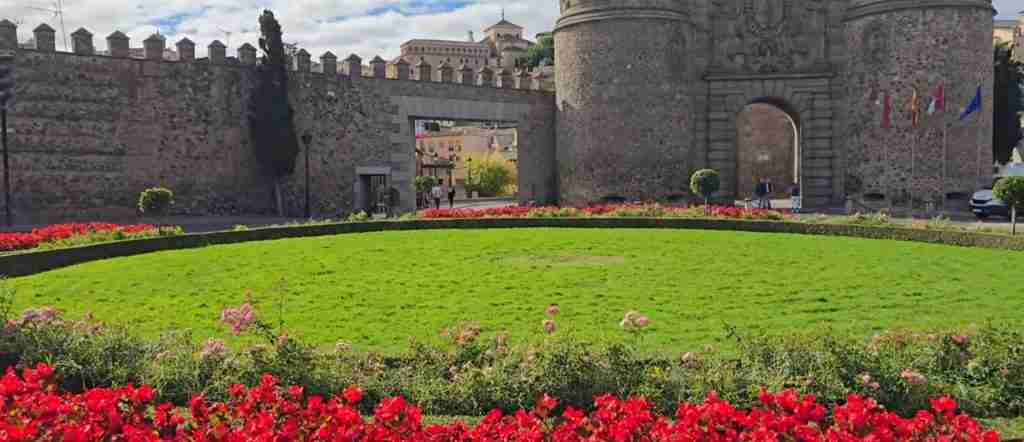
Toledo train station sits 2 kilometers from historic center requiring 25-minute uphill walk or €7-9 taxi to Puerta de Bisagra entrance gate. City bus line 5 connects station to Zocodover plaza in historic center for €1.40, departing every 15-20 minutes. Alternatively, take bus 61 or 62 (€1.40) dropping passengers near cathedral. Walking the steep approach road provides excellent overview of city’s dramatic hilltop position surrounded by Tagus River, creating memorable arrival experience if weather permits and you don’t carry heavy bags.
Morning: Toledo Cathedral and Jewish Quarter
Begin at Toledo Cathedral, Spain’s Gothic architectural masterpiece and seat of Catholic Church’s primate archbishop. The cathedral opens 10 AM Monday-Saturday (verify current hours on cathedral website). Purchase combined ticket at €13 including cathedral, cloister, and treasury, providing better value than €10 cathedral-only admission. The cathedral interior overwhelms with baroque retablo mayor reaching 30 meters high, Transparente sculpture with dramatic illumination, El Greco paintings including El Expolio, and treasury displaying extraordinary 16th-century monstrance weighing 200 kilograms containing 260 kilograms of precious metals.
Allow 75-90 minutes exploring cathedral’s vast interior including choir stalls with intricate wooden carvings, chapter room housing paintings by Goya and El Greco, and sacristy containing additional masterpieces. Rent audio guide for €3 providing detailed architectural and artistic explanations. The cathedral showcases Spanish Gothic style at its most elaborate, with Mudéjar influences reflecting Toledo’s multicultural heritage. Exit through main entrance to Plaza del Ayuntamiento with impressive city hall facade.
Walk 5 minutes west into historic Jewish quarter (Judería), Toledo’s former Jewish community area that housed Sephardic population until 1492 expulsion. Visit two remarkable synagogues demonstrating convivencia (coexistence) period when Christian, Muslim, and Jewish communities lived alongside each other with relative tolerance. Santa María la Blanca synagogue (€3 entrance) displays stunning Mudéjar architecture with horseshoe arches and white columns creating serene interior space. Built 1180 as synagogue, later converted to church, now functions as museum.
Continue to Synagogue del Tránsito (€3, or free Saturday afternoon/Sunday), built 1357 and containing extraordinary Mudéjar decoration with Hebrew inscriptions, geometric plaster work, and cedar wood ceiling. The synagogue houses Sephardic Museum explaining Jewish history in Spain, displaying Torah scrolls, ceremonial objects, and historical documents. Combined cathedral-synagogue exploration takes 2.5-3 hours providing profound historical understanding of Toledo’s religious diversity.
Midday: Traditional Toledano Lunch
Experience authentic Castilian cuisine at traditional restaurants near Plaza de Zocodover or deeper in historic quarter. Regional specialties include carcamusas (pork stew with tomato and peas), perdiz estofada (stewed partridge), venison from local hunting, and Manchego cheese from surrounding La Mancha region. Recommended establishments include Adolfo Colección (€35-50 per person, refined regional cooking), La Abadía (€25-35, casual monastery-themed atmosphere), or Taberna El Botero (€20-30, hearty portions and local crowd).
Order menú del día at €15-22 including three courses, bread, and drink for excellent value, or select à la carte dishes sampling multiple regional flavors. Don’t miss Toledo’s famous marzipan (mazapán), produced locally since medieval era using traditional almond and sugar recipes. Purchase marzipan at Santo Tomé shop (founded 1856) near Plaza de Zocodover or other traditional confiterías for €15-25 per kilogram as gifts or personal treats. Budget 90 minutes for relaxed lunch allowing proper appreciation of regional cooking without rushing to afternoon sightseeing.
Afternoon: Alcázar, El Greco Museum, and Scenic Views
Visit Toledo Alcázar, the imposing fortress dominating city skyline from highest point. The building now houses Army Museum (€5 entrance, free Sunday) displaying Spanish military history, weapons collections, and excellent overview exhibits about Alcázar’s role during 1936 Spanish Civil War siege. Allow 60-75 minutes for museum exploration and rooftop views over Toledo and Tagus River valley. The Alcázar’s strategic position explains Toledo’s military importance throughout history as naturally defended capital.
Walk 10 minutes south to El Greco Museum (€3, free Saturday afternoon/Sunday) celebrating Toledo’s most famous resident artist. The museum occupies reconstructed 16th-century house displaying El Greco paintings including View and Plan of Toledo, his distinctive style characterized by elongated figures and mystical atmosphere perfectly suited to Toledo’s spiritual character. The museum provides context for understanding El Greco’s artistic evolution and his deep connection to adopted city. Alternatively, visit Monastery of San Juan de los Reyes (€3), spectacular late Gothic monastery commissioned by Catholic Monarchs Ferdinand and Isabella with elaborate cloister and church interior.
Conclude Toledo visit with scenic viewpoint photography from Mirador del Valle, located across Tagus River with panoramic city views showing dramatic hilltop position and Alcázar prominence. Walk 20 minutes from historic center via Puente de San Martín medieval bridge, or take taxi €6-8 directly to viewpoint. The classic Toledo postcard view captures entire walled city reflected in river bend, most beautiful during golden hour 2 hours before sunset when warm light illuminates stone buildings. Return to city center via same route, allowing 45 minutes total for viewpoint excursion if walking both directions.
Toledo Day Trip Cost Summary
Round-trip train €13-16, city bus €2.80 (round-trip station to center), Toledo Cathedral €13, synagogues €6 total, Alcázar €5 (or free Sunday), lunch €20-30, afternoon coffee €3-5, marzipan €8-12, taxi to viewpoint €6-8 (optional). Total Toledo day trip cost: €70-90 per person (excluding optional dinner in Madrid upon return).
Segovia Day Trip 2026: Roman Aqueduct & Fairy-Tale Castle
Getting to Segovia in 2026
High-speed AVE trains depart Madrid Chamartín station (northern terminal, metro Line 10) reaching Segovia-Guiomar station in 27 minutes. Book tickets 10-14 days ahead through Renfe for €20-27 round-trip (check renfe.com for current official rates), versus €35-45 same-day purchases. Take 8:35 AM or 9:35 AM departure, arriving Segovia 9:02-10:02 AM. Alternative slower regional trains depart Atocha station taking 2 hours but costing only €10-14 round-trip, worthwhile for budget travelers not prioritizing speed. Return high-speed trains depart until 9:30 PM with 7:04 PM service providing ideal timing.
Segovia-Guiomar station sits 5 kilometers from historic center requiring 15-minute city bus ride on Line 11 (€2, departing every 30 minutes) to Plaza de la Artillería near Roman aqueduct, or €12-15 taxi directly to aqueduct. The bus provides economical transfer with pleasant views approaching city. Walking proves impractical given distance and uphill grade, making bus or taxi essential for station-to-center connection.
Morning: Roman Aqueduct and Cathedral
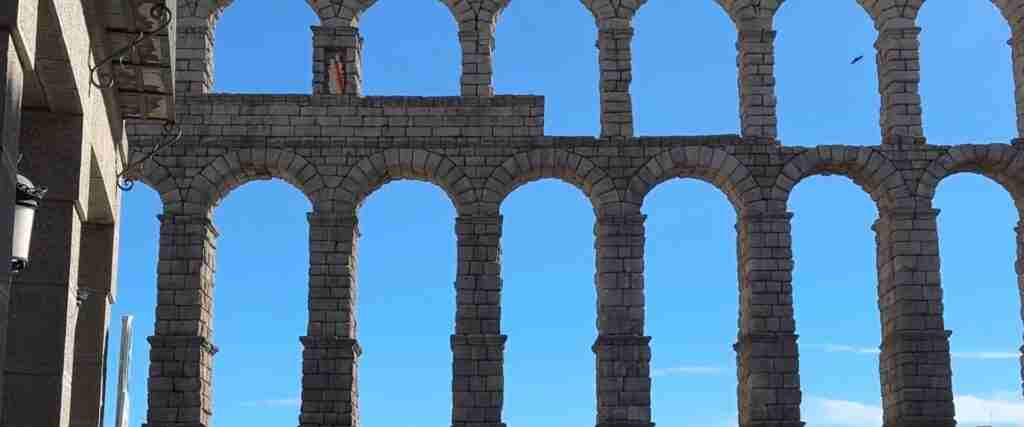
Begin at the magnificent Roman Aqueduct, one of best-preserved Roman engineering works anywhere and Segovia’s defining monument. The aqueduct stretches 15 kilometers carrying water from Fuenfría River to city, with most impressive section rising 28 meters in Plaza del Azoguejo displaying 167 arches built without mortar using precisely cut granite blocks. This UNESCO World Heritage structure dates to late 1st century CE during Emperor Trajan or Hadrian rule, functioning continuously until mid-19th century – nearly 1,800 years of service demonstrating Roman engineering genius.
The aqueduct requires no entrance fee – simply admire its architectural magnificence from plaza level, walk underneath the arches feeling their massive scale, and appreciate the mathematical precision achieving stable structure over two millennia. Climb stairs beside aqueduct to upper viewing platform providing aerial perspective on arch arrangement and monument’s integration into city fabric. Allow 30-45 minutes photographing various angles and understanding construction techniques explained by multilingual information panels. Visit morning for optimal lighting conditions illuminating honey-colored granite.
Walk 10 minutes uphill through charming medieval streets to Segovia Cathedral, Spain’s final great Gothic cathedral completed 1577. Known as “Lady of Cathedrals” for its elegant proportions and unified Gothic style, the building dominates Plaza Mayor with soaring tower and harmonious facade. Entrance costs €6 (or €3 Saturday 9:30 AM-12:30 PM). The interior features beautiful stained glass, elaborate choir stalls, impressive main altarpiece, and peaceful cloister with garden courtyard. Museum rooms display religious art and liturgical treasures. Allow 45-60 minutes exploring cathedral and enjoying peaceful atmosphere after climbing through busy streets.
Midday: Cochinillo Lunch – Segovia’s Culinary Signature
Segovia earned worldwide culinary fame for cochinillo asado (roast suckling pig), prepared in wood-fired ovens using traditional techniques perfected over centuries. The dish features incredibly tender meat with crackling crispy skin, traditionally served by cutting portions with plate edge demonstrating perfect texture. Three legendary restaurants compete for cochinillo supremacy: Mesón de Cándido (founded 1786, €45-55 per person, most famous but most touristic), Mesón José María (€35-48, excellent quality with local clientele), and Restaurante Duque (€40-50, traditional atmosphere and superb wine list).
Reserve tables 3-5 days ahead for weekend lunches when Spanish domestic tourists fill restaurants. Cochinillo portions serve 1-2 people (typical full portion feeds 2 diners comfortably), accompanied by simple lettuce salad and fresh bread. Wines from Ribera del Duero region pair excellently with rich pork. Alternative regional specialties include judiones de La Granja (giant white beans), cordero asado (roast lamb), and ponche segoviano (local layered pastry dessert). Budget €35-55 per person for complete traditional lunch including cochinillo, wine, and dessert. Lunch service runs 1:30-4 PM with optimal timing 2-2:30 PM. Allow 90-120 minutes for proper Spanish lunch pacing.
Afternoon: Alcázar Castle and Historic Streets
Walk 12 minutes west from Plaza Mayor to Alcázar, the fairytale castle perched on rocky crag overlooking confluence of Eresma and Clamores rivers. This fortress supposedly inspired Walt Disney’s Cinderella Castle design with its distinctive slate spire roofs and dramatic clifftop position. The Alcázar functioned as royal residence, state prison, military academy, and currently operates as museum (€8 entrance, tower access additional €3). The interior features throne room, royal chambers decorated with Mudéjar ceilings, armor collection, and historical exhibits covering Alcázar’s diverse functions through Spanish history.
Climb 156-step narrow spiral staircase to Torre de Juan II (included in €8 ticket) for spectacular panoramic views over Segovia’s terracotta rooftops, surrounding farmland, and distant Guadarrama mountains. The physical climb proves challenging but rewards with Segovia’s finest vantage point. Allow 75-90 minutes for complete Alcázar exploration including tower climb and museum rooms. Exit via gardens providing final castle views and connection to city walls walk.
Spend remaining afternoon wandering Segovia’s atmospheric medieval streets lined with Romanesque churches, noble palaces with sgrafitto facades (decorative plaster technique creating geometric patterns), and traditional shops. Notable streets include Calle Real connecting Plaza Mayor to Alcázar, Jewish quarter (former Judería) near Church of Corpus Christi, and quiet residential areas revealing authentic neighborhood life. Stop for afternoon coffee and dessert at Plaza Mayor cafes (€5-8) watching local life and digesting substantial lunch. Browse artisan shops selling local crafts, leather goods, and Segovian textiles as souvenirs. Allow 60-90 minutes for relaxed afternoon exploration before returning to station.
Segovia Day Trip Cost Summary
Round-trip high-speed train €20-27, city bus €4 (round-trip station to center), Segovia Cathedral €6, Alcázar €8, lunch cochinillo €35-55, afternoon coffee/dessert €5-8. Total Segovia day trip cost: €78-108 per person.
El Escorial & Valle de los Caídos 2026: Royal Monastery Complex
Getting to El Escorial in 2026
Commuter trains (Cercanías Line C-3) depart Madrid Atocha station every 30 minutes 6 AM-11 PM, reaching El Escorial station in 55 minutes. Tickets cost €4.30 one-way (€8.60 round-trip), available from automated machines or staffed windows. Take 8:30 AM or 9:00 AM train arriving 9:25-9:55 AM. Alternatively, buses operated by Herranz leave from Madrid’s Moncloa station (metro Line 3) every 15-20 minutes taking 50-60 minutes (€4.25 one-way). Return trains depart hourly until 11 PM. Both train station and bus stop sit 1.5 kilometers from monastery requiring 18-minute uphill walk or €5-6 local taxi.
Morning: Royal Monastery of San Lorenzo de El Escorial
The massive Royal Monastery of San Lorenzo de El Escorial dominates the small town, functioning as monastery, royal palace, basilica, and pantheon within single austere Renaissance complex. King Philip II commissioned construction 1563-1584 to commemorate Spanish victory at Battle of San Quentin and create royal mausoleum. The monastery represents Spanish Counter-Reformation power at its zenith plus Philip II’s famously austere personal character reflected in severe architectural style contrasting dramatically with contemporary Italian baroque exuberance.
Purchase entrance tickets online or at site for €13 (check patrimonio nacional website for current official rates). The complex includes royal apartments displaying Philip II’s surprisingly modest living quarters, basilica featuring Cellini crucifix and spectacular main altarpiece, library containing 40,000 historical books with magnificent ceiling frescoes, and royal pantheon where most Spanish monarchs since Charles V rest in extraordinary marble rotunda beneath basilica. Museum rooms display paintings by El Greco, Titian, Bosch, and Velázquez from Spanish royal collections.
Allow 2.5-3 hours for comprehensive monastery exploration including gardens. The library ranks among highlights with 54-meter hall featuring barrel vault ceiling painted with allegorical figures representing liberal arts. Royal apartments demonstrate Philip II’s preference for simplicity over royal ostentation – his bedroom positioned to view basilica altar through window, emphasizing religious devotion over worldly comfort. Pantheon of Kings (Panteón de los Reyes) contains elaborate baroque marble rotunda with 26 royal tombs in gilded bronze sepulchers creating solemn yet magnificent royal burial chamber.
Midday: El Escorial Town and Lunch
El Escorial town functions primarily as monastery service community with limited tourist infrastructure. Restaurants cluster near Plaza de la Constitución and streets surrounding monastery offering traditional Castilian cuisine at €20-35 per person. Recommended options include Charolés (refined meat-focused menu €30-42), Montia (modern Spanish cooking €28-38), or La Cueva (casual taverna atmosphere €18-28). Regional dishes include chuletón (massive T-bone steak), judiones (giant white beans), and trucha (trout from mountain streams). Many restaurants offer weekday menú del día at €15-20 providing excellent value for substantial lunches.
Alternatively, pack picnic lunch from Madrid and eat in Jardines del Príncipe (Prince’s Gardens) below monastery, saving €15-20 and enjoying pleasant outdoor setting. Small supermarkets near train station provide supplies. After lunch, browse town center’s small shops selling local crafts, monastery replicas, and regional products, though shopping opportunities pale compared to Madrid or major tourist destinations.
Afternoon: Valle de los Caídos (Optional Controversial Site)
Valle de los Caídos (Valley of the Fallen), located 9 kilometers from El Escorial, generates significant controversy as monument built by political prisoners under Franco dictatorship 1940-1958. The massive basilica carved into mountain with 150-meter-high cross houses Franco’s tomb (moved 2019) and Spanish Civil War memorial. Many Spaniards consider the site offensive symbol of fascist dictatorship while others view it as important historical site and architectural achievement. Access requires private taxi (€25-30 round-trip from El Escorial including waiting time) or organized tour from Madrid including both El Escorial and Valle.
The site opens 10 AM-6 PM (verify current hours) with €9 entrance. The massive scale impresses regardless of political views – basilica interior extends 262 meters into mountain with enormous mosaic decorations, though many visitors feel uncomfortable glorifying structure built through forced labor. The site requires 90 minutes including travel from El Escorial and visit time. Given limited day trip hours and controversial nature, many visitors skip Valle focusing entirely on El Escorial’s unambiguous cultural and historical significance. Assess your personal interest in controversial 20th-century Spanish history before adding Valle to itinerary.
El Escorial Day Trip Cost Summary
Round-trip train €8.60, local taxi to monastery €5-6, monastery entrance €13, lunch €18-28, afternoon coffee €3-5, optional Valle de los Caídos taxi €25-30 plus entrance €9. Total El Escorial day trip cost: €47.60-61.60 per person (€81.60-105.60 including Valle de los Caídos).
Ávila Day Trip 2026: Best-Preserved Medieval Walls in Europe
Getting to Ávila in 2026
Regional trains depart Madrid Chamartín station reaching Ávila in 90 minutes. Book tickets online through Renfe for €12-15 round-trip (check official rates). Trains depart approximately every 2 hours with 8:55 AM service arriving Ávila 10:23 AM providing optimal timing. Return options include 6:20 PM and 8:20 PM trains. Alternatively, ALSA buses depart from Estación Sur terminal every 60-90 minutes taking 90 minutes (€8-12 round-trip). Ávila train station sits 1 kilometer from historic center walls requiring 12-minute walk or €5-6 taxi. Bus terminal locates closer at 600 meters from walls (8-minute walk).
Exploring Ávila’s Complete Medieval Walls
Ávila preserves Europe’s best-preserved medieval fortification with complete circuit of walls encircling entire historic center. The walls extend 2.5 kilometers featuring 88 towers and 9 entrance gates, built 1090-1099 using stone from Roman ruins as reinforcement after Christian reconquest from Muslim rule. This UNESCO World Heritage site creates extraordinary visual impact – imagine entire city protected by perfect ring of 12-meter-high granite walls topped with crenellated battlements creating unbroken defensive barrier.
Walk sections of walls via designated access points for €5 entrance, climbing narrow stairs to rampart walkways providing elevated views over historic center’s terracotta roofs and surrounding countryside. The walls circuit includes several accessible sections totaling 1.7 kilometers of walkable ramparts. Access near Puerta del Alcázar or Puerta de los Leales offer longest continuous stretches. Allow 60-75 minutes for walls exploration including climbing multiple tower sections and photography from rampart positions. Best views happen late afternoon when western light illuminates honey-colored granite creating dramatic shadows emphasizing architectural details.
Ávila Cathedral and Santa Teresa Heritage
Ávila Cathedral occupies unique position with apse actually forming part of city walls, creating fortress-church design where religious structure doubled as defensive tower. Built 12th century as Spain’s first Gothic cathedral, the building combines Romanesque and Gothic elements with fortress-like exterior and elegant Gothic interior. Entrance costs €6 including cathedral, cloister, and museum. The interior features main altarpiece by Pedro Berruguete, elaborate choir stalls, and museum displaying religious art including paintings by El Greco and Juan de Borgoña. Allow 45-60 minutes for cathedral exploration.
Ávila celebrates Santa Teresa de Jesús, 16th-century mystic and religious reformer born in city 1515. Multiple sites commemorate her life including Convento de Santa Teresa built over her birthplace (free entry to church, small museum €2), and Monasterio de la Encarnación where she lived as nun. The Convento displays her biographical exhibits, relics, and reconstructed childhood home. Allow 30-40 minutes for Santa Teresa site if interested in religious history, or skip if not drawn to mystical Catholic heritage. Her reformed Carmelite order influenced Catholic spirituality worldwide, making Ávila important pilgrimage destination for religious visitors.
Ávila Traditional Cuisine: Chuletón de Ávila
Ávila earned culinary fame for chuletón de Ávila (massive T-bone steak from local cattle breeds raised in surrounding pastures). The meat features extraordinary flavor and tenderness, grilled simply over oak charcoal and served with minimal seasoning allowing beef quality to dominate. Traditional restaurants near Plaza del Mercado Chico include Mesón del Rastro (€35-50 per person, popular with locals), El Almacén (€30-45, cozy historic building), and Los Candiles (€28-40, reliable quality). Order chuletón for 2-3 people (portions typically 1-1.2 kilograms), accompanied by pimientos de padrón (fried green peppers) and patatas fritas. Budget 90 minutes for proper lunch pacing enjoying regional wine and relaxed meal atmosphere.
Ávila Day Trip Cost Summary
Round-trip train €12-15, walls access €5, cathedral €6, Santa Teresa sites €2, lunch €28-40, afternoon coffee €3-5. Total Ávila day trip cost: €56-73 per person.
Additional Day Trip Options for 2026
Aranjuez: Royal Summer Palace and Gardens
Aranjuez, 48 kilometers south of Madrid, offers UNESCO World Heritage royal palace with spectacular French-style gardens along Tagus River. Commuter trains (Cercanías Line C-3) depart Atocha every 15-20 minutes reaching Aranjuez in 45 minutes (€4.30 one-way). The 18th-century Royal Palace (€9 entrance) features ornate rococo decoration, Porcelain Room with floor-to-ceiling Chinese ceramic panels, and Smoking Room with Arabic Revival design. Extensive gardens include French Parterre, Island Garden with royal boat museum, and Prince’s Garden with naturalistic English landscaping. The destination provides relaxed alternative to hill-town medieval sites, perfect for spring when gardens bloom spectacularly. Allow full day for comprehensive exploration including palace interior, gardens, and riverside town. Budget €30-45 total including trains, entrance, and lunch in pleasant town restaurants.
Alcalá de Henares: Birthplace of Cervantes
Alcalá de Henares, 35 kilometers northeast, preserves UNESCO World Heritage university town and birthplace of Miguel de Cervantes, author of Don Quixote. Commuter trains (Cercanías Line C-2) depart Atocha every 10-15 minutes reaching Alcalá in 35 minutes (€3.60 one-way). Visit Cervantes birthplace museum (€3), historic University founded 1499 with beautiful Paraninfo auditorium (€4.50), and charming Plaza de Cervantes. The town maintains authentic character with substantial university student population creating lively atmosphere and excellent tapas bars. Good half-day trip or full-day combination with shopping and dining. Budget €25-35 total including trains, entrances, and lunch. Less spectacular than Toledo or Segovia but offers literary history and relaxed university town ambiance without tourist crowds.
Chinchón: Picturesque Medieval Plaza
Chinchón, 45 kilometers southeast, features one of Spain’s most beautiful medieval plazas – Plaza Mayor with circular porticoed design, wooden balconies, and village houses creating intimate enclosed space. Regular buses from Madrid’s Plaza Conde de Casal (€4.50 one-way, 55 minutes). The town offers limited attractions beyond stunning plaza, castle (usually closed), and Augustinian monastery, but provides authentic small-town Castilian atmosphere popular with madrileños for weekend lunches. Famous for anise liqueur production (visit Alcoholera Chinchón distillery). Best as half-day excursion combined with leisurely lunch in plaza restaurants (€25-35), relaxed wandering, and photography. Total costs €20-30 including bus and lunch. Good choice for travelers wanting quieter, less touristed destination or those completing major sites and seeking peaceful village atmosphere.
Combining Multiple Destinations: 2026 Strategies
Realistic Multi-Destination Day Trips
While single-destination day trips provide optimal experiences allowing proper cultural immersion, some destination combinations prove feasible for travelers with limited time or those completing major individual sites and wanting efficient coverage of secondary destinations. Successful multi-destination trips require very early departures (7-8 AM), accepting rushed schedules sacrificing depth for breadth, and realistic expectations about superficial versus comprehensive experiences.
Feasible same-day combinations include: El Escorial + Valle de los Caídos (adjacent sites with organized tours offering both, total 5-6 hours), Toledo morning + Aranjuez afternoon (on same train line, though demanding schedule covering major Toledo cathedral and synagogues then abbreviated Aranjuez palace visit, requires 12+ hour day), or Alcalá de Henares + Chinchón (both short distances, modest attractions allowing combined half-day visits each). These combinations work only if accepting that neither destination receives the time it deserves, major sites get rushed coverage, and meals happen as quick taverna stops rather than leisurely regional dining experiences.
Organized Multi-Destination Tour Options
Various companies offer organized tours combining multiple destinations, particularly popular Toledo + Segovia in single day (€90-120 including bus, guides, but excluding entrances and meals). These tours operate 9 AM-7 PM with approximately 3 hours at each city providing just enough time for major monuments – Toledo cathedral and one synagogue, Segovia aqueduct and cathedral, skipping Alcázar at both cities and any depth exploration. The pace proves extremely demanding with substantial bus time (4-5 hours total including Madrid pickups), rushed monument visits, and minimal free exploration time.
For travelers absolutely unable to dedicate full days to individual destinations, these tours provide coverage of highlights while understanding you sacrifice authentic experiences, proper meals, and wandering medieval streets discovering hidden corners. Tours prove most appropriate for cruise ship passengers with port stop time constraints or business travelers with just 1-2 days available for Spanish cultural sites. Independent travelers with flexible schedules benefit far more from dedicated single-destination day trips allowing proper appreciation rather than superficial rushing between famous monuments checking boxes without cultural depth or understanding.
Best Time for Madrid Day Trips in 2026
Optimal Seasons for Day Trip Experiences
Spring (April-May) provides ideal conditions for day trips with comfortable temperatures 18-25°C perfect for extensive walking through medieval streets, blooming spring flowers in palace gardens at Aranjuez, and manageable tourist crowds at major sites. Easter week (dates vary March/April) brings Spanish domestic tourists increasing crowds but also creating festive atmosphere with religious processions in historic towns. May particularly rewards with perfect weather, full-bloom gardens, and comfortable conditions for uphill walking to castles and wall ramparts.
Fall (September-October) offers comparable advantages with pleasant temperatures, autumn colors in mountain settings surrounding El Escorial and Segovia, harvest festivals in Castilian villages, and smaller crowds after summer tourists depart. September particularly excels with warm days maintaining summer length but without intense heat, making it ideal for combining outdoor walking with indoor monument visits. Both shoulder seasons provide optimal photography lighting with clear skies and angled sun creating dramatic architectural shadows while avoiding summer’s harsh overhead light.
Summer and Winter Considerations for 2026 Planning
Summer (June-August) brings challenging conditions with temperatures often exceeding 35-38°C making midday exploration uncomfortable in exposed hilltop towns lacking shade. Successful summer day trips require very early departures (7-8 AM trains), prioritizing morning sightseeing before peak heat 2-5 PM, and accepting reduced energy levels limiting total sites covered. Toledo and Segovia’s narrow stone streets reflect and amplify heat creating oppressive conditions requiring frequent breaks, substantial water consumption, and realistic expectations about reduced walking capacity. Air-conditioned train travel provides welcome relief compared to bus alternatives. Summer crowds peak July-August when Spanish domestic tourists take traditional August holidays filling trains and overwhelming small-town restaurants.
Winter (November-March) offers atmospheric medieval town experiences with smallest crowds, lowest accommodation and transportation costs, and authentic local character without tourist overlay. Shorter daylight hours (sunset 5:30-6:30 PM) require compact itineraries prioritizing indoor attractions and accepting reduced outdoor photography time. Cold temperatures (8-15°C) and occasional rain require proper clothing and flexible planning. December features charming Christmas decorations in historic town centers. Winter proves ideal for museum-focused trips and travelers prioritizing depth over perfect weather conditions. Many travelers consider winter best season for Toledo and El Escorial where indoor cultural sites dominate itineraries and crowd reduction outweighs weather limitations.
Money-Saving Strategies for 2026 Day Trips
Transportation Cost Optimization
Book all train tickets 10-15 days in advance through Renfe website for 30-40% savings versus same-day purchases. Consider slower regional trains when available (Toledo, Alcalá) saving €5-8 per person despite adding 30-45 minutes travel time – worthwhile for budget travelers not prioritizing speed. Groups of 4+ people should compare train costs versus rental car (€40-60 daily including fuel) which becomes economical when split among travelers, plus provides flexibility for visiting multiple destinations or arriving/departing at preferred times independent of rail schedules.
Purchase multi-day Abono Turístico (tourist travel pass) if making multiple day trips within short period – 5-day pass at €35.40 includes unlimited metro, bus, and Cercanías trains covering nearby destinations like Aranjuez and Alcalá de Henares, though doesn’t include high-speed AVE services to Toledo, Segovia, or Ávila. For those destinations, individual tickets bought ahead offer better value. ALSA bus services typically cost 20-30% less than trains while taking 15-30 minutes longer – acceptable tradeoff for budget-conscious travelers.
Site Entrance and Dining Strategies
Time visits to leverage free entrance periods – Toledo Cathedral offers free entry 4:30-5:30 PM weekdays for prayer time (restricted access to certain areas but includes main sanctuary), various museums provide free Sunday admission, and many monuments offer free entry one day monthly (verify specific schedules on official websites). Combined tickets at multi-site destinations (Toledo cathedral-synagogue pass, Segovia cathedral-Alcázar bundle) save €4-6 versus individual admissions. EU citizens under 25 or over 65 qualify for reduced rates at many state monuments.
Eat menú del día at quality restaurants for complete three-course lunches at €12-22 rather than à la carte ordering costing €25-40. Pack snacks and water bottles from Madrid supermarkets avoiding tourist shop markups (€2-3 per water bottle in tourist areas versus €0.40 at supermarkets). Many day trip destinations allow picnicking in gardens or parks – prepare sandwiches and fruit saving €15-20 on lunch while enjoying outdoor setting. Reserve dining splurges for signature regional dishes like Toledo game meats or Segovia cochinillo rather than expensive meals at every destination.
FAQ: Madrid Day Trips 2026
How many day trips should I plan during a Madrid visit?
Plan 1-2 day trips maximum during typical 4-5 day Madrid visit, dedicating remaining days to comprehensive city exploration. Day trips prove most appropriate when you’ve completed Madrid’s essential attractions (Royal Palace, Prado, Reina Sofía, Retiro Park, major neighborhoods) and seek variety or specific interest in UNESCO sites beyond capital. Attempting 3+ day trips during short Madrid stays sacrifices city depth for superficial regional coverage, leaving you exhausted from early departures and extensive train travel without proper appreciation of either Madrid or destinations. First-time Madrid visitors benefit from 3 days focused entirely on city before adding single day trip to Toledo. Repeat visitors or those with week-long stays comfortably manage 2-3 day trips experiencing diverse regional heritage while maintaining adequate Madrid time.
Are Madrid day trips suitable for children and families?
Yes, most day trips work well for families with children 8+ who tolerate extensive walking and maintain interest in historic architecture. Segovia particularly appeals to children with fairy-tale Alcázar castle and impressive aqueduct scale. Toledo’s winding medieval streets create adventure atmosphere, though steep hills and lengthy cathedral visits challenge younger children’s attention spans. Aranjuez offers most family-friendly experience with extensive gardens perfect for running and exploring, row boats on royal pond, and train museum attracting transportation enthusiasts. Avoid El Escorial and Ávila for families with young children given austere monastery atmosphere and limited engaging features beyond walls.
Pack snacks and entertainment for train rides, build flexibility into schedules allowing playground breaks or gelato stops, and choose single major attraction plus relaxed wandering rather than rushing through multiple monuments. Many families find half-day trips more appropriate for maintaining children’s energy and engagement – visit single destination morning, return Madrid by 2-3 PM allowing afternoon pool time or familiar hotel downtime. Organized family tours provide structure and age-appropriate narration, though independent travel allows customizing pace to children’s needs and energy levels.
Can I visit day trip destinations independently without tours?
Yes, all major day trip destinations operate easily via independent train or bus travel with straightforward navigation requiring no organized tour structure. High-speed trains provide comfortable direct service to Toledo, Segovia, and regional connections to other cities. Compact historic centers navigate simply on foot following downloaded maps or tourist office materials. English signage appears at major monuments and ticket offices handle international credit cards without language barriers. Train stations connect to historic centers via short walks, buses, or taxis eliminating need for guide coordination.
Independent travel offers significant advantages including 30-50% cost savings versus organized tours, flexible scheduling allowing longer stays at preferred sites, spontaneous discoveries exploring side streets, and proper meals at authentic restaurants rather than rushed group lunches. Download offline Google Maps areas, purchase train tickets online in advance, and research major sites beforehand – these simple preparations enable successful independent day trips without organized tour logistics or guides. Consider guided walking tours at destinations (€15-25) for historical context while maintaining independent transportation and schedule control.
What should I pack for Madrid day trips?
Pack comfortable broken-in walking shoes (essential for cobblestone medieval streets and castle rampart stairs), layered clothing adjusting to morning/evening temperature variations and air-conditioned trains, water bottle refillable at fountains, snacks preventing hunger during limited lunch timing, phone charger maintaining navigation and photography capacity, and small day pack distributing weight comfortably during 8-10 hours away from hotel. Bring sun protection (hat, sunglasses, sunscreen) for summer trips, light rain jacket for spring/fall unpredictability, and modest clothing layer (scarf, cardigan) for cathedral visits requiring covered shoulders.
Download offline maps covering day trip destinations plus saved train tickets on phone avoiding mobile data requirements or paper printing. Pack Spanish phrasebook or translation app helping with restaurant menus and basic interactions in small towns where English proves less common than Madrid. Consider small umbrella for sudden rain, though Madrid’s regional destinations see less precipitation than northern Spain. Camera or phone with sufficient storage capacity captures architectural photography, though avoid expensive equipment attracting theft attention. Cash supply of €40-60 proves useful in small villages where credit card acceptance remains inconsistent, though major sites and restaurants accept cards reliably.
Which day trip offers the best value for time and money?
Toledo provides optimal value combining shortest travel time (33 minutes via high-speed train), most diverse cultural attractions (cathedral, synagogues, Alcázar, El Greco sites), remarkable UNESCO World Heritage historic center, and authentic regional dining at reasonable prices (€55-70 total cost per person). The compact medieval layout allows comprehensive coverage in 6-7 hours without exhausting yourself while offering enough variety that every traveler finds appealing elements whether interested in religious history, military architecture, art museums, or atmospheric wandering. Toledo’s convenient hourly train service provides schedule flexibility impossible at destinations with limited connections, allowing you to extend or shorten visit based on energy and interest levels. The city’s exceptional preservation and multicultural heritage create uniquely educational experience representing essential Spanish history period when Christian, Muslim, and Jewish communities coexisted relatively peacefully – cultural convergence impossible to find elsewhere near Madrid.