Madeira Photography Guide: Peaks, Laurisilva & Coastal Drama
Madeira rises from the Atlantic as a vertical paradise where ancient laurel forests meet volcanic peaks and dramatic coastlines. This Portuguese archipelago delivers photographic opportunities unmatched in Europe, from cloud inversions at 1,800 meters to mystical woodlands shrouded in Atlantic mist, creating conditions that challenge and reward photographers who understand its unique microclimate systems and dramatic topography.
Key Takeaways: Essential Madeira Photography Knowledge
- Vertical Landscape Dominance: Madeira’s dramatic 1,862-meter elevation gain from sea level creates extreme photographic variety within short distances, requiring equipment and techniques that address altitude, coastal, and forest environments simultaneously.
- UNESCO Laurisilva Forest: The ancient laurel forest represents one of Europe’s rarest ecosystems, with photography best executed during early morning mist conditions when Atlantic fog creates ethereal light filtering through centuries-old trees.
- Cloud Inversion Phenomenon: Mountain peaks above 1,500 meters regularly pierce cloud layers, creating spectacular above-cloud photography opportunities particularly from Pico do Arieiro and Pico Ruivo between sunrise and mid-morning.
- Microclimate Mastery: The island’s dramatic topography creates multiple weather systems operating simultaneously, meaning photographers can encounter fog, sun, wind, and clear conditions within a single morning by moving between elevations.
- Atlantic Light Quality: Maritime atmospheric conditions produce softer, more diffused light than continental locations, particularly beneficial for coastal photography where harsh midday sun becomes manageable through natural atmospheric filtering.
- Night Sky Access: High-altitude locations with zero light pollution provide exceptional Milky Way photography opportunities, with the galactic core visible during late spring and summer months from peaks accessible by vehicle.
People Also Ask About Madeira Photography
What makes Madeira unique for landscape photography compared to other Atlantic islands?
Madeira combines extreme vertical relief with UNESCO-protected ancient forests and year-round accessibility, creating photographic conditions impossible to replicate elsewhere in the Atlantic. The island rises from sea level to 1,862 meters within just 22 kilometers, producing dramatic elevation-based weather systems where photographers can shoot coastal scenes, mystical forests, and alpine peaks in a single day. The Laurisilva forest, a relict ecosystem unchanged for millions of years, provides photography opportunities found nowhere else in Europe. Unlike other Atlantic islands, Madeira’s subtropical climate ensures vegetation remains lush throughout the year while mountain peaks offer cloud-free conditions during summer months, and the combination of accessible infrastructure with wild terrain means iconic locations like Pico do Arieiro can be reached by vehicle while maintaining pristine natural conditions.
When does the cloud inversion phenomenon occur on Madeira’s peaks?
Cloud inversions occur most reliably on Madeira between dawn and late morning throughout the year, with highest frequency during winter months when Atlantic weather systems create stable cloud layers between 1,200 and 1,600 meters elevation. Photographers shooting from Pico do Arieiro or Pico Ruivo witness peaks emerging from cloud seas as morning temperatures rise, typically between 7:00 AM and 10:00 AM. The phenomenon depends on overnight cooling creating low-level cloud formation that burns off as sun warms the air, and success requires monitoring weather patterns where clear high-altitude forecasts combined with lower-elevation cloud coverage indicate optimal conditions. Summer months produce less frequent inversions but offer the advantage of earlier sunrise timing and longer shooting windows, while winter provides more dramatic cloud formations but requires cold-weather preparation at altitude.
How do I photograph the Fanal forest to capture its mystical atmosphere?
Fanal forest photography succeeds through early arrival during heavy fog conditions when Atlantic mist filters through ancient laurel trees, typically between 7:00 AM and 9:00 AM before wind disperses the fog. The forest’s gnarled, centuries-old trees require wide-angle lenses to capture their sculptural forms within the mist, while longer focal lengths isolate individual trees against fog backgrounds creating ethereal separation. Photographers should position themselves to use fog as a compositional element rather than an obstacle, allowing mist to simplify busy forest scenes and create depth through atmospheric perspective. Manual exposure becomes essential as camera meters struggle with fog’s brightness, requiring underexposure of one to two stops to preserve mist tonality while maintaining tree definition. The forest responds best to soft, diffused light rather than direct sun, and morning fog provides natural light management that transforms ordinary forest scenes into otherworldly compositions impossible to achieve in clear conditions.
What focal lengths work best for Madeira’s vertical landscapes?
Madeira’s vertical topography demands focal length flexibility from ultra-wide 16mm to telephoto 200mm depending on location and creative intent, with most photographers carrying 16-35mm, 24-70mm, and 70-200mm to address the island’s compositional extremes. Mountain peaks require ultra-wide lenses to capture expansive cloud seas and dramatic sky coverage, while coastal cliffs benefit from 24-70mm range for balancing foreground rocks with distant ocean and sky. Forest photography succeeds with 24-50mm focal lengths that establish context while isolating individual trees, and telephoto lenses become essential for compressing distant peaks floating above cloud layers into powerful panoramic segments. The vertical landscape format itself often demands longer focal lengths than horizontal shooting, as pulling distant elements closer creates the height emphasis that defines Madeira’s dramatic character. Wide-angle distortion can undermine vertical drama by making peaks appear smaller, making mid-range telephoto choices strategically important for capturing true elevation impact.
Extended multi-day tours – 5+ days
Featured Madeira Multi-Day Tour Packages
3 days
Madeira 3-Day Discovery Tour
- ✓ Comprehensive Madeira experience
- ✓ Expert local guides included
- ✓ All accommodation included
- ✓ Transportation provided
5 days
Madeira 5-Day Highlights Experience
- ✓ Comprehensive Madeira experience
- ✓ Expert local guides included
- ✓ All accommodation included
- ✓ Transportation provided
7 days
Madeira 7-Day Cultural Journey
- ✓ Comprehensive Madeira experience
- ✓ Expert local guides included
- ✓ All accommodation included
- ✓ Transportation provided
10 days
Madeira 10-Day Complete Adventure
- ✓ Comprehensive Madeira experience
- ✓ Expert local guides included
- ✓ All accommodation included
- ✓ Transportation provided
Multi-day tour packages powered by TourRadar. Prices and availability subject to change.
Introduction: Understanding Madeira’s Photographic Character
Madeira emerges from the Atlantic Ocean as a geological anomaly, a volcanic mountain chain rising abruptly from abyssal depths to create an island of extreme vertical drama. This Portuguese archipelago, located 600 kilometers west of Morocco, presents photographers with landscape variety compressed into 741 square kilometers that would normally require traveling thousands of kilometers across continents. The island’s highest peak, Pico Ruivo, stands at 1,862 meters while coastal cliffs plunge directly into ocean depths exceeding 3,000 meters, creating photographic opportunities that span from wave-battered sea stacks to alpine peaks piercing cloud layers within distances measured in minutes rather than hours.
The photographic significance of Madeira extends beyond mere topographic drama to encompass ecological uniqueness represented by the Laurisilva forest, a UNESCO World Heritage Site protecting ancient laurel woodlands that covered Mediterranean regions millions of years ago but survive today only in Madeira and a few other Atlantic islands. This relict forest, covering 15,000 hectares across the island’s northern slopes, creates mystical photographic conditions where gnarled trees centuries old emerge from dense Atlantic fog that rolls across mountains daily. The forest photography opportunities rank among Europe’s most distinctive, offering compositions impossible to achieve in continental locations where similar ecosystems vanished during ice ages.
Atlantic maritime influence dominates Madeira’s photographic character through weather systems that create microclimates changing dramatically with elevation and exposure. Photographers encounter distinct conditions within the same morning: dense fog at forest elevations between 800 and 1,400 meters, brilliant sunshine at peaks above 1,600 meters, and coastal wind systems driving Atlantic swells against volcanic cliffs. These microclimate zones operate independently, meaning a fogbound valley doesn’t prevent clear peak conditions, and photographers who understand this vertical weather stratification can adapt locations to match desired lighting conditions rather than accepting whatever weather greets them at sea level.
The island’s infrastructure supports photography through accessible roads reaching high-altitude locations while maintaining wilderness character essential for compelling imagery. Pico do Arieiro, at 1,818 meters, connects to Funchal via paved road, enabling sunrise photography at altitude without overnight camping or extensive hiking. This combination of accessibility with authentic wild landscape distinguishes Madeira from more developed destinations where infrastructure compromises natural character, and the result benefits photographers seeking dramatic locations without expedition-level logistics.
Year-round photographic viability represents another Madeira advantage, as subtropical climate ensures vegetation remains verdant throughout annual cycles while mountain elevations provide seasonal variation through changing light angles and weather patterns. Winter months deliver more frequent cloud inversions and dramatic storm systems producing powerful coastal wave action, while summer offers longer shooting windows, earlier sunrise opportunities, and Milky Way visibility from high-altitude dark sky locations. This seasonal flexibility means photographers can target Madeira for specific phenomena rather than gambling on single optimal months, and the island rewards multiple visits as conditions impossible to predict in advance create unique opportunities during each arrival.
Understanding Madeira’s photographic potential requires recognizing how geological youth creates landscape drama through erosion patterns, volcanic rock formations, and extreme topographic relief compressed into small geographic area. The island emerged from volcanic activity beginning 5 million years ago, recent by geological standards, meaning erosion hasn’t yet worn down dramatic ridges and valleys that define older landscapes. This youthfulness manifests photographically through jagged peaks, deep ravines, sheer coastal cliffs, and rock formations maintaining sharp edges and dramatic profiles that older, more weathered landscapes no longer possess.
Laurisilva Forest Photography: Ancient Trees and Atlantic Mist
The Laurisilva forest photography opportunities center on Fanal, a high-altitude laurel woodland between 1,100 and 1,400 meters elevation where ancient trees display sculptural forms developed over centuries of exposure to Atlantic wind and fog. Photographing this UNESCO World Heritage ecosystem requires understanding how morning fog transforms ordinary forest scenes into mystical compositions where mist becomes the primary subject rather than obstacle, and successful forest photography depends on arriving during heavy fog conditions typically occurring between 7:00 AM and 9:00 AM before strengthening wind disperses the maritime moisture.
The forest’s photographic character derives from gnarled laurel trees, some exceeding 500 years old, that have developed twisted trunks and bizarre branch formations through constant exposure to Atlantic weather systems. These trees function as natural sculptures requiring photographers to approach them as subjects worthy of individual portraits rather than merely components of forest scenes. Wide-angle lenses between 16mm and 24mm capture entire tree forms within fog context, emphasizing their sculptural quality against simplified misty backgrounds, while mid-range focal lengths from 35mm to 50mm isolate particularly dramatic specimens creating intimate portraits where fog provides tonal separation between tree and background.
Fog density varies dramatically within short timeframes, creating dynamic shooting conditions where photographers must adapt exposure settings continuously as mist thickens or thins. Heavy fog conditions require underexposing by one to two stops from camera-metered values to preserve mist tonality and prevent blown highlights in fog itself, while maintaining sufficient shadow detail in dark tree trunks demands careful histogram monitoring. The challenge intensifies because automatic metering systems interpret bright fog as overexposure and compensate by darkening the entire scene, turning ethereal mist gray and lifeless unless photographers override these meter readings through manual exposure control or significant exposure compensation.
Composition strategy in Laurisilva forest emphasizes using fog as compositional element that simplifies busy forest scenes through atmospheric perspective, allowing individual trees to emerge from misty backgrounds rather than competing with visual clutter of countless trunks and branches. Photographers should position themselves to place key trees against fog rather than forest backgrounds, creating separation through tonal contrast where dark trees stand against light mist. The technique requires moving around individual trees to find angles where background fog provides maximum separation, and patience often means waiting for fog density to increase or decrease to optimal levels for specific compositions.
The ancient trees themselves display forms impossible to find in younger forests, with trunks twisted by centuries of prevailing winds and branches reaching in unexpected directions. Fanal contains particularly photogenic specimens with hollow trunks large enough for people to stand within, branches forming natural arches, and root systems emerging from soil to create sculptural ground-level elements. These individual trees merit dedicated photography sessions where photographers work around single specimens exploring different angles, focal lengths, and fog conditions rather than attempting to capture entire forest sections in single images.
Ground-level vegetation provides important foreground elements that add depth and scale to forest compositions, particularly ferns and mosses covering forest floor in dense green carpets. These elements work best when positioned prominently in wide-angle compositions, using depth of field to maintain sharpness from foreground foliage through to background trees, and the moisture-loving vegetation creates particularly vivid green tones following rain or during heavy fog when water droplets cling to ferns and mosses adding texture and detail.
Lighting conditions within the forest remain relatively consistent throughout the day due to fog and forest canopy filtering direct sunlight, but morning hours offer best photography opportunities before wind disperses fog and before visitor numbers increase. The forest functions as outdoor studio with massive diffusion provided by fog, eliminating harsh shadows and creating even illumination ideal for capturing fine detail in bark texture, moss patterns, and gnarled wood surfaces. This natural light control simplifies exposure challenges compared to typical forest photography where dappled sunlight creates extreme contrast ranges impossible to capture in single exposures.
Alternative Laurisilva locations beyond Fanal include Queimadas Forest and Rabaçal area, both offering ancient laurel woodlands with different characters. Queimadas provides levada walks through forest with more vertical relief and stream elements, while Rabaçal combines forest photography with waterfall opportunities. These locations receive fewer photographers than Fanal, offering solitude advantages, but they require more hiking to reach optimal compositions compared to Fanal’s vehicle-accessible locations.
Mountain Peak Photography: Pico Ruivo and Pico do Arieiro
Pico do Arieiro dominates Madeira peak photography as the third-highest summit at 1,818 meters with road access enabling vehicle arrival for sunrise, creating opportunities for dramatic above-cloud photography without overnight camping or extensive hiking. The peak functions as natural observation platform where photographers shoot downward onto cloud seas during morning hours and capture surrounding peaks emerging from mist as atmospheric conditions evolve through sunrise and early morning periods. Photography from Arieiro succeeds through understanding how cloud layers form between 1,200 and 1,600 meters, creating the inversion phenomenon where high peaks pierce cloud coverage while valleys disappear beneath white seas.
The peak’s infrastructure includes parking area, visitor facilities, and paved pathways to primary viewpoints, but photographers should venture beyond these obvious locations to rock outcrops along ridge systems where compositions avoid infrastructure elements and emphasize wild character. The summit area provides 360-degree views encompassing cloud-covered valleys, distant peaks, Atlantic Ocean to the south, and on exceptionally clear days, Porto Santo island 40 kilometers northeast. This panoramic access enables photographers to track light progression around compass points, following sunrise color across eastern sky then capturing western peaks as morning light illuminates their faces.
Cloud inversions represent Pico do Arieiro’s signature photographic phenomenon, occurring most reliably during winter months but possible throughout the year when overnight cooling creates stable low-level cloud layers. The photography window typically extends from 30 minutes before sunrise through mid-morning as rising temperatures gradually dissipate cloud cover, and optimal conditions combine clear high-altitude forecasts with predicted cloud coverage at lower elevations. Photographers monitor weather patterns seeking scenarios where valley cloud persists while mountain peaks remain clear, and the phenomenon’s occurrence cannot be guaranteed but frequency increases during winter months when temperature inversions develop more consistently.
Equipment considerations for Arieiro include ultra-wide lenses for capturing expansive cloud seas with dramatic sky coverage, telephoto lenses for isolating distant peaks floating above clouds, and tripods essential for low-light sunrise conditions. The peak’s altitude means temperatures drop significantly below sea-level conditions, requiring warm clothing even during summer months, and wind exposure at summit demands securing tripod positions carefully to prevent equipment damage. Photographers should arrive at least one hour before sunrise to claim optimal positions along ridge viewpoints, as popular periods bring crowds that occupy best locations early.
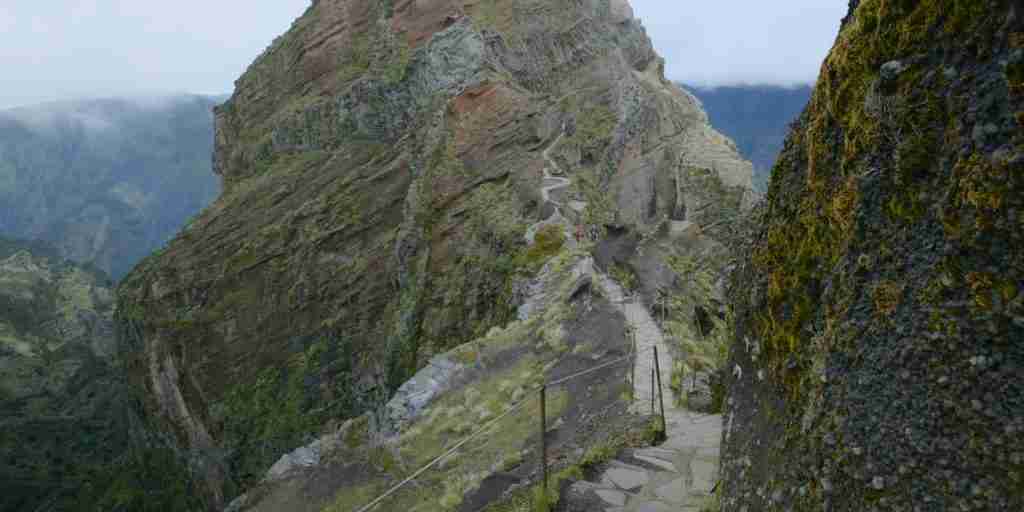
Pico Ruivo, at 1,862 meters, represents Madeira’s highest point accessible via hiking trails from Achada do Teixeira or through the challenging but spectacular route from Pico do Arieiro. The Arieiro-Ruivo trail covers approximately six kilometers requiring three to four hours, traversing dramatic ridge systems with constant elevation changes and tunnel passages through rock formations. This hike ranks among Europe’s most photogenic mountain walks, offering compositions at every turn where steep drops, jagged peaks, and cloud-layer variations create constantly evolving conditions impossible to exhaust in single passage.
Photography along the Arieiro-Ruivo trail requires lightweight equipment as the route’s technical sections and significant elevation gain make carrying heavy camera bags impractical, and photographers must balance gear weight against compositional flexibility. A single camera body with versatile zoom lens provides pragmatic solution, though serious photographers often carry primary wide-angle and telephoto lenses accepting the weight burden for compositional options. The trail’s exposure means weather changes rapidly, requiring weather-sealed equipment and rain protection as clouds can envelop ridge sections within minutes even during otherwise clear conditions.
The Ruivo summit itself provides intimate photography compared to Arieiro’s expansive views, with rock formations framing neighboring peaks and creating foreground elements for layered compositions. The summit attracts fewer photographers than Arieiro due to hiking requirements, offering solitude advantages for patient photographers willing to invest effort reaching this premier location. Sunrise from Ruivo requires overnight stays at Casa do Abrigo shelter or pre-dawn hiking from Achada do Teixeira, adding logistical complexity but rewarding photographers with potentially crowd-free conditions during optimal light.
Panoramic photography from either peak benefits from understanding how to work with cloud layers as compositional elements rather than obstacles, using clouds to simplify busy mountain scenes and create tonal separation between near and distant peaks. Multi-image panoramas capturing 180-degree or full 360-degree views provide dramatic results when executed during optimal light, and the vertical relief makes vertical panorama formats particularly effective for emphasizing elevation drama.
Coastal Drama: Cliffs, Sea Stacks, and Natural Pools
Madeira’s northern and western coastlines deliver dramatic coastal photography through volcanic cliffs plunging directly into Atlantic Ocean, sea stack formations carved by wave action, and natural pool systems formed within volcanic rock platforms. Coastal photography succeeds during multiple conditions: calm sunny weather revealing water clarity and rock detail, storm systems producing dramatic wave action against cliffs, and golden hour periods when low-angle light emphasizes rock textures and colors. The diversity of coastal locations means photographers can target different sites based on weather conditions and desired effects rather than depending on single locations.
Porto Moniz natural pools represent Madeira’s most photographed coastal feature, where volcanic rock platforms create protected swimming areas filled by Atlantic tides while waves crash against outer barriers. Photography here combines architectural elements of constructed pool edges with wild ocean power beyond barriers, and compositions benefit from elevated perspectives that emphasize pool geometry against ocean chaos. The location works well during multiple lighting conditions: morning side-lighting emphasizes rock texture and pool water clarity, evening light warms volcanic rock tones, and stormy conditions create dramatic wave action for long-exposure captures of water movement against static pool structures.
Sea stack formations along the northern coast, particularly around Ribeira da Janela, provide iconic Madeira coastal imagery where isolated rock towers stand offshore as testament to erosive power of Atlantic waves. These formations photograph best during incoming tides when waves surround stack bases, and long-exposure techniques ranging from several seconds to multiple minutes smooth wave action into ethereal flows around solid rock forms. The black volcanic rock contrasts dramatically with white wave foam and blue-green Atlantic waters, creating natural color palettes that require minimal post-processing enhancement.
Ponta de São Lourenço, the island’s eastern peninsula, offers dramatically different coastal character through arid landscapes, red volcanic rock formations, and exposed position catching full force of Atlantic weather systems. The peninsula photography combines terrestrial drama of volcanic geology with coastal wave action where cliffs meet ocean, and hiking trails along peninsula ridge provide constantly changing perspectives as path winds between north and south facing viewpoints. The location excels during late afternoon when western light illuminates colored rock formations, and the relatively low elevation means photography remains accessible even when mountain peaks disappear into cloud coverage.
Cliff photography throughout Madeira requires attention to safety as many optimal viewpoints position photographers near unprotected edges where Atlantic winds can produce sudden gusts, and the combination of tripod setup, camera operation, and composition attention can distract from footing awareness. Secure tripod positioning becomes essential, often requiring wedging legs against rocks or using weight bags to prevent equipment toppling during wind gusts. The dramatic elevation drops that make these locations photogenic also demand constant awareness of ground conditions, particularly during wet weather when paths become slippery.
Wave action photography benefits from understanding Atlantic swell patterns and tidal cycles, as larger swells produce more dramatic wave impacts against rocks and cliffs. Winter months deliver bigger Atlantic swells from storm systems crossing ocean, creating optimal conditions for dramatic wave photography, while summer typically brings calmer conditions better suited for revealing water clarity and underwater rock formations through still water surfaces. Tidal timing affects wave behavior significantly, with incoming tides producing more dramatic action as waves push against coastal rocks compared to outgoing tides.
Long-exposure coastal photography requires neutral density filters to achieve shutter speeds of several seconds or longer during daylight conditions, smoothing wave action into silky flows and emphasizing motion contrast between moving water and static rock formations. The technique works particularly well with Madeira’s black volcanic rocks where long exposures create stark contrast between dark stones and white milky water, and multiple exposure lengths from two seconds to several minutes produce distinctly different effects worth exploring for each location.
Lesser-known coastal locations including Seixal’s black sand beach, Jardim do Mar’s fishing village cliffs, and various points along the southwest coast provide alternatives to heavily photographed sites while maintaining dramatic coastal character. These locations require research and often involve unmarked paths or local knowledge to access, but they reward exploratory photographers with unique perspectives and reduced crowds compared to iconic sites appearing in every guidebook.
Levada Photography: Irrigation Channels Through Dramatic Terrain
Madeira’s levada system, comprising more than 2,500 kilometers of irrigation channels built over centuries to transport water from wet northern regions to drier southern agricultural areas, provides unique photography opportunities where narrow concrete channels follow mountainside contours through forests, along cliff faces, and across valleys. Levada photography combines architectural elements of human water engineering with natural landscape drama, creating compositions where artificial straight lines contrast with organic forest forms or where channels cling impossibly to vertical cliff faces demonstrating historical engineering achievement.
The photographic appeal of levadas extends beyond channels themselves to access they provide into remote terrain, as levada maintenance paths enable hikers to reach locations otherwise requiring technical climbing or extensive bushwhacking. These paths follow gentle grades alongside water channels, creating walking routes through dramatic landscapes that would be impassable without levada infrastructure. Photography benefits as walking paths position photographers at optimal elevations for valley views, forest perspectives, and waterfall access, and the continuous gentle grades mean photographers can carry substantial equipment loads without extreme physical demands.
Levada 25 Fontes and Levada do Caldeirão Verde represent prime photography routes combining accessible hiking with dramatic locations including waterfalls, laurel forest passages, and valley views. The 25 Fontes route leads to waterfall amphitheater where water cascades from multiple sources into pool surrounded by fern-covered rock walls, creating intimate photographic environment where long-exposure techniques transform falling water into silky flows against dark rock backgrounds. Caldeirão Verde features tunnel passages and cliff-edge sections where levada channels hang from rock faces above significant drops, providing unique perspective opportunities impossible to achieve from conventional trails.
Forest levada sections photograph well during morning fog conditions when mist filters through vegetation and creates depth through atmospheric perspective, allowing channels to lead viewer eyes through compositions toward fog-shrouded backgrounds. The combination of engineered channel lines with organic forest forms creates compositional tension between human infrastructure and natural chaos, and wide-angle lenses emphasize this relationship by including substantial forest context while maintaining channel prominence in foreground.
Waterfall photography along levada routes benefits from Madeira’s water abundance, as most waterfalls maintain consistent flow throughout the year rather than seasonal variation affecting continental locations. This reliability means waterfall photography succeeds during any visit, and photographers can plan waterfall sessions without concern for dry conditions disappointing arrival. The volcanic rock surrounding waterfalls displays rich texture and color variation from black basalt to rust-colored iron staining, providing dramatic backdrops for white water flows.
Technical challenges of levada photography include narrow paths restricting tripod positioning, tunnel sections requiring flashlights and sometimes handheld shooting, and exposure challenges where bright sky appears beyond dark tunnel entrances. The narrow paths mean photographers often cannot step back far enough for desired wide-angle compositions, requiring ultra-wide lenses or vertical panoramas to capture scene scope. Weather protection becomes essential as many routes traverse areas where rain or levada water spray creates persistently wet conditions requiring weather-sealed equipment or protective covering.
Composition strategies emphasize using levada channels as leading lines drawing viewer attention through frames, either as prominent foreground elements or as subtle guidance through middle-ground areas. The straight human-made lines provide strong directional elements that contrast effectively with organic chaos of surrounding forest, and this geometric contrast creates visual interest stronger than either element alone. Photographers should explore both perspectives that celebrate the levada infrastructure and those that minimize its presence, emphasizing instead the wild landscapes these channels provide access to.
Safety considerations for levada photography include slippery surfaces where algae grows on wet concrete, narrow paths with significant drops alongside channels, and tunnel sections requiring flashlights and caution regarding head clearance. Some routes require passing through tunnels where ceiling height drops to 1.5 meters or less, making tripod carrying impractical through these sections, and photographers must balance equipment desires against practical movement constraints along technical route sections.
Weather and Light: Mastering Madeira’s Microclimates
Madeira’s weather complexity stems from dramatic topography creating multiple microclimates operating simultaneously across the island’s 741 square kilometers, where photographers encounter distinct conditions separated by minutes of driving or short elevation changes. Understanding this microclimate structure enables photographers to adapt locations to match desired conditions rather than accepting whatever weather appears at specific destinations, and the result means productive photography becomes possible even when general forecasts suggest unfavorable conditions across the island.
The fundamental microclimate division separates northern and southern zones, with northern regions receiving significantly more precipitation due to Atlantic weather systems depositing moisture as clouds encounter mountain barriers. This north-south contrast means southern coastal areas around Funchal often enjoy sunshine while northern valleys disappear under fog, and photographers can exploit this pattern by shooting northern forest locations during foggy conditions then moving to southern coastal areas for afternoon sunshine photography. The elevation component adds another dimension where high peaks pierce cloud layers affecting lower elevations, creating above-cloud photography opportunities when valleys remain socked in.
Morning weather patterns typically feature overnight cooling creating fog formation at middle elevations between 800 and 1,400 meters, while higher peaks remain clear and lower coastal areas stay relatively fog-free. This configuration positions forest photography as morning priority during foggy conditions, with peak photography available for sunrise at elevations above cloud layers, and coastal photography becoming afternoon option as fog burns off or as photographers descend to sea level where sunshine persists throughout day. The pattern reverses occasionally when high-altitude clouds cover peaks while lower elevations remain clear, making weather monitoring essential for optimal location selection.
Atlantic weather systems arrive primarily from west and northwest, bringing moisture-laden air that encounters Madeira’s mountains and releases precipitation on windward slopes while leeward areas remain drier. This pattern means western and northern coastal regions experience more dramatic storm photography with larger waves and more frequent rain, while eastern and southern areas offer more stable conditions. Photographers targeting storm imagery should focus on northern and western coastlines during winter months when Atlantic swells reach maximum size, while those seeking calm conditions find them more reliably in southern areas.
Light quality throughout Madeira benefits from Atlantic maritime atmosphere that naturally diffuses sunlight through moisture-laden air even during clear conditions, softening shadows and reducing contrast compared to continental locations at similar latitudes. This atmospheric filtering proves particularly beneficial for coastal photography where direct sunlight can create excessive contrast between bright water reflections and dark volcanic rocks, and the natural diffusion means midday photography remains viable when it would produce harsh conditions in drier climates.
Seasonal light angle variations affect photography significantly, with winter months bringing lower sun angles that create longer golden hour periods and more dramatic side-lighting effects on mountain ridges and coastal cliffs. Summer delivers earlier sunrise timing and longer daylight hours extending shooting windows, but higher sun angles reduce dramatic shadow effects compared to winter months. The subtropical latitude means seasonal variation remains less extreme than higher-latitude locations, and Madeira maintains photographic viability throughout annual cycle rather than concentrating opportunities into brief optimal seasons.
Weather forecast interpretation requires understanding that island-wide predictions often miss microclimate details, and photographers should monitor forecasts at multiple elevation zones rather than relying on single sea-level predictions. High-altitude forecasts often differ substantially from coastal predictions, and this elevation-based variation enables photographers to find clear conditions at peaks even when coastal areas show predicted cloud coverage. The reverse also occurs where coastal sunshine persists despite mountain fog, and successful photographers develop flexibility to adjust plans based on actual observed conditions rather than adhering rigidly to predetermined locations.
Rapid weather changes characterize Madeira photography, where conditions can transform from fog to sunshine within hours or even minutes as wind patterns shift and cloud formations evolve. Photographers must maintain equipment readiness for sudden improvements in conditions, keeping cameras accessible rather than packed away during apparently unfavorable weather, and patience often rewards those who wait through temporary poor conditions as clearings arrive unexpectedly. The dynamic weather also means photographers should revisit locations during different conditions as morning fog, afternoon sunshine, and evening storms create entirely different photographic opportunities from identical viewpoints.
Cloud Inversions and Atmospheric Phenomena
Cloud inversion photography represents one of Madeira’s most dramatic opportunities, occurring when temperature inversions trap cloud layers at middle elevations while high peaks emerge into clear air above, creating scenes where mountain summits float above endless white seas stretching to horizons. The phenomenon transforms Madeira’s peaks into islands in cloud oceans, and successful inversion photography requires understanding meteorological conditions that produce these events combined with timing arrival to coincide with optimal light during inversion windows.
Temperature inversions develop when nighttime cooling creates cold air layer settling into valleys while warmer air remains at higher elevations, inverting normal atmospheric temperature gradient where air typically cools with altitude. This stable air stratification prevents vertical mixing that would dissipate clouds, allowing cloud layers to persist at specific elevation bands often between 1,200 and 1,600 meters. The phenomenon occurs most reliably during winter months when overnight temperature drops become more pronounced, but summer inversions remain possible during calm high-pressure periods when clear skies enable strong radiative cooling overnight.
Predicting inversions requires monitoring weather forecasts for clear overnight conditions with light winds, as these parameters enable the radiative cooling necessary for inversion development. Heavy winds prevent stable temperature stratification by mixing air vertically, while cloud coverage prevents radiative cooling by insulating surface air from heat loss to space. The ideal forecast shows clear skies at both low and high elevations overnight, light winds below 15 kilometers per hour, and predicted cloud formation at middle elevations during morning hours. This combination suggests optimal inversion conditions, though actual occurrence remains uncertain until photographers reach high-altitude viewpoints to verify cloud presence.
Photography timing for inversions focuses on morning hours between sunrise and mid-morning as this window captures best light while cloud layers remain stable, and photographers should arrive at shooting locations at least 30 minutes before sunrise to establish positions and compositions before light develops. The sunrise period produces dramatic color in clouds and sky, transforming white cloud seas into pink and orange oceans during brief periods when sun remains below horizon but illuminates high-altitude atmosphere. This pre-sunrise color window typically lasts 15 to 30 minutes, requiring photographers to work efficiently capturing multiple compositions during limited optimal conditions.
Composition strategies for inversions emphasize including recognizable peaks emerging from clouds to establish scale and context, as pure cloudscapes without reference points can appear flat despite dramatic conditions. Pico Ruivo, Pico das Torres, and other prominent summits function as compositional anchors floating above clouds, and including multiple peaks at varying distances creates depth through atmospheric perspective where more distant peaks appear lighter due to additional atmospheric filtering. Foreground rock formations add another compositional layer, framing cloud views and establishing photographer position above the layer.
Exposure challenges with inversions stem from extreme brightness range between bright cloud surfaces and darker sky or foreground rock elements, often exceeding dynamic range of single exposures. Graduated neutral density filters help manage this range by darkening bright sky while maintaining foreground exposure, and HDR techniques combining multiple exposures capture full scene dynamic range when filters prove insufficient. The bright cloud surfaces can fool camera meters into underexposure, requiring exposure compensation of one to two stops positive to maintain cloud brightness while preventing them from rendering gray and lifeless.
The cloud layer evolution provides changing conditions throughout morning as sun rises and temperatures increase, gradually dissipating inversion through surface warming that destroys stable temperature stratification. This evolution means conditions at 7:00 AM differ substantially from 9:00 AM at same location, and photographers who remain through dissipation period capture transformation from complete cloud coverage to scattered cloud remnants to fully clear conditions. The changing conditions enable multiple interpretation of identical locations, and time-lapse photography effectively captures this evolution compressing hours of change into seconds of viewing time.
Alternative atmospheric phenomena including fog bows, glory effects, and Brocken specters occur during optimal moisture and light conditions, rewarding observant photographers who recognize these rare events. Fog bows appear as white rainbows in fog when sun backlights moisture droplets, creating ethereal arcs visible from high viewpoints looking down into foggy valleys. Glory effects create colored rings around photographer shadows projected onto clouds, requiring specific sun angles and cloud density combinations that occur unpredictably. These phenomena cannot be planned but deserve recognition when they appear, adding unique elements to standard inversion photography.
Night Photography and Milky Way Opportunities
Madeira’s high-altitude locations provide exceptional night photography opportunities combining dark skies with dramatic landscape foregrounds, and peaks above 1,500 meters offer minimal light pollution enabling Milky Way photography rivaling premier dark sky locations worldwide. Pico do Arieiro represents the most accessible night photography location with vehicle access to 1,818 meters elevation, where zero light pollution combines with clear high-altitude air producing transparent skies ideal for capturing galactic core detail impossible from sea-level locations even in remote areas.
Milky Way visibility follows seasonal patterns with galactic core rising during spring months, reaching optimal viewing angles during late spring and summer when core appears prominently in southern sky during evening hours. The photography window extends from late astronomical twilight through pre-dawn hours, with core position shifting throughout night as Earth rotates. Late May through August provides longest core visibility, with center positioned optimally between 11:00 PM and 3:00 AM local time, and new moon periods deliver darkest skies though bright Milky Way remains visible during quarter moon phases if moon position doesn’t directly illuminate shooting direction.
Equipment requirements for Milky Way photography include fast wide-angle lenses with maximum apertures of f/2.8 or wider, sturdy tripods capable of maintaining stability during 15 to 30 second exposures, and camera bodies offering clean high ISO performance between 3200 and 6400. Ultra-wide lenses from 14mm to 24mm capture substantial sky coverage including foreground landscape elements that provide context and scale, and manual focus capability becomes essential as autofocus systems cannot achieve focus on stars requiring manual infinity focus adjustment.
Exposure settings for Milky Way photography typically employ wide-open apertures at maximum lens speed, ISO values between 3200 and 6400 balancing noise against signal capture, and shutter speeds calculated using 500 rule or NPF rule to prevent star trailing. The 500 rule divides 500 by focal length to determine maximum shutter speed before stars appear as trails rather than points, while NPF rule provides more accurate calculations accounting for sensor resolution and aperture. Most Milky Way exposures range from 15 to 25 seconds depending on focal length and desired star appearance, and multiple test exposures become necessary to optimize settings for specific equipment and conditions.
Foreground illumination during night photography requires balancing natural starlight with artificial light painting or supplementary lighting, as pure starlight produces underexposed foregrounds that render as black silhouettes against bright sky. Light painting techniques using flashlights or LED panels during exposure add foreground detail, requiring careful application to avoid obvious artificial appearance, and the technique demands practice to achieve natural-looking results where foreground lighting matches night scene character. Alternative approaches combine separate foreground exposures made during twilight with star exposures captured during full darkness, blending these elements during post-processing to achieve fully exposed results throughout frame.
The Arieiro-Ruivo trail provides dramatic Milky Way foregrounds through jagged peak formations and ridge systems creating natural leading lines toward galactic core, and night hiking this route requires careful preparation including powerful headlamps, warm clothing for altitude cold, and thorough route familiarity preventing navigation errors during darkness. The effort rewards photographers with unique perspectives showing Milky Way arching over Madeira’s highest peaks, compositions impossible to achieve from more accessible locations, and the combination of technical challenge with photographic reward appeals to adventurous photographers seeking distinctive imagery.
Star trail photography offers alternative night sky approach where extended exposures ranging from 30 minutes to several hours capture Earth’s rotation as curved star paths around celestial pole, creating concentric arc patterns centered on north celestial pole. This technique requires different equipment approach using interval timers to capture multiple shorter exposures stacked during post-processing rather than single long exposure that would saturate sky background, and foreground elements require separate exposure or light painting to prevent rendering as black silhouettes.
Light pollution avoidance becomes essential even in Madeira despite generally dark skies, as Funchal and other coastal towns produce significant light domes visible from elevated locations. Photographers should position themselves to place light pollution behind shooting direction or accept its presence as unavoidable element requiring careful framing to minimize impact. The high-altitude locations generally face away from major population centers, and this orientation helps minimize light pollution in optimal shooting directions toward galactic core.
Weather considerations for night photography include monitoring cloud forecasts at high elevations as cloud coverage obviously prevents star photography, and temperature forecasts guide clothing preparation for cold high-altitude nights even during summer months. Wind forecasts matter significantly as strong winds at altitude make long-exposure photography difficult through camera shake despite tripod use, and extreme wind conditions can make night sessions at exposed peaks dangerous through equipment damage risk or personal safety concerns.
Seasonal Considerations for Madeira Photography
Winter months from December through February deliver frequent cloud inversions, dramatic storm systems producing powerful wave action on northern and western coasts, and lower sun angles creating extended golden hour periods ideal for landscape photography. Peak photography succeeds reliably during winter as cloud layers form regularly at middle elevations while summits remain clear, and the increased Atlantic storm activity produces spectacular coastal imagery with waves crashing against cliffs and sea stacks. The season’s shorter daylight hours concentrate photography into more limited windows, but the lower sun angle throughout day creates better lighting compared to summer’s high sun positions, and winter represents optimal season for photographers prioritizing dramatic weather and cloud phenomena.
Spring months from March through May bring wildflower blooms particularly prominent during April and May when endemic species including Madeira orchids, pride of Madeira flowers, and numerous other species create colorful displays across lower and middle elevations. The seasonal vegetation adds foreground interest to landscape compositions, and macro photography opportunities increase substantially through flower diversity. Weather during spring transitions from winter storm patterns toward calmer summer conditions, creating variable periods where dramatic weather alternates with stable clear days, and this variability means photographers should maintain flexible plans adapting to actual conditions rather than expecting consistent patterns.
Summer months from June through August offer longest daylight hours extending shooting windows, warmest temperatures reducing cold-weather gear requirements at altitude, and Milky Way visibility during evening hours when galactic core reaches optimal positions. The season’s weather patterns favor clear conditions particularly at high elevations, though morning fog persists in valleys and forests maintaining year-round mystical conditions for forest photography. Coastal conditions tend toward calmer seas compared to winter months, emphasizing water clarity and underwater rock formations over dramatic wave action, and the combination of weather stability with extended daylight makes summer attractive for photographers seeking consistent conditions and longer working windows.
Autumn months from September through November present shoulder season benefits including fewer tourists at popular locations, transitional weather combining late summer stability with increasing winter storm frequency, and moderate temperatures comfortable for hiking and outdoor photography. The vegetation remains lush from summer growth while autumn storms haven’t yet stripped foliage, maintaining verdant character throughout the season. Atlantic weather systems begin increasing in frequency and intensity, bringing back dramatic coastal conditions while inversions start occurring more regularly than summer months, and the transitional nature creates diverse opportunities as weather patterns shift between summer and winter characteristics.
Year-round photographic viability characterizes Madeira due to subtropical climate maintaining consistent temperatures and lush vegetation throughout annual cycle, meaning no months represent poor photography periods requiring avoidance. The seasonal variations affect specific phenomena like inversions, storm intensity, and wildflower displays rather than determining overall photographic success, and photographers can target Madeira during any season matching personal schedule constraints while achieving strong results through understanding seasonal characteristics and adapting techniques accordingly.
Sunrise and sunset timing varies significantly across seasons with winter solstice sunrise around 7:30 AM and summer solstice sunrise near 6:00 AM at Funchal’s latitude, affecting logistics for dawn photography particularly at high-altitude locations requiring pre-sunrise arrival for position establishment. The seasonal variation means winter photographers can sleep later before sunrise sessions while summer demands earlier wake times, and sunset timing similarly affects evening photography windows. The latitude at 32 degrees north produces moderate seasonal variation less extreme than higher-latitude locations while maintaining sufficient variation to create distinct seasonal lighting characteristics.
Crowd levels follow tourism patterns with peak visitor numbers during summer months July and August when European vacation schedules bring maximum tourists, and shoulder seasons of spring and autumn offering significantly reduced crowds at popular locations like Pico do Arieiro and Fanal forest. Winter represents lowest visitor season despite excellent photography conditions, creating opportunities for photographers prioritizing solitude and avoiding crowd management in compositions. The crowd variation doesn’t prevent photography during busy seasons as early morning sessions typically precede tourist arrivals, but shoulder and winter seasons simplify logistics and reduce waiting times for optimal viewpoint positions.
Technical Challenges: Fog, Altitude, and Coastal Conditions
Fog photography presents exposure challenges where camera meters misinterpret bright mist as overexposure and compensate through underexposure turning ethereal fog into lifeless gray, requiring manual exposure override through exposure compensation or full manual mode. Photographers should expose fog to preserve its brightness while maintaining detail in darker elements like tree trunks or rock formations, typically requiring one to two stops overexposure from metered values. The histogram becomes essential tool for fog exposure verification, ensuring bright tones remain just below clipping point while maintaining tonal separation rather than merged whites, and reviewing histogram during shooting prevents arriving home with gray fog requiring extensive post-processing recovery.
Condensation management becomes critical during fog photography as moisture condenses on cold lens surfaces creating hazy images and eventually water droplets obscuring view, and the problem intensifies when photographers move from warm vehicles into cold foggy conditions creating immediate condensation. Preventive measures include allowing equipment to acclimate gradually to temperature changes, using lens hoods to protect front elements from direct moisture exposure, and carrying microfiber cloths for frequent lens cleaning. Extreme fog conditions may require shooting between cleaning sessions accepting condensation as unavoidable rather than achieving perfectly clean optics throughout session.
Altitude photography at Madeira’s peaks introduces challenges including reduced oxygen affecting photographer stamina during hikes, cold temperatures requiring warm clothing even during summer, and wind exposure demanding secure tripod positioning and wind-resistant technique. The combination of physical exertion from hiking with technical demands of photography creates fatigue faster than sea-level shooting, and photographers should pace activities accounting for altitude effects on physical performance. The high-altitude environment also affects equipment with batteries draining faster in cold temperatures, and carrying spare batteries becomes essential for extended shooting sessions particularly during winter months.
Coastal conditions combine salt spray threatening equipment, wind complicating long exposures and tripod stability, and tidal timing affecting wave behavior and beach access. Salt spray requires careful equipment protection particularly during storm photography when waves generate substantial airborne moisture, and photographers should avoid exposing gear unnecessarily to spray while maintaining positions necessary for desired compositions. Thorough equipment cleaning following coastal sessions prevents salt damage to camera bodies and lenses, and weather-sealed equipment provides additional protection though doesn’t eliminate cleaning requirements.
Wind management for long exposures requires tripod techniques including hanging weight from center column to increase stability, positioning tripod legs against rocks or other stable features, and using mirror lockup or electronic shutter to eliminate vibration from mechanical shutter or mirror movement. Strong wind may prevent achieving perfectly sharp images regardless of technique, and photographers must recognize when conditions exceed technical capabilities requiring shorter exposures or alternative compositions less dependent on perfect sharpness. The variable wind conditions mean testing during calm periods then waiting through gusts rather than attempting to shoot continuously through variable conditions.
Dynamic range challenges occur frequently in Madeira landscapes where bright skies contrast with dark foreground elements, particularly during sunrise and sunset periods when light ratios become extreme. Graduated neutral density filters reduce this range by darkening bright sky while maintaining foreground exposure, and bracketing exposures enables HDR processing combining multiple exposures to capture full scene range. The volcanic rock’s dark tones increase contrast challenges as black basalt absorbs light creating shadow areas difficult to expose adequately while maintaining highlight detail in bright sky or water reflections.
Manual focus becomes necessary for many Madeira photography situations including night photography where autofocus cannot achieve focus on stars, fog conditions where autofocus hunts unsuccessfully seeking contrast, and long-exposure scenarios where autofocus may shift during exposure. Photographers should practice manual focus technique before critical sessions, understanding how to achieve accurate focus through live view magnification, focus peaking, or distance scale markings, and the ability to focus manually provides essential backup when autofocus systems fail during challenging conditions.
Hidden Photography Locations Beyond the Icons
Madeira’s photography extends beyond heavily documented locations like Pico do Arieiro, Fanal, and Porto Moniz to include numerous lesser-known sites delivering distinctive imagery without crowds associated with popular destinations. These hidden locations require research, exploratory attitude, and often local knowledge to access, but they reward photographers with unique perspectives and solitude impossible at icon locations during peak periods. The combination of Madeira’s small geographic size with complex topography means hidden locations exist within short distances of famous sites, and photographers willing to explore beyond obvious destinations discover photographic opportunities matching or exceeding well-known locations.
Vereda do Larano trail along the northeastern coast provides dramatic clifftop photography overlooking Atlantic Ocean with less traffic than more famous levada walks, combining coastal views with agricultural terraces and endemic vegetation. The trail follows cliff edges at moderate elevation offering compositions where terraced landscapes descend toward ocean, and the northeastern exposure catches morning light illuminating coastal features. The location remains relatively unknown compared to western and northern coastal sites, creating opportunities for photography without managing crowds in compositions or competing for viewpoint positions.
Achadas da Cruz cable car descends 450 meters down sheer cliffs to isolated coastal agricultural area, providing unique perspective photography from cable car itself and from base looking up cliff face toward cable car line. The descent through dramatic elevation drop creates unusual compositional opportunities viewing cliff details impossible to photograph from top or bottom alone, and the small agricultural plots at base demonstrate extreme farming determination in isolated locations. The site attracts minimal photographers compared to other coastal locations despite dramatic character and unique access.
Pico Grande, a subsidiary peak near Pico do Arieiro, offers alternative perspective on central peaks without crowds gathering at main Arieiro parking area, requiring short hike from main route but delivering unobstructed views of surrounding peaks and cloud phenomena. The location provides similar altitude benefits for cloud inversion photography while avoiding groups concentrated at primary viewpoints, and the slight extra effort eliminates 90% of visitors creating photographic solitude unusual at high-altitude accessible locations.
Ribeiro Frio trout farm area provides forest and stream photography opportunities with less dramatic character than major waterfalls but offering intimate forest scenes and access to levada walks entering pristine laurel forest within minutes of parking. The location combines developed facilities with quick access to wild forest conditions, and the stream-fed environment creates lush vegetation and flowing water elements adding life to forest compositions. The site functions well as backup location during weather unsuitable for exposed peak or coastal photography.
Eastern coastal villages including Caniçal and Porto da Cruz offer fishing village character with less tourist development than western and southern areas, providing authentic cultural photography opportunities combined with coastal backdrops. These villages maintain traditional character including colorful fishing boats, clifftop churches, and stone architecture creating photogenic subjects beyond pure landscape photography, and the eastern location means these villages catch morning light ideal for village photography before moving to western locations for afternoon sessions.
Boca da Encumeada viewpoint at 1,007 meters elevation provides 360-degree mountain views from central island position, looking down both northern and southern valleys while surrounded by peaks. The location offers unique perspective showing island’s narrow width where Atlantic Ocean appears on both northern and southern horizons from single viewpoint, and the central position creates opportunities for photography during variable weather when one valley remains clear while opposite side disappears into cloud. The moderate elevation makes the location accessible when higher peaks experience difficult conditions.
Exploratory approaches to finding hidden locations include studying topographic maps identifying potential viewpoints at elevation changes or coastal prominences, examining satellite imagery for interesting geological features or landscape patterns, and investigating unnamed levada routes that appear on trail maps but lack detailed documentation. The combination of detailed mapping resources with relatively small island area enables systematic exploration discovering new locations without requiring extensive time investment, and GPS-enabled devices make relocating discovered spots reliable even when access routes remain informal.
Composition Strategies for Vertical Landscapes
Madeira’s dramatic elevation changes create composition challenges where traditional landscape approaches emphasizing horizontal expanses fail to capture vertical drama defining the island’s character, requiring photographers to adapt composition strategies that emphasize height, depth, and elevation rather than horizontal spread. The vertical landscape format itself becomes appropriate choice more frequently than typical landscape photography, and understanding how to emphasize verticality through compositional techniques separates compelling Madeira imagery from generic landscape photographs that could originate anywhere.
Layering techniques prove essential for vertical landscape photography, using foreground, middle ground, and background elements at different elevations to create depth and emphasize altitude differences. Compositions should include near elements establishing viewer position, middle-distance features providing scale reference, and distant elements showing full elevation range, and this layering approach requires positioning that allows including all three zones within frame. The technique works particularly well from ridge positions where photographers can shoot across valleys toward distant peaks, including ridge rocks as foreground, valley vegetation as middle ground, and peaks as background.
Leading lines gain particular importance in vertical landscapes where they can direct viewer attention up or down through elevation changes rather than across horizontal planes, and natural features like levadas, ridges, valleys, and cloud layers function as leading lines when positioned to guide eyes through compositions. Photographers should seek angles where these linear elements run from foreground deep into scenes rather than across frames, creating depth through perspective convergence that emphasizes distance and elevation change.
Scale reference becomes critical in vertical landscapes where extreme elevation differences can appear compressed or unclear without elements providing size context, and including recognizable objects like hikers, buildings, trees, or even distant islands helps viewers understand true magnitude of landscape features. The dramatic topography can lose impact without scale reference as viewers cannot assess whether formations rise 100 meters or 1,000 meters, and strategic inclusion of scale elements transforms impressive landscapes into truly dramatic compositions communicating genuine scope.
Vertical panoramas create effective approach for capturing full elevation range when single frames cannot encompass height extent from valley floors to peak summits, and the technique involves capturing multiple overlapping images tilting camera up from bottom to top then stitching these frames during post-processing. This method preserves perspective geometry better than using ultra-wide lenses that introduce distortion, and the resulting images maintain natural perspective while capturing elevation range impossible in single frames even with widest lenses.
Telephoto compression serves vertical landscapes differently than horizontal scenes, pulling distant peaks closer to foreground elements and stacking elevation layers more dramatically than wide-angle expansiveness. This compression emphasizes vertical depth by making elevation changes appear more dramatic through reduced apparent distance between near and far elements, and the technique particularly suits peak photography where multiple summits at varying distances can be compressed into powerful vertical arrangements. Focal lengths from 70mm to 200mm provide compression effects without eliminating too much context, balancing compression benefits against maintaining adequate scene coverage.
Weather integration becomes compositional element in vertical landscapes more than horizontal scenes, as cloud layers, fog banks, and atmospheric effects stratify at different elevations creating natural horizontal divisions within vertical compositions. Photographers should recognize these atmospheric layers as compositional tools rather than obstacles, using fog lines to separate elevation zones or cloud layers to frame peaks emerging above. The vertical stratification of weather conditions unique to mountain environments becomes signature element of vertical landscape photography, distinguishing it from flat-land landscape work.
Exposure and processing approaches for vertical landscapes must address challenge of maintaining detail across extreme elevation ranges where lighting conditions vary substantially from shadowed valleys to sun-lit peaks, and this often requires careful exposure planning or bracketing to capture full tonal range. The processing phase should preserve rather than eliminate atmospheric perspective effects that create depth through progressive lightening of distant elements, as these effects communicate distance and elevation more effectively than uniform clarity across depth ranges.
Frequently Asked Questions About Madeira Photography
What camera equipment should I bring for comprehensive Madeira photography?
Essential equipment for Madeira photography includes camera body with good high-ISO performance for low-light forest and night photography, ultra-wide lens from 16mm to 24mm for peak and coastal expanses, mid-range zoom covering 24-70mm for versatile shooting, telephoto zoom from 70-200mm for compressing mountain scenes and isolating details, sturdy tripod capable of long exposures in wind, and neutral density filters for coastal long exposures. Weather-sealed equipment provides advantages given frequent fog and coastal spray exposure, though non-weather-sealed gear can work with careful protection using rain covers or plastic bags. Backup batteries become essential at high altitudes where cold drains power quickly, and memory cards should provide ample capacity for bracketed sequences and high-resolution files from complex scenes. Optional but valuable additions include graduated neutral density filters for managing sky-foreground exposure differences, intervalometer for time-lapse and long-exposure photography, and flashlight for night photography and tunnel passages during levada walks.
How do I plan photography locations around Madeira’s microclimates?
Planning around microclimates requires monitoring weather forecasts at multiple elevations rather than relying on single island-wide predictions, checking forecasts specifically for sea level, 1,000 meters, and above 1,500 meters to understand conditions at forest, middle-mountain, and peak zones. The strategy involves maintaining flexible daily plans where photographers start with high-confidence location based on forecast then adapt based on observed conditions as day progresses. Morning typically offers best strategy beginning with sunrise at peaks if clear conditions forecast above 1,500 meters, moving to forest photography if valleys show fog predictions, or choosing coastal locations if island-wide sunshine expected. Afternoon adjustments depend on actual conditions observed, with photographers moving to locations offering best light and weather conditions found during morning exploration. The key principle recognizes that general poor weather rarely affects entire island simultaneously, and understanding elevation-based weather variation enables finding productive photography even during mixed conditions.
What are the best times of day for photographing specific Madeira locations?
Pico do Arieiro and Pico Ruivo photograph best during sunrise through mid-morning for cloud inversions and golden light on peaks, with alternative evening opportunities during summer when sunset illuminates western-facing rock formations. Fanal forest requires early morning arrival between 7:00 AM and 9:00 AM when fog remains thick before wind disperses mist, and the location loses its mystical character after fog clears making midday visits unrewarding. Coastal locations work throughout the day depending on specific orientation: eastern sites like Ponta de São Lourenço favor morning light, western coastal areas including some Porto Moniz angles prefer afternoon and evening light, and northern coastal cliffs photograph well during midday when high sun illuminates cliff faces and sea stacks. Levada walks succeed during morning hours when light filters through forest canopy and waterfall photography benefits from diffused lighting avoiding harsh contrast, though these locations remain viable throughout day due to forest shade moderating light quality. Night photography concentrates at high-altitude locations after astronomical twilight, typically beginning 90 minutes after sunset and continuing until pre-dawn interferes with star visibility.
How can I photograph Madeira effectively during poor weather?
Poor weather creates opportunities rather than obstacles when photographers adapt approaches to embrace dramatic conditions instead of waiting for perfect sunshine. Heavy fog transforms forest photography at locations like Fanal and Queimadas where mist becomes primary subject creating mystical atmosphere impossible during clear conditions, and foggy conditions actually improve forest photography compared to sunny weather that creates harsh shadows and visual complexity. Storm systems bring dramatic wave action at coastal locations perfect for long-exposure photography capturing wave power against rocks and cliffs, with locations like Porto Moniz and northern coast sea stacks delivering spectacular results during rough seas. Cloud coverage at peaks eliminates typical landscape photography but creates moody atmospheric conditions where clouds interact with mountain formations, and these conditions produce distinctive imagery different from typical clear-day peak photography. Rain itself provides macro opportunities photographing water droplets on vegetation, creating waterfall flow enhancement, and producing dramatic sky conditions during breaks between precipitation. The strategy requires embracing specific weather phenomena as photographic subjects rather than viewing them as impediments to pre-conceived shot lists.
What safety considerations should photographers observe in Madeira?
Safety concerns for Madeira photography include cliff exposure where many optimal viewpoints position photographers near unprotected edges with significant drops, demanding constant awareness of footing particularly during composition concentration when attention diverts from ground conditions. Atlantic winds produce sudden gusts capable of destabilizing tripods or photographers, requiring secure tripod positioning using weight bags or wedging legs against rocks, and extreme wind may necessitate abandoning exposed locations for safer alternatives. Levada paths present hazards through narrow passages alongside channels where slips could result in falls into water or down slopes, tunnel sections requiring flashlights and head protection, and slippery surfaces where algae creates treacherous footing. High-altitude locations pose risks from rapid weather changes where clear conditions deteriorate quickly into fog or storms, cold exposure even during summer requiring warm clothing, and altitude effects reducing physical performance and judgment. Coastal photography requires awareness of wave patterns and tidal timing to prevent being trapped by incoming tides or swept by unexpected large waves, and photographers should maintain distance from wave zones allowing safe retreat when larger sets arrive. Night photography adds navigation challenges requiring reliable flashlights, route familiarity, and awareness that rescue response takes longer during darkness.
How do I protect camera equipment from Madeira’s fog and coastal conditions?
Equipment protection starts with weather-sealed cameras and lenses providing baseline moisture resistance, though non-sealed gear can work with careful handling and protective measures. Fog conditions require managing condensation through gradual temperature acclimation rather than moving suddenly from warm vehicles to cold foggy conditions, using lens hoods to shield front elements from direct moisture, and accepting that frequent lens cleaning becomes necessary during heavy fog. Microfiber cloths should remain accessible for cleaning between shots, and extreme fog may require shooting between cleaning cycles accepting some condensation as unavoidable. Coastal environments pose salt spray threats requiring equipment protection using rain covers during storm photography, avoiding unnecessary exposure to spray, and thoroughly cleaning all equipment following coastal sessions using slightly damp cloths to remove salt residue before drying. Camera bags should remain sealed when not accessing gear to prevent moisture infiltration, and silica gel packets help absorb excess moisture within bags particularly during multi-day trips. Lens filters serve as sacrificial front elements absorbing moisture and impacts rather than lens front surfaces, and these filters require cleaning more frequently than unprotected lenses but protect expensive optics from damage.
What photography permits or restrictions exist for Madeira locations?
Madeira generally allows photography at public locations without special permits for personal and professional use, with national park areas including Laurisilva forest accessible to photographers without advance permission. Commercial photography for advertising or film production may require permits from local authorities or national park administration, but standard tourism and landscape photography proceeds freely. Drone photography faces restrictions within national park boundaries, near airports, and over populated areas, requiring adherence to Portuguese drone regulations including registration, insurance, and operational restrictions. Some private properties including hotels, quintas, and estates prohibit photography on their grounds without permission, though public viewpoints overlooking these properties remain unrestricted. Tripod use is permitted at public locations including Pico do Arieiro parking area and coastal viewpoints, though photographers should remain aware of other visitors and avoid blocking paths or creating hazards. The Laurisilva UNESCO World Heritage designation doesn’t restrict photography but does prohibit damaging vegetation or leaving trails, and photographers should practice leave-no-trace principles particularly in sensitive forest environments.
How does Madeira photography compare to other Atlantic island destinations?
Madeira offers greater topographic drama and vegetation diversity compared to other Atlantic islands due to extreme elevation changes compressed into small area, providing photography opportunities ranging from subtropical coastal vegetation to alpine peak environments within 30-minute drives. The Laurisilva forest represents unique ecosystem found nowhere else in Atlantic including Azores, Canary Islands, or Cape Verde, and this ancient forest creates mystical photography conditions unmatched by other destinations. Cloud inversion frequency exceeds other Atlantic locations due to consistent trade wind patterns and extreme topography creating reliable conditions, while Azores generally offer fewer inversion opportunities despite similar maritime climate. Coastal drama matches or exceeds Canary Islands volcanic coastlines while maintaining more vegetation than those drier southern islands, and the combination of lush greenery with volcanic drama distinguishes Madeira from most Atlantic destinations. Infrastructure advantages include paved roads accessing high-altitude viewpoints impossible elsewhere without serious hiking, making Madeira more accessible than remote Atlantic islands while maintaining wilderness character. The subtropical climate provides year-round photography viability unlike higher-latitude Atlantic islands experiencing harsh winter conditions limiting photography seasons.
What post-processing approaches work best for Madeira photographs?
Madeira imagery benefits from processing approaches emphasizing atmosphere and mood rather than excessive clarity and saturation typical of commercial landscape photography, as the location’s character derives from mist, fog, and maritime atmospheric conditions. Fog scenes require careful exposure adjustment ensuring mist renders bright and ethereal rather than gray and dull, typically requiring luminance increases in highlight tones while maintaining separation from pure white. Cloud inversion photographs benefit from subtle contrast enhancement emphasizing cloud texture without creating unnatural appearance, and color temperature adjustment toward slightly cooler tones emphasizes ethereal quality of morning light on cloud seas. Forest photography responds well to green saturation increases emphasizing lush vegetation, combined with shadow lifting revealing detail in dark tree trunks while maintaining overall moody character. Coastal imagery often requires graduated adjustments darkening bright skies while lifting shadow detail in dark volcanic rocks, managing extreme dynamic range inherent in these scenes. Night photography demands noise reduction in high-ISO Milky Way captures, combined with contrast enhancement bringing out galactic detail while maintaining natural star appearance, and foreground adjustments balancing brightness between landscape and sky elements. The overarching principle emphasizes maintaining natural atmospheric character rather than creating hyper-real results, preserving the soft maritime light quality and misty conditions that define Madeira’s photographic essence.
How can I create unique Madeira photographs beyond typical tourist shots?
Unique perspectives emerge through shooting during weather conditions most tourists avoid including heavy fog, storms, and overcast skies that create distinctive moods impossible during perfect sunshine, and accepting these conditions as opportunities rather than obstacles produces imagery differentiated from standard clear-day photographs. Exploring lesser-known locations beyond icon sites eliminates crowds from compositions while discovering perspectives absent from mainstream photography, requiring investment in research and exploratory hiking but rewarding effort with original viewpoints. Long-exposure techniques applied to clouds, water, and vegetation movement create artistic interpretations beyond straight documentary captures, transforming familiar locations through creative technical approaches. Telephoto compression of distant peaks eliminates foreground elements present in standard wide-angle compositions, creating abstract arrangements of floating summits above clouds that emphasize graphic design over literal representation. Night photography adds temporal dimension absent from typical daytime tourism photography, and Milky Way images combine dramatic landscapes with astronomical elements creating compositions impossible during daylight. Intimate details including forest textures, coastal rock patterns, and endemic plant portraits provide alternatives to grand landscapes, creating diverse portfolio beyond repetitive scenic vistas. The combination of unique timing, unusual weather acceptance, technical creativity, and location exploration produces distinctive work differentiating serious photography from smartphone snapshots marking typical tourist visits.