The Sun Gate, or Inti Punku in Quechua, is a key archaeological site. It’s the main entrance for those coming to Machu Picchu on the famous Inca Trail. Located at 2,720 meters (8,924 feet) above sea level, it offers amazing views of the Inca city.
This ancient gateway was important for Inca astronomy and religion. Its design lets the sun’s rays pass through during solstices.
Key Takeaways
- The Sun Gate, or Inti Punku, is the main entrance to Machu Picchu for those arriving via the Inca Trail.
- It sits at an elevation of 2,720 meters (8,924 feet) above sea level, offering stunning views of the Inca citadel.
- The Sun Gate’s strategic alignment was important for Inca astronomical and religious practices.
- The hike to the Sun Gate is a 4 km round trip, with an estimated time of 1 hour uphill and 45 minutes downhill.
- The Sun Gate is closed annually from October 15th to May 30th, with the dry season being the best time to visit.
- Contact us for a comfortable and personalized itinerary (Free Service)
Understanding Inti Punku: The Sacred Entrance
Inti Punku, known as the ‘Sun Gate,’ is a key part of Machu Picchu’s history and culture. It was the main entrance for the Inca elite on their journey to this sacred place.
Historical Significance and Purpose
Located at 3,900 meters, Inti Punku was a vital checkpoint for the Incas. It was the end of the famous Inca Trail, which started in Cusco. Its high and remote spot helped the Incas control who could enter the sacred city.
Architectural Features and Design
The Inti Punku shows off the Incas’ skill in building. Made from stone, it has walls, windows, and doors that are works of art. It also has terraces that add to its beauty and function.
Cultural Importance in Inca Civilization
Named after the Inca sun god, Inti Punku is very important to the Inca people. On the summer solstice, the sun shines through, lighting up the site. This shows how the Incas understood the stars and used this knowledge in their buildings.
“Inti Punku, the ‘Sun Gate,’ served as the principal entrance to Machu Picchu, marking the starting point for the final leg of the Inca Trail pilgrimage.”
Walking the Inca Trail is a real way to see Inti Punku. It lets visitors feel the site’s history. Tours at Machu Picchu’s entrance also teach about Inti Punku, making it even more special.


Location and Geographic Setting
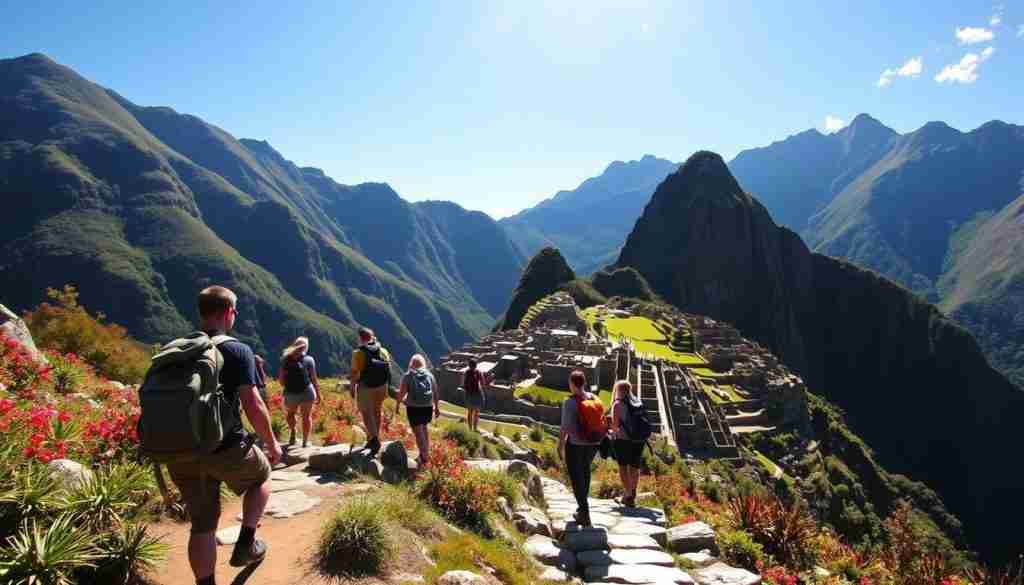
The Machu Picchu Sun Gate is in the Cusco region of Peru. It’s in the Andean Mountains. From here, you can see the Vilcanota River, Huayna Picchu mountain, and Aguas Calientes town.
This spot is key to the Machu Picchu Historic Sanctuary, a UNESCO World Heritage Site. It was important for the Inca civilization. They used it to watch the sky and control who could enter the citadel.
| Location | Elevation | Significance |
|---|---|---|
| Cusco, Peru | 2,430 meters (7,970 feet) | Machu Picchu Historic Sanctuary, UNESCO World Heritage Site |
| Southeast of Machu Picchu | N/A | Entrance and Astronomical Observatory |
| Andean Mountains | N/A | Stunning Panoramic Views |
The Sun Gate’s location helped the Inca civilization control who could enter their citadel. It also allowed them to observe the sky for rituals. Today, it still draws visitors to Machu Picchu.
The Machu Picchu Sun Gate Experience
The Sun Gate, or Inti Punku, is a high point in the Andes Mountains. It offers a memorable experience at Machu Picchu. This sacred entrance is at 2,720 meters (8,924 feet) and shows the Inca ruins’ grandeur.
Best Time to Visit
The best time to see the Sun Gate changes with the season. From April to November, visit early to catch the sunlight. From December to March, go after 10:00 AM to avoid morning mist.
Weather Conditions and Seasonal Changes
Visitors must prepare for the Sun Gate’s weather. The dry season has temperatures around 16°C (61°F), sometimes reaching 25°C (77°F). But, the rainy season makes trails slippery, so be careful.
Photographic Opportunities
The Sun Gate is perfect for photos. It offers the best views of Machu Picchu. You can capture the landscape, the Inca citadel, mountains, and the Vilcanota River, making unforgettable memories.
“The Sun Gate, also known as Inti Punku, is located at an altitude of 2,720 meters or 8,924 feet above sea level.”
Hiking Trail Details and Difficulty Level
The hike to Machu Picchu’s Sun Gate, or Inti Punku, is a moderate trek. It’s good for people of different fitness levels. The trail is about 2 km (1.2 miles) long, with an altitude gain of 290 meters (951 feet). It goes from the famous Inca citadel to the Sun Gate at 2,745 meters (9,000 feet).
The trail is mostly paved with stone steps and has a gentle slope. The steepest part is the last 15 minutes. It’s generally safe, with little risk, making it fun for most people.
The round trip to the Sun Gate takes 2 to 3 hours. This gives time for breaks, photos, and enjoying the views of the Andes and Inca ruins.
| Trail Details | Specifications |
|---|---|
| Distance | 2 km (1.2 miles) |
| Altitude Gain | 290 meters (951 feet) |
| Terrain | Stone steps and dirt trails |
| Difficulty Level | Moderate |
| Round-Trip Duration | 2 – 3 hours |
The hike to the Machu Picchu Sun Gate is exciting and rewarding. It lets visitors explore the ancient stone-stepped trail. They also see the altitude gain from the Inca citadel to this UNESCO World Heritage Site.
Astronomical Alignment and Solar Phenomena
The Machu Picchu Sun Gate, or Inti Punku, is more than just a building. It shows the Inca’s deep knowledge of astronomy and their bond with the sky. The design of this entrance is a blend of astronomy and culture, showing how the Inca tied celestial movements to their daily lives.
Summer Solstice Observations
The Sun Gate is famous for its alignment with the sun on the summer solstice. On this day, the sun’s rays fill the gateway with light. This event was key for the Inca, helping them keep their calendar and plan their farming.
Ancient Astronomical Practices
- The Inca Empire built Machu Picchu around 1450 AD, showing their skill in architecture and astronomy.
- The Inca used the sun and quipus (knotted strings) to track time and plan farming, showing their knowledge of the sky.
- The Sun Gate’s design shows the Inca’s deep understanding of the sun’s path and how they used this in their buildings and culture.
- The Inti Watana stone at Machu Picchu tracked the sun’s position all year, proving the Inca’s skill in astronomy.
The Sun Gate’s design and alignment with the sun during the summer solstice highlight the Inca’s Inca astronomy skills. They perfectly combined solar alignment with their culture and religion. These celestial events were very important to the Inca, helping them understand the world and their place in it.
Access and Entry Requirements
To visit the Sun Gate at Machu Picchu, you need to buy the “Circuito 1 – Ruta Puerta del Sol” ticket. This ticket lets you see the Sun Gate and the Inca citadel below. It’s part of the regular Machu Picchu ticket or the Inca Trail permit.
The Sun Gate is open from 6 AM to 2 PM. Anyone can visit, with no age limits. There are discounts for those under 18, university students under 25, and visitors from Peru, Colombia, Ecuador, or Bolivia.
| Ticket Type | Foreigner Price | Andean Community Price |
|---|---|---|
| Adult | 152 S/. | 64 S/. |
| University Student | 77 S/. | 32 S/. |
| Under 18 | 70 S/. | 32 S/. |
Because of the high demand for Machu Picchu tickets, buy them online 2 to 3 months early. The site has a limit on visitors, with 5,650 tickets in peak season and 4,500 in low season.
The Ministry of Culture has rules to protect Machu Picchu. These include small tour groups and no re-entry since October 15, 2021.
Knowing the entrance fees and visitor regulations helps make your visit to Inti Punku and Machu Picchu unforgettable.

Conservation and Preservation Efforts
Machu Picchu is a famous Inca citadel in the Andes. It’s a site of great archaeological, cultural, and natural value. The Sun Gate, or Inti Punku, is part of the Machu Picchu Historic Sanctuary. It’s protected by strict conservation measures to keep its rich heritage safe.
Current Protection Measures
Efforts to protect the Sun Gate and Machu Picchu focus on keeping the stone structures and natural environment intact. Visitor access is controlled with guided tours and limited entry points. This helps reduce the impact on the fragile ecosystem.
Research and monitoring programs are in place to understand the site’s significance. They study the local plants and animals, as well as the site’s astronomical alignment and solar phenomena.
Future Sustainability Plans
Machu Picchu, a UNESCO World Heritage site, attracts many visitors. It’s a challenge to balance tourism with archaeological preservation and cultural heritage protection. Authorities are working on ways to improve the visitor experience while protecting the site.
They plan to refine the ticketing system, limit daily visitors, and expand guided tours. They also aim to enforce stricter rules to protect the site’s cultural and natural integrity. These steps aim to preserve Machu Picchu’s archaeological and historical significance for future generations.
The authorities aim to balance sustainable tourism with archaeological preservation. They’re dedicated to protecting Machu Picchu and its cultural heritage for the long term.
Wildlife and Natural Surroundings
As you climb the Machu Picchu Sun Gate, you’ll dive into the Andean biodiversity around this ancient Inca site. The path goes through a green cloud forest ecosystem. It’s perfect for bird watching and spotting wildlife.
You might see the colorful Andean cock-of-the-rock, the chestnut-breasted mountain-finch, and the stunning green-and-white hummingbird. The area’s plants and animals make the Sun Gate hike special.
Walking the trail, you’ll see Inca terraces and natural views. The plants, like Begonias and Passionfruit vines, make the scenery even more beautiful.
- Machu Picchu is at 2,300 meters above sea level.
- The Rufous-collared Sparrow is common in western South America.
- Blue-and-white Swallows, Notiochelidon cyanoleuca, are found in South America, including Machu Picchu.
- Roadside Hawks, Rupornis magnirostris, hunt at Machu Picchu.
- Viscachas, large rodents, live in the Machu Picchu sanctuary.
- Spiny Whorltail Lizards are also found at Machu Picchu.
The wildlife at Machu Picchu offers a rich and diverse ecosystem. From the Andean condor to the elusive Andean puma, the area’s natural wonders are amazing.
“The Inca Trail goes through the Machu Picchu sanctuary, where four different deer species live.”
Connection to the Inca Trail Network
The Machu Picchu Sun Gate, or Inti Punku, is a key part of the Qhapaq Ñan, the vast Inca road system. It’s the last part of the famous Inca Trail, linking Machu Picchu to other ancient sites and trade paths. Today, it’s a favorite spot for both Inca Trail hikers and day visitors to Machu Picchu, offering a special view of this famous Inca site.
Historical Trade Routes
The Sun Gate’s location on the Qhapaq Ñan shows the Inca’s skill in engineering and transport. This road system helped move goods, people, and news across their empire. The Sun Gate was key in the Inca’s trade and cultural exchange.
Modern Hiking Paths
The Sun Gate offers a different path for those who want an easier hike to Machu Picchu. The trail is described as gentle, with long stone steps and dirt paths. It’s a great option for many visitors, offering a unique view of Machu Picchu and its history.
| Trail Details | Specifications |
|---|---|
| Location | The Sun Gate is located in the upper part, southeast of Machu Picchu in Cusco, Peru. |
| Path Length | Tourists who travel the Inti Punku walk approximately 2 kilometers along ancient paths built by the Incas. |
| Visiting Hours | The Intipunku can be visited every day of the year from 6 in the morning until 2 in the afternoon. |
| Recommended Season | Experts suggest that the dry season (from May to October) is the best time of the year to visit the Intipunku as there is less chance of rain. |
| Safety | It is reported that there have been no accidents on the paths that lead to the Sun Gate, making it a safe route. |
The Machu Picchu Sun Gate, as part of the iconic Qhapaq Ñan, lets visitors connect with the Inca’s rich history and culture. Whether you’re an experienced trekker or just visiting for the day, the Sun Gate offers a fascinating look into the Inca’s achievements.
Essential Visitor Information
Visiting the Machu Picchu Sun Gate needs careful planning and the right gear. Wear sturdy hiking gear, like comfy trekking shoes, for the trail. Don’t forget water, snacks, sunscreen, and rain gear. The high altitude (over 2,400 meters) and weather can be tricky.
Getting used to the altitude is key to avoid altitude sickness. Symptoms include headaches, nausea, and short breath. Guided tours offer great history and insights, making your visit better.
- Wear proper hiking shoes and dress in layers
- Bring ample water, snacks, sunscreen, and rain gear
- Acclimatize to the high altitude before the hike
- Consider joining a guided tour for historical context
- Exercise caution during the rainy season as the trail can be slippery
- Ensure you have all necessary supplies, as there are no shops along the trail
With the right preparation and following these tips, you’ll enjoy the Machu Picchu Sun Gate’s history and views fully.
Safety Guidelines and Recommendations
Hiking to Machu Picchu Sun Gate is thrilling and breathtaking. But, safety is key. Here are important tips to keep in mind.
The Inca Trail is a 1.6-kilometer trek in the Andes Mountains. The Sun Gate is at 2,745 meters. To avoid altitude sickness, spend a few days in Cusco or nearby towns before hiking.
The weather in the Andes can change fast, with rain, hail, and snow. Always check the forecast. Pack sturdy shoes, rain gear, and layers to stay warm and dry. The trail can be slippery during the rainy season (December to March), so be careful.
- Drink plenty of water and hike at a pace that feels comfortable to avoid altitude sickness symptoms like headaches and dizziness.
- Don’t hike during low visibility. The trail can be hard to follow.
- Listen to your guide and stay on the marked trails. This keeps you safe and protects the environment.
By following these guidelines, you can fully enjoy the Machu Picchu Sun Gate experience. Remember, the journey is as important as the destination. Take time to enjoy the beautiful scenery and cultural heritage along the way.
| Statistic | Value |
|---|---|
| Inca Trail Length | 1.6 kilometers |
| Sun Gate Altitude | 2,745 meters |
| Machu Picchu Visitors (2007) | 800,200 |
| Machu Picchu Visitors (2019) | 1,585,300 |
| Machu Picchu Elevation | 7,970 ft (2,430 m) |
“Remember, the journey is just as important as the destination, so take the time to appreciate the stunning natural surroundings and the rich cultural heritage along the way.”
Conclusion
The Sun Gate at Machu Picchu, or Inti Punku, is a symbol of Inca heritage. It offers a glimpse into the Inca’s architectural and natural wonders. This ancient gateway is a key part of the Inca Trail or a day hike from Machu Picchu.
Visitors are amazed by the Sun Gate’s beauty and history. It shows the Inca’s skill in engineering and their spiritual bond with nature. For those wanting to explore Inca culture, the Sun Gate is a must-see.
When planning a trip to Peru, don’t miss the Sun Gate and the Inca Trail. They offer a deep look into the Inca’s creativity and strength. Seeing the sunrise over Machu Picchu from the Sun Gate is unforgettable.
