Machu Picchu sits high in the Andes Mountains of Peru. It’s an ancient Inca citadel that draws visitors from everywhere. With its stunning landscapes and architecture, it’s a paradise for photographers. This guide will give you machu picchu photography tips and travel information to enhance your experience.
Key Takeaways:
- Machu Picchu is a top travel destination, with over 1.5 million visitors each year.
- Some photography and videography gear, like tripods and drones, need permits here.
- Choosing the right time to visit is important, as mornings can get very crowded.
- Being patient and flexible is crucial, as the weather can change quickly.
- Compact cameras and GoPros are great for their versatility and quality.
- Contact us for a comfortable and personalized itinerary (Free Service)
Logistics for the Best Machu Picchu Pictures
To capture the breathtaking beauty of Machu Picchu, it’s essential to understand the site’s ever-changing regulations, weather patterns, and optimal visiting times. These logistics play a crucial role in ensuring you get the most out of your photography experience at this iconic UNESCO World Heritage site.
Machu Picchu Regulations
Familiarize yourself with the regulations surrounding photography at Machu Picchu. The site has strict rules on the types of equipment and props you can use, as well as the activities you can engage in. Adhering to these regulations is crucial to avoid any disruptions or issues during your visit.
Machu Picchu Weather
The high jungle climate of Machu Picchu means it’s generally wet and moist year-round. However, certain seasons offer better conditions for machu picchu photography. Understanding the machu picchu weather patterns can help you plan your visit and make the most of the available lighting and visibility.
Timing Your Visit
The best time to visit machu picchu for photography is often early in the morning or late in the afternoon. These periods provide fewer crowds and better lighting, though you may need to purchase specific entry permits to access the site during these times. Proper planning and advanced booking are essential to ensure a smooth and enjoyable experience.
“Machu Picchu receives numerous visitors, and there is a new regulation limiting foot traffic, emphasizing the need for advanced planning.”


Best Time of Day for Photography
Getting the best machu picchu photography tips and amazing shots of Machu Picchu is all about timing. The best time of day to photograph machu picchu is usually late afternoon, around 3 pm or later. Early morning sunrise is stunning, but the site is often misty, which limits your shots.
As the day goes on, fewer people visit, making it quieter and better for photos. The afternoon light gives a warm, golden glow to the ruins. This is perfect for capturing the site’s grand structures, like the Temple of the Sun and the Intihuatana Stone.
- Late afternoon, around 3 pm or later, offers the best lighting conditions for Machu Picchu photography.
- Sunrise can be beautiful, but the site is often shrouded in mist in the early morning hours.
- Afternoon crowds are thinner, creating a more peaceful and atmospheric environment for photography.
- The gentle, golden light of late afternoon casts a stunning glow over the ancient Inca ruins.
Visiting Machu Picchu in the late afternoon lets you capture its most beautiful moments. With the right timing and patience, you can capture the timeless beauty of this wonder of the world through your lens.
Patience Pays Off
Photographing Machu Picchu requires patience. The site attracts many visitors, making it hard to get a shot without people. Waiting for the crowds to move can help you get that perfect photo.
The number of people visiting Machu Picchu has increased a lot. In 1999, Aguas Calientes was less crowded. Now, the site’s rules and many tourists make it hard to find new angles.
Being patient is key to getting great photos. Waiting for the right moment can lead to amazing shots without people. The author took 477 pictures to choose just eight, showing patience is crucial.
“A total of 477 pictures were taken of Machu Picchu ruins to select only eight for publication, emphasizing the need for selectivity in photography.”
If you want to capture Machu Picchu in your photos, be patient. Waiting for the right moment will reward you with beautiful, people-free images. These photos will truly show the beauty of this wonder.
Getting Up Close and Personal
Machu Picchu is a dream for photographers, offering many photo chances beyond wide-angle views. By focusing on the details of this ancient Inca site, you can take amazing photos. These will make your collection truly special.
Types of Machu Picchu Photography
There’s more to Machu Picchu photography than just wide shots. Here are some other ways to capture its beauty:
- Wide-angle Shots: Use a wide lens to show the Inca ruins and the stunning Andean mountains.
- Close-up Shots: Zoom in on the detailed stonework to see the Incas’ skill.
- Framed Shots: Use the ruins to frame your photos, making them unique and striking.
- People and Animal Shots: Add local people, llamas, and wildlife to your photos for a personal touch.
Trying different Machu Picchu photography styles can make your portfolio rich and interesting. It shows the many sides of this famous UNESCO site.
“The key to great Machu Picchu photography is being willing to get up close and personal with the details. It’s those intimate shots that will truly make your images stand out.”
Choosing the right lens is key, whether you have a DSLR or mirrorless camera. A wide-angle lens (10-24mm) is best for landscapes. A telephoto lens (70-200mm) gets you close to buildings and animals.
With patience, creativity, and a keen eye for unique views, you can take your Machu Picchu photos to the next level. Your portfolio will show the wonder and grandeur of this ancient Inca marvel.
Ideal Times for Photography
Getting the perfect shot of Machu Picchu takes the right timing. The late afternoon, around 3 pm and later, is the best time. The soft, golden light and fewer crowds make for amazing photos.
The wet season might mean fewer visitors, but the weather can be unpredictable. Early morning, from 6 am to 8 am, is also great. The misty light and calm atmosphere are perfect for photos.
Following the site’s rules is key. With only 4-hour visits, you need to plan your shots well. Tripods are only allowed with special permission, and managing crowds can be tough.
| Time of Day | Advantages for Photography |
|---|---|
| Early Morning (6 AM – 8 AM) | Soft, misty light, fewer crowds, and tranquil setting |
| Late Afternoon (3 PM – 5 PM) | Warm, golden light, dynamic shadows, and fewer crowds |
For the best photos, use the “golden hours” – early morning and late afternoon. The light is soft and warm, bringing out the beauty of the Inca ruins. With good planning, you can take incredible photos of this iconic place.
Machu Picchu Photography Gear and Packing Tips
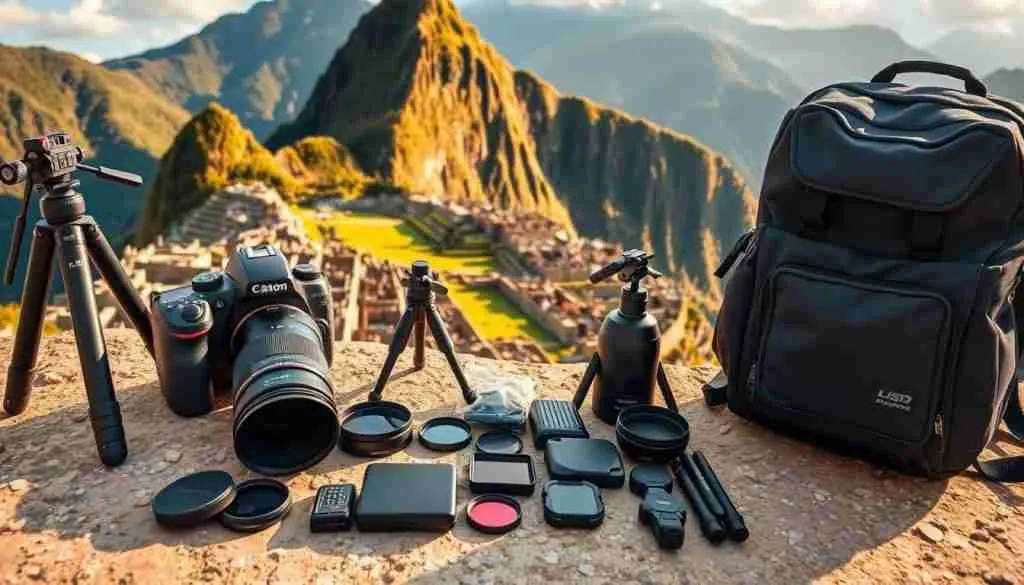
To capture Machu Picchu’s beauty, you need the right gear. Bring a camera with a wide-angle lens to show off the citadel’s grandeur. A zoom lens is great for getting close to details. Remember to pack spare batteries and extra memory cards.
For machu picchu photography gear, choose weather-resistant accessories. A rain poncho or camera cover will keep your gear dry. While tripods are banned without a special permit, a monopod or tabletop tripod can be very helpful.
Camera Options
For top camera options for machu picchu, go for a mirrorless or DSLR. They offer great image quality and flexibility. The Sony A6500, Fujifilm X-T4, or Canon EOS R6 are excellent choices for Machu Picchu’s varied lighting.
Additional Accessories
- Spare batteries to power your camera all day
- Extra memory cards for your machu picchu photography
- Neutral density filters for bright sunlight
- Polarizing filter to reduce glare and enhance colors
- Camera bag or backpack to keep your gear safe
With the right accessories for machu picchu photography and some planning, you’ll capture Machu Picchu’s magic like a pro.
Machu Picchu Photography Do’s and Don’ts
Visiting Machu Picchu is a special experience. It’s important to follow the rules to protect this UNESCO World Heritage Site. As a photographer, knowing what to do and what not to do is key to capturing amazing photos while respecting the site.
Do’s:
- Get the right permits and tickets to get in.
- Use small cameras or smartphones for photos.
- Stick to the trails to avoid damaging the ruins.
- Take photos from the viewpoints to see the beauty.
- Be kind to local guides and other visitors.
- Learn about the Inca culture to understand Machu Picchu’s importance.
Don’ts:
- Don’t climb on or stand on the ancient walls.
- Don’t use big tripods or camera equipment that gets in the way.
- Don’t fly drones because they’re not allowed.
- Don’t bring or use alcohol, drugs, or other banned items.
- Don’t do elaborate photo shoots or use props that could harm the site.
- Don’t act in a way that disrupts the sacred nature of Machu Picchu.
By sticking to these machu picchu photography rules, you can take amazing photos and help protect this Inca legacy. Remember, what you don’t do is just as important as what you do.
“Machu Picchu is a sacred place, and we must treat it with the utmost respect and care. By following the guidelines, we can all play a part in protecting this incredible wonder of the world for generations to come.”
machu picchu photography tips travel information
To capture Machu Picchu’s beauty, you need to plan well. Here are some key machu picchu photography tips and machu picchu travel information to remember:
- Know the site rules and plan your visit. Machu Picchu limits visitors to 2,500 daily. You must join a guided tour.
- Choose the right time to visit. April, May, September, October, and November are best for photos, with good weather.
- Be mindful of the high altitude. Altitude sickness, or el soroche, can cause headaches, nausea, and shortness of breath.
- Bring the right camera gear. A wide-angle lens is great for views, and a telephoto lens for close-ups of architecture and wildlife.
- Look up the different photography routes. The Panoramic, Classic, and Royal Routes offer unique views.
By following these machu picchu photography tips and knowing the machu picchu travel information, you’ll capture amazing photos. These will forever remember your Machu Picchu journey.
| Machu Picchu Travel Information | Key Details |
|---|---|
| Location | Machu Picchu is about 50 miles from Cusco, the former Inca capital. |
| Nearest Airport | The closest airport is Alejandro Velasco Astete (CUZ) in Cusco, 48 miles from Machu Picchu. |
| Transportation | PeruRail and IncaRail offer train services to Machu Picchu. |
| Best Time to Visit | The dry season in Cusco (April to October) is the best time for fewer rains and better photos. |
| Ticket Booking | Book tickets early, tours 4-6 months in advance, and Huayna Picchu Mountain entry up to 3 months before. |

“Machu Picchu commands a panoramic view of parts of Peru’s Sacred Valley and was named one of the New Seven Wonders of the World in 2007.”
Best Viewpoints for Photography
To capture the iconic images of Machu Picchu, you need the right spots. From the classic shot from the Guardian House to the dramatic terraces and Sun Gate, each spot offers a unique view.
The Guardian House is a favorite for best viewpoints for Machu Picchu photography. It frames the ruins against the mountains, giving a wide view. The Inca terraces offer even higher views, showing the site’s architecture and size.
The Sun Gate is another top photography spot in Machu Picchu. After hiking the Inca Trail, it offers a dramatic view of Machu Picchu in the Andes.
For a challenging but rewarding shot, try the summits of Huayna Picchu and Machu Picchu Mountain. These hikes offer stunning views of the site from above.
“Each viewpoint at Machu Picchu offers a unique visual experience, allowing photographers to capture the grandeur and beauty of this ancient wonder in their own creative way.”
Whether you’re a seasoned photographer or new to photography, exploring the best viewpoints for Machu Picchu photography can help you take stunning, memorable photos. These photos will truly show the magic of this remarkable site.
Creative Photography Techniques
When you’re at Machu Picchu, don’t just stick to the usual wide-angle shots. Try some new techniques to make your photos stand out. You can show the ancient site in a fresh, exciting way.
One cool trick is to use a shallow depth of field. This means shooting with a wide aperture to blur the background. It makes the Inca ruins pop and gives your photos a magical feel.
Adding interesting things in the foreground can also make your photos better. Try using a colorful flower, a weathered stone, or even a llama. These elements add depth and make your photos more interesting.
Don’t forget to take pictures of the local wildlife. The llamas and alpacas at Machu Picchu are great subjects. Get down low and wait for the perfect shot to capture their unique charm.
Whether you’re using a shallow depth of field, adding foreground elements, or capturing wildlife, the goal is to be creative. By trying new things, you’ll get amazing photos that show the beauty of Machu Picchu.
| Machu Picchu Photography Settings | Recommended Lenses for Peru Photography | Camera Equipment for Peru Travel |
|---|---|---|
|
|
|
Conclusion
Planning your trip to Machu Picchu? This article has great tips to help you capture its beauty through your camera. Learn about the best times to shoot, the best spots to view, and creative ways to take photos. You’ll come back with amazing machu picchu photography that shows off the site’s grandeur.
Knowing how to navigate the park and the weather will help you get the best shots. Use the quiet hours and the best spots to take your photos. These tips will help you take wide shots, close-ups, and creative photos. You’ll leave with a collection of photos that will amaze and inspire others.
With good planning and patience, your Machu Picchu photos will be unforgettable. Follow the tips in this article to capture the site’s timeless beauty. You’ll create a visual story that celebrates Machu Picchu’s magic and wonder.