Machu Picchu is an ancient Inca citadel in the Andes Mountains of Peru. It’s about 50 miles northwest of Cusco. Built in the 15th century for the Inca emperor Pachacuti, it’s a top tourist spot in Peru. It attracts millions every year.
Its stonework, engineering, and view of the Urubamba River valley are stunning. After the Spanish conquest, it was left hidden for centuries. Then, in 1911, American historian Hiram Bingham found it again.
Since then, people from all over have been drawn to Machu Picchu. They come to learn about its history and marvel at its beauty.
Key Takeaways
- Machu Picchu is an ancient Inca citadel located in the Andes Mountains of Peru, about 50 miles northwest of Cusco.
- The site was built in the 15th century as an estate for the Inca emperor Pachacuti and later abandoned after the Spanish conquest.
- Machu Picchu was “rediscovered” in 1911 by American historian Hiram Bingham, bringing it to international attention.
- The ruins are renowned for their impressive stonework, intricate engineering, and stunning natural setting overlooking the Urubamba River valley.
- Machu Picchu is one of the most popular tourist destinations in Peru, drawing millions of visitors each year.
- Contact us for a comfortable and personalized itinerary (Free Service)
Machu Picchu’s Historical Background
Machu Picchu, the famous Inca site in Peru’s Andes Mountains, has a rich history from the 15th century. This machu picchu history and inca civilization show the Inca’s engineering and architectural skills.
Construction and Abandonment
Machu Picchu was built between 1400 AD and 1500 AD. It was during the time of Inca rulers Pachacuti and Túpac Inca Yupanqui. The Incas, known for their inca engineering and inca architecture, built it with stone blocks without mortar. It was likely abandoned in the 16th century after the Spanish conquest.
Hiram Bingham’s “Discovery”
For centuries, Machu Picchu was hidden in the Andes Mountains. In 1911, American historian hiram bingham machu picchu came to Peru. He was searching for the “lost city of the Incas.” A local, Melchor Arteaga, led him to Machu Picchu.
Bingham, backed by Yale University and the National Geographic Society, excavated the site. He brought attention to Machu Picchu, often called its “discoverer.” But, it was known to locals before Bingham arrived.
“Machu Picchu is the most beautiful archaeological relic in South America.”
Location and Accessibility
Machu Picchu sits high in the Andes Mountains of Peru, at 7,970 feet (2,430 meters). It’s on a narrow spot between Machu Picchu and Huayna Picchu mountains. From there, you can see the Urubamba River valley below.
This spot was key in keeping Machu Picchu hidden for centuries. It was a secret place for the Inca people.
Getting to Machu Picchu
There are two main ways to get to Machu Picchu. You can take a train from Cusco to Aguas Calientes, then a bus or hike up. Or, you can hike the famous Inca Trail.
The Inca Trail is a long hike that ends at the Sun Gate. It offers a stunning view of Machu Picchu. Both ways give you a special look at this ancient site.
“Machu Picchu’s remote location in the Andes Mountains played a key role in keeping it hidden for centuries.”


Getting to Machu Picchu needs some planning. The high altitude and limited access can be tough. But, the journey is worth it. You get to see one of the world’s most amazing and historic sites.
Architectural Marvels of Machu Picchu
Machu Picchu is a marvel of Inca engineering. It has about 200 buildings that are architectural wonders. These structures were built with advanced techniques that have lasted for centuries.
Earthquake-Resistant Construction
The Inca engineers built Machu Picchu to withstand earthquakes. They used stone blocks so tightly fitted that a knife can’t fit between them. This engineering skill helped the structures survive the area’s frequent earthquakes.
Advanced Water Management System
The Incas also built an advanced water system for Machu Picchu. They created a 749-meter long canal and 16 fountains to distribute water. This system drained water away during the rainy season, preventing landslides.
“The architectural style at Machu Picchu followed a religious pattern of truncated pyramid construction, with buildings featuring rectangular rooms covered by roofs made of wooden logs and straw.”
Inca architecture at Machu Picchu is unique. They used polygonal stones in many religious buildings. One temple wall has an impressive 33 corners. Moving these large rocks was a big challenge, but the Incas managed it with llamas and men using ropes and levers.
| Architectural Feature | Description |
|---|---|
| Ashlar Masonry | The Incas used ashlar masonry in Machu Picchu. This technique made the stone joints so tight that a piece of paper can’t fit between them. |
| Building Materials | The Incas built Machu Picchu with stones, wood, and mud. Andesite, a volcanic rock, was the main material because of its durability. |
| Landscape Integration | The buildings at Machu Picchu follow the land’s natural contours. This design minimizes erosion and maximizes utility. The terraced fields show how the Incas integrated with the landscape for agriculture. |
Sectors and Structures
Machu Picchu was divided into two main parts. The agricultural sector had terraced farmland for crops like maize and beans. It also had a smart drainage system. The urban sector, with a high wall, had about 200 buildings for up to 1,000 people.
Notable Buildings and Temples
At Machu Picchu, you’ll find important structures like the Sacred Rock and the Temple of the Sun. There’s also the Temple of the Three Windows and the Intihuatana, a sundial carved from stone. The Princess’s Palace is a two-story building for nobility. And the Inca Bridge is an engineering marvel.
- The Intihuatana was used as a sundial or calendar, say many archaeologists.
- The Temple of the Sun was for priests and nobles only, not commoners.
- The Temple of the Condor shows Inca stonemasons’ skill in its design.
- The Temple of the Three Windows looks over mountains and aligns with sunrise.
- The Principal Temple was for big ceremonies.
- The Guardhouse or Caretaker’s Hut watched over Machu Picchu’s entrances.
These structures show the amazing Inca architecture and planning at Machu Picchu.
machu picchu facts travel information
Machu Picchu is a UNESCO World Heritage site and one of the New Seven Wonders of the World. It attracts millions of visitors every year. The site is in the cloud forest region, with a special climate. The only non-native animals are the llamas that roam the grounds.
Visitors can reach Machu Picchu by train or by hiking the famous Inca Trail. This hike takes about 4 days and 3 nights. For stunning views, you can climb Huayna Picchu or Machu Picchu Mountain. But, you need a permit, and they sell out fast.
| Machu Picchu Facts | Machu Picchu Travel Tips |
|---|---|
|
|
Whether you explore Machu Picchu’s architectural marvels or immerse yourself in the Inca’s rich cultural heritage, this site offers an unforgettable experience. It’s a must-see for anyone visiting Machu Picchu.
“Machu Picchu is one of the most significant archaeological sites in South America, a true testament to the ingenuity and achievements of the Inca civilization.”
Hiking and Exploration
Machu Picchu is a stunning site for outdoor lovers. It’s not just about seeing the ancient ruins. You can also go on exciting hikes to nearby peaks. These hikes offer amazing views and a chance to explore the natural beauty around.
Climbing Huayna Picchu and Machu Picchu Mountain
Two top hikes near Machu Picchu are Huayna Picchu and Machu Picchu Mountain. Huayna Picchu has a famous “death stairs” climb. It’s tough but gives you incredible views of the machu picchu citadel.
The hike to machu picchu mountain is easier but still offers great views. You can see the Inca ruins from a new angle.
For both hikes, you need a permit. They sell out fast, so plan ahead. Make sure to get your machu picchu permits early.
“The views from the top of Huayna Picchu are simply breathtaking. It’s a tough hike, but the sense of achievement and the panoramic vistas make it an unforgettable experience.”
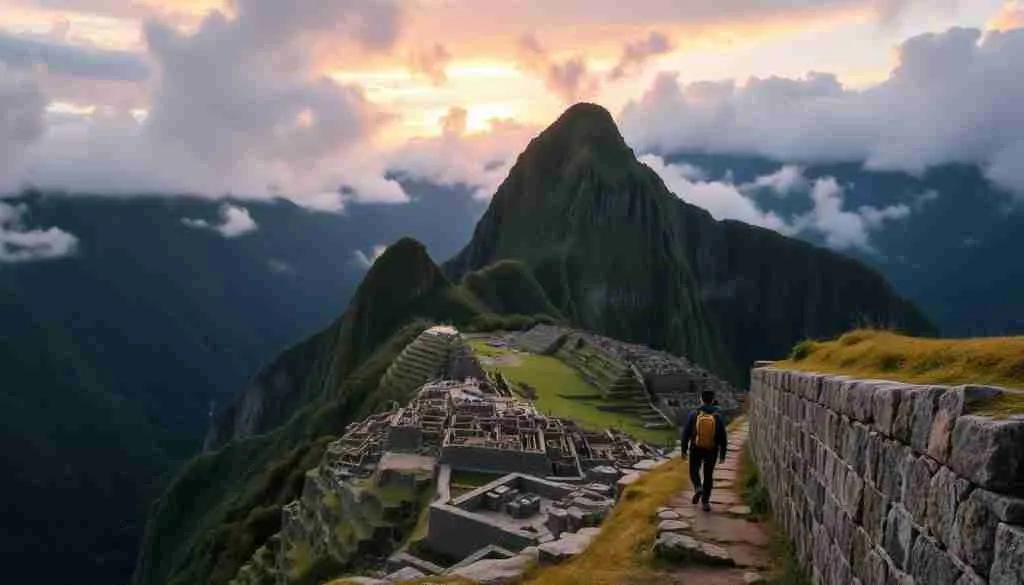
Whether you tackle Huayna Picchu, explore Machu Picchu Mountain, or just wander the Inca ruins, there’s always something new to discover. Machu Picchu is a place of endless adventure and discovery.
Myths and Legends
Machu Picchu, the famous Inca citadel in the Andes, has amazed everyone with its mysterious past. It has a rich history, but myths and legends also surround it. These stories fascinate both travelers and scholars.
Theories About Machu Picchu’s Purpose
Many believe Machu Picchu was built by aliens. But, experts have proven this is not true. The Inca, a highly advanced civilization, built it. They showed off their engineering skills.
Some think it was a “sanctuary for the Virgins of the Sun” because of female skeletons found there. But, most experts now believe it was a key place for the Inca Empire. It was important for both administration and religion, with Emperor Pachacuti playing a big role.
“Machu Picchu was not built for the virgins of the sun as commonly believed; it was designed and built by King Pachacutec and later abandoned after 100 years.”
Despite many theories and legends, Machu Picchu’s true purpose is still debated. New discoveries and ideas keep the mystery alive. It continues to inspire people worldwide.
Preservation and Conservation
Machu Picchu is a UNESCO World Heritage site, showing its global importance. It was recognized in 1983 for its cultural value. This ancient Inca citadel is protected for now and future generations.
The Peruvian government controls who can visit Machu Picchu. They limit visitors to 800 for the main site and 400 for Huayna Picchu. Restoration work is done to fix any damage, keeping the site in good shape.
But, Machu Picchu still faces challenges. Erosion, environmental issues, and many visitors harm the site. Only 40% of Machu Picchu has been uncovered, with 60% believed to be underground.
As a UNESCO World Heritage site, Machu Picchu gets international protection. The Peruvian government works hard to manage visitors and restore the site. Their efforts help keep this machu picchu preservation and machu picchu conservation efforts alive. This ensures Machu Picchu remains a treasure for future generations.
“Machu Picchu is one of the most important archaeological sites in the world, and its preservation is critical for understanding the rich history and culture of the Inca civilization.”
Visiting Machu Picchu Today
Exploring Machu Picchu is a dream for many. But, it needs careful planning and following permits and regulations to protect its history. Also, the accommodations and facilities near Machu Picchu make the visit better.
Permits and Regulations
Machu Picchu is only reachable from Cusco, by bus or plane. Tickets must be bought early because it’s crowded. In peak season, tickets sell out fast, sometimes over 2 months ahead.
For Huayna Picchu or Machu Picchu Mountain, extra permits are needed. These trails are popular and fill up quickly.
Accommodations and Facilities
Visitors have many accommodation options near Machu Picchu. Hotels in Aguas Calientes offer easy access and amenities like restaurants and shops. For a deeper experience, try camping and hiking like the Inca Trail.
Be careful with transport due to dangerous roads. No professional cameras or big backpacks are allowed. Bring a passport, ticket, water, camera, sunscreen, and good shoes for your visit.

Curious Facts and Trivia
Machu Picchu, the famous Inca citadel, is full of interesting facts and trivia. It’s not just its stunning architecture that makes it special. There are also curious stories and quirks that make it even more fascinating.
Did you know the llamas you see today weren’t always here? They were brought in for tourists to add to the scenery. In 2014, there was a brief “nude tourism” trend, but Peruvian authorities quickly stopped it to keep the site’s dignity.
Machu Picchu has even appeared in a Bollywood music video. You can also get your passport stamped here as a keepsake. It’s a unique way to remember your visit to this incredible place.
| Interesting Machu Picchu Facts | Machu Picchu Trivia |
|---|---|
|
|
These are just a few of the curious facts and intriguing trivia about Machu Picchu. From its unique history to its appearances in pop culture, this ancient Inca citadel always surprises and captivates visitors from all over.
Cultural and Historical Significance
Machu Picchu is a marvel of the Inca Empire’s achievements. It’s one of the best-preserved Inca sites, offering insights into their advanced skills. The site’s rediscovery in the early 20th century sparked global interest in Inca history and culture.
Machu Picchu was named a UNESCO World Heritage Site in 1983. It’s recognized for its cultural significance. The site meets four criteria, including its machu picchu cultural significance and the Inca civilization’s architectural and technological achievements.
Inca Legacy and Machu Picchu’s Impact
The Inca Empire, known as Tahuantinsuyo, was a highly advanced civilization. It dominated much of South America in the 15th and 16th centuries. Machu Picchu, one of the Inca’s most impressive sites, has greatly influenced our understanding of this remarkable inca empire.
- Machu Picchu’s intricate terraced farming system, covering 4.9 hectares (12 acres), shows the Inca’s advanced agricultural practices.
- The site’s earthquake-resistant construction and advanced water management system highlight the Inca’s engineering skills.
- Only a thousand people lived in Machu Picchu’s 38,160.87-hectare (94,323-acre) area. This shows its role as a religious and administrative center.
Today, Machu Picchu is Peru’s most popular tourist spot. It symbolizes the Inca’s lasting legacy and the Andean region’s natural beauty. Preserving and studying Machu Picchu is crucial for understanding the inca empire‘s rich culture and history.
Conclusion
Machu Picchu is a top wonder in the world. It’s famous for its Inca engineering and beautiful setting. Visitors from everywhere come to see it.
Exploring Machu Picchu is unforgettable. You can hike the Inca Trail, climb peaks, or just walk the ruins. It’s a place that leaves a mark on your heart.
Being a UNESCO World Heritage site shows its importance. It also helps the local economy through tourism. Machu Picchu’s location in the cloud forest adds to its charm.
When planning your machu picchu travel guide, think about the best routes. Enjoy the history and beauty of Machu Picchu. Find the machu picchu highlights that make it special.
