
Luxembourg City Travel Guide 2026: Best Things to Do in UNESCO Capital
Luxembourg City stands as one of Europe’s most remarkable capital cities, where dramatic clifftop fortifications meet modern European institutions across three distinct levels of terrain. This compact UNESCO World Heritage Site rewards visitors with spectacular valley views, underground casemates carved into solid rock, and architectural layers spanning ten centuries, all connected by panoramic promenades and Europe’s only free nationwide public transport system.
Key Takeaways
- UNESCO World Heritage Fortress System: Luxembourg City’s Old Quarters and Fortifications earned UNESCO inscription in 1994, preserving 23 kilometers of underground casemates, fortress bastions, and defensive architecture from Spanish, Austrian, French, and Prussian engineering spanning the 16th to 19th centuries.
- Free Public Transport 2026: Luxembourg offers completely free public transport nationwide, including all buses, trams, and second-class trains throughout the entire country, covering airport transfers, city exploration, and day trips to destinations like Vianden Castle without any transportation costs.
- Three-Level City Layout: The capital spreads across three distinct vertical levels connected by elevators, bridges, and scenic pathways—the historic Upper Town (Ville Haute), the riverside Lower Town (Grund), and the modern plateau districts—creating dramatic viewpoints from fortification walls overlooking valleys 70 meters below.
- Strategic Location and History: Positioned at the crossroads of Western Europe, Luxembourg City served as “The Gibraltar of the North” for over 800 years, repeatedly reinforced by every major European power before its fortress walls were dismantled following the 1867 Treaty of London, leaving today’s spectacular ruins and casemate networks.
- Multilingual Modern Capital: As one of the European Union’s three official capitals alongside Brussels and Strasbourg, Luxembourg City functions in Luxembourgish, French, and German, hosting major EU institutions including the European Court of Justice while maintaining its historic fortress character and cosmopolitan atmosphere.
- Compact Walkable Core: The UNESCO-protected Old Town and most major attractions concentrate within a highly walkable 2-kilometer radius, making Luxembourg City ideal for 2-3 day visits combining fortress history, modern museums, gourmet dining, and easy access to surrounding Ardennes landscapes and Moselle wine regions.
People Also Ask About Luxembourg City 2026
What is Luxembourg City’s UNESCO World Heritage designation?
Luxembourg City’s Old Quarters and Fortifications received UNESCO World Heritage Site inscription on December 17, 1994, recognizing the fortress city’s outstanding universal value as one of Europe’s greatest fortified sites from the 16th century until 1867. The designation specifically honors the remains of defensive architecture repeatedly reinforced by successive European powers—the Holy Roman Emperors, House of Burgundy, Habsburgs, French and Spanish kings, and finally the Prussians—creating a remarkable palimpsest of military engineering spanning over 300 years across multiple ruling dynasties.
The UNESCO inscription protects the fortress remains including the 23-kilometer network of underground casemates carved into solid rock, the dramatic fortification walls and bastions still visible along cliff edges, the historic Old Town quarters that developed within the protective fortress walls, and the strategic Bock promontory where Count Siegfried built the original castle in 963 CE that became the foundation stone of Luxembourg City. The site demonstrates exceptional examples of defensive military architecture evolution from the Renaissance through the modern era, preserving Spanish, Austrian, French, and Prussian engineering techniques in a single integrated fortress complex that controlled one of Western Europe’s most strategic positions for centuries.
How much does visiting Luxembourg City cost in 2026?
Budget travelers can explore Luxembourg City for €70-120 per person daily in 2026, mid-range visitors spend €110-160 daily, and luxury travelers invest €185-250+ daily for premium experiences. The completely free nationwide public transport system—including all buses, trams, and second-class trains covering the entire country since 2020—eliminates transportation costs entirely, significantly reducing overall trip expenses compared to other European capitals where transit can consume €10-20 daily.
Accommodation represents the primary expense category, with hostel dormitory beds ranging €25-40 nightly, mid-range hotel rooms €70-130 per night, and luxury properties exceeding €250 nightly. Restaurant meals cost €17-23 for casual dining, €35-50 per person at mid-range establishments, and €75-150+ at upscale restaurants, though budget-conscious travelers find excellent value at bakeries like Fischer Bakery offering substantial sandwiches for €10-15. Major attractions charge moderate admission fees—Bock Casemates €11, Pétrusse Casemates €13, MUDAM contemporary art museum €8-10—while many highlights including the Corniche promenade, Notre-Dame Cathedral, and fortress wall walks remain entirely free. The LuxembourgPass (€21 for one day, €28 for two days, €34 for three days) provides excellent value for visitors planning to enter three or more paid attractions, covering over 60 museums and sites across the country plus free public bike rentals.
What are the best times to visit Luxembourg City in 2026?
Late April through early June and September through mid-October represent optimal visiting windows for Luxembourg City in 2026, offering mild temperatures (15-22°C), manageable crowds, and lower accommodation prices compared to peak summer months. Spring brings blooming gardens along the fortress walls and comfortable walking weather for exploring the multi-level city terrain, while autumn delivers golden foliage in the Pétrusse Valley and cultural events including the Schueberfouer fair (late August-early September) and wine harvest celebrations in nearby Moselle villages.
Summer months July and August bring peak visitor numbers and accommodation prices rising 20-30% above shoulder season rates, though this period offers the longest daylight hours (sunset after 21:00), open-air concerts and festivals, and the exclusive opportunity to tour the Grand Ducal Palace interior (tours run July 18-August 30, 2026 only). Winter months December through February see quieter streets and hotel rates dropping 15-25%, with the Christmas markets transforming Place d’Armes and Place Guillaume II (late November-late December) creating atmospheric evening experiences, though reduced daylight hours (sunset around 16:30) and occasional freezing temperatures limit outdoor fortress exploration comfort.
How many days do you need in Luxembourg City?
Two full days provide sufficient time to experience Luxembourg City’s essential UNESCO fortress sites, major museums, and iconic viewpoints at a comfortable pace, while three days allow deeper exploration including day trips to Vianden Castle or Moselle wine villages using the free national train network. A well-paced two-day itinerary covers the Bock and Pétrusse casemates, fortress wall walks along the Corniche, the historic Grund riverside district, Notre-Dame Cathedral, the Grand Duke Jean Museum of Modern Art (MUDAM), and evening dining in the atmospheric Ville Haute quarter, with time for leisurely café breaks at panoramic overlooks.
Single-day visitors focusing exclusively on fortress heritage can tour the Bock Casemates, walk the Wenzel Circular Route connecting key fortification viewpoints, explore the Grund district, and visit Notre-Dame Cathedral before departing, though this compressed schedule sacrifices museum time and rushing past opportunities to fully appreciate the dramatic multi-level topography and successive architectural layers that define Luxembourg’s unique character. Extended stays of four to five days justify deeper dives into specialized museums including the National Museum of History and Art, Villa Vauban art museum, and Lëtzebuerg City Museum, plus relaxed day trips exploring the UNESCO-recognized Mullerthal “Little Switzerland” hiking region (90 minutes by free train) or medieval Vianden village crowned by one of Europe’s finest feudal castles.
Extended multi-day tours – 5+ days
Featured Western Europe Multi-Day Tour Packages
3 days
Western Europe 3-Day Discovery Tour
- ✓ Comprehensive Western Europe experience
- ✓ Expert local guides included
- ✓ All accommodation included
- ✓ Transportation provided
5 days
Western Europe 5-Day Highlights Experience
- ✓ Comprehensive Western Europe experience
- ✓ Expert local guides included
- ✓ All accommodation included
- ✓ Transportation provided

7 days
Western Europe 7-Day Cultural Journey
- ✓ Comprehensive Western Europe experience
- ✓ Expert local guides included
- ✓ All accommodation included
- ✓ Transportation provided
10 days
Western Europe 10-Day Complete Adventure
- ✓ Comprehensive Western Europe experience
- ✓ Expert local guides included
- ✓ All accommodation included
- ✓ Transportation provided
Multi-day tour packages powered by TourRadar. Prices and availability subject to change.
Introduction
Luxembourg City presents one of Europe’s most visually dramatic capital cities, where a UNESCO World Heritage fortress perched atop sheer cliffs overlooks valleys 70 meters below, modern European Union institutions occupy sleek glass buildings across the Kirchberg plateau, and ten centuries of military architecture layer across three distinct terrain levels connected by elevators, viaducts, and panoramic promenades. Founded in 963 CE when Count Siegfried built a castle on the strategic Bock promontory controlling trade routes between France and Germany, this compact city of 135,000 residents expanded for eight centuries as “The Gibraltar of the North,” repeatedly reinforced by every major European power competing for control of Western Europe’s geographic crossroads until the 1867 Treaty of London mandated fortress dismantlement, leaving today’s spectacular ruins integrated throughout the modern capital.
The city’s UNESCO inscription in 1994 recognized exceptional fortification engineering spanning the Spanish Netherlands period (1555-1714), Austrian Habsburg rule (1714-1795), French Revolutionary occupation (1795-1815), and final Prussian reinforcement (1815-1867), creating 23 kilometers of underground casemates carved into solid rock, multi-layered defensive bastions, and integrated fortress architecture that survived partial dismantlement to form today’s distinctive character. Modern Luxembourg functions as one of three European Union capitals alongside Brussels and Strasbourg, hosting the European Court of Justice, European Investment Bank, and multiple EU administrative bodies while maintaining its medieval Old Town character, fortress heritage, and trilingual culture operating seamlessly in Luxembourgish, French, and German. This unique combination of dramatic fortress topography, preserved defensive architecture, contemporary European governance, and compact walkability creates an exceptionally rich destination for 2-3 day visits exploring military history, cultural institutions, and spectacular valley panoramas all accessible via Europe’s only completely free nationwide public transport network.
Luxembourg City rewards visitors with remarkable visual drama created by its three-level vertical layout: the historic Upper Town (Ville Haute) occupies the fortress plateau with the Grand Ducal Palace, Place d’Armes square, and Notre-Dame Cathedral; the Lower Town (Grund) nestles 70 meters below along the Alzette River with converted brewery buildings housing restaurants and galleries; and the modern Kirchberg plateau hosts EU institutions and the striking MUDAM contemporary art museum designed by I.M. Pei. These levels connect via the dramatic Pétrusse and Alzette valley parks, fortress wall pathways including the Corniche “Europe’s most beautiful balcony,” the Pfaffenthal panoramic elevator descending cliff faces, and the 1861 Adolphe Bridge viaduct spanning 84 meters above the Pétrusse Valley. Walking these connections reveals successive architectural layers from Count Siegfried’s 10th-century fortress foundations through Spanish, French, and Prussian military engineering to contemporary Norman Foster-designed concert halls, creating a compact outdoor museum of European history and defensive technology accessible within a 2-kilometer radius.
Planning a Luxembourg City visit in 2026 benefits from understanding the seasonal calendar, accommodation patterns, and attraction schedules. The Grand Ducal Palace opens for interior tours only from July 18 through August 30, 2026, requiring advance booking through the Luxembourg City Tourist Office for the 75-minute guided experiences showcasing royal apartments, the Salon des Rois, and the Grand Duke’s working office. The underground casemates remain accessible March through October (Bock Casemates) and May through October (Pétrusse Casemates), closing during winter months due to cold temperatures and condensation in the unheated tunnels. Hotel rates fluctuate significantly with weekday business travel demand—booking weekend stays can reduce costs €15-30 per night as EU officials depart Friday evenings—while summer peak season (July-August) drives rates 20-30% above spring and autumn shoulder periods when weather remains excellent for fortress exploration and valley walks.
The completely free public transport system fundamentally changes Luxembourg City economics compared to Paris, Brussels, or Amsterdam where transit costs accumulate €3-5 per ride. Every bus, tram, and second-class train throughout Luxembourg operates free for all passengers including tourists, covering airport transfers (Bus 16 or 29 from Luxembourg Airport to city center), city circulation (frequent trams connecting Kirchberg, Gare station, and city center), and day trips to Vianden Castle (90 minutes north), Echternach (45 minutes east), or Moselle wine villages (30-45 minutes east). This policy eliminates daily transit budgets entirely, allowing reallocation toward museum admissions, restaurant meals, or hotel upgrades while encouraging exploration beyond the capital using the efficient CFL rail network connecting medieval villages, Ardennes hiking regions, and wine country—all without purchasing tickets, validating passes, or navigating fare zones that complicate other European destinations.
Luxembourg City’s UNESCO World Heritage Fortress Legacy 2026
Luxembourg City’s UNESCO World Heritage designation encompasses the Old Quarters and Fortifications inscribed December 17, 1994, recognizing 1,000 years of military architecture culminating in one of Europe’s most formidable defensive complexes before partial dismantlement following the 1867 Treaty of London. The fortress city evolved across three major construction phases: medieval origins (963-1443 CE) when Count Siegfried’s castle on the Bock promontory expanded into a walled town controlling Alzette Valley trade routes; Renaissance and early modern reinforcement (1443-1795) under Burgundian, Spanish, and Austrian Habsburg rule creating multi-layered bastions and the underground casemate network; and final Prussian modernization (1815-1867) adapting defenses for modern artillery before international treaty mandated fortress neutralization to prevent Luxembourg from serving as a strategic military base threatening France, Germany, or the Low Countries.
The Bock Casemates represent the fortress system’s most impressive surviving element, comprising 23 kilometers of underground galleries and tunnels carved into solid sandstone cliffs beginning with Spanish excavations in 1644 and expanded by Austrian engineers throughout the 18th century. These multi-level passages descended up to 40 meters into the Bock promontory bedrock, housing garrison soldiers, ammunition stores, artillery positions, workshops, kitchens, and stables for 1,200 soldiers and 50 horses during siege conditions. The casemates functioned as both defensive infrastructure—providing protected troop movement, ammunition supply routes, and cannon firing positions immune to enemy bombardment—and offensive capability, with embrasures cut through cliff faces allowing artillery to dominate the Alzette Valley below while remaining invisible and invulnerable to counter-battery fire.
Visitors exploring the Bock Casemates in 2026 traverse approximately 17 kilometers of accessible tunnels (reduced from the original 23 kilometers after partial destruction during fortress dismantlement), walking dimly-lit passages where stone walls bear tool marks from 18th-century excavations, passing former guard rooms and ammunition chambers, and emerging at strategic embrasures offering spectacular views across the Grund district 70 meters below. The self-guided tour (admission €11 adults, €9 students and seniors, €5.50 children 4-12) follows a circular route requiring 45-60 minutes at a comfortable pace, with interpretive signage explaining military functions, architectural evolution, and the engineering feat of carving habitable galleries through solid rock without modern power tools or ventilation systems. The casemates maintain constant cool temperatures (12-14°C year-round), requiring light jackets even during summer visits, and feature some narrow passages and uneven stone floors necessitating reasonable mobility—though the main routes remain accessible for most visitors with paved walkways and handrails along steeper sections.
The Pétrusse Casemates parallel the Bock system on the opposite side of the Old Town, excavated under Austrian rule beginning in 1746 and extending beneath the Pétrusse Valley ramparts. These lesser-known galleries (admission €13 adults, €10 students and seniors, €6 children 4-12) opened to public tours only in 1933 after decades serving as emergency air raid shelters during World Wars I and II, when the neutral Grand Duchy’s strategic position attracted both Allied and German interest. The Pétrusse system follows different engineering principles than the Bock galleries, featuring straighter tunnels, larger chambers designed for artillery placement rather than troop housing, and impressive vaulted ceilings in munitions storage halls. Guided tours (45 minutes, included in admission) provide historical context about Austrian fortress engineering, wartime shelter use protecting up to 35,000 civilians during bombardment, and the political negotiations surrounding Luxembourg’s 19th-century neutralization that prevented complete fortress destruction and preserved today’s UNESCO heritage.
The fortress surface architecture integrates throughout Luxembourg City’s modern layout, creating unexpected encounters with 17th and 18th-century military engineering. The Corniche promenade follows the southern rampart walls along sheer cliffs dropping 70 meters to the Grund riverside district, earning the nickname “Europe’s most beautiful balcony” for panoramic views across the Alzette Valley to Kirchberg plateau and the Rham Plateau fortifications. Walking the Corniche reveals successive defensive layers: medieval wall foundations from Luxembourg’s early fortification period, Spanish bastion reinforcements with characteristic angular projections designed for crossfire coverage, French improvements under Vauban’s supervision creating integrated defensive works, and final Prussian modernizations adapting centuries-old walls for rifled artillery and explosive shells that made traditional stone fortifications obsolete by the 1860s.
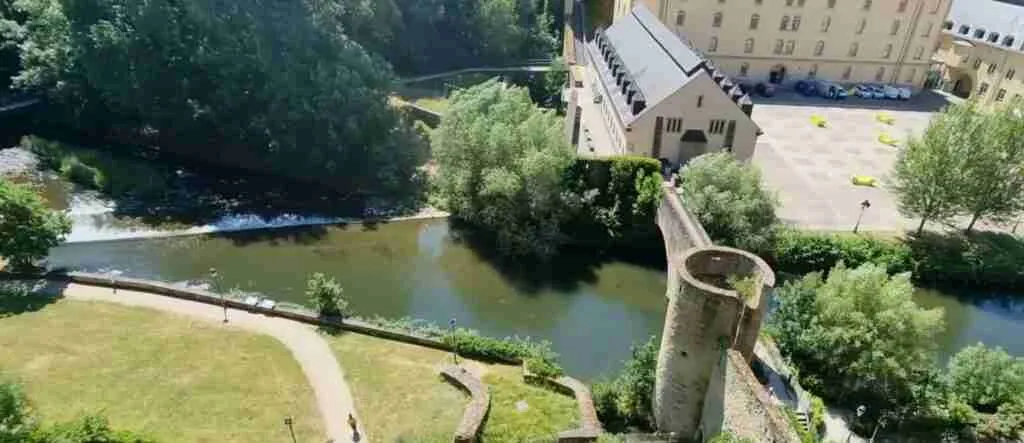
The Three Towers (Drei Türme) guard the southern fortress approach along the Rham Plateau, preserving Austrian-period defensive architecture from the 1730s. These massive circular towers originally supported a drawbridge and gate system controlling access from the Luxembourg plateau into the Old Town, creating a bottleneck where attacking forces concentrated under defensive fire from multiple levels and angles. The towers now anchor a peaceful park offering elevated viewpoints across the Pétrusse Valley, with walking paths connecting to the Vauban Tower, Citadel of the Holy Spirit ruins, and the Constitution Square (Place de la Constitution) monument honoring Luxembourg’s fallen soldiers. This circuit demonstrates fortress architecture principles: layered defenses requiring attackers to breach multiple gates, walls, and ditches while under continuous fire; mutually supporting positions allowing defenders to provide crossfire coverage eliminating blind spots; and elevated commanding positions dominating approaches and preventing enemy forces from massing beyond artillery range.
The Grand Ducal Palace occupies the historic core of Luxembourg’s Upper Town, serving since 1890 as the official residence and working office of Luxembourg’s Grand Duke. The palace building evolved from the original Luxembourg town hall constructed in 1418, destroyed by a gunpowder explosion in 1554, rebuilt in 1572-1574, and progressively expanded with baroque additions throughout the 18th century before conversion to ducal functions following Luxembourg’s establishment as an independent grand duchy in 1815. The current facade blends Flemish Renaissance style from the 16th-century reconstruction with neoclassical elements from later modifications, creating an elegant example of Luxembourg’s architectural layering across four centuries of construction and adaptation.
The palace remains closed to casual visitors throughout most of the year as a working administrative building housing the Grand Duke’s offices, state reception rooms, and spaces for official government functions. Interior tours operate exclusively from July 18 through August 30, 2026, when the Grand Ducal family departs for summer residence at Berg Castle, allowing public access to royal apartments, the Salon des Rois where visiting heads of state receive formal welcomes, the King’s Room featuring 19th-century furnishings, and the Grand Duke’s working office where government documents receive official signatures. The 75-minute guided tours (available in Luxembourgish, French, English, and German; tickets approximately €15 adults) require advance booking through the Luxembourg City Tourist Office starting in June 2026, with limited daily capacity creating high demand during the brief two-month access window. Tour proceeds support the Foundation of the Grand Duke and Grand Duchess, directing visitor fees toward humanitarian and development initiatives.
Essential Attractions and Experiences in Luxembourg City 2026
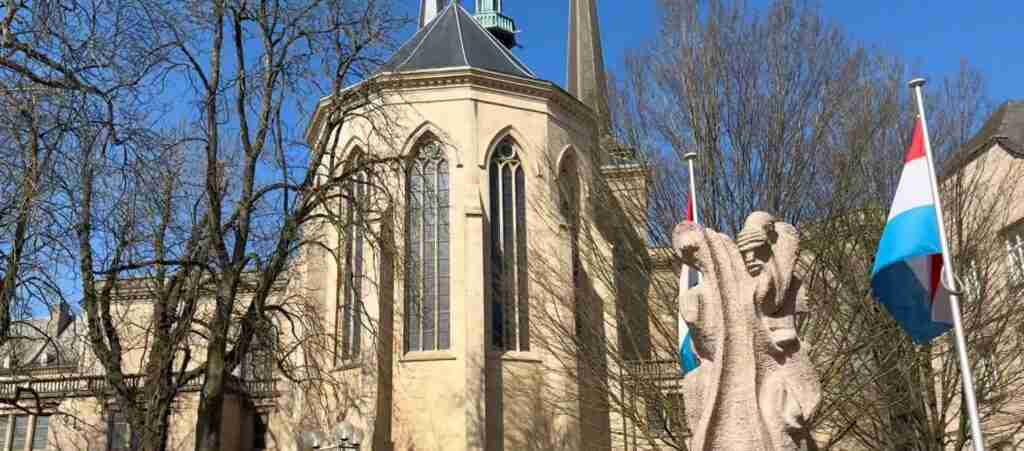
Notre-Dame Cathedral (Cathédrale Notre-Dame de Luxembourg) anchors the Old Town spiritual heritage, serving as Luxembourg’s only cathedral and the seat of the Roman Catholic Archbishop of Luxembourg. The church originated as a Jesuit college chapel constructed 1613-1621 in late Gothic style under Spanish Habsburg rule, elevated to cathedral status only in 1870 after Luxembourg established its independent archdiocese. The building blends Gothic structural elements—pointed arches, ribbed vaulting, and vertical emphasis characteristic of late medieval sacred architecture—with Renaissance and baroque decorative additions from successive renovations, including the ornate baroque organ from the 18th century and neo-Gothic spire additions from 1935-1938 restoration work.
The cathedral’s artistic treasures include the crypt housing the royal burial vault where Luxembourg’s Grand Ducal family members rest in ornate sarcophagi, 17th and 18th-century confessionals featuring intricate woodcarving, and the revered statue of the Comforter of the Afflicted (Consolatrix Afflictorum), Luxembourg’s patron saint credited with miraculous intervention during plague epidemics and wartime crises. The statue attracts pilgrims during the annual Octave celebration (third through fifth Sundays after Easter), when processions wind through Old Town streets honoring the Virgin Mary’s protective role in Luxembourg history. Cathedral entry remains free for all visitors, with interior access available daily except during Mass services, allowing quiet contemplation of the soaring nave, examination of baroque chapel decorations, and crypt visits (crypt access may require €2-3 donation). The cathedral’s central location on Rue Notre-Dame makes it easily accessible while exploring the surrounding Old Town quarters, Grand Ducal Palace, and commercial streets radiating from Place d’Armes.
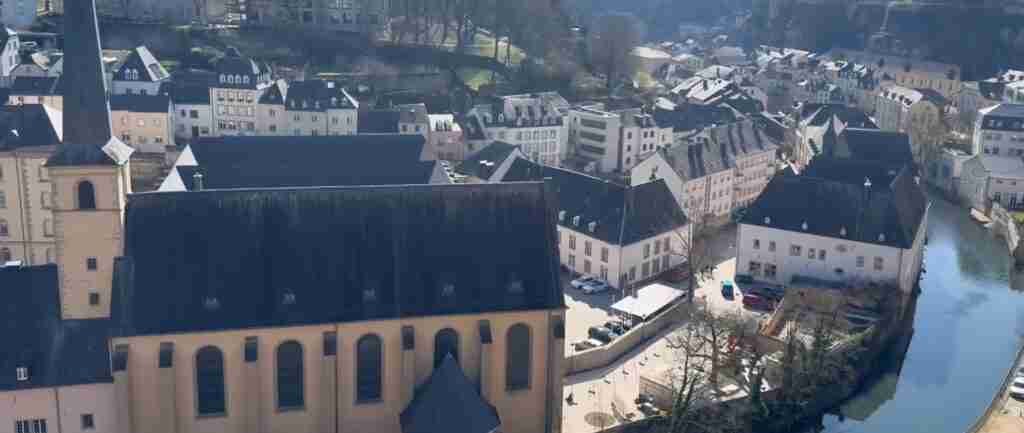
The Grund district occupies the Alzette River valley floor 70 meters below the fortress cliffs, historically housing working-class populations including tanners, brewers, and fortress construction laborers who served the Upper Town elite. This atmospheric riverside neighborhood survived fortress dismantlement intact, preserving narrow medieval lanes, stone houses with slate roofs, and former Neumünster Abbey now converted into a cultural center hosting concerts, art exhibitions, and the seasonal Rotondes performance venue. Walking Grund’s pedestrian streets reveals Luxembourg’s socioeconomic stratification across the fortress period: wealthy merchants and nobility occupied the secure Upper Town behind fortification walls, while artisans and laborers lived in the vulnerable lower districts subject to enemy bombardment but benefiting from water-powered mills along the Alzette for tanning, brewing, and milling operations.
Modern Grund functions as Luxembourg City’s bohemian arts quarter and evening dining destination, with former brewery buildings converted into upscale restaurants, wine bars, and jazz clubs attracting locals and visitors seeking atmospheric alternatives to Upper Town formality. The neighborhood connects to upper levels via multiple routes: the Pfaffenthal panoramic elevator (free, descending the cliff face in 2 minutes with glass walls revealing valley views), the Grund funicular pathway climbing steep staircases through fortress foundations, and the Wenzel Circular Walk historical route traversing fortress architecture while connecting upper and lower districts. Weekend evenings bring crowds to riverside terraces along Rue Münster and Rue de la Tour Jacob, where outdoor seating under medieval stone buildings creates intimate dining experiences with fortress walls illuminated on cliffs above creating dramatic backdrops invisible from the Upper Town perspective.
The MUDAM (Musée d’Art Moderne Grand-Duc Jean) represents Luxembourg’s commitment to contemporary culture, occupying a striking I.M. Pei-designed building on the Kirchberg plateau adjacent to European Union institutions. The museum building itself constitutes an architectural attraction, with Pei’s signature geometric forms—angular glass facades, precise stone volumes, and dramatic interior spaces lit by geometric skylights—creating dialogue between modern materials and Luxembourg’s fortress heritage through subtle references to defensive architecture’s angular geometries and commanding elevated positions. The museum opened in 2006 after lengthy construction incorporating foundations from Fort Thüngen, an 18th-century Vauban-style fortress that previously occupied the Kirchberg heights defending the city’s northeastern approaches.
MUDAM’s permanent collection surveys international contemporary art from the 1960s through present day, emphasizing conceptual art, installation works, photography, and new media rather than traditional painting and sculpture. The exhibition program rotates regularly, presenting solo shows by established contemporary artists, thematic group exhibitions exploring current artistic concerns, and Luxembourg artist retrospectives supporting local creative production. Notable collection highlights include works by Andy Warhol, Bruce Nauman, Julian Schnabel, and Anri Sala, displayed throughout galleries designed for maximum natural light and architectural integration. Museum admission costs €8-10 adults (check official MUDAM website for current 2026 rates), with free entry Wednesday evenings 18:00-21:00 providing excellent value for budget-conscious visitors. The museum café and sculpture terrace offer panoramic city views across the Alzette Valley toward the Old Town fortress silhouette, creating contemplative spaces integrating art, architecture, and Luxembourg’s dramatic topography.
The National Museum of History and Art (Musée National d’Histoire et d’Art, MNHA) occupies four restored 17th and 18th-century townhouses in the Old Town, presenting comprehensive surveys of Luxembourg archaeology, medieval history, fine arts, and fortress development across multiple floors of connected exhibition spaces. The archaeology collections showcase Luxembourg’s position as a Roman frontier zone, displaying artifacts from Gallo-Roman villas, military camps, and trade settlements that flourished along Moselle Valley routes connecting Mediterranean commerce with northern European markets. Medieval sections present religious sculpture, illuminated manuscripts, and fortress models explaining Luxembourg’s evolution from Count Siegfried’s 10th-century castle through successive expansions creating the baroque fortress city.
Fine arts galleries feature Flemish and Dutch Golden Age paintings reflecting Luxembourg’s historical connections to Spanish Netherlands artistic centers, 19th-century romantic landscapes depicting Ardennes mountain scenery, and modern Luxembourg artist works including Joseph Kutter’s expressionist portraits and Nico Klopp’s architectural studies. The fortress development exhibits employ maps, architectural drawings, and scale models demonstrating defensive evolution across Spanish, French, Austrian, and Prussian engineering periods, helping visitors understand the complex military architecture encountered throughout the city. Museum entry costs approximately €7 adults, €5 reduced rates (students, seniors), with free admission for visitors under 21 years and Kulturpass holders. The museum’s central Old Town location on Marché-aux-Poissons makes it easily accessible while exploring surrounding streets, requiring 2-3 hours for comprehensive tours or 90 minutes focusing on fortress history sections most relevant to understanding Luxembourg’s UNESCO heritage.
The Adolphe Bridge (Pont Adolphe) spans the Pétrusse Valley with the world’s largest stone arch when completed in 1903, creating an engineering landmark rivaling fortress casemates in technical ambition. The bridge’s 84-meter arch carried boulevard traffic 42 meters above the Pétrusse Valley floor, connecting the Upper Town and Gare railway station district while demonstrating Luxembourg’s transition from fortress neutralization to modern infrastructure development during the industrial age. Architect Paul Séjourné designed the bridge balancing structural efficiency with architectural elegance, creating a graceful curve integrating into valley topography rather than dominating through sheer mass.
Walking across the Adolphe Bridge reveals Luxembourg City’s dramatic three-dimensional layout: the Pétrusse Valley parks 40 meters below, the fortress cliffs rising beyond supporting Upper Town ramparts, and the modern Gare district spreading across the opposite plateau. The bridge’s sidewalks provide safe pedestrian access separated from vehicle traffic, offering photography opportunities capturing fortress walls, valley greenery, and the viaduct’s elegant stone arch reflected in morning or late afternoon light. The bridge functions as a practical connection between the railway station area (where many hotels cluster offering lower rates than Old Town properties) and the UNESCO heritage core, making it essential infrastructure for visitors staying in Gare district accommodations while exploring fortress sites, museums, and restaurants concentrated in Ville Haute quarters.
The Chemin de la Corniche promenade traces southern fortress ramparts along sheer cliff edges overlooking the Grund district 70 meters below, earning recognition as “Europe’s most beautiful balcony” for dramatic Alzette Valley panoramas. The pedestrian pathway follows the Spanish and French fortification walls from the Bock promontory eastward to the Citadel of the Holy Spirit, revealing defensive architecture layers, embrasures cut through wall faces for artillery placement, and integrated gates controlling access between upper and lower city districts during the fortress period. Walking the Corniche requires no admission fee, operates 24 hours with evening illumination creating romantic nighttime experiences, and takes 20-30 minutes at leisurely pace appreciating viewpoints, reading interpretive panels explaining military architecture, and photographing the Grund’s clustered rooftops, church spires, and riverside buildings set against opposite valley slopes.
The promenade demonstrates fortress defensive principles through its commanding position: attackers attempting to assault the Lower Town faced crossfire from Corniche ramparts, Bock casemate embrasures, and opposite valley fortifications, creating killing zones where concentrated fire decimated assault forces before reaching defensive walls. Modern walkers enjoy peaceful valley views where 18th-century soldiers watched for enemy movements, positioned artillery for maximum range and angle of fire, and maintained vigilance during the numerous sieges Luxembourg endured across its military history. The Corniche connects naturally to the Bock Casemates entrance, Grund district descents via staircases, and Old Town walking routes, making it an essential component of any fortress-focused itinerary revealing Luxembourg’s unique integration of military heritage with contemporary urban life and tourism infrastructure.
Day Trips from Luxembourg City Using Free Public Transport 2026
Vianden Castle perches dramatically above the Our River valley 50 kilometers north of Luxembourg City, ranking among Europe’s finest feudal fortress-palaces with origins dating to the 10th century and major construction phases spanning the 11th through 14th centuries under powerful Counts of Vianden. The castle complex crowns a hilltop position dominating the narrow valley floor, employing natural topography for defensive advantage while creating an imposing visual statement of aristocratic power characteristic of medieval Rhine fortress architecture. Successive ruling families expanded the original keep with palace wings, chapel additions, defensive towers, and curtain walls creating an integrated complex blending military fortress with aristocratic residence—a dual function distinguishing high-status noble castles from purely military fortifications.
The castle suffered gradual abandonment following the Vianden line’s extinction in the 15th century, deterioration accelerating after 1820 when William I of the Netherlands sold the property piecemeal, with locals dismantling sections for building stone and the remaining structures degrading to picturesque ruins attracting 19th-century romantic artists including Victor Hugo, who sketched the castle during extended Vianden visits. Comprehensive restoration beginning in 1977 reconstructed the palace interiors, defensive towers, and chapel based on archaeological evidence and surviving architectural fragments, creating today’s visitor experience presenting late medieval aristocratic life through furnished chambers, armor displays, and architectural documentation. The restoration philosophy emphasized authentic reconstruction using period-appropriate materials and techniques rather than creating theme-park interpretations, resulting in austere stone interiors punctuated by period furniture, tapestries, and weapons collections evoking medieval fortress-palace atmosphere.
Reaching Vianden from Luxembourg City requires taking the free CFL train to Ettelbruck (30 minutes, departures every 30 minutes during daylight hours), then transferring to Bus 570 to Vianden (25 minutes, also free under Luxembourg’s public transport policy). The combined journey takes approximately 90 minutes each direction, making Vianden easily accessible as a half-day or full-day excursion departing Luxembourg City morning and returning late afternoon after exploring the castle interior (admission approximately €10 adults, €6 children and students), walking the medieval town’s atmospheric lanes lined with 16th-18th century townhouses, and enjoying lunch at riverside restaurants along the Our River. The Victor Hugo Museum in central Vianden (free admission) occupies the house where the French writer lived during 1871 political exile, displaying manuscripts, drawings, and personal effects from his productive Vianden period when he wrote poetry and sketched the castle ruins.
Echternach anchors Luxembourg’s “Little Switzerland” (Mullerthal) hiking region 35 kilometers east of the capital, combining medieval town heritage with access to dramatic sandstone rock formations, moss-covered gorges, and forest trails that earned the area UNESCO Global Geopark designation in 2022. The town traces origins to 698 CE when Anglo-Saxon missionary Willibrord founded an abbey that became one of medieval Europe’s most important scriptoria, producing illuminated manuscripts including the famous Codex Aureus Epternacensis (Golden Book of Echternach), now preserved in the German National Museum in Nuremberg. The modern basilica housing Willibrord’s tomb represents Luxembourg’s most significant pilgrimage site, attracting thousands during the annual Dancing Procession on Whit Tuesday when participants perform unique hopping steps through streets honoring traditions dating to the medieval period.
Echternach’s medieval marketplace preserves half-timbered houses, Gothic church architecture, and town fortifications including the restored Dënzelt pavilion and rampart walks offering elevated views across the Sauer River valley marking Luxembourg’s border with Germany. The town functions primarily as gateway to Mullerthal hiking trails radiating into surrounding sandstone landscapes, with well-marked routes ranging from 2-hour forest loops to full-day 14-kilometer circuits through iconic rock formations including the Wolfsschlucht gorge (narrow passage requiring sideways shuffling through tight rock walls), Huel Lee archway, and Perekop plateau overlooks. Free trains depart Luxembourg City’s Gare station for Echternach every hour (45-minute journey), making day trips combining town exploration and afternoon hiking entirely practical using Luxembourg’s complimentary public transport while experiencing landscapes distinct from fortress architecture and urban culture defining the capital city.
The Moselle wine region stretches 42 kilometers along Luxembourg’s southeastern border with Germany, cultivating Riesling, Pinot Gris, Auxerrois, and sparkling Crémant de Luxembourg wines in steep riverside vineyards benefiting from south-facing slopes, calcareous soils, and microclimate moderated by the Moselle River’s thermal mass. The wine route (Route du Vin) connects picturesque villages including Remich, Grevenmacher, Wormeldange, and Schengen, each offering cellar tours, tasting rooms, and seasonal wine festivals celebrating harvest traditions and regional viticulture dating to Roman settlement periods when legionary veterans planted Luxembourg’s first commercial vineyards.
Schengen village holds particular significance beyond wine production, serving as the signing location for the 1985 Schengen Agreement abolishing border controls between European nations, creating today’s barrier-free travel zone spanning 27 countries. The European Museum Schengen occupies a modern building overlooking the tripoint where Luxembourg, Germany, and France meet at the Moselle confluence, presenting exhibitions documenting European integration, border control evolution, and the political negotiations producing passport-free movement across member states. Museum admission costs approximately €7 adults, with the symbolic location at Europe’s geographic and political convergence point adding context to Luxembourg’s historical role as buffer state between major powers and contemporary function as European Union capital.
Moselle villages connect to Luxembourg City via free CFL trains departing Gare station for Wasserbillig (45 minutes), with local buses serving wine route villages (also free under public transport policy). Many visitors combine wine tasting with cycling, renting bikes in Remich or Grevenmacher (approximately €15-20 daily) to pedal the flat riverside cycle path connecting villages, vineyards, and tasting cellars across 25-kilometer stretches of paved trail parallel to the Moselle shoreline. This approach allows leisurely progression between multiple wineries sampling regional varieties, lunch at riverside restaurants serving Moselle fish specialties, and return train journeys from convenient villages without concerns about driving after wine tasting—taking full advantage of Luxembourg’s free public transport removing logistical barriers that complicate wine region day trips in France, Italy, or Germany where visitors must coordinate designated drivers or expensive tours.
Practical Planning Information for Luxembourg City 2026
Luxembourg Airport (LUX) serves as the primary international gateway, located 6 kilometers east of city center with direct flights connecting London, Amsterdam, Paris, Frankfurt, and other major European hubs. Airport-to-city transfers utilize free public buses 16 and 29 departing every 10-15 minutes during daytime hours (every 30 minutes evenings and weekends), reaching the Gare central railway station in 25 minutes and continuing to various city districts. The completely free service eliminates taxi necessity (taxis cost €25-30 for the same journey), making Luxembourg one of Europe’s most economical capitals for airport access. International rail connections via Luxembourg’s Gare station include regular TGV service to Paris (2 hours 10 minutes, approximately €60-90 depending on booking timing), direct trains to Brussels (3 hours, €40-60), and connections to German cities including Trier (50 minutes), Koblenz (2 hours), and beyond.
Luxembourg City’s free public transport network operates buses, trams, and trains throughout the capital and nationwide, eliminating ticket purchase, validation, and fare zone navigation entirely. The modern tram system opened in 2017, connecting Luxembourg Airport, Kirchberg EU district, Gare railway station, and city center with sleek vehicles running every 4-10 minutes during peak hours. City buses supplement tram routes, reaching neighborhoods and attractions not served by rail, while the AVL bus network serves suburban areas extending 20-30 kilometers beyond city limits. The Pfaffenthal panoramic elevator represents unique vertical transport, descending cliff faces connecting Upper Town fortress areas with the Grund riverside district in 2 minutes via glass-walled elevator cabins, operating continuously during daytime hours as integrated public transport free for all passengers.
Walking dominates Luxembourg City exploration for able-bodied visitors, with the compact UNESCO core concentrating major attractions within a 2-kilometer radius requiring 25-30 minutes to traverse edge-to-edge. The multi-level topography creates vertical challenges exceeding horizontal distances—descending from Upper Town ramparts to Grund riverside district involves 70-meter elevation changes via staircases, elevators, or winding pathways through fortress architecture. The Wenzel Circular Walk tourist route addresses this complexity, following a marked 5-kilometer path connecting fortress heritage sites while navigating the three terrain levels through logical progression requiring approximately 2.5 hours including attraction visits. The route begins at Place de la Constitution monument, descends through Bock Casemates, explores Grund district streets, climbs to Neumünster Abbey, ascends fortress walls to the Corniche, and returns to Upper Town via rampart pathways, creating comprehensive fortress orientation while demonstrating defensive architecture’s integration with dramatic natural topography.
Accommodation options span budget hostels near the Gare railway station (€25-40 dormitory beds, €60-80 private rooms) to luxury properties in the historic Upper Town (€250-400+ nightly for premium hotels including Le Royal and Hotel Le Place d’Armes). Mid-range travelers find excellent value in 3-star business hotels concentrated around the Gare district, where properties serving weekday business clientele often reduce weekend rates by €15-30 per night (typical mid-range hotels €70-130 nightly for double rooms with ensuite bathrooms, WiFi, and breakfast available for additional €12-18). Booking weekend stays rather than weekday nights substantially reduces accommodation costs when flexibility permits, taking advantage of Luxembourg’s business-travel-dominated hotel market where leisure visitors benefit from reduced Friday-Saturday-Sunday rates.
The Old Town and Grund districts offer atmospheric boutique hotels occupying converted historic buildings, trading modern amenities for character and location within UNESCO heritage zones. These properties range €120-250 nightly depending on season, size, and specific amenities, providing walking-distance access to fortress sites, museums, and restaurants without requiring public transport even though buses and trams remain free. Budget-conscious visitors prioritize Gare station area accommodations, accepting 15-20 minute tram rides or 25-minute walks to Old Town attractions in exchange for substantially lower nightly rates and proximity to international train connections for day trips to Vianden, Trier, or Metz.
Restaurant dining costs reflect Luxembourg’s status as Europe’s wealthiest nation per capita, with casual bistro meals ranging €17-23 per person for main course, mid-range restaurants charging €35-50 per person for three-course dinners with wine, and upscale establishments exceeding €75-150 per person for tasting menus and premium wine selections. Budget travelers substantially reduce food expenses by utilizing bakeries and sandwich shops—Fischer Bakery on Rue Chimay offers substantial gourmet sandwiches with coffee for €10-15 total, while Charles Sandwiches near Place d’Armes serves creative combinations for similar prices. Supermarkets including Cactus, Delhaize, and Auchan provide self-catering options for travelers with apartment accommodations or hostel kitchen access, with grocery costs approximately 10-15% above Western European averages.
The “Plat du Jour” lunch special represents excellent dining value, with many restaurants offering chef’s choice daily menu including main course, side dishes, and sometimes starter or dessert for €12-18, substantially below evening à la carte prices for similar quality. Luxembourg’s Belgian influence brings excellent beer culture, with local microbreweries producing craft beers complementing imports from Belgium’s Trappist breweries and German pilsners—expect to pay €3-6 for half-liter servings in casual bars, €5-8 in upscale establishments. Wine selections emphasize Moselle regional production, with Luxembourg Riesling and Crémant sparkling wines available by glass (€4-7) or bottle (€18-35) at prices competitive with German and Alsatian equivalents while supporting local viticulture.
The LuxembourgPass provides excellent value for visitors planning intensive museum and attraction touring, covering admission to over 60 sites nationwide including Bock and Pétrusse Casemates, MUDAM, National Museum of History and Art, Vianden Castle, and dozens of regional museums, castles, and cultural sites. Pass prices in 2026 cost €21 for one day, €28 for two consecutive days, and €34 for three consecutive days, with the two-day pass recovering cost after visiting approximately four paid attractions (typical admission €7-13 each). The pass includes free public bike rentals at automated stations throughout Luxembourg City and select regional locations, adding cycling access to free public transport for comprehensive mobility options. Passes purchase online via the official Visit Luxembourg website or in person at the Luxembourg City Tourist Office on Place Guillaume II, with immediate activation upon first attraction scan requiring consecutive-day use rather than flexible-day options spanning longer periods.
Luxembourg’s multilingual environment operates seamlessly in Luxembourgish (national language), French (administrative and business), and German (media and cultural), with English widely spoken in tourism, hospitality, and international business contexts. Most museum labels, restaurant menus, and tourist information appear in French and German, with English translations increasingly common at major attractions serving international visitors. French phrases prove most useful for everyday interactions, as Luxembourg’s Romance language heritage and French administrative dominance make French the default choice when Luxembourgish proves unavailable. Tourist office staff, hotel receptionists, and restaurant servers fluently handle English-speaking visitors, while older generations and traditional establishments may prefer French communication creating polite acknowledgment of Luxembourg’s francophone cultural connections.
Seasonal Considerations and Events Calendar 2026
Spring months April through early June deliver ideal visiting conditions in Luxembourg City, with temperatures ranging 12-22°C creating comfortable walking weather for fortress rampart exploration, valley hikes, and outdoor café sitting without summer heat or winter cold. Gardens throughout the Pétrusse and Alzette valleys bloom with spring flowers, fortress walls exhibit fresh green vegetation growth, and extended daylight hours (sunset around 20:30 by late May) allow evening walks after dinner capturing golden hour illumination on fortress architecture. This shoulder season sees moderate visitor numbers compared to July-August peaks, with hotel rates 15-20% below summer prices and major attractions operating without lengthy queue waits or crowded exhibition spaces.
The Schueberfouer fair dominates late summer, running from late August through early September on the Glacis plaza with carnival rides, food vendors, games, and evening entertainment creating Luxembourg’s largest public festival. This 680-year tradition dating to 1340 brings crowds from throughout Luxembourg and neighboring regions, transforming the plateau between Upper Town and Kirchberg into a sprawling fairground operating from midday through late evening. Fair admission remains free with individual ride and game costs, creating family-friendly entertainment complementing cultural attractions. The festival period coincides with university semester starts and business travelers returning from August vacations, driving hotel occupancy rates to annual peaks and requiring advance accommodation booking for late August-early September visits.
Autumn months September through October offer Luxembourg City’s most balanced visiting window, combining summer’s operational attractions (casemates remain open through October, museums maintain extended hours) with lower accommodation costs, comfortable temperatures (15-20°C through mid-October), and golden foliage transforming valley parks and fortress walls into scenic autumn landscapes. The Luxembourg Wine and Grape Festival celebrates Moselle harvest in mid-September along the wine route villages, with tastings, vineyard tours, and regional food specialties showcasing Luxembourg viticulture. Autumn’s shorter daylight hours (sunset around 18:30 by late October) reduce evening activity time compared to summer but still permit full-day fortress exploration, museum visits, and dinner before complete darkness.
Winter transforms Luxembourg City from late November through February, with Christmas markets on Place d’Armes and Place Guillaume II operating from late November through late December featuring traditional craftwork stalls, mulled wine vendors, roasted chestnuts, and holiday decorations illuminating Old Town squares. The markets create atmospheric evening experiences with medieval fortress backdrops, though cold temperatures (0-8°C typical, occasionally dropping below freezing) require warm clothing for comfortable outdoor time. Many attractions reduce winter operating hours or close entirely—Bock and Pétrusse Casemates close November through March due to cold conditions and condensation in unheated tunnels, outdoor fortress walks become less appealing in freezing temperatures, and shorter daylight hours (sunset around 16:30-17:00) limit afternoon exploration time.
Winter hotel rates drop 15-25% below summer peaks as business travel decreases around year-end holidays and tourist numbers decline substantially, creating budget-friendly opportunities for visitors comfortable with cold weather and willing to accept reduced attraction access. Indoor museums including MNHA, MUDAM, and Villa Vauban maintain full winter operations with heated galleries, making cultural touring entirely practical while fortress heritage sites require spring-through-autumn visits for complete access. The Christmas market period (typically November 28-December 26 in 2026) represents winter’s peak visitor season, with hotel rates increasing during this festive window before dropping again in January-February when Luxembourg experiences lowest tourist numbers and accommodation pricing.
UNESCO Sites Beyond Luxembourg City 2026
Luxembourg holds 10 UNESCO designations spanning multiple protection categories, creating diverse cultural and natural heritage beyond the capital’s fortress architecture. The Mullerthal Region – Luxembourg’s Little Switzerland earned UNESCO Global Geopark status in 2022, recognizing exceptional geological formations including Luxembourgian sandstone, conglomerate rock structures, and the dramatic landscape where millennia of water erosion carved narrow gorges, rock formations, and moss-covered caves distinctive in Western European geology. The Geopark encompasses 256 square kilometers of eastern Luxembourg centered on Echternach, with hiking trails accessing rock formations, educational exhibits explaining geological processes, and conservation programs protecting fragile sandstone environments from visitor impact.
The Family of Man photography exhibition in Clervaux earned UNESCO Memory of the World inscription in 2003, recognizing Edward Steichen’s groundbreaking 1955 photographic project presenting 503 images by 273 photographers from 68 countries exploring universal human experiences including birth, love, work, death, war, and peace. Steichen, born in Luxembourg in 1879 before emigrating to the United States and becoming chief photographer for the US Navy in World War I and director of photography for New York’s Museum of Modern Art, conceived the exhibition as humanist statement connecting people across cultural boundaries through shared experiences. The permanent display occupies Clervaux Castle in northern Luxembourg (1 hour north of Luxembourg City by free train), presenting photographs in their original exhibition groupings within medieval castle halls creating powerful juxtapositions between timeless human emotions and historic architectural settings.
The Minett Region UNESCO Biosphere Reserve received designation in 2020, protecting southern Luxembourg’s former mining district where iron ore extraction drove industrialization from the 1870s through mine closures in the late 20th century. The reserve encompasses 256 square kilometers of post-industrial landscapes where nature reclaims abandoned mines, processing facilities, and worker housing while communities develop sustainable economies balancing heritage conservation, ecological restoration, and economic development. Red rocks colored by iron-rich soil create distinctive landscapes, while industrial archaeology sites including blast furnaces, mine entrances, and processing plants offer unique heritage tourism complementing traditional castle and fortress attractions dominating Luxembourg’s northern regions.
Frequently Asked Questions About Luxembourg City 2026
Is Luxembourg City expensive to visit?
Luxembourg City represents a moderately expensive European capital destination, with higher costs than Prague, Krakow, or Lisbon but generally more affordable than Paris, London, or Zurich when accounting for completely free public transport eliminating €10-20 daily transit expenses typical in other major cities. Budget travelers manage €70-120 daily budgets using hostel accommodations (€25-40 dormitory beds), bakery meals and supermarket provisions rather than full restaurant dining, and free attractions including fortress wall walks, Notre-Dame Cathedral, and valley parks complementing paid museums. Mid-range visitors spending €110-160 daily afford comfortable 3-star hotels (€70-130 nightly divided between two sharing), casual restaurant meals for lunch and dinner (€35-50 daily for food), and admission to major attractions including casemates, museums, and the optional LuxembourgPass covering 60+ sites.
Luxury travelers investing €185-250+ daily access boutique Old Town hotels (€250-400+ nightly), upscale restaurant dining with wine pairings (€75-150 per person), and premium experiences including Grand Ducal Palace tours and private wine region excursions. Luxembourg’s completely free public transport system—covering all buses, trams, and second-class trains nationwide including airport transfers and day trips to Vianden, Echternach, and Moselle villages—represents the single most significant cost advantage compared to other European capitals where daily transit passes cost €8-15, with this savings offsetting slightly higher restaurant and hotel prices. Smart budget strategies including weekend hotel bookings (saving €15-30 nightly versus weekday rates), lunch-focused dining utilizing “Plat du Jour” specials (€12-18 versus €35-50 dinner equivalents), and free Wednesday evening MUDAM admission allow visitors to experience Luxembourg’s cultural offerings without luxury-tier spending.
Can you visit Luxembourg City as a day trip?
Luxembourg City functions excellently as a day trip destination from Brussels (3 hours by train), Trier Germany (50 minutes), or Metz France (90 minutes), though compressed timelines require selective prioritization focusing on fortress heritage highlights rather than comprehensive museum touring. A focused day trip itinerary departing neighboring cities on early morning trains allows 5-7 hours in Luxembourg, sufficient time for Bock Casemates exploration (1 hour), Corniche promenade walking with valley viewpoints (30 minutes), Grund district wandering and lunch (90 minutes), Notre-Dame Cathedral visit (20 minutes), and Old Town shopping streets exploration before returning late afternoon or early evening. This schedule sacrifices museum time—MUDAM, MNHA, and specialized collections require 1.5-2 hours each—but captures Luxembourg’s distinctive fortress topography, UNESCO heritage, and atmospheric medieval quarters making the city unique among European capitals.
Overnight stays justify themselves for visitors seeking comprehensive cultural touring, relaxed fortress exploration without time pressure, evening dining in Grund’s atmospheric restaurants, and morning/afternoon optimal light for photography capturing valley panoramas and architectural details. The Grand Ducal Palace interior tours (July 18-August 30, 2026 only) require 75 minutes plus potential queue time, effectively consuming half a day trip window and justifying overnight accommodation for visitors prioritizing royal architecture access during the brief summer opening period. Day trippers from Paris face longer journeys (3-4 hours including transfers), making Luxembourg less practical for single-day visits from French capital compared to closer Belgium and German origin points where efficient rail connections and compact destination size create viable compressed touring options.
What languages do people speak in Luxembourg City?
Luxembourg operates as a trilingual nation with Luxembourgish serving as the national language and primary tongue among locals, French dominating administrative, legal, and business contexts, and German prevalent in media, education, and cultural spheres. This linguistic complexity reflects Luxembourg’s geographic position between Romance and Germanic language zones and historical rule by French, German, and Austrian powers creating multilingual traditions across centuries. Luxembourgish itself represents a Moselle Franconian dialect more closely related to German than French, evolving independent identity and standardized written form only in the 20th century after Luxembourg established linguistic policy distinguishing national speech from neighboring French and German despite maintaining those languages in official capacities.
Visitors encounter this multilingualism through restaurant menus appearing in French and German (sometimes with English additions), street signs using Luxembourgish place names with French or German alternatives, and locals code-switching between languages mid-conversation depending on audience and context. French proves most practical for tourists lacking German skills, as administrative dominance and Romance language familiarity for English speakers makes French the accessible option when Luxembourgish remains unknown. Most tourism professionals including hotel staff, museum guides, restaurant servers, and information office employees speak fluent English alongside French and German, making language barriers minimal in contexts where international visitors concentrate. Traditional establishments, older generations, and working-class neighborhoods may prefer French or German communication, though Luxembourg’s cosmopolitan character and EU institution presence creates widespread English competency exceeding many European capitals where tourism represents smaller economic sectors than Luxembourg’s banking, EU administration, and international business.
How do you get around Luxembourg City?
Luxembourg City’s completely free public transport network eliminates all costs for buses, trams, and trains throughout the capital and nationwide, creating unprecedented mobility compared to European destinations where transit budgets consume significant portions of daily spending. The modern tram system opened in 2017 serves as primary transportation spine, connecting Luxembourg Airport, Kirchberg EU district, Gare central railway station, and Hamilius city center hub with sleek vehicles departing every 4-10 minutes during daytime hours. City buses supplement tram coverage, reaching neighborhoods and attractions beyond rail corridors including Clausen valley districts, residential areas, and hillside developments. The CFL national railway serves suburban stations within city limits plus regional destinations as far as Vianden (90 minutes north) and Wasserbillig (45 minutes east), with all second-class seating free for passengers including international tourists.
Walking dominates the compact UNESCO core where fortress sites, museums, Old Town squares, and restaurants concentrate within 2-kilometer radius, though the dramatic three-level topography creates vertical challenges requiring elevator, funicular, or staircase navigation between Upper Town fortress plateau, mid-level connecting districts, and Grund valley floor 70 meters below street level. The Pfaffenthal panoramic elevator represents unique infrastructure, descending cliff faces via glass-walled cabins connecting upper fortress areas with lower riverside neighborhoods in 2-minute rides operating continuously during daytime as integrated public transport free for all passengers. The Grund funicular pathway provides alternative descent via staircases winding through fortress foundations, offering architectural encounters and valley views while serving as practical connection between terrain levels.
The Vel’OK public bike system operates automated rental stations throughout Luxembourg City and select regional towns, providing free bicycle access for LuxembourgPass holders or €1 daily registration for unlimited 30-minute rides (longer trips charged €1 per additional 30 minutes, daily cap €5). The relatively flat Kirchberg plateau, riverside paths along the Alzette through Grund, and dedicated bike lanes on major boulevards create cycling-friendly environments, though the Upper Town’s steep terrain and fortress wall barriers make walking more practical for historic core exploration. Taxis serve niche functions for late-night transport, heavy luggage assistance, or mobility-impaired travelers unable to navigate staircase-heavy public transport connections, charging approximately €10-15 for cross-city journeys and €25-30 for airport transfers—services rarely necessary given comprehensive free public transit coverage but available when circumstances justify premium convenience.
When is the best time to visit Luxembourg City?
Late April through early June represents Luxembourg City’s optimal visiting window, combining mild temperatures (12-22°C), blooming spring vegetation in valley parks, extended daylight hours (sunset around 20:30 by late May), and moderate visitor numbers keeping accommodation prices 15-20% below July-August peak season rates. Spring weather permits comfortable all-day fortress exploration without summer heat or winter cold, making cliff-edge promenade walking, casemate tunnel tours, and valley district wandering pleasant rather than exhausting or uncomfortable. Major attractions operate full spring schedules with Bock and Pétrusse Casemates accessible, museums maintaining standard hours, and outdoor cafés opening terraces for riverside dining in Grund or Upper Town square sitting.
September through mid-October provides autumn alternative, offering summer’s operational attractions with lower accommodation costs, comfortable temperatures (15-20°C through mid-October), and golden foliage transforming fortress walls and valley parks into scenic landscapes particularly photogenic for visitors prioritizing visual appeal. Autumn’s shorter daylight hours (sunset around 18:30 by late October) reduce evening activity time compared to May-June but still permit full-day touring including morning museum visits, afternoon fortress exploration, and dinner before darkness. The Luxembourg Wine Festival in mid-September adds cultural programming for visitors timing trips around Moselle harvest celebrations, with vineyard tours, tastings, and regional food specialties accessible via free trains to wine route villages.
Summer months July-August bring warmest weather (18-28°C), longest days (sunset after 21:00), and peak visitor numbers driving accommodation prices 20-30% above shoulder season rates while creating crowded conditions at major attractions including Bock Casemates, MUDAM, and popular restaurants. Summer justifies itself for visitors prioritizing Grand Ducal Palace interior tours (exclusively July 18-August 30, 2026), outdoor evening events and concerts, extended museum hours, and maximum daylight for photography and exploration despite higher costs and crowds. Winter months December through February offer budget advantages with hotel rates dropping 15-25%, though Bock and Pétrusse Casemates close November through March, outdoor fortress walks become uncomfortable in freezing temperatures (0-8°C typical), and short daylight hours (sunset around 16:30) limit afternoon touring—making winter appropriate only for visitors prioritizing Christmas markets (late November-late December), indoor museum focus, or budget minimization over comprehensive fortress heritage access.
Are the Luxembourg City casemates worth visiting?
The Bock Casemates represent Luxembourg City’s signature UNESCO heritage experience, offering unique access to 17 kilometers of underground galleries carved into solid rock where visitors walk dimly-lit tunnels experiencing fortress engineering that sheltered 1,200 soldiers, 50 horses, workshops, and ammunition stores during siege conditions across the 17th and 18th centuries. The self-guided tour requires 45-60 minutes traversing multi-level passages where stone walls display tool marks from 18th-century excavations without modern power equipment, passing former guard chambers and munitions storage rooms, and emerging at strategic embrasures cutting through cliff faces revealing spectacular views across the Grund district 70 meters below. This tangible encounter with military history—walking defensive infrastructure rather than reading museum labels—creates memorable experiences understanding Luxembourg’s strategic importance and the engineering ambition required to carve habitable tunnels through bedrock using only manual labor and gunpowder blasting.
The admission cost (€11 adults, €9 students and seniors, €5.50 children) represents fair value for a significant UNESCO heritage site requiring ongoing maintenance of underground passages, safety systems, and preservation programs protecting fragile sandstone from visitor erosion and moisture damage. The LuxembourgPass includes free casemate entry, making the pass worthwhile for visitors planning to tour multiple attractions including MUDAM (€8-10), National Museum of History and Art (€7), and regional sites like Vianden Castle during multi-day stays. The experience suits most visitors comfortable with moderate physical activity including staircases, uneven stone floors, and cool underground temperatures (12-14°C requiring light jackets even in summer), though narrow passages in some sections may challenge visitors with severe claustrophobia or significant mobility limitations.
The Pétrusse Casemates provide alternative underground experience with different engineering characteristics—straighter tunnels, larger artillery chambers, impressive vaulted ceilings—and lesser crowds than the more famous Bock galleries. Visiting both casemate systems creates comprehensive understanding of Luxembourg’s underground fortress infrastructure, though time-constrained visitors achieve satisfactory fortress experience touring only the Bock Casemates combined with Corniche promenade walking and Grund valley exploration creating multi-faceted encounters with defensive architecture across surface and subterranean levels. The casemates justify priority positioning in Luxembourg itineraries as unique heritage experiences unavailable elsewhere in Europe at comparable scale and accessibility, representing UNESCO-recognized military engineering masterworks integrated into living city contexts rather than isolated ruins or museum reconstructions divorced from original strategic landscape.
What should I eat in Luxembourg City?
Luxembourg cuisine blends French culinary sophistication with German heartiness, creating distinctive regional specialties including Judd mat Gaardebounen (smoked pork collar with broad beans in cream sauce), Bouneschlupp (green bean soup with potatoes, bacon, and cream), Gromperekichelcher (potato pancakes with apple sauce), and Kuddelfleck (fried tripe strips with sauce). These traditional dishes reflect Luxembourg’s agricultural heritage, with pork, potatoes, and beans serving as historical staples supplemented by game meats from Ardennes forests including wild boar, venison, and rabbit prepared in wine-based sauces characteristic of French-influenced cooking. Traditional restaurants in Grund and Old Town quarters serve these specialties, with portion sizes generous and prices ranging €18-28 for main courses reflecting quality ingredients and careful preparation.
Moselle wine region production creates excellent white wine pairings, particularly Luxembourgish Riesling and Auxerrois varietals offering crisp acidity complementing cream-based sauces and rich pork dishes. Crémant de Luxembourg sparkling wine rivals French Champagne and Spanish Cava for quality at competitive prices (€18-35 bottles, €4-7 glasses), making it excellent aperitif or celebration choice. Luxembourg’s Belgian cultural connections bring outstanding beer culture, with local microbreweries producing craft ales, seasonal brews, and traditional Belgian-style beers including abbey ales, tripels, and wheat beers competing with imports from Belgium’s famous Trappist monasteries.
Budget-conscious visitors discover excellent value at bakeries including Fischer Bakery and Charles Sandwiches, offering gourmet sandwiches, quiche, salads, and coffee for €10-15 total creating substantial lunches at fraction of restaurant prices. The “Plat du Jour” lunch special appears on many restaurant menus, featuring chef’s daily choice main course with sides for €12-18, substantially below evening à la carte prices for similar quality and portion sizes. Street food options remain limited compared to larger European capitals, though occasional food trucks near Place d’Armes and Gare station offer quick meals including crêpes, bratwurst, and international options during lunch hours and special events. Supermarkets provide self-catering ingredients for travelers with hostel or apartment kitchen access, with grocery prices approximately 10-15% above Western European averages but offering significant savings versus full restaurant dining for multi-day stays.
Is Luxembourg City safe for tourists?
Luxembourg City ranks among Europe’s safest capitals, with violent crime rates substantially below Brussels, Paris, or Berlin and petty theft remaining uncommon even in tourist-concentrated areas including Bock Casemates, Old Town squares, and Gare railway station district. The city’s small size (135,000 residents), high average income (Luxembourg holds the world’s second-highest GDP per capita), and substantial police presence protecting EU institutions create secure environments where tourists walk freely day and evening without significant personal security concerns. Standard urban precautions apply—securing valuables in hotel safes, maintaining awareness in crowded tourist areas, avoiding unlit parks after midnight—though Luxembourg’s low crime rates make these measures more preventative than urgently necessary compared to higher-risk European destinations.
The multi-level city topography presents the primary safety consideration, with cliff-edge promenades, fortress wall pathways, and valley connections requiring attention to footing particularly during wet weather when stone surfaces become slippery. The Corniche rampart walk features protective railings along precipitous sections, though some fortress areas including casemate embrasures and ruined bastions lack complete barriers making parental supervision essential for families with young children. Evening fortress exploration presents minimal crime risk but demands flashlights or smartphone illumination for areas lacking streetlights, with some valley pathways remaining poorly lit after dark creating navigation challenges rather than security threats.
Medical facilities meet high European standards, with Centre Hospitalier de Luxembourg providing comprehensive emergency and specialized care while smaller clinics handle minor issues throughout the city. European Health Insurance Card holders receive treatment at local rates under reciprocal EU healthcare agreements, while travelers from non-EU countries should verify insurance coverage for Luxembourg medical services before departure. Pharmacies (marked with green cross signs) operate throughout Upper Town and Gare districts, stocking international medications and providing professional pharmaceutical advice in French, German, and often English. Emergency services respond to 112 calls (Europe-wide emergency number), with police, ambulance, and fire departments maintaining rapid response times befitting a compact capital with excellent infrastructure and professional public safety systems.
How far is Luxembourg City from Brussels, Paris, and other major cities?
Luxembourg City sits strategically positioned within easy reach of major Western European cities, making it practical day trip destination or multi-day hub for regional exploration. Brussels lies 215 kilometers northwest, connected by direct trains departing every 1-2 hours with journey times around 3 hours (€40-60 depending on booking timing and train type). Paris sits 375 kilometers southwest, served by direct TGV high-speed trains reaching Luxembourg in 2 hours 10 minutes (€60-90 with advance booking offering better rates than last-minute purchases). Frankfurt Germany occupies 230 kilometers northeast, connected by regular trains requiring 3-4 hours with changes at Koblenz or Trier, though direct services occasionally operate on select routes.
Nearby regional cities provide shorter excursions ideal for multi-center itineraries: Trier Germany sits just 50 kilometers northeast (50-minute train journey) offering UNESCO-recognized Roman monuments including the Porta Nigra city gate and Imperial Baths; Metz France lies 60 kilometers south (50-90 minutes depending on train routing) featuring Gothic Cathédrale Saint-Étienne with Europe’s largest collection of medieval stained glass; and Strasbourg France occupies 180 kilometers south (2.5-3 hours by train) presenting Alsatian architecture, European Parliament buildings, and La Petite France canal quarter. These distances make Luxembourg effective base for visitors exploring the broader Rhine-Moselle region across Luxembourg, Germany, and France using efficient rail connections and Luxembourg’s strategic central position.
Amsterdam sits 375 kilometers north requiring 5-6 hours by train with changes in Brussels, making direct Luxembourg-Amsterdam journeys less practical than Brussels-Luxembourg-Paris triangular routing where shorter individual segments justify train travel over flights. London lies approximately 750 kilometers northwest, connected most efficiently by Eurostar from Brussels (travelers train Luxembourg to Brussels, then Brussels to London) totaling 5-6 hours city-center to city-center—competitive with flying when accounting for airport transit time, security queues, and baggage claim versus straightforward train station arrivals in central business districts. This connectivity positions Luxembourg within Western Europe’s high-speed rail network, allowing visitors to combine compact capital exploration with broader regional touring accessing multiple countries and UNESCO heritage sites within efficient day trip or multi-destination itinerary structures.
Can you use euros in Luxembourg?
Luxembourg adopted the euro as official currency in 1999 as founding Eurozone member, sharing common currency with 19 other European Union nations including neighboring France, Germany, and Belgium. All prices throughout Luxembourg appear in euros, with businesses accepting euro cash, credit cards, and debit cards without currency exchange requirements for visitors from other Eurozone countries. ATMs distribute euro notes in €10, €20, €50, and €100 denominations, though some businesses hesitate accepting €200 and €500 notes due to counterfeiting concerns and change-making difficulties—making €50 the practical maximum denomination for everyday transactions.
Credit and debit cards function universally throughout Luxembourg City, with contactless payment accepted at restaurants, museums, shops, and even small cafes—often for transactions under €50 without PIN requirements. Visa and Mastercard receive near-universal acceptance, while American Express works at major hotels and upscale restaurants but faces occasional rejection at smaller establishments. The completely free public transport system eliminates need for transit cards or coins for buses and trams, though cash remains useful for small purchases at bakeries, produce markets, and occasional establishments lacking card readers.
Currency exchange proves unnecessary for Eurozone visitors, while travelers from non-euro countries find ATM withdrawals more economical than airport exchange kiosks charging inflated margins on cash conversions. Major banks including BGL BNP Paribas, Banque et Caisse d’Épargne de l’État (BCEE), and Raiffeisen maintain ATMs throughout the city center dispensing euros at standard interbank rates plus individual bank withdrawal fees. Visitors should verify their home bank’s international withdrawal fees before departure, as some institutions charge percentage-based fees (1-3% of transaction value) plus fixed per-withdrawal costs (€3-5) making larger less-frequent withdrawals more economical than multiple small cash advances.
What are the must-see attractions for first-time visitors to Luxembourg City?
First-time visitors should prioritize the Bock Casemates as Luxembourg City’s signature UNESCO heritage experience, offering unique underground fortress encounters where 45-60 minute self-guided tours traverse 17 kilometers of galleries carved through solid rock revealing Spanish and Austrian military engineering across the 17th and 18th centuries. The dramatic Corniche promenade follows southern rampart walls along cliff edges 70 meters above the Grund riverside district, earning recognition as “Europe’s most beautiful balcony” for spectacular valley panoramas accessible via free pedestrian pathways requiring 20-30 minutes at leisurely pace with multiple viewpoint stops. These two experiences—underground casemate tunnels and elevated fortress walls—create complementary encounters with defensive architecture demonstrating Luxembourg’s strategic military importance and engineering ambition across centuries of European power competition.
The Grund valley district represents essential cultural immersion, preserving medieval riverside neighborhoods with narrow lanes, historic buildings converted into restaurants and galleries, and atmospheric evening dining environments beneath illuminated fortress cliffs creating romantic settings distinct from Upper Town formality. Walking Grund’s pedestrian streets reveals Luxembourg’s working-class heritage and contemporary bohemian character, with the Neumünster Abbey cultural center hosting exhibitions and concerts in converted monastery buildings. Notre-Dame Cathedral provides architectural and spiritual heritage context, serving as Luxembourg’s only cathedral with late Gothic structure, baroque decorative elements, and the revered Comforter of the Afflicted statue attracting pilgrims during annual Octave celebrations—all accessible via free admission allowing brief visits or extended contemplation depending on individual interest.
Museum priorities depend on visitor interests, with MUDAM contemporary art museum offering I.M. Pei architectural landmark housing international exhibitions complementing fortress heritage with modern cultural perspectives, while the National Museum of History and Art (MNHA) presents comprehensive Luxembourg archaeology, medieval history, and fortress development exhibits explaining the complex military architecture encountered throughout the city. Time-constrained visitors achieve satisfactory fortress orientation touring only Bock Casemates and Corniche combined with Grund exploration and Notre-Dame Cathedral visit, creating 4-5 hour essential experience capturing Luxembourg’s UNESCO character without museum time. Extended multi-day stays justify deeper cultural exploration including MUDAM, MNHA, Grand Ducal Palace tours (July-August only), and day trips to Vianden Castle or Mullerthal hiking region using free trains expanding Luxembourg experience beyond compact capital boundaries into surrounding regional heritage and landscapes.