
Lucerne 3-Day Itinerary 2026: First-Time Visitor Guide
Lucerne offers first-time visitors an irresistible blend of Alpine drama and medieval charm, where wooden bridges span turquoise waters against a backdrop of snow-capped peaks. This three-day itinerary balances iconic mountain excursions with Old Town exploration, cultural immersion, and lakeside relaxation, providing the complete Central Switzerland experience whether you’re traveling on a budget, seeking mid-range comfort, or indulging in luxury.
Key Takeaways: Lucerne 3-Day Visit 2026
- Budget Travel 2026: Budget-conscious visitors spend CHF 110-155 ($120-175) per person daily, staying in hostels or budget hotels with two sharing accommodations, dining at Coop and Migros restaurants, and using the zone 10 day pass for transport. A three-day trip costs CHF 330-465 ($360-525) per person.
- Mid-Range Comfort 2026: Mid-range travelers invest CHF 225-305 ($250-345) per person daily for comfortable three-star hotels with two sharing rooms, sit-down restaurant meals, and comprehensive sightseeing. Three days require CHF 675-915 ($750-1,035) per person.
- Luxury Experience 2026: Luxury visitors spend CHF 490-695 ($550-780) per person daily on four-star lakefront hotels with two sharing suites, fine dining at establishments like Old Swiss House, and private guides. A three-day luxury stay costs CHF 1,470-2,085 ($1,650-2,340) per person.
- Essential Mountain Excursions: Mount Pilatus and Mount Rigi form Lucerne’s signature experiences, with the Lucerne Travel Pass (CHF 159 / $180 for 3 days) providing unlimited access to both mountains, all public transport, and lake boats, representing substantial savings versus individual tickets.
- Optimal Timing 2026: Visit May through September for full mountain railway operation and warm weather, with June offering the best balance of favorable conditions and moderate crowds before peak July-August tourism.
- Free Hotel Benefit: Every registered Lucerne accommodation provides the Visitor Card, granting free zone 10 public transport throughout your stay, eliminating city transport costs regardless of budget tier.
People Also Ask About Lucerne 3-Day Itinerary 2026
How much does a 3-day trip to Lucerne cost in 2026?
A three-day Lucerne trip costs CHF 110-155 ($120-175) per person daily for budget travelers staying in hostels with two sharing rooms, CHF 225-305 ($250-345) daily for mid-range comfort in three-star hotels with two sharing accommodations, and CHF 490-695 ($550-780) daily for luxury lakefront properties with two sharing suites. Total three-day costs range from CHF 330-465 ($360-525) for budget, CHF 675-915 ($750-1,035) for mid-range, and CHF 1,470-2,085 ($1,650-2,340) for luxury per person. These figures assume two people sharing hotel accommodations, with room rates pre-divided by two before adding individual meal, transport, and attraction expenses.
Is the Lucerne Travel Pass worth it for 3 days in 2026?
The Lucerne Travel Pass (CHF 159 / $180 for 3 days) delivers exceptional value for visitors planning mountain excursions, as Mount Pilatus alone costs CHF 94-120 ($107-135) for round trips, and Mount Rigi costs CHF 78 ($88). The pass includes unlimited travel on both mountains, all public buses and trains, Lake Lucerne boats, and numerous other cable cars throughout Central Switzerland. Visitors making even one major mountain trip plus using public transport daily save CHF 50-80 ($57-90) versus purchasing individual tickets, while gaining the flexibility to explore spontaneously without calculating per-journey costs.
What’s the best 3-day Lucerne itinerary for first-time visitors in 2026?
First-time visitors should dedicate Day 1 to Old Town exploration including Chapel Bridge, Lion Monument, and lakefront promenades, Day 2 to Mount Pilatus via the Golden Round Trip combining boat, cogwheel railway, and cable car, and Day 3 to Mount Rigi with optional stops at Rigi Kaltbad mineral baths. This structure balances cultural immersion with mountain experiences while allowing flexibility for weather-dependent adjustments. The itinerary works year-round, though mountain railways operate on reduced winter schedules from November through April.
When is the best time to visit Lucerne for mountain excursions in 2026?
Visit Lucerne from mid-May through early October 2026 for complete mountain railway operation and optimal weather conditions. June offers the best balance: mountain railways run full schedules, temperatures reach 18-22°C (64-72°F) ideal for hiking, and crowds remain moderate before peak July-August tourism. September provides similar advantages with autumn colors enhancing Alpine vistas. Winter visits (December-February) access winter sports but face limited cogwheel railway schedules, with Mount Pilatus closed entirely from mid-November through early May.
Extended multi-day tours – 5+ days
Featured Lucerne Multi-Day Tour Packages
6 days
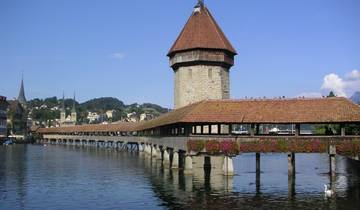
6 Days Trip to Switzerland
- ✓ Comprehensive Lucerne tour
- ✓ Expert local guides included
- ✓ All accommodation arranged
- ✓ Transportation provided

5 days
Grand Tour of Switzerland – 5 Days
- ✓ Comprehensive Lucerne tour
- ✓ Expert local guides included
- ✓ All accommodation arranged
- ✓ Transportation provided
7 days
Golf + Wellness Retreat Switzerland Edition 7 Days / 6 Nights
- ✓ Booking needs min. 2 travelers
6 days
SWISS GLACIERS, CHEESE AND CHOCOLATE
- ✓ Comprehensive Lucerne tour
- ✓ Expert local guides included
- ✓ All accommodation arranged
- ✓ Transportation provided
Multi-day tour packages powered by TourRadar. Prices and availability subject to change.
Introduction: Planning Your Lucerne 3-Day Adventure 2026
Lucerne occupies a privileged position in Switzerland’s geographic and cultural heart, where Lake Lucerne’s crystalline waters meet the dramatic peaks of Pilatus, Rigi, and the Bernese Alps beyond. The city’s medieval Old Town, crowned by the iconic covered Chapel Bridge from 1333, creates an immediately recognizable Swiss postcard scene, while the surrounding mountains deliver world-class Alpine experiences accessible by Europe’s oldest mountain railways. This combination of accessibility and dramatic scenery has made Lucerne Switzerland’s most compact showcase destination, where visitors experience the full Swiss repertoire within a small geographic radius.
A three-day Lucerne visit provides sufficient time to explore the essential experiences without rushing, combining two signature mountain excursions with Old Town cultural immersion and lakeside relaxation. The city serves as an ideal first Swiss destination or Central Switzerland base, with efficient transport connections to Zurich Airport (60 minutes by direct train), Interlaken (90 minutes), and other major Swiss cities. Lucerne’s walkable Old Town, comprehensive public transport network, and concentration of attractions within Zone 10 boundaries make independent navigation straightforward even for first-time Switzerland visitors.
This itinerary accommodates three distinct budget tiers while maintaining the same core experiences. Budget travelers utilize hostels, Coop and Migros restaurants, and the zone 10 day pass, spending CHF 110-155 ($120-175) per person daily with two sharing budget accommodations. Mid-range visitors enjoy three-star hotels with two sharing rooms, sit-down restaurant meals, and museum admissions, investing CHF 225-305 ($250-345) daily per person. Luxury travelers select four-star lakefront properties with two sharing suites, fine dining, and private experiences, spending CHF 490-695 ($550-780) per person daily. All budget tiers benefit from the complimentary Visitor Card providing free zone 10 public transport.
The Lucerne Travel Pass emerges as the single most valuable purchase for three-day visits, costing CHF 159 ($180) and providing unlimited access to Mount Pilatus, Mount Rigi, all public buses and trains throughout Central Switzerland, Lake Lucerne boats, and dozens of additional mountain railways and cable cars. This pass eliminates per-journey ticket purchases while encouraging spontaneous exploration, paying for itself after one major mountain excursion plus regular public transport usage. Visitors planning only Old Town exploration without mountain trips can rely solely on the free Visitor Card for zone 10 transport.
Weather flexibility proves essential when planning Lucerne mountain excursions, as summit visibility determines experience quality more than any other factor. Alpine weather shifts rapidly, with morning clarity giving way to afternoon clouds particularly during summer months. This itinerary positions major mountain trips on Days 2 and 3, allowing Day 1 adjustments if weather forecasts suggest poor visibility. Lucerne’s compact layout enables easy schedule reshuffling, swapping mountain days with Old Town exploration without logistical complications. The city’s numerous indoor attractions including the Swiss Museum of Transport, Rosengart Collection, and Bourbaki Panorama provide weather-independent alternatives when summit conditions disappoint.
Day 1: Old Town Exploration and Lake Lucerne Discovery 2026
Day one establishes Lucerne’s geographic and cultural foundations through Old Town exploration, introducing the medieval architecture, lakefront setting, and mountain backdrop that define the city’s character. This gentle introduction requires minimal walking while covering all essential landmarks, providing orientation before the more demanding mountain excursions on subsequent days. The itinerary works equally well for morning arrivals from Zurich Airport and travelers already settled in Lucerne accommodations.
Morning: Arrival and Chapel Bridge Circuit
Begin at Lucerne’s main train station (Bahnhof), the city’s primary arrival point and transport hub serving trains from Zurich, Bern, and throughout Switzerland. The station’s underground Passepartout shopping area provides the first of many opportunities to purchase the Lucerne Travel Pass from SBB ticket counters, though this purchase can wait until evening after confirming mountain weather forecasts for subsequent days. Exit the station onto Zentralstrasse, immediately facing Lake Lucerne’s northern shore with the Alps rising beyond.
Walk right along the lakefront promenade to Chapel Bridge (Kapellbrücke), Switzerland’s most photographed landmark and Europe’s oldest surviving covered wooden bridge from 1333. The bridge’s distinctive octagonal water tower (Wasserturm) originally formed part of Lucerne’s medieval fortifications, later serving as an archive, treasury, and prison before becoming a purely ornamental landmark. Interior gable paintings depicting Lucerne’s history suffered extensive damage during a 1993 fire but underwent meticulous restoration, with the surviving 17th-century panels now protected behind glass.
Cross Chapel Bridge to the Old Town’s southern bank, arriving in the heart of Lucerne’s medieval quarter. The bridge provides classic views back toward the train station with Mount Pilatus rising behind, best photographed during morning light when the sun illuminates the mountain face. Continue through Mühlenplatz past colorful guild houses dating from the 15th and 16th centuries, their painted facades depicting the trades once practiced within: blacksmiths, tanners, bakers, and vintners.
Walk upstream along the Reuss River to Spreuer Bridge (Spreuerbrücke), Chapel Bridge’s less-visited sibling from 1408 featuring the macabre “Dance of Death” painting series depicting death claiming victims from all social classes. These 67 panels, created by Kaspar Meglinger between 1616 and 1637 during plague years, deliver medieval Switzerland’s memento mori philosophy in vivid detail. The bridge takes its name from the chaff (Spreu) millers once discarded here, with the original water-powered mill machinery still visible beneath the bridge structure.
Budget travelers should purchase picnic supplies at the Coop Pronto inside the train station or the larger Coop City at Hertensteinstrasse 9 for CHF 8-12 ($9-14) worth of bread, cheese, and fruit, saving CHF 10-15 ($11-17) versus restaurant meals. Mid-range visitors can lunch at Manora Restaurant inside Manor department store at Weggisgasse 5, offering hot lunch plates with salad bar for CHF 25-32 ($28-36) in a self-service format with Old Town views. Luxury travelers should reserve ahead at Old Swiss House (Löwenplatz 4) for classic Lucerne cuisine in an 1859 building with painted ceilings and original furnishings, expecting CHF 60-90 ($68-101) per person for multi-course lunch.
Afternoon: Cultural Landmarks and Museum Quarter
Walk south from Spreuer Bridge to the Musegg Wall (Museggmauer), Lucerne’s best-preserved medieval fortification section with nine towers dating from 1386. Four towers remain accessible to visitors, with the climb up Schirmer Tower or Zyt Tower (housing Lucerne’s oldest clock from 1535) rewarding effort with Old Town and lake panoramas. The wall walk between towers provides elevated perspective on Lucerne’s geographic setting, where the Reuss River exits Lake Lucerne creating the hourglass-shaped old city center on both banks.
Descend from the Musegg Wall and walk north to the Lion Monument (Löwendenkmal), Mark Twain’s “most mournful and moving piece of stone in the world,” carved directly into a sandstone cliff face in 1821. The dying lion commemorates Swiss Guard soldiers who perished defending Louis XVI during the French Revolution’s 1792 Tuileries Palace assault, embodying Switzerland’s mercenary military tradition that dominated the country’s economy for centuries. The monument occupies a shaded park with reflecting pool, providing rest and contemplation away from Old Town crowds.
Adjacent to the Lion Monument, the Glacier Garden (Gletschergarten) presents Lucerne’s dramatic geologic history through 20-million-year-old glacial potholes carved by Ice Age meltwater, prehistoric rock formations, and a mirror maze built for the 1896 Swiss National Exhibition. The museum chronicles how massive glaciers shaped Central Switzerland’s current topography, with multimedia displays explaining ice formation, glacial movement, and climate change impacts on Alpine regions. Admission costs CHF 18 ($20) for adults, with the Swiss Museum Pass providing free entry and the Lucerne Travel Pass offering 25% discount.
Culture enthusiasts should continue to the Rosengart Collection (Am Pilatusplatz 10), presenting 200 works by 23 classical modernist masters in an intimate setting. The collection’s strength lies in Picasso holdings spanning his entire career alongside works by Klee, Miró, Kandinsky, and Cézanne, displayed in a repurposed bank building designed to evoke private collection viewing rather than institutional museum formality. Personal photographs showing Picasso with the Rosengart family add biographical context. Admission costs CHF 20 ($23), closed Mondays.
Alternatively, visit the Swiss Museum of Transport (Verkehrshaus), Switzerland’s most visited museum, located 15 minutes from the Old Town via bus 6 or 8 to Verkehrshaus. The vast complex chronicles Switzerland’s transportation innovation through rail, road, water, and air exhibits, with highlights including a walk-through Gotthard Base Tunnel model, flight simulators, historic locomotives, and the world’s largest collection of Swiss transport vehicles. The attached Swiss Chocolate Adventure and Planetarium require separate tickets. Museum admission costs CHF 32 ($36), with reductions available through Swiss Travel Pass and Swiss Museum Pass. The museum demands 3-4 hours for comprehensive exploration, making it best suited for transport enthusiasts willing to dedicate afternoon hours.
Evening: Lakefront Promenade and Dinner Options
Return to the lakefront for evening promenade walking along the Nationalquai between Hotel Schweizerhof and the KKL Luzern Culture and Convention Centre designed by Jean Nouvel. This stretch provides classic sunset views across Lake Lucerne toward Bürgenstock and Mount Pilatus, with benches and waterfront restaurants creating a social hub as daylight fades. The KKL’s cantilevered roof extending over the lake creates architectural drama while housing Lucerne’s premier concert hall, home of the Lucerne Festival each summer.
Budget dinner options concentrate around the train station and Coop/Migros stores. The Migros restaurant on the 4th floor of the Bahnhofstrasse location offers hot dinner plates for CHF 15-22 ($17-25) with salad bar included, while the Coop City restaurant at Hertensteinstrasse 9 provides similar options with slightly longer evening hours. These self-service restaurants deliver substantial Swiss and international dishes in cafeteria settings frequented by locals, offering authentic glimpses of daily Swiss life away from tourist-oriented establishments.
Mid-range visitors should explore Weinmarkt square’s restaurant cluster, where establishments like Taube Luzern serve traditional Swiss specialties in 500-year-old guild house settings for CHF 35-55 ($39-62) per main course. Wirtshaus Galliker (Schützenstrasse 1) delivers authentic Lucerne cuisine in a no-frills tavern atmosphere, offering rösti variations, veal dishes, and seasonal specialties at CHF 30-45 ($34-51). Reservations prove essential during summer peak season, with many restaurants fully booked by 18:00 for dinner service.
Luxury diners should experience Old Swiss House (Löwenplatz 4), Lucerne’s most celebrated restaurant occupying an 1859 building with original painted ceilings, carved woodwork, and Belle Époque furnishings. The menu emphasizes classic Swiss preparations including tableside flambéed dishes, house-cured meats, and seasonal game, with mains ranging CHF 60-95 ($68-107). The restaurant’s fame demands advance reservations weeks ahead during summer months. Alternative luxury options include Restaurant Focus at Park Hotel Vitznau (requiring separate transport) or Restaurant RED at Hotel Astoria for contemporary fine dining in modernist settings, both commanding CHF 80-120+ ($90-135+) per person.
Day 1 Budget Summary
Budget travelers spending the day exploring Old Town, visiting free attractions, and purchasing the Lucerne Travel Pass invest approximately CHF 110-155 ($120-175) per person including accommodation (CHF 45-65 / $50-73 per person sharing budget hotel), meals (CHF 40-56 / $45-64 for breakfast, lunch, and dinner at Coop/Migros), free zone 10 transport via Visitor Card, and optional Glacier Garden admission (CHF 18 / $20). Mid-range visitors enjoying sit-down restaurant meals and museum admissions spend CHF 225-305 ($250-345) per person with mid-range hotel accommodation (CHF 100-130 / $113-145 per person sharing), restaurant dining (CHF 85-115 / $96-130), and attraction entries. Luxury travelers staying in lakefront hotels with fine dining invest CHF 490-695 ($550-780) per person including deluxe accommodation (CHF 225-300 / $253-335 per person sharing), multi-course restaurant meals (CHF 175-265 / $197-298), and private guide services if desired.
Day 2: Mount Pilatus Golden Round Trip 2026
Day two tackles Lucerne’s most dramatic mountain excursion, the Mount Pilatus Golden Round Trip combining lake boat, the world’s steepest cogwheel railway, aerial cable cars, and Alpine summit panoramas reaching 2,132 meters (6,995 feet) above sea level. This full-day adventure showcases Central Switzerland’s engineering innovation and natural grandeur, requiring clear weather for optimal experience. The complete circuit demands 6-7 hours including summit time, making early departure essential.
Morning: Boat Journey and Cogwheel Railway Ascent
Depart Lucerne’s Bahnhofplatz boat dock (Pier 1) at 09:11 or 10:11 aboard the Lake Lucerne Navigation Company (SGV) steamer, enjoying a 75-minute cruise past lakeside villages, Belle Époque hotels, and mountain vistas to Alpnachstad at the lake’s southern terminus. The boat journey provides essential context for understanding Central Switzerland’s geography, where Lake Lucerne’s serpentine arms snake between mountain ranges creating natural transport corridors exploited since medieval times. First-class upper deck seating costs CHF 8 ($9) supplemental but provides superior photography angles and café access.
Disembark at Alpnachstad’s tiny dock directly adjacent to the Pilatus Railway lower station, arriving 10 minutes before the scheduled cogwheel railway departure to allow ticket purchases for passengers without the Lucerne Travel Pass. The Pilatus Railway, built between 1886 and 1889, employs a unique horizontal cogwheel design enabling it to climb gradients up to 48%, making it the world’s steepest cogwheel railway by maximum gradient measurement. Modern electric railcars navigate this gradient at a leisurely 9 kilometers per hour (5.6 mph) during the 30-minute ascent, allowing passengers to absorb the increasingly dramatic Alpine panorama.
The railway climbs through four distinct vegetation zones, beginning in deciduous forest, transitioning through coniferous Alpine woods, emerging into subalpine meadows above the treeline, and finally navigating bare rock faces as the summit approaches. Engineers constructed the line without tunnels, instead cutting directly into cliff faces and building trestle bridges across ravines, creating an exposition of late 19th-century mountain railway innovation. The railway operates from mid-May through early November weather permitting, with no winter service due to avalanche danger on the exposed southern face.
Midday: Summit Exploration and Alpine Panorama
Arrive at Pilatus Kulm station at 2,070 meters (6,791 feet), just 62 meters below the Esel summit, the highest of Mount Pilatus’s multiple peaks. Exit the station and climb the short paved path to Hotel Pilatus-Kulm, a Belle Époque mountain hotel offering restaurant service, accommodation, and rooftop observation terraces providing 360-degree Alpine panoramas. On clear days, visibility extends across 73 Alpine peaks including the Eiger, Mönch, and Jungfrau triumvirate to the south, Rigi rising across Lake Lucerne to the northeast, and stretching northwest to the Jura mountains and even Germany’s Black Forest.
Multiple summit paths accommodate various energy levels and time constraints. The 10-minute walk to the Oberhaupt summit (2,106 meters / 6,909 feet) via paved paths delivers the highest accessible viewpoint without technical climbing, while the 25-minute circuit via Esel summit (2,119 meters / 6,952 feet) and Tomlishorn peak requires moderate fitness but provides superior vistas. All summit paths remain above treeline on exposed rock and grass slopes, demanding appropriate footwear and weather-appropriate clothing even during summer months when temperatures can drop 15°C (27°F) below valley readings.
Dragon legends permeate Pilatus mythology, with medieval lore claiming the mountain harbored healing dragons whose presence explained the summit’s unpredictable weather and frequent thunderstorms. These legends likely originated from the mountain’s dramatic cloud formations and the shrieking winds that funnel through its ridges during weather changes. The Dragon Path (Drachenweg), a gentle 30-minute loop from the summit hotel, features carved wooden dragon sculptures and information panels explaining both the mythological history and the mountain’s actual geology as a sedimentary limestone massif thrust upward during Alpine orogeny.
Budget travelers should bring summit picnic supplies purchased in Lucerne, as Hotel Pilatus-Kulm’s mountain restaurant charges CHF 28-45 ($32-51) for main courses and CHF 9 ($10) for simple sandwiches, reflecting the substantial cost of transporting provisions to this remote location. Mid-range visitors can justify the restaurant expense as part of the day’s experience, choosing from rösti variations, sausage platters, and soups served in the historic dining room with floor-to-ceiling windows framing the Alpine panorama. Luxury travelers should consider booking the Panorama Restaurant’s window tables in advance for multi-course mountain lunch with wine service, investing CHF 80-120 ($90-135) per person for the complete experience.
Afternoon: Cable Car Descent and Return Journey
Depart the summit via the Dragon Ride, a modern aerial cable car descending Pilatus’s northern face in 4 minutes to Fräkmüntegg intermediate station at 1,416 meters (4,646 feet). This large cable car operates year-round unlike the seasonal cogwheel railway, providing the only winter access to Pilatus’s summit region. Fräkmüntegg functions as a summer adventure park featuring toboggan runs, rope courses, and the Suspension Rope Park with various difficulty levels, though these attractions require 1-2 additional hours and separate fees.
Transfer to the panorama gondola for the 30-minute descent through Alpine meadows and forests to Krienseregg intermediate station, where passengers can disembark for additional hiking or continue directly to the Kriens valley station. The smaller gondola cabins hold 6-8 passengers, moving continuously with no waiting unlike the larger Dragon Ride cable car. Krienseregg serves as the trailhead for multiple hiking routes including the popular 90-minute descent to Kriens via forest paths, attractive to experienced hikers with appropriate footwear who prefer walking over riding.
At Kriens valley station (Kriens Zentrum Pilatus), exit and walk 300 meters downhill following signs to Bus 1 heading toward Lucerne Bahnhof. The bus departs every 6-8 minutes during daytime hours, reaching Lucerne’s main train station in 12 minutes via the lakefront route through Kriens suburbs. This bus ride completes the Golden Round Trip circuit, having traveled by boat, cogwheel railway, two cable cars, and bus without retracing any segment. Alternatively, Bus 15 departing directly outside the cable car station also reaches Lucerne Bahnhof, operating on a slightly different route through Kriens residential areas.
Evening: Recovery and Casual Dining
The Mount Pilatus excursion delivers physical and sensory intensity demanding recovery time rather than packed evening schedules. Return to your accommodation for rest, then venture out for casual dinner focusing on comfort food rather than elaborate dining experiences. The Old Town’s Weinmarkt and surrounding squares offer numerous tavern-style restaurants serving hearty Swiss dishes ideal after mountain days, with most establishments welcoming walk-in diners during weekday evenings outside peak season.
Budget travelers should target Migros or Coop restaurants once again, or explore the train station’s lower level Railcity food court offering various international options including Asian noodle dishes, Turkish kebabs, and Italian pizza slices for CHF 12-18 ($14-20). These outlets serve until 21:00-22:00, later than many sit-down restaurants, accommodating travelers returning from extended mountain excursions. Mid-range visitors will find Wirtshaus Taube (Burgerstrasse 3) particularly suitable after Pilatus, serving traditional Swiss comfort food including älplermagronen (Swiss alpine macaroni), cervelat sausages, and hearty soups in relaxed tavern settings for CHF 28-42 ($32-47) per main.
Day 2 Budget Summary
Budget travelers completing the Mount Pilatus Golden Round Trip using the Lucerne Travel Pass spend CHF 110-155 ($120-175) per person including accommodation (CHF 45-65 / $50-73 per person sharing), meals (CHF 40-56 / $45-64), free transport via Lucerne Travel Pass, and summit picnic supplies. Mid-range visitors with restaurant lunch at Pilatus Kulm invest CHF 225-305 ($250-345) per person including mid-range accommodation (CHF 100-130 / $113-145 per person sharing), mountain restaurant lunch and casual evening dinner (CHF 85-115 / $96-130), and free transport via Lucerne Travel Pass. Luxury travelers add private summit dining and guide services for CHF 490-695 ($550-780) per person total daily cost including deluxe accommodation (CHF 225-300 / $253-335 per person sharing) and premium restaurant experiences (CHF 175-265 / $197-298).
Day 3: Mount Rigi Classic Round Trip and Lake Lucerne Villages 2026
Day three explores Mount Rigi, the “Queen of the Mountains,” offering gentler Alpine panoramas than Pilatus’s dramatic peaks while showcasing Europe’s first mountain railway from 1871. The Classic Round Trip combines lake boat to Vitznau, cogwheel train to Rigi Kulm summit, optional hiking, cable car descent to Weggis, and return boat to Lucerne, requiring 5-6 hours for the complete circuit with summit time included.
Morning: Boat to Vitznau and Historic Cogwheel Railway
Depart Lucerne’s Bahnhofplatz boat dock at 09:12 or 10:12 aboard Lake Lucerne Navigation Company vessels heading to Vitznau, enjoying a 60-minute cruise along the lake’s eastern shore past the lakeside villages of Meggen and Küssnacht. Vitznau’s compact boat dock sits directly adjacent to the Rigi Railways lower station, creating seamless transfers between boat and mountain railway without walking or additional transport. This convenient connection has existed since 1871 when the railway opened specifically to capitalize on Lake Lucerne’s steamer traffic bringing Victorian-era tourists to Central Switzerland.
Board the Vitznau-Rigi Bahn cogwheel railway for the 30-minute ascent through Alpine meadows and forests to Rigi Kulm summit at 1,798 meters (5,899 feet). This railway holds historic significance as Europe’s first mountain railway and the continent’s first successful rack railway system employing the Riggenbach design still used on steep railways worldwide. Modern electric railcars replaced the original steam locomotives in 1937, though vintage steam trains operate on special occasions for railway enthusiasts. The railway maintains gentle gradients rarely exceeding 25%, creating a relaxed ascent compared to Pilatus’s dramatic 48% sections.
The journey passes through distinctly Swiss Alpine landscape: traditional wooden chalets with flower boxes, grazing Brown Swiss cattle wearing ceremonial bells, and hayfields mowed in geometric patterns. Intermediate stops at Rigi Kaltbad and Rigi Staffel allow passengers to disembark for hiking, though most first-time visitors continue directly to the summit before exploring lower sections during descent. The railway operates year-round with reduced winter schedules, maintaining service even during heavy snow when sledding becomes popular on designated runs.
Midday: Summit Panorama and Hiking Options
Arrive at Rigi Kulm station just below the 1,798-meter summit, marked by a telecommunications tower and the historic Hotel Rigi Kulm, a Belle Époque establishment hosting guests since 1816. While lower in elevation than Mount Pilatus, Rigi’s isolated position rising from Lake Lucerne’s waters creates unobstructed 360-degree views encompassing 13 lakes and the full Alpine chain from the Säntis massif east to the Bernese Alps southwest. This panoramic quality earned Rigi its “Queen of the Mountains” title during the 19th-century tourism boom when European aristocracy regularly visited the summit hotels.
The summit area features multiple short walking circuits requiring 10-30 minutes, with the gentle Känzeli viewpoint path delivering classic lake vistas toward Lucerne and Pilatus beyond. More ambitious hikers can descend to Rigi Staffel or Rigi Kaltbad via forest trails requiring 45-90 minutes, though these routes demand appropriate hiking footwear and moderate fitness levels. The summit remains accessible to all fitness levels via paved paths circling the hotel and viewpoint platforms, making Rigi significantly more inclusive than Pilatus’s exposed rock trails.
Summit restaurant options span from Hotel Rigi Kulm’s formal dining room (CHF 35-55 / $39-62 for mains) to the self-service Rigi Kulm Panorama Restaurant offering soups, sandwiches, and hot plates for CHF 18-28 ($20-32). Budget travelers benefit from bringing picnic supplies as on Pilatus, though Rigi’s lower prices make budget-conscious restaurant dining more feasible. The summit’s multiple terrace areas with tables and benches accommodate picnickers regardless of restaurant patronage, unlike some Swiss mountain establishments that restrict terrace access to paying customers.
Weather permitting, the optional descent hike from Rigi Kulm to Rigi Kaltbad via the Lake View Trail (Seeweg) presents one of Central Switzerland’s most rewarding half-day hikes, requiring approximately 90 minutes for the 4-kilometer descent through Alpine meadows with continuous Lake Lucerne vistas. This well-maintained trail follows gentle gradients suitable for moderate fitness levels, passing traditional Alpine farmsteads where cheesemakers produce Rigi cheese using centuries-old methods. The hike terminates at Rigi Kaltbad’s mineral baths complex and cable car station for the descent to Weggis.
Afternoon: Rigi Kaltbad Spa and Cable Car Descent
Rigi Kaltbad at 1,438 meters (4,718 feet) functions as Rigi’s mid-mountain wellness destination, centered on the architecturally striking Mineral Baths & Spa designed by Mario Botta. The complex utilizes Rigi’s natural mineral springs discovered in 1873, offering indoor and outdoor pools with lake views, saunas, steam rooms, and treatment facilities. Day admission costs CHF 39 ($44) for 2.5 hours, with extended packages available for longer soaks. The outdoor infinity pool creates dramatic photo opportunities with Lake Lucerne stretching below and the Alps rising beyond.
Budget travelers typically skip the spa due to cost, proceeding directly via cable car to Weggis, though the experience delivers substantial value for spa enthusiasts willing to allocate budget here. The mineral baths justify 2-3 hours when included in itineraries, particularly attractive after hiking from the summit. The facility provides towels, robes, and lockers included in admission, eliminating the need to carry these items from Lucerne.
Board the Weggis-Rigi Kaltbad cable car for the 10-minute descent through forests and meadows to Weggis village at lakeside. The cable car operates year-round with high frequency during summer months, carrying hikers downward while transporting day visitors upward to Rigi Kaltbad’s attractions. Weggis village presents classic Swiss lakeside character with traditional architecture, flower-filled streets, and multiple lake access points for swimming during summer months. The village’s compact layout positions the cable car station, boat dock, and restaurants within easy walking distance.
Walk 10-15 minutes through Weggis village following signs to the boat dock, passing lakefront parks, Belle Époque hotels, and the parish church with its distinctive onion-dome tower. The promenade route provides classic Lake Lucerne scenery with continuous mountain views, particularly photogenic during late afternoon light when the sun illuminates the western shore mountains. Board the return boat to Lucerne departing Weggis at regular 30-60 minute intervals, completing the 45-minute journey directly to Lucerne’s Bahnhofplatz dock by late afternoon.
Evening: Final Dinner and Departure Preparation
Reserve the final evening for Lucerne’s signature dining experiences or return to favored discoveries from previous days. Budget travelers should explore the Bahnhofstrasse pedestrian zone’s döner kebab shops and pizza outlets offering final affordable meals for CHF 12-18 ($14-20), while mid-range visitors can celebrate trip completion at lakefront restaurants along the Nationalquai promenade, where establishments like Brasserie Bodu serve international cuisine with lake views for CHF 35-52 ($39-59) per main course.
Luxury travelers should conclude with either Old Swiss House if not already experienced, or Restaurant Focus at Park Hotel Vitznau (accessible via 20-minute boat ride from Lucerne, requiring separate reservation and transport planning). Focus delivers contemporary fine dining in a Michelin-starred setting with lake panorama, commanding CHF 160-220 ($180-247) per person for tasting menus with wine pairings. This represents Central Switzerland’s pinnacle dining experience, though the separate transport requirement makes it feasible only for travelers with flexible final evening timing.
Day 3 Budget Summary
Budget travelers completing Mount Rigi with picnic lunch spend CHF 110-155 ($120-175) per person including accommodation (CHF 45-65 / $50-73 per person sharing), meals (CHF 40-56 / $45-64), and free transport via Lucerne Travel Pass. Mid-range visitors adding Rigi Kaltbad spa and restaurant meals invest CHF 225-305 ($250-345) per person including accommodation (CHF 100-130 / $113-145 per person sharing), spa admission (CHF 39 / $44), and restaurant dining (CHF 46-76 / $52-86). Luxury travelers with premium spa services and fine dining reach CHF 490-695 ($550-780) per person including deluxe accommodation (CHF 225-300 / $253-335 per person sharing) and superior dining experiences (CHF 175-265 / $197-298).
Complete 3-Day Budget Breakdown 2026
This comprehensive analysis details daily costs across budget, mid-range, and luxury tiers for three days in Lucerne, enabling accurate trip planning and financial preparation. All figures assume two people sharing hotel accommodations with room rates pre-divided by two before calculating per-person totals, ensuring transparent cost representation.
Budget Tier: CHF 330-465 ($360-525) Per Person Total
Budget-conscious travelers minimizing costs while experiencing all essential Lucerne attractions invest CHF 110-155 ($120-175) per person daily, totaling CHF 330-465 ($360-525) for three days. This tier utilizes hostel dormitories or budget hotel rooms shared between two travelers, Coop and Migros restaurant meals supplemented with supermarket purchases, the complimentary Visitor Card for zone 10 transport, and the Lucerne Travel Pass for mountain excursions.
Daily Budget Breakdown: Accommodation CHF 45-65 ($50-73) per person sharing budget hotel or hostel, breakfast CHF 5-8 ($6-9) at bakeries or self-catered, lunch CHF 15-20 ($17-23) at Coop or Migros restaurants, dinner CHF 20-28 ($23-32) at self-service restaurants or supermarket prepared meals, transport CHF 8 ($9) for zone 10 day pass (though free with Visitor Card), and attractions CHF 15-25 ($17-28) for optional museum admissions and picnic supplies. Total daily range: CHF 110-155 ($120-175) per person.
Three-Day Specific Costs: Accommodation CHF 135-195 ($150-219) for three nights per person sharing, meals CHF 120-168 ($135-189) for all breakfasts, lunches, and dinners over three days, Lucerne Travel Pass CHF 159 ($180) one-time purchase covering all Days 2-3 mountain transport and public transit, and Glacier Garden admission CHF 18 ($20) optional. Three-day total: CHF 330-465 ($360-525) per person.
Budget travelers achieve substantial savings through strategic choices: staying in hostels like Backpackers Lucerne or Bellpark Hostel (CHF 45-65 / $50-73 per night in dormitories), purchasing prepared sandwiches and salads from Coop and Migros rather than sit-down restaurant meals, utilizing the free Visitor Card for all zone 10 transport eliminating CHF 8 ($9) daily pass costs, bringing summit picnic supplies to avoid CHF 30-45 ($34-51) mountain restaurant charges, and limiting paid attractions to highest-priority sites like the Glacier Garden while enjoying free attractions including Chapel Bridge, Lion Monument, and Musegg Wall.
Mid-Range Tier: CHF 675-915 ($750-1,035) Per Person Total
Mid-range travelers balancing comfort with reasonable costs invest CHF 225-305 ($250-345) per person daily, totaling CHF 675-915 ($750-1,035) for three days. This tier emphasizes three-star hotels with private rooms shared between two travelers, sit-down restaurant meals at local establishments, comprehensive museum admissions, and the Lucerne Travel Pass for mountain excursions plus city transport.
Daily Mid-Range Breakdown: Accommodation CHF 100-130 ($113-145) per person sharing mid-range hotel with breakfast often included, supplemental breakfast CHF 10-15 ($11-17) when not included at hotels, lunch CHF 30-40 ($34-45) at casual sit-down restaurants, dinner CHF 45-60 ($51-68) at traditional Swiss restaurants, transport CHF 8 ($9) via Visitor Card included with hotel (free), and attractions CHF 30-50 ($34-57) for museum admissions and mountain restaurant meals. Total daily range: CHF 225-305 ($250-345) per person.
Three-Day Mid-Range Specific Costs: Accommodation CHF 300-390 ($338-438) for three nights per person sharing mid-range hotel, meals CHF 255-345 ($287-388) for all breakfasts, lunches, and dinners over three days at restaurants, Lucerne Travel Pass CHF 159 ($180) one-time purchase, and museum admissions CHF 38-70 ($43-79) for Glacier Garden, Rosengart Collection, and optional Swiss Museum of Transport. Three-day total: CHF 675-915 ($750-1,035) per person.
Mid-range recommendations include hotels like Hotel Continental Park, Cascada Boutique Hotel, or Ameron Luzern Hotel Flora (CHF 200-260 / $225-290 per night for double rooms), restaurants such as Wirtshaus Galliker, Taube Luzern, and Opus for authentic Swiss cuisine (CHF 35-55 / $39-62 per main course), mountain restaurant lunches at Hotel Pilatus-Kulm and Rigi Kulm (CHF 28-45 / $32-51), and comprehensive museum visits including both the Rosengart Collection and Swiss Museum of Transport without budget constraints limiting cultural exploration.
Luxury Tier: CHF 1,470-2,085 ($1,650-2,340) Per Person Total
Luxury travelers prioritizing premium experiences and exceptional service invest CHF 490-695 ($550-780) per person daily, totaling CHF 1,470-2,085 ($1,650-2,340) for three days. This tier features four-star lakefront hotels with superior rooms shared between two travelers, fine dining at celebrated establishments, private guide services, spa treatments, and the Lucerne Travel Pass supplemented with upgraded experiences.
Daily Luxury Breakdown: Accommodation CHF 225-300 ($253-335) per person sharing deluxe hotel suite or lake-view room, breakfast CHF 25-35 ($28-39) at hotel breakfast buffets or premium cafés, lunch CHF 60-80 ($68-90) at superior restaurants or mountain establishments, dinner CHF 90-130 ($101-146) at fine dining restaurants with wine service, transport CHF 30-50 ($34-57) including occasional private transfers and first-class boat tickets, and attractions CHF 60-100 ($68-113) for premium experiences including spa treatments and private guides. Total daily range: CHF 490-695 ($550-780) per person.
Three-Day Luxury Specific Costs: Accommodation CHF 675-900 ($758-1,010) for three nights per person sharing luxury hotel, meals CHF 525-795 ($590-894) for all breakfasts, lunches, and dinners at premium establishments over three days, Lucerne Travel Pass CHF 159 ($180) one-time purchase plus first-class supplements, spa treatments CHF 150-250 ($169-281) for Rigi Kaltbad mineral baths with massage services, and private guide services CHF 300-500+ ($337-562+) optional for personalized mountain excursions. Three-day total: CHF 1,470-2,085 ($1,650-2,340) per person.
Luxury recommendations include hotels such as Hotel Schweizerhof Luzern, Grand Hotel National, or Bürgenstock Resort (requiring separate boat transport, CHF 450-600+ / $505-670+ per night for suites), restaurants including Old Swiss House, Restaurant Focus at Park Hotel Vitznau, and Restaurant RED for multi-course tasting menus (CHF 80-160+ / $90-180+ per person), private mountain guides for personalized hiking and photography tours (CHF 300-500 / $337-562 for half-day services), and spa experiences at Rigi Kaltbad including extended thermal baths with massage treatments (CHF 150-250 / $169-281 for comprehensive packages).
Essential Planning Information 2026
Lucerne Travel Pass: Complete Value Analysis
The Lucerne Travel Pass (CHF 159 / $180 for 3 consecutive days) represents the single most valuable purchase for visitors planning mountain excursions, providing unlimited travel on Mount Pilatus, Mount Rigi, and throughout Central Switzerland’s public transport network including buses, trains, boats, and numerous mountain railways. The pass covers the complete Mount Pilatus Golden Round Trip normally costing CHF 94-120 ($107-135) for individual round-trip tickets, Mount Rigi day pass normally CHF 78 ($88), all Lake Lucerne boats including Lucerne-Alpnachstad and Lucerne-Vitznau routes, and unlimited zone 10 public transport within Lucerne city.
Break-even analysis demonstrates the pass pays for itself after one major mountain excursion plus moderate public transport usage: Mount Pilatus Silver Round Trip (CHF 94 / $107) plus three days of zone 10 transport (CHF 24 / $27) plus Lake Lucerne boat rides (CHF 48 / $54) totals CHF 166 ($187), already exceeding the pass cost. Adding Mount Rigi (CHF 78 / $88) creates CHF 244 ($275) in individual ticket value versus CHF 159 ($180) pass cost, generating CHF 85 ($96) savings before considering additional flexibility benefits.
The pass enables spontaneous exploration impossible with individual tickets, encouraging visitors to board boats to lakeside villages, ride mountain railways to intermediate stations for short hikes, and explore Central Switzerland beyond Lucerne’s immediate surroundings without calculating per-journey costs. This psychological freedom transforms the travel experience, particularly for visitors uncomfortable with Switzerland’s high transport costs. The pass remains valid for 3, 4, 5, or 10 consecutive days, with pricing scaling proportionally (CHF 159 / $180 for 3 days, CHF 203 / $228 for 5 days, CHF 306 / $344 for 10 days).
Alternative transport options include the Swiss Travel Pass providing nationwide coverage including 50% discount on most mountain railways (Mount Pilatus, Rigi) and free city transport, priced at CHF 315 ($354) for 3 days second class versus the Lucerne Travel Pass’s CHF 159 ($180) for Central Switzerland coverage. Visitors exploring multiple Swiss regions should purchase the Swiss Travel Pass, while those dedicating 3-5 days exclusively to the Lucerne region achieve superior value through the Lucerne Travel Pass. The two passes cannot be combined, requiring either/or decisions during trip planning.
Accommodation Strategies and Visitor Card Benefits
Every registered Lucerne accommodation provides the Lucerne Visitor Card upon check-in, granting free zone 10 public transport throughout your stay including arrival and departure days. This complimentary benefit eliminates CHF 8 ($9) daily transport costs for all travelers regardless of whether they purchase the Lucerne Travel Pass, as zone 10 coverage includes all Old Town attractions, the train station, Swiss Museum of Transport, and departure points for Mount Pilatus cable cars at Kriens and Mount Rigi boats at lakeside docks.
Budget accommodations concentrate around the train station and in Lucerne-Kriens residential areas slightly removed from the Old Town. Hostels including Backpackers Lucerne, Barabas Luzern, and Bellpark Hostel offer dormitory beds for CHF 45-65 ($50-73) per person nightly, typically including breakfast, kitchen access, and social common areas frequented by international backpackers. Budget hotels like Ibis Budget Luzern City and Hotel Alpha provide private double rooms for CHF 90-130 ($100-145) per room (CHF 45-65 / $50-73 per person sharing), often including basic breakfast and free WiFi but limited additional amenities.
Mid-range hotels occupy the CHF 200-260 ($225-290) per room range for double occupancy (CHF 100-130 / $113-145 per person sharing), concentrating in the Old Town and along the Nationalquai lakefront. Properties like Hotel Continental Park, Cascada Boutique Hotel, Ameron Luzern Hotel Flora, and Hotel des Balances combine historic architecture with modern amenities, positioning guests within walking distance of all central attractions. Most mid-range hotels include breakfast buffets in their rates, eliminating CHF 15-22 ($17-25) separate breakfast costs and providing substantial morning meals supporting full-day mountain excursions.
Luxury properties command CHF 450-600+ ($505-670+) per room for superior accommodations (CHF 225-300+ / $253-335+ per person sharing), featuring lake views, spa facilities, fine dining restaurants, and concierge services. Hotel Schweizerhof Luzern occupies a Belle Époque palace directly on the Nationalquai with rooms overlooking Lake Lucerne and Mount Pilatus, while Grand Hotel National delivers historic grandeur in an 1870 building housing multiple restaurants and lakefront terraces. The Bürgenstock Resort, accessible via funicular from Kehrsiten-Bürgenstock boat dock 30 minutes from Lucerne, provides Alpine luxury including multiple hotels, Michelin-starred dining, and Europe’s highest outdoor elevator.
Weather Considerations and Seasonal Planning
Mountain excursion quality depends entirely on summit visibility, making weather monitoring essential for optimal experiences. Lucerne’s position at the confluence of multiple Alpine valleys creates microclimates where conditions change rapidly, with morning clarity frequently giving way to afternoon clouds particularly during summer months. June through September delivers the most reliable weather windows, with approximately 60% of days offering clear morning conditions suitable for mountain railways.
The Mountain Railways Information provides real-time visibility updates through webcams positioned at summit stations, accessible via the Rigi Railways and Pilatus Railways websites and updated every 15 minutes throughout operating hours. Check summit webcams before departing Lucerne each morning, rescheduling mountain excursions if clouds obscure views. The flexible itinerary structure positioning mountain trips on Days 2 and 3 rather than fixed to specific dates enables weather-responsive planning, swapping Day 1’s Old Town exploration with either mountain day when forecasts indicate poor summit conditions.
Cogwheel railway operations face seasonal limitations due to snow and ice on exposed tracks. Mount Pilatus’s cogwheel railway operates only from mid-May through early November, closing entirely during winter months when avalanche danger makes the southern ascent route unsafe. Cable cars from Kriens operate year-round providing winter access to Pilatus’s summit region, though winter visits emphasize snow activities over hiking. Mount Rigi’s cogwheel railways operate throughout the year with reduced winter schedules, maintaining service even during heavy snow when the mountain transforms into a popular sledding and winter hiking destination.
Summer peak season (July-August) brings maximum crowds, highest accommodation prices, and frequent advance booking requirements for popular mountain railway seats. September offers superior value with fewer crowds, lower prices, and excellent weather reliability, making it the optimal month for visitors prioritizing value and experience quality over specific summer holiday dates. Spring months (May-early June) deliver wildflower displays on Alpine meadows and discounted accommodation rates, though afternoon thunderstorms occur more frequently than during summer’s stable high-pressure periods.
Transportation Guide: Arriving and Departing 2026
Zurich Airport Connections
Zurich Airport (ZRH) functions as the primary international gateway for Lucerne visitors, positioned 60 kilometers (37 miles) northeast with direct rail connections departing every 30 minutes throughout the day. Trains depart from Zurich Flughafen station located directly beneath the airport terminal, requiring no bus transfers or external navigation. The journey to Lucerne Bahnhof requires 60-75 minutes depending on routing, with some trains running direct while others require a connection at Zurich HB (main station).
Standard second-class tickets cost CHF 31 ($35) one-way via the SBB Mobile app or ticket machines, with first-class upgrades available for CHF 55 ($62) providing larger seats, quieter carriages, and included WiFi. The Swiss Travel Pass and Half Fare Card provide discounts, though first-time visitors purchasing the Lucerne Travel Pass must separately purchase airport-Lucerne tickets as the regional pass doesn’t cover this route. Saver Day Passes occasionally offer CHF 52 ($59) unlimited travel throughout Switzerland for off-peak dates, worth investigating for departure day journeys back to Zurich Airport.
Private transfer services operate between Zurich Airport and Lucerne hotels for CHF 180-250 ($203-281) per vehicle (not per person) accommodating up to 4 passengers with luggage, delivering door-to-door service in 60 minutes. This option suits families, groups, or luxury travelers prioritizing convenience over cost, though Switzerland’s efficient and punctual rail service makes private transfers unnecessary for most visitors. Ride-sharing apps including Uber operate at Zurich Airport but command similar prices to legitimate taxi companies, offering no meaningful savings.
Lucerne Public Transport Mastery
Lucerne’s public transport network operates on a zone-based fare system with Zone 10 encompassing all central attractions, the Old Town, train station, Swiss Museum of Transport, and departure points for mountain excursions. The Lucerne Visitor Card provided by all registered accommodations covers unlimited Zone 10 travel throughout your stay, eliminating the need to purchase daily passes or single tickets for city transport. This complimentary coverage represents CHF 8 ($9) daily savings factored into accommodation value calculations.
Bus routes 1, 6, 7, 8, and 19 provide the most tourist-relevant connections, with Bus 1 serving the Pilatus cable car station at Kriens, Bus 6 and 8 reaching the Swiss Museum of Transport, and Bus 19 connecting the Old Town to residential areas. All buses accept contactless payment and mobile tickets via the SBB Mobile or Fairtiq apps, though Visitor Card holders simply board without purchasing tickets. Buses operate from 05:00 to 00:30 daily with frequencies ranging from every 6 minutes during peak hours to every 20 minutes during evenings and weekends.
Lake Lucerne Navigation Company (SGV) boats function as integral public transport complementing road and rail connections, with approximately 20 different routes serving lakeside villages, mountain railway stations, and excursion destinations. The Lucerne Travel Pass covers all boat routes without limitation, while individual boat tickets range CHF 15-48 ($17-54) depending on distance. Boats operate from early morning through early evening during summer months (May-October), with reduced winter schedules serving primary routes only. First-class boat tickets cost CHF 8 ($9) supplemental, providing upper deck reserved seating and café access on larger vessels.
Money-Saving Strategies 2026
Strategic Timing and Advance Planning
Accommodation costs fluctuate dramatically based on booking timing, season, and day of week, with advance reservations 2-3 months before travel securing rates 20-35% below last-minute prices during peak season. Hotels reduce rates substantially during shoulder seasons (April-May, September-October), offering mid-range properties for budget-tier prices while maintaining full service and amenities. Weekday stays (Monday-Thursday) command lower rates than weekend visits across all categories, though this pattern reverses during summer peak season when business travelers disappear and leisure tourism dominates.
The Lucerne Travel Pass delivers its greatest value for 3-day visits during summer when Mount Pilatus cogwheel railway operates, as winter visits requiring cable car access only reduce individual ticket costs making the pass break-even analysis tighter. Purchase the pass online through the official SBB website (swissrailways.com) rather than third-party resellers, ensuring authentic passes with customer service support for any technical issues during activation or usage. The pass activates on first use rather than purchase date, allowing advance purchase without commitment to specific travel dates.
Restaurant timing strategies reduce meal costs without compromising experience quality. Swiss restaurants typically serve lunch 11:30-14:00 and dinner 18:00-22:00, with many establishments offering lunch specials providing the same dishes as dinner menus at 20-30% reduced prices. The Manor and Coop department store restaurants serve hot lunch plates with salad bars for CHF 19-25 ($21-28), delivering substantial value compared to CHF 35-55 ($39-62) sit-down restaurant equivalents. Evening meal timing proves less flexible as most Swiss restaurants begin service at 18:00, earlier than Mediterranean dinner cultures but aligned with Central European dining patterns.
Free and Low-Cost Experiences
Lucerne provides numerous free attractions delivering authentic Swiss experiences without admission charges. Chapel Bridge and Spreuer Bridge require no entry fees despite their iconic status, with both bridges accessible 24 hours daily for photography during dramatic sunrise and sunset light conditions. The Musegg Wall towers open seasonally (April-October) with free access to four of nine towers, providing elevated Old Town panoramas without cable car or mountain railway costs. The Lion Monument occupies a free-access park open continuously, allowing contemplative visits during early morning or evening hours when crowds thin.
Lake Lucerne’s public beaches and swimming areas function as free recreational facilities during summer months, with designated swimming zones at Lido Lucerne, Ufschötti, and Alpenquai equipped with changing facilities, grassy sunbathing areas, and lake access. These facilities operate May through September with no admission charges, though amenities including lockers and umbrellas require small rental fees. Picnicking at lakefront parks and Hofgarten provides meal alternatives to restaurant dining, particularly attractive during favorable weather when outdoor dining enhances the experience beyond restaurant courtyard seating.
The Lucerne Festival’s free outdoor concerts, held during summer months on Europaplatz and other public spaces, deliver world-class classical music performances without ticket costs. Sunday morning concerts at various Old Town churches including Hofkirche and Jesuit Church showcase organ performances and choral music in historic settings, typically requesting donations rather than charging fixed admission. These cultural experiences provide authentic engagement with Lucerne’s artistic heritage while maintaining strict budget consciousness.
Safety, Health, and Practical Matters 2026
Personal Safety and Emergency Services
Lucerne ranks among Europe’s safest cities, with violent crime virtually nonexistent and property crime rates substantially below Western European averages. The primary safety concern involves petty theft targeting tourist belongings in crowded areas including the Chapel Bridge, train station, and boat docks. Standard precautions suffice: secure bags with interior pockets for valuables, maintain awareness of surroundings in dense crowds, and avoid displaying expensive jewelry or electronics unnecessarily. Pickpocketing attempts remain rare compared to major European capitals, though increased tourist volumes during peak season create occasional opportunities for opportunistic theft.
Emergency services operate on the European 112 universal number, connecting callers to police, fire, and medical services with English-language operators available. Mountain rescue services coordinate through the same system, with highly professional teams responding to hiking accidents, medical emergencies, and weather-related incidents on Pilatus and Rigi. Switzerland’s mountain rescue operations represent world-class emergency response, though services command substantial costs (CHF 500-3,000+ / $562-3,370+) not covered by standard travel insurance policies unless specific mountain activity coverage exists.
The Lucerne Cantonal Hospital (Luzerner Kantonsspital) provides 24-hour emergency care with English-speaking medical staff, located at Spitalstrasse 16 approximately 2 kilometers from the Old Town. Pharmacies (Apotheke) display green crosses and maintain rotating 24-hour emergency service, with after-hours locations posted on all pharmacy doors and available through the tourist information office. Minor medical issues rarely require hospital visits, as Swiss pharmacists possess extensive training enabling them to diagnose and treat common ailments including infections, allergies, and digestive problems without physician consultations.
Swiss Travel Etiquette and Cultural Norms
Swiss public transport operates on an honor system with random ticket inspections rather than turnstiles or barriers, trusting passengers to purchase and validate tickets properly. Ticket inspectors board buses and trains without warning, requesting ticket presentation from all passengers with fines of CHF 90 ($101) plus the unpaid fare for violations. The Lucerne Visitor Card functions as a valid ticket for zone 10 travel, requiring presentation to inspectors along with photo identification confirming hotel guest status. Travelers utilizing the Lucerne Travel Pass should keep the pass accessible on smartphones or printed documents for immediate presentation during inspections.
Quiet hours (Ruhezeit) represent a fundamental Swiss cultural norm, prohibiting loud noise between 22:00-06:00 weekdays and 22:00-08:00 weekends. This convention extends to accommodations, public spaces, and particularly apartment buildings where neighbors strictly enforce noise restrictions. Travelers returning from evening activities should minimize hallway conversation, avoid slamming doors, and generally respect the Swiss preference for nighttime silence. Sunday quiet hours extend throughout the day, with prohibitions on certain activities including lawn mowing, loud construction, and commercial operations, reflecting Switzerland’s cultural emphasis on rest and family time.
Restaurant tipping practices differ substantially from North American conventions, with service charges automatically included in all bill totals making additional tips optional rather than expected. Swiss diners typically round bills upward to the nearest convenient franc amount or add 5-10% for exceptional service, with larger percentage tips reserved for truly extraordinary experiences. The phrase “Stimmt so” (“That’s fine”) when paying indicates the server should keep change without calculating precise tip amounts. Credit cards remain widely accepted though some smaller establishments prefer cash, with contactless payment limits typically set at CHF 80 ($90) requiring PIN entry for larger transactions.
Frequently Asked Questions About Lucerne 3-Day Trips 2026
Is 3 days enough time to visit Lucerne?
Three days provides ideal duration for first-time Lucerne visitors, allowing comprehensive exploration of the Old Town, two major mountain excursions to Mount Pilatus and Mount Rigi, and sufficient flexibility for weather-dependent schedule adjustments without feeling rushed. This timeframe enables morning mountain departures, afternoon summit exploration, evening relaxation, and cultural immersion through museum visits and restaurant experiences. Visitors seeking deeper engagement with Central Switzerland or planning additional excursions to Engelberg, Interlaken, or Rhine Falls should extend stays to 5-7 days, while travelers pressed for time can compress the essential Lucerne experience into 2 days by selecting one mountain rather than both.
How much does a 3-day trip to Lucerne cost in 2026?
Three-day Lucerne trips cost CHF 330-465 ($360-525) per person for budget travelers staying in hostels with two sharing rooms and dining at Coop restaurants, CHF 675-915 ($750-1,035) for mid-range comfort with three-star hotels with two sharing accommodations and sit-down restaurant meals, and CHF 1,470-2,085 ($1,650-2,340) for luxury experiences in four-star lakefront hotels with two sharing suites and fine dining. These figures include accommodation, all meals, the Lucerne Travel Pass for mountain excursions and public transport, and essential attraction admissions, with accommodation costs assuming two people sharing rooms and rates pre-divided by two before calculating per-person totals.
Should I buy the Lucerne Travel Pass or Swiss Travel Pass?
Purchase the Lucerne Travel Pass (CHF 159 / $180 for 3 days) when dedicating your entire visit to the Lucerne region without side trips to other Swiss cities, as it provides superior value for Central Switzerland mountain railways and lake boats compared to the nationwide Swiss Travel Pass (CHF 315 / $354 for 3 days second class). The Swiss Travel Pass makes financial sense when visiting multiple Swiss regions including Lucerne, Interlaken, Bern, or Zurich, offering free nationwide train travel plus 50% discount on most mountain railways versus the Lucerne Travel Pass’s 100% mountain railway coverage but limited geographic scope. The passes cannot be combined, requiring upfront destination planning to optimize value.
Can I visit Mount Pilatus and Mount Rigi in one day?
Combining both mountains in a single day proves technically feasible but eliminates summit relaxation time and risks schedule disruptions from weather, crowds, or transport delays. The Mount Pilatus Golden Round Trip alone requires 6-7 hours including reasonable summit exploration, while adding Mount Rigi demands an additional 5-6 hours, creating 11-13 hour days with back-to-back mountain railways leaving no margin for spontaneous discovery or rest. The itinerary’s structure dedicating separate days to each mountain provides superior experience quality, allowing unhurried summit time, optional hiking, weather flexibility, and evening energy for cultural exploration rather than exhaustion-induced hotel collapse.
What happens if weather ruins my mountain excursion plans?
Mountain railway operations continue during light rain and moderate weather, with cogwheel trains and cable cars operating unless winds exceed safety thresholds or lightning creates dangerous conditions. Summit visibility rather than railway operation determines experience quality, as clouds obscuring panoramas eliminate the primary attraction without preventing the journey itself. Monitor summit webcams available on Pilatus Railways and Rigi Railways websites before departing, rescheduling mountain trips when clouds obscure summits. The flexible itinerary positioning mountain excursions on Days 2-3 rather than fixed dates enables weather-responsive planning, swapping mountain days with Old Town exploration when forecasts indicate poor visibility. The Lucerne Travel Pass’s consecutive-day validity accommodates these schedule shifts without financial penalty.
Do I need to make advance reservations for mountain railways?
Mount Pilatus cogwheel railway reservations prove strongly recommended during peak season (June-September) and mandatory during summer weekends when trains frequently sell out by mid-morning. Reservations cost CHF 5 ($6) per person securing specific departure times, while walk-up passengers face potential 1-3 hour waits during busy periods. Mount Rigi reservations remain optional as multiple cogwheel train routes (Vitznau and Arth-Goldau) plus cable cars from Weggis create greater capacity, though weekend and holiday travel still benefits from advance planning. Lucerne Travel Pass holders make reservations through the official Pilatus Railways website indicating pass holder status to avoid duplicate ticket charges while securing departure slots.
Are Lucerne mountain excursions suitable for children and elderly visitors?
Both Mount Pilatus and Mount Rigi accommodate visitors of all ages and fitness levels through barrier-free cogwheel railways and cable cars eliminating hiking requirements. Summit areas feature paved paths suitable for wheelchairs and strollers accessing primary viewpoints, though some secondary trails and observation points require stairs or uneven terrain. Children find the cogwheel railways fascinating as engineering marvels, with the journey itself often surpassing summit interest for younger visitors. Elderly visitors or those with mobility limitations should note that the summit stations position viewpoints 50-100 meters uphill from railway platforms via gentle but sustained inclines, manageable with rest breaks but requiring basic walking capability.
What should I wear and bring for mountain excursions in 2026?
Alpine summit temperatures average 10-15°C (18-27°F) cooler than valley readings even during summer months, requiring layered clothing including a warm jacket, long pants, and closed-toe shoes regardless of Lucerne’s weather at departure. Sudden weather changes remain common on exposed summits, with afternoon thunderstorms developing rapidly particularly during summer, making waterproof jackets essential equipment. Sunscreen and sunglasses prevent altitude-enhanced UV exposure, with sun intensity increasing approximately 10% per 1,000 meters elevation gain. Comfortable walking shoes suffice for paved summit paths, though hiking boots become necessary if planning optional trails from Rigi Kulm to Rigi Kaltbad or exploring Pilatus’s more challenging routes.
Can I visit Lucerne as a day trip from Zurich?
Lucerne functions as a feasible but compressed day trip from Zurich, with hourly direct trains requiring 45-50 minutes enabling morning arrival and evening departure. Day trippers should focus exclusively on Old Town exploration including Chapel Bridge, Lion Monument, and lakefront walking rather than attempting mountain excursions, as even the shorter Mount Rigi round trip demands 5-6 hours eliminating Old Town time. The optimized day trip itinerary departs Zurich at 08:00, arrives Lucerne 08:50, explores Chapel Bridge and Old Town until 12:00, enjoys lunch at Manora or Coop restaurant, visits the Lion Monument and Glacier Garden during afternoon hours, and departs Lucerne by 17:00-18:00 for Zurich return. This structure provides satisfying Lucerne introduction though missing the mountain experiences that define Central Switzerland’s appeal.
Is Lucerne expensive compared to other Swiss cities?
Lucerne’s costs align with Swiss national averages rather than commanding premium pricing above Zurich, Bern, or Geneva, with accommodation, restaurant, and attraction costs falling within 5-10% of major Swiss city standards. The primary cost differentiator involves mountain excursion expenses absent from urban-focused Swiss destinations, with Mount Pilatus and Rigi tickets representing substantial budget additions unique to Alpine regions. Budget travelers find Lucerne no more expensive than Zurich or Geneva for accommodation and meals, while the complimentary Visitor Card providing free public transport partially offsets Switzerland’s notorious cost of living. Overall, Lucerne delivers superior value compared to major Swiss cities due to concentrated attractions within walking distance, eliminating extensive transport costs while providing mountain access impossible from purely urban destinations.