La Laguna Tenerife: UNESCO Colonial Heritage Walking Tour Guide
Key Takeaways:
- San Cristóbal de La Laguna became the first unfortified Spanish colonial town in the Americas’ model, designated UNESCO World Heritage in 1999 for exceptional urban planning influence
- The historic center preserves over 600 buildings spanning 15th-19th centuries, showcasing Canarian colonial architecture with distinctive wooden balconies, interior patios, and pastel facades
- Walking tours cover 2-4 kilometers through interconnected plazas, revealing layers of history from conquistador era through religious architecture to academic traditions dating to 1792
- The grid-pattern layout created here influenced urban design throughout Latin American colonial cities, making La Laguna a living textbook of Spanish imperial expansion
- Free walking access to most historic streets and plazas enables self-guided exploration, while major monuments and museums require minimal entrance fees
- La Laguna serves as Tenerife’s cultural and intellectual capital, home to the Canary Islands’ oldest university and maintaining vibrant student atmosphere within historic surroundings
Introduction to La Laguna’s Colonial Heritage
San Cristóbal de La Laguna spreads across a broad valley in northern Tenerife at 550 meters elevation, five kilometers inland from the coastal resort of Puerto de la Cruz. The town emerged in 1496 following Spanish conquest of the Canary Islands, becoming the archipelago’s first capital and establishing urban patterns that would shape colonial development across the Atlantic. Unlike fortified colonial settlements designed for military defense, La Laguna adopted an open grid system based on geometric principles and philosophical ideals about civic organization.
The town’s founders, led by conquistador Alonso Fernández de Lugo, created two distinct urban zones. The upper town, Villa de Arriba, developed organically around the original settlement with irregular streets following natural topography. The lower town, Villa de Abajo, implemented systematic grid planning with perpendicular streets intersecting at right angles around central plazas. This dual character demonstrates the transition from medieval European town planning to Renaissance ideals that would dominate Spanish colonial urbanism.
La Laguna’s significance extends beyond architectural preservation to represent a critical moment in urban planning history when European powers adapted their settlement strategies for New World conquest. The grid layout, central plaza system, and building regulations established here became templates replicated throughout Spanish America from Mexico to Argentina. Walking La Laguna’s streets provides direct experience of spatial patterns that shaped hundreds of colonial cities, making this modest Canarian town unexpectedly influential in global urban development.
People Also Ask About La Laguna Tenerife
What makes La Laguna a UNESCO World Heritage Site?
La Laguna received UNESCO designation in 1999 based on criteria recognizing it as an outstanding example of unfortified colonial town planning that influenced urban development throughout Spanish America. The town demonstrates exceptional preservation of 15th-19th century architecture within its original street layout, maintaining authentic colonial character despite continuous habitation and modern urban pressures. UNESCO specifically cited La Laguna’s role as the prototype for the grid-pattern colonial city, its architectural integrity spanning five centuries, and its influence on urban planning philosophy that shaped settlement patterns across two continents.
The designation also acknowledged La Laguna’s unique dual urban structure combining organic medieval planning in the upper town with systematic Renaissance grid design in the lower town. This juxtaposition illustrates the evolution of Spanish urban planning theory and practice during the critical transition period when European powers adapted traditional town-building methods for colonial expansion. The preservation extends beyond individual buildings to encompass the complete urban fabric including streets, plazas, gardens, and public spaces maintaining their original relationships and proportions.
How long does it take to walk through La Laguna’s historic center?
A comprehensive walking tour covering major monuments, plazas, and architectural highlights requires 3-4 hours at moderate pace with time for photography, interior visits, and detailed observation of building facades. The compact historic center measures approximately 1.5 kilometers north-south and 1 kilometer east-west, creating easily walkable distances between significant sites. Visitors moving quickly through primary streets without extended stops complete basic orientation in 90 minutes, though this pace sacrifices detailed appreciation of architectural elements and historical context.
Extended exploration including museum visits, church interiors, and university building tours fills 5-6 hours for visitors interested in comprehensive cultural immersion. The flat terrain presents no physical challenges beyond cobblestone streets requiring appropriate footwear, making La Laguna accessible for most fitness levels. Multiple cafés and restaurants throughout the historic zone provide rest stops and observation points for watching daily life unfold in plazas and along commercial streets.
What architectural features define Canarian colonial buildings?
Canarian colonial architecture developed distinctive characteristics adapting Spanish building traditions to island climate and available materials. Wooden balconies with intricate turned railings extend across upper-floor facades, creating shaded outdoor spaces and visual continuity along streets. These balconies feature both enclosed glazed versions called miradores and open versions allowing air circulation while providing weather protection. The Canarian balcony became an architectural signature exported to Latin American colonial cities where similar climate conditions favored ventilated upper-floor spaces.
Interior patios provide central courtyards around which rooms arrange in single-story or two-story configurations, creating private outdoor spaces for family activities while admitting light and air to surrounding rooms. These patios often feature decorative paving, fountains, and lush plantings creating cool microclimates contrasting with sun-exposed streets. Building facades employ pastel colors including yellows, pinks, blues, and greens combined with white trim highlighting architectural details like window frames, door surrounds, and cornices.
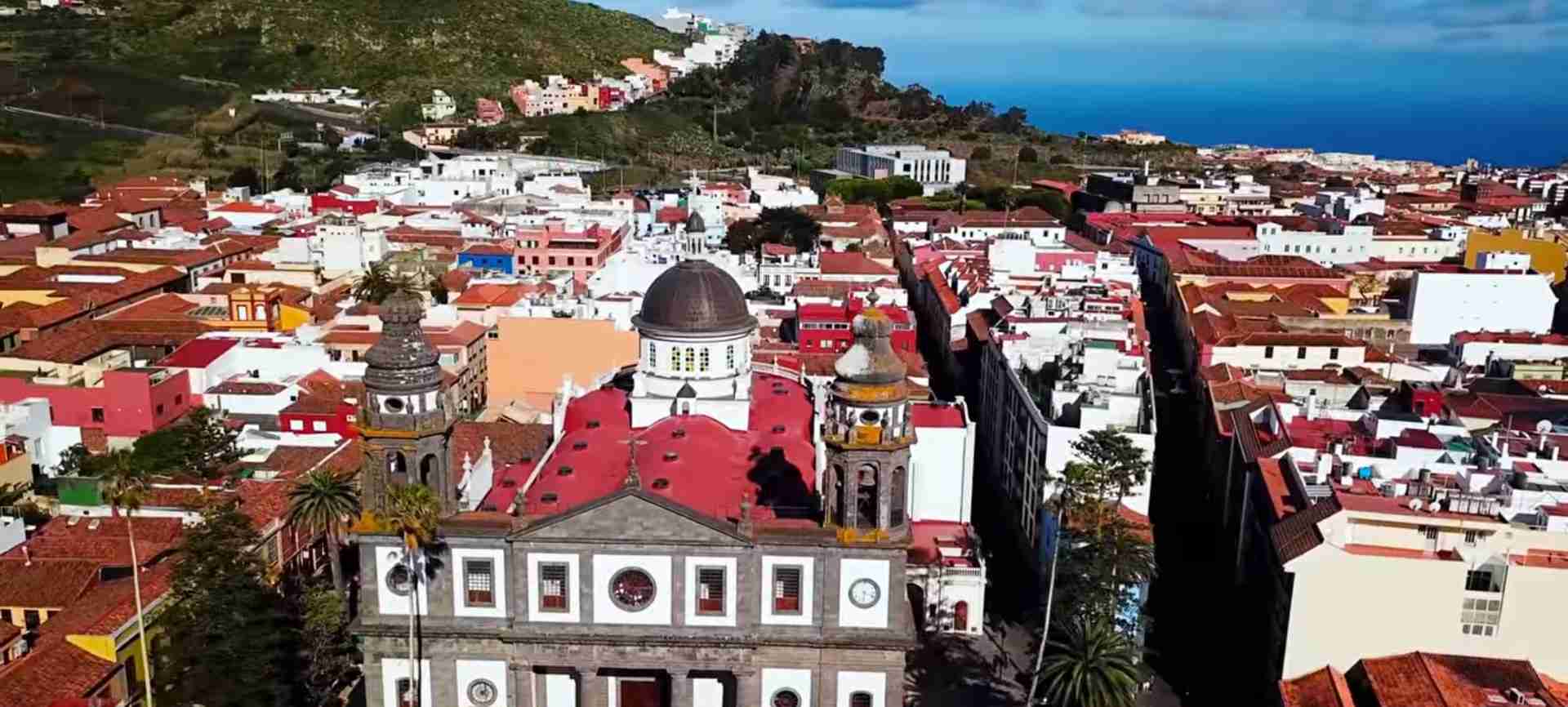
Stone construction predominates in civic and religious buildings, while residential architecture combines stone lower floors with upper stories featuring wooden framing and plaster surfaces. Canary pine from Tenerife’s extensive forests provided structural timber, decorative elements, and balcony construction. Roofs use clay tile in traditional curved profiles imported from Spanish production centers, creating the characteristic reddish-orange roofscape visible from elevated viewpoints surrounding the historic center.
Can you visit La Laguna’s churches and religious buildings?
Most churches maintain regular visiting hours outside mass times, welcoming tourists to appreciate architectural and artistic treasures while respecting active religious function. Major churches like the Cathedral and Iglesia de la Concepción offer free entry with donations appreciated for maintenance and restoration work. Smaller parish churches may have more limited access, opening primarily for services or by appointment through parish offices. Photography is permitted in most churches with respectful attention to worshippers and avoiding flash photography that damages historic artwork and furnishings.
Religious architecture represents La Laguna’s finest colonial building achievements, with elaborate altarpieces, painted ceilings, sculptures, and decorative programs spanning baroque, rococo, and neoclassical styles. Church interiors preserve original artistic commissions from 16th-19th centuries including works by noted Canarian artists and imported pieces from Spanish and Italian masters. The cathedral treasury contains valuable liturgical objects, vestments, and religious art displayed during special exhibitions or accessible through guided tours.
Extended multi-day tours – 5+ days
Featured Tenerife Multi-Day Tour Packages
3 days
Tenerife 3-Day Discovery Tour
- ✓ Comprehensive Tenerife experience
- ✓ Expert local guides included
- ✓ All accommodation included
- ✓ Transportation provided
5 days
Tenerife 5-Day Highlights Experience
- ✓ Comprehensive Tenerife experience
- ✓ Expert local guides included
- ✓ All accommodation included
- ✓ Transportation provided
7 days
Tenerife 7-Day Cultural Journey
- ✓ Comprehensive Tenerife experience
- ✓ Expert local guides included
- ✓ All accommodation included
- ✓ Transportation provided
10 days
Tenerife 10-Day Complete Adventure
- ✓ Comprehensive Tenerife experience
- ✓ Expert local guides included
- ✓ All accommodation included
- ✓ Transportation provided
Multi-day tour packages powered by TourRadar. Prices and availability subject to change.
Historical Background: From Conquest to Colonial Capital
Alonso Fernández de Lugo completed the conquest of Tenerife in 1496 after two years of military campaigns against indigenous Guanche resistance. He established his settlement on a broad plateau chosen for agricultural potential, fresh water availability, and strategic position commanding routes between the coast and interior highlands. The location offered natural protection without requiring expensive fortification construction, reflecting confidence in Spanish military dominance over conquered territories.
La Laguna’s name derives from a shallow lagoon that originally occupied part of the valley floor, since drained for agricultural use and urban expansion. The lagoon provided initial water supply and attracted settlement to this inland location rather than the coastal site that later became Santa Cruz de Tenerife. Early population included conquistadors receiving land grants, settlers from mainland Spain and Portugal, and Guanche survivors integrated into the colonial system through forced labor and cultural assimilation.
The town served as Tenerife’s capital from 1496 until 1723 when administrative functions transferred to the more commercially dynamic port of Santa Cruz. During this 227-year period, La Laguna developed its institutional character as center for religious, educational, and cultural life contrasting with Santa Cruz’s maritime commercial focus. The capital transfer paradoxically preserved La Laguna’s colonial character, as reduced economic dynamism prevented the wholesale redevelopment that erased historic fabric in more prosperous cities.
The 18th century brought Enlightenment influences visible in neoclassical building additions, improved infrastructure including paving and drainage, and establishment of educational institutions that continue defining La Laguna’s identity. The University of San Fernando opened in 1792 as the Canary Islands’ first higher education institution, creating intellectual atmosphere and student population that persists in contemporary La Laguna. Economic stagnation during the 19th century paradoxically protected historic architecture from modernization pressures affecting other Spanish colonial cities.
UNESCO World Heritage Significance
La Laguna’s 1999 UNESCO designation recognized the town under criteria specifically addressing its role in urban planning history and architectural preservation quality. The evaluation emphasized La Laguna’s status as the first unfortified colonial town in Spanish America and its influence on subsequent colonial city planning across the Atlantic world. The geometric grid system implemented in the lower town provided a replicable model that Spanish colonial administrators adapted for settlements from California to Chile.
The designation boundary encompasses 89 hectares of historic urban fabric containing over 600 buildings of historical and architectural significance. UNESCO protection extends beyond individual monuments to include the complete street network, plaza system, and spatial relationships defining the colonial urban experience. This holistic approach recognizes that La Laguna’s significance resides in the ensemble of urban elements rather than isolated architectural masterpieces.
Conservation challenges addressed through UNESCO recognition include managing modern development pressures while maintaining economic vitality, preventing inappropriate building alterations that compromise architectural integrity, and balancing tourism development with residential community needs. The designation brings international attention supporting restoration funding, establishes protective regulations governing building modifications, and creates framework for sustainable heritage management ensuring future generations can experience La Laguna’s colonial character.
La Laguna demonstrates exceptional authenticity with minimal reconstruction of historic buildings, most structures preserving original fabric modified only through sensitive interventions required for contemporary use. The living historic center maintains residential population, active commerce, and functioning institutions creating authentic urban atmosphere contrasting with museum-like historic districts emptied of daily life. This authenticity represents UNESCO’s ideal of heritage preservation supporting vibrant communities rather than frozen historic displays.
Colonial Architecture Guide: Building Types and Styles
Religious Architecture
The Cathedral of San Cristóbal de La Laguna began construction in 1511 on the site of an earlier parish church, evolving through centuries of additions and modifications that created its current form combining Gothic, baroque, and neoclassical elements. The three-nave interior features painted wooden ceiling with elaborate baroque decoration, multiple side chapels containing colonial-era altarpieces, and a main altarpiece representing peak Canarian baroque artistry. The cathedral’s exterior presents austere neoclassical facade completed in the early 19th century, contrasting with the decorative exuberance of interior spaces.
Iglesia de la Concepción dominates the upper town with its distinctive bell tower serving as La Laguna’s most recognizable architectural landmark. Founded in 1502, the church underwent major reconstruction in the 17th century after fire damage, resulting in the current Mudéjar-influenced ceiling and baroque altarpieces. The tower’s multi-stage construction creates varied architectural expression from solid stone base through brick intermediate levels to decorative upper sections with ceramic tile accents. The attached cemetery preserves historic funerary monuments demonstrating evolution of memorial design from simple crosses to elaborate mausoleums.
Convents and monasteries established by multiple religious orders created substantial architectural complexes incorporating churches, cloisters, gardens, and residential wings. The Augustinian convent demonstrates typical arrangement with church facing public plaza while cloistered areas occupy interior blocks accessed through limited entry points. These religious complexes shaped urban development as large property holdings controlling significant portions of the historic center, their gardens and open spaces creating breathing room within densely built residential quarters.
Civic and Institutional Buildings
The Ayuntamiento occupies a neoclassical building facing Plaza del Adelantado, the town’s primary civic space serving as social and political center since colonial foundation. The building’s symmetrical facade employs classical orders with ground-floor arcades creating sheltered walkway along the plaza edge. Interior spaces include council chambers decorated with portraits of notable historical figures, administrative offices maintaining municipal government functions, and ceremonial spaces used for official events and public receptions.
The University of La Laguna campus spreads through multiple historic buildings adapted from former convents, aristocratic mansions, and purpose-built academic structures. The main building, former Augustinian convent, preserves original cloister providing contemplative outdoor space for students and faculty. Academic expansion absorbed additional historic buildings, creating distributed campus integrated into the historic center’s urban fabric rather than isolated in dedicated zones. This integration maintains student presence throughout the center supporting commercial vitality and cultural dynamism.
The Teatro Leal represents late 19th-century theatrical architecture with horseshoe-shaped auditorium, multiple balcony levels, and decorative program combining classical and art nouveau elements. The theater continues functioning as performing arts venue hosting drama, music, and dance presentations maintaining cultural traditions while adapting to contemporary artistic practices. Restoration work preserved original decorative elements while upgrading technical systems enabling modern production standards.
Residential Architecture
Aristocratic mansions demonstrate highest achievement in Canarian colonial residential design, combining functional requirements for large extended families with representational needs expressing social status and wealth. These casas principales feature imposing street facades with large wooden doors providing carriage access to interior patios, extensive wooden balconies across upper floors, and decorative elements including coats of arms, wrought-iron window grilles, and ornamental brackets supporting balcony structures.
Interior organization follows traditional courtyard plan with rooms arranged around central patio providing light, ventilation, and private outdoor space for family activities. Ground floors contained service areas including kitchens, storage, and stables, while principal living spaces occupied upper floors accessed via elaborate wooden staircases. Reception rooms facing streets enabled social display while private family quarters occupied rear zones overlooking gardens. Some mansions preserve original furnishings, decorative arts, and family archives providing insight into colonial daily life and material culture.
Merchant houses occupy narrower street frontages with shops on ground floors and residential spaces above, reflecting commercial function combined with family occupation. These buildings demonstrate efficient use of limited urban space through vertical organization and multifunctional room design. Simpler decorative programs distinguished merchant dwellings from aristocratic mansions, though successful merchants incorporated architectural elements signaling prosperity including elaborate balconies, decorative doorways, and quality construction materials.
Walking Tour Routes Through Historic La Laguna
Plaza del Adelantado Circuit
Begin at Plaza del Adelantado, the town’s main square surrounded by significant buildings including the Ayuntamiento, Santa Catalina convent, and historic mansions demonstrating architectural evolution from 16th through 19th centuries. The plaza serves as social center with café tables under laurel trees providing observation points for watching daily life. Morning markets occupy the plaza on specific days, continuing traditions of public gathering and commerce dating to colonial foundation.
Walk north along Calle Obispo Rey Redondo examining continuous rows of colonial buildings preserving original facades, balconies, and architectural details. This street demonstrates typical colonial residential character with varied building heights, colors, and decorative treatments creating visual interest while maintaining overall harmony. Small shops occupy ground floors offering local products, traditional crafts, and contemporary merchandise reflecting La Laguna’s dual identity as historic monument and living commercial center.
Continue to Iglesia de la Concepción observing the bell tower from multiple angles as street perspectives change. Enter the church to appreciate interior decorative programs including painted ceiling, baroque altarpieces, and colonial religious art. The surrounding neighborhood preserves narrow streets and intimate plazas characteristic of the upper town’s organic development contrasting with the lower town’s geometric planning.
Cathedral and University District
From Plaza del Adelantado, walk south along Calle San Agustín toward the Cathedral observing building styles transitioning from residential to institutional character. The street alignment provides framed views of the cathedral’s neoclassical facade, creating dramatic urban perspective. Enter the cathedral to experience the contrast between austere exterior and ornate baroque interior, spending time observing side chapel altarpieces and main altar composition.
Continue to the University of La Laguna’s main building examining the former Augustinian convent adapted for academic use. Walk through the cloister observing arcades, decorative tile work, and integration of historic architecture with contemporary educational functions. Student presence throughout the district creates animated atmosphere contrasting with quieter residential zones, with cafés and bookshops clustered near university facilities.
Explore surrounding streets including Calle Nava y Grimón lined with aristocratic mansions demonstrating highest quality colonial residential architecture. Observe variations in balcony design, facade composition, and decorative details while noting how buildings adapt to irregular lot shapes inherited from medieval property divisions. Interior patios occasionally visible through open doorways reveal private spaces contrasting with public street facades.
Lower Town Grid District
Walk south from the cathedral toward Plaza del Cristo observing the transition to regular grid planning in the lower town. The perpendicular street intersections create different spatial experience from the upper town’s irregular layout, demonstrating Renaissance planning principles applied to colonial urban design. Calle Herradores exemplifies the grid system with uniform building setbacks, consistent street width, and alignment creating long perspectives terminated by architectural focal points.
Plaza del Cristo anchors the lower town with Iglesia del Cristo church dominating the square. The baroque church interior contains the Cristo de La Laguna, a highly venerated crucifix attracting pilgrims and local devotees. The plaza functions as neighborhood center with daily markets, social gathering, and religious processions connecting community to centuries-old traditions.
Complete the circuit by walking north along parallel streets examining variations in building types, commercial uses, and architectural styles within the consistent grid framework. The lower town demonstrates successful implementation of systematic planning that balanced order with flexibility, creating functional urban space that accommodated growth and change while maintaining coherent character.
Major Landmarks and Historical Buildings
Casa de los Capitanes Generales
This aristocratic mansion served as residence for the Captains General who governed the Canary Islands during colonial period, creating center of political power and social prestige. The building demonstrates highest achievement in Canarian baroque residential architecture with elaborate facade featuring stone portal, extensive wooden balconies, and decorative elements expressing authority and status. Interior spaces preserve original room configurations, decorative paintings, and architectural details providing rare intact example of colonial aristocratic lifestyle.
The mansion currently houses a museum presenting Canarian history, art, and material culture through permanent collections and temporary exhibitions. Visitors can explore multiple floors examining period furnishings, religious art, decorative objects, and documentary evidence of colonial administration. The interior patio exemplifies Canarian residential architecture with arcaded galleries surrounding planted courtyard creating serene space contrasting with formal reception rooms.
Casa Lercaro
The Lercaro family mansion represents wealthy merchant class that dominated La Laguna’s economy during the 16th and 17th centuries. The building combines residential functions with commercial storage spaces demonstrating integration of business and family life characteristic of colonial merchant society. The architecture displays typical features including street-facing balconies, interior patio, and service areas organized around courtyard spaces.
The building currently operates as the Museum of History and Anthropology presenting exhibitions on Canarian culture, indigenous Guanche heritage, and colonial period development. Collections include archaeological materials, ethnographic objects documenting traditional island life, and historical artifacts illuminating social, economic, and cultural evolution. The museum context enables visitors to experience authentic colonial architecture while learning about broader historical processes shaping Tenerife and the Canary Islands.
Instituto Canarias Cabrera Pinto
This former Augustinian convent transformed into prestigious secondary school maintains educational function while preserving exceptional architectural heritage. The complex includes church, cloister, and extensive conventual buildings demonstrating religious architecture adapted for secular educational purposes. The cloister represents finest Canarian baroque architecture with two-story arcaded galleries surrounding central garden, decorative tile work, and proportions creating harmonious outdoor space.
The attached church contains remarkable baroque altarpieces, painted ceiling, and decorative program representing peak achievement of Canarian religious art. The building continues serving students, maintaining living connection to educational traditions dating to colonial period. Visitors can explore public areas including the cloister and church, experiencing monumental architecture integrated into contemporary educational life rather than preserved as static museum.
Cultural Heritage and Living Traditions
La Laguna maintains vibrant cultural life combining university intellectual atmosphere with traditional Canarian customs creating unique identity distinct from coastal tourist zones. The student population supports alternative music venues, independent bookshops, artistic spaces, and cafés fostering creative expression and intellectual exchange. This contemporary vitality coexists with traditional festivals, religious processions, and customary practices preserving connections to colonial heritage.
Religious celebrations including Holy Week processions, Corpus Christi festivities, and patron saint commemorations activate historic streets and plazas with elaborate displays combining devotion, artistry, and community participation. These events maintain traditions dating to colonial foundation while adapting to contemporary sensibilities, creating living heritage rather than staged tourist attractions. Participation remains primarily local with visitors welcomed to observe authentic cultural expressions rather than performances created for external consumption.
Traditional crafts including lace-making, embroidery, pottery, and woodworking preserve artisanal skills transmitted through generations. Craft shops throughout the historic center sell handmade products representing regional traditions while adapting designs to contemporary tastes. Some workshops offer demonstrations and classes enabling visitors to learn traditional techniques and appreciate the skilled labor invested in handcrafted objects.
Culinary traditions centered on Canarian cuisine find expression in traditional restaurants serving papas arrugadas (wrinkled potatoes), mojo sauces, fresh fish preparations, and local wines from Tenerife’s volcanic terroirs. The food culture balances preservation of authentic recipes with creative innovations by younger chefs trained in traditional methods but open to contemporary influences. Markets throughout the center sell local produce, cheeses, and specialty foods supporting regional agricultural traditions and sustainable food systems.
Photography Guide for La Laguna
Architectural Photography Techniques
Colonial architecture photography requires attention to lighting conditions that reveal facade details, textures, and decorative elements. Morning light from the east illuminates western-facing buildings with warm tones enhancing pastel colors and creating shadows that model three-dimensional architectural features. Late afternoon sun from the west produces similar effects on eastern facades while creating long shadows along north-south streets adding drama to architectural photography.
Wide-angle lenses capture complete building facades and street perspectives essential for documenting urban character and spatial relationships. Standard lenses (35-50mm) provide more natural perspective avoiding distortion inherent in ultra-wide optics, better representing how the eye perceives architectural spaces. Tilt-shift lenses correct converging vertical lines appearing when photographing tall buildings, creating more technically accurate architectural documentation.
Detail photography focuses on decorative elements including balcony railings, door hardware, ceramic tiles, and carved stonework representing Canarian craftsmanship and artistic traditions. Macro lenses reveal textures, weathering patterns, and fine details invisible to casual observation. These detail images complement overall views by documenting the quality of construction and decorative programs defining colonial architecture.
Urban Landscape and Street Photography
Plaza photography captures social activities, daily life, and public space use revealing how historic spaces function in contemporary context. Elevated positions including upper-floor balconies, church towers, and surrounding viewpoints provide overview perspectives showing plaza configurations, surrounding buildings, and urban spatial hierarchies. Ground-level photography documents intimate plaza details including paving patterns, fountains, vegetation, and street furniture creating character and atmosphere.
Street photography in La Laguna documents the intersection of historic architecture with contemporary life, students conversing in centuries-old plazas, merchants selling produce in colonial buildings, and residents navigating daily routines through heritage spaces. Respectful candid photography captures authentic moments without intrusive techniques, balancing documentary interest with subject privacy. Black-and-white processing emphasizes architectural forms, textures, and compositional elements by removing color distractions.
Night photography transforms familiar daytime scenes through artificial lighting that highlights architectural features, creates dramatic shadows, and produces atmospheric effects impossible during daylight hours. Long exposures smooth moving elements including people and vehicles while maintaining sharp architectural detail. Street lights, building illumination, and shop windows provide varied light sources creating complex lighting patterns across facades and public spaces.
Local Culture and Contemporary Life
La Laguna combines heritage preservation with contemporary urban vitality creating unique atmosphere where students debate in baroque plazas, residents shop in colonial buildings, and cultural institutions thrive within historic architecture. This integration demonstrates successful heritage management balancing conservation with functional urban life rather than creating sterile museum environment. The university presence particularly influences local culture through intellectual atmosphere, youthful energy, and demand for affordable services supporting diverse commercial landscape.
Weekly markets continue traditions of public commerce dating to colonial foundation, offering local agricultural products, artisan foods, and craft goods representing regional production. Market days activate plazas and streets with temporary stalls, social interaction, and commercial exchange connecting urban residents to rural producers. These markets maintain food systems supporting small-scale farming while providing affordable access to fresh regional products.
Evening paseo customs see residents strolling through historic streets and plazas, meeting friends, visiting cafés, and participating in public social life characteristic of Spanish and Latin American urban culture. The tradition creates animated evening atmosphere contrasting with daytime commercial activity, transforming historic spaces through different patterns of use and social interaction. Cafés and bars extend outdoor seating into plazas and along streets during mild weather, creating impromptu gathering spaces supporting casual social exchange.
Cultural programming including concerts, theater performances, exhibitions, and lectures activates historic buildings and public spaces throughout the year. The municipality, university, and cultural institutions collaborate on programming that serves residents while welcoming visitors interested in authentic cultural experiences. These events maintain traditions of public culture while addressing contemporary interests and artistic practices, demonstrating living heritage rather than static preservation.
Conservation Efforts and Sustainable Heritage Management
UNESCO designation in 1999 catalyzed systematic conservation approaches combining regulatory frameworks, financial incentives, and technical support for building restoration. Municipal regulations govern building modifications within the historic zone, requiring approval for facade alterations, structural changes, and new construction to ensure compatibility with colonial character. The regulations balance preservation priorities with practical needs of property owners and businesses adapting historic structures for contemporary use.
Restoration projects funded through public sources and private investment have stabilized important buildings threatened by deterioration while demonstrating best practices in heritage conservation. These interventions prioritize maintaining original fabric, using traditional materials and techniques, and ensuring new work remains distinguishable from historic elements. Documentation requirements create archives recording building conditions, restoration methods, and historical research supporting future conservation work.
Heritage education programs target residents, students, and property owners to build awareness about La Laguna’s significance and encourage responsible stewardship of historic resources. Schools incorporate local heritage into curricula teaching students about urban history, architectural conservation, and cultural identity connected to physical environment. Property owner workshops provide technical guidance on appropriate maintenance, restoration approaches, and financial assistance programs supporting private conservation efforts.
Sustainable tourism management balances economic benefits from heritage tourism with preservation of authentic character and residential quality of life. Strategies include limiting tour bus access to historic center, encouraging independent exploration over mass tourism, and promoting accommodation dispersed throughout the town rather than concentrated in specific zones. The approach maintains residential population, supports local businesses serving both residents and visitors, and preserves authentic urban atmosphere that constitutes La Laguna’s primary heritage value.
Frequently Asked Questions – La Laguna Colonial Heritage
Why is La Laguna important in colonial history?
La Laguna represents the first Spanish colonial town built without fortifications, demonstrating confidence in military control and implementing urban planning principles that became standard for colonial city development throughout Spanish America. The grid system established here provided replicable template for hundreds of colonial settlements from California to Argentina, making this modest Canarian town unexpectedly influential in shaping urban landscapes across two continents. The preserved historic fabric enables studying authentic colonial architecture and urbanism rather than reconstructed approximations.
What is the difference between La Laguna’s upper and lower towns?
The upper town, Villa de Arriba, developed organically around the initial 1496 settlement with irregular streets following natural topography and medieval European planning traditions. The lower town, Villa de Abajo, implemented systematic grid planning with perpendicular streets, regular blocks, and central plazas reflecting Renaissance ideals about rational urban organization. This dual character demonstrates the evolution of Spanish urban planning theory during the transition from medieval to early modern periods, with both systems preserved intact within the compact historic center.
Can you see Guanche heritage in La Laguna?
La Laguna developed as Spanish colonial settlement after conquest eliminated indigenous Guanche political structures, so the urban fabric primarily reflects European planning and architectural traditions. Museums including Casa Lercaro contain archaeological materials and ethnographic exhibits documenting Guanche culture, providing context for understanding pre-conquest Tenerife. Place names, some vocabulary words, and certain agricultural techniques preserve Guanche influences integrated into colonial society, though the physical cityscape represents Spanish colonial rather than indigenous heritage.
How does La Laguna differ from other Spanish colonial towns?
La Laguna’s status as first unfortified Spanish colonial town distinguishes it from most contemporaneous settlements requiring defensive walls and military architecture. The open plan demonstrated confidence in Spanish military dominance while enabling expansion without physical constraints imposed by fortifications. The exceptional preservation of original street layout, high percentage of intact colonial buildings, and continuous occupation maintaining authentic urban character make La Laguna outstanding example even among well-preserved Spanish colonial towns throughout Latin America.
What role does the university play in La Laguna?
The University of San Fernando, established in 1792, created intellectual atmosphere and student population that define contemporary La Laguna identity. The institution occupies multiple historic buildings adapted from former convents and aristocratic mansions, integrating academic functions into heritage fabric. Student presence supports cultural vitality, independent businesses, and progressive social atmosphere contrasting with more tourist-oriented coastal areas. The university maintains La Laguna’s role as Tenerife’s intellectual capital, continuing traditions of scholarship and cultural leadership dating to colonial period.
What are the wooden balconies on La Laguna buildings?
Traditional Canarian balconies, constructed from local Canary pine, provide shaded outdoor space, visual continuity along streets, and distinctive architectural character defining colonial buildings throughout the archipelago. Enclosed glazed versions called miradores protect from weather while allowing light and views, while open versions enable air circulation in warm climate. The elaborate turned railings demonstrate woodworking craftsmanship and decorative traditions specific to Canarian architecture, with variations in detail and proportions distinguishing individual buildings while maintaining overall stylistic coherence.
Is La Laguna worth visiting if you’ve seen other colonial cities?
La Laguna offers unique perspective on Spanish colonial urbanism as the prototype for grid-pattern cities replicated throughout the Americas, making it historically significant for understanding widespread urban forms. The compact size enables comprehensive exploration in manageable timeframe compared to sprawling Latin American colonial cities. The combination of exceptional preservation, authentic living heritage, university cultural atmosphere, and relative freedom from mass tourism provides distinctive experience even for visitors familiar with colonial architecture elsewhere. The Canarian architectural features including distinctive balconies and adapted Spanish traditions create regional character distinguishing La Laguna from mainland or New World colonial towns.
What is the best starting point for walking tours?
Plaza del Adelantado serves as ideal starting point, offering orientation through surrounding significant buildings, café facilities, and central location enabling efficient exploration of both upper and lower town districts. The plaza’s size and landmarks create easily recognizable reference point for navigation throughout the historic center. Multiple streets radiate from the plaza connecting to other significant areas, making it natural hub for self-guided exploration or meeting point for organized walking tours.
Are there guided tours available in English?
Various tour operators offer guided walks in English covering architectural highlights, historical background, and cultural context of La Laguna’s colonial heritage. Tours range from basic orientation walks introducing major monuments to specialized explorations focusing on architecture, religious heritage, or university history. Local tourist office provides current information on scheduled tours, private guide arrangements, and audio guide options for independent visitors preferring structured interpretation while maintaining flexible timing.
How does La Laguna relate to other Tenerife attractions?
La Laguna provides cultural and historical counterpoint to Tenerife’s natural attractions including Teide National Park, coastal resorts, and volcanic landscapes. The town offers insight into human settlement patterns, colonial history, and urban development contrasting with island’s dramatic geology and natural heritage. Combined visits balance nature and culture, enabling comprehensive understanding of Tenerife’s complex heritage encompassing both natural phenomena and human adaptation to island environment over five centuries of Spanish presence.