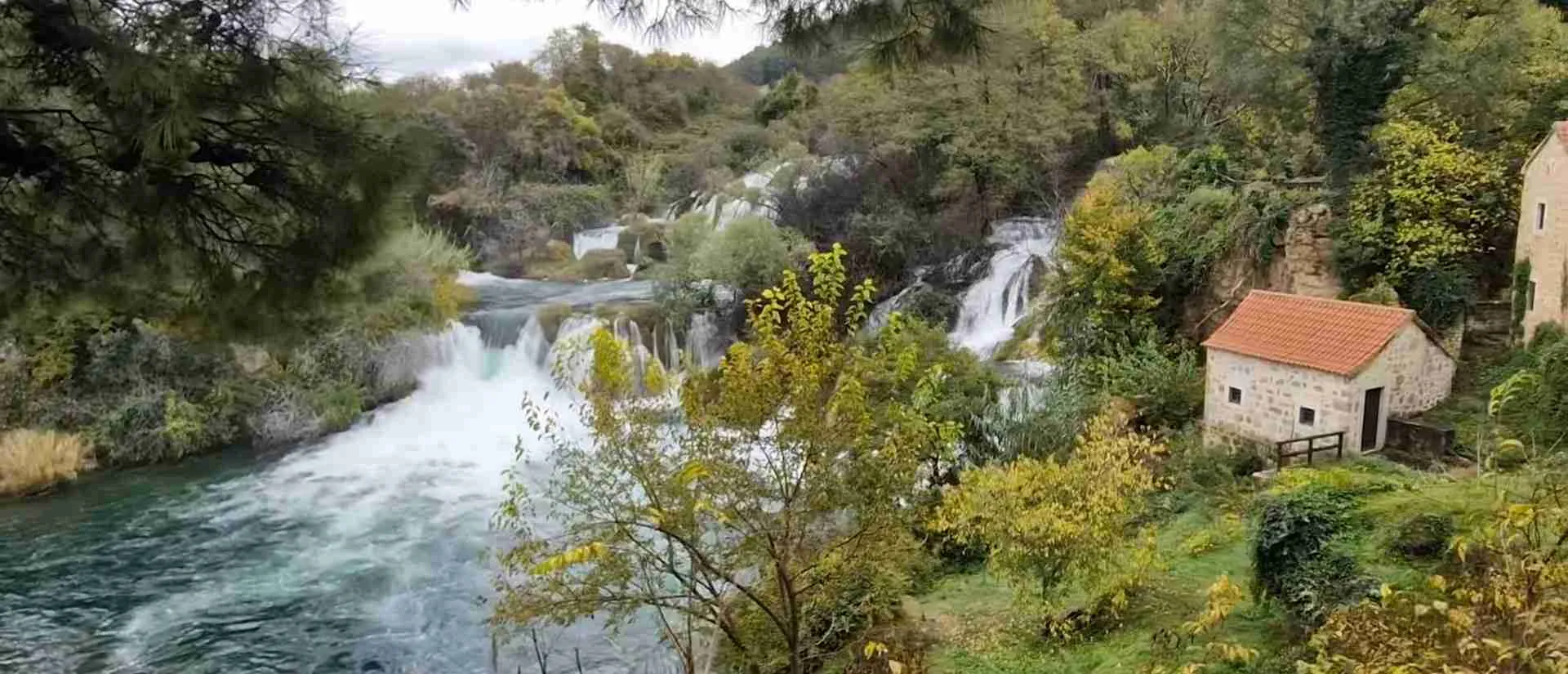
Krka National Park Day Trip from Split 2026: Complete Planning Guide
Krka National Park, located just 85 kilometers from Split with dramatic Skradinski Buk waterfall cascading through 17 terraced barriers, offers Croatia’s most accessible major natural attraction for day-trippers seeking emerald pools, wooden boardwalk trails, and designated swimming areas. This comprehensive 2026 guide covers verified tour pricing from €46-75 total cost including transport and entrance, independent travel options saving €20-40 per person, the critical January 2021 swimming rule changes restricting water access to specific locations away from the main waterfall, and complete logistics for maximizing your Krka experience within a 6-8 hour day trip from Split.
Key Takeaways
- Organized day tours from Split to Krka National Park cost €30-45 for round-trip transport with park entrance fees of €16 (April, May, October) or €30 (June-September) paid separately, totaling €46-75 per person for the complete experience in 2026
- Independent travel via public bus costs €15 round-trip to Skradin plus €16-30 park entrance (€31-45 total), saving €15-30 versus organized tours but requiring 8-9 hours versus 6-7 on tours due to less efficient connections
- Swimming at Krka’s famous Skradinski Buk waterfall has been prohibited since January 2021, with swimming now permitted only at designated areas Roški Slap, Stinice, and Pisak from June 1-September 30, plus alternative swimming at Skradin city beach
- Tours depart Split between 7:00-8:30 AM and return by 5:30-6:30 PM, providing 3-4 hours of free time within the park to explore boardwalk trails, view waterfalls, visit traditional watermills, and swim at permitted locations
- The 1-hour drive from Split to Krka’s Lozovac entrance makes this significantly more accessible than Plitvice Lakes (4-5 hours each direction), positioning Krka as the ideal national park day trip for Split-based travelers with limited time
- Book tours 5-10 days in advance during summer peak season (June-August) when capacity fills quickly, while shoulder seasons (April-May, September-October) allow 2-3 day booking windows with better availability and lower entrance fees
People Also Ask About Krka Day Trip from Split 2026
How much does a Krka National Park day trip from Split cost in 2026?
A Krka National Park day trip from Split costs €46-75 total per person in 2026 for organized tours, consisting of €30-45 for round-trip coach transport plus €16-30 park entrance fee depending on season (April/May/October €16, June-September €30). Independent travel using public buses costs €31-45 total (€15 round-trip bus fare plus €16-30 entrance), saving €15-30 per person but requiring longer travel time and more complex logistics. Private driver tours cost €220-300 for the entire vehicle accommodating up to 4 passengers, making them economical for small groups when cost is divided.
Can you still swim in Krka waterfalls in 2026?
Swimming at Krka’s main Skradinski Buk waterfall has been prohibited since January 2021 due to environmental protection and safety concerns. However, swimming remains permitted at three designated areas within Krka National Park: Roški Slap waterfall, Stinice, and Pisak, with access allowed June 1-September 30 only and subject to weather conditions and water levels. Alternative swimming is available year-round at Skradin city beach, a 5-minute walk from Skradin town center where the Krka River meets seawater creating refreshing mixed-water conditions, making it the primary swimming option for most day-trippers visiting Skradinski Buk area.
What is the best way to get to Krka National Park from Split in 2026?
Organized day tours provide the most convenient transport to Krka from Split in 2026, with air-conditioned coaches departing 7:00-8:30 AM, arriving at Lozovac entrance by 9:00-9:30 AM, and returning to Split by 5:30-6:30 PM for €30-45 per person. Self-driving offers maximum flexibility with the 85-kilometer journey taking just 1 hour via E65/E71 toll highway (€4 toll) and free parking at Lozovac entrance, though rental car costs of €30-50 per day reduce the savings unless splitting among multiple travelers. Public buses from Split to Skradin cost €7-8 each way but require 1.5-2 hours travel time with less convenient departure scheduling, making them best suited for budget-conscious independent travelers willing to invest extra time.
How long should you spend at Krka National Park from Split?
Most visitors spend 3-4 hours at Krka National Park on day trips from Split in 2026, allowing 60-90 minutes for the circular boardwalk trail around Skradinski Buk waterfall, 30-45 minutes exploring traditional watermill exhibits and stone houses, 45-60 minutes for swimming at Skradin beach or designated park areas during summer season, and 30 minutes for the included boat ride between Skradin and the park entrance. This timeframe fits comfortably within the 6-7 hour total commitment for organized tours including transport, while independent travelers can extend park time to 4-5 hours by arriving earlier or staying later given greater schedule flexibility, though the compact Skradinski Buk area reveals its highlights thoroughly within 3 hours for most visitors.
Extended multi-day tours – 5+ days
Featured Split Multi-Day Tour Packages
7 days
Explore Croatia
- ✓ Comprehensive Split tour
- ✓ Expert local guides included
- ✓ All accommodation arranged
- ✓ Transportation provided
4 days
Croatia – Split & Krka Waterfalls
- ✓ Comprehensive Split tour
- ✓ Expert local guides included
- ✓ All accommodation arranged
- ✓ Transportation provided
7 days
Island hopping walking tour Split to Dubrovnik
- ✓ Booking needs min. 2 travelers
7 days
Split, Gateway to the Adriatic
- ✓ Comprehensive Split tour
- ✓ Expert local guides included
- ✓ All accommodation arranged
- ✓ Transportation provided
Multi-day tour packages powered by TourRadar. Prices and availability subject to change.
Introduction to Krka National Park Day Trips from Split
Krka National Park stands as Split’s most accessible natural wonder in 2026, positioned just 85 kilometers northwest with the journey taking only 1 hour by car or 1.5 hours by bus, creating the ideal day trip balance between spectacular scenery and minimal travel time. Unlike Plitvice Lakes requiring 8-10 hours round-trip from Split, Krka delivers dramatic waterfall landscapes, swimming opportunities at designated areas, and cultural-historical sites within a manageable 6-8 hour outing. The park encompasses 109 square kilometers along the Krka River featuring seven major waterfalls, with Skradinski Buk as the centerpiece attraction where 17 cascading travertine barriers create Europe’s largest tufa waterfall formation.
The proximity between Split and Krka makes the park particularly valuable for travelers based on the Dalmatian coast who want nature experiences without dedicating full days to distant national parks. A typical Krka day trip from Split begins with 7:00-8:30 AM departure, arrives at the park around 9:00-9:30 AM beating midday crowds, provides 3-4 hours of exploration and swimming time, and returns to Split by 5:30-6:30 PM leaving evenings free for Split’s dining and nightlife. This schedule contrasts sharply with Plitvice tours departing 6:00-6:30 AM and returning after 8:00 PM, consuming the entire day with limited time in the actual park despite longer total commitment.
Krka’s unique characteristic allowing swimming in designated areas distinguishes it from Plitvice Lakes where swimming is completely prohibited. However, critical changes implemented in January 2021 restricted swimming access significantly. The famous Skradinski Buk waterfall, where swimming directly beneath cascades was previously Krka’s signature experience, now prohibits all water access due to environmental protection concerns and visitor safety issues with slippery travertine and strong currents. Swimming remains permitted at three designated locations within the park: Roški Slap waterfall in the northern section, and smaller areas at Stinice and Pisak, accessible June 1-September 30 only. Most day-trippers from Split who want to swim visit Skradin city beach instead, a 5-minute walk from Skradin town where river water mixes with seawater creating refreshing conditions.
The park’s organization around multiple entrances creates initial confusion for first-time visitors. The Lozovac entrance near the village of Lozovac provides direct access to Skradinski Buk and serves as the primary entry point for organized tours from Split arriving by coach. The Skradin entrance in the riverside town of Skradin offers an alternative approach via a scenic 25-minute boat ride included in entrance tickets, transporting visitors up the Krka River to Skradinski Buk. Other entrances at Roški Slap, Burnum, and Kistanje access different park sections but see minimal use from day-trippers focused on Skradinski Buk as the main attraction.
Understanding what Krka offers versus what it doesn’t prevents disappointment. The park excels at providing accessible waterfall viewing along well-maintained wooden boardwalks suitable for all fitness levels, cultural exhibits in restored traditional watermills and stone houses demonstrating historic Dalmatian life, and summer swimming in designated areas away from the main attraction. Krka does not offer wilderness hiking like Plitvice with its extensive trail network, nor does it provide the same scale of landscape with Plitvice’s 16 terraced lakes versus Krka’s single river with waterfall interruptions. The tradeoff for reduced scale and wilderness character is significantly better accessibility from Split and less physically demanding exploration.
Day trip options from Split in 2026 range across three approaches. Organized coach tours at €46-75 total cost provide maximum convenience with hotel pickup, guaranteed transport, professional guiding, and no planning stress, making them ideal for travelers prioritizing ease over budget. Independent public bus travel at €31-45 total cost saves €15-30 per person but requires navigating Croatian bus schedules, managing luggage, and accepting less efficient timing that extends the day trip to 8-9 hours. Self-driving rental cars offer schedule flexibility and potential cost savings for groups of 3-4 travelers splitting the €30-50 daily rental plus €8 toll, though it requires confidence navigating Croatian roads and dealing with parking logistics.
The seasonal timing of Krka visits dramatically affects both pricing and experience quality. Summer peak season from June through September brings €30 park entrance fees versus €16 in shoulder seasons (April-May, September-October), crowds reaching 3,000-5,000 daily visitors during July-August creating congestion on boardwalks, and hot temperatures exceeding 30°C making middle-of-day visits uncomfortable. Shoulder seasons offer the best value-experience balance with €16 entrance fees, comfortable temperatures of 18-25°C, and manageable crowds allowing peaceful waterfall viewing. Winter months (November-March) see entrance fees drop to just €7 and crowds disappear almost entirely, but swimming is prohibited, boat services suspend operation, and some facilities close making the experience more limited.
Tour booking strategies in 2026 require different lead times depending on season and preferred tour type. Summer months (June-August) demand 5-10 days advance booking for popular tours as capacity fills from cruise ship passengers, Split hotel guests, and advance online bookings. Shoulder seasons (April-May, September-October) allow 2-3 day booking windows with good availability across most operators. Last-minute same-day or next-day bookings rarely succeed during summer but often work in shoulder seasons and winter months when tour operators maintain reduced schedules with excess capacity.
The Krka day trip from Split in 2026 represents a reliable, accessible natural experience requiring minimal physical exertion while delivering impressive scenery and summer swimming opportunities. It works particularly well for families with young children who cannot handle Plitvice’s longer journey and more demanding hiking, travelers with limited time in Split wanting to see Croatian natural beauty without sacrificing multiple days, and budget-conscious visitors seeking quality experiences at reasonable prices when traveling during shoulder seasons with €16 entrance fees. The park’s limitations in scale and wilderness character versus Plitvice become advantages when time, energy, or budget are constrained.
Organized Tour Options from Split to Krka 2026
Organized day tours from Split to Krka National Park in 2026 cost €30-45 per person for standard round-trip coach transport with 3-4 hours of free time at the park, with park entrance fees of €16 (April, May, October) or €30 (June-September) paid separately at arrival. Tours depart Split between 7:00-8:30 AM from meeting points at Golden Gate near Diocletian’s Palace or directly from Split area hotels for €5-10 additional pickup fee, arriving at Krka’s Lozovac entrance by 9:00-9:30 AM after the 1-hour journey. Return departure from the park occurs around 2:00-3:00 PM with arrival back in Split between 5:30-6:30 PM, creating a complete 10-11 hour day including all transport.
Standard tour packages at €30-35 per person provide air-conditioned coach transport, professional English-speaking tour escort who purchases entrance tickets to bypass queues, basic park orientation explaining trails and facilities, and return transport to Split. The tour escort accompanies the group to the park entrance, handles ticket purchasing logistics, and designates a specific meeting time and location for departure, but does not provide guided walking tours within the park itself. Visitors explore Krka independently during the allocated 3-4 hours, following wooden boardwalk trails at their own pace without guide narration or scheduled group activities.
Enhanced tour packages at €40-50 per person add guided walking components where the escort leads the group along Skradinski Buk trails for 60-90 minutes, providing historical context about the watermills, ecological information about travertine formation, and identification of local flora and fauna. These packages appeal to travelers wanting educational depth beyond self-guided exploration, though the guided portion typically covers only half the allocated park time with the remainder left for independent exploration, swimming, or relaxation.
Premium tours at €60-90 per person combine Krka visits with wine tasting at Dalmatian hinterland wineries, stopping at family-run estates for tastings of Plavac Mali, Babić, and other indigenous varietals paired with local cheeses and prosciutto. The wine component adds 60-90 minutes to total tour time, extending return to Split to 7:00-8:00 PM. These combination experiences work well for travelers wanting to maximize the day trip value by experiencing both natural and cultural attractions, though the packed schedule provides less relaxation time than Krka-only tours.
Alternative enhanced tours at €55-75 per person substitute wine tasting with visits to the coastal town of Primošten or UNESCO-listed Trogir, adding cultural sightseeing to the nature experience. The Primošten option includes swimming time at this picturesque town’s beaches during shoulder seasons (April-May, September-October) when Krka swimming is less appealing due to cool water temperatures. The Trogir option provides 90-120 minutes exploring this preserved medieval town’s Romanesque-Gothic architecture, particularly appealing during April-May when UNESCO sites complement the natural park visit.
Small group tours limiting capacity to 8-15 participants cost €45-60 per person and provide more personalized attention, easier communication with tour escorts, and greater flexibility for photography stops or pace adjustments. These tours typically use minibuses rather than large 40-50 seat coaches, creating more intimate group dynamics and reducing boarding/unboarding time at stops. The smaller vehicles also enable pickup at more Split locations compared to large coaches restricted to main meeting points.
Budget tours at €20-30 per person transport-only provide basic coach service without tour escort guidance, park orientation, or ticket purchasing assistance. Travelers receive transport to Lozovac entrance, designated pickup time for return journey, and WhatsApp group for communication, but handle all park navigation and ticket purchasing independently. These bare-bones options suit confident independent travelers wanting cheap transport without paying for unnecessary guidance services, though the modest savings of €10-15 per person versus standard tours may not justify the reduced support for many visitors.
Morning versus afternoon departures create different park experiences. Morning tours departing Split 7:00-8:00 AM arrive at Krka 9:00-9:30 AM during the best photography light and before peak midday crowds reach maximum density around 11:00 AM-2:00 PM. Afternoon tours departing Split 11:00 AM-12:00 PM arrive at Krka 1:00-2:00 PM during peak congestion but benefit from post-4:00 PM entrance fee discounts of 25% during summer season, reducing the €30 peak entrance to approximately €22. The afternoon timing also means less time spent in midday heat, with the cooler late afternoon hours providing more comfortable walking conditions.
Tour booking platforms affect total costs and customer protection. Direct booking through tour operator websites like Gray Line Croatia, Splitlicious, or Croatia Private Driver Guide sometimes provides €5-10 per person savings versus third-party platforms like Viator or GetYourGuide that charge 15-25% commission. However, platforms offer consolidated review systems with thousands of customer experiences, standardized cancellation policies providing refunds 24 hours before departure, and customer service infrastructure handling disputes. The choice between direct booking savings and platform protection depends on individual risk tolerance and preference for consumer safeguards.
Cancellation and refund policies vary significantly by operator. Reputable companies like Gray Line offer free cancellation up to 24 hours before departure with full refunds, while budget operators may impose 25-50% cancellation fees or refuse refunds for cancellations within 72 hours. Weather-related cancellations initiated by operators (extremely rare for Krka as the park operates in virtually all weather) result in full refunds or date changes. However, tourists choosing to cancel due to rain forecasts when tours proceed receive no refunds, so checking weather forecasts 2-3 days ahead helps with planning.
What is included versus excluded in tour packages requires careful reading of booking descriptions. Transport and tour escort services are universally included at stated prices. Park entrance fees are usually excluded requiring cash payment (euros) at Krka entrance, though some operators bundle entrance in total price particularly for shoulder season tours when the €16 fee is less significant. Lunch is never included, with tourists bringing picnic supplies or purchasing meals at Skradin restaurants (€15-25 per person) or park kiosks (€8-15 for basic sandwiches and snacks). Boat rides from Skradin to Skradinski Buk are included in park entrance tickets but additional boat excursions to Visovac Island or Roški Slap cost extra if purchased on-site.
Hotel pickup services offered by many operators for €5-10 per person surcharge provide convenience for accommodations outside Split old town. Pickup typically occurs 15-30 minutes before main meeting point departure depending on hotel location, with exact timing confirmed via email or phone the evening before tour day. Hotels in Split city center, Bačvice beach area, and nearby suburbs like Trstenik or Žnjan qualify for pickup, while more distant locations in Kaštela, Solin, or Omiš may not be served requiring travelers to reach main meeting points independently.
Group size expectations vary by tour type and season. Budget tours during summer peak can load 40-50 passengers into large coaches creating crowded conditions and longer boarding times. Mid-range tours typically cap groups at 25-35 participants providing better escort access and more comfortable transport. Small group tours maintain 8-15 participant limits enabling personalized attention and flexible pacing. Tour capacity affects the experience significantly beyond just crowding, as larger groups require stricter adherence to schedules leaving less room for accommodation if individuals need extra time.
Language considerations matter as tour quality depends heavily on communication clarity. Major operators employ multilingual escorts conducting tours in English, Spanish, German, and sometimes Italian depending on group composition. However, budget operators may provide guides with limited English fluency reducing educational value and making it difficult to ask questions or receive detailed information. Reading recent reviews specifically mentioning guide language skills helps identify operators with consistently strong English communication versus those where language becomes a barrier.
Park Entrance Fees and Ticketing for Krka 2026
Krka National Park entrance fees in 2026 vary by season with peak summer rates of €30 per adult (June-September), shoulder season rates of €16 per adult (April, May, October), and off-season rates of €7 per adult (November-March). Children under 7 years old enter free year-round, while students with valid international student ID cards receive approximately 30% discounts during peak season. The entrance ticket includes access to all terrestrial park locations including Skradinski Buk, Roški Slap, Burnum archaeological site, and Krka Eco Campus, plus the boat transport from Skradin to Skradinski Buk and internal shuttle bus from Lozovac parking to the waterfall entrance.
Payment methods at park entrances accept both cash euros and credit cards at major locations like Lozovac and Skradin, though smaller entrance points at Roški Slap, Burnum, and Manojlovac accept cash only. Organized tours from Split typically request cash payment as tour escorts purchase tickets in bulk at Lozovac entrance to bypass individual queuing, with escorts collecting euros from group members before approaching ticket windows. Independent travelers can use cards at main entrances but should carry cash backup particularly when visiting during shoulder or off-season when card systems occasionally malfunction.
The seasonal pricing structure creates significant cost differences for summer versus shoulder season visits. A family of four (two adults, two children over 7 years) pays €120 total entrance during peak summer (4 x €30) versus €64 during shoulder season (4 x €16), representing €56 savings per family simply by timing visits to late September or early October rather than July or August. When combined with lower tour transport prices during shoulder seasons, the total savings reach €80-100 per family making timing strategy crucial for budget-conscious travelers.
After-4:00 PM entry discounts of approximately 25% apply during summer peak season for visitors entering Skradinski Buk after 4:00 PM, reducing the €30 adult ticket to roughly €22. This discount recognizes that late afternoon arrivals receive fewer hours of park access before 6:00-8:00 PM closing times depending on season. Some afternoon departure tours from Split specifically time arrivals to capture this discount, passing savings to customers through reduced total tour prices. Independent travelers can capitalize on this discount by visiting Krka later in the day, though it limits total time available for exploration to approximately 2-3 hours.
Reduced-price tickets for specific park sections allow visitors interested only in Roški Slap, Burnum, or other non-Skradinski Buk areas to pay €7-20 depending on season rather than full park price. These sectional tickets do not include Skradinski Buk access, making them suitable only for repeat visitors who have already seen the main waterfall or for specialized interests in archaeological sites or swimming at Roški Slap. First-time day-trippers from Split should purchase full park tickets to access Skradinski Buk as the primary attraction.
Student discounts require presentation of valid international student ID cards at ticket purchase. The discount applies primarily during peak summer season reducing the €30 adult ticket to approximately €20-22 per student. Shoulder and off-season entrance fees of €16 and €7 respectively offer minimal or no student discounts as the base prices already represent substantial reductions from peak rates. Tour operators purchasing group tickets generally cannot apply individual student discounts, requiring students to purchase their own entrance tickets separately to receive reduced pricing.
Annual passes through the “Friends of Krka Club” cost approximately €50-70 depending on membership level and provide unlimited year-round access plus special event invitations and discount privileges at park restaurants and shops. Annual passes make financial sense only for visitors planning 4+ visits per year during peak season (4 x €30 = €120 versus €50-70 annual pass) or local residents using the park regularly. Day-trippers from Split making single visits should not purchase annual passes regardless of the apparent discount.
Group discounts for organized parties of 15+ participants reduce per-person entrance fees by approximately 10-15% during all seasons when tickets are purchased together. Tour operators negotiate these rates directly with park administration, passing some or all savings to customers depending on operator pricing strategy. Independent travelers forming informal groups cannot access group discounts as the park requires official tour operator credentials and advance coordination to qualify for reduced rates.
Free entrance days occur occasionally throughout the year during special events or promotions announced on the park’s official website npkrka.hr. These free access periods typically target Croatian nationals or regional visitors rather than international tourists, though anyone present during free days benefits. Checking the park website 1-2 weeks before planned visits may reveal free access opportunities, though planning entire trips around uncertain free days is not recommended.
Online ticket purchasing became available in recent years through the park’s official website, allowing advance purchase with credit cards and digital ticket delivery via email. Online purchases eliminate on-site queuing during peak season when ticket lines can extend 30-60 minutes at Lozovac entrance. However, online purchase requires printing tickets or displaying on mobile devices, and provides no cost savings compared to on-site purchase making it purely a convenience option for avoiding lines. Organized tours typically handle ticket logistics making online purchase unnecessary for most day-trippers from Split.
Combined tickets bundling Krka entrance with other regional attractions like Šibenik city attractions or nearby wineries occasionally appear through tour operators or regional tourism boards. These packages provide marginal savings of €5-10 versus separate purchases while adding convenience of single-transaction booking. However, the bundled attractions often require additional time and transport creating logistical challenges for single-day itineraries from Split, making them more suitable for multi-day regional explorations rather than focused Krka day trips.
Refund policies for unused entrance tickets vary by purchase method. Tickets purchased on-site at park entrances are non-refundable once issued, even if the visitor chooses not to enter the park. Online purchased tickets may allow cancellation and refund up to 24 hours before selected entry date depending on booking platform terms. Tour packages bundling entrance fees typically follow tour operator cancellation policies rather than park-specific rules, generally allowing refunds for tour cancellations up to 24 hours before departure as entrance fees are refunded when the tour itself is cancelled.
Independent Travel from Split to Krka by Public Transport
Independent travel from Split to Krka National Park using public buses costs €15 round-trip for transport plus €16-30 park entrance (€31-45 total), saving €15-30 per person versus organized tours at €46-75 but requiring 8-9 hours total time versus 6-7 on tours due to less efficient connections and longer travel duration. Buses depart Split Central Bus Station for Skradin approximately every 1-2 hours throughout the day during summer season, with the journey taking 1.5-2 hours depending on route and stops. From Skradin, visitors walk 5 minutes to the boat dock where the included boat ride (covered in park entrance) transports passengers 25 minutes up the Krka River to Skradinski Buk waterfall.
The public bus journey from Split to Skradin operates on routes serving coastal towns and interior villages, meaning buses make multiple stops extending travel time beyond the direct 1-hour driving route. FlixBus and Croatian national bus operator Arriva provide the primary services, with tickets bookable online through GetByBus.com or purchased directly at Split bus station. One-way fares range €7-8 depending on exact service and booking timing, with round-trip purchases offering no meaningful discount versus two one-way tickets. Advance booking secures seats during peak summer season when buses fill with locals and tourists, while same-day purchase usually succeeds during shoulder and off-seasons.
Split Central Bus Station (Autobusni kolodvor Split) sits approximately 1 kilometer east of Diocletian’s Palace in the city center, accessible via city bus routes or 15-20 minute walk from the old town. The modern station features ticket windows, waiting areas, luggage storage (€2-3 per bag), and basic cafes. Arriving 30 minutes before scheduled departure ensures ticket purchase and platform location, as delays and last-minute platform changes occur occasionally requiring buffer time.
Bus schedules from Split to Skradin vary significantly by season. Summer months (June-September) offer departures approximately every 1-2 hours from early morning around 7:00 AM through early evening around 6:00 PM. Shoulder seasons (April-May, October) reduce frequency to every 2-3 hours, while winter months (November-March) see limited service with just 2-4 daily departures. Checking current schedules on GetByBus.com or the Croatian bus company websites 2-3 days before planned travel prevents arriving at the station only to discover limited options.
Return buses from Skradin to Split operate on similar schedules with the last departure typically between 5:00-7:00 PM depending on season. Missing the last bus creates expensive taxi situations, as Skradin’s limited taxi services charge €80-120 for the return journey to Split. Planning return bus timing carefully by noting the schedule during morning outbound travel prevents this costly scenario. Building 30-minute buffer before the planned return bus accounts for minor delays in park exit or boat schedules.
Luggage considerations matter for bus travel as large suitcases prove cumbersome during the day trip. Small daypacks or backpacks work perfectly, carrying swimming gear, towels, sunscreen, water, and snacks without impeding movement on crowded buses or park boardwalks. Bus companies accept larger luggage in cargo compartments but charge fees of €1-2 per bag and create retrieval hassles at intermediate stops. Travelers should leave large luggage at Split accommodations, using bus station luggage storage only if necessary during accommodation checkout days.
The Skradin-to-Skradinski Buk boat ride included in park entrance tickets operates April-October with departures every 30 minutes during peak hours (9:00 AM-4:00 PM) and hourly during shoulder periods. The scenic 25-minute journey up the Krka River provides views of canyon walls, riparian forests, and occasional wildlife including herons and water birds. Boats suspend operation November-March when low water levels and reduced visitor numbers make the service uneconomical, requiring winter visitors to access Skradinski Buk via Lozovac entrance instead.
Navigation from Skradin bus stop to boat dock takes 5 minutes walking through the small town center. Follow brown “NP Krka” directional signs from the bus station through narrow streets to the waterfront promenade where the boat landing is clearly visible. The boat ticket office (actually just the park entrance office) sits immediately adjacent to the landing, where entrance tickets are purchased before boarding. Boats accept only passengers with valid park entrance tickets, so ticket purchase precedes boarding rather than occurring on the boat itself.
Time management for independent bus travelers requires careful calculation to maximize park time while ensuring return bus connection. A typical schedule might involve: 8:00 AM departure from Split, 9:30-10:00 AM arrival Skradin, 10:00-10:30 AM boat to Skradinski Buk, 10:30 AM-2:30 PM park exploration (4 hours), 2:30-3:00 PM return boat to Skradin, 3:00-5:00 PM Skradin town exploration or beach time, 5:30 PM bus departure to Split, 7:00-7:30 PM arrival Split. This schedule provides ample park time while maintaining buffer for the return bus.
Meal planning for independent travel differs from organized tours as no group lunch stops are scheduled. Packing picnic supplies from Split supermarkets costs €5-10 per person for bread, cheese, fruit, and drinks versus €15-25 per person for restaurant meals in Skradin. The park prohibits outside food within certain areas but picnic tables near Skradinski Buk entrance accommodate lunch breaks. Skradin’s waterfront restaurants serve fresh fish and traditional Dalmatian cuisine at reasonable prices, with afternoon post-park dining providing a relaxed conclusion to the day trip before the bus return.
Swimming gear for bus travelers requires waterproof bags or dry sacks as wet towels and swimsuits have nowhere to dry during return bus journey. Compact microfiber towels dry faster than cotton alternatives and pack smaller when wet. Water shoes or sport sandals serve double duty for swimming and walking, eliminating the need to carry separate footwear. Changing facilities at Skradin beach are basic wooden structures with limited space, so many visitors wear swimsuits under clothing to minimize changing needs.
Weather contingency planning matters more for independent bus travel than organized tours, as tour operators handle cancellations and rebooking while bus tickets are non-refundable. Checking weather forecasts 2-3 days before travel helps decide whether to proceed with plans. Light rain rarely impacts Krka visits as boardwalk trails remain accessible, but heavy rain creates slippery conditions and reduces photography appeal. Visitors can explore Skradin town and its modest sights if weather proves unsuitable for park hiking, salvaging the day trip even in poor conditions.
Cost comparison between organized tours and independent bus travel reveals the financial tradeoff. Independent bus travel costs €31-45 total (€15 transport + €16-30 entrance) versus organized tours at €46-75, saving €15-30 per person. For a couple, savings reach €30-60 potentially justifying the extra effort and time investment. However, the savings decline when accounting for purchased meals in Skradin versus packed lunches on tours, potential taxi costs if buses are missed, and the value of 1-2 extra hours of personal time that organized tours save through efficient scheduling.
Self-Driving from Split to Krka National Park 2026
Self-driving from Split to Krka National Park costs €4 toll for the E65/E71 highway route one-way (€8 round-trip) plus €30-50 per day for car rental, with the 85-kilometer journey taking just 1 hour to Lozovac entrance where free parking accommodates several hundred vehicles. Self-driving offers maximum schedule flexibility allowing early morning arrivals before tour groups or late afternoon visits to capture discounted entrance fees, custom timing of park exploration duration, and freedom to add stops at Šibenik, Primošten, or other coastal towns en route. However, rental car costs only justify self-driving when splitting among 3-4 travelers or when planning multi-day trips visiting multiple destinations beyond just Krka.
The optimal driving route from Split follows the E65 coastal highway north toward Šibenik, then exits at the well-marked Lozovac/Krka National Park signs approximately 10 kilometers before Šibenik city. The highway toll of €4 each direction is paid at automated booths accepting cash euros or credit cards. Alternative routes via coastal road D8 avoid tolls but extend driving time to 1.5-2 hours through numerous small towns with speed limits of 50-60 km/h. The toll highway saves 30-45 minutes each direction justifying the modest €8 round-trip cost for day-trippers prioritizing time efficiency.
Car rental from Split costs €30-50 per day during peak summer season for economy vehicles (Volkswagen Polo, Renault Clio class), €20-35 per day during shoulder seasons, and €15-25 per day during winter months when demand drops significantly. Major international rental companies (Hertz, Avis, Europcar, Sixt) maintain offices at Split Airport and in the city center near the ferry port, while local Croatian companies often offer lower rates but with more variable vehicle quality and insurance coverage. Booking 1-2 weeks in advance secures better rates and ensures vehicle availability during peak summer when rental fleets fill completely.
Fuel costs add approximately €10-15 to the round-trip expense, as the 170-kilometer round trip consumes 10-12 liters for typical economy cars averaging 14-16 liters per 100 kilometers. Fuel prices in Croatia range €1.40-1.60 per liter for gasoline (benzin) and slightly less for diesel. Gas stations are plentiful along the highway route, with several options immediately before and after the Šibenik exit making refueling convenient. Returning rental cars with less fuel than at pickup triggers expensive refueling charges from rental companies, so filling up before airport or city return prevents fees.
Parking at Krka’s Lozovac entrance is free with capacity for 400+ vehicles in designated lots immediately adjacent to the entrance. During peak summer season (July-August), lots fill by 10:00-11:00 AM on weekends and Croatian holidays, with overflow parking along access roads adding 5-10 minute walk to entrances. Arriving before 9:00 AM or after 3:00 PM ensures convenient parking spots. The free parking represents significant advantage over some Croatian national parks and tourist destinations charging €10-15 for parking, making Krka more economical for self-drivers.
Insurance considerations for rental cars in Croatia require careful attention to coverage details. Rental companies offer three insurance levels: basic mandatory third-party insurance included in quoted rates, collision damage waiver (CDW) reducing deductibles to €500-1,000 for vehicle damage at €15-25 per day additional, and super CDW eliminating deductibles entirely at €25-40 per day. The middle option (CDW) provides reasonable protection at acceptable cost for most travelers, while super CDW suits extremely cautious drivers or those unfamiliar with European road conditions.
Driving conditions on the E65 highway are excellent with two lanes each direction, good pavement quality, and clear signage in both Croatian and English. However, Croatian drivers often exceed posted speed limits and engage in aggressive passing, requiring defensive driving awareness. Speed cameras are common on highways with fines mailed to rental car companies who charge administrative fees plus the fine amount to credit cards on file. Maintaining posted limits of 130 km/h on highways and 80-90 km/h on regional roads prevents expensive tickets.
Navigation using Google Maps or Maps.me works reliably on the Split-to-Krka route with cellular data or downloaded offline maps. The route requires minimal navigation complexity as the single highway segment to Šibenik followed by clearly marked Krka exit makes wrong turns nearly impossible. However, within Skradin town or smaller villages, GPS becomes essential as signage quality declines and narrow medieval streets confuse unfamiliar drivers. Offline map downloads before departure prevents data roaming charges or loss of navigation if cellular signals drop in rural areas.
Alternative access via Skradin entrance allows self-drivers to experience the scenic boat approach to Skradinski Buk rather than direct Lozovac entrance. This route requires driving to Skradin town, parking in paid lots (€5-8 per day), purchasing park entrance tickets that include boat transport, and taking the 25-minute river cruise to the waterfall. The added experience and photography opportunities of the boat ride justify the modest parking fee for many visitors, while Skradin town itself offers restaurants and swimming beach creating options for pre- or post-park activities.
Time flexibility with self-driving enables early morning arrivals at 7:00-8:00 AM before tour buses and crowds, providing 1-2 hours of relatively uncrowded waterfall viewing perfect for photography. Late afternoon arrivals after 4:00 PM capture discounted entrance fees while enjoying cooler temperatures and golden hour light, though closing times (6:00-8:00 PM depending on season) limit total park time to 2-3 hours. Organized tours lock visitors into fixed 9:00 AM-3:00 PM windows without these optimization opportunities.
Multi-destination additions work seamlessly with rental cars, allowing combination visits that tours cannot accommodate. Šibenik’s UNESCO St. James Cathedral sits just 15 kilometers from Krka requiring 15 minutes additional driving, while the coastal town of Primošten adds 30 minutes south of Šibenik with its photogenic church peninsula. Combining Krka with Šibenik or Primošten creates full-day rich experiences exploring both natural and cultural attractions, justifying rental car costs through efficient multiple-destination access impossible on focused Krka-only tours.
Group cost dynamics make self-driving economical for 3-4 travelers splitting expenses. A €45 car rental plus €8 toll plus €15 fuel totals €68 for the vehicle, equating to €17 per person for four travelers versus €30-45 per person for tour transport. Adding €16-30 entrance fees brings total costs to €33-47 per person for independent self-drivers versus €46-75 for organized tours, saving €13-28 per person when groups reach four. However, solo travelers or couples pay more self-driving (€38-53 per person for two people) versus organized tours, making group size the determining factor in cost efficiency.
Return journey timing flexibility prevents the rigid tour schedules requiring departure at specific times regardless of whether visitors want more or less park time. Self-drivers can extend stays to 5-6 hours if fascinated by the waterfalls, or depart after 2 hours if satisfied with briefer visits. The freedom to adjust on-the-fly based on energy levels, weather changes, or spontaneous interests represents self-driving’s primary advantage beyond pure cost considerations.
Understanding Skradinski Buk Waterfall
Skradinski Buk waterfall represents Krka National Park’s centerpiece attraction and primary destination for day-trippers from Split, featuring 17 cascading travertine barriers extending 800 meters with total height difference of 45.7 meters creating Europe’s largest tufa waterfall system. The waterfall’s name “Skradinski Buk” translates roughly as “Skradin’s Roar” referencing the thunderous sound of water crashing through the stepped cascades. The circular wooden boardwalk trail around Skradinski Buk covers approximately 1.9 kilometers and takes 60-90 minutes to walk at leisurely pace with frequent photography stops, revealing different perspectives of the cascading water from upper viewpoints, mid-level platforms, and lower pools.
Travertine formation processes create the distinctive stepped appearance of Skradinski Buk as calcium carbonate precipitates from the water deposit approximately 1 centimeter of new tufa barrier material annually. This continuous deposition means the waterfall’s exact appearance evolves gradually over years and decades, with cascades shifting slightly as water flow patterns change and new barriers form while older sections erode. The living, growing nature of travertine waterfalls distinguishes them from static rock formations, creating unique geological phenomena found in only a few global locations including Krka and Plitvice.
The 17 individual cascade steps vary in height from less than 1 meter to over 8 meters, creating diverse waterfall characters from gentle flows over rounded barriers to plunging drops into deep pools. Viewing platforms positioned strategically along the boardwalk trail provide optimal perspectives for each cascade type, with upper platforms showing the breadth of the waterfall system across multiple parallel channels while lower platforms position visitors at water level for intimate encounters with individual cascades. Photography enthusiasts should allocate 90-120 minutes for the full circuit to capture varied angles and lighting conditions.
Traditional watermill exhibits integrated into the Skradinski Buk area demonstrate how local communities historically harnessed waterfall power for grain milling, cloth fulling, and other industrial purposes. Several restored mills contain working equipment showing flour grinding processes, while others display traditional tools, household items, and agricultural implements illustrating 19th-century Dalmatian life. These cultural elements add historical context to the purely natural waterfall experience, explaining human interaction with Krka’s water power over centuries preceding modern tourism.
Stone house exhibits near the waterfall entrance present traditional Dalmatian rural architecture with period furnishings, clothing displays, and domestic artifact collections. The buildings themselves demonstrate construction techniques using local limestone, timber framing, and tile roofing typical of the region. Combined with the watermill exhibits, these cultural displays create a surprisingly comprehensive ethnographic museum experience supplementing the natural waterfall attraction, particularly valuable during midday heat when shaded indoor exhibits provide welcome respite.
Wildlife observation opportunities at Skradinski Buk include fish species visible in clear pool waters, with chub, trout, and endangered endemic species swimming in shallow areas near boardwalks. Water birds including herons, kingfishers, and various duck species frequent the quieter pool sections away from cascades. Dragonflies and damselflies abundant during summer months provide additional wildlife interest for patient observers. However, the heavy visitor traffic during peak season scares most larger wildlife away, with early morning or late afternoon visits providing better chances for meaningful wildlife encounters.
Botanical diversity in the Skradinski Buk area encompasses both aquatic plants adapted to fast-flowing travertine streams and terrestrial species in surrounding forests. Moss and algae species cover many travertine surfaces contributing to the green coloration complementing turquoise water. Mediterranean evergreen vegetation including holm oak and laurel create shaded forest sections along boardwalk trails, while riparian plants like willow and alder dominate waterside areas. Interpretive signs along the trail identify common species, though information is limited compared to botanical garden standards.
Accessibility challenges at Skradinski Buk include stairs, uneven boardwalk surfaces, and steep sections that prevent full wheelchair access to all viewing platforms. However, the main lower boardwalk loop near the waterfall base remains relatively flat and accessible to wheelchair users and those with limited mobility, providing substantial waterfall viewing despite inability to reach upper platforms. Families with strollers face similar limitations, with the lower section navigable but upper trails requiring baby carriers rather than wheeled devices.
Photography considerations at Skradinski Buk require attention to challenging lighting conditions created by bright sunlight reflecting off white travertine, dark shadows in forested sections, and water motion requiring specific shutter speeds. Polarizing filters help manage water glare and enhance the turquoise colors that make Krka photos distinctive. Neutral density filters enable longer exposures creating smooth, milky water effects in cascades while preventing overexposure in bright sunlight. The best light occurs during morning hours (8:00-10:00 AM) and late afternoon (4:00-6:00 PM) when lower sun angles create directional lighting revealing waterfall texture and depth.
Crowd management at peak times requires strategy as boardwalks become congested with tour groups clustered around prime viewpoints. Arriving at park opening (8:00 AM during summer) or after 3:00 PM avoids peak congestion, while midday hours (11:00 AM-2:00 PM) see maximum crowding when multiple tour buses arrive simultaneously. Patient photographers should wait 5-10 minutes at desired viewpoints as tour groups move through relatively quickly, creating brief windows for unobstructed shots before the next group arrives.
Boardwalk maintenance and safety protocols keep the trails in excellent condition with regular inspections, repairs of damaged sections, and anti-slip treatments on frequently wet surfaces. Safety railings protect visitors along drop-offs and steep sections, though children require supervision as gaps in railings could permit climbing through. The boardwalks withstand thousands of daily visitors during peak season, testifying to robust construction designed for heavy tourism loads while minimizing environmental impact on delicate travertine formations.
Circuit route options allow shorter or longer explorations depending on time and energy levels. The minimal route covering just the lower waterfall viewpoints takes 30-45 minutes, suitable for visitors with limited time or mobility. The standard circuit including upper viewpoints, watermill exhibits, and stone house displays requires 60-90 minutes at moderate pace. Extended exploration visiting quieter side trails and spending time at each cultural exhibit can occupy 2-3 hours for thorough visitors wanting complete experiences.
Seasonal waterfall variations create different aesthetics throughout the year. Spring months (April-May) bring maximum water flow from snowmelt and rainfall, creating the most powerful cascades and dramatic roaring sounds. Summer (June-August) sees moderate flows with warmer water temperatures, while autumn (September-October) begins the decline toward winter minimum flows. Winter months (November-February) show reduced water volume but reveal travertine geological structures more clearly without obscuring vegetation growth, offering photographers unique perspectives impossible during lush summer months.
Swimming Rules and Designated Areas at Krka 2026
Swimming at Krka National Park underwent major regulatory changes in January 2021 when park administration prohibited all water access at Skradinski Buk waterfall, the park’s most famous attraction and primary destination for day-trippers from Split. Swimming now occurs only at three designated areas: Roški Slap waterfall in the park’s northern section, and smaller areas at Stinice and Pisak. Swimming is permitted June 1-September 30 only at these locations, subject to weather conditions and water levels, with all swimming undertaken at participants’ own risk without lifeguard supervision. The alternative swimming option most day-trippers from Split use is Skradin city beach, a 5-minute walk from Skradin town center where the Krka River meets seawater.
The Skradinski Buk swimming prohibition implemented in 2021 responded to environmental concerns about swimmer impact on delicate travertine formations, water quality degradation from sunscreen and other contaminants, and safety issues from slippery rocks and strong currents creating injury risks. The ban eliminated what had been Krka’s signature experience of swimming directly beneath the main waterfall, disappointing many visitors who planned trips based on outdated guidebooks and photos showing crowds bathing in the pools. Current visitors must accept that Skradinski Buk is view-only with no water access permitted under any circumstances, with park rangers enforcing the prohibition through warnings and fines for violations.
Roški Slap waterfall, located in Krka’s northern section approximately 15 kilometers from Skradinski Buk, provides the primary permitted swimming area within the park. The waterfall features multiple small cascades creating pools with designated swimming zones marked by buoys. Water depth reaches 2-5 meters in swimming areas requiring basic swimming ability, with rocky bottoms making water shoes advisable for protection against sharp stones and potential cuts. The area includes basic changing facilities, though these consist of simple wooden structures with limited capacity compared to developed beach infrastructure.
Accessing Roški Slap from the main Skradinski Buk area requires additional boat excursions not included in standard park entrance tickets. Boat departures to Roški Slap occur from Skradinski Buk’s upper boat landing with frequency depending on demand and season. The excursion costs approximately €10-15 per person round-trip with journey times of 20-25 minutes each direction. Day-trippers from Split with limited time at Krka (3-4 hours typical on organized tours) rarely visit Roški Slap as the boat journey and travel time consume 90-120 minutes leaving insufficient time to enjoy both Skradinski Buk and Roški Slap adequately.
Stinice and Pisak swimming areas see minimal use due to limited accessibility and sparse facilities. These locations appeal mainly to local Croatian visitors familiar with the park or repeat tourists seeking quieter alternatives to Roški Slap’s crowds. The difficult access and limited information make these areas impractical for day-trippers from Split focused on maximizing Skradinski Buk time within tour schedules, though independent travelers with rental cars and full-day park access could explore these options if Roški Slap proves too crowded.
Skradin city beach provides the practical swimming solution for most day-trippers from Split wanting to swim near Krka without the complexity of reaching Roški Slap. The beach sits just 5 minutes walking from Skradin town center and boat landing, accessible immediately after returning from Skradinski Buk without additional transport required. The unique characteristic of this swimming location is the mixture of fresh Krka River water flowing from upstream with Adriatic seawater creating brackish conditions noticeably cooler and more refreshing than pure seawater during hot summer months.
The Skradin beach facilities include basic wooden changing cubicles, shower rinses, and a small snack bar selling drinks and simple food. The beach itself is small pebble and concrete platform rather than sand, with gentle entry into water suitable for children and less-confident swimmers. Water depth increases gradually reaching 2-3 meters approximately 10 meters from shore. The compact size means the beach becomes crowded during peak summer afternoons when tour groups arrive, with early morning or late afternoon visits providing more space and comfort.
Swimming season restrictions limiting water access to June 1-September 30 at designated park areas reflect both safety considerations and environmental protection goals. Outside these months, water temperatures drop to 14-18°C making swimming uncomfortable and increasing hypothermia risks. Park staff resources also reduce during off-season when swimming supervision becomes impractical. The Skradin city beach operates year-round without restrictions as it sits outside park boundaries, though few visitors choose winter swimming given cold temperatures.
What to bring for swimming at Krka includes water shoes or sport sandals providing protection on rocky bottoms at all locations, quick-dry swimsuit worn under clothes minimizing changing needs, microfiber towel drying faster and packing smaller than cotton alternatives, waterproof bag or dry sack protecting phones and cameras from water damage, and biodegradable or reef-safe sunscreen as chemical sunscreens increasingly face restrictions in natural swimming areas. Standard beach toys and inflatables are prohibited in park swimming areas but permitted at Skradin city beach.
Safety considerations for swimming in designated areas include absence of lifeguards requiring swimmers to assess their own abilities and risks, underwater rocks and uneven bottoms creating stumbling and cut hazards, stronger currents than appearance suggests particularly after heavy rainfall, cold water even in summer (18-22°C) causing shock for swimmers expecting Mediterranean warmth, and slippery entry/exit points on wet travertine or concrete. Families with children should maintain constant supervision given these hazards and lack of safety infrastructure.
Swimming prohibition enforcement at Skradinski Buk involves park rangers patrolling regularly during peak season, verbal warnings for first violations, and fines of €100-500 for repeated violations or refusal to exit water when warned. The prohibition applies universally to all ages including children wading in shallow water, with no exceptions granted. Visitors observing others swimming in prohibited areas should not assume the rules have changed or enforcement is lax, as rangers may be responding to the situation elsewhere before arriving to issue warnings.
Alternatives to swimming at Krka for visitors prioritizing water activities include scheduling Krka visits outside peak heat hours (early morning or late afternoon) when swimming becomes less essential, combining Krka with afternoon beach time at Primošten or other coastal towns reachable within 30-45 minutes’ drive, or choosing different day trips entirely to locations where swimming is permitted without restrictions such as Hvar or Brač islands. The swimming limitations should not deter Krka visits as the waterfall scenery alone justifies the trip, but managing expectations about swimming possibilities prevents disappointment.
Sample Krka Day Trip Itinerary from Split
A typical organized tour itinerary from Split to Krka National Park in 2026 begins with 7:30 AM departure from the Golden Gate meeting point near Diocletian’s Palace, with the air-conditioned coach collecting passengers from various Split hotels before heading north on the E65 highway toward Šibenik. The 1-hour journey arrives at Krka’s Lozovac entrance around 9:00-9:30 AM, where the tour escort handles group entrance ticket purchasing (separate payment collected from participants) before leading the group to Skradinski Buk via the short shuttle or walking path. Visitors receive 3.5-4 hours of free time to explore the waterfall boardwalk trails, traditional watermill exhibits, and swimming at Skradin beach before the 2:00 PM group departure returning to Split by 5:30-6:00 PM.
The detailed hour-by-hour breakdown provides realistic timing expectations. 7:00-7:30 AM involves checking in at the Split meeting point, boarding the coach, and final passenger collection from hotels. The 7:30-8:30 AM period covers the highway driving with tour escort providing basic information about Krka, Croatian history, and what to expect at the park. The arrival and entrance processing from 8:30-9:30 AM includes parking, collecting entrance fee payments from group members, purchasing tickets, and walking or shuttling to Skradinski Buk entrance.
The core park exploration time from 9:30 AM-2:00 PM allows 4.5 hours total, though effective time is closer to 4 hours accounting for entry/exit logistics. Most visitors allocate 90-120 minutes for the Skradinski Buk boardwalk circuit including photography stops, 30-45 minutes exploring watermill and stone house exhibits, 15 minutes walking to Skradin via the boat or foot path, 60-90 minutes swimming and relaxing at Skradin beach during summer months, and 30 minutes for lunch either as packed picnic or quick meal at Skradin cafes. This pacing provides comprehensive experience without rushing while maintaining buffer for the 2:00 PM bus departure.
Alternative timing adjustments accommodate different priorities. Photography enthusiasts might spend 2 hours on boardwalk trails capturing varied angles and light conditions, reducing swimming time to 30-45 minutes. Families with young children might skip cultural exhibits entirely, dedicating 60 minutes to boardwalks and 90-120 minutes to beach time where children can play safely. Visitors less interested in swimming might substitute beach time with Skradin town exploration, visiting the small church and waterfront promenade or enjoying leisurely cafe breaks.
Weather-dependent modifications include shortening boardwalk time during heavy rain when photography appeal diminishes and surfaces become slippery, extending swimming time during exceptionally hot days exceeding 32°C when water provides essential cooling, or eliminating swimming entirely during cooler April-May or September-October shoulder seasons when water temperatures of 16-20°C deter most swimmers. The flexible free time structure allows individuals to adapt to conditions and personal preferences rather than following rigid schedules.
Meal timing typically falls around 12:00-1:00 PM after completing initial boardwalk exploration and before swimming. Picnic lunches can be consumed at designated tables near Skradinski Buk entrance or along Skradin waterfront. Restaurant meals in Skradin require 45-60 minutes for service and eating, consuming significant portions of the limited free time. Quick cafe sandwiches and snacks (€5-8) represent a middle option providing more substantial food than picnics while avoiding full restaurant time commitments.
Photography workflow recommendations suggest starting with upper boardwalk viewpoints capturing overall waterfall context and dramatic cascades during morning light (9:30-11:00 AM), proceeding to lower water-level platforms for intimate cascade details around midday (11:00 AM-12:30 PM) despite harsh light, and returning to select viewpoints during late afternoon (1:00-2:00 PM) if lighting has improved or for different perspectives. This progression ensures coverage of all major viewpoints while adapting to changing light conditions throughout the visit.
Swimming logistics for summer visits require planning changing time and location. Arriving at Skradin beach around 12:30 PM allows swimming during warmest part of day while leaving 90 minutes before bus departure for drying off, changing, and walking back to the meeting point. The compact changing facilities can have 10-15 minute queues during peak times, so some visitors wear swimsuits under clothes and simply dry off before boarding the coach, changing properly only after returning to Split accommodations.
The return journey from 2:00 PM Krka departure to 5:30-6:00 PM Split arrival allows time for final purchases at park souvenir shops, bathroom breaks, and coach boarding. Traffic on the E65 highway can add 15-30 minutes during Friday afternoons or summer holiday periods when coastal traffic intensifies, though tour operators build these delays into quoted return times. The early evening return timing leaves full evenings available for Split activities including Riva promenade strolls, dinner, or sunset views from Marjan Hill.
Independent traveler schedules allow earlier starts and later returns compared to organized tours. Self-drivers can depart Split as early as 6:30 AM arriving at Krka by 7:30-8:00 AM before any crowds, spend 4-5 hours in the park, and return to Split by 1:00-2:00 PM with full afternoons free. Alternatively, late afternoon arrivals after 4:00 PM capture discounted entrance fees and cooler temperatures, returning to Split by 8:00-9:00 PM after sunset. Public bus travelers face more constrained schedules determined by fixed departure times but still enjoy more flexibility than tour participants locked to 2:00 PM departures regardless of individual preferences.
Multi-destination additions for self-drivers include 30-45 minutes at Šibenik en route to visit St. James Cathedral (UNESCO World Heritage Site), 1-2 hours at Primošten for lunch and swimming at this picturesque coastal town, or evening return via scenic coastal D8 road adding 45-60 minutes but providing Adriatic views and small village character. These combinations create full-day rich experiences justifying rental car investments through efficient multiple-destination access impossible on focused Krka-only tours.
Best Time to Visit Krka from Split in 2026
The optimal time to visit Krka National Park from Split in 2026 is late April through May and September through early October, when shoulder season entrance fees of €16 versus summer €30 reduce total costs significantly, comfortable temperatures of 20-26°C provide pleasant hiking conditions without summer heat stress, and moderate crowds allow peaceful waterfall viewing and uncongested boardwalk navigation. These months also feature maximum spring water flow creating dramatic cascades in April-May, or still-warm water temperatures in September permitting swimming at designated areas while avoiding July-August peak congestion when 3,000-5,000 daily visitors crowd the compact Skradinski Buk trail system.
Summer months from June through September bring guaranteed sunny weather with average temperatures 28-34°C and minimal rainfall, full tourism infrastructure with all facilities operating and maximum tour departure frequency from Split, and swimming conditions with water temperatures 20-24°C at designated areas and Skradin beach. However, summer also delivers peak entrance fees at €30 per adult, intense crowds creating 30-60 minute queues at Lozovac entrance during midday, and heat stress making middle-of-day boardwalk hiking uncomfortable particularly on exposed sections without shade canopy.
July and August represent peak season’s peak with maximum pricing across all categories (tours, accommodations, restaurants), highest visitor numbers approaching 5,000 daily at Skradinski Buk on weekends and Croatian holidays, and hottest temperatures frequently exceeding 32°C creating oppressive conditions on wooden boardwalks with limited shade. The crowds on boardwalk trails mean patient waiting at popular viewpoints as tour groups cluster blocking photography and waterfall views. However, for families with school-age children or travelers with rigid work vacation periods, summer remains the only option despite drawbacks, with early morning arrivals before 9:00 AM or late afternoon visits after 3:00 PM minimizing crowd impact.
April and May shoulder season offers substantial advantages for flexible travelers including €16 entrance fees saving €14 per person versus summer, comfortable temperatures 18-25°C perfect for hiking without overheating, maximum water flow from spring rainfall and snowmelt creating the most dramatic cascades of the year, and lush green vegetation at peak vibrancy. Water temperatures 16-20°C deter most swimming though hardy swimmers tolerate the cold for brief periods. Tours operate full schedules by late April with availability better than summer months, while early April sees some tours still on reduced winter schedules requiring schedule verification.
September and early October provide the year’s best overall conditions combining summer benefits with shoulder season advantages. Water temperatures remain 20-24°C through mid-September enabling comfortable swimming, weather stays reliably sunny with temperatures moderating to 24-30°C more comfortable than July-August highs, crowds diminish dramatically as European schools reopen, and entrance fees drop to €16 in early October. This narrow window from September 1-15 arguably represents optimal timing for Krka visits, though booking tours 1-2 weeks in advance becomes important as availability tightens during this popular period.
Late October through November transition period brings unpredictable weather with increasing rainfall probability (8-12 days per month), cooler temperatures 14-20°C, and declining tourist infrastructure as some facilities reduce hours or close entirely. Swimming becomes impractical as water temperatures drop to 16-18°C and designated swimming areas officially close September 30. Tour frequencies decline with some operators suspending Krka routes entirely by November. However, entrance fees drop further and crowds essentially disappear creating peaceful experiences for visitors accepting weather uncertainty and limited facilities.
Winter months from December through March see entrance fees at just €7 per adult creating dramatic savings, virtually empty trails and viewing platforms, and unique waterfall aesthetics as reduced water flow reveals travertine geological structures obscured during high-flow months. However, swimming is prohibited, boat services from Skradin suspend operation requiring Lozovac entrance access only, many tours suspend Krka offerings entirely, and weather brings frequent rain (10-14 days per month) with temperatures 8-15°C requiring warm clothing. Winter visits suit photography enthusiasts seeking uncrowded conditions and unusual perspectives, but general tourists should avoid this season given reduced experience value.
Day of week considerations affect crowds significantly. Weekends (Saturday-Sunday) see maximum Croatian and regional visitor numbers particularly during summer months when families take day trips from coastal resorts. Weekdays (Tuesday-Thursday) provide the quietest conditions with primarily international tour groups rather than local crowds. Mondays and Fridays occupy a middle position with moderate crowding. Timing flexibility to visit Tuesday-Thursday reduces congestion impact regardless of season, while weekend visits should be avoided during July-August peak when boardwalk crowding becomes genuinely unpleasant.
Croatian holiday periods create extreme crowding even during otherwise moderate seasons. Easter week brings intense crowds, while mid-August (August 15, Assumption of Mary) ranks as potentially the busiest single day of the year. Croatian school holidays in late June and early September also create temporary crowd surges. Checking Croatian holiday calendars before booking and avoiding these specific dates prevents worst-case scenarios, with flexibility to shift visits by even 2-3 days often making substantial differences in experience quality.
Photography season preferences depend on desired aesthetic. Spring (April-May) offers maximum water flow, lush green vegetation, and abundant wildflowers. Summer (June-August) provides reliable sunny conditions and maximum hours of usable light (sunrise around 5:30 AM, sunset around 8:30 PM). Autumn (September-October) delivers autumn colors in surrounding forests and lower sun angles creating better directional light. Winter (December-February) reveals geological structures and creates misty atmospheric conditions impossible during other seasons. Serious photographers should time visits to seasonal characteristics matching their creative goals rather than assuming summer is universally optimal.
Bird watching and wildlife observation succeed best during spring and autumn migration periods (April-May, September-October) when species diversity peaks as migratory birds pass through the Krka corridor. Summer sees resident species only with many birds going quiet after breeding season, while winter brings waterfowl concentrations but reduced overall diversity. Early morning visits regardless of season provide best wildlife opportunities before human activity scares animals away from waterfall areas.
What to Bring on Your Krka Day Trip from Split
Essential items for a Krka day trip from Split in 2026 include comfortable walking shoes with good tread for wooden boardwalks that become slippery when wet, swimsuit and quick-dry towel for summer visits planning swimming at Skradin beach or designated park areas, water shoes or sport sandals with back straps providing protection from rocky bottoms and secure fit during swimming, waterproof bag or dry sack protecting phones and cameras from spray and water damage, and at least 1 liter of drinking water per person as park kiosk prices run €3-5 for bottled water versus €1-2 at Split supermarkets. Sunscreen (reef-safe formulation increasingly preferred in natural areas), sun hat, and sunglasses protect against intense Mediterranean sun during exposed boardwalk sections.
Clothing recommendations vary by season and activity plans. Summer months (June-September) require lightweight, breathable fabrics with short sleeves and shorts for comfortable hiking, though bringing a light long-sleeve layer provides sun protection and air-conditioned coach comfort. Spring and autumn (April-May, September-October) need layering systems with base t-shirt, light fleece or jacket for cool mornings, and removal layers as temperatures rise through midday. Winter visits (November-March) demand warm jacket, long pants, and possibly rain jacket for frequent precipitation. Avoid wearing swimsuits as only clothing with jeans or skirts over top, as boardwalk trails require proper walking attire before swimming portions of the day.
Footwear strategy requires two pairs for visitors planning swimming. Primary walking shoes should be closed-toe athletic shoes, hiking shoes, or sturdy walking sandals with ankle support and aggressive tread for the 1.9-kilometer boardwalk circuit around Skradinski Buk. Water shoes or sport sandals worn for swimming also work for walking short distances but lack the support and protection needed for extended trail hiking. Flip-flops are inadequate for boardwalk navigation as they provide no foot protection, slip off easily, and create twisted ankle risks on wet surfaces. Bringing both walking shoes and water shoes enables optimal footwear for each activity though it requires carrying extra weight.
Photography equipment considerations balance image quality against weight and protection challenges. Smartphone cameras suffice for most casual photographers, with waterproof cases (€10-20) providing protection from spray near waterfalls and during swimming transitions. Compact mirrorless cameras or bridge cameras offer better image quality and zoom capability while maintaining reasonable weight and size. Full-frame DSLR cameras with multiple lenses produce the highest quality but create 3-5 kilogram backpack loads carried all day. Polarizing filters help manage water glare and enhance the turquoise colors signature to Krka’s waterfalls, while spare batteries are essential as cold water and intensive shooting drain power quickly.
Food and snack strategy saves money and provides energy during the 3-4 hour park exploration period. Packing lunch from Split supermarkets (bread, cheese, sliced meats, fruit, cookies) costs €5-10 per person versus €15-25 for restaurant meals in Skradin. Designated picnic areas near Skradinski Buk entrance provide tables and benches, while boardwalk trails have no eating areas requiring visitors to complete circuits before lunch breaks. Energy bars, nuts, or fruit carried in daypacks provide mid-hike fuel particularly valuable during extended photography sessions or when visiting with children requiring frequent snacks to maintain cooperation.
Cash requirements include euros for park entrance fees (€16-30 per person depending on season) paid on-site unless pre-arranged through tour operators, potential lunch costs at Skradin restaurants (€15-25 per person) if not packing food, souvenir purchases at park shops (€5-30 depending on items), and possible tips for tour guides or escorts (€2-5 per person typical though not mandatory). ATMs exist in Split before departure but not within Krka National Park, requiring cash procurement before the journey. Credit cards work at Skradin restaurants and larger park shops but cash remains essential for entrance fees when traveling independently or when tour operators collect entrance payments from group members.
Personal care items include any prescription medications, basic first aid supplies (adhesive bandages for blisters, pain relievers for headaches), insect repellent during summer months when mosquitoes appear near still water sections, toilet paper or tissues as park bathrooms sometimes run short of supplies, and hand sanitizer particularly valuable before eating picnic meals when handwashing facilities may be distant. Small plastic bags for wet swimsuits and trash created during the day prevent dripping or odors in backpacks and buses.
Electronic device strategy balances photography needs and information access against battery drain and water damage risks. Phones serve multiple purposes including camera, map, tour information, and emergency communication, requiring full charge before departure and possible portable battery pack for extended use. Tablets or e-readers work for coach journey entertainment but add weight and water damage concerns near waterfalls. Waterproof phone cases or pouches (€5-15) provide essential protection as spray from waterfalls and accidental drops into pools create expensive damage risks without protection.
Backpack or day bag selection should prioritize comfort, water resistance, and adequate capacity. A 15-25 liter backpack accommodates lunch, water bottles, spare clothes, towel, and camera equipment while distributing weight comfortably across shoulders. Waterproof or water-resistant materials protect contents during unexpected rain or waterfall spray. Bags with external water bottle pockets allow easy access to hydration without removing the pack. Avoid shoulder bags or purses creating one-shoulder strain during extended wear, particularly problematic on stairs or uneven boardwalk sections requiring both hands for balance.
Items to leave behind include valuable jewelry or watches that could be lost during swimming, large amounts of cash beyond what’s needed for the day, passports unless required for tour operator identification (photocopy usually suffices), and excessive clothing changes as simple swimsuit-plus-one outfit combination handles most needs. Tour buses and park facilities provide no secure luggage storage, requiring all belongings to be carried throughout the day making minimalist packing essential for comfort.
Family-Friendly Considerations for Krka from Split
Krka National Park day trips from Split work exceptionally well for families with children ages 5 and up given the short 1-hour drive versus 4-5 hours to Plitvice Lakes, relatively flat boardwalk trails requiring minimal hiking fitness versus Plitvice’s more demanding terrain, and summer swimming at Skradin beach keeping children engaged and cool during hot afternoons. Organized family tours cost the same €46-75 per person as adult tours with children under 7 receiving free park entrance, creating affordable outings for families compared to pricey theme parks or resort activities. The combination of natural scenery, water features, and swimming opportunities provides varied stimulation preventing the boredom children experience during purely sightseeing-focused tours.
Age-appropriate expectations help manage family experiences successfully. Children ages 5-8 handle the 1.9-kilometer Skradinski Buk boardwalk circuit in 45-60 minutes with frequent stops, though interest in watermill exhibits and cultural displays remains limited requiring abbreviated visits focusing on waterfalls themselves and outdoor exploration. Ages 9-12 possess stamina for complete boardwalk circuits including cultural exhibits while engaging with educational content about travertine formation and traditional Dalmatian life. Teenagers 13+ can participate fully in adult-level tours though may prefer independent time exploring rather than family group cohesion.
Young children under 5 face challenges with the 10-11 hour total commitment including early morning departures around 7:00 AM, limited nap opportunities during active park exploration, and potential meltdowns during hot afternoon hours or when overtired. Baby carriers or backpack-style child carriers work for short boardwalk sections but become exhausting for parents during the full circuit. Strollers face limitations on stairs and narrow boardwalk sections, with compact umbrella strollers navigating better than full-size models though still encountering access restrictions at upper viewing platforms.
Family tour options specifically designed for children rarely exist, with most operators running general tours accommodating families within standard adult-oriented programs. However, private family tours at €220-300 for the vehicle provide maximum flexibility for bathroom breaks, snack stops, pace adjustments for tired children, and early returns if the family has seen enough rather than adhering to rigid group schedules. The per-person cost for private tours becomes competitive for families of 4-5 when compared to individual tour prices at €46-75 per person.
Swimming at Skradin beach keeps children engaged and provides essential cooling during summer heat, with the gentle entry and shallow areas (1-2 meters depth within 10 meters of shore) suiting children’s swimming abilities. Parents should maintain constant supervision as no lifeguards patrol the area and underwater rocks create tripping hazards. Water shoes prevent cut feet from sharp rocks while providing better traction on slippery surfaces. Simple beach toys like shovels and buckets work on the pebble beach creating hours of entertainment for younger children while parents relax nearby.
Meal strategies for families include packing substantial picnic lunches from Split supermarkets as restaurant meals with children in Skradin create time pressure and expense (€60-100 for a family of four). Children’s menus exist at most Skradin restaurants but options are limited to pizza, pasta, and fried chicken rather than adventurous Croatian specialties. Bringing favorite snacks from home prevents complaints about unfamiliar Croatian foods while energy bars or fruit provides quick fuel during park exploration maintaining children’s energy and cooperation.
Educational opportunities at Krka enhance family experiences beyond just nature viewing. Watermill exhibits demonstrate how waterfall power ground grain into flour, with working displays showing the mechanical processes children find fascinating. Stone house exhibits recreate 19th-century Dalmatian life with period furnishings children can see (though not touch), providing tangible history lessons more engaging than textbook descriptions. Travertine formation interpretive signs explain how calcium carbonate deposits create the distinctive cascades over centuries, offering geology lessons in real-world context.
Bathroom access along the Skradinski Buk boardwalk circuit is limited with facilities only near the entrance and at midpoint locations, requiring bathroom timing awareness particularly for young children with small bladders. Planning bathroom stops every 45-60 minutes prevents accidents and complaints. Tour escorts can direct families to bathroom locations upon arrival, while independent families should identify facilities immediately upon entering the park before beginning boardwalk circuits.
Weather considerations for families require more preparation than adult-only groups. Excessive heat above 32°C creates genuine risk for children, requiring sunscreen reapplication every 90 minutes, sun hats worn consistently, and frequent water breaks preventing dehydration. Rain makes boardwalks slippery increasing fall risks for running children, with slower pacing and extra caution necessary during wet conditions. Spring and autumn offer more family-friendly temperatures (20-25°C) compared to summer heat, though children handle heat better than elderly travelers when adequately hydrated and protected.
Souvenir shopping at park gift shops provides end-of-day rewards for children’s good behavior, with small items like postcards (€1-2), magnets (€3-5), or t-shirts (€10-15) creating positive memories without excessive expense. However, purchasing souvenirs midway through park visits creates carrying burdens and potential loss or damage, so deferring purchases until departure time works better. Tour operators allow 15-20 minutes for souvenir shopping before bus departures, sufficient for quick selections without rushing.
Child safety considerations at Krka include boardwalk railings with gaps potentially large enough for small children to squeeze through, requiring parents to maintain control and prevent climbing or leaning. Fast-flowing water in channels alongside boardwalks creates drowning risks if children fall in, though the narrow channels and shallow depths (0.5-1 meter) in most locations reduce severity compared to deep pools. Swimming areas at Skradin beach have no lifeguards and underwater rocks create additional hazards, demanding constant parental supervision of children in water.
Frequently Asked Questions About Krka Day Trips from Split 2026
How long does a Krka day trip from Split take in 2026?
A complete Krka day trip from Split takes 10-11 hours for organized tours including 1 hour driving each direction, 30-45 minutes for entrance logistics and group organization, 3.5-4 hours of free time within the park for boardwalk trails and swimming, and return journey with arrival in Split between 5:30-6:30 PM. Independent travelers using public buses require 8-9 hours minimum due to 1.5-2 hour bus journeys each direction and less efficient connections, while self-drivers can compress the total time to 6-8 hours by departing Split earlier or later than organized tours and customizing park exploration duration to suit their interests and energy levels.
Is Krka National Park worth visiting from Split in 2026?
Krka National Park absolutely justifies a day trip from Split in 2026 for travelers seeking accessible natural beauty, dramatic waterfall scenery, and summer swimming opportunities without the 8-10 hour commitment required for Plitvice Lakes. The park delivers spectacular cascading waterfalls along well-maintained boardwalk trails suitable for all fitness levels, cultural exhibits in traditional watermills demonstrating historic Dalmatian life, and designated swimming areas plus Skradin beach alternative during June-September. However, visitors expecting wilderness hiking, extensive trail networks, or swimming directly beneath the famous Skradinski Buk waterfall (prohibited since January 2021) may find Krka underwhelming compared to expectations created by outdated guidebooks and photos.
Can you do Krka and Plitvice in one day from Split in 2026?
Visiting both Krka and Plitvice in a single day from Split is physically impossible as Plitvice sits 250 kilometers from Split requiring 4-5 hours each direction (8-10 hours total driving), while Krka lies 85 kilometers from Split in the opposite direction. Even visiting both parks in consecutive days creates exhausting schedules requiring 6-7 hours at Krka plus 10-11 hours for Plitvice day trip. Travelers with limited time should choose one park based on priorities: Krka for accessibility, swimming, and cultural elements; Plitvice for larger scale, wilderness character, and more extensive hiking despite prohibiting swimming and requiring substantially longer travel commitment.
What is the best tour company for Krka from Split in 2026?
Gray Line Croatia ranks among the most reliable tour operators for Krka day trips from Split in 2026, offering €35-45 transport with professional English-speaking guides, modern air-conditioned coaches, punctual departures and returns, and strong customer service with 24-hour advance cancellation policies. Splitlicious provides budget-friendly €20-30 transport-only options for independent travelers wanting basic coach service without guided components. For small groups and families, Croatia Private Driver Guide’s private tours at €220-300 for the vehicle deliver personalized pacing and flexible itineraries impossible on large coach tours. Booking through Viator or GetYourGuide platforms provides consolidated reviews and standardized refund policies protecting consumers though adding €5-10 per person in commission costs versus direct operator booking.
How much does it cost to visit Krka from Split including everything in 2026?
Total costs for a Krka day trip from Split in 2026 range €46-75 per person for organized tours (€30-45 transport + €16-30 entrance depending on season), €31-45 for independent public bus travel (€15 round-trip bus + €16-30 entrance), or €40-60 for self-driving when splitting costs among 3-4 travelers (€17 per person vehicle costs + €16-30 entrance). Additional expenses include optional lunch at Skradin restaurants (€15-25 per person) versus packed picnics (€5-10 per person), souvenir purchases (€5-30 typical), and boat excursions to Roški Slap swimming area (€10-15 round-trip) if visiting beyond the main Skradinski Buk waterfall area covered by standard tours.
Do you need to book Krka tours from Split in advance for 2026?
Summer peak season (June-August) requires booking Krka tours from Split 5-10 days in advance to guarantee availability as popular departures fill from cruise ship passengers, hotel guests, and online bookings reaching capacity particularly on weekends and Croatian holidays. Shoulder seasons (April-May, September-October) allow shorter 2-3 day booking windows with good availability across most operators, while winter months (November-March) permit same-day or next-day bookings due to reduced demand and limited tour frequencies. Booking 1-2 weeks ahead regardless of season ensures widest selection of departure times, tour types, and operators rather than settling for limited remaining options in last-minute searches.
Can you swim at Krka waterfalls in 2026?
Swimming at Krka’s main Skradinski Buk waterfall has been prohibited since January 2021 with strict enforcement through park ranger patrols and fines of €100-500 for violations. Swimming is permitted only at three designated areas within the park: Roški Slap waterfall in the northern section, and smaller areas at Stinice and Pisak, with access allowed June 1-September 30 only subject to weather and water levels. The practical swimming option for most day-trippers from Split is Skradin city beach just 5 minutes from Skradin boat landing, where the Krka River meets seawater creating refreshing mixed-water conditions in a small pebble beach with basic facilities and no entry fees.
Is Krka better than Plitvice Lakes for a day trip from Split in 2026?
Krka provides a better day trip experience than Plitvice for Split-based travelers prioritizing accessibility, swimming opportunities, and efficient time use, as Krka sits just 1 hour from Split versus Plitvice’s 4-5 hours each direction allowing 3-4 hours in the actual park rather than spending 8-10 hours total on transportation. Krka permits swimming at designated areas June-September while Plitvice prohibits all water access, and Krka’s cultural exhibits in traditional watermills add historical depth absent at Plitvice. However, Plitvice offers larger scale with 16 terraced lakes versus Krka’s single river, more extensive hiking trail networks, true wilderness character, and UNESCO World Heritage status justifying the extended journey for visitors with time flexibility prioritizing comprehensive natural experiences over convenient accessibility.
What should I wear to Krka National Park from Split in 2026?
Wear comfortable walking shoes with good tread (athletic shoes or hiking sandals with back straps) for the 1.9-kilometer wooden boardwalk trail that becomes slippery when wet, lightweight breathable clothing in summer (shorts and t-shirt) or layered outfits in spring/autumn (long pants with removable jacket), and bring swimsuit worn under clothes if planning June-September swimming at Skradin beach or designated park areas. Avoid flip-flops as they slip off easily and provide no foot protection, jeans in summer as they become uncomfortable in heat, and valuables or jewelry that could be lost during swimming or active hiking. Bring water shoes or sport sandals specifically for swimming portions as they protect feet from sharp rocks and provide secure fit in water, plus sun hat, sunglasses, and light rain jacket during spring/autumn months when weather proves more variable.
How crowded is Krka National Park in summer 2026?
Krka National Park receives 3,000-5,000 daily visitors during July-August peak season with maximum crowding occurring 11:00 AM-2:00 PM when organized tour buses from Split, Zadar, and Šibenik arrive simultaneously creating congestion on the compact Skradinski Buk boardwalk trails and 30-60 minute queues at the Lozovac entrance ticket office. Arriving before 9:00 AM or after 3:00 PM avoids worst crowding while late afternoon visits after 4:00 PM capture 25% entrance fee discounts during summer. Weekdays (Tuesday-Thursday) see notably fewer visitors than weekends, while shoulder seasons (April-May, September-October) reduce crowds by 40-60% with entrance fees dropping from €30 to €16 making these months optimal for visitors with flexible schedules prioritizing value and experience quality over guaranteed swimming weather.