
Krabi vs Phuket 2026: Which Beach Destination Wins?
Choosing between Krabi and Phuket for your 2026 Thailand beach vacation involves weighing dramatic natural landscapes against developed infrastructure, peaceful seclusion versus vibrant nightlife, and 20-40% cost savings against convenience factors. This complete comparison analyzes verified 2026 costs, beach quality, accessibility, activities, accommodation options, and traveler-type recommendations to help you select the right Andaman Sea destination for your preferences and budget.
Key Takeaways: Krabi vs Phuket Decision Factors 2026
- Cost difference 2026: Krabi accommodation costs 20-40% less than Phuket (₹5,000-6,000 vs ₹7,000-10,000 for 3-4 star hotels), with similar food pricing patterns favoring Krabi
- Beach character: Krabi delivers untouched natural beauty with dramatic limestone cliffs and secluded coves; Phuket offers developed sandy stretches with full resort infrastructure and water sports
- Accessibility: Phuket International Airport (HKT) provides extensive international connections while Krabi Airport (KBV) serves mostly domestic routes; 160-kilometer distance requires 2-4 hours to travel between destinations
- Nightlife comparison: Phuket dominates with Patong’s Bangla Road, beach clubs, and late-night entertainment; Krabi provides low-key beach bars and reggae spots closing by midnight
- Activity focus: Choose Krabi for rock climbing, kayaking, national parks, and nature-based adventures; choose Phuket for shopping, diverse dining, cultural attractions, and water sports variety
- Best for 2026: First-time Thailand visitors favor Phuket for convenience and variety; nature lovers and budget travelers prefer Krabi’s scenery and value; many travelers combine both (3-4 days each) during extended trips
People Also Ask About Krabi vs Phuket 2026
Which is cheaper in 2026: Krabi or Phuket?
Krabi costs 20-40% less than Phuket in 2026 across accommodation, tours, and some activity categories. Mid-range 3-4 star hotels in Krabi average ₹5,000-6,000 ($140-170) per night versus Phuket’s ₹7,000-10,000 ($195-280) for comparable properties. Budget guesthouses start ₹350 ($9) in Krabi compared to ₹500-750 ($14-21) in Phuket. Street meals cost ₹90 ($2.50) in Krabi versus ₹145 ($4) in Phuket, though this difference narrows at mid-range and upscale restaurants. Island tour prices favor Krabi by ₹300-500 ($8-14) per person for similar experiences. However, Phuket offers more budget accommodation variety due to higher development levels, and international flight accessibility can reduce total trip costs for travelers from distant origins. Overall daily budgets in 2026 average ₹2,500-3,500 ($70-98) in Krabi versus ₹3,500-5,000 ($98-140) in Phuket for mid-range travelers including accommodation, meals, activities, and local transportation.
Which has better beaches: Krabi or Phuket in 2026?
Beach quality depends on priorities rather than objective superiority. Krabi beaches excel in natural beauty featuring dramatic limestone cliff backdrops, crystal-clear turquoise water, and undeveloped settings at locations like Railay Beach, Phra Nang Cave Beach, Hong Islands, and Tonsai Bay. These beaches require boat access maintaining seclusion and pristine conditions, ideal for photography, swimming in clear water, and peaceful relaxation. Phuket beaches provide sandy stretches with full resort development including Patong Beach (3 kilometers of sand with extensive water sports, beach clubs, and restaurant infrastructure), Kata Beach (family-friendly with surf schools and gentle waves), Karon Beach (quieter alternative to Patong with similar facilities), and Nai Harn Beach (southern Phuket’s most scenic option). Phuket beaches offer immediate access, abundant beach services, sunset beach clubs, and variety accommodating different preferences within short distances. Choose Krabi for untouched natural scenery and secluded swimming; choose Phuket for convenience, services, and variety across multiple beach personalities.
Is it easy to travel between Krabi and Phuket in 2026?
Yes, multiple transportation options connect Krabi and Phuket across the 160-kilometer distance in 2026. Speedboat ferries provide the fastest connection at 60-90 minutes between Rassada Pier (Phuket) and Nopparat Thara Pier or Railay Beach (Krabi), costing ₹350-650 ($10-18) per person. Buses offer budget options at ₹350-550 ($11-14) requiring 2.5-4 hours including potential transfers. Shared minivans balance cost and convenience with door-to-door hotel service at ₹550-900 ($15-25) and 2.5-3.5 hour journey times. Private taxi transfers cost ₹2,100-3,400 ($60-95) for 2-3 hour direct routes ideal for groups of 3-4 passengers splitting costs. Ferry services operate November-March dry season with reduced rainy season schedules; road transportation operates year-round regardless of weather. Many travelers base in one destination for 3-5 days then transfer to the other, or take day trips from Phuket to Krabi islands like Phi Phi (technically Krabi province despite closer Phuket access). Book transfers through 12Go Asia, hotel services, or operators like Seatran Discovery for reliable scheduling.
Can you visit both Krabi and Phuket during one trip in 2026?
Yes, combining Krabi and Phuket in one trip works extremely well for travelers with 7+ days in Thailand’s Andaman region. Popular itinerary patterns include 3-4 days in each destination, typically flying into Phuket International Airport (better international connections), spending initial days exploring Phuket beaches and attractions, transferring to Krabi for natural beauty and island hopping, then returning to Phuket for departure flights. Alternatively, reverse the order by basing in Krabi first for relaxation and nature, then ending in Phuket for shopping, nightlife, and convenient airport access. A 10-day trip divides well as 4 days Phuket, 2 days Phi Phi Islands (Krabi province), 4 days Krabi mainland areas including Railay and Ao Nang. Transportation between destinations takes only 2-4 hours by various methods, making transfers manageable mid-trip without consuming excessive vacation time. The contrasting experiences complement each other: Phuket’s development and convenience balanced by Krabi’s natural beauty and peaceful atmosphere creates more diverse Thailand experiences than visiting either destination alone.
Extended multi-day tours – 5+ days
Featured Krabi Multi-Day Tour Packages

7 days
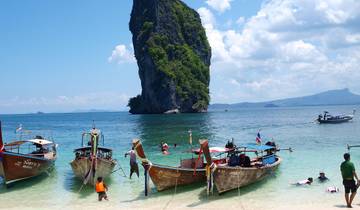
7 Day Amazing Phuket Trip with Krabi from Phuket
- ✓ Comprehensive Krabi tour
- ✓ Expert local guides included
- ✓ All accommodation arranged
- ✓ Transportation provided
7 days
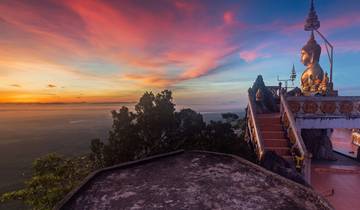
7-Day Island Escape: Phuket & Krabi By Bus
- ✓ Comprehensive Krabi tour
- ✓ Expert local guides included
- ✓ All accommodation arranged
- ✓ Transportation provided
7 days
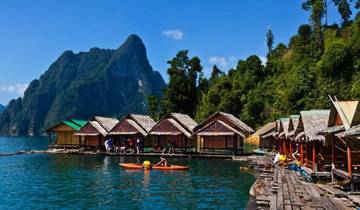
Amazing 7 Days in Thailand with Krabi and Phuket
- ✓ Comprehensive Krabi tour
- ✓ Expert local guides included
- ✓ All accommodation arranged
- ✓ Transportation provided
7 days
Private Journeys Of Southern Thailand 7 Days / 6 Nights
- ✓ Comprehensive Krabi tour
- ✓ Expert local guides included
- ✓ All accommodation arranged
- ✓ Transportation provided
Multi-day tour packages powered by TourRadar. Prices and availability subject to change.
Introduction: Understanding Krabi vs Phuket Choice 2026
The decision between Krabi and Phuket represents one of Thailand beach travel’s most common planning dilemmas, pitting two distinct Andaman Sea destinations against each other despite sitting only 160 kilometers apart. Both provinces deliver stunning tropical beauty, warm hospitality, excellent Thai cuisine, and access to world-class island hopping, yet their fundamental characteristics diverge significantly in ways that dramatically affect visitor experiences.
Phuket, Thailand’s largest island connected to the mainland by bridge, has evolved into Southeast Asia’s premier developed beach destination featuring international airport connectivity, extensive resort infrastructure, vibrant nightlife scenes, cultural attractions, shopping centers, and diverse dining options spanning budget street food to Michelin-recognized restaurants. The island’s 540-square-kilometer area accommodates multiple distinct beach zones each offering different atmospheres, from Patong’s party-centric energy to Nai Harn’s peaceful family environment.
Krabi province, by contrast, maintains a mainland coastal character defined by dramatic limestone karst formations rising from turquoise water, boat-access-only beaches like legendary Railay, undeveloped natural settings within multiple national parks, and a relaxed atmosphere prioritizing outdoor adventures over nightlife entertainment. Krabi’s appeal centers on raw natural beauty, rock climbing walls, hidden lagoons, mangrove kayaking, and pristine island groups like Hong Islands and Phi Phi archipelago.
The choice fundamentally comes down to traveler priorities: infrastructure convenience versus natural preservation, party atmosphere versus peaceful seclusion, variety and options versus focused natural experiences, international accessibility versus budget advantages. Neither destination objectively surpasses the other; rather, each excels in different categories serving different traveler types and vacation goals.
Understanding these distinctions requires examining specific comparison categories including accommodation costs and variety in 2026, beach quality and character differences, accessibility and transportation logistics, nightlife and entertainment options, activity and attraction offerings, dining scenes and food costs, shopping opportunities, family-friendliness factors, and overall atmosphere and development levels. This guide provides verified 2026 data across all categories enabling informed decisions matching your specific priorities.
Additionally, many travelers need not choose exclusively between destinations, as the 2-4 hour travel time enables combined itineraries experiencing both locations during single trips. The guide addresses optimal combination strategies including recommended time allocations, transfer logistics, and sequencing considerations for multi-destination Andaman coast vacations.
Accommodation Costs and Options Comparison 2026
Accommodation represents the largest single expense category for most beach vacations, making cost comparisons between Krabi and Phuket particularly significant for budget planning. Understanding not only price differences but also availability, variety, and location trade-offs enables optimal hotel selection in either destination.
Krabi Accommodation Costs and Patterns 2026
Krabi accommodation in 2026 delivers exceptional value across budget, mid-range, and luxury categories, with lower baseline costs than Phuket particularly evident in the 3-4 star mid-range segment most travelers select. Budget guesthouses and hostels start ₹350-500 ($9-14) per night for basic fan rooms with shared bathrooms in Krabi Town and Ao Nang areas, increasing to ₹650-1,000 ($18-28) for air-conditioned private rooms with ensuite facilities.
Mid-range hotels and resorts, representing the sweet spot for comfort without luxury pricing, cost ₹5,000-6,000 ($140-170) per night for 3-4 star properties in prime Ao Nang locations, ₹3,500-5,000 ($98-140) for similar quality in Krabi Town or Klong Muang Beach (quieter areas), and ₹8,000-12,000 ($220-335) for beachfront positions at top-rated properties. These mid-range options typically include swimming pools, beach or pool access rooms, breakfast buffets, and modern amenities.
Luxury accommodation in Krabi reaches ₹15,000-25,000 ($420-700) per night at premium resorts like Rayavadee (Railay Beach luxury with private pool villas), Phulay Bay Ritz-Carlton Reserve (ultra-luxury with private plunge pools), and Centara Grand Beach Resort (family luxury with extensive facilities). These rates represent 15-25% discounts compared to equivalent Phuket luxury properties, making Krabi attractive for upscale travelers seeking value.
Krabi accommodation distribution concentrates primarily in Ao Nang (largest selection with 300+ properties from budget to luxury), Railay Beach (unique boat-access location with premium pricing and limited availability), Krabi Town (budget-friendly with local atmosphere but 30-40 minute drive from beaches), and Klong Muang/Tubkaek beaches (quieter northern areas with mid-range and luxury resorts). This concentration means less geographic variety than Phuket but clearer decision-making based on atmosphere preferences.
Phuket Accommodation Costs and Patterns 2026
Phuket accommodation in 2026 offers superior variety and quantity with 1,500+ properties across the island, but at 20-40% higher costs than comparable Krabi options. Budget accommodation starts ₹500-750 ($14-21) per night for basic guesthouses in Patong, Kata, or Phuket Town, with hostel dormitories available ₹400-600 ($11-17) for backpackers prioritizing cost over privacy. Air-conditioned budget hotels with pools range ₹1,200-2,000 ($33-56) per night.
Mid-range 3-4 star hotels, the category most travelers select, cost ₹7,000-10,000 ($195-280) per night in prime Patong and Kata locations, ₹5,000-7,000 ($140-195) in quieter Karon or Kamala Beach areas, and ₹8,000-12,000 ($220-335) for beachfront positions. Phuket’s mid-range segment provides more international hotel chains (Marriott, Hilton, Novotel) compared to Krabi’s independent resort dominance, appealing to travelers seeking familiar brand standards.
Luxury properties span ₹18,000-40,000 ($500-1,100) per night at properties including Anantara Mai Khao (northern Phuket beachfront), Sri Panwa (hillside villas with private pools and Andaman views), and Trisara (ultra-exclusive with celebrity clientele). Phuket’s luxury tier exceeds Krabi in both pricing and variety, justified by more extensive facilities, established reputations, and international marketing reach.
Phuket accommodation geographic distribution enables choosing between distinct atmosphere zones: Patong (party central with 400+ hotels but highest prices), Kata and Karon (family-friendly with good mid-range value), Kamala (quiet alternative between Patong and Surin), Bang Tao (luxury resort corridor), Rawai (local area with budget options), and Nai Harn (southern Phuket scenic beauty with limited availability). This variety allows finding specific atmospheres missing from more concentrated Krabi offerings.
Value Analysis: Where Your Money Goes Further
Krabi delivers superior accommodation value in 2026 for travelers prioritizing cost efficiency, natural surroundings, and peaceful environments. The ₹5,000-6,000 nightly rate securing quality 3-4 star properties in Ao Nang provides beachfront or near-beach positions, pools, breakfast, and modern facilities comparable to Phuket options costing ₹7,000-10,000. This 30-40% cost advantage accumulates significantly across multi-night stays: a 7-night Krabi hotel costs ₹35,000-42,000 ($980-1,175) versus ₹49,000-70,000 ($1,370-1,960) for equivalent Phuket properties, saving ₹14,000-28,000 ($390-785) applicable toward activities, dining, or extended stays.
Phuket justifies higher costs through superior variety enabling precise atmosphere matching, international brand presence providing consistent quality standards, geographic distribution allowing beach-hopping without relocating accommodation, and infrastructure including airport proximity (15-40 minutes from most areas versus 30-60 minutes in Krabi). For travelers prioritizing convenience over cost, or seeking specific atmospheres available only in Phuket’s developed zones, the premium proves worthwhile despite budget impacts.
Beach Quality and Character Comparison 2026
Beach experiences constitute the primary draw for both destinations, yet Krabi and Phuket beaches differ fundamentally in character, accessibility, development levels, and ideal use cases. Understanding these distinctions prevents mismatched expectations when arriving at either destination.
Krabi’s Natural Beach Paradise
Krabi beaches in 2026 maintain exceptional natural beauty characterized by dramatic limestone cliff backdrops, crystal-clear turquoise water, white sand beaches, and minimal commercial development preserving pristine conditions. The province’s most famous beaches require boat access creating automatic crowd control and maintaining peaceful atmospheres impossible at road-accessible Phuket locations.
Railay Beach, accessible only by 10-15 minute longtail boat from Ao Nang, delivers Krabi’s iconic experience with four connected beaches (Railay West, Railay East, Phra Nang, Tonsai) surrounded by sheer limestone cliffs. Railay West features soft white sand, calm shallow water ideal for swimming, and sunset views framed by rock formations. Phra Nang Cave Beach ranks among Thailand’s most beautiful beaches with dramatic cliff formations, a sacred cave shrine, and excellent snorkeling around rocky points.
Hong Islands, reached by 20-30 minute speedboat from Ao Nang, provide the hidden emerald lagoon experience accessible through narrow cliff passages, pristine white-sand beaches with limestone backdrops, and coral reef snorkeling in crystal-clear conditions. These national park islands prohibit overnight stays and commercial development, maintaining unspoiled beauty.
Ao Nang Beach, Krabi’s main developed beach area, offers 3 kilometers of sand with direct road access, restaurants and shops lining the beachfront, longtail boats creating colorful foreground elements for photos, and convenient infrastructure while maintaining more natural character than equivalent Phuket developed beaches. The beach serves primarily as a base for accessing superior nearby beaches rather than destination swimming.
Tubkaek and Klong Muang beaches, located north of Ao Nang, deliver peaceful mid-range resort environments with good swimming conditions, fewer crowds than Ao Nang, sunset views across turquoise water to offshore islands, and predominantly hotel guest usage rather than day-tripper crowds.
Phuket’s Developed Beach Variety
Phuket beaches in 2026 provide extensive sandy coastline with full resort development, abundant beach services, water sports infrastructure, and atmospheric variety across a dozen distinct beach zones. Unlike Krabi’s boat-access beaches, Phuket’s developed shoreline offers immediate road access enabling easy beach-hopping and convenient logistics.
Patong Beach, Phuket’s largest and busiest at 3.5 kilometers length, delivers non-stop activity with jet ski rentals, parasailing, beach massage services, beachfront restaurants and bars, and vibrant atmosphere day and night. The beach itself features golden sand, moderate wave action suitable for casual swimming and bodyboarding, and extensive commercial development that some travelers find excessive while others appreciate for convenience. Patong attracts party-seekers, first-time visitors seeking action, and travelers prioritizing convenience over tranquility.
Kata Beach provides family-friendly environment with surf schools teaching beginners, lifeguard services during high season, restaurants and shops within walking distance, and Two-beach composition (Kata Yai and Kata Noi) offering both busier and quieter options. The beach ranks as Phuket’s best for learning to surf with consistent small waves November-April, appealing to active families and young travelers.
Karon Beach extends 3 kilometers as Phuket’s second-longest beach, offering more space and fewer crowds than Patong while maintaining good infrastructure. The beach features powdery white sand squeaking underfoot (local claim to fame), moderate wave action requiring caution during monsoon season, and central location near restaurants, shops, and tour operators without overwhelming development.
Nai Harn Beach, southern Phuket’s scenic jewel, combines natural beauty with accessibility through stunning setting framed by green hills, calm water in a protected bay ideal for swimming, limited commercial development maintaining peaceful atmosphere, and proximity to viewpoints offering panoramic coastal views. Nai Harn attracts discerning travelers seeking beauty without isolation, families wanting safe swimming, and photographers capturing Phuket’s most scenic beach setting.
Freedom Beach, Mai Khao Beach (Phuket’s longest at 11 kilometers), and smaller coves provide additional variety for visitors seeking specific atmospheres from complete seclusion to vast open sand expanses.
Beach Recommendation by Traveler Type
Choose Krabi beaches for untouched natural beauty, dramatic landscape photography, clear water swimming and snorkeling, peaceful relaxation without commercial intrusion, and bucket-list locations like Railay and Phra Nang. Krabi beaches suit nature lovers, photographers, couples seeking romance, and travelers willing to trade convenience for scenery.
Choose Phuket beaches for immediate accessibility, beach service variety (massages, food, water sports), atmospheric diversity enabling different experiences each day, reliable swimming conditions with lifeguard supervision, and convenient infrastructure supporting spontaneous beach visits. Phuket beaches suit families requiring services and safety, first-time visitors wanting options, travelers prioritizing convenience, and those seeking specific beach characters (party beaches, surf beaches, quiet beaches) accessible within short drives.
Accessibility and Transportation Comparison 2026
Reaching and navigating Krabi versus Phuket involves significant differences in flight accessibility, local transportation infrastructure, and inter-destination logistics affecting both initial arrival convenience and daily mobility during stays.
International and Domestic Flight Access
Phuket International Airport (HKT) operates as one of Thailand’s busiest airports with extensive international connectivity in 2026. Direct international flights serve Phuket from major hubs including Singapore, Kuala Lumpur, Hong Kong, Seoul, Tokyo, Dubai, Doha, European capitals (London, Paris, Frankfurt), and Australian cities (Sydney, Melbourne), plus comprehensive domestic connections to Bangkok (20+ daily flights), Chiang Mai, and other Thai destinations. This connectivity enables travelers from distant origins to reach Phuket directly without Bangkok connections, potentially offsetting Phuket’s higher local costs through saved connecting flight expenses and time.
Krabi Airport (KBV) operates as a regional facility handling primarily domestic traffic plus limited international service. Direct international flights in 2026 include Singapore, Kuala Lumpur, and seasonal charter services from China and Russia, but most international travelers reach Krabi via Bangkok connections (6-8 daily flights, 1 hour 20 minutes), or fly into Phuket then transfer to Krabi by road (2-4 hours, ₹350-3,400 depending on method). This reduced international accessibility requires extra connections for many travelers, adding complexity and potential costs despite Krabi’s lower on-ground expenses.
The flight accessibility difference significantly affects total trip logistics: travelers from Europe, Middle East, Australia, and North America often find Phuket’s direct routing more convenient despite destination costs, while Asian travelers with easy Bangkok access face no disadvantage choosing Krabi.
Airport to Accommodation Transportation
From Phuket International Airport, reaching accommodations requires 15-60 minutes depending on beach location. Patong sits 45 minutes away, Kata and Karon 40-50 minutes, Rawai 45 minutes, and northern beaches 15-30 minutes. Transportation options include metered airport taxis ₹600-800 ($17-22) for most destinations, pre-booked airport transfers ₹600-1,000 ($17-28), Grab app rides when available, and local songthaew (pickup truck buses) ₹100-150 ($3-4) per person with potential waiting times and multiple stops.
From Krabi Airport, Ao Nang sits 30 minutes away, Krabi Town 15 minutes, and Railay Beach (via Ao Nang boat transfer) 60-75 minutes total including road and water segments. Transportation costs include airport taxis ₹600-800 ($17-22) to Ao Nang or ₹400-500 ($11-14) to Krabi Town, pre-booked transfers ₹600-900 ($17-25), and limited public options requiring connections. Travelers staying at Railay face additional longtail boat costs ₹100-150 ($3-4) per person from Ao Nang.
Local Transportation During Stays
Phuket local transportation in 2026 relies primarily on tuk-tuks, taxis, motorbike rentals, and car rentals, with limited public bus services. Tuk-tuk costs range ₹200-400 ($6-11) for short trips within beach areas, ₹600-800 ($17-22) for cross-island journeys, creating significant daily transportation expenses for travelers wanting to beach-hop or visit multiple areas. Motorbike rentals cost ₹150-300 ($4-8) per day enabling independent mobility at budget rates but requiring riding skills and accepting accident risks. Grab app operates intermittently with variable availability. The combination of spread-out geography and expensive local transport creates daily costs or immobility constraints for travelers without rental vehicles.
Krabi local transportation centers on Ao Nang as the hub, with short songthaew routes connecting Ao Nang, Ao Nammao, and nearby areas for ₹40-60 ($1-2) per person. Tuk-tuks cost ₹100-200 ($3-6) for short trips, ₹300-500 ($8-14) for Ao Nang to Krabi Town journeys. Motorbike rentals cost ₹150-250 ($4-7) daily. The more concentrated accommodation and attraction distribution in Krabi reduces transportation frequency needs compared to Phuket’s sprawl, though boat transportation to Railay and islands creates different logistics.
Nightlife and Entertainment Comparison 2026
Nightlife represents one of the starkest contrasts between destinations, with Phuket offering Thailand’s most extensive beach resort nightlife while Krabi maintains low-key evening scenes focused on relaxation rather than partying.
Phuket’s Legendary Nightlife Scene
Phuket nightlife in 2026 centers on Patong’s Bangla Road, a neon-lit pedestrian street transforming nightly into Thailand’s premier beach party destination. The half-kilometer strip hosts 100+ venues including go-go bars, live music clubs, sports bars, dance clubs, cabarets, and street-side beer bars creating overwhelming sensory experiences. Major venues include Illuzion nightclub (Thailand’s largest with 3,000 capacity, international DJs, ₹350-1,000 cover), White Room (upscale club with dress codes), Tiger Disco (long-running classic), and numerous smaller bars enabling bar-hopping throughout nights.
Beyond Bangla Road, Patong nightlife extends to beach clubs including Café del Mar (sunset sessions transitioning to nighttime parties), Catch Beach Club (Bang Tao upscale scene), and various reggae bars, Irish pubs, and hotel lounges. Drink prices range ₹80-250 ($2-7) for basic drinks in street bars, ₹250-600 ($7-17) in clubs, with all-you-can-drink promotions ₹800 ($22) common in some venues.
Kata and Karon provide alternative nightlife at smaller scales with beach bars, live music venues, and sports bars serving travelers wanting evening options without Patong’s intensity. Phuket Old Town offers cultural nightlife including weekend walking streets with live performances, art galleries, and sophisticated cocktail bars in renovated shophouses appealing to travelers seeking alternatives to beach party scenes.
Entertainment beyond bars includes Phuket FantaSea (cultural theme park show ₹1,800-2,800/$50-78), Simon Cabaret (ladyboy cabaret show ₹800-1,000/$22-28), Muay Thai boxing matches, and various dinner shows combining Thai culture with tourism entertainment.
Krabi’s Low-Key Evening Scene
Krabi nightlife in 2026 remains decidedly quiet, with most venues closing 11 PM-midnight and limited party infrastructure. Ao Nang’s “Walking Street” features a small collection of reggae bars, live music venues, and sports bars creating modest evening activity but nothing approaching Phuket’s scale or energy. Venues like Last Fisherman Bar and The Rasta Baby offer beachfront drinking with relaxed atmospheres, live acoustic music, and predominantly conversation-focused social scenes rather than dancing or party energy.
Drink prices in Krabi average ₹100-200 ($3-6) for beers, ₹150-350 ($4-10) for cocktails at beach bars, generally slightly higher than Phuket street bar prices but lower than Phuket club pricing. The limited nightlife infrastructure means fewer price variations and less competitive pricing strategies.
Krabi Town offers local nightlife at Thai-style karaoke bars, night markets (food and shopping rather than partying), and riverside restaurants providing evening meals and drinks without significant entertainment components. Railay Beach nightlife consists exclusively of beach bar drinking under stars with fire shows as primary entertainment, appealing to travelers seeking peaceful evening experiences emphasizing natural settings over commercial entertainment.
Cultural entertainment in Krabi includes occasional night markets with local performances, but lacks the organized shows and cabaret productions common in Phuket. Travelers seeking nightlife must adjust expectations accordingly or plan Phuket portions of trips for evening entertainment desires.
Nightlife Recommendation by Traveler Type
Choose Phuket for extensive nightlife variety, party atmosphere, late-night options extending to 2-4 AM, professional entertainment shows, and comprehensive bar and club scenes. Phuket suits solo travelers seeking social scenes, groups wanting party experiences, and anyone prioritizing nightlife as vacation components.
Choose Krabi for peaceful evenings, early bed times enabling dawn activities, relaxed drinking focused on conversation, and minimal nightlife disturbance to quiet resort environments. Krabi suits couples prioritizing romance over parties, families with children requiring early schedules, and travelers seeking restoration rather than stimulation during evenings.
Activities and Attractions Comparison 2026
Activity and attraction offerings reveal how development levels and natural features create distinct experience portfolios in each destination, with Krabi excelling in nature-based adventures while Phuket provides greater variety across categories.
Krabi’s Nature and Adventure Focus
Krabi activities in 2026 emphasize outdoor adventures leveraging dramatic natural landscapes, with rock climbing, kayaking, and island exploration dominating offerings. Railay Beach operates as one of Southeast Asia’s premier rock climbing destinations with 700+ bolted routes, climbing schools offering beginner courses ₹1,500-2,500 ($42-70) for half-day instruction, and advanced walls challenging experienced climbers. The dramatic limestone cliffs create climbing opportunities impossible to replicate elsewhere.
Island hopping tours visit Hong Islands (₹1,200-1,250/$35-40 group tours), Four Islands (₹900-1,200/$25-33), Phi Phi Islands (₹1,500-2,200/$42-62), and Koh Lanta, emphasizing pristine beaches, snorkeling coral reefs, hidden lagoons, and viewpoint hikes. These tours represent Krabi’s signature experiences attracting travelers specifically for island beauty.
Kayaking adventures explore mangrove forests at Ao Thalane (₹800-1,200/$22-33 for half-day tours), providing peaceful paddling through karst formations, wildlife spotting, and cave exploration. The protected mangrove ecosystems create kayaking experiences unique to Krabi compared to Phuket’s more developed coastlines.
Natural attractions include Emerald Pool (natural forest pool ₹300 park entrance/$8), Hot Springs (therapeutic volcanic springs ₹200/$6), Tiger Cave Temple (1,237-step climb to panoramic viewpoint, free entrance), Than Bok Khorani National Park (waterfalls and forest trails ₹300/$8), and Thung Teao Forest Natural Park (crystal lagoon pools). These attractions appeal to nature lovers seeking authentic environments without heavy tourism development.
Phuket’s Activity and Attraction Variety
Phuket activities in 2026 span broader categories including cultural tourism, water sports, shopping, organized tours, and entertainment beyond pure nature focus. Water sports infrastructure provides jet skiing (₹1,500-2,500/$42-70 per 15-30 minutes), parasailing (₹1,500-2,000/$42-56), banana boat rides (₹800-1,200/$22-33), wakeboarding, and kitesurfing lessons, all more extensively developed than Krabi’s limited water sports scenes.
Island tours visit Phi Phi Islands (₹1,800-2,500/$50-70), James Bond Island and Phang Nga Bay (₹1,500-2,200/$42-62), Racha Islands (excellent diving), and Similan Islands (world-class diving November-April only, ₹3,500-5,000/$98-140 for day trips). While Phuket accesses similar islands to Krabi, tour infrastructure provides more departure frequency and variety.
Cultural attractions include Big Buddha (45-meter seated Buddha statue with panoramic island views, free entry), Wat Chalong (Phuket’s most important Buddhist temple, free entry), Phuket Old Town (Sino-Portuguese architecture, museums, galleries), and weekend markets. These cultural elements provide rainy day alternatives and appeal to travelers seeking experiences beyond beaches.
Diving infrastructure exceeds Krabi with 50+ dive shops, extensive PADI certification courses (₹12,000-18,000/$335-500 for Open Water), and day trips to premier dive sites. Snorkeling tours cost ₹1,200-2,500 ($33-70) depending on destinations, with superior coral reefs at Racha and Similan islands.
Family activities include waterparks (Andamanda Waterpark ₹1,500-2,000/$42-56), elephant sanctuaries (ethical alternatives to elephant riding ₹2,000-3,500/$56-98), ATV adventures (₹1,200-2,000/$33-56), and zip-lining courses, providing structured entertainment for children.
Activity Recommendation by Interest Category
For rock climbing, kayaking, peaceful island hopping, hiking, and forest exploration choose Krabi’s superior natural environments and specialized infrastructure for these activities. For diving, water sports variety, cultural tourism, family entertainment, and rainy day alternatives choose Phuket’s developed activity infrastructure and organized tour options. Travelers prioritizing single activities (rock climbing, specific diving sites, particular cultural attractions) should research which destination excels in their priority category rather than assuming either location provides everything equally well.
Dining and Food Costs Comparison 2026
Food scenes and dining costs reveal both similarities and significant differences, with both destinations offering excellent Thai cuisine alongside international options, but at different price points and variety levels.
Krabi Dining Scene and Costs 2026
Krabi dining in 2026 emphasizes authentic Thai food at exceptional value, with street food and local restaurants dominating affordable categories. Street food stalls in Krabi Town and Ao Nang night markets serve pad thai ₹60-100 ($2-3), rice dishes with curry ₹80-120 ($2-3), grilled seafood ₹120-200 ($3-6), and fresh fruit smoothies ₹60-100 ($2-3). These prices deliver authentic meals at budget rates attracting travelers seeking local flavors.
Mid-range restaurants cost ₹250-450 ($7-13) per person for full Thai meals including appetizers, main courses, and drinks. Beachfront restaurants in Ao Nang charge premium rates ₹400-700 ($11-20) per person for similar food in better settings with sea views. Thai barbecue buffets offer unlimited grilled seafood and meat ₹350-500 ($10-14) per person, popular for group dinners.
International cuisine availability remains limited compared to Phuket, with pizza, burgers, and Western breakfast options concentrated in Ao Nang tourist zone at ₹200-400 ($6-11) per dish. Fine dining exists in resort restaurants at ₹800-1,500 ($22-42) per person but lacks the variety and reputation of Phuket’s upscale scene.
Krabi Town’s night market provides the destination’s best food value with dozens of stalls selling complete meals ₹60-150 ($2-4), street snacks ₹30-80 ($1-2), and desserts ₹40-100 ($1-3), creating budget dining opportunities for travelers willing to navigate local environments rather than tourist zones.
Phuket Dining Scene and Costs 2026
Phuket dining in 2026 offers Thailand’s most diverse beach destination food scene spanning street food to Michelin-recognized restaurants, Thai to global cuisines, and budget to luxury price ranges. Street food in Patong, Phuket Town, and local markets costs ₹60-150 ($2-4) for main dishes, ₹40-80 ($1-2) for snacks, similar to Krabi baseline pricing but with greater variety including Muslim Roti, Chinese-influenced dishes, and Southern Thai specialties distinct from standard tourist Thai menus.
Mid-range restaurants cost ₹350-700 ($10-20) per person in tourist areas like Patong and Kata, ₹250-500 ($7-14) in local neighborhoods, representing 20-40% premiums over equivalent Krabi meals. The premium buys superior variety including Italian, Indian, Japanese, Korean, Mediterranean, and fusion cuisines from restaurants operated by expats and international chefs.
Upscale dining at beachfront resorts and Phuket’s handful of fine dining restaurants costs ₹1,500-3,500 ($42-98) per person with wine, reaching ₹3,500-7,000 ($98-195) at Michelin-recognized venues. PRU restaurant at Trisara (Michelin star) and Blue Elephant (traditional Thai fine dining) represent the quality ceiling unavailable in Krabi’s less developed culinary scene.
Phuket’s geographic spread creates distinct food scenes: Patong prioritizes tourist-friendly menus with English descriptions and adjusted spice levels, Phuket Town features authentic local food and cafés serving trendy brunch and coffee culture, while beach resort areas provide international resort dining at premium prices. This variety enables different experiences daily versus Krabi’s more concentrated Ao Nang-focused dining.
Dining Value and Variety Analysis
For budget conscious travelers prioritizing Thai food, Krabi and Phuket deliver similar street food and basic restaurant value, with both destinations offering authentic ₹60-150 meals. Krabi holds slight advantages at mid-range Thai restaurants saving ₹100-200 per person per meal, accumulating ₹2,000-4,000 ($56-112) over week-long stays for couples eating out twice daily.
For travelers seeking international cuisine variety, sophisticated dining, or specific cuisine requirements (Indian for vegetarian travelers, Italian for children, Japanese for sushi lovers), Phuket’s developed food scene justifies cost premiums through options unavailable in Krabi. The dining variety particularly matters for extended stays where repeating limited Krabi restaurant options grows tiresome.
Sample Daily Budgets: Krabi vs Phuket 2026
Understanding complete daily cost patterns across spending levels helps predict total trip expenses and determine which destination better matches budget constraints. These samples include accommodation, meals, activities, and local transportation in realistic combinations.
Budget Traveler Sample Day Comparison
Budget Krabi day: Hostel/guesthouse ₹500, breakfast street food ₹80, lunch local restaurant ₹150, dinner street food ₹120, motorbike rental ₹200, snacks/drinks ₹150, island tour (occasional, averaged) ₹600, entrance fees/miscellaneous ₹200, total ₹2,000 ($56) per person excluding drinks beyond basic beverages. This budget enables comfortable travel with daily activities through guesthouse accommodation, local food, independent transport, and regular tour participation.
Budget Phuket day: Hostel/guesthouse ₹650, breakfast street food ₹100, lunch local restaurant ₹200, dinner tourist area ₹250, motorbike rental ₹200, snacks/drinks ₹200, island tour (occasional, averaged) ₹700, entrance fees/transport ₹300, total ₹2,600 ($73) per person. Phuket budget travel costs ₹600 more daily, accumulating ₹4,200 ($117) over week-long stays, representing significant premium for backpacker budgets.
Mid-Range Traveler Sample Day Comparison
Mid-range Krabi day: 3-4 star hotel ₹2,800 (half double room), breakfast included at hotel, lunch beachfront restaurant ₹350, dinner nice restaurant ₹500, drinks/coffee ₹250, taxi/transfer ₹300, island tour or activity ₹1,200, miscellaneous ₹200, total ₹5,600 ($157) per person. This level provides comfortable hotels, varied dining including beachfront meals, daily activities, and convenient transportation without budget constraints.
Mid-range Phuket day: 3-4 star hotel ₹4,000 (half double room), breakfast included at hotel, lunch tourist area restaurant ₹500, dinner beach club or upscale ₹800, drinks/coffee ₹400, taxi/tuk-tuk ₹500, island tour or activity ₹1,500, miscellaneous ₹300, total ₹8,000 ($224) per person. Phuket mid-range travel costs ₹2,400 more daily than Krabi, accumulating ₹16,800 ($470) over week-long stays, substantial difference for most travelers’ budgets.
Luxury Traveler Sample Day Comparison
Luxury Krabi day: 5-star resort ₹10,000 (half double room), breakfast included, lunch resort/premium ₹800, dinner fine dining ₹1,500, premium drinks/spa treatment ₹2,000, private transfer/car rental ₹1,000, private tour or premium activity ₹3,500, miscellaneous ₹500, total ₹19,300 ($540) per person. Luxury Krabi delivers premium experiences at rates below equivalent Phuket costs.
Luxury Phuket day: 5-star resort ₹15,000 (half double room), breakfast included, lunch beach club ₹1,200, dinner Michelin/fine dining ₹2,500, spa treatment/premium drinks ₹3,000, private transfer ₹1,200, private tour ₹4,000, miscellaneous ₹800, total ₹27,700 ($775) per person. Phuket luxury travel commands ₹8,400 more daily, representing ₹58,800 ($1,645) weekly premium justified by superior luxury infrastructure and services.
Which Destination for Which Traveler Type 2026
Final destination selection should align with traveler profiles, priorities, and vacation goals rather than assuming either location serves all visitors equally well. These recommendations match destination characteristics to specific traveler types.
Choose Krabi If You Are
Nature lovers and photographers prioritizing dramatic landscapes, pristine beaches, and natural beauty over developed infrastructure. Krabi’s limestone cliffs, hidden lagoons, and unspoiled islands provide superior photographic subjects and peaceful natural immersion impossible in Phuket’s developed zones.
Budget conscious travelers seeking value accommodations, affordable meals, and lower activity costs while maintaining quality experiences. The 20-40% cost savings versus Phuket enables extended stays, additional activities, or budget allocation to other Thailand destinations.
Rock climbers and adventure sports enthusiasts specifically targeting Railay Beach climbing walls, kayaking through karst formations, or diving specific Krabi sites. These specialized activities reach world-class standards in Krabi exceeding Phuket alternatives.
Couples seeking romantic peaceful environments, secluded beaches, and quiet resort experiences emphasizing relaxation over entertainment and stimulation. Krabi’s low-key atmosphere supports romantic getaways better than Phuket’s party energy.
Travelers willing to trade convenience for authenticity, accepting reduced international flight options, limited local transportation, and focused activity offerings in exchange for genuine natural experiences and Thai character.
Choose Phuket If You Are
First-time Thailand visitors wanting comprehensive introduction to beach destinations with maximum variety, convenience, and infrastructure supporting easy navigation and diverse experiences. Phuket’s development reduces learning curves and provides comfort for international travel beginners.
Nightlife enthusiasts, party groups, and social travelers prioritizing vibrant evening scenes, extensive bar and club options, and opportunities meeting other travelers in active social environments. Phuket’s Patong scene delivers Southeast Asia’s premier beach party atmosphere.
Families with children requiring safe swimming beaches with lifeguards, organized activities, water sports lessons, and diverse dining options accommodating picky eaters. Phuket’s family infrastructure exceeds Krabi’s limited family-specific facilities.
Travelers on limited time wanting maximum efficiency through direct international flight access, concentrated attractions, and organized tour infrastructure enabling packed itineraries without transportation complications.
Foodies seeking diverse international cuisine, upscale dining, and specific culinary experiences beyond basic Thai food. Phuket’s developed food scene provides options impossible in Krabi’s limited restaurant landscape.
Shoppers interested in markets, malls, boutiques, and souvenir variety. Phuket’s commercial development far exceeds Krabi’s minimal shopping infrastructure beyond basic tourist markets.
Combine Both Destinations If You
Have 8+ days in Thailand’s Andaman region enabling meaningful time at each destination rather than rushed sampling. Optimal combination allocates 3-4 days in each location experiencing contrasting atmospheres.
Want comprehensive Thailand beach experiences including both developed resort conveniences and natural pristine beauty, party atmosphere and peaceful relaxation, organized activities and adventure sports. The combination delivers more complete experiences than either destination alone.
Value variety highly and resist boredom from extended single-location stays. Moving between destinations provides fresh experiences, different beaches, new restaurants, and varied activities maintaining engagement.
Are traveling with companions having different priorities (one partner wants nightlife while the other prefers nature; parents want convenience while grown children seek adventure). Splitting time enables satisfying diverse group preferences during single trips.
Frequently Asked Questions: Krabi vs Phuket 2026
How many days should I spend in each destination if visiting both?
Allocate minimum 3 days per destination for meaningful experiences, ideal splits include 3 days each for 6-7 day trips, 4 days each for 8-9 day trips, or 5 Phuket/3 Krabi for international arrivals maximizing convenient airport city time. Shorter stays risk excessive time lost to transportation between destinations versus actual beach and activity time. Consider front-loading Phuket for arrival convenience (direct international flights, immediate infrastructure access) then transferring to Krabi for relaxed endings, or reverse the pattern starting peaceful in Krabi and finishing with Phuket energy matching departure preparation. Avoid 1-2 day stops as insufficient for experiencing destinations properly, merely adding logistics stress without proportional benefit. Travelers with 10+ days should definitely combine both destinations; those with 5-6 days must choose one destination for depth over attempting rushed coverage of both.
What is the best route for combining Phuket and Krabi?
The most logical route flies into Phuket International Airport (HKT), spends 3-5 days exploring Phuket beaches and attractions, transfers to Krabi by speedboat (60-90 minutes, ₹350-650) or shared van (2.5-3 hours, ₹550-900), enjoys 3-4 days in Krabi/Railay/islands, then returns to Phuket for departure flights. This pattern minimizes transportation complexity by entering and exiting through Phuket’s superior international airport. Alternative route reverses the order by flying into Phuket, immediately transferring to Krabi for initial peaceful days, then returning to Phuket for final energetic days before departures, working well for travelers wanting to decompress early and re-energize before long flights home. Avoid flying into one destination and out of the other requiring backtracking or expensive connecting flights; the circular routing adds costs and complications versus Phuket in-out simplicity with Krabi as mid-trip addition. Book Phuket-Krabi transfers through 12Go Asia, hotel services, or operators like Seatran Discovery for confirmed scheduling, or use private transfers (₹2,100-3,400) for groups of 3-4 passengers wanting door-to-door convenience.
Is Krabi or Phuket better for rainy season visits?
Neither destination excels during rainy season (May-October), as both experience monsoon patterns affecting boat trips, beach conditions, and outdoor activities, but Phuket handles wet weather slightly better through superior indoor alternatives. Krabi’s nature-focused offerings suffer significantly during rain when boat trips cancel, beaches become less appealing, kayaking becomes uncomfortable, and rock climbing walls stay wet making routes dangerous. The limited shopping, cultural attractions, and indoor entertainment mean rainy days in Krabi can feel wasted with few productive alternatives. Phuket provides rainy day options including shopping malls (Jungceylon, Central Phuket), museums and cultural attractions in Phuket Town, spa treatments, cooking classes, Phuket FantaSea shows, and covered markets enabling productive days despite weather. Both destinations see significant hotel discounts (40-60% off peak season rates) during rainy months, but travelers should maintain flexible schedules accepting tour cancellations and plan extra days accommodating weather disruptions. If visiting during rainy season by necessity (budget constraints, schedule limitations), choose Phuket for better wet weather options, or visit Krabi understanding that 2-3 days might involve relaxing at accommodations reading books rather than active exploration when storms arrive.
Can I do a day trip from Phuket to Krabi or vice versa?
Yes, day trips connect both destinations, though long transportation times limit actual destination time making overnight stays preferable when possible. From Phuket to Krabi day trips, speedboat services reach Railay Beach in 90 minutes, providing 4-5 hours at Railay before return departures, sufficient for basic beach experience and viewpoint climb but rushed for comprehensive exploration. From Krabi to Phuket, travelers can day trip to Phuket beaches or attractions via 2-3 hour transfers, though this makes limited sense as most travelers visit Phuket for multi-day stays rather than single beach days. The more common day trip pattern involves basing in one destination and taking island tours to locations technically in the other province, such as Phuket-based Phi Phi tours visiting Krabi province islands, or Krabi-based tours accessing islands closer to Phuket. These inter-destination island tours work well as genuine day trips without overnight logistics, providing tastes of both areas. For travelers genuinely limited to single-destination stays but curious about the other location, consider day trips to Railay from Phuket (unique boat-access beach impossible to experience elsewhere) or Phuket Old Town cultural exploration from Krabi (distinctly different from Krabi Town character).
Which destination is better for solo travelers?
Phuket serves solo travelers better through superior social infrastructure, easier meeting opportunities, more extensive hostel scene with organized events, and active nightlife enabling socializing. Patong hostels organize pub crawls, beach activities, and group tours specifically facilitating solo traveler connections, while Bangla Road’s bar scene provides numerous conversation opportunities with other travelers and locals. Solo travelers in Phuket easily join group tours, find dining companions, and build temporary travel friendships through the sheer volume of other solo visitors concentrated in tourist zones. Krabi’s quieter atmosphere, spread-out geography, and limited hostel infrastructure make solo socializing harder, requiring more initiative to meet people and build connections. However, Krabi attracts solo travelers seeking peaceful independent experiences, rock climbing communities at Railay providing built-in social groups for climbers, and small group island tours enabling connections during activities. Budget solo travelers particularly favor Krabi’s lower costs enabling extended stays despite reduced social infrastructure. Safety wise, both destinations prove equally safe for solo travelers including solo female travelers, with standard precautions appropriate for tourist areas worldwide. Solo travelers prioritizing social experiences, meeting others, and active nightlife should choose Phuket; those seeking independent peaceful exploration, nature immersion, and comfortable solitude should consider Krabi appealing despite fewer structured social opportunities.
Are Krabi and Phuket suitable for elderly or mobility-limited travelers?
Phuket accommodates elderly and mobility-limited travelers significantly better than Krabi through superior infrastructure, accessibility features, and convenient logistics. Phuket’s developed road system enables direct car access to most beaches, restaurants, and attractions, reducing walking requirements compared to Krabi’s boat-dependent beach access. Phuket hotels, especially international chains, provide elevator access, ground-floor rooms, wheelchair facilities, and accessibility awareness largely absent from Krabi’s smaller independent properties. Medical facilities in Phuket include international hospitals (Bangkok Hospital Phuket, Phuket International Hospital) with English-speaking staff and modern equipment, crucial for elderly travelers with health concerns. Organized tours in Phuket accommodate limited mobility better through careful boarding assistance, accessible boat designs on major operators, and flexible activity modifications. Krabi’s primary attractions including Railay Beach (boat access only requiring careful boarding from beaches), Hong Islands (boat boarding from piers and beaches), and Tiger Cave Temple (1,237 steps) create significant accessibility challenges for mobility-limited visitors. However, Ao Nang provides some accessible beachfront with direct road access, and Krabi resorts can accommodate limited mobility guests within property boundaries. Elderly travelers comfortable with limited activity participation and resort-focused vacations can enjoy Krabi, but those wanting active sightseeing, beach variety, and medical facility access should choose Phuket’s superior infrastructure supporting independent mobility and comprehensive services.
What activities can I do in Krabi that I cannot do in Phuket?
Krabi offers several unique activities impossible or inferior in Phuket including world-class rock climbing at Railay Beach on 700+ established routes with dramatic overhanging limestone walls and beginner-friendly sport climbing schools creating Southeast Asia’s premier climbing destination, kayaking through pristine mangrove forests at Ao Thalane providing enclosed ecosystem exploration through karst formations without Phuket’s development disturbance, exploring the hidden Hong Lagoon emerald room accessed through narrow cliff passages creating otherworldly enclosed lagoon experiences unique to Krabi’s protected islands, hiking Tiger Cave Temple’s 1,237 steps through jungle to panoramic viewpoints overlooking Krabi’s karst landscape (Phuket’s Big Buddha requires easier access with less dramatic scenery), swimming in Emerald Pool and Blue Pool natural forest spring pools surrounded by jungle rather than developed tourist sites, and accessing completely undeveloped boat-only beaches maintaining isolation impossible at road-accessible Phuket locations. Additionally, Krabi’s Than Bok Khorani National Park and Thung Teao Forest Natural Park provide authentic jungle trekking and waterfall experiences while Phuket’s limited jungle areas concentrate around tourist-developed trails with less wilderness character. These Krabi-specific activities appeal to active travelers, nature lovers, and adventure seekers valuing experiences impossible to replicate in Phuket’s more developed landscape.
What can I do in Phuket that I cannot do in Krabi?
Phuket provides numerous activities and experiences unavailable or significantly inferior in Krabi including extensive nightlife and entertainment at Bangla Road and beach clubs creating Southeast Asia’s premier beach party scene impossible in low-key Krabi, cultural tourism at Phuket Old Town’s Sino-Portuguese architecture, museums, art galleries, and weekend walking streets offering historical depth absent from Krabi’s minimal cultural infrastructure, shopping at modern malls (Jungceylon, Central Phuket, Premium Outlets) and diverse markets providing retail therapy completely unavailable in Krabi’s limited shop selection, fine dining at Michelin-recognized restaurants and international chef-operated venues delivering culinary sophistication impossible in Krabi’s basic restaurant scene, organized shows including Phuket FantaSea cultural theme park, Simon Cabaret performances, and Muay Thai stadium matches providing entertainment production values unavailable in Krabi, water sports variety including jet skiing, parasailing, wakeboarding, and kitesurfing with professional instruction and equipment rental absent from Krabi’s limited water sports infrastructure, and scuba diving day trips to Similan Islands (world-class dive sites accessible only from Phuket side during November-April season) providing dive experiences superior to Krabi’s local sites. Additionally, Phuket’s international hospital facilities, extensive tour operator competition creating diverse scheduling and pricing options, and concentrated beach variety enabling 6-7 completely different beaches within 30-minute drives create possibilities impossible in Krabi’s geographically limited tourist zones.
How do Krabi and Phuket compare for scuba diving?
Phuket provides superior scuba diving infrastructure, accessibility, and world-class site access compared to Krabi’s adequate but less developed diving scene. Phuket hosts 50+ dive shops with extensive PADI certification courses (Open Water ₹12,000-18,000/$335-500), daily departures to multiple dive sites regardless of season, and day trip access to Similan Islands (Thailand’s premier dive destination with pristine coral, manta rays, whale sharks seasonally, November-April only ₹3,500-5,000/$98-140) and Racha Islands (excellent coral reefs, diverse marine life, year-round access ₹2,500-3,500/$70-98). The competition among Phuket dive operators creates pricing pressure and high service standards. Krabi diving operates at smaller scale with 15-20 dive shops primarily in Ao Nang, focusing on local sites around Phi Phi Islands (decent diving but heavily toured creating crowds and coral damage), Hin Daeng and Hin Muang (advanced sites with potential shark and manta sightings, requiring liveaboard trips), and King Cruiser wreck (artificial reef created by sunken ferry). Krabi dive sites generally rate good rather than world-class, suitable for casual divers and certification students but less appealing to serious divers seeking pristine conditions. Visibility averages 15-25 meters in Phuket’s better sites versus 10-20 meters around Krabi. Both destinations offer similar PADI course pricing and recreational diving costs, making site quality and accessibility the deciding factors rather than price differences. Serious divers prioritizing world-class sites should choose Phuket for Similan access; casual divers satisfied with adequate coral reefs and basic marine life can dive successfully from either destination.
Is it safe to travel to Krabi and Phuket in 2026?
Yes, both Krabi and Phuket remain safe destinations for tourists in 2026 with violent crime rates low and tourist-focused areas well-policed. Common safety concerns apply equally to both destinations including petty theft (hotel safes prevent most issues, avoid leaving valuables on beaches or in unlocked rental motorbikes), scams targeting tourists (tuk-tuk overcharging, jet ski damage claims, massage parlor upselling, gem scams in Phuket particularly), motorbike rental accidents (most serious tourist injury risk in both locations, requiring proper licensing, helmet use, and defensive driving against aggressive Thai traffic patterns), and water safety during monsoon season (rip currents, rough seas canceling tours, swimming flags indicating conditions). Phuket’s more developed tourist infrastructure means more police presence but also more sophisticated scams and higher theft rates in crowded Patong areas, while Krabi’s lower tourist density reduces theft opportunities but provides less immediate police response in emergencies. Women travelers find both destinations safe for solo exploration with standard precautions including avoiding isolated areas late night, using registered taxis rather than unofficial drivers, and declining persistent touts offering suspiciously cheap tours. Terrorism and political instability affecting Bangkok occasionally have zero impact on southern beach destinations. The most serious safety risk in both locations remains motorbike accidents, causing more tourist injuries and deaths than all other causes combined. Travelers renting motorbikes should obtain international driving permits, wear helmets always, drive defensively assuming other vehicles won’t yield, avoid riding during rain, and consider whether motorbike convenience truly justifies accident risks versus taxis and tours for transportation.