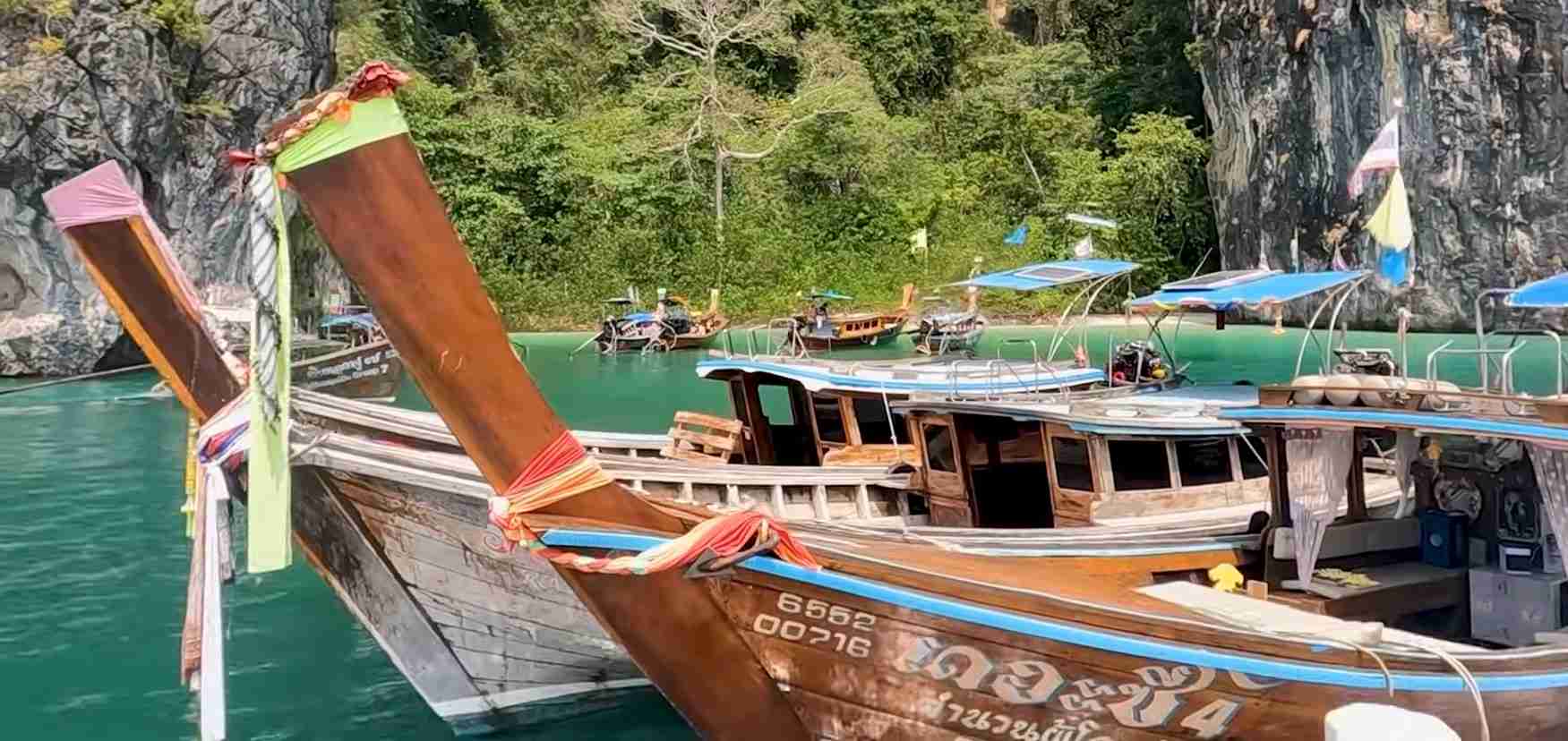
Hong Islands Day Trip from Krabi 2026: Hidden Lagoons Travel Guide
The Hong Islands archipelago offers Krabi’s most enchanting day trip experience, combining hidden emerald lagoons, pristine white-sand beaches, dramatic limestone formations, and crystal-clear snorkeling waters just 6 kilometers offshore. This complete 2026 planning guide covers verified tour costs, transportation options, the famous 360-degree viewpoint, entrance fees, best times to visit, and insider strategies for experiencing these protected national park islands.
Key Takeaways: Hong Islands Day Trip Planning 2026
- Tour costs 2026: Group speedboat tours ₹1,200-1,250 ($35-40), public longtail boats ₹500 ($14), plus mandatory ₹300 national park entrance fee paid separately in cash
- Quick access: 20-30 minute speedboat ride or 40-45 minute longtail boat journey from Ao Nang, Krabi Town, or Railay Beach to the islands
- Four-island experience: Most tours visit Koh Hong (main island), Hong Lagoon (hidden emerald lagoon), Koh Lao Lading, and Koh Pak Bia in one day
- Iconic viewpoint: Climb 419 steps to Hong Island’s spectacular 360-degree panoramic platform overlooking Phang Nga Bay and surrounding islands
- Protected paradise: Part of Than Bok Khorani National Park, open 8:00 AM-4:30 PM daily with no overnight accommodation permitted
- Best timing 2026: Visit November-March for optimal weather, December-February for peak conditions, early morning departures (7:30-8:00 AM) to avoid afternoon crowds
People Also Ask About Hong Islands Day Trip from Krabi 2026
How much does a Hong Islands day trip cost in 2026?
Hong Islands day trips in 2026 cost ₹1,200-1,250 ($35-40) for group speedboat tours including hotel transfers, lunch, and snorkeling equipment. Budget travelers pay ₹500 ($14) per person on public longtail boats from Ao Nang. The mandatory ₹300 ($9) national park entrance fee for adults (₹150/$4 for children) is paid separately in cash upon arrival at Koh Hong. Private longtail boat charters cost ₹3,000-6,000 ($85-170) depending on group size and itinerary customization. Total day costs including entrance fees, meals, and incidentals range ₹1,800-2,000 ($50-56) for budget travelers on public boats, ₹2,200-2,800 ($62-78) for group tour participants, and ₹4,500-7,500 ($125-210) for private charter groups splitting costs.
What is the best time to visit Hong Islands in 2026?
The best time to visit Hong Islands in 2026 is November through March during Krabi’s dry season, with December-February offering peak conditions featuring calm seas, minimal rainfall, and excellent underwater visibility for snorkeling. November and late April provide ideal sweet spots with perfect weather and smaller crowds compared to December-February high season. Visit early morning with 7:30-8:00 AM hotel pickups to reach Hong Island before 9:00 AM crowds arrive. Avoid September-October (wettest months) when rough seas frequently cancel boat departures. Low season May-August offers budget pricing and fewer tourists but brings unpredictable weather with potential tour cancellations during afternoon thunderstorms.
How long does it take to get to Hong Islands from Krabi in 2026?
Hong Islands are 6 kilometers offshore requiring 20-30 minutes by speedboat or 40-45 minutes by traditional longtail boat from Ao Nang, Krabi Town, Klong Muang, or Tubkaek Beach departure points. Most tours depart from Nopparat Thara Pier with hotel pickups in Ao Nang between 8:00-9:00 AM, Krabi Town between 7:30-8:00 AM. Total trip duration from hotel departure to island arrival ranges 45-75 minutes including pier transfers. Public longtail boats from Ao Nang Beach depart when 6+ passengers gather, potentially adding 30-60 minute waiting periods. Return journeys typically begin 2:30-3:00 PM to ensure arrival before the 4:30 PM national park closure.
Can you visit Hong Islands on your own without a tour in 2026?
Yes, independent travelers visit Hong Islands without organized tours in 2026 by taking public longtail boats from Ao Nang Longtail Boat Service or Ao Nang Boat Service Club for ₹500 ($14) per person. Public boats depart when 6+ passengers gather, requiring travelers to coordinate with other visitors or potentially wait 30-90 minutes for groups to form. This budget option excludes lunch, snorkeling equipment rental (₹200-300/$6-9), and guided commentary but provides flexible island time. Alternatively, charter private longtail boats for ₹3,000-6,000 ($85-170) from Ao Nang or Klong Muang beaches, creating custom itineraries with personalized departure times and island selection. Both options require separate payment of the ₹300 national park entrance fee in cash upon Koh Hong arrival.
Extended multi-day tours – 5+ days
Featured Krabi Multi-Day Tour Packages

7 days
7 Day Amazing Phuket Trip with Krabi from Phuket
- ✓ Comprehensive Krabi tour
- ✓ Expert local guides included
- ✓ All accommodation arranged
- ✓ Transportation provided
7 days
7-Day Island Escape: Phuket & Krabi By Bus
- ✓ Comprehensive Krabi tour
- ✓ Expert local guides included
- ✓ All accommodation arranged
- ✓ Transportation provided
7 days
Amazing 7 Days in Thailand with Krabi and Phuket
- ✓ Comprehensive Krabi tour
- ✓ Expert local guides included
- ✓ All accommodation arranged
- ✓ Transportation provided
7 days
Private Journeys Of Southern Thailand 7 Days / 6 Nights
- ✓ Comprehensive Krabi tour
- ✓ Expert local guides included
- ✓ All accommodation arranged
- ✓ Transportation provided
Multi-day tour packages powered by TourRadar. Prices and availability subject to change.
Introduction: Discovering Hong Islands’ Hidden Paradise 2026
The Hong Islands archipelago represents one of Thailand’s most pristine and protected island systems, offering day-trippers from Krabi access to landscapes that rival but significantly surpass the more famous Phi Phi Islands in terms of preservation, tranquility, and natural beauty. Located just 6 kilometers offshore in the Andaman Sea, this cluster of limestone karst islands within Than Bok Khorani National Park provides the rare combination of accessibility and seclusion that defines exceptional day trip destinations.
The archipelago’s centerpiece, Koh Hong, derives its name from the Thai word meaning “room,” referencing the spectacular hidden lagoon enclosed by 100-meter limestone cliffs accessible only through a narrow boat passage. This emerald-green lagoon, combined with the island’s powdery white beaches, 360-degree viewpoint, and coral-rich snorkeling waters, creates a complete tropical island experience within a single location.
Planning a Hong Islands day trip in 2026 involves coordinating tour bookings, transportation logistics, entrance fee payments, optimal timing for weather and crowds, and equipment needs across four distinct island stops typically visited in one excursion. The national park’s protected status ensures pristine conditions but also imposes regulations including mandatory entrance fees, no overnight stays, and restricted operating hours that require strategic planning.
This guide provides verified 2026 costs for all tour options from budget public boats to premium private charters, detailed transportation information for reaching the islands from various Krabi locations, comprehensive coverage of each island’s highlights and activities, entrance fee requirements and payment procedures, seasonal weather patterns affecting visit quality, sample budget breakdowns, and practical strategies for maximizing your Hong Islands experience while navigating crowds, weather variables, and logistical constraints.
Whether you’re seeking the budget-friendly ₹500 public longtail boat option, the convenience of ₹1,200-1,250 group tours with included amenities, or the flexibility of private charters for customized island exploration, understanding the full spectrum of 2026 options enables travelers to match their Hong Islands day trip to their budget, schedule, and experience priorities.
Understanding Hong Islands: Geography and Protected Status 2026
Hong Islands form a protected archipelago within Than Bok Khorani National Park, located in the Andaman Sea between Krabi’s Tubkaek Beach and the islands of Koh Yao Yai and Koh Yao Noi. The archipelago consists of over 20 small islands and islets, with four main islands accessible for day-trip tourism: Koh Hong (the largest), Koh Lao Lading, Koh Pak Bia, and Koh Rai.
Koh Hong measures approximately 2 kilometers in length, featuring two main beaches separated by limestone rock formations, extensive mangrove forests along interior coastlines, the famous enclosed lagoon accessible through a narrow cliff passage, and a hiking trail leading to the 360-degree viewpoint. The island’s geology consists of 200-million-year-old limestone karst formations sculpted by weathering into the dramatic cliffs and cave systems visible today.
The archipelago’s national park designation, established to preserve extraordinary marine and terrestrial ecosystems, enforces regulations directly affecting visitor experiences. No permanent structures exist beyond four ranger cabins, a restaurant, a beach bar, toilet facilities, and the viewpoint trail infrastructure. The park operates 8:00 AM-4:30 PM daily, requiring all visitors to depart before sunset with no camping or overnight accommodation permitted anywhere within the protected zone.
These islands support diverse ecosystems including coral reef systems hosting tropical fish, sea turtles, and occasional dolphin sightings, mangrove forests serving as nurseries for marine species and bird populations, limestone cliff environments hosting monkeys and various reptile species, and seagrass beds in shallow waters providing habitat for juvenile fish populations. The protected status maintains water clarity and marine life diversity significantly superior to unregulated tourism areas.
Understanding the national park framework explains mandatory entrance fees (conservation funding), restricted operating hours (wildlife protection), prohibition on touching or standing on corals (ecosystem preservation), and limitations on visitor numbers during peak periods. This protection maintains the pristine conditions that distinguish Hong Islands from more developed island destinations throughout Thailand.
Hong Islands Tour Options and Costs 2026
Hong Islands day trips in 2026 range from budget-friendly public transportation to premium private charters, with costs varying based on boat type, group size, included amenities, and itinerary scope. Understanding each option’s pricing structure, inclusions, and trade-offs enables travelers to select tours matching their budget and experience preferences.
Group Speedboat Tours (₹1,200-1,250 / $35-40 Per Person)
Group speedboat tours represent the most popular Hong Islands option in 2026, balancing affordability with comfort, speed, and comprehensive island coverage. These tours cost ₹1,200-1,250 ($35-40) per person and include hotel transfers from Ao Nang, Krabi Town, Klong Muang, or Tubkaek Beach, speedboat transportation to all four main islands, Thai-style buffet lunch served on Koh Lao Lading beach, snorkeling equipment (mask, snorkel, fins, life jacket), drinking water and soft drinks throughout the day, English-speaking guide providing island information and safety instructions, and travel insurance coverage for the excursion.
Group sizes typically range 15-30 passengers per speedboat, creating moderate crowding during island stops but efficient transportation between locations. Tours depart 8:00-9:00 AM and return 2:30-3:30 PM, providing 5-6 hours of island time across four stops. The speedboat advantage includes faster inter-island travel (10-15 minutes between locations versus 20-30 minutes on longtail boats), modern amenities like seating cushions and storage compartments, and reduced seasickness risk from smoother rides across open water.
These tours visit Koh Hong main beach (60-90 minutes including viewpoint climb option), Hong Lagoon (30-40 minutes for swimming and photos), Koh Lao Lading (60-75 minutes for lunch and beach time), and Koh Pak Bia (30-45 minutes for snorkeling). Weather permitting, some itineraries add Koh Rai Island for additional snorkeling opportunities, extending total tour duration to 7 hours.
Book group speedboat tours through established platforms including GetYourGuide, Viator, Klook, or directly with operators like Sea Eagle Tour, Kohtour Krabi, and Viago Tour for verified pricing and customer reviews. Online booking provides transparent pricing, free cancellation up to 24-48 hours before departure, confirmed departure guarantees regardless of passenger numbers, and digital confirmation reducing communication complications.
Traditional Longtail Boat Group Tours (₹900-1,100 / $25-30 Per Person)
Traditional longtail boat tours offer authentic Thai island-hopping experiences at reduced costs compared to speedboat options, priced ₹900-1,100 ($25-30) per person in 2026. These tours include hotel pickups from Ao Nang or Krabi Town (7:30-8:30 AM), longtail boat transportation to three or four islands depending on itinerary, Thai-style packed lunch or beach buffet, basic snorkeling equipment, and guide services, but typically exclude drinking water (bring your own) and premium amenities like cushioned seating.
Longtail boats accommodate 10-15 passengers in open seating arrangements, providing intimate group sizes and easier passenger interaction. The slower travel speeds (40-45 minutes to Hong Islands versus 20-30 minutes by speedboat) extend total trip duration to 6-7 hours but create more relaxed pacing between destinations. Engine noise levels are moderate, making conversation possible but not as comfortable as speedboat environments.
The traditional boat experience appeals to travelers prioritizing cultural authenticity, reduced environmental impact from slower speeds, smaller group dynamics, and budget savings offsetting longer travel times. Tours typically visit Koh Hong (90-120 minutes), Hong Lagoon (40-50 minutes), and Koh Lao Lading (75-90 minutes for lunch), sometimes skipping Koh Pak Bia due to time constraints from slower transportation.
Public Longtail Boats (₹500 / $14 Per Person)
Public longtail boats from Ao Nang Beach to Hong Islands provide the most budget-friendly option in 2026 at ₹500 ($14) per person for round-trip transportation. Purchase tickets at Ao Nang Longtail Boat Service or Ao Nang Boat Service Club booths located near the main road intersection with the beach. This option includes only boat transportation to and from Koh Hong, excluding lunch, snorkeling equipment, guide services, hotel transfers, and scheduled itineraries.
Public boats operate on passenger-demand schedules, departing when minimum 6 passengers gather for the journey. Morning departures (8:00-10:00 AM) typically fill faster than midday periods, but potential waiting times of 30-90 minutes occur during low-season periods. Coordinate with other independent travelers at the booking booth to form groups and reduce departure delays. Return boat departures from Koh Hong operate 1:00-3:00 PM, providing flexible island time ranging 3-5 hours depending on arrival and departure timing.
This budget option suits travelers comfortable with uncertainty, willing to bring their own food and water, and interested primarily in Koh Hong rather than multi-island itineraries. Snorkeling equipment rentals at Koh Hong cost ₹200-300 ($6-9) from beach vendors, and basic restaurant meals on the island range ₹250-400 ($7-11) for Thai dishes and beverages.
Private Longtail Boat Charters (₹3,000-6,000 / $85-170 Total)
Private longtail boat charters in 2026 cost ₹3,000-6,000 ($85-170) for full-day rentals accommodating 6-10 passengers, making this option cost-competitive for groups of 4+ travelers when split per person (₹500-1,000/$14-28 each for 6-person groups). Charter boats from Ao Nang Beach, Nopparat Thara Beach, Klong Muang Beach, or Tubkaek Beach directly through beach operators or hotel concierge services.
Private charters provide maximum flexibility including custom departure times (depart early at 7:00 AM to reach Hong Islands before crowds), personalized island selection and duration (spend 2-3 hours at Hong Island while skipping less interesting stops), photography-focused itineraries with optimal lighting timing, and ability to avoid crowded periods at popular locations. Boat captains typically speak basic English and possess extensive local knowledge about conditions, snorkeling spots, and timing strategies.
Private charter costs cover boat rental, fuel, captain services, and basic snorkeling equipment for passengers, but exclude lunch (bring picnic supplies or arrange restaurant stops at island facilities), drinking water (bring adequate supplies), entrance fees (₹300 per adult paid separately), and hotel transportation (arrange independent taxi transfers ₹200-400/$6-11). Negotiate pricing directly with boat operators, with lower rates available for shorter half-day trips (4 hours) or limited island itineraries.
Premium Private Speedboat Charters (₹12,000-18,000 / $330-500 Total)
Luxury private speedboat charters cost ₹12,000-18,000 ($330-500) for groups up to 8-10 passengers, providing the ultimate Hong Islands experience with maximum speed, comfort, and service. These premium options include modern speedboat with cushioned seating and sun protection, professional captain and crew, premium snorkeling and swimming equipment, gourmet picnic lunch with beverages, photography services in some packages, and flexible itineraries with expert local knowledge.
Premium speedboats reach Hong Islands in 15-20 minutes from Ao Nang, enabling extended island time, multiple snorkeling locations, or combination itineraries adding nearby attractions like Railay Beach or Phang Nga Bay. The per-person cost (₹1,500-2,250/$40-62 for 8-passenger groups) exceeds group tours but provides exclusive experiences impossible in crowded group settings.
Book premium charters through established operators including 5 Star Marine Phuket, Sea Eagle Tour VIP services, or hotel concierge arrangements at Rayavadee, Phulay Bay Ritz-Carlton, or Centara Grand properties. These services cater to honeymooners, photographers, families with young children preferring private environments, and travelers prioritizing time efficiency and personalized experiences over budget considerations.
Getting to Hong Islands from Krabi 2026
Reaching Hong Islands from various Krabi locations in 2026 requires coordinating departure points, transportation to piers, boat options, and timing considerations. Understanding access logistics from different accommodation areas enables efficient planning and realistic time expectations.
From Ao Nang Beach
Ao Nang provides the most convenient Hong Islands access point, located 6 kilometers from the islands with 20-30 minute speedboat or 40-45 minute longtail boat journeys. Group tours departing from Ao Nang include hotel pickups 8:00-9:00 AM, transporting passengers 5-10 minutes to Nopparat Thara Pier for boat boarding and briefing sessions before 8:30-9:30 AM departures.
Independent travelers access public longtail boats directly from Ao Nang Beach at the Longtail Boat Service booths near the beach-road intersection, eliminating pier transfer time. Charter boats also depart directly from Ao Nang Beach, with boat operators meeting clients at designated beach locations. This direct beach access reduces total journey time by 15-20 minutes compared to pier-based departures.
From Ao Nang accommodations to island arrival requires 30-45 minutes total elapsed time on speedboat tours (10 minutes hotel to pier, 5 minutes briefing, 20-30 minutes boat journey) or 50-70 minutes on longtail boats (10 minutes hotel to pier, 5 minutes briefing, 40-45 minutes boat journey). Factor these durations when planning other activities before or after island trips.
From Krabi Town
Krabi Town, located 15-20 kilometers from Nopparat Thara Pier and 20-25 kilometers from Hong Islands, requires longer total journey times than Ao Nang. Group tour pickups in Krabi Town occur 7:30-8:00 AM, providing 30-40 minute drives to Nopparat Thara Pier before boat departures. Total time from Krabi Town hotels to Hong Islands arrival ranges 75-95 minutes including road transfer, pier procedures, and boat crossing.
Budget travelers from Krabi Town take songthaew (local pickup truck buses) to Ao Nang for ₹60-80 ($2-2.50) per person, then transfer to public longtail boats from Ao Nang Beach. This option requires 90-120 total minutes including songthaew wait times (departures every 30-45 minutes from Krabi Town market), 30-minute Ao Nang transfer, public boat waiting period, and 40-45 minute boat crossing. Depart Krabi Town by 7:00 AM to reach Hong Islands before 10:00 AM crowds.
Private taxi transfers from Krabi Town to Nopparat Thara Pier cost ₹600-800 ($17-22) for 1-4 passengers, reducing journey variability from public transport schedules. Combine taxi transfers with private boat charters for complete transportation control, particularly valuable for early morning departures beating crowds or afternoon departures avoiding peak sun exposure.
From Railay Beach
Railay Beach, accessible only by boat, requires two-stage water transportation to reach Hong Islands. Take longtail boats from Railay to Ao Nang (₹100-150/$3-4 per person, 15-20 minutes), then transfer to Hong Islands boats from Ao Nang Beach or join group tours at Nopparat Thara Pier. Some tour operators offer direct Railay pickups, sending boats to collect passengers before continuing to Hong Islands, but these services cost ₹200-300 extra per person for specialized routing.
Alternatively, private longtail charters from Railay to Hong Islands eliminate Ao Nang transfers, providing direct 30-40 minute crossings for ₹2,500-4,000 ($70-110) total charter costs. This option suits Railay-based travelers forming small groups or joining with other island guests to split charter expenses.
From Klong Muang and Tubkaek Beaches
Klong Muang and Tubkaek beaches, located north of Ao Nang, sit slightly closer to Hong Islands with 15-25 minute speedboat or 30-40 minute longtail boat crossings. Group tours from these areas include pickups 7:30-8:30 AM with similar pier transfers and timing as Ao Nang departures. These quieter beach areas provide excellent bases for Hong Islands day trips, offering less crowded accommodation options while maintaining easy island access.
Private boat charters from Klong Muang or Tubkaek beaches depart directly from hotel beach areas, eliminating pier transfers and providing the shortest possible journey times to Hong Islands. Beach-based departures enable earlier morning timing (7:00-7:30 AM) reaching Hong Island by 7:30-8:00 AM before 9:00 AM crowd arrivals from Ao Nang tours.
Hong Islands Entrance Fees and Practical Information 2026
Hong Islands, as part of Than Bok Khorani National Park, require entrance fees supporting conservation efforts and facility maintenance. Understanding fee structures, payment procedures, and operating regulations prevents arrival surprises and ensures smooth island access.
National Park Entrance Fee Structure 2026
Hong Islands entrance fees in 2026 are ₹300 ($9) for foreign adults, ₹150 ($4) for foreign children ages 3-13, and free for children under 3 years old. These fees apply per person regardless of tour type, boat selection, or visit duration. Thai nationals pay reduced rates (₹100 adults, ₹50 children), but foreign passport holders pay the standard foreigner rates listed above.
The entrance fee covers access to all islands within Than Bok Khorani National Park visited during a single day, including Koh Hong, Hong Lagoon, Koh Lao Lading, Koh Pak Bia, and Koh Rai. Visitors do not pay separate fees for each island stop, making multi-island tours cost-effective compared to single-location visits. The same ticket also provides same-day access to mainland areas of Than Bok Khorani National Park if visiting after island tours, though most travelers do not utilize this option.
Entrance fees are paid directly to national park rangers upon arrival at Koh Hong’s main beach landing area. Group tours coordinate fee collection during the first island stop, with guides directing passengers to ranger booths for payment processing. Independent travelers on public boats or private charters pay fees individually at the same beach ranger station before proceeding to other island areas.
Payment Methods and Cash Requirements
Hong Islands entrance fees must be paid in cash (Thai Baht only) with no credit card, debit card, or digital payment options available at island ranger stations in 2026. Bring exact or reasonably small denominations (₹100, ₹500 notes) rather than ₹1,000 notes requiring change from rangers with limited cash supplies. USD or other foreign currencies are not accepted; exchange money at Krabi Town or Ao Nang banks, exchange booths, or ATMs before departure.
Group tour participants should confirm with booking agents whether entrance fees are included in tour prices. Most budget and mid-range tours (₹900-1,250 range) explicitly exclude national park fees, requiring separate payment. Premium tours (₹2,000+ per person) sometimes include entrance fees in total pricing, though this remains uncommon. Always budget an additional ₹300-600 ($9-17) per person beyond tour costs to cover entrance fees and potential additional island purchases.
ATMs in Ao Nang, Krabi Town, and major beach resorts dispense cash, but none exist on Hong Islands themselves. Withdraw sufficient cash before departure covering entrance fees (₹300 per adult), meals if not included in tours (₹250-400), snorkeling equipment rental if needed (₹200-300), beverages (₹60-150), and tip cushion (₹100-200) for guides and boat operators.
Operating Hours and Regulations 2026
Hong Islands national park operates 8:00 AM to 4:30 PM daily year-round in 2026, requiring all visitors to depart islands before sunset. Tours departing Ao Nang or Krabi Town after 9:00 AM risk compressed island time, as boats must begin return journeys by 3:00 PM ensuring pre-closure departures. Morning tours (8:00-9:00 AM hotel pickups) provide optimal 4-5 hour island time windows.
No overnight stays, camping, or accommodation exist anywhere within the park boundaries, maintaining uninhabited island status protecting ecosystems from permanent human settlement impacts. Visitors caught on islands after 4:30 PM closing face fines and potential prosecution under national park violations, enforced by ranger patrols conducting sunset sweeps of all island areas.
Additional regulations affecting visitor experiences include prohibition on touching, standing on, or collecting coral specimens (₹10,000+ fines), restriction on littering with trash removal requirements (carry all waste back to boats), prohibition on drone flights over islands without special permits (violators face equipment confiscation), requirement for reef-safe sunscreen (oxybenzone and octinoxate-free formulas) protecting coral ecosystems, and restriction on feeding wildlife including monkeys and fish (disrupts natural behaviors).
Koh Hong: Main Island Highlights and Activities 2026
Koh Hong, the largest island in the archipelago at approximately 2 kilometers length, provides the primary destination and longest stop on Hong Islands day trips. Most tours allocate 60-120 minutes at Koh Hong enabling exploration of beaches, viewpoint hikes, and lagoon access.
Koh Hong Main Beach
Koh Hong’s main beach stretches 300 meters of powdery white sand divided by a central limestone rock formation creating two distinct bay areas. The eastern bay (boat landing area) features ranger facilities, restaurant, beach bar, toilet buildings, kayak rental station, and the viewpoint trail entrance. The western bay, accessed by walking around the central rock at low tide or through a short path, provides quieter beach space with fewer visitors during peak periods.
The beach’s limestone cliff backdrop creates sheltered swimming conditions with minimal waves and current, making this location ideal for families with young children and novice swimmers. Water depths progress gradually from knee-deep water extending 20-30 meters offshore to shoulder-deep zones 40-50 meters from beach, with sandy bottoms free from rocks or coral providing comfortable barefoot wading.
Beach facilities include the Hong Island Restaurant serving Thai dishes ₹180-320 ($5-9) including pad thai, fried rice, green curry, and fresh seafood, a beach bar selling coconut water ₹60 ($2), soft drinks ₹40-60 ($1-2), beer ₹100-150 ($3-4), and fresh fruit smoothies ₹80-120 ($2-3), clean public toilets ₹10 ($0.30) usage fee, and kayak rentals ₹300-400 ($9-11) per hour for exploring coastlines and accessing Hong Lagoon independently.
Hong Island 360-Degree Viewpoint
The Hong Island 360-degree viewpoint provides the archipelago’s signature experience, requiring a 419-step metal staircase climb to observation platforms 100 meters above sea level. The trail begins near the beach bar at the main beach eastern bay, clearly marked with directional signs and step counter markers every 50 steps encouraging climber progress.
The climb typically requires 15-25 minutes depending on fitness levels, with several rest platforms positioned at 100-step intervals providing shade and benches. Most visitors complete the ascent in 15-20 minutes including brief rests, though extremely fit climbers reach the summit in 10-12 minutes without stops. The descent takes 10-15 minutes with caution required on steep sections, particularly if steps are wet from rain or humidity.
Two viewing platforms exist near the summit, with the higher platform (419 steps) providing the complete 360-degree panorama including views of Hong Island’s emerald lagoon entrance, surrounding limestone islands, Phang Nga Bay to the north, Andaman Sea to the south, and Koh Yao Noi and Koh Yao Yai islands to the west. The lower platform (approximately 350 steps) offers similar views with slightly restricted northern vista.
Optimal climbing timing occurs early morning (8:00-9:30 AM) before peak sun intensity, or late morning (10:30-11:30 AM) when shadows provide partial trail coverage. Midday climbs (11:30 AM-2:00 PM) face intense tropical sun with minimal shade, significantly increasing difficulty and heat exposure. Bring water bottles, wear closed-toe shoes with good traction, apply sunscreen before starting, and consider bringing small towels for sweat management during humid conditions.
Hong Island Nature Trail
Beyond the viewpoint, Koh Hong offers a 500-meter nature trail circling through interior forest areas showcasing island ecology including limestone formations, tropical vegetation, bird species, and occasional monkey sightings. This trail, less visited than the viewpoint, provides respite from beach crowds and educational opportunities understanding island ecosystems.
The trail requires 20-30 minutes completing the full loop, remaining relatively flat with minimal elevation changes compared to the viewpoint stairs. Directional signs mark the path, though sections become overgrown during rainy season (May-October) when maintenance frequency decreases. Bring insect repellent, wear long lightweight pants protecting against brush contact, and stay on designated paths avoiding off-trail exploration damaging sensitive forest floor ecosystems.
Hong Lagoon: Hidden Emerald Paradise 2026
Hong Lagoon, the archipelago’s most photographed and iconic location, consists of a circular emerald-green body of water completely enclosed by 80-100 meter limestone cliffs accessible only through a narrow boat passage barely wide enough for single-file longtail boat entry. This hidden “room” (hong in Thai) creates an otherworldly atmosphere combining pristine turquoise water, dramatic vertical rock faces, mangrove vegetation along cliff bases, and near-complete shelter from wind and waves.
The lagoon measures approximately 150 meters in diameter with water depths ranging 3-8 meters in most areas, creating excellent conditions for swimming without strong currents or significant waves. The enclosed geography produces extremely calm water surfaces, making this location ideal for photography (perfect reflections), floating and relaxation, and novice swimmers uncomfortable with open ocean conditions.
Tours allocate 30-45 minutes at Hong Lagoon, sufficient time for swimming, photography, and appreciating the unique enclosed environment. Most boats remain in the lagoon during visitor stops rather than departing and returning later, with engines shut off maintaining peaceful silence interrupted only by conversation and occasional bird calls from cliff vegetation.
Snorkeling in Hong Lagoon proves limited compared to coral reef areas at other islands, as the enclosed nature and brackish mangrove influence reduce marine diversity. Expect visibility of 3-5 meters (versus 8-15 meters at coral reefs) with sightings primarily limited to small schooling fish, occasional jellyfish (harmless species), and crabs along shallow cliff edges. Serious snorkelers should reserve equipment energy for Koh Pak Bia’s coral gardens rather than extensive lagoon snorkeling.
Photography enthusiasts should position themselves at the lagoon entrance during boat arrival for dramatic framing shots capturing the narrow passage, cliff walls, and interior lagoon in single compositions. Interior lagoon photography works best during 10:00 AM-2:00 PM when overhead sun illuminates water surfaces producing the signature emerald color. Morning or late afternoon lighting creates shadow-dominant images reducing the characteristic color intensity Hong Lagoon is famous for.
Access timing significantly affects lagoon experiences. Early morning arrivals (8:00-9:30 AM) often find the lagoon completely empty with opportunities for solitary swimming and uninterrupted photography. Mid-morning arrivals (10:00-11:30 AM) typically encounter 2-5 boats creating moderate crowding but manageable conditions. Midday arrivals (11:30 AM-1:30 PM) coincide with peak tour schedules producing 8-15 simultaneous boats in the relatively small space, creating crowded swimming conditions and photography challenges from boat clutter.
Koh Lao Lading: Secluded Beach Paradise 2026
Koh Lao Lading, the second-largest island in Hong Islands tours, offers pristine beaches, excellent snorkeling, and the primary lunch stop for most organized tours. This uninhabited island provides the relaxed beach experience many travelers envision for tropical island visits, with soft white sand, clear shallow water, and jungle-fringed coastlines.
The main beach stretches approximately 200 meters with gentle sloping sand entering water depths increasing gradually from ankle-deep shore areas to chest-deep zones 30-40 meters offshore. The beach’s northwest orientation provides natural afternoon shade from coconut palms and coastal vegetation, creating comfortable lounging areas during the typically sunny midday lunch periods when most tours visit.
Most group tours serve buffet-style Thai lunches at Koh Lao Lading, setting up portable serving tables on the beach with offerings including steamed rice, pad thai, stir-fried vegetables, chicken or fish curry, fresh fruit (watermelon, pineapple, mango), and water or soft drinks. Tours allocate 60-90 minutes at Koh Lao Lading combining lunch, beach relaxation, and snorkeling activities before continuing to remaining island stops.
Snorkeling at Koh Lao Lading focuses on the northern and eastern shorelines where shallow coral formations (2-4 meters depth) host tropical fish populations including clownfish, parrotfish, angelfish, and occasionally larger species like barracuda or small reef sharks in deeper water. The best snorkeling occurs along the rocky eastern point, accessed by swimming 50-80 meters from the main beach landing area following the coastline.
Beach facilities are minimal, consisting only of portable toilets brought by tour operators, with no permanent structures, restaurants, or commercial operations. Bring beach towels if not provided by tours, consider packing beach mats for comfortable sand sitting, and protect valuables by keeping them with designated boat crew members rather than leaving items unattended on the beach.
Koh Pak Bia: Premier Snorkeling Destination 2026
Koh Pak Bia, the smallest regularly-visited island in Hong Islands tours, specializes in snorkeling rather than beach lounging, with most tours allocating 30-45 minutes for underwater exploration. This island’s surrounding coral reefs provide the archipelago’s best marine life diversity and underwater visibility, making it essential for snorkeling enthusiasts.
The primary snorkeling zone extends along Koh Pak Bia’s western shoreline where coral gardens at 2-6 meter depths host extensive tropical fish populations. Expect sightings of clownfish colonies in anemones, parrotfish grazing on coral, schools of sergeant majors, angelfish, butterflyfish, and occasional sightings of sea turtles, stingrays in sandy patches, or small blacktip reef sharks in slightly deeper water beyond the main reef.
Water visibility at Koh Pak Bia typically ranges 8-15 meters during dry season (November-April) optimal conditions, reducing to 5-10 meters during rainy season (May-October) when river runoff increases water turbidity. The best visibility occurs morning hours (8:00-11:00 AM) before afternoon sun angles reduce clarity and potential wind increases wave action disturbing sediment.
Snorkeling safety at Koh Pak Bia requires awareness of several factors including current strength that increases around the island’s points during tide changes (stay close to shore in marked zones), sharp coral edges requiring careful foot placement when entering or exiting water (wear water shoes), occasional jellyfish presence during warmer months (most species harmless but avoid contact), and boat traffic from multiple tours requiring surface awareness when swimming (stay in designated snorkel zones marked by tour boats).
Non-swimmers and children can enjoy Koh Pak Bia’s shallow water areas near the small beach landing zone where water depths remain chest-high for adults and waist-high for children, with sandy bottoms free from coral providing safe wading areas. Coral viewing occurs within 5-10 meters of shore, accessible even for basic swimmers wearing life jackets provided by tour operators.
Sample Hong Islands Day Trip Budget 2026
Understanding complete day costs for Hong Islands trips in 2026 enables accurate budget planning across different tour types and spending levels. These sample budgets include all components from accommodation departure to return, covering transportation, fees, meals, and incidentals.
Budget Traveler Sample Day (Public Longtail Boat)
Public longtail boat round-trip ₹500, national park entrance fee ₹300, snorkeling equipment rental ₹250, lunch at Koh Hong restaurant ₹280, bottled water and snacks ₹120, ice cream or smoothie ₹100, viewpoint trail fee included in park entrance, total day cost ₹1,550 ($43) per person excluding accommodation. Add taxi from Krabi Town to Ao Nang ₹150 if needed, increasing total to ₹1,700 ($47) including all transportation and activities.
Accommodation in Ao Nang budget guesthouse ₹600-900 ($17-25) per night mentioned for context but excluded from day cost total. This budget traveler approach requires independent meal planning, equipment rental arrangements, and acceptance of public boat schedule uncertainties, but delivers complete Hong Islands experiences at minimal cost.
Mid-Range Traveler Sample Day (Group Speedboat Tour)
Group speedboat tour ₹1,250, national park entrance fee ₹300, additional beverages beyond tour inclusions ₹100, underwater camera rental ₹200, beach bar coconut or beer ₹100, tour guide tip ₹100, total day cost ₹2,050 ($57) per person excluding accommodation. Tour price includes hotel transfers, lunch, basic snorkeling equipment, and drinking water, making this option convenient and comprehensive.
Accommodation in Ao Nang mid-range hotel ₹1,800-2,800 ($50-78) per night mentioned separately. This mid-range approach balances cost with convenience, eliminating independent logistics while maintaining reasonable total expenses suitable for most travelers seeking quality experiences without luxury pricing.
Premium Traveler Sample Day (Private Speedboat Charter – 4 Persons)
Private speedboat charter ₹14,000 total (₹3,500 per person for 4-person group), national park entrance fees ₹300 per person, premium picnic lunch and beverages ₹800, professional photo service ₹600, guide tips ₹200, total day cost ₹5,400 ($150) per person excluding accommodation. This calculation assumes 4-person group splitting charter costs; 6-person groups reduce per-person charter portions to ₹2,300 creating ₹4,200 ($117) total day costs.
Accommodation in luxury Krabi resort ₹8,000-15,000 ($222-417) per night mentioned separately. Premium travelers prioritize experience quality, personalized service, and time efficiency over cost minimization, accepting higher expenses for exclusive access, professional services, and customized itineraries unavailable in group settings.
Best Time to Visit Hong Islands 2026
Timing Hong Islands visits around Krabi’s seasonal weather patterns, tourist crowd levels, and marine conditions significantly affects experience quality. Understanding monthly variations enables strategic planning matching weather, budget, and crowd preferences.
Peak Season: December-February 2026
December through February represents Hong Islands’ peak tourism season, characterized by optimal weather conditions including minimal rainfall (typically 0-3 rainy days per month), calm seas with wave heights under 1 meter ideal for boat crossings, temperatures 25-32°C (77-90°F) with low humidity levels, and underwater visibility 12-18 meters at coral reef sites. These perfect conditions attract maximum tourist numbers, creating crowded island experiences particularly at popular spots like Hong Lagoon and the Koh Hong viewpoint.
December sees Christmas and New Year holiday crowds producing highest visitor volumes of the year, with tour boats operating at maximum capacity and premium pricing for accommodation and tours. January moderates slightly but maintains significant tourist presence. February offers peak season weather with marginally reduced crowds compared to December-January, making it the optimal balance month for visitors prioritizing both weather quality and manageable crowd levels.
Advance booking becomes critical during December-February, with popular tours selling out 3-7 days ahead and preferred accommodation reservations needed 2-4 weeks in advance. Prices reach annual peaks, with group tours increasing ₹100-200 above low-season rates and accommodation costs rising 30-50% compared to rainy season pricing.
Shoulder Season: November and March-April 2026
November marks the transition from rainy to dry season, featuring decreasing rainfall (5-8 rainy days typical), improving sea conditions as monsoon patterns end, temperatures 26-33°C with increasing humidity, and good underwater visibility (8-12 meters). November provides excellent value as tour operators maintain lower pricing while weather already improves significantly from October monsoon conditions.
March and April constitute the hot season shoulder period, characterized by minimal rainfall (1-4 rainy days per month), very calm seas ideal for boat activities, peak annual temperatures 28-36°C (82-97°F) requiring heat management strategies, and excellent visibility (10-15 meters) in clear water conditions. April particularly experiences intense heat making midday activities uncomfortable, offset by beautiful clear skies and reduced tourist crowds compared to December-February.
Shoulder season advantages include reduced accommodation costs (15-30% below peak season rates), available tour bookings with shorter advance notice (1-3 days typically sufficient), fewer tourists at popular locations creating better photography opportunities and less crowded swimming areas, and similar weather quality to peak season particularly in November and March.
Low Season: May-October 2026
The May-October rainy season brings significant weather variability affecting Hong Islands accessibility and experience quality. May-August experience moderate rainfall (10-15 rainy days per month) with brief afternoon thunderstorms, rough seas periodically canceling boat departures particularly on stormy days, temperatures 26-32°C (79-90°F) with high humidity, and reduced visibility (5-10 meters) from river runoff during rainy periods.
September-October constitute the wettest months with 15-20 rainy days monthly, rough seas frequently preventing boat departures for 3-7 consecutive days during major storm systems, and challenging conditions for beach activities and underwater visibility. However, between storm systems, conditions can be surprisingly good with empty islands, dramatic cloudy skies creating unique photography opportunities, and lush green vegetation from recent rainfall.
Low season advantages include dramatic cost savings (accommodation 40-60% below peak rates, tours discounted ₹200-300 per person), completely empty islands during clear weather periods, and opportunities experiencing tropical storm beauty for travelers accepting weather uncertainty. Disadvantages include high tour cancellation risk (bring flexible schedules allowing alternative days), reduced tour operator schedules (fewer daily departures), and potential for wasted days waiting for weather improvements.
What to Bring on Your Hong Islands Day Trip 2026
Packing appropriate items for Hong Islands day trips in 2026 enhances comfort, safety, and overall experience quality. Essential items cover sun protection, water activities, photography, and practical necessities often overlooked by first-time island visitors.
Essential Sun Protection Items
Reef-safe sunscreen (oxybenzone and octinoxate-free formulas) prevents coral damage while protecting skin, required in minimum SPF 30 with water-resistant formulas lasting 80 minutes in water. Bring 50-100ml bottles sufficient for full-day applications without excessive weight. Lightweight sun hat with chin strap prevents loss during boat rides and snorkeling activities. UV-protection sunglasses with retainer straps avoid expensive loss overboard during speedboat travel. Long-sleeve swim shirts (rash guards) provide superior sun protection compared to sunscreen alone, particularly important for extended snorkeling periods or fair-skinned visitors.
Water Activity Essentials
Water shoes with good traction protect feet from sharp coral, hot sand, and rocky beach entries, particularly important at Koh Pak Bia and Koh Lao Lading snorkeling areas. Quick-dry towels pack small and dry rapidly compared to cotton towels, essential for limited boat storage space. Waterproof bag or dry bag (10-20 liter capacity) protects phones, cameras, cash, and documents from water exposure during boat rides and beach activities. Snorkel mask (personal) optional for travelers uncomfortable sharing rental equipment, though most tours provide well-maintained gear.
Cash and Valuables
Thai Baht cash in small denominations (₹100, ₹500 notes) covering entrance fees ₹300, potential equipment rentals ₹200-300, island meals if needed ₹250-400, beverages ₹100-200, and tips ₹100-200, totaling ₹1,000-1,500 recommended per person. Credit cards remain in hotel safes as no island facilities accept card payments. Waterproof wallet or ziplock bags protect cash from water exposure. Minimize valuable jewelry and accessories reducing loss risk during swimming and boat activities.
Photography Equipment
Waterproof phone cases enable underwater photography and video during snorkeling without expensive camera equipment. GoPro or action cameras with chest mounts provide hands-free recording during swimming and viewpoint hikes. Extra camera batteries and memory cards as island facilities offer no charging or equipment purchase options. Microfiber cloths remove saltwater from lens surfaces preventing water spots ruining photos.
Comfort and Convenience Items
Seasickness medication for travelers prone to motion sickness, taken 30-60 minutes before boat departure for maximum effectiveness. Insect repellent for forest trails and shaded beach areas, particularly relevant at Koh Hong nature trail. Refillable water bottle (500ml-1 liter) reducing plastic waste and ensuring hydration between tour-provided water breaks. Small backpack or daypack carrying all items hands-free during island exploration and viewpoint climbs. Lightweight rain jacket during rainy season (May-October) protecting against unexpected afternoon showers.
Optional but Recommended
Underwater camera (GoPro, similar action camera) for quality snorkeling videos and photos. Portable phone charger as boats and islands lack charging facilities. Snacks for extended tours or travelers with specific dietary needs beyond included meals. Biodegradable wet wipes for freshening up without shower facilities. Plastic bags for trash collection ensuring compliance with national park regulations requiring all waste removal.
Hong Islands vs Other Krabi Island Day Trips 2026
Krabi offers multiple island day trip options, each providing distinct experiences, costs, and logistics. Understanding Hong Islands’ position among alternatives enables informed decisions matching traveler priorities.
Hong Islands vs Phi Phi Islands
Phi Phi Islands, Thailand’s most famous island destination, provide larger scale experiences with six islands, world-famous Maya Bay, extensive snorkeling and diving sites, and significantly larger tourist infrastructure. Phi Phi day trips from Krabi cost ₹1,500-2,200 ($42-62) for speedboat tours, exceeding Hong Islands costs by ₹300-950. Travel time reaches 90-120 minutes by speedboat versus Hong Islands’ 20-30 minutes, consuming more total day hours in transportation.
Phi Phi Islands handle dramatically higher tourist volumes (thousands daily versus hundreds at Hong Islands), creating crowded beach conditions and intensive boat traffic particularly at Maya Bay, Pileh Lagoon, and Viking Cave. Hong Islands’ protected national park status maintains lower visitor numbers and better-preserved ecosystems, though with less dramatic scale and fewer activity options than Phi Phi’s extensive offerings.
Choose Hong Islands for closer access from Krabi, lower costs, smaller crowds, more intimate island experiences, and better snorkeling visibility from less disturbed waters. Choose Phi Phi Islands for iconic bucket-list destinations, more extensive marine life diversity, larger-scale landscapes, and willingness to accept higher costs and crowds for famous locations.
Hong Islands vs Four Islands Tour
The Four Islands Tour (Koh Poda, Koh Tup, Koh Mor, Phra Nang Beach) provides Krabi’s other primary island-hopping option, priced ₹900-1,200 ($25-33) comparable to Hong Islands costs. Four Islands tours emphasize beach activities and shallow-water exploring rather than snorkeling, featuring extensive sandbar walking at Koh Tup during low tide, Phra Nang Cave Beach’s famous limestone caves, and Koh Poda’s postcard-perfect beach views.
Four Islands locations sit even closer to Ao Nang than Hong Islands (15-25 minute boat rides), providing maximum beach time with minimal transportation. However, these islands lack Hong Islands’ signature attractions including the hidden lagoon, 360-degree viewpoint, and protected national park ecosystem preservation. Four Islands tours appeal to beach loungers, photographers seeking dramatic limestone landscapes, and families with young children preferring shallow water activities.
Hong Islands vs James Bond Island
James Bond Island (Koh Tapu in Phang Nga Bay) offers completely different experiences focusing on dramatic karst formations, sea cave kayaking, and cultural significance from The Man with the Golden Gun filming location. James Bond Island tours cost ₹1,800-2,500 ($50-70) including longer travel times (60-90 minutes from Krabi), making them more expensive and time-intensive than Hong Islands trips.
James Bond Island provides unique kayaking through mangrove caves and lagoons, limestone karst photography opportunities, and cultural/film location interest, but minimal beach time and limited snorkeling compared to Hong Islands’ coral reef focus. Choose Hong Islands for beach activities, snorkeling, and swimming; choose James Bond Island for kayaking, photography, and cultural interest.
Hong Islands Safety and Environmental Considerations 2026
Safe and environmentally responsible Hong Islands visits require awareness of marine hazards, sun exposure risks, environmental protection protocols, and emergency procedures. Understanding these factors prevents accidents while preserving island ecosystems for future visitors.
Marine Safety
Snorkeling safety depends on several critical factors including current awareness particularly around island points during tide changes (stay within marked safe zones designated by tour guides), marine life contact avoidance especially jellyfish during warm months (wear protective rash guards, avoid touching any marine creatures), coral cut prevention requiring water shoes and careful movement (coral cuts easily become infected in tropical climates), and boat traffic awareness when swimming (surface regularly to check surroundings, stay in designated swimming areas).
Non-swimmers or weak swimmers should wear provided life jackets throughout all water activities, inform tour guides of swimming limitations before snorkeling sessions, stay in shallow water zones near beaches, and avoid snorkeling in areas with current or deeper water requiring sustained swimming effort. Most drowning incidents involve overconfident swimmers underestimating conditions or exhaustion from extended activity periods.
Sun and Heat Management
Tropical sun exposure at 8° latitude near the equator creates severe sunburn risk within 20-30 minutes of unprotected exposure. Apply sunscreen 30 minutes before sun exposure allowing absorption, reapply every 80 minutes particularly after swimming, cover exposed skin with rash guards and hats, and seek shade during peak intensity hours (11:00 AM-2:00 PM) particularly during viewpoint rest breaks.
Heat exhaustion and dehydration risks increase during viewpoint climbs, midday beach activities, and extended boat rides without shade. Drink water regularly (minimum 500ml per hour during active periods), recognize heat exhaustion symptoms including dizziness, headache, excessive sweating followed by dry skin, nausea, and confusion, rest immediately in shade if symptoms appear, and pour cool water on head and neck for rapid cooling. Tours carry first aid kits and communication equipment for emergency situations, but prevention through adequate water intake and shade seeking prevents most issues.
Environmental Protection Responsibilities
Coral reef protection requires complete avoidance of standing on, touching, or collecting coral specimens regardless of whether coral appears alive or dead. Reef-safe sunscreen (oxybenzone and octinoxate-free) prevents chemical damage to coral ecosystems. Observe marine life without chasing, touching, or feeding fish and other creatures that disrupt natural behaviors and can harm wildlife.
Waste management demands carrying all trash back to boats and proper disposal on mainland, never leaving any items on islands or in water including cigarette butts, food wrappers, plastic bottles, or organic waste. Participate in beach cleanup if noticing litter left by previous visitors, contributing to park preservation beyond personal responsibility.
Wildlife interaction at Koh Hong sometimes includes monkey encounters, requiring food security (keep all items in closed bags), no feeding (creates aggressive behavior and nutritional problems), and safe distances (monkeys can bite or scratch if feeling threatened). Report any environmental violations observed including coral damage, littering, or wildlife harassment to park rangers or tour operators.
Hong Islands Photography Tips and Opportunities 2026
Hong Islands provide exceptional photography opportunities combining dramatic landscapes, pristine marine environments, and unique geological features. Understanding optimal timing, equipment needs, and composition strategies maximizes photographic results.
Best Photography Timing
Hong Lagoon photographs best during 10:00 AM-2:00 PM when overhead sun illuminates water producing signature emerald color, earlier or later creates shadow-heavy images reducing the distinctive green hue that defines lagoon photographs. The 360-degree viewpoint works well any time between 8:00 AM-3:00 PM, with morning light (8:00-10:00 AM) providing cooler color tones and afternoon light (1:00-3:00 PM) creating warmer golden hues on surrounding islands.
Beach photography benefits from early morning (7:30-9:00 AM) or late afternoon (2:30-4:00 PM) avoiding harsh midday shadows and providing more flattering light angles. Underwater photography requires morning snorkeling sessions (8:00-11:00 AM) when visibility peaks before afternoon sun angles reduce clarity and potential wind increases wave action disturbing sediment.
Essential Photography Equipment
Waterproof camera (GoPro, similar action camera) enables underwater shots during snorkeling and lagoon swimming without expensive DSLR housing requirements. Wide-angle lens (16-35mm equivalent) captures dramatic limestone formations and expansive beach scenes from close distances necessary on small boats and crowded beaches. Circular polarizing filter reduces water glare and enhances cloud definition in bright tropical conditions.
Waterproof phone cases provide adequate quality for social media and casual documentation while protecting expensive phones from water damage. Bring lens cleaning cloths as saltwater spray constantly coats equipment during boat rides. Extra batteries essential as heat drains power faster in tropical climates and no charging facilities exist on islands.
Composition and Subject Opportunities
Key photographic subjects include Hong Lagoon entrance framing boats passing through narrow cliff passage, 360-degree viewpoint panoramas capturing island archipelago and Phang Nga Bay, limestone cliff details with jungle vegetation creating texture contrasts, beach scenes with traditional longtail boats providing cultural elements, underwater coral gardens and tropical fish during snorkeling, and dramatic cloud formations typical of tropical weather systems.
Compositional strategies include using boat foreground elements to add depth to lagoon and beach photos, incorporating limestone cliffs as framing devices surrounding beaches and lagoons, shooting from water level during swimming for unique perspectives, capturing scale by including people in landscape shots, and utilizing the contrast between white sand, turquoise water, and dark limestone for color impact.
Hong Islands Accessibility for Different Traveler Types 2026
Hong Islands accommodate diverse traveler capabilities and limitations through various tour options and activity flexibility, though certain aspects present challenges requiring consideration during planning.
Families with Young Children
Hong Islands excel for families with children ages 3-12, offering shallow water swimming areas at Koh Hong and Koh Lao Lading beaches where children can wade safely under parental supervision, gentle boat rides on speedboats reducing motion sickness compared to longtail boats, short distances between islands minimizing boat time and maintaining child engagement, and easy snorkeling in calm protected areas where children wearing life jackets can observe marine life from the surface.
The national park entrance fee structure (₹300 adults, ₹150 children 3-13, free under 3) provides family-friendly pricing. Group tours accommodate children well with included life jackets, guides experienced managing family groups, and flexible activity participation allowing parents to opt children out of snorkeling or viewpoint climbs.
Challenges for families include the 419-step viewpoint climb difficult for children under 7-8 years (skip it or leave one parent with children at the beach), limited shade during midday requiring vigilant sun protection, no changing facilities or baby care areas necessitating planning for diaper changes and privacy needs, and potential seasickness affecting children on rough water days (bring medication, choose calm season visits).
Senior Travelers and Limited Mobility
Senior travelers with moderate mobility manage Hong Islands well through tour selection and activity modification. Speedboat tours provide easier boat boarding with lower sides compared to longtail boats requiring higher steps. Beach activities at Koh Hong and Koh Lao Lading require only short walks from boat landing areas to main beach spaces.
The viewpoint climb presents the primary accessibility challenge, requiring 419 steps with moderate steepness and limited rest platforms. Seniors with knee issues, heart conditions, or general fitness limitations should skip the viewpoint and enjoy beach time instead. Tours never mandate viewpoint participation, allowing passengers to opt out without group pressure.
Private boat charters provide optimal senior accessibility, enabling custom timing for embarking and disembarking without rushing to match group schedules, longer rest periods at each location accommodating slower movement, and flexible itinerary adjustments if any activities prove too challenging.
Solo Travelers
Solo travelers find Hong Islands extremely accessible through group tours providing social opportunities with other travelers, shared costs making even premium speedboat tours affordable at individual pricing, and safe environments with guide supervision and group dynamics preventing isolation concerns.
The public longtail boat option works well for budget solo travelers, typically resulting in informal groups of 6-10 passengers sharing the experience and often coordinating lunch plans or snorkeling exploration together. Private charters become expensive for solo travelers (₹3,000-6,000 total) unless joining with other individuals at accommodation or tour offices to split costs.
Non-Swimmers
Non-swimmers enjoy Hong Islands successfully by focusing on beach activities, viewpoint climbing, lagoon viewing from boats, and shallow water wading in areas with sandy bottoms and gradual depth progression. All tours provide life jackets for non-swimmers wishing to experience floating in the lagoon or observing coral from the surface while remaining completely buoyant.
Inform tour guides about non-swimming abilities during safety briefings, request life jacket fitting before water activities, stay in shallow designated areas where standing remains possible, and don’t feel pressured to snorkel if uncomfortable. Beach lounging, photography, and viewpoint activities provide full experiences without water entry beyond wading.
Frequently Asked Questions: Hong Islands Day Trip from Krabi 2026
Do I need to book Hong Islands tours in advance for 2026?
Advance booking is recommended during high season (December-February) when popular tours sell out 3-7 days ahead and preferred time slots fill quickly. Book 3-5 days ahead during December-January peak periods, 1-3 days ahead during November and March-April shoulder seasons. Low season (May-October) permits same-day or next-day bookings, though tour schedules reduce during rainy months with fewer daily departures. Online platforms including GetYourGuide, Viator, and Klook enable advance reservations with free cancellation 24-48 hours before departure, providing flexibility while securing spots. Walk-in bookings at Ao Nang tour offices remain possible during low and shoulder seasons but risk limited availability or less desirable departure times during peak periods.
Can I visit Hong Islands during rainy season and should I?
Hong Islands remain open during rainy season (May-October) but experience frequent tour cancellations due to rough seas particularly in September-October. Visiting during rainy season offers advantages including dramatically lower costs (tours ₹200-300 cheaper, accommodation 40-60% discounted), completely empty islands when weather permits, and lush green vegetation from recent rainfall creating beautiful scenery. Disadvantages include high cancellation risk requiring flexible schedules, reduced visibility for snorkeling from river runoff, potential wasted days waiting for weather improvements, and limited tour operator schedules with fewer daily departures. If visiting rainy season, stay minimum 3-5 days in Krabi allowing weather flexibility, monitor forecasts closely, book tours with free cancellation policies, and maintain backup activity plans for cancelled boat days.
What is the difference between Hong Islands and Hong Island in Phang Nga Bay?
Two distinct “Hong Islands” exist in southern Thailand, frequently causing confusion among travelers. Hong Islands near Krabi (Than Bok Khorani National Park) consist of Koh Hong, Koh Lao Lading, Koh Pak Bia, and Koh Rai, located 6 kilometers from Ao Nang, accessed by 20-30 minute boat rides, and featuring the famous enclosed emerald lagoon, 360-degree viewpoint, white-sand beaches, and snorkeling sites. Hong Island in Phang Nga Bay near Phuket forms part of James Bond Island tours, focuses on sea cave kayaking rather than beaches, and sits in completely different geography. Verify with tour operators which Hong Island locations are visited before booking to avoid accidentally booking Phang Nga Bay tours when intending Krabi islands, or vice versa.
Are there restaurants and facilities on Hong Islands?
Koh Hong provides the only permanent facilities within the archipelago including Hong Island Restaurant serving Thai dishes ₹180-320, beach bar selling beverages and snacks ₹40-150, public toilets ₹10 usage fee, and kayak rental station ₹300-400 per hour. Other islands (Koh Lao Lading, Koh Pak Bia, Koh Rai) have no facilities, restaurants, shops, or services. Group tours typically include lunch served buffet-style at Koh Lao Lading beach using portable equipment brought by operators. No accommodation, medical facilities, ATMs, phone charging stations, or equipment shops exist anywhere on the islands. Bring all necessary cash, food beyond tour inclusions, water bottles, sun protection, and equipment before departure as no purchase options exist once boats leave the mainland.
How difficult is the Hong Island viewpoint climb?
The Hong Island 360-degree viewpoint requires climbing 419 metal stairs ascending 100 meters elevation over 400-500 meter trail distance. Average fitness adults complete the climb in 15-25 minutes including brief rests at interval platforms, while fit climbers reach the summit in 10-12 minutes without stopping. The trail features moderate steepness with consistent climbing rather than extremely steep sections, regular rest platforms every 100 steps with benches and shade, and sturdy metal construction with handrails throughout. Difficulty factors include intense tropical heat and humidity particularly 11:00 AM-2:00 PM requiring water and breaks, limited shade along most trail sections, wet steps becoming slippery after rain or high humidity, and sustained cardiovascular demand for 15+ minutes. Individuals with knee problems, heart conditions, or low fitness can skip the viewpoint without missing other island experiences, or climb partially to lower platforms (100-350 steps) offering good views without full summit effort.
What marine life can I expect to see snorkeling at Hong Islands?
Hong Islands snorkeling reveals diverse tropical marine life particularly at Koh Pak Bia coral reefs including clownfish in anemones (very common), parrotfish grazing on coral, schools of sergeant majors and snappers, angelfish and butterflyfish around reef structures, occasionally larger species like barracuda, small blacktip reef sharks in deeper areas, sea turtles during lucky encounters (more common November-March), and various invertebrates including sea urchins, starfish, and colorful nudibranchs. Hong Lagoon offers limited marine diversity due to enclosed brackish conditions, with mostly small schooling fish and occasional harmless jellyfish. Koh Lao Lading provides moderate snorkeling with reef fish populations along rocky shorelines. Best marine life sightings occur during morning snorkeling sessions (8:00-11:00 AM) when visibility peaks and fish activity increases, during calm weather periods providing clearest water, and at slightly deeper zones (3-6 meters) beyond immediate shore areas where larger fish feel comfortable.
Can I stay overnight on Hong Islands?
Overnight stays on any Hong Islands are prohibited under Than Bok Khorani National Park regulations protecting the uninhabited island ecosystem. The park operates 8:00 AM-4:30 PM daily with all visitors required to depart before sunset. No camping, accommodation, resorts, or facilities exist for overnight visitors anywhere within the protected zone. Rangers conduct sunset patrols ensuring complete island evacuation before dark. Violators face significant fines and potential prosecution. Stay in Krabi Town, Ao Nang, Railay Beach, Klong Muang, or Tubkaek Beach where extensive accommodation options exist ranging ₹600-15,000 ($17-420) per night depending on budget and preference levels. All locations provide easy morning boat access to Hong Islands for day trips while offering overnight amenities impossible on the protected islands.
Is Hong Islands day trip suitable for cruise passengers with limited time?
Hong Islands tours work exceptionally well for cruise passengers docking at Krabi due to proximity to port, short total trip duration, and reliable schedule timing. Cruise ships docking at Krabi Deep Sea Port sit 25-30 kilometers from Ao Nang, requiring 30-40 minute taxi transfers ₹600-800 to boat departure points. Total time requirements from port to islands and return span approximately 6-7 hours: 30-40 minutes port to Ao Nang, 20-30 minutes boat to islands, 4-5 hours island time, 20-30 minutes return boat, 30-40 minutes Ao Nang to port. Cruise passengers with 8+ hour port time easily complete Hong Islands tours returning with 1-2 hour safety margin before ship departures. Book private speedboat charters for maximum time control and schedule flexibility, informing operators of cruise ship departure deadlines. Verify cruise ship departure times carefully and maintain minimum 90-minute return buffer for unexpected delays from weather or traffic. Hong Islands’ short distances and proximity to port make this Krabi’s best cruise passenger island option compared to distant Phi Phi Islands requiring 8-9 total hours minimum.
What should I do if the weather looks bad on my planned Hong Islands day?
Monitor weather forecasts beginning 2-3 days before scheduled tours using reliable apps like Windy, YR.no, or local Thai weather services. If forecasts show high winds (20+ km/h), significant rainfall, or storm systems, contact tour operators 24-48 hours ahead to discuss conditions, options, and cancellation policies. Most operators provide free tour rescheduling when officially canceling departures due to unsafe weather, but may charge cancellation fees if passengers cancel preemptively during marginal conditions that ultimately prove safe for departure. If tours proceed despite concerning forecasts but conditions deteriorate during the trip, captains maintain authority to modify itineraries, skip unsafe island stops, or return early prioritizing passenger safety. Passengers receive partial refunds for significantly shortened tours or cancelled major components. Travelers concerned about weather should book tours with flexible cancellation policies (free cancellation 24-48 hours ahead), maintain schedule flexibility allowing tour date changes, pack rain jackets and waterproof bags even during dry season, and remember that brief tropical showers often pass quickly without ruining entire day experiences. Low season visitors (May-October) should expect occasional weather disruptions and plan extra Krabi days accommodating potential cancellations and rescheduling.
Are Hong Islands suitable for proposals or romantic occasions?
Hong Islands provide exceptional romantic settings for proposals, honeymoons, and anniversary celebrations through dramatic natural beauty, intimate locations, and private tour options supporting special occasions. The hidden Hong Lagoon creates one of Thailand’s most romantic environments with emerald water, towering cliffs, and complete enclosure producing intimate atmosphere perfect for proposals. Book private longtail boat charters ₹3,000-6,000 or premium speedboat charters ₹12,000-18,000 for exclusive experiences, enabling arrival at Hong Lagoon before crowds, extended time at preferred locations, flexible scheduling around optimal photography light, and privacy for proposals or romantic moments impossible during group tours. The 360-degree viewpoint provides another excellent proposal location with spectacular panoramic views creating dramatic backdrops for the moment. Some premium tour operators offer romantic packages including beach setup with champagne or sparkling wine, fresh fruit, professional photography services, decorated boat or beach areas, and customized timing strategies maximizing privacy and lighting. Inform tour operators about proposal plans enabling appropriate support, discretion, and timing strategies. Avoid group tours if planning proposals as crowded boats and islands reduce intimacy and privacy necessary for special moments. Best timing for romantic Hong Islands experiences occurs November-February for optimal weather, with early morning departures (7:00-7:30 AM) reaching locations before crowds arrive.