
Krabi Travel Guide 2026: Beaches, Islands & Limestone Cliffs
Krabi’s dramatic limestone karsts rising from turquoise waters create one of Southeast Asia’s most spectacular coastal landscapes, combining world-class beaches, hidden lagoons, and over 150 islands scattered across the Andaman Sea. This comprehensive 2026 planning guide covers everything from navigating longtail boats to Railay Beach to budgeting for island-hopping adventures, with verified pricing and practical logistics for one of Thailand’s most photogenic destinations.
Key Takeaways for Visiting Krabi in 2026
- Prime Season Timing: November through March delivers perfect weather with temperatures 25-32°C and minimal rainfall, though accommodation costs double compared to May-October monsoon season when prices drop 30-50%
- Transportation Strategy: Krabi Airport sits 15km from Ao Nang’s beach hub — shared airport shuttles cost ฿149 versus ฿550-595 for private taxis, while longtail boats (฿99-100) provide essential access to limestone-cliff-surrounded Railay Beach
- Island Geography: Three distinct zones define Krabi’s coastline: Ao Nang’s developed beachfront with tourist infrastructure, accessible-only-by-boat Railay with its iconic limestone pillars, and offshore islands including Phi Phi, Hong Islands, and the 4 Islands circuit
- Budget Framework: Daily costs range ฿700-1,100 (budget travelers) to ฿5,000+ (luxury), with street food at ฿40-60 per dish, mid-range hotels ฿1,300-2,500 nightly, and popular 4 Islands tours ฿992-1,400 plus ฿300-400 national park fees
- Essential Activities: Tiger Cave Temple’s 1,237-step climb (free entry), Emerald Pool jungle swimming (฿400 entrance), island-hopping speedboat tours, rock climbing Railay’s limestone walls, and kayaking through mangrove forests define Krabi’s signature experiences
- Accommodation Zones: Ao Nang offers maximum convenience with restaurants and tour operators, Krabi Town provides authentic local atmosphere with lowest prices (hostels from ฿298), while Railay delivers secluded luxury without road access
People Also Ask About Krabi Travel 2026
How Much Does a Trip to Krabi Cost in 2026?
Daily costs in Krabi range ฿700-1,100 ($23-36) for budget travelers, ฿5,000+ ($164+) for mid-range comfort, and ฿34,000+ ($1,109+) for luxury experiences. Budget travelers stay in Krabi Town hostels at ฿298-700 nightly, eat street food at ฿40-60 per meal, and use songthaews at ฿50 per trip. Mid-range visitors book Ao Nang hotels at ฿1,300-2,500, dine at beachfront restaurants for ฿400-600 per dish, and join group island tours at ฿992-1,400. A week-long mid-range trip typically costs ฿35,000-40,000 ($1,149-1,311) per person excluding flights, while budget travelers can manage ฿4,900-7,000 ($158-230) weekly.
What is the Best Time to Visit Krabi in 2026?
November through March 2026 represents Krabi’s optimal visiting window, offering dry weather, calm seas for island hopping, and temperatures 25-32°C ideal for beach activities and limestone cliff exploration. December-February attracts peak crowds with hotel prices reaching ฿2,500-8,000 nightly in Ao Nang, while November and March provide excellent weather with 20-30% lower accommodation costs. May-October brings southwest monsoon rains with rougher seas limiting boat access to islands, but accommodation drops to ฿1,000-2,000 nightly and crowds disappear. April’s extreme heat (35-38°C) makes outdoor activities uncomfortable despite lower prices.
Is Krabi Better Than Phuket for Island Hopping in 2026?
Krabi provides superior island-hopping experiences compared to Phuket, with direct access to Phi Phi Islands, Hong Islands, and the famous 4 Islands circuit without lengthy boat transfers. Longtail boats from Ao Nang reach Railay Beach in 15 minutes (฿99-100) and the 4 Islands in 30-45 minutes, while Phuket requires 90-minute speedboat journeys to similar destinations. Krabi’s limestone karst geography creates more dramatic scenery — towering 200-meter cliffs rising directly from beaches versus Phuket’s gentler coastal profiles. Tour prices prove comparable (4 Islands tours ฿992-1,400 in both destinations), but Krabi’s compact geography means less travel time and more beach time.
How Many Days Should I Spend in Krabi in 2026?
Five to seven days allows comprehensive Krabi exploration covering Ao Nang beaches, Railay cliff landscapes, at least two island-hopping tours (4 Islands and Phi Phi or Hong Islands), Tiger Cave Temple’s 1,237 steps, and Emerald Pool jungle swimming. A minimum three-day itinerary covers Railay Beach, one island tour, and Tiger Cave Temple. Extended stays of 7-10 days enable rock climbing courses at Railay (3-4 days), Koh Lanta day trips, diving excursions, and thorough beach exploration without rushing. Budget one full day per major island group (4 Islands, Phi Phi, Hong Islands), one day for Railay, one for jungle attractions, and flexible beach days.
Extended multi-day tours – 5+ days
Featured Krabi Multi-Day Tour Packages

7 days
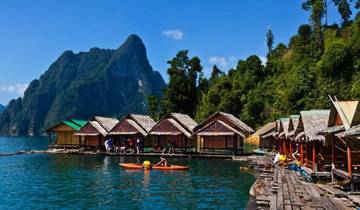
7 Day Amazing Phuket Trip with Krabi from Phuket
- ✓ Comprehensive Krabi tour
- ✓ Expert local guides included
- ✓ All accommodation arranged
- ✓ Transportation provided
7 days
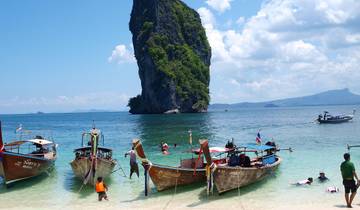
Private Journeys Of Southern Thailand 7 Days / 6 Nights
- ✓ Comprehensive Krabi tour
- ✓ Expert local guides included
- ✓ All accommodation arranged
- ✓ Transportation provided
7 days
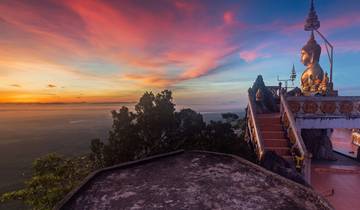
7-Day Island Escape: Phuket & Krabi By Bus
- ✓ Comprehensive Krabi tour
- ✓ Expert local guides included
- ✓ All accommodation arranged
- ✓ Transportation provided
7 days
Amazing 7 Days in Thailand with Krabi and Phuket
- ✓ Comprehensive Krabi tour
- ✓ Expert local guides included
- ✓ All accommodation arranged
- ✓ Transportation provided
Multi-day tour packages powered by TourRadar. Prices and availability subject to change.
Introduction: Understanding Krabi’s Geography and Appeal in 2026
Krabi Province stretches along 160 kilometers of Thailand’s Andaman coast, where over 150 islands scattered across turquoise waters and limestone karsts rising 200-300 meters create landscapes that define tropical paradise imagery worldwide. Unlike Phuket’s single-island geography or Koh Samui’s Gulf of Thailand location, Krabi functions as a mainland coastal hub providing access to multiple island ecosystems, hidden beaches accessible only by longtail boat, and dramatic limestone cliff formations that attract rock climbers from across the globe.
The region divides into three distinct geographic zones, each offering different experiences for 2026 visitors. Ao Nang Beach serves as Krabi’s primary tourist center, a 3-kilometer crescent of sand lined with hotels, restaurants, tour operators, and the longtail boat departure points that make it the natural base for island exploration. Fifteen minutes across the bay by boat, Railay Beach exists in splendid isolation — accessible only by water due to the massive limestone cliffs that cut it off from roads, creating a peninsula where towering karsts frame white-sand beaches and world-class climbing routes scale vertical walls. Beyond these coastal anchors, the offshore islands form distinct circuits: the nearby 4 Islands (Poda, Chicken Island, Tup Island, and Phra Nang Cave Beach), the famous Phi Phi archipelago 45 kilometers southwest, and Hong Islands’ emerald lagoons 30 kilometers north.
What distinguishes Krabi from other Thai beach destinations in 2026 is this combination of accessibility and natural drama. While Phuket offers more nightlife and Koh Samui provides palm-fringed resort luxury, Krabi delivers the Andaman Sea’s most spectacular limestone karst scenery with infrastructure that makes it practical for both budget backpackers (Krabi Town hostels from ฿298 nightly) and luxury travelers (Rayavadee Krabi’s beachfront pavilions at ฿26,000+). The compact geography means visitors can stay in one location and access beaches, islands, jungle waterfalls, and Buddhist temples within 30-60 minute journeys.
Krabi’s appeal extends beyond conventional beach relaxation. The limestone geology that creates the dramatic cliff scenery also produces unique ecosystems — mangrove forests, hidden lagoons, sea caves accessible by kayak, and the geological curiosity of Phra Nang Cave Beach where a shrine to a mythical sea princess sits inside a limestone cave opening onto perfect sand. For adventure-focused travelers, Railay’s limestone walls offer over 700 established climbing routes ranging from beginner-friendly 5.6 grades to advanced 5.13+ challenges, while the Andaman Sea’s coral reefs around Phi Phi and the nearby islands provide excellent snorkeling without requiring scuba certification.
Planning for Krabi in 2026 requires understanding seasonal patterns that dramatically affect both weather and costs. The November-March dry season delivers perfect conditions — sunshine, calm seas, temperatures 25-32°C — but hotel prices in Ao Nang can double compared to low season, and popular beaches fill with visitors. The May-October southwest monsoon brings afternoon rains and rougher seas that sometimes close boat routes to islands, but accommodation costs drop 30-50% and beaches empty significantly. April represents a challenging middle ground: dry weather but extreme 35-38°C heat that makes midday beach time uncomfortable and strenuous activities like the Tiger Cave Temple climb genuinely difficult.
This guide provides verified 2026 pricing, updated transportation logistics, detailed accommodation comparisons across Krabi’s key zones, comprehensive island-hopping options with realistic time requirements, and practical strategies for maximizing both budget and luxury travel experiences in this spectacular corner of the Andaman Sea.
Getting to Krabi in 2026: Flights and Airport Transfers
Krabi International Airport (KBV) serves as the primary gateway, located 15 kilometers northeast of Ao Nang Beach and 12 kilometers from Krabi Town. The airport receives direct international flights from major Asian hubs including Singapore, Kuala Lumpur, Hong Kong, and seasonal European connections from November through March, plus extensive domestic service from Bangkok (8-10 daily flights, 1 hour 20 minutes), Chiang Mai, and other Thai cities.
Bangkok represents the most common connection point for international travelers. Suvarnabhumi Airport (BKK) offers 8-10 daily flights to Krabi through Thai Airways, Bangkok Airways, AirAsia, and Thai Lion Air, with fares ranging ฿1,500-4,000 ($49-131) depending on booking timing and airline. Don Mueang Airport (DMK) handles budget carriers including Nok Air and Thai AirAsia with similar frequencies and pricing. Book domestic flights 4-6 weeks advance for best rates, avoiding last-minute bookings that can spike to ฿6,000+ during peak December-February season.
Airport Transfer Options to Ao Nang 2026
Four transportation options connect Krabi Airport to Ao Nang Beach, ranging from budget-friendly shared shuttles to private car services, with journey times 30-40 minutes depending on traffic and drop-off locations.
Shared Airport Shuttle Bus operates hourly 9:00 AM-6:00 PM connecting airport, Krabi Town, and Ao Nang for ฿149 per person. These large white buses accommodate 50 passengers, make multiple hotel stops along Ao Nang Beach Road, and represent the most economical option for solo travelers or couples. Purchase tickets at the airport arrivals counter — no advance booking required.
Private Airport Taxi costs ฿550-595 fixed price from airport to Ao Nang hotels, accommodating up to 3-4 passengers with luggage. Official taxi counters outside arrivals halls operate 24/7, providing metered and fixed-price options. Insist on using airport official counters rather than unlicensed drivers who approach passengers inside terminals at inflated 2-3x normal rates. Groups of 3-4 travelers find taxis cost-competitive with shuttle buses when splitting fares.
Grab Taxi App functions throughout Krabi with transparent upfront pricing ฿450-550 airport to Ao Nang. Download the Grab app before arrival, as reliable mobile data proves essential — purchase Thai SIM cards (AIS Tourist packages ฿396 for 8-day unlimited data) at airport arrivals. Note that some local taxi drivers block Grab pickups, so drivers may request meeting at designated zones slightly away from main taxi queues.
Pre-Booked Private Transfers through hotel concierge services or online platforms cost ฿600-900 but guarantee English-speaking drivers, flight delay accommodation, and meet-and-greet service with name signs at arrivals. Useful for late-night arrivals (after 10:00 PM when shuttle service ends), families with young children, or travelers uncomfortable navigating Thai transportation independently.
Airport Transfers to Other Krabi Destinations 2026
Krabi Town sits 12 kilometers from airport with shared buses ฿149 and taxis ฿350-400. Railay Beach requires combined transport: taxi/bus to Ao Nang (฿550 or ฿149) plus longtail boat to Railay (฿99-100, 15 minutes). Koh Lanta involves taxi to Baan Huay Nam Khao Pier (฿600-800) plus ferry (฿400-500, 2 hours). For Phi Phi Island accommodation, take transfers to Ao Nang then join speedboat or ferry services.
Where to Stay in Krabi 2026: Accommodation Guide
Krabi accommodation divides into three primary zones — Ao Nang Beach offering maximum convenience and tourist infrastructure, Krabi Town providing authentic local atmosphere with lowest prices, and Railay Beach delivering secluded luxury without road access. Additional options include Klong Muang Beach’s upscale resort area and Tub Kaek’s quieter northern stretches.
Ao Nang Beach Accommodation 2026
Ao Nang functions as Krabi’s primary tourist hub, where 3 kilometers of beachfront concentrate hotels, restaurants, tour booking offices, and longtail boat departure points. Staying here maximizes convenience — walk to dinner options, book island tours from beach-based operators, access ATMs and 7-Eleven stores, and catch songthaews to other destinations without arranging special transport.
Accommodation pricing in Ao Nang 2026:
- Budget Options (฿600-1,200 / $20-39 per night): Guesthouses and basic hotels 2-3 blocks from beachfront offering air-conditioning, private bathrooms, and WiFi. Properties like Wake Up Aonang Hotel and Aonang Friendly Bungalow provide clean, functional rooms without frills. Expect simple furnishings, firm beds, modest breakfast options, and 5-10 minute walks to beach.
- Mid-Range Hotels (฿1,300-2,500 / $42-82 per night): Beachfront or beach-view properties with swimming pools, on-site restaurants, and upgraded amenities. Holiday Style Ao Nang Beach Resort and Sand Sea Resort offer quality accommodations with direct beach access, larger rooms, better breakfast buffets, and helpful tour booking services. Swimming pools, beach loungers, and daily housekeeping standard at this level.
- Upscale Resorts (฿2,500-5,000 / $82-164 per night): Centara Grand Beach Resort & Villas and similar properties deliver superior locations, premium dining, spa facilities, and family amenities including kids’ clubs and multiple pools. Expect spacious rooms with balconies, beach restaurant service, and concierge assistance for tours and transportation.
- Luxury Properties (฿5,000+ / $164+ per night): Boutique resorts like The Tubkaak Krabi Boutique Resort and ultra-premium Rayavadee (beachfront pavilions ฿26,000+) provide exclusive beach access, private pools, fine dining, and exceptional service. Rayavadee occupies its own private peninsula between three beaches with dramatic limestone cliff backdrops.
Peak season (December-February) sees rates increase 40-80% above quoted figures, with best beachfront properties booking solid. Reserve accommodations 6-8 weeks advance for high season, 2-3 weeks for shoulder months (November, March), and last-minute for May-October low season when walk-in deals abound.
Krabi Town Accommodation 2026
Krabi Town delivers authentic Thai atmosphere 20 kilometers from beaches, where local markets, riverside restaurants, and significantly lower accommodation costs attract budget travelers comfortable trading beach proximity for cultural immersion and savings.
Krabi Town lodging costs ฿300-1,500 ($9-49) nightly, with excellent hostels like Pak-Up Hostel providing dormitory beds at ฿298 and private rooms ฿700-1,000. Mid-range hotels including Krabi River View Hotel and Srisawara Casa Hotel cost ฿800-1,500 with air-conditioning, WiFi, and central locations near Krabi Walking Street night market. Three-star properties like Riverside Hotel offer clean accommodations at ฿500-800, substantially below Ao Nang equivalents.
Staying in Krabi Town works well for travelers prioritizing budget over beach immediacy, those interested in local Thai culture beyond tourist zones, and visitors planning multiple day trips where Ao Nang beach time isn’t daily priority. White songthaews run Krabi Town to Ao Nang every 10-15 minutes 6:30 AM-6:00 PM for ฿50 (20 minutes), making beach access straightforward. The town offers superior restaurant value — night market street food ฿40-60, local Thai restaurants ฿50-100 per dish versus Ao Nang’s ฿150-300 tourist pricing.
Railay Beach Accommodation 2026
Railay exists as a unique proposition — cut off from roads by massive limestone cliffs, accessible only by 15-minute longtail boat from Ao Nang (฿99-100), creating an isolated peninsula where four distinct beaches and dramatic karst scenery attract those seeking seclusion and rock climbing.
Railay accommodation concentrates along two main beaches. West Railay offers the best swimming beach with upscale resorts ฿2,500-8,000 including Rayavadee’s ultra-luxury pavilions. East Railay, facing mangrove-lined channels unsuitable for swimming, provides budget-to-mid range options ฿800-2,500 — basic bungalows at Paradise Pearl Bungalows (฿800-1,200) to comfortable hotels like Avatar Railay (฿1,800-2,800). Phra Nang Beach, accessed via paths from Railay West, hosts luxury properties only.
Railay suits travelers seeking isolation, rock climbing (over 700 established routes), dramatic scenery without tourist crowds, and willingness to pay premium prices — restaurants cost 20-40% more than Ao Nang equivalents due to boat-only access increasing supply costs. All supplies arrive by longtail boat. No ATMs exist on Railay; bring sufficient cash. The absence of roads means genuine tranquility — no vehicle noise, limited nightlife beyond beach bars, and sunset views framed by limestone pillars rising from Andaman waters.
Alternative Accommodation Areas 2026
Klong Muang Beach, 20 kilometers north of Ao Nang, offers upscale resort concentration away from tourist crowds. Properties like Panan Krabi Resort and Dusit Thani Krabi Beach Resort provide family-friendly amenities, quiet beaches, and ฿2,500-6,000 pricing. Limited restaurants outside resorts necessitate on-site dining or scooter transport to Ao Nang.
Tub Kaek Beach delivers similar quiet luxury further north, with exclusive resorts including The Tubkaak Krabi Boutique Resort occupying long stretches of sand with minimal development. Expect ฿3,500-8,000 rates, exceptional privacy, and need for rental transport to reach restaurants and tours.
Getting Around Krabi 2026: Transportation Guide
Krabi’s transportation network combines songthaews (converted pickup trucks with bench seating), longtail boats essential for beach-hopping, scooter rentals for independent exploration, Grab taxi app service, and tour company vehicles. No rail system exists; public buses serve only airport-town-beach corridors.
Songthaew Local Transport 2026
White songthaews form Krabi’s primary public transport, running fixed routes between Krabi Town, Ao Nang Beach, and major attractions. These pickup trucks with covered cargo beds converted to bench seating accommodate 10-12 passengers, operating 6:30 AM-6:00 PM with 10-15 minute frequencies on main routes.
Key songthaew routes and costs 2026:
- Krabi Town to Ao Nang: ฿50 per person (฿60 after 6:00 PM), 20-minute journey, departures every 10-15 minutes from Maharaj Road near Vogue Shopping Center and 7-Eleven. Ao Nang departures from main beach road near McDonald’s.
- Krabi Town to Tiger Cave Temple: ฿50-60 per person, though frequency limited. Most visitors use tour transport or scooter rental for temple access.
- Ao Nang internal routes: ฿20-30 for short hops along beach road between hotels and restaurants
Flag songthaews anywhere along routes by waving. Pay driver upon exit. Songthaews provide air-conditioned relief from tropical heat but can be crowded during peak 8:00-9:00 AM and 4:00-6:00 PM periods. Most stop service around 6:00-7:00 PM; taxis or Grab required for evening transport.
Longtail Boat Essential Routes 2026
Longtail boats — traditional wooden vessels with distinctive long propeller shafts — represent essential transport for Railay Beach (no road access) and scenic coastal hopping. Boats depart from Ao Nang Beach’s eastern end near Nopparat Thara Beach junction.
Longtail boat pricing 2026:
- Ao Nang to Railay Beach: ฿99-100 per person one-way, 15-minute journey. Boats depart when 8 passengers fill vessel (shared service) from approximately 7:30 AM-6:00 PM. After 6:00 PM, evening surcharge adds ฿50 (total ฿150), and boats may require private charter ฿800 total if passenger numbers insufficient.
- Private longtail charter: ฿1,200-2,000 for 4-6 hours exploring nearby beaches and islands. Useful for flexible schedules, accessing less-visited spots, or avoiding shared tour boat crowds.
Wait times vary significantly — morning departures 8:00-10:00 AM fill quickly (5-10 minute waits), while midday periods 1:00-3:00 PM may require 20-30 minutes for full passenger complement. To minimize waiting, arrive when boats are loading rather than between departure waves.
Scooter Rental Independence 2026
Scooter rental provides maximum flexibility for exploring Krabi’s mainland attractions independently, with rates ฿200-300 per day for 110-125cc automatic transmission models. Rental shops concentrate along Ao Nang’s main beach road and throughout Krabi Town, requiring passport deposit or ฿3,000-5,000 cash security.
Scooters enable economical access to Tiger Cave Temple (9 kilometers from Krabi Town, 15 minutes), Emerald Pool (40 kilometers, 45 minutes), hot springs, and coastal roads without tour group schedules or taxi negotiations. Fuel costs approximately ฿50-80 daily for typical exploring.
Critical safety considerations: Thailand drives on the left. Thai traffic fatality rates rank among world’s highest, with scooter accidents comprising significant portion. Rental scooters often lack comprehensive insurance — accidents may result in ฿50,000+ hospital bills plus scooter damage charges. Wearing helmets is legally required (฿500 fine if stopped), and police regularly check for international driving permits (฿500-1,000 fines for violations). Only rent scooters if comfortable with left-hand traffic, tropical weather challenges including sudden rains creating slippery roads, and aggressive Thai driving patterns.
Grab Taxi App Service 2026
Grab operates throughout Ao Nang and Krabi Town, offering transparent upfront pricing via smartphone app and eliminating meter manipulation concerns common with traditional taxis. Typical Grab fares: Ao Nang to Krabi Town ฿250-350, Krabi Town to Tiger Cave Temple ฿180-250, airport to Ao Nang ฿450-550.
Download Grab app before arriving Thailand. Mobile data essential for booking — airport SIM card purchases (AIS Tourist packages ฿396 for 8-day unlimited data) or international roaming required. Some traditional taxi drivers attempt blocking Grab pickups at major locations; drivers may request meeting at spots slightly away from main taxi queues to avoid confrontations.
Traditional Taxis and Tuk-Tuks 2026
Metered taxis exist sparingly in Krabi compared to Bangkok or Phuket. Most taxis operate fixed-price basis negotiated before travel. Standard rates: Ao Nang to Krabi Town ฿300-400, Krabi Town to Tiger Cave Temple ฿300-350 one-way, full-day charter ฿1,500-2,000.
Tuk-tuks concentrate in Ao Nang Beach area, offering short-distance transport ฿100-200 for hotel-to-restaurant trips. Always negotiate and confirm total price before boarding — tuk-tuk drivers sometimes inflate foreigner pricing 2-3x local rates. Tuk-tuks provide no air-conditioning and limited protection from rain.
Krabi’s Best Beaches in 2026: Complete Guide
Krabi’s coastline delivers diverse beach experiences from developed Ao Nang’s restaurant-lined sand to Railay’s limestone-cliff-framed isolation, Phra Nang Cave Beach’s mythical shrine, and offshore island paradises accessible by boat.
Ao Nang Beach 2026
Ao Nang’s 3-kilometer crescent serves as Krabi’s main tourist beach, combining swimming access, beachfront restaurants, water sports operators, and longtail boat departures for island tours. The northern section near Centara Grand Resort offers best swimming with gradual slope and clearer water, while the southern end near Nopparat Thara provides longtail boat services to Railay and islands.
Beach quality proves adequate rather than spectacular — sand tends toward coarse texture versus powder-fine alternatives elsewhere, water clarity varies with tides and boat traffic, and the beachfront development means constant restaurant touts and massage offers. However, Ao Nang’s convenience cannot be overstated: walk from hotel to beach in 2-5 minutes, dozens of dining options within 100 meters, tour operators booking island trips directly from beach, and sunset views facing west across the Andaman Sea to offshore islands.
Optimal beach timing: Early morning 7:00-9:00 AM delivers coolest temperatures and least crowds. Midday 11:00 AM-2:00 PM brings intense sun requiring shade (restaurants rent beach chairs ฿100-150 with food purchase). Late afternoon 4:00-6:00 PM offers pleasant swimming temperatures and dramatic sunset photography with limestone islands silhouetted against orange-pink skies.
Railay Beach West 2026
West Railay provides Krabi’s most photogenic beach setting — 600 meters of white sand framed by 200-meter limestone cliffs rising vertically on both ends, accessible only by 15-minute longtail boat from Ao Nang (฿99-100). The isolation created by surrounding cliffs (no roads can penetrate the karst geography) delivers genuine tranquility despite resort development.
Swimming conditions excel year-round with gradually sloping sand, minimal rocks, and protected bay geography reducing wave action. The beach faces west, making sunset spectacular — limestone formations turn gold-orange, then purple-black silhouettes as sun drops toward Andaman horizon. Beach restaurants and bars line the sand, offering cold drinks ฿60-100, Thai meals ฿150-300, and sunset cocktails ฿200-300 with premium views included.
Railay West can become crowded midday December-February when day-trippers from Ao Nang join resort guests. For peaceful experiences, arrive early morning before 10:00 AM or late afternoon after 4:00 PM when most day-visitors depart. The beach lacks shade trees — bring umbrellas or rent beach chairs with shade ฿150-200 daily.
Phra Nang Cave Beach 2026
Phra Nang Cave Beach ranks among Thailand’s most photographed locations, where towering limestone cliffs create a dramatic amphitheater around pristine white sand and turquoise shallows. Located on Railay Peninsula’s southern tip, the beach requires 10-minute walk through Rayavadee Resort property or rocky coastal path from Railay West.
The beach’s signature feature is Phra Nang Cave — a limestone cave opening directly onto sand, housing a shrine dedicated to a mythical sea princess (Phra Nang translates “Princess Cave”). Local fishermen believe the princess spirit controls sea conditions and leave offerings of carved wooden phalluses seeking blessings for fertility and ocean safety. The cave provides interesting cultural photography and shelter from midday sun.
Swimming at Phra Nang excels with powder-fine sand, crystal water clarity, and excellent snorkeling around rocks at both beach ends where tropical fish gather. Kayak rentals ฿200-300 hourly enable paddling to adjacent limestone cliff bases and small caves. The beach faces southwest, delivering superb afternoon light for photography 2:00-5:00 PM when limestone cliffs glow golden.
Access logistics: Longtail boats from Ao Nang can drop directly at Phra Nang (฿100-150 per person) or land at Railay East requiring 15-minute walk. Most visitors combine Phra Nang with Railay West exploration as part of day trip from Ao Nang. No restaurants exist on beach — bring water and snacks or return to Railay West for dining.
Nopparat Thara Beach 2026
Nopparat Thara extends 3 kilometers north of Ao Nang, offering quieter beach atmosphere with primarily Thai visitors, local seafood restaurants at fishing village prices ฿100-200 per meal, and national park status protecting development. The beach forms part of Hat Nopparat Thara-Mu Ko Phi Phi National Park.
Swimming quality varies with tides — low tide exposes extensive mudflats requiring long walks to reach water, while high tide brings swimming conditions to beach edge. The sand proves finer than Ao Nang with fewer rocks and more natural atmosphere. Casuarina trees provide natural shade along sections of beachfront.
Nopparat Thara works well for travelers seeking lower-key beach time without Ao Nang’s tourist intensity, those interested in Thai local beach culture, and budget conscious visitors — beachfront bungalows start ฿600-1,000 versus Ao Nang’s ฿1,200+ equivalents. The beach sits 2-3 kilometers from Ao Nang center via beach road walking or ฿20-30 songthaew ride.
Island Hopping Tours and Boat Trips 2026
Krabi’s offshore islands form the region’s primary attraction, with organized tours providing access to limestone karst islands, hidden beaches, snorkeling reefs, and scenic lagoons across the Andaman Sea. Tours range from standard group speedboat excursions to private longtail charters, operating year-round with best conditions November-April.
4 Islands Tour Krabi 2026
The 4 Islands Tour represents Krabi’s most popular island excursion, visiting Poda Island’s white-sand beach, Chicken Island’s distinctive rock formation, Tup Island with its sandbar connecting to Mor Island during low tide, and Phra Nang Cave Beach on Railay Peninsula. This half-day tour departs 8:00-9:00 AM, returns 1:00-2:00 PM, covering islands within 30-45 minutes boat ride from Ao Nang.
Tour costs and inclusions 2026: Group longtail boat tours ฿992-1,400 per person include hotel pickup from Ao Nang, longtail boat transport, snorkeling equipment, drinking water, fruit, and guide. National park entrance fees ฿300-400 per person charged separately (paid cash at park entry). Total cost ฿1,292-1,800 per person for complete experience.
Tour schedule typically follows: Hotel pickup 8:00 AM, longtail boat departure 8:30 AM from Ao Nang, Chicken Island snorkeling stop 45 minutes, Tup-Mor Island sandbar walking 30 minutes, Poda Island beach swimming and relaxation 60 minutes, Phra Nang Cave Beach exploration 45 minutes, return to Ao Nang 1:30 PM. Some tours include buffet lunch on Poda Island (verify when booking).
Snorkeling conditions vary by island — Chicken Island offers best coral and fish visibility with depths 2-4 meters around rocky formations. Tup-Mor Island’s famous sandbar appears only at low tide (check tide tables — optimal viewing 11:00 AM-1:00 PM during low tide cycles). Poda Island provides excellent beach relaxation with white sand and turquoise shallows ideal for swimming.
Book 4 Islands tours through beachfront operators in Ao Nang (walk along beach road comparing prices), hotel reception desks (typically ฿100-200 markup), or online platforms with reviews. Peak season December-February sees tours fully booked — reserve 2-3 days advance. Low season May-October offers walk-up availability and occasional discounts ฿800-1,000.
Phi Phi Islands Day Trip 2026
Phi Phi Islands, located 45 kilometers southwest of Krabi, require full-day excursions visiting famous Maya Bay (The Beach filming location), Viking Cave, Monkey Beach, and snorkeling points around Phi Phi Leh and Phi Phi Don. Tours depart early morning, return late afternoon, typically via speedboat (2 hours round-trip travel time).
Phi Phi tour pricing 2026: Group speedboat tours ฿1,400-2,200 per person include hotel transfers, speedboat transport, snorkeling gear, buffet lunch, national park fees (฿400 per person), guide, and drinking water. Premium tours with smaller groups or luxury speedboats cost ฿2,500-3,500. Private charters start ฿15,000 for boats accommodating 8-10 passengers.
Standard itinerary: Depart Ao Nang 7:30 AM, arrive Phi Phi Leh 9:30 AM, visit Maya Bay (45 minutes beach time — swimming allowed, though coral protection rules prohibit touching reef), Pileh Lagoon emerald waters (swimming 30 minutes), Viking Cave exterior viewing (no entry permitted), Monkey Beach wildlife observation, lunch buffet on Phi Phi Don (60 minutes), afternoon snorkeling at Shark Point or similar reef (45 minutes), return to Ao Nang 5:30-6:00 PM.
Important Phi Phi considerations: Speedboat travel involves 1-hour open water crossings each direction — rough seas May-October can make journeys uncomfortable for those prone to seasickness (bring medication). Maya Bay fame means crowds December-February with 500+ daily visitors during peak hours. June-September monsoon season sometimes closes tours due to dangerous sea conditions. Tours to Phi Phi involve longer days (10-11 hours total) versus 4 Islands’ compact half-day schedule.
Hong Islands Tour 2026
Hong Islands, situated 30 kilometers north of Ao Nang, feature a dramatic hidden lagoon (hong means “room” in Thai, referring to the enclosed emerald lagoon accessed through narrow channel), pristine beaches, excellent snorkeling, and significantly fewer crowds than Phi Phi. Tours operate as full-day or half-day excursions.
Hong Islands tour costs 2026: Full-day speedboat tours ฿1,200-1,800 per person include transport, lunch, snorkeling equipment, guide, and drinking water. National park entrance fees ฿298 per person charged separately. Half-day tours ฿900-1,200 skip lunch and limit beach time. Total costs ฿1,498-2,098 for full-day experience.
Tour highlights: Hong Island lagoon accessed by kayak or swimming through narrow channel, revealing circular emerald pool surrounded by vertical limestone walls — one of Krabi’s most photographed locations. Lading Island and Pakbia Island offer white-sand beaches with excellent swimming and snorkeling around coral reefs supporting tropical fish populations. Hong Islands receive far fewer visitors than Phi Phi, delivering more peaceful beach experiences especially on weekdays outside December-February peak season.
Hong Islands suit travelers seeking beautiful island scenery without Phi Phi’s crowds, those prioritizing snorkeling over beach fame, families with children (calmer beaches, shallower snorkeling), and visitors wanting full-day island experiences without 4-hour round-trip boat rides to Phi Phi.
Private Longtail Boat Charters 2026
Private longtail boat charters provide flexible alternatives to group tours, accommodating 6-8 passengers with customized itineraries visiting desired islands on preferred schedules without rushing to group timelines.
Private charter costs 2026: Full-day longtail boat rental ฿3,500-5,000 for 6-8 hours, accommodating up to 8 passengers. Half-day charters (4 hours) ฿2,000-3,000. National park fees ฿300-400 per person charged separately. Snorkeling equipment rental ฿100-150 per set. Divide total charter cost among passengers — groups of 6-8 find private charters comparable to group tour per-person pricing while offering superior flexibility.
Negotiate charter details clearly: departure/return times, specific islands to visit, snorkeling stop durations, lunch arrangements (bring own food or stop at island restaurants), drinking water provision, and bad weather cancellation policies. Book through beachfront operators at Ao Nang or hotel concierge services. Discuss captain’s English proficiency and local knowledge — experienced captains know best snorkeling spots and time visits to avoid tour group crowds.
Krabi Attractions and Activities 2026
Beyond beaches and islands, Krabi offers jungle attractions, Buddhist temples, adventure sports, and natural phenomena ranging from hot springs to hidden lagoons, providing diverse experiences for varied traveler interests.
Tiger Cave Temple (Wat Tham Sua) 2026
Tiger Cave Temple, located 9 kilometers from Krabi Town, challenges visitors with 1,237 concrete steps climbing 278 meters to a summit crowned by a giant golden Buddha statue and 360-degree panoramic views across limestone karsts, jungle valleys, and distant Andaman Sea.
Entrance fee: FREE (donations welcomed, not required). The temple functions as an active Buddhist meditation site, making it one of Krabi’s few major attractions without admission charges. The climb represents the primary challenge — 1,237 steps with some treads exceeding 30 centimeters high, taking 30-60 minutes depending on fitness level and rest frequency.
Climbing strategy: Begin early morning 7:00-8:00 AM to avoid peak heat (midday temperatures 32-38°C make climbing genuinely difficult). Bring 2-3 liters water per person — no vendors exist on steps, though free water tap available at summit. Wear athletic shoes with good grip — steps become slippery when wet from rain or morning dew. Pace yourself — rest stops every 100-150 steps recommended for average fitness levels.
Summit rewards include the magnificent golden Buddha statue (10 meters tall), sacred shrine where monks meditate, and extraordinary views spanning Kiriwong Valley’s rainforest, limestone cliff formations, and on clear days the Andaman Sea 25 kilometers distant. Sunrise visits (arrive 6:30 AM, climb in dawn light) deliver magical experiences with fewer crowds and perfect photography light. Sunset visits also popular though last entry is 5:00 PM.
Important temple protocols: Dress modestly covering shoulders and knees (sarongs available for loan ฿50-100 if needed). Remove shoes before entering shrine areas at summit. Speak quietly and behave respectfully — this is active religious site, not tourist attraction for monks residing here. Monkeys inhabit lower temple areas — secure belongings, avoid feeding, watch for attempted food theft.
Transportation to Tiger Cave Temple: Scooter rental from Krabi Town (9 kilometers, 15 minutes, ฿200-300 daily rental). Songthaew from Krabi Town ฿50-60 (though infrequent service). Grab taxi ฿180-250 one-way. Organized tours combining Tiger Cave Temple, Emerald Pool, and hot springs cost ฿900-1,400 per person including transport and entrance fees.
Emerald Pool (Sa Morakot) and Hot Springs 2026
The Emerald Pool and natural hot springs, located 40 kilometers south of Krabi Town deep in Khao Phra Bang Khram Nature Reserve, offer jungle swimming in crystal-clear thermal pools and cascading hot water streams.
Entrance fees 2026: Emerald Pool National Park ฿400 per person, Hot Springs National Park ฿200 per person (separate parks requiring separate fees). Parking ฿10 per person added to organized tour prices. Combined tours to both sites plus Tiger Cave Temple cost ฿900-1,400 per person including entrance fees, transport, lunch, and guide.
Emerald Pool experience: Walk 1.4 kilometers through jungle trail (20-30 minutes, relatively easy path though can be slippery when wet) to reach the main Emerald Pool — a natural crystal-clear pool fed by underground springs maintaining constant turquoise color from limestone minerals. The pool measures approximately 25 meters diameter, 2 meters deep, with water temperature 24-28°C year-round. Swimming encouraged though crowds December-February can make water crowded midday 11:00 AM-2:00 PM.
Beyond the main Emerald Pool, continue hiking 600 meters further (15 minutes) to the Blue Pool (Sra Kaew) — a brilliant blue natural pool that’s non-swimmable due to extreme depth and mineral content, but provides spectacular photography. The trail involves moderate difficulty with some steep sections and root obstacles.
Hot Springs experience: Natural thermal waters emerging from underground volcanic chambers at 40-50°C cascade down limestone formations creating multiple bathing pools at various temperatures. The water gradually cools as it flows, with lower pools reaching comfortable 35-38°C soaking temperatures. The hot springs provide therapeutic mineral bath experiences surrounded by rainforest, especially pleasant after Emerald Pool swimming.
Visiting strategy: Arrive early 8:00-9:00 AM to avoid crowds and enjoy peaceful jungle atmosphere. Bring swimwear, towels, waterproof bags for belongings, insect repellent, and reef-safe sunscreen. The paths can be slippery — wear sandals or water shoes with good tread. Budget 2-3 hours total for Emerald Pool visit, 1 hour for hot springs.
Rock Climbing Railay Beach 2026
Railay’s limestone cliffs offer over 700 established climbing routes ranging from beginner 5.6 grades to advanced 5.13+ challenges, making it one of Southeast Asia’s premier rock climbing destinations. The dramatic overhanging walls, varied route styles, and beachfront setting attract climbers worldwide.
Climbing courses and costs 2026: Full-day beginner courses ฿1,800-2,500 per person include equipment rental, qualified instructor, safety training, and multiple route attempts. Half-day introductions ฿1,200-1,500. Multi-day courses (3-4 days) teaching advanced techniques cost ฿6,000-9,000. Equipment rental for experienced climbers: harness, shoes, chalk bag ฿300-400 daily; rope and quickdraws ฿500-600.
Major climbing schools on Railay include Basecamp Tonsai, Highland Rock Climbing, and King Climbers, all offering UIAA-certified instruction and well-maintained equipment. Book courses 2-3 days advance during December-February peak season, walk-up availability common May-November.
Popular climbing areas: Railay West offers beginner-friendly routes on less-steep walls. Tonsai Wall provides classic intermediate routes. Diamond Cave and Hidden World Cave deliver advanced challenges with spectacular overhanging formations. Most beginner courses use Railay West or nearby crags accessible without boat transport.
Kayaking and Stand-Up Paddleboarding 2026
Kayaking around Krabi’s limestone coastline and mangrove forests provides peaceful exploration accessing caves, hidden beaches, and narrow channels unreachable by longtail boats. Popular kayaking destinations include Ao Thalane’s mangrove ecosystem 20 kilometers north of Ao Nang and Bor Thor’s limestone canyon lagoons.
Kayaking tour costs 2026: Half-day guided kayak tours ฿900-1,400 per person include hotel transport, kayak rental, guide, drinking water, and insurance. Full-day tours adding lunch and multiple location visits cost ฿1,800-2,500. Independent kayak rental at Ao Nang or Railay beaches ฿200-300 hourly, ฿500-800 daily.
Ao Thalane kayaking explores mangrove-lined waterways leading to hidden lagoons surrounded by limestone cliffs. Tours combine paddling through narrow channels, floating through cave passages, and observing wildlife including monkeys, hornbills, and mudskippers. The calm protected waters suit all fitness levels including families with children.
Stand-up paddleboarding (SUP) available for rental at Ao Nang Beach ฿300-400 hourly, ฿800-1,200 daily. Best conditions occur early morning 7:00-9:00 AM when waters remain calm before afternoon winds. SUP provides excellent perspective photographing limestone cliffs from water level.
Dining and Food Costs in Krabi 2026
Krabi’s dining landscape divides between vibrant night markets serving authentic Thai cuisine at street food prices, local restaurants frequented by Thai residents, tourist-oriented beachfront establishments, and upscale resort dining. Food costs prove significantly lower than Western equivalents, with street food meals ฿40-60 and even mid-range restaurant dinners ฿400-600 representing excellent value.
Street Food and Night Markets 2026
Krabi Town Weekend Night Market (Friday-Sunday evenings 5:00 PM-11:00 PM) offers the region’s most authentic and economical dining, where dozens of food stalls serve classic Thai dishes at ฿40-60 per dish. Pad Thai ฿40-50, grilled satay skewers ฿10-15 per stick, seafood fried rice ฿50-70, fresh fruit smoothies ฿30-40, and coconut pancakes ฿20-30 exemplify pricing.
Arrive after 6:00 PM for maximum vendor variety and lively atmosphere. The market stretches along Maharat Road near the river, combining food stalls with handicraft vendors and live music. Expect crowds — bring patience for food waits and securing seating. Total dinner costs ฿150-250 per person eating multiple dishes and drinks.
Ao Nang features smaller evening food markets along beach road where Thai street food costs ฿60-100 per dish (20-40% higher than Krabi Town due to tourist location). Quality remains good though prices reflect beachfront premium. Look for stalls with Thai customer queues indicating authentic cooking.
Local Thai Restaurants 2026
Local Thai restaurants serving primarily Thai residents offer exceptional value with main dishes ฿50-100, rice ฿10-20, and large bottles of Singha or Chang beer ฿57-80. These establishments concentrate in Krabi Town and residential areas slightly away from Ao Nang’s beachfront strip.
Recommended dishes and prices: Tom Yum soup ฿60-80, green curry with rice ฿70-90, stir-fried vegetables ฿50-70, grilled whole fish ฿180-250 depending on size, seafood basil stir-fry ฿100-150. Portions prove generous — two dishes plus rice feeds two people adequately. Total meal costs ฿200-350 for two people including drinks.
Finding authentic local restaurants: Look for Thai-language menus, plastic chairs and simple decor, absence of English menu translations, and majority Thai customer base. These indicators signal genuine local establishments versus tourist-adapted restaurants. Ask hotel staff or local residents for recommendations — they know the best value dining.
Mid-Range Tourist Restaurants 2026
Tourist-oriented restaurants along Ao Nang’s beachfront and main walking street charge ฿150-300 per main dish, ฿80-120 for beer, and ฿200-350 for cocktails. Food quality varies significantly — some deliver excellent Thai cooking with English menus and air-conditioned comfort, while others serve mediocre food trading on convenient locations.
Expect to pay: Pad Thai ฿120-180, Tom Yum soup ฿150-200, green curry ฿180-250, grilled seafood ฿300-500, Western dishes (pasta, burgers) ฿200-350, fresh fruit shakes ฿60-100. Upscale resorts add 10% service charge and 7% VAT to menu prices (referred to as “plus-plus”), increasing bills 17% beyond stated prices.
Mid-range restaurant meals total ฿400-800 per person including drinks. Beachfront locations with sunset views command premium prices — identical dishes cost 30-40% less at restaurants one block inland from beach. Look for restaurant reviews on Google Maps or TripAdvisor identifying quality options versus tourist traps.
Upscale Dining Experiences 2026
Fine dining at luxury resort restaurants and specialty establishments delivers exceptional seafood, fusion cuisine, and romantic beachfront settings at ฿600-1,500 per main course. Establishments like Rayavadee Krabi’s Krua Phranang and The Tubkaak’s beachfront dining exemplify this category.
Upscale three-course dinners cost ฿1,500-3,000 per person before drinks, wine ฿1,200-3,500 per bottle, cocktails ฿300-500. These restaurants justify prices through premium ingredients (imported steaks, fresh lobster), sophisticated preparations, exceptional service, and stunning limestone-cliff-framed ocean views. Reservations recommended for dinner 6:00-8:00 PM peak times.
Practical Dining Budget Breakdown 2026
Daily food costs by travel style:
- Budget travelers: Breakfast street food ฿40-60, lunch local restaurant ฿80-120, dinner night market ฿100-150, drinks and snacks ฿50-80. Total ฿270-410 daily.
- Mid-range travelers: Breakfast hotel buffet ฿150-250, lunch beachfront restaurant ฿250-400, dinner mid-range dining ฿400-600, coffee and drinks ฿150-250. Total ฿950-1,500 daily.
- Luxury travelers: Breakfast resort restaurant ฿400-600, lunch upscale beachfront ฿600-1,000, dinner fine dining ฿1,500-2,500, beverages and snacks ฿300-500. Total ฿2,800-4,600 daily.
Alcohol significantly impacts dining budgets — beers ฿57-120, cocktails ฿200-500, bottles of wine ฿1,000-3,500 add substantially to meal costs. Those minimizing alcohol spending reduce daily food budgets 30-40%.
Sample Krabi Itineraries 2026
These sample itineraries demonstrate realistic daily schedules incorporating travel times, activity durations, and practical logistics for different visit lengths.
Three-Day Krabi Highlights Itinerary 2026
Day 1 – Arrival and Ao Nang Orientation: Arrive Krabi Airport, shared shuttle to Ao Nang (฿149, 40 minutes). Check into mid-range hotel ฿1,500-2,000. Afternoon Ao Nang Beach swimming and sunset viewing. Dinner at beachfront restaurant ฿400-600. Day cost: ฿400-750 excluding accommodation.
Day 2 – 4 Islands Tour: Group longtail tour ฿1,292-1,800 including park fees, 8:00 AM-2:00 PM. Afternoon rest at hotel pool. Evening Ao Nang Walking Street dining ฿300-500. Day cost: ฿1,592-2,300 excluding accommodation.
Day 3 – Railay Beach Day Trip: Longtail boat to Railay ฿99, explore Railay West and Phra Nang Cave Beach. Lunch at Railay beach restaurant ฿200-350. Return longtail ฿99. Dinner Ao Nang ฿300-500. Day cost: ฿698-1,048 excluding accommodation.
Three-day total costs: ฿7,190-10,598 including accommodation (฿4,500-6,000), activities, meals, and local transport.
Five-Day Krabi Complete Experience 2026
Day 1 – Arrival and Beach Acclimatization: Airport transfer ฿149, hotel check-in, Ao Nang Beach afternoon, beachfront dinner ฿400-600. Day cost: ฿549-749 excluding accommodation.
Day 2 – Tiger Cave Temple and Emerald Pool: Organized tour ฿1,200-1,600 including temple climb, Emerald Pool swimming, hot springs, lunch. Evening rest and casual dining ฿250-400. Day cost: ฿1,450-2,000 excluding accommodation.
Day 3 – Phi Phi Islands Full Day: Speedboat tour ฿1,800-2,500 including all fees and lunch, 7:30 AM-6:00 PM. Light dinner ฿200-350. Day cost: ฿2,000-2,850 excluding accommodation.
Day 4 – Railay Beach and Rock Climbing: Longtail to Railay ฿99, beginner climbing course ฿1,800-2,500, Railay lunch ฿200-300, return boat ฿99, Ao Nang dinner ฿300-500. Day cost: ฿2,498-3,498 excluding accommodation.
Day 5 – Hong Islands and Departure: Morning Hong Islands tour ฿1,500-2,100, return 2:00 PM, airport transfer ฿149. Day cost: ฿1,649-2,249 excluding accommodation.
Five-day total costs: ฿15,646-19,846 including accommodation (฿7,500-8,500), all activities, meals, and transport.
Seven-Day Krabi Luxury Relaxation Itinerary 2026
Day 1-2: Private airport transfer ฿600, luxury Ao Nang resort check-in ฿4,000-6,000 nightly, spa treatments ฿2,000-3,500, fine dining ฿1,500-2,500 daily. Two-day costs: ฿12,200-18,200 including accommodation.
Day 3: Private longtail charter to secluded beaches ฿4,000, gourmet picnic lunch, sunset cocktails, resort dinner. Day cost: ฿6,500-8,500 excluding accommodation.
Day 4: Private Phi Phi speedboat charter ฿18,000 (split among group), customized snorkeling, beach time, upscale dinner. Day cost: ฿4,500-6,000 per person excluding accommodation.
Days 5-6: Resort relaxation, premium spa days ฿3,000-5,000, private yoga sessions ฿1,500-2,500, fine dining. Two-day costs: ฿13,000-19,000 including accommodation.
Day 7: Leisure morning, private airport transfer ฿600. Day cost: ฿2,100-3,100 excluding accommodation.
Seven-day luxury total: ฿66,300-90,800 including accommodation, private tours, spa treatments, and fine dining throughout.
Best Time to Visit Krabi: Seasonal Planning 2026
Krabi experiences two distinct seasons governed by monsoon patterns — the November-March dry season delivering ideal conditions and peak crowds, and the May-October southwest monsoon bringing rains, rough seas, and significant price reductions.
Peak Dry Season: December-February 2026
December through February represents Krabi’s busiest period, when international tourists from Europe, North America, and Asia escape winter weather for tropical beach conditions. Temperatures range 25-32°C with minimal rainfall (average 2-4 rainy days monthly), calm seas enabling all boat tours, and clear skies perfect for beach days and photography.
The crowds and costs peak during these months: Ao Nang hotels charge ฿2,500-8,000 nightly (40-80% above shoulder season rates), island tours book solid requiring 3-5 day advance reservations, beaches fill with visitors midday 11:00 AM-3:00 PM, and popular restaurants need dinner reservations. Christmas-New Year period (December 20-January 5) sees absolute peak pricing with some resorts requiring 7-10 night minimum stays.
December-February suits travelers prioritizing guaranteed sunshine and calm seas over budget considerations, families with school holiday constraints, those celebrating Christmas or New Year holidays in tropical settings, and visitors with limited flexibility who must travel during Western winter months. Book accommodations 8-12 weeks advance for best selection and reasonable rates.
Shoulder Season Excellence: November and March 2026
November and March deliver the optimal balance — excellent weather (25-31°C, occasional brief showers, calm seas most days) with 20-40% lower prices than peak December-February and noticeably smaller crowds on beaches and islands.
November marks the transition from monsoon to dry season. Early November (1-15) may experience residual monsoon showers, while late November (16-30) typically provides dry weather matching December conditions at significantly lower costs. March represents the opposite transition — early March offers excellent weather, while late March temperatures climb toward uncomfortable 34-38°C April heat.
Shoulder season accommodation costs ฿1,200-3,500 for Ao Nang mid-range hotels (versus ฿2,000-5,000 peak season). Island tours rarely book full, allowing same-day or next-day reservations. Beach crowds diminish noticeably — claim premium spots without 7:00 AM arrival. Restaurants accommodate walk-ins without waits.
November and March suit budget-conscious travelers wanting good weather without peak costs, those avoiding crowds while maintaining reliable sunshine, and flexible planners who can time visits outside December-February peaks. These months offer the best value-to-quality ratio in Krabi’s annual calendar.
Hot Season Challenges: April 2026
April delivers the year’s most extreme heat with temperatures 34-38°C, high humidity, and intense sun making midday outdoor activities genuinely uncomfortable. Beaches feel scorching 11:00 AM-4:00 PM, the Tiger Cave Temple climb becomes a challenging endurance test, and even casual walking requires frequent air-conditioned breaks.
However, April offers the lowest accommodation prices before monsoon season: Ao Nang hotels ฿900-2,000 (50-60% below December peaks), minimal crowds except Thai Songkran holiday week (April 13-16 when domestic tourism surges), and tour operators negotiable on pricing with walk-up availability.
April works for extreme budget travelers prioritizing savings over comfort, those who tolerate heat well and plan activities for early morning (6:00-9:00 AM) and late afternoon (4:00-7:00 PM), and visitors using Krabi as brief stopover rather than primary beach destination. Avoid April if heat sensitivity, young children, elderly travelers, or plans requiring midday outdoor activities.
Monsoon Season Realities: May-October 2026
The southwest monsoon dominates May through October with regular afternoon rains, rougher seas causing tour cancellations, and cloud cover reducing beach day reliability. However, monsoon season proves less severe than many travelers expect — mornings often deliver sunshine, rains typically arrive 2:00-5:00 PM then clear, and multi-day storms represent exceptions rather than norms.
May-June and September-October see moderate monsoon impact: daily afternoon showers 1-3 hours duration, seas rough 30-40% of days (some tours cancelled), temperatures 28-33°C. July-August represent deepest monsoon with heavier rains, frequent tour cancellations especially to Phi Phi Islands, and significantly reduced tourist numbers.
Monsoon advantages prove substantial: accommodation costs ฿800-1,800 Ao Nang mid-range (40-60% below peak), beach solitude with small crowds, immediate tour availability, and restaurant discounts. The rain pattern (morning sun, afternoon rain) allows beach mornings 7:00 AM-1:00 PM then indoor afternoons — not ideal but workable for flexible travelers.
Monsoon season suits extreme budget travelers maximizing savings, those with very flexible schedules allowing weather-dependent planning, visitors prioritizing empty beaches over guaranteed sunshine, and travelers comfortable with potential tour cancellations requiring backup indoor activities.
Krabi Travel Tips and Essential Information 2026
Money and Payment Systems 2026
Thai Baht (฿) represents Krabi’s exclusive currency. Credit cards accepted at hotels, upscale restaurants, and tour agencies, but most street food, local restaurants, songthaews, longtail boats, and small shops require cash. ATMs operate throughout Ao Nang and Krabi Town charging ฿220 per withdrawal (Thai bank fee, check if your home bank adds additional charges).
Bring sufficient cash or budget for ฿220 ATM fees every 2-3 days. Exchange rates at airports prove poor (5-10% markup); withdraw from ATMs for best rates. Railay Beach lacks ATMs — bring adequate cash before boat transfer. Tipping not mandatory in Thailand but appreciated: round up taxi fares, leave ฿20-50 for good restaurant service, tip guides ฿100-200 for day tours.
Mobile Data and Internet 2026
Thai SIM cards provide essential connectivity for Grab taxi bookings, Google Maps navigation, restaurant research, and communication. AIS Tourist packages sold at Krabi Airport and 7-Eleven stores offer 8-day unlimited data for ฿396, 15-day packages ฿546. Alternatively, True Move and DTAC provide similar tourist packages.
Hotel WiFi generally adequate for messaging and web browsing but often unstable for video calls or streaming. Restaurants and cafes in Ao Nang offer free WiFi with varying quality. Railay Beach has limited WiFi — resorts provide basic connectivity but speeds and reliability inconsistent.
Safety and Health Considerations 2026
Krabi ranks as safe destination with minimal violent crime affecting tourists. Exercise normal precautions: secure valuables at hotel, avoid displaying expensive jewelry or electronics, use hotel safes for passports and excess cash, and stay alert in crowded markets where pickpocketing occasionally occurs.
Health risks center on sun exposure (30-minute sunburn times without protection — use SPF 50+ reef-safe sunscreen reapplied every 2 hours), dehydration (drink 3-4 liters water daily in tropical heat), and foodborne illness (eat at busy restaurants with high turnover, avoid street food sitting unrefrigerated). Dengue fever transmitted by daytime mosquitoes occurs — use DEET repellent especially during rainy season.
Krabi Hospital in Krabi Town provides competent medical care for common issues. Bangkok Hospital Phuket (90 minutes) offers international-standard facilities for serious conditions. Purchase travel insurance covering medical emergencies, as treatment costs ฿50,000-200,000 for significant injuries or illnesses.
Scams and Tourist Traps 2026
Common scams include unlicensed taxi drivers at airport charging 2-3x normal rates (use official taxi counters only), jet ski rental operators claiming damage when returning equipment (photograph all existing damage before use, decline rental if pressured), and tour operators advertising impossibly low prices then adding hidden fees (verify total costs including national park fees before booking).
Restaurant scams involve unclear pricing followed by inflated bills — always check menu prices before ordering, confirm total before paying, and review bills carefully especially at tourist-heavy beachfront establishments. Some tailors and souvenir shops quote low prices then substitute inferior goods or add surprise charges at pickup.
Environmental Responsibility 2026
Protect Krabi’s fragile marine ecosystems by using reef-safe sunscreen (chemical sunscreens damage coral), never touching or standing on coral while snorkeling, refusing plastic bags and straws, disposing trash properly, and avoiding businesses offering elephant rides or animal exploitation (these typically involve abuse).
Respect limestone cave and lagoon environments — follow designated paths, avoid graffiti or vandalism, keep noise levels reasonable to preserve tranquility. National park fees directly fund conservation — despite seeming expensive, these fees protect the natural landscapes that make Krabi spectacular.
Frequently Asked Questions About Krabi Travel 2026
Do I need a visa to visit Krabi in 2026?
Visa requirements depend on nationality and length of stay. Citizens of most Western countries including USA, UK, Australia, Canada, and EU nations receive 30-day visa-exempt entry when arriving by air (15 days when entering by land border). Extensions of 30 additional days available at immigration offices in Krabi Town for ฿1,900. Check current visa policies with Thai embassy before travel, as requirements change periodically. Visitors requiring longer stays or multiple entries should obtain appropriate visas before departure.
Is Krabi suitable for families with young children in 2026?
Krabi works excellently for families with children. Ao Nang Beach provides calm swimming, shallow waters, and family-friendly hotels with kids’ clubs and pools. The 4 Islands tour suits children ages 6+ who can snorkel and handle boat rides, while Hong Islands offers calmer conditions for younger ages. Tiger Cave Temple’s 1,237 steps challenge young children (most families with kids under 10 skip this), but Emerald Pool swimming and hot springs delight all ages. Family rooms accommodating 4 people cost ฿2,000-4,000 nightly. Many restaurants provide children’s menus, and Thai people generally adore children, making family travel very welcoming.
Can I visit Krabi and Phuket in the same trip in 2026?
Combining Krabi and Phuket proves straightforward as they sit 165 kilometers apart (2.5-3 hours) via scenic coastal highway. Options include renting car with driver ฿2,500-3,500, taking mini-van services ฿300-500 per person, or flying Krabi-Phuket (limited direct flights, usually cheaper to use ground transport). Allocate 3-4 days minimum per destination for meaningful exploration. Krabi emphasizes limestone scenery and island beauty, while Phuket offers more nightlife, shopping, and resort variety — the combination provides diverse experiences. Seven to ten days total enables proper coverage of both destinations.
What should I pack for Krabi in 2026?
Essential packing: lightweight breathable clothing, swimwear (2-3 sets for constant wet/dry rotation), reef-safe sunscreen SPF 50+, sun hat and sunglasses, water shoes for rocky beaches, sandals for casual wear, athletic shoes for Tiger Cave Temple, light rain jacket for monsoon season, insect repellent with DEET, reusable water bottle, waterproof bag for boat trips, modest clothing for temples (covering shoulders and knees), and basic first aid supplies. Leave fancy clothing home — Krabi’s atmosphere is extremely casual. Bring less than you think necessary, as laundry services cost ฿30-50 per kilogram with 24-hour turnaround.
Are there ATMs on Railay Beach in 2026?
No ATMs exist on Railay Beach due to boat-only access making cash machine installation impractical. Bring sufficient Thai Baht cash before taking longtail boat from Ao Nang to Railay. Budget ฿2,000-4,000 daily for Railay expenses including meals ฿500-1,000, drinks ฿300-500, activities ฿500-2,000, and miscellaneous purchases. Some upscale resorts accept credit cards, but restaurants, longtail boat operators, and activity vendors require cash. Ao Nang features numerous ATMs for withdrawals before departing to Railay.
Is it safe to swim at Krabi beaches in 2026?
Swimming at Krabi beaches generally proves safe with proper precautions. Ao Nang, Railay West, and Phra Nang Cave Beach provide excellent swimming conditions November-April with calm seas, gradual slopes, and minimal currents. May-October monsoon season brings rougher conditions — red flag warnings indicate dangerous swimming, which should be respected absolutely. Portuguese man-o-war jellyfish occasionally appear December-March (painful stings requiring medical treatment) — local warnings posted when present. Never swim alone, avoid swimming after dark, and supervise children constantly. No lifeguards patrol most beaches outside major resort areas.
How much should I budget daily for food in Krabi in 2026?
Daily food budgets vary dramatically by dining choices: Budget travelers eating street food and local restaurants ฿270-410 daily (breakfast ฿40-60, lunch ฿80-120, dinner ฿100-150, snacks ฿50-80). Mid-range travelers mixing tourist restaurants and occasional upscale dining ฿950-1,500 daily (breakfast ฿150-250, lunch ฿250-400, dinner ฿400-600, coffee/drinks ฿150-250). Luxury diners at resort restaurants ฿2,800-4,600 daily (all meals at upscale venues, fine dining dinners). Alcohol substantially increases costs — beer ฿57-120, cocktails ฿200-500, wine ฿1,000-3,500 per bottle adds ฿500-2,000 daily for moderate drinking.
Can I do a day trip to Krabi from Phuket in 2026?
Day trips from Phuket to Krabi require very early departure (6:00-7:00 AM) for 2.5-3 hour drive each direction, allowing only 4-5 hours actual Krabi time before return journey — barely sufficient for single activity. Better strategy: book overnight accommodation in Krabi for 2-3 nights, enabling proper exploration of Ao Nang, Railay, island tours, and Tiger Cave Temple without exhausting round-trip drives. If truly limited to day trip, focus on single objective like 4 Islands tour (book Phuket-based operators offering Krabi island tours with Phuket hotel pickup) or Railay Beach visit.
Do I need travel insurance for Krabi in 2026?
Travel insurance strongly recommended for Krabi visits. Medical treatment for injuries costs ฿50,000-200,000 without insurance, scooter accidents represent significant risk, and adventure activities (rock climbing, speedboat tours) involve injury potential. Quality travel insurance (฿500-1,500 for 7-day coverage) provides medical emergency coverage, trip cancellation protection, lost luggage compensation, and emergency evacuation if serious injury requires Bangkok or international hospital transfer. Verify policy covers planned activities — some exclude scuba diving or rock climbing without additional premiums. Check if your credit card provides travel insurance when booking flights.
What is the best area to stay in Krabi for first-time visitors in 2026?
Ao Nang Beach represents the optimal base for first-time Krabi visitors, offering maximum convenience with hotels ฿1,200-2,500 nightly, beachfront location, hundreds of restaurant choices, easy island tour bookings from beach operators, longtail boats to Railay (฿99-100, 15 minutes), songthaew connections to Krabi Town (฿50, 20 minutes), and central positioning for exploring the region. Staying in Ao Nang eliminates transportation complications — walk to beaches, restaurants, tours, and shops. Krabi Town provides lower costs but requires transport to beaches. Railay offers stunning scenery but isolation and higher prices. New visitors maximize convenience and options by basing in Ao Nang.