Kourion Archaeological Site Cyprus: Ancient Greek Theater Day Trip Guide
Perched on dramatic limestone cliffs overlooking the Mediterranean Sea, Kourion stands as one of Cyprus’s most spectacular archaeological treasures. The ancient city-kingdom flourished for over two millennia before earthquakes silenced its streets in the fourth century, leaving behind a remarkably preserved theater, exquisite mosaics, and architectural masterworks that continue to captivate visitors exploring southwestern Cyprus from Limassol.
Key Takeaways
- Strategic Clifftop Location: Kourion commands breathtaking views from limestone promontories nearly 100 meters above Episkopi Bay, where ancient architects positioned the city to control the fertile Kouris River valley and Mediterranean trade routes connecting Cyprus to the broader Greek and Roman worlds.
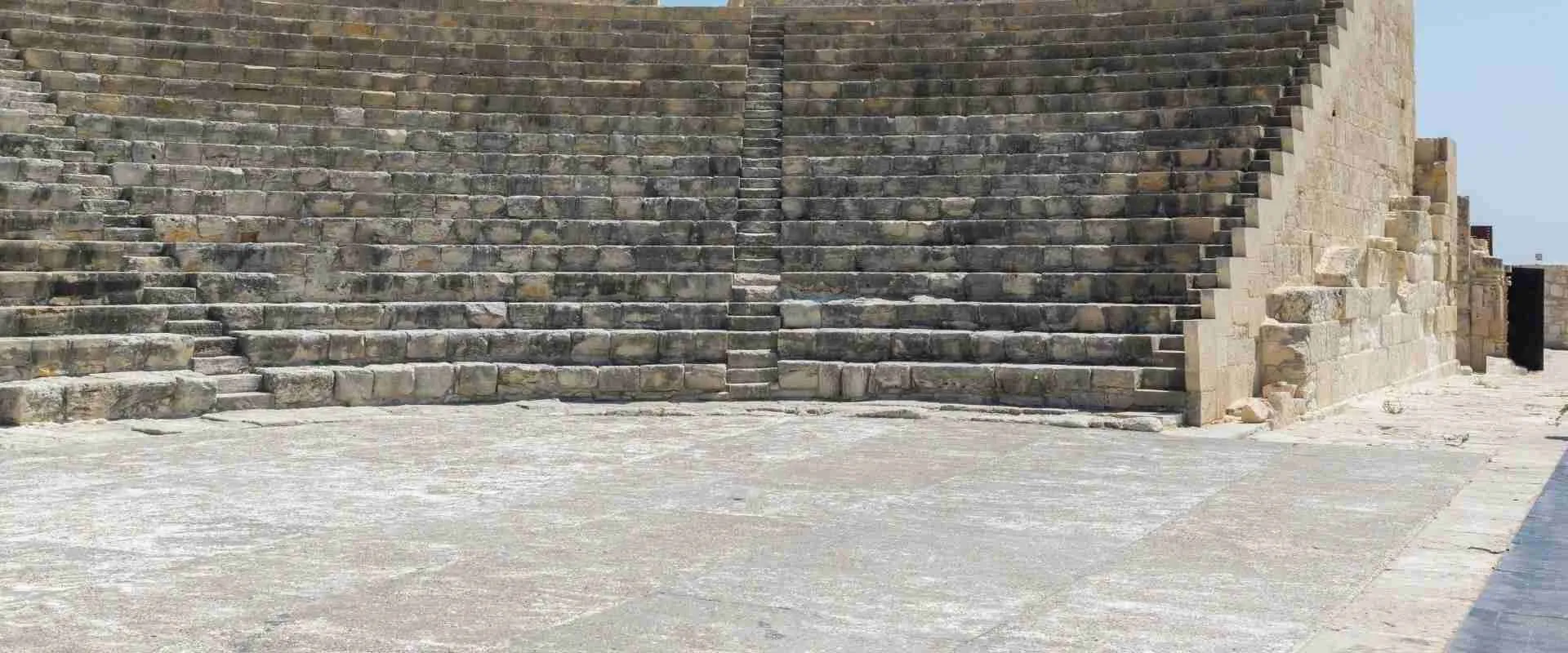
- Greco-Roman Theater Excellence: The restored amphitheater, originally constructed in the second century BC and expanded during the second century AD to accommodate 3,500 spectators, demonstrates exceptional acoustic engineering and continues hosting summer performances against a backdrop of sea and sky that ancient audiences also enjoyed.
- Multicultural Archaeological Layers: The site preserves architectural evidence spanning Hellenistic, Roman, and Early Christian periods, with excavations revealing how successive civilizations adapted and expanded the city through public baths, aristocratic villas, religious sanctuaries, and civic spaces that illustrate daily life across eight centuries.
- Mosaic Masterworks: The House of Eustolios showcases intricate fifth-century floor mosaics depicting geometric patterns, Christian inscriptions, and mythological scenes, while the House of the Gladiators preserves vivid combat scenes naming individual fighters who entertained Roman audiences.
- Accessible Day Trip from Limassol: Located just 19 kilometers west of Cyprus’s second-largest city, Kourion offers straightforward access via public bus service, rental car, or organized tours, with parking included in the modest entry fee and visitor facilities supporting comfortable exploration of the extensive site.
- Companion Archaeological Sites: The Kourion area encompasses multiple ancient monuments including the Sanctuary of Apollo Hylates three kilometers west, the ancient Stadium accommodating 6,000 spectators, medieval Kolossi Castle, and the pristine beach below the archaeological site, creating opportunities for comprehensive full-day itineraries combining history and coastal relaxation.
People Also Ask About Kourion Archaeological Site
What makes Kourion’s ancient theater architecturally significant?
Kourion’s Greco-Roman theater represents exceptional engineering achievements from the Hellenistic and Roman periods. The semicircular cavea originally built in the late second century BC exploited the natural hillside slope, eliminating the need for extensive artificial supporting structures common in freestanding Roman theaters. When Roman architects expanded the theater during the second century AD, they increased capacity to approximately 3,500 spectators while enhancing acoustic properties through calculated angles and surface materials.
The theater’s southern orientation positions the stage building against the Mediterranean backdrop, creating dramatic visual effects during performances while protecting actors from prevailing north winds. Excavations revealed sophisticated drainage systems channeling rainwater away from the orchestra and seating tiers. Stone seating blocks, precisely cut and fitted, demonstrate advanced quarrying and construction techniques. The theater continues serving its original purpose during summer festivals, proving the enduring functionality of ancient acoustic design principles across 2,000 years.
How did the ancient city of Kourion develop and decline?
Archaeological evidence traces Kourion’s origins to Greek settlers from Argos in the Peloponnese who established the city-kingdom around the 13th century BC, possibly following participation in the Trojan War according to ancient legends. The settlement occupied a naturally defensible clifftop position controlling both maritime access via Episkopi Bay and agricultural resources from the Kouris River valley. Early Kourion developed as one of Cyprus’s most powerful city-kingdoms, worshipping Apollo Hylates as the divine protector of the city and surrounding forests.
The city reached its zenith during Roman rule from the first through fourth centuries AD, when administrators invested in monumental architecture including the expanded theater, elaborate bath complexes, aristocratic villas with mosaic floors, and the Nymphaeum honoring water nymphs. Christianity spread through Kourion during the fourth century, evidenced by the construction of the impressive Early Christian Basilica with its intricate mosaic floors. The flourishing city met catastrophic destruction when severe earthquakes struck in 365 AD, causing widespread structural collapse and casualties. Although inhabitants attempted rebuilding and early Christians established religious centers, subsequent earthquakes and Arab raids through the seventh century ultimately led to complete abandonment of the once-great city-kingdom.
Which structures and monuments can visitors explore at Kourion today?
The archaeological site encompasses extensive ruins distributed across the clifftop plateau, requiring two to three hours for thorough exploration. The Greco-Roman theater occupies the most prominent position at the site’s southern edge, where restoration work has reconstructed seating tiers and the stage building to their Roman-era appearance. Adjacent to the theater complex, the House of Eustolios presents remarkably preserved mosaic floors depicting geometric patterns, birds, fish, and Greek inscriptions including welcoming messages to visitors entering the private villa and bath establishment.
The Early Christian Basilica demonstrates the architectural ambitions of Kourion’s Christian community during the fifth century, with foundation walls outlining the three-aisled church plan, narthex, baptistry, and atrium where worshippers gathered before services. The Nymphaeum, dedicated to water nymphs, represents one of the largest fountain monuments in the Roman Mediterranean, originally featuring elaborate marble decoration and sculptures. The House of the Gladiators preserves floor mosaics naming individual fighters including Margareites and Hellenikos alongside detailed combat scenes. The House of Achilles displays mythological themes including the discovery of Achilles disguised among the daughters of King Lycomedes. The Roman Agora served as the commercial and civic heart, surrounded by marble columns and administrative buildings. Each monument features informational panels explaining architectural features, historical context, and significance within ancient Kourion’s urban landscape.
What practical considerations should visitors know before visiting Kourion?
The archaeological site operates year-round with seasonal hours: from September 16 through April 15, the site opens 8:30 AM to 5:00 PM, while extended summer hours from April 16 through September 15 run 8:30 AM to 7:30 PM. Entry costs €4.50 for adults, with parking included in admission. The Cyprus Department of Antiquities offers multi-site passes providing access to museums and monuments across the island: one-day passes cost €8.50, three-day passes €17, and seven-day passes €25, representing excellent value for visitors planning comprehensive archaeological itineraries.
The site lacks shade covering, leaving visitors exposed to intense Mediterranean sun, particularly during summer months when temperatures regularly exceed 30°C (86°F). Essential items include sunscreen, wide-brimmed hats, sunglasses, and multiple water bottles, as refreshment facilities operate intermittently. Comfortable walking shoes with good traction handle uneven ancient paving stones and gravel paths connecting different monument clusters. The site offers partial wheelchair accessibility, with paved paths reaching major monuments including the theater and House of Eustolios, though some structures remain challenging for visitors with mobility limitations due to ancient stairways and rough terrain. Visitors should allocate two to three hours for comprehensive site exploration, though the theater alone warrants at least 30 minutes for appreciation of architectural details and Mediterranean vistas. Early morning arrivals before 10:00 AM or late afternoon visits after 4:00 PM avoid both crowds and peak heat while providing superior lighting for photography.
Extended multi-day tours – 5+ days
Featured Cyprus Multi-Day Tour Packages

3 days
Cyprus 3-Day Discovery Tour
- ✓ Comprehensive Cyprus experience
- ✓ Expert local guides included
- ✓ All accommodation included
- ✓ Transportation provided

5 days
Cyprus 5-Day Highlights Experience
- ✓ Comprehensive Cyprus experience
- ✓ Expert local guides included
- ✓ All accommodation included
- ✓ Transportation provided
7 days
Cyprus 7-Day Cultural Journey
- ✓ Comprehensive Cyprus experience
- ✓ Expert local guides included
- ✓ All accommodation included
- ✓ Transportation provided

10 days
Cyprus 10-Day Complete Adventure
- ✓ Comprehensive Cyprus experience
- ✓ Expert local guides included
- ✓ All accommodation included
- ✓ Transportation provided
Multi-day tour packages powered by TourRadar. Prices and availability subject to change.
Introduction: Discovering Ancient Kourion’s Clifftop Splendor
The ancient city-kingdom of Kourion rises from dramatic limestone cliffs on Cyprus’s southwestern coast, where archaeological excavations have revealed one of the island’s most comprehensive and visually spectacular ancient settlements. Located just 19 kilometers west of modern Limassol along the road toward Paphos, the site occupies a naturally fortified promontory nearly 100 meters above the sparkling waters of Episkopi Bay. This commanding position allowed ancient Kourion to control both maritime trade routes crossing the eastern Mediterranean and agricultural production from the fertile Kouris River valley stretching inland from the coast.
The city’s legendary foundation traces to Mycenaean Greek settlers from Argos who arrived in Cyprus during the 13th century BC, possibly among those who fought in the Trojan War. Ancient sources including Herodotus and Strabo identify Kourion as an Argive colony, while archaeological evidence confirms continuous habitation from the late Bronze Age through the Byzantine period. The settlement grew into one of Cyprus’s most powerful city-kingdoms during the Archaic and Classical periods, minting its own coins and maintaining independence even while paying tribute to successive empires including the Assyrians, Egyptians, and Persians who dominated the eastern Mediterranean world.
Kourion reached its architectural and cultural peak during Roman rule from the first through fourth centuries AD. Roman investment transformed the Hellenistic city-kingdom into a showplace of imperial grandeur, with administrators commissioning monumental public works including the expanded theater, elaborate bath complexes, a massive Nymphaeum fountain monument, and aristocratic villas adorned with intricate mosaic floors depicting mythological scenes and daily life. The city served as the seat of Roman Cyprus’s western administrative district, drawing visitors to religious festivals at the Sanctuary of Apollo Hylates and athletic competitions in the purpose-built stadium.
Catastrophe struck Kourion on July 21, 365 AD, when a massive earthquake generated by seafloor movement near Crete devastated cities across the eastern Mediterranean. Archaeological evidence reveals the earthquake struck early morning while residents slept, with excavations uncovering skeletons of a young family trapped in their collapsing home. The disaster destroyed most of Kourion’s buildings and killed significant portions of the population. Although survivors attempted rebuilding and early Christians constructed an impressive basilica during the fifth century, subsequent earthquakes through the fourth century and Arab raids during the seventh century ultimately forced complete abandonment of the once-thriving city.
Modern archaeological investigation began at Kourion during the late 19th century, with major excavation campaigns during the 20th century conducted by American and Cypriot teams revealing the full scope of the ancient city. The Department of Antiquities of Cyprus now manages the site, which lies within the British Overseas Territory of Akrotiri and Dhekelia. Restoration projects have reconstructed significant portions of the theater to allow continued use for summer performances, while conservation efforts protect vulnerable mosaic floors and architectural elements from weathering and visitor impact.
Today, Kourion ranks among Cyprus’s most visited archaeological sites, attracting history enthusiasts, architecture students, and general tourists exploring the island’s rich cultural heritage. The combination of spectacular clifftop setting, well-preserved monuments spanning multiple civilizations, and relatively compact site layout creates an accessible yet deeply rewarding destination for understanding ancient Mediterranean urban life. The proximity to modern Limassol, excellent visitor facilities, and nearby complementary attractions including the Sanctuary of Apollo Hylates and medieval Kolossi Castle make Kourion an essential component of any comprehensive Cyprus itinerary focused on the island’s layered history from Greek colonization through Byzantine Christianity.
The Greco-Roman Theater: Architectural Masterpiece and Performance Venue
The theater stands as Kourion’s most iconic structure, positioned at the southern edge of the ancient city where limestone cliffs plunge toward the Mediterranean. This placement creates one of antiquity’s most dramatic stage settings, with the sea serving as a natural backdrop for performances while the hillside location provides structural support for the seating tiers. The theater’s construction history spans multiple periods, reflecting both Greek engineering principles and Roman architectural ambitions as successive builders expanded and refined the structure.
Greek architects constructed the original theater during the late second century BC, exploiting the natural slope of the hillside to create a typically Greek semicircular cavea (seating area). This early theater accommodated approximately 2,000 spectators on stone benches carved directly into the hillside, following the standardized design principles that Greek communities exported throughout their colonial territories in the Mediterranean. The orchestra, a circular performance space at the base of the seating tiers, measured approximately 15 meters in diameter and featured a hard-packed earth surface suitable for the chorus movements essential to Greek tragedy and comedy.
Roman authorities undertook massive expansion during the second century AD, transforming the modest Greek theater into a monumental entertainment venue befitting Kourion’s status as a Roman administrative center. Construction crews extended the seating tiers higher up the hillside and added horizontal rows beneath the original Greek sections, increasing capacity to approximately 3,500 spectators. The Romans altered the orchestra from circular to semicircular and paved it with stone slabs, adapting the space for Roman theatrical preferences including gladiatorial combat displays and wild animal shows that required more durable surfaces than Greek drama demanded.
The stage building (scaenae frons) received elaborate decoration during the Roman rebuilding, with a two-story facade featuring marble columns, niches for statues, and ornamental architectural elements typical of Roman theater design. This structure served multiple functions: providing changing rooms and storage spaces for performers, creating impressive visual backdrops for performances through architectural grandeur, and improving acoustic properties by reflecting sound back toward the audience. Archaeological excavations revealed fragments of marble cladding, column capitals, and sculptural elements that once adorned the stage building, demonstrating the wealth Roman administrators invested in Kourion’s civic entertainment infrastructure.
The seating arrangement reflected Roman social hierarchies, with front rows reserved for Kourion’s elite classes including government officials, wealthy merchants, and prominent citizens. Middle sections accommodated the general free population, while upper tiers housed women, slaves, and lower social classes. Small inscriptions carved into some stone seats identify reserved spaces for specific individuals or groups, revealing the careful regulation of theater attendance according to social status. Covered walkways (vomitoria) at the rear of the seating tiers allowed efficient entry and exit for the thousands of spectators attending popular performances and civic ceremonies.
The theater’s acoustic engineering demonstrates sophisticated understanding of sound propagation principles. The semicircular shape focuses sound waves from the stage toward the audience, while the hillside location eliminates echoes that would occur in freestanding structures. Stone seating surfaces and the hard orchestra floor reflect rather than absorb sound, amplifying voices and musical instruments. Modern acoustic tests confirm that actors speaking in normal conversational tones from the orchestra can be heard clearly in the uppermost seating rows, approximately 40 meters from the stage, without artificial amplification.
The catastrophic earthquake of 365 AD severely damaged the theater, collapsing sections of the upper seating tiers and destroying the elaborate stage building. Evidence suggests brief attempts at repair during the late fourth century, but the theater never regained its Roman-era magnificence. Subsequent earthquakes and centuries of abandonment reduced the structure to ruins, with local residents quarrying stones for building materials and vegetation covering the remaining seating tiers.
The Cyprus Department of Antiquities undertook major restoration beginning in the 1950s, reconstructing substantial portions of the seating tiers and stage building to their second-century AD appearance. Workers replaced missing stone blocks with new limestone matching the ancient material, stabilized foundations threatened by erosion, and reinstalled architectural elements found scattered around the site. The restoration aimed to return the theater to functional use while clearly distinguishing modern reconstruction from original ancient work through subtle variations in stone surface treatment.
Today the theater hosts an annual festival program running from June through September, featuring Greek tragedy, Shakespeare productions, contemporary drama, opera performances, and musical concerts. Performances typically begin at sunset, recreating something of the ancient experience when theatregoers gathered for cultural entertainment under the Mediterranean sky. The combination of ancient setting, excellent acoustics, and spectacular sea views creates a uniquely atmospheric performance venue that draws both Cypriot and international audiences. Attending a summer performance offers visitors a living connection to the theater’s original purpose, demonstrating the enduring functionality of well-designed ancient architecture.
The theater’s orientation toward the southwest creates particularly dramatic lighting during late afternoon and evening hours, when the setting sun illuminates the stage building and casts long shadows across the seating tiers. Photographers find optimal conditions during the golden hour before sunset, when warm light enhances the honey-colored limestone and the Mediterranean provides a deep blue backdrop. During performances, the transition from daylight to darkness as ancient dramas unfold adds theatrical magic that modern indoor venues cannot replicate.
Visitors exploring the theater outside performance times can freely walk through the seating tiers, descend to the orchestra level, and examine the stage building foundations. Informational panels explain the theater’s construction history, Roman modifications, and modern restoration work. Standing on the orchestra floor and looking up at the reconstructed seating tiers provides perspective on the structure’s impressive scale and the engineering skills required to create such monumental public buildings using pre-industrial technology. The combination of architectural achievement, historical continuity through ongoing performances, and spectacular natural setting makes the Greco-Roman theater not merely Kourion’s most photographed monument but its most experientially rich, where ancient design principles continue serving their intended purpose across two millennia.
House of Eustolios: Aristocratic Villa and Bath Complex
The House of Eustolios represents one of Kourion’s most important late Roman and early Christian structures, transitioning from a wealthy private residence to a semi-public bath establishment during the fourth and fifth centuries AD. Located just north of the theater, the complex preserves some of Cyprus’s finest mosaic floors, demonstrating the artistic sophistication and religious transformation of late antique Mediterranean society. The structure’s architectural evolution and decorative program provide detailed insights into the daily life, aesthetic preferences, and spiritual beliefs of Kourion’s Christian elite during the city’s final flourishing before earthquake destruction.
The villa originated during the late fourth century as the private residence of Eustolios, a wealthy Christian aristocrat whose name appears in Greek inscriptions within the building. The owner commissioned extensive bath facilities including cold, warm, and hot rooms following Roman bathing traditions, along with reception halls and private quarters adorned with elaborate mosaic floors. The decision to construct such an ambitious private complex shortly after the devastating 365 AD earthquake demonstrates both family wealth and confidence in Kourion’s recovery, as rebuilding a monumental villa required substantial financial resources and skilled artisans.
During the early fifth century, Eustolios or his heirs converted the private residence into a semi-public bath establishment open to Kourion’s broader Christian community. This transformation reflects common late Roman practice, where wealthy individuals gained social prestige by providing public amenities. Inscriptions praise Eustolios for his generosity in making the baths available to fellow citizens, recording his name for posterity while the mosaics demonstrate his refined taste and Christian piety through their artistic themes and religious imagery.
The mosaic floors showcase exceptional artistic quality and iconographic richness spanning both classical and Christian traditions. The entrance vestibule features a geometric design surrounding a central inscription panel welcoming visitors in Greek: “Enter, good fortune of the house.” Adjacent rooms display figural mosaics including personifications of Ktisis (Creation), birds, fish, and elaborate geometric patterns demonstrating the mosaic artists’ technical mastery. One notable panel depicts a partridge surrounded by floral motifs, executed with subtle color gradations and naturalistic detail that bring the bird to life in tiny stone tesserae.
The bath complex preserves clear spatial organization following standard Roman thermae design. Bathers entered through the apodyterium (changing room), proceeded through the frigidarium (cold room), tepidarium (warm room), and culminated in the caldarium (hot room) heated by an underfloor hypocaust system. Excavations revealed the subterranean heating infrastructure including brick pillars supporting raised floors, channels distributing hot air, and furnace rooms where slaves stoked fires maintaining the water temperature. The sophisticated heating technology allowed comfortable bathing even during Cyprus’s mild winter months.
Christian symbolism appears prominently throughout the mosaic program, reflecting the house owner’s religious identity and Kourion’s transformation into a Christian city during the fourth century. One mosaic panel features a cross symbol accompanied by fish, early Christian symbols predating the widespread use of crucifixion imagery. Another inscription invokes Christ’s protection, asking divine blessing for the house and its occupants. These Christian elements coexist alongside classical motifs including geometric patterns and nature scenes derived from Greco-Roman artistic traditions, illustrating the cultural synthesis characteristic of late antique Cyprus.
The bath complex’s water supply system demonstrates Roman engineering expertise adapted to Kourion’s clifftop location. Aqueducts channeled water from springs in the Kouris River valley to cisterns within the city, where distribution networks supplied both public and private establishments. The baths required enormous water volumes for filling pools and operating the heating system, necessitating reliable infrastructure that engineers maintained even as the city recovered from earthquake damage. The presence of such sophisticated amenities in a private establishment underscores the wealth concentration among Kourion’s late Roman aristocracy.
The House of Eustolios suffered severe damage during the earthquakes that finally destroyed Kourion in the late fourth and early fifth centuries. Collapsed roof tiles, fallen columns, and disrupted floor levels reveal the violent forces that ended the building’s use. Unlike some Kourion structures that saw brief reoccupation attempts, the House of Eustolios appears to have been abandoned immediately after destruction, preserving the late Roman interior largely intact beneath centuries of accumulated debris and soil.
Modern archaeological excavation beginning in the 1930s exposed the villa complex and initiated conservation measures protecting the vulnerable mosaic floors. Protective roofing now shields the most important mosaics from weathering while allowing visitors to view the ancient artworks from wooden walkways constructed above the floor level. The walkways prevent wear from foot traffic while providing excellent viewing perspectives showing how the geometric patterns create visual effects when seen from standing height.
Visitors exploring the House of Eustolios can trace the spatial progression through the bath complex, reading explanatory panels describing each room’s function and the meaning of specific mosaic motifs. The juxtaposition of Christian and classical imagery provides tangible evidence of the cultural transformations reshaping Mediterranean society during late antiquity, when traditional Greco-Roman aesthetic traditions adapted to new Christian spiritual priorities. The quality of the mosaic work, comparable to examples from major Roman cities in Italy and North Africa, confirms Kourion’s continued prosperity and access to skilled artisans even during the fourth and fifth centuries.
The complex’s location adjacent to the theater creates natural visiting routes through Kourion’s most impressive monuments. After exploring the dramatic theater setting, visitors proceed north to the more intimate domestic spaces of the House of Eustolios, experiencing the contrast between monumental public architecture and elegant private residences. This progression from civic entertainment venues to aristocratic domesticity provides comprehensive understanding of how different social classes experienced life in ancient Kourion, from the theater crowds of thousands to the select few enjoying Eustolios’s hospitality in his sophisticated bath establishment.
Early Christian Basilica: Religious Architecture at Kourion’s End
The Early Christian Basilica demonstrates the vitality of Kourion’s Christian community during the fifth century, when the city attempted recovery from earthquake devastation through ambitious building projects proclaiming faith and civic resilience. Located in the northern section of the archaeological site, the basilica’s substantial remains preserve the architectural plan and decorative elements of one of Cyprus’s most important early churches. The structure’s construction, brief period of use, and final destruction encapsulate Kourion’s tragic transition from thriving city-kingdom to abandoned ruins during the turbulent centuries following Rome’s decline.
The basilica dates to the early fifth century, constructed during Kourion’s partial recovery after the catastrophic 365 AD earthquake. Christian leaders commissioned the structure as the city’s primary church, replacing earlier religious buildings destroyed by seismic activity. The decision to invest substantial resources in monumental church construction reflects Christianity’s dominant position in late Roman Cyprus, where imperial support and local conversions had transformed the religious landscape from classical polytheism to Christian monotheism.
The architectural plan follows the standard early Christian basilica type developed throughout the eastern Roman Empire during the fourth and fifth centuries. The church features a three-aisled design with a central nave flanked by two narrower side aisles separated by colonnades. The nave, measuring approximately 30 meters in length, terminates in a semicircular apse facing east according to Christian liturgical orientation. This layout accommodated large congregations while focusing attention on the altar and clergy conducting services in the apse, creating the hierarchical spatial arrangement characteristic of early Christian worship.
The narthex (entrance vestibule) provided transitional space where worshippers gathered before entering the sacred interior. This rectangular hall running the full width of the church’s western facade served multiple functions: catechumens (Christian initiates not yet baptized) waited here during portions of the liturgy they were not permitted to attend, latecomers stood when the nave was full, and the community gathered for processions and ceremonies not conducted within the main church space. The narthex opened directly onto an atrium, an open courtyard surrounded by covered porticos that extended the church’s functional space for community gatherings.
The baptistry occupies a separate chamber on the basilica’s northern side, reflecting early Christian baptismal practices that required substantial architectural accommodation. The octagonal baptismal font, constructed of stone and originally lined with marble, measured large enough to permit adult immersion, the preferred baptismal method during this period. The octagonal form carried symbolic significance, representing the eighth day of creation (resurrection) and the rebirth Christians experienced through baptism. The baptistry’s separation from the main church emphasized baptism’s role as the threshold sacrament transforming outsiders into full community members.
Mosaic floors throughout the basilica displayed geometric patterns, Christian symbols, and dedicatory inscriptions honoring donors who funded construction. Excavations revealed fragments showing intricate vine scrolls, crosses, birds, and floral motifs executed in colored stone tesserae following artistic traditions continuous with earlier Roman mosaic work but adapted to Christian iconography. The quality of the mosaic work suggests employment of skilled artisans, likely trained in the same workshops producing secular villa mosaics but now dedicating their talents to ecclesiastical commissions.
The roof structure, supported by wooden trusses resting on the nave’s masonry walls and central colonnade, created an interior space suitable for Kourion’s climate. Clay roof tiles, fragments of which archaeologists found scattered throughout the ruins, protected worshippers from sun and rain while the building’s orientation allowed natural ventilation. Windows in the clerestory (upper wall section above the side aisles) admitted light illuminating the central nave while the side aisles remained dimmer, creating dramatic effects enhanced during services by oil lamps and candles.
Archaeological evidence suggests the basilica served Kourion’s Christian community for less than a century. Construction probably occurred around 400-425 AD, with the structure suffering final destruction in earthquakes during the late fifth century or Arab raids during the seventh century. The relatively brief period of use explains the basilica’s good state of preservation when excavated, as centuries of reuse would have scattered more architectural elements and disrupted the floor plan. The abrupt abandonment preserved features that might otherwise have been removed or altered during later renovations.
Excavations conducted during the 20th century exposed the basilica’s foundations, floor mosaics, and scattered architectural fragments including column capitals, marble revetment, and inscribed stones. Conservation work stabilized standing walls and protected mosaic fragments from continued weathering. Modern visitors view the ruins from elevated wooden walkways providing perspectives on the building’s layout without damaging vulnerable archaeological remains. Informational panels explain the basilica’s architectural features, the development of early Christian church design, and the historical context of fifth-century Kourion’s Christian community.
The basilica’s location within the broader Kourion site illustrates the urban transformation accompanying Christianization. The church occupies a prominent position in the ancient city’s civic center, near the agora and administrative buildings where classical temples once stood. This spatial reordering reflects Christianity’s replacement of traditional Greco-Roman religion as Cyprus’s dominant spiritual system, with churches assuming the urban prominence previously held by pagan sanctuaries. The basilica’s scale and quality confirm that Kourion’s Christian community commanded substantial resources despite the city’s reduced circumstances following earthquake damage.
Comparing the Early Christian Basilica with earlier Kourion structures reveals architectural and cultural shifts accompanying the transition from classical to Christian civilization. The basilica’s longitudinal axis and eastern apse orientation contrast with the centralized, symmetric plans of classical temples, reflecting different liturgical requirements and theological concepts. The use of mosaic decoration continues Roman artistic traditions while adapting iconography to Christian themes, demonstrating cultural continuity despite religious transformation. The building materials, construction techniques, and architectural craftsmanship show no decline in quality compared to earlier Roman construction, confirming that skilled artisans remained active in fifth-century Kourion even as the city faced political and economic challenges.
Ancient Houses and Domestic Architecture
Beyond the monumental public buildings dominating Kourion’s visible archaeology, excavations have revealed substantial remains of private residences illuminating daily life among the ancient city’s various social classes. The aristocratic villas with elaborate mosaic decoration represent the wealthiest stratum of Kourion society, while more modest dwellings scattered throughout the site demonstrate housing patterns for merchants, artisans, and working families. These domestic structures, though less immediately dramatic than the theater or basilica, provide essential evidence for reconstructing ancient Kourion’s social organization, economic activities, and material culture.
The House of the Gladiators earned its archaeological name from spectacular mosaic floors depicting gladiatorial combat scenes discovered during excavations. Located north of the House of Eustolios, this substantial villa dates to the late third century AD and demonstrates the continuing popularity of gladiatorial entertainment even as Christianity began spreading through Kourion’s population. The villa follows standard Roman house plans with rooms arranged around a central courtyard (atrium), providing private domestic space insulated from the noise and activity of surrounding streets.
Two rooms preserve remarkable figurative mosaics showing pairs of gladiators engaged in combat, with Greek inscriptions identifying individual fighters by name. The mosaics depict Margareites and Hellenikos in one panel, and other named combatants in adjacent scenes, showing the fighters in characteristic poses with appropriate weapons and armor. The artistic quality suggests skilled mosaic artists working from pattern books that circulated throughout the Roman world, transmitting standardized gladiator imagery to provincial workshops in Cyprus and beyond. The villa owner’s decision to commission such elaborate gladiator mosaics indicates both personal wealth and enthusiasm for the violent spectacles that Roman authorities staged in urban amphitheaters across the empire.
The House of Achilles, situated west of the theater, takes its name from a mosaic depicting the mythological discovery of Achilles disguised among the daughters of King Lycomedes on Skyros. According to Greek mythology, Achilles’s mother Thetis hid her son among the king’s daughters to prevent his participation in the Trojan War, knowing prophecies foretold his death there. The myth portrayal shows Odysseus and Diomedes exposing Achilles’s identity through a ruse involving weapons hidden among gifts presented to the women. This sophisticated mythological imagery demonstrates the villa owner’s classical education and aesthetic preferences, as appreciating the scene required familiarity with complex Greek legends.
Additional mosaics in the House of Achilles display geometric patterns and decorative motifs including elaborate borders framing the figural scenes. The mosaic floors originally covered multiple rooms, though centuries of weathering and later disturbances have destroyed significant portions. What survives demonstrates the same high artistic quality seen in the House of Eustolios and House of the Gladiators, confirming that multiple wealthy families in third- and fourth-century Kourion could afford elaborate mosaic decoration comparable to aristocratic residences in major Roman cities.
Excavations in residential districts beyond the central monumental zone have revealed more modest housing for Kourion’s middle and working classes. These structures typically feature simpler construction using local limestone rubble walls covered with plaster, packed earth or plain tile floors replacing expensive mosaics, and smaller room sizes reflecting less spacious living conditions. Kitchen areas preserve ceramic vessels, grinding stones, and cooking installations providing evidence of food preparation and dietary patterns. Storage rooms contained large ceramic pithoi (storage jars) for olive oil, wine, and grain, demonstrating household provisioning strategies in ancient cities lacking modern refrigeration.
The spatial organization of residential neighborhoods reveals urban planning principles guiding Kourion’s development. Houses typically fronted onto streets running perpendicular to the cliff edge, maximizing access to sea breezes for natural ventilation while protecting interiors from harsh midday sun. Narrow alleys between buildings allowed pedestrian circulation and drainage, with stone gutters channeling rainwater toward lower ground. Some neighborhoods preserve evidence of shared courtyards where multiple families accessed common wells or cisterns providing domestic water supplies.
Archaeological finds from residential contexts include ceramic tableware for daily dining, glass vessels, metal tools and implements, loom weights indicating textile production, and small personal items including jewelry, cosmetics containers, and children’s toys. These artifacts reveal the material culture of daily life rarely documented in historical texts focused on political events and elite activities. The ceramic assemblages demonstrate long-distance trade connections, with imported fine wares from Asia Minor, Italy, and North Africa circulating alongside local Cypriot pottery production.
The houses preserve evidence of repairs and renovations spanning centuries of occupation. Wall foundations show multiple construction phases, room additions expanding original floor plans, and doorways blocked or opened as families adapted structures to changing needs. This architectural evolution demonstrates how Kourion’s residential fabric continually transformed through private investment and adaptive reuse rather than coordinated civic planning. The archaeological record captures this dynamic process frozen by the earthquakes that ended urban life, preserving buildings in various stages of their developmental histories.
The catastrophic destruction of 365 AD affected residential buildings as severely as monumental architecture. Excavations have discovered collapsed walls crushing household contents, skeletons of residents trapped by falling debris, and burned materials indicating fires that followed structural collapse. One excavated residence preserved the remains of a young family including children, their positions suggesting they attempted fleeing but were overtaken by collapsing walls. These poignant archaeological discoveries personalize the disaster that ended Kourion’s prosperity, reminding modern visitors that the earthquake destroyed not merely impressive buildings but the lived experiences of thousands of individuals.
Modern site presentation focuses primarily on the monumental public architecture and aristocratic villas with preserved mosaic floors, as these structures offer the most visually compelling remains suitable for tourist visitation. The more modest residential districts remain largely unexcavated or covered for protection, visible only as low foundations and scattered pottery rather than reconstructed walls. However, these humble domestic structures ultimately reveal more about how most ancient Kourion residents actually lived, beyond the elite experiences documented in the luxurious villas that dominate the archaeological site.
Sanctuary of Apollo Hylates: Sacred Precinct Beyond the City
Three kilometers west of Kourion’s urban center, the Sanctuary of Apollo Hylates preserves one of ancient Cyprus’s most important religious complexes. Dedicated to Apollo in his aspect as protector of woodlands (Hylates derives from Greek “hyle” meaning forest), the sanctuary served as Kourion’s principal cult center where civic religious ceremonies, athletic competitions, and votive offerings maintained the favor of the god believed essential for the city-kingdom’s prosperity. The sanctuary operates as a separate archaeological site from Kourion itself, requiring additional entry fees but offering complementary insights into ancient religious practices and architectural development spanning eight centuries.
Archaeological evidence confirms worship at the sanctuary site from the eighth century BC through the fourth century AD, an extraordinary continuity spanning Archaic, Classical, Hellenistic, and Roman periods. The earliest structures consisted of simple altars and a small temple housing the cult statue of Apollo, with worshippers gathering in open-air precincts for ceremonies honoring the god. As Kourion’s wealth and population grew, successive generations invested in expanding and embellishing the sanctuary with additional buildings and architectural refinements reflecting contemporary religious practices and aesthetic standards.
The sanctuary complex underwent major reconstruction during the first century AD under Roman administration, when the current visible structures were erected. Roman architects replaced earlier Hellenistic buildings with monumental stone architecture following imperial design standards. The central temple received a new configuration featuring a cella (inner chamber) housing the cult statue, a pronaos (front porch) with columns supporting the roof, and a raised platform (podium) elevating the structure above the surrounding precinct. This temple design follows Roman preferences for elevated, axialized sacred buildings rather than the ground-level, peripteral (surrounded by columns) temples typical of classical Greek architecture.
The processional way provided the formal approach to the sanctuary, beginning at the monumental entrance gate and proceeding through the sacred precinct to the temple steps. This paved pathway defined the ritual route followed during religious processions when priests, civic officials, and worshippers moved from profane to sacred space. Votive monuments and statue bases lined the processional way, commemorating individuals who donated to the sanctuary or achieved distinction in athletic competitions honoring Apollo. These dedications transformed the approach into an architectural record of community piety and civic pride spanning generations.
The palaistra, a rectangular courtyard surrounded by colonnades, served as the athletic training ground where young men exercised and competed in sports honoring Apollo. The palaistra’s architectural form followed standard Greek gymnasium design transported throughout the Mediterranean world as communities established educational and athletic institutions replicating models from classical Greece. Athletes trained in running, wrestling, and other pentathlon events in preparation for periodic competitions that drew participants from across Cyprus. The association between athletic training and religious worship reflects Greek cultural values linking physical excellence with spiritual virtue.
The south building and north building flanking the temple served administrative and hospitality functions supporting the sanctuary’s religious operations. These rectangular halls provided spaces for sanctuary officials to conduct business, store ritual equipment and votive offerings, and accommodate pilgrims visiting for major festivals. The buildings’ porticos offered shade where visitors could rest, while interior rooms secured valuable dedicatory objects. Excavations recovered numerous votive offerings including terracotta figurines, pottery vessels, metal objects, and inscribed dedications, now displayed in the Cyprus Museum providing material evidence of popular devotion spanning centuries.
The circular monument, a unique architectural feature, consists of a stone-paved circular platform surrounded by low walls. Archaeological interpretation remains uncertain, with proposals suggesting functions including ritual dancing areas, locations for displaying particularly important votive offerings, or specialized cult installations. The monument’s prominent position within the sanctuary precinct confirms its religious significance, though the specific ceremonies conducted here remain unknown without surviving textual descriptions of sanctuary rituals.
The bath complex added during the Roman period provided facilities for ritual purification before worshippers entered the temple precinct. Ancient Greek and Roman religion required ceremonial cleansing before approaching sacred spaces, with water symbolically removing spiritual pollution and preparing individuals for contact with the divine. The baths’ inclusion within the sanctuary complex rather than requiring pilgrims to purify themselves elsewhere demonstrates Roman investment in comprehensive religious infrastructure serving worshippers’ needs.
The sacred precinct boundaries were clearly defined through walls and gates controlling access to the sanctuary. Ancient literary sources describe death penalties for transgressors violating sanctuary rules, though such extreme punishments probably represented exceptional cases rather than common enforcement. The boundary walls created spatial separation between sacred and profane realms, marking the transition into Apollo’s divine territory where ordinary civic law yielded to religious authority administered by the sanctuary’s priests.
The sanctuary’s decline paralleled Kourion’s urban crisis during the fourth century. The rise of Christianity gradually reduced participation in traditional Greco-Roman religious practices, while earthquake damage disrupted sanctuary operations. By the late fourth century, Christian authorities actively suppressed pagan worship, closing temples and appropriating their property. The Sanctuary of Apollo Hylates ceased religious functions around this time, with the site gradually falling into ruin as Christians established their own religious architecture within Kourion itself.
Modern excavations beginning in the 1930s exposed the sanctuary’s Roman-period structures, with conservation work stabilizing standing walls and reconstructing fallen columns to suggest the complex’s original appearance. Tall columns re-erected at the temple provide dramatic visual markers visible from considerable distances, recreating something of the sanctuary’s architectural presence when it dominated the landscape between Kourion and the sea. Wooden walkways guide visitors through the site while protecting vulnerable archaeological remains from erosion caused by foot traffic.
Visiting the Sanctuary of Apollo Hylates requires private transportation or taxi, as public bus service does not extend to this location three kilometers beyond Kourion. The site maintains separate operating hours and entrance fees from Kourion proper, with admission costing €2.50. The sanctuary offers peaceful exploration compared to the busier main Kourion site, with fewer crowds allowing contemplative examination of the ancient religious architecture. The combination of reconstructed columns, scattered architectural fragments, and surrounding pine groves creates an atmospheric setting conveying something of the sacred character the ancient sanctuary once possessed.
For visitors with particular interest in ancient religion or comprehensive understanding of Kourion’s broader cultural landscape, the Sanctuary of Apollo Hylates provides essential context. The relationship between urban center and religious sanctuary demonstrates how ancient cities extended their civic identities beyond defensive walls through control of rural sacred sites. The sanctuary’s eight-century operational span illustrates the remarkable continuity of Greco-Roman religious traditions until Christianity’s triumph during late antiquity. The architectural remains, though less immediately impressive than Kourion’s theater, reward careful examination revealing the sophisticated religious infrastructure supporting ancient Mediterranean polytheism.
Kourion Stadium: Ancient Athletics and Civic Identity
One kilometer west of Kourion’s main archaeological site, beside the modern road to Paphos, the ancient stadium preserves the venue where athletic competitions reinforced civic identity and religious devotion among Kourion’s citizens. Built during the second century AD under Roman emperor Antoninus Pius, the stadium accommodated approximately 6,000 spectators for pentathlon events including running, jumping, wrestling, discus throwing, and javelin competitions. The structure represents the only ancient stadium excavated in Cyprus, providing unique evidence for athletic culture that formed essential components of Greek and Roman civic life throughout the Mediterranean world.
The stadium follows standardized Greek design principles adapted to Roman architectural preferences. The U-shaped plan features a long rectangular track (dromos) measuring approximately 180 meters in length, with semicircular turning posts (kamptera) at each end. This configuration accommodated foot races of various distances, from the single-length stadion sprint (approximately 180 meters giving the building type its name) to longer races requiring multiple laps. The track surface consisted of packed earth and sand, the same material used in Greek stadia across the Mediterranean where athletes trained and competed barefoot according to ancient athletic tradition.
Seven rows of stone seating surround the track on three sides, providing elevated viewing positions for spectators watching races and field events. The seating tiers carved into natural limestone hillside slopes eliminated the need for extensive artificial supporting structures, reducing construction costs while ensuring structural stability. The central seating section on the track’s northern side offered optimal viewing positions likely reserved for Kourion’s civic officials, wealthy sponsors, and distinguished visitors attending major athletic festivals.
The stadium’s capacity of 6,000 spectators represents a substantial proportion of Kourion’s total population, suggesting that athletic events drew widespread community participation. Major competitions probably coincided with religious festivals honoring Apollo Hylates, combining athletic displays with sacrifices, processions, and other ceremonial activities creating multi-day civic celebrations. The spectators’ collective presence at athletic competitions reinforced social bonds and civic identity, as communities gathered to cheer local athletes competing for individual glory and collective civic prestige.
Archaeological excavations revealed the stadium’s entrance gates at the track’s eastern end, where athletes and spectators entered the complex. A monumental gateway marked this transition from everyday civic space to the specialized athletic precinct. Votive offerings discovered near the entrance suggest that athletes made dedications to Apollo or other gods before competitions, seeking divine favor for victory. These religious practices integrated athletics into the broader sacred landscape linking the city, sanctuary, and stadium in a unified cultural system.
The pentathlon competitions held at Kourion Stadium represented aristocratic athletic values inherited from classical Greek tradition. The five events—foot race, long jump, discus throw, javelin throw, and wrestling—tested diverse physical capabilities rather than specialization in single disciplines. Success required balanced athletic ability, reflecting Greek philosophical ideals about harmonious development of body and mind. The pentathlon’s continuation during Roman rule demonstrated cultural conservatism, as communities maintained Greek athletic traditions even after centuries of Roman political domination.
Beyond pentathlon events, the stadium probably hosted other athletic and equestrian competitions. The track’s length suited horse and chariot races popular in Roman entertainment culture, though archaeological evidence for permanent installations supporting equestrian events remains uncertain. Wrestling and boxing matches could occur within the stadium’s central area, providing spectators with dramatic combat sports supplementing track and field competitions. The flexibility of the stadium’s design allowed diverse uses serving community entertainment needs across centuries of operation.
The stadium functioned until the late fourth or early fifth century, when earthquakes and Kourion’s urban decline ended athletic competitions. Unlike religious sanctuaries that Christianity actively suppressed, athletic venues ceased operations primarily due to population loss and economic collapse rather than religious opposition. Some early Christian authorities actually tolerated or even attended athletic competitions stripped of overt pagan religious elements, though the eventual triumph of Christian culture gradually transformed Mediterranean entertainment preferences away from traditional Greco-Roman athletic ideals.
Modern visitors find the stadium in partially ruined condition, with seating tiers intact but upper sections and entrance structures reduced to foundations. Unlike Kourion’s theater, the stadium has not undergone restoration for contemporary use, remaining an archaeological ruin rather than functioning venue. The site offers free admission, accessible directly from the roadside without ticket facilities or visitor centers. This informal presentation creates less structured visiting experiences compared to the main Kourion site, allowing casual exploration without crowds or time constraints.
The stadium’s location beside the busy modern highway creates challenging photography conditions, with passing vehicles and road infrastructure intruding on ancient atmosphere. However, visitors willing to explore the seating tiers and walk along the track experience tangible connections to ancient athletic culture. Standing on the packed earth where ancient athletes competed, looking up at the stone seating that once held thousands of cheering spectators, provides visceral understanding of the physical spaces that shaped ancient community life beyond monumental religious and civic architecture.
For comprehensive day trips exploring Kourion’s broader archaeological landscape, the stadium merits brief visits rather than extended examination. Most visitors allocate 15-20 minutes exploring the structure, photographing the U-shaped plan, and walking portions of the ancient track. The stadium’s primary value lies in completing the picture of ancient Kourion’s civic infrastructure, demonstrating how the city provided not only religious sanctuaries and entertainment venues but also athletic facilities supporting the educational and recreational activities that Greco-Roman culture considered essential to civilized urban life.
Getting to Kourion from Limassol
Kourion’s location just 19 kilometers west of Limassol on the main coastal road to Paphos creates straightforward access options for visitors staying in Cyprus’s second-largest city. Multiple transportation methods serve different budgets, schedules, and preferences, from economical public buses to private rental cars offering maximum flexibility. Understanding the practical logistics of reaching Kourion enables efficient day trip planning maximizing time exploring the archaeological site rather than navigating transportation challenges.
Public Bus Service
The EMEL bus company operates route 16 providing direct service between Limassol and Kourion throughout the day. Buses depart from the Old Hospital bus station located behind Limassol’s main police station, approximately 15 minutes walking from the Limassol Marina district. The journey to Kourion takes 45-50 minutes depending on traffic and the number of intermediate stops, traveling along the coastal highway with scenic Mediterranean views.
Bus 16 operates frequent service on weekdays, with departures approximately every 30 minutes during morning and afternoon peak periods. Saturday service reduces to roughly hourly departures, while Sunday operates limited schedules with approximately 10 trips throughout the day. Travelers should verify current schedules at the bus station or via the EMEL website, as frequencies adjust seasonally to reflect tourist demand. The most reliable morning departures typically run between 8:00-10:00 AM, positioning visitors at Kourion by mid-morning when temperatures remain comfortable for outdoor exploration.
The bus fare costs €1.50 per person for a single journey, payable to the driver when boarding. Buses accept cash only, requiring exact change or small denomination bills as drivers carry limited change. Return buses from Kourion to Limassol follow similar schedules, with the bus stop located along the main road near the archaeological site entrance. Travelers should confirm return departure times with the driver or information posted at the stop, allowing adequate time to complete site exploration before the desired return bus.
The bus option suits budget-conscious travelers prioritizing economy over convenience, solo travelers avoiding rental car expenses, and environmentally conscious visitors preferring public transportation. However, the fixed schedules reduce flexibility for spontaneous itinerary adjustments, and the journey duration means substantial time allocation simply for transportation. Travelers planning visits to multiple sites beyond Kourion including the Sanctuary of Apollo Hylates or Kolossi Castle will find bus service impractical, as these locations lack convenient public transportation.
Rental Car
Renting a car provides maximum flexibility for exploring Kourion and surrounding archaeological sites at personally determined schedules. The drive from central Limassol to Kourion takes just 15-20 minutes via the A1/A6 motorway and B6 coastal road, following clear signage to the site entrance. The route offers pleasant coastal scenery with the Mediterranean visible along much of the journey, particularly along the elevated sections approaching Kourion’s clifftop location.
Rental car rates in Cyprus vary by season, vehicle type, and rental duration, typically ranging €25-50 per day for compact vehicles suitable for coastal touring. Most international car rental agencies operate at Larnaca and Paphos airports and maintain offices in Limassol’s city center. Advance online booking usually secures better rates than airport counter rentals, particularly during summer peak season when vehicle availability becomes limited. Comprehensive insurance coverage costs additional daily fees but protects against damage expenses on unfamiliar roads.
Cyprus drives on the left side of the road following British colonial tradition, requiring adjustment for drivers accustomed to right-side traffic. The motorway and coastal roads are well-maintained with clear signage, though rural routes near archaeological sites may feature narrower lanes and minimal shoulders. Parking at Kourion costs nothing beyond the site entrance fee, with spacious lots adjacent to the ticket booth accommodating tour buses and private vehicles.
The rental car option enables efficient multi-site itineraries combining Kourion with the Sanctuary of Apollo Hylates, Kourion Stadium, medieval Kolossi Castle, and coastal beaches in single day trips. This flexibility particularly benefits travelers with limited time seeking comprehensive archaeological tourism experiences. Families and groups split rental costs among multiple passengers, improving per-person economics compared to individual bus fares or taxi expenses.
Taxi Service
Taxis offer convenient door-to-door transportation without the commitment of full-day vehicle rentals. The journey from Limassol’s city center or hotels to Kourion costs approximately €23-30 each way, taking 15-20 minutes depending on traffic and exact pickup location. Travelers can arrange taxis through hotel concierges, phone booking services, or ride-hailing applications increasingly available in major Cypriot cities.
Negotiating return pickup times with drivers creates quasi-private transportation at fixed rates. Many taxi drivers offer four-hour excursions to Kourion and nearby sites for €65-80, including waiting time while visitors explore the archaeological site. This arrangement eliminates concerns about return transportation while providing professional drivers familiar with optimal routes and site logistics. The fixed-rate excursions work particularly well for visitors unfamiliar with local geography or uncomfortable navigating independently.
Taxi service suits travelers prioritizing comfort and convenience over budget considerations, those with mobility limitations finding buses challenging, and visitors with limited time requiring efficient transportation. However, the substantial costs compared to bus fares or shared rental car expenses make taxis financially impractical for budget travelers or those planning multiple days of touring.
Organized Tours
Numerous Limassol-based tour operators offer half-day and full-day excursions to Kourion, typically combining the archaeological site with other attractions including the Sanctuary of Apollo Hylates, Kolossi Castle, and traditional Cyprus villages. These packaged tours include round-trip transportation, English-speaking guides providing historical commentary, and entrance fees, with prices ranging €40-70 per person depending on tour duration and itinerary complexity.
Tours provide historical context and interpretive information enhancing site understanding beyond what independent visitors glean from information panels. Professional guides answer questions, highlight easily overlooked architectural details, and explain cultural significance of ancient structures. The group dynamic creates social atmosphere some travelers enjoy, particularly solo tourists seeking companionship during day excursions.
However, organized tours limit individual exploration time through rigid schedules dictated by group dynamics and multiple site visits. Photography enthusiasts and travelers preferring leisurely, contemplative site experiences may find group tours frustratingly rushed. Tours also reduce spontaneity, preventing impromptu decisions to extend time at particularly interesting locations or skip sites generating less personal interest.
Combining Kourion with Nearby Archaeological Sites
The concentration of ancient monuments and medieval castles surrounding Kourion creates opportunities for comprehensive full-day itineraries exploring southwestern Cyprus’s rich archaeological landscape. Efficient route planning allows visitors with private transportation to experience multiple significant sites while maintaining reasonable schedules preventing exhaustion. Strategic combinations balance major monuments requiring extended exploration with briefer stops at supplementary locations, creating varied experiences spanning different historical periods and architectural styles.
Classic Archaeological Circuit: Kourion, Apollo Hylates, and Kolossi Castle
This traditional route combines three of southwestern Cyprus’s most significant historical monuments representing ancient Greek, Roman, and medieval Crusader civilizations. Begin with early morning arrival at Kourion (8:30 AM opening), allocating 2.5-3 hours exploring the theater, House of Eustolios, basilica, and scattered domestic structures. Complete Kourion exploration by 11:30 AM-noon, avoiding midday heat while benefiting from morning light for photography.
Proceed three kilometers west to the Sanctuary of Apollo Hylates, spending 45-60 minutes exploring the Roman-era temple precinct, palaistra, and processional way. The sanctuary’s smaller scale and fewer structures require less time than Kourion’s extensive ruins, though the reconstructed columns and peaceful atmosphere reward unhurried examination. Complete sanctuary visit by early afternoon, when rising temperatures motivate movement to the next destination.
Drive 6.5 kilometers north toward Limassol to reach Kolossi Castle, the well-preserved Crusader fortress dating to the 13th century with major reconstruction during the 15th century. The compact medieval castle requires just 30-45 minutes for touring the three-story keep, examining defensive features, and climbing to the rooftop terrace for countryside views. The small cafe adjacent to the ticket booth serves cold drinks and light snacks, providing refreshment breaks in shaded surroundings.
This circuit totals approximately 20 kilometers driving distance, easily manageable in a half-day with relaxed schedules or full-day allowing extended time at each location. The combination provides comprehensive introduction to Cyprus’s archaeological heritage spanning 3,000 years from ancient Greek settlement through medieval Crusader occupation. The varied architectural styles, historical periods, and site scales create engaging contrasts preventing monotony that might affect itineraries focused exclusively on similar monument types.
Extended Archaeological Day: Adding Kourion Stadium and Coastal Stops
Travelers with particular archaeological interest or full days available can expand the basic circuit by including Kourion Stadium and coastal attractions. After completing the Sanctuary of Apollo Hylates, backtrack one kilometer east to the stadium located roadside between the sanctuary and main Kourion site. Allow 15-20 minutes exploring the U-shaped track and seating tiers, photographing the ancient athletic venue where Kourion’s citizens competed in pentathlon events.
Descend to Kourion Beach, located below the archaeological site where a steep road drops from the clifftop plateau to the shoreline. The beach offers excellent swimming conditions with clear Mediterranean waters, fine sand, and minimal development beyond a seasonal taverna serving grilled fish and cold beer. Swimmers enjoy refreshing breaks from archaeological touring during summer months when temperatures regularly exceed 30°C (86°F). The beach setting creates dramatic contrasts between the ancient ruins perched on cliffs above and the timeless Mediterranean stretching toward distant horizons.
This extended itinerary suits active travelers comfortable with full-day schedules, families seeking balance between cultural sites and beach recreation, and visitors prioritizing comprehensive archaeological experiences over rapid site collection. The coastal stop provides natural breaking points in intensive historical touring, particularly important for children whose attention spans for ancient ruins may not sustain full-day archaeological immersion.
Thematic Routes: Early Christian Heritage or Roman Cyprus
Specialized thematic itineraries appeal to travelers with particular historical interests seeking deeper understanding of specific periods or cultural phenomena. An Early Christian route combines Kourion’s basilica with the Troodos mountain churches featuring Byzantine frescoes, creating comprehensive surveys of Cyprus’s Christian artistic and architectural heritage from the fifth through 15th centuries. This requires full-day commitments driving mountain roads, but provides unparalleled insights into Orthodox Christianity’s development on the island.
A Roman Cyprus itinerary combines Kourion with Paphos’s extensive archaeological park 50 kilometers west, where Roman villas preserve exceptional mosaic floors and the Tombs of the Kings demonstrate Hellenistic-Roman burial customs. This ambitious day trip requires early starts and efficient site touring, covering approximately 100 kilometers round trip from Limassol. However, the combination provides comprehensive understanding of Roman provincial life in eastern Mediterranean colonies, demonstrating how imperial administration invested in colonial development across Cyprus’s major urban centers.
Practical Visitor Information and Site Logistics
Successful Kourion visits depend on understanding practical details beyond general transportation and site layout. Weather conditions, visitor facilities, accessibility considerations, and photography opportunities all influence experience quality, with advance knowledge enabling appropriate preparations maximizing enjoyment while minimizing preventable challenges.
Operating Hours and Entry Fees
Kourion maintains year-round operations with seasonal hours accommodating changing daylight availability and tourism patterns. From September 16 through April 15, the site opens 8:30 AM to 5:00 PM, with ticket sales ending 30 minutes before closing. Extended summer hours from April 16 through September 15 run 8:30 AM to 7:30 PM, allowing evening visits during the long Mediterranean summer days. The site closes Christmas Day, New Year’s Day, and Greek Orthodox Easter Sunday, though these dates rarely affect most international visitors.
Standard admission costs €4.50 for adults, with discounts for organized groups exceeding 10 persons (20% reduction). The Cyprus Department of Antiquities offers multi-site passes providing excellent value for visitors planning comprehensive archaeological itineraries: one-day passes cost €8.50 accessing all department-managed museums and monuments, three-day passes €17, and seven-day passes €25. These passes include major sites across Cyprus including Paphos archaeological park, Choirokoitia prehistoric settlement, and numerous museums, making them worthwhile investments for travelers dedicating multiple days to cultural tourism.
Parking charges are included in admission fees, with spacious lots adjacent to the ticket booth accommodating private vehicles and tour buses. The parking area offers no shade, leaving vehicles exposed to intense sun during summer months. Visitors should ensure windows remain slightly open for ventilation and avoid leaving temperature-sensitive items in cars during extended site visits.
Weather Considerations and Optimal Visiting Times
Cyprus’s Mediterranean climate features hot, dry summers and mild, occasionally rainy winters, significantly affecting site visiting conditions. Summer temperatures June through September regularly exceed 30°C (86°F) during midday hours, with minimal shade across the archaeological site leaving visitors exposed to intense sun. The clifftop location provides constant sea breezes moderating temperatures slightly, though insufficient cooling for extended outdoor exposure during peak heat.
Optimal summer visiting strategies emphasize early morning or late afternoon arrivals. Sites open at 8:30 AM, rewarding early visitors with comfortable temperatures, excellent lighting for photography, and minimal crowds. Late afternoon visits from 4:00 PM onward similarly avoid midday heat while capturing golden hour lighting enhancing the honey-colored limestone ruins. Evening summer hours extending until 7:30 PM enable leisurely exploration as temperatures moderate, though rushing sunset photography requires attention to closing times.
Spring (March-May) and autumn (October-November) provide ideal conditions with moderate temperatures 18-25°C (64-77°F), reduced crowds compared to summer peak season, and comfortable conditions for extended outdoor walking. Winter visits (December-February) occasionally encounter rain and cooler temperatures 12-18°C (54-64°F), though Cyprus’s mild winter climate rarely prevents site touring. Winter visitors should carry light rain jackets and prepare for occasional muddy conditions on unpaved paths, though the archaeological site’s stone surfaces drain well preventing extensive mud accumulation.
Essential Items and Visitor Comfort
The archaeological site offers minimal visitor facilities beyond ticket booth, limited restrooms, and occasional refreshment cart, requiring visitors to bring essential items ensuring comfortable exploration. High-SPF sunscreen, wide-brimmed hats, and sunglasses protect against Cyprus’s intense sun, particularly during summer months when UV radiation reaches high levels. Multiple water bottles prevent dehydration during extended outdoor walking, as drinking fountains operate intermittently and the refreshment cart may be closed during off-season periods.
Comfortable walking shoes with good traction handle uneven ancient paving stones, gravel paths, and occasional steps. Athletic shoes or hiking sandals work well, while fashion footwear with smooth soles becomes dangerously slippery on polished stone surfaces. The site requires moderate walking distances, approximately 2-3 kilometers total when exploring all monument clusters, though the relatively flat terrain suits most fitness levels.
Cameras and smartphones capture memorable images, though visitors should remember live experience over documentation. The theater’s dramatic clifftop setting, colorful mosaics, and sea views provide excellent photographic subjects. However, rushing between photo opportunities rather than contemplatively absorbing historical atmosphere diminishes intellectual and emotional engagement with ancient spaces. Balance photography with quiet observation, sitting in theater seats imagining ancient performances, and reflecting on the civilizations that created these remarkable monuments.
Accessibility for Visitors with Mobility Limitations
Kourion offers partial accessibility for wheelchair users and visitors with mobility impairments, though the ancient site’s inherent characteristics limit universal access. Paved pathways connect major monuments including the theater and House of Eustolios, allowing wheelchair navigation between primary attractions. The theater’s lower seating tiers provide excellent views without requiring stair climbing, while wooden walkways in the House of Eustolios remain level and wide enough for wheelchairs.
However, many secondary structures involve steps, rough terrain, or elevated viewing platforms inaccessible to wheelchairs. The basilica, some domestic structures, and various vantage points require stair climbing or traversing uneven ground. Visitors with mobility concerns should focus on accessible primary monuments where the site’s most impressive remains concentrate, accepting that comprehensive exploration reaching every minor foundation wall remains impractical.
Visitors requiring accessibility accommodations should contact the site in advance through the Cyprus Department of Antiquities, explaining specific needs and requesting information about current accessibility provisions. Staff can provide advice about optimal routes, accessible viewing positions, and any recent improvements to pathways or facilities. Fellow travelers accompanying visitors with mobility limitations should prepare for patient navigation, additional time for site touring, and focusing on quality experiences at accessible locations rather than attempting comprehensive coverage.
Photography Guidance and Best Practices
The archaeological site welcomes photography for personal use, with the dramatic clifftop setting and Mediterranean backdrop creating exceptional opportunities. The theater’s southern orientation means morning light illuminates the seating tiers while afternoon sun highlights the stage building and sea beyond. The golden hour before sunset provides particularly stunning conditions with warm light enhancing the honey-colored limestone and creating long shadows emphasizing architectural details.
Wide-angle lenses capture the theater’s full semicircular sweep and the expansive Mediterranean vistas, while telephoto lenses isolate architectural details including column capitals, mosaic patterns, and decorative elements. Polarizing filters reduce glare from bright limestone surfaces and deepen blue sky tones, creating more dramatic compositions. Overcast conditions produce flat lighting less ideal for architectural photography, though scattered clouds add visual interest to sky compositions.
Commercial photography, videography for professional productions, and drone operations require special permits from the Department of Antiquities, not granted through on-site staff. Visitors planning any professional media production should apply well in advance through official channels, explaining intended use and obtaining written permission. Recreational photography faces no restrictions beyond common courtesy respecting other visitors, avoiding blocking access to popular viewpoints, and refraining from climbing on fragile ancient structures for dramatic camera angles.
Cultural Events and Contemporary Use of Ancient Spaces
Kourion’s ancient theater transcends archaeological preservation through continued use as a performance venue, creating living connections between contemporary arts and ancient architectural spaces. The annual summer festival program demonstrates how well-designed classical architecture serves its original entertainment functions across two millennia, while raising questions about appropriate uses for fragile archaeological sites balancing preservation needs with cultural programming.
Ancient Greek Drama Festival
The theater hosts performances of classical Greek tragedies and comedies during July and August, recreating something of the theatrical experiences ancient audiences enjoyed. Productions of works by Aeschylus, Sophocles, Euripides, and Aristophanes draw both classical theater enthusiasts and general audiences curious about ancient drama performed in original architectural contexts. Greek and Cypriot theater companies specializing in classical repertoire typically mount these productions, with occasional international ensembles contributing performances during major cultural exchanges.
The performances begin near sunset, allowing natural darkness to gradually enfold the theater as plays progress from daylight through twilight into night. This transition recreates ancient performance conditions when theater presentations began in afternoon and concluded after dark, with the changing light creating atmospheric effects enhancing dramatic narratives. The theater’s excellent acoustics mean actors perform without electronic amplification, demonstrating how well ancient engineers understood sound propagation principles creating spaces where unamplified voices reach thousands of listeners.
Modern productions balance historical authenticity with contemporary theatrical conventions. Costumes and masks sometimes reference ancient examples preserved in archaeological artifacts and artwork, while staging and movement draw on scholarly research reconstructing ancient performance practices. However, directors maintain artistic freedom adapting texts and interpretations to contemporary sensibilities, ensuring productions remain engaging for modern audiences rather than academic reconstructions of uncertain historical accuracy.
Shakespearean Productions and International Theater
The festival program expands beyond Greek classics to include Shakespearean works and contemporary drama, demonstrating the theater’s versatility hosting diverse performance styles. Shakespeare’s plays, with their universal themes and dramatic intensity, translate well to the Kourion setting, where Mediterranean atmosphere enhances outdoor performance traditions Shakespeare himself knew from Elizabethan London’s open-air theaters. Productions typically favor Shakespeare’s tragedies and Roman plays over comedies, matching the serious tone to the archaeological site’s gravitas.
International theater companies occasionally perform during the festival, presenting works in various languages reflecting Cyprus’s multilingual culture and international tourist audience. English-language productions predominate given Cyprus’s British colonial history and English as the common language among international visitors, though Greek, Russian, and occasionally French or German productions appear depending on specific year programming.
Musical Performances and Opera
The theater’s acoustic excellence suits musical performances ranging from classical orchestral concerts to opera productions. The Cyprus Symphony Orchestra performs occasional concerts featuring works by ancient Greek themes or composers inspired by Mediterranean cultures. Opera productions mount abbreviated or concert versions of popular works, balancing vocal demands with outdoor acoustic conditions lacking the controlled environments of modern opera houses.
Popular music performances remain rare given concerns about amplified sound damaging ancient structures and disrupting the site’s archaeological character. The festival programming emphasizes cultural events complementing the historical setting rather than generic entertainment exploiting a dramatic venue. This curatorial approach maintains Kourion’s identity as an archaeological site hosting culturally appropriate performances rather than becoming a general-purpose concert venue.
Practical Information for Performance Attendance
Festival tickets typically cost €15-30 depending on production scale and performer prominence, available through the Cyprus Theater Organization and Limassol’s cultural venues. Advance booking proves essential for popular productions, particularly Greek classics and Shakespeare performed by renowned companies. The theater’s open seating means early arrival secures optimal positions, with lower tiers providing best sightlines while upper sections offer dramatic elevated perspectives.
Attendees should dress in layers, as Mediterranean evenings cool significantly after sunset despite warm daytime temperatures. Light jackets or sweaters prevent discomfort during lengthy productions when temperatures may drop to 18-20°C (64-68°F). The stone seating remains uncomfortable for extended sitting, with thin cushions improving comfort during two-hour performances. Small flashlights assist navigating ancient steps and pathways in darkness when performances conclude.
Performance schedules appear on the Cyprus Theater Organization’s website and Limassol tourism information offices from April onward, with final programming confirmed by June. International visitors planning summer Cyprus visits around specific performances should monitor schedule releases and book early, as popular productions sell out weeks in advance during peak July-August tourist season.
Archaeological Research and Ongoing Excavations
Kourion remains an active archaeological research site despite over a century of excavation, with continuing investigations revealing new insights into ancient urban life, architectural development, and the catastrophic earthquake that destroyed the city. Modern archaeological methods including ground-penetrating radar, digital documentation, and scientific analysis of artifacts and building materials create increasingly sophisticated understanding of Kourion’s history beyond what early 20th-century excavators achieved through traditional digging techniques.
Major excavation campaigns during the 20th century uncovered the visible structures dominating the modern archaeological site. American teams from the University of Pennsylvania Museum conducted extensive work from the 1930s through 1950s, exposing the theater, House of Eustolios, and numerous residential structures. These excavations recovered thousands of artifacts now displayed in the Cyprus Museum in Nicosia and the University of Pennsylvania Museum in Philadelphia, removing significant portions of Kourion’s material culture from the island in arrangements typical of colonial-era archaeology but now considered ethically problematic.
Cypriot archaeologists assumed primary responsibility for Kourion research from the 1960s onward, conducting targeted excavations addressing specific research questions about urban planning, domestic architecture, and economic activities. These investigations employed stratigraphic excavation methods recording precise positions of artifacts and architectural features, creating detailed records supporting chronological reconstructions and analysis of construction sequences. Modern excavation standards require comprehensive documentation including photographs, drawings, and written descriptions creating permanent records even when excavation destroys archaeological contexts.
The earthquake of 365 AD provides archaeologists with an exceptional “frozen moment” preserving Kourion at a specific historical point. Unlike gradually abandoned sites where residents removed portable possessions and later occupants disturbed earlier remains, the earthquake’s sudden destruction trapped household contents, collapsed buildings on inhabitants, and created sealed contexts archaeologists can confidently date to the late fourth century. Excavations have revealed intimate details including family groups killed together, cooking pots on stoves suggesting the earthquake struck during meal preparation, and coins and jewelry still in their owners’ possession when death occurred.
Analysis of skeletal remains discovered in earthquake-destroyed buildings provides data on ancient Cypriot health, diet, and demographics. Bioarchaeological studies examining bones from multiple contexts reveal nutritional stress markers, evidence of diseases and injuries, and genetic information about population origins and relationships. These investigations transform anonymous ancient remains into individuals with life histories partly reconstructed from scientific analysis, personalizing the catastrophe beyond architectural drama.
Conservation challenges continually concern site managers as weathering, vegetation growth, and visitor impact gradually damage vulnerable architectural remains. Mosaic floors face particular threats from moisture penetration, salt crystallization, and biological growth including lichens and plant roots. Conservation teams periodically clean mosaics, stabilize lifting tesserae, and repair damaged sections using materials and techniques matching ancient work while remaining distinguishable under close examination. Protective roofing over the most valuable mosaics shields against rain and intense sunlight, though aesthetic considerations prevent covering the entire site in shelters that would compromise visual appreciation of the clifftop setting.
Digital documentation projects create permanent records of Kourion’s current state using 3D laser scanning, photogrammetry, and geographic information systems. These technologies generate detailed three-dimensional models preserving precise measurements and spatial relationships, supporting research, conservation planning, and public outreach through virtual reality experiences. Digital archives ensure knowledge preservation even if future earthquakes or other disasters damage physical remains, creating electronic insurance policies against information loss.
Ongoing research investigates questions about Kourion’s economic foundations, examining agricultural production in the Kouris valley, maritime trade evident in imported ceramics and other artifacts, and craft production including evidence for textile manufacturing, metalworking, and pottery production. These economic studies reveal how ancient Kourion sustained its population and generated wealth supporting monumental architecture, answering fundamental questions about urban sustainability in pre-industrial Mediterranean societies.
Kourion in Cyprus’s Broader Archaeological Landscape
Understanding Kourion’s significance requires contextualizing the site within Cyprus’s remarkable archaeological richness, where ancient settlements, religious sanctuaries, and prehistoric villages preserve evidence spanning 10,000 years of human occupation. Cyprus occupies a strategic position in the eastern Mediterranean where Europe, Asia, and Africa converge, making the island a crossroads for trade, cultural exchange, and imperial ambitions from the Bronze Age through modern times. This geographic centrality created the conditions producing Kourion and dozens of other significant archaeological sites across the island.
Cyprus’s archaeological landscape divides into several major periods and cultural traditions. Neolithic sites including Choirokoitia preserve Stone Age villages from 7,000 BC where early farmers built distinctive circular houses and developed agricultural systems supporting permanent settlements. Bronze Age remains from 2,500-1,050 BC include copper mining installations exploiting the island’s rich metal deposits (Cyprus derives its name from the Greek word for copper), trade centers connecting the island to Bronze Age civilizations in Egypt, Syria, and Anatolia, and settlements that collapsed during the widespread crisis ending the Bronze Age world.
The Late Bronze Age and Iron Age witnessed Greek colonization establishing city-kingdoms including Kourion, Salamis, Paphos, and others that dominated Cyprus for over a millennium. These Greek settlements transformed Cyprus’s cultural identity, introducing Greek language, religious practices, and artistic traditions that merged with earlier Cypriot and eastern Mediterranean influences. Kourion emerged as one of the most powerful city-kingdoms during this period, competing and occasionally cooperating with rival Cypriot cities in the complex political landscape where local autonomy persisted despite periodic domination by external empires.
Roman conquest in 58 BC integrated Cyprus into the empire’s eastern provinces, initiating the building boom that created much of Kourion’s visible architecture including the expanded theater, luxurious villas, and monumental public structures. Roman Cyprus prospered through agricultural exports including wine, olive oil, and grain, copper mining continuing ancient traditions, and maritime trade connecting the island to markets across the Mediterranean. Paphos served as the provincial capital, though Kourion maintained importance as a regional administrative center controlling southwestern Cyprus.
Early Christianity spread rapidly through Roman Cyprus during the first century AD, with tradition attributing evangelization to the apostle Paul who visited the island around 45 AD. By the fourth century, Christianity dominated religious life, leading to construction of basilicas replacing pagan temples as primary civic religious buildings. The transition from classical polytheism to Christian monotheism transformed Cyprus’s cultural landscape, though economic and architectural continuities demonstrate that religious change occurred within relatively stable social structures.
Comparing Kourion with other major Cypriot archaeological sites reveals both common patterns and distinctive characteristics. Paphos, the Roman provincial capital 50 kilometers west, preserves villa mosaics rivaling or exceeding Kourion’s examples, along with the Tombs of the Kings demonstrating Hellenistic-Roman burial practices. Salamis on Cyprus’s eastern coast features a theater larger than Kourion’s and extensive Roman bath complexes, though the site’s location in Turkish-controlled northern Cyprus complicates access for visitors based in the Republic of Cyprus. The contrast between Kourion’s clifftop setting and Paphos’s harbor location demonstrates how different geographic contexts shaped ancient urban development.
Kourion’s destruction by earthquake distinguishes the site from gradually abandoned or continuously occupied settlements. The sudden catastrophe created exceptional archaeological conditions preserving a single historical moment, unlike sites where centuries of occupation layered multiple periods making chronological interpretation complex. This “Pompeii effect” (though Kourion’s earthquake occurred three centuries after Vesuvius buried Pompeii) provides archaeologists with rare opportunities studying how ancient urban societies functioned at specific points rather than reconstructing long-term developments from fragmentary evidence.
The concentration of ancient sites around Kourion including the Sanctuary of Apollo Hylates and the stadium demonstrates how ancient urban systems extended beyond city walls through religious sanctuaries, agricultural estates, and specialized facilities in surrounding territories. This urban-rural continuum challenges simplistic distinctions between “city” and “countryside,” revealing how ancient cities integrated surrounding landscapes through economic, religious, and social networks creating regional systems centered on but not limited to urban cores.
Modern archaeological tourism in Cyprus centers on several major destinations including Paphos, Kourion, Choirokoitia prehistoric village, and the Troodos painted churches. Government investment in site infrastructure, interpretive facilities, and conservation reflects Cyprus’s recognition of cultural heritage as both international responsibility and economic asset supporting tourism industries. Kourion’s accessibility from Limassol, visual drama of the clifftop theater, and preservation quality make the site essential components of Cyprus archaeological tourism promoting the island’s ancient heritage to international audiences.
Frequently Asked Questions
How much time should visitors allocate for exploring Kourion Archaeological Site?
Comprehensive exploration of Kourion’s main archaeological site requires approximately 2.5-3 hours for visitors interested in examining major monuments thoroughly including the theater, House of Eustolios, Early Christian Basilica, Roman Agora, and scattered domestic structures. This timeframe allows unhurried walking between monument clusters, careful examination of architectural details and mosaic floors, photography from various angles, and reading informational panels explaining historical context and architectural features.
Visitors with particular archaeological or historical interests may prefer allocating 3-4 hours, allowing time for sketching architectural details, contemplative sitting in the theater imagining ancient performances, and exploring secondary structures often bypassed during standard visits. Conversely, travelers on tight schedules or with limited interest in archaeological minutiae can see Kourion’s highlights in 90 minutes by focusing exclusively on the theater and House of Eustolios, the site’s two most impressive monuments.
Weather conditions significantly affect comfortable visiting duration. Summer visits during midday heat limit outdoor exploration tolerance even for enthusiastic archaeological tourists, while spring and autumn’s moderate temperatures encourage extended leisurely site touring. Early morning or late afternoon summer visits provide comfortable conditions for 3-hour explorations that midday heat would render exhausting and potentially dangerous.
Can visitors explore Kourion independently without guided tours?
Kourion welcomes independent exploration, with the site’s layout, signage, and informational panels supporting self-guided visits without professional tour guides. The archaeological site’s compact arrangement and clear pathways prevent visitors from becoming lost or missing major monuments. Each significant structure features explanatory panels in English and Greek describing architectural features, construction dates, and historical context, providing basic interpretive information sufficient for general understanding.
Independent visitors should consider purchasing guidebooks or downloading mobile applications providing detailed information beyond the on-site panels. Several Cyprus archaeological guidebooks include comprehensive Kourion chapters with site maps, reconstruction drawings, and historical narratives enriching site understanding beyond what informational panels communicate. The Cyprus Department of Antiquities website offers downloadable resources including site maps and monument descriptions accessible via smartphones during visits.
Guided tours provide advantages including expert knowledge from professional archaeologists or trained guides, historical anecdotes and cultural context enriching site understanding, and logistical convenience especially for visitors uncomfortable navigating independently. However, tours impose fixed schedules limiting time at locations generating particular interest while rushing through areas deserving extended contemplation. Independent exploration offers flexibility, personalized pacing, and freedom to focus time and attention according to individual interests rather than group dynamics.
What distinguishes Kourion from other ancient sites in Cyprus?
Kourion’s distinctive character emerges from several unique features differentiating the site from other Cyprus archaeological destinations. The dramatic clifftop setting nearly 100 meters above the Mediterranean creates spectacular vistas unmatched at coastal sites like Paphos or inland settlements. This geographic position provides not merely aesthetic appeal but strategic context understanding how ancient planners selected defensible locations controlling maritime access and agricultural territories.
The continuing use of Kourion’s theater for summer performances creates living connections between contemporary culture and ancient architecture rare at archaeological sites. While many ancient theaters survive throughout the Mediterranean, few host regular performance schedules maintaining the structures’ original entertainment functions. This contemporary use allows visitors experiencing the theater not merely as archaeological ruin but as functional performance space demonstrating ancient engineering achievements across 2,000 years.
The earthquake destruction provides exceptional archaeological conditions preserving a single historical moment from 365 AD. Unlike gradually abandoned sites where occupation layers accumulate confusing chronologies, Kourion’s sudden catastrophe created “frozen” contexts archaeologists interpret with unusual confidence. This Pompeii-like preservation (though three centuries later and caused by earthquake rather than volcanic eruption) reveals intimate details of late Roman daily life rarely accessible at conventionally stratified archaeological sites.
The concentration of complementary sites including the Sanctuary of Apollo Hylates, ancient stadium, and medieval Kolossi Castle within short distances creates comprehensive day-trip opportunities spanning 3,000 years from Bronze Age origins through Crusader medieval period. This archaeological density distinguishes Kourion’s surrounding region from areas where significant sites scatter across greater distances requiring extensive driving between locations. Visitors based in Limassol can efficiently explore multiple important monuments in single day excursions from one accommodation base.
Are there accommodation options near Kourion for visitors preferring countryside stays?
Accommodation options immediately adjacent to Kourion remain limited given the site’s location within the British Overseas Territory of Akrotiri and development restrictions protecting the archaeological zone. However, nearby villages including Episkopi and Erimi offer guesthouses, small hotels, and vacation rentals providing countryside alternatives to Limassol’s urban hotels while maintaining convenient access to Kourion and surrounding archaeological sites.
Episkopi village, three kilometers from Kourion, features family-run guesthouses and apartments marketed toward visitors seeking quieter experiences than Limassol’s resort hotels provide. These accommodations typically offer basic amenities, continental breakfasts, and local hospitality at rates €40-70 per night depending on season and property quality. The village maintains traditional Cypriot character with tavernas serving local cuisine, coffee shops where residents gather, and weekly markets selling produce and crafts.
Erimi village, five kilometers northeast of Kourion toward Limassol, provides similar accommodation options with slightly larger selection given the village’s larger population. Several bed-and-breakfast establishments and vacation rental apartments advertise specifically to archaeological tourists, with owners offering local knowledge about site visiting strategies, transportation options, and dining recommendations. Rates remain modest €35-60 per night, representing significant savings compared to Limassol’s beachfront hotels while sacrificing access to hotel amenities including pools, restaurants, and concierge services.
For visitors prioritizing proximity to multiple archaeological sites over coastal resorts, village accommodation creates convenient bases for touring southwestern Cyprus. Kolossi village near the Crusader castle offers additional lodging options, while Pissouri village on the coast between Kourion and Paphos provides compromise locations combining archaeological access with beach proximity. These countryside accommodations suit independent travelers with rental cars, as public transportation from villages remains limited compared to Limassol’s comprehensive bus network.
What archaeological credentials or recognition does Kourion hold?
Kourion stands as one of Cyprus’s most significant archaeological sites, extensively studied by international and Cypriot research teams over the past century. However, the site does not hold inscription on the UNESCO World Heritage List. Cyprus currently includes three properties on the UNESCO list: Paphos archaeological sites, Choirokoitia Neolithic settlement, and the Painted Churches of the Troodos Region. Kourion previously appeared on Cyprus’s UNESCO Tentative List, a preliminary inventory of sites under consideration for nomination, though the site’s current status remains focused on national protection and management rather than international designation.
The absence of UNESCO inscription does not diminish Kourion’s archaeological importance or visitor experience quality. The site receives rigorous protection under Cyprus’s antiquities legislation, professional management by the Department of Antiquities, and substantial government investment in conservation and interpretation. The site’s international significance derives from exceptional preservation, comprehensive excavation documentation, and research contributions advancing understanding of Roman provincial urbanization and earthquake effects on ancient cities.
Academic recognition of Kourion’s importance appears in numerous scholarly publications analyzing the site’s architecture, material culture, and historical development. Archaeological reports from excavation campaigns provide detailed documentation supporting research by scholars worldwide studying Roman Cyprus, late antique urbanism, mosaic art, and catastrophic destruction of ancient cities. The University of Pennsylvania Museum’s long involvement with Kourion excavations brought international attention to the site, while ongoing Cypriot research maintains scholarly engagement with Kourion’s archaeological record.
How does summer heat affect site exploration and what precautions should visitors take?
Cyprus’s Mediterranean summer features intense heat creating challenging conditions for outdoor archaeological site exploration. Temperatures regularly exceed 30°C (86°F) from June through September, reaching 35-40°C (95-104°F) during heat waves affecting the eastern Mediterranean. The clifftop location provides constant sea breezes moderating temperatures slightly compared to inland areas, though this cooling remains insufficient for comfortable extended outdoor exposure during midday summer hours.
The archaeological site’s minimal shade exposes visitors to direct sun throughout most monument areas. The theater’s stone seating, paved paths between structures, and open precinct spaces offer no protection from intense solar radiation. Only the protective roofing over mosaic floors in the House of Eustolios and partial shading from standing walls provide limited relief. This exposure creates risks of sunburn, heat exhaustion, and potentially dangerous heat stroke for unprepared visitors spending hours exploring during summer’s peak heat.
Essential precautions include applying high-SPF sunscreen (minimum SPF 30) to all exposed skin before site entry and reapplying every two hours or after sweating heavily. Wide-brimmed hats shading face, ears, and neck prevent direct solar exposure to sensitive areas while reducing overall body heat load. Light-colored, loose-fitting clothing made from breathable fabrics like cotton or technical athletic materials allows heat dissipation while protecting skin from sun exposure. Long sleeves and pants provide superior sun protection compared to shorts and t-shirts, despite seeming counterintuitive in extreme heat.
Hydration proves critical for preventing heat-related illness. Visitors should carry multiple water bottles, consuming at least one liter per hour during summer site exploration. Early symptoms of heat exhaustion including dizziness, nausea, headache, and excessive fatigue require immediate response: seeking shade, drinking water, and ceasing physical activity. Severe symptoms warrant medical attention, as heat stroke represents life-threatening emergencies requiring professional intervention. The site’s isolated clifftop location means help reaches victims more slowly than in urban areas, making prevention through proper precautions absolutely essential.
Strategic timing provides the most effective defense against summer heat. Arriving when gates open at 8:30 AM allows exploration during morning hours when temperatures remain below 28°C (82°F) and eastern sun creates favorable lighting for photography. Completing major touring by 11:30 AM or noon, before temperatures peak, prevents dangerous heat exposure. Late afternoon arrivals from 4:00 PM onward similarly avoid extreme heat while capturing excellent lighting during golden hour before sunset. Evening summer hours extending until 7:30 PM accommodate these late strategies, allowing comprehensive site exploration while minimizing heat stress.
Can visitors swim at beaches near Kourion after exploring the archaeological site?
Kourion Beach stretches below the archaeological site where a steep road descends from the clifftop plateau to the shoreline. This excellent swimming beach features clear Mediterranean waters, fine sand, and gentle entry slopes suitable for swimmers of all abilities. The beach operates seasonally from May through October with lifeguard supervision, restroom facilities, and a taverna serving grilled fish, salads, and cold drinks. Sunbeds and umbrellas rent for modest fees, providing comfortable infrastructure for beach relaxation following archaeological site exploration.
The beach location directly below Kourion creates dramatic contrasts, with swimmers enjoying seaside recreation while ancient ruins dominate the cliffs above. This juxtaposition of archaeological heritage and natural beauty exemplifies Cyprus’s appeal combining cultural tourism with Mediterranean beach holidays. Families particularly appreciate this combination, alternating morning archaeological touring with afternoon beach time providing children respite from historical site visiting.
The access road requires careful driving given steep grades and hairpin turns descending approximately 90 meters elevation from the clifftop to sea level. Drivers unfamiliar with mountain road driving should proceed cautiously, using low gears for engine braking rather than excessive brake use that can overheat braking systems. The narrow road handles two-way traffic challenging when vehicles meet on tight curves, requiring one to reverse to passing areas. These access challenges mean beach visitation suits afternoon relaxation rather than quick swimming breaks during archaeological touring.
Alternative beaches including Pissouri Beach 10 kilometers west and Ladies Mile Beach east toward Limassol provide additional swimming options with different characteristics. Pissouri offers a traditional fishing village atmosphere with waterfront tavernas and pebble beach, while Ladies Mile features long sandy expanses popular with Limassol residents. These alternatives suit travelers seeking variety or avoiding Kourion Beach’s summer crowds, though they require additional driving time from the archaeological site.
What dining options exist near Kourion for lunch during day trips?
Dining options immediately adjacent to Kourion remain limited to a refreshment cart operating seasonally at the archaeological site entrance, typically selling bottled drinks, packaged snacks, and ice cream but not substantial meals. Visitors planning extended site exploration should pack lunches or snacks, though eating within the archaeological site itself proves impractical given lack of shaded picnic areas and restrictions against food near vulnerable mosaic floors.
Episkopi village three kilometers north offers several traditional Cypriot tavernas serving mezze, grilled meats, fresh fish, and local specialties including halloumi cheese, village sausages, and seasonal vegetables. These family-run establishments provide authentic Cypriot cuisine at moderate prices €12-20 per person for substantial meals including multiple small plates characteristic of mezze dining style. The tavernas cater to local residents and archaeological tourists, creating unpretentious atmospheres where visitors experience genuine Cypriot hospitality rather than tourist-oriented restaurant service.
Kolossi village near the medieval castle features additional tavernas and coffee shops where traditional Cypriot coffee, pastries, and light meals complement castle visits. The village setting provides glimpses of rural Cypriot life rarely visible in Limassol’s urbanized tourist zones, with agricultural landscapes, traditional architecture, and local social patterns contrasting with coastal resort development.
For upscale dining, Limassol’s Old Town and marina district restaurants serve innovative Mediterranean cuisine, fresh seafood, and international menu options in sophisticated settings. These establishments charge higher prices €25-45 per person reflecting elevated ambiance and culinary sophistication, suited to visitors treating Kourion day trips as comprehensive cultural experiences including fine dining rather than purely archaeological tourism. The 20-minute drive between Kourion and Limassol creates feasible lunchtime excursions, though this adds transportation time reducing afternoon archaeological touring availability.
Practical strategies include packing light lunches for consumption before or after site exploration, visiting village tavernas in Episkopi or Kolossi for authentic Cypriot meals at moderate costs, or returning to Limassol for more extensive dining options. The combination of archaeological touring and meal planning requires balancing time allocation, budget considerations, and personal preferences regarding dining atmosphere versus archaeological site time maximization.
Are there specialized tours focusing on particular aspects of Kourion’s history?
Several Limassol-based tour operators offer specialized thematic tours emphasizing specific historical periods, archaeological themes, or cultural contexts beyond standard archaeological site visits. These specialized programs appeal to travelers with particular interests seeking deeper engagement with topics matching their academic backgrounds, professional expertise, or passionate hobbies.
Archaeological methodology tours led by professional archaeologists or university faculty explain excavation techniques, artifact analysis, and site interpretation methods transforming Kourion from passive historical monument into active research site. These specialized programs typically include behind-the-scenes access to ongoing excavation areas when available, examination of artifact collections in site storage facilities, and technical discussions about chronology determination, conservation challenges, and research methodologies. Such tours suit archaeology students, academic groups, and serious amateur archaeologists seeking professional-level site understanding.
Roman history tours contextualize Kourion within broader Roman imperial systems, explaining how provincial administration functioned, economic integration connected Cyprus to Mediterranean-wide trade networks, and architectural styles reflected imperial preferences transplanted to colonial territories. These programs combine Kourion with other Roman sites in southwestern Cyprus, creating comprehensive surveys of Roman provincial life. Participants gain understanding of Kourion not as isolated monument but as component of vast Roman Empire extending from Britain to North Africa.
Early Christian heritage tours explore Cyprus’s transition from classical polytheism to Christianity, examining the Early Christian Basilica at Kourion alongside other fourth- and fifth-century churches across the island. These specialized programs appeal to religious history enthusiasts, theological students, and travelers interested in Christianity’s historical development in eastern Mediterranean contexts. The tours explain theological controversies, liturgical practices, artistic traditions, and social transformations accompanying Christianization while examining archaeological evidence documenting this pivotal cultural shift.
Photography workshops utilize Kourion’s dramatic setting as outdoor studio teaching archaeological photography, landscape composition, and lighting techniques for architectural subjects. Professional photographers lead these specialized programs, guiding participants in capturing compelling images while explaining technical considerations including exposure settings for bright Mediterranean light, composition principles for ancient architecture, and post-processing workflows enhancing archaeological photography. These workshops suit photography enthusiasts seeking to improve technical skills while exploring Cyprus’s archaeological heritage.
What conservation challenges face Kourion and how are they being addressed?
Kourion faces multiple conservation challenges threatening long-term preservation of vulnerable archaeological remains. Natural weathering from sun exposure, rain, wind, and temperature fluctuations gradually erodes soft limestone architectural elements, while salt crystallization from sea spray damages porous stone surfaces. Biological growth including lichens, mosses, and plant roots colonizes ancient walls and paving, with roots penetrating joints and cracks causing structural damage as they expand. These natural processes operated for centuries after Kourion’s abandonment, but accelerated deterioration results from modern factors including increased visitor traffic, climate change effects, and atmospheric pollution.
Mosaic floors represent particularly vulnerable elements requiring intensive conservation attention. Water penetration beneath mosaic surfaces causes mortar deterioration and tesserae loosening, while freeze-thaw cycles in rare cold winters create expansion forces disrupting carefully fitted stone pieces. Vegetation growth pushes between tesserae, biological films obscure colors and details, and visitor foot traffic gradually polishes or damages exposed surfaces. Conservation teams periodically clean mosaics using specialized techniques removing biological growth without damaging ancient materials, stabilize lifting tesserae using compatible mortars matching ancient binding agents, and repair damaged sections where tesserae have been lost.
The protective roofing installed over the House of Eustolios and other structures with valuable mosaics shields vulnerable surfaces from direct rain and intense sun while allowing air circulation preventing moisture accumulation. These shelters represent compromises balancing protection needs against visual impacts disrupting the site’s open archaeological character. Site managers continually evaluate tradeoffs between comprehensive protection requiring extensive covering versus aesthetic considerations maintaining Kourion’s dramatic clifftop setting largely unobstructed by modern infrastructure.
Visitor management strategies address human-caused deterioration including foot traffic wear on ancient paving, touching of fragile architectural elements despite prohibitions, and unauthorized climbing on structures for dramatic photographs. The installation of wooden walkways in particularly vulnerable areas, barrier fencing around fragile remains, and security monitoring during operating hours reduce direct physical impacts while maintaining reasonable visitor access. Educational signage explains conservation concerns, encouraging respectful behavior protecting the site for future generations.
Climate change creates emerging challenges as Mediterranean regions experience increasing temperatures, reduced rainfall, and more frequent extreme weather events including severe storms and heat waves. These changes may accelerate weathering processes, alter moisture regimes affecting structural stability, and require adaptive management strategies not yet fully developed. Archaeological site managers across the Mediterranean increasingly collaborate on climate change adaptation plans, sharing research findings and conservation techniques addressing these unprecedented environmental pressures.
How accessible is Kourion for families traveling with young children?
Kourion accommodates family visits reasonably well, offering open spaces where children can safely explore while parents maintain supervision, though some practical considerations affect the experience’s success. The site’s relatively compact layout prevents children from wandering far out of sight, while the absence of dangerous cliffs immediately adjacent to primary monuments reduces accident risks compared to some clifftop archaeological sites where drop-offs present serious hazards.
The theater’s stone seating tiers provide natural climbing opportunities appealing to children’s exploratory instincts, though parents must supervise carefully preventing falls from upper rows where drops exceed safe distances. Many children enjoy running in the orchestra, imagining performances while parents photograph from seating positions. This interactive engagement often proves more captivating than museum exhibits requiring passive observation, making archaeological sites potentially more successful family destinations than indoor cultural attractions.
However, several factors challenge family visits. The lack of playground facilities, interactive exhibits, or child-oriented programming means entertainment depends entirely on children’s inherent interest in ancient ruins and parents’ ability creating engaging narratives about archaeological features. Young children lacking historical context or attention spans for extended walking may become bored, requiring parents to invent games or stories maintaining interest during site exploration. The exposed conditions with minimal shade and summer heat create physical stress on children, requiring frequent breaks, abundant hydration, and vigilant monitoring for overheating symptoms.
Successful family strategies emphasize shorter visits focusing on highlights (particularly the dramatic theater) rather than attempting comprehensive site coverage exhausting children’s patience and physical endurance. Bringing engaging props including toy soldiers, princesses, or mythological creature figures allows children acting out stories in ancient settings, transforming passive viewing into imaginative play. Combining archaeological touring with beach time at Kourion Beach below the site provides balanced itineraries alternating cultural education with recreational activities children genuinely enjoy.
Strollers prove largely impractical given steps, uneven ancient paving, and gravel paths, requiring parents to carry young children during much of the visit. This physical demand limits comfortable exploration duration for parents managing toddlers alongside site touring. Families with very young children might consider limiting Kourion visits to brief theater stops rather than attempting comprehensive site exploration better suited to older children capable of independent walking and sustained interest in historical content.