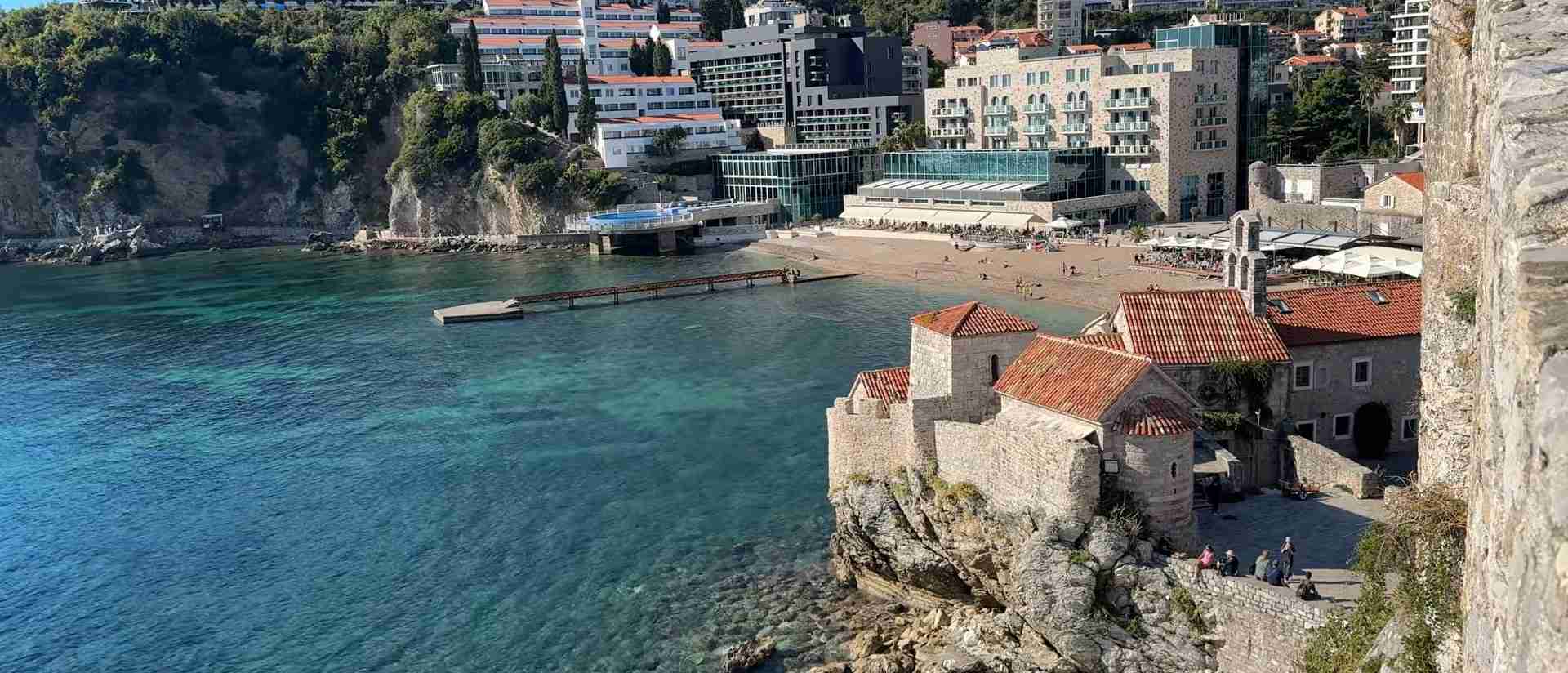
Kotor Day Trips 2026: Budva, Lovcen NP, Perast & Beyond
Montenegro’s Bay of Kotor serves as the perfect base for exploring the country’s most dramatic contrasts—from Adriatic beach towns to mountain-top mausoleums commanding views across 80% of Montenegro’s territory. Within an hour’s reach of Kotor’s medieval walls lie Venetian baroque villages, limestone peaks rising 1,750 meters above sea level, and beaches stretching along 35 kilometers of riviera coastline, each accessible through efficient bus networks, affordable organized tours, or scenic drives along serpentine mountain roads that rank among Europe’s most spectacular.
Key Takeaways About Kotor Day Trips 2026
- Budget-Friendly Perast Excursions: The closest and most affordable day trip from Kotor costs €22-30 per person including bus transport, boat to Our Lady of the Rocks island, church entry, and lunch in this UNESCO-protected baroque village just 20 minutes away.
- Budva Beach Access: Montenegro’s liveliest coastal resort sits 30-40 minutes from Kotor by bus (€3-5), offering golden sand beaches, Old Town walls, and Sveti Stefan views with full-day costs ranging €36-65 per person depending on beach amenities selected.
- Lovcen National Park Mountain Experience: The iconic Njegoš Mausoleum atop Jezerski Vrh (1,657 meters) requires climbing 461 steps but rewards with panoramic views spanning from Albania to Italy on clear days; organized tours from Kotor cost €79 per person, while independent visits cost €51-66 per person when sharing taxi expenses.
- Optimal 2026 Season: May through June and September through October deliver ideal conditions with temperatures of 18-26°C, manageable crowds, and accommodation prices 30-40% below July-August peak rates when border crossings and popular sites see significantly longer wait times.
- Transportation Infrastructure 2026: The new Kotor-Lovćen Cable Car completed in 2025 provides 11-minute aerial access to high elevations near the mausoleum, complementing traditional serpentine road access and creating easier mountain access for travelers without rental cars.
- Multi-Destination Combinations: Perast and Budva can be efficiently combined in single-day itineraries costing €31-46 per person using Montenegro’s reliable intercity bus network that connects Bay of Kotor villages every 30-60 minutes throughout the day.
People Also Ask About Kotor Day Trips 2026
What is the Best Day Trip from Kotor in 2026?
Perast and Our Lady of the Rocks represent the best overall day trip from Kotor in 2026, combining UNESCO World Heritage architecture, legendary man-made islands, and Bay of Kotor scenery in just 20 minutes travel time at costs of €22-30 per person. This baroque village maintains Venetian palaces from the 17th and 18th centuries, nine defensive towers, and distinctive Catholic churches within a car-free waterfront setting where boat taxis depart every few minutes for the iconic island church built on rocks sailors placed beginning in 1452.
The combination of proximity, affordability, cultural significance, and visual drama makes Perast ideal for first-time visitors, travelers on tight schedules, and those seeking Instagram-worthy photography without the logistics of mountain driving or beach resort navigation. The 5-10 minute boat ride to Our Lady of the Rocks costs €5-8 return, the church museum charges €3 entry, and the entire experience including lunch in waterfront restaurants occupies 3-4 hours while delivering Montenegro’s signature blend of Mediterranean beauty and Adriatic history.
How Much Do Day Trips from Kotor Cost in 2026?
Day trips from Kotor in 2026 cost €22-79 per person depending on destination and transportation method selected. Perast excursions represent the most budget-friendly option at €22-30 per person including all transport and entry fees, while Budva beach days cost €36-65 per person depending on sunbed rental and dining choices. Lovcen National Park organized tours cost €79 per person for full-day excursions with guide services, while independent visits cost €51-66 per person when sharing taxi expenses from Cetinje plus €11 in combined park and mausoleum entry fees.
Multi-destination combinations like Perast plus Budva cost €31-46 per person using public buses between locations, while boat tour packages visiting Blue Cave, submarine tunnels, and Bay of Kotor islands cost €30-45 per person for 3-4 hour group excursions. Private speedboat charters for 2-8 passengers cost €120-220 total for customized itineraries, translating to €15-110 per person depending on group size.
Can You Visit Budva and Lovcen National Park in One Day from Kotor in 2026?
Visiting both Budva and Lovcen National Park in one day from Kotor proves logistically challenging but achievable with early departure and prioritized itinerary planning in 2026. The most efficient approach departs Kotor by 7:00-8:00 AM for Lovcen National Park via organized tour or private transport, allocates 3-4 hours for the serpentine drive, mausoleum visit including 461-step climb, and lunch at mountain elevation, then continues to Budva for 2-3 hours of beach and Old Town exploration before returning to Kotor by 7:00-8:00 PM.
This combination works best with rental car providing flexibility for timing adjustments, as organized tours typically focus on either mountain or coastal destinations rather than combining both. Independent travelers should expect 10-11 hours total trip duration covering approximately 110 kilometers of driving with significant elevation changes, meaning the itinerary suits active travelers comfortable with full-day excursions rather than those seeking relaxed exploration. Alternatively, dedicating separate days to Lovcen’s mountain grandeur and Budva’s beach culture provides more satisfying experiences of each destination’s distinct character.
What Are the Best Beaches Near Kotor for Day Trips in 2026?
Budva’s beaches represent the best overall beach destination for Kotor day trips in 2026, located just 30-40 minutes away with Mogren Beach offering golden sand twin coves accessible via 10-minute coastal walk from Old Town, Jaz Beach providing 1.3-kilometer stretches hosting summer music festivals, and Slovenska Plaza delivering Miami-style sandy expanses with full beach club infrastructure. Mogren Beach charges €10-20 per sunbed depending on season and front-row positioning, while free towel space remains available for budget travelers avoiding rental fees.
Sveti Stefan’s public beaches adjacent to the fortified island resort deliver Montenegro’s most photographed coastal scenery 25-40 minutes from Kotor by bus (€1.50-2.50), though the luxury resort island itself restricts access to hotel guests. For calmer waters and fewer crowds, Žanjice Beach on Luštica Peninsula requires boat access from Kotor (€45 for 4-hour tours including swimming stops) but rewards with crystal-clear swimming and pebble beaches backed by pine forests. Beach selection should account for crowd tolerance, with July-August bringing overwhelming tourist density while May-June and September-October offer pleasant swimming temperatures of 20-24°C with significantly more personal space.
Extended multi-day tours – 5+ days
Featured Kotor Multi-Day Tour Packages
2 days
From Tirana, 2 Days: Budva – Kotor
- ✓ Comprehensive Kotor tour
- ✓ Expert local guides included
- ✓ All accommodation arranged
- ✓ Transportation provided
1 days
From Tirana/Durres/Golem -> Montenegro: Budva & Kotor day tour
- ✓ Comprehensive Kotor tour
- ✓ Expert local guides included
- ✓ All accommodation arranged
- ✓ Transportation provided
2 days
Tour of Montenegro and Kosovo in 2 days from Tirana or Durres
- ✓ Comprehensive Kotor tour
- ✓ Expert local guides included
- ✓ All accommodation arranged
- ✓ Transportation provided
3 days
All seasons 3 days micro tour to Montenegro and Bosnia from Dubrovnik. Visit Venetians towns, monasteries, taste Herzegovina wines. Gorgeous scenery!
- ✓ Comprehensive Kotor tour
- ✓ Expert local guides included
- ✓ All accommodation arranged
- ✓ Transportation provided
Multi-day tour packages powered by TourRadar. Prices and availability subject to change.
Introduction to Kotor Day Trip Planning 2026
Montenegro concentrates extraordinary geographic and cultural diversity within remarkably compact territory, and nowhere demonstrates this concentration more dramatically than the day trip radius surrounding Kotor. From the medieval Old Town’s sea-level fortifications, travelers in 2026 can reach baroque villages preserving 17th-century Venetian grandeur in 20 minutes, Adriatic beaches rivaling any Mediterranean coastline in 40 minutes, and mountain peaks offering 360-degree panoramas across four countries in 90 minutes—all using affordable public transportation, organized tours with English-speaking guides, or rental cars navigating some of Europe’s most scenic coastal and mountain roads.
The strategic position of Kotor at the deepest point of Europe’s southernmost fjord creates natural access to Montenegro’s primary tourism regions. Northwest along the bay shoreline lie Perast’s baroque palaces and the legendary man-made island church of Our Lady of the Rocks, both UNESCO World Heritage components requiring minimal travel time and budget commitment. Southwest toward open Adriatic waters, Budva’s riviera extends golden beaches, medieval walls, and summer nightlife culture across 35 kilometers of developed coastline where hotel density rivals major Mediterranean resorts. Northeast into the Dinaric Alps, Lovcen National Park rises from sea level to 1,749-meter peaks within 25 dramatic switchbacks, placing the Njegoš Mausoleum—Montenegro’s most important cultural monument—within 90-minute reach of Kotor’s waterfront.
Planning optimal day trips from Kotor in 2026 requires understanding the distinct character of each destination, the transportation infrastructure connecting them, the seasonal variations affecting crowd levels and pricing, and the time allocation appropriate to each experience. Perast delivers maximum cultural and visual impact in 3-4 hours, making it ideal for half-day excursions or multi-destination combinations. Budva rewards full-day commitment allowing beach relaxation, Old Town exploration, and evening dining experiences to unfold naturally without schedule pressure. Lovcen National Park demands either organized tour participation or confident mountain driving capability, with the 461 steps to the mausoleum summit requiring physical fitness but delivering Montenegro’s signature panoramic views.
The 2026 travel season introduces important infrastructure improvements affecting day trip logistics. The Kotor-Lovćen Cable Car completed in late 2025 provides 11-minute aerial ascent from Dub station near Kotor to Kuk plateau on Lovcen slopes, bypassing the serpentine road’s 25 hairpin turns and creating easier mountain access for travelers without rental cars or tolerance for dramatic driving. However, the cable car’s upper station still requires additional transport to reach the mausoleum summit, meaning organized tours or taxi arrangements remain necessary for complete Lovcen experiences. Bus frequencies along the coastal corridor maintain reliable 30-60 minute intervals between Kotor, Perast, and Budva throughout peak season, with reduced winter schedules requiring advance research for travelers visiting October through March.
Budget considerations for 2026 day trips reflect Montenegro’s positioning as moderately priced compared to neighboring Croatia while offering superior value against Western European beach destinations. Simple Perast excursions cost €22-30 per person, Budva beach days range €36-65 per person depending on amenity choices, and Lovcen tours cost €79 per person for organized experiences or €51-66 per person for independent visits sharing transport costs. These figures assume standard dining at local restaurants rather than tourist-focused establishments, public transportation or shared taxis rather than private transfers, and mid-range activity selections avoiding both extreme budget accommodation and luxury experiences.
This guide provides comprehensive 2026 planning information for Kotor’s most rewarding day trip destinations, including detailed transportation options with current pricing, destination-specific recommendations for optimal experiences, seasonal timing strategies maximizing weather and crowd conditions, and realistic budget breakdowns for different traveler priorities. Whether seeking baroque architecture immersion, beach resort energy, mountain summit grandeur, or efficient combinations visiting multiple destinations, Kotor’s position at Montenegro’s geographic and cultural crossroads delivers exceptional day trip variety rarely matched by single-city bases anywhere in Mediterranean Europe.
Perast and Our Lady of the Rocks Day Trip 2026
Perast stands as the Bay of Kotor’s best-preserved baroque village, occupying a narrow waterfront strip where 17th and 18th-century Venetian palaces face the legendary man-made island of Our Lady of the Rocks just 300 meters offshore. This UNESCO World Heritage component requires just 20 minutes travel from Kotor by bus (€2 each way), making it the most accessible and budget-friendly day trip option for 2026 visitors while delivering architectural grandeur, maritime legend, and photographic opportunities rivaling any Adriatic destination. The entire village spans only 500 meters of car-free waterfront promenade, meaning complete exploration including island boat trip occupies 3-4 hours—ideal for morning or afternoon half-day excursions or as the first destination in multi-location itineraries.
Transportation to Perast from Kotor 2026
Public buses depart Kotor’s main bus station for Perast every 30-60 minutes throughout the day during peak season (May through September), with reduced frequency during winter months requiring schedule verification at the station or via the Montenegro bus system. The 20-minute journey costs €2 per person each way, with buses continuing past Perast toward Risan and Herceg Novi for travelers planning extended coastal exploration. Bus stops in Perast sit at either end of the village—the Konoba Stari Mlini stop serves the southern approach while the main Perast stop near the museum marks the northern boundary, with both locations providing immediate waterfront access.
Taxis from Kotor to Perast cost €10-15 for the direct 12-kilometer journey, offering flexibility for customized departure times and luggage accommodation unavailable on public buses. For groups of 3-4 travelers, taxi economics approach bus pricing per person while eliminating schedule constraints. Some Kotor hotels arrange private transfers for €20-30 per vehicle, particularly valuable for early morning departures accessing Perast before cruise ship day-trippers arrive mid-morning. The coastal road between Kotor and Perast ranks among Montenegro’s most scenic drives, hugging bay shoreline with mountain backdrops throughout the 15-20 minute journey regardless of transportation method selected.
Boat tours from Kotor incorporating Perast visits typically cost €30-45 per person for 2-3 hour excursions that include Our Lady of the Rocks island stops, speedboat travel along the bay, and opportunities for swimming in designated areas. These organized options suit travelers prioritizing water-based perspectives of the bay’s dramatic topography and UNESCO sites, though they allocate limited time for actual village exploration compared to bus-based visits allowing flexible pacing.
Perast Village Exploration
Perast’s compact waterfront preserves nine defensive towers, baroque palaces from wealthy maritime families, and distinctive Catholic churches within 500 meters of pedestrian promenade—all free to explore without entry fees. The village achieved prosperity during Venetian rule (1420-1797) when Perast captains commanded vessels throughout the Adriatic, with architectural grandeur reflecting this maritime wealth through three-story stone palaces featuring ornate balconies, Venetian Gothic windows, and fortress-like ground floors. The Perast Museum occupies Bujović Palace and charges €5 entry for displays covering maritime history, traditional costumes, and the region’s role in Adriatic naval conflicts, though many visitors find exterior architecture appreciation sufficient without museum admission.
St. Nicholas Church’s 55-meter bell tower dominates Perast’s skyline and offers panoramic bay views from its summit after climbing narrow stone stairs—a mini-preview of Lovcen’s mausoleum experience without the mountain journey. The church interior features baroque altars and religious artwork typical of wealthy 17th-century Catholic communities along the Dalmatian coast. Multiple smaller churches including Our Lady of the Rosary and St. Mark’s Church sit within easy walking distance, each displaying architectural details worth brief inspection for travelers interested in ecclesiastical history.
Waterfront restaurants occupy ground floors of historic palaces, with menus emphasizing fresh seafood, risottos, and grilled fish caught daily in the bay. Lunch costs €15-25 per person for main courses and drinks at establishments like Restaurant Conte or Stari Mlini, with premium waterfront tables commanding slight surcharges over interior seating. The village’s boutique atmosphere creates higher pricing than Kotor’s tourist-focused restaurants but delivers superior food quality, ambiance, and service standards befitting Perast’s UNESCO heritage protection.
Our Lady of the Rocks Island Experience
Our Lady of the Rocks floats 300 meters offshore as one of Montenegro’s most photographed sites and arguably the Adriatic’s most unique man-made creation. According to legend documented since 1452, two sailors from Perast discovered an icon of the Virgin Mary on a small rock in the bay, and local residents began dropping stones onto the reef after each successful voyage—a tradition continuing over 500 years that gradually created an island large enough to support first a chapel, then the current baroque church completed by 1630. The annual Fašinada festival on July 22 perpetuates this tradition, with decorated boats carrying rocks to throw around the island’s perimeter in ceremonies drawing visitors from across Montenegro and beyond.
Boat taxis depart continuously from Perast’s waterfront charging €5-8 per person for return trips, with the 5-minute journey providing water-level perspectives of the island’s fortress-like foundations and the neighboring natural island of Sveti Đorđe (St. George) housing a Benedictine monastery closed to visitors. Boat captains typically allow 30-40 minutes island time before return pickup, adequate for church interior inspection, museum visit, and photography from the island’s narrow perimeter path. Some travelers negotiate longer stays for €10 return fares, useful for those seeking quieter photography opportunities after group departures.
The church interior displays 68 paintings by baroque master Tripo Kokolja covering walls and ceilings with maritime scenes, religious iconography, and historical events from Perast’s golden age. The attached museum charges €3 entry and exhibits silver votive tablets, embroidered textiles, and the famous tapestry woven by Jacinta Kunić using gold thread, silver thread, and her own hair over 25 years—a testament to devotional commitment that fascinates visitors regardless of religious background. The museum’s collection documents Perast’s maritime power and the cultural traditions making Our Lady of the Rocks central to local identity for over five centuries.
Dress codes require modest attire covering shoulders and knees as appropriate for Catholic church visits, with enforcement stricter during religious services and festivals. The small island can accommodate only limited visitors simultaneously, meaning cruise ship arrival times between 10:00 AM and 2:00 PM bring crowd congestion making photography and peaceful contemplation difficult. Early morning visits (8:00-9:30 AM) or late afternoon arrivals (after 4:00 PM) provide superior experiences with fewer tourists and softer light for photography.
Perast Day Trip Budget Breakdown 2026
A complete Perast and Our Lady of the Rocks day trip from Kotor costs €22-30 per person using public transportation and mid-range dining selections. This budget includes round-trip bus fare Kotor-Perast (€4 total), boat to Our Lady of the Rocks (€5-8 return), church museum entry (€3), and lunch at waterfront restaurant (€15-25). Optional additions include Perast Museum entry (€5), coffee or drinks at baroque palace cafes (€3-5), and ice cream or pastries (€3-5). Travelers comfortable with packed lunches rather than restaurant dining reduce costs to €17-21 per person, while those adding museum entry and premium dining approach €35-40 per person for comprehensive experiences.
Photography enthusiasts should budget additional time rather than additional expense—Perast’s waterfront promenade, island views, and baroque architecture all photograph freely without access restrictions. The village’s compact size and flat terrain make it accessible for travelers with mobility limitations, unlike Kotor’s city walls or Lovcen’s mountain stairs. Families with children find Perast manageable for 2-3 hour visits including boat rides that occupy younger travelers more effectively than pure architectural exploration, though the island’s small size and water proximity require supervision for safety.
Budva Beach and Riviera Day Trip 2026
Budva serves as Montenegro’s primary beach resort, combining medieval Old Town walls with 35 kilometers of developed Adriatic coastline where golden sand beaches, summer music festivals, and nightclub culture attract younger Europeans seeking affordable Mediterranean holidays. Located 30-40 minutes from Kotor by bus (€3-5), Budva delivers dramatically different energy from the Bay of Kotor’s baroque villages—here, beach clubs pump electronic music across sunbed rows, hotel towers line the coastline, and summer crowds rival any major Mediterranean resort. Day trips from Kotor in 2026 suit travelers prioritizing beach relaxation, swimming in turquoise waters, and contemporary resort amenities over UNESCO heritage sites and mountain scenery.
Transportation to Budva from Kotor 2026
Buses depart Kotor for Budva every 30-60 minutes during peak season, with the 25-kilometer journey taking 30-40 minutes depending on traffic and stops along the coastal route. Tickets cost €3-5 per person each way and can be purchased at Kotor’s main bus station or directly from drivers, though station purchase guarantees seating during July-August peak times when buses sometimes reach capacity. The coastal road between Kotor and Budva passes through tunnels carved through mountain cliffs, with occasional bay views and beach glimpses previewing the destination’s seaside character.
Taxis charge €25-35 for direct Kotor-Budva transfers, with negotiation sometimes securing €20-25 rates for off-peak travel or return bookings. For groups of 4 travelers, taxi economics approach bus pricing while providing door-to-door convenience and luggage space unavailable on crowded public buses during summer months. Hotel shuttles from Kotor properties to Budva beaches operate on set schedules during peak season for €10-15 per person, offering middle-ground comfort between public buses and private taxis.
Rental cars provide maximum flexibility for exploring multiple beaches along the Budva Riviera, visiting Sveti Stefan, and extending trips to Petrovac or Bar further south. Daily rental rates start at €25-50 depending on vehicle class and advance booking, with parking in Budva Old Town challenging but peripheral parking lots charging €1-2 per hour providing reasonable access. The coastal drive from Kotor to Budva ranks among Montenegro’s most scenic, particularly the stretch near Tivat Airport where the bay opens toward the Adriatic Sea.
Budva Beach Selection and Costs 2026
Mogren Beach represents Budva’s most beautiful natural setting, occupying twin coves connected by tunnel through rock just 10 minutes walk west from Old Town along a scenic coastal path. The golden sand, turquoise water, and dramatic cliff backdrops create postcard-perfect scenes, though summer crowds pack the beach between 11:00 AM and 5:00 PM. Sunbed and parasol sets cost €10-20 per person depending on season and front-row positioning near the water, with free towel space available for budget travelers comfortable with basic beach experiences. Small beach bars sell drinks, snacks, and ice cream at inflated resort prices (€4-7 for soft drinks, €8-12 for cocktails), making packed supplies a money-saving option.
Slovenska Plaza stretches 1,600 meters as Budva’s largest and most developed beach, often compared to Miami Beach for its dense sunbed rows, palm tree landscaping, and continuous beach club atmosphere. The soft sand and gentle entry make it family-friendly, while the sidewalk lined with cafes, bars, restaurants, and vendors creates all-day entertainment infrastructure. Beach club sections charge €15-25 per sunbed with included amenities like showers, changing rooms, and sometimes food/drink credits, while public beach areas remain free with personal towel or mat. The beach gets extremely crowded during July-August peak season, with arrival before 10:00 AM essential for prime positioning.
Jaz Beach sits 3 kilometers west of Budva center and hosts major summer music festivals, with its 1.3-kilometer mixed sand and pebble expanse offering more space and slightly fewer crowds than central beaches. Local buses or taxis (€3-5) connect Budva center to Jaz Beach throughout the day, with the beach itself maintaining free-access policies while individual operators rent sunbeds for €8-15 per set. Music festivals here attract international DJs and thousands of attendees during July-August, meaning festival dates should be researched by travelers seeking quiet beach days rather than party atmospheres.
Sveti Stefan’s public beaches flank the iconic fortified island 5 kilometers southeast of Budva, accessible via local bus (€1.50-2.50) or short taxi ride (€8-12). The beaches themselves are free to access, though sunbed rentals cost €15-25 reflecting the prestige location. Photography from public beaches captures Montenegro’s most famous postcard image—the 15th-century fishing village turned Aman luxury resort connected to mainland by narrow causeway. The resort island itself restricts access to hotel guests, but the adjacent beaches provide swimming and sunbathing with direct views of this architectural jewel.
Budva Old Town and Additional Activities
Budva Old Town occupies a small peninsula connected to mainland by single entrance gate, with medieval walls, narrow stone streets, and small squares containing churches, museums, and cafes. The compact layout allows complete exploration in 45-60 minutes, with highlights including the Citadel fortress offering sea views from its terrace (€3.50 entry), St. John’s Church, and the Dancing Girl statue that’s become Budva’s unofficial symbol. Unlike Kotor’s extensive fortifications and steep climbs, Budva’s Old Town remains flat and easily navigable for all fitness levels.
The Budva Marina hosts expensive yachts and waterfront restaurants where people-watching entertainment costs nothing beyond coffee or drink purchases. Porto Montenegro—the luxury yacht marina and residential complex developed in former naval shipyard at nearby Tivat—sits 20 minutes from Budva by bus (€2-3) for travelers interested in superyacht culture and upscale shopping environments. Water sports operators throughout Budva beaches offer parasailing (€40-60), jet ski rentals (€50-80 per 30 minutes), and banana boat rides (€15-25), with haggling often securing 10-20% discounts on posted prices.
Budva’s summer nightlife centers on beach clubs transitioning to nightclubs after sunset, with Top Hill perched on hills above town ranking among Balkans’ largest clubs. Cover charges range €10-30 depending on DJ lineups and events, with drinks priced comparably to Western European clubs (€8-15 for cocktails). Day trippers from Kotor rarely extend visits to experience nightlife unless planning overnight stays in Budva, as last buses to Kotor depart around 9:00-10:00 PM.
Budva Day Trip Budget Breakdown 2026
A full beach day in Budva from Kotor costs €36-65 per person depending on beach amenity selections and dining choices. Mid-range budgets include round-trip bus (€6-10), sunbed rental (€10-20), lunch at beachfront restaurant (€15-25), drinks and snacks (€5-10), and return transport (€3-5). Budget travelers avoiding sunbed rentals and bringing packed lunches reduce costs to €25-35 per person, while those adding water sports, Old Town Citadel entry, premium dining, and beach club experiences approach €80-100 per person for comprehensive Budva days.
Optimal timing for Budva day trips balances weather and crowds. May-June and September offer swimming-friendly temperatures (20-24°C water temperature, 24-28°C air temperature) with significantly fewer tourists than July-August peak season when beaches become uncomfortably crowded and accommodation prices double. Weekday visits encounter lighter crowds than weekends when domestic tourists from Podgorica add to international visitor numbers. Morning arrivals secure better beach positioning, while afternoon departures around 4:00-5:00 PM allow comfortable return to Kotor before evening restaurant hours.
Lovcen National Park and Njegoš Mausoleum Day Trip 2026
Lovcen National Park rises directly behind Kotor to altitudes reaching 1,749 meters at Štirovnik peak, with the Njegoš Mausoleum positioned at 1,657 meters on Jezerski Vrh commanding views across approximately 80% of Montenegro’s territory—from the Adriatic Sea to Skadar Lake, Albanian Alps to Croatian borders. This mountain gave Montenegro its name (Crna Gora translates as “Black Mountain” for the dark forests covering Lovcen slopes), and the mausoleum honoring Petar II Petrović-Njegoš—Montenegro’s greatest poet-philosopher-ruler—stands as the country’s most important cultural monument. Day trips from Kotor in 2026 reach the summit via either the famous serpentine road with 25 switchbacks offering spectacular views, organized tours with guides explaining historical significance, or the new Kotor-Lovćen Cable Car providing 11-minute aerial ascent to high elevations.
Transportation to Lovcen National Park 2026
Organized tours from Kotor represent the simplest and most comprehensive approach to Lovcen National Park visits, with full-day excursions costing €79 per person including transportation, English-speaking guide, park and mausoleum entry fees, and sometimes stops at Njeguši village for traditional prosciutto and cheese tastings. These 10-11 hour tours typically depart Kotor between 8:00-9:00 AM and return by 6:00-7:00 PM, with group sizes ranging 15-25 participants traveling in air-conditioned buses. The guided component adds substantial value by explaining Njegoš’s historical significance, Montenegro’s struggle for independence, and the mausoleum’s construction on this remote peak—context unavailable to independent visitors lacking advance research.
Independent travelers with rental cars access Lovcen via the P1 Panoramic Road ascending from Kotor through 25 dramatic switchbacks, with the 21-kilometer journey taking 45-60 minutes depending on driving comfort with hairpin turns and elevation changes. The serpentine road itself ranks among Europe’s most spectacular drives, with each switchback offering different perspectives of the Bay of Kotor growing smaller below while mountain peaks emerge at eye level. Parking near the mausoleum remains limited to small lots filling quickly during peak hours, meaning arrival before 10:00 AM or after 3:00 PM improves parking availability.
The Kotor-Lovćen Cable Car inaugurated in late 2025 provides aerial alternative to road access, with gondolas departing Dub station (off the Kotor-Budva road) reaching Kuk plateau in 11 minutes. However, the cable car’s upper station sits approximately 5 kilometers from the mausoleum, requiring additional taxi arrangements (€15-25 per vehicle) or organized shuttle services to complete the journey. This combination approach suits travelers uncomfortable with serpentine driving but willing to arrange multiple transport segments, though organized tours often provide more streamlined experiences at comparable total costs.
Taxis from Kotor to Lovcen National Park cost €60-80 round-trip with waiting time included, translating to €30-40 per person when two travelers share costs. This option provides flexibility for customized schedules while avoiding group tour constraints or rental car commitments. Cetinje—Montenegro’s former capital located between Kotor and Lovcen—serves as alternative starting point with taxis charging €30-40 one-way (€15-20 per person when shared) for the shorter 15-kilometer journey to the park.
Lovcen National Park Entry and Costs 2026
Lovcen National Park charges €3 per person entry fee collected at the main gate approximately 3 kilometers before the mausoleum. This fee grants access to hiking trails, picnic areas at Ivanova Korita, and the general park infrastructure, with children under 7 entering free. The park encompasses 6,220 hectares of karst landscape combining Mediterranean and alpine vegetation zones, limestone formations, sinkholes, and over 1,300 plant species including many endemic to the Dinaric Alps. Most day-trippers focus exclusively on the mausoleum rather than exploring hiking trails, though the park offers excellent trekking opportunities for travelers allocating more time.
The Njegoš Mausoleum itself charges €8 additional entry beyond the park fee, bringing total costs to €11 per adult for complete access. Students with valid identification pay €4 for mausoleum entry, while children under 7 remain free. These modest fees support monument maintenance and national park operations. The mausoleum operates daily throughout the year, though winter months (November through March) bring shorter hours and potential closures during severe weather when snow and ice make the access road dangerous.
Climbing to Njegoš Mausoleum
Reaching the mausoleum summit requires climbing 461 stone steps through a tunnel carved into the mountain, emerging at the entrance where two massive granite caryatids—female figures in traditional Montenegrin dress—guard the passage. The climb takes 10-15 minutes for moderately fit visitors, with handrails and rest platforms providing support for those needing breaks. The tunnel design protects climbers from mountain winds while creating dramatic sensory transition from bright daylight to marble-lined dim passage before emerging at the peak’s crown.
The mausoleum interior displays a 28-ton sculpture of Njegoš seated in philosophical contemplation, positioned beneath a stunning vault covered with over 200,000 gold-plated tiles creating celestial shimmer reflecting Italian craftsmanship and Yugoslavia’s investment in this monument completed in 1974. The chamber’s solemn atmosphere encourages quiet reflection, with Montenegrin guides explaining Njegoš’s significance to their national identity and the mausoleum’s construction requiring years of effort to transport materials to this remote elevation.
Behind the mausoleum structure, a circular observation platform provides 360-degree panoramas stretching from the Adriatic coast to Albanian mountains, Croatian islands to Skadar Lake. On clear days, visibility extends to Italy across the Adriatic Sea, though morning hours offer best conditions before afternoon haze reduces distant definition. The wind at 1,657 meters elevation blows strong even during summer, making windbreakers or light jackets essential regardless of coastal temperatures. Photographers should time visits for morning light (9:00-11:00 AM) or late afternoon (4:00-6:00 PM) when softer illumination enhances mountain textures and cloud formations.
Njeguši Village and Additional Stops
Njeguši village sits halfway between Kotor and the mausoleum at 900 meters elevation, famous throughout Montenegro for producing the country’s finest prosciutto (pršut) and cheese. This ancestral home of the Petrović-Njegoš dynasty that ruled Montenegro from 1696 to 1918 maintains traditional stone houses and smokeries where families cure meat using centuries-old methods. Restaurant Kod Pera Na Bukovicu and similar establishments offer tasting platters (€12-18) featuring paper-thin sliced prosciutto, homemade cheese, olive oil, and bread—essential stops on organized tours and recommended detours for independent travelers.
Petar II Petrović-Njegoš’s birthplace operates as small museum (€2 entry) showing how 19th-century wealthy Montenegrin families lived, though many visitors find exterior village exploration and prosciutto tasting more rewarding than museum interior. The village’s mountain setting provides temperature relief 10-15°C cooler than coastal areas, making it pleasant summer stop even during peak heat.
Ivanova Korita—Lovcen National Park’s central area with visitor center, restaurants, picnic facilities, and hiking trail access—sits just below the mausoleum road and offers services including bicycle rentals (€2 per hour, €8 per day), treetop ropes course, and trail maps for visitors planning hiking activities. Most mausoleum-focused day-trippers bypass these facilities entirely, but travelers with full days available find Ivanova Korita pleasant for extended mountain exploration beyond the signature monument visit.
Lovcen Day Trip Budget Breakdown 2026
Lovcen National Park day trips from Kotor cost €79 per person for organized tours providing most comprehensive and stress-free experiences, while independent visits cost €51-66 per person when sharing taxi expenses. The independent budget includes shared round-trip taxi Cetinje-Lovcen (€30-40 per person for two sharing), park entry (€3), mausoleum entry (€8), and lunch at mountain restaurant or Njeguši village (€10-15). Travelers driving rental cars eliminate taxi costs but add fuel expenses (€8-12 for round-trip) and parking fees (€1-2), bringing total costs to similar ranges while providing maximum schedule flexibility.
The serpentine road demands confident driving skills and comfort with dramatic elevation changes, hairpin turns, and limited guardrails along sections where road edges drop hundreds of meters to valleys below. Many travelers find organized tours worthwhile purely to avoid this driving challenge while enjoying guided historical commentary. The cable car option requires additional research about shuttle services connecting upper station to mausoleum, with total costs potentially exceeding tour prices once all transport segments are accounted for.
Optimal timing for Lovcen visits favors morning departures capturing clearest visibility before afternoon haze, with May-June and September-October offering moderate temperatures (12-18°C at elevation) and fewer tour groups than July-August peak season. Winter visits require verifying road conditions and operating hours, as snow closes sections and reduces mausoleum hours during December-February. Allow minimum 4-5 hours for complete Lovcen experiences including drive time, mausoleum visit, and lunch, with 6-7 hours more comfortable for travelers wanting photography time and village exploration.
Combining Multiple Day Trips from Kotor 2026
Montenegro’s compact geography enables efficient multi-destination day trips from Kotor, with Perast and Budva particularly well-suited for combination itineraries using public bus connections. A single day visiting both destinations costs €31-46 per person including all transportation between locations, Our Lady of the Rocks boat and entry, and meals at both stops. The itinerary works best departing Kotor early (8:00-9:00 AM) for Perast, allocating 2-3 hours including island visit and village exploration, continuing by bus to Budva for 4-5 hours of beach time and Old Town walk, then returning to Kotor by early evening (6:00-7:00 PM).
Buses connect Perast to Budva via Kotor, requiring transfer at Kotor bus station and 45-60 minutes total journey time. Direct Perast-Budva routing without Kotor return saves minimal time while complicating luggage storage and schedule coordination. The combination works efficiently because Perast’s 3-4 hour ideal visit duration leaves afternoon hours perfectly suited to Budva beach relaxation, with morning-in-baroque-village / afternoon-at-beach pacing providing pleasing variety.
Combining Lovcen National Park with other destinations proves more challenging due to mountain location, driving requirements, and time commitments. Some organized tours include both Lovcen and Budva stops but allocate only 1-2 hours at beaches—insufficient for meaningful beach experiences and better served by dedicated coastal days. Independent travelers with rental cars can theoretically visit Lovcen morning and Budva afternoon, but the 110-kilometer circuit with significant elevation changes creates rushed experiences lacking the relaxed appreciation each destination deserves.
Multi-day stays in Kotor allow dedicating separate days to each major destination: Perast on arrival day for gentle introduction to Bay of Kotor baroque heritage, Budva the following day for beach relaxation, Lovcen on the third day for mountain grandeur. This pacing provides optimal experiences at each location while maintaining energy for evening exploration of Kotor itself—the fortifications, waterfront restaurants, and Old Town squares that many travelers overlook when treating Kotor purely as day trip base.
Additional Day Trip Options from Kotor 2026
Blue Cave and Bay Boat Tours
The Blue Cave on Luštica Peninsula ranks among Montenegro’s most photogenic natural attractions, accessible only by boat from Kotor or other bay ports. Group speedboat tours cost €30-45 per person for 3-4 hour excursions typically including Blue Cave swimming stops, submarine tunnel viewing, Mamula Island fortress passage, and Our Lady of the Rocks visits. The Blue Cave’s electric blue water color results from light refraction through submerged entrance hitting white sand bottom, creating otherworldly swimming environment that photographs spectacularly but requires sunny conditions for full effect.
Private boat charters for 2-8 passengers cost €120-220 total (€15-110 per person depending on group size) and allow customized itineraries exploring secluded coves, swimming spots, and bay attractions at preferred pacing. These options suit families, friend groups, or travelers seeking photography opportunities without tour-group schedules. Late afternoon departures (3:00-4:00 PM) provide softer light for cave photography and calmer waters as afternoon winds subside.
Herceg Novi and Bay of Kotor Northern Coast
Herceg Novi occupies the bay’s northwestern entrance, featuring three hilltop fortresses (Forte Mare, Kanli Kula, Španjola), botanical gardens, and seafront promenades. Buses from Kotor reach Herceg Novi in 45-60 minutes (€5-7), with the town’s hillside setting creating steep streets and stairs less accessible than Perast’s flat waterfront. The town attracts fewer international tourists than Kotor or Budva, providing more authentic Montenegrin atmosphere and lower prices for restaurants, cafes, and accommodations. Day trip combinations visiting both Perast and Herceg Novi work well for travelers prioritizing bay diversity over beach time.
Cetinje Historical Capital
Cetinje served as Montenegro’s capital under the Petrović-Njegoš dynasty and preserves royal palaces, museums, embassies, and monasteries reflecting this historical status. Located inland between Kotor and Lovcen, Cetinje sees fewer international visitors despite exceptional museums including King Nikola’s Museum (€5), National Museum of Montenegro (€5), and Njegoš Museum Biljarda (€4). Buses from Kotor cost €5 with 45-minute journey time. Day trips combining Cetinje museums with Lovcen mausoleum visits create comprehensive cultural experiences for history enthusiasts, with some organized tours including both stops.
Durmitor National Park and Tara Canyon
Durmitor National Park in northern Montenegro encompasses the deepest canyon in Europe (Tara Canyon, 1,300 meters at maximum depth), Đurđevića Tara Bridge suspended 172 meters above the river, Black Lake surrounded by 2,000+ meter peaks, and Ostrog Monastery built into sheer cliff face. These destinations sit 200+ kilometers from Kotor requiring 3-4 hours each way, meaning 12-14 hour tour commitments with prices around €90-100 per person. The dramatic mountain scenery contrasts completely with coastal destinations, but the distance makes these more appropriate for 2-3 night Kotor stays rather than single-day trip bases.
Seasonal Considerations for Kotor Day Trips 2026
May through June delivers ideal conditions for Kotor day trip planning in 2026, combining warm temperatures (22-28°C), minimal rainfall (30-50mm monthly), comfortable water temperatures (19-22°C), and manageable tourist crowds before July-August peak season overwhelm popular sites. Accommodation prices during these shoulder months run 30-40% below July-August rates, buses maintain regular schedules without overwhelming passenger loads, and beaches at Budva offer personal space unavailable during summer crush. Perast and Our Lady of the Rocks photograph beautifully in May-June light without cruise ship day-tripper crowds that pack the island 10:00 AM-2:00 PM during peak season.
July-August peak season brings several planning challenges: temperatures exceeding 30°C make Lovcen mountain coolness appealing but render beach hours between 11:00 AM-4:00 PM uncomfortable, buses to Budva often run full requiring advance station purchases to guarantee seating, accommodation prices double or triple compared to shoulder seasons, and popular sites like Our Lady of the Rocks become congested with visitors making peaceful contemplation difficult. However, peak season also brings longest daylight hours (sunrise 5:30 AM, sunset 8:30 PM), warmest water temperatures (24-26°C ideal for swimming), most frequent bus schedules, and guaranteed operating hours for all attractions and restaurants.
September through October extends ideal travel conditions from spring shoulder season, with September maintaining 24-26°C temperatures and 22-24°C water temperatures fully suitable for beach days while tourist numbers drop sharply after mid-September when European school terms resume. October temperatures cool to 18-22°C—pleasant for Lovcen hiking and Perast walking but marginal for extended beach time. These autumn months provide excellent photography light, harvest-season food experiences, and significantly discounted accommodation while maintaining full service availability unlike winter months when many facilities close.
November through March winter season sees many tourism facilities reduce hours or close completely, with Budva beach clubs shuttered, some Perast restaurants closed, and Lovcen road potentially impassable during snow. However, Kotor itself maintains year-round appeal for travelers seeking off-season solitude, dramatic winter light, and rock-bottom accommodation prices (€20-30 for rooms costing €100+ in July). Winter day trips focus on Perast architecture (beautiful under moody winter skies), Cetinje museums (unaffected by season), and cultural experiences rather than beach or mountain activities.
Practical Planning Tips for Kotor Day Trips 2026
Currency and Payment Methods
Montenegro adopted the euro despite not being European Union member, making transactions straightforward for travelers familiar with eurozone countries. ATMs throughout Kotor dispense euros without difficulty, though some machines charge €3-5 withdrawal fees—research your home bank’s international fee structures before relying on ATM access. Credit cards see widespread acceptance at organized tour companies, hotels, and established restaurants, but bus tickets, boat taxis to Our Lady of the Rocks, beach sunbed rentals, and national park entry fees typically require cash euros. Carry €50-100 cash per person per day for smooth day trip transactions.
Language and Communication
Montenegrin serves as official language, though locals speak Serbian, Bosnian, and Croatian interchangeably as these languages remain mutually intelligible. English sees widespread use in tourism sector, with bus station staff, tour operators, restaurant servers, and younger generation speaking sufficient English for travel purposes. Basic politeness phrases—”dobar dan” (good day), “hvala” (thank you), “molim” (please)—earn appreciation though aren’t necessary for successful interactions. Restaurant menus often include English translations in tourist areas, while smaller villages like Njeguši may require pointing and gestures for ordering traditional foods.
Safety and Security
Montenegro maintains excellent safety standards for travelers, with petty crime rates low compared to major Mediterranean destinations and violent crime virtually absent from tourism areas. Normal urban precautions—securing valuables, watching bags on crowded buses, avoiding deserted areas at night—provide adequate protection. The primary safety concerns involve traffic when crossing streets (drivers can be aggressive), hiking trails at Lovcen during wet conditions when rocks become slippery, and swimming at unguarded beaches where currents occasionally create dangerous conditions. Solo travelers including women report comfortable experiences throughout Montenegro with harassment rates below most European destinations.
Mobile Connectivity and Internet Access
Montenegrin mobile networks provide reliable coverage throughout Bay of Kotor coastal areas, Budva, and main roads to Lovcen National Park, though mountain valleys and remote hiking trails may lose signal. EU residents’ mobile plans often include Montenegro in roaming agreements, while others should research local SIM card options—m:tel tourist SIM cards cost €15 for 500GB data valid throughout Montenegro. WiFi availability varies by establishment, with most hotels, restaurants, and cafes offering free access though connection speeds sometimes disappoint. Navigation apps like Google Maps function reliably for walking directions in towns and driving directions between destinations, though downloading offline maps provides backup during signal loss.
Photography Considerations
Kotor day trip destinations offer exceptional photography opportunities ranging from baroque architecture to mountain vistas to beach scenes, with several specific recommendations enhancing results. Morning light (8:00-10:00 AM) provides soft illumination ideal for Perast architecture and Our Lady of the Rocks, while afternoon light (4:00-6:00 PM) works better for Lovcen panoramas and sunset beach photography at Budva. The serpentine road to Lovcen deserves photographic attention independent of the mausoleum, with each switchback offering different perspectives worth brief stops. Drone photography faces restrictions at many sites—verify regulations before flying, particularly near Orthodox churches and military installations where drone use is prohibited.
Frequently Asked Questions About Kotor Day Trips 2026
Do I need a rental car for Kotor day trips in 2026?
Rental cars provide maximum flexibility but aren’t necessary for excellent Kotor day trip experiences in 2026. Perast and Budva both connect to Kotor via frequent, affordable bus service (€2-5 per trip) running every 30-60 minutes during peak season, while organized tours to Lovcen National Park eliminate driving requirements for €79 per person including all transportation and guide services. The primary advantage of rental cars involves combining multiple destinations in single days, stopping at scenic viewpoints along routes, and accessing destinations like Njeguši village or remote beaches less convenient via public transport. However, rental cars also require navigating challenging mountain roads to Lovcen, finding parking in crowded areas during summer, and paying €25-50 daily rental fees plus fuel costs.
Which Kotor day trip is best for families with young children in 2026?
Perast and Our Lady of the Rocks represents the most family-friendly Kotor day trip option for 2026, combining short travel time (20 minutes), flat pedestrian-only village exploration, exciting boat rides appealing to children, and compact site that prevents exhaustion. The entire experience occupies 3-4 hours—appropriate attention span for younger travelers—and offers ice cream shops, waterfront promenades for running safely, and visual interest maintaining engagement better than pure architectural appreciation. Budva beaches work well for families prioritizing swimming and sand play, though July-August crowds create challenges for supervising children in packed beach environments. Lovcen National Park’s 461-step climb and extended tour durations prove less suitable for children under age 8-10, though older children capable of the climb often find mausoleum history engaging when parents provide age-appropriate context.
Can I visit day trip destinations independently without organized tours in 2026?
Independent visits to Perast and Budva require only bus tickets (€2-5) purchased at Kotor’s main bus station, making organized tours unnecessary unless preferring guided commentary and prearranged logistics. Boat taxis to Our Lady of the Rocks depart continuously from Perast’s waterfront, beach access at Budva remains straightforward, and both destinations allow self-guided exploration without special arrangements. Lovcen National Park proves more challenging for independent visits, requiring either rental car navigation of serpentine mountain roads or taxi arrangements from Cetinje plus confident driving skills for hairpin turns and elevation changes. Organized Lovcen tours provide better value for travelers uncomfortable with mountain driving or lacking rental car access, while independent visits suit confident drivers prioritizing schedule flexibility over guided experiences. The Kotor-Lovćen Cable Car inaugurated in 2025 creates alternative independent access, though cable car upper station requires additional transport arrangements to reach the mausoleum summit.
What should I pack for Kotor day trips in 2026?
Essential day trip supplies include comfortable walking shoes for cobblestone streets and potential hiking, sun protection (hat, sunglasses, SPF 50 sunscreen) as Mediterranean summer sun reflects intensely off water and limestone, modest clothing covering shoulders and knees for church visits, light windbreaker for Lovcen mountain wind and air-conditioned buses, reusable water bottle refillable at public fountains, small backpack for carrying supplies and purchased items, and cash euros (€50-100) for entry fees, meals, and services often not accepting cards. Beach day trips require swimsuit, beach towel if avoiding sunbed rentals, waterproof phone case, and snacks to avoid inflated beach vendor prices. Photography enthusiasts should bring extra batteries and memory cards, as mountain and coastal views inspire extensive shooting. Prescription medications should accompany travelers as pharmacies in smaller villages may lack specific formulations.
Are Kotor day trips suitable for travelers with mobility limitations in 2026?
Perast offers the most accessible Kotor day trip experience for travelers with mobility limitations, featuring flat waterfront promenade entirely pedestrian and free of vehicle traffic, gentle boat rides to Our Lady of the Rocks requiring only short boarding steps, and compact village layout preventing excessive walking distances. However, the church island’s small size and historic construction include uneven surfaces and steps potentially challenging for wheelchair users. Budva’s Old Town remains relatively flat and accessible, though beach access often involves stairs or steep paths depending on specific beach selection—Slovenska Plaza provides flattest approach while Mogren Beach requires coastal path walk potentially difficult for limited mobility. Lovcen National Park presents significant accessibility challenges with 461 steps to mausoleum summit, mountain roads, and limited infrastructure for mobility-impaired visitors. Organized tours can sometimes accommodate special needs with advance notice, though travelers should discuss specific requirements before booking to ensure appropriate arrangements.
What time should I depart Kotor for day trips in 2026?
Optimal departure timing depends on destination and season, with early starts generally providing superior experiences across all locations. Perast visits work well departing 8:00-9:00 AM to reach Our Lady of the Rocks before 10:00 AM cruise ship arrivals pack the island, allowing peaceful church visits and better photography opportunities. Budva beach days benefit from 9:00-10:00 AM arrivals securing good beach positioning before crowds arrive, with summer heat making morning beach hours (10:00 AM-1:00 PM) more comfortable than afternoon peak temperatures. Lovcen organized tours typically depart Kotor 8:00-9:00 AM for full-day mountain experiences, while independent drivers should leave by 8:00-8:30 AM to capture clearest morning visibility for panoramic views before afternoon haze reduces definition. Multi-destination combinations require earliest departures (7:30-8:00 AM) allowing adequate time at each location without rushed transitions.
How crowded are Kotor day trip destinations during 2026 peak season?
Perast and Our Lady of the Rocks experience significant crowds during July-August peak season, particularly when cruise ships dock at Kotor bringing 2,000-5,000 day-trippers flooding bay destinations between 10:00 AM-3:00 PM. The island’s small size means 50-100 simultaneous visitors create congestion making peaceful experiences difficult during these peak hours, though early morning (before 9:30 AM) or late afternoon (after 4:00 PM) visits avoid worst crowding. Budva beaches become packed during July-August with sunbed rows barely fitting all visitors and swimming areas dense with bathers, though May-June and September maintain comfortable crowd levels. Lovcen National Park sees steady but manageable visitation even during peak season, as the mountain location, entry fees, and physical effort required to climb 461 steps naturally limit casual tourism. The mausoleum’s observation platform accommodates 30-50 people simultaneously without overwhelming crowding, though organized tour arrivals create brief congestion that clears within 15-20 minutes.
Can I swim at beaches during Kotor day trips in 2026?
Budva’s beaches provide excellent swimming conditions from late May through September with water temperatures ranging 19-26°C throughout this period, peaking at 24-26°C during July-August when coastal air temperatures reach 28-32°C making cooling swims essential. The Adriatic’s relatively low salinity creates buoyancy comparable to Mediterranean swimming rather than ocean conditions, with gentle entry at most Budva beaches suitable for varying swimming abilities. However, swimming at Perast remains impractical despite waterfront location—the village lacks dedicated swimming beaches, and boat traffic in the narrow bay creates safety concerns. Some Bay of Kotor boat tours include swimming stops at designated areas with calmer waters away from navigation channels, while Blue Cave tours specifically feature swimming in the cave’s electric-blue waters as highlight experiences. Jellyfish occasionally appear in Adriatic waters during August-September but rarely in concentrations affecting swimming, and lifeguard presence at major Budva beaches provides additional safety oversight during peak summer months.
Do Kotor day trip destinations have good restaurant options in 2026?
All major Kotor day trip destinations offer quality dining experiences ranging from traditional konoba taverns to waterfront seafood restaurants, with local cuisine emphasizing fresh Adriatic fish, grilled meats, risottos, and regional specialties like Njeguši prosciutto. Perast’s waterfront restaurants including Restaurant Conte and Stari Mlini serve excellent seafood in baroque palace settings for €15-25 per person for main courses, while Budva’s options span beach bars offering simple grills and salads (€10-15) to Old Town establishments serving refined regional cuisine (€20-35 per person). Lovcen’s elevation provides access to mountain restaurants specializing in lamb, veal, and pork dishes plus the famous Njeguši prosciutto and cheese produced in village between Kotor and the park. Restaurant standards generally match or exceed expectations for moderately priced Mediterranean destinations, with fresh ingredients, generous portions, and attentive service common across price ranges. Vegetarian options exist at most restaurants though meat and seafood dominate menus, while vegan travelers may need to request modifications as explicitly vegan dishes remain uncommon outside Kotor’s more internationally-focused establishments.
Should I book organized tours or travel independently for Kotor day trips in 2026?
The optimal choice between organized tours and independent travel depends on destination, group size, and personal preferences regarding schedule flexibility versus logistical convenience. Organized tours provide best value for Lovcen National Park at €79 per person including transportation, guide services explaining historical significance, all entry fees, and sometimes traditional food tastings—components totaling €60-75 when arranged independently while lacking cultural context guides provide. Independent travel works better for Perast and Budva where frequent bus service (€2-5), straightforward destinations, and self-explanatory experiences eliminate need for guide services, with cost savings of €15-25 per person compared to organized tour markups. Group travelers (4+ people) often find private tours or taxi charters economically competitive with organized group tours while providing schedule control, while solo travelers generally benefit from organized tour per-person pricing eliminating single-traveler transport premiums. Photography enthusiasts favor independent travel allowing extended time at preferred locations, while history-focused travelers appreciate organized tour commentary enhancing cultural understanding beyond what guidebooks provide.