Inti Raymi Tickets & Tours 2026: Skip the Line, Essential Planning & Practical Advice
Inti Raymi, celebrated annually on June 24th in Cusco, Peru, recreates the ancient Inca sun worship ceremony with over 700 actors performing across three historic venues throughout the day. The main ceremony at Sacsayhuamán Fortress requires advance ticket purchase for the 3,500 seated spectators, while the opening ceremonies at Qorikancha and Plaza de Armas remain free. Tickets sell out months ahead, making early booking essential for this South American cultural spectacle.
Key Takeaways: Essential Inti Raymi 2026 Planning
- Fixed Date: Inti Raymi 2026 takes place Wednesday, June 24th, coinciding with the winter solstice in the Southern Hemisphere, with ceremonies running from 9:00 AM through 4:00 PM across Cusco
- Ticket Pricing 2026: Sacsayhuamán tickets cost $173-259 for adults depending on seating section (green, red, or orange), with orange section offering best front-center views but selling out within hours of release
- Booking Timeline: Orange section tickets typically sell out within hours when sales open between March and April 2026, requiring 2-3 months advance purchase for all sections to guarantee availability
- Three-Venue Experience: The ceremony unfolds at Qorikancha Temple (9:00 AM, free), Plaza de Armas (11:00 AM, free), and Sacsayhuamán Fortress (1:30 PM-4:00 PM, ticketed), with 3,500 seated spectators plus 75,000 additional viewers at free venues
- Tour Package Value 2026: All-inclusive tour packages cost $230-320 including orange section seating, bilingual guide, round-trip transport, and box lunch, eliminating the 1.8-kilometer uphill walk from city center on closed streets
- High Season Considerations: June 24th falls during peak Cusco tourism season with hotel prices 40-60% higher than off-season rates, requiring 3-4 months advance accommodation booking during Inti Raymi week
- Contact us by filling out the trip planner form, and our partner’s expert travel advisors will work closely with you to create your tailor-made itinerary (Free Service)
People Also Ask About Inti Raymi Tickets & Tours 2026
How much do Inti Raymi tickets cost in 2026?
Inti Raymi 2026 tickets at Sacsayhuamán Fortress cost $173 for green section seats (25 meters from stage), $218-256 for red section seats (17 meters from stage), and $259 for orange section seats (10 meters from stage with front-center views), with children ages 5-12 paying reduced rates and infants under 5 entering free. Qorikancha’s optional seated area costs an additional $70 for 250 limited seats at the 9:00 AM opening ceremony. The Plaza de Armas ceremony at 11:00 AM remains free without reserved seating. Official tickets purchased directly from EMUFEC (Municipal Company of Festivities of Cusco) or authorized tour operators include official entrance passes, ceremony programs in Quechua with Spanish narration, and access to all three venue stages throughout the day.
When should I book Inti Raymi tickets for 2026?
Book Inti Raymi 2026 tickets 2-3 months in advance when online sales open between March and April 2026 through official distributor Teleticket or authorized tour operators, as the orange section sells out within hours and red and green sections typically sell out 4-6 weeks before June 24th. Travelers planning Inti Raymi week (June 20-28) should book Machu Picchu tickets simultaneously, as they sell out by March for June dates. Accommodation in Cusco during Inti Raymi week requires 3-4 months advance booking due to the 100,000+ visitors attending the festival. Tour packages offering VIP seating, transportation, and guides should be reserved 4-6 months ahead through accredited operators to guarantee preferred sections and avoid sold-out situations.
What’s included in Inti Raymi tour packages for 2026?
Standard Inti Raymi 2026 tour packages priced at $230-320 include assigned seating in orange, red, or green sections at Sacsayhuamán, bilingual professional guide providing cultural context and narration throughout the ceremonies, round-trip tourist bus transportation from Plaza Santa Teresa to the fortress (eliminating the 1.8-kilometer uphill walk), box lunch consumed at the venue where no food is sold, and official ceremony program booklet in Quechua and Spanish. VIP packages at the higher end add front-row orange section seating, optional Qorikancha seated area access for the 9:00 AM ceremony, and smaller group sizes for personalized attention. Tour operators handle check-in logistics, entrance checkpoint processing, and return transport coordination after the 4:00 PM ceremony conclusion, with guides explaining each ritual’s historical and spiritual significance as the 90-minute main ceremony unfolds in Quechua.
Can I watch Inti Raymi 2026 for free without tickets?
Inti Raymi 2026 offers free viewing at two of three venues without tickets: the opening ceremony at Qorikancha Temple at 9:00 AM and the Plaza de Armas ceremony at 11:00 AM, both featuring full actor participation, traditional dances, and Quechua speeches but without reserved seating. At Sacsayhuamán, free viewing is available from hillside areas surrounding the fortress esplanade, requiring arrival 2-3 hours before the 1:30 PM start to secure viewing spots approximately 100-200 meters from the main stage. The free hillside viewing offers panoramic perspectives of the entire ceremony but without seating, shade, or proximity to ritual details visible to ticketed spectators in the 3,500-capacity reserved sections. Travelers choosing free viewing should bring blankets or portable seats, sun protection for 2.5 hours outdoors at 3,700 meters elevation, and binoculars for enhanced stage visibility from hillside vantage points.
Extended multi-day tours – 5+ days
Featured Machu Picchu Multi-Day Tour Packages

3 days
Machu Picchu 3-Day Discovery Tour
- ✓ Comprehensive Machu Picchu experience
- ✓ Expert local guides included
- ✓ All accommodation included
- ✓ Transportation provided

5 days
Machu Picchu 5-Day Highlights Experience
- ✓ Comprehensive Machu Picchu experience
- ✓ Expert local guides included
- ✓ All accommodation included
- ✓ Transportation provided
7 days
Machu Picchu 7-Day Cultural Journey
- ✓ Comprehensive Machu Picchu experience
- ✓ Expert local guides included
- ✓ All accommodation included
- ✓ Transportation provided
10 days
Machu Picchu 10-Day Complete Adventure
- ✓ Comprehensive Machu Picchu experience
- ✓ Expert local guides included
- ✓ All accommodation included
- ✓ Transportation provided
Multi-day tour packages powered by TourRadar. Prices and availability subject to change.
Introduction: Experiencing Peru’s Greatest Cultural Ceremony in 2026
The Inti Raymi, celebrated every June 24th in Cusco, stands as South America’s second-largest cultural festival and the most important historical reenactment in Peru. The 2026 edition marks 82 years since the modern revival began in 1944, when Cusco playwright Faustino Espinoza Navarro recreated the ancient Inca sun worship ceremony using colonial-era chronicles written by Inca Garcilaso de la Vega. Today, this theatrical performance brings together over 700 actors, dancers, and musicians dressed in traditional Inca attire, recreating the grandeur of the Tahuantinsuyo Empire across three sacred locations that formed the spiritual and political heart of Inca civilization.
The ceremony unfolds over seven hours on June 24, 2026, beginning at dawn with the Inca’s sun invocation at Qorikancha (the Temple of the Sun), continuing to the Plaza de Armas where the Inca meets with Cusco’s mayor in a symbolic power exchange, and culminating at the imposing Sacsayhuamán Fortress for the main 2.5-hour ceremony featuring ritual offerings to Pachamama (Mother Earth), sacred chicha sharing, traditional dances from the four regions of the Inca Empire, and the ceremonial llama sacrifice predicting the coming solar cycle’s fortune. The entire celebration attracts over 100,000 spectators including 3,500 ticket holders in the reserved Sacsayhuamán sections and tens of thousands experiencing the free ceremonies at Qorikancha and Plaza de Armas.
Planning for Inti Raymi 2026 requires understanding the ticket structure, booking timeline, and logistics that make the difference between a crowded, uncomfortable experience and a well-organized cultural immersion. The following sections provide detailed guidance on ticket options, tour packages, booking strategies, venue characteristics, and practical considerations for maximizing this once-in-a-lifetime celebration while navigating Cusco’s peak tourism season during the winter solstice period.
Understanding Inti Raymi’s Historical and Cultural Significance for 2026
The original Inti Raymi, established by Inca ruler Pachacuti in the 15th century, was the Tahuantinsuyo Empire’s most important religious ceremony, lasting 15 days from June 20-26 with extensive preparations including ritual fasting at Qorikancha. The festival symbolized the sun’s rebirth at the winter solstice and the beginning of the agricultural cycle, with the entire population of Cusco participating in feasts while the Inca displayed military power to conquered region representatives and paraded mummified former rulers through the streets. The last authentic Inti Raymi attended by an Inca emperor took place in 1535, one year before Spanish conquest, after which colonial authorities suppressed the ceremony for over five centuries, punishing any Inca religious practice as paganism.
The modern Inti Raymi revival in 1944 transformed the ancient religious ceremony into a theatrical cultural event organized by Cusco’s municipal government, declared Cultural Heritage of the Nation in 2001 and an Official Act of National Identity. The 2026 ceremony follows the historical chronicles closely while adapting for contemporary audiences: performed entirely in Quechua with Spanish narration for spectators, featuring over 700 trained actors in authentic period costumes, and incorporating symbolic rather than actual animal sacrifice. The ceremony maintains spiritual authenticity for Cusco’s Quechua-speaking population while serving as cultural education for the 10,000 international visitors arriving annually specifically for this celebration.
June 24th holds dual significance as both Inti Raymi and Cusco Day, declared a regional holiday throughout the Andean provinces of Peru. The week preceding the main ceremony features street fairs, craft markets, concerts, and regional gastronomy festivals filling Cusco’s historic center, with Corpus Christi processions typically occurring in late May or early June adding additional religious and cultural dimensions to the celebration period. The 2026 ceremony represents not merely a tourist attraction but a living cultural expression connecting modern Cusco residents to their Inca heritage through maintained Quechua language, traditional textiles and ceremonial practices, and annual renewal of cultural identity transmitted across generations since the 1944 revival.
The Three Ceremony Venues 2026: Complete Experience Overview
Inti Raymi 2026 unfolds across three locations representing the sacred geography of the Inca capital, each offering distinct perspectives of the ceremony as it moves through Cusco’s historic landscape. Understanding each venue’s characteristics, timing, accessibility, and viewing experience allows travelers to plan their day strategically, whether attending all three venues or focusing resources on the main Sacsayhuamán ceremony.
Qorikancha Temple Opening Ceremony (9:00 AM – 10:00 AM)
The celebration begins at Qorikancha, the Temple of the Sun and spiritual center of the Inca Empire, located on Avenida El Sol 526 in central Cusco. The 45-minute opening ceremony features the Inca’s first public appearance accompanied by the Qoya (his wife), Inca nobility, priests, and warriors, delivering an emotional invocation to Inti thanking the sun god for life, sustenance, and nature’s power. The ceremony includes coca leaf rituals, chicha offerings, and traditional music performed on quenas (Andean flutes) and drums as morning sunlight illuminates the temple’s once-golden walls.
Qorikancha’s ceremony is free to attend without tickets, with spectators filling the temple’s esplanade and surrounding streets starting from 7:00 AM to secure good viewing positions among the several thousand attendees. The optional seated area accommodates 250 spectators in reserved chairs directly facing the temple entrance, available for $70 with advance purchase through tour operators or EMUFEC. The seated area sells out 2-3 months before June 24th, offering guaranteed front-row views without early morning arrival. Free viewing requires standing throughout the 45-minute ceremony with limited visibility if arriving after 8:30 AM due to crowd density.
The Qorikancha ceremony is the most spiritual and intimate of the three venues, occurring at the sacred site where Inca emperors worshipped Inti for centuries, now partially incorporated into the Santo Domingo Convent. The morning timing captures the symbolic moment when the sun rises over the Andes, recreating the original ceremony’s dawn invocation before the processional movement toward the political center at Plaza de Armas. Travelers seeking the complete cultural experience should attend Qorikancha despite the early start, as this venue provides historical context for the subsequent ceremonies and showcases the religious devotion underlying the festival’s origins.
Plaza de Armas Central Ceremony (11:00 AM – 12:00 PM)
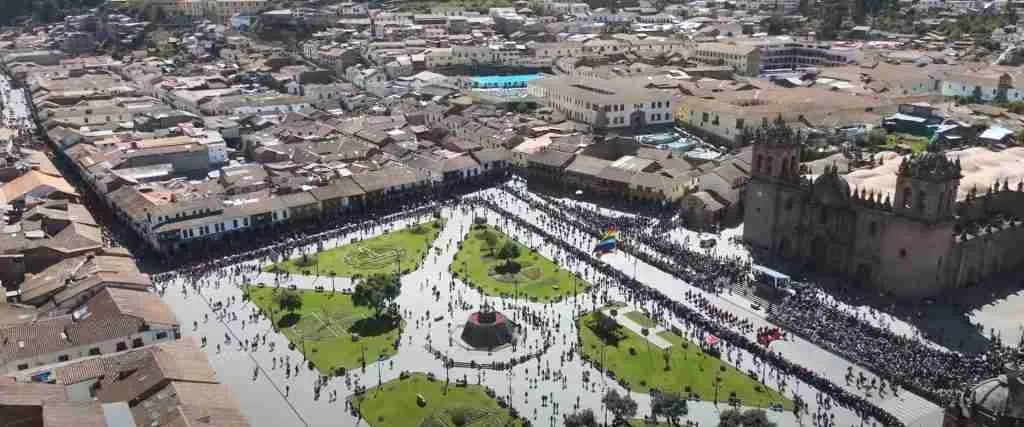
The ceremony continues at the Plaza de Armas, Cusco’s main square and civic heart since Inca times when it was called Huacaypata, located at Portal de Carnes 214 in the city’s historic center. The 45-minute ceremony features the Inca’s meeting with the Mayor of Cusco in a symbolic power exchange reporting on the city’s state, incorporating this modern element into the traditional reenactment. Four hundred actors participate in traditional dances, music performances, and the coca leaf ceremony expressing gratitude to the sun god before the procession moves to Sacsayhuamán for the main ceremony.
Plaza de Armas offers completely free viewing without any ticket requirement, with spectators filling the 28,728-square-meter plaza and surrounding balconies from 9:00 AM onward to secure viewing positions among the tens of thousands attending. No reserved seating exists at Plaza de Armas, making early arrival essential for proximity to the central stage where the Inca and Qoya appear. Many restaurants and cafes surrounding the plaza offer balcony reservations for private viewing, requiring bookings 2-3 months in advance and typically including meal purchases at premium prices during the ceremony hours.
The Plaza de Armas ceremony represents the political dimension of Inti Raymi, showcasing the Inca’s authority over Cusco’s governance and his role as intermediary between the gods and the people. The central square setting provides panoramic views of the colorful procession against the backdrop of Cusco’s colonial architecture, creating spectacular photographs of the contrasting Inca and Spanish colonial elements that define modern Cusco. The ceremony’s timing from 11:00 AM to noon allows travelers to experience both the spiritual opening at Qorikancha and the political demonstration at Plaza de Armas before moving to Sacsayhuamán for the climactic main ceremony beginning at 1:30 PM.
Sacsayhuamán Fortress Main Ceremony (1:30 PM – 4:00 PM)
The climactic ceremony takes place at Sacsayhuamán, the monumental Inca fortress overlooking Cusco from the north at 3,700 meters elevation, located on the Chukipampa Esplanade approximately 3 kilometers from the city center. The 2.5-hour main ceremony brings together over 700 actors performing the most elaborate rituals including offerings to Pachamama, sacred chicha sharing, ceremonial fire lighting, the symbolic llama sacrifice interpreted as predicting the solar cycle’s outcome, dances from the four regions of the Tahuantinsuyo Empire, and Quechua speeches with Spanish narration explaining each ritual’s significance to the 3,500 ticketed spectators in the reserved sections.
Sacsayhuamán requires advance ticket purchase for three designated seating areas: the orange section (Tribuna Naranja) with 2,500 seats positioned 10 meters from the main stage offering front-center views, the red section (Tribuna Chaska) with 800 seats positioned 17 meters from the stage providing side-angle views, and the green section with economy seating positioned 25 meters from the stage with alternative side perspectives. All three sections offer complete ceremony views with shade coverage in the red section but full sun exposure in orange and green sections. Tickets include assigned seats, official ceremony programs, entrance through security checkpoints, and access to photo opportunities with actors after the 4:00 PM conclusion.
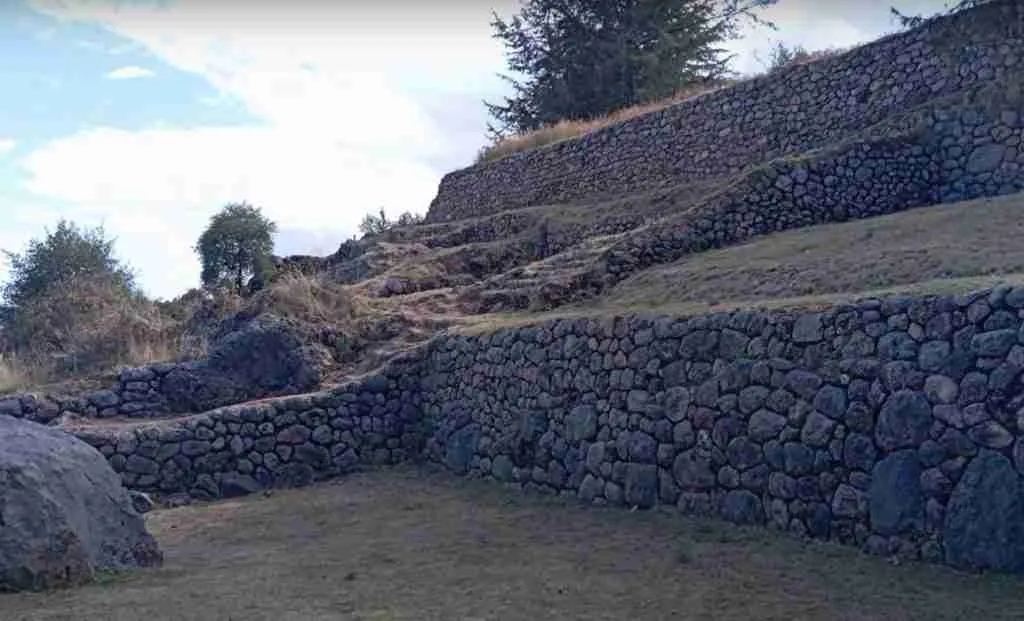
The Sacsayhuamán esplanade’s imposing megalithic architecture, with zigzag walls built from massive stone blocks weighing up to 200 tons, provides a dramatic natural amphitheater enhancing the ceremony’s grandeur. The fortress setting connects the modern reenactment to the authentic Inca site where ceremonies occurred centuries ago, with the elevated location offering panoramic Cusco valley views and the monumental scale accommodating over 80,000 total spectators including the 3,500 ticketed attendees and 75,000+ free viewers on surrounding hillsides. The main ceremony represents the cultural, spiritual, and visual climax of Inti Raymi, justifying the ticket investment for guaranteed seating, proximity to ritual details, and comprehensive experience of South America’s most important historical reenactment.
Ticket Options and Pricing Breakdown 2026: Complete Comparison
Inti Raymi 2026 tickets at Sacsayhuamán Fortress are exclusively managed by EMUFEC (Municipal Company of Festivities of Cusco), the entity responsible for organizing the event since the modern reenactment began. Official tickets are sold through Teleticket, the authorized distributor designated by Cusco Municipality, and through licensed tour operators who purchase tickets in bulk and package them with additional services. Understanding the pricing structure, what each ticket includes, and the differences between sections allows travelers to make informed decisions balancing budget and experience quality.
Orange Section Tickets 2026 (Premium Front-Center Seating)
Orange section tickets (Tribuna Naranja) cost $259 for adults, $191 for children ages 5-12, and free for infants under 5 in 2026, providing the best available viewing experience at Sacsayhuamán with seats positioned 10 meters from the main stage in front-center locations. The orange section accommodates approximately 2,500 spectators in rows offering unobstructed panoramic views of the entire esplanade, capturing all ritual elements including the Inca’s entrance, offerings to Pachamama, chicha ceremonies, traditional dances, and llama sacrifice with proximity allowing clear visibility of costumes, facial expressions, and ceremonial details invisible from distant sections.
The orange section’s premium positioning makes it the most sought-after ticket, selling out within hours when online sales open between March and April 2026. Travelers targeting orange section seats should create Teleticket accounts and prepare payment methods before the announced sale date, typically in mid-March, with purchase completion required immediately when the online system opens. The orange section does not offer discounts for Peruvian citizens, unlike the green section which provides reduced rates for national identity document holders. The section lacks shade coverage, requiring sun protection for the 2.5-hour ceremony under Cusco’s intense high-altitude UV radiation.
Orange section tickets purchased through tour operators cost $230-320 in complete packages including the seat, bilingual guide, round-trip transportation, and box lunch, representing better value than purchasing separate tickets at $259 plus arranging independent transport and guides. The package approach eliminates logistics stress while adding cultural context through professional interpretation of the Quechua-language ceremony and historical explanations connecting the modern reenactment to authentic Inca practices. Orange section packages should be booked 4-6 months before June 24th through accredited operators to guarantee availability before operator allocations sell out ahead of individual ticket sales.
Red Section Tickets 2026 (Standard Mid-Distance Seating)
Red section tickets (Tribuna Chaska) cost $218-256 for adults depending on the operator, with children ages 5-12 paying $132-138 and infants under 5 entering free, providing standard seating positioned 17 meters from the main stage with side-angle views capturing the full ceremony from alternative perspectives. The red section accommodates approximately 800 spectators in covered seating offering shade protection during the 2.5-hour ceremony, making it the most comfortable option for sun-sensitive travelers, families with young children, and visitors concerned about high-altitude UV exposure during the afternoon performance.
The red section’s side positioning provides complete ceremony visibility despite the angled perspective, with the esplanade’s natural amphitheater design ensuring no ritual elements are hidden from view. The section’s smaller capacity compared to orange (800 versus 2,500 seats) and shade coverage make it popular among savvy travelers who prioritize comfort over premium front-center views, with tickets selling out 4-6 weeks before June 24th. Red section tickets do not offer Peruvian citizen discounts, maintaining standard pricing for all nationality holders unlike the green section’s reduced national rates.
Red section packages bundled with tour services cost $230-280 including the seat, guide, transportation, and meals, offering moderate savings compared to separate ticket purchase plus independent arrangement of logistics. The red section represents the middle ground between economy green section positioning and premium orange section proximity, balancing price, comfort, and viewing quality for travelers seeking guaranteed seating without premium pricing. Booking should occur 2-3 months before June 24th to secure availability before the section sells out, with earlier booking recommended for travelers coordinating multiple family members or friend groups requiring adjacent seating.
Green Section Tickets 2026 (Economy Distant Seating)
Green section tickets cost $173 for adults, with Peruvian citizens paying discounted rates of $119 with valid DNI or Peruvian passport presentation, children ages 5-12 paying $134-143, and infants under 5 entering free. The green section provides economy seating positioned 25 meters from the main stage with alternative side views capturing the full ceremony from elevated distant perspectives. The section’s positioning farther from the stage reduces visual detail of costumes, facial expressions, and small ritual objects, but maintains complete visibility of major ceremony elements including processions, dances, offerings, and the llama sacrifice visible from the distant vantage point.
The green section accommodates the largest number of spectators among the three ticketed areas, maintaining availability 3-4 weeks before June 24th after orange and red sections sell out. The section lacks shade coverage like the orange section, requiring sun protection for the full 2.5-hour ceremony. The green section’s economy pricing makes it accessible for budget-conscious travelers, large family groups, and visitors prioritizing attendance over premium viewing, with the substantial $86 price difference from orange section allowing budget reallocation to accommodation, tours, or other Cusco experiences.
Green section packages including tour services cost $193-208 with bilingual guide, round-trip bus transportation, and box lunch included, representing good value for travelers wanting organized logistics without premium seating investment. The distant positioning makes binoculars useful for enhanced detail visibility, with many travelers bringing small binoculars or using smartphone zoom capabilities to supplement the naked-eye viewing experience. Green section booking should occur 4-6 weeks before June 24th to guarantee availability, with earlier booking providing better selection of specific seat rows within the section’s elevated terraced seating arrangement.
Additional Ticketing Options: Qorikancha Seated Area and Free Viewing
The optional Qorikancha seated area accommodates 250 spectators in reserved chairs directly facing the Temple of the Sun entrance during the 9:00 AM opening ceremony, available for $70 in advance through tour operators or EMUFEC. The seated area provides guaranteed front-row views of the Inca’s sun invocation and coca leaf ceremony without early morning arrival, eliminating the need to secure standing positions from 7:00 AM onward among the several thousand free spectators filling the temple esplanade. Qorikancha seated tickets sell out 2-3 months before June 24th and are typically bundled with Sacsayhuamán section tickets in complete tour packages rather than sold separately.
Free viewing at Sacsayhuamán is available from hillside areas surrounding the fortress esplanade, accessible without tickets for travelers willing to arrive 2-3 hours before the 1:30 PM ceremony start to secure viewing spots among the 75,000+ spectators filling the hillsides. Free hillside viewing provides panoramic perspectives of the entire ceremony from distances of 100-200 meters, capturing the spectacle’s scale and the natural amphitheater setting but without proximity to ritual details, costume close-ups, or ceremony program explanations available to ticketed spectators. Free viewers should bring blankets or portable seats, sun protection, sufficient water for 5+ hours outdoors, and binoculars for enhanced stage visibility from distant hillside vantage points.
Booking Strategies and Timeline 2026: Securing Best Options
Successful Inti Raymi 2026 attendance requires understanding the booking timeline, recognizing the difference between official ticket vendors and resellers, and coordinating ticket purchase with accommodation and Machu Picchu permit reservations during Cusco’s peak tourism season. The following strategies maximize the likelihood of securing preferred sections while avoiding sold-out situations, inflated reseller pricing, and logistics challenges during the festival week when 100,000+ visitors converge on Cusco.
Official Sales Timeline and Platform 2026
EMUFEC typically announces the official sale date between mid-February and early March 2026, with online ticket sales through Teleticket opening in mid-to-late March for the June 24th ceremony. The official sale announcement is published on Cusco Municipality websites, EMUFEC’s social media channels, and the Teleticket platform, with email notifications sent to travelers who register for sale alerts through the Teleticket system. Orange section tickets historically sell out within 1-4 hours of online sales opening, red section tickets sell out within 1-2 weeks, and green section tickets remain available until 3-4 weeks before June 24th.
The Teleticket platform (www.teleticket.com.pe) serves as Peru’s primary event ticketing system, requiring account creation with email address, password, and payment method setup before the sale date. International travelers should verify their credit cards work on Peruvian payment systems, with Visa and Mastercard widely accepted but American Express experiencing occasional processing issues. The purchase process during high-demand sales experiences system slowdowns and timeout errors, requiring patience, multiple browser windows, and immediate completion once the cart checkout begins to avoid losing reserved tickets to other buyers.
Travelers unable to secure tickets through official Teleticket sales should immediately contact licensed tour operators who purchase bulk allocations and bundle tickets with services. Tour operators typically maintain ticket availability 2-4 weeks longer than individual Teleticket sales, as their bulk purchases create larger inventory pools. The operator markup ranges $30-70 above individual ticket prices but includes additional services (guide, transportation, meals) that justify the premium while simplifying logistics. Booking through operators should occur within two weeks of official sale date to access remaining inventory before operator allocations also sell out.
Tour Package Booking vs. Individual Ticket Purchase
Tour packages priced at $230-320 for complete all-inclusive Inti Raymi experiences bundle orange, red, or green section tickets with bilingual professional guides, round-trip tourist bus transportation, box lunches, official ceremony programs, and post-ceremony photo opportunities with actors. The package approach simplifies logistics by eliminating the 1.8-kilometer uphill walk from Cusco center to Sacsayhuamán on streets closed to traffic, provides cultural context through guide narration during the Quechua-language ceremony, and handles entrance checkpoint processing requiring passport verification and ticket inspection.
Individual ticket purchase through Teleticket costs $173-259 depending on section but requires self-arranged transportation to Sacsayhuamán, independent navigation of the 40-minute uphill walk from Plaza de Armas, and ceremony attendance without guide interpretation of the Quechua rituals and historical significance. The walking route gains 300 meters elevation through steep cobblestone streets and requires fitness sufficient for sustained uphill trekking at 3,400-3,700 meters altitude where reduced oxygen levels affect physical exertion. Individual tickets provide cost savings of $57-90 compared to packages but transfer logistics responsibility to travelers who must arrive at the fortress by 12:30 PM to process through security checkpoints before the 1:30 PM ceremony start.
Tour packages are strongly recommended for first-time Inti Raymi attendees, families with children or elderly members, travelers with limited Spanish language skills, and visitors prioritizing comprehensive cultural education over budget minimization. Individual tickets suit experienced Peru travelers familiar with Cusco geography, fit enough for sustained uphill walking at altitude, comfortable navigating crowded environments without guide assistance, and willing to research ceremony elements independently using downloaded materials or books. Tour packages should be booked 4-6 months before June 24th through established operators with multi-year Inti Raymi experience and verified customer reviews, ensuring reliable service delivery and avoiding fly-by-night operators who take deposits without proper EMUFEC ticket allocations.
Coordinating Inti Raymi with Machu Picchu and Accommodation Bookings 2026
Travelers planning Inti Raymi week (June 20-28) should coordinate ticket purchase with Machu Picchu permits and Cusco accommodation reservations, as June represents peak tourism season when all major attractions experience maximum demand. Machu Picchu entry permits for June dates sell out by March 2026, requiring simultaneous booking when Inti Raymi tickets go on sale to guarantee access during the same trip. The typical Peru itinerary combines 2-3 days in Cusco for acclimatization and city tours, 1-2 days for Sacred Valley exploration, 1 day for Machu Picchu, and June 24th for Inti Raymi, requiring 5-7 days minimum in the Cusco region.
Cusco accommodation prices increase 40-60% during Inti Raymi week compared to off-season rates, with hotels near Plaza de Armas and popular tourist neighborhoods reaching $150-300 per night for mid-range options that cost $80-150 in April, May, September, or October. Budget hostels raise prices from $15-25 to $30-45 per night, while luxury hotels increase from $200-350 to $300-500+ per night. Accommodation should be booked 3-4 months before June 24th to secure preferred locations and avoid sold-out situations that force travelers into distant neighborhoods requiring taxi transport or higher-priced last-minute options.
The optimal booking sequence begins with monitoring EMUFEC announcements for official ticket sale dates in February-March, followed by immediate ticket purchase or tour package booking when sales open in March, then Machu Picchu permit reservation through the official Peruvian government platform within the same week, and finally accommodation booking within 1-2 weeks of securing event tickets. This sequence ensures the critical non-refundable elements (Inti Raymi tickets, Machu Picchu permits) are confirmed before committing to non-refundable accommodation deposits, reducing financial risk if ticket sales sell out before travelers can complete purchases. Travel insurance covering trip cancellation should be purchased immediately after booking to protect against unforeseen circumstances requiring cancellation of the June trip plans.
Complete Tour Package Options 2026: Comparing Operators and Services
Tour operators offering Inti Raymi 2026 packages range from established Cusco-based agencies with 20+ years experience to smaller operators and international booking platforms reselling local provider services. Understanding what distinguishes quality operators, recognizing fair pricing, and identifying included versus add-on services allows travelers to select packages matching their priorities while avoiding overpriced or underdelivering options. The following analysis compares typical package structures, operator reliability indicators, and service quality markers worth the investment.
Standard Full-Day Tour Package Structure
Standard Inti Raymi full-day tour packages priced at $230-280 include orange, red, or green section seating at Sacsayhuamán (specified at booking), bilingual professional guide (English and Spanish) in shared groups of 15-25 participants, round-trip tourist bus transportation from central Cusco meeting points to the fortress, box lunch consumed at the venue, official ceremony program booklet in Quechua and Spanish, and assistance through security checkpoints with passport verification. The package day begins with 10:15-10:45 AM check-in at designated meeting points such as Plaza Santa Teresa or Plaza Regocijo, followed by 45-minute bus transfer to Sacsayhuamán arriving by 12:30 PM for entrance processing before the 1:30 PM ceremony start.
The shared guide provides cultural context explaining Inca history, ceremony significance, and ritual interpretations throughout the 2.5-hour performance, translating selected Quechua speeches and narrating the symbolic meaning of offerings, dances, and the llama sacrifice. The guide remains with the group during the ceremony, answers questions during the performance, and facilitates post-ceremony photo opportunities with actors before coordinating the 4:30-5:00 PM return bus departure. The box lunch typically includes sandwiches, fruit, snacks, and bottled water consumed before or during the ceremony, as no food vendors operate at the Sacsayhuamán venue and restaurants within walking distance are overwhelmed by 80,000+ spectators during ceremony hours.
Standard packages do not include the optional Qorikancha seated area for the 9:00 AM opening ceremony or Plaza de Armas viewing arrangements for the 11:00 AM ceremony, as these venues offer free public access without tour operator value-add justifying service fees. Travelers wanting complete three-venue coverage should attend Qorikancha independently at 9:00 AM (arriving by 7:30 AM for good standing positions), experience Plaza de Armas independently at 11:00 AM (arriving by 9:30 AM for plaza positioning), then join the tour package for organized Sacsayhuamán attendance at 1:30 PM. This hybrid approach maximizes cultural immersion while leveraging tour operator services where they provide greatest value through logistics handling and guide interpretation.
VIP and Premium Tour Package Enhancements
VIP tour packages priced at $280-320 upgrade the standard offering with guaranteed orange section front-row seating within the first 3-5 rows, smaller group sizes limited to 8-12 participants for personalized guide attention, optional Qorikancha seated area access for the 9:00 AM ceremony, private transportation in smaller vehicles rather than large tourist buses, and sometimes hotel pick-up service from accommodations within central Cusco neighborhoods. The premium pricing secures the best possible viewing positions within the already-premium orange section, reducing the lottery element of standard orange section tickets which assign specific rows based on purchase timing rather than guaranteeing front-row placement.
VIP packages often include enhanced meal service with restaurant-quality lunch boxes featuring local specialties, fresh fruit, desserts, and beverage choices beyond basic bottled water. Some premium operators add post-ceremony private transportation allowing immediate departure rather than waiting for full bus group assembly, reducing return time to Cusco center by 30-45 minutes and providing first access to restaurants for dinner reservations. The smaller group sizes in VIP packages create more intimate cultural experiences with extended opportunities for questions, guide interaction, and customized explanations matching participant knowledge levels rather than generic narration for large diverse groups.
VIP packages are recommended for travelers prioritizing photography requiring front-row proximity, families wanting personalized pace and attention, elderly visitors needing assistance with walking and seating logistics, and first-time visitors to Peru seeking comprehensive cultural education from experienced guides without competition for attention from large groups. The $50-90 premium above standard packages delivers tangible benefits in viewing quality, service personalization, and logistics convenience justifying the investment for travelers treating Inti Raymi as their primary Peru experience rather than one element in a multi-destination itinerary where budget efficiency takes priority.
Multi-Day Cusco and Inti Raymi Combination Packages
Multi-day combination packages priced at $450-800 bundle Inti Raymi attendance with 3-5 days of Cusco region touring including Sacred Valley full-day tours visiting Pisac, Ollantaytambo, and Chinchero, Machu Picchu day trips or overnight stays in Aguas Calientes, Cusco city tours covering Qorikancha, Sacsayhuamán, Q’enqo, and Puca Pucara outside the Inti Raymi context, and sometimes Rainbow Mountain or alternative adventure excursions. The packages coordinate multiple tour elements around the fixed June 24th Inti Raymi date, handling inter-tour transportation, guide continuity, and accommodation coordination across the multi-day itinerary.
The combination package approach simplifies trip planning by consolidating bookings through a single operator rather than coordinating separate providers for each tour element, often delivering 10-20% cost savings compared to booking each component independently through different companies. The continuity benefits include consistent guide quality standards, reliable transportation fleet vehicles, coordinated accommodation check-ins, and single-point customer service for any issues arising during the multi-day itinerary. The packages typically include 3-4 star hotel accommodation in central Cusco, daily breakfast, entrance fees for all sites, professional guides for each tour element, and inter-city transportation including the Ollantaytambo-Machu Picchu train tickets.
Multi-day packages are ideal for first-time Peru travelers wanting comprehensive Cusco region experiences without independent research and booking logistics, families preferring predictable structured itineraries, and visitors with limited trip planning time willing to pay premium pricing for turnkey packages. Independent travelers with flexible schedules, experienced Peru visitors familiar with local booking processes, and budget-focused backpackers generally prefer self-booking individual tours for cost efficiency and schedule flexibility. Combination packages should be booked 4-6 months before June 24th through established operators with verified multi-year operations, comprehensive travel insurance, and transparent pricing showing exact inclusions to avoid hidden fees or service shortfalls discovered only during the trip execution.
Skip-the-Line Strategies and Crowd Management 2026
Inti Raymi 2026 attracts over 100,000 spectators to Cusco on June 24th, creating unprecedented crowd density at the three ceremony venues and throughout the historic center. Understanding crowd patterns, timing strategies, and entrance logistics allows travelers to minimize wait times, avoid overwhelming crush situations, and position themselves effectively for optimal viewing at each venue. The following strategies represent accumulated knowledge from experienced Inti Raymi attendees and local tour operators managing the logistics challenges created by South America’s second-largest cultural festival.
Qorikancha Temple Positioning Strategy (7:30 AM – 9:00 AM)
Qorikancha’s 9:00 AM ceremony attracts several thousand spectators to the temple esplanade and Avenida El Sol, with crowd arrival beginning around 7:00 AM for the most committed viewers seeking front-row standing positions. Travelers targeting optimal free viewing positions should arrive by 7:30 AM to secure spots within 10-15 meters of the temple entrance where the Inca delivers his sun invocation and coca leaf ceremony. The crowd density increases dramatically after 8:30 AM as late arrivals fill all available space, pushing latecomers to positions 30-50 meters back with obstructed views behind taller spectators standing in front rows.
The optional $70 seated area accommodating 250 ticket holders eliminates early arrival requirements, with check-in beginning at 8:30 AM for 9:00 AM ceremony start. Seated area ticket holders should arrive by 8:45 AM to complete entrance processing, present passports, and settle into assigned chairs before the Inca’s processional entrance. The 45-minute ceremony concludes around 9:45 AM, allowing seated ticket holders and strategically-positioned free viewers to walk the 1 kilometer from Qorikancha to Plaza de Armas in 15-20 minutes, arriving by 10:00-10:15 AM for the 11:00 AM ceremony’s next crowd positioning phase.
The walking route from Qorikancha to Plaza de Armas passes through narrow colonial streets filled with camera-carrying tourists moving between venues, creating slow pedestrian traffic requiring 20-25 minutes rather than the usual 15-minute walk. Travelers unable to attend Qorikancha should use this 7:00-9:00 AM window to secure Plaza de Armas positions for the 11:00 AM ceremony rather than attempting Qorikancha arrival at 9:00 AM when the ceremony begins and all viewing positions are already occupied by early arrivals.
Plaza de Armas Positioning Strategy (9:30 AM – 11:00 AM)
Plaza de Armas’s 11:00 AM ceremony fills the 28,728-square-meter main square with tens of thousands of spectators, requiring arrival by 9:30-10:00 AM to secure viewing positions within 20 meters of the central stage where the Inca and Mayor of Cusco perform the power exchange ceremony. The plaza’s large size compared to Qorikancha provides more positioning flexibility, but the enormous crowd volume (5-10 times larger than Qorikancha) creates dense packing in premium viewing zones directly facing the central stage, with latecomers pushed to plaza edges 50-80 meters from the action.
The optimal positioning strategy targets the northwest and northeast corners of the plaza facing the cathedral, where elevated stone steps provide natural viewing platforms 30-40 centimeters above ground level, creating sight-line advantages over standing spectators at ground level. These corner positions fill quickly between 9:30-10:00 AM, with arrivals after 10:15 AM relegated to standing positions behind the elevated corner crowds. No seating exists at Plaza de Armas beyond restaurant balconies requiring reservations booked 2-3 months in advance, making blankets or portable stools useful for extended standing comfort during the 1.5 hours from arrival through ceremony conclusion at 12:00 PM.
Restaurant balcony reservations overlooking Plaza de Armas provide premium elevated viewing with seating comfort, shade protection, and refreshment service during the ceremony. Popular balcony restaurants including Cusco Coffee Company, Inka Grill, and MAP Café require bookings 8-12 weeks before June 24th, with minimum spending requirements of $40-80 per person for meal and beverage purchases during the ceremony window. The balcony approach suits families with young children unable to stand for 90 minutes in dense crowds, elderly visitors requiring seating comfort, and travelers prioritizing photography angles above crowd-level perspectives. Balcony bookings should confirm June 24th availability explicitly and specify the 10:00 AM-1:00 PM time window covering arrival, ceremony viewing, and post-ceremony departure.
Sacsayhuamán Entrance Processing (12:00 PM – 1:30 PM)
Sacsayhuamán’s entrance checkpoint system for the 3,500 ticketed spectators processes passport verification, ticket inspection, and section assignment between 12:00 PM and 1:30 PM before the main ceremony begins. Tour packages include transport arrival by 12:30 PM and guide assistance through checkpoint processing, eliminating queue confusion and language barriers for non-Spanish speakers navigating the entrance procedures. Independent ticket holders walking from Plaza de Armas should depart by 11:30 AM for the 40-minute uphill walk arriving by 12:15 PM to complete checkpoint entry before crowd density peaks at 1:00-1:15 PM.
The checkpoint entrance requires original passport presentation (photocopies rejected), printed or mobile phone ticket display, and security screening similar to airport procedures with bag checks and prohibited item confiscation. Prohibited items include large backpacks exceeding 30 liters, professional camera equipment with detachable lenses exceeding 200mm, tripods, selfie sticks, umbrellas, outside food beyond small snacks, and alcohol in any form. Small daypacks under 20 liters, smartphone cameras, compact cameras with fixed lenses, water bottles, hats, sunscreen, and light jackets are permitted through checkpoints without issues.
The section assignment process directs orange ticket holders to front-center seating areas, red ticket holders to west side covered sections, and green ticket holders to elevated economy sections, with staff guidance in Spanish and limited English helping travelers locate assigned rows within each section. Arriving by 12:30 PM rather than 1:00 PM provides better row selection within each section and eliminates the stress of last-minute entrance processing when checkpoint queues peak at 1:00-1:15 PM with stragglers racing to enter before the 1:30 PM ceremony start. Early entrance also allows time for restroom visits, snack consumption, sunscreen application, and comfortable settling into assigned seats before the processional entrance begins the 2.5-hour ceremony.
What to Bring and Wear: Essentials Checklist 2026
Inti Raymi 2026 requires 7+ hours outdoors on June 24th for travelers attending all three venues, with temperatures ranging from 8°C at dawn to 20°C during midday sun at 3,400-3,700 meters elevation. The winter solstice timing creates cool to cold conditions despite June’s dry season designation, with morning and evening temperatures dropping significantly below comfortable levels for travelers from temperate or tropical climates. Packing appropriately for the temperature range, high-altitude UV exposure, and extended outdoor duration prevents discomfort, sunburn, altitude sickness exacerbation, and other issues that diminish the Inti Raymi experience.
Clothing and Layering Strategy
Layered clothing is essential for managing the 12°C temperature swing between morning and afternoon, allowing removal and addition of layers as conditions change throughout the 7-hour ceremony day. The base layer should include lightweight moisture-wicking long-sleeve shirts and pants protecting skin from UV radiation while maintaining comfort during midday warmth. The middle layer should consist of fleece jackets or wool sweaters providing insulation during the cool 8-10°C morning temperatures at Qorikancha and the post-ceremony 4:00 PM descent when temperatures drop rapidly as the sun angles lower.
The outer layer should include windproof jackets protecting against Cusco’s consistent afternoon breezes at 3,700 meters elevation, with hoods providing additional head protection when wind speed increases. Travelers attending all three venues should carry all layers throughout the day despite warm midday conditions, as morning and evening temperatures require full layering while midday allows stripping to base layers only. Wool or fleece beanies protect ears and head during morning and evening cold, with many travelers keeping hats accessible in daypacks for reapplication when temperatures drop after the 4:00 PM ceremony conclusion.
Footwear should prioritize comfort for extended standing and walking rather than style, with trekking shoes or supportive athletic shoes providing stability on cobblestone streets and the uneven terrain surrounding Sacsayhuamán. The 1.8-kilometer walk from Plaza de Armas to Sacsayhuamán gains 300 meters elevation through steep sections requiring ankle support and good traction, making hiking boots or trail runners preferable to casual sneakers or dress shoes. Light gloves are optional for cold-sensitive travelers during the 7:00-9:00 AM Qorikancha window when temperatures reach their daily minimum of 8°C or below.
Sun Protection and Altitude Considerations
SPF 50+ sunscreen is mandatory for all exposed skin during the 7-hour outdoor day, with reapplication every 2 hours maintaining protection against Cusco’s extreme UV radiation at 3,400-3,700 meters elevation. High-altitude UV intensity exceeds sea-level radiation by 40-50%, creating sunburn risk even on partly cloudy days and through light clothing. Wide-brimmed hats or baseball caps shade faces and necks during the 1:30-4:00 PM Sacsayhuamán ceremony when sun angles create direct overhead exposure, with sunglasses rated for 100% UVA/UVB protection preventing eye damage from intense reflected light off the fortress’s pale stone surfaces.
Altitude sickness prevention requires hydration starting 24-48 hours before Inti Raymi, with travelers aiming for 3-4 liters daily water consumption to counteract dehydration caused by reduced humidity and increased respiration at altitude. Reusable water bottles in daypacks maintain hydration access throughout the ceremony day, with refills available at restaurants and hotels during venue transitions. Altitude sickness pills such as Sorojchi Pills available at any Cusco pharmacy for $1-2 provide symptom relief for travelers experiencing headaches, nausea, or fatigue during the ceremony day, with dosage instructions recommending consumption 30 minutes before symptom onset or as prevention before extended physical activity.
Coca tea consumption in the morning provides traditional altitude adjustment benefits recognized by Andean cultures for centuries, with hotels and restaurants throughout Cusco offering complimentary coca tea service. The mild stimulant effects and altitude adaptation properties make coca tea consumption before Qorikancha attendance a beneficial pre-ceremony ritual for travelers experiencing early morning altitude symptoms. Acetazolamide (Diamox) prescribed by physicians before Peru travel provides stronger altitude adaptation for travelers with histories of severe altitude sickness, with dosing typically beginning 24-48 hours before ascending to Cusco’s 3,400-meter elevation.
Essential Items Checklist
Original passports are mandatory for Sacsayhuamán entrance checkpoint processing, with photocopies and digital scans rejected by security staff. Travelers should carry passports in secure inner jacket pockets or neck pouches preventing theft in dense crowds while maintaining accessibility for checkpoint presentation. Printed or mobile phone tickets display boarding passes for entrance processing, with phone battery life considerations making printed backup copies useful for travelers relying on phones for photography throughout the day who may experience battery depletion by afternoon checkpoint arrival.
Small daypacks under 20 liters capacity carry layered clothing, water bottles, snacks, sun protection items, and cameras through checkpoint security, with larger backpacks exceeding 30 liters rejected at entrances and requiring return to hotel storage. Camera equipment should prioritize smartphone cameras or compact cameras with fixed lenses, as DSLRs with detachable lenses exceeding 200mm focal length and all tripods are prohibited from Sacsayhuamán for security and crowd management reasons. Binoculars enhance viewing from green section’s 25-meter distance or free hillside positions 100-200 meters from the stage, with compact 8×25 or 10×30 binoculars providing good magnification in portable packages fitting daypack pockets.
Cash in Peruvian soles covers incidental purchases at street vendors, tips for tour guides (10-15% of tour package price expected), emergency taxi fares if tour transportation encounters issues, and restaurant purchases at Plaza de Armas during venue transitions. Credit cards work at major restaurants and hotels but street vendors, small shops, and transportation services require cash payment. Small bills in denominations of 10, 20, and 50 soles facilitate transactions without requiring vendors to provide large bill change, with ATM withdrawals before June 24th recommended as ATM congestion and cash depletion become issues during peak festival day demand.
Photography and Recording Guidelines 2026
Inti Raymi 2026 presents exceptional photography opportunities capturing colorful traditional costumes, dramatic fortress architecture, dynamic ceremonial performances, and panoramic Cusco valley landscapes as backdrops to the cultural celebration. Understanding equipment restrictions, optimal shooting positions, lighting conditions throughout the 7-hour ceremony day, and respectful photography practices maximizes image quality while avoiding security issues or cultural offense during this sacred cultural reenactment.
Permitted Equipment and Shooting Positions
Smartphone cameras are permitted throughout all three venues without restrictions, offering modern phones’ advanced computational photography capabilities for quality images in the challenging high-contrast lighting conditions created by intense high-altitude sunlight and deep shadows. Compact cameras with fixed lenses receive checkpoint clearance at Sacsayhuamán, providing optical zoom capabilities exceeding smartphone digital zoom quality while remaining within the detachable lens prohibition targeting professional DSLR equipment. Mirrorless cameras with non-detachable zoom lenses in the 24-200mm range represent the sweet spot balancing image quality, zoom capability, and security acceptance.
Tripods, monopods, and selfie sticks are prohibited at Sacsayhuamán for crowd safety and space management reasons, requiring handheld shooting throughout the 2.5-hour ceremony. The prohibition creates image stability challenges during the 1:30-4:00 PM ceremony when telephoto shooting from green section’s 25-meter distance requires fast shutter speeds preventing motion blur. Photographers should enable image stabilization features on phones and cameras, increase ISO settings accepting modest noise to maintain shutter speeds above 1/250 second for sharp handheld telephoto images, and use burst mode capturing multiple frames per action sequence ensuring at least one frame achieves perfect focus and timing.
Orange section’s 10-meter proximity to the stage provides excellent wide-angle and normal focal length shooting opportunities, with 24-70mm equivalent focal lengths capturing individual performer details, small group compositions, and medium-scale ritual elements without requiring telephoto lenses. Red section’s 17-meter distance and side angles create interesting oblique perspectives emphasizing the ceremony’s scale and the fortress architecture’s dramatic presence, with 24-120mm focal lengths covering most shooting situations. Green section’s 25-meter distance and elevated positioning require 70-200mm or greater equivalent focal lengths for frame-filling individual portraits and ritual detail capture, with the elevation advantage providing unobstructed sight lines over lower sections’ seated spectators.
Optimal Timing and Lighting Strategies
Qorikancha’s 9:00 AM ceremony benefits from morning light angles creating warm golden tones and soft shadows flattering for portrait photography of the Inca, Qoya, and nobility during the sun invocation and coca leaf ceremonies. The temple’s east-facing orientation receives direct sunlight during the 45-minute ceremony, creating moderate contrast requiring exposure compensation when shooting performers in bright sunlight against shadowed temple walls. The golden hour light quality ends around 9:30-10:00 AM as the sun climbs higher, making the Qorikancha ceremony the best-lit of the three venues for photography.
Plaza de Armas’s 11:00 AM ceremony occurs under high-angle sun creating harsh overhead shadows and extreme contrast between sunlit plaza surfaces and shadowed building facades. The challenging midday lighting requires spot metering on performer faces preventing underexposure when bright plaza reflections dominate the frame, with post-processing shadow recovery essential for maintaining detail in the high-contrast images. The overhead sun angle creates unflattering downward shadows under noses, eyes, and chins on performer faces, making wide establishing shots of plaza scale and crowd density more successful than tight portrait photography during this ceremony phase.
Sacsayhuamán’s 1:30-4:00 PM ceremony transitions from harsh overhead lighting at ceremony start to improving side-lighting angles during the 3:00-4:00 PM conclusion as the sun descends toward the horizon. The improving light quality during ceremony progression makes the later ritual elements more photographically favorable, with the 3:30-4:00 PM llama sacrifice and closing ceremonies receiving warm late-afternoon light creating dramatic long shadows across the fortress architecture. Photographers prioritizing dramatic golden-hour imagery should focus shooting intensity on the ceremony’s final 60 minutes when light quality peaks, accepting mediocre midday lighting during the opening 90 minutes when harsh overhead sun dominates.
Respectful Photography Practices
Inti Raymi represents a sacred cultural ceremony recreating authentic Inca religious practices for Cusco’s Quechua-speaking population, requiring respectful photography approaches avoiding disruption, mockery, or trivialization of the spiritual significance underlying the theatrical performance. Flash photography is prohibited throughout all three venues, preventing performer distraction and maintaining ceremony atmosphere while protecting the theatrical lighting carefully designed by ceremony organizers. Continuous shooting with rapid-fire shutter sequences creates distracting clicking noise disturbing adjacent spectators and performers, making selective single-frame shooting preferable to spray-and-pray burst mode throughout the ceremony.
Post-ceremony photography with actors provides close-up portrait opportunities with cooperative subjects willing to pose with visitors and display ceremonial objects, costumes, and traditional implements up close for detailed photography. The 4:15-4:45 PM window after ceremony conclusion allows 20-30 minutes interaction time before actors depart the fortress and evening light fades, with queue management required as hundreds of spectators simultaneously request photographs with the 700+ costumed performers. Tipping actors for photographs is not customary but small donations of 5-10 soles are appreciated when extended photography sessions with specific performers exceed brief snapshot interactions.
Social media sharing and online publication of Inti Raymi photographs is encouraged by ceremony organizers and Cusco tourism authorities, with the cultural promotion benefits outweighing any intellectual property concerns. Photographers should credit the ceremony officially as “Inti Raymi 2026, Cusco, Peru” in captions and hashtag appropriately with #IntiRaymi2026, #Cusco, #Peru, and related cultural tourism tags increasing the photographs’ discoverability and contribution to global awareness of this important Andean cultural celebration. Respect for the ceremony’s cultural significance should extend to image editing avoiding cartoon filters, irreverent captions, or manipulations distorting the authentic cultural representation captured in original photographs.
Accommodation and Logistics During Inti Raymi Week 2026
June 24th falls during Cusco’s peak tourism season when the city hosts 100,000+ visitors for the Inti Raymi festival, creating unprecedented accommodation demand, transportation congestion, and restaurant capacity challenges throughout the June 20-28 period. Understanding the accommodation market, booking strategies, neighborhood trade-offs, and logistics considerations allows travelers to secure quality lodging while avoiding sold-out situations or overpriced last-minute options charging premiums for remaining inventory during festival week.
Hotel Pricing and Booking Timeline
Cusco accommodation prices during Inti Raymi week increase 40-60% above shoulder-season rates, with three-star hotels in popular neighborhoods charging $150-250 per night compared to $80-120 in April, May, September, or October. Budget hostels raise dormitory bed prices from $15-25 to $30-45 per night, while luxury hotels increase from $200-350 to $300-500+ per night. The price premiums reflect supply-demand imbalances when the city’s 12,000 hotel beds accommodate demand from 100,000+ visitors requiring 25,000-30,000 beds across multiple nights, forcing spillover into homestays, Airbnb properties, and hotels in surrounding towns within 30-60 minutes of central Cusco.
Accommodation booking should occur 3-4 months before June 24th to secure preferred hotels and neighborhoods while avoiding sold-out situations that emerge 6-8 weeks before the festival date when remaining inventory shifts to higher-priced properties only. The optimal booking window is March-April 2026, coinciding with Inti Raymi ticket sales and allowing simultaneous coordination of tickets and accommodation securing both critical elements before either sells out. Booking directly through hotel websites rather than third-party platforms often provides better cancellation policies and lower prices avoiding commission markups passed to travelers through higher nightly rates.
Free cancellation policies are essential during the March-April booking window when ticket purchase success remains uncertain, with hotels offering cancellation up to 7-30 days before check-in providing flexibility to adjust accommodation bookings if ticket purchase fails or travel plans change. Budget-focused travelers should monitor accommodation pricing weekly during January-March 2026, booking immediately when hotels announce their festival week rates rather than waiting for potential price drops that rarely materialize as June approaches and remaining inventory diminishes. Early booking locks lower pricing before general awareness builds and competition for remaining rooms drives prices upward through dynamic pricing algorithms adjusting rates based on occupancy levels.
Neighborhood Selection: Proximity vs. Value Trade-Offs
San Blas neighborhood, located uphill from Plaza de Armas with narrow cobblestone streets and bohemian character, provides closest proximity to Sacsayhuamán at 1-2 kilometers distance while offering mid-range hotels at $120-180 per night during festival week. The neighborhood’s elevated position at 3,450-3,500 meters creates steeper walking routes but reduces the uphill climb to Sacsayhuamán by 100-150 meters compared to lower neighborhoods near Plaza de Armas. San Blas suits travelers prioritizing walking convenience to the fortress, those appreciating artisan galleries and craft workshops filling the neighborhood’s streets, and visitors seeking quieter alternatives to the tourist-heavy Plaza de Armas vicinity.
Plaza de Armas immediate vicinity, within 200-400 meters of the main square, provides maximum convenience for the 11:00 AM ceremony and easy access to restaurants, tour operators, and transportation hubs while commanding premium prices at $180-300 per night for mid-range hotels during festival week. The central location creates noise challenges from nightlife venues, street performers, and passing tourists until midnight or later, making light sleepers prefer quieter neighborhoods farther from the action. Plaza de Armas proximity suits first-time Cusco visitors wanting walkable access to major attractions, travelers with mobility limitations avoiding steep hills characterizing peripheral neighborhoods, and those treating Cusco as a base for daily tours rather than a destination for extended neighborhood exploration.
San Cristóbal and Santa Ana neighborhoods, located north and northeast of Plaza de Armas at 3,500-3,600 meters elevation, offer better value at $90-140 per night during festival week while providing authentic residential character and spectacular valley views from elevated positions. These neighborhoods require 20-30 minute walks to Plaza de Armas through steep streets but position travelers closer to Sacsayhuamán and away from tourist crowds. The neighborhoods suit budget-conscious travelers willing to trade convenience for cost savings, fitness-oriented visitors comfortable with sustained uphill walking at altitude, and those seeking residential neighborhood immersion over tourist zone density.
Transportation and Getting Around Festival Week
Cusco’s historic center experiences street closures throughout June 24th to accommodate the three ceremony venues, processional routes, and crowd management for 100,000+ spectators, eliminating vehicle access to Plaza de Armas, Avenida El Sol, and the approaches to Sacsayhuamán from noon onward. Taxis and rideshare services operate with severe restrictions, dropping passengers at street closure perimeters requiring 500-1,500 meter walks to ceremony venues through dense pedestrian crowds. The transportation limitations make central accommodation within walking distance of all three venues strongly preferable to peripheral hotels requiring taxi/bus access blocked during ceremony hours.
Tour package transportation bypasses the taxi restrictions through pre-approved tourist bus permits allowing vehicle access to Sacsayhuamán, loading passengers at designated meeting points such as Plaza Santa Teresa or Plaza Regocijo where tourist buses can still access. The organized transportation represents significant value for travelers booking accommodations in neighborhoods distant from ceremony venues, eliminating the need to navigate transportation restrictions and street closures independently while carrying ceremony supplies through crowds of 100,000+ people filling Cusco’s streets during the full-day celebration.
Rental cars become liabilities during Inti Raymi week as street closures prevent hotel zone access and parking availability disappears throughout the historic center. Travelers with rental cars for Sacred Valley or other multi-day tours should park vehicles at hotel garages before ceremony day and use walking or tour operator transport for all June 24th movements. The city-wide congestion extends beyond June 24th with increased traffic volumes June 20-28 as 100,000+ visitors arrive, move between accommodations and attractions, and depart Cusco, making pedestrian movement the most efficient transportation mode throughout festival week for distances under 2-3 kilometers within the tourist zones.
Health and Safety Considerations 2026
Inti Raymi 2026 combines altitude, crowds, extended sun exposure, and physical exertion in ways that challenge unprepared travelers, particularly those arriving in Cusco shortly before June 24th without adequate acclimatization time. Understanding the health risks, implementing prevention strategies, and recognizing emergency warning signs prevents altitude sickness crises, sunburn injuries, dehydration complications, and crowd-related incidents that can derail the festival experience and require medical intervention.
Altitude Acclimatization Strategy
Cusco’s 3,400-meter elevation and Sacsayhuamán’s 3,700-meter fortress location create oxygen levels approximately 35% lower than sea level, causing altitude sickness symptoms in 25-50% of travelers arriving directly from low elevations. The symptoms include headaches, nausea, fatigue, dizziness, shortness of breath, and sleep disturbances, typically emerging 6-24 hours after altitude arrival and persisting 2-3 days before natural acclimatization occurs. Travelers attending Inti Raymi should arrive in Cusco 2-3 days before June 24th allowing partial acclimatization, with arrivals on June 23rd experiencing the worst altitude symptoms on June 24th when 7 hours outdoors at 3,400-3,700 meters exacerbates incomplete adaptation.
The ideal acclimatization protocol begins in the Sacred Valley at 2,800-2,900 meters elevation for the first 24-48 hours after arriving from Lima’s sea-level elevation, allowing gradual adjustment before ascending to Cusco’s 3,400 meters. The 600-meter elevation difference between Sacred Valley and Cusco reduces initial oxygen shock while allowing gentle adaptation during Sacred Valley touring including Pisac, Ollantaytambo, and Chinchero. The step-wise ascent approach is particularly recommended for travelers with altitude sickness histories, those over 60 years old with reduced physiological adaptation capacity, and families with young children whose altitude tolerance varies unpredictably.
Altitude medication including Sorojchi Pills (available over-the-counter at any Cusco pharmacy for $1-2) or prescription Diamox (acetazolamide) should begin 24 hours before extended altitude exposure such as the 7-hour June 24th ceremony day. The medications accelerate physiological adaptation through increased respiration and reduced fluid retention, with dosing recommended in consultation with physicians familiar with altitude sickness protocols. Coca tea consumption throughout acclimatization days provides traditional Andean adaptation support, with hotels offering complimentary coca tea service and restaurants serving coca tea by request at most establishments throughout Cusco.
Sun Exposure and Dehydration Prevention
Cusco’s high-altitude location creates UV radiation levels 40-50% more intense than sea-level exposure, with the clear June winter skies lacking cloud cover that would moderate radiation during the 7-hour outdoor ceremony day. Sunburn becomes severe after 2-3 hours unprotected exposure, with second-degree burns possible by the 4:00 PM ceremony conclusion for fair-skinned travelers without adequate sunscreen application and reapplication. SPF 50+ broad-spectrum sunscreen should be applied 30 minutes before sun exposure and reapplied every 2 hours throughout the ceremony day, with particular attention to often-missed areas including ear tops, back of neck, hands, and the small exposed skin strip between pants and shirt during bending or reaching movements.
Dehydration accelerates at altitude through increased respiration, reduced humidity, and longer exposure to dry winter conditions than travelers typically experience in temperate sea-level climates. The 7-hour ceremony day requires 2-3 liters water consumption maintaining hydration, with clear urine color and absence of headaches indicating adequate fluid intake. Alcohol consumption before and during the ceremony day should be minimized as alcohol accelerates dehydration and worsens altitude sickness symptoms, with beer and wine consumption delayed until after the 4:00 PM ceremony conclusion when rehydration needs have been met.
Heat exhaustion symptoms including dizziness, nausea, rapid pulse, and confusion should trigger immediate shade seeking, water consumption, and wet cloth application to forehead and neck cooling the core temperature. The combination of altitude and intense sun exposure creates heat illness despite Cusco’s moderate air temperatures, with the thin atmosphere providing less cooling effect than sea-level environments at similar temperatures. Travelers experiencing severe heat exhaustion or altitude sickness during ceremonies should notify nearby staff or fellow spectators immediately rather than attempting to tough it out through symptoms that can rapidly progress to dangerous levels requiring emergency medical intervention.
Crowd Safety and Personal Security
Dense crowds of 100,000+ people throughout Cusco during June 24th create pickpocketing risks, personal space invasion, and crowd surge dangers particularly at Plaza de Armas and during Sacsayhuamán entrance/exit bottlenecks when thousands of people simultaneously enter or leave through limited access points. Money belts or hidden pouches secure passports, credit cards, and large-denomination cash against pickpocket activity targeting tourists in crush situations, with only small amounts of cash accessible in pants pockets for immediate purchases without revealing the full wallet contents stored in secure body pouches.
Smartphone theft peaks during festival days when thieves target tourists distracted by ceremony viewing with phones extended for photography and video recording. Wrist straps physically attach phones to hands preventing snatch-and-run theft common in dense crowds where perpetrators disappear into masses of people before victims react to theft. Camera bags should be worn on chest rather than back where they’re accessible to pickpockets working from behind in crowded conditions, with bag zippers facing toward the body and maintained in physical contact awareness rather than dangling freely where unauthorized access goes unnoticed.
Family groups with young children should establish meeting points and emergency contact protocols before entering Plaza de Armas or Sacsayhuamán venues where crowd density can separate family members despite close proximity. Young children should wear identification bracelets with parent names and phone numbers, with older children memorizing hotel names and locations for independent reunion if separation occurs. The lost child risk peaks during Plaza de Armas and Sacsayhuamán entrance/exit periods when 20,000-80,000 people simultaneously flow through limited access points creating human traffic jams separating adults and children despite hand-holding attempts.
Beyond Inti Raymi: Maximizing Your Cusco Visit Week June 2026
Travelers investing in international flights, multi-day accommodations, and Inti Raymi tickets should maximize the Peru trip value by extending stays beyond June 24th to experience Cusco’s other cultural attractions, nearby archaeological sites, and natural landscapes that make the region one of South America’s premier tourism destinations. The June timing coincides with ideal dry-season weather for Machu Picchu visits, Sacred Valley tours, and alternative treks avoiding the trail closures that affect February wet season travel.
Sacred Valley Integration: Pisac, Ollantaytambo, and Moray
The Sacred Valley, extending northwest of Cusco along the Urubamba River at 2,800-2,900 meters elevation, provides stunning Andean scenery, significant Inca archaeological sites, and traditional Quechua villages maintaining living cultural practices distinct from Cusco’s tourist-oriented economy. Full-day Sacred Valley tours departing Cusco at 8:00 AM and returning by 6:00-7:00 PM visit Pisac’s terraced hillside ruins and craft market, Ollantaytambo’s massive fortress with 150+ agricultural terraces, and Chinchero’s colonial church built on Inca foundations with traditional weaving demonstrations by local artisans.
The Sacred Valley’s lower elevation makes it ideal for first-day acclimatization before ascending to Cusco, with many travelers spending nights in Ollantaytambo or Urubamba before continuing to Cusco for Inti Raymi attendance. The valley’s positioning between Lima and Cusco allows strategic routing where travelers arrive in Lima, immediately continue to Sacred Valley by bus or flight to Cusco followed by immediate transfer to Sacred Valley, spend 1-2 nights acclimatizing at 2,900 meters, then ascend to Cusco for the final 1-2 days before Inti Raymi maximizing altitude adjustment while minimizing high-elevation exposure for those still adapting.
The Moray agricultural terraces and Maras salt mines complement Sacred Valley tours with unique attractions showcasing Inca agricultural innovation and colonial-era salt production continuing today through traditional methods. Moray’s concentric circular terraces create microclimates with temperature variations across the 150-meter depth, allowing Inca agricultural scientists to experiment with crop adaptation across climate zones. The Maras salt mines cascade down hillsides with thousands of small evaporation pools fed by underground saltwater springs, creating spectacular geometric patterns visible from overlook vantage points and providing table salt purchased directly from families maintaining the mines across generations.
Machu Picchu Coordination: Train Schedules and Permit Booking
Machu Picchu entry permits for June dates sell out by March 2026, requiring simultaneous booking when Inti Raymi tickets go on sale to guarantee access during the same trip. The typical Machu Picchu visit requires full-day commitment with 4:00-6:00 AM departures from Cusco or Ollantaytambo, 1.5-hour train rides to Aguas Calientes, 25-minute bus ascents to the citadel entrance, 2-4 hours site touring, return bus descents, and 1.5-hour train returns arriving in Cusco or Ollantaytambo by 7:00-9:00 PM. The schedule makes June 25th or June 26th optimal for Machu Picchu visits following the June 24th Inti Raymi commitment, allowing one rest day after the festival before the demanding full-day Machu Picchu excursion.
Train services operated by PeruRail and Inca Rail offer multiple daily departures with varying service levels from budget Expedition class at $60-75 one-way to luxury Hiram Bingham service at $450-600 one-way including meals, bar service, and live entertainment. The mid-range Vistadome service at $80-110 one-way provides panoramic windows, snack service, and comfortable reclining seats representing good value for most travelers between budget minimalism and luxury excess. Train tickets should be booked when Inti Raymi tickets are secured, as popular departure times (6:00-8:00 AM outbound, 3:00-5:00 PM return) sell out 1-2 months ahead during June high season.
Overnight stays in Aguas Calientes allow sunrise Machu Picchu entries at 6:00 AM before day-trip crowds arrive on 9:00-11:00 AM trains from Cusco, creating the most atmospheric citadel experience with morning mist, fewer visitors, and golden-hour photography lighting. The overnight approach requires evening train from Ollantaytambo at 7:00-9:00 PM the day before Machu Picchu visit, hotel check-in in Aguas Calientes, 5:30 AM bus ascent to the entrance, 6:00 AM entry when gates open, and flexible return timing allowing afternoon departures after lunch in Aguas Calientes. Accommodation in Aguas Calientes costs $60-150 per night for mid-range hotels, with booking recommended 2-3 months ahead as the small town’s 1,500 hotel rooms serve 5,000+ daily visitors during June peak season.
Alternative Adventures: Rainbow Mountain and Additional Cusco Region Highlights
Rainbow Mountain (Vinicunca), located 100 kilometers southeast of Cusco at 5,200 meters elevation, offers stunning multi-colored geological formations created by mineral deposits in sedimentary layers, requiring full-day tours with 3:00-4:00 AM hotel departures, 3-hour drives, 2-hour hikes gaining 400 meters elevation, and 7:00-8:00 PM returns to Cusco. The high-altitude trek challenges travelers still adjusting to Cusco’s 3,400 meters, making Rainbow Mountain visits recommended for trip days 4-7 after full acclimatization rather than immediately before or after the June 24th Inti Raymi commitment.
Cusco’s city highlights beyond Inti Raymi venues include the Cathedral on Plaza de Armas housing colonial art collections, Qorikancha Temple’s Inca foundations beneath Santo Domingo Convent, the Museo de Arte Precolombino showcasing pre-Columbian ceramics and metalwork, and San Pedro Market offering local food products, textiles, and daily-life immersion among Cusqueños shopping for household needs. Half-day city tours departing 9:00 AM or 2:00 PM provide professional guide interpretation of the historical sites, with afternoon tours continuing to nearby archaeological sites including Q’enqo, Puca Pucara, and Tambomachay representing smaller-scale Inca construction visible in 3-4 hour itineraries.
The South Valley archaeological circuit south of Cusco includes Tipon’s impressive water channel systems, Pikillaqta’s pre-Inca Wari culture ruins, and Andahuaylillas’s “Sistine Chapel of the Americas” colonial church with elaborate baroque interior decorations. The South Valley receives fewer visitors than the tourist-heavy Sacred Valley, providing quieter archaeological experiences without the crowds overwhelming Pisac and Ollantaytambo during June peak season. South Valley tours operate as full-day or half-day options, with full-day tours combining all three sites departing 9:00 AM and returning 5:00-6:00 PM, while half-day tours visit Tipon and Pikillaqta only departing 2:00 PM and returning by 7:00 PM.
Frequently Asked Questions About Inti Raymi 2026
Is Inti Raymi worth the ticket cost and planning effort in 2026?
Inti Raymi represents South America’s second-largest cultural festival and the most significant living connection to Inca civilization, with the 2.5-hour main ceremony bringing together 700+ actors recreating authentic religious rituals in Quechua language at the sacred Sacsayhuamán Fortress where Inca emperors worshipped the sun god 600 years ago. The combination of dramatic natural amphitheater setting, elaborate traditional costumes costing thousands of dollars per performer, professional choreography coordinating 700 simultaneous actors, and genuine spiritual significance for Cusco’s Quechua population creates cultural depth impossible to replicate in museums or books. The $173-259 ticket cost represents valuable cultural immersion that compares favorably to similar duration theatrical performances, major sports events, or theme park admissions worldwide. The value proposition justifies the investment for travelers prioritizing cultural immersion, photography opportunities, and once-in-a-lifetime experiences, while those treating Cusco as merely a Machu Picchu transit point may prefer the free morning ceremonies without the ticketed afternoon commitment.
Can I attend Inti Raymi 2026 with young children or elderly family members?
Families with children and elderly members can successfully attend Inti Raymi 2026 by selecting age-appropriate venues, booking tour packages handling logistics, and preparing for the 7-hour outdoor commitment with adequate sun protection, hydration, and rest breaks. The red section’s shade coverage makes it the best ticketed option for sun-sensitive children and elderly visitors, while the Plaza de Armas free ceremony from 11:00 AM-12:00 PM provides the most accessible experience with easy in-and-out flexibility if children become restless or elderly members tire during the standing duration. Tour packages eliminate the 1.8-kilometer uphill walk to Sacsayhuamán that challenges elderly mobility and requires physical fitness beyond many seniors’ comfortable exertion levels at 3,400-3,700 meters altitude. Children under 5 receive free Sacsayhuamán admission, with reduced children’s rates of $132-191 applying for ages 5-12, making family attendance more affordable than adult-only group pricing. Elderly visitors with cardiovascular conditions or significant mobility limitations should consult physicians before confirming attendance, as the altitude, sun exposure, crowd density, and extended standing/walking duration create physical demands exceeding typical daily activity levels for most seniors.
What happens if Inti Raymi 2026 is canceled due to weather or other issues?
Inti Raymi has never been canceled in the 82 years since the modern revival began in 1944, with June representing Cusco’s dry season when rainfall probability drops below 5% and cloudless skies dominate the winter solstice period. Tour operators typically specify weather cancellation policies in booking terms, with most offering partial refunds of $100-150 if EMUFEC officially cancels the ceremony for safety reasons, while the remaining amount is retained covering operators’ advance costs. Independent ticket holders receive no refunds from EMUFEC for weather cancellations, as the organizing entity’s terms and conditions state clearly that natural disasters, civil unrest, and weather events creating safety concerns release EMUFEC from refund obligations, making travel insurance covering event cancellation essential for travelers wanting financial protection against the unlikely scenario where Inti Raymi cannot proceed as scheduled on June 24th.
How far in advance do orange section tickets actually sell out for 2026?
Orange section tickets historically sell out within 1-4 hours of the official Teleticket sale opening in mid-to-late March, with recent years showing increasing demand pressure as international tourism to Peru recovers and Inti Raymi gains recognition through social media exposure. The 2026 orange section will likely sell out within 2 hours of online sales opening, requiring travelers to prepare Teleticket accounts, payment methods, and purchase readiness before the announced sale date in mid-March. Tour operators purchasing bulk allocations typically maintain orange section availability 1-2 weeks after individual Teleticket sales sell out, but operator prices include markups above face value plus bundled services making tour packages cost $230-320 versus $259 for individual orange tickets through Teleticket. Travelers targeting orange section attendance should plan simultaneous two-track pursuit: attempt immediate purchase when Teleticket sales open, then immediately contact tour operators if Teleticket purchase fails.
Is altitude sickness a serious concern for Inti Raymi 2026 attendance?
Altitude sickness affects 25-50% of travelers arriving in Cusco from sea level within the first 24-48 hours, with symptoms including headaches, nausea, fatigue, dizziness, and sleep disturbances creating discomfort that diminishes the Inti Raymi experience if ceremony attendance occurs during initial high-altitude exposure before acclimatization begins. The 7-hour outdoor commitment on June 24th at 3,400-3,700 meters elevation represents significant physical exertion through walking, standing, and sun exposure that exacerbates mild altitude symptoms into moderate distress for travelers who arrived in Cusco on June 23rd without prior acclimatization time. The optimal strategy involves arriving in Cusco 2-3 days before June 24th or spending the first 24-48 hours in Sacred Valley at 2,800-2,900 meters before ascending to Cusco, allowing partial adaptation reducing altitude sickness incidence. Altitude medication including over-the-counter Sorojchi Pills or prescription Diamox accelerates adaptation when started 24 hours before extended altitude exposure. The altitude risk should not deter healthy travelers from attending Inti Raymi when proper acclimatization protocols are followed.
Are there any dress code requirements for attending Inti Raymi ceremonies?
Inti Raymi imposes no formal dress codes beyond the entrance checkpoint’s prohibited item list rejecting large backpacks, professional camera equipment, and prohibited objects, allowing travelers to wear comfortable casual clothing appropriate for 7 hours outdoors at altitude with temperature swings from 8°C to 20°C throughout the ceremony day. Cusco’s cultural norms favor modest dress with covered shoulders and knees, particularly at the Qorikancha Temple where the religious ceremony setting calls for respectful attire, but enforcement is minimal. The practical considerations of layered clothing for temperature management, sun protective fabrics covering exposed skin, and comfortable footwear for walking and standing supersede any style concerns. The winter solstice timing falls during Peru’s winter season when evening temperatures drop to 8°C or below, making fleece jackets, wool sweaters, and windproof outer layers essential regardless of how warm midday temperatures reach during peak sun hours.
Can I get professional photos from Inti Raymi 2026 or am I restricted to my own photography?
Professional photographers commissioned by EMUFEC and Cusco tourism authorities document the ceremony officially, with some images made available through Cusco tourism websites and social media channels in the weeks following June 24th, but no commercial photography services offer individual traveler portrait packages or ceremony photo sales comparable to theme park or cruise ship photography programs. Travelers should rely entirely on their own photography equipment for ceremony documentation, with smartphone cameras providing excellent results in the bright daylight conditions and compact cameras with fixed lenses offering enhanced zoom capabilities within the equipment restrictions. The post-ceremony photo opportunities from 4:15-4:45 PM allow close-up portraits with costumed actors willing to pose with visitors. The self-photography approach remains most reliable and cost-effective for the vast majority of travelers attending Inti Raymi 2026.
What’s the refund policy if I need to cancel my tickets or tour package before June 24, 2026?
Individual tickets purchased directly through Teleticket are non-refundable and non-transferable, with EMUFEC’s official terms and conditions stating clearly that ticket purchasers cannot resell tickets to other travelers, cannot change the date or transfer to future years, and receive no refund if personal circumstances prevent attendance on June 24th regardless of advance notification provided. Tour operators offering packages bundled with tickets typically impose cancellation fees ranging from $50 per person for cancellations with 10-20 days advance notice to 100% of package cost for cancellations within 10 days of June 24th, with the specific terms varying by operator. Travel insurance covering trip cancellation for medical emergencies, family crises, and other covered reasons provides the only reliable financial protection against the non-refundable ticket and tour package costs.
How does Inti Raymi 2026 compare to other major cultural festivals in South America?
Inti Raymi ranks as South America’s second-largest cultural festival after Brazil’s Rio Carnival, with the 100,000+ June 24th attendees exceeding most regional festivals while maintaining stronger authentic cultural foundations than commercial tourism events created specifically for international visitor revenue. The Inti Raymi ceremony recreates genuine Inca religious practices using Quechua language, traditional costumes, and historically-documented rituals performed by Cusco residents maintaining living cultural continuity. The fixed June 24th date and single-day concentration create manageable attendance logistics compared to multi-day festivals, with Cusco’s compact historic center allowing walking access between all three ceremony venues. The June timing during Peru’s ideal dry-season weather complements the ceremony experience with cloudless skies, comfortable temperatures, and optimal photography lighting.
What language is Inti Raymi 2026 performed in, and will I understand what’s happening?
The entire Inti Raymi ceremony is performed in Quechua, the indigenous language spoken throughout the Inca Empire and maintained today by approximately 10 million speakers across Peru, Bolivia, Ecuador, Colombia, Argentina, and Chile, with Spanish narration provided to spectators through loudspeaker systems explaining each major ritual element as it unfolds during the 2.5-hour Sacsayhuamán ceremony. Tour packages including bilingual guides (English and Spanish) add interpretation layers translating the Spanish narration to English while providing historical context. The ceremony’s visual elements including processions, traditional dances, colorful costumes, ritual offerings, and the llama sacrifice communicate the ceremony’s grandeur and spiritual significance without requiring language comprehension, with the pageantry creating photographic and experiential value exceeding the importance of understanding every Quechua speech. The language barrier concerns diminish significantly when viewing the ceremony from ticketed sections where the visual spectacle, musical accompaniment, and ceremonial drama communicate the performance’s meaning and significance beyond specific language comprehension requirements.