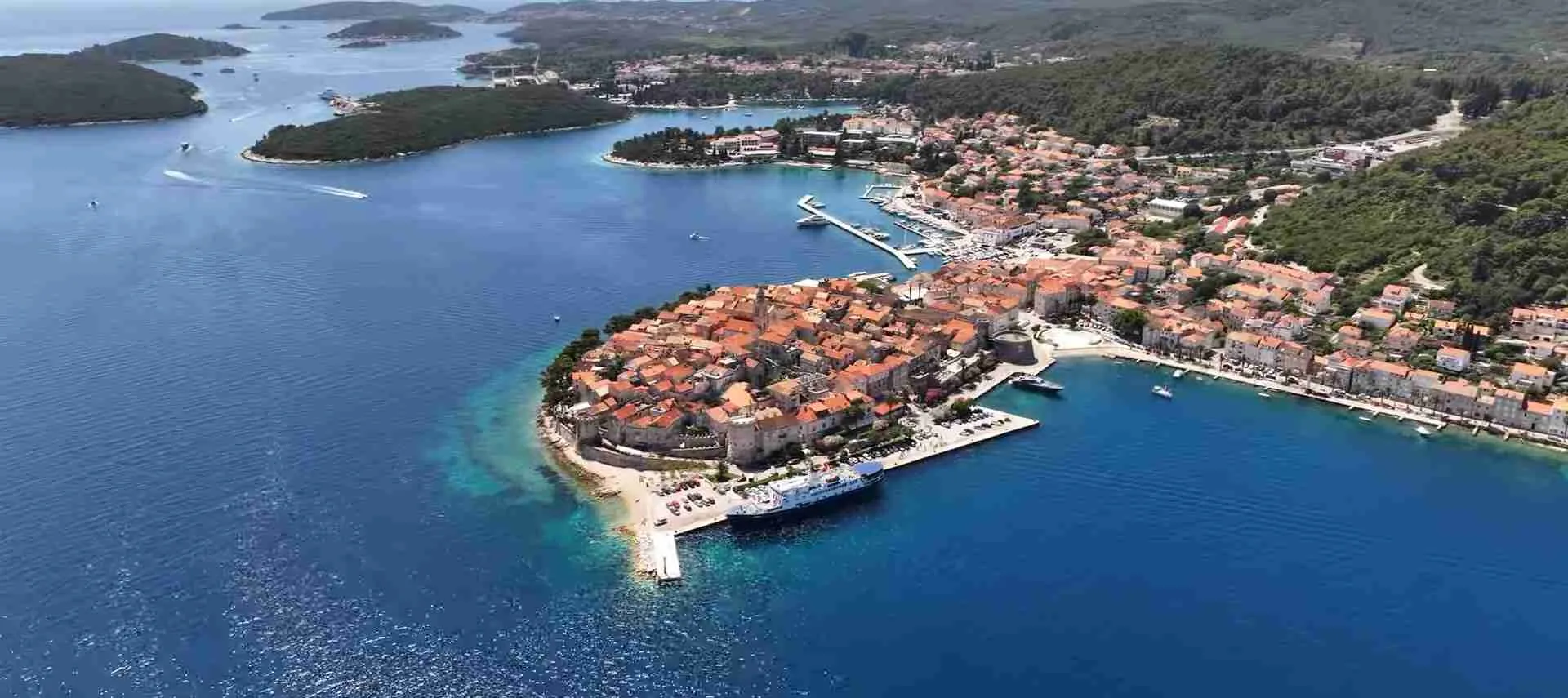
Korčula Travel Guide 2026: Marco Polo’s Island
Korčula emerges as one of Croatia’s most enchanting islands in 2026, combining a perfectly preserved medieval Old Town nicknamed “Little Dubrovnik” with the legendary birthplace of explorer Marco Polo, exceptional white wine vineyards, and pristine Adriatic beaches less crowded than Hvar or Brač. This definitive planning guide provides everything needed to experience Korčula: current ferry schedules and pricing from Split and Dubrovnik, accommodation strategies across all budgets, wine tasting logistics in Lumbarda and Čara vineyards, and insider knowledge for maximizing your island escape.
Key Takeaways for Visiting Korčula in 2026
- Ferry connections from Dubrovnik cost €9-25 (1 hour 40 minutes) and Split €10-25 (2.5-3.5 hours) with catamarans operating year-round, increasing frequency May-October with up to 7 daily summer crossings from Dubrovnik
- Korčula Old Town’s fishbone street layout and medieval walls create an atmospheric pedestrian-only historic center within 400 meters across, allowing walking access to St. Mark’s Cathedral, Marco Polo sites, and waterfront dining
- Accommodation ranges from budget guesthouses at €65-90 nightly to boutique heritage hotels at €100-200, with overall costs running 30-40% below Dubrovnik for equivalent quality and significantly quieter atmospheres
- Grk and Pošip white wines produced exclusively in Lumbarda and Čara regions warrant dedicated wine tasting tours (€30-50) visiting family vineyards impossible to find outside Korčula
- Strategic timing in May-June or September delivers optimal weather (24-28°C), manageable crowds, lower accommodation costs, and full restaurant/service availability versus peak July-August congestion and prices
- The Marco Polo Museum (€8-9 entrance) provides comprehensive multimedia exhibitions about the explorer’s life and Silk Road journey, while the controversial Marco Polo House (€3 entrance) offers primarily tower views over Old Town rooftops
People Also Ask About Korčula 2026
Is Korčula Worth Visiting in 2026?
Korčula absolutely merits inclusion in 2026 Croatia itineraries as the country’s most authentic island destination offering a UNESCO-quality medieval Old Town (though not officially listed), Marco Polo heritage sites, world-class white wine production, and stunning beaches without the overwhelming crowds afflicting Hvar during peak season. The island receives roughly 30-40% less tourist traffic than comparable Hvar despite offering superior historical architecture, more accessible beaches, and significantly lower accommodation costs. Korčula’s fortified Old Town rivals Dubrovnik’s medieval splendor with Venetian Gothic architecture, narrow stone streets, and impressive defensive towers, all within a compact walkable area that takes 2-3 hours to explore thoroughly.
The island’s unique appeal compounds through multiple dimensions: history enthusiasts explore Marco Polo connections and medieval fortifications; wine lovers discover indigenous Grk and Pošip grape varieties grown nowhere else globally; beach seekers access crystal-clear swimming coves within 10-15 minutes of town; and culture aficionados experience traditional Moreška sword dances and local festivals celebrating authentic Croatian island identity. Budget travelers particularly benefit from Korčula’s value proposition: accommodation costs 30-40% less than Hvar equivalents, dining maintains local pricing rather than tourist premiums, and ferry connections from major cities avoid expensive catamaran transfers to remote islands.
How Many Days Should I Spend in Korčula in 2026?
Allocate 3-4 days for Korčula in 2026 to experience the island comprehensively: one day exploring Korčula Old Town, Marco Polo sites, and St. Mark’s Cathedral; one day visiting Lumbarda vineyards and beaches; one day touring the island’s beaches and villages (Račišće, Pupnat, Vela Luka); and optionally one day for island hopping to Mljet National Park or relaxed beach time. A rushed 2-day visit allows seeing Old Town highlights and sampling wine but sacrifices the island’s slower pace and forces you to skip hidden gems like Pupnat’s secluded coves or the dramatic west-coast scenery near Vela Luka.
Extended stays (5-7 days) transform Korčula into a relaxed island base for exploring southern Dalmatia: day trips to Mljet National Park (30 minutes by ferry), kayaking excursions around the archipelago, cycling routes through olive groves and vineyards, and sailing trips to the Pelješac Peninsula wineries. The accommodation cost differential versus Hvar makes longer Korčula stays economically attractive while providing a more authentic island experience than resort-focused destinations. Most travelers find the 3-4 day allocation optimal, experiencing both cultural depth and beach relaxation without feeling rushed or exhausted by constant activity.
What is the Best Way to Get to Korčula in 2026?
Direct catamaran ferries from Dubrovnik (€9-25, 1 hour 40 minutes, year-round service) or Split (€10-25, 2.5-3.5 hours, year-round service) provide the most convenient transportation to Korčula in 2026, with catamarans operated by Jadrolinija, TP Line, and Kapetan Luka-Krilo docking directly at Korčula Old Town port. Summer season (April-October) offers 4-7 daily departures from both cities, while winter months reduce to 1-2 daily crossings; advance booking 1-2 months ahead secures preferred departure times during July-August peak when ferries sell out weekends and holidays. The Dubrovnik route proves faster and more scenic, passing Mljet National Park and the Pelješac Peninsula, while the Split route enables island-hopping combinations stopping at Hvar and Brač.
Alternative approaches include the car ferry from Orebić on Pelješac Peninsula to Dominče port (15 minutes, €5 per passenger plus €20-30 per vehicle, hourly departures), ideal for travelers with rental cars exploring the Pelješac wineries before crossing to Korčula; or the catamaran to Vela Luka port on Korčula’s western side (30 km from Korčula Town, requiring bus connection), which serves travelers prioritizing that region. Organized day trips from Dubrovnik (€50-80 including ferry and guided tour) suit time-constrained visitors but provide only 3-4 hours on the island, insufficient for meaningful exploration beyond a rushed Old Town walk.
How Much Does a Trip to Korčula Cost in 2026?
A Korčula trip in 2026 costs €60-90 daily per person for budget travelers (guesthouse, local konoba dining, self-guided exploration), €120-160 daily for mid-range travelers (3-star hotel, restaurant variety, wine tasting and beach activities), or €220-320 daily for comfortable experiences (boutique hotel, upscale dining, organized tours and sailing excursions). These totals exclude the major one-time expense of ferry transportation from Dubrovnik (€9-25) or Split (€10-25), which adds a fixed cost to the first day’s budget.
Specific cost examples for 2026: accommodation ranges €65-90 nightly (budget guesthouses and apartments), €100-140 (mid-range hotels), or €150-250 (boutique heritage properties like Aminess Korcula Heritage Hotel); meals cost €10-15 (konoba lunch with local wine), €20-30 (quality restaurant dinner with seafood), or €40-60 (upscale waterfront dining with wine pairings); Marco Polo Museum entrance €8-9; Marco Polo House tower €3; wine tasting tours €30-50; beach equipment rentals €10-20; kayak tours €40-60. A typical 4-day Korčula visit including ferry costs totals €350-500 (budget), €600-850 (mid-range), or €1,100-1,600 (comfortable) per person including accommodation, meals, activities, and ferry transportation but excluding international flights and extensive alcohol purchases.
Extended multi-day tours – 5+ days
Featured Korcula Island Multi-Day Tour Packages
3 days
Korcula Island 3-Day Discovery Tour
- ✓ Comprehensive Korcula Island experience
- ✓ Expert local guides included
- ✓ All accommodation included
- ✓ Transportation provided
5 days
Korcula Island 5-Day Highlights Experience
- ✓ Comprehensive Korcula Island experience
- ✓ Expert local guides included
- ✓ All accommodation included
- ✓ Transportation provided
7 days
Korcula Island 7-Day Cultural Journey
- ✓ Comprehensive Korcula Island experience
- ✓ Expert local guides included
- ✓ All accommodation included
- ✓ Transportation provided
10 days
Korcula Island 10-Day Complete Adventure
- ✓ Comprehensive Korcula Island experience
- ✓ Expert local guides included
- ✓ All accommodation included
- ✓ Transportation provided
Multi-day tour packages powered by TourRadar. Prices and availability subject to change.
Introduction to Korčula: The Emerald Island in 2026
Korčula occupies a privileged position among Dalmatian islands as the sixth-largest in the Croatian archipelago (279 square kilometers, population 15,000) yet maintaining an intimate, undiscovered atmosphere that mass tourism destinations lost decades ago. Located 150 km northwest of Dubrovnik and 130 km southeast of Split, the island stretches 46 km long with dense pine and Mediterranean oak forests earning its ancient Greek name “Korkyra Melaina” (Black Corfu) from the dark green canopy visible from sea. The fortified medieval town of Korčula dominates the northeastern coast, its distinctive fishbone street pattern and Venetian Gothic architecture creating one of the Mediterranean’s best-preserved historic towns, comparable to Dubrovnik’s splendor without the overwhelming cruise ship crowds.
The 2026 travel landscape positions Korčula advantageously as Croatia implements sustainable tourism initiatives in overcrowded destinations while ferry infrastructure improvements enhance accessibility from major hubs. Catamaran operators expanded year-round service maintaining winter connections previously limited to summer months, Split Airport shuttle buses now coordinate with ferry departures improving logistics for international arrivals, and accommodation options diversified beyond basic rentals into boutique heritage hotels preserving historic stone buildings with contemporary comfort. Simultaneously, Korčula maintains authentic island character: family-run wineries still operate traditional vineyards, local konobas serve recipes unchanged for generations, and seasonal festivals celebrate Croatian traditions rather than international tourist expectations.
Korčula’s legendary connection to Marco Polo—the island claims the famous explorer was born here in 1254 rather than Venice—provides historical intrigue beyond typical beach-and-wine Croatian destinations. While historians debate the birthplace question without definitive proof, Korčula fully embraces Marco Polo heritage through museums, cultural centers, and the preserved (though controversial) birth house tower offering panoramic Old Town views. This narrative thread connects Korčula to the Silk Road, medieval Venice-Genoa conflicts, and global exploration history, adding intellectual depth to beach vacation relaxation.
Strategic planning for Korčula 2026 visits prioritizes four critical decisions: ferry routing (Dubrovnik versus Split determines overall itinerary flow and costs); accommodation location (Old Town proximity enables walking access but limits beach convenience); wine tasting logistics (organized tours versus independent vineyard visits significantly impact expense and education quality); and timing (shoulder season May-June or September optimizes weather, costs, and crowds versus July-August peak). This guide addresses each decision with current 2026 data, ensuring your Korčula experience captures the island’s authentic character while avoiding common pitfalls affecting uninformed visitors.
Understanding Korčula’s Geography and Layout for 2026 Visitors
Korčula Island’s elongated east-west orientation creates distinct regional characteristics: the eastern end near Korčula Town features the most dramatic coastline, deepest harbors, and densest development; the central spine contains agricultural valleys with vineyards and olive groves; and the western end around Vela Luka offers broader bays, fishing villages, and more subdued scenery. A single main road (Route 118) traverses the island’s 46-km length connecting major settlements, with secondary roads branching to coastal villages and beach areas, making car or scooter rental advantageous for comprehensive island exploration though unnecessary for Old Town-focused visits.
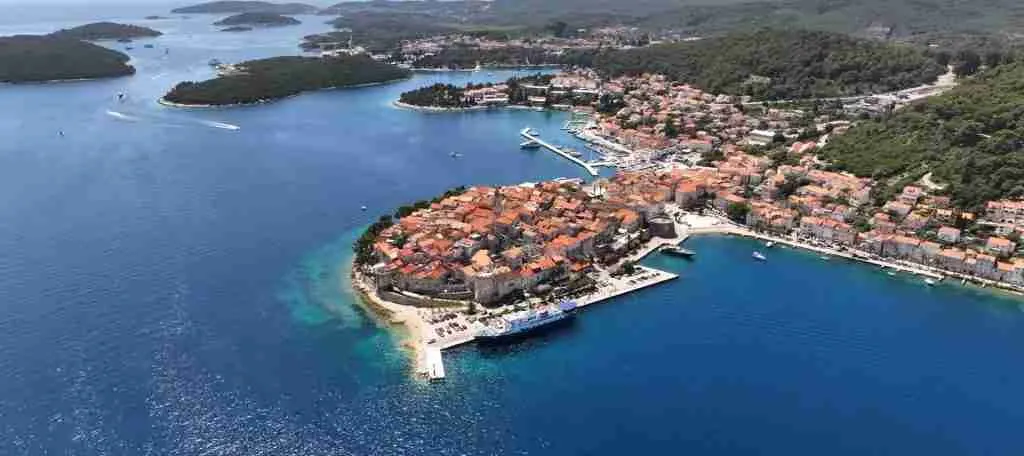
Korčula Old Town occupies a small peninsula jutting into the channel separating the island from the Pelješac Peninsula mainland, its fortified walls and towers creating a teardrop-shaped historic center measuring roughly 400 meters across. The medieval street plan follows a unique “fishbone” pattern with a central thoroughfare running the peninsula’s spine and perpendicular alleys descending toward surrounding waters, designed to minimize wind exposure while maximizing defensive capabilities. This compact geography concentrates all major historical attractions—St. Mark’s Cathedral, Marco Polo sites, museums, towers, and palaces—within 10-15 minute walking radius, eliminating transportation needs for cultural sightseeing.
The waterfront promenade (Obala) curves around the Old Town peninsula’s southern shore, lined with restaurants, cafés, and the ferry terminal receiving catamarans from Dubrovnik and Split. This pedestrian zone extends westward past small swimming beaches toward modern residential neighborhoods and hotel developments, creating a 2-km waterfront walk connecting historic and contemporary Korčula. The northern side faces the narrow Pelješac Channel with views across to the mountainous mainland, while the southern orientation opens toward open Adriatic waters and sunset vistas.
Lumbarda village (7 km southeast, 15 minutes by car/bus) represents Korčula’s wine heartland, where sandy beaches unique in the Dalmatian islands meet vineyards producing Grk white wine exclusively cultivated here. The Lumbarda peninsula’s three main beaches—Vela Przina, Bilin Žal, and Tatinja—offer rare sandy entries contrasting Dalmatia’s typical pebble shores, making this area particularly popular with families. Winery tasting rooms cluster along roads connecting Lumbarda village with the beaches, enabling wine-and-beach combination days.
Vela Luka (45 km west, 45 minutes by car) serves as Korčula’s second ferry port with connections to Split and Lastovo Island, operating as a working fishing port and departure point for Mljet National Park excursions rather than a tourist center. The town’s broader bay and modern development contrast sharply with Korčula Old Town’s medieval character, though the surrounding coastline offers excellent swimming coves and the fascinating Vela Spila archaeological cave inhabited 20,000 years ago. Travelers basing in Korčula Town rarely visit Vela Luka unless catching specific ferry connections or seeking quiet beach isolation.
Ferry Connections and Getting to Korčula in 2026
Korčula ferry connections in 2026 operate from two mainland ports—Dubrovnik and Split—plus the Pelješac Peninsula crossing, with catamaran services dominating passenger transportation while traditional car ferries serve vehicle transport needs. Understanding route options, pricing structures, and seasonal schedules proves essential for seamless island access and overall itinerary planning.
Dubrovnik to Korčula catamarans operate year-round with peak summer frequency (April-October) reaching 6-7 daily departures, reducing to 1-2 daily winter crossings November-March. Three operators serve the route: Jadrolinija, TP Line, and Kapetan Luka-Krilo, with journey times ranging 1 hour 40 minutes to 2 hours 10 minutes depending on whether catamarans make intermediate stops at Mljet Island or proceed directly. Ticket prices in 2026 start at €9 for advance bookings during off-peak periods, ranging up to €25 for last-minute summer weekend purchases; children under 3 travel free while children 3-12 receive 50% discounts. The Dubrovnik route offers scenic advantages passing Mljet’s forested coastline and the dramatic Pelješac cliffs, plus shorter journey times making day trips theoretically feasible (though not recommended for quality exploration).
Split to Korčula catamarans similarly operate year-round with summer service (April-October) providing 4-6 daily crossings, dropping to 1-2 daily in winter. The route serves two Korčula destinations: most catamarans dock at Korčula Old Town (2 hours 20 minutes to 3 hours 40 minutes depending on stops at Hvar and Brač islands), while some terminate at Vela Luka port on the island’s western end (2 hours 20 minutes direct). Fares mirror the Dubrovnik range at €10-25 depending on season, advance booking, and operator. The Split route enables island-hopping itineraries combining Korčula with Hvar and Brač in multi-day trips, though the longer journey time and higher frequency of intermediate stops can extend travel to nearly 4 hours during peak periods when catamarans service multiple islands.
Orebić to Dominče car ferry provides the most convenient vehicle transport option, connecting the Pelješac Peninsula town of Orebić (accessible via road from Dubrovnik or Split) to Dominče port 3 km from Korčula Town. This short crossing operates year-round with hourly departures 5 AM-11 PM, journey time 15 minutes, costs €5 per passenger plus €20-30 per standard vehicle depending on size. Travelers with rental cars exploring Pelješac wineries (Dingač, Postup appellations) before crossing to Korčula find this route optimal, avoiding catamaran vehicle restrictions. The Jadrolinija ferry accommodates cars, motorcycles, campers, and even small trucks, with advance reservations recommended July-August weekends when locals shuttle between mainland and island.
Booking strategies for 2026: purchase catamaran tickets 1-2 months ahead for July-August travel ensuring availability on preferred departure times, particularly Friday-Sunday when ferries sell out with Croatian weekend travelers; shoulder season (May-June, September-October) allows 1-2 week advance booking with comfortable availability; winter months permit even same-day purchases though verify schedules as some operators reduce service unpredictably. Online booking through Ferryhopper, GetByBus, or operator websites (Jadrolinija, TP Line, Krilo) provides English-language interfaces, e-tickets eliminating physical ticket collection, and typically 5-10% discounts versus port counter purchases. Arrive at departure ports 30-45 minutes before summer catamaran departures for boarding procedures; winter’s reduced crowds allow 15-20 minute pre-departure arrival.
Important catamaran limitations: foot passengers only, no vehicle transport on catamarans (use car ferry alternatives); luggage restricted to 20-23 kg per passenger (strictly enforced with excess baggage fees €5-10 per additional bag); bicycles generally prohibited except on specific Krilo routes with advance arrangements; pets allowed in carriers with restrictions varying by operator (Jadrolinija permits small pets in cabin, others may require deck kennels or prohibit entirely). Standard catamaran amenities include air conditioning, comfortable airline-style seating, WiFi (quality varies), snack bars, toilets, and outdoor deck areas for photography and fresh air during scenic channel passages.
Where to Stay in Korčula: Accommodation Planning for 2026
Korčula accommodation in 2026 spans budget apartments starting around €65 nightly to luxury boutique hotels reaching €250+, with overall costs running 30-40% below equivalent Hvar or Dubrovnik properties—a significant advantage for budget-conscious travelers seeking quality lodging. The island’s accommodation concentrates heavily in Korčula Town and immediately surrounding areas (80% of options), with limited choices in outlying villages like Lumbarda, Račišće, and Vela Luka serving travelers prioritizing specific beach access or wine region proximity over historic town atmosphere.
Korčula Old Town accommodation positions you within the medieval fortified walls steps from St. Mark’s Cathedral, Marco Polo sites, restaurants, and waterfront promenades, creating maximum atmospheric immersion ideal for travelers prioritizing cultural exploration and evening ambiance. Stone guesthouses and small hotels occupy restored Venetian palaces with thick walls providing natural cooling, though note that Old Town properties typically lack parking (public parking 300-500 meters outside walls, €2-3 hourly or €20-30 daily), elevators (narrow historic staircases with luggage challenges), and sometimes air conditioning (thick stone walls moderate heat but July-August can feel warm). Boutique options like Aminess Korcula Heritage Hotel (€150-220 nightly) deliver historic character with modern amenities including seafront terraces and quality dining.
Waterfront area accommodation along the promenade outside Old Town walls balances historic proximity with contemporary convenience: properties like Hotel Korsal (€100-160 nightly) offer direct beach access across the pedestrian walkway, parking availability, elevators, air conditioning, and swimming opportunities while maintaining 5-minute walks to Old Town attractions. This zone suits travelers combining cultural sightseeing with daily swimming, families needing modern facilities and easy logistics, and those arriving with rental cars requiring parking access. Summer demand drives prices up 40-50% versus shoulder season; advance booking 3-6 months secures best availability and rates.
Lumbarda village accommodation (7 km from town) emphasizes beach proximity and wine country setting over medieval atmosphere: apartments, small hotels, and villa rentals (€70-140 nightly) provide bases for swimming at sandy beaches and walking to wine tasting rooms without needing vehicles between accommodation and activities. This area attracts families with young children preferring sandy beach entry, wine enthusiasts wanting vineyard immersion, and budget travelers accepting 15-minute bus rides or taxi costs (€10-15) for Old Town evening visits. Lumbarda restaurants and shops serve basic needs though selection pales against Korčula Town’s variety.
Budget accommodation strategies for 2026: apartments with kitchens enable self-catering breakfast and occasional dinners saving €20-30 daily per person; guesthouses in residential areas 10-15 minute walk from Old Town charge €65-90 versus €100-140 for equivalent quality with harbor views; shoulder season travel (May-June, September) delivers 30-40% lower rates than July-August peak; weekly stays often negotiate 10-15% discounts directly with property owners. Platforms like Booking.com, Airbnb, and Croatian-specific Adriatic.hr offer comprehensive Korčula selections with reliable review systems and flexible cancellation policies.
Luxury accommodation tier remains limited on Korčula compared to Hvar’s abundant resort development: Aminess operates several upscale properties including the Heritage Hotel, Lume Hotel, and Marko Polo Hotel (€150-250 range) offering pools, spas, organized activities, and full-service amenities. Travelers seeking ultra-luxury accommodations (€300+ nightly) typically base elsewhere, using Korčula for day visits, as the island’s character favors authentic mid-range experiences over exclusive resort isolation. This limitation actually enhances Korčula’s appeal for travelers escaping commercialized destinations in favor of genuine island life.
Exploring Korčula Old Town: Medieval Architecture and Marco Polo Sites in 2026
Korčula Old Town represents the island’s supreme attraction, its fortified medieval walls and Venetian Gothic architecture creating one of the Adriatic’s most perfectly preserved historic centers, comparable to Dubrovnik’s splendor on a more intimate, walkable scale. The unique fishbone street layout—a main thoroughfare bisecting the peninsula with perpendicular residential alleys descending east and west—evolved from 13th-14th century urban planning that optimized wind flow, sun exposure, and defensive capabilities while creating the distinctive aesthetic that modern visitors photograph extensively.
St. Mark’s Cathedral dominates the central square with its ornate Renaissance facade combining Gothic and Baroque elements across centuries of construction (begun 1301, completed 1806). The cathedral treasury houses valuable religious art including works by Tintoretto and Bassano, 15th-century sacral objects, and illuminated manuscripts; entrance costs €3-5. The cathedral’s bell tower (€3-5 entrance) rewards climbers with 360-degree panoramas over the Old Town’s terracotta rooftops, surrounding islands, and Pelješac Peninsula mountains, creating Korčula’s premier photography vantage point. Opening hours operate 9 AM-7 PM summer months, reduced to 10 AM-4 PM winter; verify current schedules via the Korčula Diocese website as religious services occasionally limit tourist access.
The Marco Polo Museum occupies a modern building on the Old Town’s southern edge, providing comprehensive multimedia exhibitions about the legendary explorer’s life, Silk Road travels, and the controversial debate over his birthplace. Interactive displays, historical maps, period costumes, and reconstructed trading goods immerse visitors in 13th-century merchant culture and the Venetian-Genoese conflicts that defined Marco Polo’s era. Entrance costs €8-9 in 2026 (check the Gradski Muzej Korčula website for current rates), with audio guides included in multiple languages. Budget 1-2 hours for thorough exploration; the museum succeeds at contextualizing Marco Polo’s global significance and Korčula’s Venetian Republic connections in ways that justify the entrance fee for history enthusiasts.
The Marco Polo House (claimed birthplace) generates more controversy than the museum: located in the Old Town’s southeastern quarter, this stone tower structure (€3 entrance) offers primarily panoramic views from the top rather than meaningful historical exhibits or preserved living spaces. Critics correctly note the sparse interior (bare stone walls, narrow stairs, minimal explanatory materials) fails to deliver museum-quality experiences, while defenders argue the tower views over Old Town rooftops and St. Mark’s Cathedral justify the modest admission. Manage expectations: visit for photography perspectives and to say you climbed Marco Polo’s alleged birth tower, not for deep historical immersion (the museum handles that function). Opening hours extend 9 AM-9 PM summer season.
The Town Museum (Gradski Muzej) occupies the Gabrielis Palace showcasing Korčula’s broader history through archaeological finds, medieval documents including the 1214 town statute among Europe’s oldest, traditional costume displays, and maritime artifacts. Entrance €3-5, opening hours 10 AM-6 PM summer (reduced winter schedule). The Abbey Treasury adjacent to St. Mark’s Cathedral presents religious art and illuminated manuscripts in the former Bishop’s Palace; combined cathedral-treasury tickets offer modest savings. The Massimo Tower near the Land Gate provides additional sunset viewing platforms (free access).
Exploring strategy for 2026: begin early morning (8-9 AM) for photography without crowds and cooler temperatures; the Old Town’s compact size allows seeing major attractions in 3-4 hours though relaxed exploration with lunch breaks extends to full-day experiences; avoid midday heat (12-3 PM) when stone streets reflect intense sun and attractions close for siesta; return for evening ambiance when locals emerge, restaurants fill with diners, and golden hour light dramatizes the architecture. Purchase combined attraction tickets where available saving 10-15% versus individual entries; free walking tours departing daily from the main square (10 AM, tip-based) provide orientation and historical context before independent exploration.
Wine Tasting in Korčula: Lumbarda and Čara Vineyards in 2026
Korčula’s wine culture centers on indigenous white grape varieties grown nowhere else on Earth: Grk (pronounced “gerk”) cultivated exclusively in Lumbarda’s sandy soils, and Pošip originating in Čara village then spreading to other Dalmatian regions while maintaining its finest expression on Korčula. These unique appellations justify dedicated wine tasting experiences impossible to replicate outside the island, creating compelling reasons for wine enthusiasts to prioritize Korčula over more famous Croatian wine regions.
Grk wine exhibits distinctive characteristics: dry, full-bodied white with pronounced minerality, stone fruit flavors (peach, apricot), and refreshing acidity balancing 13-14% alcohol content. The Grk grape’s unusual feature—female flowers only, requiring cross-pollination from other varieties—restricts cultivation to Lumbarda’s specific microclimate and sandy soils created by marine deposits. This geographical limitation makes Grk Croatia’s rarest wine, with total annual production under 100,000 bottles from approximately 30 family producers. Expect prices €15-25 per bottle in tasting rooms, €20-35 in restaurants, with top selections reaching €40-50 for reserve vintages aged in oak.
Pošip wine from Čara presents different profile: elegant, aromatic white with floral notes (acacia, elderflower), citrus and tropical fruit (grapefruit, pineapple), and crisp finish maintaining balance at 12-13% alcohol. While Pošip now grows throughout Dalmatia, connoisseurs consider Korčula-produced versions superior in complexity and aging potential, with the limestone-clay soils of Čara and Smokvica villages providing ideal terroir. Production exceeds Grk substantially with bottles available €12-30 depending on producer and vintage. Both varieties pair excellently with Adriatic seafood—grilled fish, octopus salad, shellfish risotto—making restaurant wine-and-food combinations essential Korčula experiences.
Organized wine tasting tours in 2026 operate from Korčula Town visiting 3-4 family wineries in Lumbarda and occasionally Čara, typically 4-5 hours including transportation, tastings, and light snacks (bread, cheese, olive oil, prosciutto). Prices range €30-50 per person depending on group size, wine selections, and whether meals are included. Tours benefit from winery access often unavailable to walk-in visitors, English-speaking guides explaining viticulture and regional wine history, and eliminating driving concerns after tastings. Book through Korčula travel agencies, hotel concierges, or online platforms like Viator and GetYourGuide; advance reservations 1-2 weeks recommended during summer high season.
Independent wine tasting strategies suit adventurous travelers with rental cars or willingness to bicycle 7 km to Lumbarda: family tasting rooms along the Lumbarda-Račišće road welcome visitors without appointments (though calling ahead ensures availability, particularly off-season); English-language capabilities vary from excellent in established wineries to limited in tiny family operations where pointing and smiling facilitate communication. Expect tasting fees €5-10 per person for sampling 3-5 wines, often waived with bottle purchases. Recommended producers include Bire, Toreta, Zure, and Krajančić in Lumbarda; in Čara/Smokvica area, seek Toreta and Krajančić labels. Tasting room hours typically 9 AM-7 PM summer, more irregular winter schedules requiring advance contact.
Practical considerations: arrange designated drivers or taxis (€25-35 round-trip Korčula Town-Lumbarda) as Croatia enforces strict drunk driving laws (0.05% blood alcohol limit) with severe penalties; summer afternoon tastings risk excessive heat in vineyards lacking air conditioning—morning or late afternoon timing proves more comfortable; purchasing wine for export requires understanding customs limits (EU residents unlimited, non-EU travelers verify home country restrictions); most wineries accept cash only, few process credit cards; serious wine buyers shipping quantities home should contact Croatian wine export specialists rather than attempting airline luggage transport of multiple cases.
Beaches and Swimming Spots Around Korčula in 2026
Korčula’s beaches divide into two categories: convenient town beaches within walking distance of Old Town accommodations offering quick swimming escapes during sightseeing days, and premium destination beaches requiring 10-30 minute drives/buses rewarding effort with superior water clarity, scenery, and crowd management. The island’s 182-km coastline creates abundant swimming opportunities, though most consist of pebble entries and concrete platforms rather than sandy shores—Lumbarda’s beaches represent rare Dalmatian sand exceptions.
Banja Beach sits immediately adjacent to Korčula Old Town’s eastern walls, a compact pebble beach with concrete sunbathing platforms, beach bar, equipment rentals (sunbeds €8-12, kayaks €15-20 hourly), and shallow entry suitable for children. The convenience—2-minute walk from St. Mark’s Cathedral—makes Banja ideal for quick afternoon swims between cultural sightseeing or evening dips before waterfront dining. Crowds concentrate here during July-August peak when every square meter fills with bodies; arrive before 9 AM or after 5 PM for comfortable space. Water clarity rates good rather than exceptional given proximity to harbor and high bather density. Free access, though sunbed rental encouraged during peak hours when finding rock space proves challenging.
Lumbarda beaches 7 km southeast deliver the island’s finest swimming: Vela Przina and Bilin Žal feature rare sandy entries into turquoise shallows ideal for families with young children, with gradual depth increases allowing 20-30 meters of wading before deeper water. Beach infrastructure includes sunbed/umbrella rentals (€12-18 per set), beach bars, water sports operators (jet ski, paddleboard, banana boat rides €20-40), and parking areas (€5-10 daily summer). Peak season crowds rival town beaches as Croatian families and yacht visitors concentrate at limited sandy options; shoulder season transforms these into peaceful paradises. Buses connect Korčula Town-Lumbarda hourly (€3-5, 15 minutes) summer months, reducing to 3-4 daily winter; taxis cost €15-20 one-way, rental scooters/cars provide maximum flexibility combining beach time with wine tasting.
Pupnat Beach (Pupnatska Luka) west of Korčula Town represents dedicated beach enthusiasts’ destination: dramatic pebble cove surrounded by pine forest-covered cliffs creating protected swimming in exceptionally clear water rated among Korčula’s finest. The 6-km rough access road from Pupnat village (itself 12 km from Korčula Town via main road) limits crowds to those willing to navigate narrow, potholed route unsuitable for nervous drivers; this isolation maintains pristine conditions and peaceful atmosphere even during August peak. Minimal facilities (one seasonal beach bar, no sunbed rentals or water sports) emphasize natural setting over commercial development. Pack supplies, arrive early for parking, expect pebbles requiring water shoes for comfortable entry.
Račišće Bay northeast of Old Town offers family-friendly swimming at several small pebble beaches connected by coastal promenade: calmer waters than exposed southern beaches, shade from pine trees, nearby village restaurants and shops, parking availability, and good bus connections (€3, 20 minutes from Korčula Town, hourly summer service). Less dramatic scenery than Pupnat but superior convenience and infrastructure serving multi-hour beach days. Vela Luka area beaches on the western island provide alternatives for travelers basing there or making day trips: Proizd Island (uninhabited, boat taxi from Vela Luka, pristine conditions) and Vela Spila beach near the archaeological cave.
Swimming considerations for 2026: jellyfish occasionally appear July-August during calm conditions (non-dangerous stinging species, uncomfortable rather than dangerous, vinegar application treats stings); sea urchins populate rocky areas requiring water shoes or careful foot placement; morning swims (8-11 AM) offer calmest water and coolest temperatures before afternoon winds pick up; topless sunbathing accepted on most beaches, nude bathing restricted to remote coves away from family areas; water quality throughout Korčula rates excellent with regular monitoring ensuring safety standards. Bring reef-safe sunscreen (chemical sunscreens damage marine ecosystems), snorkeling equipment for exploring rocky outcrops and seagrass meadows, and waterproof phone cases for underwater photography in crystal-clear Adriatic waters.
Day Trips and Excursions from Korčula in 2026
Korčula’s strategic mid-Dalmatia position enables diverse day trips exploring national parks, neighboring islands, mainland attractions, and coastal villages within 1-3 hours radius, transforming multi-day Korčula stays into comprehensive southern Dalmatia experiences without constant accommodation changes.
Mljet National Park (30-45 minutes by ferry from Korčula, seasonal April-October service, €20-30 round-trip) protects two spectacular saltwater lakes surrounded by dense Mediterranean forest on Croatia’s greenest island. Organized full-day excursions from Korčula (€50-80 including ferry, park entrance, and lunch) depart mornings, allowing 4-5 hours exploring the lakes via walking/cycling trails, swimming in Malo Jezero’s warm waters, visiting the 12th-century Benedictine monastery on St. Mary Island (reached by short boat ride from Veliko Jezero), and photographing the dramatic karst landscape. Independent visitors taking passenger ferries to Pomena or Polače ports on Mljet must purchase separate park entrance (€15-25 depending on season) and arrange bicycle rentals (€10-15) or walking to maximize lakeside exploration. The park’s monastery island provides unique swimming opportunities: lake water 3-4°C warmer than open sea creates comfortable conditions even shoulder season.
Pelješac Peninsula wineries (30 minutes ferry to Orebić, then car travel through wine regions) produce Croatia’s finest red wines from the indigenous Plavac Mali grape: Dingač and Postup appellations create powerful, full-bodied reds (14-16% alcohol) commanding €30-80 per bottle. Day trips combining Orebić ferry crossing with winery tours in Potomje, Dingač, and Trstenik villages (€60-90 organized tours including transportation, tastings, lunch) appeal to serious wine enthusiasts willing to experience reds contrasting Korčula’s white focus. Independent travelers with rental cars can create custom winery routes, though note that many Pelješac cellars require appointments and finding properties in steep hillside vineyards challenges navigation skills. The dramatic terraced vineyards clinging to mountain slopes create spectacular scenery even for non-wine-drinkers.
Lastovo Island (2-hour ferry from Korčula’s Vela Luka port, limited frequency requiring overnight stays for comprehensive exploration) represents Croatia’s most remote inhabited island, former military zone opened to tourism only 1990s maintaining pristine conditions and astronomical dark sky designation. Day trips prove possible but rushed; better allocated for 2-3 day independent side trips from Korčula combining unspoiled nature, traditional village architecture, and escape from all tourism infrastructure. Ferry schedules and pricing vary significantly by season; verify current operations through Jadrolinija before planning.
Ston and Mali Ston on the Pelješac Peninsula (1 hour by car ferry plus driving, or organized excursions €50-70) feature the second-longest defensive walls in Europe (5.5 km) and Croatia’s premier oyster farming: walking the medieval walls provides spectacular bay views and historical context, while waterfront restaurants serve fresh oysters (€1-2 each) and mussels paired with local Grk wine. Half-day trips from Korčula combine wall walking with seafood lunch; full-day versions add salt pan visits and Pelješac wine tasting. The walls’ exposed position demands sun protection and water supplies; climbing 900+ steps requires moderate fitness levels.
Hvar Island connections via catamaran (1-hour journey, €15-25) enable combining two islands in single trips, though attempting both Korčula and Hvar comprehensively in one day creates exhausting schedules. Better approach: base 2-3 days Korčula, ferry to Hvar for 1-2 nights, then continue to Split, creating logical one-way island-hopping progression. Korčula’s quieter character complements Hvar’s party-focused energy; experiencing both illuminates the diversity within Croatian island destinations.
Dining and Food Costs in Korčula for 2026
Korčula’s dining scene emphasizes fresh Adriatic seafood, Dalmatian grilled meats, local wines, and traditional recipes passed through generations in family-run konobas, with overall costs maintaining authentic pricing rather than the tourist premiums afflicting Hvar and Dubrovnik’s most visible restaurants. Understanding food costs enables accurate 2026 budget planning and helps identify value establishments versus overpriced tourist traps.
Budget dining options (€10-18 per meal) center on konobas in Old Town side streets away from waterfront promenade: grilled fresh fish (charged by weight, typically €40-60 per kg, one portion 300-400g equals €12-24), traditional fish stew (brudet) €12-16, seafood risotto €14-18, grilled squid or octopus €14-18, meat dishes (peka lamb, pašticada beef stew) €12-16. Pizzerias throughout town offer reliable €8-12 options for pizza and pasta when seafood budgets stretch thin. Bakeries (pekare) sell burek pastries (€2-3), sandwiches (€3-5), and sweet treats (€1-3) ideal for quick breakfast or beach lunch. Supermarkets (Konzum, Tommy) provide self-catering supplies: fresh bread €1-2, local cheese €8-15 per kg, olive oil €12-25 per liter, seasonal produce at market prices. Budget travelers easily maintain €25-35 daily food costs combining supermarket breakfast/lunch with one restaurant dinner.
Mid-range dining (€20-35 per meal) encompasses quality waterfront konobas and seafood restaurants with harbor views: premium grilled fish (sea bass, sea bream, dentex) €45-70 per kg equals €14-28 per portion, shellfish platters €25-35, lobster or scampi €35-50, black risotto with cuttlefish €16-20, Dalmatian meat dishes with sides €18-25, quality local wines €15-30 per bottle. Expect better service, English menus with descriptions, and romantic atmospheres justifying slight premiums over back-street konobas serving identical quality at lower prices. Mid-range budgets of €45-65 daily allow restaurant breakfast (€8-12), casual lunch (€12-18), and proper dinner (€25-35) with wine.
Upscale dining (€35-60+ per meal) remains limited on Korčula compared to major Croatian destinations: a handful of fine-dining establishments offer refined seafood preparations, tasting menus €50-80, premium Croatian wines €30-60 per bottle, and sophisticated ambiance. LD Restaurant and Filippi in Old Town represent top-tier options; Konoba Mate near Lumbarda combines excellent local cuisine with vineyard setting. Luxury travelers budget €80-120 daily for three quality meals with wine and coffee throughout the day.
Beverage costs impact overall budgets: espresso €1.50-2.50; beer (Ožujsko, Karlovačko local lagers) €2.50-4 depending on venue; local wine by glass €3-7; house wine carafes €12-20 per liter (quality varies dramatically—ask to taste before committing to full carafes); cocktails €6-12; bottled water €1.50-3; fresh juice €3-5. Ordering Korčula wines by the bottle rather than glass saves 20-30% while supporting island viticulture; house wines (vino domaće) in family konobas can be excellent value (€10-15 per liter) or harsh/oxidized—reputation and asking locals guides reliable choices.
Strategic dining approaches for 2026: seek konobas on Old Town perpendicular streets rather than waterfront promenade for 25-35% lower prices with equal quality; lunch menus (dnevno menu) offer fixed-price meals (€12-18) cheaper than á la carte evening ordering; shop at morning fish market for self-prepared seafood in accommodations with kitchens; avoid restaurants with multilingual menus and photos—reliable local favorites use Croatian-only blackboards listing daily catches; ask accommodation hosts for current recommendations as restaurant quality fluctuates with ownership changes; reserve waterfront dining for special occasions, use inland konobas for everyday meals maintaining budgets.
Sample Daily Budgets for Korčula 2026
Comprehensive daily budget examples for Korčula 2026 combine accommodation, meals, activities, and local transportation excluding one-time costs like ferry arrivals, providing realistic expense expectations across different travel styles.
Budget Traveler Daily Costs: Guesthouse or apartment €65-80 (double occupancy equals €32-40 per person), breakfast from bakery or supermarket €3-5, lunch from konoba or self-catered €10-15, dinner at local restaurant €15-22, coffee/snacks €5-8, Marco Polo Museum entrance €9, beach sunbed rental €10, local bus €3. Total: €87-112 per person daily (excluding accommodation in some calculations). Weekly accommodation arrangements reducing nightly rates drop costs to €75-95 daily. Peak season July-August requires upper range; shoulder season enables lower range.
Mid-Range Traveler Daily Costs: 3-star hotel or quality apartment €100-140 (double occupancy equals €50-70 per person), breakfast at café or hotel €10-15, lunch at waterfront konoba €18-25, dinner at seafood restaurant €25-35, wine/drinks €12-18, wine tasting tour €40, kayak rental or beach activities €15, occasional taxi €10. Total: €180-218 per person daily. Organized day trips to Mljet (€60-80) increase costs on specific days while allowing budget meals on-island.
Comfortable Traveler Daily Costs: Boutique hotel €150-220 (€75-110 per person double occupancy), quality breakfast €15-20, excellent lunch €30-40, upscale dinner €40-60, wine and cocktails €20-30, organized wine tour with lunch €60, water sports or sailing €50, taxis and car rental contribution €20. Total: €310-370 per person daily. Private sailing excursions (€150-200 per person) and fine-dining experiences further elevate specific days.
Four-day Korčula visit budget totals for 2026: Budget travelers spend €450-600 per person (including Dubrovnik ferry €20-25); mid-range travelers spend €850-1,100 per person; comfortable travelers spend €1,400-1,800 per person. These totals include accommodation, all meals, Korčula ferry costs, Marco Polo attractions, wine tasting, beach activities, local transportation, and miscellaneous costs but exclude international flights, Split Airport transfers (if applicable), and alcohol beyond what’s mentioned in meal costs.
Money-saving strategies specific to Korčula: stay in apartments with kitchens for breakfast and occasional dinners (saves €20-30 daily); travel during May-June or September when accommodation costs drop 30-40% and summer ferry schedules still operate (combined savings €60-80 daily for couples); purchase wine at tasting rooms (€15-25 per bottle) rather than restaurants (€30-50) for apartment consumption; use local buses rather than taxis (saves €10-20 per trip); combine beach days with free Old Town walking exploration rather than paid activities every day. These tactics reduce mid-range budgets to budget levels while maintaining experience quality.
Best Time to Visit Korčula in 2026: Weather and Seasonal Planning
Korčula’s Mediterranean climate delivers hot, dry summers and mild, occasionally rainy winters, with seasonal patterns significantly impacting visitor experience, accommodation costs, service availability, and crowd levels. Strategic 2026 timing optimizes weather reliability, tourism infrastructure availability, and budget considerations.
Peak season (July-August) brings guaranteed sunshine, water temperatures reaching 24-26°C, full service availability with all restaurants open, maximum ferry frequency, and vibrant evening atmosphere with cultural events including Moreška sword dance performances (Thursdays, €15-20 tickets). However, peak season also delivers maximum crowds particularly in Old Town’s narrow streets, highest accommodation prices (€120-220 for quality hotels), ferry booking challenges requiring months-advance reservations, and midday heat often exceeding 32-35°C limiting comfortable walking. Peak timing suits travelers prioritizing beach activities, evening cultural events, and social atmosphere over budget or solitude.
Shoulder season (May-June and September-October) represents optimal value for most visitors: late spring (May-June) averages 24-28°C air temperatures with 20-22°C water, manageable crowds allowing spontaneous dining without reservations, summer ferry schedules beginning late April, and accommodation costs 30-40% below peak rates (€80-140 for quality hotels). Early autumn (September-early October) mirrors late spring conditions with warmer sea temperatures (23-25°C) from summer accumulation, wine harvest atmosphere as vineyards crush grapes, and restaurants maintaining full menus before winter closures. Shoulder season ferry booking 2-3 weeks ahead secures availability; accommodation allows 1-month advance without stress.
Early season (April) brings variable weather (16-22°C, occasional rain showers), limited beach appeal (water 15-17°C deters most swimmers), but rock-bottom accommodation prices (€60-100 for quality hotels), zero crowds enabling private Marco Polo Museum visits, and budding spring landscapes through olive groves and pine forests. April suits budget travelers, photographers seeking optimal light without people, and those combining Korčula with Dubrovnik or Split where April weather proves more favorable. Some restaurants operate reduced hours; verify business status before relying on specific establishments.
Winter (November-March) transforms Korčula into an authentic Croatian island absent tourism’s seasonal mask: locals reclaim public spaces, traditional konobas serve families rather than tourists, and accommodation costs plummet (€45-80 for hotels). However, winter brings frequent rain, cool temperatures (8-15°C), many tourist-focused restaurants closed, reduced ferry schedules (1-2 daily to major ports, some routes suspended entirely), and swimming impossibility (water 13-16°C). Winter suits travelers seeking cultural immersion over beach activities, those with flexible schedules accommodating weather, and extreme budget-conscious visitors willing to sacrifice convenience for 50-60% savings versus summer.
Special event considerations for 2026: Moreška sword dance performances (traditional choreographed battle, unique to Korčula, Thursdays June-September, €15-20) require advance tickets during July-August peak; Marco Polo Festival (late June, celebrating explorer’s legacy with costumes, historical reenactments, medieval market) creates lively atmosphere and increased accommodation demand; religious festivals including St. Theodore’s feast (July 29, Korčula’s patron saint) and Assumption (August 15) feature processions and celebrations revealing authentic spiritual traditions. Check Visit Korčula and Korčula Tourist Board websites for confirmed 2026 dates as exact scheduling releases in early spring.
Weather statistics for planning: May averages 24°C high/16°C low with 7 rain days; June averages 28°C/20°C with 5 rain days; July averages 31°C/23°C with 3 rain days; August averages 31°C/23°C with 3 rain days; September averages 27°C/19°C with 6 rain days; October averages 22°C/15°C with 9 rain days. Summer offers maximum sunshine (12-14 hours daily) while shoulder months provide 10-11 hours daily still supporting full-day outdoor activities. Maestral winds (northwest) blow most afternoons June-September creating choppy conditions for small boat excursions but welcome cooling during hot days.
Practical Tips and Essential Information for Korčula 2026
Successful Korčula visits in 2026 benefit from practical knowledge addressing common questions, avoiding typical mistakes, and optimizing logistics for smooth island experiences.
Currency and payments: Croatia uses the Euro (€) following 2023 adoption. ATMs throughout Korčula Town dispense Euros with standard international withdrawal fees (€2-5 per transaction plus home bank fees); credit cards accepted at most hotels, restaurants, and shops, though small konobas and wine tasting rooms prefer cash. Carry €50-100 cash for small purchases, tips, and establishments without card terminals. Lumbarda and outlying villages have limited ATM availability; withdraw sufficient cash in Korčula Town before exploring remote areas.
Language: Croatian serves as the official language, but tourism-facing businesses operate in English, Italian, and German. Learning basic Croatian phrases (hvala/thank you, molim/please, dobar dan/good day, koliko košta/how much) demonstrates cultural respect and often elicits warmer service. Younger generations speak English fluently; older residents may know Italian from education systems. Menus in tourist areas provide English translations; authentic konobas may use Croatian-only blackboards—asking servers for explanations rarely causes issues.
Tipping customs: Croatian tipping practices lean toward modest gratuity (5-10% in restaurants) rather than American-standard percentages. Round up taxi fares to the next Euro; leave spare change at cafés for counter service; provide €1-2 per bag to hotel porters; tip tour guides €5-10 for half-day excursions, €10-15 for full-day trips. Service charges rarely appear on bills; tipping remains voluntary but appreciated for good service.
Safety and health: Korčula ranks among Croatia’s safest destinations with minimal crime affecting tourists. Standard precautions apply: secure valuables in hotel safes, watch belongings in crowded ferry terminals, avoid excessive alcohol in unfamiliar settings. Emergency services dial 112 (EU standard); pharmacies (ljekarna) stock common medications requiring prescriptions for anything beyond basic over-counter remedies. Tap water is safe to drink; sun protection crucial during summer months (SPF 50+ sunscreen, hats, UV-protection clothing). Travel insurance should cover medical emergencies, trip cancellations, and potential Covid-related disruptions if pandemic measures resurface.
Internet and connectivity: WiFi availability is widespread in hotels, restaurants, and cafés; cellular data proves reliable across Korčula with 4G coverage from major Croatian providers (A1, T-Mobile, Telemach). EU residents use domestic mobile plans without roaming charges thanks to EU regulations; non-EU visitors should verify roaming rates or purchase local SIM cards (available at kiosks and phone shops in Korčula Town, €10-20 for tourist data packages). Some remote beaches and villages experience reduced signal strength.
Transportation on island: Korčula Town’s compact size eliminates transportation needs for Old Town sightseeing; taxis operate from main square (€10-15 to Lumbarda, €15-20 to beaches, €30-40 to Vela Luka); local buses connect town with Lumbarda (€3-5, hourly summer), Vela Luka (€6-8, 4-6 daily), and intermediate villages though schedules reduce dramatically off-season; rental cars (€35-60 daily from agencies near ferry port) or scooters (€25-40 daily) provide maximum flexibility for beach-hopping and wine touring; bicycles (€10-15 daily) suit flat coastal routes Korčula Town-Lumbarda though hilly terrain elsewhere challenges casual cyclists. Book rental vehicles advance during July-August as fleet sizes limit last-minute availability.
Shopping and souvenirs: Korčula’s markets and shops sell local products including lavender products from nearby Hvar, olive oil from island producers, Grk and Pošip wines (€15-40 per bottle), rakija fruit brandies, traditional textiles and lace from older artisans, and Marco Polo-themed merchandise (some quality, much mass-produced kitsch). Avoid generic “Croatian” souvenirs (magnets, T-shirts) manufactured overseas; seek items from local producers supporting island economy. The morning market near the ferry terminal (6-11 AM) sells fresh produce, cheese, honey, and homemade goods. Bargaining is uncommon in shops; market negotiations may occur for produce early mornings when stock requires clearing.
Environmental responsibility: Korčula’s pristine beaches and wine country face environmental pressures from increased visitation; practice responsible tourism by staying on designated trails, disposing of waste properly (recycling bins throughout town), using reef-safe sunscreen to protect marine ecosystems, and respecting private vineyard property not open to public access. St. Mark’s Cathedral and historic sites represent irreplaceable cultural heritage; refrain from touching sculptures or carvings, follow photography restrictions, and maintain respectful behavior in sacred spaces.
Frequently Asked Questions About Korčula 2026
Do I Need a Rental Car for Korčula in 2026?
Rental cars are not essential for basic Korčula visits focused on Old Town, Marco Polo sites, and town beaches given the compact walkable geography and bus connections to Lumbarda. However, rental cars significantly enhance flexibility for visiting multiple beaches in one day (Pupnat, Račišće, Lumbarda rotation), exploring remote villages (Žrnovo, Pupnat, Čara), conducting independent wine tastings without tour constraints, and day trips to Vela Luka or the island’s western end. Evaluate your specific itinerary: Old Town-focused cultural visits work without cars; beach enthusiasts and wine tourists benefit from vehicle independence. Scooter rentals provide middle-ground solution for two travelers comfortable with two-wheel transport on hilly coastal roads.
Was Marco Polo Really Born in Korčula?
Historical evidence for Marco Polo’s Korčula birthplace remains controversial without definitive proof satisfying academic standards. The claim rests on: Venetian documents mentioning “Polo de Curzola” (Curzola being Korčula’s Italian name) captured during the 1298 naval battle near the island; Korčula’s Depolo family asserting direct descent from Marco Polo; and the stone house tower preserved as his alleged birthplace. However, Venice also claims Marco Polo’s birth with its own historical documentation, and skeptics note that “de Curzola” might simply indicate residence or military posting rather than birthplace. The controversy remains unresolved; Korčula embraces Marco Polo heritage regardless of absolute historical certainty, while visitors should approach the claim with appropriate scholarly skepticism while enjoying the cultural narrative and well-executed museums exploring his life and legacy.
Can I Visit Korčula as a Day Trip from Dubrovnik in 2026?
Day trips from Dubrovnik to Korčula are technically feasible via morning catamaran departure (around 9 AM, 1 hour 40 minutes journey), spending 5-6 hours on island, then returning on afternoon catamaran (typically 4-5 PM departure), arriving back in Dubrovnik by early evening. However, this compressed schedule allows only rushed Old Town exploration (2-3 hours), brief lunch, and perhaps Marco Polo Museum visit, completely sacrificing beaches, wine tasting, relaxed atmosphere, and discovery of the island’s character beyond visible Old Town highlights. Better alternatives include overnight stays enabling proper 2-3 day Korčula experiences, or prioritizing either comprehensive Korčula OR Dubrovnik in multi-day trips rather than attempting superficial coverage of both. If absolutely constrained to day trips, choose either thorough Old Town cultural immersion (possible in 6 hours) OR beach/wine experiences (requires staying on island), not attempting both simultaneously.
What is Moreška Sword Dance and How Do I See It in 2026?
Moreška represents Korčula’s unique traditional sword dance, choreographed performance depicting battle between Moorish and Christian armies fighting for a princess’s hand, danced exclusively on Korčula Island maintaining 400+ year tradition. The intricate choreography involves two groups of dancers wielding real swords and shields executing complex patterns requiring years of training, accompanied by traditional music and period costumes. Performances occur Thursday evenings June-September (typically 9 PM) in outdoor venue near Old Town’s Land Gate; tickets cost €15-20 purchased in advance from tourism offices, hotels, or at venue before performances. The 45-minute show provides cultural insight into Dalmatian heritage and impressive athletic display of synchronized sword combat. Arrive 30 minutes early for good seating; performances occasionally cancel due to weather (rain) with ticket refunds or rescheduling. Non-Thursday visitors miss Moreška unless attending special festival performances.
Are There Sandy Beaches on Korčula Island?
Korčula features rare sandy beaches at Lumbarda village (Vela Przina and Bilin Žal beaches) contrasting typical Dalmatian pebble/rocky shores, though “sandy” should be understood as sandy entries into water with some pebble mix rather than Caribbean-style fine powder sand. These Lumbarda beaches provide gradual sandy shallows extending 20-30 meters offshore before deeper water, creating ideal family swimming conditions with young children safely wading in warm turquoise water. The majority of Korčula’s 182-km coastline features pebble beaches (Banja, Račišće, various coves) or rocky entries from concrete platforms, requiring water shoes for comfortable access but delivering superior water clarity versus sandy bottom stirred by swimmers. Most Croatian beaches follow the pebble/rocky pattern; Korčula’s Lumbarda sand represents an unusual luxury making this area particularly popular with families specifically seeking soft entry surfaces.
What Should I Pack for Korčula in Summer 2026?
Summer Korčula packing requires sun protection (SPF 50+ sunscreen, wide-brim hat, UV-protection sunglasses), lightweight breathable clothing (quick-dry fabrics, modest options covering shoulders/knees for St. Mark’s Cathedral visits), comfortable walking shoes (sturdy sandals or sneakers for cobblestones and Old Town stairs), water shoes for pebble beaches, swimsuit, light cover-up for quick restaurant access from beaches, small daypack for beach/wine tour essentials, power adapter (European Type C/F plugs), reusable water bottle (tap water safe to drink), basic first-aid supplies (blister bandages for walking, pain relievers, anti-diarrheal medication), and weatherproof phone case for boat trips. Optional useful items: lightweight rain jacket (occasional summer storms), portable phone charger, waterproof bag for beach valuables, snorkeling equipment (rental available but owning equipment ensures hygiene), binoculars for tower views and boat-spotting, travel corkscrew for wine purchases consumed in accommodations.
How Does Korčula Compare to Hvar Island?
Korčula and Hvar serve different traveler priorities within Croatian island experiences: Korčula emphasizes historical architecture, authentic local culture, wine tradition, and relaxed atmosphere appealing to history enthusiasts, wine lovers, couples, and families seeking quieter escapes; Hvar emphasizes beach clubs, nightlife, yacht culture, and social scene appealing to younger travelers, party-seekers, and those prioritizing energetic atmosphere over historical depth. Accommodation costs run 30-40% lower on Korčula for equivalent quality; crowds remain manageable even peak season versus Hvar’s overwhelming July-August saturation; Korčula’s Old Town rivals or exceeds Hvar Town’s architectural quality with superior medieval preservation. Conversely, Hvar offers more diverse nightlife, trendier restaurant scene, better connections to other islands, and established party reputation. Choose Korčula for authentic Dalmatian culture and value; choose Hvar for social scene and beach club atmosphere; or visit both experiencing the diversity within Croatian island destinations.
Can I Take a Cooking Class or Food Tour in Korčula in 2026?
Korčula offers limited but growing culinary tourism options: traditional cooking classes focusing on Dalmatian cuisine (fish preparation, peka slow-cooking, seafood risotto, local pastries) operate through several family establishments and tourism agencies (€60-90 per person including instruction, ingredients, and meal consumption). These hands-on experiences typically run 3-4 hours in morning or early evening, teaching 3-4 traditional dishes using local ingredients from markets and gardens. Food and wine pairing tours combining konoba visits with wine tastings and olive oil sampling (€70-100 per person) provide comprehensive culinary introductions over 4-5 hours. Availability remains limited compared to major destinations like Dubrovnik or Split; advance booking 2-4 weeks recommended, particularly July-August when small class sizes fill quickly. Most cooking experiences require minimum 4-6 participants; solo travelers or couples may join scheduled group sessions or private lessons at premium pricing. Check with Korčula Tourism Office or quality hotels for current operator recommendations as offerings expand and change annually.
What are Korčula’s Opening Hours and Siesta Times in 2026?
Korčula businesses generally operate 9 AM-9 PM summer with traditional Mediterranean siesta closures 1-4 PM particularly for smaller shops and konobas, reopening for evening service 4-11 PM. Specific patterns: St. Mark’s Cathedral operates 9 AM-7 PM summer (reduced winter to 10 AM-4 PM); Marco Polo Museum maintains 9 AM-9 PM daily summer season; supermarkets run 7 AM-10 PM continuous hours without siestas; restaurants typically serve lunch 12-3 PM, close mid-afternoon, then reopen for dinner 6-11 PM; waterfront establishments increasingly operate continuously 10 AM-midnight summer season catering to tourists. Banks operate weekdays 8 AM-7 PM, Saturdays 8 AM-1 PM, closed Sundays; post offices similarly weekdays 7 AM-7 PM, Saturday mornings only. Wineries in Lumbarda generally open 9 AM-7 PM summer, more irregular winter schedules requiring advance contact. Plan morning activities (Old Town exploration, Marco Polo visits, beach arrivals) for 8 AM-1 PM optimal window, accept 1-4 PM afternoon breaks for siesta/beach/reading, then resume evening exploration when businesses reopen and temperatures cool. Note that siesta observation varies: large operations maintain continuous hours while family-run establishments close religiously for afternoon rest.
Is Korčula Suitable for Solo Travelers in 2026?
Solo travelers find Korčula exceptionally welcoming through its safe environment, manageable size, and social opportunities connecting with fellow travelers and locals while maintaining independence and flexibility. Safety considerations rate excellent: minimal crime affecting tourists, well-lit streets, friendly locals accustomed to tourism, and compact geography meaning you’re rarely isolated far from public spaces or assistance. Guesthouses and small hotels facilitate meeting fellow solo travelers through breakfast services and common areas; wine tasting tours create natural social environments sharing experiences; waterfront restaurants comfortably accommodate solo diners without awkwardness particularly with outdoor seating providing people-watching entertainment. Organized activities (sailing trips, wine tours, cooking classes) provide structured social opportunities without forced intimacy. Challenges specific to solo travel include single supplement charges inflating accommodation costs (typically 70-85% of double occupancy versus 50% ideal), rental car economics favoring groups splitting costs, and some wine tours requiring minimum participants potentially canceling during quiet periods. Strategies addressing these issues: guesthouse rooms or hostel private rooms minimizing supplements, using taxis/buses rather than rental cars, joining scheduled group tours ensuring operation regardless of individual bookings. The island’s relaxed pace and authentic character reward solo exploration more than party-focused destinations requiring group dynamics for enjoyment.