
Istria Travel Guide 2026: Croatia’s Undiscovered Peninsula
Croatia’s largest peninsula rewards travelers with a rare combination of Roman amphitheaters, UNESCO Byzantine mosaics, hilltop medieval villages, and an Adriatic coastline that rivals Italy across the water. Istria remains Croatia’s best-kept secret, receiving far fewer visitors than Split and Dubrovnik while delivering comparable beauty, richer gastronomy, and significantly better value for travelers planning their 2026 Croatian adventure.
Key Takeaways
- Istria offers 30-40% better value than Dubrovnik and Split in 2026, with mid-range hotels at €80-150 per night versus €150-250 in southern coastal cities
- The peninsula requires rental cars for proper exploration, as public bus networks remain limited outside major coastal cities of Pula, Rovinj, and Poreč
- Three UNESCO World Heritage elements anchor Istrian culture: Poreč’s Euphrasian Basilica, Pula Arena (sixth-largest Roman amphitheater globally), and exceptional early Byzantine art
- Truffle season (September-November) and wine harvest (late September-early October) represent peak gastronomic experiences, though summer beach season brings maximum crowds and 50-100% higher prices
- Italian cultural influence permeates Istria more than any other Croatian region, creating bilingual signage, exceptional cuisine blending Croatian and Italian traditions, and architectural styles matching Venice more than Zagreb
- Car rental costs €35-45 daily in 2026, essential for accessing inland hilltop towns like Motovun, Grožnjan, and small coastal villages unreachable by public transport
People Also Ask About Istria Croatia 2026
What is the best time to visit Istria in 2026?
May-June and September-October represent the optimal windows for visiting Istria in 2026, offering 20-25°C temperatures ideal for sightseeing, 40-60% fewer crowds than July-August peak season, and hotel rates 30-50% below summer pricing. September combines ideal weather with truffle season and wine harvest, creating the peninsula’s most compelling cultural-gastronomic period. Summer (July-August) delivers guaranteed beach weather and full restaurant-attraction operations but brings maximum crowds to Rovinj and Poreč coastal areas, with accommodation costs peaking €150-250 nightly for mid-range options versus €80-120 in shoulder seasons.
How much does an Istria trip cost in 2026?
Budget-conscious travelers spend €60-90 daily per person in Istria during 2026 combining budget accommodation (€40-60 nightly), self-catered breakfasts, konoba lunches (€10-15), and shared car rental costs. Mid-range travelers allocate €120-180 daily including hotel accommodation (€80-150 nightly), restaurant meals for all dining (€30-50 daily), attraction entrance fees (€10-20), and car rental (€15-25 daily when split between two travelers). Luxury visitors spending €250+ daily access Istria’s exceptional boutique hotels (€200-400 nightly), Michelin-quality dining experiences (€60-100 per person), wine tourism, and private truffle hunting excursions.
Do I need a car to explore Istria in 2026?
Rental cars prove essential for comprehensive Istria exploration in 2026, as public bus networks adequately serve only the three major coastal cities of Pula, Rovinj, and Poreč while leaving inland hilltop towns, small coastal villages, wine regions, and many beaches inaccessible without personal transportation. Travelers limiting themselves to a single coastal base (Rovinj or Poreč) can manage without cars using walking and occasional taxis, but sacrifice Istria’s hilltop medieval villages, truffle-hunting regions, and scenic coastal drives that define the peninsula’s appeal. Car rentals cost €35-45 daily with gasoline at €1.60-1.70 per liter in 2026, representing worthwhile investments for 3+ day Istrian stays.
Is Istria better than Dalmatia for a Croatia trip in 2026?
Istria and Dalmatia serve different traveler preferences rather than representing superior-inferior options for 2026 Croatian trips. Istria excels for food and wine enthusiasts, travelers seeking Italian cultural influences, visitors prioritizing value over dramatic scenery, and those exploring Croatia by car who appreciate hilltop villages and countryside drives. Dalmatia (Split, Dubrovnik, islands) delivers superior dramatic coastal scenery, more comprehensive public transportation reducing car rental necessity, richer medieval Venetian architecture in UNESCO cities, and better-developed island-hopping opportunities. Budget-conscious travelers favor Istria’s 30-40% lower costs, while first-time Croatia visitors often choose Dalmatia’s more famous attractions despite premium pricing.
Extended multi-day tours – 5+ days
Featured Istria Multi-Day Tour Packages
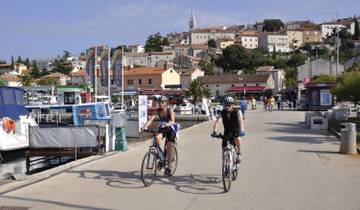
8 days
Cycling from Trieste to Pula
- ✓ Booking needs min. 2 travelers
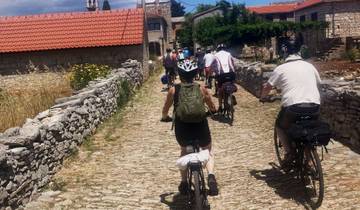
7 days
Istrian Odyssey: A Luxury Culinary Cycling Expedition Through Croatia’s Gourmet Peninsula
- ✓ Comprehensive Istria tour
- ✓ Expert local guides included
- ✓ All accommodation arranged
- ✓ Transportation provided
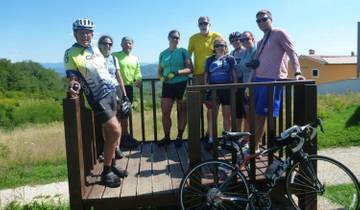
8 days
Road cycling through Terra Magica
- ✓ Booking needs min. 2 travelers

7 days
The Beauties of Istria
- ✓ Booking needs min. 2 travelers
Multi-day tour packages powered by TourRadar. Prices and availability subject to change.
Introduction to Istria: Croatia’s Italian-Flavored Peninsula
Istria occupies Croatia’s northwestern corner, forming the largest peninsula in the Adriatic Sea and extending into waters that historically connected Venice, Trieste, and Mediterranean trade routes. The triangular landmass spans approximately 3,600 square kilometers, sharing inland borders with Slovenia and containing coastline that faces Italy across the narrowest Adriatic waters, creating cultural exchanges that shaped Istrian identity over millennia.
The peninsula’s history reads as a succession of Mediterranean powers: ancient Rome built cities and amphitheaters that still stand, Byzantine emperors commissioned mosaics rivaling Ravenna’s masterpieces, Venetian Republic rule lasted from 1267-1797 creating architectural and linguistic legacies, Austro-Hungarian Empire governed through World War I, Italy controlled Istria from 1918-1947, and Yugoslavia incorporated the peninsula from 1947 until Croatian independence in 1991. Each civilization left indelible marks on Istrian culture, cuisine, architecture, and language.
Modern Istria presents Croatia’s most Italian region, where bilingual Italian-Croatian signage appears standard, many residents speak Italian as first or second language, cuisine draws equally from both cultures, and architectural styles mirror Venetian patterns more than Balkan influences. This cultural duality creates unique Croatian experiences unavailable in Split or Dubrovnik, rewarding travelers seeking authentic regional culture beyond standardized coastal tourism.
Geographic diversity separates Istria from Croatia’s other regions: a rocky western coastline features pine forests descending to pebble beaches and fishing villages, a gentler eastern shore along Kvarner Bay offers sandy beaches and resort towns, while the interior rises to fertile hills producing wines, olives, and truffles matching Italy’s Piedmont quality. The varied terrain supports everything from beach holidays to wine tourism, hilltop medieval town exploration, and UNESCO World Heritage sightseeing within compact distances ideal for week-long visits.
Tourism development in Istria accelerated during the 2000s-2010s as Croatian coastal tourism expanded beyond Dalmatia, though the peninsula retains significantly lower visitor densities than Split or Dubrovnik. Summer months (July-August) bring substantial crowds to Rovinj and Poreč coastal areas, yet inland villages and eastern Istrian coast maintain authentic Croatian atmosphere year-round. This balance between developed tourism infrastructure and preserved local culture positions Istria as Croatia’s most rewarding destination for travelers seeking experiences beyond Instagram-famous locations.
Major Istrian Cities and Towns 2026
Istria’s three major coastal cities anchor the peninsula’s tourism infrastructure while offering distinct characters and attractions suited to different traveler preferences.
Pula dominates southern Istria as the region’s largest city with 57,000 residents, functioning as an industrial port and regional capital alongside tourism. The city’s crown jewel, Pula Arena, ranks as the sixth-largest Roman amphitheater globally and Croatia’s best-preserved Roman monument. The massive stone structure from the 1st century AD seats 20,000 spectators and hosts summer concerts featuring international artists including Sting, Elton John, and Lenny Kravitz. Beyond the arena, Roman Pula reveals itself through the Temple of Augustus on the forum square, triumphal Arch of the Sergii, and small Roman theater ruins. The city offers authentic working-town atmosphere free from Rovinj’s touristy polish, with excellent seafood restaurants, budget accommodation options, and Pula Airport providing direct connections to major European cities in summer months.
Rovinj captivates visitors as Istria’s most photographed coastal town, where colorful Venetian houses crowd a small peninsula topped by St. Euphemia’s Church and its distinctive bell tower visible across the harbor. The old town’s narrow cobblestone streets climb steeply from waterfront restaurants and art galleries to hilltop viewpoints, creating romantic Mediterranean ambiance that attracts honeymooners and couples. Rovinj’s harbor bustles with fishing boats, yacht moorings, and waterfront cafés serving Italian-influenced cuisine at premium prices reflecting the town’s popularity. The adjacent Golden Cape (Zlatni Rt) forest park offers shaded walking trails and swimming spots just 15 minutes from the old town center. Rovinj represents Istria’s most expensive destination, with hotel rates 20-30% above Poreč or Pula equivalents, though the concentrated beauty justifies premium costs for travelers prioritizing picturesque settings over budget concerns.
Poreč stretches along a narrow peninsula on Istria’s western coast, balancing substantial resort development with a historic core housing the Euphrasian Basilica UNESCO World Heritage Site. The town functions primarily as a beach resort destination, with large hotel complexes lining the coast north and south of the old town catering to package tourists from Germany, Austria, and neighboring countries. However, the compact old town preserves exceptional Roman street layout and the extraordinary 6th-century basilica complex showcasing Byzantine mosaics rivaling Ravenna’s masterpieces. Poreč offers better value than Rovinj with broader accommodation options spanning budget to luxury categories, though the town lacks Rovinj’s concentrated charm, functioning better as a practical base for exploring Istria than as a destination unto itself.
Beyond the coastal triumvirate, several inland hilltop towns reward travelers with medieval architecture and authentic Istrian culture. Motovun perches dramatically atop a 277-meter hill surrounded by Mirna Valley vineyards and truffle-hunting forests, its stone walls encircling Renaissance and Gothic buildings now housing restaurants, wine bars, and small hotels. The town hosts the Motovun Film Festival each July, attracting Croatian and international cinema crowds. Grožnjan transformed from a nearly-abandoned medieval village into an artists’ colony during the 1960s, with galleries, studios, and artisan workshops filling restored stone houses along steep alleys. The summer season brings classical music concerts and art exhibitions. Smaller hilltop settlements including Oprtalj, Završje, and Hum (claiming status as world’s smallest town with just 30 residents) offer quieter alternatives for travelers seeking medieval atmospheres without Motovun’s visitor numbers.
Pula Arena and Roman Heritage 2026
Pula Arena dominates the city skyline as one of the world’s best-preserved Roman amphitheaters, rivaling the Colosseum in architectural significance while surpassing Rome’s monument in structural completeness. The massive elliptical structure measures 133 meters long and 105 meters wide, rising 32 meters high on the seaward side where all four levels of arcades survive intact—a rare preservation level among Roman amphitheaters.
Emperor Vespasian commissioned the arena’s construction during the 1st century AD, completing it around 80 AD to accommodate 20,000 spectators for gladiatorial contests, animal hunts, and public spectacles. The amphitheater utilized local Istrian limestone in its construction, which has weathered two millennia better than materials used in comparable structures. Unlike the Colosseum, Pula Arena never suffered systematic stone removal for other buildings, preserving the complete outer wall with its distinctive four towers housing staircases for crowd movement.
The arena’s underground chambers, originally used by gladiators and wild animals before contests, now house a permanent exhibition titled “Olive Oil and Wine in Istria in Antiquity.” The displays present reconstructions of ancient oil presses, wine-making equipment, and amphorae used for Mediterranean trade, connecting Roman Istria to the peninsula’s continuing agricultural traditions. Visitors explore all four levels of the amphitheater, walking corridors where ancient spectators accessed seating sections, climbing to upper galleries for harbor views, and descending to arena floor level where gladiators once fought.
Entrance fees at Pula Arena cost €10 for adults in 2026, with students and children aged 6-18 paying €5. Children under 6 enter free. The arena opens daily from 8:00 AM-9:00 PM during summer months (June-September), with reduced hours 9:00 AM-5:00 PM during winter. However, the amphitheater closes to daytime sightseeing visitors on days hosting evening concerts or events, typically closing at 5:00 PM for preparation. Checking the official arena website before visiting confirms accessibility, particularly during summer concert season when major performances occupy the venue.
Summer concerts transform the ancient amphitheater into Croatia’s most atmospheric open-air venue, hosting international stars and orchestral performances that exploit the structure’s exceptional acoustics. Past performers including Elton John, Sting, Lenny Kravitz, and Luciano Pavarotti have graced the arena floor, while Croatia’s own classical and popular musicians frequently perform. Concert tickets range €40-150 depending on artist and seating location, requiring advance booking through official channels as popular shows sell out months ahead.
Beyond the arena, Roman Pula reveals itself through multiple monuments scattered across the modern city. The Temple of Augustus occupies the Roman forum square, its Corinthian columns and pediment reconstructed after World War II damage. The forum itself functions as Pula’s main square, surrounded by Venetian and Austro-Hungarian buildings built atop Roman foundations. The Arch of the Sergii, a 1st-century triumphal arch, once formed part of the city gate system and now stands on a pedestrian street leading to the old town. The Small Roman Theater sits on a hillside below the fortress, its semicircular seating sections carved from living rock.
Euphrasian Basilica: Poreč’s UNESCO Masterpiece 2026
The Euphrasian Basilica complex in Poreč’s old town center represents Croatia’s finest example of early Byzantine architecture and earned UNESCO World Heritage designation in 1997 for its exceptional 6th-century mosaics and complete preservation of an early Christian episcopal complex. The site encompasses a basilica church, atrium courtyard, baptistery, bell tower, episcopal palace, and memorial chapel, forming the most intact early Christian complex surviving from the Byzantine period.
Bishop Euphrasius commissioned the current basilica’s construction around 553 AD on the site of earlier churches dating to the 4th century, utilizing Byzantine master craftsmen from Constantinople to create the extraordinary apse mosaics. These gold-ground mosaics depicting Christ, the Virgin Mary, saints, and Bishop Euphrasius himself rank among Europe’s finest Byzantine artworks, rivaling famous examples in Ravenna, Italy. The mosaics employ millions of tiny glass tesserae in gold, blue, green, and earth tones to create luminous religious scenes that maintain their brilliance after 1,500 years.
The basilica interior features 18 Greek marble columns with intricately carved Byzantine and Romanesque capitals separating the central nave from side aisles. Each capital bears unique animal and vegetable motifs, while all display Bishop Euphrasius’s monogram. The floor preserves original 6th-century mosaics in geometric patterns, though later additions and restorations modified sections over centuries. The triumphal arch entering the apse displays more mosaic work showing Christ with the Apostles and martyr medallions, creating a complete program of early Christian iconography.
The atrium courtyard, built simultaneously with the basilica, features colonnaded porticos on all four sides housing a rich collection of stone monuments from various periods. Archaeological fragments, inscriptions, and architectural elements from earlier buildings occupy the portico walls, creating an outdoor museum of Poreč’s layered history. The octagonal baptistery, reconstructed multiple times, retains its 5th-century foundations and demonstrates the architectural evolution across centuries.
The bell tower, added in the 16th century, rises 35 meters above the complex and offers panoramic views across Poreč’s old town, harbor, and Adriatic coastline. Climbing the tower’s narrow stone staircase rewards visitors with bird’s-eye perspectives on the basilica’s mosaics visible from above and the orange-tiled roofs characteristic of Istrian coastal towns. The ascent requires moderate fitness but presents no technical climbing challenges.
Entrance fees to the Euphrasian Basilica complex cost €10 for adults in 2026, with students paying €5 and preschool children entering free. Group discounts apply for parties of 10+ visitors. The complex opens daily except Sundays and Catholic holy days, with hours varying seasonally: 9:00 AM-9:00 PM during July-August peak season, 9:00 AM-6:00 PM during April-June and September, and 9:00 AM-5:00 PM during October-March. Winter hours (November-February) run 10:00 AM-4:00 PM with closures on Saturdays. Tickets purchased at the entrance grant access to all areas including basilica interior, atrium, baptistery, and bell tower.
Visiting the basilica demands modest dress respecting its sacred function, with shoulders and knees covered required for entry. Guards at the entrance enforce dress codes, though lightweight scarves provided near the entrance assist visitors in inappropriate attire. Photography without flash is permitted throughout the complex, with the apse mosaics presenting the primary photographic subject. Morning light (9:00-11:00 AM) illuminates the mosaics most favorably, while afternoon visits encounter backlighting challenges in the apse.
Istrian Hilltop Villages 2026
Istria’s interior landscape rises in gentle hills covered with vineyards, olive groves, and oak forests, dotted with medieval stone villages perched dramatically on hilltops for defensive purposes. These villages, largely abandoned during the 20th century as residents migrated to coastal employment, have undergone varying degrees of restoration and repurposing as tourism destinations, artists’ colonies, and gastronomic centers.
Motovun commands the most dramatic hillto p setting at 277 meters elevation, visible for kilometers across the Mirna River valley below. Medieval walls encircle the compact village, entered through a Renaissance gate that opens to steep cobblestone streets climbing to the central square and church. The village hosts approximately 1,000 residents during summer peak season when restaurants, wine bars, and small hotels operate fully, though winter population drops to a few hundred permanent inhabitants. The Motovun Film Festival transforms the village each July into Croatia’s premier independent cinema event, screening international and regional films in the village square and local venues.
Motovun’s surrounding forests produce Istria’s finest white truffles (Tuber magnatum), commanding prices rivaling Piedmont’s Alba truffles at €2,000-4,000 per kilogram for exceptional specimens. Local restaurants serve truffle-based dishes during autumn season (September-November), with pasta, risotto, and steak preparations featuring shaved fresh truffles. Truffle hunting excursions with trained dogs operate from Motovun and nearby villages, offering morning hunts in oak and hazelnut forests followed by truffle tastings and traditional breakfasts.
Grožnjan perches on a 228-meter hill overlooking vineyards and olive groves, its medieval core transformed during the 1960s-1970s into an artists’ colony that continues thriving today. Galleries, studios, and artisan workshops occupy stone houses along the village’s narrow alleys, selling paintings, sculptures, ceramics, and handcrafted goods. Summer brings classical music concerts, jazz performances, and art exhibitions that draw Croatian and international visitors. Unlike Motovun’s restaurant-tourism focus, Grožnjan maintains stronger emphasis on artistic production and cultural programming, creating quieter, more contemplative village atmosphere.
Oprtalj sits northwest of Motovun at 378 meters elevation, making it one of Istria’s highest hilltop settlements. The village preserves extensive 15th-century fortifications and a parish church containing frescoes from the 1470s. Oprtalj’s dramatic position offers panoramic views across northern Istria to the Julian Alps in Slovenia and the Adriatic coast, rewarding the steep approach road. The village hosts fewer visitors than Motovun or Grožnjan, maintaining more authentic local life with limited tourism development.
Hum claims the title of “world’s smallest town” with approximately 30 permanent residents occupying a handful of medieval stone houses within the village walls. The settlement dates to the 11th century and preserves Romanesque architecture including the Church of St. Jerome with 12th-century frescoes. Hum’s single restaurant serves traditional Istrian cuisine including fuži pasta with game sauces and biska (mistletoe brandy) produced locally. The village functions more as a novelty destination than substantial sightseeing stop, visited briefly during hilltop village circuits from coastal bases.
Accessing hilltop villages requires personal transportation, as public buses do not serve inland Istria beyond major towns. Scenic driving routes connect villages through vineyard-covered hills and truffle forests, with the journey forming as significant an experience as village arrivals. The Parenzana cycling trail, converted from an abandoned railway line connecting Trieste to Poreč, passes near several hilltop villages and offers car-free cycling through Istrian countryside for active travelers.
Rovinj: Istria’s Romantic Coastal Gem 2026
Rovinj occupies a compact peninsula jutting into the Adriatic on Istria’s western coast, its colorful Venetian houses stacked dramatically up the hillside to St. Euphemia’s Church crowning the summit. The town represents Istria’s most photographed destination, combining concentrated architectural beauty, working fishing harbor atmosphere, and proximity to forest parks and swimming spots that together create Croatia’s most romantic small coastal city.
The old town peninsula extends just 400 meters from the harbor to the church, with a dense network of steep cobblestone streets, archways, and staircases connecting different elevation levels. Venetian-era houses painted in warm earth tones—ochre, terracotta, pink, cream—line the narrow streets, their shuttered windows and flower boxes creating picturesque scenes at every turn. Ground floors house art galleries, boutiques, wine bars, and restaurants, while upper levels remain residential with locals living amid the tourism bustle.
St. Euphemia’s Church dominates Rovinj’s skyline with its 60-meter Venetian bell tower modeled on St. Mark’s Campanile in Venice. The baroque church from 1736 honors Rovinj’s patron saint, a 4th-century martyr whose sarcophagus miraculously arrived in Rovinj harbor according to local legend. The church interior features baroque altars and religious art, though most visitors climb the tower for panoramic views across Rovinj’s orange-tiled roofs, the harbor with its fishing boats and yachts, and the Adriatic dotted with small islands. Tower access costs €2 separate from free church entry, with narrow staircases requiring moderate fitness.
Rovinj’s harbor buzzes with maritime activity as working fishing boats moor alongside luxury yachts, creating authentic coastal atmosphere absent in purely touristic ports. Early morning fish markets sell the night’s catch directly from boats, while evening brings promenade crowds and waterfront dining. Restaurants lining the harbor specialize in seafood prepared simply—grilled whole fish, shellfish risotto, octopus salad—reflecting Italian culinary influences on Istrian cooking.
Golden Cape (Zlatni Rt) forest park extends south from Rovinj’s old town, offering 10 kilometers of walking and cycling trails through protected Mediterranean forest of Aleppo pine, holm oak, and cypress. Rocky beaches and swimming spots line the park’s coastline, providing alternatives to Rovinj’s crowded town beaches during summer. The park remains open year-round with free access, popular for jogging, cycling, and seaside walks even during winter months when swimming season ends.
Accommodation in Rovinj spans all categories from hostels to five-star luxury hotels, though prices run 20-30% above equivalent properties in Poreč or Pula. Budget travelers find limited hostel options and small guesthouses in the old town at €40-70 nightly for basic doubles. Mid-range hotels occupy renovated buildings near the harbor or modern properties outside the old town, charging €100-180 nightly during summer peak and €60-100 in shoulder seasons. Luxury boutique hotels in restored Venetian palaces and modern design hotels along the coast command €200-400 nightly, positioning Rovinj as Istria’s premium destination.
Dining costs in Rovinj reflect the town’s upscale positioning, with harbor-front restaurants charging €15-25 for pasta dishes, €20-35 for grilled fish per person, and €25-40 for meat mains. Budget-conscious diners retreat to side streets away from waterfront views, finding family-run konobi (taverns) serving traditional Istrian dishes at €10-15 for pastas, €12-18 for grilled meats. Wine by the glass costs €4-7, with local Istrian whites (Malvasia) and reds (Teran) representing best value compared to Croatian coastal wines.
Accommodation Costs in Istria 2026
Accommodation pricing in Istria varies dramatically between summer peak season (July-August), shoulder seasons (May-June, September-October), and winter off-season (November-April), with additional variations between coastal cities and inland villages.
Budget accommodation options in Istria’s coastal cities cost €40-70 nightly for double rooms during summer peak season, dropping to €30-50 in shoulder seasons and €25-40 in winter. This category includes hostels (primarily in Pula), basic guesthouses in old town buildings, and simple apartments. Pula offers the best budget choices given its working-city character and less polished tourism infrastructure. Hostels in Pula charge €15-25 for dormitory beds and €40-60 for private doubles. Rovinj and Poreč lack significant hostel infrastructure, though small family-run guesthouses provide budget alternatives at €50-70 summer rates.
Mid-range hotels across Istria charge €80-150 nightly during summer peak, representing the sweet spot for quality and value that most travelers target. This category delivers three-star and four-star properties with air conditioning, private bathrooms, breakfast included, and often swimming pools or beach access. Poreč specializes in large resort-style hotels at this price point, with properties lining the coast north and south of the old town offering package-deal accommodation with half-board dining options. Pula and Rovinj feature smaller boutique-style hotels in restored buildings at mid-range prices. Shoulder season rates (May-June, September-October) drop 30-40% to €60-100 nightly, delivering exceptional value when weather remains ideal for sightseeing and outdoor activities.
Luxury accommodation in Istria commands €200-400+ nightly, concentrated in Rovinj where several properties belong to Leading Hotels of the World and other luxury collections. The Grand Park Hotel Rovinj, opened in 2019, exemplifies contemporary luxury design with 209 rooms, rooftop pools, multiple restaurants, and a Wellness spa, charging €300-500 nightly during peak season. Monte Mulini, an adults-only luxury property, offers similar amenities and pricing. Poreč and Pula provide fewer luxury options, though boutique properties in restored historic buildings charge €180-280 for characterful accommodations. Inland hilltop villages including Motovun feature small luxury hotels and design-forward wine estates at €150-300 nightly.
Apartment and villa rentals through Airbnb and Booking.com provide alternatives to hotels, particularly for families and longer stays when self-catering reduces dining costs. One-bedroom apartments near coastal cities cost €60-100 nightly summer peak, €40-70 shoulder seasons. Larger two-bedroom apartments or villas with pools in countryside locations range €120-220 nightly summer, €80-150 shoulder seasons. Minimum stay requirements (typically 3-7 nights) apply during peak summer weeks.
Rovinj consistently prices 20-30% above Poreč and Pula equivalents across all accommodation categories, reflecting its concentrated beauty and romantic atmosphere. Budget-conscious travelers selecting Rovinj as their Istrian base should expect €100-120 minimum for decent summer accommodation versus €80-100 in Poreč or €70-90 in Pula for comparable quality. Alternatively, basing in Poreč or Pula and day-tripping to Rovinj (30-45 minutes driving) provides cost savings while maintaining access to Istria’s most picturesque town.
Getting Around Istria 2026: Transportation Options
Transportation infrastructure in Istria heavily favors personal vehicles over public transit, with limited bus networks serving coastal cities while leaving inland regions and smaller coastal villages largely inaccessible without cars. This transportation reality shapes Istrian trip planning significantly compared to Dalmatian coast regions where bus and ferry networks support car-free travel.
Car rentals represent the practical transportation solution for comprehensive Istria exploration in 2026. Rental costs run €35-45 daily for economy vehicles during summer peak season, dropping to €25-35 in shoulder seasons when tourism demand decreases. Weekly rentals achieve better daily rates at €200-280 for seven days. Major international rental companies (Sixt, Hertz, Avis, Enterprise) operate from Pula Airport and city offices in Pula, Rovinj, and Poreč. Local Croatian rental companies including Oryx and Nova Rent a Car often undercut international chains by 10-20% though offering less flexibility for one-way rentals or cross-border travel.
Gasoline costs €1.60-1.70 per liter throughout Croatia in 2026, with highway gas stations charging €0.30-0.40 per liter premium over stations on regular roads. Diesel runs slightly cheaper at €1.50-1.60 per liter. Istria’s compact size limits fuel costs, with Pula-to-Poreč drives consuming approximately 5-6 liters (€8-10) and complete coastal circuits burning 15-20 liters (€25-35) for full-day excursions.
Highway tolls affect travel between Istria and other Croatian regions but not within the peninsula itself. The Učka Tunnel connecting Istria to Rijeka and broader Croatian highway network charges €11.30 for standard vehicles, representing the main toll expense for travelers entering/exiting Istria. Within the peninsula, excellent two-lane roads connect all major destinations toll-free, with scenic coastal routes offering Adriatic views while inland roads traverse vineyards and hilltop villages.
Parking costs vary by location and season in Istria’s coastal cities. Pula charges €1-2 per hour for city center parking during summer, with free parking available in residential areas 10-15 minutes walking from attractions. Rovinj implements €2-3 hourly rates near the old town, though large parking lots 15-20 minutes walking from the center cost €1-1.50 hourly. Poreč similarly charges €1.50-2.50 hourly for convenient parking. Hilltop villages typically offer free parking in lots just outside village walls, requiring 5-10 minute walks to village centers.
Public buses connect Pula, Rovinj, and Poreč with hourly or more frequent services during summer season, reducing to 3-5 daily buses in shoulder and winter seasons. Pula-Rovinj buses cost €6-8 for the 45-minute journey, Pula-Poreč runs €8-10 for 60 minutes, and Rovinj-Poreč costs €5-7 for 30 minutes. However, buses to inland destinations (Motovun, Grožnjan, Oprtalj) operate infrequently with 1-3 daily services or no service at all, making bus-dependent travel to hilltop villages impractical. Travelers limiting themselves to the three major coastal cities can manage without rental cars using this bus network, though sacrificing Istria’s inland attractions and small coastal villages that reward car-based exploration.
Cycling represents a viable transportation option for fit travelers staying in single locations, particularly Rovinj or Poreč where flat coastal terrain and dedicated bike paths enable beach access and short excursions. The Parenzana Trail, converted from an abandoned railway line, offers 123 kilometers of mostly paved cycling path from Trieste through Istria to Poreč, passing near hilltop villages and through countryside. However, Istria’s inland hills present challenging terrain for casual cyclists, with steep climbs to villages like Motovun discouraging recreational biking as primary transport.
Taxis and ride-sharing services operate in larger coastal cities but prove expensive for multi-destination touring. Pula-to-Rovinj taxis cost €40-60, while Rovinj-to-Motovun runs €60-80 for 45-kilometer journeys. Uber operates in Pula during summer months though with limited driver availability.
Food and Dining Costs in Istria 2026
Istrian cuisine represents Croatia’s finest regional cooking, blending Croatian coastal traditions with Italian influences and local specialties including truffles, olive oil, and wines that rival Italian counterparts. Dining costs span wide ranges depending on restaurant category, location, and meal choices.
Budget dining at Istrian konobi (traditional taverns) costs €10-18 per person for complete meals including pasta or risotto first courses, grilled meat or fish mains, and salads. Konobi typically occupy inland villages or side streets away from coastal tourist centers, serving family recipes in rustic settings with limited menus focused on seasonal ingredients. Signature Istrian dishes including fuži pasta with wild game ragu, maneštra (bean and vegetable soup), and grilled Istrian sausages appear regularly on konoba menus. House wine (red Teran or white Malvasia) served in carafes costs €8-12 per liter, making local wines excellent value compared to bottled options.
Mid-range restaurants in coastal cities and popular hilltop villages charge €15-30 for pasta and risotto dishes, €20-40 for grilled fish depending on market prices and weight, and €18-30 for meat mains. Rovinj waterfront restaurants occupy the premium end of this spectrum at €20-35 pastas and €30-45 grilled fish, while Pula and Poreč establishments typically charge 20-30% less. Appetizers including Istrian prosciutto and cheese plates cost €10-15, soups €6-9, and desserts €5-8. Three-course dinners with wine at mid-range restaurants total €40-65 per person before tips.
Truffle-focused restaurants command premium prices during autumn truffle season (September-November) when fresh white truffles appear on menus. Restaurants in Motovun, Livade, and other truffle-region villages serve pasta with shaved white truffles at €25-40 per portion, truffle risotto €30-45, and grilled steaks with truffle butter €35-50. The truffle surcharge adds €15-25 to standard dish prices, reflecting market costs of €2,000-4,000 per kilogram for exceptional white truffles. Black truffle dishes (available year-round using preserved truffles) cost €18-28, still representing premiums over non-truffle preparations.
Fine dining experiences at Michelin-quality restaurants including Monte in Rovinj or wine estate restaurants cost €60-100+ per person for tasting menus showcasing modern interpretations of Istrian ingredients. These establishments emphasize local products—Adriatic fish, Istrian beef, seasonal vegetables, olive oils, wines—presented with contemporary techniques and plating. Wine pairings add €30-60 to tasting menu costs.
Breakfast typically includes in hotel rates, though cafés and bakeries provide alternatives at €5-8 for coffee and pastries or €8-12 for fuller continental spreads. Lunch represents the most economical meal, with daily specials at konobi and casual restaurants offering complete meals at €8-15 during 11:30 AM-2:30 PM lunch service. Pizza restaurants provide reliable budget options at €8-14 for large pizzas sufficient for full meals, with quality matching good Italian standards given Istria’s cultural connections.
Grocery shopping for self-catered meals costs 20-30% less than comparable German or Austrian prices, making apartments with kitchens attractive for budget-conscious travelers. Supermarket chains including Konzum, Plodine, and Kaufland operate throughout coastal cities. Fresh produce at farmers’ markets in Pula, Rovinj, and Poreč costs €2-4 per kilogram for tomatoes, zucchini, and peppers, €1-2 for seasonal fruit. Local cheeses run €12-18 per kilogram, Istrian prosciutto €20-28 per kilogram, and bread €1-2 per loaf. A week’s groceries for two people cooking most meals costs €60-90.
Wine costs at restaurants range €18-35 for bottles of good Istrian wines (Malvasia, Teran, Merlot from quality producers), €40-80 for premium labels, and €5-8 per glass for by-the-glass options. Purchasing wine directly from wineries or wine shops costs €8-15 for solid everyday wines, €15-30 for premium bottles, and €35-60+ for exceptional aged reserves. Beer costs €3-4 for 0.5-liter draughts, €4-6 for bottles in restaurants. Bottled water runs €2-3, espresso €1.50-2.50, cappuccino €2-3.50.
Istrian Wine and Truffle Tourism 2026
Istria’s interior hills produce Croatia’s finest wines and Europe’s most valuable truffles outside Italy’s Piedmont region, creating specialized tourism focused on gastronomic experiences that distinguish the peninsula from beach-centered Croatian destinations.
Istrian wine production centers on indigenous varieties thriving in the peninsula’s Mediterranean climate and terra rossa soils. Malvazija Istarska (Istrian Malvasia), a white grape unrelated to Italian Malvasias despite the name, dominates white wine production with fresh, aromatic wines displaying stone fruit, Mediterranean herbs, and coastal minerality. Quality ranges from everyday café wines to serious age-worthy examples from top producers including Kozlović, Trapan, Coronica, and Matošević. Teran, Istria’s signature red grape, produces distinctively iron-rich, high-acid wines with dark fruit flavors and firm tannins that pair excellently with Istrian prosciutto and game dishes. International varieties including Merlot, Cabernet Sauvignon, and Chardonnay also flourish, though Istrian identity wines emphasize Malvazija and Teran.
Wine tourism infrastructure includes tastings at family wineries, larger commercial estates with visitor centers, and wine roads connecting producers in specific subregions. The Istrian Wine Route spans 200+ wineries across the peninsula, though most tourist-friendly operations concentrate in the central interior region between Motovun and Buje. Winery visits typically cost €10-20 per person for tastings of 4-6 wines, often paired with local cheeses, prosciutto, and olive oils. Some estates require advance reservations, while others welcome walk-in visitors during business hours. Harvest season (late August-early October) brings heightened activity and special events though busier tasting rooms.
The Vinistra wine festival in Poreč each May showcases 200+ Croatian wineries including extensive Istrian representation, offering professional and consumer tasting opportunities. Smaller wine festivals occur in various hilltop villages throughout summer months, combining tastings with folk music, traditional food, and cultural programs.
Truffle hunting in Istria’s oak and hazelnut forests produces both white truffles (Tuber magnatum, September-November) and black truffles (Tuber aestivum, May-September and Tuber melanosporum, December-March). The Motovun Forest and surrounding Mirna River valley yield Croatia’s highest-quality specimens, with skilled truffle hunters and their trained dogs locating the prized fungi through scent detection. The largest Istrian white truffle on record weighed 1.31 kilograms, discovered in 1999 near Livade.
Truffle hunting excursions operate from Motovun, Livade, and Buzet, offering morning hunts (6:00-9:00 AM optimal timing when truffle scent strongest) followed by traditional Istrian breakfasts featuring fresh truffle preparations. Tours cost €40-80 per person for 2-3 hour experiences including forest hunts with dogs, truffle knowledge sharing, and meals. October represents peak white truffle season when forest conditions and truffle maturity align optimally, though prices also peak at €2,000-4,000 per kilogram for exceptional specimens. Restaurants throughout truffle regions serve fresh truffle dishes during season, with simpler preparations (pasta with butter and shaved truffles, truffle-scrambled eggs) best showcasing the ingredient’s earthy, garlicky complexity.
The annual Tuber Fest in Livade each October celebrates truffle culture with hunting demonstrations, truffle-based cooking competitions, tastings, and educational programs. Buzet hosts the Subotina truffle festival in September, featuring a giant truffle omelet prepared for hundreds of attendees using dozens of eggs and fresh truffles.
Best Time to Visit Istria 2026
Istria’s seasonal patterns influence costs, crowds, weather, and available activities dramatically, making timing decisions crucial for optimizing the travel experience and budget.
Peak summer season (July-August) brings guaranteed warm weather with 26-30°C daily highs, calm Adriatic waters at 24-26°C perfect for swimming, and maximum daylight hours extending to 9:00 PM. All restaurants, hotels, and attractions operate full schedules with extended hours. However, crowds concentrate in Rovinj and Poreč coastal areas, accommodation costs peak at €150-250 nightly for mid-range hotels, and popular beaches become congested. Inland hilltop villages remain quieter even during peak weeks, offering crowd-free alternatives while coastal cities burst with visitors. July-August suits families with school-age children and travelers prioritizing beach time over budget concerns or crowd avoidance.
Shoulder seasons (May-June and September-October) deliver Istria’s optimal value-experience balance in 2026. May-June offers 20-25°C temperatures ideal for walking and outdoor activities, wildflowers in countryside, less crowded beaches as water temperatures reach 20-22°C, and accommodation costs 30-40% below summer peaks at €80-120 for mid-range hotels. September-October maintains similar temperatures while water stays warm from summer heating (22-24°C through September, dropping to 18-20°C in October), adds the crucial advantage of truffle season and wine harvest, and continues the cost benefits with reduced crowds. These months suit active travelers interested in hiking, cycling, wine tourism, and cultural sightseeing who tolerate occasional rain showers trading for substantially better value and atmosphere.
Spring (April-early May) and autumn (late October-November) represent quieter extensions of shoulder season with increasing weather unpredictability. April brings 15-20°C temperatures, blossoming fruit trees, and very light tourism as most coastal facilities remain closed or operate reduced hours. Late October-November sees similar temperatures with autumn colors in forests, diminishing tourist infrastructure as properties close for winter, and increased rainfall. These periods suit budget-focused travelers accepting closed restaurants and attractions in exchange for rock-bottom accommodation costs (€50-80 mid-range hotels) and nearly empty hilltop villages.
Winter (December-March) transforms Istria into a local rather than tourist region, with most coastal hotels closed, many restaurants operating limited winter schedules, and attractions including Pula Arena reducing hours. Temperatures range 5-12°C with frequent rain and occasional snow in hilltop villages. However, winter brings truffle season for black truffles (December-March), wine cellars open for tastings year-round, and exceptional value at operating properties. The season suits wine enthusiasts, truffle aficionados willing to plan around limited restaurant operations, and travelers seeking authentic Istrian culture without tourism veneer. Christmas markets in Pula and Poreč provide festive atmosphere during late December.
Event calendar considerations influence timing for specific interests. The Motovun Film Festival in late July attracts cinema enthusiasts but books Motovun accommodation months ahead. Vinistra wine festival in May draws wine tourists to Poreč. The Pula Film Festival in July uses the Arena for outdoor film screenings. Musical and cultural festivals occupy summer months across the peninsula, requiring advance research and booking for visitors targeting specific events.
Practical Planning for Istria Trips 2026
Successful Istria trip planning requires attention to transportation logistics, accommodation booking timing, entrance reservations where needed, and realistic daily itinerary construction accounting for Istria’s compact but varied geography.
Recommended trip lengths for comprehensive Istria exploration span 5-7 days, allowing coverage of coastal highlights, inland hilltop villages, and specialized experiences like wine tourism or beach relaxation. Three-day minimums suffice for visitors focusing exclusively on Rovinj-Poreč coastal areas or combining Pula Arena with a single coastal town. Travelers integrating Istria into broader Croatian itineraries typically allocate 4-5 days before continuing to Zagreb, Plitvice Lakes, or Dalmatian coast destinations.
Base selection depends on priorities and travel style. Rovinj delivers maximum charm and romance in compact walkable old town, suits couples and photography enthusiasts, but costs 20-30% more than alternatives and lacks practical amenities like major supermarkets or parking convenience. Poreč offers better value with broader accommodation selection, central peninsula position minimizing driving distances to all destinations, and functioning as practical base despite less concentrated beauty than Rovinj. Pula provides the most budget-friendly basing option with best hostel availability, largest city amenities, and excellent transport connections including the airport, though requiring 30-45 minute drives to reach Istria’s most attractive coastal areas.
Multi-base strategies splitting stays between coastal and inland locations allow both beach access and immersive hilltop village atmosphere. Three nights in Rovinj or Poreč followed by two nights in Motovun or countryside wine estates creates varied experiences without excessive packing-unpacking, though requiring strategic car rental for smooth transitions.
Daily itinerary planning should account for Istria’s modest driving distances that create temptation to over-schedule. Pula-to-Rovinj drives require just 45 minutes, Rovinj-to-Motovun takes 45 minutes, and Poreč-to-Grožnjan runs 40 minutes, making multiple-destination days feasible. However, quality experiences at destinations demand time allocation: 2-3 hours minimum at Pula Arena and Roman sites, 3-4 hours wandering Rovinj old town and harbor, 1.5-2 hours at Euphrasian Basilica complex, and 2-3 hours in hilltop villages including restaurant meals. Attempting more than two major sights plus a hilltop village in single days creates rushed experiences missing Istria’s laid-back Mediterranean atmosphere.
Entrance reservation requirements remain minimal compared to Dalmatian destinations. Pula Arena and Euphrasian Basilica sell tickets at entrance gates without advance booking except during major summer concerts at the Arena requiring separate concert tickets. Popular restaurants in Rovinj and Motovun benefit from dinner reservations during July-August peaks but accommodate walk-ins at lunch and shoulder seasons. Wine estates prefer advance contact though rarely refuse walk-in visitors. The relatively relaxed planning requirements suit spontaneous travelers compared to destinations like Dubrovnik demanding weeks-ahead reservations.
Weather contingency planning matters less in coastal Istria than inland Croatia, given the Adriatic’s moderating influence on temperatures and precipitation. Summer rain occurs primarily as brief afternoon thunderstorms that cool temperatures then pass, rarely disrupting full-day plans. Spring and autumn bring longer rainy periods that favor museum visits, wine cellar tours, and indoor activities over beach days or hilltop village exploration where outdoor wandering forms the primary activity.
Sample Istria Itineraries 2026
The following itineraries demonstrate effective Istria exploration strategies for different trip lengths and interests, with daily costs calculated for mid-range travelers during shoulder seasons (May-June or September-October) when accommodation costs €80-120 nightly and dining averages €40-50 per person.
Three-Day Coastal Focus Istria 2026
This compact itinerary suits travelers with limited time prioritizing coastal highlights and UNESCO sites while maintaining relaxed pacing.
Day 1: Arrive Pula, explore Roman heritage. Visit Pula Arena (€10), Temple of Augustus, Roman Forum, and Arch of the Sergii. Lunch at konoba (€12), dinner at seafood restaurant (€25). Overnight Pula (€80). Car rental (€15 daily when split between two travelers), meals €37, entrance fee €10, fuel €5. Total day cost: €67 per person (excluding accommodation).
Day 2: Drive to Rovinj, explore old town and Golden Cape. Morning walk through old town streets, climb St. Euphemia’s bell tower (€2), waterfront lunch (€18), afternoon at Golden Cape forest park, evening harbor dining (€30). Overnight Rovinj (€120). Car rental €15, meals €48, entrance fee €2, fuel €5. Total day cost: €70 per person (excluding accommodation).
Day 3: Visit Poreč Euphrasian Basilica, depart. Morning drive to Poreč (45 minutes), explore Euphrasian Basilica complex (€10), old town walk, lunch (€15), afternoon departure or return to Pula. Car rental €15, meals €15, entrance fee €10, fuel €5. Total day cost: €45 per person (excluding accommodation).
Three-day total: €182 per person plus €200 accommodation, grand total €382 per person for complete three-day Istria coastal experience.
Five-Day Comprehensive Istria 2026
This mid-length itinerary balances coastal and inland exploration, adding hilltop villages and wine experiences to core attractions.
Day 1: Arrive Rovinj, settle in. Afternoon old town exploration, sunset from St. Euphemia tower (€2), harbor dinner (€28). Overnight Rovinj (€110). Car rental €15, meals €28, entrance €2, fuel minimal. Total day cost: €45 per person (excluding accommodation).
Day 2: Rovinj full day. Morning Golden Cape walk, beach time, waterfront lunch (€20), afternoon gallery browsing and old town wandering, seafood dinner (€32). Overnight Rovinj (€110). Car rental €15, meals €52, fuel minimal. Total day cost: €67 per person (excluding accommodation).
Day 3: Hilltop villages circuit. Drive to Motovun via Grožnjan, explore both villages, lunch in Motovun (€18), afternoon wine tasting at estate (€15), return to Rovinj for dinner (€25). Overnight Rovinj (€110). Car rental €15, meals €43, wine tasting €15, fuel €15. Total day cost: €88 per person (excluding accommodation).
Day 4: Transfer to Poreč, Euphrasian Basilica. Morning check-out and drive to Poreč, visit Euphrasian Basilica complex (€10), old town lunch (€14), afternoon beach time, evening walk and dinner (€22). Overnight Poreč (€90). Car rental €15, meals €36, entrance €10, fuel €8. Total day cost: €69 per person (excluding accommodation).
Day 5: Pula day trip, depart. Drive to Pula, Pula Arena visit (€10), Roman sites, lunch (€13), afternoon departure or return Poreč. Car rental €15, meals €13, entrance €10, fuel €10. Total day cost: €48 per person (excluding accommodation).
Five-day total: €317 per person plus €430 accommodation, grand total €747 per person for comprehensive five-day Istria exploration including coastal cities, hilltop villages, and wine tasting.
Frequently Asked Questions About Istria Croatia 2026
How many days should I spend in Istria in 2026?
Five to seven days allows comprehensive Istria exploration in 2026, covering coastal highlights (Rovinj, Poreč, Pula), inland hilltop villages (Motovun, Grožnjan), wine tasting experiences, and beach relaxation without rushed pacing. Three-day minimums suffice for coastal-only itineraries visiting Rovinj and Pula Arena, though sacrificing inland villages and wine regions that distinguish Istria from other Croatian coastal destinations. Week-long stays suit travelers making Istria their primary Croatian destination or combining the peninsula with Slovenia across the nearby border. Travelers integrating Istria into multi-region Croatian itineraries typically allocate 4-5 days before continuing to Zagreb, Plitvice Lakes, or Dalmatian coast.
Can I visit Istria without speaking Croatian or Italian in 2026?
English proficiency throughout Istria’s tourism industry eliminates language barriers for 2026 visitors, with hotel staff, restaurant servers, tour operators, and attraction personnel conducting business comfortably in English. Coastal cities including Pula, Rovinj, and Poreč demonstrate near-universal English capability among tourism workers, while inland villages and family-run establishments show more variable though generally adequate English levels. Italian functions widely as Istria’s second language beyond Croatian due to historical connections and geographic proximity to Italy, with many older Istrians speaking Italian natively and younger generations learning it in schools. German also appears commonly given Austrian and German tourism prominence. However, English alone proves sufficient for all practical travel needs including accommodation booking, restaurant ordering, transportation arrangements, and attraction visits.
What is the best base for exploring Istria in 2026?
Poreč functions as the most practical Istria base in 2026, offering central peninsula positioning that minimizes driving distances to all major destinations, broader accommodation selection spanning budget to luxury categories, better value than Rovinj with mid-range hotels at €80-120 versus €100-150 in Rovinj, and the Euphrasian Basilica UNESCO site providing world-class attraction within the town itself. However, Rovinj delivers superior atmospheric charm for travelers prioritizing concentrated beauty over practicality, its compact photogenic old town creating romantic settings that justify 20-30% cost premiums. Pula suits budget-focused travelers with the peninsula’s best hostel availability, largest supermarkets and city amenities, and Pula Airport providing transport convenience, though requiring 30-45 minute drives to reach Istria’s most attractive coastal areas and hilltop villages.
Are beaches in Istria good for swimming in 2026?
Istrian beaches deliver excellent swimming conditions in 2026 though differing from Croatian Dalmatian islands’ famous pebble and sand beaches. The western Istrian coast features predominantly rocky shorelines with concrete platforms and pebble beaches, creating crystalline clear water ideal for swimming, snorkeling, and diving but less comfortable for beach lounging than sandy alternatives. The eastern coast along Kvarner Bay offers gentler beaches including some sandy sections family-friendly for children. Water temperatures reach 22-24°C during peak summer (July-August), warm enough for extended swimming, while shoulder seasons (June, September) maintain comfortable 20-22°C. Popular beaches near Rovinj (Golden Cape), Poreč (Laguna and Plava complexes), and Pula (Verudela peninsula) provide developed facilities including showers, changing rooms, beach bars, and equipment rentals, though free public access beaches exist throughout the coastline for budget-conscious swimmers.
Is Istria good for families with children in 2026?
Istria suits families with children excellently in 2026, offering calm Adriatic waters safer for swimming than open-ocean beaches, compact distances reducing car journey times that challenge young travelers, family-friendly beaches with gentle entries and facilities, and attractions including Pula Arena, Aquarium Pula, and Aquapark Istralandia that engage children across age ranges. The Poreč area specializes in family tourism with large resort hotels providing kids’ clubs, playgrounds, and organized children’s activities alongside beaches with shallow water entries. Rovinj’s Golden Cape forest park allows outdoor exploration and swimming spots accessible by stroller-friendly paths. However, hilltop villages with steep cobblestone streets, wine tourism focused on adult tastes, and fine dining emphasis in some areas suit couples and adult travelers better than families with very young children. Families should select accommodation near beaches and prioritize coastal activities over inland village circuits for optimal child engagement.
Can I combine Istria with Slovenia in 2026?
Istria combines seamlessly with Slovenia for 2026 trips, positioned just 50 kilometers from Ljubljana and 30 kilometers from the Slovenian coastal town of Piran. Croatia and Slovenia both belong to the Schengen Area, eliminating border controls and customs delays for cross-border travel. Travelers can easily add Ljubljana (2 hours from Poreč), Lake Bled (2.5 hours from Rovinj), or Slovenia’s Karst wine region (30 minutes from northern Istria) to Istrian itineraries. However, car rental complications arise when picking up vehicles in one country and dropping in another, as cross-border drop-off fees typically add €150-300 to rental costs. Solutions include renting cars within Croatia only (picking up and dropping off in Istria or Zagreb), using public buses for the Croatia-Slovenia transfer, or paying the cross-border premium for maximum flexibility. Combined Croatia-Slovenia trips suit travelers with 10-14 days allocating 5-7 days to each country.
What are Istria’s must-try foods in 2026?
Istrian cuisine’s signature dishes include fuži or pljukanci pasta (hand-rolled pasta shapes) served with wild game ragu, truffle sauces, or seafood preparations, maneštra (hearty bean and vegetable soup with Istrian sausage), Istrian prosciutto (pršut) aged in the coastal bura wind, fresh fish simply grilled with olive oil and garlic, black risotto colored with cuttlefish ink, and peka (slow-cooked meat or octopus under a metal dome covered with hot coals). Fresh white truffles shaved over pasta, risotto, or scrambled eggs represent Istria’s most prized culinary experience during September-November truffle season, though commanding premium prices. Local cheeses including sheep’s milk varieties pair excellently with Istrian wines. Fritule (small fried doughnuts) and kroštule (crispy fried pastries) provide traditional desserts. Quality Istrian olive oil rivals Tuscan production and appears on every table as a condiment. Regional wines including Malvazija whites and Teran reds complete authentic Istrian dining experiences.
Are there UNESCO World Heritage Sites in Istria in 2026?
Istria contains one complete UNESCO World Heritage Site—the Episcopal Complex of the Euphrasian Basilica in Poreč—inscribed in 1997 for its exceptional 6th-century Byzantine mosaics and complete preservation of an early Christian architectural ensemble. The complex includes basilica church, atrium, baptistery, bell tower, and episcopal palace, representing the most intact early Byzantine complex surviving from this period. No other Istrian sites hold independent UNESCO designation, though Pula Arena qualifies as a tentative site candidate given its status as one of the world’s six largest Roman amphitheaters and exceptional preservation level. Venice and Its Lagoon UNESCO site encompasses historic trade routes that included Istrian coastal cities, creating cultural connections though not formal inclusion. Travelers prioritizing UNESCO sites should definitely visit the Euphrasian Basilica, while Pula Arena merits attention despite lacking official inscription.
What should I pack for an Istria trip in 2026?
Istria packing lists vary by season but essential items include comfortable walking shoes for cobblestone streets and hiking trails, reef shoes or water shoes for rocky beaches, swimwear and beach towel for coastal swimming, sun protection (hat, sunscreen, sunglasses) crucial during summer months, light rain jacket for sudden showers particularly spring and autumn, layers for temperature variation between coastal and hilltop villages, modest clothing for visiting Euphrasian Basilica (shoulders and knees covered), and daypack for carrying water bottles and purchases during day trips. Summer visits (June-September) require minimal clothing with shorts and t-shirts sufficient, while shoulder seasons demand long pants, light sweaters, and jacket options for cooler mornings and evenings. Spring wildflower season benefits from basic camera equipment for photography enthusiasts. Wine tourism trips should include wine shipping materials or checked luggage space for bottle purchases. Car rental drivers need valid licenses and credit cards for deposits.
How does Istria compare to Tuscany in 2026?
Istria earns frequent “Croatian Tuscany” comparisons sharing hilltop medieval villages, vineyard-covered hills, world-class truffles, exceptional olive oils, and Italian cultural influences, though offering 40-60% lower costs than Tuscan equivalents in 2026. Istrian mid-range hotels charge €80-150 versus Tuscany’s €150-250, restaurant meals run €15-30 versus €25-45, and wine tastings cost €10-20 versus €20-35 in Tuscany. Both regions reward car-based exploration of countryside and hilltop towns, emphasize wine and food tourism, and blend cultural heritage with natural beauty. However, Istria adds Adriatic beaches absent from landlocked Tuscany, suffers fewer crowds with day-trippers from Florence, and maintains more authentic local culture less transformed by mass tourism. Tuscany offers superior art collections, more famous wine appellations (Chianti, Brunello), and centuries-deeper tourism infrastructure. Travelers seeking Tuscan-style experiences at significant cost savings while adding coastal swimming discover ideal alternatives in Istria.