
Konya Travel Guide 2026: Rumi’s City & Whirling Dervishes
Konya, the spiritual heart of Turkey and final home of the 13th-century poet Rumi, offers travelers an extraordinary journey into Sufi mysticism, Seljuk architecture, and authentic Anatolian culture. This Central Anatolian city—once capital of the powerful Seljuk Sultanate—preserves centuries of Islamic tradition while welcoming visitors to witness the mesmerizing Whirling Dervish ceremonies that continue Rumi’s legacy. Whether exploring the turquoise-domed Mevlana Museum, attending the authentic Saturday night Sema ritual, or wandering through ancient mosques and madrasas, Konya provides profound cultural experiences that few Turkish destinations can match.
Key Takeaways
- Spiritual Epicenter: Konya houses Rumi’s tomb in the Mevlana Museum (free admission) and hosts authentic Whirling Dervish ceremonies every Saturday at 7:00 PM for just $1-2.50 (50-100 TL), making it the world’s most authentic venue for witnessing this UNESCO-recognized spiritual practice.
- Excellent Accessibility in 2026: High-speed trains from Istanbul reach Konya in 4.5 hours ($18-30), while budget flights take just 75 minutes ($24-26), positioning the city as an easy addition to Turkey itineraries.
- Budget-Friendly Destination: Mid-range travelers spend $50-80 daily in Konya in 2026, with comfortable 3-star hotels from $23-55 nightly and excellent restaurant meals for $8-15, making it significantly more affordable than Istanbul or Cappadocia.
- Rich Seljuk Heritage: Beyond Rumi’s legacy, Konya preserves extraordinary Seljuk architecture including the Alaeddin Mosque (1220), İnce Minare Medresesi museum, and Karatay Medresesi, offering immersive experiences in medieval Islamic art and architecture.
- December Festival Peak: The annual Şeb-i Arûs Festival (December 7-17, 2026) transforms Konya into a global pilgrimage destination with multiple daily Whirling Dervish performances, though accommodation requires booking 3-6 months advance during this peak period.
- Conservative Cultural Context: Konya maintains Turkey’s most religiously conservative urban atmosphere; visitors should dress modestly (covering shoulders and knees), respect prayer times, and understand that alcohol availability is limited compared to coastal Turkish cities.
People Also Ask About Konya 2026
How much does visiting Konya cost per day in 2026?
Daily costs in Konya for 2026 range from $40-140 depending on travel style. Budget travelers spend $40-60 daily staying in hostels ($11-18), eating at local restaurants ($3-5 per meal), and using public transport ($0.18 per ride). Mid-range travelers budget $60-100 daily with 3-star hotels ($23-55), sit-down restaurant meals ($8-15), and occasional taxis. Luxury travelers allocate $120-180+ daily for 5-star hotels ($47-92), fine dining experiences, and private transportation. The Mevlana Museum entrance is free, and the authentic Saturday Whirling Dervish ceremony costs just $1-2.50 (50-100 TL), making Konya’s primary attractions remarkably affordable compared to other Turkish cultural destinations.
What is the best time to visit Konya in 2026?
April-June and September-October represent ideal visiting periods for Konya in 2026, offering pleasant 15-25°C temperatures, minimal rainfall, and moderate tourist numbers. Spring (April-May) brings blooming gardens and comfortable sightseeing conditions, while autumn (September-October) delivers warm days and cultural events. Summer (July-August) presents challenges with intense heat reaching 30-35°C and peak domestic tourism. December 7-17, 2026 attracts global visitors for the Şeb-i Arûs Festival commemorating Rumi’s death, featuring multiple daily Whirling Dervish ceremonies, but requires accommodation booking 3-6 months advance as hotels fill completely. Winter (January-March) offers the lowest hotel rates and minimal crowds, though cold temperatures (0-10°C) and occasional snow affect outdoor exploration comfort.
How do I get from Istanbul to Konya in 2026?
Three primary transportation options connect Istanbul to Konya in 2026: high-speed train ($18-30, 4.5 hours), overnight bus ($18-32, 10-11 hours), and domestic flight ($24-26, 1 hour 15 minutes). The YHT (Yüksek Hızlı Tren) high-speed train departs Istanbul Söğütlüçeşme or Pendik station 5 times daily, arriving at Konya Selçuklu YHT station with comfortable seating, Wi-Fi, and dining car service. Budget airlines Pegasus and Turkish Airlines operate multiple daily flights from both Istanbul Airport (IST) and Sabiha Gökçen (SAW) to Konya Airport (KYA), positioned 9 miles from city center. Overnight buses from Istanbul Esenler terminal operated by Metro Turizm and Pamukkale Turizm provide the most economical option with reclining seats and complimentary snacks, departing multiple times daily.
Is Konya safe for tourists in 2026?
Konya ranks among Turkey’s safest cities for tourists in 2026, with extremely low violent crime rates and strong community values rooted in conservative Islamic culture. The city’s religious atmosphere creates respectful public behavior, minimal nighttime disturbances, and family-oriented environments. Solo female travelers should dress conservatively (covering shoulders and knees) to minimize unwanted attention and feel most comfortable. Standard urban precautions apply: secure valuables in crowded bazaars, use registered taxis or ride-sharing apps, and remain aware of surroundings in unfamiliar neighborhoods. Tourist police patrol major attractions including the Mevlana Museum area. Political demonstrations occasionally occur but rarely affect tourist areas. Konya experiences minimal alcohol-related incidents given limited bar culture compared to Istanbul or Mediterranean resorts, though this also means reduced nightlife options for visitors seeking evening entertainment beyond cultural performances.
Featured Konya Multi-Day Tour Packages
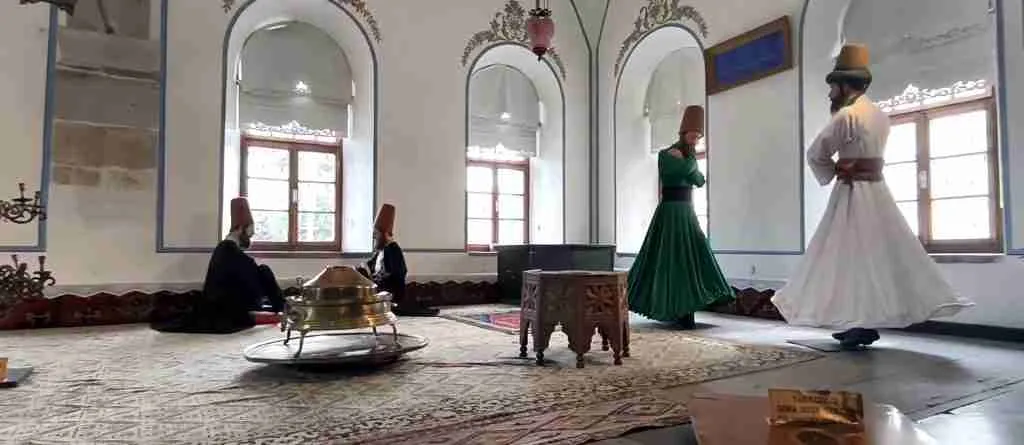
3 days
Konya 3-Day Discovery Tour
- ✓ Comprehensive Konya experience
- ✓ Expert local guides included
- ✓ All accommodation included
- ✓ Transportation provided
5 days
Konya 5-Day Highlights Experience
- ✓ Comprehensive Konya experience
- ✓ Expert local guides included
- ✓ All accommodation included
- ✓ Transportation provided
7 days
Konya 7-Day Cultural Journey
- ✓ Comprehensive Konya experience
- ✓ Expert local guides included
- ✓ All accommodation included
- ✓ Transportation provided
10 days
Konya 10-Day Complete Adventure
- ✓ Comprehensive Konya experience
- ✓ Expert local guides included
- ✓ All accommodation included
- ✓ Transportation provided
Multi-day tour packages powered by TourRadar. Prices and availability subject to change.
Introduction to Konya: Turkey’s Spiritual Capital
Konya stands apart from Turkey’s coastal resorts and cosmopolitan megacities as a destination defined by spiritual depth, architectural grandeur, and authentic cultural preservation. With 2.2 million residents spread across the southwestern Central Anatolian Plateau at 1,016 meters elevation, this ancient city—known as Iconium in antiquity—served as capital of the Seljuk Sultanate of Rum during the 12th-13th centuries when it became a global center of Islamic learning, arts, and mysticism.
The city’s defining moment arrived in 1228 when the Persian poet, Islamic theologian, and Sufi mystic Jalal ad-Din Muhammad Rumi settled in Konya, fleeing Mongol invasions from his birthplace in present-day Afghanistan. Here, Rumi wrote his masterwork Masnavi (25,000 verses exploring divine love and spiritual truth), established the Mevlevi Order of Sufism, and developed the Sema ceremony—the ecstatic whirling prayer ritual that continues to captivate global audiences eight centuries later. Rumi’s death on December 17, 1273 transformed Konya into a pilgrimage destination that attracts more than 1.5 million annual visitors to his tomb and museum.
Beyond its Sufi heritage, Konya preserves extraordinary examples of Seljuk architecture rarely found elsewhere in Turkey. The 13th-century İnce Minare Medresesi showcases intricate stone carving and decorative tile work, while the Karatay Medresesi (1251) houses stunning examples of Seljuk ceramics and calligraphy. The Alaeddin Mosque, completed in 1221, demonstrates early Turkish mosque architecture with its distinctive wooden ceiling and forest of columns supporting the prayer hall.
Contemporary Konya maintains Turkey’s most religiously conservative urban atmosphere, where Islamic values shape daily life more visibly than in secular Istanbul or coastal tourist zones. Mosques broadcast the five daily calls to prayer across neighborhoods where headscarves remain common among women, alcohol is largely absent from restaurants, and Friday congregational prayers draw substantial participation. This conservative character sometimes surprises first-time visitors but creates the authentic cultural context that makes witnessing the Whirling Dervishes so profound—this is not a performance staged for tourists but a living spiritual tradition practiced by devoted adherents.
The city’s geography positions it strategically between Istanbul (650 km northwest), Ankara (260 km north), and Cappadocia (220 km northeast), making it an ideal stopover for overland travelers crossing Turkey. The surrounding Konya Plain, one of Turkey’s most productive agricultural regions, supplies the nation with wheat, sugar beets, and vegetables while supporting a growing industrial base in automotive parts, machinery, and textiles that has transformed Konya into Turkey’s eighth-largest economy.
Mevlana Museum: Rumi’s Tomb and the Heart of Konya 2026
The Mevlana Museum (Mevlânâ Müzesi) stands as Konya’s defining attraction and one of Turkey’s most visited cultural sites, drawing over 1.5 million annual pilgrims and tourists to Rumi’s tomb and the former lodge of the Whirling Dervishes. The museum’s distinctive fluted turquoise dome rising above central Konya has become the city’s visual symbol, visible from various vantage points across the urban landscape.
Admission to the Mevlana Museum is free in 2026, making it one of Turkey’s most accessible major cultural sites. The complex opens daily from 9:00 AM to 5:30 PM April-October, with slightly reduced winter hours 9:00 AM to 5:00 PM November-March. Friday mornings may experience brief closures for congregational prayers. Audio guides are available for rental in multiple languages (Turkish, English, Arabic, German, French) for approximately 20-30 TL, providing valuable context about Rumi’s life, Sufi philosophy, and the historical artifacts displayed throughout the museum.
The museum encompasses several interconnected buildings centered on Rumi’s mausoleum. Visitors enter through the Dervişan Kapısı (Gate of the Dervishes) after passing through a beautifully maintained garden featuring fountains, rose beds, mature trees, and tombstones of prominent Mevlevi dervishes. The Ottoman silver door at the mausoleum entrance bears the famous inscription attributed to Rumi: “Those who enter here incomplete will emerge complete.”
Inside the mausoleum, Rumi’s sarcophagus occupies the place of honor beneath the turquoise dome, covered in gold-embroidered velvet and crowned with a massive turban symbolizing his spiritual authority. The number of wraps around the turban indicates spiritual rank within Mevlevi tradition. Flanking Rumi’s tomb are the sarcophagi of his wife Kerra Hatun, his children, and six dervishes known as the “Soldiers of Horasan” who accompanied him from Balkh (in present-day Afghanistan) to Konya. A total of 66 sarcophagi occupy the platform, not all visible to visitors.
The mausoleum architecture dates to the 13th century, though the surrounding mosque and semahane (whirling hall) were added later by Ottoman sultans. Both Mehmed the Conqueror and Süleyman the Magnificent were adherents of the Mevlevi Order and made charitable donations to maintain the complex. The intricate tile work, calligraphy panels, and architectural details throughout the buildings demonstrate the finest examples of Seljuk and Ottoman artistic achievement.
Beyond the mausoleum, the museum displays an extraordinary collection of Mevlevi artifacts spanning seven centuries. Exhibits include original manuscripts of Rumi’s poetry in flowing Persian calligraphy, musical instruments used in Sema ceremonies (the ney reed flute, kudum drums, and tambur lute), ceremonial costumes worn by whirling dervishes (the sikke conical hat, tennure white skirt, and hirka black cloak), and personal possessions attributed to Rumi including prayer rugs and writing implements.
The manuscript collection deserves particular attention for its priceless illuminated Qurans dating to the 13th-16th centuries, featuring gold leaf decoration and miniature paintings that rank among the finest examples of Islamic book arts. The museum’s carpet collection includes rare Seljuk fragments and Ottoman ceremonial carpets that once graced the lodge’s prayer halls.
Visitor protocols at the Mevlana Museum reflect its status as both museum and sacred site. All visitors must wear plastic shoe coverings provided at the entrance to protect the historic carpets and floors. Women should cover their heads with a headscarf (scarves are available for loan if needed). Modest dress is essential—both men and women should cover shoulders and knees, avoiding shorts, tank tops, or revealing clothing. Photography is permitted in most areas without flash, though some sections prohibit cameras entirely. Visitors should maintain respectful silence within the mausoleum as many Muslims come to pray for Rumi’s intercession.
Peak visiting times occur 10:00 AM to 2:00 PM when tour buses from Cappadocia and coastal regions arrive. Visiting early (9:00-10:00 AM) or late afternoon (3:00-5:00 PM) provides calmer experiences with fewer crowds and better opportunities for photography and contemplation. Friday mornings attract local worshippers for congregational prayers, creating particularly authentic spiritual atmospheres but also increased crowding.
The museum grounds include a rose garden that hosts outdoor Whirling Dervish performances Thursday evenings during summer months (roughly June-September), providing an additional opportunity beyond the main Saturday ceremonies at the Mevlana Cultural Center. These summer garden performances typically occur at sunset around 8:00-8:30 PM and are included with museum admission.
Whirling Dervishes Sema Ceremony: Authentic Spiritual Practice 2026
Witnessing the Whirling Dervishes Sema ceremony in Konya represents one of Turkey’s most profound cultural experiences and a primary motivation for visiting the city. Unlike tourist-oriented performances in Istanbul hotels and cultural centers, Konya’s weekly Saturday ceremony at the Mevlana Cultural Center (Mevlana Kültür Merkezi) is performed by actual members of the Mevlevi Order continuing an unbroken 700-year tradition of Sufi spiritual practice.
The authentic Sema ceremony occurs every Saturday evening at 7:00 PM (19:00) year-round at the purpose-built Mevlana Cultural Center, a large performance hall with capacity for over 3,000 spectators located near the Mevlana Museum. Tickets cost just 50-100 TL ($1-2.50) in 2026 depending on seating location, making this one of the world’s most affordable opportunities to witness UNESCO-recognized Intangible Cultural Heritage. Tickets can be purchased at the venue beginning Saturday morning, though arriving by 6:00 PM ensures good seating as the hall often fills completely.
The Sema ceremony lasts approximately one hour and follows a precisely prescribed structure with deep symbolic meaning. The performance begins with a naat (hymn praising the Prophet Muhammad) followed by rhythmic drumming on the kudum. Dervishes enter the semahane wearing their characteristic costumes: the sikke (tall conical felt hat representing a tombstone for the ego), hirka (black cloak symbolizing the grave), and beneath it the tennure (white skirt representing the burial shroud). The ceremony proceeds through four distinct selams (greetings or movements).
During the whirling, dervishes extend their arms with right palm facing upward to receive divine grace and left palm facing downward to channel that grace to earth. They spin counter-clockwise around their left foot which remains rooted to the floor as an axis, while their right foot propels them in continuous rotation. Dervishes internally chant “Allah” with each 360-degree turn, entering meditative states that can sustain whirling for 10-15 minutes without dizziness—a skill requiring years of training and spiritual discipline.
The sheikh (spiritual leader) supervises the ceremony from a special sheepskin placed on the floor, symbolizing the spiritual sun around which the dervishes orbit like planets. Musicians accompany the whirling with traditional instruments including the ney (reed flute whose mournful sound represents the soul’s longing for divine union), kudum (small drums marking rhythm), and voices chanting mystical poetry from Rumi and other Sufi masters.
Understanding that this is a genuine religious ceremony rather than entertainment transforms the viewing experience. Observers should remain completely silent during the whirling, refrain from applause between selams (though brief appreciation is acceptable at the ceremony’s conclusion), avoid flash photography which disrupts the dervishes’ concentration, and maintain respectful demeanor throughout. Some visitors report profound emotional responses to the ceremony’s spiritual intensity—tears, goosebumps, or meditative calm are common reactions to the combination of haunting music, synchronized whirling, and sacred atmosphere.
The annual Şeb-i Arûs Festival (Festival of the Wedding Night) held December 7-17, 2026 commemorates Rumi’s death anniversary, which Sufis interpret as his “wedding night” when his soul united with the divine beloved. This 10-day festival transforms Konya into a global pilgrimage destination with multiple daily Sema ceremonies, academic conferences on Sufi philosophy, musical concerts featuring Turkish classical and Sufi music, poetry readings from Rumi’s works, and cultural exhibitions exploring Mevlevi traditions.
Hotel availability during the Şeb-i Arûs Festival becomes extremely constrained with rooms often fully booked 3-6 months in advance. Festival Sema ceremonies require advance ticket reservations through official channels as demand far exceeds the venue capacity. The December timing brings cold weather (0-10°C) and occasional snow, requiring warm clothing for outdoor activities between indoor performances. Despite the logistical challenges, experiencing the festival provides unparalleled immersion in living Sufi culture and opportunities to encounter international visitors and scholars drawn to Rumi’s message of universal love and tolerance.
Essential Seljuk Monuments and Museums in Konya 2026
Beyond the Mevlana Museum, Konya preserves an extraordinary concentration of 13th-century Seljuk architecture and Islamic art that rewards visitors interested in medieval Turkish history and culture. These monuments, often overlooked by rushed day-trippers, provide essential context for understanding the sophisticated urban civilization that flourished in Konya during its golden age as the Seljuk capital.
Alaeddin Mosque and Alaeddin Hill
The Alaeddin Mosque (Alaeddin Camii), completed in 1221 under Sultan Alaeddin Keykubad I, represents Konya’s most important religious building after the Mevlana complex. Perched atop Alaeddin Hill in the city center, this mosque demonstrates early Turkish architectural adaptation of Persian and Arab influences into distinctive Anatolian forms. The prayer hall’s forest of recycled Roman and Byzantine columns creates a mystical atmosphere enhanced by original 13th-century wooden ceiling panels displaying geometric and floral motifs. The mosque remains active for daily prayers; visitors should time visits between prayer times, dress modestly, and remove shoes at the entrance. Admission is free.
Alaeddin Hill Park surrounding the mosque functions as Konya’s central public gathering space where families picnic, children play, and vendors sell traditional foods. The hill’s archaeological layers reveal continuous occupation from Roman Iconium through Byzantine and Seljuk periods. Excavations have uncovered palace foundations, defensive walls, and everyday artifacts now displayed in the Konya Archaeological Museum.
İnce Minare Medresesi (Museum of Wooden Artifacts & Stone Carving)
The İnce Minare Medresesi, built in 1264 as an Islamic theological school, takes its name from the slender minaret (ince minare means “slender minaret”) that once rose beside the entrance portal before lightning damage in 1901. The surviving entrance facade ranks among Turkey’s finest examples of Seljuk stone carving, with intricate geometric patterns, Quranic inscriptions in flowing Kufic script, and stylized plant motifs covering every surface in mesmerizing complexity.
Now functioning as the Museum of Wooden Artifacts and Stone Carving, the building displays extraordinary examples of medieval Islamic woodworking including carved minbars (pulpits), Quran stands, door panels, and ceiling panels from demolished or renovated Seljuk structures across Anatolia. The stone carving collection presents grave markers, architectural fragments, and decorative panels demonstrating the technical virtuosity of 13th-14th century Anatolian craftsmen. Admission costs approximately 50 TL in 2026. The museum opens Tuesday-Sunday 9:00 AM-5:00 PM, closed Mondays.
Karatay Medresesi (Tile Museum)
The Karatay Medresesi, established in 1251 by Emir Celaleddin Karatay to serve the Seljuk sultan, now houses the Tile Museum (Çini Müzesi) displaying an unparalleled collection of Seljuk ceramic art. The building itself deserves attention for its spectacular tile-covered dome depicting paradise with geometric stars and floral patterns in turquoise, cobalt blue, and white glazes that seem to shimmer in natural light filtering through the dome’s windows.
The museum collection includes ceramic tiles, plates, bowls, and decorative panels produced in Konya and other Anatolian centers during the 13th-14th centuries. These ceramics demonstrate sophisticated techniques including luster decoration, underglaze painting, and multi-colored glazes that rivaled contemporary Persian production. Star-and-cross tiles, figurative plates depicting animals and hunters, and calligraphic panels presenting Quranic verses and poetry reveal the diversity of Seljuk ceramic arts. Admission costs approximately 50 TL. Hours are Tuesday-Sunday 9:00 AM-5:00 PM, closed Mondays.
Sırçalı Medresesi
The Sırçalı Medresesi (Glazed Tile Seminary), sponsored by Seljuk vizier Bedreddin Muhlis in the 13th century, takes its name from the turquoise tiles that originally covered its exterior facades. Though the tile work has largely disappeared over centuries, the remaining entrance portal and courtyard preserve elements of the original grandeur. The medresesi courtyard, with its central fountain and arcaded student cells, provides atmospheric spaces for photography and contemplation. The building currently functions as a small museum but admission is often free or minimal (20-30 TL).
Sahib-i Ata Külliyesi
The Sahib-i Ata Complex, built in 1258 during Sultan Keykavus II’s reign, represents a complete Seljuk külliye (Islamic social complex) originally including a mosque, medrese, hamam (bathhouse), imaret (soup kitchen), and han (caravanserai). The grand entrance portal featuring elaborate stone carving welcomes visitors to the mosque which remains active for prayers. The adjacent hamam, though no longer functioning, can sometimes be viewed from the exterior. This complex demonstrates the integrated approach to urban planning in medieval Islamic cities where religious, educational, charitable, and commercial functions occupied coordinated architectural ensembles.
Konya Archaeological Museum
The Konya Archaeological Museum (Konya Arkeoloji Müzesi) chronicles the region’s deep history from Neolithic settlement at Çatalhöyük (9,000 years ago) through Roman, Byzantine, and Seljuk periods. The Çatalhöyük exhibits deserve particular attention, presenting artifacts from one of the world’s earliest urban settlements including the skeleton of a baby girl, stone jewelry, obsidian tools, and reconstructions of the settlement’s distinctive architecture. Roman marble statuary, Byzantine mosaics, and Seljuk ceramics round out the collection. Admission costs approximately 60 TL. The museum opens Tuesday-Sunday 9:00 AM-5:00 PM.
Transportation to Konya: Getting There in 2026
Konya’s position in Central Anatolia provides excellent connectivity to major Turkish cities through high-speed rail, domestic flights, and intercity buses, making it accessible for travelers whether beginning in Istanbul, Ankara, or Mediterranean resort areas.
High-Speed Train from Istanbul
Turkey’s YHT (Yüksek Hızlı Tren) high-speed rail network offers the most comfortable overland connection between Istanbul and Konya, completing the 662-kilometer journey in approximately 4 hours 30-40 minutes. Trains depart from Istanbul Söğütlüçeşme or Pendik stations 5 times daily between 6:30 AM and 7:40 PM, arriving at Konya Selçuklu YHT station in the city center. Return services operate on similar schedules.
YHT tickets cost $18-30 (740-1,200 TL) for Economy Class or $25-40 (1,000-1,650 TL) for Business Class depending on booking timing and demand. Booking 15-30 days advance typically secures the lowest fares. Children under 8 travel free, ages 8-11 pay half fare, and travelers under 26 receive 15% youth discounts. Return tickets cost 20% less than two one-way purchases.
Trains feature comfortable reclining seats with ample legroom, power outlets at each seat, free Wi-Fi (though connectivity can be spotty in rural areas), and a dining car serving hot and cold Turkish meals, snacks, and beverages. Most departures use 6-car trains built by Spanish manufacturer CAF, though some services employ 8-car Siemens Velaro trains on peak routes.
Book tickets online through the official TCDD website (ebilet.tcddtasimacilik.gov.tr) or purchase in person at major railway stations. International credit cards are accepted online. Advance booking opens 60 days before travel dates.
High-Speed Train from Ankara
Ankara to Konya represents an even shorter high-speed rail journey at just 2 hours covering 260 kilometers. Multiple daily departures operate from Ankara Gar (main station) beginning at 6:00 AM through evening departures around 8:00 PM. Fares range from $12-22 (500-900 TL) for Economy Class. This route serves travelers combining Ankara’s museums and Atatürk sites with Konya’s Sufi heritage in multi-day Central Anatolia itineraries.
Domestic Flights
Konya Airport (KYA) handles domestic flights from Istanbul, Ankara, and Izmir operated by Turkish Airlines and budget carrier Pegasus Airlines. Istanbul flights (from both IST and SAW airports) complete the journey in just 1 hour 15 minutes, making air travel the fastest option despite airport transit time. Budget one-way fares frequently dip to $24-26 (1,000-1,100 TL) when booked 2-3 weeks advance, though last-minute tickets can rise to $60-80.
Konya Airport is located 18 kilometers (11 miles) northeast of the city center. Havaş shuttle buses coordinate with flight arrivals, transporting passengers to central Konya for approximately 30-40 TL per person, with journey time around 30 minutes depending on traffic. Taxis from the airport to city center cost 150-200 TL. Major hotels offer airport shuttle services for guests, sometimes complimentary or for nominal fees—confirm when booking accommodation.
Intercity Buses
Turkey’s extensive intercity bus network provides economical connections to Konya from virtually every major city. Istanbul to Konya buses depart from Esenler Otogar (main bus terminal) operated by reputable companies including Metro Turizm, Pamukkale Turizm, and Özkaymak. The journey takes 10-11 hours covering 650 kilometers on modern highways. Fares range from $18-32 (750-1,300 TL) depending on company, departure time, and seat selection.
Turkish intercity buses provide higher comfort levels than many international travelers expect, with reclining seats, air conditioning, onboard attendants serving complimentary tea, coffee, and snacks, entertainment screens at each seat, and bathroom facilities. Overnight departures (10:00 PM-midnight) arrive in Konya at morning hours convenient for immediate hotel check-in and sightseeing.
Buses from Antalya (4 hours), Cappadocia/Nevşehir (3.5 hours), and Ankara (3 hours) provide shorter regional connections. Book bus tickets online through company websites or purchase at otogar ticket counters. Seats are assigned, and luggage is stored in compartments beneath the passenger cabin.
Konya Selçuklu YHT Station (Train Station)
The modern Konya Selçuklu YHT station opened in 2021 on the opposite side of the city from the original Konya Gar, approximately 4 kilometers from major hotels and the Mevlana Museum. Taxis from the station to central hotels cost 40-60 TL. The city’s tram system connects the station to downtown, though with luggage, taxis offer more convenience. The station includes cafes, shops, and ATMs for arriving travelers’ needs.
Where to Stay in Konya: Accommodation Guide 2026
Konya offers diverse accommodation options spanning hostels, mid-range hotels, and luxury properties, with most tourists concentrating in the Aziziye neighborhood surrounding the Mevlana Museum for convenient walking access to major attractions, restaurants, and the Saturday night Whirling Dervish ceremony venue.
Budget Accommodation ($11-32 Per Night)
Budget travelers find excellent value in Konya’s hostels and 2-star hotels clustered around the Mevlana Museum area. Hostel dormitory beds cost $11-18 (450-750 TL) per night with shared bathrooms, common kitchens, and social spaces where international backpackers exchange travel advice. Private rooms in budget hotels range $18-32 (750-1,300 TL) nightly, typically including basic amenities like air conditioning, private bathrooms, and complimentary breakfast.
Recommended budget options include Hostelida Konya (from $16 nightly) offering clean dormitories and private rooms just 300 meters from the Mevlana Museum, and Otel Derya (from $25-35) providing simple but comfortable rooms with helpful multilingual staff in a family-run property. Budget accommodations in Konya maintain high cleanliness standards despite modest pricing, reflecting Turkish hospitality values.
Mid-Range Accommodation ($23-59 Per Night)
Mid-range 3-star and 4-star hotels dominate Konya’s accommodation landscape, providing comfortable rooms, full-service amenities, and strategic locations for $23-59 (950-2,400 TL) nightly. These properties typically include air-conditioned rooms with private bathrooms, flat-screen TVs, mini-fridges, complimentary breakfast buffets featuring Turkish specialties, 24-hour reception, and Wi-Fi throughout the property.
Balikcilar Hotel (from $43) occupies a prime location directly across from the Mevlana Museum with rooftop views of the turquoise dome, spacious rooms, and guest praise for friendly service and generous breakfasts. Mevlevi Hotel (from $43) offers boutique-style accommodation near the train station with modern design, comfortable beds, and walking distance to the museum. Sufi Homes (from $32) provides apartment-style accommodation ideal for families or longer stays, with kitchenettes, separate living areas, and proximity to both the Mevlana Cultural Center and museum.
Luxury Accommodation ($47-92 Per Night)
Konya’s 5-star hotels deliver upscale experiences at prices significantly below equivalent Istanbul or coastal resort properties. Luxury hotels cost $47-92 (1,950-3,800 TL) nightly in 2026, offering spacious rooms with premium bedding, marble bathrooms with bathrobes and slippers, multiple on-site restaurants, fitness centers, spa facilities including Turkish hamams, indoor/outdoor pools, and comprehensive business centers.
Dedeman Konya Hotel & Convention Center (from $75) ranks as Konya’s premier property with 207 rooms, full-service spa, seasonal outdoor pool, extensive conference facilities, and location 8 kilometers from the airport with complimentary shuttle service. The property caters equally to business travelers and upscale tourists seeking maximum comfort. Hilton Garden Inn Konya (from $65) provides reliable international standards with contemporary design, central location, fitness facilities, and pet-friendly policies for travelers accompanied by dogs or cats. Grand Hotel Konya (from $55) sits just 4 miles from Konya Airport, offering convenience for flight arrivals and departures.
Neighborhood Selection and Booking Strategy
Most visitors prioritize the Aziziye/Karatay district surrounding the Mevlana Museum for unbeatable convenience to attractions, restaurants, and authentic urban atmosphere. This central zone allows walking to the museum (3-5 minutes), Alaeddin Hill (10 minutes), İnce Minare Medresesi (15 minutes), and the Saturday Sema ceremony venue at Mevlana Cultural Center (8-10 minutes). Hotels here occupy restored historic buildings or modern constructions designed to harmonize with neighborhood character.
The Selçuklu district near the high-speed train station suits travelers prioritizing rail connections and willing to use taxis or trams for museum visits. Accommodation prices average slightly lower than central locations, and newer hotels in this developing area offer contemporary facilities.
Book Konya hotels 2-4 weeks advance for standard travel dates, ensuring reasonable prices and good selection. The annual Şeb-i Arûs Festival (December 7-17, 2026) requires booking 3-6 months advance as hotels fill completely and prices increase 50-100% during this peak period. Summer months (July-August) see increased domestic tourism and moderate price rises, while winter (January-March) and shoulder seasons (April-May, September-November) offer the lowest rates with Sunday/Tuesday check-ins typically 10-15% cheaper than weekends.
Dining in Konya: Restaurants and Local Cuisine 2026
Konya’s dining scene emphasizes traditional Anatolian and Ottoman Turkish cuisine with strong Islamic cultural influences that shape both menu offerings and restaurant atmospheres. The city’s conservative character means alcohol is largely unavailable in restaurants, replaced by fresh ayran (yogurt drink), şalgam (fermented turnip juice), and çay (tea) as meal accompaniments.
Signature Konya Dishes
Konya cuisine centers on hearty meat dishes, wheat-based breads and pastries, and dairy products reflecting Central Anatolia’s agricultural abundance and nomadic Turkish heritage. Etli ekmek (literally “bread with meat”) represents Konya’s most famous contribution to Turkish cuisine—a thin, crispy flatbread topped with ground lamb, peppers, tomatoes, and spices, served fresh from wood-fired ovens. Think of it as a Turkish variation on pizza, though distinctly different in flavor profile with its emphasis on lamb and minimal cheese.
Fırın kebabı showcases slow-cooked lamb shank braised with vegetables, potatoes, and tomatoes in sealed clay pots until the meat falls off the bone. Tirit layers shredded lamb over torn bread pieces moistened with meat broth, topped with yogurt and drizzled with chili-infused butter. Bamya çorbası (okra soup) appears on most restaurant menus as a traditional starter, while keşkek (wheat and meat porridge) represents festive occasion cooking requiring hours of preparation.
Budget Dining ($3-5 Per Meal)
Local eateries (lokantas) throughout Konya serve filling Turkish meals for $3-5 (130-220 TL), including soup, main course with rice or bulgur, fresh bread, and tea. These no-frills establishments display prepared dishes in steam trays, allowing visual selection even without Turkish language skills. Point to desired items, and staff plate generous portions. Typical offerings include mercimek çorbası (red lentil soup), tavuk şiş (chicken kebab), kuru fasulye (white bean stew with meat), and various vegetable dishes.
Street food provides ultra-economical quick meals: simit (sesame bread rings) from street vendors cost just 10-15 TL, while döner kebab wraps range 35-50 TL. Pide shops prepare Turkish flatbreads with various toppings (cheese, ground meat, eggs) for 40-70 TL per portion. These options suit budget travelers and those wanting authentic local experiences away from tourist-focused restaurants.
Mid-Range Dining ($8-15 Per Meal)
Sit-down restaurants in Konya’s city center offer complete meals with starters, main courses, and tea for $8-15 (350-650 TL) per person. These establishments provide table service, printed menus (often with English sections), and more refined presentations than casual lokantas while maintaining authentic Turkish cooking.
Şifa Restaurant near the Mevlana Museum receives consistent praise from travelers for excellent etli ekmek, grilled kebabs, and traditional Ottoman dishes in a contemporary setting with English-speaking staff. Mains cost 120-180 TL. Ali Baba Restaurant specializes in Konya regional cuisine with emphasis on meat dishes, flavorful spice blends, and generous portions. Expect 150-200 TL for complete meals. Tiritçi Mithat serves authentic tirit and other traditional dishes in a family-friendly atmosphere where locals dine regularly—always a positive sign for food quality and value.
Upscale Dining ($15-25 Per Person)
Konya’s finest restaurants present contemporary interpretations of Turkish cuisine, elegant dining rooms, and expanded service including mezes (appetizer assortments), grilled meats and fish, desserts, and fresh fruit plates for $15-25 (650-1,100 TL) per person. These establishments suit special occasions, business dinners, or travelers seeking refined dining experiences.
Konak Konya Restaurant occupies a restored Ottoman house with atmospheric courtyard seating, serving regional specialties and Ottoman palace cuisine. Gülbahçe Restaurant offers formal dining with extensive kebab selection, mezes, and desserts in a garden setting. Reservations recommended for weekend dinners at upscale venues, especially during the December festival period.
Sweets and Desserts
Turkish dessert culture thrives in Konya with excellent pastry shops (pastane) presenting baklava, künefe (shredded pastry with cheese and syrup), sütlaç (rice pudding), and helva. Konya Şekerci Hafiz Mustafa, a local institution since 1864, produces exceptional lokum (Turkish delight) in flavors ranging from classic rose and pistachio to pomegranate and lemon. Boxes make excellent gifts at 80-150 TL depending on quantity and variety.
Traditional breakfast (kahvaltı) in Konya hotels or specialty breakfast restaurants includes spreads of olives, cheeses, tomatoes, cucumbers, eggs, honey, jam, butter, fresh bread, and unlimited tea for 60-100 TL per person. This substantial meal fuels morning sightseeing efficiently.
Sample Konya Itineraries: Planning Your Visit 2026
One Day in Konya
9:00 AM: Arrive at Konya via overnight bus or early morning train. Drop luggage at hotel.
9:30 AM: Visit Mevlana Museum (free admission) during quiet morning hours. Allow 1.5-2 hours to explore the tomb, museum exhibits, and garden. Audio guide rental recommended.
11:30 AM: Walk to İnce Minare Medresesi (15 minutes) to admire the carved entrance portal and browse the Museum of Wooden Artifacts & Stone Carving (50 TL admission).
1:00 PM: Lunch at local restaurant near Alaeddin Hill. Try etli ekmek and traditional Turkish soup.
2:30 PM: Visit Alaeddin Mosque (free, between prayer times) and explore Alaeddin Hill Park. Walk to Karatay Medresesi Tile Museum (50 TL) to view spectacular Seljuk ceramics and tile dome.
4:30 PM: Tea break at traditional çay bahçesi (tea garden) with views of city.
5:30 PM: Return to hotel to rest and freshen up.
6:30 PM: Dinner at mid-range restaurant (if Saturday, eat early before Sema ceremony).
7:00 PM (Saturdays only): Attend Whirling Dervishes Sema ceremony at Mevlana Cultural Center (50-100 TL, 1 hour duration).
8:30 PM: Evening stroll through illuminated Mevlana Museum exterior and neighborhood. Depart Konya via overnight bus or sleep at hotel for morning departure.
Daily Budget: Accommodation (if staying) 900-2,400 TL ($23-55), museum admissions 150 TL, meals 400-650 TL, local transport/taxis 100-150 TL. Total: 1,550-3,350 TL ($40-80) per person excluding accommodation, or $63-135 including mid-range hotel.
Two Days in Konya (Ideal Duration)
Day 1: Follow one-day itinerary above through Alaeddin Hill.
Day 1 Evening: Explore Aziziye neighborhood shops and cafes. Visit Shams Tabrizi Mosque and Tomb (free), commemorating Rumi’s spiritual mentor whose mysterious death deeply affected the poet.
Day 2 Morning (9:00 AM): Visit Konya Archaeological Museum (60 TL) focusing on Çatalhöyük exhibits. Allow 1.5 hours.
11:00 AM: Explore Sırçalı Medresesi and surrounding Seljuk monuments. Visit Sahib-i Ata Complex.
12:30 PM: Lunch in Aziziye district shopping area.
2:00 PM: Day trip option to Sille village (10 km from Konya, 20 minutes by taxi or dolmuş). This historic Greek Orthodox village preserves Byzantine St. Helen’s Church, old stone houses, and mountain scenery. Return to Konya by 5:00 PM.
Alternative afternoon: Visit Tropical Butterfly Garden (free), browse Konya’s covered bazaar (kapalı çarşı) for handicrafts and souvenirs.
7:00 PM (Saturdays): Attend Whirling Dervishes ceremony if visiting on Saturday. Otherwise, enjoy relaxed dinner and early night.
Daily Budget Day 2: Museum admission 60 TL, meals 400-650 TL, Sille transportation 80-120 TL (taxi roundtrip). Total: 540-830 TL ($14-21) excluding accommodation.
Three Days in Konya with Cappadocia Connection
Follow two-day itinerary above, adding Day 3 travel to Cappadocia (220 km, 3.5 hours by bus, 1,000-1,500 TL). Depart Konya early morning (8:00-9:00 AM bus), arrive Göreme/Ürgüp by noon for afternoon Cappadocia exploration. This routing creates logical Central Anatolia circuit: Istanbul → Ankara → Konya → Cappadocia → Return flights from Kayseri or Nevşehir.
Practical Information for Konya Visitors 2026
Money and Banking
Turkish Lira (TRY, symbol ₺) is the exclusive currency. Exchange rates fluctuate significantly; as of 2026 typical rates approximate $1 USD = 41-45 TRY, €1 EUR = 45-48 TRY. ATMs throughout central Konya dispense Turkish Lira using international cards (Visa, Mastercard, Maestro) with typical withdrawal fees 20-35 TRY per transaction plus percentage-based bank fees. Withdraw larger amounts less frequently to minimize fees.
Currency exchange offices (döviz) near the Mevlana Museum offer competitive rates for major currencies. Hotels and shops increasingly accept credit cards, though small restaurants, taxis, and market vendors prefer cash. Budget 40-50% of daily spending in cash for meals, transport, and small purchases.
Communication and Connectivity
Hotels, restaurants, and cafes throughout Konya provide free Wi-Fi, though connection speeds and reliability vary significantly. Purchase local SIM cards from Turkcell, Vodafone, or Türk Telekom shops for reliable mobile data—tourist SIM packages offer 10-20 GB data plus calling minutes for 200-350 TL valid 30 days. Passport required for registration. WhatsApp, Google Maps, and translation apps function normally in Turkey.
Local Transportation
Konya’s public transportation comprises bus and tram networks using rechargeable KonKart cards (purchase at kiosks and stations for 20 TRY card deposit plus desired credit). Single rides cost just 8 TRY ($0.18), making buses and trams extremely economical for longer distances. However, most central attractions lie within comfortable walking distance (Mevlana Museum to Alaeddin Mosque: 15 minutes; museum to İnce Minare: 20 minutes).
Taxis display yellow roofs and use meters (taksi in Turkish). Starting fare is 28 TRY plus 23 TRY per kilometer. Typical rides within central Konya cost 40-80 TRY. Insist drivers activate meters; agree on approximate fares before entering unmarked private cars offering rides. BiTaksi and Uber-style apps function in Konya but are less common than Istanbul or Ankara.
Cultural Etiquette and Dress Codes
Konya’s conservative Islamic culture requires respectful behavior and modest dress to avoid offending residents and ensure comfortable visits to religious sites. Both men and women should cover shoulders and knees when visiting mosques and the Mevlana Museum—women should additionally cover their heads with headscarves in active mosques (though the Mevlana Museum itself doesn’t strictly require headscarves except in the prayer sections). Carry a lightweight scarf for women; remove shoes before entering carpeted mosque areas.
Conservative street dress helps solo female travelers avoid unwanted attention: loose pants or long skirts, tops covering shoulders and upper arms, avoiding tight or revealing clothing. Male travelers should wear long pants and avoid sleeveless shirts in religious neighborhoods. These modest standards differ from Turkey’s coastal resorts where Western clothing norms prevail.
Public displays of affection beyond hand-holding may draw disapproving looks. Alcohol consumption in public spaces is socially unacceptable in Konya. During Ramadan (March 10-April 8, 2026), avoid eating, drinking, or smoking in public during daylight hours out of respect for fasting Muslims, though restaurants serve tourists discreetly.
Language and Communication
Turkish is the universal language. English proficiency exists among younger tourism workers at major hotels and restaurants but remains limited compared to Istanbul’s tourism infrastructure. Learning basic Turkish phrases enhances interactions: Merhaba (hello), Teşekkür ederim (thank you), Lütfen (please), Ne kadar? (how much?). Google Translate’s camera function helps read menu items and signs.
Safety and Health
Konya ranks among Turkey’s safest cities with negligible violent crime affecting tourists. Standard urban precautions apply: secure valuables in hotel safes, maintain awareness in crowded markets, use registered taxis, avoid poorly lit streets late at night. Solo female travelers report positive experiences with appropriate modest dress and normal vigilance.
Tap water is safe for brushing teeth but most travelers prefer bottled water for drinking (2-5 TRY for 1.5 liters from supermarkets). Turkish cuisine’s reliance on fresh ingredients rarely causes stomach issues for travelers accustomed to Mediterranean foods. Pharmacies (eczane, marked with green crosses) sell over-the-counter medications for common ailments. Major hospitals include Konya Numune Hospital and private Medova Hospital with emergency services.
When Not to Visit
High summer (July-August) brings oppressive heat (32-37°C), peak domestic tourism creating crowds at the Mevlana Museum, and higher accommodation prices. Consider spring (April-June) or autumn (September-October) for optimal weather and moderate visitor numbers. December 7-17 (Şeb-i Arûs Festival) attracts international crowds requiring advance hotel bookings but offers unparalleled cultural immersion for those able to plan ahead.
Day Trips from Konya 2026
Çatalhöyük Archaeological Site
Çatalhöyük, a UNESCO World Heritage Site 50 kilometers southeast of Konya, preserves one of the world’s earliest urban settlements (7400-5200 BCE) where 8,000 people lived in densely packed mud-brick houses accessed through roof openings. Excavations continue revealing Neolithic life including agriculture, animal domestication, pottery production, and religious practices. The site museum displays original artifacts while life-size reconstructions help visualize ancient daily life.
Visiting Çatalhöyük independently requires rental car or taxi (round trip approximately 600-800 TRY including waiting time). Organized tours from Konya cost 1,200-1,500 TRY per person including transportation, guide, and admission. Site admission is 100 TL. Allow 3-4 hours total including transportation.
Sille Village
Sille, a former Greek Orthodox village 10 kilometers from Konya, offers picturesque stone architecture, Byzantine church ruins, and mountain scenery ideal for half-day excursions. St. Helen’s Church, fully restored with original frescoes and architecture, operates as a museum (50 TL admission). The village’s historic hamam has been converted to a museum, while cafes serve tea in traditional courtyard settings. Reach Sille by taxi (200-250 TLR roundtrip) or local dolmuş minibuses (20 TL per person each way) from Konya center. Plan 3-4 hours for leisurely exploration.
Lake Beyşehir
Lake Beyşehir, Turkey’s third-largest lake located 90 kilometers west of Konya, attracts nature lovers for boating, fishing, birdwatching, and visits to the small island containing Eşrefoğlu Mosque, a rare wooden Seljuk mosque from 1296. The town of Beyşehir offers lakeside restaurants serving fresh fish. This full-day excursion requires rental car or organized tour (1,500-2,000 TRY per person including lunch and guide). Budget travelers can reach Beyşehir via intercity buses (80-120 TRY each way, 2 hours) but require additional local transport to lakeside areas.
Shopping and Souvenirs in Konya 2026
Konya’s shopping scene emphasizes traditional handicrafts, Islamic religious items, and local food products rather than tourist kitsch found in coastal resort shops. The Aziziye neighborhood surrounding the Mevlana Museum concentrates souvenir shops offering prayer beads (tesbih), calligraphy artworks featuring Rumi’s poetry, miniature whirling dervish figurines, Ottoman-style textiles, and illustrated books about Sufism and Islamic mysticism.
Konya Şekerci Hafiz Mustafa produces exceptional Turkish delight (lokum) in gift boxes (80-200 TL) flavored with rose, pistachio, pomegranate, and lemon. Their shop near the Mevlana Museum welcomes sampling before purchase. Traditional handicrafts include hand-woven kilim rugs (3,000-15,000 TL depending on size and quality), copper trays and vessels (200-1,500 TL), ceramic tile replicas of Seljuk designs (150-800 TL), and İznik-style ceramics (300-2,000 TL).
The Kapalı Çarşı (Covered Bazaar) dating to Seljuk times offers atmospheric shopping through vaulted corridors where merchants sell carpets, gold jewelry, textiles, leather goods, and household items. Expect bargaining for non-priced items—start at 50-60% of initial asking prices and negotiate toward mutually acceptable amounts. Fixed-price shops clearly mark costs and eliminate bargaining stress.
Books about Rumi, Sufi philosophy, and Islamic art fill specialized bookshops near the museum, with English-language selections focusing on Rumi’s poetry translations (150-400 TL) and pictorial guides to Islamic architecture and calligraphy. CD recordings of traditional Sema music and Turkish classical compositions make meaningful gifts for music lovers (80-150 TL).
Frequently Asked Questions About Konya 2026
Is Konya worth visiting if I’m not Muslim or interested in religion?
Yes, Konya offers compelling experiences for all visitors regardless of religious background. The Mevlana Museum showcases extraordinary Islamic art and architecture accessible to anyone appreciating historical buildings and cultural heritage. Rumi’s poetry emphasizes universal themes of love, tolerance, and human connection that resonate across religious boundaries—his famous verse “Come, come, whoever you are” explicitly welcomes all seekers. The Whirling Dervishes ceremony, while rooted in Islamic mysticism, captivates audiences as transcendent performance art combining music, movement, and meditation. Konya’s Seljuk monuments rank among Turkey’s finest medieval architecture, and the city provides authentic Central Anatolian experiences away from tourist-saturated coastal zones.
Can I visit Konya as a day trip from Cappadocia or should I stay overnight?
Overnight stays in Konya prove more satisfying than rushed day trips, particularly for visitors hoping to attend the Saturday evening Whirling Dervish ceremony. Day trips from Cappadocia (220 km, 3.5-4 hours each way) consume 7-8 hours in transportation, leaving just 4-5 hours for sightseeing—barely sufficient for the Mevlana Museum plus one additional monument. Konya’s accommodation affordability ($23-55 for mid-range hotels) and compact attraction layout reward overnight visits allowing relaxed exploration, dinner at traditional restaurants, and Saturday Sema attendance. Travelers on extremely tight schedules can manage Konya day trips if departing Cappadocia at 7:00-8:00 AM and returning by 8:00-9:00 PM, but this exhausting itinerary misses the city’s contemplative spiritual atmosphere.
How much time should I spend in Konya?
Two days and one night represents the ideal Konya visit duration for travelers balancing comprehensive sightseeing with efficient itinerary progression. Day 1 covers the Mevlana Museum, İnce Minare Medresesi, Alaeddin Mosque, and Karatay Medresesi, concluding with the Saturday evening Whirling Dervish ceremony if timing aligns. Day 2 allows the Archaeological Museum, additional Seljuk monuments, shopping, and optional day trips to Çatalhöyük or Sille before afternoon/evening departure. Cultural enthusiasts deeply interested in Islamic art and Sufism might extend to three days including multiple museum revisits and longer contemplation periods. Rushed travelers manage one day seeing only the Mevlana Museum and one or two secondary sites, though this accelerated pace misses Konya’s reflective character.
Are there good vegetarian food options in Konya?
Yes, vegetarian travelers find abundant options in Konya despite the city’s strong meat-eating culture. Turkish cuisine naturally includes numerous vegetable-based dishes: mercimek çorbası (red lentil soup), patlıcan musakka (eggplant casserole without meat), imam bayıldı (stuffed eggplant), yaprak sarma (stuffed grape leaves with rice), böreks (savory pastries filled with cheese or vegetables), and various meze plates of hummus, baba ghanoush, and stuffed peppers. Request “etsiz” (without meat) when ordering, and servers accommodate vegetarian preferences. Breakfast spreads naturally emphasize vegetables, cheeses, olives, and bread. Vegan travelers face more challenges as yogurt and butter appear widely, though dedicated vegan restaurants are emerging in Konya’s university neighborhoods.
What should I wear to the Whirling Dervish ceremony?
Dress respectfully for the Sema ceremony as you would visiting a religious building—modesty is essential given the ceremony’s sacred nature. Men should wear long pants and shirts covering shoulders, avoiding shorts and sleeveless tops. Women should cover shoulders and upper arms, wear pants or skirts reaching below knees, and consider bringing headscarves though they’re not strictly mandatory for audience members. Conservative dress shows respect for the dervishes performing spiritual practice and local cultural values. Avoid overly casual attire like beach wear, athletic shorts, or revealing clothing. Comfortable shoes help as you’ll remain seated for 60 minutes, though some prefer removing shoes in the semahane following mosque protocol—confirm current venue policies when arriving.
Can I take photos during the Whirling Dervish ceremony?
Photography policies during Konya’s authentic Saturday Sema ceremony typically prohibit flash photography which disrupts dervishes’ concentration and violates the ceremony’s meditative atmosphere. Non-flash photography may be permitted before the ceremony begins and after it concludes, but usually not during the actual whirling. The Mevlana Cultural Center posts specific rules at the entrance—observe them strictly as violations show disrespect to both performers and audience members. Some visitors discreetly capture brief non-flash photos or video during performances, but prioritize experiencing this profound ceremony fully engaged rather than through a camera screen. The emotional and spiritual impact of the ceremony exceeds any photograph’s ability to convey its power.
Is Konya family-friendly for traveling with children?
Konya welcomes families and provides safe, educational experiences for children, though the city’s cultural emphasis on historical sites and religious attractions may challenge very young children’s attention spans. The Mevlana Museum’s gardens offer pleasant spaces for kids to explore between indoor exhibits. Alaeddin Hill Park provides playground areas where Turkish families gather, allowing intercultural interactions. The Archaeological Museum’s Çatalhöyük reconstructions engage children interested in ancient history. However, Konya lacks the beaches, theme parks, or interactive attractions that entertain children in coastal resort destinations. Families succeed by balancing museum visits with parks, outdoor time, and frequent breaks at cafes serving child-friendly Turkish foods like grilled chicken, rice, fresh bread, and yogurt. Family rooms in mid-range hotels often accommodate children at discounted rates, and Turkish culture’s strong family orientation means restaurants welcome children warmly.
How does Konya compare to Istanbul for first-time Turkey visitors?
Konya and Istanbul offer completely different Turkish experiences suited to different traveler priorities. Istanbul provides world-class Byzantine and Ottoman monuments (Hagia Sophia, Topkapı Palace, Blue Mosque), cosmopolitan dining and nightlife, Bosphorus waterfront charm, and international airport connectivity ideal for first-time Turkey visitors with limited time. Konya delivers authentic Central Anatolian culture, profound Sufi spiritual traditions, uncrowded Seljuk monuments, and budget-friendly prices perfect for travelers seeking depth over breadth. First-time visitors to Turkey typically prioritize Istanbul’s iconic status and comprehensive introduction to Turkish history spanning Roman, Byzantine, and Ottoman periods. However, culturally curious travelers interested specifically in Islamic mysticism, Rumi’s legacy, or medieval Turkish history find Konya more rewarding than Istanbul’s commercialized tourist circuit. Ideal Turkey itineraries combine both cities: Istanbul’s highlights plus Konya’s spiritual depth creates balanced cultural understanding.
Where can I buy English-language books about Rumi and Sufism in Konya?
Several bookshops near the Mevlana Museum stock English-language selections focusing on Rumi’s poetry translations, Sufi philosophy, and Islamic mysticism. The Mevlana Museum gift shop sells Coleman Barks’ popular Rumi translations including “The Essential Rumi” and “The Soul of Rumi” (250-400 TL), Annemarie Schimmel’s scholarly works on Islamic mysticism, and pictorial volumes about whirling dervishes and Mevlevi traditions. Independent bookshops along Mevlana Caddesi expand selections to include academic studies of Sufism, Turkish history, and Islamic art. Turkish publishers produce beautifully illustrated coffee-table books about Rumi and Konya in English at competitive prices (300-800 TL) compared to Western editions. University bookstores near Konya Technical University stock academic titles though primarily in Turkish. Major English-language titles are also available through online ordering if specific books prove unavailable locally.
What are the best months to visit Konya for good weather?
April-May and September-October offer Konya’s most pleasant weather conditions for sightseeing and outdoor exploration. Spring (April-May) brings daytime temperatures of 15-23°C, blooming gardens, occasional rain showers, and countryside landscapes awakening after winter dormancy. Autumn (September-October) delivers warm comfortable days (18-25°C), minimal rainfall, and golden light perfect for photography of Konya’s monuments and landscapes. Summer (June-August) presents challenges with intense heat reaching 30-37°C that makes midday walking uncomfortable, though early morning and evening hours remain pleasant. Winter (November-March) brings cold temperatures (0-12°C), occasional snow, and gray skies that create atmospheric but chilly museum visits. December’s Şeb-i Arûs Festival (December 7-17) attracts global visitors despite cold weather, requiring warm clothing for outdoor movement between indoor performances and cultural events.