Izmir Travel Guide 2026: Turkey’s Aegean Metropolis
Turkey’s third-largest city stretches along 50 kilometers of Aegean coastline, blending 5,000 years of continuous settlement from ancient Smyrna through Ottoman transformation into modern Turkey’s most cosmopolitan metropolis. Izmir’s 4 million residents maintain Mediterranean lifestyle priorities—seaside promenades, outdoor cafe culture, and sunset kordon (waterfront) walks—while the city functions as gateway to Aegean archaeological treasures including Ephesus (80 kilometers south), Pergamon (100 kilometers north), and Pamukkale (240 kilometers east), positioning visitors within day-trip reach of three UNESCO World Heritage Sites and Turkey’s richest concentration of Hellenistic-Roman urban archaeology.
Key Takeaways About Izmir Travel 2026
- Izmir offers exceptional value for Aegean coast exploration in 2026 with budget accommodation from $26-40 nightly, comprehensive public transport via İzmirim Kart (₺6 card plus credit) enabling unlimited 90-minute transfers across metro-tram-bus-ferry networks, and free major attractions including Konak Square, Clock Tower, Kordon promenade, and Kemeraltı Bazaar reducing daily expenses to €25-40 versus €60-80 in coastal resort towns
- The integrated İzmirim Kart transportation system covers metro (17 stations connecting Fahrettin Altay-Evka 3), tram (coastal Konak and Karşıyaka lines), İZBAN commuter rail (Aliağa-Selçuk 136-kilometer route), city buses (comprehensive ESHOT network), and ferries (cross-bay Bostanlı-Alsancak-Konak routes) with single-journey fares ₺10-15 and distance-based İZBAN pricing ₺10-25 creating affordable citywide mobility
- Strategic positioning enables day trips to Ephesus Ancient City (80 kilometers, €40 entrance, 2-3 hours via İZBAN or tour), Pamukkale thermal terraces (240 kilometers, €30 entrance, full-day tours €60-100), Pergamon Acropolis (100 kilometers, €15-20 entrance), Şirince wine village (90 kilometers), and Çeşme Peninsula beaches (85 kilometers) consolidating Turkey’s premier Aegean attractions within 1-4 hour radius
- Accommodation clusters in three distinct zones—Alsancak waterfront district (mid-range €50-90, nightlife-dining focus), Konak city center (budget €26-50, bazaar-museum proximity), and Karşıyaka Aegean shore (residential €40-70, local atmosphere)—with location selection determining daily commute patterns to attractions, ferry access, and neighborhood ambiance from cosmopolitan to authentically Turkish
- Museum Pass Turkey (€165, 15-day validity) or Aegean Pass (€95) eliminates individual entrance fees at Izmir Archaeological Museum, Agora Open Air Museum, Kadifekale fortress, and extends coverage to Ephesus, Pergamon, Pamukkale creating value when visiting 4+ sites across multi-destination Aegean coast itineraries, though Izmir’s limited paid-entry attractions (primarily Agora at €6-10) reduce in-city savings potential
- Seasonal patterns favor April-June and September-October shoulder periods combining 20-28°C comfortable temperatures, minimal rainfall (10-15% probability), and reduced accommodation rates 15-25% below July-August peaks, while avoiding winter November-March rain (30-45% monthly probability) and summer heat-humidity extremes (32-38°C) that concentrate tourism in beach towns leaving urban Izmir comparatively quiet year-round
People Also Ask About Izmir 2026
Is Izmir worth visiting in 2026?
Izmir merits dedicated visit in 2026 for travelers prioritizing authentic Turkish urban culture, Aegean coastal lifestyle, and cost-effective base positioning for day trips to premier archaeological sites over concentrated tourist resort atmospheres dominating coastal alternatives. The city delivers genuine Mediterranean living rhythms impossible experiencing in package-tour beach towns—morning fish markets supplying afternoon seafood restaurants along Kordon promenade, evening passeggiata social walks (vapur squares), Turkish tea gardens, and residential neighborhoods where tourism represents economic supplement rather than defining industry. The relatively limited international visitor presence (compared to Istanbul’s overwhelming tourism density) creates opportunities for authentic cultural immersion, meaningful local interactions in markets and cafes, and transportation systems designed for resident commuters rather than tourist groups, appealing to independent travelers comfortable navigating genuine urban environments versus curated tourist zones.
However, Izmir’s urban-industrial character, modest architectural preservation (World War I fires, 1922 destruction, and 20th-century modernization eliminated most Ottoman heritage), and spread-out attraction distribution across 50-kilometer coastline create challenges for travelers expecting concentrated historic district walking tours similar to Istanbul’s Sultanahmet or European old-town pedestrian cores. The primary in-city attractions—Agora archaeological site (1-1.5 hours), Archaeology Museum (1.5-2 hours), Kemeraltı Bazaar exploration (2-3 hours), Kordon promenade sunset walks, Kadifekale fortress views, and Asansör historic elevator—collectively fill 1-2 days versus week-long urban exploration potential, positioning Izmir optimally as 2-3 night Aegean gateway supporting Ephesus, Pamukkale, and Pergamon excursions rather than standalone week-long city-break destination. The value proposition strengthens for travelers combining urban authenticity appreciation with pragmatic day-trip base requirements, while those prioritizing beach resort relaxation or concentrated historical monument density may find coastal Çeşme, Kuşadası proximity to Ephesus, or direct Pergamon/Pamukkale positioning more satisfying itinerary investments.
How many days should I spend in Izmir in 2026?
Allocating 3-4 days to Izmir in 2026 enables comprehensive in-city exploration (1-2 days) plus two major day trips to Ephesus and Pamukkale creating balanced Aegean coast introduction without excessive urban lingering beyond attraction capacity. Day 1 covers Agora Open Air Museum morning exploration (8:30 AM opening, 1.5 hours), Kemeraltı Bazaar wandering and lunch (2-3 hours), Archaeological Museum afternoon visit (1.5-2 hours), and sunset Kordon promenade stroll with seafood dinner, totaling 7-8 active hours encompassing primary historical sites. Day 2 dedicates full commitment to Ephesus day trip (depart 8:00 AM, return 6:00 PM, 10-hour total including 3-4 hours on-site), widely considered Turkey’s premier Roman archaeological complex justifying dedicated excursion versus rushed half-day attempts. Day 3 follows with Pamukkale thermal terraces and Hierapolis ancient city (depart 7:00 AM, return 8:00 PM, 13-hour full day including 5-6 hours on-site), completing UNESCO World Heritage Site duo accessible from Izmir base.
Extended 5-7 day itineraries incorporate additional day trips to Pergamon Acropolis (full day, 100 kilometers north), Şirince wine village (half-day, 90 kilometers), Çeşme Peninsula beaches and Alaçatı windsurfing town (full day or overnight, 85 kilometers west), or Sardis ancient Lydian capital (half-day, 90 kilometers east), creating comprehensive Aegean archaeological-cultural circuits. However, accommodation concentration in Izmir versus distributed stays in Selçuk (Ephesus gateway), Pamukkale town, and Çeşme beach resorts creates 2-4 hour daily commute investments reducing on-site exploration time, suiting travelers prioritizing single-base simplicity accepting transport trade-offs over multi-hotel logistics optimization. Budget-conscious travelers particularly benefit from Izmir accommodation cost advantages (€30-50 mid-range versus €50-80 Selçuk/Pamukkale tourist-zone pricing) and comprehensive public transport eliminating rental car expenses, justifying base-camp strategy despite geographical inefficiencies. The 3-4 day core recommendation balances attraction coverage with cost efficiency while avoiding extended urban stays exceeding available activities, though 2-day abbreviated visits managing Izmir highlights plus single Ephesus excursion remain viable for time-constrained itineraries.
What is the best area to stay in Izmir in 2026?
Alsancak waterfront district represents optimal accommodation location for first-time Izmir visitors in 2026, combining pedestrian-friendly seafront positioning, comprehensive dining-nightlife infrastructure, metro-ferry transportation access, and mid-range hotel concentration (€50-90 nightly) creating balanced convenience without extreme budget or luxury pricing. The neighborhood’s 2-kilometer Kordon promenade delivers morning jogging routes, sunset stroll destinations, and continuous seafood restaurant options from budget lokanta (€8-12 mains) to upscale meze specialists (€25-40 dinners), while perpendicular streets inland host international cafes, boutique shopping, art galleries, and European-style pedestrian atmosphere absent elsewhere in Izmir. Metro and tram connections from Alsancak stations enable 10-15 minute reaches to Konak Square/Agora attractions, Basmane transportation hub, and ferry terminals supporting Karşıyaka crossings or Aegean island day trips, eliminating taxi dependency for city touring.
Konak city center provides budget-focused alternative positioning (€26-50 nightly hostels and economy hotels) directly adjacent to Kemeraltı Bazaar, Agora archaeological site, Archaeological Museum, and Clock Tower, reducing walking distances to primary tourist sites while accepting less polished neighborhood ambiance and limited evening restaurant-cafe selections versus Alsancak cosmopolitan offerings. The area’s authentic working-class Turkish character, proximity to ESHOT bus terminal and Basmane railway station, and budget guesthouse availability appeal to backpackers and cultural-immersion travelers comfortable navigating gritty urban environments, though safety considerations warrant attention to belongings in crowded bazaar areas and evening navigation caution versus Alsancak’s family-friendly waterfront security. Karşıyaka Aegean shore across the bay delivers residential neighborhood authenticity (€40-70 mid-range) with local markets, traditional restaurants, and Turkish family atmosphere absent tourist-zone commercialization, though ferry-dependent city center access (15-20 minute crossings, ₺10-15 with İzmirim Kart) creates commute investment reducing spontaneous sightseeing flexibility.
Luxury seekers concentrate around İstinye Park shopping complex and Mavişehir coastal development (€120-250+ five-star properties) offering spa facilities, rooftop pools, and business-traveler amenities, though positioning 8-12 kilometers from historic center necessitates taxi transport (₺60-100 rides) or extended metro commutes reducing convenience advantages. The accommodation decision ultimately balances budget priorities (Konak budget, Alsancak mid-range, luxury outer zones), lifestyle preferences (cosmopolitan Alsancak dining-nightlife versus authentic Konak-Karşıyaka local immersion), and transportation tolerance (walkable Alsancak centrality versus ferry-dependent Karşıyaka commutes), with first-time visitors generally optimizing through Alsancak’s convenience-ambiance combination despite 15-30% pricing premiums over budget zones.
How do I get from Izmir Airport to city center in 2026?
İZBAN suburban rail provides most cost-effective and time-efficient airport-city transport in 2026, connecting Adnan Menderes Airport station directly to Alsancak, Basmane, and Halkapınar transfer hubs across 30-40 minute journeys costing ₺10-20 with İzmirim Kart versus €25-40 taxi fares covering identical 18-kilometer distance. Trains depart airport platform every 15-20 minutes during daytime hours (6:00 AM-midnight approximately) with clear English signage directing arriving passengers from baggage claim through terminal to adjacent İZBAN station, eliminating navigation complexity. The Alsancak station positioning delivers direct access to waterfront hotel district via 5-10 minute walks or single metro transfer, while Basmane station serves Konak city center area and connects to metro lines reaching Konak Square, making İZBAN suitable for 80% of accommodation locations without additional taxi legs.
Havaş airport shuttle buses operate scheduled services to Alsancak district and Otogar bus terminal costing €5-8 per person with 45-60 minute journey times accounting for multiple hotel stops, suiting groups of 2-3 travelers where combined shuttle costs approach single taxi pricing while providing hotel-doorstep delivery versus İZBAN station walking requirements. However, fixed departure schedules (typically hourly) create potential waiting periods for arrivals between shuttle timings, while luggage handling and passenger loading extend total journey duration beyond İZBAN train efficiency. Official yellow taxis from airport rank charge metered fares €25-40 to Alsancak/Konak destinations depending on traffic and precise address, with journey times 20-35 minutes during off-peak periods extending to 45-60 minutes during rush hours 7:30-9:30 AM and 5:00-7:30 PM. Insisting on meter activation and rejecting flat-rate proposals prevents tourist overcharging, while ride-sharing apps (Uber, BiTaksi) offer alternative booking with pre-trip fare estimates eliminating negotiation stress.
Rental car pickup from airport facilities suits travelers planning multi-destination Aegean coast road trips incorporating Ephesus, Pamukkale, Pergamon, and Çeşme Peninsula across self-drive itineraries where public transport limitations and tour dependencies outweigh vehicle costs (€30-50 daily plus fuel). However, Izmir city driving presents navigation challenges through heavy traffic, limited parking near attractions (€5-15 daily garage fees), and one-way street complexities making rental cars liability rather than asset for in-city sightseeing, with optimal strategy delaying pickup until day-trip departure days or selecting accommodation with parking facilities. The airport’s 18-kilometer southern positioning creates moderate distance requiring transport investment regardless of mode selection, with İZBAN’s ₺10-20 pricing and 30-40 minute reliability establishing value baseline against which taxi convenience (€25-40, 20-35 minutes) and shuttle compromise (€5-8, 45-60 minutes) compete based on passenger count, luggage volume, and time-value calculations.
Extended multi-day tours – 5+ days
Featured Izmir Multi-Day Tour Packages
3 days
Izmir 3-Day Discovery Tour
- ✓ Comprehensive Izmir experience
- ✓ Expert local guides included
- ✓ All accommodation included
- ✓ Transportation provided
5 days
Izmir 5-Day Highlights Experience
- ✓ Comprehensive Izmir experience
- ✓ Expert local guides included
- ✓ All accommodation included
- ✓ Transportation provided
7 days
Izmir 7-Day Cultural Journey
- ✓ Comprehensive Izmir experience
- ✓ Expert local guides included
- ✓ All accommodation included
- ✓ Transportation provided
10 days
Izmir 10-Day Complete Adventure
- ✓ Comprehensive Izmir experience
- ✓ Expert local guides included
- ✓ All accommodation included
- ✓ Transportation provided
Multi-day tour packages powered by TourRadar. Prices and availability subject to change.
Introduction to Izmir’s Modern Aegean Identity 2026
Izmir’s contemporary character reflects deliberate modernization following catastrophic 1922 fire destruction ending Ottoman-Greek Smyrna era, with Republican Turkey’s founding government implementing comprehensive urban planning creating grid-pattern streets, waterfront boulevards, and European-influenced architecture distinguishing the city from Istanbul’s Ottoman layering and Anatolian cities’ traditional Islamic urbanism. The conscious Western orientation manifested through wide Kordon promenades, French-style apartment buildings, secular public culture, and Mediterranean cafe society establishing Izmir as Turkey’s most progressive metropolis where veiled women represent minority, alcohol flows freely in waterfront restaurants, and cosmopolitan attitudes toward gender equality, religious diversity, and cultural expression exceed conservative Anatolian norms. This legacy persists in 2026 as visible lifestyle distinctions—mixed-gender beach swimming without covering requirements, vibrant LGBT community presence in Alsancak bars, and arts-culture programming at renovated industrial spaces like Folkart cultural center—creating urban atmosphere closer to Mediterranean European cities than Middle Eastern regional neighbors.
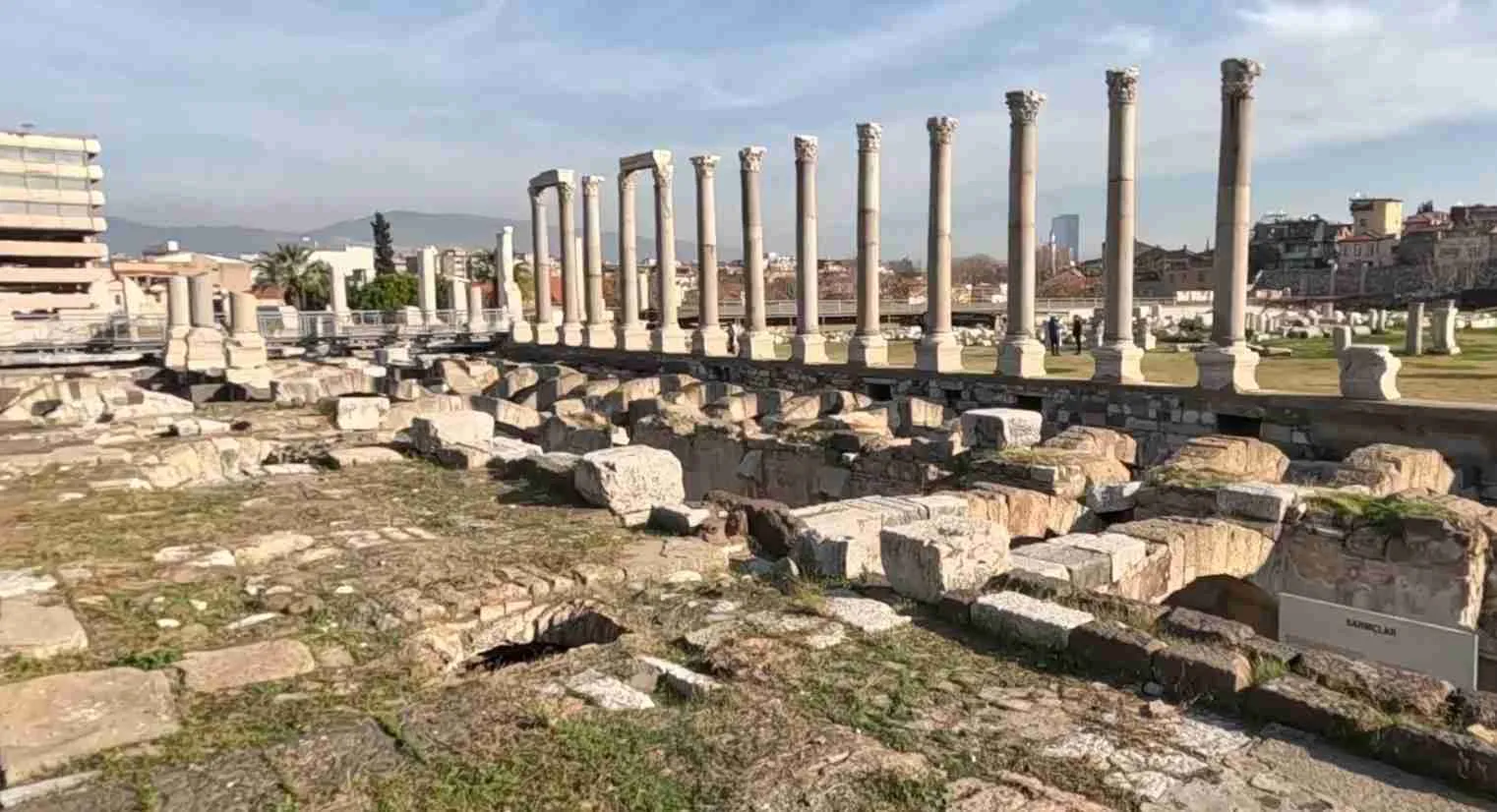
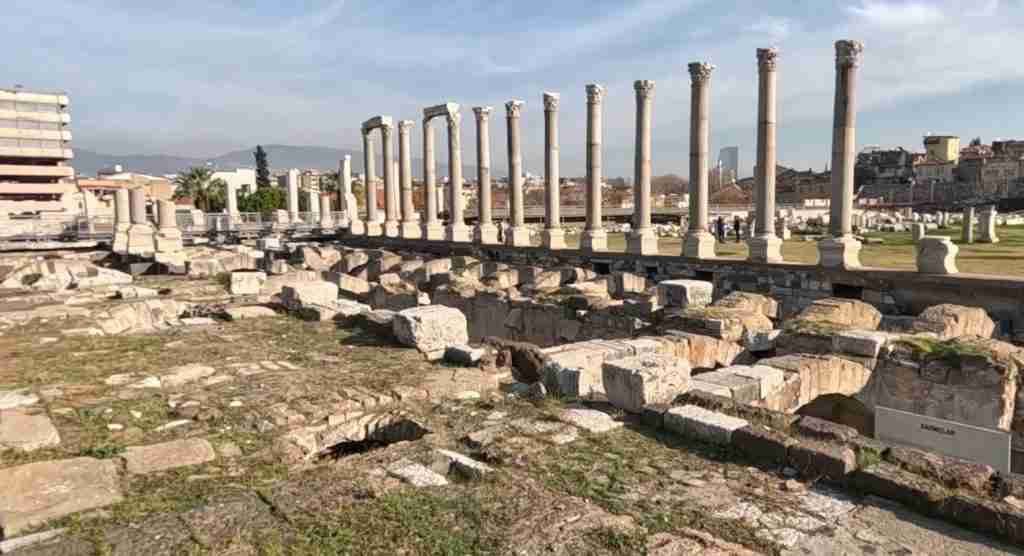
The ancient Smyrna heritage survives fragmentarily through Agora archaeological site, Kadifekale fortress hilltop position, and scattered column remnants, though systematic preservation proved impossible given layered destructions through Byzantine, Seljuk, Ottoman, and modern periods compressing 3,000 years of settlement. The Roman Agora’s second-century construction under Marcus Aurelius represents Izmir’s most substantial ancient monument, preserved through strategic downtown positioning and 20th-century excavation-restoration programs creating open-air museum within commercial district fabric. The juxtaposition of Corinthian columns against modern office towers and bazaar entrances visualizes continuous occupation cycles impossible achieving at abandoned archaeological sites, though compromised preservation states and limited interpretive infrastructure frustrate visitors expecting Ephesus-scale monumental architecture or comprehensive historical narratives.
Modern economic identity centers on Aegean Turkey’s commercial hub functions—container port operations (Turkey’s third-largest by tonnage), manufacturing industry concentration, agricultural product export (figs, olives, grapes), and service sector employment—creating working city atmosphere where tourism represents economic supplement rather than defining industry. This authenticity manifests through neighborhood markets serving local shoppers rather than souvenir hunters, restaurants pricing for Turkish middle-class families versus tourist budgets, and transportation systems optimized for commuter efficiency rather than visitor convenience, rewarding travelers seeking genuine urban cultural immersion. The International Izmir Fair (established 1923) symbolizes commercial tradition continuing annually in Kültürpark grounds, while university presence (Ege University, Dokuz Eylül University, Izmir Institute of Technology) generates young educated demographics maintaining progressive social attitudes and English-language penetration facilitating visitor interactions.
Must-See Izmir Attractions and Monuments 2026
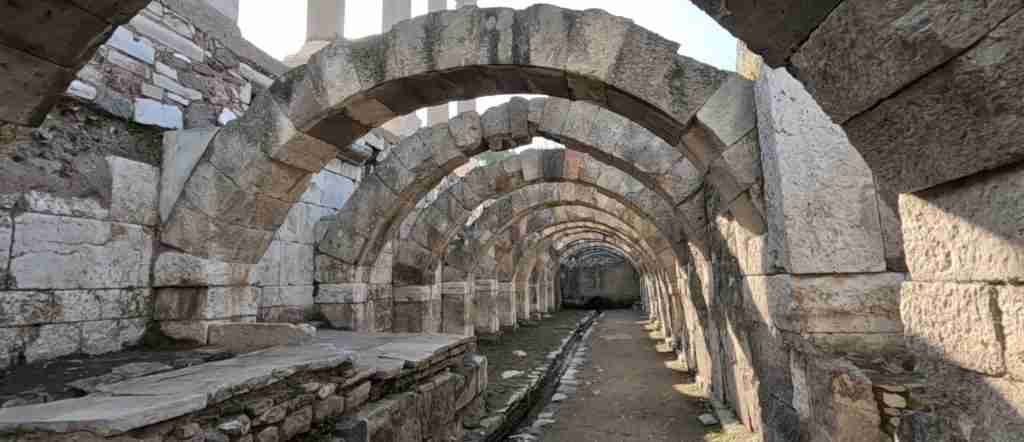
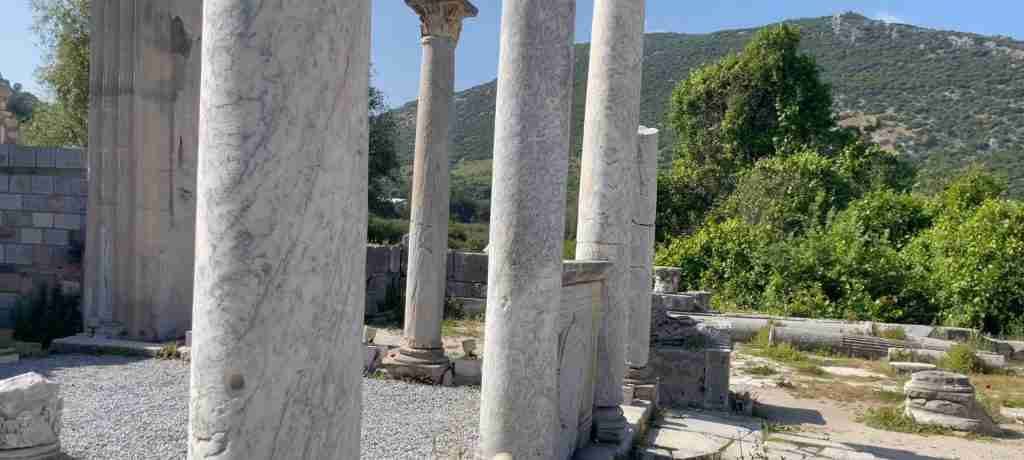
Agora Open Air Museum preserves Izmir’s premier archaeological monument across two-story Roman marketplace complex featuring three-level basement vaults, Corinthian colonnade remains, and scattered architectural fragments creating atmospheric ruins within urban context. The second-century CE construction under Emperor Marcus Aurelius following devastating 178 CE earthquake replaced earlier Hellenistic agora, with massive scale (120 × 80 meters) accommodating commercial stalls, administrative offices, and public gathering spaces defining ancient Smyrna’s civic center. Modern visitors access underground basilica chambers where vaulted ceilings and water channel systems demonstrate Roman engineering sophistication, while ground-level colonnades and statue bases (original sculptures relocated to Archaeological Museum) illustrate monumental scale despite fragmentary preservation states. The site requires 1-1.5 hours comprehensive exploration photographing architectural details, reading interpretive panels, and experiencing ancient-modern juxtaposition as surrounding bazaar sounds and office tower views contextualize ruins within continuous settlement fabric.
Entrance fees cost €6-10 for international visitors (₺60 for Turkish citizens, Museum Pass Turkey accepted) with opening hours 8:30 AM-6:00 PM summer (April-October) and 8:30 AM-5:00 PM winter (November-March), positioning morning visits during optimal lighting before midday heat and afternoon crowd buildups. Location directly behind Kemeraltı Bazaar enables combined half-day programs touring archaeological site morning followed by bazaar lunch and shopping afternoon, with Konak Square and Clock Tower positioned 10-minute walks enabling full historic center coverage within single outing. The underground sections provide shade relief during summer months while ground-level exposure necessitates sun protection, water carrying, and realistic expectations regarding preservation completeness—this represents urban archaeological site within working city rather than isolated monument complex achieving Ephesus-scale restoration investment.
Izmir Archaeological Museum (İzmir Arkeoloji Müzesi) houses comprehensive regional artifact collections spanning Bronze Age through Byzantine periods across three-floor exhibition halls emphasizing Hellenistic-Roman sculpture, ceramic assemblages, and everyday object displays contextualizing ancient Aegean life. The ground floor sculpture galleries showcase masterpieces including colossal Zeus and Poseidon statues recovered from Agora excavations, theatrical masks, funerary reliefs, and portrait busts demonstrating technical excellence across Classical through Roman Imperial periods. Second-floor displays organize ceramics chronologically from geometric-period pottery through elaborate Roman terra sigillata tablewares, while third-floor galleries address Byzantine religious art, Ottoman-era ethnographic material, and temporary exhibition rotations. The museum visit requires 1.5-2 hours comprehensive exploration reading detailed English labels, examining artifact details, and appreciating contextual information enriching subsequent archaeological site visits across Aegean region.
Entrance fees cost €10 for international visitors (₺60 Turkish citizens, Museum Pass valid) with standard museum hours 8:30 AM-5:30 PM (verify current schedules before visit as hours occasionally adjust). Location in Konak district near Government House positions museum within walking distance of Agora, Kemeraltı Bazaar, and waterfront, enabling integrated historic center touring. The air-conditioned galleries provide summer heat refuge while comprehensive collections justify dedicated time investment for archaeology enthusiasts, classical art students, and travelers seeking deeper understanding of Smyrna’s historical significance before visiting actual excavation sites. The artifact quality equals major Turkish museums while crowds remain modest compared to Istanbul’s overwhelming tourist density, creating contemplative viewing conditions and photography opportunities without constant tourist group interruptions.
Kemeraltı Bazaar extends across labyrinthine covered markets and open streets creating largest traditional shopping district in Aegean Turkey where authentic local commerce continues alongside tourist souvenir operations. The Ottoman-era foundation and Republican-period expansion created neighborhood-scale commercial zone where housewares, textiles, spices, jewelry, leather goods, and food products serve İzmiris alongside tourist-oriented carpet shops, ceramic studios, and evil-eye trinket stalls. Modern visitors navigate warren-like passages discovering historic hans (caravanserais) converted to artisan workshops, hidden mosques, traditional coffeehouses, and street-food vendors selling simit (sesame bread rings), börek (savory pastries), and freshly squeezed pomegranate juice creating multisensory cultural immersion impossible at sanitized shopping malls. The bazaar exploration requires 2-3 hours wandering without fixed itinerary, bargaining for purchases (expected practice requiring 30-50% initial price reductions), and experiencing authentic Turkish commercial culture where tourism supplements rather than dominates economic activity.
The bazaar operates primarily 9:00 AM-7:00 PM Monday-Saturday with Sunday partial closures and reduced hours, though individual shop schedules vary requiring flexibility around Friday midday prayer breaks and afternoon siesta customs. Free entrance and central positioning behind Agora archaeological site enable spontaneous visits, lunch breaks in traditional eateries (€5-10 complete meals), and atmospheric photography capturing architectural details, street scenes, and vendor interactions. Notable sub-districts include Havra Sokak (Synagogue Street) antique quarter, Anafartalar Caddesi main artery with carpet-kilim concentrations, and Hisar Mosque vicinity traditional coffeehouse clusters. The authentic local shopping atmosphere rewards cultural curiosity and bargaining patience while challenging visitors expecting English-speaking assistance, fixed pricing transparency, or Western retail customer service standards, creating genuine cross-cultural commerce experiences increasingly rare in globalized tourism economies.
Kordon waterfront promenade stretches 5+ kilometers along Aegean shoreline connecting Konak Square through Alsancak district to Karşıyaka ferry terminal, functioning as Izmir’s social living room where residents promenade during evening passeggiata traditions, families picnic in waterfront parks, and couples watch Aegean sunsets from cafe terraces. The palm-lined pedestrian walkway, adjacent bicycle paths, and continuous bench seating create Mediterranean urban park atmosphere where jogging, dog-walking, street-performer entertainment, and spontaneous social gatherings define daily rhythms impossible experiencing without local immersion. Modern visitors adopt evening kordon walks as essential Izmir experience, joining thousands of residents between 6:00-9:00 PM summer months when cooling sea breezes, colorful sunset skies, and activated restaurant-cafe terraces create festive outdoor atmosphere. The free public space accessibility, stunning Aegean vistas, and people-watching opportunities deliver memorable cultural experiences without entrance fees or guided tour requirements, representing authentic Turkish urban lifestyle versus tourist-zone artificiality.
Day Trip from Izmir: Ephesus Ancient City 2026
Ephesus Ancient City positioned 80 kilometers south of Izmir represents Turkey’s premier Roman archaeological site and most-visited ancient ruins, justifying dedicated full-day excursion despite 2-3 hour transport investment each direction. The remarkably preserved Celsus Library facade, 25,000-seat Great Theatre, Terrace Houses mosaic floors, and marble-paved Harbor Street create unparalleled monumental architecture concentration rivaling Pompeii and exceeding most Mediterranean ancient cities in visitor impact and photographic spectacle. The UNESCO World Heritage inscription (2015) recognizes Ephesus’s Outstanding Universal Value as Greco-Roman urban planning masterpiece and early Christianity cradle where St. Paul preached and St. John traditionally resided, creating dual archaeological-religious significance attracting 2+ million annual visitors establishing Turkey’s most internationally recognized ancient site after Troy’s legendary associations.
Independent public transport via İZBAN commuter rail from Izmir Basmane station to Selçuk town (70 minutes, ₺15-20 with İzmirim Kart) followed by dolmuş minibus or taxi to Ephesus site entrance (10 minutes, ₺10-20) creates budget-conscious access totaling €5-8 transport costs versus €60-100 guided tour packages. However, the self-guided approach sacrifices historical interpretation, Virgin Mary House inclusion, optimal site routing guidance, and guaranteed return transport coordination, suiting archaeology-educated travelers comfortable navigating sites independently with comprehensive guidebooks versus general-interest visitors benefiting from professional narration. Organized day tours departing Izmir hotels 8:00-9:00 AM and returning 5:00-6:00 PM provide complete packages including round-trip transport, English-speaking guide, Ephesus entrance (€40), Virgin Mary House visit (€20), and traditional Turkish lunch (€10-15) at €60-100 per person depending on group size and tour tier selection.
Ephesus site exploration requires 3-4 hours minimum covering major monuments from upper entrance Gate of Magnesia through Terrace Houses, Library of Celsus, Great Theatre, and Marble Street to lower exit at ancient harbor, with additional 1-2 hours enabling Terrace Houses interior viewing (separate €15 ticket), comprehensive photography, and contemplative monument appreciation. The exposed hillside positioning offers minimal shade necessitating early morning arrivals (8:30 AM opening), extensive water carrying (2+ liters per person), sun protection, and summer heat-exhaustion awareness during June-August when temperatures exceed 35°C creating physical endurance challenges. The Virgin Mary House (Meryemana) positioned 7 kilometers from main site adds 45-60 minutes including transport and visit, appealing to Christian pilgrims and general tourists seeking comprehensive Ephesus experience, though Catholic Church’s tentative authentication and modest stone house preservation create mixed visitor reactions versus profound spiritual experiences some anticipate.
Selçuk town adjacent to Ephesus site offers budget accommodation alternative (€30-60 mid-range hotels versus €50-90 Izmir equivalents) suiting overnight strategies enabling early morning site access before tour groups arrive 10:00-11:00 AM, though modest town amenities and limited evening activities create trade-offs versus Izmir’s cosmopolitan infrastructure. The strategic positioning additionally enables Şirince wine village afternoon visits (8 kilometers, traditional Greek architecture and local wine tastings), Basilica of St. John exploration (town center, significant Byzantine ruins), and Ephesus Archaeological Museum comprehensive artifact viewing, creating full-day or two-day Ephesus-area programs. Budget-conscious travelers particularly benefit from Selçuk accommodation savings and İZBAN public transport economics, while convenience-prioritizing visitors justify Izmir-based guided tours accepting higher costs for simplified logistics and professional interpretation enriching site comprehension.
Day Trip from Izmir: Pamukkale Thermal Terraces 2026
Pamukkale’s brilliant white calcium carbonate terraces cascading down mountainside above Hierapolis ancient city create Turkey’s most visually distinctive natural-archaeological combination, justifying full-day excursion commitment despite 240-kilometer distance requiring 13-14 hour total programs including 3.5-4 hour each-direction transport. The UNESCO World Heritage inscription (1988) recognizes dual significance—geological phenomenon formed by calcium-rich thermal spring deposits over millennia creating travertine pools and shelves, and Hierapolis archaeological site preserving substantial Roman spa city remains where emperors sought therapeutic waters’ healing properties. Modern visitors wade barefoot through terraces’ warm shallow pools photographing brilliant white formations against blue sky backgrounds creating iconic travel images, then explore Hierapolis necropolis, theatre, and Antique Pool where submerged column fragments enable swimming among Roman ruins.
Organized day tours from Izmir represent practical access solution given distance and logistics complexity, with packages departing hotels 6:00-7:00 AM and returning 8:00-9:00 PM including round-trip air-conditioned coach transport, English-speaking guide, Pamukkale-Hierapolis entrance (€30), buffet lunch, and comprehensive site touring at €60-100 per person depending on group size and operator quality. The long coach journey includes rest stop breaks and Red Valley viewpoint photography opportunities, though 7-8 hours sitting creates endurance challenges for travelers preferring active exploration over passive transport. Alternative overnight strategies utilizing Pamukkale town accommodation (€25-50 budget-mid-range) enable two-day programs with afternoon arrival, next-morning exploration before tour groups, and return to Izmir or continuation to other destinations, though adding accommodation costs and requiring luggage management logistics.
Pamukkale site exploration divides between travertine terraces (1-1.5 hours barefoot wading, photography, and thermal pool experiencing) and Hierapolis archaeological zone (2-3 hours covering theatre, necropolis, Antique Pool, and museum). The barefoot terrace walking requirement over calcium deposits creates uneven surface challenges necessitating careful footing, while morning arrivals secure optimal photography lighting and reduced crowd density versus midday tour group concentrations. The Antique Pool swimming opportunity (separate €10-15 entrance) allows remarkable experience of stroking past submerged Roman columns in thermal spring waters, though modest changing facilities and crowded conditions during peak hours create less romantic reality versus promotional imagery suggests. Hierapolis archaeological exploration showcases substantial Roman theatre, extensive necropolis with elaborate sarcophagi, and bath complex remains demonstrating ancient spa culture, with comprehensive site coverage requiring stamina for extensive walking across exposed terrain without substantial shade.
Independent access via overnight bus from Izmir Otogar to Denizli (4 hours, €10-15) followed by dolmuş to Pamukkale village (30 minutes, ₺10) creates budget alternative totaling €15-20 transport versus €60-100 tours, though overnight bus timing (typically 11:00 PM-3:00 AM departures) sacrifices sleep comfort and morning arrival necessitates luggage storage before site opening. The DIY approach suits backpackers prioritizing cost minimization over convenience and travelers combining Pamukkale with onward Cappadocia or Mediterranean coast destinations where direct routing eliminates Izmir return requirements. However, organized tour reliability, guide interpretation, included lunch, and guaranteed transport coordination justify pricing premiums for conventional travelers lacking time flexibility or comfort tolerance for independent navigation challenges across 240-kilometer distance from Izmir base.
Izmir Public Transportation System Guide 2026
İzmirim Kart unified payment card provides essential access to all public transport modes—metro, tram, bus, ferry, and İZBAN commuter rail—operating integrated network with 90-minute free transfer windows enabling multi-mode journeys at single-fare costs. The card purchase costs ₺6 at metro stations, ferry terminals, and newsstand kiosks (büfe) throughout city, plus desired credit loading amount (minimum ₺50 recommended for multi-day visits), with subsequent recharges at identical locations using cash payments. Single-journey fares without card cost ₺15 versus ₺10-12 with İzmirim Kart creating immediate savings, while 90-minute transfer policy allows bus-metro-ferry combinations within validity period charging only initial boarding, making comprehensive city touring remarkably economical. Alternative Bilet35 paper tickets offering 3-5-10 trip bundles suit short-term visitors avoiding card purchase requirements, though lacking transfer benefits and slightly higher per-journey costs.
Metro system operates single M1 line connecting Fahrettin Altay western terminus through city center (Konak, Çankaya, Basmane stations) to Evka 3 eastern terminus across 27 kilometers and 24 stations serving primary urban corridor. Trains run 6:00 AM-midnight approximately with 5-10 minute frequencies during peak hours extending to 15-minute off-peak intervals, providing reliable backbone for north-south movement avoiding surface traffic congestion. Key tourist stations include Konak (Clock Tower, Agora access), Basmane (Archaeological Museum, bazaar proximity, İZBAN transfers), Halkapınar (otogar bus terminal connections), and Üçyol (shopping districts). The modern air-conditioned trains, clear English signage, and straightforward single-line navigation create user-friendly experience for first-time visitors requiring minimal orientation versus complex multi-line systems intimidating newcomers.
Tram networks divide between Konak coastal line (Halkapınar-Fahrettin Altay via Alsancak waterfront) and Karşıyaka shore line serving Aegean north bay neighborhoods, both offering scenic waterfront routing with frequent stops enabling hop-on exploration along Kordon promenade zones. The Konak tram particularly benefits tourists connecting Halkapınar transport hub through Alsancak hotel district to Fahrettin Altay shopping areas, with 6:00 AM-midnight operations and 10-15 minute service intervals. The vintage-style modern trams provide pleasant above-ground alternative to underground metro while serving tourist-relevant coastal zones metro routing misses. Combined metro-tram journeys utilizing İzmirim Kart transfer benefits enable comprehensive city coverage patterns—metro for rapid cross-city transit, tram for waterfront zone exploration—at minimal cost investment.
İZBAN commuter rail extends 136 kilometers from Aliağa northern industrial zone through Izmir Airport, city center (Alsancak, Basmane stations), and south to Selçuk (Ephesus gateway) and Torbalı, functioning as regional backbone connecting satellite towns and enabling cost-effective Ephesus day trips. Distance-based pricing ranges ₺10-25 for full system length with İzmirim Kart discounts, significantly undercutting taxi fares or rental car costs while offering comfortable air-conditioned coaches and reliable scheduling. Trains operate approximately 5:30 AM-11:30 PM with 15-30 minute frequencies varying by route segment and time of day, requiring schedule consultation for specific journey planning though generally accommodating tourist timing requirements. The airport station direct connection eliminates taxi necessities while Selçuk service creates Ephesus access independence from tour operator dependency, establishing İZBAN as tourist tool beyond commuter function.
Ferry services (vapur) cross Izmir Bay connecting Konak-Alsancak-Bostanlı-Karşıyaka in scenic 15-20 minute journeys providing both practical transportation and leisure activity experiencing Aegean waters and city skyline perspectives. Ferries operate frequent schedules (every 15-30 minutes peak hours) 6:00 AM-midnight with İzmirim Kart acceptance at ₺10-12 per crossing, creating affordable alternatives to circling bay via land transport while delivering memorable maritime experiences. Evening sunset ferries particularly reward tourists with spectacular Aegean sky colors and illuminated city views, combining practical Karşıyaka restaurant access with romantic waterfront experiences. The ferry terminals’ proximity to metro-tram stations enables seamless integrated journeys—metro to Konak, ferry to Karşıyaka, tram along waterfront—demonstrating comprehensive network connectivity maximizing mobility options across geographic barriers.
Where to Stay in Izmir: Accommodation Zones 2026
Alsancak waterfront district attracts majority tourist accommodation through cosmopolitan atmosphere, Kordon promenade access, and comprehensive dining-entertainment infrastructure creating self-contained neighborhood enabling car-free exploration. Mid-range hotels (€50-90 nightly) dominate options with modern business-oriented properties, boutique conversions of Republican-era apartments, and international chain standards (Hilton, Marriott, Wyndham) clustered within 500-meter Kordon proximity. The pedestrian-friendly street grid, abundant English signage, and tourist-accustomed service personnel create comfort-zone environment for first-time Turkey visitors while maintaining authentic urban neighborhood character versus purpose-built resort artificially. Evening promenade walks, seafood restaurant selections, and cafe-bar nightlife options provide entertainment without taxi requirements, while metro-tram stations enable 10-15 minute reaches to Konak historic sites and Basmane transport hub creating balanced convenience-atmosphere combination.
Representative Alsancak accommodation includes Swissôtel Büyük Efes (€150-250 five-star luxury, waterfront positioning, rooftop pool, spa facilities), Mövenpick Hotel Izmir (€100-180 four-star comfort, Kordon views, business amenities), Key Hotel (€60-90 mid-range boutique, renovated historic building, central location), and numerous smaller properties (€50-80) offering basic comfort with proximity advantages. Advance booking during April-June and September-October peak seasons prevents sold-out disappointment, while last-minute summer July-August availability often exists as Turkish domestic tourists concentrate in beach resorts versus urban destinations. The neighborhood’s restaurant density eliminates hotel dining dependency, enabling cost savings through street-level eateries and markets versus hotel breakfast supplements and room-service markups common at resort properties.
Konak city center budget zone positions travelers adjacent Kemeraltı Bazaar, Agora archaeological site, and Clock Tower within walking distances sacrificing waterfront ambiance and modern infrastructure polish for €26-50 nightly economy achieving 40-50% savings versus Alsancak equivalents. Hostels dominate budget spectrum (€26-40 dormitory beds, €35-50 private rooms) with properties including Shantihome Hostel, Titan House, and In House Hotel providing backpacker-standard amenities—shared kitchens, common rooms, luggage storage—plus social atmospheres facilitating traveler connections and tour-buddy discovery. Economy hotels (€40-60) offer private rooms with en-suite bathrooms, air conditioning, and breakfast inclusion representing compromise between hostel economies and mid-range comfort expectations. The gritty authentic neighborhood atmosphere, limited English penetration, and evening safety considerations requiring street-smart awareness create challenges for inexperienced travelers while rewarding cultural immersion seekers comfortable navigating genuine working-class Turkish urban environments.
Karşıyaka north bay residential district delivers authentic Turkish family-neighborhood experience (€40-70 mid-range hotels and apartments) with local markets, traditional restaurants, and non-touristy atmospheres impossible finding central zones. Ferry-dependent city center access (15-20 minute crossings every 15-30 minutes, ₺10-12 İzmirim Kart) creates commute investment reducing spontaneous monument-hopping flexibility while providing genuine neighborhood immersion and evening local-restaurant economics (€6-12 mains versus €12-20 Alsancak tourist pricing). The accommodation suits travelers prioritizing cultural authenticity and extended stays over convenience maximization, particularly appealing to Turkish language students, researchers, and long-term visitors integrating into residential rhythms versus hit-and-run tourist itineraries. However, first-time visitors and short-stay tourists generally optimize through Alsancak’s balanced convenience despite accepting pricing premiums for accessibility advantages.
Izmir Dining and Culinary Scene 2026
Aegean cuisine specialties distinguish Izmir’s culinary identity through seafood emphasis, olive oil vegetable dishes (zeytinyağlılar), and local breakfast traditions reflecting Mediterranean diet patterns versus Anatolian meat-heavy preferences. Fresh fish grilled simply with lemon and olive oil dominates waterfront meyhane (fish taverns) along Kordon promenade and Karşıyaka shore, with seasonal catches including çupra (sea bream), levrek (sea bass), barbunya (red mullet), and kalamar (squid) priced €15-30 per portion at mid-range establishments (€8-15 budget spots, €30-50 upscale venues). Meze culture precedes grilled fish with shared small plates—ezme (spicy tomato salad), haydari (thick yogurt-herb dip), patlıcan salatası (smoky eggplant), zeytinyağlı enginar (artichokes in olive oil)—creating social dining rituals encouraging leisurely multi-course evening meals with rakı (anise spirit) toasts accompanying conversations.
Local breakfast specialties unique to Izmir include boyoz (savory flaky pastry, origins in Sephardic Jewish community) traditionally consumed with hard-boiled eggs and sweet tea, and kumru (sesame-seed sandwich overstuffed with sausage-cheese-tomato-pickle) representing iconic street food impossible finding elsewhere Turkey. Morning boyoz bakeries near Kemeraltı Bazaar serve warm pastries fresh from wood-fired ovens at ₺5-10 portions creating authentic budget breakfast alternative to hotel buffets, while kumru carts along Kordon offer €3-5 substantial sandwiches satisfying lunch appetites. The breakfast culture extends to traditional kahvaltı (Turkish breakfast) spreads at neighborhood cafes—cheese varieties, olives, tomatoes, cucumbers, honey, kaymak (clotted cream), fresh bread, endless tea—creating €8-15 complete meals emphasizing quality ingredients over elaborate preparation.
Budget dining strategies focus on lokanta worker’s restaurants serving home-style Turkish dishes—mercimek çorbası (lentil soup), karnıyarık (stuffed eggplant), türlü (mixed vegetables), pilav (rice)—at €5-8 complete meals with soup-main-drink-dessert inclusion typical. These no-frills establishments cluster around Basmane station, Konak Square periphery, and Karşıyaka market district, operating cafeteria-style with steam-table food displays enabling visual selection overcoming language barriers. Kemeraltı Bazaar offers street-food options—gözleme (savory crepes filled spinach-cheese-potato, ₺15-25), simit (sesame bread rings, ₺3-5), fresh-squeezed fruit juices (₺10-20)—plus hidden restaurants serving regional specialties like İzmir köfte (spiced meatballs) and şakşuka (fried eggplant-pepper-tomato stew) at authentic pricing targeting local shoppers rather than tourist budgets.
Upscale dining concentrates in Alsancak district and Kordon waterfront where contemporary Turkish cuisine restaurants, international options (Italian, Japanese, Chinese, French), and fusion experimentation create cosmopolitan scene rivaling Istanbul’s variety at 20-30% lower pricing. Notable establishments include Deniz Restaurant (seafood specialist, €25-40 mains, Kordon views), Reyhan Pastanesi (historic patisserie, famous desserts), and Kordon Balıkçısı (traditional fish tavern, extensive meze selections). Vegetarians navigate easily through zeytinyağlı vegetable dishes omnipresent at restaurants, while vegan adaptations require explanation as concept remains unfamiliar to traditional establishments—request dishes without yogurt, cheese, or butter, emphasizing olive oil preparation satisfying plant-based requirements.
Best Time to Visit Izmir: Seasonal Analysis 2026
April-June spring season delivers optimal visiting conditions combining 18-28°C comfortable temperatures, minimal 10-15% rainfall probability, and shoulder-season accommodation pricing 15-25% below summer peaks while avoiding winter rain and summer heat extremes. April wildflowers bloom across hillsides surrounding city, May establishes consistent warm weather without oppressive heat, and June transitions toward summer with extended daylight hours (sunset 8:00-8:30 PM) enabling full-day touring plus leisurely evening kordon promenades. The comfortable conditions suit extensive archaeological site touring at day-trip destinations where shade remains limited and summer heat creates exhaustion challenges, while pleasant evenings activate outdoor cafe culture and waterfront dining terraces. Turkish domestic tourism remains modest during April-May weekdays creating availability flexibility, though May 1 Labor Day and May 19 Atatürk Commemoration holidays generate weekend booking pressure.
July-August summer peak brings 30-38°C heat, high humidity from Aegean proximity, and concentrated domestic tourism as Turkish families vacation during school break periods. Coastal beach towns absorb tourism density leaving urban Izmir comparatively manageable with day-trip tour availability and accommodation options, though midday archaeological site touring becomes physically challenging requiring early morning (8:00-11:00 AM) or late afternoon (4:00-7:00 PM) timing avoiding peak heat. The guaranteed weather reliability (under 5% rain probability) suits inflexible itineraries and beach-combining strategies accessing Çeşme Peninsula day trips, while extended daylight hours maximize exploration potential despite heat forcing midday indoor museum retreats or waterfront cafe rest breaks. Accommodation pricing peaks July-August though urban hotels discount versus sold-out beach resort properties, creating relative value for city-based touring.
September-October autumn shoulder season replicates spring advantages through 22-28°C comfortable temperatures, 10-20% rain probability, and diminishing tourist crowds as European summer holidays conclude. September maintains summer warmth enabling beach day trips while reducing humidity discomfort, October introduces occasional rain requiring weather monitoring and flexible scheduling though predominantly dry pleasant conditions prevail. The harvest season agricultural landscapes around Izmir present golden-hour photography opportunities, while reduced tourist pressure at Ephesus-Pamukkale day-trip destinations creates more contemplative site experiences versus summer group congestion. Turkish Republic Day October 29 holiday weekend generates domestic tourism surge requiring advance accommodation booking, though weekday periods maintain availability and negotiate-able rates.
November-March winter brings 8-18°C temperatures, 30-50% monthly rainfall probability, and lowest tourist presence creating rock-bottom accommodation pricing (40-50% below summer) while accepting weather uncertainty and occasional cold-rain combinations limiting outdoor comfort. December-January coldest months rarely drop below 5°C though dampness and wind create perceived chill necessitating layers and waterproof outerwear, while February-March transitions toward spring with improving conditions and wildflower emergence. The mild Mediterranean winter permits year-round tourism versus northern European climate shutdowns, appealing to cold-weather refugees and budget extremists comfortable sacrificing guaranteed sunshine for cost savings and crowd avoidance. Indoor attractions—Archaeological Museum, covered bazaar sections, shopping malls—provide weather-refuge activities, while clear winter days deliver exceptional atmospheric clarity for photography and comfortable walking temperatures impossible during summer heat.
Izmir Shopping and Markets 2026
Kemeraltı Bazaar represents Aegean Turkey’s largest traditional market where authentic local commerce continues alongside tourist souvenir operations across labyrinthine covered passages and open streets. The Ottoman-foundation neighborhood-scale commercial zone sells everything from household goods, textiles, and spices to jewelry, leather, and carpets serving İzmiris’ daily shopping needs while accommodating tourist purchases. Traditional Turkish carpets and kilims dominate high-value souvenir categories with shops concentrated along Anafartalar Caddesi main artery, requiring serious bargaining (expect to pay 40-60% of initial asking prices) and quality assessment distinguishing machine-made imports from authentic hand-knotted pieces. Evil-eye talismans (nazar boncuğu), Turkish ceramics, copper cookware, leather bags, and textile scarves represent more accessible price points (€10-50 after bargaining) suiting casual souvenir shopping versus major carpet investment decisions.
Spice shops (baharat) offer saffron, sumac, pul biber (Aleppo pepper), dried mint, and Turkish tea blends creating aromatic sensory experiences and practical kitchen souvenirs packaged conveniently for luggage transport. Quality assessment challenges exist—asking for small samples and comparing between vendors helps identify superior products versus tourist-grade inferiors, while engaging shopkeepers in conversations often elicits preparation tips and usage recommendations enriching purchases beyond mere acquisition. The antique quarter along Havra Sokak (Synagogue Street) sells Ottoman-era furniture, vintage textiles, old photographs, and collectible ephemera appealing to serious collectors willing to navigate authenticity questions and export restriction complexities, though casual browsers enjoy atmospheric window shopping through historic Jewish quarter conversion.
Modern shopping alternatives include Optimum Outlet shopping mall (international brands, food court, cinema multiplex), Forum Bornova (suburban mega-mall, IKEA, electronics), and Agora AVM (city-center department store), providing familiar retail environments with fixed pricing transparency, air conditioning comfort, and Western customer service standards contrasting bazaar’s chaotic bargaining culture. These venues suit specific-item shopping (clothing sizes, electronics, toiletries) versus cultural-experience browsing, with pricing generally matching European levels minus value-added tax refunds available for tourist shoppers exceeding €100 daily purchase thresholds. Coastal Kordon promenade boutiques offer contemporary Turkish fashion, jewelry design, and home decor at higher quality-price points than bazaar mass-market goods, appealing to style-conscious shoppers seeking modern aesthetics versus traditional handicraft reproductions.
Safety and Practical Considerations 2026
Izmir maintains reputation as Turkey’s safest major city with low violent crime rates, effective police presence, and Western-oriented social tolerance creating comfortable environment for international visitors including solo female travelers, LGBT tourists, and families. Petty theft concentrations occur in crowded Kemeraltı Bazaar areas and public transport during peak hours requiring standard urban precautions—front-pocket wallet placement, zipper-closure bag security, mobile phone awareness preventing snatch-and-grab opportunism. Evening Kordon promenade and Alsancak district remain well-lit and populated creating safe nighttime environments, while less-touristed Konak backstreets warrant increased attention after dark avoiding isolated areas and using taxis for late-night hotel returns when uncertain about route safety.
Scam operations target tourists through classic patterns—unsolicited carpet shop invitations claiming “just looking, no pressure” leading to high-pressure sales tactics, restaurant menu pricing discrepancies charging tourists multiples versus displayed costs, and taxi meter manipulation through rigged devices or refusal to activate meters demanding flat rates. Insisting on meter activation before taxi departure, photographing menu prices before ordering, and declining persistent shop invitations politely but firmly prevents majority tourist-targeting schemes. ATM safety requires using machines located inside bank branches during business hours versus isolated street locations vulnerable to card skimming devices, while carrying backup payment methods (credit card, some cash) prevents single-loss catastrophes.
Health infrastructure meets international standards through private hospitals (Ege Sağlık, Kent Hospital, Memorial) offering English-speaking doctors, modern equipment, and comprehensive emergency departments, though costs require travel insurance coverage or substantial out-of-pocket payments absent reciprocal healthcare agreements. Pharmacies (eczane) identified by green-cross signage provide over-counter access to many medications requiring prescriptions elsewhere, with pharmacists offering basic medical consultation for minor ailments. Tap water meets Turkish safety standards though mineral content and chlorine treatment create taste preferences for bottled water widely available at ₺5-10 per liter. Summer heat exhaustion represents primary health risk requiring 2-3 liter daily water consumption, regular shade breaks, and realistic activity pacing avoiding midday exertion during June-August temperature peaks.
Language barriers exist outside major hotels and tourist establishments with English penetration modest among taxi drivers, restaurant servers, and shop owners, requiring patience, basic Turkish phrases (“merhaba” hello, “teşekkür ederim” thank you, “ne kadar?” how much), and mobile translation app assistance navigating interactions. However, Izmir’s cosmopolitan character and university presence generate higher English capability versus conservative Anatolian cities, while younger generations’ education emphasizes English creating generational language divide where 20-30 year-olds communicate more effectively than 50+ demographics. The welcoming Turkish hospitality culture means communication goodwill overcomes language limitations through gestures, smiles, and mutual patience creating positive cross-cultural exchanges despite vocabulary gaps.
Practical Planning Tips and Money-Saving Strategies 2026
Museum Pass Turkey (€165, 15-day validity) provides cost-effective entry to 300+ museums and archaeological sites nationwide including Izmir Archaeological Museum, Agora, plus day-trip destinations Ephesus (€40), Pamukkale-Hierapolis (€30), and Pergamon (€15-20), creating value when visiting 4+ sites across multi-destination itineraries. Regional Aegean Pass (€95) covers Izmir area plus Ephesus, Pergamon, Priene, Miletus, and Didyma optimizing costs for travelers concentrating Aegean coast ancient city circuits without broader Turkey exploration. Calculate individual entrance totals versus pass pricing determining break-even points—Izmir-Ephesus-Pamukkale-Pergamon combination (€85-100 individual fees) justifies €95 Aegean Pass or €165 national pass when adding Istanbul museums to itinerary. However, Izmir’s limited paid attractions (Agora €6-10 primary cost) reduce in-city savings potential versus Istanbul or Cappadocia where museum densities maximize pass value.
Accommodation cost optimization strategies include weekday booking avoiding Friday-Saturday domestic tourism peaks generating 20-30% rate increases, shoulder season April-May and September-October timing achieving 15-25% savings versus summer, and direct hotel website booking circumventing platform commissions sometimes enabling negotiate-able discounts. Budget travelers maximize through hostel dormitories (€26-40) or economy Konak hotels (€35-50) accepting basic standards for location-proximity advantages, while mid-range seekers balance through Alsancak properties (€60-80) offering comfort-convenience combination without luxury pricing premiums. Apartment rentals via booking platforms suit groups of 3-4 splitting costs and requiring kitchen facilities enabling grocery-shopping economies versus restaurant-dependent hotel guests.
Food expenses minimize through strategic choices—market shopping assembling picnic lunches (€5-8 fresh bread, cheese, olives, tomatoes, fruit), lokanta worker’s restaurants (€6-10 complete meals), street-food options (€3-8 boyoz, kumru, gözleme), and supermarket provisions (water, snacks, breakfast items) versus restaurant three-meals daily budgets (€30-50). Lunch represents main meal in Turkish culture with restaurants offering generous portions and better value than dinner menus, while breakfast-included accommodation eliminates morning meal costs. Alcohol significantly impacts budgets at €3-6 beers and €15-25 wine bottles in restaurants versus €1.50-3 supermarket equivalents, with strategic café coffee (Turkish €1-2, espresso €2-4) versus hotel minibar markups (€4-8) creating cumulative savings across multi-day stays.
Free activities maximize through Kordon promenade walks, Konak Square people-watching, Kemeraltı Bazaar browsing (no purchase requirement), public parks, waterfront sunset viewing, and neighborhood exploration, while minimal-cost experiences include ferry crossings (₺10-15 scenic transport doubling as leisure activity), municipal museum free-entry days (verify schedules), and self-guided walking tours following Ottoman architecture or street-art routes. Day-trip timing variations create savings—independent İZBAN to Selçuk (€3-5) versus organized Ephesus tours (€60-100) trades convenience for cost, while Tuesday-Thursday midweek tour departures sometimes discount 10-20% versus weekend premium pricing. The comprehensive cost assessment balancing transport economics, entrance fees, guide value, and convenience determines optimal approaches varying by traveler priorities and comfort managing independent logistics.
Frequently Asked Questions About Izmir 2026
What is the best month to visit Izmir?
May represents optimal single month balancing ideal weather (22-26°C, under 10% rain probability), spring bloom aesthetics, comfortable touring conditions, and shoulder pricing avoiding summer peaks while guaranteeing reliable conditions versus April’s occasional weather variability. June offers viable alternative with extended daylight and established summer patterns without July-August heat extremes, suiting travelers unable to coordinate May schedules. September delivers autumn equivalent comfort though slightly higher rain risk (15-20%) creates weather uncertainty requiring flexible backup plans.
Is Izmir safe for solo female travelers?
Izmir ranks as Turkey’s safest major city for solo women through progressive social attitudes, visible female workforce presence, and low harassment rates compared to conservative Anatolian cities, though standard precautions remain essential—avoiding isolated areas after dark, using official taxis, and dressing moderately (covering shoulders and knees) respecting cultural norms while preventing unwanted attention. Alsancak and Kordon areas maintain family-friendly evening atmospheres with women dining alone commonly accepted, while hostel social spaces facilitate traveler connections reducing solo dining awkwardness.
Do I need to speak Turkish to visit Izmir?
English suffices for basic tourist interactions in major hotels, tour operators, and Alsancak restaurants, though communication challenges increase in traditional neighborhoods, local markets, and taxis requiring patience and mobile translation apps bridging gaps. Learning basic Turkish phrases (“merhaba” hello, “ne kadar?” how much, “teşekkür ederim” thank you) demonstrates cultural respect and facilitates positive interactions, while younger Turks’ English education creates generational capability differences favoring 20-30 year-old service personnel over older demographics with limited foreign language exposure.
Can I drink alcohol in Izmir?
Alcohol flows freely in Izmir through secular urban culture and Aegean wine-rakı traditions, with restaurants, bars, and supermarkets selling beer-wine-spirits without restrictions beyond legal purchase age (18+). Waterfront meyhane (taverns) specialize in rakı-accompanied seafood dinners representing essential cultural experience, while Alsancak bars and nightclubs rival Istanbul’s nightlife scene. However, public intoxication remains culturally inappropriate requiring moderation and discretion versus conspicuous drunkenness common in Western tourist zones, while conservative Konak neighborhoods may limit alcohol service versus cosmopolitan Alsancak availability.
How expensive is Izmir compared to Istanbul?
Izmir delivers 20-30% cost savings versus Istanbul through lower accommodation (€50-90 mid-range versus Istanbul’s €70-120), reduced restaurant pricing (€12-20 mains versus €18-30), and modest attraction entrance fees concentration versus Istanbul’s extensive paid-monument density. However, day-trip expenses to Ephesus-Pamukkale add costs absent from Istanbul-based touring, while entertainment-nightlife options remain limited compared to Istanbul’s comprehensive scene potentially driving additional spending seeking variety. The overall budget advantage favors Izmir for cost-conscious travelers prioritizing archaeological day trips over urban cultural immersion depth.
What should I buy as souvenirs in Izmir?
Turkish carpets and kilims represent premier investment souvenirs requiring serious shopping, authenticity assessment, and bargaining commitment in Kemeraltı Bazaar carpet districts, while evil-eye charms (nazar boncuğu), Turkish ceramics (İznik-style tiles, bowls, plates), copper cookware, and spice blends offer accessible price points (€10-50) suiting casual purchasing. Local boyoz pastries packaged for travel, Aegean olive oils, Turkish coffee sets, and textile scarves provide practical-cultural combination gifts, while contemporary Turkish design boutiques along Kordon offer modern jewelry and home décor escaping traditional souvenir clichés.
Is Izmir a good base for exploring Turkey?
Izmir excels as Aegean coast exploration base accessing Ephesus (80 kilometers), Pamukkale (240 kilometers), Pergamon (100 kilometers), Çeşme beaches (85 kilometers), and Şirince village (90 kilometers) within day-trip or overnight distances, while offering superior accommodation value and urban infrastructure versus smaller gateway towns. However, geographic positioning favors regional touring over national coverage—Istanbul remains 550 kilometers distant (8-hour bus, 1-hour flight), Cappadocia 750 kilometers (overnight bus, 1.5-hour flight)—requiring flight connections or extended overland journeys reaching other Turkish regions. The strategy suits Aegean-focused itineraries accepting limited broader Turkey access versus Istanbul’s superior national connectivity.
What is İzmirim Kart and do I need it?
İzmirim Kart functions as unified payment card for all Izmir public transport (metro, tram, bus, ferry, İZBAN) providing discounted fares (₺10-12 versus ₺15 cash), 90-minute free transfer benefits, and convenient tap-and-go boarding eliminating ticket-purchase delays. The ₺6 card cost plus minimum ₺50 credit loading pays for itself within 5-6 journeys versus cash fares, making purchase essential for multi-day visits utilizing public transport repeatedly. Alternative Bilet35 paper tickets (3-5-10 trip bundles) suit extreme short-stays avoiding card investment, though sacrificing transfer benefits and per-journey savings İzmirim Kart delivers.
Can I swim in Izmir?
Urban Izmir beaches exist along northern Karşıyaka and İnciraltı coasts though industrial port proximity and urban runoff limit water quality versus pristine Aegean alternatives, with locals primarily using city beaches for sunbathing and socializing rather than extended swimming. Serious beach experiences require Çeşme Peninsula day trips (85 kilometers west, 1.5 hours) accessing crystal-clear waters, sandy beaches, and resort infrastructure at Alaçatı, Ilıca, and Çeşme town, easily managed through rental cars, organized tours, or dolmuş minibus networks. The urban positioning prioritizes cultural-archaeological touring over beach vacation functions, suiting travelers combining ancient site exploration with occasional coastal day-trip additions.
What tours can I book from Izmir?
Organized day tours from Izmir cover Ephesus Ancient City (€60-100 including transport, guide, entrance, lunch), Pamukkale thermal terraces and Hierapolis (€60-100 full-day programs), Pergamon Acropolis (€50-80), Şirince village wine tastings (€40-60 half-day), and Çeşme Peninsula beaches (€50-80), plus multi-day combinations visiting 2-3 destinations across overnight programs. Tour operators cluster in Alsancak hotel district and online platforms (GetYourGuide, Viator, local agencies), with group sizes ranging 8-15 people standard tours versus 2-6 person small-group premiums (20-30% higher pricing) and private options (€150-300 for 2-4 people) delivering personalized experiences and flexible timing.