
Komodo National Park UNESCO World Heritage Guide: Complete Conservation & Wildlife Guide
Komodo National Park encompasses 1,733 square kilometers of volcanic islands and rich marine waters in Indonesia’s Lesser Sunda archipelago, protecting approximately 5,700 Komodo dragons and one of the planet’s most biodiverse marine ecosystems. Inscribed as a UNESCO World Heritage Site in 1991, the park combines three major islands—Komodo, Padar, and Rinca—with 26 smaller landmasses to create a conservation area of global significance. This guide explores the park’s natural heritage, wildlife ecology, marine biodiversity, and the extraordinary evolutionary processes that make these islands scientifically invaluable.
Key Takeaways
- Komodo National Park protects the world’s only wild population of Komodo dragons (Varanus komodoensis), the planet’s largest living lizard species, with approximately 5,700 individuals across the islands
- UNESCO recognized the park as a World Heritage Site in 1991 for its unique terrestrial and marine biodiversity, representing outstanding examples of ongoing evolutionary processes
- The park encompasses 1,733 km² including three major islands (Komodo, Padar, Rinca) and 26 smaller islands, with marine habitats constituting 60% of the protected area
- The park sits within the Coral Triangle, supporting over 1,000 fish species, 260 coral species, and marine megafauna including manta rays, whale sharks, and dugongs
- The location between the Sunda and Sahul shelves creates unique biogeographical characteristics where Asian and Australian flora and fauna converge
- Beyond Komodo dragons, the terrestrial ecosystem supports endemic species including the Rinca rat, Timor deer, wild water buffalo, and multiple endemic bird species
People Also Ask About Komodo National Park UNESCO Heritage
Why is Komodo National Park a UNESCO World Heritage Site?
Komodo National Park achieved UNESCO World Heritage designation in 1991 because it protects the world’s only wild population of Komodo dragons and represents an exceptional example of ongoing evolutionary and ecological processes. The park meets UNESCO’s natural heritage criteria for containing superlative natural phenomena and for being an outstanding example of significant ongoing biological evolution. The combination of terrestrial and marine ecosystems creates one of the planet’s richest biodiversity areas, while the volcanic islands’ position between two distinct biogeographical zones contributes to unique species assemblages found nowhere else on Earth. The park’s scientific value for studying evolutionary adaptation, particularly the Komodo dragon’s development as an apex predator on isolated islands, provided compelling justification for UNESCO recognition.
What makes Komodo dragons scientifically significant?
Komodo dragons represent a remarkable case of island gigantism, where isolation on small landmasses led to the evolution of the world’s largest living lizard, reaching lengths up to 3 meters and weights around 70 kilograms. Scientific significance extends beyond their size to their unique hunting adaptations, including bacteria-laden saliva once thought to cause fatal infections in prey but now understood to contain venom that induces shock and prevents blood clotting. The species demonstrates advanced cognitive abilities rare in reptiles, including individual recognition and complex hunting strategies. Their reproduction through parthenogenesis (asexual reproduction) in captivity reveals genetic flexibility that fascinates evolutionary biologists. As apex predators existing in relatively small, isolated populations for millions of years, Komodo dragons provide living evidence of evolutionary processes in island ecosystems and offer insights into how large reptiles dominated terrestrial ecosystems before mammals became dominant.
How does Komodo National Park’s marine environment contribute to its UNESCO status?
The park’s marine environment represents one of the richest coral reef ecosystems on Earth, positioned within the Coral Triangle biodiversity hotspot. Over 260 coral species create complex reef structures that support more than 1,000 fish species, while strong tidal currents from the Indian Ocean deliver nutrient-rich waters that sustain exceptional marine productivity. The convergence of warm tropical currents with cooler upwelling creates ideal conditions for both tropical reef species and temperate-water species including manta rays and whale sharks. This marine biodiversity contributes significantly to the park’s Outstanding Universal Value, as UNESCO recognition encompasses both terrestrial dragons and the underwater ecosystems that make Komodo one of the planet’s premier marine conservation areas. The park’s designation as a WWF Global 200 Marine Eco-region reinforces its importance for global marine biodiversity conservation.
What conservation challenges does the park face despite UNESCO protection?
Despite UNESCO World Heritage status, Komodo National Park confronts ongoing conservation pressures including illegal fishing practices that damage coral reefs, population growth in nearby communities creating resource competition, and tourism impacts on sensitive dragon habitats and nesting areas. Dynamite and cyanide fishing, though illegal, historically damaged extensive coral areas in the park’s northern marine zones. The Komodo dragon population faces genetic bottleneck concerns from island isolation, while prey species decline affects dragon survival rates. Climate change threatens coral reefs through warming waters and acidification, while altered rainfall patterns impact terrestrial ecosystems. Managing the balance between conservation goals and local community livelihoods remains complex, as traditional fishing communities have inhabited these islands for generations. UNESCO monitoring includes these challenges in periodic reviews, ensuring that Indonesia maintains conservation standards worthy of World Heritage designation while addressing the socioeconomic needs of communities whose histories predate park establishment.
Extended multi-day tours – 5+ days
Featured Komodo Multi-Day Tour Packages

3 days
Komodo 3-Day Discovery Tour
- ✓ Comprehensive Komodo experience
- ✓ Expert local guides included
- ✓ All accommodation included
- ✓ Transportation provided
5 days
Komodo 5-Day Highlights Experience
- ✓ Comprehensive Komodo experience
- ✓ Expert local guides included
- ✓ All accommodation included
- ✓ Transportation provided

7 days
Komodo 7-Day Cultural Journey
- ✓ Comprehensive Komodo experience
- ✓ Expert local guides included
- ✓ All accommodation included
- ✓ Transportation provided

10 days
Komodo 10-Day Complete Adventure
- ✓ Comprehensive Komodo experience
- ✓ Expert local guides included
- ✓ All accommodation included
- ✓ Transportation provided
Multi-day tour packages powered by TourRadar. Prices and availability subject to change.
Introduction to Komodo National Park’s World Heritage Significance
In December 1991, the UNESCO World Heritage Committee inscribed Komodo National Park on the World Heritage List, recognizing an archipelago where evolutionary processes created one of nature’s most remarkable apex predators and where ocean currents converge to sustain extraordinary marine biodiversity. The park’s Outstanding Universal Value derives from multiple factors: the existence of the world’s only wild Komodo dragon population, exceptional marine biodiversity within the Coral Triangle, unique biogeographical positioning between Asian and Australian faunal zones, and ongoing ecological processes observable in relatively undisturbed island ecosystems.
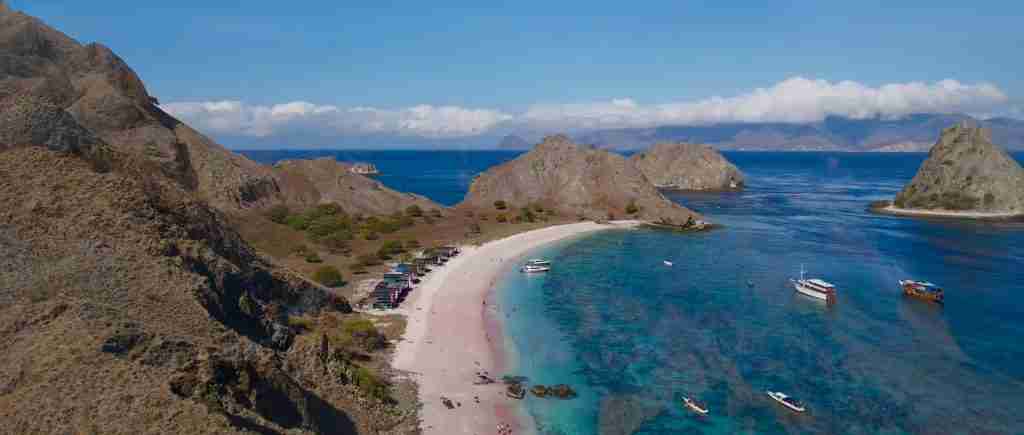
Komodo National Park encompasses 1,733 square kilometers of land and sea in Indonesia’s East Nusa Tenggara province, situated within the Lesser Sunda Islands archipelago. The protected area includes three major volcanic islands—Komodo (390 km²), Padar (20 km²), and Rinca (198 km²)—along with 26 smaller islands and extensive marine zones that constitute 60% of the total park area. The landscape features rugged volcanic hillsides covered in dry savannah grassland, pockets of deciduous monsoon forest, mangrove stands along protected coastlines, and brilliant white sand beaches fronting coral-rich waters.
The park’s establishment followed decades of evolving conservation awareness. Komodo Island received nature reserve status in 1965, while portions of Rinca and Padar were designated nature reserves in 1938. In 1977, UNESCO recognized Komodo Island as a Biosphere Reserve under the Man and Biosphere Programme. The Indonesian government formally established Komodo National Park in 1980, initially protecting 75,000 hectares before expanding to 219,322 hectares in 1984 to include critical marine areas and mainland Flores buffer zones. UNESCO World Heritage inscription followed in 1991, cementing international recognition of the park’s global conservation significance.
Beyond UNESCO designation, Komodo National Park holds multiple conservation recognitions that underscore its ecological importance. The park functions as a Conservation International-designated biodiversity hotspot, a WWF Global 200 Marine Eco-region, a WWF/IUCN Centre of Plant Diversity, an Endemic Bird Area, and an ASEAN Heritage Park since 2005. This layered protection framework reflects both the concentration of threatened species and the exceptional representation of tropical marine and terrestrial ecosystems in relatively pristine condition. The park also gained recognition as one of the New 7 Wonders of Nature, acknowledging its spectacular natural features alongside its scientific importance.
The geological foundation for this biodiversity stems from the islands’ volcanic origins and their position within the Wallacea biogeographical zone, a transitional area between Asian and Australian continental fauna and flora. The volcanic archipelago sits along the Sunda Arc, where the Australian Plate subducts beneath the Eurasian Plate, creating the dramatic topography that defines these islands. This geological activity produces nutrient-rich soils that support distinctive vegetation adapted to seasonal monsoons, while underwater, the meeting of oceanic currents from the Indian Ocean and the Flores Sea creates the strong tidal flows that characterize Komodo’s marine environment.
Understanding Komodo National Park’s World Heritage status requires appreciating how terrestrial and marine ecosystems interconnect across scales from individual dragon hunting territories to oceanic current patterns that deliver nutrients supporting vast coral reef communities. The park represents not merely a collection of interesting species but a functioning ecosystem where evolutionary processes continue to shape life forms in observable ways, where predator-prey relationships maintain ecological balance, and where human communities have coexisted with remarkable wildlife for centuries. This guide explores these dimensions in depth, examining the natural heritage that warranted UNESCO recognition and continues to make Komodo National Park one of Earth’s irreplaceable conservation areas.
UNESCO Inscription History and Recognition Criteria
The UNESCO World Heritage Committee inscribed Komodo National Park during its fifteenth session in Carthage, Tunisia, in December 1991, recognizing the property under natural heritage criteria (vii) and (x). Criterion (vii) acknowledges areas containing superlative natural phenomena or exceptional natural beauty, while criterion (x) recognizes areas containing the most important and significant natural habitats for in-situ conservation of biological diversity. Indonesia’s nomination emphasized how Komodo National Park satisfies both criteria through its unique combination of the world’s largest living lizard in its natural habitat and marine ecosystems representing the highest biodiversity in the Indo-Pacific region.
Under criterion (vii), Komodo National Park demonstrates superlative natural phenomena through the presence of Komodo dragons existing in wild populations across volcanic island landscapes of exceptional scenic quality. The contrast between rugged savannah hillsides, brilliant white and pink sand beaches, and crystal-clear waters creating a turquoise gradient over coral reefs creates landscapes of remarkable natural beauty. The underwater seascapes feature vertical walls draped in colorful soft corals, pinnacles emerging from deep channels where strong currents concentrate marine life, and shallow reef flats teeming with tropical fish. The combination of terrestrial megafauna (Komodo dragons) visible in dramatic volcanic landscapes with accessible marine megafauna (manta rays, whale sharks) in transparent waters creates exceptional opportunities to witness nature’s grandeur.
Under criterion (x), the park protects critical habitat for the world’s entire wild population of Komodo dragons (Varanus komodoensis), approximately 5,700 individuals distributed across Komodo, Rinca, and smaller islands. Beyond dragons, the terrestrial ecosystem supports endemic species including the Rinca rat (Rattus rintjanus), various endemic reptiles, and distinctive bird communities. The marine ecosystem contains over 1,000 fish species, 260 coral species, 70 sponge species, and significant populations of marine mammals including dugongs, blue whales, and multiple dolphin species. The park’s position within the Coral Triangle—the global center of marine biodiversity—means protecting this area contributes substantially to conserving the world’s richest marine ecosystems. The concentration of threatened and endemic species in relatively small area makes the park exceptionally important for biodiversity conservation.
The UNESCO inscription process involved extensive documentation of the park’s biological resources, conservation management structures, and threats requiring mitigation. Indonesia’s nomination file detailed the Komodo dragon’s evolutionary uniqueness, the marine environment’s exceptional species richness, and management plans ensuring long-term protection. The nomination emphasized how the park’s establishment in 1980 had already demonstrated Indonesia’s commitment to conservation, while UNESCO recognition would strengthen protection frameworks and attract international support for conservation initiatives. The World Heritage Committee’s decision to inscribe Komodo acknowledged both the immediate conservation achievements and the ongoing commitment required to maintain this extraordinary natural heritage.
Since inscription, UNESCO has conducted periodic monitoring to ensure the park maintains the conditions that warranted World Heritage designation. State of Conservation reports submitted by Indonesia document management effectiveness, threats encountered, and actions taken to address conservation challenges. Notable concerns raised during monitoring include illegal fishing impacts on coral reefs, increasing visitation pressure on dragon populations, and the need to balance conservation with local community livelihoods. UNESCO’s involvement has helped mobilize international funding for conservation projects, including patrol boat acquisition, ranger training, and marine protected area management capacity building. The ongoing relationship between UNESCO and Indonesian authorities ensures that World Heritage status translates into concrete conservation benefits rather than merely symbolic recognition.
Geological Foundation and Biogeographical Position
Komodo National Park’s islands formed through volcanic processes associated with the Sunda Arc, a volcanic island chain extending from Sumatra through Java, Bali, and the Lesser Sunda Islands. The arc results from the subduction of the Australian Plate beneath the Eurasian Plate, creating volcanic activity that built the islands emerging from the ocean floor. This ongoing geological process continues to shape the landscape through occasional seismic activity, though major volcanic eruptions have not occurred in recorded history on Komodo, Padar, or Rinca. The volcanic origins created the rugged topography characterizing the islands, with peaks reaching 735 meters on Komodo Island providing dramatic relief and diverse elevation zones supporting different vegetation communities.
The islands’ volcanic soils, derived from weathered basaltic rock, combine with steep slopes and seasonal rainfall patterns to create distinctive terrestrial environments. During the wet season (November-March), monsoon rains support lush vegetation growth, while the dry season (April-October) transforms the landscape into golden savannah grassland with drought-deciduous trees shedding leaves to conserve water. This pronounced seasonality influences all terrestrial life, from vegetation phenology to Komodo dragon breeding cycles to prey species movement patterns. The volcanic substrate provides mineral-rich soils that, despite seasonal drought stress, support diverse plant communities including 254 identified plant species adapted to the monsoon climate.
Biogeographically, Komodo National Park occupies a crucial position within Wallacea, the transitional zone between the Sunda Shelf (Asian fauna) and the Sahul Shelf (Australian fauna). Alfred Russel Wallace identified this transition zone in the 19th century, noting how deep water channels between islands prevented species dispersal during ice ages when sea levels dropped, maintaining distinct faunal assemblages on either side. The Wallace Line, running between Bali and Lombok then north between Borneo and Sulawesi, marks the western boundary of this transition zone. Komodo sits well within Wallacea, exhibiting characteristics of both Asian and Australian biogeographical regions.
This biogeographical positioning creates unique species assemblages not found in purely Asian or Australian ecosystems. Terrestrial fauna includes species with Asian affinities such as the crab-eating macaque (Macaca fascicularis) and Javan rusa deer (Rusa timorensis), alongside species with Australian connections including various marsupials on nearby islands and distinctive bird species showing southern affinities. The Komodo dragon itself represents an ancient lineage that evolved in isolation, developing unique characteristics not seen in related monitor lizards elsewhere. This mixing of faunal elements makes the park scientifically valuable for studying biogeographical patterns and evolutionary processes in island archipelagos.
The marine environment reflects equally complex biogeographical influences. The park’s waters experience the convergence of currents from the Indian Ocean (south), the Flores Sea (north), and the Sumba Strait (west), creating exceptional oceanographic conditions. These currents deliver nutrients from deep ocean upwelling zones, supporting high productivity that sustains the remarkable coral reef communities. The position within the Coral Triangle—the global epicenter of marine biodiversity encompassing Indonesia, Malaysia, Philippines, Papua New Guinea, Solomon Islands, and Timor-Leste—means Komodo’s reefs support species assemblages found nowhere else on Earth in such concentration. The oceanographic complexity, with strong tidal flows creating diverse habitats from calm lagoons to current-swept channels, enables the coexistence of over 1,000 fish species and 260 coral species in relatively compact marine areas.
Komodo Dragon Ecology and Evolutionary Significance
The Komodo dragon (Varanus komodoensis) represents the world’s largest living lizard species, with adult males reaching lengths up to 3 meters and weights around 70 kilograms, though exceptional individuals exceeding these measurements have been documented. Females typically measure 2-2.5 meters and weigh 40-50 kilograms. These massive reptiles evolved through island gigantism, a process where species on islands with limited predators and competitors often evolve larger body sizes than their mainland relatives. Fossil evidence suggests Komodo dragons or their immediate ancestors once inhabited mainland Asia and Australia, but disappeared from those regions while persisting on isolated Indonesian islands where they faced no mammalian predator competition.
Komodo dragons function as apex predators across their island habitats, hunting prey ranging from small rodents and birds to large ungulates including Timor deer and wild water buffalo. Hunting strategies vary from ambush predation, where dragons wait along game trails to attack passing prey, to active stalking and pursuit of wounded or weak animals. Juvenile dragons exhibit different ecological roles, spending their first years in trees feeding on insects, small reptiles, and bird eggs before descending to terrestrial hunting as they grow larger. This ontogenetic niche shift reduces competition between age classes and allows populations to exploit diverse food resources efficiently.
The species gained scientific fame through sensationalized accounts of their hunting prowess, with early reports claiming dragons infected prey with deadly bacteria from their saliva, then tracked dying animals for days until bacterial infection proved fatal. Research has since revealed a more complex reality: Komodo dragons possess venom glands in their lower jaw that deliver toxins inducing shock, preventing blood clotting, and lowering blood pressure in bitten prey. While bacteria remain present in their saliva, the venom represents the primary mechanism for subduing large prey. This discovery positioned Komodo dragons among venomous reptiles, challenging previous classifications and demonstrating how sensationalized natural history can obscure accurate biological understanding.
Komodo dragon reproduction follows a seasonal pattern aligned with the dry season. Females lay clutches of 15-30 eggs in excavated nests, often choosing abandoned megapode nesting mounds that provide temperature regulation. Incubation lasts approximately 8 months, with hatchlings emerging during the wet season when prey abundance peaks. Female dragons provide no parental care after egg deposition, and hatchlings must immediately climb trees to avoid cannibalism by adult dragons. This reproductive strategy, combined with slow maturation (sexual maturity at 8-10 years) and long lifespan (potentially 30+ years in the wild), means populations grow slowly and recover slowly from disturbances.
Conservation genetics research has revealed concerning patterns in Komodo dragon populations. The island populations show genetic differentiation, with Komodo Island dragons genetically distinct from Rinca and Flores populations. Small population sizes on individual islands create genetic bottleneck risks, where limited genetic diversity reduces the population’s ability to adapt to environmental changes or disease outbreaks. Effective population sizes (the number of individuals successfully reproducing) remain smaller than total population counts, amplifying genetic concerns. These genetic considerations inform conservation management, emphasizing the importance of maintaining all island populations rather than focusing protection on a single island, as each population contributes unique genetic diversity to the species’ overall survival prospects.
The Komodo dragon’s evolutionary significance extends beyond its impressive size and predatory abilities. As the largest living member of the varanid (monitor lizard) family, the species represents an evolutionary endpoint of gigantism trends observable across the family. Studying Komodo dragon physiology, behavior, and ecology provides insights into how large reptilian predators function, informing understanding of extinct species including dinosaurs that once dominated terrestrial ecosystems. The species’ persistence on small, isolated islands while disappearing from mainland areas demonstrates how island ecosystems can preserve species extinct elsewhere, making island conservation critical for maintaining evolutionary heritage. Scientific research continues to reveal new dimensions of Komodo dragon biology, from chemical communication through scent marking to individual personality variations affecting hunting success, ensuring these remarkable reptiles remain subjects of ongoing evolutionary and ecological investigation.
Terrestrial Biodiversity Beyond Komodo Dragons
While Komodo dragons justifiably dominate attention, the park’s terrestrial ecosystems support diverse species assemblages adapted to the seasonal monsoon climate and volcanic island geography. The vegetation communities include 254 documented plant species ranging from coastal mangrove forests through lowland savannah woodland to montane cloud forest on the highest peaks. Dominant vegetation types include savannah grasslands covering hillsides where Lontar palms (Borassus flabellifer) provide scattered shade, deciduous monsoon forests in protected valleys where trees including Sterculia foetida and Tamarindus indica drop leaves during the dry season, and thorny scrub vegetation adapted to drought stress. These plant communities provide critical habitat structure for terrestrial fauna while responding to seasonal rainfall patterns that define the ecological calendar.
Large mammals besides Komodo dragons include the Timor deer (Rusa timorensis), the dragon’s primary prey species, numbering several thousand individuals across the islands. These deer show notable behavioral adaptations to dragon predation, including hypervigilance at water sources where dragons commonly ambush prey, and preference for open savannah where visibility reduces dragon ambush success. Wild water buffalo (Bubalus arnee) inhabit the islands in small populations, representing either introduced domestic buffalo that became feral or remnant wild populations, depending on historical interpretation. Wild boar (Sus scrofa vittatus) provide additional prey for dragons while also competing with deer for food resources. The Crab-eating macaque (Macaca fascicularis) occupies coastal forest habitats, representing one of the few primate species in the park. These large mammals create ecological dynamics through herbivory, seed dispersal, and as prey supporting dragon populations.
The park supports notable endemic species including the Rinca rat (Rattus rintjanus), found only on Rinca Island and representing one of Wallacea’s many endemic rodents. Reptile diversity extends well beyond Komodo dragons to include numerous snake species, geckos, and skinks adapted to the dry forest and savannah environments. The Timor python (Python timoriensis) represents the islands’ largest snake, while various venomous species including Russell’s viper (Daboia siamensis) and the blue-lipped sea krait (Laticauda laticaudata) in coastal waters contribute to the herpetofaunal diversity. Lizards beyond varanids include numerous gecko species, agamid lizards, and skinks occupying diverse ecological niches from rocky outcrops to forest floor leaf litter.
Avian diversity reaches notable levels for relatively small islands, with the park designated as an Endemic Bird Area due to several restricted-range species. Notable species include the lesser sulphur-crested cockatoo (Cacatua sulphurea), orange-footed scrubfowl (Megapodius reinwardt), yellow-crested cockatoo (Cacatua sulphurea citrinocristata), and helmeted friarbird (Philemon buceroides). Raptors including the white-bellied sea eagle (Haliaeetus leucogaster) and brahminy kite (Haliastur indus) patrol coastlines hunting fish and small prey. The distinctive megapodes (scrubfowl) construct massive compost mounds for egg incubation, creating habitat features utilized by nesting Komodo dragons. Seasonal migrants from Australia include various shorebirds using the islands as stopover habitat during their annual movements, connecting Komodo’s ecosystems to broader flyway conservation concerns.
Invertebrate diversity remains less comprehensively documented but undoubtedly includes thousands of species adapted to the islands’ varied habitats. Butterfly species show notable diversity, with swallowtails, birdwings, and numerous smaller species pollinating flowering plants. Dung beetles process the substantial amounts of fecal material produced by large herbivores, cycling nutrients back into the ecosystem. Termites construct mounds that provide microhabitat for various reptile and invertebrate species. Cicadas, grasshoppers, and other insects provide food resources for insectivorous birds and juvenile dragons. This invertebrate diversity, though less visible than charismatic megafauna, performs essential ecosystem functions including pollination, decomposition, and forming the prey base supporting higher trophic levels.
Marine Ecosystem Diversity and Coral Triangle Significance
Komodo National Park’s marine environments encompass approximately 1,030 square kilometers of ocean, representing 60% of the total protected area. These waters support exceptional coral reef biodiversity positioned within the Coral Triangle, the global center of marine biodiversity where over 75% of all known coral species occur and where reef fish diversity reaches planetary peaks. The park’s marine habitats include fringing reefs along island coastlines, patch reefs on shallow platforms, vertical walls dropping into deep channels, pinnacles rising from channel floors where strong currents concentrate marine life, mangrove forests providing critical nursery habitat, and seagrass beds supporting herbivorous megafauna including dugongs and green sea turtles.
Coral diversity documented in the park includes 260 species representing more than half of all known coral species in the Indo-Pacific region. Hard corals from families Acroporidae, Faviidae, and Poritidae create the reef framework, while soft corals from families Alcyoniidae and Nephtheidae drape vertical walls in colorful displays. Massive Porites colonies reaching several meters in diameter represent centuries of growth, providing structural complexity supporting thousands of associated species. Branching Acropora thickets create shelter for juvenile fish, while table corals provide shade and ambush points for predatory fish. This coral diversity creates habitat heterogeneity that enables the coexistence of over 1,000 fish species in relatively compact marine areas, as different species exploit the varied microhabitats created by diverse coral growth forms.
Fish diversity encompasses species from all major tropical families, with notable concentrations of species from families Labridae (wrasses), Pomacentridae (damselfish), Chaetodontidae (butterflyfish), Acanthuridae (surgeonfish), Serranidae (groupers), and Lutjanidae (snappers). The strong currents characterizing many dive sites create conditions favoring pelagic species including trevallies, tuna, mackerel, and sharks that patrol reef edges hunting smaller fish. Reef shark species documented in the park include whitetip reef sharks (Triaenodon obesus), blacktip reef sharks (Carcharhinus melanopterus), and grey reef sharks (Carcharhinus amblyrhynchos). Larger shark species occasionally encountered include hammerhead sharks and whale sharks, the latter congregating at sites where plankton concentrations provide feeding opportunities.
Marine megafauna represents a distinctive feature of Komodo’s waters, with manta ray aggregation sites attracting hundreds of reef manta rays (Mobula alfredi) and oceanic manta rays (Mobula birostris) to cleaning stations where small fish remove parasites from the rays’ skin. These aggregations create exceptional wildlife viewing opportunities and have made Komodo internationally famous among divers. Dugongs (Dugong dugon), the marine mammal most threatened globally, maintain small populations in the park feeding on seagrass beds in protected bays. Sea turtles including green turtles (Chelonia mydas) and hawksbill turtles (Eretmochelys imbricata) nest on park beaches, with hatchlings entering waters protected from many predators by the park’s fishing regulations. Cetacean species documented in park waters include various dolphin species, pilot whales, and occasionally blue whales passing through the deep channels between islands during seasonal migrations.
The oceanographic conditions creating this exceptional biodiversity stem from the convergence of multiple ocean currents and the resulting nutrient dynamics. The Indonesian Throughflow, moving water from the Pacific Ocean to the Indian Ocean through the Indonesian archipelago, brings warm tropical waters through the park. Simultaneously, upwelling along the southern coast of the Lesser Sunda Islands delivers cooler, nutrient-rich water from the Indian Ocean depths. These processes create a dynamic marine environment where water temperatures vary by several degrees between sites, enabling the coexistence of strictly tropical species requiring warm water and species tolerating cooler temperatures. Strong tidal currents, reaching several knots in narrow channels, deliver nutrients to filter-feeding organisms including corals and create the current-swept conditions that attract pelagic fish and megafauna to reef edges and pinnacles.
The marine ecosystem also includes extensive invertebrate diversity beyond corals, with over 70 sponge species documented, numerous mollusc species including giant clams (Tridacna spp.) and various nudibranchs prized by underwater photographers, crustaceans ranging from mantis shrimps to lobsters, and echinoderms including crown-of-thorns starfish (Acanthaster planci) that periodically outbreak and consume coral. Sea cucumbers, sea urchins, and various other invertebrates perform ecosystem functions including algae grazing that prevents coral smothering, sediment processing, and serving as prey for fish and other predators. This invertebrate diversity, while less conspicuous than colorful fish or large rays, represents the foundation of the marine food web and contributes substantially to the ecosystem services provided by healthy coral reefs including fish production, coastal protection, and nutrient cycling.
Conservation Management Framework and Challenges
Komodo National Park operates under management authority of Indonesia’s Directorate General of Natural Resources and Ecosystem Conservation (formerly Directorate General of Forest Protection and Nature Conservation) within the Ministry of Environment and Forestry. Park management involves multiple stakeholders including local governments, communities living within and adjacent to the park, tourism operators, conservation NGOs including The Nature Conservancy and WWF, and academic institutions conducting research. This multi-stakeholder governance framework aims to balance conservation objectives with sustainable resource use by local communities and controlled tourism development that generates revenue supporting conservation while minimizing ecological impacts.
The park’s management plan identifies core conservation zones where human activities face strict limitations, traditional use zones where resident communities maintain customary resource access, and tourism zones where visitor activities concentrate to minimize disturbance across broader areas. Komodo dragons receive particular management attention, with ranger-guided trekking required on islands where dragons occur to ensure visitor safety while protecting dragons from harassment. Dragon population monitoring through regular surveys provides data on population trends, with particular attention to female nesting success as this determines recruitment rates. Prey species populations also receive monitoring, as adequate deer and wild boar populations prove essential for sustaining dragon populations.
Marine conservation management addresses multiple challenges including illegal fishing, destructive fishing practices, and tourism impacts on sensitive reef areas. Park rangers conduct regular patrols using patrol boats acquired through UNESCO World Heritage Fund grants and conservation organization support. These patrols interdict illegal fishing vessels, particularly those using dynamite fishing that destroys coral reef structure or cyanide fishing that poisons reef fish for the live fish trade. The park has established no-take marine zones where all fishing is prohibited, allowing fish populations to recover and provide larvae that repopulate fished areas through larval dispersal. This marine zoning strategy balances conservation with traditional fishing community needs, as complete fishing prohibition would eliminate livelihoods for communities dependent on marine resources for generations.
Tourism management represents both a conservation opportunity and a challenge. Tourism revenue contributes to conservation through entrance fees that fund park operations, while controlled visitation creates economic incentives for conservation among local communities who benefit from tourism employment and businesses. However, increasing visitor numbers create potential impacts including disturbance to dragon nesting areas, anchor damage to coral reefs from dive boats, trampling of sensitive vegetation along hiking trails, and waste generation exceeding park waste management capacity. Park management has implemented various tourism controls including visitor quotas limiting daily visitors to sensitive areas, mandatory ranger guidance on dragon islands, designated anchoring sites to prevent coral anchor damage, and waste management requirements for tourism operators including waste removal from the park.
Climate change presents emerging conservation challenges affecting both terrestrial and marine ecosystems. Altered rainfall patterns threaten to shift vegetation communities, potentially reducing habitat quality for dragons and prey species. Ocean warming stresses coral reefs, with bleaching events occurring when water temperatures exceed coral tolerance thresholds for extended periods. Ocean acidification resulting from increased atmospheric CO2 absorption impairs coral calcification, potentially weakening reef structures. Rising sea levels threaten coastal nesting beaches for turtles and low-lying coastal communities. Park management can only partially mitigate these global-scale threats, emphasizing the importance of broader climate change action while implementing local adaptation strategies including coral reef restoration, assisted migration of sensitive species, and climate-informed conservation planning.
Community relations represent a persistent management consideration, as four villages (Komodo, Rinca, Kerora, and Papagaran) existed within the park boundaries before park establishment in 1980. These communities, totaling several thousand residents, maintain traditional fishing practices and have cultural connections to the landscape extending back generations. Balancing conservation requirements with community rights to resources and livelihoods requires ongoing negotiation, with management approaches including collaborative fisheries management, tourism revenue sharing, and support for sustainable livelihood alternatives. The challenge intensifies as populations grow and resource demands increase, requiring adaptive management that maintains conservation effectiveness while respecting community needs and rights.
Scientific Research and Monitoring Programs
Komodo National Park functions as a natural laboratory where researchers study evolutionary biology, behavioral ecology, conservation genetics, marine ecology, and climate change impacts. Long-term research programs provide data informing management decisions while contributing to broader scientific understanding of island ecosystems, apex predator ecology, and coral reef dynamics. Research priorities include Komodo dragon population monitoring and behavioral studies, coral reef health assessments, fish population surveys, terrestrial vegetation monitoring, and climate change impact documentation. These programs involve partnerships between park authorities, Indonesian universities including IPB University and Udayana University, international research institutions, and conservation organizations.
Komodo dragon research addresses fundamental questions about population dynamics, genetic diversity, spatial ecology, and behavioral adaptations. Researchers use mark-recapture techniques to estimate population sizes and demographic parameters including survival rates, reproductive success, and recruitment patterns. GPS telemetry studies track dragon movements, revealing home range sizes, habitat preferences, and seasonal movement patterns. Genetic studies analyze population structure, gene flow between islands, and genetic diversity levels that indicate population health. Behavioral observations document hunting strategies, social interactions, and individual personality variations affecting fitness. This accumulated research builds comprehensive understanding of dragon ecology essential for effective conservation management.
Marine research focuses heavily on coral reef monitoring given the reefs’ exceptional biodiversity and vulnerability to multiple threats. Permanent monitoring transects established at sites across the park enable researchers to track coral cover, coral community composition, fish abundance and diversity, and bleaching occurrence over time. Photographic monitoring documents changes in benthic communities, while fish population surveys using visual census techniques quantify population trends for indicator species including commercially important fish, apex predators, and herbivores whose grazing maintains reef health. Water quality monitoring tracks temperature, salinity, nutrient levels, and sedimentation that influence coral health. Coral disease surveillance documents disease outbreaks that can devastate reef areas if undetected.
Research on marine megafauna has grown substantially as technology enables more sophisticated tracking and observation. Manta ray researchers use photo-identification to track individual rays, documenting movement patterns, site fidelity, and population connectivity between sites. Satellite tagging of sharks reveals movement corridors and areas requiring protection to maintain shark populations. Turtle monitoring documents nesting success, hatchling survival, and foraging areas used by different age classes. Dugong research, though challenging given the species’ rarity and cryptic behavior, uses aerial surveys and acoustic monitoring to locate populations and assess habitat use. This megafauna research informs marine protected area design and management strategies supporting these charismatic species.
Climate change research has become increasingly prominent as the park experiences warming, rainfall variability, and ocean acidification. Researchers monitor temperature trends, rainfall patterns, and extreme weather event frequency to document climate change signals. Coral bleaching surveillance tracks the extent and severity of bleaching events resulting from temperature stress. Long-term vegetation monitoring detects shifts in plant community composition potentially driven by altered rainfall. Phenology studies document changes in timing of flowering, fruiting, dragon breeding, and migratory bird arrival, as these timing shifts can disrupt ecological synchrony. This climate research provides early warning of impacts requiring management responses while contributing to global understanding of climate change effects on tropical ecosystems.
Park authorities maintain databases consolidating research findings, enabling evidence-based management decisions. Research permit requirements ensure that studies align with management priorities and that results reach park managers in accessible formats. The park also supports training programs where Indonesian students and early-career scientists gain research experience, building capacity for future conservation science. International collaborations bring advanced technologies and methodologies while ensuring that Indonesian scientists lead research on their nation’s natural heritage. This research infrastructure makes Komodo National Park not only a conservation area but also a center for advancing scientific knowledge supporting conservation globally.
Cultural Heritage and Human History of the Islands
Human occupation of the Komodo islands extends thousands of years before park establishment, with archaeological evidence revealing Neolithic settlements and the presence of indigenous communities whose descendants remain today. The discovery of megaliths, stone tools, and burial sites on Komodo Island demonstrates human presence dating back millennia, though detailed archaeological investigation remains limited. These early inhabitants developed sustainable relationships with the island ecosystems, including cultural practices recognizing Komodo dragons as significant beings requiring respect and caution. The Ata Modo people, considered the islands’ indigenous inhabitants, maintained oral traditions linking their ancestry to the islands for numerous generations before contact with external societies.
The modern communities inhabiting the park—concentrated in Komodo Village, Papagaran, Rinca, and Kerora—represent diverse origins including descendants of Ata Modo people, Sama-Bajau sea nomads originally from Sulawesi, Bugis migrants from South Sulawesi, and settlers from Manggarai on Flores, Bima on Sumbawa, and Madura. This ethnic diversity creates multilingual communities where Indonesian serves as the common language alongside various regional languages and dialects. The Sama-Bajau population historically maintained nomadic seafaring lifestyles, moving between islands in traditional boats and maintaining minimal permanent settlements. Their integration into sedentary villages occurred gradually, influenced by government policies encouraging settlement and the establishment of formal administrative structures including schools requiring children’s regular attendance.
Traditional resource use practices included fishing using various techniques from spearfishing to net fishing, small-scale agriculture in areas with adequate soil and water, collection of forest products including palm sap tapped for palm wine, and hunting of deer and wild boar. These practices evolved to suit the islands’ ecological constraints, including seasonal resource availability and the presence of Komodo dragons requiring constant caution. Community members developed extensive ecological knowledge including dragon behavior patterns, safe movement through dragon habitat, seasonal fish migration timing, and medicinal plant identification. This traditional ecological knowledge represents cultural heritage complementing scientific understanding and providing insights potentially valuable for modern conservation management.
The relationship between traditional communities and conservation has evolved through multiple phases, from initial conflicts when park establishment restricted resource access, through negotiated coexistence arrangements recognizing community rights, to recent collaborative management approaches incorporating community knowledge and participation. Communities initially perceived conservation restrictions as imposing external values without adequate consideration of local livelihoods or cultural practices. Tensions emerged over fishing restrictions limiting marine resource access and prohibitions on hunting even for subsistence. Over time, dialogue between park authorities and communities produced compromise arrangements including designated traditional use zones, community involvement in tourism generating alternative income, and collaborative patrolling programs where community members serve as park rangers.
Cultural beliefs regarding Komodo dragons reveal fascinating perspectives blending practical knowledge with spiritual significance. Local traditions in Komodo Village describe dragons as siblings to humans, with the term “ora” (local name for Komodo dragons) signifying their kinship relationship. Oral histories recount how dragons and humans share common origins, requiring mutual respect and protective behaviors. These beliefs likely contributed to dragon conservation before formal protection, as cultural prohibitions against killing dragons except in self-defense helped maintain populations. Contemporary conservation management benefits from understanding these cultural relationships, as they provide foundation for community-based conservation where local people view dragons not merely as tourist attractions but as culturally significant beings deserving protection as part of their heritage.
The integration of cultural heritage considerations into conservation management reflects growing recognition that effective conservation in inhabited landscapes requires addressing both ecological and social dimensions. Programs supporting cultural documentation record oral histories, traditional practices, and indigenous knowledge before elder generation members pass away. Cultural tourism initiatives enable visitors to learn from community members about traditional fishing techniques, boat building, weaving, and other cultural practices, creating income while preserving cultural transmission to younger generations. This cultural heritage dimension enriches the park’s World Heritage significance, demonstrating how human communities and remarkable biodiversity have coexisted for millennia when relationships remain balanced through cultural practices, ecological knowledge, and adaptive management responsive to both nature and culture.
Visitor Experience and Sustainable Tourism Development
Komodo National Park entrance requires payment of IDR 650,000 per person, a consolidated fee covering park access, ranger fees, trekking permits, snorkeling permits, and conservation contributions. This single payment remains valid for multi-day visits, though visitors accessing the park on separate occasions pay fees for each entry. Payment occurs at ranger stations before island visits, with cash payment in Indonesian Rupiah required as card payment infrastructure remains limited at remote ranger posts. The fee structure generates revenue supporting park operations including ranger salaries, patrol boat fuel and maintenance, visitor facility upkeep, and conservation programs. Tour operators typically include entrance fees in package prices, though travelers should confirm inclusions before booking to avoid unexpected costs.
Access to the park requires boat travel from Labuan Bajo on Flores Island, the main gateway town served by Komodo International Airport receiving domestic flights from Bali, Jakarta, and other Indonesian cities, plus international connections from Singapore and Kuala Lumpur. Boat trips from Labuan Bajo to Komodo or Rinca islands require 1.5-3 hours depending on vessel speed and sea conditions. Tour options range from speedboat day trips visiting single islands to multi-day liveaboard journeys aboard traditional phinisi schooners exploring multiple islands and dive sites. Day tours typically visit one main island for dragon trekking plus 2-3 snorkeling sites and beaches, returning to Labuan Bajo by evening. Multi-day tours (2-4 nights common) provide more comprehensive exploration including sunrise at Padar Island, extensive snorkeling and diving, multiple dragon islands, and accommodation aboard ship.
Dragon viewing experiences on Komodo and Rinca islands require mandatory ranger accompaniment, with rangers armed with forked sticks used to discourage aggressive dragons. Three trekking routes offer different durations and difficulty levels: short treks (30-45 minutes) on relatively flat terrain suitable for all fitness levels, medium treks (1-2 hours) including moderate hills providing broader habitat coverage, and long treks (3-4 hours) traversing rugged terrain to remote areas where dragon encounters may prove more likely away from heavy visitation. Rangers select routes based on recent dragon sighting locations, weather conditions, and visitor capabilities. Dragon sightings cannot be guaranteed, as wild populations move freely, but encounter rates generally remain high particularly during morning hours when dragons actively forage before mid-day heat drives them to shade.
Padar Island viewing platform represents one of the park’s most photographed locations, requiring a steep 20-30 minute hike to the summit ridge overlooking three bays with differently colored beaches—white, pink, and black sand created by varying substrate compositions. Sunrise visits prove popular, with boat departures from overnight anchorages timed to reach the summit for dawn light. The panoramic vista showcasing dramatic volcanic topography, multiple beach colors, and turquoise waters creates exceptional photography opportunities, though the steep climb requires moderate fitness and appropriate footwear. Conservation concerns about trail erosion from heavy foot traffic have prompted discussions about visitor quotas, though implementation remains under consideration as tourism economic benefits weigh against environmental protection.
Pink Beach (Pantai Merah) derives its distinctive coloration from red coral fragments mixed with white sand, creating varying pink tones depending on lighting and sand moisture. The beach provides access to exceptional snorkeling on adjacent coral reefs supporting diverse fish communities, with calm water conditions suitable for novice snorkelers. Swimming and beach time complement snorkeling, making Pink Beach a popular stop on multi-day tours. Several Pink Beaches exist across the park, with the most frequently visited located on Komodo Island’s southern coast. Beach regulations prohibit coral collection, touching or standing on coral, feeding fish, and disposal of any waste including organic materials. These rules protect fragile coral ecosystems while maintaining the beach’s visual appeal for future visitors.
Diving in Komodo National Park attracts advanced divers worldwide due to strong currents, exceptional biodiversity, and opportunities for encounters with megafauna including manta rays and sharks. Signature dive sites include Batu Bolong, a pinnacle rising from deep water where currents concentrate fish schools; Castle Rock, featuring cleaning stations attracting manta rays; Manta Point, with shallow reef flats where mantas feed on plankton; and Tatawa Kecil, known for diverse coral communities and excellent fish diversity. Current strengths require experienced divers, advanced buoyancy control, and often drift diving techniques following currents rather than fighting them. Water temperatures range 24-29°C seasonally, with cooler upwelling water providing nutrients supporting exceptional marine productivity. Diving surcharges of IDR 350,000 per person per day apply beyond standard park entrance fees, paid separately to park authorities.
Sustainable tourism development balances economic benefits with conservation requirements through regulations limiting visitor numbers, restricting access to sensitive areas, requiring waste removal by tourism operators, and channeling tourism revenue to conservation. The park has established maximum visitor quotas for certain islands and sites, though enforcement varies with available staff and monitoring capacity. Tourism operators must obtain permits specifying activities, group sizes, and routes, enabling park management to track visitation patterns and identify sites requiring protection from overuse. Revenue sharing arrangements direct portions of entrance fees to community development, creating local stakeholder support for conservation as tourism benefits extend beyond tour operators to community members. Monitoring programs assess tourism impacts including trail erosion, coral damage from boat anchors, and dragon behavior changes near heavily visited areas, informing adaptive management adjusting regulations to maintain sustainable tourism.
Conservation Status and Future Prospects
Komodo National Park’s World Heritage status remains secure, with Indonesia maintaining management standards meeting UNESCO requirements and periodic monitoring confirming the property retains its Outstanding Universal Value. The Komodo dragon’s IUCN Red List status classifies the species as Endangered, reflecting limited population size (approximately 5,700 individuals), restricted range (found only on a few Indonesian islands), and vulnerability to catastrophic events including volcanic eruptions, wildfires, or disease outbreaks that could devastate island populations. The marine ecosystem faces various threats including coral bleaching from warming oceans, fishing pressure despite regulations, and pollution from surrounding development, though current conditions remain generally healthy compared to degraded reefs elsewhere in Indonesia.
Climate change represents the most significant long-term conservation challenge, affecting both terrestrial and marine ecosystems in ways park management can only partially mitigate. Projected climate impacts include increased temperature extremes potentially exceeding Komodo dragon thermal tolerance, altered rainfall patterns affecting vegetation communities and freshwater availability, sea level rise inundating coastal nesting beaches, ocean acidification impairing coral calcification, and increased coral bleaching frequency. Park managers can implement local adaptation strategies including assisted migration of sensitive species, coral restoration using heat-tolerant coral strains, and enhanced freshwater management, but ultimate success depends on global climate change mitigation reducing the rate and magnitude of warming.
Population growth in nearby communities and broader regional development create expanding pressures requiring adaptive management. As human populations increase, demands for marine resources intensify, requiring more effective fisheries management balancing conservation with sustainable harvest. Tourism growth brings both opportunities and risks—revenue supporting conservation versus environmental degradation from excessive visitation. Infrastructure development in Labuan Bajo, transforming from small fishing village to bustling tourism gateway, generates pollution and habitat modification affecting nearshore marine ecosystems. Managing these development pressures requires coordination between park authorities, local governments, and planning agencies ensuring that economic development proceeds sustainably rather than undermining the natural heritage attracting visitors and generating economic value.
Conservation science advances offer promising tools for addressing emerging challenges. Genetic technologies including genomic sequencing enable detailed assessment of dragon population genetics, informing management strategies maintaining genetic diversity. Coral restoration techniques using heat-tolerant coral varieties, coral gardening, and assisted evolution may help reefs adapt to warming conditions. Remote sensing and drone technologies enhance monitoring efficiency, enabling comprehensive ecosystem assessments with less field effort. Environmental DNA (eDNA) techniques detecting species presence from water samples can survey cryptic marine species including rare sharks and dugongs without capture or observation. Artificial intelligence analyzing camera trap images, underwater videos, and satellite imagery automates monitoring tasks, freeing staff for active management. Applying these technologies requires capacity building and sustained funding, but offers potential for more effective conservation with limited resources.
International cooperation through UNESCO, conservation organizations, academic partnerships, and donor support strengthens conservation capacity beyond national resources alone. UNESCO World Heritage status facilitates access to technical assistance, training programs, and emergency funding for urgent conservation needs. Conservation NGOs including WWF and The Nature Conservancy provide project funding, technical expertise, and advocacy supporting park management. International research collaborations bring advanced methodologies while building Indonesian scientific capacity. Donor governments and foundations fund specific initiatives from patrol boat acquisition to coral restoration programs. This international support network recognizes that conserving globally significant biodiversity provides benefits extending far beyond Indonesia’s borders, justifying shared investment in protecting irreplaceable natural heritage.
The park’s future depends ultimately on maintaining local and national commitment to conservation despite competing development pressures. Successful conservation requires that local communities perceive benefits exceeding costs, that national policies prioritize biodiversity protection, and that visitors appreciate their responsibility to minimize impacts while supporting conservation financially. The Komodo dragon’s iconic status provides powerful motivation for protection, while the exceptional marine biodiversity attracts divers willing to pay premium fees supporting conservation. Maintaining this balance—between protection and sustainable use, between local needs and global biodiversity values, between current benefits and long-term sustainability—determines whether future generations inherit Komodo National Park in condition warranting continued World Heritage designation. Current management demonstrates commitment to this goal, though ongoing vigilance, adaptive management, and sustained investment remain essential for long-term conservation success.
Frequently Asked Questions
How dangerous are Komodo dragons to human visitors?
Komodo dragons are apex predators with powerful jaws, sharp teeth, and venomous saliva capable of killing large prey, so they pose real danger requiring serious caution. However, attacks on humans remain rare when visitors follow ranger instructions and maintain safe distances. Park regulations require ranger accompaniment on all dragon islands, with rangers using forked sticks to discourage overly curious dragons. Visitors must stay together in groups, avoid straying from designated trails, not approach dragons regardless of apparent docility, and never attempt to touch or feed dragons. Dragons sometimes approach visitor areas attracted by scent, necessitating ranger intervention to maintain safe separation. Most dangerous situations arise when visitors ignore safety instructions, approach nesting females protecting eggs, or surprise dragons in thick vegetation. Deaths from dragon attacks have occurred but remain exceptional events, with tens of thousands of visitors annually experiencing safe dragon viewing through proper guided procedures. Maintaining healthy respect for these predators while following ranger guidance enables safe wildlife observation.
Can I visit Komodo National Park independently without joining a tour?
Independent visitation to Komodo National Park is not practical, as boat access from Labuan Bajo requires chartering vessels and park regulations require ranger accompaniment on all islands with dragon populations. While theoretically possible to hire private boats and pay ranger fees directly, the logistical complexity and comparable cost to joining organized tours makes tour participation the standard approach. Day tours operate as group departures sharing boat costs among participants, making them affordable for independent travelers who join scheduled departures. Multi-day tours similarly accept individual bookings on shared boats, enabling solo travelers to participate without chartering entire vessels. Truly independent exploration including camping on islands faces permit restrictions and safety concerns that effectively preclude this option. The most feasible independent approach involves traveling to Labuan Bajo independently, then joining daily departures or booking shared tours after arrival, providing flexibility in timing while accessing necessary boat transport and ranger guidance at reasonable cost through group participation.
What is the best time to visit for optimal wildlife viewing and weather conditions?
The dry season from April through December provides optimal conditions for visiting Komodo National Park, with calm seas enabling reliable boat access, clear visibility for dragon spotting and underwater photography, and minimal rainfall disruption. Peak visitation occurs July-September when international tourism peaks and water visibility reaches yearly highs, though sites experience higher crowding during these months. The shoulder months of April-June and October-December offer excellent conditions with fewer visitors, providing more intimate wildlife experiences and easier photography without crowds. Water temperatures remain warmest May-September, while upwelling currents bringing cooler but nutrient-rich water characterize November-March, creating excellent conditions for encountering manta rays and pelagic fish despite slightly reduced visibility. The wet season from January-March brings unpredictable weather including rough seas that can cancel boat departures, heavy rainfall affecting trail conditions, and reduced underwater visibility from plankton blooms and runoff, though tourism during these months sees dramatic reductions enabling those who visit to experience the park with minimal crowding. For dragon viewing specifically, morning hours year-round provide highest encounter rates as dragons actively forage before mid-day heat drives them to shade.
Are there accommodation options within the park boundaries?
No permanent tourist accommodation exists on the park islands themselves, with all overnight visitors staying either on liveaboard boats anchored in protected bays or returning to Labuan Bajo for hotel accommodation. Multi-day tours utilize traditional phinisi sailing vessels or modern motor yachts equipped with cabins, common areas, and facilities for overnight guests, anchoring near islands for dawn excursions and evening relaxation. These floating accommodations range from basic shared cabins on budget boats to air-conditioned private cabins on luxury vessels. Some liveaboards accommodate divers specifically, with equipment storage, compressors for tank filling, and diving platforms, while others focus on general sightseeing with snorkeling emphasis. Day tour participants return to Labuan Bajo each evening, where accommodation options span budget guesthouses, mid-range hotels, boutique resorts, and luxury properties catering to diverse budgets. A few ranger stations maintain basic facilities for park staff, but these are not available for tourist accommodation. This accommodation pattern protects park ecosystems from development impacts while concentrating tourism infrastructure in Labuan Bajo where services can be properly managed. Visitors preferring land-based accommodation with day trips face longer boat journeys but gain access to restaurant variety, evening entertainment, and hotel comforts between park visits.
How does the park protect both Komodo dragons and local fishing communities?
Komodo National Park employs zoning strategies that designate core conservation zones with strict protection, traditional use zones where resident communities maintain customary fishing rights, and tourism zones where visitor activities concentrate. This approach recognizes that four villages existed within park boundaries before park establishment in 1980, with residents maintaining traditional fishing practices essential to their livelihoods. The management plan negotiated with communities identifies specific marine areas designated as no-take zones where all fishing is prohibited to allow fish population recovery and coral reef protection, while other areas permit sustainable fishing using traditional methods excluding destructive practices such as dynamite or cyanide fishing. Community involvement in park management includes employment as rangers and guides, participation in patrol programs detecting illegal fishing, and benefit-sharing from tourism revenue through community development funds. For Komodo dragons specifically, protection involves ranger patrols preventing poaching, monitoring nesting sites during breeding season, maintaining prey populations through controlled hunting quotas, and public education emphasizing dragons’ cultural and economic value. Tensions persist as populations grow and resource demands increase, requiring ongoing dialogue and adaptive management ensuring conservation effectiveness while respecting community rights developed over generations of island habitation. Conservation success depends on communities perceiving net benefits from protection, creating stakeholder support for maintaining both dragon populations and marine resources that ultimately benefit all parties through sustainable use.
What distinguishes Pink Beach from other beaches in the park?
Pink Beach (Pantai Merah) derives its distinctive coloration from red coral fragments—particularly from organ pipe coral (Tubipora musica)—mixed with white sand particles, creating pink hues that vary in intensity depending on lighting conditions, sand moisture, and the density of coral fragments in different beach sections. The pink coloration appears most vivid when the sand is dry during low tide under midday sunlight, while wet sand appears lighter. Several beaches across the park display pink coloration to varying degrees, with different beaches offering different accessibility, coral reef quality for snorkeling, and tourism development levels. The most visited Pink Beach on Komodo Island’s southern coast provides excellent snorkeling access to healthy coral reefs supporting diverse fish populations, while its relatively protected bay location creates calm water suitable for swimming and beach activities. The pink coloration is entirely natural, formed through geological processes grinding coral skeletons into sand-sized particles that mix with conventional white sand from pulverized shells and other calcium carbonate sources. The beach’s fragility requires visitor care, as walking on coral, collecting coral fragments, or other disturbances damage both the coral source material and the beach’s distinctive appearance. Conservation regulations prohibit any collection of sand, shells, or coral, ensuring future visitors can enjoy this geological rarity created through centuries of coral growth, wave action, and sediment deposition.
How has tourism affected Komodo dragon behavior and conservation?
Tourism has created both benefits and challenges for Komodo dragon conservation, with economic incentives supporting protection while visitation potentially causing behavioral changes and habitat disturbance. The primary conservation benefit comes from entrance fees and tourism revenue making dragon protection economically valuable to local communities and national authorities, transforming dragons from potential livestock threats into economic assets worth protecting. This economic value has largely eliminated dragon poaching and created local stakeholder support for conservation. However, research indicates that dragons in heavily visited areas show some behavioral habituation, displaying reduced wariness around humans compared to dragons in remote areas receiving few visitors. This habituation could potentially increase human-dragon conflict if dragons lose fear of humans and approach villages or camps seeking food. Tourism also concentrates visitor traffic along specific trails, causing erosion and vegetation trampling that may degrade habitat quality, while the presence of large groups potentially disrupts dragon hunting, breeding, and other natural behaviors. Park management addresses these concerns through visitor quotas limiting daily numbers at sensitive sites, mandatory ranger guidance preventing inappropriate human-dragon interactions, trail maintenance to reduce erosion, and ongoing behavioral monitoring to detect problematic changes requiring management intervention. Current evidence suggests moderate tourism levels following park regulations do not significantly harm dragon populations, though continued monitoring remains essential for detecting threshold effects where increased visitation might compromise conservation objectives. The balance between tourism benefits supporting conservation funding and potential negative impacts on dragon behavior and habitat requires careful management ensuring that economic benefits do not undermine the wildlife values attracting visitors.
What role does the park play in global marine biodiversity conservation?
Komodo National Park protects a critical marine biodiversity hotspot within the Coral Triangle, the global center of marine species richness where conservation efforts provide disproportionate benefits for global ocean health. The park’s 260 documented coral species represent over half of all known Indo-Pacific coral species, while the 1,000+ fish species include numerous species found nowhere else on Earth and commercially important species whose populations support regional fisheries beyond park boundaries. The park’s coral reefs function as genetic reservoirs maintaining species diversity, spawning grounds producing larvae that disperse to populate reefs across the region, and refuges where overfished species recover when protected from extraction. Marine megafauna including manta rays, whale sharks, sharks, dolphins, and dugongs use park waters as critical habitat for feeding, breeding, or migration, with protection enabling these wide-ranging species to complete their life cycles. The park also serves as a reference site where relatively healthy reef conditions enable scientists to study coral reef ecology and test restoration techniques applicable to degraded reefs elsewhere. Indonesia’s commitment to protecting this marine area through World Heritage designation and effective management demonstrates that developing nations can prioritize conservation despite competing development pressures, providing a model for marine protected areas throughout the Coral Triangle. The global significance extends beyond species counts to ecosystem services including fish production supporting food security, coastal protection from reefs buffering storm waves, and carbon sequestration by mangrove forests and seagrass beds. Protecting Komodo’s marine environment thus contributes to objectives ranging from biodiversity conservation to climate change mitigation to sustainable fisheries management affecting millions of people dependent on ocean resources.
Are there endemic species unique to Komodo National Park found nowhere else?
Komodo National Park protects several endemic species found nowhere else on Earth, though the most famous endemic—the Komodo dragon—also occurs on nearby Flores Island and a few other small islands just outside park boundaries. True park endemics include the Rinca rat (Rattus rintjanus), found only on Rinca Island within the park, representing one of Wallacea’s numerous island endemic rodents. Various invertebrate species, particularly insects and land snails, show restricted distributions within the park, though comprehensive inventories documenting all endemic invertebrates remain incomplete. Some plant species show highly restricted distributions that may constitute endemism, though botanical surveys require expansion to confirm species-level endemism versus subspecies or population-level genetic distinctiveness. The marine environment contains numerous species recorded exclusively from Komodo waters, though many of these likely occur in adjacent areas that have received less intensive survey effort, meaning apparent endemism may reflect survey gaps rather than true endemic status. The park’s importance for biodiversity conservation extends beyond strict endemics to species with restricted ranges found in few locations, where loss of park populations would significantly reduce global populations. The Komodo dragon exemplifies this pattern, as the vast majority of the world population inhabits park islands, making park protection essential for species survival even though small populations exist elsewhere. The concentration of rare species, whether strictly endemic or nearly so, underscores the park’s irreplaceability for biodiversity conservation and justifies World Heritage recognition based on exceptional natural values found in very few places globally.
How can visitors minimize their environmental impact while experiencing the park?
Visitors can minimize environmental impacts through several concrete actions including choosing responsible tour operators that follow park regulations strictly, maintaining proper distances from wildlife as directed by rangers, staying on designated trails to prevent erosion and habitat trampling, avoiding touching or standing on coral while snorkeling or diving, using reef-safe sunscreen that does not contain chemicals harmful to marine life, removing all waste from the park rather than disposing of anything including organic materials, respecting quiet zones and avoiding loud noises that disturb wildlife, and participating in conservation-supporting activities such as coral restoration programs or beach cleanups when available. In selecting tour operators, research their environmental policies, waste management practices, and community benefit programs, favoring operators demonstrating genuine commitment to sustainable tourism over those offering lowest prices through cutting corners on environmental standards. During dragon viewing, resist temptations to approach closely for photographs, as harassing wildlife violates park regulations and potentially habituates dragons to human presence in ways that create future problems. Underwater, practice excellent buoyancy control preventing accidental coral contact, avoid chasing or touching marine life regardless of apparent docility, and report any observed violations of park regulations to authorities. Small choices including bringing reusable water bottles rather than purchasing single-use plastic, selecting tours with smaller group sizes that minimize crowding at sensitive sites, and educating yourself about proper wildlife viewing etiquette before arrival all contribute to reducing cumulative impacts. Perhaps most importantly, visitors should recognize that entrance fees and responsible tourism support conservation financially and politically, making their visits part of the solution when conducted thoughtfully, but potentially part of the problem when pursued without regard for environmental consequences. Treating park visitation as a privilege carrying responsibilities rather than merely a purchased service enables tourism to support rather than undermine the remarkable natural heritage that makes Komodo worthy of UNESCO World Heritage designation.