Koh Samui Travel Guide 2026: Gulf of Thailand Island Paradise
Koh Samui blends pristine beaches, Buddhist temples, and coconut-covered hills into Thailand’s second-largest island destination, offering travelers everything from budget guesthouses to luxury resorts across its 25-kilometer coastline. This comprehensive guide provides verified 2026 planning information including current ferry schedules, accommodation costs across all budgets, transportation options, dining recommendations, and detailed itineraries to help you maximize your island experience whether visiting for relaxation, adventure, or cultural exploration.
Key Takeaways for Koh Samui 2026
- Ferry services from Surat Thani operate 11-14 times daily with prices ranging ฿500-950 ($15-27) depending on operator and speed, taking 1.75-3 hours to reach the island
- Accommodation spans ฿400-60,000+ ($12-1,800+) nightly from hostel dorms to luxury villa resorts, with mid-range hotels averaging ฿1,500-3,500 ($45-105) in peak season
- Scooter rentals cost ฿200-300 ($6-9) daily for independent exploration, while songthaew shared taxis charge ฿50-150 ($1.50-4.50) per trip and private taxis ฿300-1,500 ($9-45) depending on distance
- Daily budgets range from ฿800-1,200 ($24-36) for budget travelers eating street food to ฿2,500-5,000+ ($75-150+) for mid-range comfort, with luxury experiences exceeding ฿6,000+ ($180+) daily
- Major attractions including Big Buddha Temple, Wat Plai Laem, and most beaches offer free entry with donations encouraged, while organized tours and activities range ฿800-3,500 ($24-105)
- Best weather occurs December-March during dry season with minimal rainfall, while May-October brings lower prices but increased precipitation and occasional storms
People Also Ask About Koh Samui 2026
How much does a week in Koh Samui cost in 2026?
A week in Koh Samui costs ฿5,600-8,400 ($168-252) for budget travelers staying in hostels and eating primarily street food, ฿17,500-35,000 ($525-1,050) for mid-range visitors using hotels and mix of local and tourist restaurants, and ฿42,000+ ($1,260+) for luxury travelers choosing resort accommodations and upscale dining. These estimates exclude international flights but include inter-island transportation, accommodation, meals, activities, and local transport. Budget-conscious travelers eating exclusively at local markets and cooking occasionally can reduce food costs to ฿300-500 ($9-15) daily, while those prioritizing convenience at tourist-area restaurants spend ฿1,200-2,500 ($36-75) daily on dining alone.
What is the best way to get to Koh Samui in 2026?
The best way to reach Koh Samui depends on your origin point and budget. Direct flights to Samui International Airport from Bangkok (1 hour, ฿3,000-8,000 / $90-240) offer fastest access but cost significantly more than the ferry option. Budget travelers typically fly to Surat Thani Airport (฿800-2,500 / $24-75 from Bangkok) then take combined bus-ferry packages (฿600-950 / $18-28, 3-4 hours total) departing from airport, train station, or city center. Lomprayah High Speed Ferries complete the crossing in 1 hour 45 minutes while Seatran Ferry takes 2.5-3 hours. All major operators provide minivan transfers from Surat Thani arrival points to Donsak Pier included in ticket prices.
Is Koh Samui expensive compared to other Thai islands in 2026?
Koh Samui ranks as moderately expensive among Thai islands, costing 30-50% more than budget islands like Koh Lanta or Koh Chang but 20-30% less than Phuket’s main resort areas. Street food prices (฿50-100 / $1.50-3 per dish) remain affordable and comparable to mainland Thailand, but accommodation, tours, and transportation carry tourist-area premiums. Budget travelers find Samui manageable at ฿800-1,200 ($24-36) daily by choosing Lamai or Maenam locations over Chaweng, renting scooters instead of taxis (฿200-300 daily vs ฿300-1,500 per trip), and eating primarily at local Thai restaurants rather than beachfront tourist establishments where identical dishes cost 2-3 times more.
What are the must-visit attractions in Koh Samui in 2026?
Essential Koh Samui attractions include Big Buddha Temple (Wat Phra Yai) featuring a 12-meter golden Buddha statue with free entry and panoramic coastal views, Wat Plai Laem’s ornate Chinese-Thai temple complex with 18-armed Guanyin statue (also free), Na Muang Waterfalls offering swimming pools beneath jungle cascades, Grandfather and Grandmother Rocks (Hin Ta Hin Yai) natural formations, Fisherman’s Village in Bophut with Friday night walking street market, and Ang Thong Marine National Park accessible via day trips (฿1,800-2,500 / $54-75 including kayaking and snorkeling). Chaweng Beach provides the island’s most developed beach scene while Lamai offers similar facilities with fewer crowds, and secluded options like Choeng Mon and Lipa Noi attract those seeking quieter coastal experiences.
Extended multi-day tours – 5+ days
Featured Koh Samui Multi-Day Tour Packages
4 days
4 Days 2027 Full Moon Party on Koh Phangan (private guide & driver)
- ✓ Booking needs min. 2 travelers
5 days
5 Days Full Moon Party Tour from Koh Samui (private guide & driver)
- ✓ Booking needs min. 2 travelers

7 days
Koh Samui's island worlds
- ✓ Comprehensive Koh Samui tour
- ✓ Expert local guides included
- ✓ All accommodation arranged
- ✓ Transportation provided

4 days
Samui Beach Package
- ✓ Comprehensive Koh Samui tour
- ✓ Expert local guides included
- ✓ All accommodation arranged
- ✓ Transportation provided
Multi-day tour packages powered by TourRadar. Prices and availability subject to change.
Introduction to Koh Samui in 2026
Thailand’s second-largest island destination combines 51 kilometers of coastal road circling pristine beaches, Buddhist temples, coconut plantations, and inland jungle waterfalls into a compact 25-kilometer-wide paradise accessible year-round from Bangkok and southern Thailand. Unlike Phuket’s sprawling development or Phi Phi’s party-focused identity, Koh Samui maintains distinct character across its various beach zones while offering infrastructure sophisticated enough to support luxury resorts, international dining, and wellness retreats alongside traditional fishing villages and budget-friendly local restaurants.
The island’s tourism infrastructure serves approximately 2.5 million annual visitors with direct international flights, comprehensive ferry networks, established scooter rental systems, and accommodation options spanning ฿400 hostel dormitories to ฿60,000+ nightly luxury villa compounds. January-March attracts peak tourist numbers with guaranteed sunshine and calm seas, while the May-October shoulder season delivers 40-50% lower accommodation rates despite increased rainfall that typically arrives in short afternoon bursts rather than day-long downpours. Understanding Koh Samui’s distinct beach personalities and transportation realities enables travelers to match their budget, interests, and comfort preferences with appropriate areas and activities.
Chaweng dominates the eastern coast as Samui’s largest beach zone with 7-kilometer white sand, maximum nightlife concentration, extensive shopping from 7-Eleven convenience stores to Central Festival mall, and accommodation density that positions travelers within walking distance of restaurants, bars, and tour operators. Lamai Beach 5 kilometers south provides similar facilities with 30% fewer tourists and slightly lower prices, appealing to those wanting convenience without Chaweng’s crowds. The northern coast’s Bophut hosts Fisherman’s Village with restored wooden shophouses containing boutique hotels, upscale dining, and Friday night walking markets, while Maenam and Bang Rak offer quiet beach access with local Thai restaurant prices and minimal development. Western coast beaches including Lipa Noi and Taling Ngam feature spectacular sunsets, calm waters protected from northeast monsoon swells, and isolation that requires scooter or taxi transport to reach dining and nightlife options.
This 2026 guide provides verified current pricing for ferry services, accommodation across all budget categories, transportation options from scooters to private taxis, dining costs from street food to fine dining, and detailed daily budgets enabling accurate trip cost estimation. All temple entrance fees, tour prices, and activity costs reflect February 2026 rates collected from official operators and booking platforms. Transportation schedules and accommodation availability vary significantly between December-March peak season and April-November shoulder periods, with recommendations adjusted accordingly throughout the guide.
Getting to Koh Samui 2026: Ferry and Flight Options
Koh Samui’s location in the Gulf of Thailand 35 kilometers from Surat Thani province necessitates ferry or flight transport with no bridge connection to mainland Thailand. Direct flights serve travelers prioritizing time efficiency while ferry services combined with bus or train travel offer budget-conscious alternatives costing 60-75% less despite requiring 3-5 additional hours. Understanding departure point options, operator differences, and booking strategies significantly impacts both travel cost and schedule flexibility.
Flying to Samui International Airport (USM) 2026
Samui International Airport operates direct flights from Bangkok Suvarnabhumi (1 hour, 12-15 daily departures, ฿3,000-8,000 / $90-240 depending on booking timing), Bangkok Don Mueang (1.25 hours, 3-4 daily, similar pricing), Phuket (1 hour, 2 daily, ฿4,000-7,000 / $120-210), Chiang Mai (2 hours, 1 daily, ฿5,000-9,000 / $150-270), Singapore (2 hours, 1 daily, ฿8,000-15,000 / $240-450), and Hong Kong (3 hours, seasonal). Bangkok Airways maintains near-monopoly on Samui routes resulting in consistently higher fares than mainland Thailand’s budget carrier competition, though advance booking 2-3 months prior reduces costs 30-40% compared to last-minute purchases.
The airport positions travelers 2 kilometers from Chaweng Beach, 3 kilometers from Bophut, 6 kilometers from Lamai, and 8-12 kilometers from western coast beaches. Official airport taxis operate zone-based fixed pricing displayed at taxi counters: Chaweng/Bophut ฿400-500 ($12-15), Lamai ฿600-700 ($18-21), Maenam ฿500-600 ($15-18), Lipa Noi/Taling Ngam ฿800-1,000 ($24-30). Hotel shuttle services cost ฿200-400 ($6-12) per person when arranged in advance, while ride-sharing apps like Grab offer 10-20% savings over official taxis during off-peak periods but surge pricing eliminates advantages during flight arrival rushes.
Ferry from Surat Thani to Koh Samui 2026
Ferry services connect Donsak Pier (60 kilometers east of Surat Thani city) to Koh Samui’s Nathon, Maenam, or Lipa Noi piers depending on operator, with 11-14 daily departures starting 6:30 AM through 5:30 PM. Lomprayah High Speed Ferries complete crossings in 1 hour 45 minutes charging ฿750-950 ($22-28) for combined airport/train station pickup, minivan transfer to Donsak, and ferry service to Maenam Pier. Seatran Ferry operates slower vessels taking 2.5-3 hours with pricing ฿500-700 ($15-21) including ground transfers, departing to Nathon Pier on Samui’s western coast.
Package tickets purchased online or through Surat Thani travel agents bundle minivan pickup from airport, train station, or city center hotels with ferry crossing, typically costing ฿600-950 ($18-28) depending on ferry speed and departure point. Airport packages (฿750-950) include 45-minute minivan to Donsak Pier, while train station packages (฿600-850) provide 30-minute transfers. Independent travelers arranging separate transport pay ฿300-400 ($9-12) for airport/station taxis to Donsak Pier then ฿350-550 ($10-16) ferry-only tickets, saving minimal amounts while requiring coordination of separate bookings.
Ferry schedules maintain consistency year-round with minor reductions during September-October monsoon season when rough seas occasionally cancel 1-2 daily departures. Advance booking recommended only during December-February peak season and major Thai holidays (Songkran mid-April, New Year) when ferries sell out 2-3 days prior; shoulder season travelers purchase tickets same-day without difficulty. Luggage allowances include two bags up to 30 kilograms combined with excess baggage fees rarely enforced for tourist backpacks and standard suitcases.
Combined Train and Ferry from Bangkok to Koh Samui 2026
Overnight trains from Bangkok Hua Lamphong Station to Surat Thani (12 hours, ฿600-1,500 / $18-45 depending on class) enable budget travelers to combine transportation with accommodation costs, arriving morning hours for onward ferry connections. Second-class sleeper berths (฿800-1,000 / $24-30) provide reasonable comfort while first-class sleeper cabins (฿1,200-1,500 / $36-45) offer privacy and air conditioning. Train tickets should be booked 1-2 weeks in advance during December-March peak season through official State Railway of Thailand website or Surat Thani travel agencies offering combined train-ferry packages (฿1,400-2,200 / $42-66 total) including station pickup and Samui hotel transfer.
Most combined packages deliver passengers to Surat Thani train station 6:00-8:00 AM, provide minivan transfer to Donsak Pier arriving 7:00-9:00 AM, then board 9:30 AM or 12:30 PM ferry departures reaching Koh Samui 11:30 AM-2:30 PM. This overnight train option saves one night’s accommodation (฿400-1,500 / $12-45) compared to flying while adding 8-10 hours total journey time versus Bangkok flight’s 1 hour plus 90 minutes airport processes.
Where to Stay in Koh Samui 2026: Accommodation by Budget
Koh Samui’s accommodation landscape spans ฿400 hostel dormitories to ฿60,000+ nightly luxury villa estates, with distinct pricing tiers, location advantages, and seasonal rate fluctuations enabling travelers to match budgets with beach zones and facility expectations. December-March peak season commands 40-60% premiums over May-October shoulder rates across all categories, while location choice impacts costs as significantly as accommodation type with Chaweng beachfront properties charging 50-100% more than inland Lamai or Maenam equivalents offering identical amenities.
Budget Accommodation in Koh Samui (฿400-1,500 / $12-45 Per Night) 2026
Hostel dormitories cluster in Chaweng and Lamai offering air-conditioned 6-8 bed rooms with shared bathrooms, communal kitchens, and swimming pools for ฿400-700 ($12-21) nightly. Lub d Koh Samui Chaweng Beach provides beachfront dormitories at ฿600-800 ($18-24), Chill Inn Lamai Hostel operates ฿400-600 ($12-18) beds with restaurant and bar, while DK1 Hostel and P168 Hostel near Chaweng Beach charge ฿500-700 ($15-21). Private hostel rooms with en-suite bathrooms cost ฿800-1,200 ($24-36) offering budget privacy without dormitory atmosphere.
Budget guesthouses and older hotels in Lamai, Maenam, and inland Chaweng areas provide fan-cooled or basic air-conditioned rooms with private bathrooms for ฿600-1,000 ($18-30) nightly. These family-run properties lack swimming pools and modern furnishings but deliver clean accommodation, helpful local knowledge, and walking-distance beach access. Upgrading to ฿1,000-1,500 ($30-45) secures air conditioning, WiFi, small swimming pools, and newer facilities while remaining significantly cheaper than beachfront equivalents. Booking directly through properties rather than online platforms often reduces costs ฿100-300 ($3-9) nightly and enables weekly rate negotiations delivering additional 10-15% discounts.
Mid-Range Accommodation in Koh Samui (฿1,500-6,000 / $45-180 Per Night) 2026
Mid-range hotels, boutique properties, and beach resorts occupying the ฿1,500-3,500 ($45-105) bracket provide swimming pools, on-site restaurants, air-conditioned rooms with modern bathrooms, WiFi, and locations within 100-500 meters of beaches. Chaweng and Lamai areas offer maximum property density with options including Chaweng Garden Beach Resort (฿2,200-3,500 / $66-105), Centara Reserve Samui (฿3,000-5,000 / $90-150), and Samui Paradise Chaweng (฿1,800-2,800 / $54-84). Bophut’s Fisherman’s Village area commands ฿2,500-4,500 ($75-135) for boutique hotels within restored shophouses providing cultural character lacking in standard beach resort architecture.
Upper mid-range properties (฿3,500-6,000 / $105-180) deliver beachfront locations, multiple swimming pools, spa facilities, and upgraded room quality approaching luxury standards without premium pricing. The ibis Samui Bophut, Anantara Lawana Resort, and Chaweng Regent Beach Resort operate in this category offering breakfast buffets, beach service, fitness centers, and tour desks. Shoulder season rates (May-October) typically drop 30-40% with ฿1,500-2,500 ($45-75) securing properties that cost ฿2,500-4,000 ($75-120) during December-March peak periods.
Luxury Accommodation in Koh Samui (฿6,000-60,000+ / $180-1,800+ Per Night) 2026
Luxury resorts and villa estates occupy isolated coastline stretches, hillside positions with panoramic ocean views, and exclusive beach sections providing privacy, comprehensive facilities, and service standards justifying ฿6,000-60,000+ ($180-1,800+) nightly rates. Five-star resort hotels including Conrad Koh Samui, Four Seasons Koh Samui, Banyan Tree Samui, and Six Senses Samui charge ฿12,000-30,000 ($360-900) nightly for beachfront rooms and ฿25,000-60,000+ ($750-1,800+) for private pool villas, including breakfast buffets, spa access, multiple restaurants, and infinity pools overlooking Gulf of Thailand.
Private villa rentals through specialized agencies provide 2-8 bedroom estates with dedicated staff, infinity pools, personal chefs, and locations in exclusive developments or standalone hillside positions. Pricing ranges ฿15,000-40,000 ($450-1,200) nightly for 2-4 bedroom villas accommodating couples or small families, scaling to ฿40,000-100,000+ ($1,200-3,000+) for 6-8 bedroom compounds hosting large groups or extended families. Luxury properties concentrate along Choeng Mon in northeast, Lipa Noi on west coast, and secluded southern areas between Lamai and Hua Thanon, avoiding Chaweng’s dense development while maintaining 10-20 minute drives to restaurants and shopping.
Getting Around Koh Samui 2026: Transportation Options
Koh Samui’s 51-kilometer ring road enables complete island circumnavigation in 60-90 minutes, with scooter rentals providing maximum flexibility at lowest cost while shared songthaews, private taxis, and ride-sharing apps serve those avoiding two-wheeled transport. Transportation choice significantly impacts daily budgets as scooter independence costs ฿200-300 ($6-9) daily regardless of distance traveled versus ฿300-1,500 ($9-45) for single taxi trips between major beaches and ฿50-150 ($1.50-4.50) per songthaew ride limiting route flexibility.
Scooter and Motorcycle Rental Koh Samui 2026
Scooter rentals deliver optimum value for independent travelers comfortable with two-wheeled transport, costing ฿200-300 ($6-9) daily for automatic Honda Click 125cc or similar models dominating rental inventories. Weekly rates reduce daily costs to ฿150-250 ($4.50-7.50) while monthly rentals drop to ฿100-130 ($3-4) daily (฿3,000-4,000 / $90-120 total), making scooters extraordinarily economical for extended stays. Larger automatic scooters including Honda PCX 150cc and Yamaha NMAX 155cc provide increased comfort and power for two passengers or hilly terrain at ฿300-400 ($9-12) daily.
Rental requirements include passport or driving license as deposit collateral (cash deposits ฿2,000-5,000 / $60-150 accepted by some operators as alternative), mandatory helmet provision by law though enforcement varies, and comprehensive insurance typically not included in base rates but available for additional ฿50-100 ($1.50-3) daily. Most rental shops deliver scooters to hotels free when renting 3+ days, eliminating pickup logistics. Gasoline costs ฿40-50 ($1.20-1.50) per liter with typical scooters consuming 30-35 kilometers per liter, resulting in ฿100-200 ($3-6) weekly fuel expenses for moderate island exploration.
Road safety considerations remain critical as Thailand records high motorcycle accident rates, particularly involving tourists unfamiliar with left-side driving, aggressive local driving habits, and roads slippery during rainy conditions. International Driving Permits combined with home country motorcycle licenses provide legal riding permission, though police roadblocks rarely check documentation beyond helmet usage during tourist areas. Mandatory helmet laws carry ฿500 ($15) fines strictly enforced at checkpoints, while riding without proper licensing risks ฿1,000-2,000 ($30-60) fines and insurance invalidation if accidents occur.
Songthaew Shared Taxis in Koh Samui 2026
Songthaews operate as converted pickup trucks with two bench seats in covered rear beds, functioning as Samui’s informal public transport along main beach roads and ring road routes. Fixed per-person rates charge ฿50 ($1.50) for short distances under 3 kilometers within same beach zone, ฿100 ($3) for medium trips 3-8 kilometers between adjacent beaches, and ฿150 ($4.50) for cross-island journeys exceeding 8 kilometers. Drivers announce destinations when picking up passengers, with routes concentrating on Chaweng Beach Road, Lamai Beach, ring road connections, and Nathon town, while uncommon or indirect routes require chartered songthaew at ฿400 ($12) for entire vehicle.
Songthaews operate most frequently 8:00 AM-7:00 PM with reduced evening service after 7:00 PM commanding higher rates or chartered-only options. Peak frequency occurs along Chaweng Beach during 11:00 AM-6:00 PM when vehicles pass every 5-15 minutes, while quieter beaches like Maenam or Choeng Mon see 30-60 minute gaps between services. Passengers flag vehicles by hand signal, communicate destinations before boarding, and pay upon arrival without advance fare negotiation since rates follow established standards, though tourists occasionally face inflated quotations requiring polite firmness about standard pricing.
Private Taxis and Ride-Sharing Apps Koh Samui 2026
Official yellow-and-burgundy taxis operate metered service theoretically charging ฿50 ($1.50) initial flag plus ฿37 ($1.10) per kilometer, though drivers typically refuse meter usage instead quoting flat rates varying by distance and negotiation. Standard fare expectations include ฿300-400 ($9-12) Chaweng to Lamai, ฿400-600 ($12-18) Chaweng to Bophut or Maenam, ฿600-800 ($18-24) Chaweng to Lipa Noi west coast, and ฿800-1,000 ($24-30) for cross-island trips. Airport taxis follow fixed zone pricing displayed at airport counters, while street taxis expect negotiation often starting 50% above reasonable rates requiring confident bargaining.
Grab ride-sharing app operates on Koh Samui providing transparent upfront pricing, GPS-tracked routing, and driver ratings eliminating negotiation while typically costing 10-20% less than street taxis for identical routes. Booking fees add ฿100 ($3) per trip with subsequent kilometer charges around ฿30 ($0.90), resulting in ฿350-450 ($10.50-13.50) Chaweng-Lamai trips and ฿500-700 ($15-21) Chaweng-Bophut journeys. App availability fluctuates with fewer drivers during early morning, late evening, and rainy periods when demand surges create wait times 15-45 minutes versus 5-10 minutes during normal conditions. Alternative apps including Bolt operate with similar pricing and availability patterns.
Dining Costs and Where to Eat in Koh Samui 2026
Koh Samui’s dining landscape ranges from ฿50 street food plates to ฿3,000+ fine dining tasting menus, with location and restaurant type creating dramatic price variations where identical pad thai costs ฿50 ($1.50) at local markets, ฿120 ($3.60) at casual Thai restaurants on main roads, and ฿250 ($7.50) at beachfront tourist establishments. Understanding dining zones, meal timing strategies, and distinguishing local-oriented versus tourist-targeted restaurants enables significant food budget control while accessing excellent Thai and international cuisine across all price categories.
Street Food and Local Markets Koh Samui 2026
Street food vendors, local markets, and simple Thai restaurants frequented by island residents offer authentic cuisine at ฿50-150 ($1.50-4.50) per dish with generous portions often accompanied by free rice. Signature dishes including pad thai (stir-fried rice noodles), som tum (green papaya salad), khao pad (fried rice), and various curries with rice consistently cost ฿50-100 ($1.50-3) at market stalls. Fresh fruit smoothies range ฿40-80 ($1.20-2.40), while fresh coconut water from roadside vendors costs ฿30-50 ($0.90-1.50).
Lamai night market operates Friday-Sunday 5:00 PM-11:00 PM near Lamai Center offering 30+ food stalls with dishes ฿50-120 ($1.50-3.60) and pleasant outdoor seating. Fisherman’s Village Walking Street in Bophut runs Fridays 5:00 PM-11:00 PM presenting higher-end street food ฿80-200 ($2.40-6) alongside handicraft vendors and live music. Nathon town’s fresh market operates daily mornings 6:00 AM-1:00 PM providing local Thai food at cheapest island prices with most dishes ฿40-80 ($1.20-2.40).
Budget travelers eating three street food meals plus snacks spend ฿300-500 ($9-15) daily, or ฿2,100-3,500 ($63-105) weekly, on food alone. Combining market breakfast (฿50-80), street food lunch (฿80-120), and simple Thai restaurant dinner (฿100-150) with occasional Western breakfast splurge or beachfront meal maintains excellent variety within ฿400-600 ($12-18) daily food budgets.
Casual Thai and Western Restaurants Koh Samui 2026
Mid-range Thai restaurants along main roads and secondary beach streets charge ฿120-350 ($3.60-10.50) per dish with air-conditioned interiors, English menus, and service standards exceeding street food operations. Popular establishments including Krua Chao Baan (Chaweng), Salad Hut (Lamai), and Babu’s Indian Restaurant (Lamai) deliver quality meals ฿150-400 ($4.50-12) per person excluding beverages. Vegetarian and health-focused restaurants around yoga centers and wellness resorts typically cost ฿200-350 ($6-10.50) for mains featuring organic ingredients and creative international fusion.
Western food restaurants serving pizza, pasta, burgers, Mexican, and international cuisines charge premium rates reflecting imported ingredient costs and tourist market positioning. Standard pizza (8-10 inches) ranges ฿300-600 ($9-18), pasta dishes ฿250-500 ($7.50-15), burgers with fries ฿280-450 ($8.40-13.50), and breakfast plates ฿200-400 ($6-12). Coffee shops and cafes charge ฿70-120 ($2.10-3.60) for cappuccinos and lattes significantly exceeding Thailand’s typical ฿45-70 ($1.35-2.10) mainland pricing.
Travelers mixing Thai and Western meals at casual restaurants spend ฿600-1,200 ($18-36) daily on three meals plus coffee and snacks, totaling ฿4,200-8,400 ($126-252) weekly. This mid-range dining pattern provides air-conditioned comfort, varied cuisine options, and flexibility to enjoy beachfront settings occasionally without exclusively budget-conscious street food restrictions.
Fine Dining and Beachfront Restaurants Koh Samui 2026
Upscale dining experiences cluster in Fisherman’s Village, Choeng Mon, and resort areas charging ฿800-3,000+ ($24-90+) per person for multi-course meals including beverages. Renowned establishments including Dining on the Rocks (Choeng Mon) offering cliff-top tasting menus ฿2,500-4,000 ($75-120), The Oyster Bar X (Bophut) specializing in fresh seafood ฿1,500-3,000 ($45-90), and Tree Tops Sky Dining (Koh Samui Jungle Club) providing sunset views ฿800-1,800 ($24-54), deliver exceptional quality, presentation, and ambiance justifying premium pricing.
Beachfront restaurants at Chaweng and Lamai beaches charge 100-200% premiums over nearby inland equivalents, with standard Thai dishes costing ฿250-450 ($7.50-13.50) versus ฿120-200 ($3.60-6) for identical preparations 100 meters from beach. Alcoholic beverages significantly increase dining costs with domestic beer ฿80-130 ($2.40-3.90), imported beer ฿120-200 ($3.60-6), wine glasses ฿200-400 ($6-12), and cocktails ฿150-350 ($4.50-10.50) depending on establishment and happy hour availability.
Happy hour promotions between 4:00 PM-7:00 PM offer 30-50% discounts on drinks and sometimes food at beach bars and restaurants, enabling budget-conscious sunset viewing. Many establishments provide 2-for-1 drink specials, buy-one-get-one-half-price food deals, or fixed-price sunset menus ฿400-800 ($12-24) delivering better value than standard evening pricing.
Top Attractions and Cultural Sites in Koh Samui 2026
Koh Samui’s attractions blend Buddhist temples, natural waterfalls, viewpoint panoramas, and unique rock formations into experiences ranging from free temple visits to organized tour packages costing ฿800-3,500 ($24-105) for full-day itineraries. Most individual attractions charge no entrance fees with donations encouraged at religious sites, while marine national parks and organized excursions to nearby islands require paid admission and tour booking.
Big Buddha Temple (Wat Phra Yai) and Wat Plai Laem 2026
Big Buddha Temple features a 12-meter golden Buddha statue visible from several kilometers across northeastern Samui, sitting atop a small rocky island (Koh Fan) connected to main island by short causeway. The temple welcomes visitors daily 7:00 AM-6:30 PM with free entry, though donations appreciated to support temple maintenance. A 73-step dragon-decorated Naga staircase leads to the Buddha platform providing panoramic views across Big Buddha Beach, nearby islands, and approaching aircraft to Samui Airport 3 kilometers distant.
Dress codes require covered shoulders and knees with sarongs available for purchase ฿100-200 ($3-6) from vendors near entrance if arriving in beach attire. Visitors remove shoes before ascending platform steps, with ground surfaces becoming extremely hot 11:00 AM-3:00 PM recommending socks or early morning/late afternoon visit timing. Surrounding complex includes smaller Buddha statues, colorful shrines, souvenir market stalls, and simple Thai restaurants charging ฿80-150 ($2.40-4.50) for meals.
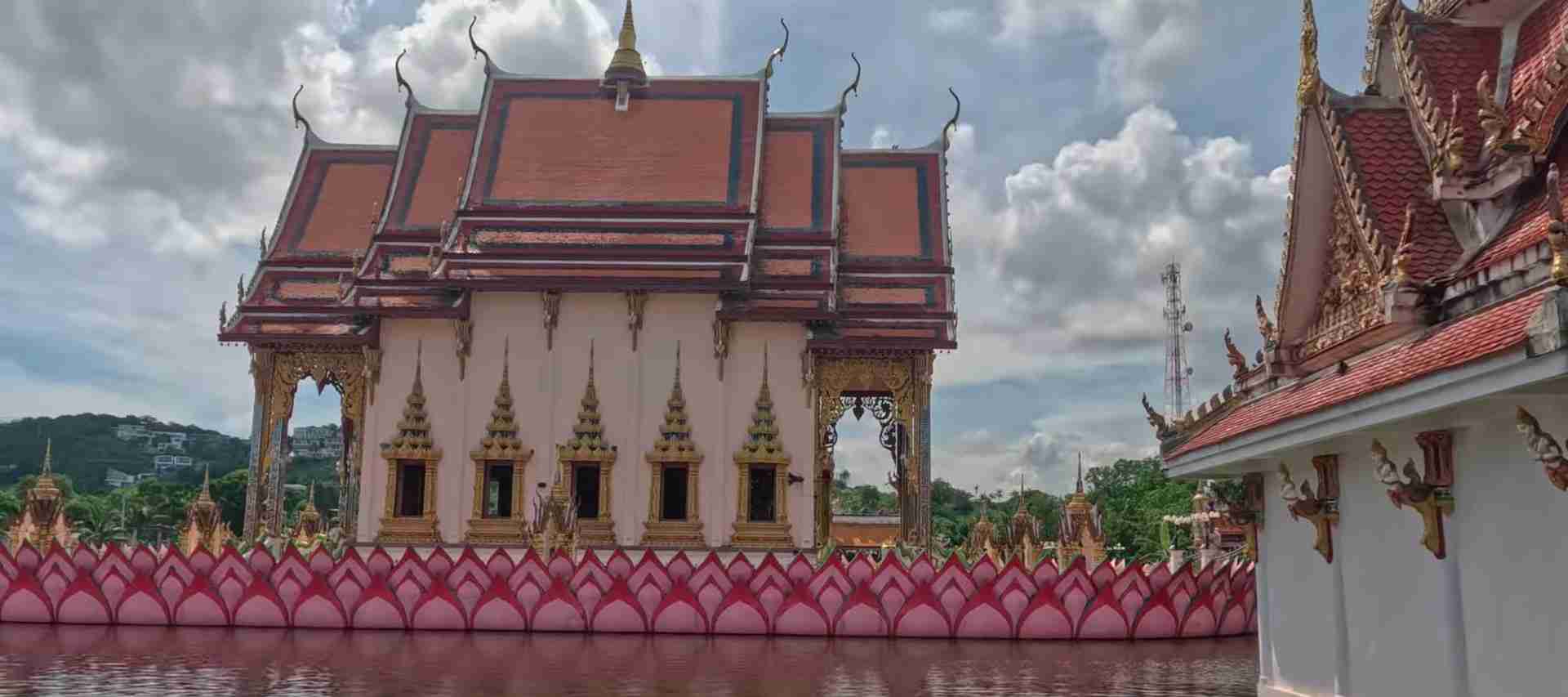
Wat Plai Laem located 3 kilometers from Big Buddha features an impressive 18-armed Guanyin (Goddess of Mercy) statue overlooking fish-filled lake, ornate Chinese-Thai temple architecture combining red and gold colors, and large laughing Buddha statue welcoming visitors. Free entry daily 7:00 AM-6:00 PM with donation boxes throughout complex, fish feeding opportunities purchasing bread for ฿20 ($0.60), and elaborate photo opportunities against temple backdrop. Combined visits to both temples typically take 2-3 hours making popular half-day itinerary accessible by scooter or ฿600-800 ($18-24) round-trip taxi from Chaweng or Lamai.
Na Muang Waterfalls and Jungle Interior 2026
Na Muang Waterfall 1 cascades 18 meters into natural swimming pool surrounded by jungle, accessible via 10-minute walk from car park and featuring calm pools safe for swimming year-round except monsoon flood periods. Entrance remains free with small parking fee ฿20 ($0.60) for scooters. Na Muang Waterfall 2 reaches 80 meters height requiring 30-minute steep jungle hike from Waterfall 1 or jeep transport ฿200-300 ($6-9) for those avoiding difficult trek. Both waterfalls flow strongest May-November following rainy season, while January-March dry season reduces cascades to moderate flows though swimming pools maintain adequate depth.
Nearby elephant sanctuaries including Samui Elephant Sanctuary offer ethical elephant encounters focusing on observation, feeding, and bathing rather than riding. Half-day programs cost ฿2,200-2,800 ($66-84) per person including hotel transfers, educational presentation about Asian elephant conservation, fruit feeding, mudding, and river bathing with rescued elephants. Full-day packages (฿3,500-4,500 / $105-135) add extended forest walking time and lunch, operating daily with 8:00 AM and 1:00 PM departure options.
Grandmother and Grandfather Rocks (Hin Ta Hin Yai) 2026
Natural rock formations along southern Lamai coast famously resemble male and female genitalia, attracting tourists for humorous photographs and local legend about elderly couple transformed to stone. Free access from beach with paved walkway and observation platform, surrounded by souvenir vendors selling sarongs, postcards, and handicrafts at standard tourist market pricing. Best visited during morning 8:00 AM-11:00 AM before midday heat and peak tourist buses, combining with Lamai Beach swimming and nearby Secret Buddha Garden visits.
Secret Buddha Garden (Magic Garden) occupies jungle hillside above Na Muang area featuring dozens of statues depicting Buddhist and Hindu deities, animals, and mythological scenes created by fruit farmer Nim Thongsuk starting 1976. Entry fee ฿80 ($2.40) per person with proceeds supporting statue maintenance, accessed via steep 4-kilometer climb from main ring road best navigated by 4WD vehicle or scooter with experienced riders. Organized tours from Chaweng or Lamai cost ฿800-1,200 ($24-36) per person including transport, guide, and waterfall visits.
Beach Guide Koh Samui 2026: Where to Swim and Relax
Koh Samui’s beaches provide distinct personalities from party-central Chaweng to secluded Taling Ngam, with northeastern and eastern coasts offering calm, shallow waters ideal for swimming December-March while northwestern beaches deliver spectacular sunsets and protection from northeast monsoon swells. Beach choice impacts accommodation costs, dining options, nightlife access, and daily activity possibilities making location selection crucial to overall island experience.
Chaweng Beach: Main Tourist Hub 2026
Chaweng stretches 7 kilometers along northeastern Samui forming the island’s longest, busiest, and most developed beach zone with white sand, shallow turquoise waters, maximum accommodation density, and comprehensive dining-shopping-nightlife infrastructure. The beach divides into North Chaweng offering quieter family-oriented atmosphere, Central Chaweng containing concentrated nightlife and tourist facilities, and Chaweng Noi providing slight isolation from main action while maintaining easy access. Swimming conditions excel December-March with calm seas and minimal seaweed, while September-November brings occasional rough water advisories and beach litter from storm activity.
Beach clubs and restaurants line the shoreline providing sunbeds and umbrellas typically free with minimum food/beverage purchase ฿200-400 ($6-12), or rental fees ฿100-200 ($3-6) for non-dining beach access. Water sports including jet skis (฿1,000-1,500 / $30-45 for 15 minutes), parasailing (฿1,200-1,800 / $36-54), and banana boat rides (฿800-1,200 / $24-36) operate from various beach sections, with persistent but non-aggressive vendor approaches common throughout day.
Accommodation costs peak in Chaweng with beachfront properties charging ฿3,000-8,000+ ($90-240+) nightly for mid-range hotels and ฿2,000-4,000 ($60-120) for properties 100-300 meters inland. Budget options concentrate in central Chaweng sois (side streets) offering ฿600-1,500 ($18-45) for basic rooms within 5-10 minute walk to beach. Nightlife concentration centers around Soi Green Mango and Beach Road with bars, clubs, and live music venues operating until 2:00 AM, creating noise concerns for some accommodation areas.
Lamai Beach: Chaweng Alternative 2026
Lamai Beach spans 4 kilometers as Samui’s second-most developed area offering similar facilities to Chaweng with 30% fewer tourists, slightly lower prices, and more laid-back atmosphere attracting couples and families avoiding Chaweng’s party intensity. The beach features golden sand coarser than Chaweng’s white powder, shallow swimming areas at northern sections, and rocky southern portions near Grandmother Grandfather Rocks limiting swimming but providing interesting snorkeling. Water clarity and swimming conditions peak December-March with monsoon season September-November bringing periodic rough seas and beach erosion.
Accommodation ranges ฿500-1,200 ($15-36) for budget guesthouses inland, ฿1,500-3,500 ($45-105) for mid-range beachfront hotels, and ฿4,000-10,000+ ($120-300+) for luxury resorts, representing 20-30% savings versus equivalent Chaweng properties. Dining options span street food markets (Lamai Night Market Friday-Sunday), casual Thai-Western restaurants (฿120-350 / $3.60-10.50 per dish), and beachfront establishments (฿250-600 / $7.50-18). Nightlife exists though concentrated in smaller zone than Chaweng with handful of bars, live music venues, and beach clubs providing evening entertainment without overwhelming noise.
Lamai’s commercial infrastructure provides 7-Eleven convenience stores every 500 meters, pharmacies, currency exchange booths, tour agencies, and Central Festival shopping mall access via 15-minute scooter ride, balancing convenience with less congested atmosphere than Chaweng central areas. The beach positioning on southeastern coast results in slightly rougher water conditions during northeast monsoon December-March compared to directly eastern-facing Chaweng, though differences remain minor and both beaches offer excellent swimming this period.
Bophut and Fisherman’s Village 2026
Bophut Beach stretches 3 kilometers along northern coast featuring powdery white sand, calm shallow waters protected from northeast swells, and Fisherman’s Village — a restored wooden shophouse district containing boutique hotels, upscale restaurants, artisan shops, and Friday night walking street market. The beach provides quieter alternative to Chaweng/Lamai while maintaining convenient access to Big Buddha Temple (3 kilometers), airport (4 kilometers), and island circumnavigation via ring road.
Fisherman’s Village Walking Street operates Fridays 5:00 PM-11:00 PM featuring 100+ vendors selling handicrafts, clothing, souvenirs alongside Thai street food stalls (฿80-200 / $2.40-6 per dish), live traditional music performances, and bustling atmospheric evening activity attracting both tourists and local residents. Non-Friday evenings offer quieter beach dining at restaurants including Coco Tam’s, The Hut, and Karma Lounge serving Thai and international cuisine ฿300-800 ($9-24) per person with beachfront tables.
Accommodation emphasizes boutique hotels and restored Thai houses converted to guesthouses charging ฿2,500-6,000 ($75-180) nightly for rooms blending traditional architecture with modern amenities, swimming pools, and personalized service. Budget options remain limited in Fisherman’s Village proper though available 1-2 kilometers inland at ฿800-1,800 ($24-54), while luxury resorts along wider Bophut Beach sections command ฿8,000-25,000+ ($240-750+) for beachfront pool villas and five-star facilities.
Maenam, Choeng Mon, and Quieter Beaches 2026
Maenam Beach extends 5 kilometers along northern coast west of Bophut offering undeveloped stretches, local village atmosphere, and budget-friendly accommodation ฿500-2,500 ($15-75) appealing to long-term travelers and those avoiding tourist density. The beach features golden sand, palm tree shade, shallow swimming perfect for families, and minimal water sports or beach club development creating peaceful environment. Dining focuses on simple Thai restaurants and beachfront seafood establishments charging ฿100-300 ($3-9) per dish with exceptional sunset views across to Koh Phangan.
Choeng Mon occupies northeastern peninsula providing small white-sand beach, luxury resort concentration including Melati and Sala Samui, and family-friendly shallow bay protected from waves and currents. The area delivers tranquil atmosphere while positioning 10-15 minutes from Chaweng and Big Buddha Temple, making convenient base for those wanting proximity to action without residing within it. Accommodation emphasizes mid-range to luxury (฿3,000-15,000+ / $90-450+) with limited budget options.
Western coast beaches including Lipa Noi and Taling Ngam provide isolation, spectacular sunsets over Gulf of Thailand and Angthong Marine Park islands, and protection from December-March northeast monsoon creating calmer swimming when eastern beaches occasionally face moderate waves. These beaches lack commercial development beyond scattered resorts and villa compounds, requiring scooter or taxi transport (฿600-1,000 / $18-30 from Chaweng or Lamai) for restaurant and nightlife access. Accommodation consists primarily of upscale resorts and private villas ฿6,000-40,000+ ($180-1,200+) targeting guests prioritizing seclusion over convenience.
Day Trips and Island Excursions from Koh Samui 2026
Koh Samui’s central Gulf of Thailand position enables day trip access to Angthong Marine National Park’s 42-island archipelago, Koh Phangan’s jungle waterfalls and snorkeling bays, and Koh Tao’s world-class dive sites, with organized tours costing ฿1,200-3,500 ($36-105) per person including ferry transport, lunch, equipment, and guide services. Independent ferry travel to neighboring islands offers budget alternative for experienced travelers comfortable navigating without tour structure.
Angthong Marine National Park Day Tours 2026
Angthong Marine National Park comprises 42 limestone islands covering 102 square kilometers northwest of Koh Samui, featuring dramatic vertical cliffs, hidden lagoons, pristine beaches, caves, and viewpoints that inspired Alex Garland’s novel “The Beach” filmed on Koh Phi Phi. Day tours depart Nathon or Maenam piers 8:00-8:30 AM returning 5:00-5:30 PM, operating via speedboat (1 hour each way, ฿2,200-2,800 / $66-84) or traditional longtail boats (1.5 hours, ฿1,800-2,200 / $54-66).
Tours include Emerald Lagoon (saltwater lake accessed via 500-meter uphill hike), Mae Koh viewpoint (challenging 430-meter climb to panoramic overlook), snorkeling at Wua Ta Lap Island coral gardens, kayaking through limestone formations, beach swimming time, and Thai lunch buffet served aboard boat or island beach. National park entrance fee ฿300 ($9) adults, ฿150 ($4.50) children under 14 paid separately from tour price, with tours operating daily except during September-November monsoon season when rough seas frequently cancel departures.
Speedboat tours accommodate 20-35 passengers providing faster transport and more islands visited but rougher ride affecting motion-sensitive travelers, while larger traditional boats carry 40-60 passengers with smoother crossing, more onboard space, and slightly fewer activity stops. Tour operators including Lomprayah, Blue Stars, and local agencies based Chaweng and Lamai offer similar itineraries with pricing differences reflecting boat size, group capacity, and included amenities.
Koh Phangan and Koh Tao Excursions 2026
Koh Phangan lies 12 kilometers north of Koh Samui accessible via frequent ferry services (30-40 minutes, ฿350-550 / $10.50-16.50 one-way) departing Maenam and Big Buddha piers 8-10 times daily. Day trips explore Phangan’s less-developed beaches, jungle waterfalls including Paradise Falls and Phaeng Waterfall, viewpoint panoramas, and quieter snorkeling sites avoiding Full Moon Party areas. Organized day tours cost ฿1,800-2,500 ($54-75) including round-trip ferry, island transfers, waterfall visits, snorkeling equipment, and lunch, while independent travelers take morning ferry then rent scooters (฿200-300 / $6-9 daily) for self-guided exploration returning evening ferry.
Koh Tao located 60 kilometers north specializes in scuba diving and snorkeling with vibrant coral reefs, numerous dive sites suitable for beginners through advanced divers, and budget-friendly PADI certification courses attracting aspiring divers worldwide. Speedboat day trips from Samui (฿2,500-3,500 / $75-105) combine snorkeling at multiple sites including Japanese Gardens, Mango Bay, and Shark Bay, with beach time and lunch, requiring 2.5-3 hours total travel time round-trip. Certified divers arrange fun dives through Samui operators conducting two-tank diving at Koh Tao’s Chumphon Pinnacle or Southwest Pinnacle for ฿3,500-4,500 ($105-135) including equipment, guide, and transfers.
Nightlife and Beach Clubs in Koh Samui 2026
Koh Samui’s nightlife concentrates heavily in Chaweng with secondary scenes in Lamai and Fisherman’s Village, ranging from quiet beachfront cocktail bars to all-night dance clubs, fire dancing beach shows, and cabaret performances. Entertainment costs vary dramatically from ฿80-130 ($2.40-3.90) domestic beers at local bars to ฿300-500+ ($9-15+) cover charges and ฿200-400 ($6-12) cocktails at exclusive beach clubs and nightclubs.
Chaweng Beach Nightlife Zone 2026
Chaweng’s nightlife epicenter clusters around Soi Green Mango, Soi Solo, and Beach Road with interconnected bars, nightclubs, and live music venues operating 6:00 PM-2:00 AM (some establishments until 4:00 AM unofficially). Cover charges range ฿200-500 ($6-15) at major clubs including Green Mango Club, Solo Bar and Bistro, and Sweet Soul Cafe, typically including one drink or offered free before 11:00 PM. Domestic beer costs ฿80-120 ($2.40-3.60), cocktails ฿150-300 ($4.50-9), and spirits ฿200-400+ ($6-12+) for premium brands.
Beach clubs along Chaweng Beach provide sunset viewing, pool parties, DJ events, and all-day beach lounging transitioning to evening entertainment. Ark Bar Beach Club hosts daily pool parties and fire shows with free entry, minimum beverage purchase ฿100-200 ($3-6) requirements, and beachfront beds available for food/drink orders. Coco Tams offers regular beach parties with international DJs, fire dancers performing nightly around 10:00 PM, and beach dining throughout day and evening at typical Chaweng tourist pricing ฿250-600 ($7.50-18) for meals.
Lady drink systems operate in some Chaweng bars where customers purchase drinks for hostesses (฿150-250 / $4.50-7.50 per drink) enabling conversation and company, with clear pricing displayed and no obligation beyond voluntary participation. Gentleman’s clubs and adult entertainment venues cluster in specific Chaweng sois with transparent pricing and professional operations, though these represent small fraction of overall nightlife scene dominated by standard bars, clubs, and restaurants.
Lamai and Alternative Nightlife Options 2026
Lamai Beach nightlife provides lower-key atmosphere than Chaweng with beachfront bars, live music venues, and handful of dance clubs operating along main beach road. Shamrock Irish Pub, The Owl Bar, and Bauhaus deliver live bands, sports viewing, and relaxed drinking environments without cover charges and beer prices ฿80-120 ($2.40-3.60). RCA Disco and Nicky’s Handlebar Rock Bar serve clubbing preferences with ฿200-300 ($6-9) entry fees including drinks on weekend nights.
Fisherman’s Village Bophut offers sophisticated evening atmosphere with cocktail bars, jazz lounges, and upscale beachfront restaurants replacing high-energy club scene. Coco Tam’s provides beach dining transitioning to late-night cocktail bar (drinks ฿200-400 / $6-12), Karma Sutra Lounge features hookah, cocktails, and chill atmosphere, and The Hut delivers live acoustic music most evenings. This zone attracts couples and mature travelers seeking quality drinks and conversation over loud music and dancing.
Bangkok Cabaret Show operates in Lamai presenting transvestite cabaret performances 9:00 PM nightly (฿600 / $18 admission), while Paris Follies Cabaret in Chaweng offers similar entertainment 8:00 PM shows (฿800 / $24). These professional productions feature elaborate costumes, lip-sync performances to international hits, and photo opportunities with performers post-show.
Sample Daily Budgets for Koh Samui 2026
Daily budget planning for Koh Samui requires accounting for accommodation, meals, transportation, activities, and entertainment with costs varying dramatically based on choices within each category. The following budgets represent sustainable daily spending patterns for different travel styles, excluding initial ferry or flight costs to reach island and any expensive organized tours or diving courses.
Budget Traveler Daily Costs Koh Samui 2026
Budget-conscious travelers staying hostel dormitories, eating primarily street food and local markets, using songthaews and scooters for transport, and focusing on free or low-cost activities manage ฿800-1,200 ($24-36) daily expenses. Accommodation ฿400-700 ($12-21) dormitory bed or budget guesthouse room provides basis, food costs ฿300-500 ($9-15) covering breakfast ฿50-80 street food or market stall, lunch ฿80-120 simple Thai restaurant or market, dinner ฿100-150 local restaurant with occasional fruit smoothie ฿40-80, totaling ฿270-430 daily without accounting snacks and beverages.
Transportation adds ฿100-300 ($3-9) daily combining songthaew rides ฿50-100 per trip for 1-2 journeys or scooter rental ฿200-300 enabling unlimited mobility. Activities budget ฿100-300 ($3-9) covers temple donations, waterfall parking fees, beach equipment rental, with major tours and excursions planned sparingly. Beer and entertainment allocation ฿100-200 ($3-6) permits 1-2 domestic beers at local bars or beach sunset viewing with minimal drinking. Total daily expenditure ฿800-1,200 ($24-36) per person excluding accommodation results in weekly costs ฿5,600-8,400 ($168-252) making Koh Samui accessible for backpackers and budget-conscious travelers willing to prioritize value over convenience and comfort.
Mid-Range Traveler Daily Costs Koh Samui 2026
Mid-range travelers seeking air-conditioned hotel rooms, mix of Thai and Western restaurants, occasional beachfront dining, scooter or taxi transport flexibility, and regular organized activities budget ฿2,500-5,000 ($75-150) daily. Accommodation ฿1,500-3,500 ($45-105) covers mid-range hotel with pool, breakfast sometimes included, and comfortable facilities within walking distance or short scooter ride from beach and dining options.
Food expenses ฿600-1,200 ($18-36) daily enable breakfast ฿150-250 at hotel or cafe, lunch ฿200-400 at casual restaurant, dinner ฿300-600 choosing between Thai restaurants inland or beachfront establishments, plus coffee ฿70-120 and snacks ฿100-200. This budget allows mixing street food value meals with air-conditioned restaurant comfort and occasional Western food cravings. Transportation ฿200-500 ($6-15) combines scooter rental ฿200-300 most days or taxi rides ฿300-500 for evening outings avoiding scooter night driving. Activities ฿400-1,000 ($12-30) funds waterfall visits, temple tours, beach equipment rental, spa treatments, or accumulated costs toward major day trips and tours. Entertainment and beverages ฿300-800 ($9-24) covers cocktails at beach bars, dinner wine, or club cover charges without excessive drinking expenses.
Total mid-range daily budget ฿2,500-5,000 ($75-150) per person translates to weekly costs ฿17,500-35,000 ($525-1,050) delivering comfortable island experience with good accommodation, varied dining, activity participation, and occasional splurges without financial stress. This range represents typical vacation spending for international visitors seeking quality without luxury pricing.
Luxury Traveler Daily Costs Koh Samui 2026
Luxury travelers prioritizing resort accommodation, fine dining, private transport, comprehensive spa treatments, and premium activities budget ฿6,000-12,000+ ($180-360+) daily with no upper limit for ultra-luxury villa experiences. Accommodation ฿6,000-15,000+ ($180-450+) secures beachfront resort rooms, private pool villas, or luxury hotel suites with breakfast buffets, spa access, and premium facilities, scaling higher for standalone villa estates with dedicated staff.
Dining expenditure ฿1,500-4,000+ ($45-120+) daily enables upscale restaurant meals throughout day including breakfast ฿400-800 at quality cafes or hotel dining, lunch ฿600-1,200 at beachfront establishments, dinner ฿1,200-2,500+ at fine dining venues, plus premium coffee ฿100-200 and wine or cocktails ฿400-1,000 spread across day. Transportation ฿500-2,000 ($15-60) covers private taxis, rental cars with driver, or luxury transfers without cost consideration limiting mobility choices. Activities ฿2,000-5,000+ ($60-150+) funds premium spa treatments (฿2,500-6,000 / $75-180 for 90-120 minute sessions), private yacht charters, exclusive tours, and comprehensive day trip packages with minimal group sizes and maximum service quality.
Entertainment and miscellaneous ฿1,000-3,000+ ($30-90+) accommodates premium beach clubs, fine wines, shopping, and spontaneous luxury purchases. Total luxury daily budget ฿6,000-12,000+ ($180-360+) per person provides unrestricted island access with highest service standards, best locations, and premium experiences throughout stay. Weekly costs ฿42,000-84,000+ ($1,260-2,520+) position Koh Samui as affordable luxury destination compared to equivalent Western beach resorts despite being Thailand’s more expensive island option.
Best Time to Visit Koh Samui 2026: Weather and Seasons
Koh Samui’s weather patterns differ from Phuket and Andaman coast destinations due to Gulf of Thailand positioning, with dry season December-March delivering optimal conditions while April-November brings varying rainfall levels affecting activities, accommodation rates, and crowd density. Understanding monthly weather characteristics and seasonal pricing enables strategic visit timing matching priorities whether maximizing sunshine, minimizing costs, or avoiding peak tourist congestion.
Peak Season: December-March 2026
December through March represents Koh Samui’s peak tourism period combining dry weather, minimal rainfall, calm seas, and temperatures 25-32°C (77-90°F) with gentle breezes. December-February sees lowest rainfall averaging 80-120mm monthly with 6-8 rainy days, while March transitions toward hotter conditions 28-34°C (82-93°F) with slightly increased precipitation 90-150mm but still considered dry season. Swimming conditions excel throughout this period with clear visibility, calm waters, and minimal seaweed accumulation affecting beaches.
Accommodation prices peak 40-60% above low season rates with advance booking essential December 15-January 10 Christmas-New Year period when properties often impose minimum stay requirements 4-7 nights and prices surge additional 20-30% above standard peak rates. February-March maintains high season pricing without extreme New Year premiums, offering best balance of excellent weather and slightly better availability. Budget travelers face ฿600-1,000 ($18-30) hostel dormitories versus ฿400-600 ($12-18) shoulder season, mid-range hotels ฿2,500-5,000 ($75-150) versus ฿1,500-3,500 ($45-105) shoulder season.
Tourist density reaches annual maximum creating crowded beaches, fully booked restaurants requiring reservations, and transportation challenges during December-January when taxis and songthaews operate at capacity. Tours and activities continue operating normal schedules with guaranteed departures and optimal weather conditions, though prices rarely increase significantly beyond accommodation sector premium.
Shoulder Season: April-June and September-November 2026
April-June and September-November deliver mixed weather conditions with intermittent rainfall, lower prices, fewer tourists, and variable swimming conditions depending on specific weeks. April-May brings hot temperatures 30-35°C (86-95°F) with increasing rainfall 100-180mm monthly, typically arriving as short afternoon thunderstorms rather than all-day precipitation. June sees monsoon transition increasing rainfall to 150-220mm with 12-16 rainy days, though sunny periods between storms still enable beach activities and sightseeing most days.
September-November constitutes official rainy season with highest precipitation 200-400mm monthly concentrated October-November, bringing multiple consecutive rainy days, rough seas periodically limiting swimming and canceling boat tours, and increased beach seaweed accumulation requiring daily cleaning. However, this period frequently delivers 3-4 consecutive sunny days followed by 2-3 rainy days rather than constant precipitation, making shorter visits potentially lucky with excellent weather or unlucky facing rain majority of stay.
Accommodation rates drop 30-50% during shoulder season with exceptional value ฿400-600 ($12-18) dormitories, ฿1,000-2,500 ($30-75) mid-range hotels previously costing ฿2,500-4,000 ($75-120) peak season, and luxury resorts offering promotions 40-60% off published rates. Tourist density decreases dramatically particularly September-October enabling empty beaches, easy restaurant seating, and relaxed island atmosphere. Tours and activities operate normal schedules April-June but reduce frequency September-November with Angthong Marine Park tours often canceled rough sea days and dive trip schedules adjusted for weather windows.
Low Season: July-August 2026
July-August represents intermediate period between shoulder seasons with moderate rainfall 180-240mm monthly, warm temperatures 27-32°C (81-90°F), and European summer holiday visitor influx partially offsetting monsoon season reduced Asian tourist numbers. Rainfall arrives predominantly afternoon-evening thunderstorms clearing overnight, with morning sunshine common enabling beach activities and sightseeing before typical 2:00 PM-6:00 PM rain windows.
Accommodation pricing sits between shoulder and peak levels as European school holidays drive demand maintaining rates 20-30% above pure low season September-November but 30-40% below December-March peak. Tourist numbers increase versus September-November shoulder period without approaching December-March density, creating balanced atmosphere with available beach space and restaurant seating but sufficient activity to support full operating schedules restaurants, tours, and nightlife venues.
Swimming conditions remain generally good with periodic rough sea advisories and occasional seaweed accumulation, while marine activities including snorkeling and diving operate normal schedules with slightly reduced visibility compared to peak season but adequate conditions for enjoyable experiences. July-August suits travelers accepting moderate rain risk for reduced costs and fewer crowds compared to peak season guarantee sunshine and maximum tourist density.
Practical Tips for Visiting Koh Samui 2026
Successful Koh Samui visits depend on understanding local customs, safety considerations, practical logistics, and cultural norms beyond basic sightseeing and accommodation planning. The following tips address common traveler concerns and provide specific actionable guidance for smooth island experiences.
Money and Banking in Koh Samui 2026
ATMs operate throughout Koh Samui in Chaweng, Lamai, Bophut, and Nathon with 24-hour availability, charging ฿220 ($6.60) withdrawal fees per transaction regardless of amount withdrawn making large single withdrawals more economical than frequent small transactions. Maximum withdrawal limits typically ฿20,000-30,000 ($600-900) per transaction varying by bank and card issuer. Currency exchange booths concentrated in Chaweng and Lamai offer slightly better rates than hotels or airport exchange with typical spreads 2-3% above interbank rates.
Credit cards accepted at hotels, larger restaurants, tour operators, and shopping malls but many local restaurants, street food vendors, songthaews, and small shops operate cash-only requiring adequate Thai baht reserves. Carrying ฿2,000-5,000 ($60-150) cash daily covers typical expenses with ATM access available when needed. Tipping remains optional and uncommon at local Thai restaurants but appreciated at tourist-oriented establishments with 10% service charges sometimes added to bills automatically, making additional tipping unnecessary unless exceptional service received.
Health and Safety Considerations 2026
Koh Samui’s five hospitals including Bangkok Hospital Samui provide international-standard medical care with English-speaking staff, though costs significantly exceed Western insurance deductibles making comprehensive travel insurance essential. Doctor consultations cost ฿800-2,000 ($24-60), basic emergency treatment ฿3,000-10,000 ($90-300), and serious medical issues requiring hospitalization ฿30,000-100,000+ ($900-3,000+) daily. Travel insurance covering minimum ฿2 million ($60,000) medical expenses recommended for all visitors.
Common health issues include sunburn requiring aggressive sunscreen application SPF 50+ reapplied every 2 hours, dehydration combated with 2-3 liters daily water intake in tropical heat, minor stomach upset from street food typically resolving within 24 hours, and motion sickness affecting susceptible individuals on boat tours and speedboats. Mosquito-borne illnesses including dengue fever occur year-round with peak risk rainy season, requiring mosquito repellent use containing 20-30% DEET especially dawn and dusk hours when mosquitos most active.
Scooter accidents represent highest tourist injury risk with serious incidents common among inexperienced riders, intoxicated drivers, and those unfamiliar with left-side driving and aggressive local traffic patterns. Wearing helmets reduces head injury severity though not eliminating risk, while avoiding night riding, rainy conditions, and alcohol before operating scooters significantly improves safety margins. Medical evacuation insurance covering ฿100,000-500,000 ($3,000-15,000) repatriation costs provides critical protection for serious accidents requiring Bangkok or international hospital transfer.
Cultural Etiquette and Temple Visiting 2026
Buddhist temples require modest dress with shoulders and knees covered, shoes removed before entering temple buildings, and respectful behavior avoiding loud conversations or inappropriate photography of monks and Buddha images. Women must not touch monks or hand objects directly to them, requiring male intermediaries or placing items on surface for monk collection. Photography generally permitted in temple grounds but restricted inside certain buildings, with signs indicating prohibited areas or security guards providing guidance.
Thai cultural norms emphasize politeness, smiling during interactions even when frustrated, and avoiding confrontational behavior or raised voices that cause loss of face for all parties. Service staff respond positively to friendly “wai” greetings (prayer-like hand gesture with slight bow) and “sawadee krap” (male) or “sawadee ka” (female) hello/goodbye phrases, though English widely spoken in tourist areas making Thai language knowledge helpful but not essential.
Beach behavior follows relaxed standards with bikinis and swimming attire appropriate on beaches and pool areas but cover-ups required when entering restaurants, shops, or walking along main roads away from immediate beach zones. Topless sunbathing remains illegal and culturally inappropriate, while nude bathing strictly prohibited. Public displays of affection between couples tolerated in tourist areas but excessive intimacy considered inappropriate and potentially offensive in local neighborhoods and temple areas.
Internet and Communication 2026
Tourist SIM cards available at Samui Airport and 7-Eleven stores throughout island provide 4G data coverage excellent in Chaweng, Lamai, Bophut, and along ring road with occasional weak signals in jungle interior and remote western beaches. Major carriers including AIS, TrueMove, and DTAC offer tourist packages ฿299-899 ($9-27) providing 15-30GB data, unlimited domestic calls, and 30-day validity. SIM cards require passport for registration under Thai telecommunications laws.
WiFi widely available at hotels, restaurants, cafes, and bars with quality varying from excellent fiber connections in upscale establishments to slow unstable signals at budget properties. Coworking spaces including Kohub and Beachub (Lamai) provide reliable high-speed internet ฿200-400 ($6-12) day passes for remote workers requiring consistent connectivity. Video calling and streaming function well on both mobile data and WiFi with minimal buffering issues in developed beach areas.
Koh Samui 3-Day Itinerary 2026: First-Time Visitor Guide
First-time visitors spending 3 days in Koh Samui experience temples, beaches, waterfalls, and local culture through this balanced itinerary combining major attractions, beach relaxation, and evening activities. Daily costs assume mid-range budget ฿2,500-4,000 ($75-120) per person including accommodation, meals, transport, and activities.
Day 1: Temples and Northern Beaches
Morning begins 8:00 AM with scooter rental (฿200-300 / $6-9 daily) or joining organized tour (฿1,200-1,800 / $36-54) visiting Big Buddha Temple and Wat Plai Laem before 10:00 AM heat intensifies. Spend 1-1.5 hours at Big Buddha climbing Naga staircase to platform, viewing 12-meter golden Buddha, and capturing photos before short 3-kilometer drive to Wat Plai Laem for 45 minutes exploring 18-armed Guanyin statue, feeding fish (฿20 / $0.60 for bread), and appreciating ornate temple architecture. Both temples offer free entry with donations encouraged.
Late morning 11:00 AM-12:00 PM head to Choeng Mon Beach (5 kilometers from temples) for swimming in calm bay waters and relaxed beach time at quiet family-friendly location. Lunch at beachfront restaurant ฿200-400 ($6-12) enjoying Thai classics with ocean views. Afternoon 1:00 PM-4:00 PM continue to Chaweng Beach exploring 7-kilometer coastline, shopping Central Festival mall, or spa treatment ฿800-1,500 ($24-45) for Thai massage and relaxation.
Evening begins Bophut Fisherman’s Village arriving 5:30 PM for Friday Walking Street Market (if Friday) or regular restaurant dining ฿300-600 ($9-18) at beachfront establishments. Sunset cocktails ฿150-300 ($4.50-9) at Coco Tam’s or similar beach bar, optional evening walk through village boutiques and art galleries. Return accommodation by scooter or taxi ฿300-500 ($9-15) from Bophut to Chaweng or Lamai bases. Daily costs: Scooter rental ฿200-300, fuel ฿50, temple donations ฿100, lunch ฿250, spa ฿1,000, dinner ฿400, drinks ฿300. Total ฿2,300 per person excluding accommodation.
Day 2: Waterfalls and Southern Exploration
Depart 8:30 AM driving south along ring road to Grandmother Grandfather Rocks (30 minutes from Chaweng, 15 minutes from Lamai) spending 30-45 minutes viewing famous formations, taking photos, and browsing souvenir stalls. Continue to Na Muang Waterfall 1 (20 minutes further) arriving 10:00 AM for jungle walk and swimming in natural pools beneath 18-meter cascade. Entrance free, parking ฿20 ($0.60). Pack water and snacks or purchase from vendors ฿40-80 ($1.20-2.40).
Adventurous travelers hike 30 minutes uphill to Na Muang Waterfall 2 (80 meters height) or arrange jeep transport ฿200-300 ($6-9), while others relax at lower waterfall swimming and photographing tropical scenery. Return to Lamai Beach for lunch 12:30 PM at local Thai restaurant ฿150-250 ($4.50-7.50) away from beachfront tourist pricing. Afternoon 2:00 PM-5:00 PM beach relaxation at Lamai, sunbed rental if desired ฿100-200 ($3-6), swimming, reading, or beach walking along 4-kilometer coastline.
Evening 6:00 PM explore Lamai night market (Friday-Sunday) or local restaurants ฿200-400 ($6-12) dinner, followed by sunset beachfront cocktails ฿120-250 ($3.60-7.50) at Shamrock Pub or beach clubs. Optional live music venues or quiet evening depending on energy levels. Daily costs: Fuel ฿100, parking ฿20, waterfall snacks ฿100, lunch ฿200, beach equipment ฿150, dinner ฿300, drinks ฿300. Total ฿1,170 per person excluding accommodation and scooter rental.
Day 3: Marine Activities or Relaxation
Choose between active day trip or relaxed beach finale. Active option: Angthong Marine National Park tour departing 8:00 AM (฿1,800-2,800 / $54-84) returning 5:00 PM including speedboat transport, Emerald Lagoon visit, viewpoint hike, snorkeling, kayaking, lunch, and national park entrance ฿300 ($9). Alternative active option: Koh Phangan day trip via morning ferry ฿350-550 ($10.50-16.50) one-way, renting scooter ฿200-300 ($6-9) exploring waterfalls and beaches, returning evening ferry.
Relaxation option: Morning yoga class ฿300-500 ($9-15) at beachfront studio followed by healthy breakfast ฿200-350 ($6-10.50) at wellness cafe. Mid-morning beach time at preferred beach zone, optional water sports jet ski ฿1,000-1,500 ($30-45) or parasailing ฿1,200-1,800 ($36-54). Long lunch ฿300-600 ($9-18) at quality beachfront restaurant, afternoon spa treatment 90-minute Thai massage and body scrub ฿1,500-2,500 ($45-75). Evening farewell dinner at fine dining restaurant ฿800-1,500 ($24-45) celebrating successful Koh Samui experience.
Daily costs vary significantly based on activity choice: Marine park tour ฿2,100 including entrance, meals separate ฿200, drinks ฿200. Total ฿2,500. Relaxation option: Yoga ฿400, breakfast ฿300, lunch ฿450, spa ฿2,000, dinner ฿1,200, beverages ฿300. Total ฿4,650 per person. Both options exclude accommodation.
Frequently Asked Questions About Koh Samui 2026
Do I need a visa to visit Koh Samui in 2026?
Visa requirements for Koh Samui follow Thailand’s national immigration policies, with most Western passport holders receiving 30-day visa exemption stamps on arrival for tourism purposes when entering by air, and 15-day exemptions when arriving by land borders. Citizens of 64 countries including USA, Canada, UK, Australia, EU nations, Japan, and Singapore qualify for visa exemption without advance application. 30-day exemptions may be extended once for additional 30 days at immigration offices in Koh Samui or mainland Thailand for ฿1,900 ($57) fee. Travelers planning stays exceeding 30 days should apply for 60-day tourist visas at Thai embassies before departure, or obtain special visa categories for longer visits. Requirements change periodically requiring verification with Thai embassy in home country before departure.
Is Koh Samui safe for solo female travelers in 2026?
Koh Samui ranks as generally safe for solo female travelers with lower violent crime rates than many Western destinations, though standard travel safety precautions remain essential. Women traveling alone successfully navigate island independently using scooters, staying various accommodation types, and participating in nightlife without significant harassment beyond occasional persistent vendor approaches easily declined politely. Recommended precautions include avoiding excessive alcohol consumption that impairs judgment, not accepting drinks from strangers due to drink-spiking incidents though rare, traveling in groups when visiting isolated beaches or jungle areas, using reputable registered taxis rather than unmarked vehicles, and trusting instincts when situations feel uncomfortable. Solo female travelers find numerous other women traveling independently creating easy opportunities for group activities, shared accommodation, and mutual support networks. Hotel and hostel staff generally helpful providing safety advice and assistance when needed.
What vaccinations do I need for Koh Samui 2026?
No vaccinations are legally required for Koh Samui visitors arriving from most countries except Yellow Fever vaccination certificates mandatory for travelers arriving from Yellow Fever endemic regions in Africa and South America. Recommended vaccinations include Hepatitis A (foodborne illness risk), Typhoid (contaminated food and water risk especially if eating street food extensively), Hepatitis B (longer stays or medical treatment risk), Japanese Encephalitis (rural exposure and extended rainy season stays), and Rabies pre-exposure vaccine (extended stays or animal exposure risk). Routine vaccinations including MMR (measles, mumps, rubella), DTP (diphtheria, tetanus, pertussis), and seasonal flu should be current. Malaria prophylaxis not recommended for Koh Samui as malaria risk negligible on island, unlike border regions and some mainland rural areas. Travelers should consult travel medicine specialists 4-6 weeks before departure for personalized advice based on itinerary, duration, activities, and medical history.
Can I drink tap water in Koh Samui 2026?
Tap water in Koh Samui should not be consumed for drinking purposes though adequate for teeth brushing and showering. Hotels, restaurants, and most businesses provide filtered or bottled water for drinking with bottled water widely available at 7-Eleven stores and supermarkets costing ฿10-20 ($0.30-0.60) for 1.5-liter bottles. Ice in tourist restaurants and hotels uses purified water considered safe, while ice from unknown sources at street vendors carries higher risk though actual illness incidence remains low. Refillable water bottles can be filled at hotels and guesthouses providing filtered water dispensers, reducing plastic waste and costs. Water purification tablets or filtered water bottles provide backup for adventurous travelers exploring remote areas or concerned about water safety. Avoiding tap water primarily precautionary as serious waterborne illness outbreaks rare, but maintaining caution prevents minor stomach upsets that disrupt travel plans.
How much Thai should I learn before visiting Koh Samui 2026?
English language proficiency among Koh Samui’s tourism industry workers makes Thai language knowledge helpful but not essential for successful island navigation. Tourist areas in Chaweng, Lamai, Bophut maintain high English comprehension with restaurant menus, hotel staff, tour operators, and shop owners communicating effectively in English. Learning basic Thai phrases including “hello” (sawadee krap/ka), “thank you” (khop khun krap/ka), “how much” (tao rai), and numbers 1-10 enhances interactions and receives appreciative responses from locals, though transactions proceed smoothly without Thai knowledge using pointing, calculator, and basic English.
Useful phrases include “spicy” (phet), “not spicy” (mai phet), “delicious” (aroi), “where is” (yoo tee nai), and “toilet” (hong nam) making restaurant ordering and basic communication easier. Thai language learning apps, phrasebooks, or flashcards help travelers prepare basics during pre-trip planning, though most visitors successfully manage without extensive language study. Local Thai communities away from tourist centers speak limited English making basic Thai phrases more valuable when exploring authentic island areas, markets in Nathon, or interacting with scooter rental shops and local restaurants frequented by residents rather than tourists.
What should I pack for Koh Samui in 2026?
Essential packing for Koh Samui emphasizes lightweight tropical clothing, sun protection, and practical items managing heat and humidity. Clothing needs include swimwear (multiple pieces allowing rotation), quick-dry shorts and lightweight pants, breathable t-shirts and tank tops, long sleeves and pants for temple visits and mosquito protection, light jacket or sweater for air-conditioned restaurants and ferries, and sturdy sandals plus closed-toe shoes for scooter riding and waterfall hiking. Temple visiting requires covering shoulders and knees making sarongs useful multipurpose items functioning as beach cover-ups, temple attire, and towel substitutes.
Sun protection essentials include SPF 50+ sunscreen (expensive in Thailand making advance purchase recommended), wide-brimmed hat, UV-blocking sunglasses, and lightweight long-sleeve swim shirts for extended water exposure. Health items comprise mosquito repellent containing 20-30% DEET, basic first-aid supplies including bandages and antibiotic ointment, anti-diarrheal medication, motion sickness tablets for boat trips, and prescription medications in original containers. Electronics require universal power adapters for Thailand’s Type A, B, C outlets (220V), waterproof phone cases for beach and water activities, and power banks for full-day excursions.
Practical items include dry bags for valuables during boat trips and waterfall visits, reusable water bottles reducing plastic waste, small daypack for tours and beach days, and photocopies of passport and important documents stored separately from originals. Most toiletries, medications, and clothing available in Koh Samui’s pharmacies and shops though specific brands and sizes may differ from home country preferences, making critical items worth packing while general supplies purchasable upon arrival if needed.
Can I work remotely from Koh Samui in 2026?
Koh Samui functions effectively as remote work destination with reliable high-speed internet, established coworking spaces, comfortable cafes, and accommodation options suitable for extended stays combining work productivity with tropical beach lifestyle. Fiber optic internet reaches most developed beach areas delivering 50-100+ Mbps speeds adequate for video conferencing, large file uploads, and standard office tasks. Hotel and villa WiFi quality varies significantly from excellent in upscale properties to problematic in budget accommodations, making accommodation reviews emphasizing internet reliability valuable for remote workers.
Coworking spaces including Kohub (Lamai) and Beachub (Lipa Noi) provide professional environments with dedicated desks, meeting rooms, reliable internet, air conditioning, and digital nomad communities charging ฿200-400 ($6-12) day passes or ฿3,000-6,000 ($90-180) monthly memberships. Cafes suitable for work sessions include Prego Italian Restaurant (Chaweng) with strong WiFi and comfortable seating, Karma Sutra Lounge (Bophut) offering relaxed atmosphere, and various coffee shops throughout Chaweng and Lamai supporting laptop work for 2-4 hours with coffee purchase expectation.
Visa considerations critical for legal remote work as standard tourist visas prohibit employment in Thailand including remote work for foreign employers, though enforcement against laptop workers in cafes essentially nonexistent. Long-term remote workers obtain proper visa categories including Education visas through language schools, Elite visas (฿600,000-2,000,000 / $18,000-60,000 for 5-20 year validity), or Smart Visas for qualified professionals. Digital nomads working illegally on tourist visas risk deportation and future entry bans if discovered, though risk remains minimal for those avoiding attention and operating discreetly. Time zone considerations favor European remote workers (5-6 hours ahead of UK/Europe) versus Americans (12-13 hours ahead of US East Coast) affecting meeting schedule feasibility.
What is the difference between Koh Samui and Phuket in 2026?
Koh Samui and Phuket represent Thailand’s two largest island destinations with distinct characteristics, advantages, and appeal to different traveler preferences. Phuket (543 square kilometers) significantly exceeds Koh Samui (228 square kilometers) in size, development density, tourist numbers, and activity diversity. Koh Samui maintains more concentrated beach zones with shorter distances between areas (10-20 minutes Chaweng to Lamai versus 45-60 minutes Patong to Kata in Phuket), calmer atmosphere with less aggressive touting, and reputation as slightly more upscale destination despite both islands spanning budget to luxury categories.
Cost comparison shows Koh Samui averaging 20-30% higher prices than Phuket equivalents in accommodation and tours, though food and entertainment costs remain similar. Koh Samui lacks direct international flights requiring Bangkok connection or Surat Thani ferry versus Phuket’s extensive international airport service. Weather patterns differ significantly with Koh Samui experiencing best conditions December-March while suffering May-October rainfall, opposite Phuket’s November-April dry season and May-October monsoon. Beach quality and water clarity generally favor Koh Samui over Phuket’s more developed west coast beaches, though Phuket offers greater variety including quiet east coast beaches and nearby islands like Phi Phi and Similan.
Activity and nightlife intensity dramatically exceeds in Phuket with larger club scenes, more extensive red light districts, bigger shopping centers, and greater tour operator competition. Koh Samui delivers more relaxed island atmosphere while maintaining adequate facilities for most travelers, appealing to couples, families, and those seeking tropical beaches without Phuket’s overwhelming development. Both islands serve different purposes with Phuket better suited for party-focused travelers, extensive island hopping, and those preferring maximum activity options, while Koh Samui attracts those valuing calmer atmosphere, smaller scale, and traditional Thai island character despite tourism development.
Are there ATMs and banks in Koh Samui 2026?
Koh Samui maintains comprehensive banking infrastructure with major Thai banks including Bangkok Bank, Kasikornbank, Siam Commercial Bank, and Krungsri Bank operating branches and ATMs throughout Chaweng, Lamai, Bophut, and Nathon. ATMs concentrate heavily in Central Festival mall (Chaweng), along Chaweng Beach Road, Lamai Beach Road, and Fisherman’s Village with 24-hour availability. Standard ATM withdrawal fees cost ฿220 ($6.60) per transaction regardless of amount withdrawn, incentivizing maximum single withdrawals rather than frequent small amounts. Withdrawal limits typically range ฿20,000-30,000 ($600-900) per transaction varying by bank and card issuer, with multiple transactions possible same day if needed subject to home bank daily limits.
Bank branches provide currency exchange, money transfers, and account services during business hours Monday-Friday 9:30 AM-3:30 PM with some locations offering extended hours and weekend service. Currency exchange booths operated by Super Rich, Siam Exchange, and bank branches deliver better exchange rates than hotels or airport exchange with typical margins 2-3% above interbank rates. Exchange rates displayed prominently with buying and selling rates showing current conversion, making comparison shopping easy though differences between booths minimal typically ฿0.10-0.30 per dollar.
Credit cards widely accepted at hotels, established restaurants, tour operators, larger shops, and shopping malls with Visa and Mastercard more universally accepted than American Express or Discover. Many local restaurants, street food vendors, small shops, taxis, and massage parlors operate cash-only requiring adequate baht reserves. Contactless payment and QR code payment systems gaining adoption though not yet universal, with PromptPay QR codes becoming common at markets and food stalls enabling bank transfer payments for those with Thai bank accounts.
What are the best areas to stay in Koh Samui for first-time visitors 2026?
First-time Koh Samui visitors benefit from Chaweng or Lamai Beach locations providing maximum convenience, dining variety, activity access, and transportation options despite higher prices compared to quieter areas. Chaweng Beach serves as optimal base for those prioritizing beach proximity, extensive restaurant choices within walking distance, shopping access including Central Festival mall, and active nightlife scene. The area’s 7-kilometer beach length provides quiet northern sections and lively central zones enabling location choice within Chaweng matching preferred activity levels. Accommodation costs peak in beachfront Chaweng though budget options exist in inland sois 100-300 meters from beach delivering significant savings while maintaining 5-10 minute walking access.
Lamai Beach functions as excellent Chaweng alternative offering similar facility levels with 30% fewer tourists, slightly lower prices, and more relaxed atmosphere appealing to couples, families, and travelers avoiding party intensity. Lamai positioning on southeastern coast provides easy access to Grandmother Grandfather Rocks, Na Muang Waterfalls, and southern island exploration while maintaining adequate restaurant, shopping, and nightlife options for self-sufficient stays. Both Chaweng and Lamai enable efficient island exploration via scooter rentals positioned centrally on eastern coast with 15-30 minute drives reaching most attractions.
Bophut Fisherman’s Village serves first-timers preferring boutique hotel character, upscale dining, and cultural atmosphere over standard beach resort experience, though positioning farther from main beaches and activities requires more intentional planning and transport arrangements. Budget-focused first-time visitors consider Maenam or inland Chaweng areas where accommodation costs drop significantly while maintaining reasonable beach access via short scooter rides or songthaew trips. Avoid isolated west coast or southern beaches for initial visits as limited facilities and distant positioning from major attractions require extensive daily transport managing logistics better suited to experienced return visitors comfortable with Samui geography.