
Koh Phi Phi Travel Guide: Beyond the Day Trip
Most travelers experience Koh Phi Phi as a whirlwind day trip from Phuket or Krabi—a rushed circuit of Maya Bay, Pileh Lagoon, and Viking Cave before returning to mainland accommodations by sunset. This approach captures Phi Phi’s postcard beauty but misses the island’s deeper character entirely: the quiet morning hours when beaches empty and limestone cliffs glow golden, the hidden coves accessible only to overnight guests with local knowledge, the transition from tourist chaos to intimate island village as day-trippers depart, and the rhythm of island life that reveals itself only through extended stays.
Key Takeaways: Extended Phi Phi Island Stays
- Geography Determines Experience: Koh Phi Phi Don divides into distinct zones—Tonsai Village’s backpacker party scene, Loh Dalum Bay’s beach clubs and nightlife, Long Beach’s quieter family atmosphere, and remote Laem Tong’s luxury isolation—with accommodation location fundamentally shaping daily island life
- No Vehicles Transform Logistics: The complete absence of cars, motorcycles, and paved roads means all transportation occurs on foot through narrow village paths or by longtail boat between beaches, creating unique movement patterns where 15-minute walks replace typical taxi rides
- Maya Bay Access Requires Strategy: The world-famous beach maintains strict daily visitor limits and annual conservation closures (typically August-September), with early morning boat tours from Phi Phi Don providing superior access compared to crowded day-trip boats from Phuket arriving mid-morning
- Diving Eclipses Snorkeling Quality: While casual snorkeling around Phi Phi Don remains modest, the surrounding dive sites including King Cruiser Wreck, Shark Point, and Hin Daeng rank among Thailand’s finest, making multi-day dive packages the primary draw for serious underwater enthusiasts
- Monsoon Season Changes Everything: The May-October southwest monsoon transforms Phi Phi from pristine paradise to challenging destination with rough seas limiting boat travel, reduced visibility for diving, frequent rain showers, and many businesses closing entirely during August-September low season
- Extended Stays Enable Hidden Discoveries: Three-plus day visits allow accessing lesser-known beaches like Nui Beach, Monkey Beach, and Bamboo Island during optimal morning hours before crowds, hiking to panoramic viewpoints at dawn, and establishing relationships with dive shops and local guides unlocking off-trail experiences
People Also Ask About Koh Phi Phi Extended Stays
How Many Days Should You Spend on Koh Phi Phi?
Koh Phi Phi rewards three to five-day visits for experiencing the island beyond surface-level tourism, with this duration allowing comprehensive beach exploration, multiple dive trips, both sunrise and sunset photography sessions, nightlife sampling across different venues, and crucial rest days balancing active adventures. Three-day stays provide minimum adequate time: arrival day for orientation and village exploration, one full day for boat tours visiting Maya Bay and surrounding islands, and departure day allowing morning beach time or viewpoint hiking before ferry departures. Five-day visits enable deeper immersion with dedicated diving days, extended stays at remote beaches like Laem Tong, multiple viewpoint hikes capturing different lighting conditions, and strategic timing around weather patterns or crowd levels. Seven-day stays suit serious divers completing advanced certifications, photographers pursuing specific compositions, and travelers genuinely disconnecting from mainland schedules to adopt island rhythms. Weekend warriors attempting one-night stays (arriving afternoon, departing next morning) miss Phi Phi’s best features—the magical early morning hours, sunset viewpoint experiences, and transition from day-trip chaos to peaceful evening village atmosphere. The optimal strategy involves arriving on afternoon ferries maximizing first-day time on the island, staying three-five nights based on budget and schedule flexibility, then departing on morning ferries preserving final morning hours for sunrise activities before boats depart.
Where Should First-Time Visitors Stay on Phi Phi Don?
First-time visitors benefit most from staying near Tonsai Village despite its crowds and noise, the central location providing maximum convenience for ferry arrivals, restaurant diversity, tour booking offices, nightlife access, and easy walking to both Tonsai Bay and Loh Dalum Beach. Tonsai Village accommodations range from basic backpacker hostels with dormitory beds and shared bathrooms to mid-range hotels offering air-conditioning, pools, and some soundproofing from surrounding bar noise. The village’s compact geography means nothing requires more than ten-minute walks, with Loh Dalum Beach’s famous fire shows just five minutes from most hotels and Tonsai Pier’s ferry arrivals eliminating boat transfers between accommodation and departure points. The trade-offs involve constant activity, limited beach quality directly in the village (better beaches require short walks or boat rides), and nighttime noise from bars operating until 2-3 AM making early sleep challenging for light sleepers. Properties like Phi Phi Banyan Villa and PP Princess Resort strike balance offering resort amenities while maintaining village proximity, their pool areas and gardens providing retreat spaces while keeping restaurants and tour services accessible. Budget travelers accepting noise for savings find excellent value in village guesthouses, while light sleepers or families should upgrade to hotels with superior soundproofing or consider Long Beach properties offering quieter atmospheres while maintaining reasonable village access via fifteen-minute walks or five-minute boat rides.
Can You Swim at Maya Bay Currently?
Swimming remains prohibited at Maya Bay following its reopening after extended environmental restoration, with visitors allowed only knee-deep wading in designated areas when rangers determine conditions permit. The swimming ban protects recovering coral systems and ensures sand dune stability, part of comprehensive conservation measures implemented after years of mass tourism caused severe environmental damage including coral bleaching, marine life disruption, and beach erosion. Boats cannot enter Maya Bay directly, instead docking at nearby Loh Samah Bay with visitors accessing the beach via short boardwalk, typically spending thirty-to-sixty minutes on the sand before departing for other tour stops. The limited swimming access disappoints some visitors expecting full beach experiences, though the spectacular scenery—towering limestone cliffs, brilliant white sand, and clear turquoise water—remains stunning for photography and contemplation despite aquatic restrictions. Tour operators typically compensate for Maya Bay swimming limitations by including snorkeling stops at Pileh Lagoon or surrounding islands where marine interactions remain unrestricted, creating full-day experiences balancing Maya Bay’s photographic appeal with actual swimming and snorkeling opportunities elsewhere. Visitors prioritizing swimming over photography should adjust expectations accordingly, recognizing Maya Bay functions primarily as visual spectacle and conservation success story rather than traditional interactive beach destination.
Is Koh Phi Phi Too Touristy or Still Worth Visiting?
Koh Phi Phi remains genuinely beautiful and worth visiting despite heavy tourism, though managing expectations and employing strategic timing separates rewarding experiences from disappointing encounters with crowds and commercialization. The “too touristy” concern proves legitimate regarding certain contexts—Tonsai Village during midday resembles a Southeast Asian Cancun with wall-to-wall tour agencies, tattoo parlors, and souvenir shops, while Loh Dalum Bay’s fire shows and party scene attract thousands nightly during peak season creating spring break atmospheres disconnected from authentic Thai culture. However, the natural environment that made Phi Phi famous persists largely intact: the limestone karst formations rising dramatically from turquoise water, Maya Bay’s recovered ecosystem showcasing successful conservation, excellent dive sites supporting healthy marine communities, and hidden beaches accessible to travelers willing to wake early or hire private boats. The key to rewarding Phi Phi visits involves timing strategies—arriving at beaches before 9 AM or after 3 PM, hiking viewpoints at sunrise when trails empty, diving during weekdays avoiding weekend crowds, and visiting during shoulder seasons (April-May, October-November) when tourist numbers decrease thirty-to-fifty percent while weather remains acceptable. Extended stays prove essential for moving beyond tourism’s surface layer: day-trippers experience only crowds and commercialization, while multi-night guests discover quiet morning rhythms, develop rapport with dive instructors and restaurant owners, and access local knowledge revealing hidden spots and optimal timing. The honest assessment remains that Phi Phi tourism has fundamentally altered island character, particularly around Tonsai Village, but the underlying natural beauty and excellent diving justify visits for travelers approaching the destination with realistic expectations and willingness to work around rather than fight the tourist infrastructure.
Extended multi-day tours – 5+ days
Featured Krabi Multi-Day Tour Packages
3 days
Krabi 3-Day Discovery Tour
- ✓ Comprehensive Krabi experience
- ✓ Expert local guides included
- ✓ All accommodation included
- ✓ Transportation provided

5 days
Krabi 5-Day Highlights Experience
- ✓ Comprehensive Krabi experience
- ✓ Expert local guides included
- ✓ All accommodation included
- ✓ Transportation provided

7 days
Krabi 7-Day Cultural Journey
- ✓ Comprehensive Krabi experience
- ✓ Expert local guides included
- ✓ All accommodation included
- ✓ Transportation provided

10 days
Krabi 10-Day Complete Adventure
- ✓ Comprehensive Krabi experience
- ✓ Expert local guides included
- ✓ All accommodation included
- ✓ Transportation provided
Multi-day tour packages powered by TourRadar. Prices and availability subject to change.
Introduction: Discovering Phi Phi’s Extended Island Experience
The Phi Phi Islands exist in travel consciousness primarily as that beach from Leonardo DiCaprio’s “The Beach”—Maya Bay’s iconic crescent of white sand beneath towering limestone cliffs, appearing in millions of Instagram posts and travel brochures as Thailand’s quintessential tropical paradise. This singular focus creates a peculiar situation where most visitors experience Phi Phi as a rushed morning-to-evening circuit hitting famous landmarks before returning to Phuket or Krabi hotels, never actually staying overnight on the islands themselves. They miss the essential truth that Phi Phi reveals its character not during chaotic midday hours when dozens of tour boats converge simultaneously, but during the magical transitions—early mornings when beaches sit empty under soft light, evenings when day-trippers depart and village restaurants fill with overnight guests, and the multi-day rhythms that allow genuine island immersion rather than superficial tourism consumption.
The Phi Phi archipelago comprises six islands, though only Koh Phi Phi Don hosts permanent settlements and tourist infrastructure while uninhabited Koh Phi Phi Leh contains Maya Bay and other famous landmarks accessible exclusively by boat tour. This geographic division creates the fundamental Phi Phi experience: staying on developed Phi Phi Don and taking boat trips to pristine Phi Phi Leh, experiencing the contrast between functioning island community and protected national park. Phi Phi Don itself measures just eight kilometers long and 3.5 kilometers wide, yet packs remarkable diversity into its small area—from Tonsai Village’s dense backpacker party scene through Long Beach’s family-friendly resorts to Laem Tong’s isolated luxury properties accessible only by boat.
The complete absence of motorized vehicles defines daily Phi Phi life in ways difficult for first-time visitors to comprehend. No cars. No motorcycles. No scooters. Not even bicycles prove practical given the hilly terrain and narrow footpaths. Transportation occurs entirely through walking narrow village lanes, hiking jungle trails between beaches, or hiring longtail boats for beach-to-beach transfers. This car-free existence creates both charm and logistics challenges: the charm of peaceful paths without traffic noise or exhaust fumes, the logistics of carrying luggage from ferry pier to distant hotels or reaching remote beaches for sunrise photography sessions.
The island’s distinctive dumbbell shape—two hilly sections connected by a narrow sandy isthmus just 300 meters wide—concentrates development on this flat central area between Tonsai Bay and Loh Dalum Bay. Ferries arrive at Tonsai Pier on the southern bay, depositing thousands daily into a compact village area packed with hotels, restaurants, dive shops, tour agencies, convenience stores, and entertainment venues. Walking north through narrow lanes takes ten minutes to reach Loh Dalum Bay’s wide beach, the shallow water and party atmosphere contrasting dramatically with Tonsai’s working pier environment. This compressed geography means overnight visitors rarely feel far from action, for better or worse—convenient access to services, but also inescapable crowds and noise during peak season and nighttime hours.
The Phi Phi experience transforms dramatically across daily cycles and seasonal patterns. Morning hours (6-9 AM) offer the island at its best—cool temperatures, soft light perfect for photography, empty beaches as most visitors sleep off previous night’s parties, and calm seas ideal for boat departures. Midday (10 AM-3 PM) brings heat, crowds from day-trip boats, and harsh light challenging photography. Afternoons (3-6 PM) see crowds diminishing as tour boats depart for Phuket and Krabi, temperatures cooling, and beautiful light returning for sunset. Evenings transform the village into entertainment zone with restaurants filling, fire shows beginning on Loh Dalum Beach, and bar music escalating until 2-3 AM.
Seasonal patterns prove equally dramatic. November-April high season brings perfect weather—calm seas, clear skies, excellent diving visibility, and minimal rain—but also peak crowds, maximum prices, and advance booking requirements. May-October monsoon season sees rough seas limiting boat travel and diving, frequent afternoon rain showers, significantly reduced tourist numbers, and many businesses closing entirely during August-September’s lowest months. The shoulder periods (April-May, October-November) offer compelling middle ground with acceptable weather, noticeably smaller crowds, and moderate pricing.
This guide addresses travelers planning extended Phi Phi stays rather than rushed day trips, focusing on accommodation selection across different island areas, comprehensive beach and dive site coverage, hidden spots accessible to overnight guests, photography timing beyond standard Maya Bay visits, nightlife navigation, practical living logistics including food costs and boat schedules, and realistic expectations for different visitor types from backpackers through luxury seekers. The goal remains moving beyond Phi Phi’s tourism surface to discover the actual island experience available to travelers willing to invest time, strategic planning, and willingness to adapt to island rhythms rather than fighting them.
Understanding Phi Phi Don’s Geography and Accommodation Areas
Tonsai Village and Tonsai Bay: Central Hub
Tonsai Village occupies the narrow isthmus connecting Phi Phi Don’s northern and southern sections, a compact maze of lanes no wider than three meters packed with virtually every service tourists require or desire. The village radiates outward from Tonsai Pier where ferries deposit passengers, the main walking street running north toward Loh Dalum Beach creating the primary axis along which most businesses cluster. Side lanes branch off this main path creating a grid-like pattern, though “grid” suggests more organization than reality—the lanes twist unpredictably, dead-end without warning, and interconnect in ways that confuse even multi-day visitors.
The village’s commercial density exceeds virtually anywhere else in Thailand’s islands. Walking fifty meters along the main path passes perhaps fifteen businesses: tour agencies advertising identical boat trips, dive shops displaying certification courses, restaurants ranging from Thai street food stalls to Italian pizzerias, massage parlors offering traditional Thai massage and less traditional services, convenience stores selling water and sunscreen at inflated prices, tattoo parlors whose omnipresence suggests either remarkable demand or poor business planning, clothing boutiques selling swimwear and beach attire, bars advertising happy hours and fire shows, and ATMs charging substantial fees for international card access.
Accommodation in Tonsai Village ranges from absolute budget to mid-range, with luxury properties avoiding the area entirely in favor of remote beaches. Backpacker hostels offer dormitory beds with shared bathrooms, fan-only cooling, and minimal amenities beyond storage lockers and common areas, appealing to budget travelers prioritizing low costs and social atmosphere over comfort. These properties frequently occupy upper floors above street-level businesses, requiring luggage carries up narrow stairs but providing some elevation separating sleeping areas from ground-level noise. Mid-range hotels improve comfort substantially—air-conditioning, private bathrooms, sometimes small pools or garden areas buffering street chaos—while remaining within the village core providing maximum convenience.
The noise situation in Tonsai Village deserves honest assessment. Bars and clubs operate until 2-3 AM nightly, their music audible throughout the compact village area. The loudest venues cluster along the main path and near Loh Dalum Beach, creating noise zones where sleep before midnight proves challenging regardless of accommodation quality. Properties claiming “quiet location” within the village exaggerate—”less deafening” describes reality more accurately. Light sleepers, families with young children, and travelers seeking rest after diving should seriously consider alternative accommodation areas unless nightlife participation justifies accepting noise impacts.
The convenience factor proves Tonsai Village’s primary advantage. Ferry arrivals require no boat transfers—walk directly from pier to hotel in ten minutes maximum. Every restaurant, tour operator, and service sits within five-minute walking radius. Diving departures leave from Tonsai Pier eliminating morning boat transfers. Late-night food options abound when hunger strikes after midnight parties. The village functions as the island’s commercial and logistical center, making life easier for visitors prioritizing efficiency over tranquility.
Tonsai Bay itself—the working waterfront south of the village—offers limited appeal for swimming or beach activities, its function as ferry terminal and longtail boat staging area creating constant boat traffic, fuel smells, and murky water from propeller churning. The eastern and western edges of Tonsai Bay provide better beach conditions, the western section (Tonsai West) particularly offering decent sand and some coral for casual snorkeling once distance from the pier increases. Several mid-range beach resorts occupy this western area, gaining beach frontage while maintaining reasonable village access via ten-minute walks.
Loh Dalum Bay: Beach and Party Central
Loh Dalum Bay occupies the isthmus’s northern side just 300 meters from Tonsai Pier, connected by the main village walking path creating easy access while maintaining separate identity as Phi Phi’s premier beach and nightlife destination. The bay curves in a perfect crescent approximately 500 meters long, shallow turquoise water lapping white sand backed by coconut palms and low-rise resort developments. During daylight hours, Loh Dalum functions as family beach—the shallow gradient creating safe swimming for children, calm conditions ideal for kayaking and paddleboarding, soft sand perfect for sunbathing and beach games.
The beach’s orientation facing north provides dramatic views across open water to distant islands and limestone formations, particularly beautiful during late afternoon when sun angles create golden light illuminating the bay’s distinctive rocks. The shallow water extends 50-100 meters before reaching swimming depth, creating extensive wading areas at low tide when the bay nearly empties. High tide brings water to the beach’s vegetation line, maximizing swimming areas but reducing sand space for lounging.
As darkness falls, Loh Dalum transforms into Phi Phi’s nightlife epicenter. Beach bars set up sound systems blasting electronic dance music, fire show performers twirl flaming chains creating spectacular if somewhat repetitive displays, and hundreds of visitors congregate on the sand drinking from plastic buckets filled with cheap Thai whiskey and energy drinks. The scene peaks around 10 PM-midnight when multiple fire shows occur simultaneously, beach seating fills completely, and the party atmosphere reaches maximum intensity. This nightly ritual defines Phi Phi for many young visitors, the combination of beach setting, fire entertainment, and social drinking creating memorable if somewhat manufactured experiences.
Accommodations along Loh Dalum range from backpacker hostels through mid-range beach resorts, the properties closest to the action commanding premium prices despite inevitable noise disruption. Beachfront hotels including Ibiza House and PP Princess Resort offer direct beach access and stunning views, though guests accepting that sleep before 1 AM remains unlikely when fire shows and music occur directly offshore from hotel rooms. Properties set back from immediate beachfront gain some acoustic shielding while maintaining short walking access to both beach and village, offering better value for light sleepers still wanting Loh Dalum proximity.
The daytime versus nighttime character split creates planning considerations for different traveler types. Families and couples seeking beach relaxation appreciate Loh Dalum’s morning-through-afternoon calm, the shallow water and soft sand providing ideal beach conditions, while planning late afternoon departures to quieter hotels before nightlife begins. Party-oriented backpackers and social travelers embrace the entire cycle, using beach for daytime swimming and nighttime entertainment, accepting noise as part of the experience they actively seek. Solo travelers find Loh Dalum excellent for meeting other tourists, the beach and bar scene facilitating social connections impossible at isolated resort beaches.
Long Beach: Quieter Family Alternative
Long Beach extends along Phi Phi Don’s southeastern shore approximately fifteen-minute walk from Tonsai Village via jungle path or five-minute longtail boat ride across the bay, its relative isolation creating substantially quieter atmosphere compared to village chaos. The beach stretches roughly 800 meters, powdery white sand sloping gently into clear water with decent coral formations offshore supporting casual snorkeling. The combination of quality sand, good swimming, reasonable snorkeling, and reduced crowds makes Long Beach popular with families, couples, and travelers prioritizing beach relaxation over nightlife and social scenes.
The jungle trail connecting Long Beach to Tonsai Village crosses a rocky headland, the narrow path climbing perhaps fifty meters elevation before descending to beach level. The fifteen-twenty minute walk proves manageable for reasonably fit adults carrying light day bags, though hauling luggage or managing the trail with young children becomes challenging. Many visitors opt for longtail boat transfers, the short ride costing minimal amounts while eliminating hiking effort. This transportation requirement creates Long Beach’s defining characteristic—partial isolation buffering from village noise and crowds while maintaining accessible connection when desired.
Accommodation at Long Beach consists primarily of low-to-mid-range bungalow resorts, the properties ranging from basic beach huts with shared bathrooms through comfortable air-conditioned rooms with private facilities. Viking Nature Resort, Paradise Pearl Bungalows, and Phi Phi The Beach Resort represent typical offerings—rustic-chic wooden structures, beachfront restaurants, kayak and snorkeling equipment rental, relaxed atmospheres appealing to travelers seeking island experiences without backpacker party culture or luxury resort polish. These properties rarely include pools or extensive facilities, the beach itself providing the primary amenity and entertainment.
The quieter atmosphere comes with trade-offs. Fewer restaurant options mean less dining diversity, with most visitors eating at their resort’s beachfront restaurant or making evening walks/boat rides to village for alternative dining. Limited nightlife suits early sleepers perfectly but disappoints social butterflies seeking bar scenes and party opportunities. The walk to Tonsai Village, while manageable, creates friction for spontaneous village visits or last-minute tour bookings, encouraging more deliberate planning compared to staying in village center where everything sits within two-minute radius.
Long Beach suits specific traveler profiles excellently: families with children appreciating the quieter environment, quality beach, and swimming safety; couples seeking romantic beach atmosphere without complete isolation; budget-to-mid-range travelers wanting beach frontage impossible to afford near Tonsai Village; and older travelers or anyone for whom nighttime quiet ranks as essential rather than merely preferable. The beach works less well for solo travelers seeking social connections (though not impossible, given the village’s easy access), serious party enthusiasts (the whole point of isolation is avoiding parties), and luxury seekers (accommodations remain decidedly casual regardless of price point).
Laem Tong and Remote Beaches: Luxury Isolation
Laem Tong occupies Phi Phi Don’s northeastern tip approximately six kilometers from Tonsai Village, accessible exclusively by longtail boat given the absence of hiking trails connecting through the mountainous island interior. The forty-minute boat journey from Tonsai Pier costs several hundred baht, creating natural filtering that keeps Laem Tong substantially quieter than more accessible island areas. The beach itself stretches more than a kilometer, fine white sand and clear water creating beautiful swimming conditions, with several upscale resorts including Zeavola Resort and Holiday Inn Phi Phi Island occupying prime beachfront positions.
Laem Tong caters to travelers seeking peaceful beach experiences, romantic getaways, and luxury accommodations disconnected from backpacker culture dominating Tonsai Village. The resorts operate largely as self-contained entities providing restaurants, bars, water sports equipment, spa facilities, and organized activities, minimizing the need for guests to leave property during their stay. This isolation appeals to honeymoon couples, families wanting controlled environments, and older travelers for whom Tonsai’s chaos represents nightmare rather than adventure. The substantially higher prices reflect both the accommodation quality and the exclusivity that physical remoteness creates.
The strategic consideration for Laem Tong involves assessing whether the premium cost justifies the isolation benefit, particularly given that boat access requirements complicate spontaneous movements. Joining boat tours to Maya Bay or diving trips requires coordinating pickup times, the tours often departing Tonsai Pier requiring Laem Tong guests to wake earlier for boat transfers. Restaurant diversity beyond resort dining means boat trips to Tonsai Village, the return journey timing creating limitations on late dinners or nightlife exploration. Some travelers embrace these constraints as features rather than bugs, the forced property focus encouraging genuine relaxation and disconnection from constant touring impulses.
Similar dynamics apply to other remote beaches along Phi Phi Don’s eastern coast including Loh Bagao Bay and Pak Nam Bay, these areas hosting small resort clusters accessible only by boat and catering to travelers prioritizing beach isolation over village convenience. The accommodation quality varies more widely than Laem Tong’s consistent luxury, ranging from basic bungalows through upscale villas, united by the common characteristic of physical separation creating peaceful atmospheres impossible near Tonsai.
Maya Bay and Phi Phi Leh: Navigating the Icons
Understanding Maya Bay’s Current Access System
Maya Bay’s environmental recovery and subsequent reopening created a substantially different visitor experience compared to pre-closure mass tourism, with strict regulations limiting daily visitor numbers, prohibiting swimming, and controlling boat access protecting the fragile ecosystem while still allowing tourism. Boats cannot enter Maya Bay directly, instead docking at nearby Loh Samah Bay where visitors disembark and walk a boardwalk approximately five minutes to reach the famous beach. This approach prevents anchor damage to recovering coral and reduces wave action affecting sand dune stability, lessons learned from previous environmental destruction caused by hundreds of daily boats entering the bay directly.
Visit duration receives strict limits, typically thirty-to-sixty minutes depending on daily visitor numbers and tour timing, with park rangers monitoring beach occupancy and directing groups when to depart. Swimming remains prohibited with only knee-deep wading permitted in designated areas, the restriction protecting coral regrowth and minimizing human impact on the recovering ecosystem. These limitations disappoint some visitors expecting traditional beach experiences with unlimited swimming and extended lounging, though most appreciate Maya Bay’s spectacular scenery—the towering limestone cliffs, brilliant white sand, and crystal-clear turquoise water—even without full aquatic access.
The annual closure pattern sees Maya Bay closing for conservation typically during August and September, the two-month window allowing the ecosystem to recover from peak season tourist impacts without visitor pressure. This closure affects trip planning significantly for travelers visiting Phi Phi during late summer months, as Maya Bay visits become impossible regardless of willingness to pay for tours or hire private boats. The closure timing coincides with monsoon season’s worst weather, creating a period when Phi Phi attracts minimal tourism generally and Maya Bay closures simply add another reason to avoid these months.
National park entrance fees apply to all Maya Bay visitors, currently set at 400 baht for foreign adults and 200 baht for children, covering access to the entire Hat Noppharat Thara-Mu Ko Phi Phi National Park including Maya Bay, Pileh Lagoon, and Bamboo Island. Most tour operators include these fees in package prices, though some collect fees separately in cash during tours, requiring verification during booking to avoid surprise expenses. The fees support park maintenance, ranger salaries, and ongoing conservation efforts including coral restoration projects that have transplanted tens of thousands of coral fragments successfully re-establishing reef systems.
Optimal Maya Bay Tour Strategies from Phi Phi Don
Staying overnight on Phi Phi Don provides substantial advantages for Maya Bay visits compared to day-tripping from Phuket or Krabi, the primary benefit being early morning tour access beating the crowds that arrive on mid-morning boats from mainland departure points. Sunrise tours departing Phi Phi Don around 6-6:30 AM reach Maya Bay by 7 AM, often finding the beach nearly empty for the first thirty-to-forty-five minutes before the first mainland tour boats arrive around 7:30-8 AM. This early window provides genuinely special experiences—pristine beach conditions, dramatic morning light perfect for photography, opportunities for contemplation and appreciation impossible when hundreds of tourists crowd the limited space.
The sunrise tour format typically combines Maya Bay as first stop with subsequent visits to Pileh Lagoon, Viking Cave, Monkey Beach, and sometimes Bamboo Island, returning to Phi Phi Don around noon allowing afternoon flexibility for other activities. Tour prices from Phi Phi Don remain competitive with mainland departures while offering superior timing and smaller group sizes, the local operators understanding that delivering quality early access justifies their business model compared to competing with Phuket’s mass-market operations.
Private longtail boat charters provide maximum flexibility for travelers with budget allowing the premium, the ability to control exact timing, stop duration, and routing creating customized experiences impossible on group tours. Private boats allow arriving at Maya Bay even earlier than standard sunrise tours if desired, extending beach time beyond typical thirty-minute group allocations, and combining Maya Bay with specific other stops matching personal interests rather than following standard circuits. The cost differential proves substantial—private longtails might cost 3,000-5,000 baht for half-day charters versus 800-1,200 baht per person for group sunrise tours—but splits favorably across 4-6 people creating reasonable per-person costs for small groups or families.
The strategic timing consideration involves balancing Maya Bay’s early morning perfection against other daily plans. Sunrise tours require 5:30-6 AM wakeups, challenging for travelers who partied at Loh Dalum fire shows until 2 AM the previous night. The most successful approach involves dedicating one full day to early Maya Bay access, retiring early the night before, experiencing sunrise tours properly rested, then using afternoon/evening for village exploration and nightlife sampling. Attempting to combine heavy nightlife with early morning tours creates exhausted, grumpy experiences diminishing both activities.
Pileh Lagoon and Other Phi Phi Leh Highlights
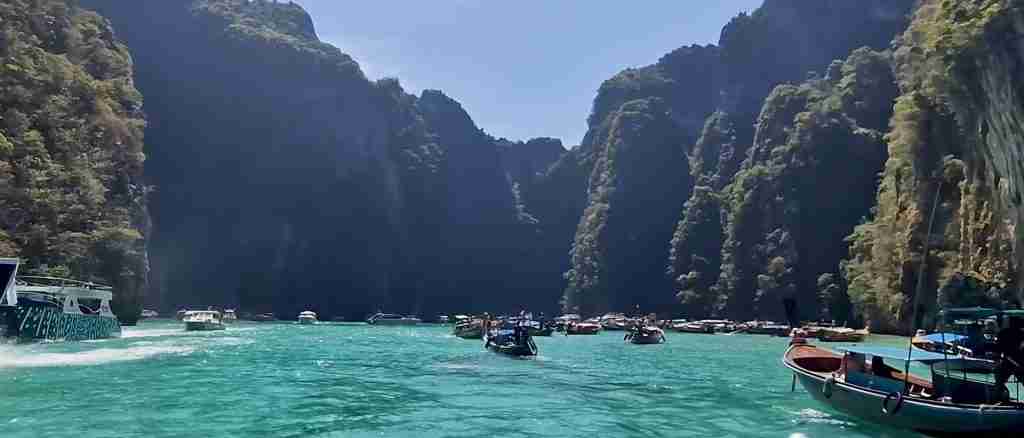
Pileh Lagoon rivals Maya Bay for scenic drama while receiving substantially less tourist attention, the narrow inlet surrounded by sheer limestone cliffs creating a dramatic enclosed lagoon with impossibly clear emerald water. Unlike Maya Bay’s swimming prohibition, Pileh Lagoon encourages aquatic activities with visitors jumping from longtail boats into the deep water, swimming among limestone walls, and kayaking through the narrow entrance channel. The lagoon’s depth reaches 10-15 meters, the clear water providing visibility nearly to the bottom revealing rocky substrate and occasional tropical fish, though the lagoon lacks the coral formations found at dedicated snorkeling sites.
The Instagram-famous perspective—longtail boats floating in turquoise water surrounded by dramatic cliffs—requires hiring separate longtail boat rides within the lagoon, as tour boats anchor outside allowing passengers to swim but not capturing the iconic composition. Small longtail operators work within Pileh offering photo rides for 100-300 baht per person, circling the lagoon while passengers pose on traditional boats creating the classic shots. These photo opportunities prove popular particularly with Asian tourists, creating sometimes-lengthy queues for the limited longtail capacity during peak midday hours when multiple tour groups converge simultaneously.
Viking Cave sits on Phi Phi Leh’s northeastern coast, a large limestone cave containing ancient wall paintings whose origins and meanings remain debated, though the crude stick figures and boat images suggest maritime cultural significance. Modern commercial activity dominates the cave’s current use—local collectors harvest bird nests from the cave’s ceiling for Chinese bird’s nest soup, the dangerous work involving climbing bamboo scaffolding to heights exceeding twenty meters. Tours typically view Viking Cave from boats rather than entering the cave, guides explaining the nest harvesting process and pointing out paintings visible on cave walls from offshore vantage points.
Monkey Beach lives up to its name hosting wild macaque populations that have learned to associate boats with food, the monkeys gathering on the beach and swimming to approaching vessels seeking handouts. While entertaining to observe, feeding the monkeys remains officially discouraged as it alters natural behaviors, creates aggressive begging, and habituates wildlife to human interaction in problematic ways. Responsible tour operators explain this while still allowing observation from boats, maintaining distance preventing direct interaction while enabling wildlife viewing and photography.
Diving Phi Phi: Premier Underwater Experiences
Understanding Phi Phi’s Dive Site Diversity
Koh Phi Phi functions as southern Thailand’s premier diving base, the surrounding waters hosting diverse sites ranging from shallow coral gardens suitable for Open Water certification through advanced drift dives and wreck penetration demanding experience and expertise. The concentration of quality dive sites within forty-minute boat radius creates efficiency impossible at more spread-out diving destinations, enabling two-tank morning dives visiting distinctly different sites and returning to Phi Phi Don by early afternoon. This logistical advantage combines with excellent marine life diversity—reef sharks, rays, turtles, schools of barracuda and trevally, extensive hard and soft coral formations—creating conditions attracting serious divers worldwide.
The dive sites cluster into several geographic zones surrounding Phi Phi Don. Local sites including Phi Phi Leh’s southern wall, Bida Nok and Bida Nai islands, and Hin Klang Reef sit within fifteen-minute boat rides, making them ideal for afternoon dives, checkout dives during certification courses, and diving during marginal weather when distant sites become inaccessible. These local sites deliver solid diving—healthy coral, decent fish populations, occasional turtles and reef sharks—without matching the more dramatic encounters possible at premier destinations.
Shark Point (Hin Musang) ranks among the region’s most famous dive sites, three submerged pinnacles rising from twenty-five-meter depths to near surface creating varied topography supporting diverse marine communities. The site earns its name from frequent leopard shark encounters, the docile bottom-dwelling sharks resting on sandy patches between pinnacles providing reliable sightings particularly during early morning dives. The pinnacles themselves host extensive soft coral coverage—purple, orange, and pink formations swaying in current—interspersed with hard coral structures creating habitat complexity attracting angelfish, butterflyfish, lionfish, and schools of snappers.
King Cruiser Wreck sits at twenty-five-to-thirty-meter depths, a large car ferry that sank during the 1990s now serving as artificial reef attracting substantial fish populations including massive schools of yellow snappers, groupers, lionfish, and resident scorpionfish. The wreck penetration opportunities appeal to advanced divers, though structural deterioration increases risks over time making some interior sections unstable or collapsed. Conservative dive operators restrict dives to exterior exploration and limited penetration of the most stable sections, prioritizing safety over adventure for recreational divers.
Selecting Dive Operators and Courses
Phi Phi Don hosts dozens of dive shops clustered primarily around Tonsai Village, their shopfronts displaying certification course advertisements, daily dive trip schedules, and equipment rental rates. The competitive market creates generally reasonable pricing and quality standards, though substantial variation exists between budget operators prioritizing low prices over experience and premium shops investing in superior boats, smaller groups, and experienced instructors. The strategic selection criteria involve balancing price against safety, instructor quality, group sizes, and equipment condition—the cheapest options saving perhaps 1,000-2,000 baht while potentially compromising crucial safety elements or learning quality.
Certification courses represent Phi Phi’s diving bread-and-butter, with hundreds of travelers completing Open Water, Advanced Open Water, and specialty certifications during island stays. The multi-day course formats fit naturally into extended Phi Phi visits—Open Water requires three-four days completing pool skills, theory sessions, and four open water dives, while Advanced Open Water compresses into two days with five specialty dives. The tropical water conditions, good visibility, and diverse sites create ideal learning environments, particularly for nervous beginners who appreciate warm water, minimal current, and abundant marine life providing immediate gratification.
Instructor quality varies dramatically between operators despite identical certification standards, the difference between mediocre and excellent instructors fundamentally affecting learning experiences and safety development. Recommendations from other divers, online reviews, and personal interviews during shop visits help assess instructor capabilities, with warning signs including rushed explanations, dismissive attitudes toward questions, poor English communication (for non-Thai speakers), and pressure to purchase additional courses or equipment. Quality instructors demonstrate patience, prioritize safety over schedule convenience, provide detailed explanations, and create supportive learning environments encouraging skill development.
Equipment rental quality similarly spans wide ranges, from well-maintained recent-model gear through ancient regulators and ill-fitting BCDs that compromise comfort and safety. Shops allowing equipment inspection and size testing before committing to courses or dive trips enable assessment, with travelers bringing personal masks, snorkels, and dive computers gaining some independence from rental equipment quality issues. The most safety-critical equipment—regulators and BCDs—deserves careful inspection for obvious damage, testing for proper function, and replacement requests if performance seems questionable.
Multi-Day Dive Packages and Live-Aboards
Serious divers completing certification courses or spending week-plus periods on Phi Phi benefit from multi-day dive packages bundling ten-twenty dives at reduced per-dive rates compared to booking daily two-tank trips individually. These packages create daily diving routines—morning two-tank trips departing 8-8:30 AM, returning early afternoon—allowing consistent diving schedules maximizing bottom time while maintaining afternoon flexibility for non-diving activities. The packages typically span 5-10 days, matching practical limits for recreational diving frequency while enabling substantial dive experience accumulation and thorough exploration of Phi Phi’s surrounding sites.
Live-aboard dive trips extend Phi Phi diving’s geographic range, multi-day boat expeditions departing Phi Phi for distant sites including Hin Daeng/Hin Muang (Thailand’s deepest recreational sites hosting manta ray aggregations), the Similan Islands, or Burma Banks near Myanmar maritime border. These trips sacrifice Phi Phi accommodation comfort and island village amenities in favor of intensive diving schedules—three-four dives daily over 3-7 day periods—and access to remote sites impossible as day trips. The live-aboard experience appeals primarily to dedicated divers prioritizing maximum diving over island tourism, though the boat-based lifestyle (confined quarters, limited privacy, constant proximity to other passengers) requires psychological preparation beyond diving skills.
The seasonal consideration proves crucial for dive trip planning, as monsoon season (May-October) dramatically affects diving conditions around Phi Phi. Rough seas limit boat travel to distant sites, visibility decreases from storm runoff and plankton blooms, and strong currents increase difficulty for less experienced divers. November-April high season delivers optimal diving conditions—calm seas enabling reliable access to all sites, visibility frequently exceeding twenty meters, and pleasant sea surface conditions reducing boat ride discomfort. Serious divers should structure Phi Phi visits during high season accepting the higher accommodation costs and crowds in exchange for consistently excellent underwater experiences.
Hidden Beaches and Viewpoints Beyond the Tourist Circuit
Nui Beach: Secluded Eastern Paradise
Nui Beach occupies a small cove on Phi Phi Don’s eastern coast approximately thirty-minute walk from Loh Dalum Bay via jungle trail or ten-minute kayak paddle across open water, its relative inaccessibility creating substantially quieter atmosphere compared to easily-reached beaches. The trail begins at Loh Dalum’s eastern end, climbing through jungle terrain before descending steeply to beach level, the hike manageable for reasonably fit adults but challenging when attempted during midday heat. Kayak rental from Loh Dalum provides easier access eliminating the hike while offering pleasant paddling across sheltered water, weather permitting.
The beach itself stretches perhaps 200 meters, soft white sand curving between rocky headlands with clear water sloping gradually from shore. A single beach club operates basic restaurant and chair rental services, the simple setup providing essential amenities without the commercial development dominating more accessible beaches. The combination of beautiful sand, good swimming, peaceful atmosphere, and minimal development creates appeal for travelers willing to invest hiking or kayaking effort reaching the location.
Timing proves essential for optimal Nui Beach experiences, as the beach remains genuinely quiet only during early morning hours before most overnight guests wake and certainly before kayakers and hikers arrive from Loh Dalum mid-morning. Arriving around 7-8 AM via kayak provides perhaps one-two hours of near-private beach time before crowds accumulate, with the kayak approach eliminating sweaty jungle hiking while delivering peaceful paddling across glass-calm morning water. The beach club opens around 9 AM, providing coffee, breakfast, and subsequent lunch options allowing extended stays without food supply concerns.
Bamboo Island: Day Trip Paradise
Bamboo Island (Koh Phai) sits approximately six kilometers north of Phi Phi Don, an uninhabited circular island ringed by beautiful white sand beaches and supporting palm tree forest creating the quintessential desert island aesthetic. The island’s remoteness from Phi Phi Don—requiring thirty-minute speedboat journeys—creates natural filtering limiting crowds compared to easily accessible beaches, though Bamboo Island appears on many day-tour itineraries meaning total isolation remains impossible during midday hours.
The island’s southern beach provides the primary landing area, perhaps 500 meters of brilliant white sand backed by palm forest with clear shallow water creating excellent swimming conditions. The snorkeling around Bamboo Island proves modest—sandy bottom with occasional coral patches and reef fish populations—inferior to dedicated snorkeling sites but adequate for casual exploration. The island’s appeal rests primarily on the pristine beach environment and relative isolation rather than spectacular underwater features.
Private longtail charters to Bamboo Island create the most rewarding experiences, arriving early before tour boats converge mid-morning and allowing flexible departure timing avoiding the simultaneous exodus when standard tours depart. The half-day charter format—departing Phi Phi Don around 7 AM, spending 2-3 hours on Bamboo Island, returning by late morning—provides substantial beach time during optimal hours while preserving afternoon flexibility. Some operators combine Bamboo Island with Mosquito Island snorkeling or stops at quieter Phi Phi Don beaches creating full-morning circuits visiting multiple locations during single trips.
Phi Phi Viewpoint: Classic Panoramic Perspectives
The Phi Phi Viewpoint hike ranks among the island’s essential experiences, the thirty-forty minute climb from Tonsai Village reaching elevated positions offering panoramic views across the isthmus showing both Tonsai Bay and Loh Dalum Bay simultaneously. The view reveals Phi Phi’s distinctive geography—the narrow sandy connector between northern and southern island sections, village development clustered on the flat isthmus, forested hills rising on both sides, and surrounding turquoise water stretching to distant islands. The perspective appears on countless Phi Phi postcards and promotional materials, creating expectations that reality largely fulfills when weather cooperates.
The trail begins from the village’s eastern edge, initially climbing steps before transitioning to steep dirt path ascending through jungle. Three designated viewpoints punctuate the climb, each offering progressively more dramatic perspectives as elevation increases. Viewpoint 1 sits perhaps 100 meters elevation providing good but not spectacular views, Viewpoint 2 at approximately 180 meters delivers the famous twin-bay perspective, and Viewpoint 3 continues higher to roughly 250 meters offering the most comprehensive panoramic scope. Most visitors stop at Viewpoint 2 finding the views sufficiently impressive and the additional climb to Viewpoint 3 offering marginal perspective improvements for substantial additional effort.
Timing dramatically affects viewpoint experiences beyond simply morning versus afternoon light quality. Sunrise hikes (departing around 6 AM to reach viewpoints by 6:30-6:45 AM) provide the most spectacular lighting with golden dawn illuminating the bays from behind the viewpoint position, creating warm atmospheric conditions and near-empty trails as few tourists attempt the pre-breakfast climb. Midday visits bring harsh light washing out color contrast and heat making the climb genuinely unpleasant, though solitude sometimes compensates as most visitors choose cooler morning or late afternoon periods. Late afternoon hikes (arriving 5-5:30 PM) capture beautiful golden hour lighting though the sun sets behind rather than illuminating the viewed landscape, creating different but still attractive conditions with cooler temperatures making the climb more comfortable than midday attempts.
Nightlife Navigation: Understanding Phi Phi’s Party Scene
Loh Dalum Fire Shows and Beach Bars
The Loh Dalum Bay fire shows represent Phi Phi’s signature nightlife attraction, nightly performances where trained fire dancers twirl flaming chains, staffs, and hoops creating spectacular pyrotechnic displays on the beach. Multiple shows occur simultaneously at different beach locations, typically beginning around 9-10 PM and running thirty-forty-five minutes before repeating cycles. The performances demonstrate genuine skill—complex patterns, coordinated group routines, audience interaction including volunteers attempting simple fire tricks—creating entertainment value beyond simply “fire on beach.”
The beach bar scene surrounding fire shows operates on distinctive economic models combining alcohol sales, prime beach real estate, and social atmosphere creation. Bars set up seating areas on the sand, visitors purchase drinks (often famous Thai “buckets”—small plastic buckets filled with cheap whiskey, mixers, and energy drinks), then claim beach spots for show viewing. The bucket culture deserves understanding: these drinks contain substantially more alcohol than typical cocktails, the generous pours creating rapid intoxication for unprepared drinkers, particularly when consumed on empty stomachs or following full days of sun exposure and physical activity.
The scene attracts predominantly younger crowds—backpackers, gap year travelers, university students on break—creating energetic social atmosphere facilitating easy conversations and group formations. Solo travelers find Loh Dalum excellent for meeting others, the beach setting and alcohol consumption lowering social barriers that might inhibit interactions in other contexts. The music volume, crowd density, and bucket-fueled energy peak around 11 PM-midnight before gradually diminishing as visitors disperse to village bars, clubs, or hotels.
The safety considerations at Loh Dalum involve standard party-scene precautions amplified by beach environment and Thailand’s minimal regulation. Watch drinks carefully preventing tampering, avoid excessive bucket consumption leading to dangerous intoxication levels, travel in groups particularly when female, and maintain awareness of valuables given the crowded conditions and tourist-focused theft. The fire show performers occasionally encourage audience members to attempt fire tricks—generally harmless when supervised but carrying obvious burn risks for intoxicated participants with poor coordination and judgment.
Village Bars and Late-Night Music Venues
Tonsai Village’s interior lanes host dozens of bars ranging from tiny five-table establishments through large multi-story entertainment complexes, the diversity accommodating varied musical preferences, drinking priorities, and social atmospheres. Reggae bars attract a specific demographic, the Bob Marley posters and constant marijuana references creating predictable environments for certain travelers while others avoid them entirely. Electronic dance music venues pump modern house and techno attracting younger crowds interested in dancing rather than conversational drinking. Live music bars feature Thai bands covering Western pop and rock songs, the performances entertaining despite language barriers and occasional creative interpretations of familiar material.
The happy hour circuit operates on overlapping schedules, different bars advertising 2-for-1 drinks or reduced prices during different evening hours creating opportunities for strategic bar-hopping maximizing value. The phenomenon reveals both the competitive market dynamics—dozens of similar bars competing for limited tourist dollars—and visitor price sensitivity where modest drink discounts significantly influence venue selection. Quality-focused drinkers often find Thai bars frustrating, as most operations prioritize cheap alcohol over proper cocktail techniques, beer selection remains limited to mainstream lagers, and wine options prove expensive and mediocre.
Muay Thai boxing shows occur at several village venues, amateur bouts providing entertainment though the fighting quality varies dramatically from legitimate skill demonstrations to clearly staged performances catering to tourist expectations. Some venues allow and even encourage tourist participation, visitors paying for opportunities to enter rings against similar novices in theatrical boxing matches more about entertainment than sport. The experience appeals to certain travelers seeking unusual stories and bucket list items, though serious Muay Thai enthusiasts generally find Phi Phi’s tourist shows disappointing compared to authentic training gyms and competitions elsewhere in Thailand.
Managing Nightlife Safely and Sustainably
The combination of cheap alcohol, party atmosphere, heat, and unfamiliar environment creates genuine safety risks that responsible travelers should acknowledge and mitigate through conscious precautions. Drink spiking occurs occasionally, though less frequently than paranoid travelers fear—still, accepting drinks only from trusted sources and never leaving beverages unattended provides basic protection. The bucket phenomenon particularly deserves respect: the large alcohol volumes affect judgment and coordination dramatically, with dehydration from day activities and sun exposure amplifying effects beyond normal drinking contexts.
The financial consideration involves budgeting adequately for nightlife expenses while avoiding the extreme costs excessive drinking generates. Drinks at Loh Dalum beach bars and village establishments cost 80-200 baht typically, moderate by Western standards though accumulating quickly across multi-hour sessions. The buckets tempt budget travelers offering apparent value—large alcohol quantities for 200-400 baht—though the rapid intoxication often leads to additional purchases and poor financial decisions later in evenings. Setting drink budgets and adhering to them prevents morning-after financial regrets where hazy memories and depleted wallets combine unpleasantly.
The sustainable approach to Phi Phi nightlife involves sampling the experience without making partying the trip’s sole focus, recognizing that hangovers severely diminish enjoyment of diving, hiking, and other island activities requiring energy and clear thinking. Allocating one-two nights to serious nightlife participation while maintaining earlier bedtimes other nights creates balance preserving health and activity capacity. Many successful Phi Phi trips involve one Loh Dalum fire show experience for the spectacle and social atmosphere, occasional village bar visits for casual drinks, and otherwise earlier evenings enabling morning activities when the island shows its best character.
Frequently Asked Questions About Extended Phi Phi Stays
What’s the Best Way to Get to Koh Phi Phi?
Ferry services from both Phuket and Krabi provide the standard transportation connecting Phi Phi to mainland Thailand, with multiple daily departures accommodating flexible arrival and departure scheduling. Ferries from Phuket’s Rassada Pier reach Phi Phi in approximately two hours, while Krabi Town ferries complete the journey in ninety minutes, the shorter distance from Krabi making it the marginally faster option though Phuket’s larger tourism infrastructure often provides more convenient international flight connections. Ferry costs range from moderate to premium depending on vessel type and operator, with standard boats charging lower fares for basic passage while speedboat options command premiums for halving travel times through faster but rougher rides. Most ferry operators bundle packages including Phuket or Krabi hotel pickup, eliminating the need for travelers to arrange separate transportation to departure piers, though these pickups add thirty-sixty minutes to total journey times as vans collect passengers from multiple hotels before proceeding to piers. The booking strategy involves purchasing tickets from hotel tour desks, online platforms like 12Go Asia, or directly from ferry company offices, with advance booking during high season (November-April) recommended securing preferred departure times, while low season allows spontaneous next-day purchasing without availability concerns. The luggage consideration remains important, as ferry operators impose weight limits and sometimes charge supplements for excessive baggage, requiring travelers to pack efficiently or accept additional fees for large suitcases and dive equipment bags.
How Much Money Do You Need Per Day on Phi Phi?
Daily budgets for Phi Phi vary dramatically based on accommodation selection, dining preferences, activity participation, and nightlife spending, with backpackers managing on minimal amounts while luxury travelers spend multiples. Budget travelers staying in basic hostels, eating primarily Thai street food, limiting tours to occasional snorkeling trips, and drinking moderately might spend 800-1,500 baht daily covering dormitory beds, simple meals, basic activities, and modest alcohol consumption, though this frugal approach requires discipline avoiding expensive Western restaurants, multiple daily tours, and heavy bar spending. Mid-range travelers choosing comfortable hotels with air conditioning, mixing Thai restaurants with occasional Western dining, participating in standard boat tours and perhaps diving, and enjoying regular but not excessive nightlife typically spend 2,500-4,500 baht daily, this range covering decent accommodation, varied dining, active touring schedules, and reasonable entertainment budgets. Luxury travelers booking upscale resorts, eating primarily at quality restaurants, engaging private tours or diving instruction, and purchasing premium drinks spend 6,000-15,000+ baht daily, with upper limits determined primarily by resort costs and tour frequency rather than caps on available spending. Food costs specifically range from 60-150 baht for basic Thai meals through 300-800 baht for quality restaurant dining and 1,000+ baht for premium beachfront restaurants serving international cuisine. Activities including boat tours cost 800-2,000 baht for standard group tours, while private longtail charters run 3,000-6,000 baht for half-day trips splitting favorably across groups but expensive for solo travelers. Diving expenses add 1,200-2,000 baht per two-tank fun dive, with certification courses costing 9,000-15,000 baht for Open Water depending on operator quality and inclusions.
Is Phi Phi Suitable for Solo Female Travelers?
Phi Phi accommodates solo female travelers well overall, the island’s compact size, established tourism infrastructure, and substantial solo traveler presence creating generally safe and welcoming environment, though standard precautions and awareness remain essential as anywhere. The village’s walkability and lack of vehicles eliminate many transport-related safety concerns affecting other destinations, as getting around requires only walking well-lit paths rather than negotiating taxis or motorcycle rides creating vulnerability situations. The hostel and guesthouse culture facilitates meeting other solo travelers, both male and female, creating natural group formations for activities, dining, and nightlife that provide social opportunities while adding safety-in-numbers benefits. The Loh Dalum beach scene enables easy socializing, the party atmosphere lowering barriers to conversation though also creating alcohol-fueled scenarios requiring judgment about personal comfort levels and appropriate boundaries. The specific safety considerations involve standard awareness about drink monitoring (never accept beverages from strangers, watch drinks being prepared), avoiding excessive isolation (stick to populated areas particularly at night), and trusting instincts when situations feel uncomfortable (the compact island makes leaving problematic situations straightforward by walking to busy village areas). The accommodation selection proves important, with female-specific dormitories in hostels providing some security advantages while private rooms eliminate concerns about mixed-gender sleeping arrangements. Thai cultural attitudes generally create respectful environments for women travelers, though the international tourist population brings varied cultures and behaviors requiring the same vigilance solo female travelers employ anywhere globally. Many solo female travelers report positive Phi Phi experiences, the combination of natural beauty, active diving and beach scene, and social atmosphere creating ideal environments for women traveling independently, particularly those comfortable with party-oriented backpacker culture.
Can You Visit Phi Phi as a Family With Children?
Families with children can successfully visit Phi Phi despite its reputation as party destination, though strategic accommodation selection and activity planning prove essential for positive experiences avoiding the most chaotic tourist scenes. Long Beach provides the optimal family base, combining quality beach for children’s swimming and sandcastle building with quieter atmosphere compared to Tonsai Village’s nighttime noise and Loh Dalum’s party culture, the fifteen-minute separation from village chaos creating family-friendly peace while maintaining reasonable access to restaurants and tours. Laem Tong’s luxury resorts offer superior family facilities including pools, kids’ clubs, and organized activities, though the isolation and premium pricing suit only travelers with appropriate budgets willing to accept limited dining and entertainment diversity. The boat tours present mixed family suitability, with Maya Bay visits appropriate for most ages (though swimming prohibition may disappoint children), while rough seas during speedboat rides sometimes create genuine discomfort for young children prone to seasickness—longtail boats provide gentler but slower alternatives better matching children’s tolerance. Snorkeling excursions work well for families with confident swimmers aged 8+, the clear warm water and abundant fish providing engaging experiences, though younger children or nervous swimmers might find boat-based snorkeling stressful given deep water and current concerns. The dining situation accommodates families easily, numerous restaurants serving mild Thai food children typically accept alongside Western options including pizza, pasta, and fried rice appealing to pickier eaters. The logistics consideration involves understanding that stroller use proves impractical given narrow dirt paths and absence of paved surfaces, requiring baby carriers for infants and tolerance for young children walking substantial distances around the compact but hilly village area. The nightlife obviously doesn’t suit families, though many families simply avoid evening village scenes entirely, eating early dinners and returning to Long Beach or resort accommodations for quiet evenings, treating Phi Phi as beach destination rather than attempting to sample the party culture fundamentally incompatible with family travel.
What Happens During Monsoon Season?
The May-October southwest monsoon fundamentally transforms Phi Phi from pristine tropical paradise to challenging destination requiring flexible schedules and acceptance of compromised conditions, though the severity varies considerably between early monsoon (May-June) and peak monsoon (July-September) months. The weather patterns bring frequent afternoon rain showers, occasional all-day downpours, rough seas creating challenging boat rides and limiting tours, strong winds, higher humidity, and generally overcast conditions reducing the endless sunshine defining high season experiences. Ferry services continue operating throughout monsoon season though departures sometimes cancel when seas exceed safe operating conditions, particularly during August-September’s worst weather when multi-day stretches of rough conditions occasionally prevent boat travel entirely, stranding visitors on the island until conditions improve. The diving conditions deteriorate significantly, with visibility dropping from high season’s 20+ meters to often 10 meters or less due to plankton blooms and storm runoff, while surge and current increase creating more challenging conditions demanding higher skill levels and reducing enjoyment for less experienced divers. Many businesses close entirely during August-September’s lowest season, finding the minimal tourist numbers insufficient to justify operating costs, though enough restaurants, hotels, and tour operators remain open serving the reduced visitor numbers who do arrive. The substantial benefits involve dramatically reduced crowds making beaches and viewpoints substantially emptier, significantly lower prices with hotels cutting rates thirty-sixty percent compared to high season peaks, and opportunities for experiencing more authentic island atmosphere when tourism pressure decreases. The strategic approach involves planning monsoon season visits during shoulder months (May, early June, October) when weather remains marginally acceptable with increasing numbers of rain-free days, maintaining extremely flexible schedules allowing tour cancellations and rebookings when weather deteriorates, and mentally preparing for compromised experiences accepting that some planned activities simply won’t happen when seas turn rough or rain persists.
Are There ATMs and Banking Services on Phi Phi?
Tonsai Village hosts multiple ATMs from various Thai banks including Bangkok Bank, Krungsri, and Kasikorn Bank, the machines providing standard cash withdrawal services accepting international cards with typical foreign transaction fees plus ATM surcharges. The ATM fees prove higher than mainland Thailand, with some machines charging 250-300 baht per transaction compared to standard 220 baht fees elsewhere, the premium reflecting island logistics costs and captive market dynamics. No full-service bank branches operate on Phi Phi, eliminating options for currency exchange at official bank rates, money transfers, or complex banking transactions requiring human tellers—visitors needing such services must complete them before arriving or plan departures to Krabi or Phuket accessing proper banking. Currency exchange services exist through tour agencies and some hotels offering exchange at rates typically five-ten percent worse than mainland bank branches, the convenience premium reflecting limited competition and tourist desperation when cash runs low. The cash-dominated economy on Phi Phi demands travelers carry adequate baht, as many smaller restaurants, bars, massage parlors, and guesthouses refuse credit cards or charge substantial surcharges (3-5%) for card acceptance, making cash king for daily transactions. The ATM withdrawal strategy involves assessing likely cash needs for anticipated stay duration then withdrawing that amount plus safety buffer in single large withdrawal maximizing per-transaction value despite the substantial fees, rather than making multiple small withdrawals multiplying the fee impacts. The backup plan remains essential, as ATMs occasionally malfunction or run empty particularly during peak season weekends when demand spikes, creating situations where planning to withdraw cash upon Phi Phi arrival fails requiring either accepting poor exchange rates from tour agencies or limiting spending until ATMs refill.
Can You Work Remotely From Koh Phi Phi?
Koh Phi Phi’s infrastructure technically supports basic remote work for digital nomads and travelers needing occasional internet access, though the island poorly suits extended remote work stays requiring reliable connectivity, quiet productive environments, and professional-grade infrastructure. The internet situation varies dramatically by accommodation and location, with mid-to-upper-range hotels offering WiFi performing adequately for email, web browsing, and video calls during off-peak hours, though speeds rarely approach mainland city standards and reliability suffers during evening hours when guest usage peaks. Many budget guesthouses provide nominal WiFi that barely functions even for basic web browsing, while cafes and restaurants offering WiFi as amenities generally deliver speeds sufficient for casual use but inadequate for bandwidth-intensive work including large file uploads, video editing, or constant video conferencing. The work environment challenges prove equally significant, as the island lacks proper coworking spaces with dedicated workstations, reliable power, comfortable seating, and the professional atmosphere conducive to focus—attempting remote work from hotels means working from beds or small desks in rooms designed for sleeping rather than productivity, while cafes and restaurants frown upon hours-long table occupation by non-ordering laptop users. The acoustic environment creates constant challenges, with village accommodation suffering from bar music and party noise making focused work difficult particularly during evenings, while even quieter beaches like Long Beach lack the silent, distraction-free environments serious work demands. The time zone consideration affects remote workers coordinating with Western companies, as Thailand sits 7-12 hours ahead of North American time zones creating scheduling conflicts where productive work hours require late-night or early-morning sessions aligning with colleagues’ business hours. The practical reality remains that Phi Phi functions best as vacation destination requiring occasional connectivity rather than remote work base enabling extended stays, with travelers requiring reliable remote work capability better served by Thailand’s established digital nomad destinations including Chiang Mai, Bangkok, or Phuket’s coworking-equipped neighborhoods.
What Should I Pack Specifically for Extended Phi Phi Stays?
Extended Phi Phi stays require packing beyond standard beach vacation essentials, particularly for visitors engaging in diverse activities including diving, hiking, and nightlife across multi-day visits. The sun protection category deserves particular attention, with reef-safe sunscreen essential for environmental responsibility, wide-brimmed hats providing superior protection compared to baseball caps, UV-protective rashguards enabling all-day water activities without constant sunscreen reapplication, and quality sunglasses preventing eye damage from intense tropical sun reflecting off water and sand. The footwear consideration demands bringing multiple appropriate options: reef shoes or water shoes protecting feet during rocky beach entries and boat boardings, hiking sandals or light trail shoes providing ankle support for viewpoint trails, and casual walking sandals for village navigation—flip-flops alone prove inadequate for the diverse terrain and activity demands. The waterproof bag category proves essential, with dry bags protecting electronics, documents, and spare clothes during boat transfers that sometimes involve water splashing or unexpected rain showers, while waterproof phone cases enable underwater photography and protect expensive devices from water damage during active beach and snorkeling activities. The diving-specific items for certified divers include personal masks ensuring proper fit superior to rental equipment, dive computers eliminating rental fees and providing familiar interfaces, dive lights enabling night diving or wreck penetration during advanced trips, and dive logbooks documenting experiences though digital logging apps increasingly replace physical books. The modest clothing consideration reflects Thai cultural norms, with visitors expected to cover shoulders and knees when visiting the small village temple or occasionally dining at upscale restaurants, though Phi Phi’s overall atmosphere remains casual with beachwear acceptable for most situations. The first aid and medication category should include personal prescription medications obviously, plus motion sickness pills for ferry rides and boat tours, antihistamine for potential jellyfish sting reactions, antibacterial ointment for coral scrapes and minor cuts, bandages and alcohol wipes, and pain relievers for headaches from sun exposure or hangovers from nightlife participation. The practical additions include small flashlight or headlamp for nighttime village walking when paths lack adequate lighting, laundry detergent for sink washing extending clothing use across longer stays, and reusable water bottle reducing plastic consumption while ensuring hydration access given Phi Phi’s limited free water availability.
How Does Phi Phi Compare to Other Thai Islands?
Koh Phi Phi occupies a distinctive niche among Thailand’s southern islands, combining dramatic limestone scenery rivaling anywhere globally with party atmosphere and backpacker culture differentiating it from both ultra-luxury island resorts and undeveloped authentic fishing communities. Compared to Phuket, Phi Phi delivers superior natural beauty and beach quality though substantially less infrastructure, accommodation diversity, and activity variety—Phuket’s development enables everything from budget hostels through world-class resorts, shopping malls, golf courses, and extensive restaurant scenes impossible on vehicle-free Phi Phi. The Koh Samui comparison shows similar contrasts, with Samui offering larger island geography, airport access, vehicle transportation infrastructure, and family-oriented resort developments Phi Phi lacks, while Phi Phi counters with more dramatic scenery, better diving, and concentrated backpacker social scene Samui’s maturity has largely outgrown. Koh Lanta provides the closest comparable alternative to Phi Phi among major southern islands, combining reasonable development with beach quality and diving access, though Lanta’s quieter, more family-oriented atmosphere contrasts sharply with Phi Phi’s party reputation—travelers seeking Phi Phi’s beauty without the nightlife chaos should seriously consider Lanta as alternative. The Similan Islands comparison proves unfair given the Similans’ uninhabited status and live-aboard-only access creating completely different experiences, though serious divers often prefer Similans’ superior underwater conditions to Phi Phi’s respectable but not exceptional diving. Koh Tao’s diving-focused culture mirrors Phi Phi in some respects, both islands attracting divers completing certifications and fun diving during extended stays, though Koh Tao’s Gulf of Thailand location creates different marine environments and weather patterns compared to Phi Phi’s Andaman Sea diving. The realistic assessment positions Phi Phi as ideal destination for travelers prioritizing stunning natural scenery, active social atmosphere, good diving access, and multi-day stays enabling both adventure and relaxation, while proving less suitable for luxury seekers (Phuket and Samui offer better options), families with young children (Lanta’s quieter environment works better), serious divers (Similans provide superior conditions), or anyone seeking authentic undeveloped Thai island culture largely destroyed by Phi Phi’s tourism development.
What Photography Equipment Works Best for Phi Phi?
Phi Phi’s diverse photography opportunities—dramatic landscapes, underwater scenes, vibrant nightlife, cultural moments—reward bringing capable equipment though the humid, sandy, salt-spray environment demands protection and weather resistance considerations. The smartphone camera approach works surprisingly well for casual documentation, modern iPhone and flagship Android phones capturing excellent landscape photos in good lighting, acceptable night shots of fire shows and village scenes, and even basic underwater images through quality waterproof cases, all while minimizing equipment burden and theft concerns inherent with expensive camera gear. Travelers prioritizing photography quality should bring mirrorless or DSLR cameras in weather-sealed bodies, the environmental protection essential given Phi Phi’s constant boat spray, high humidity, and sandy conditions threatening electronics, with versatile zoom lenses (24-70mm or 24-105mm ranges) covering both landscape and portrait needs without requiring constant lens changes risking sensor dust or moisture entry. The underwater photography category demands specific equipment, with GoPro or similar action cameras capturing excellent video and adequate photos during snorkeling in shallow water, while serious underwater photography requires dedicated underwater housings for mirrorless cameras or underwater compact cameras like Olympus Tough series enabling manual control and RAW capture for quality results. The wide-angle lens consideration proves essential for Phi Phi’s limestone landscapes, with 16-35mm equivalent lenses capturing the dramatic cliffs and sweeping bay views defining iconic Phi Phi imagery, though these wide perspectives sometimes create distortion requiring careful composition or post-processing correction. The tripod question involves weighing stability benefits against carrying burden, with lightweight travel tripods enabling long-exposure night photography of Loh Dalum fire shows and dawn/dusk landscape shots from viewpoints, though the weight and bulk prove annoying during day hikes and boat trips—the compromise involves either committing to serious photography accepting the burden or relying on high ISO capabilities and image stabilization eliminating tripod needs. The drone consideration faces Thai aviation regulations requiring permits for commercial use and restrictions around national park areas including Maya Bay, making recreational drone photography technically prohibited though enforcement proves inconsistent—serious aerial photographers should research current regulations and permit processes rather than assuming permission, while casual users risk equipment confiscation or fines attempting unpermitted flights. The backup and storage strategy remains essential, with memory cards failing occasionally and equipment loss through accidents or theft proving possible—bringing redundant memory cards, backing up images to cloud storage when WiFi permits, and protecting equipment in waterproof bags during boat transfers minimizes disaster risks threatening irreplaceable vacation memories.