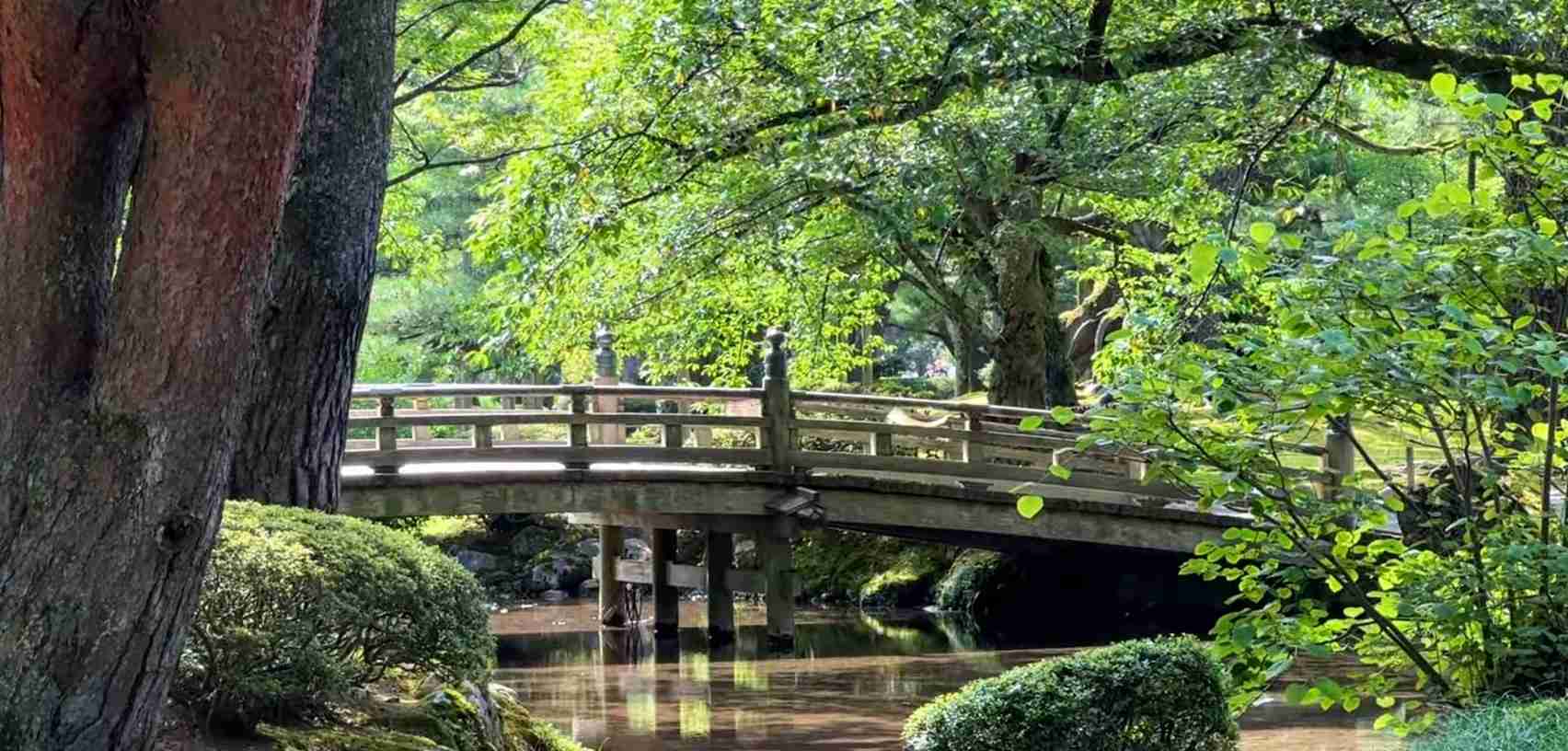
Kenrokuen Garden Kanazawa: Complete Guide
Kenrokuen Garden ranks among Japan’s three most celebrated landscape gardens, developed over 170 years by the feudal Maeda clan as the outer garden of Kanazawa Castle. The 11.4-hectare grounds achieve what Chinese garden theory deemed nearly impossible—unifying six contradictory attributes of spaciousness, seclusion, artifice, antiquity, water abundance, and panoramic views into a single harmonious landscape that transforms dramatically across four distinct seasons.
Key Takeaways
- Three Great Gardens Status: Kenrokuen holds elite designation alongside Mito’s Kairakuen and Okayama’s Korakuen, distinguishing it as Japan’s finest example of Edo-period feudal lord garden design through comprehensive achievement of classical Chinese garden theory principles
- Historic Maeda Legacy: The garden evolved under thirteen successive Maeda clan lords from 1676 through 1871, incorporating sophisticated hydraulic engineering that powers Japan’s oldest fountain entirely through natural water pressure without pumps or electricity
- Six Sublimities Philosophy: The name “Kenrokuen” translates as “Garden of Six Sublimities,” referencing spaciousness, seclusion, artifice, antiquity, abundant water, and broad views—contradictory qualities that Chinese garden theory considered impossible to unite successfully
- Seasonal Transformation Excellence: Four hundred twenty cherry trees of forty varieties create spectacular spring displays, while autumn brings layered foliage from 8,200 trees across 160 species, and winter’s yukitsuri rope installations protect centuries-old pines from snow damage
- Architectural Heritage Elements: Historic tea houses including the 1774 Yugao-tei, elaborate stone lanterns like the iconic two-legged Kotoji-toro, and meticulously positioned viewing platforms demonstrate sophisticated spatial design principles refined over generations
- Accessible Excellence: Despite world-class status, admission costs only ¥320 with free entry during early morning hours and special illumination events, positioned adjacent to Kanazawa Castle and within walking distance of the city’s primary historic districts
People Also Ask About Kenrokuen Garden
What Makes Kenrokuen Garden Special?
Kenrokuen achieves distinction through comprehensive realization of classical Chinese garden theory identifying six essential yet contradictory attributes for perfect gardens. Spaciousness manifests in the 11.4-hectare extent allowing expansive views across artificial hills and large ponds, while simultaneously maintaining seclusion through carefully positioned tree groupings, earthen mounds, and strategic screening that creates intimate enclosed spaces. Artifice appears in sophisticated hydraulic engineering, elaborate stone arrangements, and architectural elements, yet the design maintains antiquity through preservation of centuries-old trees, historic structures, and traditional landscape maintenance techniques. The garden sustains abundant water through the Tatsumi irrigation system feeding multiple ponds, streams, and Japan’s oldest fountain, while elevated terrain provides broad views toward Mount Haku and the surrounding mountains. This unified achievement of typically contradictory qualities distinguishes Kenrokuen from thousands of other Japanese gardens.
How Long Does It Take to Visit Kenrokuen Garden?
Comprehensive exploration requires 90 minutes to two hours for attentive visitors examining the garden’s diverse elements at contemplative pace. The primary circuit following main pathways and pausing at major features—Kasumigaike Pond, Kotoji-toro lantern, the oldest fountain, historic tea houses—occupies approximately one hour. Extending to two hours allows photographing seasonal highlights, resting at tea house observation decks, reading interpretive signage explaining garden theory and historical development, and appreciating subtle details including stone arrangements, tree forms, and careful plant selections. Rushed visitors completing a quick loop in 45 minutes sacrifice the meditative atmosphere that defines traditional Japanese garden experiences. Seasonal considerations influence optimal duration—cherry blossom and autumn foliage periods merit additional time for photography and contemplation, while winter’s snow-covered landscapes and summer’s lush greenery each reward extended observation.
When Is the Best Season to Visit Kenrokuen Garden?
Each season delivers distinct aesthetic and atmospheric experiences without clear hierarchy—optimal timing depends on visitor priorities rather than objective superiority. Spring brings four hundred twenty cherry trees reaching peak bloom typically in early April, with free admission and evening illumination during the one-week bloom period attracting maximum crowds but creating ephemeral beauty celebrated throughout Japanese culture. Summer emphasizes verdant green landscapes, azalea blooms in May, and iris displays in June, with fewer visitors and peaceful early morning or evening explorations possible despite warmer temperatures. Autumn produces spectacular foliage from mid-to-late November as maples, ginkgo, and other deciduous species create layered red-orange-gold displays throughout the 8,200 trees, accompanied by comfortable temperatures ideal for extended walking. Winter’s yukitsuri rope installations protecting pine branches from snow weight create distinctive photogenic scenes from November through March, with dramatically fewer crowds and potential for pristine snow-covered landscapes after storms. The garden rewards visits in all four seasons, with repeat visitors often prioritizing different periods to experience the complete annual cycle.
What Does the Name Kenrokuen Mean?
Kenrokuen translates as “Garden of the Six Sublimities” or “Garden Having Six Attributes,” referencing classical Chinese landscape theory identifying six essential characteristics for perfect gardens. These attributes—spaciousness, seclusion, artifice, antiquity, water sources, and panoramic views—typically contradict each other in paired oppositions. Achieving spaciousness usually sacrifices seclusion, while artifice conflicts with antiquity, and water abundance rarely coexists with elevated panoramic viewpoints. Chinese garden theory considered simultaneous realization of all six attributes essentially impossible, making the name Kenrokuen both a philosophical claim and a practical achievement. The Maeda lords who developed the garden deliberately pursued this comprehensive ideal through sophisticated design strategies reconciling the contradictions—elevated terrain providing both views and gravity-fed water systems, careful tree placement creating both openness and enclosed spaces, and continuous maintenance preserving both ancient elements and refined artifice. The name reflects deep engagement with East Asian aesthetic philosophy rather than simple descriptive naming.
Extended multi-day tours – 5+ days
Featured Kanazawa Multi-Day Tour Packages
3 days
Kanazawa 3-Day Discovery Tour
- ✓ Comprehensive Kanazawa experience
- ✓ Expert local guides included
- ✓ All accommodation included
- ✓ Transportation provided
5 days
Kanazawa 5-Day Highlights Experience
- ✓ Comprehensive Kanazawa experience
- ✓ Expert local guides included
- ✓ All accommodation included
- ✓ Transportation provided
7 days
Kanazawa 7-Day Cultural Journey
- ✓ Comprehensive Kanazawa experience
- ✓ Expert local guides included
- ✓ All accommodation included
- ✓ Transportation provided
10 days
Kanazawa 10-Day Complete Adventure
- ✓ Comprehensive Kanazawa experience
- ✓ Expert local guides included
- ✓ All accommodation included
- ✓ Transportation provided
Multi-day tour packages powered by TourRadar. Prices and availability subject to change.
Introduction: Understanding Kenrokuen’s Historic and Cultural Significance
Kenrokuen Garden’s development spanned nearly two centuries under the Maeda clan, who governed the Kaga Domain as Japan’s wealthiest feudal territory after the Tokugawa shogunate itself. This extended cultivation period allowed successive lords to refine and expand the landscape through generations, responding to evolving aesthetic sensibilities while maintaining philosophical coherence. The garden originated in 1676 when the fifth lord, Maeda Tsunanori, constructed a landscape garden called Renchitei on the heights northeast of Kanazawa Castle. Fire destroyed this initial garden in 1759, but the thirteenth lord, Maeda Narinaga, initiated restoration in 1774, with his successor Maeda Nariyasu completing major expansions and refinements by 1822 that established the garden’s current form and name.
Opening the garden to public access in 1871 during the Meiji Restoration represented a significant democratization of elite cultural spaces previously restricted to feudal nobility and their guests. This transition from private aristocratic pleasure ground to public cultural heritage occurred nationwide as Japan modernized, though Kenrokuen’s exceptional quality and state of preservation distinguished it immediately as nationally significant. Government designation as a Special Place of Scenic Beauty in 1922 and Special Historic Site in 1985 formalized this recognition, providing legal protections and funding for ongoing conservation efforts that maintain the landscape according to traditional principles.
The garden’s physical location on elevated terrain northeast of Kanazawa Castle served both aesthetic and practical functions during the Edo period. Height provided natural gravity for the sophisticated hydraulic systems feeding fountains, waterfalls, and streams throughout the grounds, eliminating need for mechanical pumping unavailable to 17th and 18th-century engineers. The Tatsumi irrigation canal, constructed in 1632 to supply Kanazawa Castle, diverts water from the Sai River upstream of the city, entering Kenrokuen at elevated points and flowing through the garden before continuing to the castle and city water supply. This integration of utilitarian infrastructure with refined landscape design characterizes the sophisticated planning that distinguished elite Japanese gardens from purely decorative Western landscaping traditions.
Kenrokuen’s name derives from a Chinese landscape treatise that analyzed perfect garden attributes through six seemingly contradictory characteristics. Spaciousness requires extensive area allowing expansive views and monumental landscape features, while seclusion demands intimate enclosed spaces providing privacy and contemplative retreat from the world. Artifice encompasses sophisticated engineering, elaborate architectural elements, and refined horticultural displays demonstrating human control over nature, yet antiquity preserves ancient trees, weathered stones, and traditional materials evoking timelessness beyond human lifespan. Water sources bring dynamic movement, sound, and reflection to gardens, traditionally challenging to maintain on elevated sites that typically offer the broad views completing the six attributes. The Maeda lords achieved this comprehensive realization through ingenious solutions—elevated plateau terrain providing panoramic mountain vistas while gravity-fed water systems sustained ponds, streams, and fountains, careful tree positioning creating both open meadow spaces and dense screening for intimate areas, and continuous maintenance preserving centuries-old elements while adding contemporary refinements demonstrating ongoing artifice.
The garden’s composition follows kaiyushiki or “strolling style” principles developed during Japan’s Edo period, designed for walking circuits that reveal varied scenes and perspectives rather than single viewpoint appreciation. Paths wind through diverse landscape zones—open meadows, dense woodland groves, pond edges, and hilltop viewpoints—with each transition carefully orchestrated through spatial sequencing, visual framing, and strategic revelation of features. This approach contrasts with European formal gardens emphasizing geometric patterns and axial symmetry visible from elevated terraces, instead privileging temporal experience through movement and sequential discovery. The strolling style particularly suited feudal lords and their guests engaged in extended garden parties, tea ceremonies, and cultural gatherings requiring varied settings for different activities and group sizes.
Seasonal transformation represents fundamental design principle in Kenrokuen as in all significant Japanese gardens. Rather than pursuing static perfection or year-round identical appearance, the landscape deliberately incorporates plants and features emphasizing seasonal change—cherry trees dominating spring, lush greenery defining summer, spectacular foliage characterizing autumn, and snow-protection installations marking winter. This acceptance and celebration of temporal cycles reflects deeper Japanese cultural and philosophical attitudes toward impermanence, natural processes, and the aesthetic value of transformation itself. Visitors returning across multiple seasons experience fundamentally different gardens sharing spatial structure but delivering distinct atmospheric and visual character.
The garden’s physical area of 11.4 hectares places it among Japan’s larger strolling gardens while remaining intimate compared to imperial palace grounds or contemporary public parks. This scale proves ideal for comprehensive exploration within 90-120 minutes without overwhelming visitors through excessive extent, while providing sufficient variety and spatial complexity to reward repeated visits. Strategic elevation changes throughout the grounds create dramatic effects—gradual ascents revealing expanding views, sudden descents into valleys focused on intimate pond settings, and flat plateaus providing restful pauses in the circulation sequence.
Contemporary management by Ishikawa Prefecture maintains traditional garden practices including hand-pruning techniques, seasonal planting programs, and preservation treatments for historic structures and significant trees. The garden employs dozens of specialized gardeners trained in classical techniques including yukitsuri rope installation, pine pruning according to aesthetic principles refined over centuries, and careful moss cultivation requiring specific moisture, shade, and substrate conditions. This living conservation approach distinguishes Kenrokuen from museums displaying static historical artifacts, instead perpetuating traditional horticultural and design practices as ongoing cultural transmission.
Accessing Kenrokuen Garden
Location and Entrances
Kenrokuen Garden occupies elevated terrain immediately adjacent to Kanazawa Castle in the city’s historic core, with seven entrance gates providing access from different directions. The Katsurazaka Gate serves as primary entrance from Kanazawa Castle Park, positioned on the southwestern edge nearest the castle Ishikawa-mon Gate. Kenrokuenmae Gate on the eastern side provides convenient access from bus stops serving Kanazawa Loop Bus and Hokutetsu routes. Kotoji-toro Gate in the southeast connects to the 21st Century Museum of Contemporary Art and parking areas. Koshibashi Gate on the northern side offers entry from the Prefectural Art Museum district. Additional minor gates serve specialized access needs or seasonal circulation management.
Strategic entrance selection influences circulation efficiency and experience sequencing. Visitors arriving by bus typically enter through Kenrokuenmae Gate, creating clockwise circulation patterns. Those walking from Kanazawa Castle naturally use Katsurazaka Gate, beginning with the garden’s southwestern landscapes. The garden’s relatively compact size and well-marked paths prevent serious disorientation regardless of entry point, though obtaining the free English map from ticket counters or information centers helps identify major features and suggested circuits.
Public Transportation Access
Kanazawa Loop Bus provides the most tourist-friendly connection from Kanazawa Station to Kenrokuen Garden, operating right and left circuits every 15 minutes throughout the day. Both directions stop at Kenrokuen-shita (below Kenrokuen) bus stop approximately 5 minutes walking from the garden’s Kenrokuenmae Gate entrance. Single rides cost ¥200, with payment via cash or IC cards (Suica, PASMO, ICOCA). The journey requires approximately 15-20 minutes depending on traffic and number of intermediate stops before reaching the garden area.
The Kenrokuen Shuttle operates a simplified direct route between Kanazawa Station and Kenrokuen, also costing ¥200 per ride and requiring similar 15-20 minute journey time. This dedicated shuttle suits visitors prioritizing the garden without interest in other loop bus stops. Hokutetsu local buses provide additional options on various routes serving the Kenrokuen area from Kanazawa Station, with similar ¥200-220 fares and comparable travel times.
JR Bus Kanazawa operates limited service between Kanazawa Station and the Kenrokuen area, with Japan Rail Pass holders riding without additional payment. However, frequency remains lower than loop buses and Hokutetsu services—typically 1-3 buses per hour versus every 15 minutes for loop buses—making JR buses practical only when schedule aligns with arrival timing or when pass coverage provides value.
Walking from Kanazawa Station
The 2-kilometer walk from Kanazawa Station to Kenrokuen Garden requires approximately 25-30 minutes through the city center, passing commercial districts, residential neighborhoods, and eventually reaching the historic castle town area. The route follows mostly flat terrain with clear signage including directional markers indicating distance and direction to major attractions. Google Maps navigation proves reliable for those comfortable using smartphones, with offline map downloads recommended for travelers without continuous data access.
Walking provides continuous cultural immersion unavailable through bus rides, revealing everyday commercial activities, local architecture, and neighborhood character beyond concentrated tourist zones. The approach passes Omicho Market area (15-minute detour for breakfast or lunch) and allows flexible timing without bus schedule constraints. However, luggage, inclement weather, or limited physical mobility makes walking less practical compared to ¥200 bus rides delivering convenient door-to-destination service.
Taxi Access
Taxis from Kanazawa Station to Kenrokuen Garden cost approximately ¥1,200-1,500 depending on traffic and exact drop-off location, requiring 10-12 minutes under normal conditions. This option suits travelers with luggage, mobility limitations, or arriving during inclement weather when walking or waiting for buses proves unpleasant. Multiple taxis queue at designated stands outside Kanazawa Station’s east exit, with English communication limited among most drivers—having destination written in Japanese or displaying smartphone maps facilitates smooth experiences.
Admission Information and Visiting Hours
Standard Admission Prices
Adult admission (age 18 and over) costs ¥320, while children and teens (ages 6-17) pay ¥100. Seniors age 65 and older enter free upon presenting identification. These modest fees position Kenrokuen as exceptional value compared to equivalent international garden destinations, with quality and historical significance far exceeding the minimal cost barrier. The Prefectural Museum area and Seisonkaku Villa adjacent to the garden carry separate admission charges when visiting their interior spaces.
Combined tickets provide modest savings when visiting both Kenrokuen Garden and nearby attractions in single trips. A ¥500 ticket covers Kenrokuen admission plus entry to one cultural facility including Kanazawa Castle interior areas, specific museums, or historic buildings within the broader cultural zone. This combined ticket proves worthwhile when visiting Kanazawa Castle’s reconstructed interiors (normally ¥320 separately), effectively reducing garden admission to ¥180 while adding castle access.
Free Admission Periods
Early morning admission provides free entry during specific hours varying by season—gardens open 4:00 AM (April-August), 5:00 AM (March and September-October), or 6:00 AM (November-February) with free access until regular opening hours begin. Visitors must exit before regular hours commence or pay standard admission to remain after that transition. These early periods offer spectacular advantages beyond cost savings—minimal crowds, optimal morning photography lighting, dew-covered landscapes, and contemplative atmosphere impossible during peak daytime hours.
Special illumination events during cherry blossom season (typically first week of April) and autumn foliage periods (mid-November) provide free admission throughout extended hours including evening viewing until 9:30 PM. These events attract significant crowds but deliver unique perspectives through nighttime lighting displays highlighting the seasonal features. Free admission during these popular periods reflects cultural hospitality encouraging broad public access to natural beauty during ephemeral peak moments.
Operating Hours Throughout the Year
Regular admission hours operate 7:00 AM-6:00 PM from March 1 through October 15, shifting to 8:00 AM-5:00 PM from October 16 through February 28. Early admission periods preceding regular hours provide free access as described above. The garden closes annually December 29 through January 3 for New Year holidays, the only days when public access ceases entirely. Special event periods including cherry blossom illumination and autumn foliage lighting extend closing hours to 9:00-9:30 PM, with last entry typically 15-30 minutes before closure.
Seasonal hour adjustments reflect daylight patterns and visitor behavior—longer summer days and warmer temperatures support extended evening access, while earlier winter darkness and cold temperatures justify shorter hours when few visitors remain past 5:00 PM regardless of official closing times. These practical considerations demonstrate management flexibility balancing public access with efficient staffing and maintenance requirements.
Major Features and Must-See Elements
Kasumigaike Pond and Horai Island
Kasumigaike functions as the garden’s largest and most significant water feature, occupying the central-eastern area with approximately 5,800 square meters of surface area. The pond incorporates Horai Island, referencing legendary Chinese and Japanese mythology describing immortal paradise islands where ageless hermits possessed magical powers. This mythological reference transforms the pond from simple decorative water body into philosophical landscape element embodying cultural narratives about immortality, transcendence, and idealized nature.
The pond’s design demonstrates sophisticated hydraulic engineering maintaining water clarity and appropriate levels through gravity-fed inlet systems from the Tatsumi canal and controlled outlet flows to lower garden areas. Stone edging creates naturalistic irregular shorelines rather than geometric canal walls, with carefully positioned viewing points around the perimeter revealing changing perspectives as visitors circulate. Mature pine trees overhanging the water create reflection compositions prized in Japanese landscape photography, particularly during early morning calm conditions before wind disturbs the surface.
Kotoji-toro Lantern
This iconic two-legged stone lantern positioned at Kasumigaike Pond’s northern shore functions as Kenrokuen’s most recognizable symbol, appearing in countless photographs, paintings, and promotional materials. The name “kotoji” references the bridges on a thirteen-string Japanese musical instrument called a koto, which the lantern’s curved legs visually resemble. One leg stands on the pond shore while the other extends into shallow water, creating distinctive asymmetrical composition impossible with standard four-legged lantern designs.
The lantern’s fame stems partly from unusual design but primarily from its role as quintessential Kenrokuen identifier—visitors instantly recognize the garden through this single iconic element even without broader landscape views. Photographers cluster around optimal viewpoints particularly during cherry blossom and snow seasons when seasonal elements frame the lantern in classically beautiful compositions. The surrounding area often experiences congestion during peak visitation hours, with early morning or late afternoon timing providing better photography opportunities and contemplative viewing without competing crowds.
Japan’s Oldest Fountain
Positioned below Kasumigaike Pond, this fountain predates modern pumping technology by operating entirely through natural water pressure created by gravity-fed elevation differences. Water from the Tatsumi canal entering Kenrokuen at higher points flows to Kasumigaike, with underground pipes carrying water further downhill to the fountain location. The elevation differential creates sufficient pressure to propel water approximately 3.5 meters upward in continuous display—sophisticated engineering achievement for 19th-century technology demonstrating the advanced hydraulic understanding possessed by Edo-period garden designers.
The fountain’s historical and technological significance exceeds its modest visual impact—the thin water column lacks the dramatic power of contemporary fountain displays, instead representing elegant proof of natural principles applied through careful calculation and precise construction. Interpretive signage explains the underlying physics and engineering methods, providing educational value beyond pure aesthetic appreciation. The fountain’s ability to function continuously for over 150 years without mechanical maintenance demonstrates exceptional construction quality and durable materials resisting corrosion and structural deterioration.
Yugao-tei Tea House
Constructed in 1774, Yugao-tei represents Kenrokuen’s oldest surviving structure, positioned beside the Hisagoi Pond in the garden’s northern section. The tea house derives its name from the yugao (bottle gourd) plants growing nearby, with architectural design following traditional tea ceremony aesthetic principles emphasizing rustic simplicity, natural materials, and harmonious integration with surrounding landscape. The thatched roof, weathered wood posts, and minimal ornamentation create deliberately humble atmosphere contrasting with the elaborate garden setting.
Tea ceremonies at Yugao-tei during the Edo period provided intimate cultural gatherings for Maeda lords and distinguished guests, with the small building’s limited capacity ensuring exclusive experiences. Contemporary visitors cannot enter the structure’s interior but can appreciate its exterior proportions, materials, and landscape positioning from adjacent pathways and viewing platforms. The tea house exemplifies sukiya-style architecture developed for tea ceremony buildings, characterized by unpretentious materials, asymmetrical composition, and careful detail work achieving refined simplicity.
Neagari-matsu Pine Tree
This distinctive pine displays raised roots lifting the trunk approximately one meter above ground level, creating dramatic sculptural form celebrated in Japanese aesthetic traditions valuing unique natural phenomena. The thirteenth Lord Maeda Nariyasu planted the tree deliberately selecting a specimen with this unusual growth pattern and positioning it prominently for maximum visual impact. The dynamic root structure provides teaching example of natural forces—the tree originally grew on elevated ground that gradually eroded, leaving roots exposed while the tree adapted and survived rather than toppling.
Traditional pine cultivation techniques maintain the tree’s health and aesthetic form through annual pruning following classical principles refined over centuries. Gardeners carefully remove excess growth, shape remaining branches according to compositional ideals, and protect the structure during winter through yukitsuri rope installations. The tree’s age—over 170 years since planting—and continued vigor demonstrate successful horticultural management preserving significant garden features across generations.
Ganko-bashi Bridge
This stone bridge crossing the Kasumigaike Pond outlet stream incorporates eleven natural stone slabs arranged in graceful curved pattern, creating the garden’s most photographed bridge element. The name “ganko” refers to the bridge’s resemblance to wild geese flying in formation, with the irregular stone spacing and gentle curve evoking natural bird movement patterns. The bridge demonstrates sophisticated stonework requiring precise placement and engineering to create stable walking surface from massive irregular stones without mortar or metal fasteners.
Traditional Japanese bridge design emphasized integration with natural landscape rather than monumental engineering showcase—the modest scale, natural materials, and harmonious positioning exemplified in Ganko-bashi represent ideals distinguishing Japanese garden bridges from European architectural statements. The bridge provides practical circulation function while simultaneously serving as compositional element appreciated from multiple viewpoints around the pond. Photography from both upstream and downstream positions reveals different aesthetic qualities, with the surrounding vegetation creating seasonal variations in the overall composition.
Seisonkaku Villa
Adjacent to Kenrokuen Garden though requiring separate admission (¥700), Seisonkaku Villa represents exceptional Edo-period aristocratic architecture constructed in 1863 by Lord Maeda Nariyasu as retirement residence for his mother. The two-story structure incorporates contrasting design approaches—formal buke-shoin style on the main floor suited for receiving guests and conducting official business, with more relaxed sukiya-shoin design on the second floor featuring colorful decorative painting and intimate proportions. This architectural juxtaposition demonstrates the range and sophistication available in elite Edo-period construction.
Interior spaces maintain original architectural features, decorative elements, and some period furnishings, with museum displays of Maeda family heirlooms including kimono, lacquerware, paintings, and decorative objects. The villa’s garden provides additional landscape interest distinct from Kenrokuen’s larger scale, with careful design creating intimate outdoor spaces complementing the building’s refined character. Combined visits to both Kenrokuen and Seisonkaku require 3-4 hours total, rewarding visitors seeking comprehensive understanding of Maeda cultural patronage beyond garden landscape alone.
Seasonal Features and Optimal Viewing Periods
Spring Cherry Blossom Display
Four hundred twenty cherry trees representing approximately forty varieties create spectacular spring displays typically peaking during the first week of April, though exact timing varies ±5 days annually based on weather patterns. Kenrokuen’s cherry collection includes both common Somei Yoshino varieties dominating Japanese cherry viewing and rare cultivars unique to the garden including Kenrokuen Kikuzakura (Chrysanthemum Cherry) with numerous petals creating pompom-like blossoms, and Kenrokuen Kumagai featuring large pale pink flowers. This diversity extends the effective viewing period as different varieties reach peak bloom sequentially across 10-14 days.
The garden implements free admission throughout peak bloom week and extends hours until 9:30 PM with illumination displays highlighting the blossoms against darkened landscapes and historic structures. This week represents the garden’s busiest visitation period, with crowds particularly dense 10:00 AM-4:00 PM and during evening illumination 6:00-9:00 PM. Strategic timing—early morning visits during free admission hours (7:00-9:00 AM) or midday periods when many visitors break for lunch—reduces congestion while maintaining excellent blossom viewing and photography opportunities.
Cherry blossom symbolism in Japanese culture emphasizes transience, beauty’s ephemeral nature, and seasonal transformation rather than permanent achievement. This philosophical framework transforms cherry viewing from simple aesthetic appreciation into deeper meditation on impermanence and life’s fleeting moments—themes reinforced by the brief 5-7 day period when any individual tree reaches optimal bloom before petals begin falling. Kenrokuen’s extensive cherry collection provides comprehensive demonstration of these cultural associations within historically significant setting.
Summer Greenery and Flowering Plants
Summer emphasizes lush green landscapes as deciduous trees reach full leaf development following spring growth spurts. The garden’s 8,200 trees across 160 species create layered canopy providing cooling shade during warm humid months when temperatures reach 25-30°C. This verdant period lacks the dramatic color displays of spring cherry blossoms or autumn foliage, instead offering contemplative atmosphere suited to the slower pace and reduced tourist numbers typical of Kanazawa’s summer season.
Azaleas bloom throughout May, concentrated in specific garden areas designated for these flowering shrubs. The displays lack the comprehensive spectacle of cherry season but provide colorful accent elements punctuating green landscapes. June brings iris flowers around pond edges and stream sides where the plants thrive in moist conditions. These seasonal bloomers demonstrate traditional Japanese garden principles incorporating diverse plant materials for continuous seasonal interest beyond single dramatic displays.
Early morning and late afternoon visits prove most comfortable during summer heat, with intense midday sun making extended walking less pleasant. The garden’s abundant shade trees and water features provide natural cooling, though humidity remains high throughout the region during June-August. Summer illumination events in July offer nighttime viewing opportunities avoiding daytime heat while appreciating the garden’s sophisticated lighting designs developed specifically for these seasonal programs.
Autumn Foliage Excellence
November transforms Kenrokuen through spectacular autumn foliage as deciduous trees transition from green to brilliant reds, oranges, and golds. The garden’s diverse tree collection creates layered color progression with different species reaching peak color at slightly varying times throughout mid-to-late November. Maples provide the most dramatic red displays, while ginkgo trees contribute bright yellow, and various other species fill intermediate color ranges creating comprehensive chromatic richness.
Unlike cherry blossoms’ compressed 5-7 day peak period, autumn foliage extends across 2-3 weeks as colors develop gradually and different microclimates within the garden cause variation in timing. This extended period provides greater scheduling flexibility for visitors unable to precisely target optimal viewing dates. Weather in November delivers comfortable temperatures (8-15°C) ideal for extended walking without summer heat or winter cold, with generally lower precipitation probability than spring or summer months.
Evening illumination events during peak foliage (typically mid-November for 7-10 days) provide free admission and extended hours until 9:00 PM, highlighting the autumn colors through sophisticated lighting programs. These events attract substantial crowds though remaining more manageable than cherry blossom week’s intense visitation. Photography during autumn proves particularly rewarding as the color diversity and comfortable temperatures support extended composition work from multiple viewpoints throughout the garden.
Winter Yukitsuri and Snow Landscapes
Yukitsuri installations represent winter’s defining visual feature—conical arrays of ropes radiating from tall poles positioned beside significant pine trees, with rope ends secured to outer branches. These structures protect branches from breaking under heavy snow accumulation during Kanazawa’s snowy winter months, distributing weight across the support system rather than allowing concentrated loads at branch-trunk junctions. The technique developed over centuries in regions receiving substantial snowfall, becoming traditional practice at elite gardens throughout north-central Japan.
Garden staff install yukitsuri beginning November 1 through early December, with the structures remaining until March 15 when spring weather eliminates snow load concerns. The installation process requires skilled workers trained in traditional techniques calculating proper rope placement, tension, and pole positioning based on each tree’s specific structure and expected snow loads. This annual cycle represents living cultural transmission of specialized knowledge across generations of garden maintenance personnel.
Fresh snowfall creates pristine winter landscapes with the yukitsuri structures standing as geometric elements against white ground cover and snow-laden tree branches. These scenes attract photographers and visitors seeking winter beauty distinct from spring and autumn’s more commonly photographed seasonal displays. However, weather unpredictability means snow conditions vary significantly—some winters deliver frequent substantial snowfalls creating ideal photogenic landscapes, while others produce only occasional light dustings insufficient for dramatic scenes. Visitors targeting specific winter conditions should maintain flexible schedules allowing adjustment based on actual weather patterns.
Photography and Artistic Appreciation
Iconic Composition Points
Kenrokuen’s most photographed view captures the Kotoji-toro lantern positioned at Kasumigaike Pond’s edge with the water and overhanging pine trees creating classic Japanese landscape composition. This viewpoint provides signature imagery instantly identifying the garden, though popularity means congestion during peak hours particularly in cherry blossom and autumn foliage seasons. Optimal timing for this shot—early morning before 9:00 AM during free admission hours, or late afternoon golden hour lighting—reduces both crowds and enhances photographic quality through favorable lighting angles.
Additional premium photography positions include Ganko-bashi bridge from both upstream and downstream approaches, the raised platform above Kasumigaike Pond providing comprehensive overview perspectives, and the Neagari-matsu pine tree with its dramatic exposed roots. Seasonal variations at these locations create fundamentally different images—cherry petals floating on pond surfaces in spring, lush green reflections in summer, brilliant foliage colors in autumn, and stark snow-covered winter scenes. This seasonal transformation allows photographers to capture multiple distinct image sets from identical compositions across different visits.
Early Morning Golden Hour
Early morning timing from 6:00-8:00 AM (accessible during free admission hours varying by season) provides multiple photographic advantages beyond crowd avoidance. Horizontal golden hour sunlight creates warm color temperatures and dramatic shadows impossible during midday overhead sun. Dew on leaves, spider webs, and grass creates sparkling details and atmospheric depth. Water surfaces remain calm before wind develops, enabling perfect reflections of trees and structures. Morning mist sometimes forms over pond surfaces, creating ethereal effects particularly appreciated in Japanese aesthetic traditions.
These technical advantages combine with philosophical alignment with traditional Japanese garden appreciation emphasizing quiet contemplative engagement rather than busy daytime tourist activity. The effort required to arrive by 6:00-7:00 AM filters casual visitors, leaving primarily serious photographers and garden enthusiasts who share implicit understanding of appropriate behavior and space-sharing conventions. This self-selection creates more pleasant social dynamics beyond the practical photographic benefits.
Equipment and Technical Considerations
Wide-angle lenses (16-35mm equivalent) capture comprehensive landscape compositions including large pond areas, multiple garden elements, and expansive views toward distant mountains. Standard zoom ranges (24-70mm) provide versatility for both broader scenes and tighter detail shots of flowers, stone arrangements, and architectural elements. Telephoto capability (70-200mm) enables isolating specific features like the fountain, individual cherry branches, or architectural details without distracting surrounding elements.
Tripods remain permitted throughout the garden, though considerate positioning proves essential during crowded periods when extended occupancy of premium viewpoints prevents other visitors’ access. Quick-setup travel tripods balance stability requirements with portability and efficient deployment minimizing setup time. Circular polarizing filters enhance sky saturation, increase autumn leaf color intensity, and reduce water surface glare for clearer reflections. Variable neutral density filters allow extended exposures creating silky water effects in streams and fountain display even during bright daylight.
Historical Context and Garden Theory
Chinese Garden Philosophy Foundations
Kenrokuen’s conceptual framework derives from classical Chinese garden theory transmitted to Japan through scholarly texts and cultural exchange during the Tang and Song dynasties. Chinese theory identified six essential attributes creating perfect gardens—spaciousness allowing expansive views and monumental scale, seclusion providing intimate retreat and contemplative privacy, artifice demonstrating human skill and sophisticated design, antiquity preserving historical elements and timeless materials, abundant water bringing dynamic movement and life, and broad panoramic views connecting gardens to surrounding landscapes. These attributes existed in inherent tension, with achieving one typically compromising others.
The Chinese garden tradition from which these principles emerged emphasized elite scholar-official estates serving as retreats from government service and urban life. Gardens functioned as philosophical landscapes expressing Daoist appreciation for natural processes, Confucian emphasis on cultivated refinement, and Buddhist meditation spaces removed from worldly concerns. Japanese adaptation of these principles during the Heian and Kamakura periods integrated indigenous Shinto nature reverence and developing Zen Buddhist aesthetics emphasizing simplicity, asymmetry, and experiential engagement through strolling paths rather than static contemplation.
Edo Period Garden Development
The Edo period’s relative peace after centuries of civil warfare allowed feudal lords to redirect resources from military campaigns toward cultural patronage including garden construction. These elite gardens served multiple functions—demonstrating wealth and aesthetic sophistication to rival lords and visiting shogunate officials, providing settings for tea ceremonies and cultural gatherings essential to maintaining social networks, creating contemplative spaces for personal cultivation, and establishing family legacy through landscape works requiring generations to reach maturity. The investment of enormous resources and decades of development reflected both personal aesthetic passion and political calculation enhancing clan prestige.
Kenrokuen’s extended development under thirteen successive Maeda lords exemplifies this generational approach, with each ruler making additions and refinements building on predecessors’ work while responding to contemporary aesthetic trends. The garden functions simultaneously as individual artistic expression and collective family achievement spanning nearly two centuries. This extended cultivation period allowed experimental elements, integration of developing botanical knowledge through newly introduced plant species, and continual refinement impossible in gardens completed within single lifetimes.
Meiji Restoration Public Opening
The garden’s 1871 public opening during the Meiji Restoration represented broader social transformation as Japan modernized and democratized certain aspects of elite culture previously restricted to aristocratic classes. The Meiji government’s decision to preserve and open feudal-era cultural properties rather than demolishing them as ancien régime vestiges reflected pragmatic recognition that these landscapes represented irreplaceable artistic and historical achievements transcending their aristocratic origins. This preservation movement established foundations for Japan’s contemporary cultural heritage protection systems administering national treasures and important cultural properties.
Public access transformed the garden’s social function from exclusive aristocratic pleasure ground to democratized cultural education space where ordinary citizens encountered refined aesthetic principles and historical landscapes previously beyond their experience. This democratization aligned with Meiji modernization emphasizing expanded education, national cultural identity formation, and integration with international cultural standards valuing accessible public cultural institutions. Kenrokuen’s successful transition from feudal garden to public cultural landmark demonstrated that elite Japanese artistic traditions could serve broader societal functions in modernizing nation-state context.
Practical Visitor Information
Recommended Visiting Duration
Comprehensive garden exploration requires 90 minutes to two hours for visitors examining features attentively at contemplative pace. This duration allows circulating the primary pathways, pausing at major elements including ponds, bridges, tea houses, and viewpoints, reading interpretive signage explaining garden history and design principles, and photographing seasonal highlights. Rushed visitors completing perfunctory circuits in 45-60 minutes sacrifice the meditative atmosphere defining traditional Japanese garden experiences, though time-constrained travelers prioritizing other Kanazawa attractions can capture essential impressions within this compressed schedule.
Extended visits of 2.5-3 hours suit serious garden enthusiasts, photographers working multiple compositions, or visitors seeking prolonged contemplative experiences. This duration permits revisiting particularly striking areas at different times of day as lighting changes, resting at tea house viewing platforms, and detailed examination of subtle elements including stone arrangements, planting compositions, and architectural details. Combining Kenrokuen with adjacent Kanazawa Castle Park and Seisonkaku Villa creates comprehensive 3-4 hour cultural experience justifying dedicated morning or afternoon allocation.
Weather Considerations and Preparation
Kanazawa’s humid subtropical climate produces distinct seasonal weather patterns requiring appropriate preparation. Spring (March-May) brings mild temperatures (8-20°C) with frequent precipitation—approximately 40% of days experience rain particularly during April. Waterproof jacket or umbrella and comfortable walking shoes handling wet conditions prove essential. Summer (June-August) combines heat (25-30°C), high humidity, and rainy season precipitation particularly in June. Lightweight breathable clothing, sun protection including hat and sunscreen, and rain gear address these conditions. Autumn (September-November) delivers comfortable temperatures (10-22°C) ideal for extended outdoor activity, with precipitation decreasing compared to spring and summer though remaining possible. Light jacket and layers for temperature fluctuation serve well. Winter (December-February) sees frequent snow and rain with temperatures near freezing (0-5°C), requiring substantial warm clothing including coat, gloves, hat, and waterproof winter boots.
Accessibility Features and Limitations
The garden’s historic character and natural terrain create inherent accessibility challenges for visitors with mobility limitations. Primary pathways maintain relatively smooth gravel surfaces suitable for careful wheelchair use and walkers, though steeper sections and rougher secondary paths prove difficult or impossible without assistance. The garden provides wheelchairs for complimentary loan at entrance gates, though availability remains limited—advance contact through the park office confirms availability for visitors requiring guaranteed access. Accessible restroom facilities exist near major entrance gates though not distributed throughout the interior grounds.
The garden’s elevation changes—artificial hills, stream valleys, and viewing platforms—create essential design elements but limit access for visitors unable to manage stairs and slopes. Alternative routes avoiding the steepest sections exist for some areas, though comprehensive garden exploration proves impossible without navigating various grades. Visitors with specific mobility concerns should contact the park office in advance (available through Kanazawa tourism websites) to discuss access options and limitations, allowing realistic expectations and optimal visit planning.
Rest Facilities and Amenities
Tea houses throughout the garden provide rest areas with views over ponds or garden landscapes, some offering simple refreshments including matcha tea and traditional sweets (wagashi) for ¥500-800. These structures function primarily as viewing platforms and rest stops rather than comprehensive restaurant facilities—visitors seeking substantial meals should plan accordingly by eating before entry or after exit at nearby restaurants. Restroom facilities cluster near entrance gates and at several interior locations marked on provided maps, maintaining generally high cleanliness standards typical of Japanese public facilities.
Vending machines at entrance areas and select interior points provide basic beverages including water, tea, and soft drinks. However, the garden lacks comprehensive commercial facilities—no gift shops, restaurants, or convenience stores exist within the grounds. This intentional limitation maintains contemplative atmosphere without commercial distraction, though requiring visitors to plan accordingly for longer visits particularly during hot summer weather when hydration proves essential.
Nearby Attractions and Combined Itineraries
Kanazawa Castle Park
Immediately adjacent to Kenrokuen’s southwestern boundary, Kanazawa Castle Park preserves the Maeda clan’s feudal seat through reconstructed structures and expansive grounds. The castle complex experienced multiple fires destroying original buildings, with current structures representing historically accurate reconstructions using traditional techniques and materials. Major features include Ishikawa-mon Gate (original 1788 structure surviving multiple fires), reconstructed Kahoku-mon Gate, Hishi Yagura turret, and Gojukken Nagaya warehouse displaying traditional construction methods without modern materials or techniques.
Interior castle areas require separate admission (¥320) while the expansive park grounds remain free to explore. Combined visits to both Kenrokuen and Kanazawa Castle require 2.5-3.5 hours minimum, creating comprehensive feudal-era cultural experience spanning both leisure gardens and defensive architecture. The castle park’s cherry trees provide alternative blossom viewing during spring, while autumn foliage and winter snow create seasonal variations comparable to Kenrokuen’s displays.
21st Century Museum of Contemporary Art
Located approximately 300 meters southeast of Kenrokuen Garden, this circular glass museum opened in 2004 attracting over 2 million annual visitors to accessible contemporary art programming. The building design by SANAA architects eliminates traditional museum barriers between interior and exterior spaces, with transparent walls allowing views into galleries from surrounding public areas. Permanent collection highlights include Leandro Erlich’s Swimming Pool and James Turrell’s Blue Planet Sky, with free outdoor installations and ticketed interior galleries (¥450 main collection, additional fees for special exhibitions).
The museum provides striking contemporary contrast to Kenrokuen’s traditional aesthetics, though both emphasize spatial experience and visitor engagement through movement and varied perspectives. Combined visits demonstrate Kanazawa’s cultural range beyond pure historical preservation, appealing to contemporary art enthusiasts and families seeking diverse programming. Total visit time combining both garden and museum reaches 3-4 hours minimum, creating substantial morning or afternoon cultural excursion.
Higashi Chaya District
This preserved geisha district sits approximately 1.5 kilometers northeast of Kenrokuen Garden (20-25 minutes walking), featuring wooden ochaya (tea houses) along atmospheric lanes maintaining Edo-period character. Several buildings offer interior access including Shima Tea House (¥500) and Kaikaro (¥750), while contemporary businesses occupy other structures operating as cafes, craft boutiques, and galleries. The district functions as living neighborhood rather than museum preservation, with some geisha houses continuing traditional entertainment for private parties though tourist interaction remains limited.
Walking from Kenrokuen to Higashi Chaya passes through central Kanazawa commercial areas before entering the historic district, providing continuous urban to traditional transition. Alternatively, bus service connects both areas (¥200 single ride, 8-10 minutes). Combined visits create comprehensive traditional Kanazawa experience spanning feudal garden, samurai castle, and entertainment quarter—allocating full day (6-8 hours) proves optimal for unhurried exploration including meal breaks.
Frequently Asked Questions About Kenrokuen Garden
Why Is Kenrokuen Considered One of Japan’s Three Great Gardens?
Kenrokuen holds elite designation alongside Mito’s Kairakuen and Okayama’s Korakuen based on historical significance, aesthetic achievement, and comprehensive realization of classical Japanese garden principles. This “Three Great Gardens” designation emerged during the Meiji period as modern Japanese cultural authorities surveyed nationwide garden heritage, identifying these three as exemplifying the highest achievements of feudal-era daimyo (lord) garden development. Kenrokuen specifically distinguished itself through successful reconciliation of the six contradictory attributes defining perfect gardens according to Chinese theory—spaciousness, seclusion, artifice, antiquity, water, and views. The garden’s extended development under wealthy Maeda lords, sophisticated hydraulic engineering, seasonal transformation excellence, and successful preservation through Meiji Restoration and World War II contributed to this elite recognition.
Can You Walk from Kenrokuen to Kanazawa Station?
Yes, the approximately 2-kilometer distance requires 25-30 minutes walking through flat terrain with clear directional signage. The route passes through central commercial districts and residential neighborhoods, providing continuous urban engagement unavailable through bus rides. Google Maps navigation proves reliable with offline downloaded maps recommended for travelers without continuous data access. However, luggage, inclement weather, or limited mobility makes the ¥200 bus ride more practical than walking—loop buses and shuttles depart every 12-15 minutes, requiring 15-20 minutes to reach the station. Combined Kenrokuen Garden and Kanazawa Station visits suit travelers with morning or afternoon station-area hotel check-ins or departures, allowing efficient pairing of cultural attraction with accommodation logistics.
Is Kenrokuen Garden Worth Visiting in Summer?
Yes, though summer represents the least popular season for international visitors due to heat, humidity, and reduced dramatic seasonal displays compared to spring cherry blossoms or autumn foliage. Summer’s advantages include significantly fewer crowds allowing contemplative experiences at major features without competition for space, lower hotel rates in Kanazawa overall reducing total trip costs, lush green landscapes emphasizing the garden’s comprehensive tree collection, and specialized summer illumination events in July offering nighttime viewing avoiding peak heat. The garden’s abundant shade trees and water features provide natural cooling, with early morning or late afternoon timing proving most comfortable. Visitors prioritizing authentic experiences over optimal weather conditions often find summer’s reduced tourism pressure and peaceful atmosphere compensate for less dramatic seasonal displays.
What Is the Best Way to Photograph Kenrokuen Garden?
Optimal photography requires combining timing, equipment, and compositional planning. Early morning visits during free admission hours (4:00-8:00 AM depending on season) provide golden hour lighting, minimal crowds, calm water for reflections, and atmospheric conditions including potential mist. Wide-angle lenses capture comprehensive landscape compositions, while telephoto capability isolates specific features without distracting elements. Circular polarizing filters enhance sky saturation and reduce water glare. Tripods remain permitted though considerate positioning proves essential during busy periods. Priority compositions include Kotoji-toro lantern with Kasumigaike Pond, Ganko-bashi bridge from multiple angles, the ancient fountain demonstration, and seasonal highlights including cherry blossoms, summer greenery, autumn foliage, or winter yukitsuri and snow. Serious photographers often visit multiple times across different seasons capturing the garden’s transformation rather than assuming single visit produces comprehensive documentation.
How Does Kenrokuen Compare to Other Famous Japanese Gardens?
Kenrokuen ranks among Japan’s largest and most celebrated strolling gardens, comparable in scale and achievement to Okayama’s Korakuen and Mito’s Kairakuen. The garden surpasses most regional feudal lord gardens through exceptional preservation, sophisticated design achieving contradictory ideal attributes, and successful seasonal transformation programs. However, Kenrokuen remains smaller and less elaborate than imperial gardens in Kyoto including Katsura Rikyu or Shugakuin Rikyu, which commanded even greater resources and development periods. Compared to Zen temple gardens emphasizing abstract rock and sand compositions like Ryoanji in Kyoto, Kenrokuen represents different aesthetic tradition prioritizing naturalistic landscapes, abundant water, and strolling circuits over contemplative viewing from fixed positions. The garden’s particular achievement lies in comprehensive realization of classical theory creating textbook example of ideal Japanese strolling garden rather than innovative departure from established principles.
Does Kenrokuen Garden Have English Information Available?
Yes, the garden provides English maps free at entrance gates identifying major features, pathways, and facilities. Major interpretive signs throughout the grounds include English translations explaining significant elements including the fountain’s engineering, yukitsuri techniques, historic tea houses, and significant trees. Audio guide rentals offering detailed English narration remain available at entrance areas for modest fees (approximately ¥500). However, many secondary signs, plant labels, and detailed botanical information appear only in Japanese—smartphone translation apps help access this additional content for visitors seeking comprehensive understanding. The garden management continuously expands multilingual interpretation recognizing increasing international visitation, though English materials remain less comprehensive than Japanese-language resources.
Are Food and Drinks Allowed in Kenrokuen Garden?
Yes, visitors may consume food and drinks within the garden though doing so respectfully and cleaning up completely remains essential. Several tea houses offer simple refreshments including matcha and traditional sweets for on-site consumption in designated rest areas. Many visitors bring light snacks or drinks for extended visits, particularly during hot summer weather when hydration proves important. However, elaborate picnicking or consuming strong-smelling foods shows poor judgment given the contemplative atmosphere and potential impact on other visitors’ experiences. Trash receptacles appear at strategic locations, with visitors expected to carry out anything that cannot be disposed of in available bins following general Japanese practice of personal responsibility for waste management.
What Should You Know About Kenrokuen Garden Etiquette?
Fundamental garden etiquette emphasizes respectful behavior maintaining contemplative atmosphere for all visitors. Stay on designated pathways rather than walking across lawn areas or planted beds, which damages vegetation and compacts soil. Photography of other visitors requires permission particularly for close-up portraits—general crowd scenes remain acceptable. Speak quietly avoiding loud conversations or calls that disrupt others’ peaceful enjoyment. Collect all trash including small items like ticket stubs or snack wrappers. Respect areas marked restricted or under maintenance. Smoking remains prohibited throughout the grounds. Touch historic structures, stones, or architectural elements gently if at all, avoiding climbing or sitting on features not designated as seating. These basic courtesies reflect general Japanese cultural expectations for shared public spaces, with garden environments holding particular significance deserving extra care and consideration.
Can You See Mount Haku from Kenrokuen Garden?
Yes, viewing platforms and elevated areas throughout the garden provide views toward Mount Haku when atmospheric conditions permit. This sacred mountain visible from Kanazawa on clear days reaches 2,702 meters elevation, forming part of the scenic backdrop contributing to Kenrokuen’s “broad views” attribute. However, visibility varies dramatically based on weather, humidity, and atmospheric clarity—winter’s drier air often provides clearest views, while summer humidity and haze frequently obscure distant mountains. The garden’s design intentionally incorporated these mountain views as “borrowed scenery” (shakkei) integrating natural landscapes beyond garden boundaries into the overall composition. This technique expanded perceived garden scale and connected the designed landscape to surrounding natural grandeur, creating seamless transition between human artifice and natural magnificence.
Is Kenrokuen Garden Good for Children and Families?
Yes, though the garden’s cultural-historical focus and contemplative atmosphere differ from purpose-built family attractions. Children often enjoy the large ponds with koi fish, bridges providing adventure elements, historic tea houses with intriguing architectural details, and seasonal highlights including cherry blossoms, autumn colors, and snow scenes. However, extended garden strolling at slow contemplative pace may challenge younger children’s patience compared to more interactive attractions. Strategic planning helps—combining garden visits with nearby 21st Century Museum’s family-oriented contemporary art installations, limiting garden time to 60-90 minutes focusing on most engaging features, bringing snacks and drinks for energy maintenance, and visiting during comfortable weather seasons rather than extreme heat or cold. Family-friendly interpretation materials borrowed from information centers provide age-appropriate explanations enhancing children’s engagement and educational value.