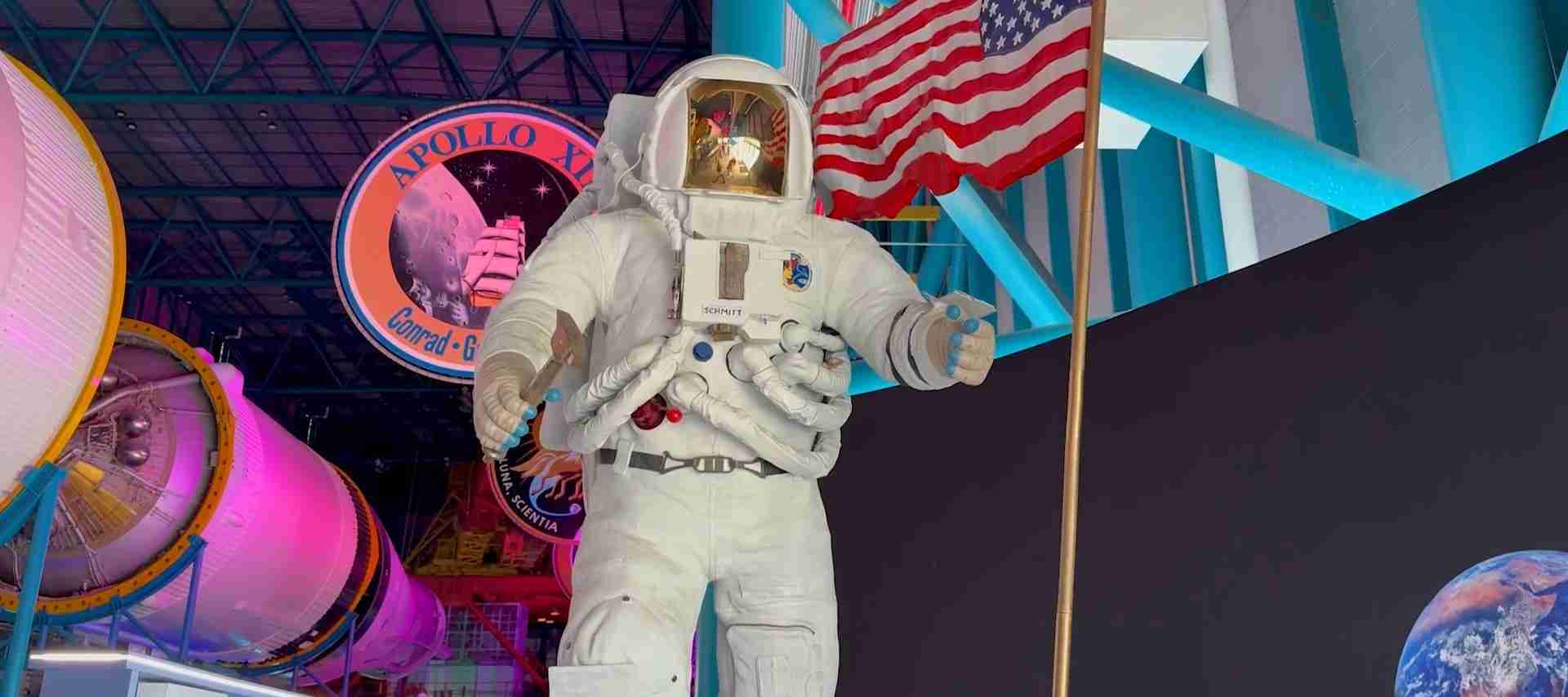
Kennedy Space Center Day Trip from Orlando 2026: Travel Planning Guide
Kennedy Space Center Visitor Complex stands just one hour east of Orlando, offering one of America’s most compelling day trip experiences where visitors walk among towering rockets, stand nose-to-nose with Space Shuttle Atlantis, and explore the actual launch facilities that sent humans to the moon. This comprehensive guide provides everything needed to plan a successful 2026 day trip from Orlando, including verified transportation costs, current admission pricing, optimal timing strategies, and detailed budget breakdowns for travelers at every spending level.
Key Takeaways for Kennedy Space Center Day Trip 2026
- Budget-Conscious Visit: Self-drive day trips cost $95-115 per person including gas, parking, discounted admission, and packed food, while organized tour options with included transportation range $145-165 per person for the complete experience.
- Mid-Range Experience: Comfortable visits with on-site dining and standard admission run $135-160 per person for self-drive visitors or $180-205 per person using organized tour transportation from Orlando hotels.
- Enhanced Experience: Premium visits including astronaut meet-and-greet experiences, full on-site meals, and souvenirs range $210-265 per person with self-drive transportation from Orlando.
- Transportation Essentials 2026: The 45-50 mile journey from Orlando takes one hour by car with gas costs of $10-15 round trip, while organized bus tours with admission included run $140-170 per person with convenient hotel pickup service.
- Timing Optimization: Arrive at opening time to maximize your visit, with parking gates opening at 8:30 AM and the complex opening at 9 AM daily, allowing 6-8 hours to experience major attractions including the bus tour, Space Shuttle Atlantis, IMAX films, and Rocket Garden.
- Admission Strategy 2026: Advance online tickets cost $64 per person with promotional codes versus $78 at the gate, with parking fees of $15 per vehicle paid separately upon arrival at Kennedy Space Center.
People Also Ask About Kennedy Space Center Day Trip from Orlando 2026
How much does a Kennedy Space Center day trip from Orlando cost in 2026?
A Kennedy Space Center day trip from Orlando costs $95-115 per person for budget-conscious visitors driving themselves with packed food, $135-160 per person for mid-range visitors with on-site dining, or $145-205 per person using organized tour transportation with hotel pickup. These ranges include all transportation, admission, parking, and food expenses for the complete day experience.
How long does it take to drive from Orlando to Kennedy Space Center in 2026?
The drive from Orlando to Kennedy Space Center takes approximately one hour covering 45-50 miles via Florida’s Beachline Expressway. Organized tour buses departing from Orlando International Drive or Disney area hotels typically require 75-90 minutes including pickup stops, with most tours departing Orlando between 7:30-8:30 AM to arrive at Kennedy Space Center for the 9 AM opening.
Is Kennedy Space Center worth visiting as a day trip from Orlando in 2026?
Kennedy Space Center provides exceptional value as an Orlando day trip, offering unique access to actual NASA launch facilities, historic spacecraft including Space Shuttle Atlantis and a complete Saturn V moon rocket, hands-on simulators, IMAX space films, and opportunities to meet astronauts that cannot be replicated at Orlando’s theme parks. Most visitors spend 6-8 hours exploring the complex and report the experience surpasses expectations, particularly families with space-interested children and adults fascinated by space exploration history.
What’s included with Kennedy Space Center admission in 2026?
Kennedy Space Center admission in 2026 includes unlimited access to Space Shuttle Atlantis and all interactive exhibits, the Kennedy Space Center Bus Tour visiting restricted areas and the Apollo/Saturn V Center, all IMAX theater films, Heroes and Legends featuring the U.S. Astronaut Hall of Fame, the Rocket Garden with historic launch vehicles, Gateway: The Deep Space Launch Complex, Shuttle Launch Experience simulator, Planet Play children’s area, and all live presentations throughout the day. Parking costs $15 per vehicle separately.
Extended multi-day tours – 5+ days
Featured Florida Multi-Day Tour Packages
3 days
Florida 3-Day Discovery Tour
- ✓ Comprehensive Florida experience
- ✓ Expert local guides included
- ✓ All accommodation included
- ✓ Transportation provided
5 days
Florida 5-Day Highlights Experience
- ✓ Comprehensive Florida experience
- ✓ Expert local guides included
- ✓ All accommodation included
- ✓ Transportation provided
7 days
Florida 7-Day Cultural Journey
- ✓ Comprehensive Florida experience
- ✓ Expert local guides included
- ✓ All accommodation included
- ✓ Transportation provided
10 days
Florida 10-Day Complete Adventure
- ✓ Comprehensive Florida experience
- ✓ Expert local guides included
- ✓ All accommodation included
- ✓ Transportation provided
Multi-day tour packages powered by TourRadar. Prices and availability subject to change.
Introduction: Planning Your Kennedy Space Center Day Trip from Orlando 2026
Kennedy Space Center Visitor Complex represents one of Florida’s most distinctive attractions, standing apart from Orlando’s entertainment-focused theme parks by offering authentic access to America’s actual space program facilities and artifacts. Located on Merritt Island approximately 50 miles east of Orlando, this NASA-operated complex provides visitors with opportunities unavailable anywhere else on Earth: walking beneath the massive Saturn V moon rocket that powered Apollo missions, viewing Space Shuttle Atlantis displayed as if still in orbit with payload bay doors open and robotic arm extended, touring actual launch facilities where astronauts departed for space, and potentially witnessing contemporary rocket launches from SpaceX, NASA, and United Launch Alliance.
The 2026 visiting experience builds on decades of continuous expansion and improvement. Recent additions include Gateway: The Deep Space Launch Complex showcasing future Mars mission technologies, upgraded virtual reality experiences, enhanced interactive simulators, and expanded astronaut encounter opportunities. The complex operates as a fully self-funded entity through admission revenue, parking fees, and on-site spending, receiving no government tax dollars despite housing priceless NASA artifacts and serving as the public gateway to Kennedy Space Center operations.
Unlike Orlando’s theme parks where experiences prioritize entertainment over education, Kennedy Space Center balances inspiration with authentic science and history. Exhibits feature actual spacecraft that flew in space, flown artifacts from missions, and presentations from individuals who participated directly in space exploration. The educational depth appeals particularly to families seeking substantive experiences, science enthusiasts, history buffs, and international visitors drawn to American space achievement.
This guide addresses every practical consideration for planning a successful day trip from Orlando in 2026. Transportation analysis covers self-drive economics versus organized tour convenience, admission pricing strategies including discount opportunities, optimal timing for different visitor priorities, detailed attraction guides prioritizing must-see experiences, realistic budget breakdowns across spending levels, food and dining strategies, special experience add-ons, launch viewing opportunities, and insider tips developed from visitor feedback and operational patterns.
The planning approach recognizes that Kennedy Space Center differs fundamentally from Orlando attractions. There are no roller coasters or character meet-and-greets, crowds concentrate differently, weather considerations involve exposed outdoor walking, and the experience rewards intellectual curiosity rather than adrenaline. Visitors arrive with varying space knowledge levels from casual interest to aerospace expertise, yet the complex accommodates this spectrum through layered presentation approaches offering both accessible overviews and technical depth.
Budget considerations reflect 2026 pricing realities while acknowledging multiple cost-control strategies. Advance ticket purchase provides immediate savings, packing food eliminates expensive on-site dining, self-drive transportation reduces tour premiums, and selective add-on purchases prevent overspending on optional experiences. The complex’s admission-inclusive model means one ticket price unlocks all major attractions without additional per-ride fees, simplifying budget planning compared to pay-per-attraction venues.
Timing optimization proves critical for visitor satisfaction. Arriving at opening provides first access to popular attractions before crowds build, securing early spots on the bus tour avoids midday wait times, and structuring your visit sequence based on attraction schedules maximizes efficiency. The complex maintains consistent operating hours year-round with seasonal variations during peak periods, allowing advance planning without schedule uncertainty.
Transportation Options from Orlando to Kennedy Space Center 2026
Transportation represents the first major planning decision for Kennedy Space Center day trips, with choices significantly impacting both budget and convenience. The 45-50 mile journey from Orlando to Merritt Island offers three primary approaches, each presenting distinct advantages depending on group size, budget priorities, and comfort preferences.
Self-Drive Transportation Economics and Logistics 2026
Driving from Orlando to Kennedy Space Center costs $10-15 in fuel for round-trip travel depending on vehicle efficiency and current gas prices. The route follows Florida’s Beachline Expressway from Orlando’s tourist corridor directly east to the Space Coast, providing straightforward navigation with minimal traffic complexity outside rush hours. GPS systems reliably guide drivers to Kennedy Space Center Visitor Complex, though travelers must search specifically for “Kennedy Space Center Visitor Complex” rather than generic “Kennedy Space Center” to avoid misdirection to restricted NASA facilities.
Parking at Kennedy Space Center costs $15 per standard vehicle, with lots opening 30 minutes before complex opening at 8:30 AM daily. Multiple parking areas serve different access points, with Lot 2 designated for visitors with disabilities and standard vehicles directed to primary lots offering short walks to the entrance. The parking fee covers all-day access with in-and-out privileges, allowing visitors to return to vehicles for forgotten items or packed food access.
The total self-drive cost ranges $25-30 per vehicle for transportation and parking, translating to $13-15 per person for couples or $6-8 per person for families of four. This economic advantage makes self-drive the clear budget winner, though it requires navigating unfamiliar highways, managing rental car costs for visitors without vehicles, and handling driving responsibilities rather than relaxing during transport.
Departure timing from Orlando depends on arrival priorities. Travelers targeting 9 AM opening should depart Orlando by 7:45 AM accounting for one-hour drive time plus parking and entrance processing. The Beachline Expressway flows smoothly during morning hours except during special events or rocket launches, when traffic increases significantly near Kennedy Space Center.
Self-drive flexibility allows spontaneous schedule adjustments impossible with organized tours. Visitors can extend stays past tour departure times, leave early if exhausted, or detour to nearby Cocoa Beach for post-visit relaxation. Vehicle access also facilitates bringing coolers with packed food and storing purchases without carrying bags throughout the day.
Organized Tour Transportation with Hotel Pickup 2026
Organized bus tours from Orlando include round-trip transportation and Kennedy Space Center admission in single package pricing ranging $140-170 per person depending on booking platform and included extras. Major operators including Gray Line Orlando and Viator-contracted services provide designated pickup points across Orlando’s International Drive corridor, Disney resort areas, and major hotel clusters.
Tour buses typically depart Orlando between 7:30-8:30 AM with multiple pickup stops requiring 75-90 minutes to reach Kennedy Space Center. Return departures from Kennedy Space Center occur around 5 PM, providing approximately 7-8 hours at the complex. This structured schedule eliminates driving stress and parking concerns while allowing visitors to relax, enjoy narration during transport, and potentially nap on return journeys.
The tour premium versus self-drive ranges $55-85 per person after accounting for separate admission and parking costs. This premium purchases convenience, driver expertise, and elimination of navigation concerns. Tour guides provide Kennedy Space Center orientation during transport, offer timing recommendations, and handle logistics allowing visitors to focus entirely on the experience rather than operational details.
Tour transportation proves particularly valuable for international visitors unfamiliar with American highways, solo travelers avoiding rental car expenses, and groups preferring coordinated experiences over independent exploration. The fixed return schedule does constrain flexibility, potentially forcing early departures for visitors wanting extended time or requiring quick exits for families with exhausted children.
Private Transfer and Rideshare Options 2026
Private shuttle services from Orlando to Kennedy Space Center cost $55-70 per person each way, totaling $110-140 per person for round-trip transportation. These services provide hotel pickup, comfortable vehicles, and flexible scheduling but charge premium rates reflecting personalized service.
Rideshare services including Uber and Lyft operate to Kennedy Space Center with one-way costs ranging $60-90 from Orlando depending on surge pricing and exact pickup location. Round-trip rideshare costs approach or exceed organized tour pricing while lacking admission inclusion, making this option economically inefficient except for specific circumstances like late departures or early returns incompatible with tour schedules.
Private transfers make sense for large groups splitting costs, travelers with specific timing requirements, or visitors combining Kennedy Space Center with other Space Coast destinations like Cocoa Beach. The per-person economics improve substantially with group size, potentially matching or beating tour pricing for parties of four or more.
Kennedy Space Center Admission Pricing and Ticket Strategies 2026
Understanding Kennedy Space Center’s admission structure and available discounts significantly impacts trip budgets, with advance planning potentially saving $15-20 per person through strategic ticket purchases and promotional offers.
Standard Admission Pricing Structure 2026
Kennedy Space Center charges $78 per person for standard one-day admission when purchased directly at the gate, covering adults, children age 3-11, and seniors age 55 and older equally. This date-specific ticket grants access to all permanent exhibits, the bus tour, IMAX films, and attractions throughout the complex with no additional per-ride or per-show fees.
Advance online purchase through Kennedy Space Center’s official website reduces this to approximately $77-78 including taxes and convenience fees. Third-party authorized sellers including Undercover Tourist, Attraction Tickets, and tour operators offer promotional pricing ranging $64-72 per person depending on seasonal promotions and discount codes.
Current 2026 promotional offers include the “Adults at Kids Rate” program running through December 18, 2026, where promotional code SAVEMORE reduces admission to $64 per person for all ages. This represents 18% savings versus gate pricing and should be utilized by all advance planners checking official ticket partner websites before purchasing.
Multi-Day and Annual Pass Options 2026
Two-day admission tickets cost approximately $90-95 per person, providing two separate visits within six months of first use. This pricing structure makes sense for visitors staying on the Space Coast multiple days or combining Kennedy Space Center with beach vacations, offering 40% cost reduction on the second visit.
The Atlantis Annual Pass costs $160 per adult and $130 per child, including unlimited year-round admission, free parking on every visit, 10% discounts on food and merchandise, and guest admission discounts. The pass breaks even at approximately two full-price visits, making it valuable for Florida residents, frequent Orlando visitors, or space enthusiasts planning multiple 2026 trips.
Family-oriented Cosmic Club annual passes cost approximately $460 covering two adults and up to four children with similar benefits. Large families visiting twice annually save significantly with this option compared to individual daily tickets.
Add-On Experiences and Premium Tickets 2026
Chat With an Astronaut experiences cost an additional $35-40 per person above standard admission, providing small-group sessions with actual NASA astronauts including continental breakfast or afternoon refreshments, signed portraits, commemorative gifts, and extended question-and-answer opportunities. These sessions occur twice daily with advance reservation required.
The Astronaut Training Experience costs $175-195 per participant for 4-5 hour immersive programs including spacewalk training simulators, Mars exploration scenarios, mission control exercises, and guided instruction from Space Flight Experts. Minimum age restrictions of 10 years old apply with separate adult and family sessions available.
KSC Explore Tour enhances the standard bus tour with extended access to restricted areas, additional photo opportunities at launch pads, and expert guide narration. Pricing adds $30-35 to standard admission with limited daily availability requiring advance booking.
Discount Opportunities and Special Offers 2026
Florida residents access periodic promotional offers including the Florida Four-Pack selling four daily admission tickets for $167 plus tax when purchased by May 24, 2026, for use through December 13, 2026. This represents $42 per ticket, a 46% discount versus gate pricing benefiting local residents.
Military personnel receive verified discounts through ID.me authentication on the official ticketing platform, reducing admission by approximately 10-15% depending on seasonal promotions. Military discounts extend to immediate family members with proper identification.
Senior citizens age 55 and older qualify for marginal discounts of $3-5 versus adult admission when purchasing directly through Kennedy Space Center, though third-party promotional codes often provide larger savings regardless of age.
Go City Orlando All-Inclusive Pass includes Kennedy Space Center admission alongside 25+ Orlando attractions for bundled pricing. Multi-day passes covering 2-5 days of attraction access cost $200-400 per adult depending on duration, with break-even typically requiring 3-4 major attractions. This option suits visitors spending extended time in Orlando visiting multiple theme parks and attractions.
Complete Day Budget Breakdown by Spending Level 2026
Realistic budget planning for Kennedy Space Center day trips requires accounting for all cost components including transportation, admission, parking, food, and discretionary spending across different comfort levels and transportation choices.
Budget-Conscious Day Trip Cost Breakdown 2026
Budget-conscious visitors minimizing expenses through self-drive transportation and packed food spend $95-115 per person for complete day trips from Orlando. Cost components include round-trip fuel costs of $10-15, parking fee of $15 shared between vehicle occupants, discounted admission tickets at $64 per person secured through promotional codes, packed lunch and snacks from Orlando grocery stores costing $0-10 per person, and on-site beverages or small treats adding $5-10 per person.
This budget level delivers the full Kennedy Space Center experience without sacrificing major attractions or exhibits, relying instead on advance planning and minor inconveniences like carrying coolers and packing food. Couples driving together achieve the lowest per-person costs through shared parking fees, while families of four reduce individual transportation costs further.
Visitors choosing organized tour transportation instead of self-drive incur higher costs of $145-165 per person for the budget-conscious approach. This range reflects tour packages including admission and transport at $140-145 per person, packed food at $0-10 per person, and minimal on-site beverage purchases of $5-10 per person. The tour premium purchases convenience and relaxation but increases trip cost by approximately $50 per person versus self-drive alternatives.
Mid-Range Comfort Day Trip Cost Breakdown 2026
Mid-range visitors balancing cost consciousness with convenience and comfort spend $135-160 per person for self-drive day trips from Orlando. Budget components include fuel costs of $10-15 round trip, $15 parking fee divided among occupants, standard admission at $75-80 per person purchased online with moderate discounts, complete on-site lunch and snacks costing $25-35 per person at Kennedy Space Center restaurants, and beverages plus small souvenir purchases adding $10-15 per person.
This spending level eliminates food packing requirements while avoiding premium dining options, typically selecting casual counter-service restaurants like Orbit Cafe for burgers, sandwiches, or pizza with soft drinks. One meal on-site combined with snacks or breakfast before departure and dinner after return provides adequate nutrition without excessive spending.
Mid-range visitors using organized tour transportation spend $180-205 per person combining tour packages at $140-145 per person, on-site dining at $25-35 per person, and souvenir purchases or experience add-ons at $15-25 per person. This range reflects comfort-oriented travel preferring coordinated logistics over cost minimization.
Enhanced Experience Day Trip Cost Breakdown 2026
Enhanced experience visitors prioritizing premium activities and convenience spend $210-265 per person for self-drive day trips incorporating special add-on experiences. Budget components include fuel costs of $10-15 round trip, $15 parking fee shared among occupants, premium admission bundles including astronaut encounters at $120-140 per person, complete on-site meals including breakfast or lunch at themed restaurants costing $40-55 per person, and souvenir purchases plus photo opportunities adding $25-40 per person.
This level accesses Kennedy Space Center’s premium offerings including Chat With an Astronaut sessions, enhanced tour experiences, commemorative photo packages, and higher-quality dining options. Visitors seeking maximum engagement with minimal time constraints benefit from this approach, particularly one-time visitors or special occasion celebrations.
Enhanced experiences using tour transportation cost slightly more with identical admission and activity levels but tour premiums built into base costs. The enhanced self-drive approach typically provides better value by allowing flexible timing for premium experiences without tour schedule constraints.
Optimal Timing and Visit Planning Strategies 2026
Strategic timing decisions significantly impact Kennedy Space Center visit quality, affecting crowd levels, attraction wait times, and overall satisfaction through the day.
Arrival Timing and Opening Rush Strategy 2026
Kennedy Space Center opens at 9 AM daily year-round with parking lots opening 30 minutes earlier at 8:30 AM. Arriving at opening time provides substantial advantages including first access to the Kennedy Space Center Bus Tour before virtual queue demand increases, shorter entrance security lines, preferred parking closer to entrances, and uncrowded photo opportunities at major exhibits.
The bus tour operates on virtual queue systems during 2026 requiring mobile device registration through QR codes posted throughout the complex. Early arrivals secure morning tour times allowing systematic progression through attractions, while late arrivals often face afternoon-only tour availability forcing schedule rearrangement.
Visitors targeting 9 AM arrival should depart Orlando by 7:45 AM for self-drive trips, allowing one-hour travel time plus parking and entrance processing. Tour buses departing Orlando at 7:30-8 AM typically arrive at Kennedy Space Center between 8:45-9:15 AM depending on pickup route efficiency.
Seasonal Considerations and Weather Planning 2026
Kennedy Space Center operates year-round with identical operating hours and attraction access regardless of season, though visitor experience varies significantly with Florida weather patterns and crowd cycles.
Summer months from June through August bring intense heat and humidity with afternoon thunderstorms common. Outdoor walking between exhibits becomes uncomfortable during midday hours, while indoor air-conditioned attractions provide respite. Summer also coincides with peak family travel creating higher crowd levels and longer attraction wait times.
Winter months from December through February offer comfortable temperatures ideal for outdoor exploration with lower humidity and minimal rain. Crowds concentrate around holiday periods between Christmas and New Year’s Day with lighter attendance during January and February. Winter provides optimal weather conditions for extended outdoor time in the Rocket Garden and queue areas.
Spring and fall shoulder seasons from March-May and September-November balance moderate crowds with pleasant weather. Spring break periods in March create temporary crowd surges, while September-November remains consistently light except Thanksgiving week. These periods provide the best combination of manageable crowds and comfortable temperatures.
Summer visitors should plan indoor attractions during midday heat, carrying water bottles and wearing sun protection for outdoor segments. Winter visitors require minimal weather preparation beyond light jackets for morning hours. All seasons benefit from checking weather forecasts and carrying light rain gear for afternoon thunderstorm possibility.
Rocket Launch Viewing Opportunities 2026
Kennedy Space Center provides viewing opportunities for rocket launches from both NASA and commercial operators including SpaceX and United Launch Alliance, though launch schedules change frequently due to technical and weather considerations.
Visitors can check Kennedy Space Center’s official launch calendar showing confirmed launch dates, though these schedules shift regularly sometimes within hours of planned liftoff. General admission tickets permit launch viewing from designated areas when launches occur during complex operating hours, creating exceptional free bonus experiences for fortunate visitors.
Launch days dramatically increase traffic and crowds approaching Kennedy Space Center, with road closures potentially affecting access and parking availability. Some launch dates close the complex entirely to general admission visitors, requiring verification through official channels before planning trips around specific launches.
Premium launch viewing packages offer guaranteed access and closer viewing locations but cost significantly more than standard admission. These packages sell out quickly when launch dates firm up, requiring advance booking and flexible travel schedules given frequent launch postponements.
Essential Attractions and Experience Prioritization 2026
Kennedy Space Center houses dozens of exhibits, attractions, and experiences requiring strategic prioritization to maximize limited single-day visits.
Kennedy Space Center Bus Tour: The Must-Do Foundation 2026
The Kennedy Space Center Bus Tour provides exclusive access to restricted NASA areas impossible to visit independently, making it the single most essential experience at the complex. This 90-120 minute narrated tour includes drive-by views of massive Vehicle Assembly Buildings where rockets undergo final preparations, LC-39 gantries where Apollo missions and Space Shuttles launched, and contemporary operational facilities supporting current space programs.
Tour stops include the Apollo/Saturn V Center housing the massive 363-foot Saturn V moon rocket displayed horizontally in a climate-controlled building, and The Gantry at LC-39 offering launch pad perspectives from elevated platforms. Exhibits at the Apollo/Saturn V Center include the Firing Room 1 recreation showing Mission Control during Apollo 8’s lunar departure, moon rock touchable displays, and extensive Apollo program artifacts.
The virtual queue system introduced in 2026 requires scanning QR codes posted throughout the complex using personal mobile devices. Upon scanning, visitors receive estimated wait times and mobile notifications when their boarding window approaches. This system allows exploring other attractions while holding positions in tour queues rather than standing in physical lines.
Optimal bus tour timing occurs during morning hours before crowds peak, with early afternoon representing second-best timing before final afternoon tours depart around 2:30-3 PM depending on complex closing times. The tour represents 2-3 hours of visit time including transport, stops, and exhibits, constituting roughly one-third to one-half of typical visit durations.
Space Shuttle Atlantis: The Centerpiece Exhibit 2026
Space Shuttle Atlantis anchors Kennedy Space Center’s permanent collection, displayed in a dedicated 90,000 square foot facility with the orbiter positioned 30 feet above ground level at a 43.21-degree angle with payload bay doors open and robotic Canadarm extended, recreating the spacecraft’s appearance during orbit.
The Atlantis building contains over 60 interactive exhibits and simulators including Shuttle Launch Experience, a motion simulator replicating the physical sensations of shuttle ascent including vibration, noise, and G-forces. Additional interactive displays allow visitors to practice robotic arm operations, attempt Space Station docking maneuvers, and explore detailed replicas of shuttle crew compartments.
Atlantis accumulated 33 missions over 26 years including final Hubble Space Telescope servicing missions and multiple International Space Station construction flights. The orbiter displays wear and tear from space operations including heat shield tile discoloration and payload bay scuff marks, providing authentic evidence of its working history rather than restored pristine condition.
Visitor flow through Atlantis begins with a dramatic multi-story reveal as theater doors open exposing the orbiter after introductory films build anticipation. Allow 90-120 minutes for thorough exploration including all interactive exhibits, films, and detailed examination of Atlantis itself. The building’s climate control provides air-conditioned respite during hot weather, making it ideal for midday visits.
Heroes and Legends with U.S. Astronaut Hall of Fame 2026
Heroes and Legends celebrates America’s original astronauts from Mercury, Gemini, and early Apollo programs through multimedia presentations, artifacts, and the U.S. Astronaut Hall of Fame honoring space exploration pioneers. The attraction includes 4D theater presentations, authentic spacecraft from early programs, and interactive exhibits exploring astronaut selection, training, and mission execution.
The U.S. Astronaut Hall of Fame portion contains extensive displays of personal artifacts from inducted astronauts including flight suits, mission patches, medals, and personal items. Video presentations feature first-person accounts from astronauts describing training experiences, launch emotions, and space operations.
Allow 60-90 minutes for complete exploration, with particular attention to the 4D presentation offering immersive experiences through physical effects synchronized with visual content. This attraction provides essential context for understanding NASA’s human spaceflight evolution from initial Mercury flights through contemporary programs.
Rocket Garden: Historic Launch Vehicle Display 2026
The Rocket Garden displays actual rockets from Mercury, Gemini, and Apollo programs standing vertically in outdoor configuration, creating dramatic photo opportunities beneath towering launch vehicles. Visitors walk among rockets that actually flew or served as test articles, with informational plaques explaining each vehicle’s purpose and heritage.
The garden includes Mercury-Redstone and Mercury-Atlas boosters that launched America’s first astronauts, Gemini-Titan II vehicles that pioneered spacewalking and orbital rendezvous, and Apollo-era rockets demonstrating the technological progression toward moon landings. Physical scale creates visceral understanding of launch vehicle size impossible through photos or descriptions.
Self-guided exploration takes 30-45 minutes with optional guided tours providing deeper technical and historical context. The outdoor location exposes visitors to weather, making morning or late afternoon timing preferable during hot summer months. Photographers should plan for strong Florida sunlight creating dramatic shadows and requiring exposure compensation.
Gateway: The Deep Space Launch Complex 2026
Gateway represents Kennedy Space Center’s newest permanent exhibit focusing on contemporary and future space exploration including Mars missions, commercial spaceflight developments, and next-generation NASA programs. The facility showcases actual spacecraft currently in development, interactive displays explaining deep space challenges, and Spaceport KSC, an immersive ride launching participants on virtual journeys through the solar system.
Spaceport KSC utilizes motion platforms, projection domes, and environmental effects creating realistic space travel sensations while educational narration explains destinations and challenges. Multiple journey options provide different experiences during repeat visits, with reservation systems potentially requiring virtual queue participation similar to the bus tour.
Additional Gateway exhibits include spacecraft that flew on recent missions, engineering mockups showing Mars rover technologies, and displays explaining life support systems for long-duration space travel. Allow 60-90 minutes for complete exploration including ride experiences and exhibit examination.
IMAX Theater Space Films 2026
Kennedy Space Center’s IMAX theaters screen multiple space-themed documentaries on five-story screens with enhanced audio systems creating immersive viewing experiences. Film topics rotate periodically but typically include titles exploring International Space Station operations, Hubble Space Telescope discoveries, and historic mission recreations.
Two IMAX theaters allow continuous programming throughout operating hours with showtimes listed on daily schedules distributed at entrance or available through the Kennedy Space Center mobile app. Films run 40-50 minutes each, providing air-conditioned breaks from outdoor walking while delivering educational content in engaging formats.
Strategic IMAX timing fills gaps between scheduled activities like bus tour queue notifications or provides midday respite during peak heat. Check current film offerings during visit planning to prioritize preferred topics, though all films maintain high production quality and educational value.
Food and Dining Strategies for Kennedy Space Center Day Trips 2026
Food planning significantly impacts both budget and visit efficiency, with multiple approaches suited to different priorities and spending levels.
Packed Food Policy and Cooler Logistics 2026
Kennedy Space Center permits visitors to bring outside food and beverages in small soft-sided coolers resembling lunchboxes, providing substantial savings versus on-site dining. Glass containers and hard-sided coolers are prohibited for safety and security reasons, while alcoholic beverages remain restricted though beer and wine are available for purchase at select on-site locations.
All bags undergo security screening at complex entrance with food inspection confirming policy compliance. Coolers can be retrieved from parked vehicles throughout the day using in-and-out parking privileges, allowing mid-visit food refreshment without carrying supplies constantly.
Budget-conscious visitors typically pack complete lunches including sandwiches, fruits, snacks, and bottled water, eliminating all on-site food costs except occasional treat purchases. This approach saves $20-30 per person daily versus on-site dining while allowing food customization for dietary restrictions or preferences.
Practical considerations include Florida heat affecting perishable foods left in parked vehicles, requiring insulated coolers with ice packs for items needing refrigeration. Designated outdoor picnic areas provide shaded seating for packed meal consumption, though visitors can also eat in climate-controlled indoor spaces near exhibits.
On-Site Dining Options and Pricing 2026
Kennedy Space Center operates multiple dining venues throughout the complex offering standard theme park fare including burgers, pizza, sandwiches, salads, and kid-friendly options. Orbit Cafe serves as the primary full-service dining location with mobile ordering available to reduce wait times during peak lunch periods.
Meal costs reflect typical attraction pricing with entrees ranging $12-18, combination meals with drinks costing $15-22, and individual beverages at $4-6. Complete sit-down meals including entree, drink, and dessert total $20-30 per person, while lighter options like sandwiches with drinks run $12-18.
Additional dining locations include Space Bowl Bistro offering health-focused acai and grain bowls, Red Rock Grill providing made-to-order items, Starbucks for coffee and pastries, and seasonal food trucks adding variety. The Apollo/Saturn V Center houses Moon Rock Cafe serving grab-and-go sandwiches, salads, and snacks during bus tour stops.
Peak lunch hours from 12-2 PM create longest wait times and seating competition, with early lunch at 11 AM or late lunch after 2 PM providing faster service and available seating. Mobile ordering through the Kennedy Space Center app reduces counter wait times at participating locations.
Dining Package and Meal Bundle Options 2026
Kennedy Space Center offers meal voucher bundles combining admission with predetermined food credits, currently priced around $85-95 per person for admission plus $20 meal vouchers usable at Orbit Cafe or Moon Rock Cafe. These bundles provide modest savings versus separate admission and meal purchases while simplifying budget planning.
Meal vouchers require single-transaction redemption without change for unused value, making them most economical when full voucher value is utilized. The $20 credit covers one combination meal for most visitors, though sharing strategies or voucher pooling among families can maximize value.
Holiday dining packages offered during peak seasons bundle admission with specific meal options and reserved seating, eliminating lunch uncertainty during crowded periods. These seasonal offerings vary in structure and pricing, requiring checking official websites during trip planning phases.
Special Add-On Experiences and Premium Activities 2026
Beyond standard admission attractions, Kennedy Space Center offers premium experiences providing enhanced access, exclusive interactions, and specialized activities for visitors seeking deeper engagement.
Chat With an Astronaut Experience 2026
Chat With an Astronaut sessions provide intimate small-group encounters with actual NASA astronauts who flew Space Shuttle missions or served on International Space Station expeditions. Sessions occur twice daily with morning programs including continental breakfast and afternoon sessions featuring light refreshments, both lasting approximately 45 minutes including presentation and question-and-answer periods.
Participating astronauts rotate regularly based on availability, with daily schedules posted on Kennedy Space Center’s website and app. Participants receive signed astronaut portraits, commemorative gifts, and photo opportunities with astronauts in casual settings impossible during standard complex visits.
The $35-40 additional cost per person above standard admission purchases access limited to 20-30 participants per session, ensuring everyone can ask questions and interact directly with presenters. Questions range from technical mission details to personal reflections on Earth views from space, with astronauts sharing unrehearsed stories and candid perspectives.
This experience particularly appeals to space enthusiasts, aspiring astronauts, and families wanting memorable interactions beyond passive exhibit viewing. Advance booking is essential as sessions sell out quickly, particularly during peak visitor seasons and holidays.
Astronaut Training Experience Programs 2026
The Astronaut Training Experience immerses participants aged 10 and older in 4-5 hour intensive programs simulating astronaut preparation for space missions. Activities include spacewalk training in simulated microgravity environments, Mars exploration scenarios requiring teamwork and problem-solving, Mission Control exercises coordinating launch sequences, and Land and Sea training preparing for spacecraft recovery operations.
Programs run throughout 2026 with separate adult sessions and family sessions accommodating mixed-age groups. Space Flight Experts and Educators guide activities, providing technical context and mission briefings. Participants receive ATX gear including mission polo shirts, snacks and beverages, and certificates recognizing program completion.
The $175-195 per person cost reflects extensive facility usage, small group sizes ensuring individual attention, and specialized equipment access unavailable through standard admission. Programs require advance booking with limited daily capacity, often selling out weeks ahead during popular travel periods.
Visitor Complex admission is not included with ATX programs, requiring separate ticket purchase if participants want to explore general attractions before or after training sessions. The program schedule typically runs 8:30 AM to 1:30 PM, allowing afternoon complex exploration for those purchasing separate admission.
KSC Explore Tour Enhanced Bus Experience 2026
KSC Explore Tour enhances the standard bus tour with extended access to restricted areas, additional stops at operational facilities, closer launch pad approaches, and specialized guide narration from experts with deep NASA backgrounds. Tour duration extends to approximately 4-5 hours versus 2-3 hours for standard tours, with significantly smaller group sizes ensuring better photo opportunities and question access.
Enhanced tour routes may include Cape Canaveral Space Force Station facilities housing Air Force and commercial launch operations, closer approaches to Vehicle Assembly Buildings with technical architecture explanations, and potential access to areas undergoing active mission preparations when security permits.
The $30-35 premium above standard admission reflects smaller capacity and extended tour duration, with advance booking essential due to limited daily departures. This option suits space history enthusiasts, photographers seeking unique perspectives, and visitors wanting technical depth beyond general tour narration.
Enhanced tours depart less frequently than standard bus tours, requiring schedule coordination during visit planning. Tour availability also depends on Kennedy Space Center operational requirements, with routes potentially modified or cancelled when active mission preparations restrict access.
Practical Logistics and Operational Details 2026
Understanding Kennedy Space Center’s operational policies and practical considerations prevents common frustrations and optimizes visit experiences.
Operating Hours and Seasonal Variations 2026
Kennedy Space Center maintains year-round operating hours from 9 AM to 5 PM daily with seasonal extensions to 6 PM or 7 PM during peak summer months and holiday periods. Parking lots open 30 minutes before complex opening at 8:30 AM daily, with last admission occurring one hour before closing times.
The complex closes only on Christmas Day annually, operating on all other holidays including New Year’s Day, Thanksgiving, and Independence Day. Extended hours during December holiday weeks accommodate increased visitation, while shorter hours never apply except during hurricanes or exceptional circumstances requiring emergency closures.
Specific launch dates may alter operating hours or close the complex entirely to general admission, requiring verification through official channels when planning trips around known launch schedules. Launch-related closures typically receive advance notice, though last-minute schedule changes can affect day-of visits.
Bus tour final departures occur 2.5 hours before complex closing, establishing practical visit minimums of 6-7 hours to experience major attractions. Visitors planning comprehensive experiences including all major exhibits, bus tour, multiple IMAX films, and specialty activities should plan full-day visits from opening to closing.
Security Procedures and Prohibited Items 2026
All visitors undergo security screening at complex entrance including bag inspections, metal detector passage, and potential random enhanced screening. Prohibited items include weapons of any kind regardless of concealed carry permits, glass containers, hard-sided coolers, large bags resembling luggage, and items prohibited on federal property including marijuana despite Florida medical programs.
Processing time through security varies with crowd levels, ranging from 5-10 minutes during quiet periods to 30+ minutes during peak times. Arriving with minimal bags and avoiding prohibited items expedites entry, with security personnel providing storage guidelines for borderline items.
Photography is permitted throughout the complex except in designated restricted areas, with professional equipment including tripods and external lighting discouraged but not explicitly prohibited. Drone operations are strictly forbidden throughout Kennedy Space Center property due to proximity to operational NASA facilities and airspace restrictions.
Service animals are welcome throughout the complex, while pets cannot enter but can be housed in free on-site air-conditioned kennels. Pet owners must provide food, water, toys, and blankets with kennels staffed but not providing active pet care beyond shelter.
Accessibility Services and Accommodations 2026
Kennedy Space Center provides comprehensive accessibility services including wheelchair rentals, accessible parking in designated lots, wheelchair-accessible buses for tour programs, and Guest Accessibility Passes helping staff identify visitors requiring sensory or mobility accommodations.
All major buildings feature elevator access, wide pathways, accessible restrooms, and viewing areas designed for wheelchair users. The Rocket Garden’s outdoor terrain presents slight accessibility challenges with some uneven surfaces, though primary pathways accommodate mobility devices.
Assistive listening devices, audio description services, and printed scripts for video presentations support visitors with hearing or vision impairments. Electronic translator systems available for rental provide foreign language support beyond English, though availability varies by language and should be confirmed during advance planning.
Visitors requiring special assistance should stop at Guest Services near the main entrance to discuss specific needs and receive appropriate accommodation equipment or guidance. Staff training includes disability awareness with accommodation requests generally received positively and addressed comprehensively.
Mobile App and Digital Resources 2026
The official Kennedy Space Center Visitor Complex mobile app provides essential visit support including interactive maps with GPS positioning, real-time wait times for major attractions, daily schedules for IMAX films and presentations, virtual queue registration for bus tours, and mobile food ordering at participating restaurants.
The app requires smartphone compatibility with iOS or Android operating systems, cellular data connectivity or complex WiFi access, and sufficient battery life for day-long usage. Visitors should download the app before arriving to avoid entrance bottlenecks and ensure functionality before needed.
Map functionality helps navigate the 70-acre complex efficiently, showing current location relative to attractions and suggesting optimal walking routes. Real-time updates notify users of schedule changes, weather alerts requiring shelter, or special presentations and astronaut appearances.
Ticket storage within the app eliminates paper ticket requirements, with barcode scanning at entrance gates providing expedited entry. Pre-purchased tickets automatically populate in the app upon email confirmation, though printing backup copies prevents access issues if phone batteries die or technical problems occur.
Family Visit Strategies and Child-Focused Planning 2026
Kennedy Space Center appeals to families across age ranges, though visit strategies should account for child ages, attention spans, and specific interests to maximize satisfaction and minimize frustrations.
Age-Appropriate Attraction Selection 2026
Preschool children ages 3-5 engage most with Planet Play, an indoor space-themed play area featuring climbing structures, slides, and interactive exhibits scaled to young children. The Rocket Garden provides photo opportunities and open space for movement, while Atlantis exhibits fascinate through spacecraft scale rather than technical details.
Elementary school children ages 6-11 comprehend bus tour narration, enjoy IMAX films with engaging visuals, and interact effectively with hands-on exhibits throughout the complex. The Shuttle Launch Experience simulator captivates this age group through physical sensations, while chat sessions with astronauts inspire through real-person connections to space exploration.
Teenagers and young adults appreciate technical depth, historical context, and authentic artifacts distinguishing Kennedy Space Center from entertainment-focused attractions. Enhanced tour options, astronaut training experiences, and detailed exhibit exploration match teenage cognitive development and emerging interests in STEM fields.
Multi-generational family visits require balancing diverse attention spans and interest levels. Strategic rotation between active experiences and passive viewing, scheduled breaks preventing exhaustion, and allowing family members to split for individual interests while reuniting for highlights maintains engagement across age ranges.
Stroller Access and Child Care Facilities 2026
Stroller rentals are available near the main entrance for families arriving without personal strollers, with single and double options accommodating various family configurations. The complex’s paved pathways and building access support stroller navigation throughout most areas, though the Rocket Garden’s outdoor terrain presents minor challenges.
Baby care centers provide private nursing areas, diaper changing stations, and climate-controlled spaces for infant care away from crowded public restrooms. These dedicated facilities include comfortable seating, clean water access, and basic supplies for emergency situations.
Most restaurants and rest areas accommodate strollers with wide aisles and designated parking areas preventing pathway obstruction. Bus tours require stroller folding for storage during transport, making lightweight collapsible models preferable to bulky multi-feature strollers requiring extensive disassembly.
Educational Preparation and Pre-Visit Learning 2026
Pre-visit educational preparation significantly enhances children’s engagement and understanding during Kennedy Space Center experiences. Age-appropriate books about space exploration, NASA missions, and astronaut biographies provide context making exhibits more meaningful rather than abstract.
Documentary films about Apollo missions, Space Shuttle programs, or International Space Station operations available through streaming services build excitement while explaining basic concepts children encounter during visits. YouTube videos showing rocket launches, spacewalks, and astronaut daily routines create realistic expectations and spark questions children can ask during chat sessions.
School-age children benefit from structured pre-visit activities like creating lists of questions for astronauts, researching specific exhibits they want to see, or maintaining space journals documenting learning before, during, and after visits. These activities extend educational value beyond single-day experiences into broader space science learning.
Solo Traveler and Small Group Considerations 2026
Kennedy Space Center accommodates solo travelers and small groups effectively, though specific planning adjustments optimize experiences for visitors traveling alone or in pairs.
Solo Traveler Transportation Economics 2026
Solo travelers face challenging transportation economics since rental car costs, fuel expenses, and parking fees cannot be divided among multiple passengers. Organized tour packages including admission and transportation often provide better value for solo visitors than independent travel requiring full rental car costs.
Tour packages costing $140-170 per person eliminate rental car daily rates typically running $40-60, parking fees of $15, and gas costs of $10-15. Even accounting for lower standard admission prices, the convenience and social elements of group tours often justify premium pricing for solo travelers.
Rideshare services provide intermediate options for solo travelers willing to pay $120-180 round trip for point-to-point transport without rental car commitments or tour schedule constraints. This approach makes sense for visitors combining Kennedy Space Center with other Space Coast activities or beach time impossible with tour deadlines.
Social Opportunities and Group Connections 2026
Solo travelers frequently connect with other visitors during bus tours, chat with astronaut sessions, and IMAX theater seating, creating spontaneous social experiences. The complex’s educational focus attracts intellectually curious visitors who often welcome conversations about space exploration, making casual interactions natural rather than forced.
Group tours from Orlando create immediate social contexts with fellow travelers sharing transportation and visit experiences. Tour guides often facilitate introductions and encourage group cohesion, particularly valuable for solo travelers seeking social elements alongside independent exploration.
Kennedy Space Center’s structured activities including scheduled presentations, timed tours, and fixed-duration exhibits create natural conversation opportunities with strangers sharing experiences. Solo visitors comfortable initiating discussions find abundant opportunities, while those preferring solitary exploration can maintain privacy despite crowd presence.
Photography Tips and Memorable Photo Locations 2026
Kennedy Space Center offers exceptional photography opportunities combining massive spacecraft, dramatic architecture, and historic significance creating compelling images with proper technique and location selection.
Essential Photo Locations and Compositions 2026
The Rocket Garden provides dramatic wide-angle compositions with multiple towering rockets creating depth and scale. Early morning or late afternoon side-lighting enhances rocket details and creates long shadows adding visual interest. Position human subjects near rocket bases to emphasize height through size comparison.
Space Shuttle Atlantis demands both wide shots capturing the entire orbiter display and detailed close-ups highlighting payload bay contents, external tiles, and Canadian robotic arm positioning. The initial reveal through opening theater doors offers fleeting photography opportunities as crowds surge forward, requiring quick camera readiness.
Saturn V rocket at the Apollo/Saturn V Center stretches 363 feet horizontally, requiring wide-angle lenses capturing full length or focusing on specific stages and engines for detail shots. The pristine restoration and dramatic lighting create museum-quality images impossible to capture elsewhere.
Bus tour photo opportunities occur during brief stops at restricted areas, requiring anticipation and quick camera access. Tour guides typically announce photo-worthy locations seconds before arrival, demanding preparation and immediate response when buses pause.
Technical Photography Considerations 2026
Indoor exhibits feature challenging mixed lighting with bright spotlights on artifacts and dark ambient conditions creating extreme contrast. Modern smartphone cameras handle this better than older equipment, though manual exposure control improves results by preventing blown highlights or blocked shadows.
Outdoor Florida sunlight creates harsh shadows and intense highlights during midday hours, with morning and late afternoon providing softer more flattering light. Cloud cover paradoxically improves photography by diffusing harsh sun into even illumination revealing detail without extreme contrast.
Kennedy Space Center prohibits tripods and professional lighting equipment, limiting photography to handheld techniques and available light. Modern image stabilization in smartphones and cameras mitigates this restriction, though low-light indoor shots benefit from bracing cameras against walls or railings reducing motion blur.
Weather Preparedness and Climate Considerations 2026
Florida’s subtropical climate significantly impacts Kennedy Space Center visit comfort, requiring specific preparation for heat, humidity, and afternoon thunderstorms characteristic of the region.
Summer Heat and Humidity Management 2026
Summer months from June through August bring temperatures routinely exceeding 90°F with humidity levels above 70%, creating heat index values approaching or exceeding 100°F during midday hours. Outdoor walking between buildings and queue areas under direct sun exposure can quickly cause heat exhaustion without proper precautions.
Hydration becomes critical with visitors needing 1-2 liters of water hourly during outdoor activities. Kennedy Space Center permits outside beverages including water bottles, allowing visitors to bring refillable containers and utilize water fountains throughout the complex for free hydration.
Lightweight breathable clothing in light colors reduces heat absorption, while wide-brimmed hats and sunglasses protect from intense Florida sun. Sunscreen application requires reapplication every 2 hours due to sweating and extended outdoor exposure, with SPF 50+ recommended for all-day protection.
Strategic visit planning alternates between outdoor attractions during cooler morning hours and indoor air-conditioned exhibits during peak afternoon heat. The Atlantis building, Heroes and Legends, and IMAX theaters provide climate-controlled respite allowing core body temperature reduction between outdoor segments.
Afternoon Thunderstorm Protocols 2026
Florida’s summer afternoon thunderstorms occur with remarkable regularity between 2-5 PM, bringing intense rain, lightning, and temporary outdoor attraction closures. Kennedy Space Center issues “Phase 2” weather alerts when lightning threatens, requiring all guests to seek indoor shelter until storms pass.
Typical thunderstorms last 30-90 minutes before moving offshore, causing temporary disruptions rather than all-day cancellations. Visitors should pack compact rain jackets or ponchos protecting against sudden downpours, with disposable ponchos available for purchase on-site at premium prices.
Outdoor attractions including the Rocket Garden close during active lightning with staff directing visitors to sheltered areas. The bus tour continues operating unless lightning threatens tour routes, though departure times may shift waiting for storm cells to clear restricted areas.
Weather preparation requires monitoring radar during visits using smartphone weather apps or Kennedy Space Center’s mobile app weather alert features. Positioning near indoor attractions when storms approach minimizes exposure and allows seamless transition to sheltered activities during weather delays.
Money-Saving Strategies and Budget Optimization 2026
Strategic planning significantly reduces Kennedy Space Center day trip costs without sacrificing experience quality through discount identification, operational understanding, and selective spending.
Advance Booking Discount Maximization 2026
Advance online ticket purchase through authorized discount sellers saves $10-15 per person versus gate pricing, with promotional codes like SAVEMORE providing additional reductions. Checking multiple platforms including Undercover Tourist, Attraction Tickets, and Get Your Guide reveals varying promotional offers with pricing sometimes differing by $5-10 depending on booking timing.
Florida resident discounts provide substantial savings with four-packs costing $167 plus tax for four admission tickets, averaging $42 per ticket compared to $78 gate prices. This 46% discount requires proof of residency but applies to immediate family members and guests, not just the purchasing resident.
Go City Orlando passes make economic sense when visiting Kennedy Space Center alongside 3+ other included Orlando attractions during multi-day trips. The pass eliminates individual ticket purchases and often provides lower effective per-attraction costs than separately purchased admissions.
Food Cost Reduction Through Strategic Planning 2026
Packing complete meals eliminates $20-30 per person on-site dining expenses while allowing food customization for dietary restrictions and preferences. Orlando grocery stores including Publix, Walmart, and Target offer sandwich fixings, fruits, snacks, and beverages at fraction of theme park pricing.
Partial food packing combining packed snacks and breakfast with single on-site lunch purchase reduces costs while eliminating extensive cooler management. This hybrid approach saves approximately $15-20 per person daily versus complete on-site dining while avoiding all-day food carrying.
Meal timing outside peak lunch hours provides better value through potential promotional offers and reduces wait times improving time efficiency. Early 11 AM lunch or late 2 PM lunch typically encounters lighter crowds and occasionally features early-bird or afternoon specials.
Transportation Cost Optimization 2026
Large groups of 4+ people should always self-drive when possible, with per-person transportation costs dropping below $10 including gas and parking when vehicle capacity is maximized. Tour premium of $50-85 per person becomes economically unjustifiable for groups with reliable drivers and vehicle access.
Solo travelers and couples should carefully compare tour packages including admission against separate admission plus rental car costs. Tour packages around $140-170 often compete favorably against $64 discounted admission plus $50-70 rental car daily rates plus gas and parking.
Combining Kennedy Space Center visits with other Space Coast activities including Cocoa Beach, Port Canaveral, or additional attractions justifies rental car costs through multi-day usage spreading fixed expenses across multiple activities rather than single-day commitments.
Extended Visit Planning and Multi-Day Strategies 2026
While most visitors complete Kennedy Space Center in single full days, certain circumstances justify two-day visits providing relaxed pacing and comprehensive attraction coverage.
Two-Day Visit Economics and Rationale 2026
Two-day admission tickets cost $90-95 per person, providing approximately 40% savings on the second visit compared to separate single-day tickets. This pricing structure makes two-day plans economically viable for visitors staying on the Space Coast multiple nights or combining Kennedy Space Center with beach vacations.
Two-day approaches allow relaxed pacing eliminating rushed schedules, comprehensive exploration of all exhibits without time pressure, flexible lunch timing avoiding peak crowds, and strategic weather adaptation shifting outdoor activities to favorable conditions. Families with young children particularly benefit from shortened daily schedules reducing exhaustion.
Premium add-on experiences including Astronaut Training Experience programs requiring 4-5 hour commitments justify two-day tickets by dedicating one day to ATX programs and second days to general complex exploration. This separation prevents condensed schedules attempting both comprehensive tours and intensive training in single visits.
Space Coast Combination Itineraries 2026
Cocoa Beach lies 15 minutes south of Kennedy Space Center, offering beach relaxation, surfing, and coastal dining complementing space exploration experiences. Visitors can complete morning Kennedy Space Center visits followed by afternoon beach time, or split days with early beach relaxation before afternoon complex visits avoiding peak heat.
Port Canaveral’s waterfront restaurants, fishing charters, and cruise terminal observation areas provide alternative Space Coast experiences within 20 minutes of Kennedy Space Center. Visitors departing on cruises from Port Canaveral often incorporate Kennedy Space Center day trips during pre-cruise Orlando stays.
Valiant Air Command Warbird Museum in Titusville displays military aircraft from World War II through modern jets, creating aviation-focused combination itineraries for visitors interested in flight history beyond space programs. The museum operates independently with separate admission, requiring advance research for operating hours and pricing.
Frequently Asked Questions About Kennedy Space Center Day Trips from Orlando 2026
Can you do Kennedy Space Center in one day from Orlando in 2026?
Yes, visitors can successfully experience Kennedy Space Center’s major attractions in one day from Orlando when arriving at 9 AM opening and staying until 4-5 PM closing. A full-day visit provides sufficient time for the 2-3 hour bus tour including Apollo/Saturn V Center exploration, 90 minutes in the Space Shuttle Atlantis building with interactive exhibits, one IMAX film viewing, Rocket Garden exploration, and Heroes and Legends with U.S. Astronaut Hall of Fame. Most visitors report seeing 80-90% of desired attractions during well-planned single-day visits from Orlando.
Is it better to drive or take a tour from Orlando to Kennedy Space Center in 2026?
Driving provides better economics for couples and groups with costs of $25-30 total for gas and parking versus $140-170 per person for organized tours, while offering schedule flexibility for early departures or extended stays. Tours benefit solo travelers through comparable per-person costs when factoring rental car expenses, provide relaxation during transport, eliminate navigation concerns, and include expert guide narration during travel. Self-drive suits budget-conscious groups with drivers, while tours serve solo visitors, international travelers unfamiliar with American highways, and those prioritizing convenience over cost savings.
What time should I arrive at Kennedy Space Center from Orlando in 2026?
Arrive at Kennedy Space Center’s 9 AM opening time to secure early bus tour virtual queue positions, avoid entrance security lines, photograph major exhibits before crowds arrive, and maximize visit duration for comprehensive attraction coverage. Depart Orlando by 7:45 AM for self-drive trips allowing one hour travel time plus 15 minutes for parking and entrance processing. Tour buses typically depart Orlando between 7:30-8 AM with arrival at Kennedy Space Center between 8:45-9:15 AM depending on pickup route efficiency.
How much should I budget per person for a Kennedy Space Center day trip from Orlando in 2026?
Budget-conscious visitors spend $95-115 per person including gas, parking, discounted admission, and packed food for complete day trips. Mid-range visitors with on-site dining and standard admission spend $135-160 per person for self-drive visits or $180-205 per person using organized tour transportation. Enhanced experience visitors including premium add-ons and astronaut encounters budget $210-265 per person for comprehensive experiences with special activities and souvenirs.
Does Kennedy Space Center admission include parking in 2026?
No, parking costs $15 per standard vehicle paid separately upon arrival at Kennedy Space Center with payment accepted at lot entrances before proceeding to parking spaces. Admission tickets cover complex access and all included attractions but do not include parking fees. Motorcycles pay $5 parking while oversized vehicles including RVs pay $20 parking daily. Annual pass holders receive free parking as included benefit.
Can you bring food into Kennedy Space Center in 2026?
Yes, Kennedy Space Center permits outside food and non-alcoholic beverages packed in small soft-sided coolers resembling lunchboxes, providing substantial savings versus on-site dining costs. Glass containers and hard-sided coolers are prohibited for safety and security reasons, while all bags undergo inspection during entrance security screening. Visitors can retrieve coolers from parked vehicles throughout the day using in-and-out parking privileges, allowing mid-visit food access without constant carrying.
What’s the best day of the week to visit Kennedy Space Center from Orlando in 2026?
Weekdays Tuesday through Thursday typically experience lighter crowds than weekends and Mondays, providing shorter attraction wait times and more comfortable viewing conditions at major exhibits. Summer months and school vacation periods show less pronounced weekday advantages due to family travel regardless of day, while winter and shoulder seasons demonstrate clear weekday crowd reductions. Launch dates dramatically increase attendance regardless of weekday versus weekend timing, requiring schedule verification before planning visits.
Are there height or age restrictions for Kennedy Space Center attractions in 2026?
The Shuttle Launch Experience simulator requires minimum height of 44 inches due to safety restraint design, restricting access for young children and some adults of short stature. Astronaut Training Experience programs require minimum age of 10 years old with no maximum age limit for healthy participants. All other major attractions including the bus tour, Space Shuttle Atlantis, IMAX films, and exhibits accommodate visitors of all ages and physical abilities without height or age restrictions beyond general admission requirement of 3+ years.
How long is the bus tour at Kennedy Space Center in 2026?
The Kennedy Space Center Bus Tour requires approximately 2-3 hours total including 45-60 minute bus transport to restricted areas, 60-90 minute exploration time at Apollo/Saturn V Center with exhibits and films, brief stop at The Gantry at LC-39 for launch pad perspectives, and return transport to the main visitor complex. Enhanced KSC Explore Tour extends to 4-5 hours with additional restricted area access and closer facility approaches. Bus tour timing should be factored into total visit planning with most visitors allocating 3 hours minimum.
Can you see rocket launches at Kennedy Space Center in 2026?
Kennedy Space Center Visitor Complex provides designated viewing areas for rocket launches from both NASA and commercial operators when launches occur during complex operating hours, creating exceptional bonus experiences for fortunate visitors at no additional charge beyond standard admission. Launch schedules change frequently due to technical and weather considerations, requiring real-time verification through Kennedy Space Center’s official website and mobile app. Some launch dates close the complex entirely to general admission, while premium launch viewing packages offer guaranteed access and closer viewing locations at significantly higher prices than standard admission.