Italy Hidden Gems Guide: Secret Spots & Lesser-Known Treasures
Beyond Rome, Florence, and Venice lies an Italy of extraordinary medieval hilltowns, pristine mountain valleys, forgotten coastal villages, and artistic treasures known only to locals and discerning travelers. These twenty hidden gems span the entire Italian peninsula from alpine Friuli to sun-drenched Sicily, offering authentic experiences, stunning beauty, and remarkable cultural heritage without the overwhelming crowds that define Italy’s famous attractions.
Key Takeaways
- Geographic Diversity: Italy’s hidden gems span dramatically different landscapes including alpine valleys, medieval hilltowns, coastal fishing villages, volcanic islands, baroque cities, and mountain fortresses across all twenty regions.
- Authentic Experiences: These destinations preserve traditional Italian life, local dialects, centuries-old festivals, and regional cuisines largely untouched by mass tourism pressures that have transformed more famous locations.
- Architectural and Artistic Treasures: Many underrated destinations contain UNESCO World Heritage Sites, Renaissance masterpieces, Roman ruins, and medieval architecture rivaling famous attractions but experienced in tranquil, uncrowded settings.
- Accessibility Advantages: Hidden gems typically offer easier logistics than overcrowded tourist centers with available accommodations, manageable visitor numbers, lower prices, and more welcoming interactions with local residents.
- Seasonal Flexibility: Lesser-known destinations maintain appeal year-round without the extreme seasonal variations affecting famous sites, allowing travel during shoulder or off-seasons when major attractions become unpleasantly crowded or expensive.
- Regional Specialization: Each hidden gem excels in specific attractions—some offer unparalleled hiking, others showcase unique architectural styles, culinary traditions, or historical significance—allowing travelers to match destinations to specific interests.
People Also Ask About Italy Hidden Gems
What defines a hidden gem destination in Italy?
A hidden gem in Italy represents a destination possessing exceptional cultural, natural, or historical significance that remains largely unknown to international tourists despite meriting attention comparable to famous attractions. These locations combine authentic Italian character, significant attractions, and manageable visitor numbers, offering experiences where travelers encounter primarily Italian visitors and local residents rather than international tour groups. Hidden gems typically fall outside the Venice-Florence-Rome triangle that dominates tourist itineraries, though some exist within day-trip distance of famous cities but receive minimal attention. The designation emphasizes relative obscurity rather than absolute isolation—many hidden gems attract substantial domestic Italian tourism while remaining virtually unknown to foreign visitors. Key characteristics include preservation of traditional culture and architecture without commodification for tourism, local economies based primarily on agriculture, craftsmanship, or regional commerce rather than tourism dependence, and the ability to experience Italian daily life authentically. Many hidden gems contain remarkable attractions—UNESCO sites, significant museums, architectural masterpieces—that would be international sensations if located in more accessible regions. The paradox of Italian hidden gems is that they often offer quality experiences superior to overcrowded famous destinations while requiring minimal additional effort to reach.
Why are some Italian destinations less famous despite comparable attractions?
Multiple factors explain why exceptional Italian destinations remain relatively unknown despite possessing attractions rivaling famous locations. Geographic accessibility plays a crucial role—destinations requiring train changes, car rentals, or located in mountainous terrain receive fewer visitors than cities on direct rail lines from major airports. Marketing and promotional efforts concentrate overwhelmingly on established destinations, creating self-reinforcing cycles where tourism infrastructure, guidebook coverage, and traveler awareness cluster around a small number of famous sites. Historical factors influence current fame levels—cities that served as regional capitals, hosted major historical events, or produced famous artists during periods when European cultural consciousness formed retain lasting prominence regardless of current attractions. Language barriers matter more in lesser-known destinations where English usage is limited, deterring some international travelers despite Italians’ general hospitality. Some regions suffered economic decline, depopulation, or damage during World War II that reduced their prominence, though many subsequently preserved historical character better than prosperous cities that modernized extensively. Ironically, lack of fame becomes self-perpetuating as tourism businesses concentrate where existing visitor numbers justify investment, creating disparities in accommodation quality, restaurant options, and visitor services between famous and lesser-known destinations. However, these same factors that limit fame also preserve authenticity—destinations that never developed mass tourism infrastructure maintained traditional character, reasonable prices, and genuine interactions between visitors and residents that disappeared from overcrowded famous locations decades ago.
How do hidden gem destinations differ from tourist traps in Italy?
Hidden gems and tourist traps represent opposite ends of the Italian tourism spectrum, offering fundamentally different experiences despite sometimes existing in close proximity. Tourist traps maximize visitor volume through strategic location near famous attractions, aggressive marketing, and standardized experiences designed for rapid throughput rather than quality or authenticity. These locations feature inflated prices without corresponding value, menus in multiple languages with mediocre food aimed at undiscerning international palates, and shops selling mass-produced souvenirs manufactured outside Italy but branded with local imagery. Interactions in tourist traps remain purely transactional, with staff viewing visitors as revenue sources rather than guests to welcome. The built environment in tourist traps often sacrifices historical authenticity for tourist convenience, with modern intrusions, garish signage, and modifications that compromise architectural integrity. Hidden gems operate under completely different dynamics—they maintain local character because their economies don’t depend primarily on tourism, preserve authentic architecture because development pressure remains limited, and offer genuine regional cuisine because restaurants primarily serve local clientele. Prices in hidden gems reflect actual costs rather than tourist markups, accommodations occupy historic buildings rather than modern hotels designed for tour groups, and visitors experience Italian life as lived rather than as performed for tourists. The critical distinction lies in whether a location exists primarily to serve visitors (tourist trap) or maintains independent identity and economy while welcoming travelers who seek authentic experiences (hidden gem). Tourist traps encourage brief visits with maximum spending, while hidden gems reward extended stays and deeper engagement with local culture, history, and daily life.
Can hidden gem destinations be visited without speaking Italian?
Visiting Italian hidden gems without speaking Italian is entirely feasible, though language preparation significantly enhances experiences and demonstrates respect for local culture. Most Italians in small towns and rural areas speak limited English, unlike major tourist centers where English dominates hospitality sectors. However, Italians generally show extraordinary hospitality to visitors making genuine efforts to engage respectfully, and communication succeeds through combinations of basic Italian phrases, gestures, translation apps, and mutual goodwill. Learning essential phrases—greetings, please/thank you, basic questions about directions or food—goes remarkably far in establishing positive interactions and typically elicits patient assistance even when neither party shares much common language. Young Italians generally speak more English than older generations, and accommodations frequented by international travelers maintain some English capability even in remote areas. Digital translation apps enable real-time translation of menus, signs, and conversations, though connectivity may be limited in mountain or rural locations. Many hidden gem destinations receive enough Italian domestic tourism that hospitality staff develop strategies for communicating across language barriers, and Italian cuisine’s visual nature simplifies restaurant ordering. Pre-trip research allowing travelers to understand local history, attractions, and practical logistics reduces dependence on verbal communication during visits. The rewards of visiting hidden gems without fluent Italian often exceed language challenges—experiencing Italy where international tourism hasn’t yet necessitated widespread English creates more authentic encounters with local culture. Travelers approaching language barriers with humility, patience, and humor typically find Italians extraordinarily helpful and welcoming, with successful communication becoming part of the adventure rather than an insurmountable obstacle. However, visitors planning extended stays or seeking deep cultural immersion should invest in Italian language study that transforms travel from surface tourism to meaningful cultural exchange.
Extended multi-day tours – 5+ days
Featured Italy Multi-Day Tour Packages
3 days
Italy 3-Day Discovery Tour
- ✓ Comprehensive Italy experience
- ✓ Expert local guides included
- ✓ All accommodation included
- ✓ Transportation provided
5 days
Italy 5-Day Highlights Experience
- ✓ Comprehensive Italy experience
- ✓ Expert local guides included
- ✓ All accommodation included
- ✓ Transportation provided
7 days
Italy 7-Day Cultural Journey
- ✓ Comprehensive Italy experience
- ✓ Expert local guides included
- ✓ All accommodation included
- ✓ Transportation provided
10 days
Italy 10-Day Complete Adventure
- ✓ Comprehensive Italy experience
- ✓ Expert local guides included
- ✓ All accommodation included
- ✓ Transportation provided
Multi-day tour packages powered by TourRadar. Prices and availability subject to change.
Introduction: Discovering Italy Beyond the Tourist Trail
Italy’s extraordinary concentration of art, architecture, history, and natural beauty creates a challenging paradox for travelers: the same attributes that make the country irresistible also generate overwhelming crowds that diminish the very experiences visitors seek. Rome’s Colosseum processes over seven million annual visitors, Florence’s Uffizi Gallery sees endless queues, and Venice’s fragile infrastructure strains under tourism pressures that prompted UNESCO to consider endangered heritage designation. Yet within this same country exist hundreds of remarkable destinations—medieval hilltowns frozen in time, baroque cities rivaling Naples in architectural splendor, coastal villages more beautiful than the Cinque Terre, and mountain valleys surpassing the Dolomites’ famous regions—that welcome travelers with open arms and authentic Italian hospitality.
These hidden gems don’t represent inferior alternatives to famous attractions but rather peer experiences offering comparable or superior quality without the crowds, commercialization, and tourist-trap dynamics that plague overcrowded destinations. Many contain UNESCO World Heritage Sites, house masterpieces by Raphael, Caravaggio, or Giotto, preserve Roman theaters and medieval fortresses, or showcase natural beauty that would anchor entire tourism industries in countries less blessed with attractions. Their relative obscurity results not from inherent deficiencies but from accidents of geography, historical circumstance, and the self-reinforcing nature of tourism patterns that concentrate attention on a small number of famous destinations while leaving equally worthy locations in obscurity.
This guide presents twenty exceptional Italian destinations that represent the finest examples of hidden gems across diverse categories and regions. The selection criteria prioritize destinations that combine significant attractions with manageable visitor numbers, authentic local character, and accessibility sufficient for independent travelers while remaining largely unknown to international tourists. Some featured destinations attract substantial domestic Italian tourism but remain virtually undiscovered by foreign visitors—a dynamic that allows them to maintain tourism infrastructure and services while preserving authentic character. Others exist in genuine obscurity, known primarily to locals and the most adventurous travelers willing to venture off established routes.
Geographic distribution ensures representation from all major Italian regions and landscape types. Alpine valleys in Friuli and Trentino-Alto Adige showcase mountain culture distinct from the famous Dolomites. Medieval hilltowns in Umbria, Marche, and Abruzzo rival Tuscan favorites without the crowds. Coastal destinations in Puglia, Calabria, and Liguria offer pristine beaches and fishing village charm. Baroque cities in Sicily and Puglia demonstrate architectural magnificence. Each destination excels in specific attributes while maintaining the essential qualities that define hidden gems: authentic Italian life, significant attractions, manageable tourism, and reasonable prices.
The destinations vary in accessibility from easy day trips from major cities to remote locations requiring dedicated travel. This diversity allows travelers to incorporate hidden gems into broader Italian itineraries in different ways—some make excellent alternatives to overcrowded famous destinations, others reward travelers who prioritize quality over quantity by basing extended stays in single locations, and several combine effectively into regional itineraries exploring lesser-known areas comprehensively. All share the capacity to provide the authentic Italian experiences that increasingly elude travelers who limit themselves to famous attractions.
Visiting hidden gems requires different approaches than touring famous destinations. Advance research becomes more important as English-language information proves less abundant. Flexibility in accommodation and dining proves essential as options, while adequate, don’t match the overwhelming selection in tourist centers. Basic Italian language skills enhance experiences significantly more than in famous destinations where English dominates. However, these modest additional efforts yield extraordinary rewards: genuine interactions with Italians living traditional lives, the pleasure of discovery rather than box-checking famous attractions, freedom from crowds that allow contemplative engagement with art and architecture, and the satisfaction of supporting local economies in regions where tourism provides welcome economic opportunities without dominating and distorting local culture.
The twenty destinations that follow demonstrate Italy’s extraordinary depth—a country where remarkable attractions, stunning beauty, and authentic cultural experiences exist in such abundance that even the most discerning travelers could spend lifetimes exploring without exhausting the possibilities. They prove that Italy’s greatest treasures often lie not in the most famous locations but in the countless towns, valleys, and villages where Italian life continues largely as it has for centuries, awaiting travelers wise enough to venture beyond the well-worn tourist paths.
Matera, Basilicata: The Ancient Cave City
Matera ranks among Italy’s most extraordinary destinations—a city carved directly into limestone cliffs where humans have lived continuously in cave dwellings for over 9,000 years. The Sassi di Matera, ancient cave neighborhoods that comprise the historic center, earned UNESCO World Heritage designation in 1993 as “the most outstanding, intact example of a troglodyte settlement in the Mediterranean region.” Despite this recognition and starring roles in films including Mel Gibson’s “The Passion of the Christ” and recent James Bond installments, Matera remains relatively unknown to international tourists, particularly compared to Tuscan and Venetian destinations of far less historical significance.
The Sassi (meaning “stones” in Italian) consist of two main districts—Sasso Caveoso and Sasso Barisano—where cave dwellings are carved into the ravine walls in dense, stacked configurations that create an otherworldly architectural landscape. These weren’t primitive caves but sophisticated dwellings with elaborate water management systems that collected and stored rainwater, multiple rooms carved deep into the rock, and communal spaces that formed functioning neighborhoods. The earliest caves date to Paleolithic times, with continuous habitation and expansion through successive civilizations including Greeks, Romans, Lombards, and Normans, each adding architectural layers that created the complex urban fabric visible today.
Matera’s history took a tragic turn in the mid-20th century when the Sassi became symbols of Italy’s southern poverty. By the 1950s, over 15,000 people lived in the caves under conditions of extreme deprivation without electricity, running water, or sanitation. Malaria and infant mortality rates were appalling. The Italian government forcibly evacuated the Sassi in 1952-1968, relocating residents to modern housing and abandoning the cave districts. For decades, the Sassi stood empty and deteriorating, considered shameful reminders of backwardness best forgotten.
Matera’s remarkable renaissance began in the 1980s when historians, archaeologists, and preservation advocates recognized the Sassi’s extraordinary cultural value. UNESCO designation catalyzed restoration efforts that transformed abandoned caves into hotels, restaurants, museums, and residences. Today’s Matera combines this restored historical core with modern neighborhoods, creating a functioning city where ancient and contemporary coexist. The transformation culminated in Matera’s 2019 designation as European Capital of Culture, bringing international attention and accelerating restoration of remaining abandoned sections.
Exploring the Sassi reveals architectural marvels at every turn. Casa Grotta di Vico Solitario recreates a typical cave dwelling from the 1950s, demonstrating how families lived in single rooms with animals, minimal light, and no sanitation. Rock churches carved into cliffs contain remarkable frescoes—over 150 rupestrian churches dot the area, with the most significant including Madonna de Idris, San Pietro Caveoso, and Santa Maria de Idris, preserving medieval and Byzantine religious art. The Palombaro Lungo, a massive underground water cistern carved beneath the main plaza, demonstrates the sophisticated hydraulic engineering that allowed the city to thrive in this arid landscape.
The Murgia Materana, the plateau across from the Sassi, provides spectacular viewpoints for photographing the city and contains numerous rock churches within a protected national park. Walking through the ravine reveals the full extent of cave habitation extending far beyond the main Sassi districts, with thousands of caves carved into every available cliff face.
Matera’s transformation created numerous cave hotels that allow visitors to sleep in elegantly restored cave dwellings equipped with modern amenities while maintaining historical character. These accommodations range from budget options to luxury properties, all offering unique experiences impossible elsewhere. Restaurants similarly occupy restored caves, serving excellent Basilicata cuisine including orecchiette pasta, lamb dishes, and local wines from one of Italy’s least-known wine regions.
The city remains remarkably affordable compared to tourist-heavy destinations, with excellent meals and comfortable accommodations costing fractions of equivalent options in Tuscany or the Veneto. Local life continues authentically alongside tourism, with residents living and working throughout the historic center rather than abandoning it to tourist businesses.
Trieste, Friuli-Venezia Giulia: Italy’s Austrian Coffee Capital
Trieste occupies a unique position in Italian geography and culture—a sophisticated port city wedged into the northeastern corner where Italy meets Slovenia, historically belonging to the Austro-Hungarian Empire until 1918 and maintaining Central European character distinct from the rest of Italy. This borderland position created a cosmopolitan, multilingual city whose grand Habsburg-era architecture, legendary coffee culture, and literary heritage remain largely unknown to travelers who never venture beyond Venice, just 150 kilometers to the west.
The city’s historic center reflects its Austro-Hungarian past more than Italian identity, with neoclassical palaces and wide boulevards designed to rival Vienna rather than the medieval townscapes typical of Italian cities. The monumental Piazza Unità d’Italia, claimed as Europe’s largest sea-facing plaza, showcases Habsburg imperial architecture on a grand scale, with government buildings, cafes, and the Palazzo del Governo creating an ensemble of mid-19th century grandeur opening directly onto the Adriatic.
Trieste’s coffee culture surpasses even Italian standards, developed during the city’s role as the Austro-Hungarian Empire’s primary coffee port. Historic cafes including Caffè San Marco, Caffè Tommaseo, and Antico Caffè Torinese preserve early 20th-century atmosphere with ornate interiors, marble tables, and elaborate coffee preparations. The city developed its own coffee terminology—a “capo” rather than “cappuccino,” served in glass rather than ceramic—and maintains roasting traditions that supply much of Italy’s coffee industry. The coffee culture extends beyond cafes to literary and intellectual traditions, as Trieste attracted writers including James Joyce, Italo Svevo, and Umberto Saba, who spent hours in these cafes developing works that defined modern literature.
The Castello di Miramare, a white limestone fantasy castle built by Archduke Maximilian on a promontory overlooking the Gulf of Trieste, ranks among Italy’s most romantic 19th-century buildings. The castle combines Habsburg imperial aesthetics with romantic medievalism, surrounded by extensive botanical gardens featuring plants from Maximilian’s global travels before his tragic reign and execution as Emperor of Mexico. The interior preserves original furnishings and decorations, creating an evocative time capsule of 1860s aristocratic life.
Trieste’s Roman heritage appears in the Teatro Romano, a remarkably preserved 1st-century amphitheater that seated 6,000 spectators and remains partially embedded in the medieval urban fabric. The nearby Arco di Riccardo, a Roman gate from 33 BC, demonstrates the city’s ancient importance. These Roman monuments receive minimal attention compared to famous amphitheaters in Verona or Rome but offer the advantage of uncrowded contemplation.
The city’s position on steep slopes rising from the waterfront creates dramatic topography with distinct neighborhoods at different elevations connected by stairs and pathways. The historic Ghetto district preserves narrow medieval streets, while the Carso plateau above the city offers hiking through distinctive karst limestone landscape dotted with caves, sinkholes, and World War I fortifications. The Grotta Gigante, one of the world’s largest show caves, lies just outside the city and contains a cavern so enormous that St. Peter’s Basilica would fit inside.
Trieste’s cuisine reflects its multicultural heritage, blending Italian, Austrian, and Slavic influences. Local specialties include jota (a hearty bean and sauerkraut soup), goulash served in trattorias throughout the city, strudel more Austrian than Italian, and seafood preparations showing Venetian influence. The Osmiza tradition—temporary taverns opened by local wine producers who hang branches outside their homes to indicate they’re selling wine and simple food—provides authentic experiences in the hills surrounding the city.
Despite proximity to Venice and Austria, Trieste receives relatively few international tourists. The city attracts Italian visitors and sophisticated European travelers drawn to its literary heritage and distinctive character, but remains off the radar for most American and Asian tourists following standard Italian itineraries. This obscurity preserves authentic urban life where locals outnumber tourists even in peak summer, cafes serve residents rather than tour groups, and the city functions as a living community rather than an open-air museum.
Urbino, Marche: Renaissance Perfection in the Hills
Urbino represents one of Italy’s most perfectly preserved Renaissance cities—a hilltown that was the birthplace of Raphael, home to one of Europe’s finest Renaissance palaces, and a UNESCO World Heritage Site since 1998. Despite these credentials rivaling Florence or Siena, Urbino remains remarkably uncrowded, known primarily to Italian art historians and students at its prestigious university while eluding the international tour groups that overwhelm more famous Renaissance destinations.
The city flourished under Federico da Montefeltro, Duke of Urbino from 1444 to 1482, who transformed a medieval fortress town into a Renaissance ideal city. Federico patronized artists, architects, and scholars including Piero della Francesca, Leon Battista Alberti, and Luciano Laurana, creating a court that rivaled Florence in cultural sophistication while maintaining the intimate scale of a hilltown rather than a major city. This golden age produced the Palazzo Ducale, one of Renaissance architecture’s supreme achievements, and established Urbino as a center of Renaissance humanism that influenced Italian culture for centuries.
The Palazzo Ducale dominates the city both physically and culturally, its harmonious facades rising from the hillside to create an iconic image of Renaissance architecture. The palace exterior combines elegant proportions with restrained decoration, while its interior courtyard—designed by Luciano Laurana—demonstrates the Renaissance ideal of perfect geometric harmony. The palace now houses the Galleria Nazionale delle Marche, containing one of Italy’s finest Renaissance art collections including Piero della Francesca’s “Flagellation of Christ” and “Madonna di Senigallia,” Paolo Uccello’s “Profanation of the Host,” and Titian’s “Resurrection” and “Last Supper.” Federico’s famous studiolo, a tiny wood-paneled study decorated with elaborate intarsia (wood inlay) depicting books, musical instruments, and scholarly objects in trompe-l’oeil, represents Renaissance craftsmanship at its pinnacle.
Raphael’s birthplace preserves the house where he was born in 1483 and spent his early years before moving to Florence and Rome. The modest stone building contains a fresco attributed to Raphael’s father Giovanni Santi and period furnishings recreating a Renaissance artist’s home. While lacking the grand palace settings of Florence’s Medici residences, Raphael’s house provides intimate insight into the domestic environment that nurtured one of history’s greatest painters.
The Oratorio di San Giovanni Battista contains a remarkable fresco cycle by Lorenzo and Jacopo Salimbeni depicting the life of John the Baptist, executed in International Gothic style with jewel-like colors and elaborate detail. This lesser-known masterpiece demonstrates that Urbino’s artistic heritage extends beyond Renaissance masters to include significant medieval works.
Urbino’s urban fabric preserves its Renaissance character more completely than larger cities where later development obscured earlier periods. Walking the steep, narrow streets reveals Renaissance palaces, churches, and domestic architecture largely unmodified since the 16th century. The fortress walls and gates remain intact, and views from the ramparts encompass the rolling Marche countryside that appears little changed from Renaissance paintings’ backgrounds.
The city’s position atop a steep hill creates spectacular approaches from surrounding valleys, with the Palazzo Ducale’s twin towers appearing like a crown on the hillside. This setting provides natural defenses that preserved Urbino during various conflicts while creating the dramatic topography that defines its character.
As a functioning university town, Urbino maintains authentic urban life with students, professors, and local residents creating activity beyond tourism. University buildings occupy Renaissance palaces throughout the historic center, and student presence ensures affordable restaurants, lively cafes, and evening activity rare in small Italian hilltowns. This combination of world-class art, Renaissance architecture, and living community creates experiences impossible in museum-cities like Venice where residents have largely abandoned historic centers to tourism.
Accommodations range from simple rooms catering to students to elegant hotels in historic buildings, all remarkably affordable compared to Tuscan equivalents. The surrounding Marche countryside offers additional attractions including the coastal town of Pesaro, the cave sanctuary of Frasassi, and numerous hilltowns maintaining medieval character.
Val di Fassa, Trentino-Alto Adige: Ladin Culture in the Dolomites
The Val di Fassa represents one of the Dolomites’ most beautiful valleys while remaining far less known than famous destinations like Cortina d’Ampezzo or Val Gardena. This remote alpine valley preserves Ladin culture—a distinct ethnic and linguistic heritage predating Roman conquest—and offers spectacular mountain scenery, world-class hiking and skiing, and authentic alpine village life largely free from the mass tourism affecting more accessible Dolomite regions.
The Ladin people, descendants of Romanized alpine populations who developed a unique Romance language and culture in isolated mountain valleys, maintain their distinct identity throughout the valley. Ladin remains the primary language in many villages, street signs appear in Ladin alongside Italian, and traditional architecture, festivals, and customs continue actively rather than as tourist performances. This living culture distinguishes Val di Fassa from ski resorts where alpine traditions exist primarily as marketing imagery for tourism consumption.
The valley extends roughly 20 kilometers from the town of Moena at its southern entrance to Canazei near the Marmolada glacier, the Dolomites’ highest peak at 3,343 meters. Each village along the valley maintains distinct character while sharing Ladin cultural foundations. Moena, the valley’s largest town, serves as a market center with shops, restaurants, and services. Vigo di Fassa and Pozza di Fassa offer quieter settings with traditional chalets and family-run hotels. Canazei provides access to high-altitude hiking and the Sella Ronda ski circuit.
The surrounding peaks create some of the Dolomites’ most dramatic landscapes. The Catinaccio (Rosengarten) massif rises to the valley’s west, its distinctive pink limestone walls glowing in alpenglow at sunset. The Sassolungo (Langkofel) and Sella groups create massive limestone towers to the north, while the Marmolada glacier dominates the eastern horizon. These mountains form part of the UNESCO Dolomites World Heritage Site, recognized for their distinctive geology, dramatic vertical relief, and extraordinary beauty.
Summer hiking in Val di Fassa ranges from easy valley floor trails through alpine meadows to challenging via ferrata (protected climbing routes) ascending vertical rock faces. The Alta Via 2, one of the Dolomites’ classic long-distance trails, passes through the valley, offering multi-day trekking among spectacular peaks. Cable cars provide access to high-altitude trail networks, allowing hikers of varying abilities to experience alpine environments. Mountain huts (rifugi) throughout the region serve traditional alpine cuisine and provide overnight accommodation for multi-day hikes.
Winter transforms the valley into a ski paradise with over 200 kilometers of groomed runs connected by modern lift systems. The Dolomiti Superski pass, valid throughout multiple valley systems, provides access to 1,200 kilometers of interconnected skiing. The Sella Ronda circuit, a famous ski route circumnavigating the Sella massif through four valleys, can be accessed from Canazei. Despite excellent skiing infrastructure, Val di Fassa maintains lower prices and smaller crowds than celebrity destinations like Cortina, allowing enjoyable skiing without endless lift lines or aggressive competition for restaurant tables.
Ladin cuisine appears on menus throughout the valley, offering distinctive dishes that blend Italian, Austrian, and alpine traditions. Canederli (bread dumplings), spätzle (egg noodles), polenta, and game meats prepared in various styles represent staples. The Malga tradition—temporary summer settlements where shepherds move herds to high pastures and produce cheese—continues actively, with malga huts serving food to hikers during summer months. Local cheeses, particularly Puzzone di Moena (a pungent washed-rind cheese), represent important valley products.
Val di Fassa’s relative obscurity among international tourists results partly from accessibility challenges. The valley lies several hours from major airports, requiring either driving through mountain passes or taking trains to regional stations followed by local buses. This journey, while manageable, exceeds the effort most tourists invest, effectively filtering visitors to those genuinely interested in alpine culture rather than casual sightseers seeking famous-name destinations.
The valley rewards those who make the journey with authentic alpine experiences increasingly rare in the Dolomites. Villages maintain year-round populations of locals rather than existing solely as seasonal resorts, traditional farms continue operating alongside tourism, and valley residents speak Ladin among themselves while welcoming visitors to their preserved cultural heritage. This combination of spectacular natural beauty, living culture, and manageable tourism creates the authentic alpine experience that once characterized the entire Dolomite region before mass tourism transformed more accessible valleys into seasonal theme parks.
Lecce, Puglia: The Florence of the South
Lecce, the capital of Italy’s Salento peninsula forming the heel of the Italian boot, contains such extraordinary concentrations of baroque architecture that it earned the nickname “Florence of the South.” Despite possessing one of Italy’s most cohesive and beautiful historic centers, Lecce remains relatively unknown to international tourists, with most visitors to Puglia concentrating on coastal destinations like Polignano a Mare or the trulli houses of Alberobello while bypassing this magnificent inland city.
The city flourished during the 16th and 17th centuries when Spanish rule brought prosperity and triggered a building boom that transformed Lecce into a baroque showcase. Local craftsmen developed a distinctive style—”Barocco Leccese”—characterized by exuberant decoration possible because of the soft local limestone (pietra leccese) that carves easily when fresh but hardens over time. This material allowed sculptors to create incredibly detailed facades with elaborate cherubs, garlands, monsters, saints, and fantastical creatures covering every surface with sculptural decoration that seems to writhe and flow across building fronts.
The Basilica di Santa Croce represents the apex of Lecce baroque, its facade an explosion of carved decoration accumulated over 150 years as successive architects and sculptors added layers of ornament. The facade’s lower level displays relatively restrained decoration, but upper sections erupt in fantastic abundance with grotesque masks, animals, fruits, vegetables, and human figures creating surfaces where barely any flat stone remains visible. The adjacent former monastery, now government offices, extends this decorative exuberance across an even larger facade. These buildings demonstrate baroque aesthetics taken to logical extremes that would be impossible in marble or other harder stones.
The Piazza del Duomo ranks among Italy’s most harmonious baroque urban spaces, an enclosed square dominated by the Cathedral (rebuilt 1659-1670) whose facade rises 70 meters and features the typical Lecce baroque profusion of carved decoration. The Bishop’s Palace and seminary buildings complete the square, creating an architectural ensemble that functions as an outdoor baroque room rather than a simple plaza. The square’s enclosed character (accessible through a single narrow entrance) creates an almost theatrical space where architectural facades serve as stage sets.
Lecce’s Roman heritage appears in the Anfiteatro Romano, a 2nd-century amphitheater that once seated 25,000 spectators and remains partially buried beneath the modern city with only the arena and lowest seating tiers excavated. The Teatro Romano, discovered in 1929 beneath medieval buildings, preserves sections of stage and seating from a Roman theater that hosted performances during the city’s importance as a provincial capital. These Roman monuments receive far less attention than comparable structures in more famous cities but offer the advantage of relatively solitary viewing.
The historic center’s pedestrianized streets encourage wandering among baroque palaces, churches, and domestic architecture covering several centuries. Every major church—San Matteo, Santa Chiara, Sant’Irene—displays baroque decoration, while noble palaces like Palazzo Celestini demonstrate secular baroque architecture. The overall effect creates an urban environment of remarkable visual coherence where virtually every significant building dates from the baroque period and displays similar decorative exuberance.
Lecce’s cultural life extends beyond architecture to include vibrant culinary traditions. Salento cuisine emphasizes vegetables, grains, and seafood with specialties including orecchiette pasta with turnip greens (orecchiette con cime di rapa), rustic pasticciotto pastries filled with custard, and seafood preparations reflecting Greek influence that persisted from ancient colonization. The region’s wine production, particularly Primitivo and Negroamaro red wines, has gained international recognition while remaining remarkably affordable.
The city maintains authentic urban life with residents far outnumbering tourists even during peak summer months. University students ensure lively cafes and affordable restaurants, while local markets, shops serving residents, and neighborhoods largely untouched by tourism preserve genuine city character. Evening passeggiata (strolling) along the main streets shows Lecce residents socializing and shopping in time-honored Italian fashion largely disappeared from over-touristed cities.
Lecce serves as an ideal base for exploring the broader Salento region, with coastal destinations, olive groves, and whitewashed villages within easy reach. The Adriatic and Ionian coasts, both accessible within 30-40 minutes, offer beautiful beaches and fishing villages. The countryside contains ancient masserie (fortified farmhouses) converted to hotels and restaurants, traditional olive oil production, and landscapes of Mediterranean agriculture largely unchanged for centuries.
Bergamo Alta, Lombardy: Medieval Fortress City
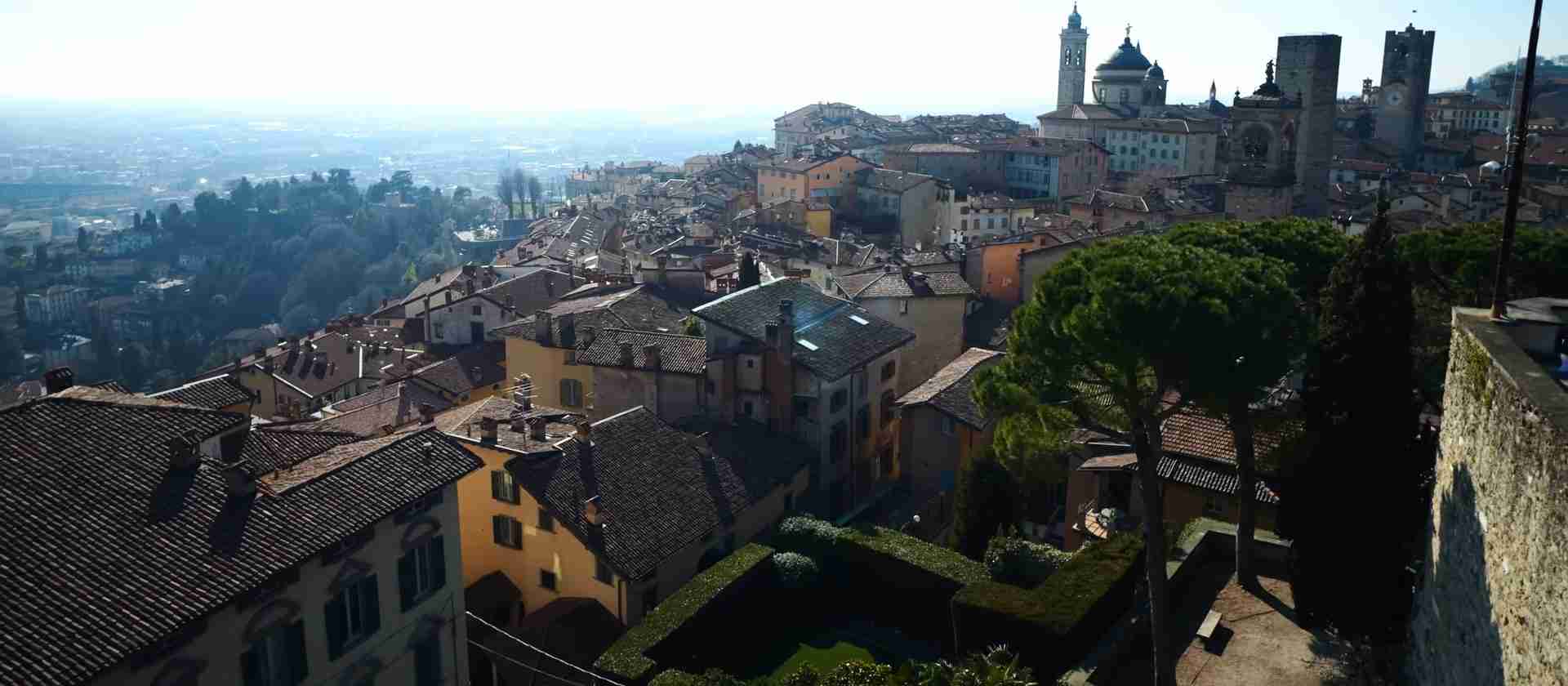
Bergamo Alta, the walled upper town of Bergamo, represents one of Lombardy’s finest medieval urban ensembles—a hilltop city circled by 16th-century Venetian fortifications containing a remarkably preserved historic center. Despite lying just 45 kilometers from Milan, one of Europe’s most visited cities, and serving as the airport city for low-cost flights to Milan, Bergamo Alta receives only fraction of the tourism justified by its attractions, with most visitors simply passing through the lower city en route to Milan or Lake Como.
The city divides distinctly into Bergamo Bassa (lower Bergamo), a modern commercial city, and Bergamo Alta (upper Bergamo), the historic center perched atop a steep hill and encircled by imposing Renaissance walls. A funicular railway connects the two, creating dramatic transitions from contemporary urban environment to medieval streetscapes within minutes.
The Venetian Walls, completed in the late 16th century when Bergamo belonged to the Venetian Republic, extend over six kilometers around the hilltop and rank among Italy’s finest Renaissance military architecture. These massive stone fortifications with bastions, gates, and defensive positions earned UNESCO World Heritage designation in 2017 as part of “Venetian Works of Defence Between the 16th and 17th Centuries.” Walking atop the walls provides spectacular views across the Po Plain to the Alps while demonstrating Renaissance military engineering’s sophistication.
Bergamo Alta’s heart, the Piazza Vecchia, has been called one of Italy’s most beautiful squares, an ensemble of medieval and Renaissance buildings creating harmonious urban space. The Palazzo della Ragione, the oldest communal palace in Lombardy (built 1183), dominates one side with its graceful arcade and lion of St. Mark testifying to Venetian rule. The Palazzo Nuovo faces across the square, while the civic tower (Campanone) rises 52 meters, its bell still ringing 100 times nightly at 10 PM to signal the historic closing of city gates.
The Basilica di Santa Maria Maggiore, begun in 1137, demonstrates Romanesque architecture enriched over centuries with Gothic, Renaissance, and baroque additions. The interior overwhelms with elaborate decoration including baroque stucco work, frescoes, and magnificent intarsia (wooden inlay) designed by Lorenzo Lotto. The composer Gaetano Donizetti, Bergamo’s most famous son, is buried here beneath a monument testifying to the city’s musical heritage. The adjacent Cappella Colleoni, a Renaissance jewel designed by Giovanni Antonio Amadeo, serves as the funerary chapel of the condottiere Bartolomeo Colleoni and displays elaborate marble decoration combining Gothic and Renaissance elements.
The Accademia Carrara ranks among Italy’s finest provincial art museums, housing an exceptional collection of Italian Renaissance and baroque painting including works by Bellini, Mantegna, Raphael, Titian, and Caravaggio. The museum’s quality rivals major Florentine or Venetian institutions but sees a fraction of their visitor numbers, allowing contemplative viewing of masterpieces in uncrowded galleries.
Bergamo Alta’s medieval character extends beyond main monuments to encompass the entire urban fabric. Narrow cobbled streets wind between stone buildings largely unmodified since medieval and Renaissance periods, small piazzas create neighborhood gathering spaces, and the scale remains human and walkable. The Via Colleoni, the main street connecting principal monuments, maintains commercial vitality with shops, cafes, and restaurants serving both residents and visitors.
Culinary traditions reflect Bergamo’s position between Milan and the Alps, combining urban sophistication with mountain influences. Polenta appears frequently, often served with butter and local cheese (polenta e osei—actually made with small birds—represents the traditional version now usually replaced with polenta and cheese). Casoncelli, pasta parcels filled with meat, raisins, and spices, represent the signature local pasta. The region’s wines, particularly Franciacorta sparkling wine produced just west of Bergamo, have gained international acclaim.
The city’s accessibility via Milan Bergamo Airport creates an ironic situation where thousands of visitors pass through Bergamo weekly en route elsewhere while rarely pausing to explore the upper town. This dynamic maintains Bergamo Alta as a hidden gem despite its proximity to major tourist flows, preserving authentic character while ensuring adequate tourism infrastructure and services.
Civita di Bagnoregio, Lazio: The Dying Town
Civita di Bagnoregio, universally known as “La Città che Muore” (The Dying Town), occupies an improbable position atop an isolated tufa plateau slowly eroding away, accessible only via a narrow pedestrian bridge spanning the chasm separating it from the modern world. This tiny village of perhaps a dozen permanent residents represents one of Italy’s most dramatic and photogenic destinations, yet it remains relatively unknown to international tourists beyond photography enthusiasts drawn by its extraordinary visual drama.
The town’s dramatic situation results from geology and history combining in peculiar ways. The volcanic tufa stone forming the plateau erodes continuously, causing periodic collapse of cliff edges and buildings. Over centuries, this erosion severed Civita from surrounding land, transforming it from a regional center in Etruscan and medieval times to an isolated, nearly abandoned village connected to the modern town of Bagnoregio only by the footbridge constructed in 1965. The original bridge collapsed in 1962, leaving the settlement temporarily marooned and accelerating abandonment that had proceeded for decades as erosion and earthquakes made residence increasingly precarious.
Approaching Civita provides immediate drama as the footbridge—300 meters long and steeply inclined—offers constantly changing perspectives of the village perched impossibly atop its cliff-edged plateau. The tufa cliffs drop vertically 100 meters to the surrounding valley, creating the impression of a castle or fortress though the defensive position resulted from erosion rather than military engineering. The village’s medieval gate and clock tower come into view during the ascent, providing picture-postcard images that have made Civita a favorite subject for photographers despite its obscurity among general tourists.
The village itself covers perhaps half a hectare, with narrow streets leading from the central square to the cliff edges where vertigo-inducing views extend across the eroded badlands called “valley of the calanchi”—an otherworldly landscape of eroded gullies and columns looking more like Arizona than Italy. Medieval and Renaissance buildings line the streets, many restored as vacation homes, studios, or small cafes and restaurants serving the modest number of visitors who make the journey.
The Church of San Donato anchors the main square, a Romanesque structure rebuilt after the 1695 earthquake that destroyed much of the village and accelerated its decline. The simple facade and interior preserve medieval character despite restoration, and the church continues holding services for the handful of permanent residents and numerous visitors on summer weekends.
Civita’s designation as “The Dying Town” remains accurate—erosion continues, and each year more cliff edge disappears, bringing eventual destruction closer. Geologists estimate the plateau erodes several centimeters annually, giving the village perhaps a few more centuries before becoming uninhabitable. This certain doom adds poignancy to visits, creating awareness that this extraordinary place exists temporarily in geological terms, preserved through the accident of erosion speed slow enough to allow centuries of habitation but fast enough to guarantee eventual loss.
The village’s isolation and minimal population create an atmosphere of suspended time distinct from typical Italian hilltowns. Wandering the streets reveals intimate scale and remarkable quiet, as only pedestrians and the occasional service vehicle access Civita via the footbridge. The few restaurants serve excellent local cuisine, particularly dishes featuring truffles from surrounding forests and olive oil from valley groves, to visitors arriving primarily during daytime hours. By evening, the handful of residents reclaim their village, and quietness descends that must resemble medieval atmospheres before modern intrusions.
Civita di Bagnoregio lies in northern Lazio approximately 120 kilometers northwest of Rome, requiring car transport or buses from Orvieto (20 kilometers north). This moderate inaccessibility maintains Civita’s hidden gem status despite its extraordinary visual drama—reaching the village requires deliberate effort that filters casual tourists while allowing dedicated visitors to experience its unique atmosphere. Recent years have brought increased attention and visitor numbers, but Civita remains far from overcrowded, with its isolation and limited facilities naturally capping tourism at sustainable levels.
Noto, Sicily: Baroque Perfection Rebuilt
Noto represents baroque urban planning and architecture at their most harmonious—an entire city designed and constructed following the catastrophic 1693 earthquake that destroyed the original medieval settlement. The rebuilt city, constructed over several decades in the early 18th century according to unified plans by leading baroque architects, creates one of Europe’s most cohesive baroque ensembles. Despite UNESCO World Heritage designation in 2002 as part of “Late Baroque Towns of the Val di Noto,” Noto remains relatively unknown to international tourists who concentrate on Sicily’s Greek temples, Palermo’s complexity, and Taormina’s coastal beauty while bypassing this baroque jewel.
The 1693 earthquake, one of the most destructive in European history, devastated southeastern Sicily and killed approximately 60,000 people. The original Noto, located 10 kilometers inland on a defensible hilltop, suffered such complete destruction that authorities decided to rebuild on a new coastal site with better access and modern urban planning. This decision created a rare opportunity to design and construct an entire city according to contemporary baroque aesthetic principles uncompromised by existing buildings or medieval street patterns.
The architects, led by Rosario Gagliardi and other Sicilian baroque masters, created a plan based on a main axis (Corso Vittorio Emanuele) intersected by cross streets at regular intervals, with major monuments and piazzas strategically positioned to create dramatic visual perspectives and spatial sequences. The use of local golden limestone (pietra di Noto) gives the entire city uniform warm coloration that glows in sunlight, enhancing the baroque facades’ dramatic shadows and sculptural detail.
The Cathedral of San Nicolò dominates Piazza del Municipio from atop a monumental staircase, its facade creating a theatrical backdrop for the city’s main ceremonial space. The cathedral’s baroque facade features columns, statues, and elaborate decorative carving typical of Sicilian baroque but executed with refined restraint that emphasizes harmonious proportions over exuberant decoration. The building suffered partial collapse in 1996 when the dome fell, triggering extensive restoration completed in 2007 that returned the cathedral to its original appearance.
The Church of San Domenico, designed by Rosario Gagliardi, demonstrates baroque architecture’s potential for creating spatial drama through curved facades, multiple levels, and strategic positioning. The convex central section advances toward the street while concave side sections recede, creating rhythmic movement across the facade. Similar baroque churches throughout Noto—Santa Chiara, San Carlo, San Francesco—contribute to an urban environment where virtually every significant building displays baroque character.
The Palazzo Nicolaci di Villadorata represents secular baroque architecture with its balconies supported by elaborately carved corbels depicting grotesque masks, horses, lions, sirens, and other fantastical creatures. These baroque details appear on numerous noble palaces along the Corso Vittorio Emanuele and side streets, demonstrating that baroque aesthetics extended beyond religious architecture to encompass the entire urban environment.
Noto’s grid plan and baroque uniformity create an urban experience distinct from the organic development of medieval Italian towns. Walking the Corso Vittorio Emanuele reveals carefully orchestrated visual sequences as monuments, churches, and palaces appear in succession, each positioned to create specific perspectives and spatial relationships. The slightly uphill slope of the main street enhances these scenic effects, with buildings appearing progressively as visitors ascend.
The city’s World Heritage designation recognized not merely individual baroque buildings but the entire urban ensemble as an outstanding example of late baroque town planning. This distinction elevates Noto beyond collections of fine buildings to recognition as a complete artistic and urban achievement where architecture, urban design, and city planning unite to create comprehensive baroque vision.
Noto maintains authentic urban life despite its architectural significance, with residents shopping, working, and socializing throughout the historic center. Markets, cafes, and shops serve local populations alongside tourists, preventing the museum-city atmosphere that afflicts some World Heritage Sites. The surrounding countryside produces excellent wines, almonds, and citrus fruits that appear in local cuisine, particularly granita and cassata (traditional Sicilian desserts) served in numerous cafes and pastry shops.
The city’s location in southeastern Sicily, approximately 35 kilometers southwest of Syracuse, places it slightly off main tourist routes between Palermo, Agrigento, and Taormina. This position contributes to its hidden gem status—visitors must make deliberate detours to reach Noto rather than passing through naturally, filtering tourists to those specifically interested in baroque architecture or Sicilian cultural heritage beyond beach resorts.
Gubbio, Umbria: Medieval Mountain Town
Gubbio clings to the steep slopes of Monte Ingino in northern Umbria, a medieval town of gray stone buildings, steep streets, and gothic architecture that preserves its medieval character more completely than more famous Umbrian hilltowns like Assisi or Perugia. Despite containing remarkable monuments including Italy’s finest Roman theater outside Rome and hosting the spectacular Corsa dei Ceri festival that transforms the town each May, Gubbio receives relatively modest international tourism, remaining largely the province of Italian visitors and historically aware travelers.
The city’s Roman origins appear in the Teatro Romano, a 1st-century BC theater built to accommodate approximately 6,000 spectators and preserved in extraordinary condition. The cavea (semicircular seating area) carved into the hillside remains largely intact, as does much of the stage building, making this one of the best-preserved Roman theaters in Italy. The site continues hosting performances during summer months, allowing audiences to experience drama in its original setting. The theater’s scale demonstrates Gubbio’s Roman importance, though the medieval city largely abandoned Roman street patterns in favor of organic development following the hillside’s steep topography.
The Palazzo dei Consoli dominates the Piazza Grande, a massive gothic palace built 1332-1349 that served as the communal government’s seat. The palazzo’s stark stone facade and soaring bell tower create one of Umbria’s most recognizable architectural images. The building now houses the Museo Civico containing the Eugubine Tablets, seven bronze tablets inscribed in Umbrian and Latin dating from 300-100 BC that provide crucial evidence for pre-Roman Italic languages. These tablets rank among ancient epigraphy’s most important documents, though they receive far less attention than might be expected if displayed in Rome or Florence.
The Palazzo Ducale, built in the 15th century by Federico da Montefeltro (the same Duke who built Urbino’s magnificent palace), demonstrates Renaissance architecture at its most refined. Though smaller and less elaborate than Urbino’s palace, the Gubbio Palazzo Ducale displays similar attention to harmonious proportions, elegant decoration, and sophisticated spatial planning. The palazzo overlooks the city from its hilltop position, with rooms preserving original decorations including studiolo intarsia panels similar to those in Urbino.
The Cathedral of Santi Mariano e Giacomo occupies the city’s highest accessible point, its gothic facade and interior containing works by Umbrian masters. The nearby Church of San Francesco displays frescoes and maintains the large gothic structure typical of Franciscan churches throughout Umbria. However, Gubbio’s most remarkable religious monument may be the church of Sant’Agostino with its fresco cycle depicting the saint’s life.
The Corsa dei Ceri, held annually on May 15, ranks among Italy’s most unusual and spectacular festivals. Three teams, each bearing a massive wooden “candle” (cero) topped with a saint’s statue and weighing approximately 400 kilograms, race through the town’s streets in a dangerous sprint up steep slopes to the Basilica of Sant’Ubaldo atop Monte Ingino. The festival, dating from medieval times and possibly ancient origins, creates extraordinary community solidarity and attracts Italian visitors from across the region, though it remains virtually unknown internationally.
Gubbio’s medieval character extends beyond major monuments to encompass the entire urban fabric. Steep streets paved with herringbone brick patterns connect neighborhoods at different elevations, gothic arches span narrow lanes, and stone buildings preserve facades little changed since the 14th century. The Via Piccardi, the main commercial street, maintains vitality with shops, cafes, and restaurants serving residents alongside visitors. Evening passeggiata fills the Piazza Grande and Corso Garibaldi with locals socializing in traditions extending back centuries.
Local crafts continue as living traditions rather than tourist performances. Gubbio’s ceramics, produced since medieval times, maintain distinctive styles and techniques in workshops throughout the town. Wrought iron work, woodcarving, and textile production employ traditional methods while serving contemporary markets. These crafts contribute to authentic economic life independent of tourism.
The surrounding countryside offers hiking in the Apennine foothills, with trails ascending Monte Ingino to the Basilica of Sant’Ubaldo (also accessible via funivia—cable car) and continuing into protected areas featuring wildlife including wolves and golden eagles. The landscape combines cultivated valleys, steep forested slopes, and rocky peaks in compositions typical of central Italian mountains.
Sperlonga, Lazio: Ancient Beach Town
Sperlonga occupies a dramatic position on the Lazio coast between Rome and Naples, a whitewashed hilltown cascading down steep slopes to meet pristine beaches washed by the Tyrrhenian Sea. Despite containing a Roman imperial villa with extraordinary sculpture and offering coastal beauty comparable to more famous Italian seaside destinations, Sperlonga remains largely unknown to international tourists, drawing primarily Italian beach-goers during summer months while maintaining remarkable tranquility in shoulder seasons.
The historic center follows typical Mediterranean hilltown patterns with the borgo antico (old town) perched atop a rocky promontory for defensive purposes. Whitewashed buildings stacked closely together create labyrinthine streets barely wide enough for two people to pass, with frequent stairs, arches, and covered passages adding to the maze-like character. The architecture shows influences from Spanish rule and proximity to southern Italian traditions, with white walls, blue accents, and rooftop terraces creating an aesthetic more reminiscent of Greek islands than typical Italian hilltowns.
The Torre Truglia, a 16th-century defensive tower built to guard against pirate raids that plagued the Italian coast during the Ottoman period, occupies the promontory’s highest point and has become Sperlonga’s symbol. The tower offers panoramic views extending along the coast in both directions and across the Tyrrhenian Sea toward the Pontine Islands. The town’s defensive position and fortifications reflect centuries when Mediterranean coasts lived under constant threat from North African and Turkish pirates who raided for slaves and plunder.
Sperlonga’s beaches extend for several kilometers north and south of the old town, with fine golden sand and clear water that earned Blue Flag certification for water quality and environmental management. Unlike many Italian beach destinations where private beach clubs occupy most waterfront, Sperlonga maintains substantial public beach areas with free access, though private stabilimenti (beach establishments) offering umbrellas, loungers, and amenities also operate along certain stretches.
The Villa of Tiberius and National Archaeological Museum preserve one of the Roman Empire’s most remarkable imperial retreats. Emperor Tiberius constructed a seaside villa here in the 1st century AD, incorporating a natural sea cave into the complex as a summer dining room (triclinium). The cave was elaborately decorated with marble sculptures depicting scenes from Homer’s Odyssey, including massive sculptural groups showing Odysseus and his companions in various adventures. These sculptures, discovered in 1957 during road construction and now displayed in the adjacent museum, rank among the finest examples of Hellenistic baroque sculpture, likely created by the same Rhodian workshop that produced the Laocoön group in the Vatican Museums. The villa’s seaside position, cave setting, and extraordinary sculptures demonstrate imperial luxury at its most extravagant.
The museum displays not only the Odyssey sculptures but also extensive finds from the villa and surrounding Roman settlements, providing insight into elite Roman lifestyle on the Tyrrhenian coast. The sculptures’ fragmentary state—they were deliberately smashed, probably during early Christian periods hostile to pagan imagery—adds poignancy to these masterpieces, with missing portions leaving viewers to imagine the complete compositions.
Sperlonga’s culinary traditions emphasize seafood, with restaurants serving the day’s catch prepared according to local recipes. Fresh fish grilled with herbs, seafood pasta including local specialties like spaghetti alle vongole (with clams) and risotto ai frutti di mare (seafood risotto), and fried calamari represent typical offerings. The proximity to Naples influences pizza and mozzarella traditions, while Roman influences appear in pasta preparations like cacio e pepe and carbonara.
The town maintains dual character as both historical monument and functioning beach resort. The old town preserves authentic architecture and character while accommodating restaurants, cafes, and shops. The modern beach areas developed since the mid-20th century provide hotels, vacation apartments, and services for summer visitors without compromising the historic center’s integrity. This separation allows both preservation of heritage and accommodation of tourism at sustainable levels.
Sperlonga’s position roughly midway between Rome (125 kilometers) and Naples (100 kilometers) places it conveniently for day trips from either city or as a base for exploring the region. However, most tourists following Rome-Naples-Amalfi Coast itineraries bypass this stretch of coastline entirely, preserving Sperlonga’s relative obscurity despite accessibility and attractions that would justify far greater fame.
Cortona, Tuscany: Etruscan Hill Town
Cortona occupies commanding hilltop position in southeastern Tuscany overlooking the Val di Chiana, an ancient Etruscan city that preserves medieval character, Renaissance art treasures, and stunning panoramas extending to Lago Trasimeno in Umbria. Despite location in Tuscany’s tourist heartland and featuring in the book and film “Under the Tuscan Sun,” Cortona receives significantly less visitor pressure than Siena, San Gimignano, or the Chianti region, maintaining authentic small-town character while offering attractions rivaling more famous destinations.
The city’s Etruscan origins date to at least the 8th century BC, with massive stone walls still visible incorporating Etruscan construction. These ancient fortifications, later expanded by Romans and medieval builders, extend over two kilometers and create the distinctive circuit defining Cortona’s urban form. Walking these walls provides both historical perspective and spectacular views across the valley to Montepulciano, Pienza, and Mount Amiata.
The Museo dell’Accademia Etrusca e della Città di Cortona houses exceptional Etruscan artifacts including the famous Tabula Cortonensis, a bronze tablet with one of the longest known Etruscan inscriptions providing crucial linguistic evidence, and an extraordinary Etruscan bronze chandelier from the 4th century BC displaying sophisticated metalworking. Egyptian antiquities collected by 18th-century travelers and Renaissance paintings by Cortona native Luca Signorelli complete a diverse collection that would justify museum status in any major city.
The Museo Diocesano contains masterpieces by Fra Angelico and Luca Signorelli in a small jewel-box setting that allows intimate viewing impossible in Florence’s crowded galleries. Fra Angelico’s Annunciation, painted for a Cortona monastery, ranks among the artist’s finest works with its elegant figures, perfect perspective, and luminous colors. Signorelli’s works, including a Deposition and Communion of the Apostles, demonstrate this Renaissance master’s dramatic compositional sense and powerful figure drawing.
The Piazza della Repubblica forms Cortona’s social heart, a sloping medieval square where the Palazzo Comunale (town hall) displays civic architecture spanning from medieval to Renaissance periods. The adjacent Piazza Signorelli hosts daily markets and evening passeggiata, with cafes and restaurants occupying historic buildings around the perimeter. These interconnected squares create urban spaces that function as outdoor living rooms where locals and visitors mingle naturally.
The Church of San Francesco, one of the first Franciscan churches built after the saint’s death, preserves a relic claimed as part of the True Cross and displays medieval frescoes. The steep walk to Santa Maria del Calcinaio, a Renaissance pilgrimage church designed by Francesco di Giorgio Martini on the hillside below town, rewards effort with one of Tuscany’s finest small Renaissance churches and panoramic views back toward Cortona’s hilltop silhouette.
Cortona’s steep topography creates physical demands unusual in Tuscan hilltowns. The main streets maintain reasonable grades, but exploring neighborhoods requires ascending and descending numerous staircases and steep lanes. This verticality contributes to Cortona’s authentic character as residents pursue daily routines requiring physical fitness, deterring the mobility-impaired tourism that homogenizes some accessible destinations.
The town’s position in the Val di Chiana places it within easy reach of numerous significant destinations. Montepulciano and Pienza, both showcase Renaissance town planning and wine production, lie 30 kilometers southwest. Arezzo, with its Piero della Francesca frescoes, stands 30 kilometers north. Lago Trasimeno and its islands offer water recreation 10 kilometers east in Umbria. This geographic centrality allows Cortona to serve as a base for exploring southeastern Tuscany and western Umbria.
Local cuisine emphasizes Chianina beef, a prized breed raised in the valley below that produces the famous bistecca alla fiorentina (Florentine steak). Wild boar, porcini mushrooms, truffles, and game appear seasonally. Cortona’s wines, particularly Syrah grown on the hillsides, have gained recognition alongside more famous regional wines from Montepulciano and Montalcino.
The town’s appearance in “Under the Tuscan Sun” brought increased attention and visitor numbers but didn’t transform Cortona into an overcrowded tourist trap. The book and film attracted visitors interested in authentic Tuscan life rather than box-checking tour groups, and the town absorbed increased tourism without losing character. Local businesses serve residents alongside tourists, schools and civic institutions maintain the town as a living community, and evening hours see locals reclaiming streets for traditional social rituals.
Alberobello, Puglia: The Trulli Village
Alberobello contains the world’s largest concentration of trulli—distinctive conical-roofed houses unique to Puglia’s Itria Valley—with over 1,500 of these remarkable structures concentrated in two historic districts that earned UNESCO World Heritage designation in 1996. Despite this recognition and extraordinary architectural uniqueness, Alberobello remains relatively unknown to international tourists beyond Italian borders, with most visitors being domestic tourists and architecture enthusiasts drawn by the town’s singular appearance.
Trulli evolved from humble peasant dwellings into an architectural tradition spanning several centuries. The structures consist of dry-stone walls (without mortar) supporting corbelled conical roofs built from local limestone slabs stacked in overlapping circles that gradually diminish toward the apex. This ancient building technique, probably originating in prehistoric times, continued in Puglia due to abundant limestone, tax regulations favoring temporary structures easily dismantled, and climatic suitability—the thick stone walls and conical roofs provide excellent insulation against summer heat and winter cold.
The Rione Monti district contains the densest trulli concentration, with approximately 1,000 structures clustered along steep streets radiating from the main square. Walking these lanes reveals trulli of all sizes from single-room structures to multi-room complexes where multiple conical roofs create compound forms. Many roofs display whitewashed pinnacles and symbols—including Christian crosses, planetary symbols, or more mysterious markings whose meanings remain debated—that add decorative elements to the functional architecture.
The Rione Aia Piccola represents the more authentic residential district where many trulli remain private homes rather than tourist accommodations or shops. This neighborhood preserves the authentic character of a living trullo community, with residents pursuing daily routines in these traditional dwellings despite their architectural singularity and tourist interest.
The Trullo Sovrano, the only two-story trullo in Alberobello, demonstrates how the form could be elaborated for more substantial residences. This “sovereign trullo” built in the 18th century for a wealthy family now operates as a museum showing how these structures functioned as family homes with furnishings, tools, and domestic objects recreating 18th and 19th-century life.
The Church of Sant’Antonio, constructed in the trullo style during the 1920s, proves that the traditional form could be adapted for religious architecture. The church’s massive conical roof rises 21 meters high, demonstrating the structural potential of corbelled stone construction at monumental scales. This adaptation of vernacular architecture for ecclesiastical purposes represents an unusual and successful example of preserving building traditions while serving new functions.
Alberobello’s tourism infrastructure includes numerous trulli converted to hotels, offering unique opportunities to sleep in these extraordinary structures equipped with modern conveniences while maintaining architectural integrity. Staying in a trullo provides immersive experience impossible to achieve through daytime visits alone, as the unusual spaces, distinctive acoustics, and thermal properties become apparent over extended periods.
Many trulli house shops selling local products including wine, olive oil, ceramics, and textiles. While tourism has inevitably commercialized some aspects of Alberobello, the sheer number of trulli and the town’s continuing function as a residential community prevent complete transformation into a theme park. The UNESCO designation imposed preservation requirements that maintain architectural integrity while allowing adaptive reuse that sustains the structures economically.
The surrounding Itria Valley contains scattered trulli throughout the countryside, often as farm buildings or rural residences amid olive groves and vineyards. Driving the valley’s narrow roads reveals trulli in agricultural contexts that explain their original functions as economical structures easily built from local materials without specialized craftsmen. The concentration in Alberobello represents an urban development of a rural building tradition.
Local cuisine emphasizes simple Pugliese preparations—orecchiette pasta with broccoli rabe or tomato sauce, burrata and mozzarella cheeses, grilled vegetables, and lamb or horse meat. The Itria Valley produces excellent wines, particularly primitivo and verdeca, that remain affordable despite increasing international recognition. Olive oil from ancient groves surrounding the town represents another important local product.
Castelmezzano, Basilicata: The Mountain Eagle’s Nest
Castelmezzano clings impossibly to steep mountain slopes in Basilicata’s Lucanian Dolomites, a village of fewer than 900 residents that seems to grow organically from the dramatic rock formations surrounding it. Stone houses wedge into crevices between vertical rock pinnacles, creating architecture that merges seamlessly with geology in one of Italy’s most spectacular and improbable settlements. Despite being named one of Italy’s most beautiful villages (I Borghi più Belli d’Italia) and offering extraordinary mountain scenery, Castelmezzano remains virtually unknown outside Italy.
The village’s position at 750 meters elevation amid the Piccole Dolomiti Lucane (Little Lucanian Dolomites) creates dramatic landscapes where limestone peaks rise vertically from forested slopes in formations resembling the famous Dolomites on a more intimate scale. The rock towers and cliffs surrounding Castelmezzano create a natural fortress that medieval builders exploited by constructing the village within this defensive amphitheater.
Medieval origins appear in the Norman castle ruins (hence Castelmezzano—”middle castle”) perched on the highest accessible point above the village. Scrambling to these ruins via steep trails rewards effort with panoramic views across the Basento Valley and surrounding mountains. The castle never achieved great historical importance but served defensive functions in regional conflicts between Normans, Angevins, and various noble families contesting control of southern Italy.
The village architecture demonstrates ingenious adaptation to extreme topography. Buildings occupy every available ledge and terrace, with some structures built partially on living rock and partially on constructed foundations. Narrow streets and stairways wind between houses, frequently passing under buildings or through tunnels carved from rock. This intimate scale and organic relationship between architecture and landscape create an almost fantastical environment where human settlement achieves improbable harmony with dramatic natural setting.
The Church of Santa Maria dell’Olmo occupies a slightly more level area near the village center and contains baroque decoration typical of southern Italian religious architecture, though the church’s modest size and simple exterior emphasize Castelmezzano’s humble origins as a peasant settlement rather than noble residence.
The Volo dell’Angelo (Flight of the Angel), a zip-line connecting Castelmezzano with the nearby village of Pietrapertosa, allows adventurous visitors to fly through the air at speeds reaching 120 kilometers per hour while suspended 400 meters above the valley floor. This attraction, installed in 2007, created new tourism interest in the villages while providing thrilling experiences amid spectacular scenery. The flight’s exhilarating combination of speed, height, and dramatic landscape has gained international attention among adventure tourism enthusiasts.
Hiking trails throughout the Piccole Dolomiti Lucane connect the villages and climb to mountain summits, with routes ranging from easy valley walks to demanding via ferrata (protected climbing routes) ascending the region’s distinctive rock towers. The area’s geology, flora, and fauna receive protection within the Gallipoli Cognato Piccole Dolomiti Lucane Regional Park, preserving landscapes that support rare plant species and wildlife including golden eagles, wolves, and wildcats.
Castelmezzano’s remote location in inland Basilicata, one of Italy’s least-known and least-populated regions, contributes significantly to its hidden gem status. Reaching the village requires driving narrow mountain roads from the regional capital Potenza (45 kilometers) or from the Ionian coast, making it inaccessible via public transportation and requiring commitment from visitors. This inaccessibility, combined with Basilicata’s general obscurity, preserves Castelmezzano as a destination for adventurous travelers specifically seeking mountain villages and dramatic landscapes rather than casual tourists checking boxes on famous-site lists.
The village offers basic tourism infrastructure including several small hotels and agriturismi (farm-stays), restaurants serving traditional Lucanian mountain cuisine, and a small visitors center. The limited capacity naturally caps visitor numbers, preventing overcrowding that would be incompatible with the village’s intimate scale and fragile setting. Most visitors arrive during summer weekends when Italian families from nearby cities seek mountain retreats, while weekdays and shoulder seasons see minimal tourism.
Orvieto, Umbria: The Cliff-Top Cathedral Town
Orvieto occupies a flat-topped butte of volcanic tufa rising 300 meters above the surrounding Umbrian countryside, a naturally fortified position that has attracted settlement since Etruscan times and supported medieval prosperity that produced one of Italy’s finest Gothic cathedrals. Despite this extraordinary cathedral, fascinating underground city, and commanding hilltop position visible for kilometers, Orvieto receives modest international tourism compared to Tuscany’s famous destinations, functioning primarily as a day-trip destination from Rome while remaining underappreciated as a destination meriting extended stays.
The Duomo di Orvieto ranks among Italy’s supreme Gothic achievements, its striped marble facade combining geometric patterns, elaborate sculpture, and Byzantine-influenced mosaics to create a stunning composition visible across the valley. Construction began in 1290 to house the Corporal of Bolsena, a relic associated with a eucharistic miracle, and continued for three centuries as successive architects and craftsmen contributed to the evolving design. The facade’s four massive pillars frame three portals with bronze doors and are decorated with elaborate narrative reliefs depicting biblical scenes. The four pinnacles rising from these pillars support statues and create vertical thrust balanced by horizontal bands of white travertine and green-gray basalt.
The cathedral interior demonstrates Gothic spatial aesthetics with its soaring nave, while the Cappella di San Brizio contains one of Renaissance art’s masterpieces—Luca Signorelli’s fresco cycle depicting the Last Judgment. Painted 1499-1504, these frescoes influenced Michelangelo’s Sistine Chapel ceiling with their dynamic compositions, powerful nude figures, and dramatic narratives of apocalypse. Signorelli’s anatomical knowledge, compositional inventiveness, and ability to depict complex narratives across multiple panels make this cycle essential viewing for understanding High Renaissance art development.
Orvieto Underground reveals a hidden city beneath the visible streets—a network of over 1,200 caves, tunnels, cisterns, and chambers carved into the tufa over 2,500 years. Etruscans quarried the tufa for building material while creating underground spaces for storage, workshops, and wells reaching the water table deep below. Medieval and Renaissance inhabitants expanded this underground city, adding olive oil mills, wine cellars, pigeon coops for raising squabs, and living spaces used during sieges. Guided tours explore selected sections of this subterranean maze, revealing the ingenious methods Orvieto’s residents used to exploit their unique geological setting.
The Pozzo di San Patrizio (Well of St. Patrick), commissioned by Pope Clement VII in 1527, represents Renaissance engineering at its most impressive. This cylindrical well descends 62 meters into the tufa to ensure water supply during sieges, featuring two spiral staircases wrapping around the well shaft—one for descent and one for ascent—allowing donkeys to carry water up without interfering with those descending. The double helix design, lit by 70 windows opening from the stairways into the central shaft, creates a remarkable spatial experience and demonstrates sophisticated hydraulic engineering.
The Necropoli Etrusca del Crocifisso del Tufo preserves dozens of Etruscan chamber tombs carved into the hillside below the city, each marked with the family name inscribed above the entrance. These 6th-century BC tombs provide valuable evidence for Etruscan burial practices and social organization, demonstrating the importance of Velzna (Etruscan Orvieto) as a major city in the Etruscan confederation.
Orvieto’s medieval character extends beyond the cathedral to encompass the entire urban fabric. The Piazza del Popolo, with its 13th-century Palazzo del Popolo, serves as a civic center, while the Fortezza Albornoz provides panoramic views and gardens. Narrow medieval streets connect neighborhoods where local life continues with markets, shops, schools, and civic institutions maintaining the town as a functioning community rather than tourist attraction.
The surrounding countryside produces Orvieto Classico, a white wine with DOC designation that has gained international recognition. The volcanic tufa soil imparts distinctive minerality to the wine, primarily produced from grechetto and trebbiano grapes. Local restaurants pair Orvieto wines with traditional Umbrian cuisine including wild boar, truffles, lentils from nearby Castelluccio, and lake fish from nearby Bolsena and Trasimeno.
Orvieto’s accessibility via direct trains from Rome (60-90 minutes) and Florence (2 hours) makes it easily reachable for day trips, but this same accessibility means most visitors arrive in late morning, tour the cathedral and perhaps the underground city, and depart by late afternoon. Staying overnight allows experiencing the town as locals do, with evening passeggiata, tranquil morning hours before day-trippers arrive, and opportunities to explore thoroughly rather than rushing between famous sites.
Porto Venere, Liguria: The Poet’s Cove
Porto Venere occupies a dramatic position at the western end of the Gulf of La Spezia in Liguria, a fortified village of colorful houses stacked along the waterfront beneath Doria Castle ruins, with the black and white striped Church of San Pietro perched on rocky promontory extending into the sea. Despite UNESCO World Heritage designation as part of “Porto Venere, Cinque Terre, and the Islands” since 1997 and possessing beauty fully comparable to the famous Cinque Terre villages, Porto Venere receives only a fraction of their tourist numbers, maintaining authentic Ligurian fishing village character while offering similar scenic beauty and superior accessibility.
The village’s defensive position attracted Genoese interest during medieval naval rivalries between Italian maritime republics. The massive Doria Castle, built in the 12th century and expanded in the 16th, dominated the promontory and controlled access to the inner gulf. The imposing walls and towers visible from the water and surrounding hills create a picturesque silhouette that has attracted artists including Lord Byron, who reportedly swam from Porto Venere to San Terenzo across the bay—a distance of approximately seven kilometers commemorated in local toponymy as Byron’s Grotto.
The Church of San Pietro occupies the promontory’s furthest point, built on the site of an ancient pagan temple dedicated to Venus (hence Porto Venere—”port of Venus”). The current structure dates primarily from the 13th century, displaying Ligurian Gothic architecture with its distinctive black and white horizontal stripes achieved through alternating layers of white marble and black local stone. The church’s dramatic seaside position, where waves crash against the foundation during storms, creates one of Liguria’s most photographed scenes. The interior, though simple, preserves medieval atmosphere enhanced by the setting’s dramatic beauty.
The historic center consists of a single main street—Via Capellini—running parallel to the waterfront and lined with the tall, narrow, colorful houses typical of Ligurian architecture. These buildings, some dating from the 12th century, served dual purposes as residences and defensive structures, with their back walls forming part of the village’s fortifications. The pastel colors—yellows, pinks, oranges, and reds—create picturesque waterfront views while serving the practical function of helping fishermen identify their homes when returning from sea.
Three small bays provide swimming and sunbathing opportunities, with the Grotta Arpaia (Byron’s Grotto) offering sheltered cove swimming in dramatic setting beneath towering cliffs. The clear Ligurian water and rocky coastline create excellent conditions for snorkeling and diving, with underwater caves and rock formations providing marine habitat supporting diverse fish species.
The islands of Palmaria, Tino, and Tinetto lie just offshore, visible from Porto Venere and accessible via boat services. Palmaria, the largest and only inhabited island, offers hiking trails through Mediterranean macchia (scrubland), swimming coves, and ruins of military fortifications. Tino and Tinetto, generally closed to visitors except during the San Venerio festival, preserve important early Christian monastic ruins and serve as protected natural areas.
Porto Venere’s position at the Cinque Terre’s western terminus creates an interesting tourist dynamic. The village receives visitors who arrive via boat services from the Cinque Terre villages or from La Spezia, but these numbers remain manageable compared to the overwhelming crowds in Vernazza or Monterosso. Many visitors to the Cinque Terre never reach Porto Venere, despite it being part of the same UNESCO site, either because they’re unaware of the connection or because their focus remains exclusively on the five famous villages.
This relative obscurity preserves Porto Venere’s authentic character. The village maintains substantial resident population, fishing continues as an economic activity alongside tourism, and local businesses serve community needs rather than existing solely for tourist consumption. Restaurants, while certainly aware of tourism’s importance, prepare authentic Ligurian cuisine for discerning diners rather than serving standardized tourist menus to undiscerning crowds.
Ligurian specialties dominate menus, particularly seafood preparations including stuffed mussels (muscoli ripieni), anchovies prepared in various styles, and seafood pasta. Pesto, Liguria’s most famous contribution to Italian cuisine, appears frequently, traditionally prepared with Genoese basil, pine nuts, garlic, Parmesan and Pecorino cheese, and Ligurian olive oil. Focaccia, another Ligurian staple, serves as bread, snack, and light meal throughout the village.
Ascoli Piceno, Marche: The Travertine City
Ascoli Piceno, capital of Italy’s least-known province in the southern Marche region, possesses one of the most beautiful historic centers in Italy—a compact medieval city built almost entirely of travertine marble that creates unusual architectural homogeneity and visual harmony. Despite containing one of Italy’s finest Renaissance squares, numerous medieval towers, and Roman ruins comparable to more famous sites, Ascoli Piceno remains virtually unknown to international tourists, receiving primarily Italian visitors and cognoscenti who appreciate its understated elegance.
The Piazza del Popolo represents Renaissance urban design at its most refined, a harmonious ensemble of travertine buildings creating what many architects consider Italy’s most perfect square. The Renaissance loggia designed by Bramante wraps around three sides, creating an elegant arcade that serves commercial and civic functions while providing architectural unity. The Palazzo dei Capitani del Popolo, built in the 13th century and later modified, anchors one end of the square, while the Church of San Francesco closes the opposite end. The travertine paving, benches, and fountain complete a space that functions as the city’s social heart, filled throughout the day with locals socializing in cafes under the arcade.
The medieval towers that once numbered over 200 still punctuate the skyline, creating a visual profile reminiscent of San Gimignano but without that town’s overwhelming tourism. These towers, built by noble families during medieval power struggles, survive in far greater numbers than in most Italian cities where urban development removed most examples. Walking the streets reveals towers incorporated into later buildings, converted to various uses, or standing isolated as reminders of the violent factional conflicts that characterized medieval urban politics.
The Cathedral of Sant’Emidio preserves elements spanning from early Christian periods through baroque modifications, with a crypt containing the relics of Saint Emidius, Ascoli’s patron saint and martyr. The polyptych by Carlo Crivelli, a Renaissance painter who worked extensively in the Marche, demonstrates this artist’s distinctive style combining Gothic decorative sensibility with Renaissance spatial rationality. Crivelli’s works appear throughout Ascoli’s churches, making the city an important center for appreciating this often-overlooked Renaissance master.
The Roman heritage appears in the Ponte di Solesta, a Roman bridge spanning the Tronto River that continues carrying traffic after 2,000 years of continuous use. The Teatro Romano preserves sections of seating and stage from a substantial 1st-century theater that accommodated several thousand spectators, demonstrating Asculum’s (Roman Ascoli) importance as a provincial center. The Roman street grid remains partially visible in the medieval urban fabric, with some modern streets following ancient alignments.
The Battistero di San Giovanni occupies an unusual octagonal Renaissance structure that incorporated elements from an earlier baptistery. The geometric purity of the octagon demonstrates Renaissance architects’ interest in ideal forms derived from ancient Roman buildings and from theoretical treatises exploring mathematical relationships underlying aesthetic beauty.
Ascoli’s culinary fame rests primarily on olive ascolane—large green olives stuffed with seasoned ground meat, breaded, and deep-fried—that originated here and spread throughout Italy as popular appetizers. Local restaurants serve these specialties alongside other Marchigiano cuisine including vincisgrassi (a lasagna-like pasta dish), brodetto (fish stew showing Adriatic influence), and various preparations of locally raised lamb and pork. Anisette, an anise-flavored liqueur, represents another local specialty with production traditions dating from the Renaissance.
The city’s position in southern Marche places it off main tourist routes connecting more famous destinations. Reaching Ascoli requires deliberate travel rather than passing through naturally, filtering visitors to those specifically interested in Renaissance architecture and medieval urbanism. This inaccessibility paradoxically preserves the authentic urban character that makes the city worth visiting—locals dominate the streets and squares, conducting daily business in a functional city rather than a tourist attraction.
La Maddalena Archipelago, Sardinia: The Naval Islands
The La Maddalena Archipelago encompasses seven main islands and numerous smaller islets scattered across the strait separating northern Sardinia from southern Corsica, creating one of the Mediterranean’s most beautiful protected marine areas. Despite extraordinary natural beauty combining pink granite formations, white sand beaches, transparent turquoise water, and protected natural environments largely free from development, the archipelago remains relatively unknown to international tourists, though Italian and European visitors recognize it as a premier sailing and beach destination.
La Maddalena, the largest inhabited island and the only one with a proper town, served as an important Italian naval base from the 19th century through the late 20th century. This military presence simultaneously preserved the islands from excessive development while providing employment that sustained resident populations. The base’s closure in 2008 prompted economic transitions toward tourism, though environmental protections—the archipelago became a national park in 1994—limit development to sustainable levels that prevent transformation into mass-market resort destinations.
The town of La Maddalena occupies a natural harbor on the island’s southern coast, its waterfront lined with colorful buildings in Ligurian style reflecting the Genoese influences that shaped Sardinian coastal settlements. The town maintains authentic island character with markets serving residents, fishing boats in the harbor, and civic institutions functioning for year-round population rather than seasonal tourists. The Museo Archeologico Navale “Nino Lamboglia” displays artifacts recovered from shipwrecks in the surrounding waters, documenting maritime traffic spanning from Roman times to the modern period.
Giuseppe Garibaldi, the Italian unification hero, spent his final years on Caprera, the archipelago’s second-largest island connected to La Maddalena by a causeway. His house, preserved as a museum, maintains the simple furnishings and personal belongings exactly as Garibaldi left them when he died in 1882. The surrounding property includes Garibaldi’s tomb, gardens he cultivated, and trails through Mediterranean vegetation to granite formations overlooking the sea. This pilgrimage site attracts Italian visitors honoring the Risorgimento leader while remaining virtually unknown to international tourists unfamiliar with Italian unification history.
Spargi, Budelli, Santa Maria, and Razzoli remain largely undeveloped, accessible primarily via private boats or organized excursions, preserving pristine natural environments of exceptional beauty. Budelli’s Spiaggia Rosa (Pink Beach), famous for its pink sand created by crushed coral and shell fragments, formerly attracted visitors but has been closed to protect the delicate ecosystem from erosion caused by tourist traffic. The beach remains visible from boats and serves as symbol of the archipelago’s fragile beauty requiring careful preservation.
The Parco Nazionale dell’Arcipelago di La Maddalena encompasses both terrestrial and marine environments, protecting rare plant species adapted to granite soils, bird populations including Audouin’s gulls and Corsican gulls, and marine ecosystems supporting dolphins, sea turtles, and diverse fish species. The park regulations restrict development, limit visitor numbers to sensitive areas, and establish protected zones where fishing and anchoring are prohibited, ensuring long-term preservation of the archipelago’s natural values.
Beaches throughout the archipelago offer diverse characters from sheltered coves with calm water ideal for families to exposed bays with waves attracting surfers. Cala Coticcio on Caprera, accessible via hiking trail, provides one of the Mediterranean’s most beautiful swimming settings with turquoise water surrounded by white granite boulders. Porto Madonna on Caprera offers another stunning beach accessible via easier trails. Each island features multiple beaches and swimming coves, ensuring even during peak summer season visitors can find relatively uncrowded areas.
Sailing represents the archetypal way to experience the archipelago, with numerous marinas, charter companies, and boat rental services serving sailors of all experience levels. The protected waters, numerous anchorages, and short distances between islands create ideal sailing conditions, while the dramatic granite coastlines and crystal water provide constantly changing scenic beauty. Many sailors from northern Europe spend entire summers cruising the archipelago, anchoring in different coves nightly and exploring the islands at leisurely pace.
The archipelago’s position off northern Sardinia, requiring either ferry service from Palau (20-minute crossing) or longer ferries from Civitavecchia near Rome, creates accessibility challenges that filter tourists. The islands receive primarily Italian visitors and experienced Mediterranean travelers, avoiding the mass tourism affecting more accessible Sardinian coastal areas. Limited accommodation on La Maddalena island and the absence of hotels on other islands naturally caps visitor numbers, though this scarcity of options means advance booking becomes essential during July and August peak season.
Finale Ligure, Liguria: The Climber’s Paradise
Finale Ligure combines three distinct settlements along the Ligurian Riviera west of Genoa—Finalborgo (a medieval walled town inland), Finalmarina (the coastal resort area), and Finalpia (connecting the two). This small municipality offers unusual diversity including medieval architecture, sandy beaches rare on the rocky Ligurian coast, and extraordinary rock climbing on limestone cliffs that have made Finale internationally famous among climbers while remaining virtually unknown to general tourists who concentrate on the Cinque Terre and Portofino further east.
Finalborgo, the historic center located two kilometers inland, ranks among Italy’s most perfectly preserved medieval towns (designated one of I Borghi più Belli d’Italia). The intact walls, dating from the 15th century, encircle a gem-like medieval urban fabric of narrow streets, small piazzas, and stone buildings largely unmodified since Renaissance times. The town served as capital of the Marquisate of Finale, a small but wealthy state that maintained independence until 1602 when it became part of Genoa’s territories. This political importance left architectural legacy including the Castel San Giovanni overlooking the town and numerous palaces displaying Renaissance and baroque decoration.
The Collegiate Church of San Biagio, rebuilt in the 17th century following earthquake damage, represents baroque architecture’s introduction to this medieval setting, its elegant facade creating contrast with surrounding medieval buildings. The adjacent Convent of Santa Caterina now houses the Museo Civico del Finale, displaying archaeological finds from caves in the surrounding hills including Paleolithic artifacts demonstrating human presence spanning tens of thousands of years. The museum’s collection documents the region’s long occupation from prehistoric hunter-gatherers through Roman colonization to medieval prosperity.
Finalmarina provides the beach resort component with sandy beaches extending along a promenade backed by hotels, restaurants, and cafes serving summer visitors. Unlike many Italian beach resorts dominated by private beach clubs, Finale Ligure maintains substantial free public beach areas while offering stabilimenti with amenities for those preferring organized beach services. The water quality and beach facilities earn Blue Flag certifications recognizing environmental standards and visitor services.
The rock climbing that has made Finale internationally famous among climbers centers on extensive limestone cliffs in the hills surrounding the town. Hundreds of established climbing routes ranging from easy beginner climbs to extremely difficult test pieces attract climbers from across Europe. The Mediterranean climate allows year-round climbing, making Finale a winter destination for climbers from northern Europe seeking to escape cold seasons. The rock quality—solid Finale limestone with excellent friction characteristics—and the variety of climbing styles available (from steep overhangs to vertical faces to slabs requiring balance and technique) created a climbing center comparable to more famous destinations like Chamonix or Arco.
Mountain biking represents another major outdoor activity, with extensive trail networks in the surrounding hills offering everything from easy coastal paths to challenging technical singletrack. The area hosts international mountain bike races and serves as training base for professional teams taking advantage of the climate and terrain diversity. Bike shops, guide services, and specialized accommodations cater to cycling tourism that attracts visitors specifically for riding opportunities.
The Via Julia Augusta, an ancient Roman road connecting Rome with Arles in France, passes through Finale Ligure, with preserved sections including the Ponte delle Fate (Fairy Bridge), a remarkably intact Roman bridge spanning a small gorge. Walking this ancient route provides historical perspective on Roman engineering and the importance of coastal roads connecting Italy with Gaul.
Ligurian cuisine appears throughout Finale’s restaurants, with seafood preparations, pesto, focaccia, and farinata (chickpea flour flatbread) representing typical offerings. The combination of seaside location and mountain proximity allows menus featuring both seafood and game, often within single restaurants offering diverse options. Local wines, though Liguria is not a major wine-producing region, include Vermentino whites and Rossese reds that pair well with regional cuisine.
Finale Ligure’s position west of Genoa places it outside the tourist circuits concentrating on the Cinque Terre and Portofino east of the city. This geography, combined with the town’s identity as outdoor sports destination rather than traditional beach resort, creates visitor demographics skewed toward active travelers—climbers, mountain bikers, and hikers—rather than beach-lounging tourists. This specialized appeal preserves Finale’s authentic character as a town that happens to attract outdoor enthusiasts rather than a resort created solely for tourism.
Vipiteno (Sterzing), Trentino-Alto Adige: The Austrian Border Town
Vipiteno, known as Sterzing in German, occupies a strategic position in the northernmost reaches of Trentino-Alto Adige, just 45 kilometers south of Austria’s Brenner Pass. This alpine town of 6,000 residents maintains stronger Austrian than Italian character, with German-speaking majority, Tyrolean architecture, and cultural traditions more connected to Austria than Italy. Despite location on a major north-south route connecting Italy and Germany since Roman times and possessing a perfectly preserved historic center, Vipiteno remains virtually unknown to tourists who pass through en route to more famous Dolomite destinations or Austrian ski resorts.
The town’s strategic position on trade routes crossing the Alps brought medieval prosperity reflected in the Via Città Nuova, the main street lined with elegant burgher houses featuring gothic and renaissance facades, arcaded ground floors, and painted exteriors displaying elaborate frescoes and decorative motifs. These townhouses, built by wealthy merchants during the 15th and 16th centuries, create a remarkably homogeneous architectural ensemble that extends the entire length of the main street. The Torre delle Dodici (Twelve Tower), a civic tower built in 1472, punctuates the main street and serves as Vipiteno’s symbol.
The Rathaus (Town Hall), featuring elaborate frescoes on its exterior facade depicting civic virtues and historical scenes, demonstrates the secular prosperity that characterized successful medieval trading towns. The building’s combination of gothic architecture with Renaissance decorative programs reflects the town’s cultural position at the intersection of Italian and Germanic traditions.
The Church of Our Lady of the Swamp (Heiligkreuzkirche), built in the 15th century, displays late Gothic architecture with an impressive tower and interior containing important altarpieces by Hans Multscher and other Gothic masters. The parish church of Santo Spirito showcases the region’s religious art heritage with baroque modifications to the originally Gothic structure.
The Museo Multscher houses works by Hans Multscher and other late Gothic and Renaissance artists active in Tyrol, providing context for understanding the distinctive artistic traditions that developed in alpine regions where Italian and Germanic influences intersected. The museum also displays artifacts documenting Vipiteno’s history as a mining center—silver deposits in surrounding mountains supported medieval prosperity and explain the architectural elaboration surprising for a relatively small mountain town.
The surrounding mountains offer year-round outdoor recreation. Winter brings skiing at nearby Ratschings-Jaufen ski area and cross-country skiing through snow-covered valleys. Summer hiking accesses high alpine pastures, mountain huts serving traditional South Tyrolean food, and mountain peaks providing panoramic views extending to the Austrian Alps. The Pfitscherjoch Pass, a challenging high-altitude route connecting Italy with Austria, served smugglers during various historical periods and now attracts hikers seeking spectacular alpine scenery.
Vipiteno’s cuisine reflects South Tyrolean traditions that blend Italian and Austrian influences. Speck (smoked cured ham), canederli (bread dumplings similar to Austrian Knödel), schnitzel, strudel, and various game preparations appear alongside more Italian pasta dishes and polenta. Local bakeries produce rye breads, pretzels, and Tyrolean pastries distinct from breads found in most Italian regions. This culinary diversity reflects the region’s complex cultural identity—officially Italian since 1919 but maintaining strong Germanic traditions protected by special autonomy arrangements granting South Tyrol extensive self-governance.
The town’s German-speaking majority creates unusual linguistic environments for Italy where street signs, menus, and casual conversation occur primarily in German (specifically the South Tyrolean dialect) rather than Italian, though most residents speak both languages plus often English. This bilingualism reflects political history—the region belonged to Austria until 1919 when post-World War I treaties transferred it to Italy despite the German-speaking population’s preferences. The subsequent tensions eased only with autonomy arrangements granting the province unique powers to preserve Germanic culture while remaining within Italy.
Vipiteno’s position on the Brenner rail and highway routes connecting Italy and Germany means thousands of travelers pass through regularly while rarely stopping to explore. The town functions as a place people drive through rather than a destination, preserving authentic alpine character while ensuring adequate services and amenities. Summer and winter bring seasonal visitors, primarily from northern Italy and German-speaking countries, who appreciate Vipiteno’s authentic Tyrolean atmosphere, outdoor recreation, and escape from heat and crowds of lowland tourism centers.
Frequently Asked Questions
How do I choose which Italian hidden gems to visit?
Selecting hidden gems depends on matching destinations to specific interests, travel style, geographic location, and time constraints. Begin by identifying priorities—coastal scenery, mountain landscapes, medieval architecture, Renaissance art, outdoor activities, culinary experiences, or combinations of these elements—then research which destinations excel in those categories. Geographic clustering allows efficient routing by visiting multiple destinations in single regions rather than crisscrossing Italy. For example, combining Lecce, Alberobello, and Matera creates a comprehensive Puglia-Basilicata itinerary, while Urbino, Ascoli Piceno, and Gubbio work well as a Marche-Umbria circuit. Consider accessibility preferences and constraints—some travelers embrace adventures reaching remote locations like Castelmezzano, while others prefer easier access via train to destinations like Bergamo or Trieste. Seasonal timing matters significantly, as mountain destinations require snow-free conditions for hiking while coastal areas become extremely crowded during August but offer ideal swimming from May through October. Review practical considerations including accommodation availability, language barriers (more challenging in remote locations), and whether destinations function as day trips from established bases or merit overnight stays. Most importantly, resist attempting too many destinations too quickly—hidden gems reward slow travel that allows genuine engagement with local culture, leisurely exploration, and experiencing daily rhythms rather than rushing between attractions checking boxes. Two or three carefully chosen hidden gems explored thoroughly create more satisfying experiences than superficial visits to dozens of locations.
Are Italian hidden gems suitable for families with children?
Italian hidden gems vary significantly in family-friendliness, with some destinations ideally suited for children while others present challenges making them better choices for adults or older children. Beach destinations like Sperlonga, Finale Ligure, and the La Maddalena Archipelago offer swimming, sand play, and outdoor activities that engage children naturally while providing relaxation opportunities for parents. Medieval hilltowns like Cortona, Gubbio, and Finalborgo fascinate children interested in castles, knights, and medieval history, though steep streets and stairs may challenge families with very young children or strollers. Mountain destinations including Val di Fassa and Castelmezzano work well for outdoor-oriented families comfortable with hiking, though require appropriate equipment and preparation for alpine conditions. Cities like Trieste, Bergamo, and Lecce offer urban amenities including parks, gelato shops, and varied restaurants that make logistics easier while providing sufficient attractions to interest children beyond museums that might bore younger visitors. Several factors affect family suitability: accommodation options (agriturismi and apartment rentals often work better than small hotels), restaurant flexibility regarding children and early dining hours, distance and difficulty of walking required, and availability of child-appropriate activities beyond adult-oriented cultural attractions. Italian culture generally welcomes children warmly, with restaurants and hotels accommodating families more graciously than in some countries, though hidden gems typically lack specialized children’s facilities found in major tourist destinations. Planning considerations should include selecting destinations with outdoor spaces where children can run and play, breaking up cultural visits with active recreation, building flexibility into schedules to accommodate children’s varying moods and energy levels, and choosing accommodations with space for families rather than cramped hotel rooms. Many families find Italian hidden gems more enjoyable than overcrowded famous destinations specifically because manageable visitor numbers, authentic experiences, and locals’ welcoming attitudes create more pleasant environments for children than pushing through crowds at the Colosseum or Uffizi Gallery.
What level of Italian language skills do I need for hidden gems?
Italian language requirements vary significantly across hidden gem destinations, with tourist-frequented locations managing well with minimal Italian while genuinely remote destinations require more language capacity or exceptional patience and problem-solving abilities. Tourist-accessible destinations like Bergamo Alta, Orvieto, and Cortona—places with established tourism infrastructure despite being less famous than major attractions—typically feature hospitality staff with functional English, menus available in multiple languages, and enough international visitors that communication strategies exist for bridging language gaps. Remote or specialist destinations like Castelmezzano, Vipiteno, or rural areas of Basilicata present greater challenges, with limited English proficiency and fewer accommodations made for non-Italian speakers. However, even in these locations, basic survival Italian—greetings, please/thank you, essential questions about directions and prices, numbers for understanding costs—combined with translation apps, patient gestures, and friendly attitudes succeed in accomplishing necessary communication. The tourism context matters significantly: ordering in restaurants proves manageable through menu reading (Italian food vocabulary becomes familiar quickly) and pointing, while complex questions about hiking routes, historical details, or local recommendations require more sophisticated communication. Urban hidden gems like Trieste, Lecce, or Ascoli Piceno maintain sufficient tourism and international connections that young people particularly speak English, while tiny mountain villages may have no English speakers except perhaps younger residents with some school English. Investment in language learning yields enormous returns in quality of experiences—even modest Italian capability transforms interactions from transactional exchanges to genuine conversations, demonstrates respect for local culture, opens opportunities for recommendations and insights, and simply makes travel more enjoyable and less stressful. Resources for basic Italian include language apps like Duolingo or Babbel for fundamental grammar and vocabulary, phrase books focusing on travel situations, and conversation practice with native speakers via language exchange platforms. For travelers unable or unwilling to learn Italian, combination strategies work: pre-booking accommodations where English-speaking staff confirm availability, researching attractions and logistics thoroughly to reduce verbal communication needs, using translation apps with offline capabilities for areas with limited connectivity, traveling with Italian-speaking companions, or booking guides for complex activities like hiking where clear communication proves essential for safety. The reward-effort ratio strongly favors learning Italian basics rather than relying entirely on English expectations—modest language effort creates dramatically better experiences while respecting Italian hosts rather than implicitly demanding they accommodate linguistic unilateralism.
When is the best time to visit Italian hidden gems?
Optimal timing for Italian hidden gems depends on specific destinations, desired activities, weather preferences, and crowd tolerance. Spring (April through June) offers excellent conditions for most destinations with mild temperatures, blooming landscapes, manageable tourist numbers, and full operational services as establishments reopen after winter closures. This period particularly suits cultural destinations where walking extensive distances, exploring medieval hilltowns, and visiting churches without air conditioning remain comfortable. Early summer (June) provides warm weather for coastal destinations before July-August peak crowding, though water temperatures may still feel cool for extended swimming. Summer (July through August) brings peak tourist season with highest prices, fullest accommodations, and largest crowds even at hidden gems, though these crowds remain manageable compared to famous destinations. Coastal areas become intensely crowded during August when Italians take traditional vacation month, making beach destinations less appealing while mountain areas receive Italian families escaping heat. However, summer’s long daylight hours, reliable weather, and full operational schedules make this period work well for active travelers willing to accept modest crowds and higher prices. Autumn (September through October) rivals spring as ideal period combining excellent weather, fewer tourists than summer, harvest season showcasing local food traditions, and fall colors in mountain regions. Wine harvest (vendemmia) creates special experiences in wine-producing areas including Piedmont, Tuscany, and Marche. This period particularly suits cultural and culinary travel. Late autumn and winter (November through March) bring significant limitations—many coastal destinations close entirely outside summer season, mountain weather restricts hiking, shorter daylight hours compress sightseeing time, and some attractions reduce hours or close periodically. However, winter offers authentic experiences in destinations that remain open as tourists disappear and local life proceeds unaffected by seasonal visitors. Urban hidden gems like Trieste, Bergamo, Lecce, and Ascoli Piceno function year-round with full services, creating opportunities for off-season visits at dramatically lower prices. Winter sports enthusiasts find Val di Fassa and other alpine destinations at their best with snow conditions and skiing opportunities unavailable other seasons. Specific destination considerations include: mountain areas require snow-free conditions (generally June through October) for hiking; coastal areas provide warmest water July through September but suffer severe crowding August; Matera and southern destinations maintain pleasant temperatures even in winter; hilltowns can be cold and windy in winter despite mild reputations. Strategic timing might combine destinations with different seasonal strengths—spring visits to cultural hilltowns followed by summer beach time, autumn wine country touring, or winter urban exploration interspersed with mountain skiing. The central principle remains matching destination characteristics and personal preferences to seasonal conditions rather than assuming single “best” period applies universally.
How do hidden gem costs compare to famous Italian destinations?
Italian hidden gems generally offer significant cost advantages over famous destinations, particularly regarding accommodations and dining, though some categories show minimal price differences and certain hidden gems approach famous-destination pricing during peak periods. Accommodation costs in hidden gems typically run 30-60 percent below equivalent quality lodging in Venice, Florence, or Rome, with comfortable double rooms in well-located properties costing €70-120 in destinations like Gubbio, Ascoli Piceno, or Sperlonga compared to €150-300 for similar accommodations in tourist-heavy cities. This difference amplifies for extended stays as budget accommodations (hostels, basic hotels, agriturismi) remain plentiful and affordable in hidden gems while becoming scarce and expensive in famous destinations. Dining costs show similar patterns with complete meals including wine averaging €25-40 per person in hidden gem destinations versus €40-60 in tourist restaurants in Venice or Florence, and many hidden gems preserve traditional trattorias serving local residents where excellent meals cost €15-25. The quality often exceeds famous-destination restaurants as hidden gem establishments cater to local clientele rather than undiscerning tourist crowds, maintaining standards through reputation rather than location monopolies. Transportation costs depend more on origin points and modes than destination fame—reaching remote destinations like Castelmezzano or Val di Fassa may cost more than trains to Rome or Florence, while destinations like Bergamo or Trieste reached via direct trains or discount airlines cost less. Attraction and monument admission fees show minimal differences as pricing depends more on site maintenance costs and institutional practices than tourist volumes—major museums and archaeological sites charge similar rates whether famous or obscure. Some cost categories increase in hidden gems, particularly car rentals necessary for destinations without public transportation, and specialized services like mountain guides or boat charters that lack competition keeping prices low. Some popular hidden gems approach famous-destination pricing during peak periods when limited accommodation capacity allows proprietors charging premium rates—Alberobello in August, ski resorts during peak winter weeks, and coastal destinations during Italian August holidays see prices comparable to famous destinations. Budget travelers find hidden gems dramatically advantageous, as while famous destinations require expensive accommodations and constantly tempt with overpriced restaurants and commercial attractions, hidden gems allow comfortable travel on modest budgets through affordable accommodations, reasonably priced restaurants, and free or inexpensive attractions. Mid-range and luxury travelers benefit less dramatically as high-end options exist in both famous and hidden destinations at comparable prices. The overall financial advantage of hidden gems depends on travel style, with budget and mid-range travelers saving substantially while luxury travelers focused on five-star accommodations and Michelin-starred dining find minimal differences. Additional financial benefits include reduced temptation for unnecessary purchases (fewer tourist shops selling overpriced goods), greater value for spending (authenticity and quality rather than location premiums), and lower stress costs (the mental exhaustion of navigating crowds and aggressive commercialism has psychological costs absent from hidden gem travels).
Can I visit multiple hidden gems in a single trip?
Combining multiple hidden gems in single Italian trips works excellently when planned strategically around geographic clusters, transportation logistics, time allocations, and thematic coherence. The most effective approach organizes itineraries by region or sub-region, visiting destinations within reasonable distances allowing either day trips from established bases or short transfers between overnight stops. Successful multi-destination itineraries might include: Marche-Umbria circuit combining Urbino, Ascoli Piceno, Gubbio, and Orvieto with 2-3 nights per destination; Puglia-Basilicata exploration linking Lecce, Alberobello, and Matera; Ligurian coast journey connecting Finale Ligure, Porto Venere, and potentially Cinque Terre; Friuli-Trentino mountain tour visiting Trieste, Val di Fassa, and Vipiteno. Each regional cluster maintains manageable travel times between destinations while offering thematic coherence—architectural focus, coastal experiences, mountain activities, or culinary specializations—that creates narrative arc rather than random destination sampling. Transportation modes significantly affect feasibility: car rentals provide maximum flexibility reaching remote destinations and exploring countryside between towns, trains work well for destinations on rail lines like Trieste, Bergamo, Orvieto, and partially Lecce, while purely train-dependent travel limits destination choices as many hidden gems lack convenient rail access. Time allocation requires realistic assessment of distances, desired activity levels, and personal travel pace—attempting six hidden gems in one week creates exhausting itinerary with minimal actual exploration, while three destinations over ten days allows genuine engagement. Balance between number of destinations and depth of experience remains crucial: fewer destinations explored thoroughly typically provide more satisfaction than superficial visits to numerous locations. Integration with famous destinations creates practical hybrid itineraries: visiting Bergamo when flying into Milan, exploring Cortona during Tuscany tours, adding Trieste to Venice trips, or incorporating Orvieto between Rome and Florence. These combinations allow experiencing both crowded highlights and authentic hidden gems within single journeys. Seasonal considerations affect multi-destination feasibility as mountain areas require specific seasons while coastal destinations vary seasonally in appeal, suggesting either focusing on single region with uniform season or timing trips during shoulder seasons when most destinations remain accessible and pleasant. Practical planning steps include mapping destinations to identify logical groupings, estimating drive times or train connections, confirming accommodation availability in desired locations, checking seasonal attraction closures, and building flexibility for spontaneous discoveries or extended stays in particularly appealing locations. The greatest planning pitfall involves overambitious itineraries attempting too many destinations too quickly—Italy’s hidden gems reward slow travel allowing time for wandering medieval streets, lingering over long lunches, engaging with locals, and experiencing rhythms of Italian life rather than racing between destinations checking boxes. Well-planned multi-destination hidden gem itineraries provide diversity, comprehensive regional understanding, and varied experiences while maintaining the authentic, uncrowded character that defines hidden gems and distinguishes them from standard Italian tourist circuits.
Do Italian hidden gems have good tourism infrastructure?
Tourism infrastructure quality in Italian hidden gems varies considerably depending on specific destinations, with some offering excellent facilities and services while others maintain minimal infrastructure that creates both challenges and authentic experiences. Well-established hidden gems like Bergamo Alta, Trieste, Lecce, and Orvieto provide comprehensive tourism infrastructure including diverse accommodations from budget to luxury, numerous restaurants ranging from casual trattorias to sophisticated dining, English-language information at tourist offices, guided tours, and modern amenities approaching standards in famous destinations. These locations developed tourism industries serving primarily Italian visitors, creating solid infrastructure that benefits international travelers even though these destinations remain relatively unknown abroad. Mid-tier destinations like Cortona, Gubbio, Ascoli Piceno, and Finale Ligure offer adequate infrastructure with sufficient accommodations, restaurants, and basic services though choices remain more limited than in major tourist centers and English proficiency varies. These towns function as regional centers with economies beyond tourism, maintaining services for residents that tourists utilize. Remote or specialized destinations including Castelmezzano, isolated mountain areas, and small villages offer minimal infrastructure—perhaps one or two small hotels or agriturismi, limited restaurant options, no English-language services, and basic amenities only. These limitations create authentic experiences free from tourism commercialization but require travelers with higher tolerance for uncertainty, basic language skills, and ability to adapt to situations without modern conveniences. Specific infrastructure elements vary: accommodations in hidden gems increasingly include restored historic buildings, agriturismi offering farm experiences, and boutique hotels in medieval palaces that provide character impossible in modern chain hotels; restaurants generally maintain higher quality-to-price ratios than tourist-heavy destinations as they serve discerning local clientele rather than undiscerning tourist crowds; transportation within destinations ranges from excellent (Bergamo’s funicular, Trieste’s buses) to minimal or non-existent requiring walking or private cars; English signage, menus, and information remain limited compared to famous destinations though improving as hidden gems attract international attention; modern amenities including WiFi, ATMs, and mobile phone coverage generally work well in towns though spotty in remote areas; accessibility for mobility-impaired travelers proves challenging in hilltowns and medieval centers with steep streets, stairs, and cobblestones, though improving slowly with elevator installations and ramp additions where feasible. The infrastructure question ultimately reflects broader travel philosophy: tourists seeking predictable, convenient, fully-serviced experiences should focus on established hidden gems with developed tourism sectors or limit themselves to famous destinations where infrastructure meets first-world standards. Adventurous travelers willing to accept uncertainties, navigate occasional communication challenges, and adapt to basic conditions access the most authentic and rewarding hidden gem experiences where minimal tourism infrastructure preserves genuine Italian character. The middle ground—choosing moderately developed hidden gems or combining well-infrastructured destinations with more adventurous stops—allows experiencing diversity from comfortable bases. Travelers concerned about infrastructure should research specific destinations thoroughly, read recent reviews from similarly-minded travelers, contact accommodations to confirm capabilities and ask questions, consider guided services for challenging destinations, and embrace flexibility accepting that hidden gem travel inherently involves more uncertainty than visiting Disney-fied famous destinations where every contingency is anticipated and accommodated. The infrastructure limitations that create challenges also preserve the authentic character, reasonable prices, and genuine interactions that make hidden gems preferable to over-touristed alternatives for travelers prioritizing experience quality over convenience.
How do I find authentic local experiences in Italian hidden gems?
Authentic local experiences in Italian hidden gems emerge naturally from thoughtful approaches to travel that prioritize genuine engagement over tourist consumption. The most effective strategy involves adjusting travel pace to allow extended time in fewer destinations rather than rushing through many locations—staying 3-5 nights permits experiencing daily rhythms, shopping at markets, observing evening passeggiata, and encountering same faces repeatedly in ways impossible during brief visits. Timing visits for late afternoon through evening captures Italian social life as locals emerge for shopping, socializing, and dining after afternoon riposo closures. Evening passeggiata between roughly 6-8 PM shows towns at their most authentically Italian as residents walk main streets greeting friends, window-shopping, and enjoying gelato in rituals extending back generations. Participating in local festivals and celebrations provides windows into community identity and traditions, particularly smaller festa patronale (patron saint festivals) and sagre (food festivals) that occur in virtually every Italian town celebrating local products, traditions, and community solidarity. These events, rarely appearing in mainstream guidebooks, create opportunities for witnessing and participating in authentic cultural expressions. Shopping at daily or weekly markets where locals buy produce, cheese, bread, and household goods allows observations of Italian domestic life, practice Italian through small purchases, and access products at local prices rather than tourist markups. Markets also provide natural venues for people-watching and understanding regional food cultures. Dining where locals eat rather than obvious tourist restaurants requires research, observation, and sometimes walking away from central tourist zones—restaurants filled with Italian families, workers on lunch breaks, or local couples dining out generally provide authentic cuisine at fair prices while tourist restaurants near monuments serve mediocre overpriced food to undiscerning crowds. Staying in accommodations owned and operated by local families—agriturismi, family-run hotels, private apartment rentals through local rather than international platforms—creates opportunities for conversations, recommendations, and insights impossible in corporate hotels. Learning basic Italian beyond survival phrases enables genuine conversations about local life, history, recommendations, and creates connections impossible through English-only interaction or translation apps. Pursuing specific interests—photography, cooking, hiking, cycling, crafts—through local contexts rather than tourist contexts connects with Italians sharing similar interests: join walking groups, attend cooking classes taught by locals for locals, visit artisan workshops, or participate in outdoor recreation alongside Italian enthusiasts. Volunteering for short-term projects—agricultural help at agriturismi, archaeological excavations, environmental conservation—provides immersive experiences and meaningful contributions while meeting Italians in working rather than tourist contexts. Avoiding obvious tourist traps—restaurants with picture menus and aggressive touts, shops selling made-in-China Italian souvenirs, attractions designed primarily for tourist consumption—and instead seeking places serving local communities ensures more authentic if sometimes challenging experiences. Asking locals for recommendations about restaurants, attractions, or activities demonstrates respect for their knowledge and typically yields better suggestions than guidebook recommendations, though requires overcoming shyness about approaching strangers. The fundamental principle underlying authentic experiences involves shifting from consumer mindset (purchasing experiences, checking boxes, collecting sites) to participant mindset (engaging with places and people, accepting uncertainty, prioritizing quality interactions over quantity of experiences). Hidden gems inherently offer more authentic experiences than famous destinations simply by maintaining substantial local populations, economies beyond tourism, and cultural practices not performed for tourists. However, even in hidden gems, authenticity requires active seeking through extended stays, genuine curiosity about Italian life, respectful engagement across language and cultural differences, and willingness to prioritize experiences over instagram-perfect moments. The reward for these efforts—genuine connections with Italians, understanding of local culture, memories of meaningful interactions—far exceeds superficial touring collecting famous sites without understanding the life and culture producing them.
Are Italian hidden gems accessible for solo travelers?
Italian hidden gems suit solo travelers excellently in most cases, offering advantages over both famous destinations and more challenging international travel while presenting specific considerations requiring attention. Safety concerns that preoccupy many solo travelers remain minimal in Italian hidden gems as small-town and rural Italian communities maintain low crime rates, strong social cohesion, and cultures of mutual care where strangers’ welfare matters to locals. The most common issues—pickpocketing and tourist-targeted scams—concentrate in crowded tourist destinations rather than small towns where everyone knows everyone and antisocial behavior faces immediate social consequences. Solo women travelers report feeling particularly safe in Italian hidden gems compared to large cities or tourist-heavy locations where harassment and unwanted attention occur more frequently. The primary safety concern involves practical issues like navigation, language barriers, and ensuring someone knows travel plans rather than crime or personal security. Social experiences vary by traveler personality and circumstances—extroverted travelers easily initiate conversations with locals and fellow travelers, creating social interactions during meals, activities, and chance encounters; introverted travelers appreciate opportunities for solitary exploration, contemplation, and the anonymity possible even in small towns where tourists remain distinct from community insiders; those falling between these extremes find that hidden gems’ manageable scale makes meeting people through repeated encounters easier than in cities where vastness prevents recognition. Accommodations strongly influence solo social experiences: hostels, when available, provide instant communities of travelers; agriturismi and family-run hotels encourage conversations with hosts and other guests during breakfast or common space interactions; large hotels and anonymous apartments offer privacy at the expense of spontaneous social connections. Dining solo in Italy involves less stigma than in some cultures as Italians accept solo dining naturally, though small-town trattorias where locals dine may generate curiosity about foreign solo travelers that can feel intrusive or welcoming depending on circumstances and personality. Practical considerations include transportation logistics as car rentals charge single supplements while train travel remains identical for solo travelers and groups; accommodation costs rise significantly as single supplements add 30-50 percent to per-person costs compared to couples sharing rooms; dining costs scale less efficiently for solo travelers missing opportunities for sharing multiple dishes; language barriers challenge solo travelers more than groups where members might share linguistic capabilities. Activities vary in solo suitability: hiking alone requires enhanced safety awareness about route planning, weather, and ensuring someone knows plans; cultural activities like visiting museums or churches work perfectly for solo travelers who proceed at personal pace without compromise; outdoor activities like rock climbing, mountain biking, or sailing often require partners for safety though destinations like Finale Ligure maintain active communities where solo travelers find partners. Psychological aspects of solo travel deserve consideration: some travelers find extraordinary satisfaction in independence, self-reliance, and freedom from compromise; others experience loneliness, especially during meals or evenings when group travelers socialize together; most experience some combination of liberation and occasional loneliness. Strategies for managing solo travel psychology include building structured social opportunities like guided tours or cooking classes where meeting people occurs naturally, maintaining connections home through technology without allowing it to dominate the experience, treating solo meals as opportunities for observation and reflection rather than social failures, and accepting that solo travel involves different experiences from group travel rather than inferior ones. Specific destinations suit solo travelers better than others: urban hidden gems like Trieste, Bergamo, Lecce, and Ascoli Piceno provide independence without isolation as cafes, restaurants, and public spaces offer natural venues for being alone among people; coastal destinations attract solo travelers for beach activities, water sports, and evening social scenes; mountain destinations appeal to solo hiking and outdoor enthusiasts comfortable with solitude and self-reliance; remote villages require higher tolerance for isolation and potentially intense attention as rare foreign visitors. Overall, Italian hidden gems offer excellent opportunities for solo travelers combining safety, manageable logistics, authentic experiences, and possibilities for both solitude and social connection depending on preferences. The key to successful solo travel involves honest self-assessment about personality, preferences, tolerance for challenges, and comfort with uncertainty, then selecting destinations and structuring experiences accordingly rather than assuming one approach suits all solo travelers.
What unique foods should I try in Italian hidden gems?
Italian hidden gems showcase extraordinary regional culinary diversity reflecting local ingredients, historical influences, and traditions largely unknown outside their home regions. Each destination offers distinctive specialties worth seeking: In Matera and Basilicata, try pane di Matera (massive rustic bread baked in wood ovens with ancient wheat varieties), cruschi peppers (fried peppers with distinctive sweet-spicy flavor), lamb prepared various styles, and caciocavallo podolico cheese from indigenous cattle. Basilicata’s wines, particularly Aglianico del Vulture, rank among southern Italy’s finest. In Trieste and Friuli-Venezia Giulia, sample jota (hearty soup with beans, sauerkraut, and pork), gubana (sweet rolled pastry filled with nuts and dried fruit), prosciutto di San Daniele, Montasio cheese, and Central European-influenced dishes like goulash and strudel. The region’s white wines, particularly Friulano and Ribolla Gialla, pair perfectly with the region’s distinctive cuisine. Urbino and the Marche offer crescia (flatbread), brodetto (fish stew with distinctive spicing), olive ascolane (stuffed fried olives from Ascoli Piceno), ciauscolo (soft spreadable salami), and vincisgrassi (rich lasagna-style pasta). Marche’s Verdicchio wine has gained international recognition. Lecce and Puglia feature orecchiette con cime di rapa (ear-shaped pasta with turnip greens), burrata and mozzarella cheeses, pasticciotto (custard-filled pastry), and seafood preparations showing Greek influence. Primitivo and Negroamaro wines represent important regional production. Cortona and southeastern Tuscany emphasize Chianina beef (prized breed producing bistecca alla fiorentina), pici (thick hand-rolled pasta), wild boar preparations, porcini mushrooms, and the region’s excellent Vino Nobile di Montepulciano and Brunello di Montalcino wines. Alberobello and the Itria Valley showcase typical Pugliese cuisine plus local specialties including capocollo (cured pork), caciocavallo cheese, and excellent local wines. Orvieto and southwestern Umbria feature wild boar, lentils, truffles, porchetta (roast pork), and Orvieto Classico white wine. The region’s truffle production rivals Piedmont’s famous white truffles at lower prices. Finale Ligure and Liguria emphasize pesto (traditionally made with Genoese basil, pine nuts, garlic, and Ligurian olive oil), focaccia variations, farinata (chickpea flatbread), seafood preparations particularly stockfish (dried cod), and small local wine production including Rossese di Dolceacqua. Bergamo and Lombardy offer polenta preparations, casoncelli pasta (filled pasta with meat, raisins, and spices), taleggio and gorgonzola cheeses, bresaola (air-dried beef), and the region’s Franciacorta sparkling wines rivaling Champagne. Gubbio and northern Umbria feature tartufi (truffles both black and white), wild boar, lamb, lentils from Castelluccio, and strangozzi (square-cut pasta). Sperlonga and southern Lazio offer seafood including spaghetti alle vongole, fresh fish grilled simply, fried calamari, and Tiella (layered seafood casserole). Ascoli Piceno’s famous olive ascolane appear throughout Marche alongside local wines. Val di Fassa and Trentino-Alto Adige feature canederli (bread dumplings), speck, schnitzel, strudel, polenta, and distinctive Trentino and Alto Adige wines. Vipiteno’s South Tyrolean cuisine emphasizes Germanic influences including various sausages, knödel, rye bread, and Austrian-influenced pastries. Noto and southeastern Sicily showcase Sicilian baroque cuisine including pasta alla Norma, arancini, cannoli, granita, and seafood preparations plus local wines. The overarching theme involves regional specificity—Italian cuisine doesn’t exist as unified entity but rather as collection of distinct regional traditions reflecting local ingredients, historical influences, and cultural identities. Hidden gems preserve these traditions more authentically than tourist destinations where standardized “Italian” menus replace regional specialties. Seeking local specialties requires asking restaurant staff for regional dishes, observing what locals order, visiting markets to understand seasonal ingredients, and accepting occasional disappointments when unfamiliar dishes don’t match expectations. Food tours and cooking classes offered in some hidden gems provide structured introductions to regional cuisine while supporting local economies. The investment in trying unfamiliar regional specialties rewards travelers with understanding of Italian culinary diversity, memorable flavors unavailable elsewhere, and insights into regional identity expressed through food traditions. Avoiding generic “Italian” restaurants serving standardized tourist menus and instead seeking authentic regional cuisine represents one of most important ways travelers can support local traditions while enhancing personal experiences. The extraordinary diversity of Italian regional cuisine—where dishes from Trieste share virtually nothing with those from Lecce or Sicily—demonstrates the cultural richness concealed when Italy is reduced to pizza, pasta, and generic “Italian food” divorced from regional contexts that give dishes meaning and identity.