
Colosseum Accessibility Guide: Visiting with Disabilities & Mobility Issues
Key Takeaways
- Wheelchair accessible: Main entrance and ground floor fully accessible with elevator access to upper levels
- Free disability tickets: Visitors with disabilities and one companion receive free admission with proper documentation
- Accessible tours: Specialized guided tours available with sign language interpreters and audio descriptions
- Support services: Wheelchair rentals, assistance animals welcome, and dedicated accessible parking available
- Alternative experiences: Virtual reality options and tactile models for visitors who cannot access all areas
- Planning essential: Advance booking required for accessibility services and special accommodations
The Colosseum welcomes visitors of all abilities with comprehensive accessibility features and support services designed to ensure everyone can experience this architectural wonder. Recent renovation projects have significantly improved accessibility throughout the monument, making it possible for visitors with various disabilities to explore ancient Rome’s greatest amphitheater safely and comfortably.
This detailed guide provides essential information for planning an accessible visit to the Colosseum, covering everything from entrance procedures and mobility assistance to specialized tours and accommodation options. Whether you use a wheelchair, have visual or hearing impairments, or require other accessibility support, you’ll find practical advice for making your Colosseum experience memorable and enjoyable.
Understanding the available accessibility features and planning appropriately ensures that physical limitations don’t prevent you from connecting with 2,000 years of history and experiencing one of humanity’s greatest architectural achievements.
Physical Accessibility and Mobility Support
The Colosseum’s ancient architecture presents natural challenges for mobility accessibility, but extensive modifications and support services make the monument accessible to visitors using wheelchairs, mobility aids, and other assistive devices.
Wheelchair Accessibility Throughout the Monument
The main entrance at street level provides full wheelchair accessibility without steps or barriers. The entrance area features level flooring, wide doorways, and accessible security screening that accommodates wheelchairs and mobility devices without requiring transfers or special handling.
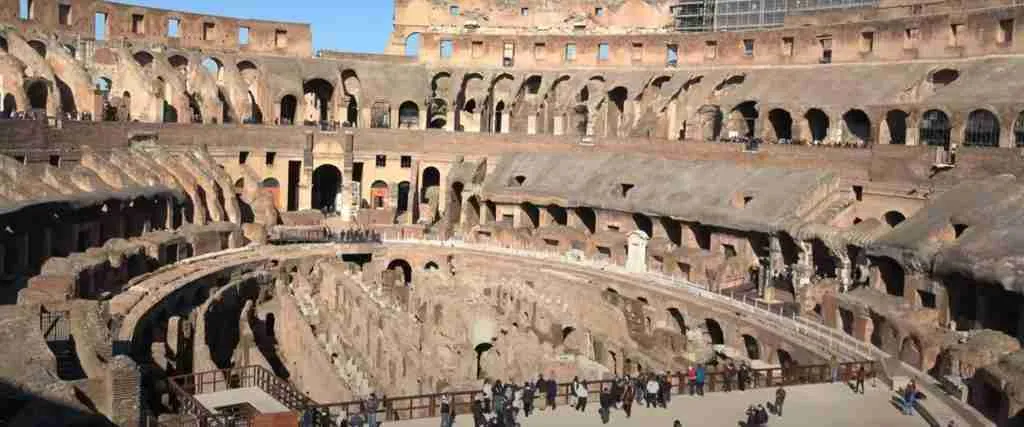
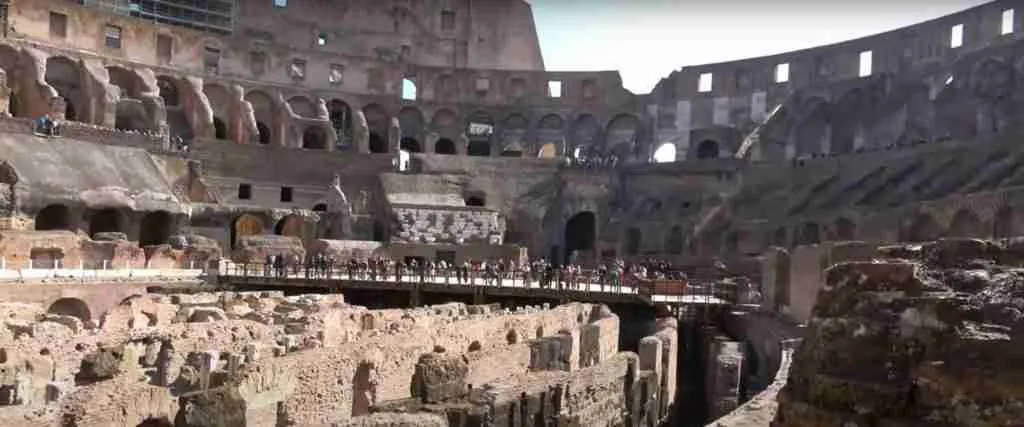
The ground floor interior is completely accessible, with smooth pathways that allow wheelchair users to explore the main arena level and view the underground hypogeum from accessible viewing platforms. All major interpretive areas and information displays on the ground floor can be reached by wheelchair users independently.
A modern elevator provides access to the second level, allowing wheelchair users to experience elevated views of the arena floor and appreciate the monument’s scale from different perspectives. The elevator is large enough to accommodate most standard wheelchairs and mobility scooters comfortably.
Mobility Aid Support and Equipment
Wheelchair rental services are available on-site for visitors who don’t travel with personal mobility equipment but require assistance for the extended walking involved in exploring the monument. These wheelchairs are available at no charge and can be reserved in advance to ensure availability.
The monument accommodates various mobility aids including walkers, canes, and mobility scooters within size restrictions for elevator use. Staff members are trained to assist with navigating accessibility features and can provide guidance on optimal routes for visitors with different mobility needs.
Rest areas throughout the accessible sections provide seating and relief for visitors who tire easily or require frequent breaks. These rest areas are strategically positioned to offer good views while providing comfortable spaces for recovery and orientation.
Extended multi-day tours – 5+ days
Featured Rome Multi-Day Tour Packages

3 days
Rome 3-Day Discovery Tour
- ✓ Comprehensive Rome experience
- ✓ Expert local guides included
- ✓ All accommodation included
- ✓ Transportation provided
5 days
Rome 5-Day Highlights Experience
- ✓ Comprehensive Rome experience
- ✓ Expert local guides included
- ✓ All accommodation included
- ✓ Transportation provided
7 days
Rome 7-Day Cultural Journey
- ✓ Comprehensive Rome experience
- ✓ Expert local guides included
- ✓ All accommodation included
- ✓ Transportation provided
10 days
Rome 10-Day Complete Adventure
- ✓ Comprehensive Rome experience
- ✓ Expert local guides included
- ✓ All accommodation included
- ✓ Transportation provided
Multi-day tour packages powered by TourRadar. Prices and availability subject to change.
Pathway Navigation and Surface Conditions
The accessible pathways feature smooth, level surfaces suitable for wheelchair use, though some areas retain historical cobblestone that may create minor vibrations for sensitive users. Alternative smooth routes are available to bypass more challenging surface areas.
Clear signage marks accessible routes throughout the monument, helping visitors navigate independently while identifying potential obstacles or challenging areas. The signage includes international accessibility symbols and directional information in multiple languages.
Weather protection is available in covered areas during rain or extreme heat, ensuring that accessibility doesn’t depend on favorable weather conditions. Indoor viewing areas provide climate-controlled environments for extended visits.
Visual Accessibility and Sensory Support
The Colosseum provides comprehensive support for visitors with visual impairments through tactile experiences, audio descriptions, and specialized tour options that emphasize non-visual aspects of the monument’s history and architecture.
Audio Description Services
Professional audio description services provide detailed verbal descriptions of the monument’s architecture, archaeological features, and historical context. These services go beyond standard audio guides to include spatial relationships, architectural details, and atmospheric descriptions that help create comprehensive mental images.
The audio descriptions cover not only visible features but also historical context, construction techniques, and cultural significance that help visually impaired visitors understand the monument’s importance and complexity. Multiple language options ensure accessibility for international visitors.
Personal audio devices are available with adjustable volume and clear, high-quality sound reproduction. The devices feature simple controls that can be operated by touch, with large buttons and clear tactile feedback for easy navigation.
Tactile Exploration Opportunities
Tactile models of the Colosseum at various scales allow visitors with visual impairments to understand the monument’s architecture through touch. These models feature accurate proportions and detailed surface textures that convey architectural information through tactile exploration.
Original architectural fragments and reproductions are available for hands-on exploration in designated areas. These authentic materials provide direct connection to ancient construction techniques and help visitors understand the physical properties of Roman building materials.
Braille and large-print informational materials are available in multiple languages, providing detailed historical and architectural information in accessible formats. These materials include maps, timelines, and detailed descriptions that supplement the audio experiences.
Guide Dog and Service Animal Support
Service animals are welcome throughout the monument without restrictions, and special accommodations ensure their comfort and safety during visits. Water stations and rest areas are available for service animals, and staff are trained to interact appropriately with working animals.
The monument provides relief areas and waste disposal facilities for service animals, ensuring that extended visits remain comfortable for both animals and their handlers. These facilities are discreetly located and easily accessible from main visitor routes.
Climate-controlled areas offer respite for service animals during extreme weather, and the accessibility routes are designed to minimize exposure to crowds that might stress working animals or interfere with their duties.
Hearing Accessibility and Communication Support
Comprehensive hearing accessibility features ensure that visitors with hearing impairments can fully participate in Colosseum tours and educational programs through visual communication methods and specialized support services.
Sign Language Interpretation Services
Professional sign language interpreters are available for guided tours, providing real-time interpretation of historical information, architectural descriptions, and cultural context. These services must be requested in advance but are provided at no additional charge for visitors with hearing impairments.
Multiple sign language options are available, including Italian Sign Language (LIS), American Sign Language (ASL), and International Sign, depending on interpreter availability and advance notice. The interpreters are trained in historical and architectural terminology relevant to the Colosseum experience.
Private tour options with dedicated interpreters allow for more personalized experiences and the flexibility to adjust pacing and content based on individual interests and communication preferences.
Visual Communication and Written Materials
Comprehensive written materials provide detailed information about all aspects of the Colosseum experience, ensuring that visitors who don’t use audio guides can access the same historical and cultural information through visual means.
Visual presentation techniques in group settings ensure that important information is communicated through gestures, facial expressions, and visual aids that supplement or replace verbal communication. Tour guides are trained in visual communication techniques that enhance accessibility for hearing-impaired visitors.
Digital displays and interactive screens throughout the monument feature closed captioning and visual information that doesn’t rely on audio components. These displays provide historical context, architectural details, and cultural information in accessible formats.
Assistive Listening Devices
Assistive listening systems amplify audio tour content and live presentations for visitors with partial hearing loss. These devices feature adjustable volume controls and noise reduction technology that improves speech clarity in the monument’s acoustic environment.
Personal FM systems and infrared listening devices are available for group tours and presentations, allowing users to receive direct audio transmission without interference from ambient noise or acoustic challenges in the ancient spaces.
The devices are compatible with personal hearing aids and cochlear implants, providing seamless integration with existing assistive technology. Technical support is available to ensure proper setup and optimal performance during visits.
Cognitive and Sensory Processing Support
The Colosseum accommodates visitors with cognitive disabilities, autism spectrum disorders, and sensory processing differences through specialized programs and environmental modifications that reduce overwhelming stimuli while maintaining educational value.
Sensory-Friendly Visit Options
Quiet hours and low-stimulation periods provide calmer environments for visitors who are sensitive to crowds, noise, or intense sensory input. These special times feature reduced lighting, limited group sizes, and modified presentation styles that minimize sensory overload.
Designated quiet spaces throughout the monument offer retreat opportunities for visitors who need breaks from stimulating environments. These areas provide comfortable seating and reduced sensory input while maintaining views of the monument’s key features.
Advance notification allows for preparation of sensory accommodation plans tailored to individual needs, ensuring that visits can be structured to maximize comfort and educational value while minimizing stress or discomfort.
Simplified Information and Communication
Easy-read materials present complex historical and architectural information in simplified language and clear formats that are accessible to visitors with cognitive disabilities or learning differences. These materials maintain accuracy while improving comprehension.
Visual schedules and clear expectations help visitors understand the visit structure and know what to expect throughout their Colosseum experience. This predictability reduces anxiety and helps individuals with autism or cognitive differences prepare mentally for the experience.
Flexible pacing allows visitors to spend additional time processing information or take breaks as needed without feeling rushed or pressured to keep up with standard tour schedules.
Ticketing and Admission Procedures
Streamlined ticketing and admission procedures ensure that visitors with disabilities can access the monument efficiently while receiving appropriate accommodations and support services.
Free Admission and Documentation Requirements
Visitors with disabilities receive free admission to the Colosseum upon presentation of valid disability documentation. One companion or caregiver also receives free admission when accompanying a visitor with disabilities, recognizing the support needs that may be involved.
Acceptable documentation includes official disability cards, medical certificates, or other government-issued identification that confirms disability status. The documentation requirements are designed to be flexible while preventing abuse of the accessibility benefits.
Advance online booking is strongly recommended even for free admission tickets, as this ensures entry at preferred times and allows staff to prepare appropriate accommodations and support services in advance.
Skip-the-Line Access and Priority Services
Visitors with disabilities and their companions receive priority access that bypasses standard admission lines, reducing waiting times and exposure to crowds that might be challenging for some individuals with disabilities.
Dedicated entrance procedures provide personalized attention and assistance during the admission process, ensuring that mobility aids, medical equipment, and service animals are accommodated smoothly without delays or complications.
Security screening procedures are modified as needed to accommodate medical devices, mobility aids, and other disability-related equipment while maintaining security standards. Staff are trained in respectful and efficient screening techniques.
Advance Planning and Reservation Services
Accessibility services can be reserved in advance through dedicated contact channels that allow visitors to specify their needs and receive detailed information about available accommodations. This advance planning ensures that all necessary services are available during the visit.
Detailed accessibility information is provided during the reservation process, including specific details about pathways, elevator access, rest areas, and any limitations that might affect the visit experience.
Confirmation of accessibility arrangements includes contact information for on-site assistance and clear instructions for accessing reserved services upon arrival at the monument.
Specialized Tour Options and Educational Programs
Inclusive tour options cater to different accessibility needs while maintaining high educational standards and ensuring that all visitors can engage meaningfully with the Colosseum’s history and significance.
Multi-Sensory Tours
Multi-sensory tour experiences engage multiple senses simultaneously, making the experience accessible to visitors with various types of sensory impairments while enriching the experience for all participants.
These tours incorporate tactile elements, aromatic experiences that evoke ancient Rome, sound effects that recreate historical atmospheres, and detailed verbal descriptions that paint comprehensive pictures of the monument’s past and present.
Interactive components allow participants to engage with historical concepts through hands-on activities, role-playing exercises, and immersive experiences that bring ancient Roman culture to life through multiple sensory channels.
Technology-Enhanced Accessibility
Virtual reality and augmented reality technologies provide alternative ways to experience areas of the monument that may be physically inaccessible or challenging for some visitors. These technologies can reconstruct ancient environments and provide immersive historical experiences.
Mobile apps with accessibility features include voice control, large text options, high contrast displays, and compatibility with screen readers and other assistive technologies. These apps provide detailed information and navigation assistance throughout the visit.
Interactive displays with universal design principles ensure that digital experiences are accessible to users with various abilities while providing engaging and educational content about Roman history and architecture.
Family and Caregiver Support
Recognition that many visitors with disabilities travel with family members or caregivers leads to supportive services that acknowledge the needs of entire family groups and support networks.
Companion and Caregiver Services
Free admission for one companion recognizes that many visitors with disabilities require assistance or companionship during their visit. This policy ensures that financial considerations don’t prevent necessary support from being available.
Caregiver support areas provide comfortable spaces where families can rest, organize assistive equipment, and prepare for different sections of the visit. These areas include storage facilities for personal items and medical supplies.
Flexible group arrangements allow families to move at their own pace and take breaks as needed without feeling obligated to keep up with standard tour schedules or large group dynamics.
Educational Resources for Families
Pre-visit materials help families prepare for the Colosseum experience by providing detailed information about accessibility features, expected walking distances, sensory experiences, and potential challenges that might arise during the visit.
Educational activities designed for mixed-ability groups ensure that family members with different cognitive and physical abilities can participate together in meaningful learning experiences about Roman history and culture.
Take-home materials extend the learning experience and provide accessible references that families can use to continue exploring Roman history and archaeology after their visit.
Transportation and Parking
Accessible transportation options and parking facilities ensure that the accessibility experience begins before entering the monument and continues throughout the entire visit.
Public Transportation Accessibility
The Colosseo Metro station (Line B) features full accessibility with elevators, tactile guidance systems, and audio announcements that help visitors with various disabilities navigate to the monument independently.
Accessible bus routes serve the Colosseum area with low-floor vehicles, wheelchair lifts, and priority seating for passengers with disabilities. Route information is available in accessible formats including large print and audio announcements.
Transportation planning assistance helps visitors understand the most accessible routes from their accommodations to the monument, including information about potential challenges and alternative options.
Accessible Parking and Drop-off Areas
Designated accessible parking spaces near the monument accommodate visitors who travel by private vehicle or accessible taxi services. These spaces feature appropriate dimensions for wheelchair-accessible vehicles and close proximity to accessible entrances.
Drop-off zones allow caregivers to transport visitors with mobility limitations directly to the accessible entrance before parking vehicles in designated areas. This service minimizes walking distances for visitors with mobility challenges.
Parking reservations can be made in advance to guarantee accessible space availability, particularly important during busy periods when standard parking may be fully occupied.
Safety and Emergency Procedures
Comprehensive safety protocols ensure that visitors with disabilities receive appropriate assistance during emergencies while maintaining independence and dignity during normal visit conditions.
Emergency Evacuation Procedures
Accessible emergency evacuation routes provide safe exit options for visitors with mobility limitations, including designated assistance areas where visitors can wait safely for help during emergencies.
Emergency communication systems include visual alerts for hearing-impaired visitors and clear, simple instructions that can be understood by visitors with cognitive disabilities or language barriers.
Staff training in disability awareness ensures that emergency assistance is provided appropriately and respectfully, with understanding of different disability types and appropriate assistance techniques.
Medical Emergency Support
On-site medical assistance is available for visitors who experience health emergencies related to their disabilities or other medical conditions. Medical staff are trained in disability awareness and appropriate response techniques.
First aid stations include equipment and supplies appropriate for various disability-related needs, and staff can coordinate with external emergency services when more advanced medical care is required.
Emergency contact procedures ensure that family members or caregivers are notified promptly in case of medical emergencies, and personal medical information can be accessed when visitors provide it voluntarily.
Frequently Asked Questions
Is the Colosseum fully wheelchair accessible?
Yes, the main entrance and ground floor are completely wheelchair accessible. An elevator provides access to the second level. While some ancient areas like the underground hypogeum have limited accessibility due to historical preservation requirements, the main visitor areas are fully accessible.
Do visitors with disabilities get free admission to the Colosseum?
Yes, visitors with valid disability documentation receive free admission, and one companion or caregiver also receives free entry. Advance booking is still recommended to ensure availability and proper accommodation preparation.
Can I bring my service animal to the Colosseum?
Service animals are welcome throughout the monument without restrictions. Water stations and relief areas are available, and staff are trained to interact appropriately with working animals without interfering with their duties.
Are audio tours available with accessibility features?
Yes, audio tours include professional audio descriptions for visually impaired visitors, assistive listening devices for hearing-impaired visitors, and devices compatible with personal hearing aids. Multiple language options are available.
Can I rent a wheelchair at the Colosseum?
Free wheelchair rental is available on-site, but advance reservation is recommended to ensure availability. The wheelchairs are suitable for the monument’s accessible pathways and elevator systems.
Are there sign language interpreters available for tours?
Professional sign language interpreters can be arranged for guided tours with advance notice. Multiple sign language options are available including Italian Sign Language (LIS), American Sign Language (ASL), and International Sign.
What documentation do I need to prove my disability for free admission?
Official disability cards, medical certificates, or government-issued disability identification are acceptable. The requirements are flexible to accommodate different countries’ documentation systems while preventing abuse.
Are there quiet times for visitors with sensory sensitivities?
Special quiet hours and low-stimulation visits can be arranged for visitors with autism, sensory processing disorders, or other conditions that require reduced sensory input. These must be requested in advance.
Can visitors with cognitive disabilities access educational programs?
Yes, simplified educational materials, easy-read guides, and modified tour programs are available for visitors with cognitive disabilities or learning differences. Flexible pacing allows for individual learning needs.
Is accessible parking available near the Colosseum?
Designated accessible parking spaces are available near the monument with advance reservation. Drop-off zones also allow caregivers to transport visitors directly to accessible entrances before parking.