
Best Kotor Tours & Walking Routes 2026: Bay Cruises, Walking & Shore Excursions
Montenegro’s fjord-wrapped medieval jewel offers exceptional touring experiences from free walking explorations through UNESCO-protected Old Town to speedboat adventures into the Blue Cave’s luminous waters. This 2026 guide covers walking routes through Kotor’s Venetian lanes, bay cruises to hidden grottoes and island churches, and shore excursions optimized for cruise passengers, with current pricing and practical strategies for experiencing this Adriatic gem efficiently and affordably.
Key Takeaways About Kotor Tours 2026
- Walking Tour Value 2026: Free guided walking tours offer exceptional introduction to Old Town’s history with tip-based pricing at €5-10, while the San Giovanni Fortress climb costs €15 entrance for 1,350-step ascent to panoramic bay views worth every euro.
- Bay Cruise Costs 2026: Group Blue Cave speedboat tours cost €35-50 per person for three-hour experiences including Our Lady of the Rocks, submarine tunnels, and swimming in luminous Blue Cave waters, with private boat charters available at €230-400 per group when split among travelers.
- Shore Excursion Planning 2026: Cruise passengers access half-day shore excursions at €50-95 per person through ship operators or save significantly booking independent tours directly with local operators at €35-70 for comparable experiences with guaranteed ship return timing.
- Walking Route Strategy 2026: Self-guided Old Town exploration takes two to three hours covering main squares and churches, fortress climb adds 90 minutes for complete experience, with optimal timing before 9 AM or after 5 PM avoiding cruise ship crowds that peak 10 AM to 4 PM.
- Best Tour Combinations 2026: Maximum value combines morning free walking tour through Old Town with afternoon Blue Cave boat excursion for total €40-60 per person, creating full-day experience showcasing both medieval architecture and natural bay wonders without schedule conflicts.
- Seasonal Tour Considerations 2026: April through June and September through October offer optimal touring conditions with moderate temperatures for fortress climbing, smaller crowds than July-August peak, and full tour operator availability with same pricing as summer but superior experience quality.
People Also Ask About Kotor Tours 2026
How much do Kotor walking tours cost in 2026?
Free walking tours operate on tip-based model with typical tips of €5-10 per person, providing 90-minute guided introductions to Old Town’s history, architecture, and main landmarks including St. Tryphon Cathedral and Square of Arms. Private walking tours cost €25-50 per person for one to two hours with personalized pacing and focus areas. The San Giovanni Fortress climb costs €15 entrance fee for adults with children under 12 free, covering 1,350 steps ascending to 260 meters above sea level with panoramic bay views. Walking tours combined with food tastings range €40-70 per person including Old Town exploration plus traditional Montenegrin wine, cheese, and smoked meat samplings at local establishments.
What’s included in Kotor Blue Cave boat tours for 2026?
Three-hour Blue Cave speedboat tours in 2026 cost €35-50 per person and include visits to Our Lady of the Rocks island church with 20-minute stop, panoramic viewing of Mamula Island fortress, exploration of former Yugoslav submarine tunnels, 20-30 minute swimming time in Blue Cave’s luminous waters, and scenic cruise past Perast’s baroque architecture. Tours operate in small groups of 6-12 passengers on speedboats with English-speaking captains providing historical commentary. Private boat charters cost €230-400 per group for same itinerary with flexible timing and photo stops, working well for families or groups of four to six splitting costs to €40-65 per person range.
Are independent tours or cruise shore excursions better value in Kotor 2026?
Independent tour operators charge €35-50 for Blue Cave boat tours and €5-25 for walking experiences versus cruise line shore excursions at €50-145 for similar itineraries, creating savings of €15-95 per person when booking directly with local companies like Sea Stars, Poseidon Boats, or 360 Monte. Independent bookings require managing your own timing to ensure ship return, though reputable operators guarantee cruise passenger return schedules. Shore excursions through cruise lines provide automatic coordination, guaranteed return timing, and compensation if tours cause missed departure, worth the premium for travelers prioritizing convenience over cost savings. Best approach books one shore excursion through ship for peace of mind on first port day, then switches to independent operators once comfortable with timing logistics.
What time should I start Kotor tours in 2026 to avoid crowds?
Optimal Old Town touring happens before 9 AM or after 5 PM when cruise ship passengers have departed, reducing Square of Arms congestion by 70 percent compared to midday peak. Early morning tours between 7-9 AM offer coolest temperatures for fortress climbing, excellent photography light on medieval stone, and availability of popular restaurants for post-tour breakfast. Late afternoon tours starting 4-5 PM capture golden hour lighting for bay photographs, conclude with sunset views from city walls or waterfront cafes, and align with evening when Old Town transforms from daytime tourist zone to local social space. Bay boat tours operate throughout day with morning departures 9-11 AM providing calmest sea conditions for Blue Cave swimming, while afternoon departures 2-4 PM maximize beach time at submarine tunnel stops.
Extended multi-day tours – 5+ days
Featured Kotor Multi-Day Tour Packages
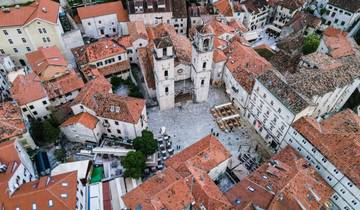
2 days
From Tirana, 2 Days: Budva – Kotor
- ✓ Comprehensive Kotor tour
- ✓ Expert local guides included
- ✓ All accommodation arranged
- ✓ Transportation provided
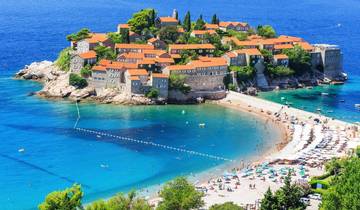
1 days
From Tirana/Durres/Golem -> Montenegro: Budva & Kotor day tour
- ✓ Comprehensive Kotor tour
- ✓ Expert local guides included
- ✓ All accommodation arranged
- ✓ Transportation provided
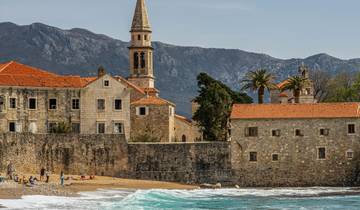
2 days
Tour of Montenegro and Kosovo in 2 days from Tirana or Durres
- ✓ Comprehensive Kotor tour
- ✓ Expert local guides included
- ✓ All accommodation arranged
- ✓ Transportation provided
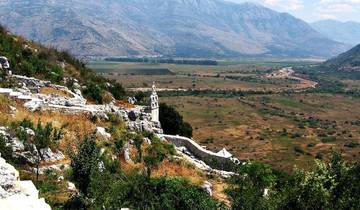
3 days
All seasons 3 days micro tour to Montenegro and Bosnia from Dubrovnik. Visit Venetians towns, monasteries, taste Herzegovina wines. Gorgeous scenery!
- ✓ Comprehensive Kotor tour
- ✓ Expert local guides included
- ✓ All accommodation arranged
- ✓ Transportation provided
Multi-day tour packages powered by TourRadar. Prices and availability subject to change.
Introduction to Kotor Tours and Walking Routes 2026
Kotor’s dramatic setting where limestone cliffs plunge into the Bay of Kotor’s sheltered waters creates touring opportunities unmatched along Montenegro’s coast. The UNESCO World Heritage Old Town preserves nine centuries of Venetian, Byzantine, and medieval architecture within defensive walls ascending directly up Mount Lovćen’s slopes, while the bay itself conceals island churches built on sailor-constructed rock platforms, sea caves glowing electric blue from underwater light refraction, and abandoned military installations now serving as historical curiosities. This convergence of cultural heritage and natural drama makes Kotor Montenegro’s most tour-intensive destination, with options ranging from free walking explorations requiring only comfortable shoes to full-day boat excursions combining swimming, history, and coastal scenery.
Tour planning for 2026 requires understanding Kotor’s dual nature as both independent traveler destination and major cruise port. On days when three to four cruise ships tender passengers ashore, Old Town’s 13,000 square meters absorb 6,000-8,000 visitors between 10 AM and 4 PM, transforming narrow medieval lanes into congested corridors. Strategic timing around cruise schedules, documented on CruiseMapper port calendars, allows visitors to experience the same UNESCO-listed streets, fortress ramparts, and baroque squares in relative solitude simply by arriving before 9 AM or remaining after 5 PM. Similarly, bay boat tours leaving early morning or late afternoon encounter fewer vessels at popular stops like Our Lady of the Rocks island, creating more intimate experiences at locations that host dozens of daily tour boats during peak hours.
Walking tours dominate Kotor’s tour landscape because the compact Old Town concentrates extraordinary architectural and historical density within easily walkable perimeter. The entire walled city measures roughly 400 meters north to south and 280 meters east to west, allowing comprehensive exploration of main squares, churches, palaces, and museums within two to three hours without rushing. Free walking tours led by licensed guides provide excellent introduction to Venetian maritime history, Orthodox and Catholic church traditions, and earthquake-resilient construction techniques evident in stone walls, while self-guided routes using detailed maps allow flexible pacing and photography stops. The fortress walk extending from Old Town to San Giovanni Castle adds dramatic vertical dimension, climbing 1,350 stone steps through defensive towers and ramparts to viewpoints overlooking the entire bay system.
Bay cruises complement walking tours by revealing Kotor from its historical perspective as maritime power. For centuries, Kotor’s wealth and strategic importance derived from controlling access to the bay’s sheltered anchorages, and boat tours recreate this relationship between town and sea. Three-hour speedboat excursions to the Blue Cave showcase the bay’s natural wonders, while longer cruises to Perast, Our Lady of the Rocks, and abandoned submarine bases illustrate the region’s layered history from Venetian church construction to Cold War military installations. These water-based tours also provide practical relief from Old Town’s stone surfaces and summer heat, offering swimming opportunities in crystal-clear Adriatic waters away from Kotor’s limited beach areas.
Shore excursions serve the substantial cruise passenger market arriving via tender from ships anchored in the bay. While cruise line shore excursions provide convenience and guaranteed return timing, independent tour operators offer identical experiences at lower costs for passengers comfortable managing their own schedules. Understanding this market dynamic allows cruise visitors to make informed decisions between paying premium for cruise-organized tours versus booking directly with companies like Sea Stars Boat Tours, 360 Monte, or Montenegro Hostel walking tours that cater specifically to time-limited cruise passengers. Many operators explicitly guarantee return timing coordinated with ship departure schedules, eliminating the primary advantage cruise line excursions traditionally provided.
Tour pricing in 2026 reflects Montenegro’s position as affordable Adriatic alternative to more expensive Croatian and Italian coastal destinations. Free walking tours operate on tip-only basis, fortress entrance costs just €15, and three-hour Blue Cave boat tours with multiple stops run €35-50 per person. This pricing accessibility, combined with Kotor’s concentrated attractions requiring minimal transportation between sites, makes comprehensive touring achievable even on modest budgets. Strategic tour selection—morning free walking tour, afternoon boat excursion, self-guided fortress climb at sunset—delivers world-class cultural and natural experiences for total daily cost of €50-75 per person, exceptional value compared to similar European heritage destinations.
This guide prioritizes practical implementation over general descriptions. Each section provides specific operator names, meeting locations, booking procedures, and timing strategies rather than vague recommendations. Cost information includes realistic ranges reflecting 2026 pricing with clear explanations of what’s included, allowing accurate budget planning. Walking routes detail exact paths with estimated times, elevation changes, and photo-worthy stops. Bay cruise sections compare different operators’ itineraries and vessel types so you select tours matching your interests and physical capabilities. Shore excursion guidance addresses the specific challenges cruise passengers face with limited port time and ship departure constraints. The goal throughout remains helping you maximize Kotor touring value in 2026 through informed decisions based on accurate, current information rather than promotional descriptions or outdated details.
Understanding Kotor’s Tour Landscape 2026
Kotor operates as two distinct touring destinations occupying the same geographic space. The Old Town within Venetian walls functions as concentrated walking museum where tour companies guide groups through medieval streets, explaining architectural details, historical events, and cultural traditions packed into compact area. The Bay of Kotor extending outward serves as maritime touring zone where boat operators transport passengers to natural wonders, island churches, coastal villages, and historical military sites accessible only by water. This geographic division creates natural tour category separation, with walking tours exploring the fortified town and boat tours revealing the bay’s scattered attractions, though combined tours integrate both elements for comprehensive experiences.
Tour operators in Kotor fall into several distinct categories. Free walking tour companies like those organized by Montenegro Hostel and GuruWalk guides operate on tip-based model, meeting at designated Old Town locations like the Sea Gate or Square of Arms and conducting 90-minute introductory tours highlighting main landmarks with licensed guides sharing historical context and local knowledge. These tours deliberately conclude near popular restaurants or shops where guides earn commission supplements to visitor tips, transparent business model that works well for budget travelers wanting overview before independent exploration. Private tour companies including 360 Monte, various guides listed on GetYourGuide and Viator platforms, offer personalized walking experiences at fixed fees of €25-70 per person depending on duration and group size.
Boat tour operators concentrate along Kotor’s waterfront, with companies like Sea Stars, Poseidon Boat Tours, Hawaii Boat Tours, and Speed Boat Montenegro operating speedboat fleets for bay excursions. These companies offer both scheduled group tours with fixed departure times and private charters bookable for families or small groups wanting flexible itineraries. Group tours typically accommodate 6-12 passengers per boat, while private charters handle 4-8 depending on vessel. Larger gulet cruises offered by companies like Responsible Travel provide multi-day live-aboard experiences cruising the bay and visiting coastal towns, representing entirely different tour category focused on extended maritime exploration rather than day excursions from Kotor base.
Cruise ship shore excursion programs operate through major cruise lines including Princess, Celebrity, MSC, Viking, and Carnival, offering organized tours booked either pre-cruise through cruise line websites or onboard ship during sailing. These shore excursions cover identical locations as independent tours but include guaranteed ship return coordination, insurance coverage for missed departures, and premium pricing reflecting cruise line commission structures. Shore excursions typically cost 40-60 percent more than identical independent tours, trade-off many cruise passengers accept for convenience and risk elimination. However, reputable independent operators now guarantee cruise passenger return timing and provide contact numbers for emergency coordination, narrowing the practical advantage shore excursions once exclusively provided.
Tour booking mechanisms vary by operator type. Free walking tours require only showing up at posted meeting times, typically hourly throughout morning and afternoon during peak season. Paid walking tours book through online platforms like GetYourGuide, Viator, or direct with operators via WhatsApp or email. Boat tour operators maintain online booking systems accessible via their websites, though many also accept walk-up customers on morning of tour if space available. Shore excursions book through cruise line systems weeks before departure or through shore excursion desks onboard ship. This variety of booking approaches means advance reservation requirements differ dramatically—free walking tours need zero advance planning, popular boat tours should book 2-3 days ahead during summer, and shore excursions often require booking before ship departs home port.
Seasonal tour availability runs April through October with limited winter operations November through March when cruise ships cease visiting and independent tourism drops substantially. Peak season July and August sees maximum tour frequency with boats departing hourly for Blue Cave, walking tours leaving multiple times daily, and all tour operators fully staffed. Shoulder seasons of April-June and September-October maintain nearly full tour schedules with slightly reduced frequency but dramatically improved experience quality through smaller crowds, moderate temperatures for fortress climbing, and better availability at popular photo locations without waiting for other tour groups to clear. Winter operations December through March consist mainly of private tours arranged by advance request, with most regular scheduled tours suspended until spring tourism season begins.
Tour pricing structure reflects Kotor’s positioning as accessible destination. Walking tours range from free (tip-based) at low end to €70 for premium private experiences with wine tastings at high end. Boat tours span €35-50 for standard three-hour Blue Cave group excursions to €400+ for private full-day charters. Shore excursions through cruise lines start around €50 for basic walking tours and extend to €145+ for full-day comprehensive experiences. These prices position Kotor significantly below comparable Adriatic destinations like Dubrovnik where similar tours cost 30-50 percent more. The pricing accessibility extends beyond tours to related costs—Old Town entrance is free, fortress climb costs just €15, museum entries run €2-5, and waterfront restaurants charge €8-15 for mains rather than premium tourist prices found at many European heritage sites.
Tour quality assessment requires examining guide credentials, group sizes, and actual itinerary execution beyond marketing descriptions. Licensed tour guides display certification badges and provide historically accurate information rather than folk tales and speculation. Small group sizes of 6-12 participants allow better interaction with guides and easier movement through Old Town’s narrow lanes compared to large bus tour groups. Actual itinerary completion matters more than promised stops—some boat tours advertise six locations but rush through three while others deliver leisurely exploration of each stop as described. Online review platforms including Google Maps, TripAdvisor, and booking site reviews provide essential quality signals, with consistent patterns across 50+ reviews more reliable than handful of perfectly worded testimonials that may reflect planted feedback.
Tour combination strategies maximize value by selecting complementary experiences rather than redundant coverage. Morning free walking tour through Old Town plus afternoon Blue Cave boat excursion creates full-day itinerary showcasing both land and sea attractions for minimal cost. Fortress climb at sunrise or sunset bookends a day with self-guided exploration, capturing optimal photography light while avoiding fortress visitor congestion during midday heat. Multi-day visitors benefit from progressive deepening—Day 1 covers Old Town walking and fortress climb, Day 2 adds Blue Cave boat tour, Day 3 explores Perast and surrounding bay independently by rental car or water taxi, building knowledge and confidence for increasingly independent exploration.
Free Walking Tours of Kotor Old Town 2026
Free walking tours provide exceptional entry point to Kotor’s Old Town, delivering professional guided interpretation of UNESCO World Heritage architecture, history, and culture without upfront payment. These tours operate on tip-based compensation model where guides work for gratuities rather than fixed fees, making comprehensive 90-minute historical tours accessible to travelers on any budget. Multiple companies and independent guides offer free tours throughout day during tourist season, with meeting points clearly marked at major Old Town entrances and departure times posted on GuruWalk platform, hostel bulletin boards, and operators’ social media channels. Typical tours accommodate 10-25 participants with licensed guides speaking fluent English plus often additional languages including German, Italian, French, and Spanish depending on guide background.
Free tour itineraries concentrate on Old Town’s main historical sites and squares within the Venetian walls. Tours typically begin at the Sea Gate, the 16th-century main entrance featuring carved winged lions of St. Mark that identify Venetian construction throughout the bay region. From the Sea Gate, routes proceed through the Square of Arms, Kotor’s largest public space historically used for weapons storage and civic gatherings, featuring the baroque Clock Tower built in 1602 and the Shame Pillar where criminals faced public punishment. Tours continue to St. Tryphon Cathedral, the 12th-century Romanesque church dedicated to Kotor’s patron saint, explaining the cathedral’s survival through multiple earthquakes and its blend of Romanesque, Gothic, and Baroque elements from successive reconstruction periods.
Routes wind through Kotor’s characteristic narrow lanes lined with stone palaces displaying coats of arms, small museums occupying historic buildings, and hidden courtyards revealing interior gardens and medieval architecture away from main thoroughfares. Guides explain Venetian Republic’s influence from 1420 to 1797, when Kotor served as important maritime base controlling access to the southern Adriatic. Tours point out architectural details including stone relief carvings, building techniques designed to withstand earthquakes, and preserved examples of different historical periods layered throughout the old town. Many guides are Kotor natives who personalize tours with family stories, local legends, and practical recommendations for restaurants, shops, and photography locations based on firsthand knowledge rather than guidebook research.
Tour quality varies based on guide experience and knowledge depth. The best free walking tour guides hold official Montenegro tour guide licenses requiring formal education in history, culture, and tourism, displayed through certification badges worn during tours. These professional guides provide historically accurate information drawn from academic research rather than entertaining but potentially inaccurate folklore. Less experienced guides, often seasonal workers supplementing income during summer months, may offer enthusiasm and basic information but lack deeper historical context and ability to answer detailed questions about architecture, art, or historical events. Reading guide profiles on GuruWalk platform and checking recent reviews helps identify consistently highly-rated guides worth seeking out for superior tour experiences.
Tipping protocol for free walking tours follows general guideline of €5-10 per person as fair compensation for 90-minute professional service, with higher amounts appropriate for exceptional guides providing superior knowledge, engaging presentation, or going beyond standard itinerary to answer questions and provide personalized recommendations. Some visitors calculate tips based on comparison to paid walking tours—if equivalent guided tour costs €25-30, tipping €10 represents substantial discount while still fairly compensating guide effort. Cash tips in euros work best, handed directly to guide at tour conclusion. Zero tipping is technically permissible since tours are “free,” but extremely rare among tourists recognizing guides’ professional service and financial dependence on gratuities.
Free walking tours offer practical advantages beyond cost savings. Tours occur rain or shine unless severe weather creates safety hazards, providing reliable activity option regardless of conditions. No advance reservation required—simply arrive at meeting point five to ten minutes before departure time. Tours provide natural opportunity to meet fellow travelers, often leading to informal groups continuing together for lunch, museum visits, or afternoon boat tours. Tours serve excellent orientation for first-day visitors, helping you understand Old Town layout, identify restaurants and shops for later visits, and learn historical context that enhances subsequent independent exploration. Guides often mention their availability for private tours at negotiated rates, allowing you to hire the same guide for deeper explorations of specific topics or locations beyond the standard free tour coverage.
Multiple free walking tour options operate simultaneously in high season, allowing choice between different guides, schedules, or focus areas. Some tours emphasize architectural history and Venetian maritime heritage, while others incorporate more cultural elements like Montenegrin traditions, local lifestyle, or food culture. Specialized free tours cover topics including Kotor’s churches (visiting multiple Orthodox and Catholic churches beyond just St. Tryphon), photography-focused tours timing stops for optimal light and angles, or Old Town cats—Kotor maintains semi-famous population of cats that locals feed and care for communally, reflected in the quirky Cat Museum and numerous cat-themed souvenirs. Checking tour descriptions on GuruWalk helps match interests to specific tour approaches.
Limitations of free walking tours primarily involve what’s not included. Tours remain outside all paid-entry attractions including St. Tryphon Cathedral interior, museums, and fortress walls, with guides explaining these sites from exterior but not entering due to entrance fees. Tours don’t include food or beverage stops beyond passing recommendations, though some guides operate separate food-focused tours at paid rates. Tours maintain relatively fast pace to cover main sites within 90 minutes, not allowing extended photo stops or deep-dive explorations of particular locations that fascinate individual participants. Groups of 15-25 people mean less personalized attention compared to private tours, with guides addressing general questions but unable to tailor content to each participant’s specific interests. Tours typically conclude near restaurants or shops where guides earn commission referrals, creating potential pressure to patronize recommended establishments though no obligation exists.
Best free walking tour booking approach combines flexibility with light research. Check GuruWalk platform evening before or morning of intended tour day to see scheduled tours, departure times, and guide profiles. Review recent ratings focusing on guides with 100+ reviews averaging 4.8+ stars, indicating consistent quality across diverse visitor groups. Arrive at meeting point 10 minutes early to confirm tour is operating and claim good position near guide for hearing commentary in crowded squares. Bring cash for tipping, comfortable walking shoes for cobblestone streets, and water bottle particularly during summer months. Consider taking morning free tour for orientation, then use afternoon for independent exploration of locations mentioned during tour that sparked particular interest, essentially using the free tour as intelligent guide to prioritizing your limited Kotor time.
San Giovanni Fortress Walk 2026: The Ladder of Kotor
The San Giovanni Fortress walk ascending from Kotor Old Town to the fortress ruins at 260 meters elevation constitutes Montenegro’s most iconic hiking experience, combining physical challenge with escalating bay panoramas that justify the climb’s popular designation as “Ladder of Kotor.” The route climbs approximately 1,350 stone steps through medieval defensive walls, passing through towers, gates, and rampart sections built by Venetian, Byzantine, and local rulers across nine centuries of fortification construction. Current €15 entrance fee provides access to the entire wall system from Old Town starting points through the switchbacking upper sections to San Giovanni Fortress ruins commanding summit views across the entire Bay of Kotor, surrounding mountains, and Adriatic entrance channels.
Two primary access points serve fortress climb—main entrance near the Old Town’s northern gate and alternative entrance near the Sea Gate area. Main entrance features ticket booth operating 8 AM to 8 PM during summer season, collecting €15 per adult entry with children under 12 free. The ticket booth position means early-morning climbers arriving before 8 AM can ascend without payment, though this loophole technically violates entry requirements and risks encountering unofficial collectors partway up the steps attempting to charge climbers who bypassed official entry. Alternative approach buys ticket at official booth then begins climb, supporting fortress maintenance while avoiding potential confrontation with unauthorized fee collectors operating midway positions.
The climb divides into three distinct sections with varying difficulty and viewpoint quality. Lower section from Old Town to Church of Our Lady of Remedy at roughly one-third height features wide steps with moderate grade, taking 15-20 minutes at steady pace. This section passes through the city walls proper, with towers and defensive positions built directly into the cliff face. The church at first third provides legitimate rest stop with benches, limited shade, and already impressive views over Old Town’s terracotta roofs and the bay’s inner waters. Middle section from church to midpoint fortress tower increases steepness with narrower, more irregular steps taking 20-30 minutes. Views expand to include Perast, islands, and the bay’s full width. Upper section from midpoint to San Giovanni summit features steepest sustained climbing on most weathered steps, requiring 15-25 minutes depending on fitness and rest frequency.
Total climb time ranges 45 to 90 minutes ascending depending on fitness level, age, rest frequency, and photography stops. Descent takes 30-60 minutes with different challenges than ascent—knee strain from downward pressure and slippery stone requiring careful foot placement particularly if steps are wet. Round-trip commitment therefore runs 75 minutes minimum for fit individuals moving steadily to 3 hours for slower pace with extended photography and rest stops. This time requirement matters for planning—climbing during midday heat extends time through necessary rest breaks, while cool morning or evening climbs allow more continuous progress. Most visitors spend 15-30 minutes at summit taking photos, resting, and absorbing views before beginning descent.
Physical difficulty assessment rates the fortress climb as moderate to strenuous depending on fitness background. The 1,350-step count and 260-meter elevation gain compare roughly to climbing 65-story building via stairs, substantial cardiovascular and muscular demand for sedentary individuals but manageable for anyone with regular walking fitness. No technical climbing or scrambling required—entire route follows constructed steps and paths. However, the uneven stone steps, occasional gaps in railings, and exposed drops near cliff edges require attention and balance. Wet conditions after rain create genuinely hazardous slippery surfaces, justifying postponing climb until stone dries. Summer heat significantly increases difficulty, with exposed southern-facing walls offering almost no shade during midday hours when temperatures exceed 30°C (86°F) and reflected stone heat adds to discomfort.
Optimal timing for fortress climb prioritizes early morning or late afternoon avoiding both heat and crowds. Sunrise climb departing 6-7 AM provides coolest temperatures, most dramatic light for photography as dawn illuminates the bay, near-solitude on the steps, and completing descent before tour group congestion begins. The climb before 8 AM currently allows avoiding €15 entrance fee though this loophole’s legality remains questionable and may be closed through earlier ticket booth opening. Late afternoon climb starting 5-6 PM offers second-best timing with golden hour light, evening coolness, and watching sunset from upper ramparts before descending in twilight. Headlamp or phone flashlight becomes useful for safe final descent steps after sunset. Midday climb 11 AM to 3 PM faces maximum heat, strongest sun exposure, and most crowded conditions with cruise ship passengers and tour groups clogging narrow sections—avoid unless schedule requires it.
Essential items for fortress climb include proper footwear with grip and ankle support—running shoes or hiking boots work well, while flip-flops or fashion sandals create genuine injury risk on uneven steps. Bring minimum 1 liter water per person, more during summer heat when dehydration becomes real concern. Sunscreen and hat protect against intense sun exposure on shadeless sections. Small backpack carries water, snacks, and camera more comfortably than handheld. Fully charged phone ensures photography capability and provides emergency contact option though cell signal proves reliable throughout climb. Light long sleeves or hiking shirt helps prevent sunburn while maintaining cooling through moisture wicking better than bare arms exposed to direct sun.
No restrooms exist anywhere along the climb or at summit, making pre-climb bathroom stop at Old Town cafes essential particularly for longer excursions. No water fountains or vendors operate on the fortress walk, requiring carrying all needed hydration. Some visitors cache water bottles at Church of Our Lady of Remedy partway up the climb, retrieving them for ascent hydration then refilling from Old Town fountain before descent. The church itself remains locked most hours though external benches provide rest spot. Summit fortress ruins offer no facilities, just crumbling stone walls, basic information plaques, and the panoramic views justifying the entire effort.
Photography opportunities escalate with elevation, beginning with Old Town overview shots from lower walls, expanding to include Perast and islands from midpoint, and culminating in sweeping bay panoramas from summit capturing the entire Boka system, surrounding mountains, and Adriatic channels in single frames. Wide-angle lenses between 16-35mm focal length capture these expansive vistas effectively, while longer telephotos compress distant features for artistic interpretations. Late afternoon light creates warm tones on stone walls and mountains, while morning light provides clarity for distant details. Sunrise and sunset timing requires precise scheduling—arrive at viewpoint 30 minutes before sunrise or plan to descend by headlamp after sunset.
Safety considerations center on heat exposure, hydration, and step navigation. Heat exhaustion symptoms including excessive fatigue, dizziness, nausea, or headache require immediate descent and rehydration, not pushing through to summit. Cardiac concerns for visitors with heart conditions warrant medical consultation before attempting climb given sustained cardiovascular demand. Wet conditions create treacherous slipping hazards on smooth stone steps worn by centuries of foot traffic. Exposed cliff edges lack barriers in some sections, making careful attention to path essential particularly for children. Emergency descent route exists throughout—simply reverse direction and walk back down if any concerns arise.
Guided Walking Tours and Old Town Exploration 2026
Private walking tours provide personalized alternatives to free group tours, offering flexible pacing, customized content focus, and smaller groups typically limited to your party. Private tours book through platforms including GetYourGuide, Viator, and direct with local operators like 360 Monte, typically costing €25-70 per person depending on duration, included elements, and group size. Standard private tours last 1.5 to 2 hours covering similar Old Town routes as free tours but allowing deeper exploration of topics matching your interests—architecture enthusiasts can focus on building techniques and period styles, history buffs can discuss Venetian maritime power and Napoleonic conflicts, photographers can time stops for optimal angles and light.
Private tour advantages extend beyond content customization to include practical flexibility. Tours start when you want rather than on fixed schedule, accommodating late sleepers, early risers, or coordination with other activities. Pace adjusts to your walking speed and photography desires—spending 10 minutes photographing interesting doorway details doesn’t rush anyone. Group size typically ranges from two to eight participants, all known to each other rather than mixed with strangers, creating more comfortable atmosphere for questions and discussion. Many private guides speak multiple languages fluently, switching between English, German, Italian, or French to accommodate different party members. Private tours often include entry to St. Tryphon Cathedral or other paid attractions as part of tour fee, eliminating separate ticket purchases and wait times.
Specialized walking tours cater to specific interests beyond general historical overviews. Food and wine walking tours combine Old Town exploration with tastings of Montenegrin specialties at local establishments, typically lasting two to three hours and costing €40-70 per person. These tours visit the open-air market to examine local produce, stop at traditional konoba restaurants for tastings of smoked ham (pršut), local cheeses, and regional wines, and often include rakija (fruit brandy) sampling while discussing Montenegrin food traditions and family recipes. Tours conclude with fuller tasting plates allowing you to identify favorites for independent dining later in your visit.
Photography walking tours designed specifically for camera enthusiasts time stops for optimal light, demonstrate composition techniques for architectural subjects, and lead participants to lesser-known viewpoints away from tourist crowds. Guides often are professional photographers themselves who share camera settings, compositional approaches, and post-processing strategies alongside historical information. These tours work best in early morning or late afternoon when light quality peaks for architectural photography, typically lasting 2-3 hours and costing €50-80 per person with final pricing depending on group size and whether tours include critique or instruction versus simply guided photo location access.
Churches and religious heritage tours visit multiple houses of worship throughout Old Town, exploring both Orthodox and Catholic traditions that coexist in Kotor since medieval times. Beyond St. Tryphon Cathedral (Catholic), tours enter St. Luke’s Church (Orthodox), St. Mary’s Collegiate Church, and smaller chapels tucked into residential neighborhoods. Guides explain religious art, iconography differences between Orthodox and Catholic traditions, earthquake impacts on church architecture, and religious observances that still shape local life. These specialized tours appeal particularly to architecture students, art historians, and visitors with strong interest in religious heritage, typically running 2-3 hours at €40-60 per person.
Self-guided walking tour apps and audio guides offer middle ground between free group tours and paid private experiences. Apps like VoiceMap provide GPS-triggered audio commentary that automatically plays at relevant locations as you walk preset routes through Old Town. Typical self-guided audio tours cost €5-15 per person, running 60-90 minutes covering similar stops to in-person tours but allowing complete flexibility for timing, pace, and which stops to explore deeply versus pass quickly. Audio tours work particularly well for independent travelers who want expert interpretation without coordinating with groups or guides, though they lack the interactive question-and-answer element and personalized recommendations that in-person guides provide.
Self-guided walking without any formal tour structure works perfectly well in Kotor’s compact Old Town where getting lost remains nearly impossible within the walls. Free paper maps available at tourist information office or hotel receptions mark major landmarks, while smartphone GPS and Google Maps function reliably throughout the old town without requiring purchased data or SIM cards thanks to widespread WiFi availability at cafes. This approach requires more self-education via guidebooks or online research but provides maximum flexibility and zero cost beyond any attraction entrance fees. The strategy works best for travelers who enjoy independent exploration and don’t need extensive historical context beyond basic orientation to main sites.
Walking tour booking timing varies by season and tour type. Free walking tours require zero advance booking—simply show up at posted meeting times. Private tours should book 2-5 days in advance during summer peak season to ensure guide availability, though last-minute booking often succeeds in shoulder seasons April-June and September-October. Specialized tours including food experiences or photography workshops require 3-7 day advance booking to allow guides to coordinate with restaurants and plan optimal timing around light and weather conditions. Winter season November-March sees most regular tours suspended, with private tours arranged by specific request directly with operators who can accommodate if given several days notice.
Group size considerations for walking tours balance cost sharing with experience quality. Private tours typically charge per person with lower per-person rates for larger groups—two people might pay €35 each while group of six pays €25 each for identical tour. However, groups beyond six to eight people lose intimate atmosphere and flexibility that make private tours worthwhile, essentially recreating small group tour dynamics at private tour prices. Sweet spot typically sits at 4-6 participants where cost remains reasonable while maintaining conversational atmosphere and ability to hear guide clearly throughout tour.
Blue Cave Bay Cruises 2026: Speedboat Tours from Kotor
Blue Cave speedboat tours represent Kotor’s signature maritime experience, whisking passengers from the old town waterfront into the Bay of Kotor’s most dramatic natural wonder—a sea cave where sunlight refracting through underwater opening creates ethereal blue luminescence that photographers struggle to capture and visitors remember years later. Standard three-hour tours combine Blue Cave swimming with visits to Our Lady of the Rocks island church, former Yugoslav submarine tunnels, panoramic viewing of Mamula Island fortress, and scenic cruise past baroque Perast, creating comprehensive bay introduction that balances natural beauty with historical and cultural elements. Group tours cost €35-50 per person in 2026 with multiple daily departures from Kotor port, while private boat charters run €230-400 per group for same itinerary with flexible timing and personalized attention.
Blue Cave boat tour itineraries follow similar routing across different operators. Tours depart from Kotor’s main port directly across from the Sea Gate entrance to Old Town, with passengers meeting 15 minutes before scheduled departure at small park area where multiple tour companies maintain booking kiosks and display departure schedules. Boats typically accommodate 6-12 passengers on speedboats measuring 5.5 to 7 meters, equipped with cushioned seating, sunshade canopies, and swimming ladders. Departure times run roughly hourly from 9 AM through 4 PM during summer peak season, less frequently in shoulder months. Exact departure times vary by day based on customer demand, with morning slots 9-11 AM generally filling first due to calmest sea conditions and best underwater light in the Blue Cave.
Tour routing begins cruising northwest through the Verige Strait separating Kotor’s inner and outer bays, passing luxury Porto Montenegro marina filled with superyachts in Tivat Bay. First stop typically visits Our Lady of the Rocks, the man-made island constructed over centuries by sailors placing stones after each successful voyage, now hosting baroque church and museum containing ship paintings, silver votive offerings, and embroidered altar cloth requiring 25 years to complete. Island stop allows 15-20 minutes for exploring church interior (€2 entrance if entering museum section), photographing the setting, and learning from captain’s brief historical overview delivered on boat before passengers disembark. Most tour groups skip the museum given limited time allocation, focusing on church interior and external photography.
From Our Lady of the Rocks, boats cruise to the submarine tunnels carved into coastal cliffs by Yugoslav military during the Cold War era. Three tunnels exist in the region, with tour boats entering one of the accessible tunnels for 5-10 minute exploration explaining the tunnels’ strategic purpose sheltering submarines from aerial detection and potential attack. The dark tunnels maintain cool, slightly damp atmosphere with boat engines echoing off stone walls carved in the 1970s. Tunnels now stand abandoned following Yugoslavia’s dissolution and Montenegro’s independence, creating atmospheric glimpse of recent military history rapidly fading into historical curiosity as structures deteriorate without maintenance.
Boats next cruise to the entrance of Boka Bay where Mamula Island sits in Adriatic approach channel. The uninhabited island hosts circular fortress built by Austro-Hungarian Empire in the 19th century, later used as prison during World War II when Italian and German forces occupied the region. Tour boats circle the island without landing, allowing photography and captain commentary on the fortress history and recent controversial luxury hotel development plans that preservationists oppose. The island setting at bay entrance provides dramatic backdrop with open Adriatic beyond, marking the transition from sheltered bay waters to ocean swells.
The Blue Cave visit constitutes the tour centerpiece, located at Luštica Peninsula’s rocky coastline. Boats navigate into the cave entrance, a sea-level opening in limestone cliffs that widens into cathedral-like chamber. Underwater entrance in the cave floor allows sunlight to penetrate from below, refracting through the seawater to create blue glow that intensifies during midday hours when sun angle optimizes light penetration. Tour boats moor inside the cave allowing 20-30 minutes for swimming, snorkeling, and photography in the luminous blue water. Water depth in the cave ranges 8-15 meters, clear enough to see sandy bottom and observe fish moving through the underwater light shaft. Many visitors attempt underwater photography though capturing the blue glow proves technically challenging without specialized equipment and settings knowledge.
Final cruise segment passes Perast, the baroque village spreading along waterfront beneath Mount Lovćen’s slopes. Boats approach close enough for passengers to photograph the town’s stone palaces and church bell towers but don’t typically land in Perast, instead cruising back to Kotor port through the inner bay with captain pointing out coastal features and answering questions about places visited during the tour. Total tour duration runs 2.5 to 3.5 hours depending on sea conditions affecting travel speed and time spent at each stop, with weather occasionally forcing route modifications skipping exposed stops if wind or waves become uncomfortable.
Tour operator selection involves comparing similar itineraries from multiple companies to identify best combination of pricing, boat condition, captain quality, and group size. Sea Stars operates large fleet with strong Google Maps reviews exceeding 1,800 five-star ratings, charging €40-45 per person for standard Blue Cave tours. Poseidon Boat Tours offers comparable itinerary at €35 per person with slightly older boats but equally knowledgeable captains. Hawaii Boat Tours, Speed Boat Montenegro, and numerous other operators provide virtually identical experiences within €35-50 range. Meaningful differentiators include boat condition—newer boats with better cushions and more powerful engines provide more comfortable ride—and captain personality, with some captains delivering enthusiastic historical commentary while others maintain minimal information sharing.
Private boat charters transform the group tour experience into customized family or friends excursion, costing €230-400 per group depending on boat size, season, and specific itinerary requests. Private tours allow departure timing flexibility, extended stops at locations that interest your group, additional stops at swimming beaches or coastal restaurants, and ability to skip locations that don’t appeal. For groups of four to six people, private charter per-person cost often approaches standard group tour pricing when split among participants, while providing substantially superior experience through personalized attention and schedule control. Private charters work particularly well for families with young children requiring more flexible pacing, photographers wanting extended time at optimal locations, or groups seeking quieter, more intimate experience than possible in standard tour groups.
Weather impacts on Blue Cave tours require understanding before booking. Strong winds or rough seas can prevent safe Blue Cave entrance, with tour operators substituting alternative swimming beach stops but unable to deliver the actual cave experience that serves as primary tour attraction. Summer months June through September see most reliable calm conditions, while spring April-May and fall September-October experience more variable weather requiring flexible scheduling. Tours cancelled entirely due to weather receive full refunds, while tours modified to skip inaccessible locations but still operate typically don’t offer refunds unless customer requests cancellation before departure. Checking marine weather forecasts and asking operators about recent days’ weather patterns helps assess likelihood of successful Blue Cave access during your visit dates.
Booking timing for Blue Cave tours should happen 2-3 days in advance during July-August peak season when popular departure times sell out. Shoulder season April-June and September-October often accommodates walk-up bookings morning of tour or previous evening, though advance booking guarantees preferred departure time. Most operators accept online booking through their websites with credit card payment, confirming reservation via email and WhatsApp messages. Some operators also accept bookings via WhatsApp direct messaging or phone calls, particularly useful for last-minute arrangements or questions about same-day availability. Tour operators congregate along Kotor waterfront near the port, allowing in-person booking though this approach risks finding preferred times already fully booked during busy periods.
Perast and Our Lady of the Rocks Tours 2026
Perast, the baroque gem located 12 kilometers northwest of Kotor along the bay’s narrowest section, merits dedicated tours beyond brief boat stops included in Blue Cave excursions. This perfectly preserved 17th-century maritime village spreads along waterfront with stone palaces built by wealthy sea captains during Venetian Republic era, displaying architecture that would feel at home in Venice itself but enjoys mountain backdrop and bay setting Venice cannot match. Dedicated Perast tours from Kotor typically last 2-4 hours including Our Lady of the Rocks island visit, costing €20-45 per person depending on whether tour includes guided walking through Perast village or focuses purely on boat transport to the island church.
Transportation to Perast from Kotor offers multiple options affecting tour structure and cost. Organized bus tours with guide run €35-45 per person including round-trip transport, guided Perast walking tour, boat transfer to Our Lady of the Rocks island, and sufficient time for photography and church interior visit. These tours pick up at designated Kotor locations, transport groups via air-conditioned coaches along the coastal road, and provide English-speaking guides explaining history throughout the journey. Independent water taxi service costs €5-13 per person each direction, leaving from Kotor waterfront and stopping at Perast’s small dock after 30-minute scenic cruise along the bay shore. This approach provides maximum flexibility for timing and Perast exploration duration but requires independent research to understand what you’re seeing without guide interpretation.
Public bus service between Kotor and Perast represents the budget option, costing approximately €2 per person each direction with buses departing roughly hourly from Kotor bus station. Buses follow the coastal road through Prčanj and Muo villages before reaching Perast in 25-30 minutes, dropping passengers at highway above village with short walk down to waterfront. This approach works well for budget-conscious independent travelers comfortable with basic public transport and navigating without guides, though bus schedules require coordination to ensure reasonable Perast visit duration before return bus departs.
Our Lady of the Rocks island dominates any Perast visit, located 150 meters offshore and requiring boat access. Local boatmen operate frequent water taxi service from Perast waterfront costing €5 per person round-trip, departing when boats fill with 8-10 passengers or immediately for groups paying private boat rate of approximately €20-30 per boat. Crossing takes just 5 minutes, allowing up to one hour on the island before catching return boat. More boats depart during busy midday periods 11 AM-3 PM when cruise ship tour groups visit, creating potential crowds on the small island but ensuring reliable return boat availability. Early morning or late afternoon visits encounter fewer fellow visitors but require verifying boat service availability during off-peak times.
The island church of Our Lady of the Rocks contains remarkable art collection given the tiny islet’s size. Interior walls display 68 paintings by Tripo Kokolja, 17th-century Venetian-trained artist from Perast, depicting biblical scenes and maritime history. The most famous artifact remains the embroidered altar cloth worked over 25 years by Jacinta Kunić using her own hair interwoven with silver and gold thread after her husband died at sea, creating almost mythical artifact that captures the island’s blend of faith, maritime tradition, and artistic achievement. Museum section adjacent to church displays silver votive plaques sailors contributed for divine protection, ship paintings depicting vessels from Perast’s maritime golden age, and various religious artifacts accumulating across four centuries. Basic church entry is free, while museum section charges €2 per person.
Perast village exploration requires 1-2 hours for comprehensive walking through the waterfront palaces and narrow lanes climbing hillside behind the main street. St. Nicholas Church tower dominates the skyline, standing 55 meters tall with panoramic views from its bell chamber accessible by climbing interior stairs, entrance €2. The tower climb provides photographer’s perspective over Perast’s terracotta roofs and the bay’s island-dotted waters, particularly impressive during late afternoon golden hour. Maritime Museum occupies Bujović Palace along waterfront, displaying ship models, navigation instruments, period costumes, and historical documents from Perast’s glory days as major Adriatic maritime power producing accomplished sailors and ship captains serving Venetian Republic fleet. Museum entrance costs €4.50 per person.
Multiple small restaurants line Perast’s waterfront, making lunch or dinner component work well for half-day tours from Kotor. Konoba Škurda, Conte, and Armeria restaurants specialize in fresh seafood caught locally, with grilled fish, black risotto, and octopus salad representing menu highlights priced €12-25 for main courses. These establishments offer waterfront terrace seating with bay views across to the islands, creating memorable dining setting though prices run slightly higher than comparable Kotor restaurants due to limited competition in small village. Booking dinner reservation in advance proves essential for evening visits during summer when Perast’s handful of restaurants fill with diners from Kotor, Budva, and other bay towns.
Combined Kotor-Perast tour itineraries integrate Perast with other bay attractions for full-day experiences. Popular combinations include morning departure from Kotor to Perast for Our Lady of the Rocks visit and village walking, continuing to Kotor Serpentine—the dramatic 25-hairpin-turn road climbing to Lovćen National Park with panoramic overlook viewpoint—then returning to Kotor via coastal route. These full-day tours typically run €70-95 per person including transport, guide, and all entrance fees except lunch. Another popular combination starts with Blue Cave boat tour in morning, returns to Kotor for lunch, then continues by bus or private vehicle to Perast for afternoon island visit and village exploration, creating sea-and-land experience showcasing different bay perspectives.
Photography considerations for Perast and Our Lady of the Rocks center on timing and perspective selection. The island photographs most dramatically from Perast waterfront during late afternoon when western light illuminates the church bell tower and surrounding mountains provide textured background. Village photographs work well from multiple angles—elevated perspectives from hillside lanes capture roofline patterns and waterfront, while boat-based shots from the bay show village in its mountain-framed setting. St. Nicholas Church tower provides bird’s-eye perspective over village and bay requiring €2 entrance but delivering unique angle unavailable from ground level.
Shore Excursions for Cruise Passengers 2026
Kotor serves as major cruise destination with 300-400 ship calls annually bringing 500,000+ passengers during April-November cruise season. Ships anchor in the outer bay and tender passengers to Kotor’s port located directly adjacent to Old Town, creating convenient access but also generating substantial crowds when multiple ships visit simultaneously. Shore excursions for cruise passengers involve choosing between cruise line organized tours booked through ship systems or independent tours with local operators designed specifically to accommodate cruise schedules. This decision involves trade-offs between convenience, cost, flexibility, and risk tolerance that each passenger must evaluate based on their priorities and comfort level with independent travel.
Cruise line shore excursions book through cruise company websites before sailing or through shore excursion desks onboard ship. Major cruise lines including Princess, Celebrity, MSC, Viking, Carnival, and others offer 10-20 different shore excursion options in Kotor ranging from basic walking tours at €50-70 per person to full-day comprehensive experiences combining multiple locations at €120-145 per person. These tours depart from the tender dock on fixed schedules coordinated with ship timing, include transportation on dedicated tour buses or boats, provide licensed guides speaking passengers’ languages, and guarantee return to ship at least 30 minutes before “all aboard” time. If cruise line shore excursion runs late and causes passengers to miss ship departure, the cruise line accepts responsibility and arranges transport to next port at their expense.
Shore excursion advantages through cruise lines include absolute convenience—book online with cruise account, meet at designated tender dock area marked with tour number signs, transportation and guide automatically coordinated, and zero risk of missing ship departure. Tours operate even if you’re the only passenger booked, eliminating minimum participant concerns. Tours suit passengers with mobility limitations through guaranteed accessible transport and accommodation of wheelchairs or walkers where physically possible. First-time cruisers particularly value the certainty and structure cruise line excursions provide, paying premium to eliminate logistics stress on unfamiliar port visit.
Shore excursion disadvantages through cruise lines primarily involve cost—identical tours with local operators run 30-60 percent less than cruise line versions due to commission structures where cruise lines mark up local tour prices substantially. Cruise tours typically use larger buses with 40-50 passengers creating less intimate experiences than small group tours local operators provide. Tours maintain strict schedules limiting flexibility if your group wants more time at particular location or less time at another. Cruise line tours often visit shopping stops or restaurants offering commission to guides rather than necessarily being highest quality or best value options.
Independent shore excursions with local operators cost substantially less while delivering comparable or superior experiences. The same Blue Cave speedboat tour cruise lines sell at €95-110 per person books directly with Sea Stars or Poseidon Tours at €35-50. Walking tours cruise lines price at €50-65 are available as free tours with local guides or private tours at €25-40. The primary concern independent booking creates involves timing risk—if your independent tour runs late and you miss ship departure, you bear full responsibility for reaching the next port including potentially expensive last-minute flights and ground transport. However, reputable Kotor tour operators serving cruise passengers maintain perfect records accommodating hundreds of cruise guests weekly without missed departures, understanding their business depends on cruise market reputation.
Selecting independent tours for cruise shore excursions requires vetting operators for cruise passenger specialization. Operators like 360 Monte, Sea Stars, and Montenegro Hostel specifically mention cruise passenger accommodation on their websites and reviews. Check for explicit “guaranteed return to ship” language in tour descriptions. Verify operators maintain communication systems allowing real-time coordination if unexpected delays occur—reputable operators provide emergency WhatsApp numbers and coordinate with ship’s port agent for departure timing. Read recent cruise passenger reviews on Google Maps and TripAdvisor focusing on timing reliability, not just tour quality. Book tours 2-4 days in advance communicating your ship name and departure time so operators can plan appropriate timing.
Communication with independent tour operators should include specific details: your ship name, tender dock location (Kotor has one main tender area making this straightforward), tour departure time and meeting point (confirm exact location with operator), ship “all aboard” time (not just departure time—you need return 30-60 minutes before ship leaves), and emergency contact numbers for both operator and shore excursion desk. Taking photos of meeting point descriptions and operator contact details ensures you can reference information without internet connection if phone data proves unreliable. Informing ship’s shore excursion desk of independent tour plans isn’t required but provides backup if any issues arise.
Tour timing for cruise passengers requires realistic assessment of available port hours. If ship arrives 8 AM with “all aboard” at 5 PM, you have roughly nine hours port time. Tender transport between ship and shore consumes 20-30 minutes each direction including wait times. This leaves approximately 7.5-8 hours ashore, from which you should reserve final 1-2 hours as buffer. This yields 5.5-6.5 hours of actual touring time. A three-hour Blue Cave tour plus 1.5-hour walking tour fits this timeline comfortably with lunch break between. Attempting to add fortress climb risks time pressures if any tour element runs slightly late or you want relaxed pace.
Multiple ship days in Kotor create decision points about whether all ships follow shore excursions or some explore independently. When three ships visit simultaneously, Old Town reaches capacity 10 AM-3 PM with 6,000+ additional visitors beyond normal tourists. Walking tours during this period navigate through constant crowds photographing same sites, reducing experience quality. Bay boat tours depart full with less available departure times. Restaurant tables require extended waits. Prices don’t change but experience deteriorates. Cruise passengers can identify multi-ship days by checking CruiseMapper port schedule before port visit, considering this factor when planning shore time use. One strategy books boat tour for morning departure before other ships’ passengers finish tendering ashore, returns for late lunch after peak crowds depart, then explores Old Town independently in late afternoon when many cruise passengers have returned to ships.
Shore excursion insurance sold by cruise lines typically covers only cruise line organized excursions, not independent tours. Travel insurance policies vary in coverage for missed ship departures due to independent activities, with most providing no coverage or limited coverage requiring proof of circumstances beyond your control. Reading policy terms specifically addressing missed departure scenarios before committing to independent tours ensures you understand financial exposure if timing goes wrong. For many cruise passengers, cruise line excursion premium represents reasonable insurance cost for guaranteed return, particularly for high-value repositioning cruises or when alternative transport to next port would prove extremely expensive.
Multi-Day Bay Tours and Gulet Cruises 2026
Multi-day gulet cruises provide comprehensive Bay of Kotor and Montenegro coast exploration via live-aboard traditional wooden sailing vessels, offering fundamentally different experience than day tours based in Kotor. Week-long gulet cruises typically cost £1,700-2,800 (€2,000-3,300) per person including accommodation aboard ship, all meals, crew services, and stops at coastal towns, islands, and swimming locations throughout the bay and along open Adriatic coast. These cruises appeal to travelers wanting relaxed maritime exploration without daily packing and hotel changes, direct swimming access from boat, and immersion in Adriatic maritime traditions embodied in gulet design and sailing operations.
Gulets represent traditional Turkish and Mediterranean wooden sailing vessels measuring 15-30 meters length, typically accommodating 8-16 passengers in private cabins with en-suite bathrooms. Modern gulet fleets combine traditional wooden construction and sail rigging with contemporary amenities including air conditioning, hot water, comfortable mattresses, and professional galley kitchens producing meals from fresh local ingredients. Superior category gulets feature larger cabins, better furnishings, updated bathrooms, and enhanced deck spaces compared to standard category vessels, reflected in 30-50 percent higher pricing. Most Montenegro gulet cruises operate under sail for scenic coastal stretches but employ diesel engines for bay navigation and when wind proves inadequate, creating hybrid sailing experience rather than pure traditional sailing.
Bay of Kotor gulet cruise itineraries typically run 7-8 days departing from Tivat or Kotor, sailing along Montenegro coast with stops at Kotor Old Town, Perast, Herceg Novi, Budva, Sveti Stefan, and less-developed coastal villages like Bigova while venturing inland for visits to Lovćen National Park and historic Cetinje. Example itinerary from Responsible Travel’s Montenegro Classic Cruise departs Tivat, spends first night moored in Kotor for Old Town evening exploration, proceeds to Perast next day for Our Lady of the Rocks visit, continues south to Budva and Bar, explores Stari Bar’s ancient ruins, ascends Mount Lovćen for mausoleum visit, and returns north through Luštica Peninsula’s secluded bays combining historical town visits with swimming and kayaking in pristine coves accessible only by boat.
Daily rhythm on gulet cruises balances active exploration with relaxed maritime lifestyle. Typical days begin with breakfast aboard at anchor or in quiet bay, morning cruise to next destination (two to four hours sailing or motoring), afternoon arrival at coastal town for guided walking tour or historical site visit, late afternoon return to boat for swimming directly from stern, evening moored in scenic harbor with dinner aboard or optional restaurant visit ashore. Activities include paddleboarding and kayaking equipment typically carried aboard, snorkeling gear provided, and guided tours at historical sites led by cruise director who remains with guests throughout the voyage. Shore excursions integrate seamlessly since the boat serves as mobile hotel reaching new location each evening without packing or checkout procedures.
Crew structure on gulet cruises typically includes captain responsible for navigation and sailing operations, cook preparing three meals daily from local ingredients with emphasis on fresh seafood and Mediterranean flavors, and deckhand/guide assisting with sailing, explaining sites during coastal cruising, and organizing swimming and activity equipment. Superior category cruises may include dedicated tour guide separate from crew, while standard cruises combine guide functions with crew duties. English remains standard language for crew communication on international cruises, with many crew members speaking multiple languages to accommodate diverse passenger backgrounds.
Accommodation standards on gulet cruises vary significantly between vessel categories. Standard category cabins typically measure 6-8 square meters with double or twin beds, small bathroom with shower, limited storage, and basic fixtures. Superior category cabins expand to 10-14 square meters with better mattresses, larger bathrooms, improved ventilation and air conditioning, and enhanced finishes. All cabins remain substantially smaller than hotel rooms, requiring adjustment for travelers accustomed to spacious accommodations, though most guests spend little waking time in cabins given outdoor deck living emphasis. Shared spaces including main deck dining area, bow sundeck, and stern swimming platform receive more design attention than private cabins, reflecting daytime outdoor lifestyle these cruises encourage.
Pricing structures for gulet cruises follow per-person basis calculated from shared double occupancy, similar to hotel pricing conventions. Solo travelers typically pay 150-175 percent of per-person rate for private cabin occupancy. Superior category gulets command 30-50 percent premium over standard category for same itinerary, reflecting better vessel condition, more spacious cabins, enhanced amenities, and often smaller passenger capacity creating more intimate experience. Included elements typically encompass accommodation, all meals, boat transfers as described in itinerary, crew services, use of water sports equipment, and guided tours at included stops. Excluded costs usually include alcoholic beverages beyond wine with dinner, optional restaurant meals ashore replacing included boat meals, personal expenses, tips for crew, and sometimes port fees collected separately (£100-150 or €120-180 additional depending on itinerary).
Booking timing for gulet cruises requires substantial advance planning given limited departure frequency. Most Montenegro gulet cruises operate weekly departures May through September with occasional shoulder season April and October departures weather-dependent. Popular summer weeks book 3-6 months in advance particularly for superior category vessels with limited cabin inventory. Early booking often secures 10-20 percent discounts on published rates, while last-minute discounts occasionally appear for unsold cabins 2-4 weeks before departure though this approach risks limited availability for preferred dates. Specialty tour operators including Responsible Travel, Sail Croatia (despite name, they operate in Montenegro), and various Turkish and Greek gulet companies offer Montenegro itineraries bookable through their websites with typical deposit requirements of 25-30 percent at booking and final payment due 6-8 weeks before departure.
Weather considerations significantly impact gulet cruise quality given outdoor-living emphasis. Summer months July and August provide most reliable calm seas and sunny weather but also bring intense heat and maximum tourist crowds at popular stops. Shoulder months May-June and September-October offer more moderate temperatures ideal for deck lounging and swimming, slightly less predictable weather with occasional rain or wind, and substantially fewer tourists at historical sites and coastal towns, creating more authentic destination experience. Winter November through April sees most gulet operations suspended due to weather uncertainty and cold water temperatures, with only occasional private charters arranged by specific request.
Combination Tours and Multi-Location Excursions 2026
Combination tours integrate Kotor with other major Montenegro destinations in single-day or multi-day itineraries, maximizing geographic coverage for travelers with limited time or those wanting comprehensive Montenegro experience beyond bay-focused tours. Popular combinations include Kotor plus Lovćen National Park and Cetinje, Kotor plus Budva and Sveti Stefan coastal resorts, and Kotor plus Škurda Canyon for adventure sports element. These tours typically cost €60-120 per person for full-day experiences depending on group size, included activities, and transportation quality, providing 8-10 hours of guided touring covering 100-200 kilometers round-trip from Kotor.
Lovćen National Park tours combine Kotor Old Town walking with ascent via the dramatic Serpentine road—25 hairpin turns climbing from sea level to 1,000+ meters elevation in just 15 kilometers—to Lovćen mountain range. Tours stop at panoramic overlooks along Serpentine providing aerial views over the entire Bay of Kotor, continue to Njegoš Mausoleum at 1,650 meters elevation (€5 entrance) requiring additional 461-step climb rewarded with 360-degree mountain and Adriatic panoramas, then descend to Cetinje, Montenegro’s historic capital and cultural center. Cetinje visits include National Museum (€5 entrance), historic monastery, and walking through the former royal capital’s 19th-century architecture, before returning to Kotor via coastal route. Total tour duration runs 7-9 hours, cost €70-95 per person including transport, guide, and all driving but excluding entrance fees and lunch.
Budva and Sveti Stefan coastal tours head south from Kotor along Adriatic coast to Montenegro’s premier beach resort area. Budva stop includes Old Town walking tour through medieval walled city, free time for beach swimming at Budva’s main sandy beach, and shopping along harbor promenade. Sveti Stefan segment provides photo stop at this iconic fortified island now operating as luxury Aman resort, with mainland viewpoint delivering postcard-perfect shots of the stone islet connected to shore by narrow causeway. Tours may add Petrovac or other coastal villages depending on timing and group preferences. These beach-focused tours work particularly well in summer combining Kotor’s cultural heritage with Adriatic beach experience, running 6-8 hours at €65-85 per person including transport and guide but excluding beach club rentals or resort access fees.
Adventure combination tours pair Kotor sightseeing with active outdoor experiences in surrounding landscapes. Škurda Canyon canyoning tours begin with morning Old Town orientation then transport participants to canyon entrance just outside Kotor’s northern walls for rappelling, swimming, and scrambling through limestone gorge with professional guides providing equipment and instruction. Vrmac Peninsula hiking and biking tours combine coastal views with forested trail exploration on ridge separating Kotor and Tivat bays. Kayaking tours launch from various bay locations for paddling to secluded beaches, abandoned villages, or island stops inaccessible by road. These activity-focused combinations cost €75-120 per person including equipment, guides, and transport but require appropriate fitness levels and comfort with outdoor adventure sports.
Multi-day tour packages combining Kotor with destinations throughout Montenegro and neighboring countries provide comprehensive Balkans introduction. Popular three-day packages include Kotor, Dubrovnik in Croatia, and Bosnia’s Mostar, staying overnight in each location with guided tours and transport included at €350-500 per person excluding accommodations. Five-day Montenegro intensive packages cover Kotor, Budva, Cetinje, Lovćen, Durmitor National Park with rafting on Tara River, and Skadar Lake with wine tasting, priced €600-850 per person for small groups with accommodations, most meals, and comprehensive guiding. These multi-day packages suit travelers wanting structured, efficient touring without independent planning logistics, though they sacrifice depth for breadth and maintain faster pace than many prefer for absorbing cultural and scenic attractions.
Food and wine tours throughout bay region combine Kotor as starting point with visits to family-run olive groves near Luštica, traditional smoked ham producers in mountain villages, and boutique wineries along Lake Skadar’s shores. These culinary-focused tours emphasize organic production methods, family traditions passed through generations, and tasting authentic Montenegrin specialties rather than tourist-oriented presentations. Tours typically last 4-6 hours including transport, property visits, multiple tastings, and sometimes cooking demonstrations or meals with host families, costing €60-90 per person. Food tours work particularly well for culinary enthusiasts, wine collectors, and travelers seeking cultural immersion beyond standard historical site touring.
Religious heritage tours combine multiple monasteries, churches, and spiritual sites throughout the bay region with Kotor Old Town’s churches as starting point. Itineraries include Orthodox monasteries clinging to mountainsides with frescoes dating to medieval periods, Catholic sanctuaries reflecting Venetian baroque influence, and contemporary religious art. These specialized tours appeal to religious pilgrims, art historians studying ecclesiastical art and architecture, and travelers interested in faith traditions’ roles in regional culture and history. Tours run 4-8 hours depending on included sites, priced €55-85 per person with knowledgeable guides explaining theological concepts, architectural symbolism, and historical context beyond basic tourist information.
Photography tours optimize locations and timing specifically for camera work, moving between Kotor, Perast, mountain overlooks, and coastal viewpoints during golden hour light. Professional photographer guides provide compositional instruction, camera settings advice, and access to locations off standard tourist routes. These tours work for serious amateur photographers and professionals seeking local knowledge and unique perspectives beyond common postcard angles. Small group sizes of 4-6 maximum ensure personalized instruction and sufficient time at each location for setup and multiple compositions. Tours cost €90-130 per person for full-day experiences including transport, guide instruction, and location access, with some tours offering post-processing workshops or photo critique sessions as additional services.
DIY Walking Routes and Self-Guided Exploration 2026
Self-guided exploration without formal tours allows maximum flexibility and zero cost beyond attraction entrance fees. Kotor’s Old Town remains sufficiently compact and well-marked that independent walking requires only basic orientation and willingness to occasionally get pleasantly lost in the maze of stone lanes. This approach works best for experienced travelers comfortable with independent exploration, those wanting to spend extended time at locations of personal interest without group schedule constraints, and budget-conscious visitors allocating limited funds to attraction entries rather than guided services. Understanding basic routes, essential stops, and practical logistics ensures successful DIY touring experiences.
Essential DIY walking routes begin at the Sea Gate, the main entrance from waterfront into Old Town. The Square of Arms lies immediately inside the gate, serving as natural starting point and meeting place for any explorations. From the square, proceed straight ahead past the Clock Tower to reach St. Tryphon Cathedral (€5 entrance) for interior viewing of Romanesque architecture and religious art. From the cathedral, multiple lanes branch through residential quarters leading to smaller churches, hidden squares with neighborhood cafes patronized by locals, and quiet courtyards revealing medieval living patterns. Navigation proves simple given the walled perimeter prevents truly getting lost—heading consistently toward any wall eventually brings you to recognizable landmark or gate.
The Maritime Museum occupies historic Grgurina Palace along the main street, displaying ship models, navigation instruments, portraits of accomplished sea captains from Kotor’s maritime golden age, and historical documents explaining the city’s role in Venetian Republic naval operations (€4 entrance, open daily 9 AM-7 PM summer, 9 AM-5 PM winter). The museum provides excellent context for understanding how maritime power created wealth evidenced in the stone palaces throughout Old Town and why coastal location determined Kotor’s entire history. English signage remains limited, making audio guide rental (€3) worthwhile for detailed understanding of exhibits.
Church of Our Lady of Remedy at the first third of the fortress walk serves as reasonable turnaround point for visitors not attempting full summit climb. The church sits approximately 15-20 minute walk from Old Town on easier lower steps, providing impressive overview of the old town and inner bay without the sustained effort required for complete fortress ascent. This partial climb works well for families with young children, visitors with moderate fitness concerns, or anyone wanting bay viewpoint without committing to the 90-minute round-trip full climb demands. Zero entrance fee applies for reaching just this church, with €15 fortress entrance only collected from those continuing upward toward summit.
Self-guided walking continues beyond Old Town walls to the North Gate area and adjacent riverside park where locals gather for evening promenade (korzo) and cafe socializing. This area remains largely overlooked by tourists focused on the walled Old Town, providing glimpse of contemporary Kotor life beyond the UNESCO heritage zone. Small neighborhood restaurants here serve similar food to Old Town establishments at 20-30 percent lower prices given reduced tourist traffic, making them solid lunch or dinner options for budget-conscious visitors willing to walk five minutes from main attractions.
The Cat Museum (€1 entrance) celebrates Kotor’s famous feline population with quirky collection of cat postcards, celebrity cat photos, cat-themed artwork, and opportunities to contribute to feeding programs for the numerous semi-wild cats roaming Old Town. The museum occupies tiny space requiring just 10-15 minutes to view but provides amusing break from serious historical and religious sites. Donations support local cat welfare efforts addressing the substantial stray population that has become unofficial Kotor symbol. Museum staff’s sarcastic responses to negative reviews on TripAdvisor have achieved cult following among visitors who appreciate their refusal to take tourist feedback too seriously.
Self-guided beach access exists at Kotor Beach (Plaža Kotor), a five-minute walk north from the Sea Gate along waterfront path. This modest pebble beach offers swimming in bay waters, rental sun loungers (€5-8), basic bar service, and mountain/sea views. The beach never achieves “destination beach” status but serves perfectly adequate purpose for cooling off after morning Old Town exploration or fortress climbing. Water remains cleaner than immediately adjacent to port tender dock where boat traffic disturbs sediment. Swimming proves safe with gradual depth increase and minimal current, appropriate for children with supervision.
Evening self-guided walking through Old Town after tour groups depart reveals the historic center’s transformation from daytime tourist zone to local social space. Restaurants fill with Montenegrin families and couples rather than cruise passengers, street musicians perform for appreciative local audiences, and shops catering to residents (bakeries, small groceries, pharmacies) conduct business alongside tourist-oriented souvenir outlets. Walking the walls’ perimeter external path provides excellent photo perspectives on fortifications while watching sunset color limestone walls and illuminate surrounding mountains. This magic hour exploration requires zero entrance fees and delivers experiences impossible during midday tourist congestion.
Practical self-guided exploration requires managing several logistics. Carry euros in small bills for attraction entries, restaurants, and small purchases since credit card acceptance remains less universal than Western European destinations though improving annually. Download offline maps via Google Maps before losing WiFi connection to ensure navigation capability without data. Bring water bottle to refill at public fountains scattered through Old Town rather than paying inflated convenience store prices. Wear comfortable walking shoes with good grip for cobblestone streets and stone steps that become slippery when wet. Plan bathroom access via cafe or restaurant patronage since public facilities remain extremely limited. Store valuables securely given pickpocket concerns in crowded areas particularly during cruise ship days.
Self-guided advantages extend beyond cost savings to include complete scheduling control, ability to linger indefinitely at locations that capture your interest, freedom to skip sites that don’t appeal without group pressure, and flexibility to alter plans based on weather, energy levels, or discovered opportunities. Disadvantages include missing expert historical interpretation that brings sites alive, potential for overlooking important but visually unremarkable locations, and responsibility for all logistics from timing to transportation without support structure paid tours provide. Most successful approach blends guided and self-guided elements—take free walking tour on first day for orientation and context, then pursue self-guided exploration subsequently with framework the initial tour established.
Specialized Tours: Food, Wine, Photography, and Adventure 2026
Specialized tours cater to specific interests beyond standard historical and sightseeing experiences, allowing deeper engagement with topics matching your passions whether culinary traditions, photography, outdoor adventure, or cultural immersion. These niche tours typically operate in smaller groups of 4-8 participants, cost premium over standard tours given specialized expertise and limited economies of scale, but deliver experiences impossible through general tours designed for mass market appeal. Understanding available specialized options helps you select tours truly enhancing rather than merely filling your Kotor itinerary.
Food and culinary tours focus specifically on Montenegrin cuisine traditions, ingredients, and cooking techniques rather than treating food as secondary element. Typical culinary tours begin with morning market visit at Kotor’s open-air market explaining seasonal produce, local cheeses, dried fish, honey varieties, and preserved meats while interacting with vendors who have operated family stalls for generations. Tours proceed to traditional konoba (family-run restaurants) for cooking demonstrations preparing dishes including pršut (smoked ham), sir u ulju (cheese preserved in olive oil), and fresh seafood preparations following regional recipes. Tastings include local wines from Crmnica region vineyards, rakija (fruit brandies) distilled in family operations, and olive oils from Luštica Peninsula groves. Tours conclude with full meal featuring dishes prepared during demonstrations. These culinary-focused experiences cost €60-85 per person for 4-5 hour programs combining education, demonstration, and substantial food portions essentially replacing lunch.
Wine tours venture beyond bay area to Lake Skadar vineyards and coastal wine regions, visiting family wineries producing Vranac (indigenous red grape variety) and Krstač (local white grape) wines rarely exported and essentially impossible to taste without visiting production areas. Tours include vineyard walks during harvest season, cellar tours explaining traditional and modern winemaking equipment, and structured tastings comparing vintages and production methods while guides explain terroir, grape characteristics, and Montenegro’s wine history. Many tours incorporate food pairings showing how local cheeses, smoked meats, and seafood complement specific wines. Full-day wine tours covering 3-4 wineries cost €75-110 per person including transport, guided tastings, and typically one meal. These tours appeal to serious wine enthusiasts, collectors exploring underappreciated wine regions, and travelers wanting deeper agricultural and culinary immersion than standard tourism provides.
Photography tours led by professional photographers optimize locations, timing, and composition instruction for participants wanting superior images beyond casual snapshots. Tours begin before dawn to reach sunrise viewpoints at fortress walls, continue through Old Town during optimal morning light for stone architecture, proceed to bay locations including Perast for baroque village compositions, and conclude with sunset sessions at carefully selected mountain overlooks. Guides provide camera settings advice, compositional strategies for architectural and landscape photography, and instruction on working with available light. Groups remain intentionally small—typically 4-6 maximum—ensuring each participant receives individual attention and sufficient time at each location for setup and multiple compositions. Full-day photography tours cost €90-140 per person depending on included locations and instructor credentials. These tours suit serious amateur photographers and professionals seeking local knowledge and unique perspectives beyond tourist viewpoints everybody photographs.
Adventure tours integrate Kotor with outdoor activities in surrounding mountains, rivers, and coastal environments. Canyoning in Škurda Canyon involves rappelling waterfalls, swimming through narrow gorges, jumping from rock ledges, and scrambling over boulders under professional guide supervision with all technical equipment provided. Tours accommodate beginners with no previous experience but require reasonable fitness, comfort with heights and cold water, and swimming ability. Half-day canyoning experiences cost €65-85 per person including equipment, guide, and transport from Kotor. Kayaking tours paddle from various launch points around the bay to secluded beaches, abandoned coastal villages, and island stops, ranging from easy 2-hour introductory paddles at €35-45 per person to full-day expeditions covering 15+ kilometers at €75-95 including lunch. Mountain biking on Vrmac Peninsula combines coastal views with forested single-track riding on ridge between Kotor and Tivat bays, suitable for intermediate riders comfortable with technical terrain. Bike tours run €60-85 per person for half-day guided rides with quality mountain bike rental and guide included.
Cultural immersion tours focus on contemporary Montenegrin life, traditions, and social practices rather than historical sites most standard tours emphasize. These experiences might include visiting olive harvest on family farm with opportunity to participate in picking and pressing, attending local festivals or saint’s day celebrations in mountain villages, joining locals for Sunday family lunch in private home, or participating in traditional music performances. These tours operate less regularly than standard offerings given dependence on specific timing and local family availability, typically book through specialized operators or private guides maintaining local connections, and provide authentically immersive experiences impossible through standard commercial tourism. Costs vary widely depending on specific experience but generally run €70-120 per person for half-day to full-day programs.
Religious heritage tours visit multiple churches, monasteries, and spiritual sites throughout bay region, appealing specifically to religious pilgrims, theology students, art historians studying ecclesiastical art, and travelers with serious interest in Orthodox and Catholic traditions that shaped regional culture. Tours include Orthodox monasteries with medieval frescoes, Catholic churches displaying baroque religious art, and contemporary houses of worship, with guides explaining theological concepts, liturgical traditions, iconography symbolism, and historical relationships between different Christian denominations in this boundary zone between Eastern Orthodox and Roman Catholic spheres. These specialized religious tours cost €60-85 per person for full-day experiences covering 4-6 sites with knowledgeable guides holding backgrounds in theology or art history rather than general tour guide training.
Sailing tours on traditional wooden boats or modern yachts provide maritime experiences emphasizing sailing itself rather than just boat transport to attractions. These tours teach basic sailing principles, allow participants to take helm under captain supervision, and emphasize reading wind and weather conditions, tacking and jibing maneuvers, and navigation techniques. Full-day sailing tours exploring outer bay and approaching open Adriatic cost €80-120 per person for group tours or €400-600 for private yacht charter accommodating 4-8 people. These tours appeal to sailing enthusiasts, families wanting educational maritime experiences for children, and travelers who appreciate traditional seamanship skills rather than just being passengers on powered vessels.
Birdwatching and nature tours around Lake Skadar, Montenegro’s largest lake located 40 kilometers inland from Kotor, focus on observing waterbirds including pelicans, herons, cormorants, and numerous duck species using lake as migration stopover and breeding ground. Tours include boat access to reed beds and marshy areas, identification assistance from ornithologist guides, and information about wetland ecosystems and conservation challenges. These specialized nature tours cost €70-95 per person for full-day programs including transport from Kotor, boat access on lake, guide services, and typically lunch at lakeside restaurant. Tours operate year-round with varying species emphasis by season, though spring and fall migrations offer greatest variety. These tours appeal to serious birders adding Lake Skadar to life lists, nature photographers seeking wildlife subjects, and ecologically-minded travelers interested in Balkans biodiversity.
Tour Booking Strategies and Money-Saving Tips 2026
Effective tour booking strategies balance advance planning with maintained flexibility, maximizing value through smart timing, operator selection, and combination approaches. The tour landscape in Kotor allows multiple booking approaches from walk-up same-day arrangements to months-ahead online reservations, with optimal strategy depending on your travel style, risk tolerance, budget constraints, and desired experiences. Understanding booking mechanics, pricing patterns, and value optimization techniques ensures you secure best experiences at reasonable costs while avoiding common booking pitfalls that waste money or limit options.
Advance booking timing follows different patterns by tour type. Free walking tours never require advance booking—simply appear at meeting points at posted times. Popular Blue Cave boat tours should book 2-4 days ahead during July-August peak season when morning departures sell out, while shoulder months April-June and September-October often accommodate same-day or next-day bookings. Private tours including walking tours, boat charters, and specialized experiences benefit from 3-7 day advance booking ensuring guide and vessel availability plus allowing coordination of optimal timing based on weather forecasts and your schedule. Multi-day gulet cruises require 2-6 month advance booking for summer departures, earlier for superior category vessels with limited cabin inventory. Shore excursions through cruise lines often necessitate booking weeks before departure when online booking opens, while independent operators serving cruise passengers accommodate bookings up to day-before arrival for most tours.
Online booking platforms including GetYourGuide, Viator, TripAdvisor Experiences, and operators’ direct websites provide convenient advance booking with credit card payment, instant confirmation, and typically free cancellation up to 24 hours before tour time. These platforms charge no additional booking fees to customers, instead earning commission from tour operators that’s built into displayed prices. Booking directly through operator websites sometimes yields slightly lower prices avoiding platform commission, though convenience of consolidated platform accounts with all bookings in one place often justifies any minor price difference. Comparing prices across platforms for identical tours occasionally reveals meaningful differences—same Blue Cave tour might appear €38 on one platform and €45 on another for identical experience.
Walk-up booking at operator kiosks along Kotor waterfront works reliably for many tours particularly outside peak July-August weeks. This approach provides maximum flexibility—assess weather conditions, energy levels, and schedule before committing—though risks finding preferred tours fully booked or desired times unavailable. Walk-up booking makes most sense for tours with multiple daily departures where booking next available time slot rather than specific preferred time proves acceptable. Arrive at waterfront operator kiosks 8-9 AM to book boat tours departing later same morning or early afternoon, allowing choice before prime slots fill.
Group size optimization for private tours affects per-person costs dramatically. Private walking tours typically charge €80-150 per tour regardless of group size from 1-6 participants, meaning couples pay €40-75 each while groups of six pay €13-25 each for identical experience. Private boat charters follow similar pattern with €230-400 charter fees splitting among participants, so four people pay €58-100 each versus eight people paying €29-50 each. Solo travelers face full private tour costs making group tours or free walking tours more economical unless budget easily accommodates premium for private experience. Families or friend groups of 4+ people benefit enormously from private options where per-person cost approaches or beats group tour pricing while delivering superior personalized experience.
Combination tour value assessment compares packaged tours against independent component booking. A combined walking tour plus Blue Cave boat tour sold as package at €75 offers no savings over booking free walking tour (€10 tip) plus separate Blue Cave tour (€40-45), totaling €50-55 independently versus €75 packaged. However, some combinations provide genuine value—full-day tours to Lovćen National Park plus Cetinje plus Kotor walking cost €85 through tour operator versus €45 for private car rental, €20 fuel, €10 parking, €15 entrances, totaling €90 independently without guide interpretation, making organized tour actually better value while eliminating driving stress on challenging mountain roads. Carefully calculate independent costs including hidden elements like parking and fuel before assuming independent approach saves money over organized tours.
Off-season tour pricing remains largely identical to summer rates given similar operator costs and desire to maintain published price consistency, though last-minute discounts occasionally appear when tours risk cancellation due to insufficient bookings. Contact operators directly asking about filling spots on underbooked tours departing within 48 hours, potentially securing 20-30 percent discounts to ensure tour operates rather than cancelling. This approach works best during shoulder season transitions (late March-early April, late October-November) when booking patterns prove most unpredictable. Never expect discounts during July-August peak when tours consistently book full.
Multi-tour booking with single operator sometimes yields package discounts. Booking both walking tour and Blue Cave tour with 360 Monte might secure 10-15 percent discount versus booking separately, while booking doesn’t help since operators run different tours. Ask explicitly about multi-tour discounts when making second booking with operator where you’ve already booked first tour. Some operators maintain loyalty programs for repeat customers though these primarily benefit locals and seasonal visitors rather than one-time tourists.
Credit card foreign transaction fees add 2-3 percent to tour costs when booking from international credit cards, potentially making cash payment at walk-up booking slightly cheaper if you’re paying foreign transaction fees. However, credit cards provide purchase protection, dispute mechanisms if tours don’t deliver as promised, and consolidated records for expense tracking, often justifying minimal foreign transaction fees. Calculate whether savings on multiple tour bookings justify withdrawing cash and managing currency exchange versus accepting small percentage fees for credit card convenience.
Free or included elements maximize value by reducing overall trip costs. Free walking tours obviously cost zero beyond tips, fortress climb costs just €15, self-guided Old Town exploration requires zero expenditure, public beaches charge nothing for swimming access, and evening walking provides entertainment at no cost. Building itineraries around free activities with selective paid tours for specific high-value experiences keeps overall costs manageable—perhaps free walking tour and self-guided fortress climb Day 1, paid Blue Cave tour Day 2, free beach and evening exploration Day 3 creates three full days of activities with paid tour costs under €60 per person total.
Hidden costs in tour pricing warrant attention. Most tours advertise base price excluding entrance fees, meals, and personal expenses, requiring budget padding beyond advertised rates. A €40 Blue Cave tour remains €40 all-inclusive, but €70 Lovćen National Park tour excludes €5 mausoleum entry creating actual €75 cost. Always clarify exact inclusions when booking to avoid budget surprises. Similarly, some walking tours recommend tipping 15-20 percent beyond stated tour price, effectively making €50 tour actually €60-65 with expected tip. Understanding complete costs rather than just advertised prices enables accurate budget planning and fair value comparisons between options.
Weather, Seasonal Considerations, and Optimal Timing 2026
Weather patterns and seasonal variations fundamentally shape tour experiences in Kotor, affecting comfort levels during walking tours, boat tour feasibility, crowd densities, and overall value despite consistent pricing. Understanding seasonal characteristics, weather impacts on specific tour types, and timing strategies helps you select optimal visit period aligning with your priorities whether avoiding crowds, maximizing weather reliability, or capturing ideal photography conditions. Montenegro’s Mediterranean climate creates distinct seasonal personalities ranging from summer’s intense heat and tourist saturation to spring’s wildflowers and moderate temperatures to autumn’s golden light and harvest traditions.
Summer months July and August deliver maximum heat with daily temperatures regularly exceeding 30°C (86°F) and humidity making conditions feel hotter. Fortress climbing during midday becomes genuinely unpleasant with exposed southern-facing stone amplifying heat and providing almost no shade. Old Town’s stone streets and buildings retain and radiate heat creating 3-5°C temperature elevation above surrounding areas. Bay boat tours benefit from water spray providing cooling effect and constant motion generating breeze, making them relatively comfortable summer activities compared to land-based touring. These peak summer months also concentrate maximum tourist crowds—multiple cruise ships daily, every hotel fully booked, restaurants requiring reservations, and popular photography locations perpetually occupied by other tourists. Tour pricing remains highest during summer though actual premium usually limited to accommodation costs rather than tour rates, while boat tour departures run most frequently with hourly options throughout day.
Shoulder seasons April-May and September-October provide optimal touring conditions balancing favorable weather with manageable crowds. April and May bring spring wildflowers throughout mountains, mild temperatures averaging 18-24°C (64-75°F) ideal for fortress climbing and extended walking, occasional rain showers typically brief and afternoon-focused, and comfortable water temperatures for swimming beginning late May. September and October maintain summer warmth with slight moderation—temperatures 24-28°C (75-82°F) through September gradually cooling through October—golden autumn light enhancing photography, harvest season activities at farms and wineries, and noticeably reduced crowds as cruise ship season winds down and summer vacationers return to school and work. These months maintain nearly full tour operations with boat tours departing multiple times daily and walking tours operating regular schedules, while accommodation and restaurant pressure drops substantially making spontaneous dining and last-minute hotel booking feasible.
Winter months November through March see dramatically reduced tourism with most tourists limited to weekend visits from regional markets. Temperatures average 8-14°C (46-57°F) with occasional cold snaps bringing near-freezing conditions, rain becoming frequent with December-January wettest months, and strong bura wind events creating challenging conditions for boat operations and outdoor activities. Most boat tour operators suspend regular schedules, operating only private charters arranged by advance request. Walking tour frequency drops with free tours potentially cancelled some days due to insufficient participants, though private tours arrange by request. The fortress walk remains open with reduced or zero entrance fee collection during off-season. Winter provides unique atmospheric appeal—Old Town empty of tourists revealing authentic local life, dramatic storm clouds over the bay creating moody photography opportunities, and traditional seasonal celebrations including Christmas markets and Carnival in February. Budget travelers appreciate substantially lower accommodation rates, sometimes 50-70 percent below summer peaks, though limited restaurant and tour options require flexibility.
Weather variability within seasons requires daily monitoring and flexible planning rather than assuming conditions. Summer heat waves occasionally push temperatures above 35°C (95°F) making outdoor touring genuinely dangerous during midday hours, necessitating early morning and evening activity scheduling. Spring and fall rain showers, while typically brief, can arrive unpredictably requiring rain jacket or umbrella carrying. Winter storms can close mountain roads including Lovćen Serpentine, cancelling tours even when booked and confirmed. Checking detailed weather forecasts on sites like Windy.com or Weather Underground before tour day helps anticipate conditions and adjust plans—moving boat tour from windy afternoon to calmer morning, rescheduling fortress climb from forecast rain day to next clear morning, or planning indoor museum visits when weather prevents outdoor touring.
Cruise ship schedules dramatically impact touring conditions regardless of weather. Days when three to four ships visit simultaneously create overwhelming crowds 10 AM-4 PM, while days with zero or one ship feel remarkably different in Old Town and at popular stops like Our Lady of the Rocks. CruiseMapper website (cruisemapper.com/ports/kotor-port-682) publishes detailed schedules showing ship names, arrival times, passenger counts, and departure times for upcoming weeks. Consulting this schedule before planning your Kotor days allows strategic tour timing—perhaps scheduling Blue Cave boat tour early morning before cruise passengers finish tendering ashore, enjoying Old Town walking before 10 AM or after 5 PM when cruise crowds have departed, or even adjusting entire visit dates by one day if particularly large ship convergence would ruin experience during your planned Kotor stay.
Photography timing optimization varies by desired effects. Golden hour—hour after sunrise and hour before sunset—delivers warmest light enhancing limestone walls, creating long shadows that add depth to architectural photography, and illuminating mountains with alpenglow. Dawn in Kotor happens 5:30-7:30 AM depending on season, with May-July providing earliest sunrises and December-February latest. Fortress walk sunrise photography requires starting climb 30-45 minutes before sunrise to reach good viewpoints in time. Blue hour—the 20-30 minutes after sunset—creates deep blue sky contrasting with illuminated buildings and amber street lights, particularly effective for Old Town evening photography. Midday harsh light flattens scenes and creates difficult exposure contrast between bright highlights and dark shadows, generally least favorable timing for photography though strong contrast suits some dramatic architectural interpretations. Overcast days provide soft diffused light excellent for detailed architectural photography, portrait work, and situations where harsh shadows prove problematic. Monitoring light quality throughout day and scheduling photo-priority activities during optimal light rather than random timing elevates image quality substantially.
Blue Cave light quality matters specifically for that tour’s highlight attraction. Optimal underwater light in the cave happens when sun reaches sufficient elevation for strong light penetration through the underwater opening—typically 10 AM-2 PM, varying slightly by season with higher sun angles during summer extending optimal window. Morning tours departing 9-10 AM generally provide better cave light than earlier 8 AM departures, while afternoon 1-2 PM departures risk encountering boat congestion from accumulated tour groups. This consideration matters primarily for photography, while casual swimmers find the blue glow impressive regardless of optimal timing. Overcast days diminish but don’t eliminate the effect—light still refracts creating blue tint though less intensely than direct sun conditions.
Personal heat tolerance assessment influences touring timing decisions. If you wilt in temperatures above 25°C (77°F), summer tours require early morning scheduling before heat peaks or acceptance that afternoon tours will involve significant perspiration and frequent rest breaks. Strong heat tolerance allows midday touring even in summer, capitalizing on this timing when many others seek air-conditioned refuge to enjoy less-crowded attractions. Consider your typical heat response when planning—if you historically struggle in warm weather, choosing shoulder season visits or summer morning-only touring prevents miserable experiences trying to push through conditions exceeding your comfort range.
Frequently Asked Questions About Kotor Tours 2026
Do Kotor walking tours operate in rain or bad weather?
Most walking tours operate rain or shine unless severe weather creates safety hazards, with free walking tours and private tours proceeding in light to moderate rain using umbrellas and adjusting timing slightly for shelter stops. Tour guides typically provide weather updates via WhatsApp or email morning of tour if conditions warrant cancellation or postponement, though cancellations remain rare limited to extreme storms, flooding, or dangerous wind conditions. Fortress walk remains open during rain though slippery stone steps create genuine hazard when wet, warranting postponement until surfaces dry. Bring waterproof jacket and consider waterproof shoe covers or shoes with excellent traction if forecast indicates possible rain during your tour day. Boat tours face higher weather cancellation likelihood—strong winds and rough seas prevent safe Blue Cave access with operators typically offering full refunds or rebooking for cancelled tours rather than operating modified routes that skip advertised highlights.
Can children participate in fortress climb and boat tours?
Children age 6 and older typically handle fortress climb successfully with appropriate pacing, rest breaks, and adult supervision, though the 1,350 steps and 60-90 minute round-trip duration exceed many younger children’s endurance and patience. Fortress entrance remains free for children under 12, making this affordable family activity if your children enjoy hiking and can manage sustained uphill effort. Boat tours welcome children of all ages with life jackets provided, though Blue Cave swimming requires adequate swimming ability or willingness to wear life jacket in water. Most boat tour operators specify minimum age recommendations of 4-5 years given speedboat motion and duration, while private boat charters accommodate younger children more flexibly. Walking tours suit children age 8+ who can maintain attention during 90-minute guided talks, with private tours allowing more breaks and child-friendly pacing versus large group tours maintaining stricter schedules. Consider your specific children’s physical abilities and attention spans rather than assuming age-general guidelines automatically apply.
Are Kotor tours wheelchair accessible or suitable for mobility limitations?
Old Town walking tours face substantial accessibility challenges given cobblestone streets, uneven surfaces, steps between different levels, and narrow lanes difficult for wheelchairs to navigate. Some tour operators offer modified routes staying on main streets with better surfaces, skipping areas requiring steps, though this limits full Old Town experience. The fortress walk remains completely inaccessible to wheelchairs and extremely difficult for visitors with significant mobility limitations given 1,350 steps, uneven stone surfaces, and sustained uphill grade. Bay boat tours prove more accessible with most speedboats equipped with swimming ladders usable as boarding aids and captains experienced assisting passengers with mobility concerns, though entering and exiting boats requires some balance and coordination. Shore excursions through cruise lines typically offer wheelchair-accessible tour options explicitly marked in tour descriptions, providing vehicles with wheelchair lifts and routes avoiding stairs and rough terrain. Contact tour operators directly explaining specific mobility concerns to receive accurate assessment of whether particular tour accommodates your needs rather than assuming accessibility based on general descriptions.
What should I wear and bring on Kotor boat tours?
Boat tours require swimsuit worn under clothing or brought for changing, towel for drying after Blue Cave swim, waterproof sunscreen (SPF 50+ recommended given intense sun reflection off water), hat or cap that won’t blow off in boat speed wind, sunglasses with retaining strap preventing loss overboard, water bottle for hydration, and waterproof bag protecting phone and valuables from spray. Many people wear quick-dry hiking clothes or athletic wear over swimsuit, avoiding cotton that stays wet and heavy. Bring light long-sleeve sun shirt for sun protection if you burn easily, as three hours of exposure on speedboat causes significant UV exposure. Skip jewelry and watches you can’t afford to lose overboard—water activities create real loss risk. Bring underwater camera or waterproof phone case if you want Blue Cave swimming photos, though protecting electronics from saltwater requires good waterproof gear rather than hoping regular phone survives submersion. Most important: wear or bring appropriate footwear—water shoes, sport sandals with back straps, or old sneakers you can get wet work perfectly, while flip-flops often fall off during cave swimming and formal shoes suffer salt damage.
How physically demanding are Kotor tours?
Physical demands vary dramatically by tour type. Free walking tours through Old Town require only ability to walk slowly on flat to gently sloping cobblestone for 90 minutes with several rest stops, rating as easy difficulty suitable for most fitness levels. The fortress climb to San Giovanni rates moderate to strenuous with 1,350 steps ascending 260 meters over 45-90 minutes, comparable to climbing 65-story building via stairs, requiring cardiovascular fitness and knee/leg strength for sustained uphill effort plus downhill descent. Blue Cave boat tours involve minimal physical demands—sitting in speedboat for most tour duration with 10-15 minute swim in calm protected cave waters, rating as easy except for brief balance and coordination needed entering/exiting boat from dock. Adventure tours including canyoning, kayaking, and mountain biking rate as strenuous, requiring good overall fitness, comfort with physical challenges, and sometimes specific skills like swimming ability for canyoning. Assess your realistic fitness level honestly—if climbing three to four flights of stairs leaves you significantly winded, the fortress walk likely exceeds your current capability and alternative viewpoint options like boat-based bay views provide better experiences matching your physical limitations.
Do tour guides speak languages besides English in Kotor?
Most tour guides in Kotor speak English as standard operating language given international tourist market, with many guides also fluent in German, Italian, Russian, and sometimes French or Spanish. Free walking tours typically operate in English only given logistical complexity of multiple simultaneous language tours, though some guides spontaneously offer brief summaries in other languages for participants who request assistance. Private tours arrange multi-language guides by advance request specifying needed languages when booking, with operators matching appropriate guides to language requirements. Boat tour captains speak basic English sufficient for safety instructions and brief location descriptions, with more detailed information depending on individual captain’s language abilities. German speakers find reasonable guide availability given Montenegro’s significant German tourist market, while French or Spanish speakers should specifically request language-capable guides when booking rather than assuming availability. Audio guide rentals in museums and St. Tryphon Cathedral provide multi-language content including English, German, French, Italian, and Russian, offering alternative to live guide limitations.
Can I tip tour guides and boat captains, and what’s appropriate amount?
Tipping remains customary and appreciated for tour services in Montenegro, following general European rather than American conventions with smaller percentages expected than US standards. Free walking tour guides receive tips as their primary compensation with €5-10 per person appropriate for standard 90-minute tours, more for exceptional guides (€15) or longer tours. Private tour guides typically receive €10-20 tips for half-day tours beyond the paid tour fee, reflecting appreciation for personalized service. Boat tour captains receive €3-5 per person tips for group tours or €20-30 for private boat charters, cash handed directly at tour conclusion. Tips should reflect actual service quality—exceptional guides who provide extraordinary knowledge, humor, and attention merit higher tips, while perfunctory guides offering minimal information deserve correspondingly less. Carry small euro bills specifically for tipping since expecting change from €20 or €50 bills creates awkwardness. Never feel obligated to tip fixed percentages—tipping represents optional gratuity for service that exceeded basic expectations rather than mandatory supplement to advertised prices.
Should I book tours in advance or upon arrival in Kotor?
Booking strategy depends on visit timing, tour type, and personal tolerance for uncertainty. Visit during July-August peak summer requires 2-4 day advance booking for popular Blue Cave boat tours and private experiences ensuring preferred departure times and guide availability, while walk-up booking risks finding desired tours fully booked. Shoulder season April-June and September-October typically accommodates next-day or even same-morning bookings for most tours given reduced demand, making advance booking less critical unless you require specific timing. Free walking tours never require advance booking—simply arrive at meeting points. Shore excursions for cruise passengers should book 1-3 days before ship arrival ensuring coordination with cruise timing, while cruise line shore excursions often require booking weeks in advance through cruise booking systems. Risk-averse travelers booking everything in advance sacrifice flexibility responding to weather or changing interests but gain certainty about secured activities, while spontaneous travelers maintaining flexible approach risk occasional sold-out situations but can adjust plans based on actual conditions and discovered opportunities. Middle ground books one to two priority tours in advance guaranteeing those experiences, leaving remaining time for flexible decisions upon arrival.
Are Kotor tour prices negotiable or fixed?
Tour pricing in Kotor follows largely fixed rates with limited negotiation opportunities. Free walking tours operate on tip-only basis where you control compensation amount but guides expect reasonable tips reflecting service value. Private tours occasionally allow negotiation particularly for last-minute bookings or off-season visits when operators prefer booking at reduced rates over losing income from unsold tours, though summer peak season maintains firm pricing. Group boat tours post fixed prices rarely subject to negotiation, while private boat charters sometimes negotiate rates for mid-week departures or multi-day bookings. Package deals combining multiple tours with single operator may offer modest discounts versus individual bookings, worth asking about when arranging second tour with operator. Credit card versus cash payment generally provides identical pricing, unlike some destinations where cash payment secures discounts. Overall, Montenegro tour pricing remains substantially below Western European comparables, making negotiation attempts unnecessary given already reasonable rates—energy better spent selecting quality tours than seeking marginal savings through extended price discussions.
What happens if I miss my cruise ship departure on independent shore excursion?
Missing ship departure on independent shore excursion makes you entirely responsible for reaching next port including all transport costs, potentially expensive for international flights between distant ports. This risk represents the primary reason many cruise passengers choose cruise line shore excursions despite higher costs, trading premium prices for guaranteed coordination and liability protection. However, reputable independent operators serving cruise market maintain perfect records returning passengers timely and provide emergency contact numbers for unexpected delays. To minimize risk: book tours with operators explicitly accommodating cruise passengers and guaranteeing ship return timing; communicate ship name and “all aboard” time clearly when booking; carry ship’s shore excursion desk phone number for emergency contact; build 60-90 minute buffer between tour end time and “all aboard” time; and purchase travel insurance potentially covering some missed departure costs. Operators sometimes provide compensation or assistance if their delay caused missed departure, though this remains discretionary rather than guaranteed. Solo travelers and couples face higher individual risk compared to large groups since ships rarely wait for individual stragglers but sometimes delay departure for significant passenger numbers still ashore. The risk remains small when booking established operators—hundreds of cruise passengers complete independent tours weekly without issues—but nonzero risk exists requiring informed decision weighing savings against potential consequences.