Interlaken 3-Day Itinerary 2026: Complete Planning Guide
Three days in Interlaken delivers the perfect introduction to Switzerland’s Alpine heart, combining breathtaking mountain excursions to Jungfraujoch and Schilthorn with lakeside relaxation and charming village exploration. This strategic itinerary maximizes your time between two pristine lakes while accessing Europe’s highest railway station, James Bond filming locations, and dramatic peaks without the overwhelming pace that plagues rushed visitors.
Key Takeaways: Essential Interlaken 3-Day Planning
- Budget Investment 2026: Budget travelers need CHF 240-450 total (CHF 80-150 per person daily for hostel accommodation, self-catering meals, and selective mountain excursions with pass discounts), mid-range visitors invest CHF 720-1,140 (CHF 240-380 daily for comfortable hotels, restaurant dining, and major attractions), while luxury seekers spend CHF 1,950-2,910+ (CHF 650-970+ daily for premium hotels, fine dining, and private experiences)
- Weather Timing Imperative: Check forecasts daily for mountain excursions in 2026, as clouds above 2,000 meters eliminate visibility value on Jungfraujoch and Schilthorn, both costing CHF 100-260 round-trip depending on passes and requiring flexible day-swapping capability
- Strategic Pass Selection: The Jungfrau Travel Pass (CHF 165-240 for 3 days) includes free local transport, Harder Kulm access, and 25% discounts on Jungfraujoch (CHF 177 vs CHF 261 full fare), while the Swiss Half Fare Card (CHF 120) cuts all mountain railways by 50% for independent explorers
- Accommodation Location Trade-Off: Staying in Interlaken town (CHF 130-365 per room nightly) provides dining variety and easy rail access but requires commutes to trailheads, while basing in Lauterbrunnen, Grindelwald, or Mürren (similar prices) embeds you in Alpine scenery with trail-from-door hiking access
- Day-by-Day Efficiency: Day 1 covers Jungfraujoch (full-day commitment with 8:00 AM departure recommended), Day 2 explores Schilthorn with Lauterbrunnen Valley (5-6 hours total allowing afternoon village time), Day 3 balances Harder Kulm with lake activities and town exploration (half-day mountain visit leaves time for paragliding, boat cruises, or shopping)
- Hidden Cost Awareness: Tourist tax (CHF 4 per person nightly), seat reservations for Jungfraujoch (CHF 10 May-October 2026, mandatory), and restaurant markups (20% service typically included but quality portions justify premium over supermarket alternatives) add CHF 25-45 to daily budgets
People Also Ask About Interlaken 3-Day Itinerary 2026
How Much Does a 3-Day Trip to Interlaken Cost in 2026?
A 3-day Interlaken visit costs CHF 240-450 per person for budget travelers (hostel dormitories, self-catered meals, strategic mountain pass use), CHF 720-1,140 for mid-range comfort (3-star hotels shared by two, restaurant dining, major attractions), and CHF 1,950-2,910+ for luxury experiences (premium hotels, fine dining, private guides). These totals include accommodation, all meals, local and mountain transport, and attraction admissions. Budget travelers staying in CHF 35-55 per night dorm beds and cooking meals from Coop supermarkets while using the Swiss Half Fare Card for 50% mountain railway discounts achieve the lower range. Mid-range visitors paying CHF 125-183 per person nightly (hotel rooms divided by two occupants) and dining in restaurants at CHF 25-60 per meal reach the middle tier. Luxury travelers in CHF 400-565 per person nightly suites with CHF 80-120 dinners and private experiences exceed CHF 650-970 daily.
What Should I Do on Day 1 in Interlaken 2026?
Day 1 should focus entirely on Jungfraujoch, Europe’s highest railway station at 3,454 meters, requiring a full day from 8:00 AM departure to 5:00 PM return. The journey from Interlaken Ost via Grindelwald and the modern Eiger Express cable car takes 90 minutes each direction, leaving 4-5 hours at the summit for the Ice Palace (included), Sphinx observation deck (included), Alpine Sensation exhibition, and outdoor snow activities. Standard return tickets cost CHF 261 in peak season (May-October 2026) or CHF 224 low season, with Swiss Half Fare Card holders paying CHF 131-112 and Jungfrau Travel Pass holders CHF 177 year-round. Seat reservations (CHF 10, mandatory May-October) secure departure times on the final legs to prevent delays. Departing before 9:00 AM avoids mid-morning crowds that pack the observation decks by 11:00 AM, and choosing the Eiger Express route up with classic Kleine Scheidegg route down maximizes scenic variety without backtracking.
Is 3 Days Enough Time in Interlaken 2026?
Three days provides sufficient time for Interlaken’s two signature mountain excursions (Jungfraujoch and Schilthorn), one local viewpoint (Harder Kulm), and meaningful town exploration including lakeside walks, paragliding opportunities, and regional village visits. This duration allows weather flexibility crucial for Alpine visibility—if Day 1 dawns cloudy at altitude, swap the Jungfraujoch plan with the Harder Kulm or lake activities scheduled for Day 3, then attempt the high-altitude visit when forecasts improve. Visitors seeking extensive hiking networks, additional peaks (Schynige Platte, First), or multi-village stays benefit from 5-7 days, while those combining Interlaken with other Swiss destinations (Lucerne, Zermatt, Bern) find 3 days sufficient for the Jungfrau Region highlights without feeling rushed through mountains requiring full-day commitments.
Which Mountain Pass Should I Buy for 3 Days in Interlaken 2026?
The Jungfrau Travel Pass (CHF 165-240 for 3-8 consecutive days depending on duration selected) delivers best value for visitors planning Jungfraujoch, Schilthorn, and Harder Kulm within three days, providing free travel on all valley trains and local buses, free Harder Kulm funicular access, and 25% discounts on both Jungfraujoch (CHF 177 vs CHF 261 standard) and Schilthorn (CHF 69 vs CHF 108 standard) while including boat access on Lakes Thun and Brienz. The Swiss Half Fare Card (CHF 120 for one month) suits independent travelers flexible with routes and timing, cutting all mountain railways by exactly 50%—Jungfraujoch to CHF 131 peak/CHF 112 low, Schilthorn to CHF 54, Harder Kulm to CHF 22—while allowing spontaneous day trip decisions without commitment to specific regions. Calculate your intended excursions: if Jungfraujoch plus Schilthorn plus Harder Kulm exceeds CHF 330 at Half Fare prices (CHF 131 + CHF 54 + CHF 22 = CHF 207, suggesting Half Fare wins), but with valley transport and boat trips included, the Jungfrau Pass typically edges ahead for intensive 3-day mountain schedules.
Extended multi-day tours – 5+ days
Featured Interlaken Multi-Day Tour Packages
3 days
Interlaken 3-Day Discovery Tour
- ✓ Comprehensive Interlaken experience
- ✓ Expert local guides included
- ✓ All accommodation included
- ✓ Transportation provided

5 days
Interlaken 5-Day Highlights Experience
- ✓ Comprehensive Interlaken experience
- ✓ Expert local guides included
- ✓ All accommodation included
- ✓ Transportation provided

7 days
Interlaken 7-Day Cultural Journey
- ✓ Comprehensive Interlaken experience
- ✓ Expert local guides included
- ✓ All accommodation included
- ✓ Transportation provided

10 days
Interlaken 10-Day Complete Adventure
- ✓ Comprehensive Interlaken experience
- ✓ Expert local guides included
- ✓ All accommodation included
- ✓ Transportation provided
Multi-day tour packages powered by TourRadar. Prices and availability subject to change.
Introduction: Planning Your Perfect 3 Days in Interlaken 2026
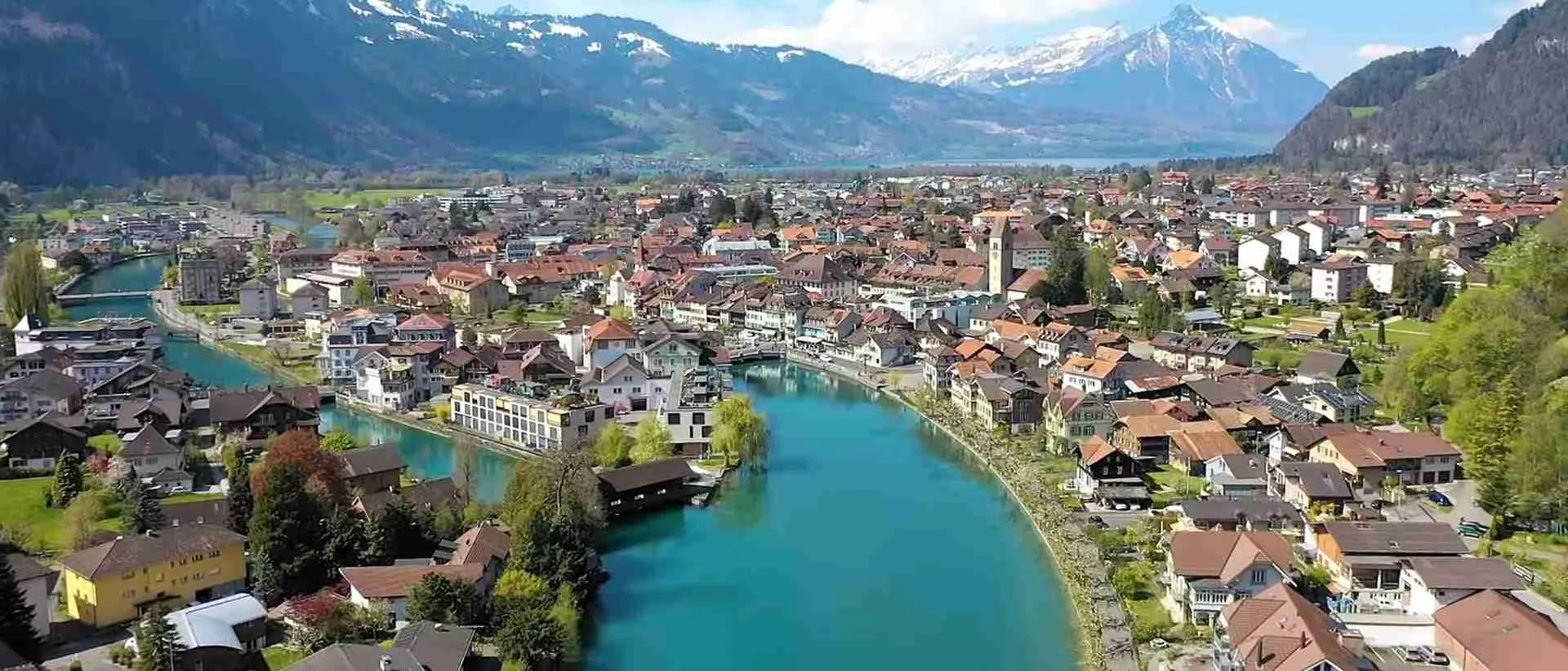
Interlaken occupies Switzerland’s most dramatic crossroads, a narrow valley floor pressed between turquoise Lake Thun and emerald Lake Brienz with the snow-draped triumvirate of Eiger, Mönch, and Jungfrau rising 2,800 meters overhead. This geographic compression creates an efficiency advantage rare among Alpine destinations—from a single centrally-located hotel room, visitors access Europe’s highest railway station, iconic James Bond filming locations, and multiple 3,000-meter peaks through integrated mountain railways requiring no car rental complexity or accommodation changes. Three days represents the minimum viable duration for experiencing Interlaken’s signature high-altitude excursions while retaining the weather flexibility that separates successful Alpine visits from cloud-shrouded disappointments.
The challenge in crafting an Interlaken itinerary lies in balancing ambitious mountain objectives with practical logistics and financial realities. A round-trip ticket to Jungfraujoch costs CHF 261 at standard rates, Schilthorn adds CHF 108, and Harder Kulm another CHF 44—totaling CHF 413 before considering accommodation, meals, or valley transport. These figures demand strategic pass selection, with the Jungfrau Travel Pass and Swiss Half Fare Card offering competing value propositions depending on your exact excursion mix. Similarly, accommodation decisions pit Interlaken’s restaurant variety and nightlife against the immersive Alpine atmosphere of Lauterbrunnen, Grindelwald, or car-free Mürren, each choice carrying trade-offs in daily commute times, dining costs, and immediate trail access.
Weather adds the final layer of complexity unavoidable in high-altitude planning. Clouds above 2,000 meters eliminate the visibility that justifies Jungfraujoch’s premium pricing, transforming a CHF 261 investment into a whiteout experience with zero photographic value. Successful three-day visitors build flexibility into their schedules, monitoring webcams at Jungfraujoch and Schilthorn summits each morning and swapping low-altitude activities (Harder Kulm, town exploration, lake activities) with high-altitude targets based on real-time cloud base heights. This adaptive approach maximizes return on Switzerland’s substantial mountain railway investments while ensuring each day delivers memorable experiences regardless of weather cooperation.
This itinerary provides both a recommended day-by-day sequence optimized for typical June-September weather patterns and the strategic tools needed to adapt when conditions demand flexibility. Day 1 tackles Jungfraujoch during fresh morning energy, Day 2 explores Schilthorn and Lauterbrunnen Valley in a balanced full-day loop, and Day 3 reserves the more weather-tolerant Harder Kulm and lake activities for your departure day when early checkout might limit timing options. Budget breakdowns appear in three tiers (CHF 80-150, CHF 240-380, CHF 650-970 daily) covering hostel dormitories through luxury suites, while practical sections detail seat reservation requirements, optimal departure times, and the pass mathematics that separate value-conscious travelers from those accidentally overspending by CHF 100+ through ill-informed ticket purchases.
Understanding Interlaken’s Geography and Transport Network 2026
Interlaken’s layout reflects its name—”between lakes”—with the compact town center occupying the 7.5-kilometer valley floor connecting Lake Thun (west) and Lake Brienz (east). Two railway stations anchor opposite ends of the central district: Interlaken West serves as the hub for trains to Bern, Lucerne, and Zürich, while Interlaken Ost functions as the gateway to the Jungfrau Region’s mountain railways, with departures to Grindelwald, Lauterbrunnen, and ultimately Jungfraujoch originating from its platforms. This geographic concentration means most accommodation sits within a 15-minute walk of either station, and the pedestrian-friendly Höheweg boulevard connecting both stations hosts the majority of restaurants, outdoor gear shops, and tour booking offices.
The mountain access network radiates from Interlaken Ost through three primary valleys. The Grindelwald line runs northeast to Switzerland’s glacier village, providing access to First and the modern Eiger Express cable car that reaches Jungfraujoch in 45 minutes. The Lauterbrunnen line heads south into the valley of 72 waterfalls, where connections split toward Wengen and Kleine Scheidegg (classic Jungfraujoch route) or Mürren and Schilthorn via cable car and mountain train combinations. The Harder Kulm funicular departs from its own dedicated station near Interlaken Ost, reached via a 5-minute riverside walk, ascending 735 meters in 10 minutes to the viewpoint overlooking both lakes. Understanding these routing options allows strategic planning—the Eiger Express route to Jungfraujoch saves 40 minutes each direction compared to the scenic Kleine Scheidegg approach, while the Schilthorn’s three cable car changes create natural pause points for photography that single-segment lifts cannot match.
The Interlaken Guest Card, provided free by most hotels upon check-in, delivers substantial value through free travel on local buses within zones 1-2, covering all Interlaken town movement plus connections to nearby villages like Unterseen, Wilderswil, and Beatenberg. This eliminates the CHF 4-6 per journey cost that accumulates across multiple daily trips between hotels, train stations, and activity starting points. The card does not cover mountain railways (Jungfraujoch, Schilthorn, Harder Kulm) or regional trains to Grindelwald and Lauterbrunnen, where separate ticketing or rail passes apply. Regional trains themselves run on integrated Swiss timetables with 30-minute headways throughout the day, meaning missed connections rarely cause delays exceeding half an hour—a reliability standard that enables precise scheduling of mountain departures without excessive buffer time padding.
Mountain railway operations follow seasonal patterns critical for 2026 planning. The Jungfrau Railway to Jungfraujoch operates year-round but requires mandatory seat reservations (CHF 10 per person) during peak season (May 1-October 31, 2026), purchased online or at stations when booking tickets. Without reservations, trains may be fully booked upon arrival, forcing waits of 1-2 hours during July and August midday peaks. The Schilthorn cable car network underwent major reconstruction through early 2026, with the final Birg-Schilthorn section opening March 15, 2026, and some viewing areas remaining temporarily restricted through spring as construction materials are cleared. The Harder Kulm funicular operates seasonally from April 3 to November 29, 2026, closing entirely during winter months when snow access makes the viewpoint less practical. Knowing these operational windows prevents disappointment—a January visitor cannot access Harder Kulm regardless of weather, while November arrivals might face shortened operating hours and reduced restaurant services at altitude.
Budget Breakdown and Cost Planning for 3 Days in Interlaken 2026
Accommodation costs dominate Interlaken’s budget equation, with nightly rates ranging from CHF 35-55 for hostel dormitory beds through CHF 125-183 per person (mid-range hotels divided by two sharing) to CHF 400-565 per person in luxury suites. Budget travelers find excellent value in Interlaken’s abundant hostel network including Balmers Hostel (CHF 40-60 dorms, lively social atmosphere with bar and common areas), Backpackers Villa Sonnenhof (CHF 35-50 dorms, quieter residential setting with garden views), and Youth Hostel Interlaken (CHF 45-65 dorms, newly renovated facilities near Interlaken Ost). These properties typically include breakfast in their rates, a substantial savings considering restaurant breakfast costs CHF 15-25. Mid-range hotel rooms cluster around CHF 250-365 nightly for properties like Hotel Interlaken (4-star historic charm in town center), Hotel Du Nord (traditional Swiss character near West station), and Stella Swiss Quality Hotel (modern comfort with mountain views), with rates divided between two occupants for CHF 125-183 per person. Luxury seekers gravitate toward the iconic Victoria Jungfrau Grand Hotel & Spa (CHF 800-1,128+ nightly, palatial 5-star with full spa facilities) or Boutique Hotel Bellevue (CHF 600-900, intimate property with personalized service), where room division still requires CHF 400-565 per person for couples sharing.
Dining expenses vary dramatically based on venue selection and meal preparation choices. Budget-conscious travelers exploit Interlaken’s Coop supermarkets (locations at Interlaken Ost station and town center) where sandwich components cost CHF 8-15, ready-made salads CHF 7-12, and dinner supplies under CHF 20 per person when self-catered in hostel kitchens. The Coop Restaurant cafeteria on the upper floor offers hot meals from CHF 15-24, providing cooked lunch options without sit-down restaurant markups. Mid-range restaurant dining follows consistent Swiss pricing: lunch mains CHF 25-40 (pasta, salads, daily specials), dinner entrées CHF 40-60 (traditional Swiss dishes like rösti, schnitzel, or cheese fondue), and beverages adding CHF 5-12 (coffee, soft drinks, local beer). Notable mid-range options include Restaurant Taverne at Hotel Interlaken (Swiss classics in historic setting, mains CHF 32-48), Goldener Anker (fondue specialist with lake fish, CHF 35-55 mains), and various Italian trattorias along Höheweg offering pizza and pasta at CHF 28-42. Luxury dining elevates experiences through establishments like Restaurant Bahnhof im Victoria Jungfrau (fine dining with seasonal tasting menus from CHF 80-150 per person before wine), Steakhouse at Carlton-Europe Hotel (premium cuts CHF 65-95), and specialty venues offering multi-course Swiss gastronomic experiences at CHF 100-180 per person.
Transportation costs split between free local movement via Guest Card and priced mountain access requiring strategic pass decisions. The Jungfrau Travel Pass for 3 consecutive days costs CHF 165 in 2026, providing unlimited travel on all valley trains, local buses, and boat services while including free Harder Kulm access and 25% discounts on Jungfraujoch (CHF 177 vs CHF 261) and Schilthorn (CHF 69 vs CHF 108). Calculating value requires summing intended excursions: Jungfraujoch CHF 177 plus Schilthorn CHF 69 plus included valley transport (estimated CHF 40 value across 3 days) plus Harder Kulm (CHF 44 value) totals CHF 330 equivalent value against CHF 165 cost, a clear savings of CHF 165. The competing Swiss Half Fare Card costs CHF 120 monthly and cuts all mountain railways by exactly 50%—Jungfraujoch to CHF 131, Schilthorn to CHF 54, Harder Kulm to CHF 22—for CHF 207 combined, but excludes free valley transport and boat access, adding perhaps CHF 30-50 in regional train tickets. The mathematics favor the Jungfrau Travel Pass for intensive 3-day mountain programs, while the Swiss Half Fare Card wins for visitors spreading excursions across longer Switzerland trips or skipping one major peak.
Attraction and activity costs beyond mountain railways include paragliding from CHF 120-240 (tandem flights with certified pilots, 15-30 minute flights depending on conditions and package selected), boat cruises on Lake Thun or Lake Brienz from CHF 35-75 (varying by route length and class, included with Jungfrau Travel Pass), canyon adventure tours CHF 90-140 (guided experiences in nearby gorges with equipment provided), and indoor activities like the Jungfrau Panorama Museum CHF 8 or Casino Kursaal Interlaken (free entry, minimum table bets from CHF 5). These supplement rather than replace the mountain excursions that justify visiting Interlaken, but provide valuable weather alternatives when clouds eliminate high-altitude visibility or rest days when tired legs need recovery from previous mountain hiking.
Hidden costs adding CHF 25-45 to typical daily budgets include the mandatory tourist tax (CHF 3.50-4.00 per person nightly, collected by hotels and hostels upon checkout), seat reservations for Jungfraujoch during May-October peak season (CHF 10 per person, mandatory advance booking to guarantee departure times), and restaurant service charges (typically included in Swiss prices but warranting verification on menus). Additional budget awareness items include water costs at altitude—free tap water exists in valley restaurants but summit facilities charge CHF 4-6 for bottled water, making refillable bottles valuable on mountain days—and the 20% premium charged for takeaway reduction versus dine-in at many restaurants, ironically making sit-down meals only marginally more expensive than takeout options when percentage differences are calculated.
Complete Daily Cost Breakdowns for 3 Days in Interlaken 2026
Budget travelers achieve CHF 80-150 per person daily through strategic accommodation selection, self-catering meals, and pass-leveraged mountain access. Accommodation in hostel dormitories costs CHF 35-55 per person including breakfast, breakfast consumed at hostel or skipped CHF 5-10 if supplementing with Coop pastries, lunch from Coop supermarket components CHF 15-20 (sandwiches, salads, fruit), dinner cooking hostel meals from supermarket ingredients or budget takeaway CHF 18-30, transport using Guest Card for free local movement plus Swiss Half Fare Card for 50% mountain railway discounts CHF 5-10 daily average when spread across 3 days, and attractions selecting 1-2 paid excursions with balance from free hiking and lake access CHF 0-45 daily depending on Jungfraujoch timing. Low-end days (CHF 80) occur when hiking Hardergrat trail from Interlaken to Harder Kulm summit (free) with self-catered packed lunch, while high-end days (CHF 150) include discounted Jungfraujoch access (CHF 131 with Half Fare Card, spread across the trip) plus restaurant meal allowances.
Mid-range comfort travelers invest CHF 240-380 per person daily for hotel accommodation, restaurant meals, and comprehensive mountain access. Accommodation in 3-4 star hotels costs CHF 250-365 per room or CHF 125-183 per person when two share, breakfast at hotel buffet or café CHF 15-25, lunch in casual restaurants or mountain facilities CHF 25-40, dinner at mid-range establishments featuring Swiss specialties CHF 40-60, transport using Jungfrau Travel Pass for unlimited valley movement and discounted mountain access CHF 15-25 daily equivalent when amortized across 3 days, and attractions covering all major peaks plus supplemental activities like boat cruises or museum visits CHF 20-45 beyond pass coverage. This tier delivers the Interlaken experience most visitors envision—comfortable rooms with private facilities, restaurant flexibility allowing spontaneous venue changes, and financial freedom to say yes to weather-dependent opportunities like sunrise Jungfraujoch excursions or late-afternoon paragliding sessions without recalculating budget impacts. Three-day totals at this comfort level range CHF 720-1,140 per person.
Luxury experiences command CHF 650-970+ per person daily through premium accommodations, fine dining, and private guided services. Accommodation in 5-star properties costs CHF 800-1,128+ per room or CHF 400-565 per person for couples sharing, breakfast at hotel (included but valued at CHF 30-45 if itemized separately), lunch at upscale mountain restaurants or hotel dining rooms CHF 50-80, dinner at fine dining establishments with wine pairings CHF 80-120, transport including private transfers to mountain departures and premium cabin access where available CHF 40-60, and attractions featuring private mountain guides (CHF 400-600 per day for certified guides), exclusive experiences like helicopter mountain tours (from CHF 200+ per person), or spa treatments at summit hotels CHF 50-100 beyond basic access costs. This investment level transforms Interlaken from destination into experience, with guides providing route optimization knowledge, hotel concierges securing restaurant reservations impossible for independent visitors, and private vehicle access eliminating the cognitive load of timetable navigation in favor of chauffeur-driven flexibility. Three-day luxury totals exceed CHF 1,950-2,910 per person.
Day 1: Jungfraujoch – Top of Europe Full-Day Excursion 2026
Jungfraujoch demands a full-day commitment with strategic timing determining crowd exposure and weather maximization. Depart Interlaken Ost on the 8:05 AM train toward Grindelwald, arriving at Grindelwald Terminal at 8:38 AM where the modern Eiger Express cable car (operational since December 2020) whisks passengers to Eiger Glacier station in 15 minutes compared to the 45-minute classic cog railway alternative. This routing choice saves 40 minutes each direction while delivering dramatic views of the Eiger North Face that remain obscured on the traditional Kleine Scheidegg approach. From Eiger Glacier, board the historic Jungfrau Railway for the final 25-minute ascent through tunnels carved inside the Eiger and Mönch mountains, with two 5-minute stops at windows cut into the rock face (Eigerwand at 2,865 meters and Eismeer at 3,160 meters) allowing photography before reaching Europe’s highest railway station at 3,454 meters altitude around 9:30-10:00 AM.
Summit activities at Jungfraujoch span 4-5 hours for comprehensive exploration without rushing. The Sphinx observation deck (accessed via elevator from the station building) provides 360-degree views extending to the Black Forest in Germany and Italian Alps on clear days, with the Aletsch Glacier—Europe’s longest at 23 kilometers—flowing below like a frozen river between valley walls. Arrive before 10:30 AM to photograph without the midday crowds that pack the outdoor platforms by 11:00 AM when tour buses from Lucerne and Zürich disgorge hundreds of day-trippers. The Ice Palace, carved into the glacier itself 30 meters below the station, maintains year-round sub-zero temperatures while displaying ice sculptures and providing tactile glacier experience through illuminated tunnels allowing touch-the-ice interaction impossible on the surface. The Alpine Sensation exhibition uses multimedia displays and a recreation of a 1912 railway construction camp to explain the 16-year building project that claimed 30 workers’ lives, providing historical context often skipped by visitors focused solely on photography. The Lindt Swiss Chocolate Heaven shop offers samples plus the world’s highest chocolate purchase opportunities, while the restaurant serves hot meals at premium altitude pricing (CHF 25-45 for mains, CHF 8-12 for soups and sandwiches).
Weather considerations override all other Jungfraujoch planning factors. Clouds above 3,000 meters eliminate the visibility justifying the CHF 131-261 ticket investment, transforming the experience from photographic triumph to expensive disappointment. Check the Jungfraujoch webcam (available at jungfrau.ch) on your smartphone between 7:00-7:30 AM before departing—if clouds obscure the summit or visibility appears limited, postpone the excursion to Day 2 or Day 3 and substitute with lower-altitude activities like Harder Kulm (clouds frequently dissipate by afternoon) or Lauterbrunnen Valley exploration. The weather flexibility built into three-day Interlaken itineraries exists specifically for this purpose, preventing the disappointment of viewing nothing but white fog after spending CHF 260+ on tickets. Summit temperatures average 0 to -10 Celsius even in July and August, requiring winter jacket layers, gloves, and closed-toe shoes regardless of valley weather—the altitude exposure combines with reflective snow to create wind chill conditions severe enough to limit outdoor time to 20-30 minutes for inadequately dressed visitors.
Return routing offers scenic variety through the classic Kleine Scheidegg approach. Rather than retracing the Eiger Express route, descend via the traditional Jungfrau Railway to Kleine Scheidegg (30 minutes), a mountain pass at 2,061 meters hosting a hotel complex and railway junction with sweeping Eiger North Face views. The 45-minute cogwheel train descent from Kleine Scheidegg to Lauterbrunnen travels through alpine meadows transitioning to cliff-edge tracks above the valley floor, passing Wengen village and multiple waterfall viewpoints impossible from the Grindelwald side. Arrive back in Interlaken around 5:00-6:00 PM with the full day consumed but the signature Jungfrau Region experience completed. Evening options include relaxed dinner at a Höheweg restaurant (book tables for popular venues like Restaurant Schuh or Goldener Anker by 4:00 PM to secure 7:30 PM slots) or lakeside sunset walks along the Aare River connecting both lakes, processing the day’s high-altitude impressions while recovering energy for Day 2’s Schilthorn adventure.
Day 2: Schilthorn, Lauterbrunnen Valley, and Mountain Villages 2026
Day 2 balances the iconic Schilthorn cable car ascent with ground-level exploration of Lauterbrunnen’s waterfall-lined valley and car-free Mürren village, creating a full but not exhausting 5-6 hour mountain loop allowing afternoon town return. Depart Interlaken Ost on the 9:05 AM train to Lauterbrunnen (20 minutes), where the platform directly connects to the world’s steepest cable car inaugurated in December 2024—a revolutionary 159% gradient funicular climbing the vertical Mürrenfluh cliff face to the car-free mountain village of Mürren in 10 minutes, replacing the previous two-segment route via Gimmelwald that required passenger transfers. This engineering marvel alone justifies the journey, with stomach-dropping views through glass floor panels showing the 800-meter cliff face dropping away below as the cabin ascends what appears to be a near-vertical rock wall.
Mürren village deserves 45-60 minutes of exploration before continuing to Schilthorn summit. This traffic-free Alpine community (population 450) occupies a sun terrace at 1,650 meters with the Eiger-Mönch-Jungfrau triumvirate dominating the eastern horizon and the Lauterbrunnen Valley plunging 1,000 meters below. Walk the main street past traditional chalets and modern hotels to reach the village’s three cable car stations—the Allmendhubel funicular (CHF 15 round-trip, not covered by most passes but reaching excellent hiking terrain), the Schilthorn cable car midstation, and seasonal ski lifts. Photograph from the wooden benches facing the Jungfrau massif where morning light illuminates the glaciers, grab coffee at Hotel Eiger’s terrace (CHF 5-8, spectacular views included), and appreciate the absence of automobile noise creating an ambient quietness rare in tourist destinations.
The Schilthorn cable car ascends in two segments from Mürren via Birg midstation (2,677 meters) to the summit at 2,970 meters in 12 minutes total, utilizing the new Funifor-style cabins completed in March 2025 offering improved wind resistance and 100-passenger capacity compared to the original 1967 infrastructure. Birg midstation hosts the Thrill Walk—a suspended steel pathway bolted into the cliff face 200 meters above vertical rock walls, featuring a glass floor section allowing downward views into the abyss—providing adrenaline opportunities for those finding cable car ascents insufficiently exciting. Budget 20-30 minutes at Birg if attempting the Thrill Walk, as the narrow pathway accommodates single-file movement creating queues during peak season. The final 8-minute ascent to Schilthorn delivers you to Piz Gloria, the rotating restaurant featured in the 1969 James Bond film “On Her Majesty’s Secret Service,” where 007 villain Blofeld operated his research clinic in the movie’s Alpine fortress sequences.
Schilthorn summit activities focus on the 360-degree panorama including 200 named peaks from Mont Blanc (visible 80 kilometers southwest on clear days) through the Bernese Alps to the Titlis and beyond, with the Jungfrau massif dominating the northeastern view and the Aletsch Glacier visible in the valley between peaks. The Bond World exhibition (included with cable car ticket) displays film memorabilia, movie clips, and interactive displays about the production’s Schilthorn scenes, while the Skyline Walk outdoor platform provides photographic opportunities without restaurant obligations. Piz Gloria restaurant serves breakfast buffet until 2:00 PM (CHF 32-48 per person, expensive but the rotating floor slowly turns through 360 degrees over 55 minutes, creating changing perspectives through floor-to-ceiling windows) and lunch items (CHF 25-38 for mains), with most visitors opting for coffee and dessert (CHF 8-15) rather than full meals given the substantial morning breakfast most hotels provide. Budget 90 minutes total at the summit allowing photography, exhibition viewing, and meal or snack consumption before descending.
Descend to Mürren by 1:30-2:00 PM, allowing afternoon flexibility for Lauterbrunnen Valley floor exploration. The village hosts 72 waterfalls along its 3-kilometer valley walls, with Staubbach Falls (300 meters freefall visible from town center) and Trümmelbach Falls (CHF 14 admission, 10 glacial waterfalls inside mountain accessible via tunnel elevator) providing the most accessible viewing. The valley floor walk from Lauterbrunnen to Stechelberg (75 minutes one-way, mostly flat paved path) passes multiple waterfall viewpoints and meadow access points where picnicking is permitted, creating budget-friendly afternoon activity consuming 2-3 hours total before returning to Interlaken on the 4:30 or 5:30 PM trains. Alternative afternoon routing includes hiking from Mürren to Gimmelwald village (45 minutes downhill, beautiful traditional architecture), taking the cable car down to Stechelberg, and walking the valley floor back to Lauterbrunnen station—a loop maximizing village variety and waterfall viewpoints while concluding at the train departure point.
Day 3: Harder Kulm, Lake Activities, and Departure Flexibility 2026
Day 3 balances the accessible Harder Kulm viewpoint with lake-based activities and town exploration, creating a relaxed departure-day schedule allowing afternoon checkout coordination. The Harder Kulm funicular operates from 9:10 AM (first ascent) with departures every 30 minutes through late afternoon, providing scheduling flexibility impossible with the fixed-timing mountain excursions of Days 1 and 2. Most visitors target the 9:10 AM or 9:40 AM departure for morning light on the lakes and peaks, completing the 10-minute funicular ascent to the 1,322-meter viewpoint by 10:00 AM with 90 minutes allocated for photography, breakfast at the panorama restaurant (CHF 15-32 for continental breakfast through full Swiss breakfast plates), and the Two Lakes Bridge viewing platform featuring glass floor sections allowing downward views over the Aare River flowing 800 meters below.
Harder Kulm’s value proposition centers on its comprehensive perspective unavailable from valley level—both Lake Thun (west) and Lake Brienz (east) appear in a single panorama with Interlaken’s town layout clearly visible in the valley between them, while the Eiger-Mönch-Jungfrau trinity rises beyond framed by the characteristic triangular viewpoint structure. This 360-degree overview makes Harder Kulm ideal for the final-day synthesis photograph capturing the entire geographic context you’ve explored over the previous 48 hours. The viewpoint also provides weather insurance against high-altitude cloud cover—even when summits above 3,000 meters remain obscured, Harder Kulm frequently sits below the cloud base delivering valley and partial mountain views justifying the CHF 22-44 ticket investment (Swiss Half Fare Card CHF 22, full price CHF 44, free with Jungfrau Travel Pass). The relatively modest altitude means temperatures remain comfortable for extended outdoor time wearing normal clothing rather than the winter gear essential at Jungfraujoch, creating a more relaxed mountain experience without altitude pressure or cold-induced rush.
Descend by 11:30 AM-12:00 PM for lunch at one of Interlaken’s lakeside venues or Höheweg establishments before pursuing afternoon lake activities. Lake Brienz boat cruises (included with Jungfrau Travel Pass, otherwise CHF 35-75 depending on route) operate hourly from Interlaken Ost dock, with the most popular route to Giessbach Falls requiring 60 minutes each direction plus 30 minutes at the waterfall viewing platforms—a 2.5-hour commitment fitting perfectly into early afternoon schedules. The Giessbach waterfall complex drops 500 meters through 14 cascades accessible via hiking paths and the historic Giessbach funicular (CHF 6 round-trip, connects boat dock to Belle Époque Grand Hotel Giessbach where afternoon tea service offers luxury refreshment at CHF 28-45 per person). Alternative lake activities include paddleboard or kayak rentals (CHF 25-45 per hour from operators near both train stations), lakeside walking paths connecting Interlaken’s town parks with surrounding villages, or simply relaxing on the Höhematte meadow—a massive green space in Interlaken’s center where paragliders land, locals picnic, and the mountain backdrop provides natural entertainment without admission charges.
Paragliding represents the signature adrenaline activity for those seeking aerial perspectives beyond cable car viewpoints. Multiple operators including Alpin Raft and Swiss Paragliding & Hang Gliding offer tandem flights from Beatenberg or Harder Kulm starting points (CHF 120-240 depending on flight duration and package, most popular option CHF 150-180 for 15-20 minute flight). These require booking at least one day in advance during peak season, weather permitting, with morning flights generally offering calmer conditions and higher success rates before afternoon thermal turbulence develops. The experience delivers incomparable lake and mountain views while requiring zero technical knowledge—instructors handle all flight operations with passengers simply running 3-4 steps during takeoff before becoming airborne for 15-30 minutes of gliding flight covering the lakes and valley in silence broken only by wind noise. Landing occurs in the Höhematte meadow in Interlaken’s town center, allowing immediate café celebration and photograph review while adrenaline levels normalize.
Final afternoon hours accommodate shopping for Swiss chocolate, outdoor gear, or souvenirs concentrated along Höheweg between both train stations. The Interlaken branch of Victorinox (Swiss Army Knife headquarters, open until 7:00 PM) provides authentic purchases at source country prices, while multiple chocolate shops including Schuh and Confiserie Rieder offer premium Swiss chocolate at CHF 25-60 per kilogram—expensive compared to supermarket brands but representing craftsmanship levels justifying premium pricing for discerning gift recipients. Budget 60-90 minutes for thorough shopping exploration, concluding by 6:00 PM to allow dinner at a final Swiss restaurant (recommended for departure-evening meals: Brasserie 17 for modern Swiss cuisine CHF 32-58 mains, Laterne for traditional fondue CHF 32-42 per person, or Hüsi Bierhaus for casual atmosphere and local beers CHF 18-38 mains) before evening train departures to Bern, Lucerne, or Zürich connecting to onward destinations.
Strategic Pass Selection: Jungfrau Travel Pass vs Swiss Half Fare Card 2026
Pass selection determines overall trip value through hundreds of Swiss francs in potential savings or waste depending on excursion alignment with coverage benefits. The Jungfrau Travel Pass costs CHF 165 for 3 consecutive days (CHF 215 for 4 days, CHF 250 for 5 days, CHF 305 for 6 days, CHF 345 for 8 days), providing unlimited travel on all valley trains and buses within the designated area (Interlaken, Grindelwald, Lauterbrunnen, Wengen, Mürren), free access to Harder Kulm and boat services on both lakes, and 25% discounts on the highest-value mountain railways—Jungfraujoch CHF 177 (vs CHF 261 standard) and Schilthorn CHF 69 (vs CHF 108 standard). Calculate total value by summing discounted excursion costs plus included services: Jungfraujoch CHF 177 plus Schilthorn CHF 69 plus Harder Kulm (CHF 44 included value) plus valley transport (CHF 30-40 estimated across 3 days) plus boat cruises (CHF 35-75 value if used) totals CHF 355-405 in realized benefits against CHF 165 cost, a savings of CHF 190-240.
The competing Swiss Half Fare Card costs CHF 120 for one month validity, cutting all Swiss public transport (trains, buses, boats, most mountain railways) by exactly 50% without regional restrictions or consecutive-day requirements. Calculate Interlaken-specific savings: Jungfraujoch CHF 131 (50% of CHF 261 peak season standard) plus Schilthorn CHF 54 (50% of CHF 108) plus Harder Kulm CHF 22 (50% of CHF 44) totals CHF 207 for the three signature excursions, but excludes free valley transport and boat access that the Jungfrau Pass includes. Adding estimated valley train costs Interlaken-Grindelwald-Interlaken CHF 15 plus Interlaken-Lauterbrunnen-Interlaken CHF 12 plus local buses CHF 10-15 brings the Half Fare Card total to CHF 244-252 for equivalent access. The mathematics slightly favor the Jungfrau Travel Pass for intensive 3-day mountain programs focused exclusively on Interlaken area, while the Swiss Half Fare Card wins for visitors spreading activities across longer Switzerland trips (Bern day trip, Lucerne excursion, Zürich arrival/departure) where the 50% discount applies to all Swiss transport outside the Jungfrau Region.
The Swiss Travel Pass (continuous version starting at CHF 285 for 3 consecutive days second class) warrants consideration for visitors arriving from Zürich or Geneva and departing to different cities, as it includes all standard trains and buses throughout Switzerland plus lake steamers and select mountain railways at 50% discount. For Interlaken specifically, the Swiss Travel Pass provides free valley transport but only 50% discounts on Jungfraujoch (CHF 131 vs CHF 177 with Jungfrau Travel Pass) and Schilthorn (CHF 54 vs CHF 69), making it less valuable than Jungfrau Travel Pass plus separate city-to-city tickets for visitors focusing intensively on the Jungfrau Region. Calculate break-even point: if Zürich-Interlaken round-trip (CHF 140 combined) plus Interlaken mountain railways under Jungfrau Pass savings (CHF 165) totals CHF 305 versus Swiss Travel Pass 3-day (CHF 285), the Swiss Travel Pass wins but only by CHF 20 while covering less at the key mountain destinations.
Purchase timing and flexibility considerations affect pass selection beyond pure mathematics. The Jungfrau Travel Pass activates on the first use and runs consecutive days—no extending a 3-day pass across 5 calendar days by skipping mid-trip days, meaning travelers must commit to intensive mountain programs without rest days. The Swiss Half Fare Card activates upon purchase and remains valid for one calendar month, allowing spontaneous day-trip decisions and flexible scheduling across longer Switzerland stays without daily-use pressure. For weather-dependent mountain visits, the Half Fare Card’s monthly validity removes the psychological pressure to climb Jungfraujoch on cloudy days simply because “the pass is running,” instead allowing postponement until clear forecasts justify the ascent. This flexibility proves valuable during unsettled weather periods when cloud bases fluctuate daily, letting budget-conscious travelers optimize visibility windows without sunk-cost fallacy forcing suboptimal excursion timing.
Accommodation Strategy: Interlaken Town vs Mountain Villages 2026
Accommodation location fundamentally shapes daily logistics, dining costs, and atmospheric experience across three days. Interlaken town basing (staying near either West or Ost stations) provides maximum restaurant variety with 50+ establishments ranging from budget kebab shops through Swiss specialty venues to fine dining, evening entertainment including bars and Casino Kursaal, supermarket access for self-catering meal preparation, and zero morning commute time to catch the 8:05 AM Jungfraujoch departure. Properties like Victoria Jungfrau (luxury tier CHF 800-1,128 nightly), Hotel Interlaken (mid-range CHF 250-365), and Balmers Hostel (budget CHF 40-60 dorms) concentrate within the pedestrian-friendly central zone where restaurants remain open until 10:00 PM and grocery stores operate until 8:00 PM daily. This convenience supports spontaneous dining decisions, last-minute picnic assembly for mountain days, and the urban amenities many travelers appreciate after daytime mountain exposure.
Mountain village accommodation—Lauterbrunnen, Grindelwald, Wengen, or car-free Mürren—embeds visitors in Alpine scenery with immediate trail access from accommodation doorsteps and sunset views from hotel balconies impossible in valley-floor Interlaken. Lauterbrunnen’s dramatic vertical valley walls, Grindelwald’s glacier proximity, Wengen’s vehicle-free charm, and Mürren’s sun terrace positioning each deliver distinct atmospheric advantages while introducing logistical trade-offs. Morning Jungfraujoch excursions from Lauterbrunnen require 6:45 AM wake-ups to catch connecting trains versus 7:30 AM from Interlaken Ost, evening restaurant options narrow to 3-8 establishments per village versus Interlaken’s 50+, and grocery stores close by 6:00 PM limiting spontaneous dinner supply purchases. Budget considerations balance slightly higher village hotel rates (CHF 270-390 for comparable mid-range quality) against lower dining costs—village restaurants targeting local clientele rather than tourist maximums charge CHF 5-10 less per main course, and the absence of nightlife temptations reduces beverage spending that accumulates in Interlaken’s bar scene.
Split accommodation strategies optimize both approaches by dividing three nights between town and mountain locations. Stay two nights in Interlaken (Night 1 arrival and Night 3 departure) for logistical simplicity with maximum dining and shopping access, moving to Lauterbrunnen or Mürren for Night 2 after Day 1’s Jungfraujoch excursion for immersive Alpine atmosphere and sunset viewing from mountain accommodation. This requires one mid-trip luggage transfer (manageable with rolling bags or backpacks) but delivers the atmospheric variety many visitors seek while maintaining Interlaken’s practical advantages for arrival logistics and departure scheduling. Book both accommodations before arrival rather than attempting walk-in reservations, as popular mountain village hotels and hostels fill completely during July-August peak weeks, and specify the split schedule when booking passes—some passes like the Jungfrau Travel Pass activate on first use regardless of accommodation location, while others might require specific validation timing.
Solo travelers face accommodation cost pressures absent for couples, as Swiss hotels universally charge per room rather than per person, meaning solo occupants pay CHF 180-365 for mid-range rooms while couples divide the same rate to CHF 90-183 each. Hostel dormitories eliminate this solo penalty through per-bed pricing (CHF 35-55 regardless of solo or group status), making budget accommodation the objectively optimal financial choice for single travelers unless privacy justifies doubling accommodation spending. Some hotels offer genuine single rooms at reduced rates (CHF 130-220 for smaller rooms designed for one occupant), but availability remains limited to 10-20% of inventory at most properties, requiring advance booking and often involving interior-facing rooms without balconies that couples paying full double rates expect. Alternative solo strategies include coordinating with other travelers through hostel common rooms or travel forums to share double rooms and split costs, or extending the trip to 4-5 days to amortize the single supplement across additional nights, reducing daily accommodation averages to palatable levels.
Weather Contingency Planning and Flexible Day-Swapping 2026
Weather determines Interlaken success more than any other single factor, with clouds above 2,500 meters rendering CHF 261 Jungfraujoch investments worthless and visibility conditions fluctuating daily based on Atlantic weather systems crossing Switzerland. Build flexibility into planning through unbooked activities and reversible day sequences, monitoring Jungfraujoch webcam (jungfrau.ch/en-gb/live/webcams) and Schilthorn webcam (schilthorn.ch/en/Info/Live) each morning between 7:00-7:30 AM before departing hotels. Clear summit visibility with blue sky background triggers immediate departure for planned high-altitude excursions, while cloud-obscured webcams prompt day-swapping to low-altitude alternatives (Harder Kulm, lake activities, town exploration, Lauterbrunnen Valley) with the original mountain plan postponed to the following day’s weather window.
Typical summer weather patterns in the Jungfrau Region follow diurnal cycles with morning clarity giving way to afternoon convective cloud development as valley heating creates rising air masses condensing at altitude. This pattern favors early departures (8:00-9:00 AM) for Jungfraujoch and Schilthorn, capturing the 9:00 AM-12:00 PM window when visibility peaks and photography light remains optimal before midday clouds begin forming around 1:00-2:00 PM. Late afternoon occasionally offers secondary clear windows as convective activity weakens toward sunset (5:00-7:00 PM), creating opportunities for evening cable car ascents to Schilthorn for dinner at Piz Gloria while watching sunset over Mont Blanc—a premium experience requiring advance restaurant reservation but delivering crowd-free summit conditions impossible at midday.
Multi-day forecasts (available through MeteoSwiss or weather apps set to Interlaken location) enable proactive day resequencing rather than reactive morning adjustments. If a 3-day forecast shows Day 1 cloudy, Day 2 clearing, and Day 3 sunny, preemptively plan Day 1 for Lauterbrunnen Valley and town exploration, Day 2 for Schilthorn as partial clearing begins, and Day 3 for Jungfraujoch under optimal conditions—ignoring the itinerary’s recommended sequence in favor of weather-optimized timing. This proactive approach prevents the disappointment of ascending Jungfraujoch in morning clouds, descending frustrated, and then watching afternoon clearing that could have been exploited with better morning intelligence. The psychological pressure to follow printed itineraries often overrides weather common sense, but the financial stakes—CHF 261 for Jungfraujoch, CHF 108 for Schilthorn—justify ruthless prioritization of visibility conditions over day-number adherence.
Partial-clear conditions require judgment calls balancing probability against opportunity cost. Webcams showing summit buildings visible with patches of blue sky suggest 60-70% clear conditions adequate for worthwhile ascents, particularly if the forecast predicts deterioration over coming days. Conversely, webcams displaying solid white fog with zero structural visibility indicate certain disappointment justifying postponement even if subsequent days show questionable forecasts—the gamble of waiting for marginal improvement exceeds the guaranteed loss of ascending into clouds. Shoulder season visits (April, May, October, November) face higher weather risk than July-August summer windows, requiring more aggressive flexibility planning including the psychological acceptance that some days might deliver zero mountain access, with refund policies varying by ticket type (online advance bookings often non-refundable, while same-day station purchases allow abandonment without loss if weather deteriorates mid-journey).
Essential Practical Information for Interlaken 2026
Seat reservations for Jungfraujoch became mandatory during May 1-October 31 peak season starting in 2026, requiring advance booking through jungfrau.ch or ticket offices when purchasing tickets. These CHF 10 per person reservations guarantee departure times on the Eiger Express and Jungfrau Railway final segments to the summit, preventing the multi-hour delays that previously plagued midday arrivals when trains reached capacity before all waiting passengers boarded. Reserve for your preferred departure time when booking tickets—selecting 8:30-9:00 AM slots avoids mid-morning crowds while allowing comfortable breakfast before leaving hotels, and return-journey reservations remain recommended but not mandatory as afternoon descents spread across wider time windows. Outside peak season (November-April), reservations remain optional but advisable during winter holidays when ski traffic increases regional visitor counts.
Currency and payment systems follow Swiss standards with some tourist-specific variations. Swiss Francs (CHF) remain the exclusive official currency despite Switzerland’s location surrounded by Eurozone countries, and exchange rates favor conversion at Swiss ATMs or banks over exchanging currency before arrival—airport exchange counters typically charge 3-5% premiums while ATMs offer interbank rates plus modest withdrawal fees (CHF 5-8 per transaction, making larger infrequent withdrawals more efficient than small frequent draws). Credit cards gain increasing acceptance in restaurants, hotels, and mountain facilities, but supermarkets and smaller venues often require cash or Swiss debit cards (Maestro), making CHF 200-400 cash holdings prudent for 3-day trips covering incidental purchases and backup payment needs. Mountain railways and cable cars accept cards at ticket offices but may require cash at unstaffed midstation ticket machines, another reason to maintain adequate cash reserves.
Mobile phone coverage extends throughout Interlaken valley with LTE/5G speeds supporting navigation and communication, and surprisingly reaches mountain summits including Jungfraujoch and Schilthorn with sufficient signal for photo uploads and messaging though not necessarily streaming speeds. Purchase Swiss SIM cards (available at Interlaken train stations and electronics shops for CHF 20-40 with 1-10GB data) if visiting from outside Switzerland or European Union, as non-EU roaming charges can reach CHF 10-25 per day while Swiss SIM cards provide unlimited calling within Switzerland and reasonable data allowances. European Union visitors benefit from EU roaming regulations eliminating extra charges when using home SIM cards in Switzerland, though Switzerland’s non-EU status creates occasional billing confusion—verify roaming policies with your home carrier before departure.
Luggage storage services at both Interlaken stations (West and Ost) charge CHF 8-12 per item per day, providing secure lockers and staffed storage accepting oversized bags, skis, and hiking equipment. This enables split accommodation strategies where travelers check out from Night 1 accommodation, store luggage at the station, complete Day 2 mountain excursions without dragging rolling bags to Lauterbrunnen, and retrieve bags before checking into Night 2 accommodation. Similarly, departure-day storage allows hotel checkout at 11:00 AM standard times while continuing town exploration and lake activities until evening train departures, avoiding the early-afternoon dead zone where checked-out travelers kill time without accommodation access.
Seasonal Timing and Optimal Visit Windows 2026
June through September represents peak season for Interlaken mountain access, with late June through early September delivering statistically optimal weather (70-75% clear-day probability), warmest temperatures (valley highs 20-25°C, summit temperatures 0-5°C), longest daylight hours (sunrise 5:30 AM, sunset 9:00 PM in July), and complete facility operation including all mountain railways, restaurants, and hiking trail access. This window commands premium accommodation rates (CHF 250-400 per room for mid-range hotels) and maximum tourist density—Jungfraujoch hosts 3,000-5,000 daily visitors during July-August weeks compared to 500-1,000 during April or November. The tourist volume necessitates advance accommodation booking (3-4 months for popular properties), seat reservations for all mountain railways, and acceptance of crowd presence at summit viewing platforms and popular hiking trails.
Late April through May and September through early November constitute shoulder seasons offering 30-40% accommodation discounts (CHF 160-280 per room for comparable mid-range properties), reduced tourist presence (making queue-free mountain experiences realistic), and acceptable though less reliable weather (55-65% clear-day probability). May snow conditions can limit high-altitude hiking options while valley meadows bloom with spring flowers, creating photography opportunities different from summer’s green uniformity. September delivers harvest season atmosphere with local festivals, while October’s larch tree golden-foliage transformation creates spectacular photography in select valleys despite increasing precipitation probability and shortened daylight (sunset by 7:00 PM). Shoulder season visitors require aggressive weather flexibility, as 3-day trips might encounter only 1-2 usable mountain days, but the combination of reduced costs and diminished crowds appeals to budget-focused travelers willing to accept uncertainty.
Winter visits (December-March) transform Interlaken into ski season headquarters, with completely different activity patterns focused on downhill skiing in Grindelwald-First and Mürren-Schilthorn ski areas rather than summer’s hiking and sightseeing emphasis. Jungfraujoch remains accessible year-round and offers arguably more dramatic winter atmosphere with floor-to-ceiling snow coverage and extreme cold (summit temperatures -15 to -25°C requiring arctic clothing), but reduced daylight hours (sunset by 5:00 PM) and increased storm frequency (35-45% clear-day probability) narrow useful weather windows. Accommodation costs surge during Christmas-New Year and February school holiday weeks (CHF 350-500+ per room even for mid-range properties) while dropping to annual lows during early December and late March between seasons (CHF 140-220 per room). Winter visitors need winter sports focus or strong tolerance for indoor museum and spa activities during weather-restricted days, as the hiking that occupies summer visitors’ time disappears under snow coverage.
Money-Saving Strategies for Budget-Conscious Travelers 2026
Self-catering meals delivers the single largest budget reduction opportunity in expensive Switzerland, cutting daily food costs from CHF 90-120 (three restaurant meals) to CHF 30-50 (supermarket provisions plus one restaurant dinner). Shop at Coop or Migros supermarkets for breakfast supplies (bread CHF 3-5, cheese CHF 6-10, yogurt CHF 2-4, coffee CHF 5-8), lunch components (sandwich materials CHF 8-15 total, pre-made salads CHF 7-12, fruit CHF 3-5), and dinner ingredients (pasta plus sauce CHF 8-15, ready-made meals CHF 10-18, vegetables CHF 5-12). Hostel kitchens provide cooking facilities and utensils, while some mid-range hotels include mini-fridges and kettles enabling breakfast preparation without full cooking capability. The strategy compounds across three days—saving CHF 60-70 daily on meals totals CHF 180-210 across the trip, often exceeding the entire accommodation budget for dormitory stays.
Pass selection optimization prevents the common mistake of purchasing unnecessarily expensive unlimited passes when limited excursion plans don’t justify coverage. Travelers visiting only Jungfraujoch and Harder Kulm across three days pay CHF 131 plus CHF 22 (CHF 153 total with Swiss Half Fare Card) compared to CHF 165 for the Jungfrau Travel Pass—actually cheaper by CHF 12 while maintaining flexibility to skip attractions without sunk-cost pressure. Calculate intended excursions precisely before purchasing passes, using the break-even point (when discounted individual tickets cost less than pass price) as the decision threshold. Travelers skipping Schilthorn or one mountain entirely save CHF 50-70 through individual tickets versus comprehensive pass coverage, redirecting savings toward accommodation upgrades or extended stays.
Free activities cluster around hiking, lake access, and village exploration—no admission charges apply to trail networks, lakeside paths, or car-free villages accessible via valley trains included in most passes or costing CHF 10-25 with tickets. The Hardergrat ridge hike from Interlaken to Harder Kulm summit (3-4 hours, strenuous but achievable for fit hikers) eliminates the CHF 44 funicular cost while delivering identical summit views plus additional ridge-walking experience. Lauterbrunnen Valley floor walks, Höhematte meadow relaxation in Interlaken, and sunset watching from lakeside benches provide memorable Swiss experiences without price tags, particularly valuable for budget travelers whose CHF 80-150 daily allocations force strategic spending prioritization.
Timing flexibility generates substantial savings through shoulder season travel (April-May, September-October) when mid-range hotel rates drop 30-40% from peak summer levels—CHF 160-250 per room versus CHF 280-400 in July-August—while maintaining reasonable weather probability and complete facility access. The trade-off accepts higher weather risk (60% clear days versus 75% summer) and slightly reduced daylight hours, but couples traveling outside school holiday constraints capture CHF 80-120 nightly savings totaling CHF 240-360 across three nights, often funding the entire mountain railway budget through accommodation reductions alone.
Sample 3-Day Budget Calculations by Traveler Type 2026
Budget solo traveler scenario: Hostel dormitory accommodation CHF 45 per night times 3 nights equals CHF 135, breakfast included with hostel, lunch from Coop sandwich supplies CHF 15 times 3 days equals CHF 45, dinner self-catered hostel kitchen plus one restaurant meal CHF 25 times 3 days equals CHF 75, Swiss Half Fare Card CHF 120, Jungfraujoch discounted CHF 131, Schilthorn discounted CHF 54, Harder Kulm discounted CHF 22, valley trains Interlaken-Grindelwald-Interlaken plus Interlaken-Lauterbrunnen-Interlaken CHF 27, local transport via Guest Card free, tourist tax CHF 4 times 3 nights equals CHF 12. Total: CHF 621 for complete 3-day trip.
Mid-range couple scenario: Hotel accommodation CHF 310 per room per night times 3 nights equals CHF 930 or CHF 465 per person when divided, breakfast hotel buffet included with room, lunch restaurant CHF 35 times 3 days times 2 people equals CHF 210 or CHF 105 per person, dinner restaurant CHF 55 times 3 days times 2 people equals CHF 330 or CHF 165 per person, Jungfrau Travel Pass 3 days CHF 165 times 2 people equals CHF 330 or CHF 165 per person, Jungfraujoch with pass CHF 177 times 2 people equals CHF 354 or CHF 177 per person, Schilthorn with pass CHF 69 times 2 people equals CHF 138 or CHF 69 per person, Harder Kulm included with pass, boat cruise to Giessbach included with pass, tourist tax CHF 4 times 3 nights times 2 people equals CHF 24 or CHF 12 per person. Total per person: CHF 1,158 for complete 3-day trip.
Luxury couple scenario: Premium hotel accommodation CHF 950 per room per night times 3 nights equals CHF 2,850 or CHF 1,425 per person when divided, breakfast hotel buffet included, lunch upscale restaurant CHF 65 times 3 days times 2 people equals CHF 390 or CHF 195 per person, dinner fine dining with wine CHF 110 times 3 days times 2 people equals CHF 660 or CHF 330 per person, private guide for Jungfraujoch day CHF 500 divided by 2 equals CHF 250 per person, Jungfraujoch tickets CHF 261 times 2 people equals CHF 522 or CHF 261 per person, Schilthorn tickets CHF 108 times 2 people equals CHF 216 or CHF 108 per person, Harder Kulm tickets CHF 44 times 2 people equals CHF 88 or CHF 44 per person, paragliding tandem flight CHF 180 times 2 people equals CHF 360 or CHF 180 per person, spa treatments CHF 150 per person, tourist tax CHF 4 times 3 nights times 2 people equals CHF 24 or CHF 12 per person. Total per person: CHF 2,955 for complete 3-day trip.
Family Travel Considerations and Child-Friendly Adaptations 2026
Families with children ages 6-15 benefit from substantial Swiss rail pass family provisions where one parent holding a valid Swiss Travel Pass, Jungfrau Travel Pass, or Swiss Half Fare Card enables children to travel free when accompanied by that parent and carrying the Swiss Family Card (CHF 30 per child, purchased at any Swiss railway station with passport and parent’s pass). This transforms family economics: two adults plus two children ages 8 and 12 purchasing individual Jungfraujoch tickets pay CHF 261 times 2 adults plus CHF 131 times 2 children (half price) equals CHF 784, versus CHF 261 times 2 adults with Family Card arrangement paying only CHF 522—a CHF 262 savings on a single excursion. The Family Card applies to all Swiss public transport including mountain railways, making it essential for any multi-child family planning comprehensive mountain access.
Child stamina and altitude tolerance limit practical itinerary ambitions compared to adult-only groups. Jungfraujoch’s 3,454-meter altitude causes headaches, nausea, and fatigue in some children unaccustomed to high elevations, recommending reduced summit time (90 minutes versus 2-3 hours adults might prefer) and immediate descent if symptoms appear. The Ice Palace particularly engages children through walk-through glacier tunnels and ice sculptures, while the Alpine Sensation exhibition’s multimedia elements hold attention better than pure viewpoint photography that occupies adult visitors. Harder Kulm’s 1,322-meter elevation poses minimal altitude challenges while the playground at the summit viewpoint provides child-specific entertainment—budget 90-120 minutes total including funicular, playground time, and snack rather than the 60-minute adult efficiency visit.
Accommodation selection for families prioritizes space and facilities over location or charm, as cramped hotel rooms with two double beds create claustrophobic conditions across multi-night stays. Family rooms or apartments (available at properties like Hapimag Resort Interlaken, Holiday homes Interlaken, and larger hotel chains) provide separate sleeping areas for parents and children, kitchen facilities enabling breakfast and snack preparation reducing meal costs, and typically include washing machines eliminating mid-trip laundry concerns. These units cost CHF 280-450 nightly—comparable to two separate double rooms while providing superior family functionality. Alternative budget family accommodation includes hostels with private family rooms (CHF 120-180 for 4-person rooms at Balmers or Villa Sonnenhof) offering cost savings versus hotels while maintaining private bathroom access that shared-bathroom hostel dormitories lack.
Activity timing flexibility proves essential when traveling with children whose morning routines, energy levels, and attention spans differ from adult solo or couple schedules. Plan 9:00-9:30 AM mountain railway departures rather than 8:00 AM adult-optimized times, allowing relaxed breakfast and clothing preparation without 6:30 AM rush. Include explicit rest time in daily schedules—returning to accommodation by 5:00-6:00 PM rather than maximizing daylight until 8:00 PM prevents the evening meltdowns that transform final hours into parenting struggles. Budget extra time for all transitions: children require 15-20 minutes for bathroom visits and snack consumption where adults need 5 minutes, and cable car boarding with strollers (allowed on most mountain railways) adds 10-15 minutes per segment for folding, storage, and retrieval.
Hiking and Outdoor Activity Extensions 2026
The three-day itinerary outlined above focuses on mountain railway excursions and viewpoint access suitable for all fitness levels, but Interlaken’s extensive trail network rewards extending stays or substituting hiking days for cable car ascents when weather, budget, or personal preference favor trail-based mountain access. The Hardergrat ridge trail from Interlaken to Harder Kulm summit (8 kilometers, 800 meters elevation gain, 3-4 hours, intermediate difficulty) replaces the CHF 44 funicular with a challenging but achievable hike through forest zones transitioning to alpine meadows and finally exposed ridge walking, with Harder Kulm’s restaurant and funicular descent option available at the summit. This route delivers identical panoramic views earned through physical effort rather than mechanical transport, creating pride-of-accomplishment emotions impossible from passive cable car ascents.
The North Face Trail from Grindelwald to Alpiglen (6 kilometers, minimal elevation change, 2 hours, easy difficulty with some exposed cliff-side sections) provides intimate Eiger North Face perspective impossible from Jungfraujoch’s distant viewpoint, passing directly below the wall where 1938’s dramatic first ascent unfolded and 1970s climbing disasters occurred. The trail remains accessible without technical equipment while delivering visceral understanding of the scale and exposure confronting climbers, making it ideal for rest days when legs need recovery from previous ascents but curiosity demands continued mountain engagement. Multiple viewpoint platforms along the route allow photography breaks, and the trail terminates at Alpiglen where the Jungfrau Railway stops for train rides continuing to Kleine Scheidegg or descending to Grindelwald.
The Schynige Platte cogwheel railway (CHF 72 round-trip standard, 50% discount with Swiss Half Fare Card) opens access to high-altitude hiking terrain at 2,000 meters with dozens of maintained trails ranging from 1-hour nature walks through 6-hour ridge traverses. The Panorama Trail (4 hours, moderate) connects Schynige Platte to First above Grindelwald via dramatic ridge walking with 360-degree views including the Eiger-Mönch-Jungfrau trinity and Lake Thun, finishing with First’s cliff walk and descent options via cable car or continued hiking trails. This routing requires early departure (8:00 AM Schynige Platte railway) and full-day commitment (returning to Grindelwald by 6:00 PM after 9-hour overall day including transport), but delivers the comprehensive mountain immersion that cable car tourists miss despite spending triple the transportation costs.
Multi-day hut-to-hut trekking circuits require extending beyond the 3-day itinerary but reward adventurous hikers with overnight stays in mountain refuges (CHF 45-85 per person in dormitory bunks, meals additional CHF 15-35). The classic Lauberhorn-First-Schynige Platte traverse covers 3 days and 2 nights with daily hiking distances of 12-18 kilometers, while shorter 2-day circuits exist linking Lauterbrunnen Valley huts. These require advance hut reservations (booking opens in January for summer season, popular huts fill by March for July-August dates), proper hiking equipment including boots and weather layers, and topographic map navigation skills as trail markings sometimes fade above 2,500 meters where snow patches persist into summer.
Alternative Day Trip Options from Interlaken 2026
Visitors extending Interlaken stays beyond three days or seeking weather alternatives to signature mountain excursions find rich day trip options within 60-90 minutes by train. Bern (45 minutes by direct train, CHF 30 round-trip or included with Swiss passes) offers UNESCO World Heritage Old Town with medieval arcades, the Zytglogge astronomical clock tower (guided tours CHF 15), Bear Park (free admission with live bears in natural habitat), and the Paul Klee Center housing the world’s largest collection of works by the Swiss-German artist. The compact walkable city center requires 4-5 hours for comprehensive sightseeing including the Bundeshaus (Swiss Parliament) visitor tours (free, advance booking recommended) and riverside Matte district with artisan shops and casual dining alternatives to tourist-priced Old Town restaurants. Return trains run hourly until 11:00 PM, allowing flexible departure timing and evening hours in Bern if desired.
Lucerne (70 minutes by train via Bern, CHF 62 round-trip or included with Swiss passes) combines lakefront charm with the iconic Chapel Bridge (14th-century covered wooden bridge with painted interior panels), Lion Monument carved into cliff face commemorating Swiss Guards, and the Swiss Transport Museum (CHF 32 admission, comprehensive collection covering railways, automobiles, aviation, and space exploration with highly interactive exhibits). Mount Pilatus (cable car CHF 72 round-trip with Swiss Half Fare Card discount) looms above the city offering alternative mountain perspectives to the Jungfrau Region, while Lake Lucerne boat cruises (CHF 35-95 depending on route, included with Swiss Travel Pass) provide relaxed afternoon transportation between lakeside villages like Weggis and Vitznau. Budget a full day (9:00 AM departure, 7:00 PM return) for comprehensive Lucerne exploration including one mountain or boat excursion.
The Blausee Nature Park (40 minutes by bus from Interlaken, CHF 10 entrance) offers intimate natural beauty through a pristine mountain lake with extraordinary blue-colored water caused by limestone karst geology, walking paths circling the lake in 45 minutes, trout farming facilities with educational displays, and a lakeside restaurant specializing in fresh trout preparations (CHF 28-45 mains). This represents an ideal half-day weather alternative when clouds eliminate mountain visibility but valley-level sun persists—visit during morning hours (9:00 AM-1:00 PM) when light angles optimize water color intensity, combine with afternoon town activities in Interlaken, and spend CHF 40-60 per person total including transport, admission, and lunch. The park’s limited scale prevents full-day engagement, making it unsuitable as a standalone excursion but excellent as a weather-flexible partial-day option.
St. Beatus Caves (15 minutes by bus from Interlaken Ost, CHF 20 admission) provide underground exploration alternative to high-altitude mountain experiences, with guided 1-kilometer cave route passing through illuminated chambers and past underground waterfalls explaining stalactite and stalagmite formation over thousands of years. The adjacent lake-accessible park includes picnic areas and short lakeside hiking trails, creating 3-4 hour combined excursion suitable for cloudy or rainy days when outdoor mountain activities lose appeal. The caves maintain year-round 8-10°C temperatures requiring light jacket layers, and guided tour departure times every 30 minutes during summer season eliminate scheduling pressure—arrive when convenient rather than coordinating with fixed mountain railway timetables.
Frequently Asked Questions About Interlaken 3-Day Itinerary 2026
How Do I Get from Zürich Airport to Interlaken in 2026?
Direct trains depart Zürich Airport railway station (located below the terminal, follow “Bahn/Railway” signs from arrivals) to Interlaken Ost every hour, requiring 2 hours 15 minutes with one change in Bern on most services. Purchase tickets at SBB ticket machines in the airport terminal (credit cards accepted, English language option available) for CHF 70 second class or CHF 126 first class one-way, with Swiss Travel Pass holders traveling free on these routes. The 9:37 AM airport departure reaches Interlaken at 11:52 AM, the 12:37 PM departure arrives at 2:52 PM, providing clear scheduling options for morning and midday flight arrivals. Ticket machines also sell the Swiss Half Fare Card (CHF 120) reducing this journey to CHF 35, making the card immediately valuable if planning return Interlaken-Zürich trips plus mountain railways during your stay.
Can I Visit Both Jungfraujoch and Schilthorn in One Day?
Technically possible but inadvisable, as the combined round-trip travel times (approximately 9 hours total) plus minimum summit time at each location (90 minutes combined) creates an 11-hour day with minimal flexibility for weather delays, photography, or meals beyond rushed eating. The routing requires Interlaken departure by 7:00 AM to reach Jungfraujoch by 9:30 AM, departure from Jungfraujoch by 11:00 AM to descend via Kleine Scheidegg to Lauterbrunnen by 1:00 PM, and immediate Schilthorn cable car ascent arriving summit by 2:00 PM, allowing 60 minutes before beginning the 90-minute descent to reach Interlaken by 5:00 PM. This schedule collapses if weather causes any delay or if you want more than cursory summit visits, and the financial investment (CHF 177 plus CHF 69 with Jungfrau Travel Pass, CHF 131 plus CHF 54 with Swiss Half Fare Card totaling CHF 185-246) deserves the comprehensive engagement that single-day compression prevents. Spread these signature excursions across separate days for meaningful experiences justifying their premium costs.
Is Interlaken Worth Visiting in Winter?
Winter transforms Interlaken from hiking and viewpoint destination into ski resort base, with completely different activity patterns favoring downhill skiing in Grindelwald-First and Mürren-Schilthorn ski areas over summer’s sightseeing and trail hiking. Jungfraujoch remains accessible year-round and offers arguably more dramatic winter atmosphere with extreme snow coverage and ice formations, but reduced daylight hours (sunset by 5:00 PM December-January) limit outdoor time while increased storm frequency (only 35-40% clear-day probability versus 70-75% summer) narrows useful weather windows. Accommodation costs surge during Christmas-New Year and February school holidays when demand peaks, while early December and late March between-season periods offer excellent value. Winter visitors need either winter sports focus or strong tolerance for indoor activities (museums, spa facilities, shopping) during weather-restricted days, as hiking trails disappear under snow and many mountain restaurants operate on reduced schedules or close entirely outside ski season.
What Should I Pack for Interlaken Mountain Excursions in 2026?
Layer-based clothing accommodates the extreme temperature range between 20-25°C valley heat and 0 to -10°C summit cold across single-day excursions. Pack lightweight base layers (long-sleeve shirts, light pants), insulating mid-layers (fleece or light down jacket), waterproof and windproof outer shell (essential at altitude where wind chill drops effective temperatures 10-15 degrees below thermometer readings), sun protection (hat, sunglasses with UV protection, SPF 30+ sunscreen—snow reflection at altitude intensifies sun exposure beyond valley levels), closed-toe walking shoes with traction (cobblestone town streets and metal cable car platforms become slippery when wet), and small daypack holding water bottle, snacks, phone charger, and clothing layers for temperature adaptation. Gloves prove valuable even in summer months at Jungfraujoch where handrail contact and outdoor viewing platform exposure creates cold finger conditions after 15-20 minutes. Leave cotton clothing at home in favor of synthetic or merino wool fabrics that insulate when damp, as afternoon rain showers affect valley areas while summit cloud contact creates constant moisture exposure.
How Far in Advance Should I Book Accommodation for July 2026?
Book 3-4 months ahead (March-April booking for July arrival) for best property selection and rate optimization, as popular mid-range hotels fill completely by May for July-August peak season dates while budget hostels maintain some availability through June but lose preferred dormitory bed positions (lower bunks, window-side locations, smaller rooms with fewer roommates) to early bookers. Last-minute travelers (booking 2-4 weeks before arrival) find availability limited to undesirable properties (rooms facing railway tracks, economy hotels without elevators, hostels in peripheral locations requiring bus connections) at premium rates (30-50% above early-booking prices), while walk-in attempts during July-August regularly encounter “fully booked” responses forcing expansion to neighboring villages or multi-village accommodation splitting. The combination of limited Interlaken accommodation capacity (approximately 8,000 beds across all property types) and strong demand from global tourists targeting Swiss Alps highlights creates genuine booking pressure requiring advance planning or acceptance of suboptimal alternatives.
Are Credit Cards Widely Accepted in Interlaken 2026?
Yes throughout hotels, restaurants, and major retailers along Höheweg, but not universally in smaller venues, mountain facilities outside main stations, and supermarkets which often require cash or Swiss debit cards (Maestro). Mountain railway ticket offices accept cards, but some unstaffed midstation ticket machines require cash or specific card types (Visa/Mastercard debit rather than credit cards), making CHF 200-400 cash holdings prudent backup beyond card payment primary strategy. ATM availability remains excellent in Interlaken center with machines at both train stations and multiple locations along Höheweg, charging CHF 5-8 per withdrawal plus home bank foreign transaction fees—withdraw CHF 200-300 in single transactions rather than CHF 50 multiple times to minimize per-transaction fee accumulation. Restaurant tipping in Switzerland typically adds 10% but service charges are included in menu prices, meaning credit card signatures don’t require additional tip line calculations—the printed price is the total price including all service.
Can I Do Interlaken Without a Rail Pass?
Yes through individual ticket purchases, but cost analysis heavily favors pass options for typical 3-day itineraries including Jungfraujoch, Schilthorn, and Harder Kulm. Calculate individual ticket costs: Jungfraujoch CHF 261 plus Schilthorn CHF 108 plus Harder Kulm CHF 44 plus valley trains CHF 40 totals CHF 453 at full rates, compared to Jungfrau Travel Pass 3-day CHF 165 plus pass-discounted mountain access CHF 177 plus CHF 69 totaling CHF 411, a savings of CHF 42. The Swiss Half Fare Card (CHF 120) cuts the no-pass total to CHF 347 (all items at 50% discount), also saving CHF 106 versus standard individual tickets. Travelers visiting only one major peak or primarily hiking rather than using mountain railways might find individual tickets cheaper, but typical tourist itineraries featuring multiple mechanical mountain access opportunities generate hundreds of Swiss francs in pass savings justifying the upfront investment.
What Happens If Weather Ruins My Mountain Plans?
Weather insurance doesn’t exist for mountain excursions, meaning purchased tickets remain non-refundable regardless of visibility conditions when cloud cover eliminates views. This reality demands proactive flexibility through daily weather monitoring and ruthless day-swapping—check Jungfraujoch and Schilthorn webcams each morning before departing hotels, postponing mountain ascents to subsequent days when forecasts predict clearing, and substituting low-altitude activities (Harder Kulm often sits below cloud base when higher peaks disappear, Lauterbrunnen Valley walks remain photogenic in clouds, town shopping and museums provide indoor alternatives) that preserve mountain railway investments for optimal visibility days. Three-day itineraries provide sufficient schedule flexibility to absorb one clouded-out day through swapping, while 2-day trips face higher risk of total weather failure. Consider extending your stay by one day (adding a 4th night accommodation for CHF 45-180 depending on budget level) if forecasts during your planned 3 days show persistent clouds, as the accommodation cost remains far less than the wasted value of ascending Jungfraujoch in whiteout conditions.
Is Interlaken Safe for Solo Female Travelers in 2026?
Yes with the same standard urban precautions applied in any tourist destination—Switzerland’s low crime rates, excellent public transport, and heavy tourist presence create objectively safe conditions for solo travelers of any gender. Interlaken’s hostel scene provides natural social networking opportunities for solo travelers seeking group formation for day excursions, with common rooms and organized activities facilitating connections with other visitors heading to similar destinations. Walk confidently during evening hours along well-lit Höheweg and around train stations, avoid isolated parks or riverside paths after 10:00 PM when pedestrian traffic drops significantly, and maintain standard awareness of surroundings while using public transport. Female solo travelers report consistently positive Interlaken experiences across travel forums and review sites, with the primary concerns focusing on normal tourist scam awareness (overpriced tour operators, restaurant bill padding) rather than personal safety threats. Solo travel in Switzerland generally ranks among the world’s safest destinations based on crime statistics, infrastructure reliability, and cultural norms favoring respectful public behavior.
What’s the Best Way to Get Great Photos at Jungfraujoch?
Arrive before 10:00 AM when morning light strikes the Aletsch Glacier flowing below the Sphinx observation deck, creating shadows and texture impossible in flat midday light while avoiding the tour bus crowds that pack outdoor platforms by 11:00 AM making composition-framing difficult. Use the Sphinx elevator immediately upon arrival rather than lingering in gift shops or restaurants, as early morning offers clearest atmospheric conditions before afternoon convective clouds begin forming around 1:00-2:00 PM. Shoot from multiple levels including the Sphinx deck (360-degree unobstructed views), the lower plateau platforms (foreground elements like flags and visitors providing scale), and inside the Ice Palace (illuminated ice sculpture tunnels with unique blue-lit ambiance). Bring lens cloths as temperature transitions from outdoor cold (-5 to -15°C) to indoor heated spaces fog camera lenses requiring 2-3 minutes of wiping and waiting before shooting. Smartphones perform adequately for snapshot memories but struggle with exposure range between bright snow and darker rock faces—consider using HDR mode or exposure bracketing if your phone supports these features, and pack a small power bank as cold temperatures drain smartphone batteries 30-40% faster than normal use.