Interlaken Travel Tips 2026: Essential Planning & Practical Advice
Nestled between Lake Thun and Lake Brienz beneath the dramatic peaks of the Eiger, Mönch, and Jungfrau, Interlaken combines spectacular Alpine scenery with practical Swiss efficiency. This gateway to the Bernese Oberland rewards prepared travelers with unforgettable mountain experiences, manageable costs through smart pass choices, and access to some of Europe’s most dramatic landscapes. Understanding Swiss transportation systems, seasonal pricing patterns, and money-saving strategies transforms an expensive destination into an achievable adventure.
Key Takeaways: Interlaken 2026 Planning Essentials
- Budget Travelers in 2026: Expect CHF 135-180 ($180-240) per person daily staying in hostels or budget hotels with two sharing, eating at supermarket cafeterias, using public transport with rail passes, and prioritizing free hiking over expensive mountain railways. Weekly costs reach CHF 945-1,260 ($1,260-1,680).
- Mid-Range Travelers in 2026: Plan for CHF 285-375 ($380-500) per person daily with two sharing mid-range hotels, dining at local restaurants, purchasing the Swiss Half Fare Card for mountain excursions, and balancing paid attractions with hiking. Weekly budgets total CHF 1,995-2,625 ($2,660-3,500).
- Luxury Travelers in 2026: Allocate CHF 550-750+ ($733-1,000+) per person daily for two sharing premium hotels, fine dining experiences, unlimited Swiss Travel Pass access, private guides, and helicopter transfers. Weekly expenses reach CHF 3,850-5,250+ ($5,131-7,000+).
- Swiss Transportation Passes 2026: The Swiss Half Fare Card costs CHF 150 ($200) for 30 days of 50% discounts on all transport and mountain railways. The Swiss Travel Pass ranges CHF 254-499 ($340-665) for 3-15 consecutive days of unlimited travel. Calculate your planned train journeys and mountain excursions to determine which pass delivers better value for your specific itinerary.
- Jungfraujoch Pricing Strategy 2026: Standard tickets from Interlaken to Europe’s highest railway station cost CHF 261 ($350) return in peak season (May-October). With the Swiss Half Fare Card, prices drop to CHF 131 ($175). Good Morning Tickets departing before 8 AM offer 15% discounts but restrict return times to early afternoon.
- Free Interlaken Guest Card Advantage: Every hotel reservation includes the Interlaken Guest Card providing free local bus travel within zones 1-2, covering Interlaken West to Interlaken Ost and surrounding villages. This eliminates all short-distance transport costs and includes discounts on certain attractions and restaurants.
People Also Ask About Interlaken Travel Tips 2026
What’s the best transportation pass for Interlaken in 2026?
The Swiss Half Fare Card at CHF 150 ($200) for 30 days proves most economical for travelers planning multiple mountain excursions over a week or more. It cuts all train, bus, boat, and mountain railway tickets in half, paying for itself after approximately CHF 300 ($400) in full-price transportation. The Jungfraujoch round trip alone at CHF 261 ($350) standard fare drops to CHF 131 ($175) with the Half Fare Card, recovering most of the card’s cost in a single journey. The Swiss Travel Pass makes sense for travelers taking 4+ long-distance train journeys within 3-15 days and wanting unlimited convenience without calculating fares for each trip. Travelers spending just 2-3 days in the Jungfrau region specifically should consider the Jungfrau Travel Pass, which includes unlimited regional transport plus discounted Jungfraujoch access. Calculate your planned routes before purchasing any pass, as the right choice depends entirely on your itinerary rather than a universal recommendation.
How much does food cost per day in Interlaken in 2026?
Daily food costs in Interlaken range CHF 45-95 ($60-127) per person depending on dining choices. Budget travelers eating breakfast from supermarkets (CHF 8-12 / $11-16), lunch at Coop or Migros cafeterias (CHF 15-20 / $20-27), and dinner at budget restaurants or takeaway (CHF 22-28 / $29-37) spend CHF 45-60 ($60-80) daily. Mid-range diners enjoying cafe breakfasts (CHF 15-22 / $20-29), sit-down restaurant lunches (CHF 25-35 / $33-47), and traditional Swiss dinners like fondue (CHF 35-48 / $47-64) allocate CHF 75-95 ($100-127) per day. Luxury diners at upscale establishments with table service for all meals reach CHF 110-150+ ($147-200+) daily. Supermarket self-catering cuts costs dramatically compared to restaurant dining, with the Coop at Interlaken Ost particularly popular among budget-conscious travelers for its extensive hot food buffet priced CHF 15-20 ($20-27) for substantial meals.
When should I visit Interlaken to save money in 2026?
Visit Interlaken during shoulder seasons (late April to early June or mid-September to late October) to capture 30-40% lower accommodation rates compared to July-August peak season while maintaining excellent weather and full mountain railway operations. Hotel prices drop from CHF 280-400 ($373-533) per night in July to CHF 180-260 ($240-347) in May or September for equivalent mid-range properties. Mountain railway schedules run less frequently but remain operational, and popular viewpoints like Jungfraujoch and Harder Kulm see fewer crowds allowing spontaneous visits without advance reservations. November through March brings lowest accommodation costs at CHF 140-220 ($187-293) nightly but limits options as many mountain railways close for winter maintenance and hiking trails remain snow-covered. The Jungfraujoch operates year-round and offers off-season discounts (November-April rates CHF 224 / $299 versus CHF 261 / $350 in summer), making winter worthwhile for budget travelers prioritizing mountain railways over hiking.
Do I need to book Jungfraujoch tickets in advance for 2026?
Advance booking becomes mandatory during peak season (May 1 to October 31, 2026) when seat reservations cost CHF 10 ($13) per person round trip and sell out on clear weather days, particularly July-August weekends. The reservation system assigns specific departure times limiting flexibility but guaranteeing seats on your preferred trains. Book 2-4 weeks ahead for summer weekends and 3-7 days for weekday departures to secure desired morning time slots. Off-season (November-April) travel requires no reservations and allows completely flexible same-day departures, though confirm weather conditions before making the three-hour journey as storms can close observation decks. Purchase tickets through the official SBB website (swissrailways.com) to apply rail pass discounts directly at checkout, avoiding the need to claim refunds later. Good Morning Tickets offering 15% discounts require departure on the first or second train up (6:35-7:05 AM from Interlaken Ost) and mandatory return descent by 1:17 PM, restricting summit time to approximately 3.5 hours but delivering significant savings for early risers.
Extended multi-day tours – 5+ days
Featured Interlaken Multi-Day Tour Packages
6 days
6 Days Trip to Switzerland
- ✓ Comprehensive Interlaken tour
- ✓ Expert local guides included
- ✓ All accommodation arranged
- ✓ Transportation provided
6 days
Switzerland in a Nutshell Small Group Tour 2026
- ✓ Comprehensive Interlaken tour
- ✓ Expert local guides included
- ✓ All accommodation arranged
- ✓ Transportation provided

5 days
Grand Tour of Switzerland – 5 Days
- ✓ Comprehensive Interlaken tour
- ✓ Expert local guides included
- ✓ All accommodation arranged
- ✓ Transportation provided
4 days
Switzerland 4-Day Tour: Alpine Classics (Jungfraujoch, Thermal Spa & Steep Funicular)
- ✓ Booking needs min. 2 travelers
Multi-day tour packages powered by TourRadar. Prices and availability subject to change.
Understanding Swiss Transportation Passes for Interlaken 2026
Switzerland’s integrated rail pass system requires strategic selection based on your specific travel patterns rather than blanket recommendations. The Swiss Half Fare Card at CHF 150 ($200) provides 50% discounts on all trains, buses, boats, and most mountain railways for 30 consecutive days from your chosen start date. This pass proves economical when your cumulative full-price tickets would exceed CHF 300 ($400), a threshold typically crossed after just one or two major mountain excursions. The Jungfraujoch round trip from Interlaken costs CHF 261 ($350) at standard fare but drops to CHF 131 ($175) with the Half Fare Card. Adding Harder Kulm at CHF 44 ($59) standard or CHF 22 ($29) discounted, plus several regional train journeys, quickly validates the pass investment.
The Swiss Travel Pass offers unlimited travel on Swiss Federal Railways, postal buses, and lake boats for 3, 4, 6, 8, or 15 consecutive days. The 3-day pass costs CHF 254 ($340), 6-day CHF 399 ($532), and 15-day CHF 499 ($665) for second class. Mountain railways receive varying treatment: some like Rigi and Stanserhorn ride free, most offer 50% discounts, while Jungfraujoch provides only 25% discount reducing costs from CHF 261 ($350) to CHF 180 ($240) from Interlaken. Calculate whether your planned long-distance trains justify the pass premium over Half Fare Card pricing. A Zurich-Interlaken round trip costs CHF 140 ($187) full price or CHF 70 ($93) with Half Fare Card. Active travelers making 3+ intercity trips within a week often find the Travel Pass economical purely for the unlimited convenience without calculating each journey.
Regional alternatives include the Jungfrau Travel Pass offering unlimited transport throughout the Jungfrau region (Grindelwald, Lauterbrunnen, Wengen, Mürren) plus heavily discounted Jungfraujoch supplements at CHF 79 ($105) in peak season instead of standard CHF 261 ($350). This pass costs CHF 220-440 ($293-587) for 3-8 days depending on season and duration. Travelers basing themselves in the mountain villages for extended periods find better value than the national passes. The Berner Oberland Pass covers similar territory with slightly different inclusions. Compare pass benefits against your confirmed accommodation location and planned activities rather than purchasing based on general recommendations.
The free Swiss Family Card accompanies any Swiss Half Fare Card or Travel Pass purchase, allowing children under 16 to travel free when accompanied by at least one parent holding a valid pass. Request this at purchase without additional cost. Children age 6-15 traveling without the Family Card pay approximately 50% of adult fares. Those under 6 always travel free on Swiss public transport without tickets required.
Interlaken Accommodation Strategy 2026
Accommodation represents the largest single expense in Interlaken travel budgets, with strategic booking essential for cost control. Budget travelers find hostel dormitories at CHF 35-50 ($47-67) per person nightly, though private rooms in hostels run CHF 95-120 ($127-160) for two sharing. Budget hotels near the train stations charge CHF 140-190 ($187-253) per double room. The key distinction lies between Interlaken town accommodations and mountain village alternatives in Lauterbrunnen, Grindelwald, Wengen, or Mürren where identical budget hotels cost CHF 110-150 ($147-200) nightly while providing superior alpine atmosphere and trail access.
Mid-range hotels in central Interlaken command CHF 220-330 ($293-440) per night for standard doubles during peak summer months (July-August), dropping to CHF 180-260 ($240-347) in shoulder seasons (May-June, September-October). Properties along Höheweg between Interlaken West and Ost stations offer prime locations within walking distance of both rail hubs and the Harder Kulm funicular. Hotels in quieter Unterseen or Matten neighborhoods just 10 minutes’ walk from central areas reduce costs by CHF 30-50 ($40-67) nightly without sacrificing convenience. Request rooms with balconies facing south toward the Jungfrau massif for spectacular wake-up views at minimal or no premium.
Luxury accommodations begin at CHF 410-650 ($547-867) nightly for four-star properties with spa facilities, reaching CHF 800-1,200+ ($1,067-1,600+) for five-star hotels like the Victoria Jungfrau Grand Hotel. These properties include breakfast, often dinner, spa access, and concierge services coordinating mountain excursions. Luxury travelers seeking maximum alpine immersion should consider Wengen or Mürren car-free villages where similar properties cost CHF 650-900 ($867-1,200) while eliminating transit time to trailheads.
Book Interlaken accommodations 3-4 months ahead for July-August visits and 6-8 weeks for shoulder season stays to secure best rates and preferred properties. Most hotels require full prepayment for non-refundable discount rates or charge cancellation fees within 7-14 days of arrival. Every confirmed reservation generates an Interlaken Guest Card mailed before arrival or provided at check-in, granting free local bus transport within zones 1-2 and minor attraction discounts. This card alone saves CHF 5-8 ($7-11) daily in bus fares, significantly valuable for budget travelers without rail passes covering local transport.
Food and Dining Budget Planning Interlaken 2026
Swiss restaurant prices rank among Europe’s highest, making food strategy crucial for budget management. Understanding the three-tier dining system allows precise daily cost forecasting. Supermarket cafeterias operated by Coop and Migros provide hot meals, salad bars, and desserts at CHF 15-20 ($20-27) for substantial portions. The Coop at Interlaken Ost station opens early for breakfast options starting CHF 8-12 ($11-16), while the Migros west of town offers slightly larger portions and outdoor seating. Both chains sell groceries at Swiss retail prices considerably lower than restaurant equivalents: bread CHF 3-5 ($4-7), cheese CHF 8-12 ($11-16) per package, and prepared sandwiches CHF 6-9 ($8-12).
Mid-range restaurants charging CHF 28-38 ($37-51) for main courses deliver quality Swiss cuisine including rösti, schnitzel, and regional specialties. Add CHF 5-7 ($7-9) for coffee or CHF 8-11 ($11-15) for beer. Restaurants automatically include 15% service charge in menu prices eliminating tipping obligations, though rounding bills up by CHF 5-10 ($7-13) for exceptional service remains appreciated. Traditional cheese fondue costs CHF 32-42 ($43-56) per person at most establishments, requiring minimum two diners. Budget travelers seeking sit-down meals without supermarket cafeteria ambiance should target establishments along Unterseen’s back streets rather than Höheweg tourist corridor where identical dishes cost CHF 8-12 ($11-16) more.
Upscale dining reaches CHF 50-85 ($67-113) per main course at hotel restaurants and fine dining establishments. The Victoria Jungfrau Grand Hotel operates several restaurants spanning casual to formal with corresponding price ranges. Reserve dinner tables 2-4 days ahead for popular restaurants during peak season. Many upscale hotels serve breakfast buffets at CHF 28-38 ($37-51) per person, included in room rates for some bookings but charged separately for promotional rate reservations.
Hidden costs include tap water service charges at CHF 4-5 ($5-7) per table when ordering “table water” despite Switzerland’s excellent tap water quality. Request tap water “free” or fill water bottles at public fountains throughout Interlaken offering safe drinking water without charge. Restaurants display prices including all taxes and service charges, eliminating surprise additions at payment. Most establishments accept major credit cards though smaller cafes and mountain huts prefer cash. Carry CHF 50-100 ($67-133) in notes and coins for mountain restaurants and cable car stations where card systems occasionally malfunction.
Jungfraujoch Planning and Cost Optimization 2026
Visiting Jungfraujoch “Top of Europe” at 3,454 meters represents Interlaken’s signature experience but demands careful planning to manage costs approaching CHF 261 ($350) for standard round-trip tickets from Interlaken. The journey involves three train changes: Interlaken Ost to Grindelwald or Lauterbrunnen, transfer to Kleine Scheidegg, then the Jungfrau Railway ascending through the Eiger’s north face to the summit station. Total travel time reaches 2.5 hours each direction including connections, requiring full-day commitment for the 4-5 hour minimum summit visit recommended to justify the expense.
Price optimization begins with pass selection. Standard tickets cost CHF 261 ($350) in peak season (May 1-October 31) and CHF 224 ($299) in off-season (November-April). The Swiss Half Fare Card reduces these to CHF 131 ($175) peak or CHF 112 ($149) off-peak. Swiss Travel Pass holders pay CHF 180 ($240) peak or CHF 149 ($199) off-peak. Jungfrau Travel Pass holders pay only CHF 79 ($105) peak or CHF 63 ($84) off-peak for the Eigergletscher-Jungfraujoch segment as lower sections ride free. Good Morning Tickets departing 6:35-7:05 AM from Interlaken Ost deliver 15% discounts on standard fares but mandate return descent by 1:17 PM, limiting summit time to 3.5 hours. This restriction proves acceptable for efficient visitors targeting the main viewpoints without extended hiking.
Mandatory seat reservations cost CHF 10 ($13) per person round trip during May-October, required for the Eiger Express cable car and Jungfrau Railway segments but not lower valley trains. Book reservations 2-4 weeks ahead for summer weekends when slots sell out quickly. The reservation system assigns specific train times reducing spontaneity but guaranteeing passage on crowded weather-perfect days. Check weather forecasts 2-3 days before your reserved date; the Jungfraujoch website posts live webcam feeds showing current summit conditions. Thick clouds eliminate all views rendering the expensive journey pointless, while clear conditions deliver spectacular Aletsch Glacier panoramas justifying every franc spent.
Summit facilities include the Sphinx observation deck accessed by elevator, Ice Palace tunnels carved through the glacier, Alpine Sensation exhibition about railway construction history, and limited hiking paths across snow fields. Restaurants at the summit charge premium prices: CHF 18-25 ($24-33) for sandwiches, CHF 12-16 ($16-21) for coffee. Many visitors pack snacks from valley supermarkets though most purchase at least one coffee to combat the cold. Bring warm clothing regardless of valley temperatures; summit conditions average 0 to -10°C (32-14°F) in summer and -15 to -25°C (-5 to -13°F) in winter. The station sits at high altitude where thin air causes mild breathlessness for sea-level visitors, though serious altitude sickness rarely develops during short visits.
Alternative Mountain Excursions Interlaken 2026
Harder Kulm provides Interlaken’s most accessible viewpoint at substantially lower cost than Jungfraujoch. The funicular departs from a station five minutes’ walk from Interlaken Ost, ascending 755 meters over 1.4 kilometers in just 10 minutes to reach the 1,322-meter summit. Round-trip tickets cost CHF 44 ($59) standard fare, CHF 22 ($29) with Swiss Half Fare Card or Swiss Travel Pass 50% discount, or free with Jungfrau Travel Pass. The Two Lakes Bridge viewing platform offers panoramic views across Lake Thun and Lake Brienz toward the Eiger, Mönch, and Jungfrau peaks. The summit restaurant serves traditional Swiss cuisine at lower-mountain prices: CHF 24-35 ($32-47) for main courses. Visitors typically spend 1-3 hours at the summit combining viewing time with lunch or coffee. Budget alternative: hike the well-marked trail from Interlaken to Harder Kulm summit in 90-120 minutes free of charge, then ride the funicular down for CHF 22 ($29) one-way with Half Fare Card.
Schilthorn near Mürren reaches 2,970 meters via cable car from Stechelberg or Mürren, famous as the James Bond filming location for “On Her Majesty’s Secret Service.” The revolving Piz Gloria restaurant completes 360-degree rotations during 45-minute meals, showcasing 200-kilometer panoramas across the Alps. Round-trip tickets from Stechelberg cost CHF 115 ($153) standard, CHF 58 ($77) with Half Fare Card. Include intermediate stops at Mürren’s car-free village and the Birg viewing platform featuring the “Thrill Walk” glass-floor walkway over cliff faces. Combined Schilthorn-Jungfraujoch packages sold online deliver 10-15% savings compared to separate tickets.
Grindelwald First offers adventure activities including the First Cliff Walk suspended above valleys, zip lines, mountain cart descents, and the First Flyer aerial cable ride. Cable car access from Grindelwald costs CHF 66 ($88) return standard, CHF 33 ($44) with Half Fare Card. Activity packages combining cable car and multiple adventures range CHF 90-145 ($120-193). First targets active travelers seeking adrenaline experiences rather than passive viewing, making it ideal for families with teenagers or adventure sport enthusiasts.
Schynige Platte provides wildflower meadows, historic cogwheel railway (opened 1893), and hiking trails including the Panorama Trail to First. Round-trip railway tickets cost CHF 72 ($96) standard, CHF 36 ($48) with Half Fare Card. The journey takes 50 minutes through increasingly dramatic Alpine terrain. Summit activities emphasize hiking and the Alpine Garden showcasing 700+ mountain plant species. This excursion appeals to hiking enthusiasts and botanical interests rather than quick viewpoint visitors.
Free and Low-Cost Activities Interlaken 2026
Höhematte Park occupying 14 hectares in central Interlaken offers free paragliding landing zones, walking paths, and Jungfrau views. Watch paragliders descend from Harder Kulm or nearby launch sites throughout daylight hours. The grassy meadows provide picnic settings popular with budget travelers and families. Benches line the main paths offering extended sitting areas for lunch breaks or afternoon rest.
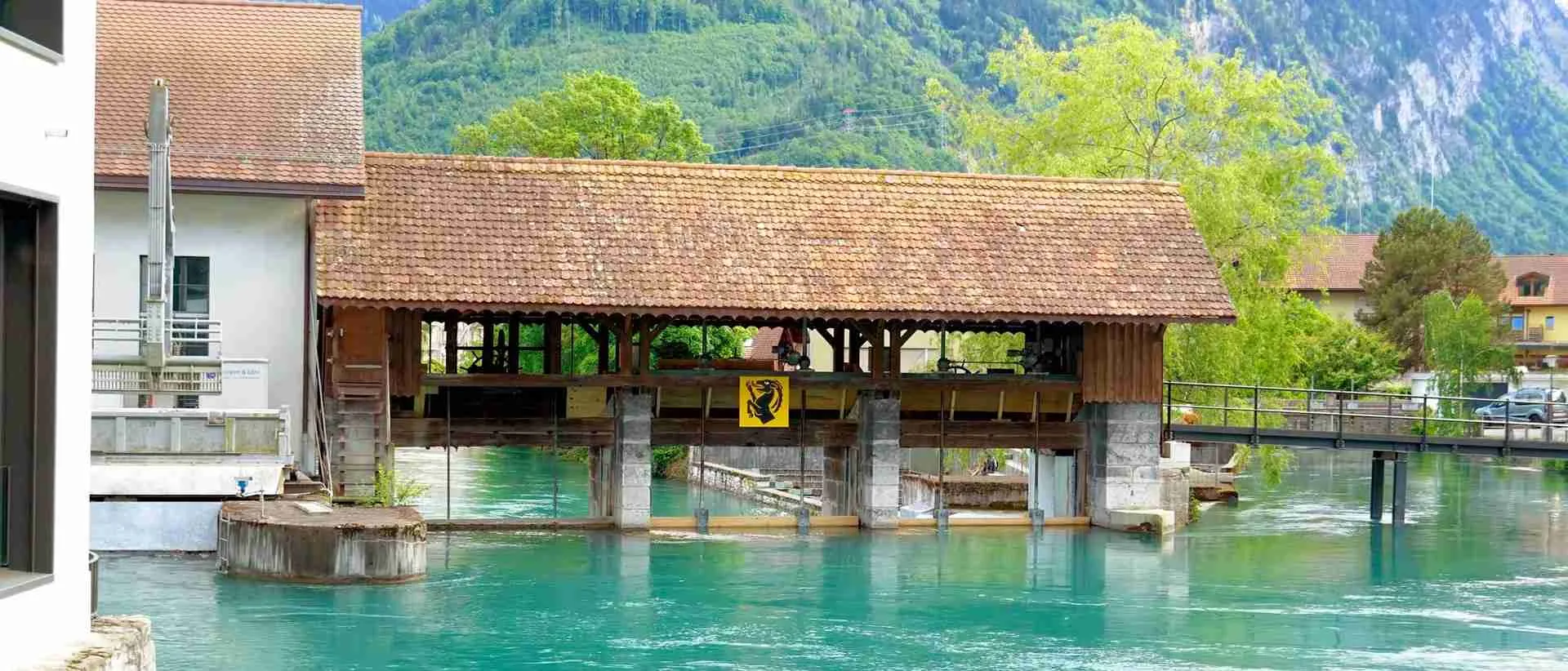
Aare River paths connect Interlaken’s two lakes through town following turquoise glacial meltwater. Walk or cycle the flat paths free of charge, stopping at designated swimming areas where locals plunge into the cold but swimmable river during summer months. The Aare channels downstream from Lake Brienz at surprising speed, creating gentle rapids ideal for photography. Several footbridges cross the river linking north and south banks. Unterseen’s old town preserves historic buildings and church architecture accessible on foot without admission fees.
Lake Brienz and Lake Thun shoreline walks extend for kilometers along both bodies of water. The Interlaken to Bönigen lakeshore path follows Lake Brienz for 3 kilometers through quiet residential areas reaching Bönigen’s small harbor and beach. Lake Thun’s northern shore path from Interlaken West leads toward Neuhaus with mountain views across the water. Public beaches at Bönigen and Neuhaus provide free swimming access during summer. Water temperatures reach 18-22°C (64-72°F) in July-August, cold but tolerable for afternoon swims after morning mountain excursions.
Casino Interlaken located in the Kursaal offers free entry to slot machine areas with no minimum wagers required. Table gaming areas charge CHF 5 ($7) entry including first drink. The Art Nouveau building dates to 1859 and preserves period architecture visible from the gaming areas. Visit for architectural interest or modest gambling entertainment on rainy days. Evening musical performances occur periodically with schedules posted at entrances.
Hiking trails accessible directly from Interlaken without cable car costs include the Harder Kulm trail (90-120 minutes up, 60-75 minutes down), Beatenberg paths reaching villages above town, and riverside trails toward neighboring communities. Detailed trail maps available free from Interlaken Tourism at the Interlaken Ost station show difficulty ratings, estimated times, and seasonal accessibility. Download the SwitzerlandMobility app for GPS-tracked trail routing and offline maps covering the entire region without data charges.
Seasonal Considerations and Weather Planning 2026
Summer (June-August) delivers Interlaken’s warmest weather at 18-25°C (64-77°F) in valleys and 8-15°C (46-59°F) at mountain summits. All cable cars, mountain railways, and hiking trails operate full schedules with departures every 15-30 minutes on popular routes. Accommodation and mountain railway prices peak 20-30% above shoulder season rates. July-August requires 3-4 month advance bookings for preferred hotels and guaranteed Jungfraujoch seat reservations. Afternoon thunderstorms develop frequently from June through August, typically clearing by evening. Plan mountain excursions for morning departures before clouds build, or evening visits when storms dissipate.
Shoulder seasons (May-early June and September-October) offer optimal value with 70-80% probability of clear weather, full mountain railway operations, and 30-40% lower accommodation costs. May wildflowers carpet Alpine meadows while October delivers autumn foliage across hillsides. Average temperatures reach 12-20°C (54-68°F) in valleys, cold enough to require fleece layers but comfortable for all-day hiking. Mountain railway schedules reduce to hourly rather than half-hourly frequencies. Book accommodations 6-8 weeks ahead rather than 3-4 months. Jungfraujoch seat reservations remain advisable for weekends but weekday slots typically available within one week of travel.
Winter (November-March) sees most mountain railways maintain operations except during severe storms. Jungfraujoch operates year-round with no seasonal closures, offering guaranteed snow and ice conditions for the Ice Palace and glacier skiing areas. Off-season railway discounts reduce Jungfraujoch tickets from CHF 261 ($350) to CHF 224 ($299) standard fare, CHF 112 ($149) with Half Fare Card. Harder Kulm closes for winter maintenance November through early April. Hiking trails remain snow-covered and often impassable without mountaineering equipment, limiting non-skiing activities to viewpoint railways and town exploring. Accommodation costs drop 40-50% below summer peaks at CHF 140-220 ($187-293) for mid-range doubles. Consider winter visits solely for mountain railway experiences rather than hiking-focused itineraries.
Spring (April-May) brings unpredictable weather with sunny 18°C (64°F) days alternating with snow showers and valley rain. Mountain railways gradually resume full schedules throughout April as winter maintenance concludes. April represents optimal bargain timing with winter-level accommodation rates, Harder Kulm reopening (typically early April), and Jungfraujoch offering transition between winter and summer pricing. Higher hiking trails remain snow-covered through May with valley-level paths accessible by mid-April. Pack layered clothing and waterproof shells for spring visits as conditions vary dramatically by elevation and time of day.
Money-Saving Strategies Interlaken 2026
Purchase groceries from Coop or Migros for breakfast and lunch, eating one restaurant dinner daily rather than all meals out. This strategy reduces daily food costs from CHF 75-95 ($100-127) to CHF 45-60 ($60-80) while maintaining one memorable Swiss dining experience. Buy yogurt, muesli, fruit, bread, cheese, and prepared salads for picnic lunches on hiking trails. Mountain restaurants charge CHF 18-25 ($24-33) for basic sandwiches while equivalent supermarket versions cost CHF 6-9 ($8-12).
Travel during shoulder seasons (May-June, September-October) capturing 30-40% accommodation savings and reduced mountain railway crowding without sacrificing weather quality. September particularly delivers excellent visibility, warm temperatures, and dramatically lower costs. Hotel rooms costing CHF 300 ($400) in July drop to CHF 190-240 ($253-320) in September. Jungfraujoch pricing remains identical May through October, but accommodation savings alone justify spring or fall timing.
Base yourself in Lauterbrunnen, Grindelwald, Wengen, or Mürren rather than Interlaken proper for 20-30% accommodation savings while gaining superior alpine atmosphere and direct trail access. Hotels in these villages cost CHF 150-220 ($200-293) for doubles identical to CHF 220-330 ($293-440) Interlaken properties. The Interlaken Guest Card works throughout these villages providing free local buses and regional trains within the guest card zone. Trailhead access from village accommodations eliminates cable car costs for many hikes starting directly from doorsteps.
Hike up to viewpoints whenever physically capable rather than riding cable cars both directions. Hiking Harder Kulm (90-120 minutes) then riding down via funicular saves CHF 22 ($29) one-way with Half Fare Card. Countless trails reach alpine viewpoints without cable car costs, though research difficulty ratings and elevation gains before attempting ambitious routes. Download offline trail maps through SwitzerlandMobility app preventing navigation errors and eliminating mobile data charges.
Fill water bottles at public fountains rather than purchasing CHF 4-5 ($5-7) bottles from shops or CHF 5-7 ($7-9) from restaurants. Switzerland’s fountain water meets drinking quality standards identifiable by signs indicating “drinking water” or absence of “not drinking water” warnings. Fountains appear throughout Interlaken town and villages at 200-300 meter intervals. Carry a reusable bottle and refill multiple times daily saving CHF 10-15 ($13-20) per person.
Book mountain railway tickets and accommodations directly through official websites avoiding third-party markup fees of 5-10%. SBB’s official site (swissrailways.com) sells all mountain railway tickets at identical prices to station counters while accepting international credit cards and delivering instant digital tickets. Third-party booking platforms charge convenience fees and cannot apply Swiss Half Fare Card discounts to online purchases.
Visit Interlaken during weekdays rather than weekends for better hotel availability and reduced crowds at popular viewpoints. Friday-Sunday sees Swiss domestic tourists from Zurich and Basel filling hotels and mountain railways, raising weekend rates by CHF 40-80 ($53-107) per night. Book Monday-Thursday stays when possible for optimal availability and pricing. Mountain railway seat reservations become essential for summer weekends but often available spontaneously on weekdays.
Practical Travel Logistics Interlaken 2026
Zurich Airport serves as the primary international gateway, located 120 kilometers northeast of Interlaken. Direct trains depart Zurich Airport station beneath the terminals hourly, reaching Interlaken Ost in 2 hours 15 minutes via Bern. Standard second-class tickets cost CHF 66 ($88), CHF 33 ($44) with Swiss Half Fare Card, or free with Swiss Travel Pass. Purchase tickets from automated machines in the airport rail station before boarding, as conductors charge premium fees for onboard purchases. Trains connect through Bern requiring one platform transfer with clearly marked signage in English, German, French, and Italian. International arrivals should allow 15-20 minutes for the transfer at Bern during first-time journeys, though regular travelers manage 5-7 minute connections during routine operations.
Geneva Airport provides alternative international access, located 190 kilometers southwest of Interlaken. Direct trains via Bern reach Interlaken in 2 hours 45 minutes. Tickets cost CHF 84 ($112) standard, CHF 42 ($56) with Half Fare Card. Geneva routes prove optimal for travelers combining Swiss Alps visits with French connections or positioning flights from different airports at trip start and conclusion.
Interlaken features two rail stations serving different functions: Interlaken West handles Bern, Geneva, and Basel routes, while Interlaken Ost manages Jungfrau region connections to Grindelwald, Lauterbrunnen, and mountain railways. Both stations sit just 3 kilometers apart connected by frequent trains (7 minutes) and buses (10 minutes). The Harder Kulm funicular departs adjacent to Interlaken Ost, making that station primary for mountain excursion days. Most hotels cluster near Interlaken West where the main shopping street Höheweg begins, extending 1.5 kilometers toward Interlaken Ost through Höhematte Park.
Currency exchange proves unnecessary as virtually all businesses accept major credit cards (Visa, Mastercard, American Express) without foreign transaction fees beyond those charged by home banks. ATMs throughout both stations and along Höheweg dispense Swiss Francs with standard international withdrawal fees. Avoid currency exchange counters at airports and train stations charging 3-5% commissions significantly above bank card rates. Carry CHF 100-150 ($133-200) cash for mountain huts, small cafes, and occasional card system failures in remote locations.
Cell phone coverage spans the entire region including most mountain summits, though data speeds slow at extreme altitudes. European Union visitors should verify roaming plans cover Switzerland as the country sits outside the EU despite geographic centrality. North American travelers find Swiss data expensive without prearranged international plans; consider purchasing local SIM cards from Swisscom, Salt, or Sunrise at airport shops for CHF 20-30 ($27-40) with 5-10 GB data valid 30 days. Most hotels and many restaurants offer free WiFi reducing reliance on mobile data for non-urgent communication and map downloads.
Emergency services use the 112 universal European emergency number connecting to police, ambulance, or fire services with English-speaking operators. Non-emergency medical assistance reaches through hotel concierge referrals or Interlaken Tourism at Interlaken Ost station. The regional hospital (Spital Interlaken) provides full emergency services though Swiss medical costs without travel insurance reach CHF 200-500 ($267-667) for minor emergency visits. Verify travel insurance includes Swiss medical coverage before departure as standard health insurance often excludes international treatment.
Luggage storage operates at both Interlaken Ost and West stations in automated locker systems charging CHF 9-12 ($12-16) per 24 hours depending on locker size. Use these for day trips to mountain viewpoints without returning to hotels between checkout and evening trains. Most hotels store luggage free before check-in or after checkout when guests depart on evening trains.
Packing Essentials and Clothing Requirements 2026
Layered clothing proves essential for altitude transitions from 600-meter valley floors to 3,000+ meter summits. Pack a waterproof shell jacket with hood, fleece or wool mid-layer, and moisture-wicking base layer shirts for all seasons. Even July-August visits require warm layers for early morning or evening mountain excursions where temperatures drop 15-20°C (27-36°F) below valley levels. Windproof outer shells provide critical protection on exposed ridgelines where wind chill magnifies temperature effects dramatically.
Hiking boots or sturdy trail shoes with ankle support and aggressive tread patterns facilitate safe mountain hiking on mixed terrain including gravel paths, grass slopes, and occasional snow patches on high-altitude trails through early summer. Break in new boots thoroughly before the trip preventing blisters during multiday hiking. Bring blister prevention supplies including moleskin, athletic tape, and preventive foot powder as Swiss mountain trails demand considerable foot endurance over uneven surfaces.
Sun protection exceeds typical requirements due to high-altitude UV intensity and glacier reflection multiplying exposure. Pack SPF 50+ sunscreen reapplying every 2-3 hours during summit visits, polarized sunglasses with full UV protection (critical at snow-covered summits), and wide-brimmed sun hat providing face and neck coverage. Sunburn occurs rapidly at altitude even on cloudy days as clouds filter minimal UV radiation. Ski goggles prove valuable for Jungfraujoch winter visits when driving snow and wind render standard sunglasses inadequate.
Reusable water bottle capacity 750ml-1L allows refilling at public fountains throughout Interlaken and mountain stations. Staying hydrated at altitude prevents altitude sickness symptoms including headaches and nausea. Collapsible bottles or hydration bladders work well for day packs when hiking trails require hands-free water access. Avoid single-use plastic bottles both for environmental reasons and to save CHF 4-5 ($5-7) per bottle purchased at mountain stations.
Small day pack 20-30 liter capacity carries extra layers, water, snacks, sunscreen, and camera equipment during mountain excursions and hiking. Larger luggage stays at hotels while day packs enable unrestricted movement on trains and cable cars. Include basic first-aid supplies (bandages, pain medication, blister treatment) as mountain station shops charge premium prices for emergency supplies when needed. Swiss pharmacies stock international medications under different brand names; bring adequate prescription medications from home with copies of prescriptions for customs if questioned.
Electrical adapters for Swiss Type J three-pin outlets (different from EU two-pin) charge phones, cameras, and electronic devices. Most modern device chargers accept 100-240V input eliminating need for voltage converters, though verify individual device specifications before plugging in. Hotels typically provide limited outlets in older rooms; consider bringing a multi-outlet adapter allowing simultaneous device charging from a single socket.
Photography and Best Viewpoint Timing 2026
Golden hour lighting occurs 6:30-8:00 AM and 7:30-9:00 PM in summer months (June-August), shifting to 7:30-9:00 AM and 6:00-7:30 PM during spring and autumn. Mountain faces receive optimal illumination during morning hours when sun angles across valleys from the east, while evening light creates dramatic shadows across western-facing peaks but can leave viewpoints themselves in shadow. The Harder Kulm Two Lakes Bridge faces southeast catching strong morning light across Lake Brienz and afternoon light on Lake Thun, making all-day visits photographically productive.
Jungfraujoch photography peaks during the 10 AM-2 PM window when direct sunlight reaches into the summit valleys and glacier crevasses. Earlier morning visits encounter long shadows across the Aletsch Glacier, while later afternoon angles become too steep for optimal lighting in the narrow Jungfrau summit basin. Good Morning Tickets capturing 15% discounts while mandating departure by 1:17 PM allow photography during the optimal 10 AM-noon period. Bring wide-angle lens 16-35mm range for glacier expanses and telephoto 70-200mm for distant peak details. The observation deck’s fenced safety barriers limit tripod utility; handheld shooting or compact travel tripods prove more practical than full-size models.
Sunset viewing from Harder Kulm provides free alternative to paid mountain railways as the funicular operates until 9:40 PM during peak season (late June-August). The westward view across Lake Thun toward the Niesen pyramid captures sunset colors reflecting off water and distant ranges. Arrive 90 minutes before sunset allowing summit photography during golden hour leading into blue hour after sun dips below the horizon. The restaurant remains open for dinner service during evening operations, allowing visitors to combine sunset viewing with a memorable dinner overlooking illuminated Interlaken below.
Weather monitoring through webcams posted on official mountain railway websites allows real-time visibility verification before committing to expensive excursions. Jungfraujoch, Schilthorn, Harder Kulm, and Grindelwald First all maintain live streaming cameras updated every 5-10 minutes. Verify clear summit conditions before departing valley locations, as clouds obscuring views render photography and sightseeing essentially worthless despite identical ticket prices. Book refundable accommodation and maintain flexible mountain railway dates when possible, allowing substitution of alternate days if weather develops poorly.
Drone photography faces significant restrictions throughout the Jungfrau region with most areas prohibiting recreational drone flights due to aviation safety concerns and national park regulations. Check specific location rules before flying as violations incur CHF 10,000+ ($13,333+) fines. Mountain railways and cable car routes particularly prohibit drone operations due to collision risks with transport infrastructure. Designated drone flying zones exist but require advance research and permit applications through local aviation authorities.
Family Travel Considerations Interlaken 2026
Children under 6 travel free on all Swiss trains, buses, boats, and most mountain railways without tickets required. Ages 6-15 travel free when accompanied by parents holding Swiss Half Fare Card or Swiss Travel Pass with the free Swiss Family Card. Request the Family Card when purchasing adult passes; it arrives as separate document presented alongside adult passes during ticket checks. This benefit dramatically reduces family transportation costs, potentially saving CHF 300-600 ($400-800) weekly depending on planned excursions.
Jungfraujoch welcomes families with children as all facilities remain accessible via elevators and heated indoor corridors. The Ice Palace featuring carved ice sculptures particularly appeals to younger children. Summit cold requires proper clothing even in summer; dress children in winter coats and gloves during July-August visits. The altitude occasionally causes mild headaches or nausea in children sensitive to elevation changes. Monitor for symptoms and descend immediately if concerning reactions develop. Most children tolerate the altitude well during short 4-5 hour summit visits but avoid extending stays beyond this duration.
Family-friendly hiking trails include the panorama path from Harder Kulm to Interlaken (3 hours down, easier than climbing), Lake Brienz shoreline walks (flat, stroller-accessible), and St. Beatus Caves featuring underground lakes and formations requiring 45-minute guided tours at CHF 20 ($27) adults, CHF 12 ($16) children. The caves maintain year-round 10°C (50°F) temperatures requiring light jackets regardless of summer heat outside. Heimwehfluh above Interlaken West operates a miniature railway, playground, and short funicular appealing to young children at combined CHF 18 ($24) adults, CHF 10 ($13) children.
Stroller accessibility varies dramatically by location. Interlaken’s flat valley floor supports strollers on paved paths throughout town and along lakeshores. Mountain railways accommodate strollers in special baggage areas though parents must carry children during embarkation and disembarkation. Summit viewing platforms at Jungfraujoch and Harder Kulm feature elevator access making strollers viable. Hiking trails prove universally unsuitable for strollers due to uneven surfaces, narrow paths, and steep sections. Consider baby carriers for trail hiking rather than attempting stroller navigation on mountain paths.
Playground facilities operate at Höhematte Park in central Interlaken (free), Harder Kulm summit (free with funicular ticket), and various neighborhood parks throughout residential areas. These provide break opportunities when children tire of sightseeing or need active play between mountain excursions. Many hotels feature small playgrounds or game rooms for rainy day entertainment. JungfrauPark near Interlaken Ost offers indoor play areas and climbing structures during poor weather at CHF 28 ($37) per child admission.
Accessibility and Mobility Considerations 2026
Wheelchair users find Interlaken’s flat valley terrain largely accessible with paved paths, curb cuts, and level sidewalks throughout the town center. Both Interlaken Ost and West stations feature elevators to all platforms and accessible restrooms in main halls. Hotels constructed after 2000 generally provide accessible rooms with roll-in showers and appropriate clearances, though older properties in historic buildings often lack these features. Verify accessibility specifically when booking rather than assuming compliance.
Mountain railway accessibility varies by route and age of infrastructure. Jungfraujoch via the modern Eiger Express cable car and Jungfrau Railway provides complete wheelchair access from Interlaken Ost through to summit viewing platforms using elevators throughout. Request advance notification when purchasing tickets allowing station staff to prepare boarding ramps and assistance at each transfer point. The older cogwheel route via Kleine Scheidegg requires advance telephone booking as accessible boarding involves separate procedures at multiple stations. Harder Kulm funicular accommodates wheelchairs through prior telephone arrangement using separate loading procedures; station staff provide boarding ramps and positioning assistance.
Schilthorn cable cars accommodate wheelchairs though confined spaces limit maneuverability and require careful positioning during loading. Contact the Schilthorn operator 48 hours before planned visits arranging staff assistance at boarding stations. The summit restaurant and viewing platforms feature elevator access once arrived. Grindelwald First cable car system provides limited wheelchair access with assistance; verify specific capabilities before planning trips as weather and maintenance schedules affect availability.
Hiking trails prove generally unsuitable for wheelchairs due to natural terrain, narrow paths, and elevation changes. Limited exceptions include paved lakeside paths in Interlaken (Höheweg to Bönigen), partial accessibility on the Harder Kulm summit plateau (flat areas near restaurant and viewing bridge), and short paved segments near valley stations of mountain railways. Serious trail exploration requires mobility sufficient for sustained walking over uneven surfaces with 5-15% gradients common on lower trails and 20-30% grades on mountain ascents.
Medical equipment rental including wheelchairs, walkers, and crutches available through Spital Interlaken medical supply services at standard daily rental fees. Contact hospital equipment department 1-2 weeks before arrival ensuring availability. Pharmacies throughout Interlaken stock basic mobility aids including canes, arm supports, and compression wraps for injury treatment during travel.
Connectivity and Mobile Communications 2026
WiFi access operates throughout most Interlaken hotels, restaurants, and cafes without passwords or access fees. Connection speeds typically reach 10-30 Mbps download sufficient for messaging, email, navigation, and photo uploads. Hotel WiFi occasionally struggles during peak evening hours when numerous guests stream video simultaneously; morning connectivity generally proves more reliable for video calls or large file transfers.
Cellular coverage reaches throughout Interlaken and surprisingly high into mountain regions including most summit viewpoints. Swisscom operates the most extensive network providing 4G/5G service even on Jungfraujoch summit and Harder Kulm. Salt and Sunrise offer slightly less comprehensive coverage but function well in valley locations and popular tourist sites. International roaming charges vary dramatically by home country; European Union visitors enjoy regulated roaming rates including Switzerland despite the country’s non-EU status. North American and Asian travelers face potentially expensive roaming fees exceeding CHF 0.10 ($0.13) per MB without prearranged international plans.
Local SIM cards provide economical alternative to international roaming for extended stays beyond one week. Swisscom, Salt, and Sunrise sell prepaid tourist SIMs at airport shops, major train stations, and dedicated retail locations throughout Interlaken. Prices start CHF 20 ($27) for 30-day validity with 3-5 GB data, CHF 30-40 ($40-53) for 10-15 GB. Activation requires passport presentation and takes 10-15 minutes including paperwork and network registration. Most modern smartphones support Swiss frequencies (GSM 900/1800 MHz, 3G 2100 MHz, 4G bands 1/3/7/20); verify compatibility before purchasing local SIM avoiding compatibility frustrations.
Messaging applications including WhatsApp, Signal, and Telegram function normally over WiFi and data connections providing free international communication with contacts at home. FaceTime, Skype, and Zoom video calls work reliably on hotel WiFi during off-peak hours. Download offline maps through Google Maps, Maps.me, or SwitzerlandMobility app before departing WiFi coverage, preventing navigation failures in areas with poor cellular signals or when conserving mobile data.
Sustainable Travel Practices Interlaken 2026
Switzerland’s efficient public transportation network eliminates virtually all need for rental cars in the Interlaken region. Trains, buses, boats, and mountain railways connect every destination without personal vehicle requirements. Car rentals typically cost CHF 80-120 ($107-160) daily including insurance and fuel, while parking fees in Interlaken reach CHF 20-30 ($27-40) daily and many mountain villages prohibit private vehicles entirely. Environmental impact aside, public transport delivers superior convenience and lower costs compared to car rental for Swiss Alps exploration.
Reusable water bottles eliminate thousands of single-use plastic purchases given Switzerland’s ubiquitous public fountains dispensing safe drinking water. A family of four drinking three bottles daily during a one-week visit avoids 84 plastic bottles while saving CHF 80-100 ($107-133) on bottled water purchases. Bring durable bottles from home or purchase quality Swiss versions at CHF 15-25 ($20-33) from outdoor shops, which pay for themselves within 3-4 days compared to convenience store purchases.
Dining at local restaurants rather than international chains supports regional economy and reduces supply chain environmental costs. Family-owned establishments featuring local ingredients and traditional preparations typically charge prices competitive with chain restaurants while delivering superior quality and authentic experiences. Interlaken’s Höheweg corridor features numerous small establishments alongside international franchises; explore side streets where local operations cluster.
Hiking rather than riding cable cars both directions when physically capable reduces per-person carbon footprint by approximately 2-4 kg CO2 per trip while delivering enhanced fitness benefits and connecting travelers more intimately with Alpine environments. The 90-minute Harder Kulm ascent burns 400-500 calories and costs zero francs while the funicular generates greenhouse emissions and costs CHF 22 ($29) one-way. Descending via funicular provides knee-friendly return after uphill exertion, creating practical compromise between environmental consciousness and physical limitations.
Accommodation sustainability varies dramatically between properties. Research hotels’ environmental certifications including the Swiss Ibex Steinbock sustainability label indicating comprehensive green practices from energy sources to waste management. Some properties generate 50-80% of electricity from roof-mounted solar panels and ground-source heat pumps while others rely entirely on fossil fuel heating. Booking decisions influence industry practices as properties track guest preferences and adjust operations based on market demand for sustainable tourism.
Safety and Emergency Preparedness 2026
Mountain weather changes rapidly creating potentially dangerous conditions during hiking. Morning clear skies can deteriorate into afternoon thunderstorms within 1-2 hours. Lightning strikes pose serious risks on exposed ridges and summit areas. Monitor weather forecasts through MeteoSwiss app providing hourly mountain-specific predictions including thunderstorm probability. Abandon exposed locations immediately when dark clouds approach or thunder becomes audible regardless of remaining hiking distance to destinations. Descend at least 200 meters below ridgelines seeking shelter in valleys or treeline areas during electrical storms.
Altitude sickness affects some visitors on rapid ascents to Jungfraujoch at 3,454 meters. Symptoms include headache, nausea, dizziness, and shortness of breath typically appearing 2-6 hours after summit arrival. Mild symptoms resolve by descending 500-1,000 meters to lower altitude while severe reactions require immediate descent via fastest available route. The condition develops regardless of fitness level, affecting professional athletes and casual tourists equally. Stay hydrated drinking 3-4 liters water daily and limit alcohol consumption first 24 hours after altitude gain. Most visitors experience no problems during brief 4-5 hour summit visits but sensitivity varies individually.
Trail hiking requires proper footwear preventing ankle sprains and knee injuries on uneven terrain. Swiss trails feature challenging sections with loose gravel, exposed roots, and occasional via ferrata segments equipped with fixed cables for handhold assistance. Assess personal fitness realistically before attempting ambitious routes; trail guides indicate estimated times based on average hiker capabilities. Add 30-40% to posted times when hiking above personal fitness level or with young children. Descending requires greater care than ascending as downhill impacts stress knees and ankles while loose surfaces cause slipping. Use trekking poles for stability and joint protection on sustained descents.
Emergency mountain rescue operates throughout the region coordinated by Swiss Alpine Club (SAC) and Air Glaciers helicopter service. Mobile phones function on most popular trails and all mountain summits allowing 112 emergency calls. Provide precise location information using trail markers, nearby peaks, or GPS coordinates from smartphone maps. Rescue operations reach most accident sites within 20-40 minutes weather permitting but costs reach CHF 3,000-15,000 ($4,000-20,000) depending on helicopter time required. Verify travel insurance covers mountain rescue helicopter costs before departure as standard policies often exclude adventure activities. European Union residents’ EHIC cards don’t cover rescue operations despite covering medical treatment.
Wildlife encounters prove rare in popular tourist areas. Ibex and chamois inhabit high elevations visible from safe distances. Marmots occupy meadows near mountain railways occasionally approaching humans seeking food; avoid feeding wildlife as human food causes health problems in animals and creates dangerous dependency behaviors. Cows grazing Alpine meadows during summer generally remain docile but should be given wide clearance, especially when accompanied by calves. Mother cows protecting young occasionally charge perceived threats. Pass cattle herds maintaining 20-30 meter distance without sudden movements or loud noises.
Day Trip Options from Interlaken 2026
Bern sits 50 kilometers northwest accessible in 50 minutes via direct trains departing hourly from both Interlaken stations. Standard round-trip costs CHF 64 ($85), CHF 32 ($43) with Half Fare Card, or free with Swiss Travel Pass. The UNESCO-listed medieval old town features covered arcades, the Zytglogge clock tower, Bärengraben bear park, and Einstein Museum. Budget 5-7 hours for comprehensive exploration including Rosengarten viewpoint overlooking the old town from elevated park terraces. Bern museums charge CHF 15-20 ($20-27) admission though Swiss Travel Pass provides free entry to most cultural institutions. Return trains operate until midnight allowing full day explorations.
Lucerne lies 65 kilometers northeast requiring train changes at Interlaken Ost to Meiringen then to Lucerne, totaling 2 hours travel time. Direct routes via Bern take 2 hours 20 minutes. Round-trip tickets cost CHF 84 ($112) standard, CHF 42 ($56) with Half Fare Card. Chapel Bridge spanning the Reuss River, old town architecture, lakeside promenades, and Mount Rigi access characterize Lucerne attractions. Consider purchasing Tell Pass for Lucerne region if planning multiple mountain railways and boat trips around Lake Lucerne. Day trips work well for lake activities but overnight stays allow Mount Rigi and Mount Pilatus excursions without rushed schedules.
Lauterbrunnen Valley floor accessible in 20 minutes from Interlaken Ost via direct trains features 72 waterfalls cascading from surrounding cliffs including 300-meter Staubbach Falls visible from the village. Free hiking trails connect valley floor villages while cable cars ascend to Mürren and Wengen car-free mountain villages. This destination works as half-day excursion or full-day adventure combining valley walks with mountain village exploration. Budget CHF 60-90 ($80-120) including round-trip cable car to either Mürren or Wengen with Half Fare Card discounts. Trümmelbach Falls inside the mountain charge CHF 14 ($19) admission presenting glacier-carved gorges viewed from platforms inside the rock.
Thun occupies Lake Thun’s northern shore 30 minutes from Interlaken West via direct train or 90 minutes via boat cruise across the lake. The castle, old town, and lakeside parks provide pleasant wandering for 3-4 hours. Boat cruises cost CHF 34 ($45) one-way or CHF 64 ($85) round-trip standard fare, CHF 17 ($23) and CHF 32 ($43) with Half Fare Card. Swiss Travel Pass holders ride free on scheduled boat services making lake cruising economical option during multiday passes. Combine train one direction with boat return creating varied day trip experience. Thun represents lower-key alternative to Lucerne for lakeside town atmosphere without intense tourist crowds.
Brienz sits at Lake Brienz’s eastern shore 30 minutes from Interlaken Ost offering wood-carving traditions, lakefront promenades, and Brienz Rothorn cogwheel railway ascending to 2,350 meters. The Ballenberg Open-Air Museum near Brienz features 100+ historic Swiss buildings relocated from across the country, requiring 4-5 hours comprehensive exploration. Museum admission costs CHF 32 ($43) adults, CHF 16 ($21) with Swiss Travel Pass 50% discount. Combine Brienz day trip with Ballenberg visit allocating full day for both attractions. Return via boat cruise for scenic alternative to train routes.
Extending Your Interlaken Visit 2026
Three-day minimum stays in the Interlaken region allow one major mountain excursion (Jungfraujoch or Schilthorn), one local viewpoint (Harder Kulm), and one valley exploration (Lauterbrunnen or Grindelwald). This schedule provides balanced mountain and valley experiences without excessive railway costs depleting budgets. Budget travelers complete three days at CHF 405-540 ($540-720), mid-range travelers spend CHF 855-1,125 ($1,140-1,500), and luxury visitors reach CHF 1,650-2,250+ ($2,200-3,000+).
Five-day visits enable deeper region exploration adding Schynige Platte, Grindelwald First, or Niederhorn to the basic three-day itinerary plus dedicated hiking days on valley trails without cable car costs. This duration suits travelers prioritizing outdoor activities over rapid destination hopping. Five days also justifies purchasing the Swiss Half Fare Card at CHF 150 ($200) or five-day Swiss Travel Pass (not sold; closest option is six-day at CHF 399 / $532) depending on planned intercity trains versus regional explorations. Weekly costs reach CHF 945-1,260 ($1,260-1,680) budget, CHF 1,995-2,625 ($2,660-3,500) mid-range, and CHF 3,850-5,250+ ($5,131-7,000+) luxury for five-day stays.
Week-long stays transform Interlaken from base camp into residential experience allowing rest days between ambitious mountain excursions, exploration of all major peaks and valleys, and immersion in local hiking networks rather than tourist checklists. Day trips to Bern, Lucerne, or even Zermatt become viable without sacrificing core Interlaken experiences. The Swiss Half Fare Card proves essential for week-long stays providing 30-day validity exceeding trip duration while cutting all transport costs in half. Consider splitting accommodations between Interlaken proper and a mountain village (Wengen, Mürren, or Grindelwald) experiencing both perspectives.
Multi-destination Swiss itineraries logically position Interlaken between Lucerne (northeast) and Zermatt (southwest) along the Berner Oberland south of Bern. This routing avoids backtracking while connecting the country’s most dramatic Alpine regions. Travelers starting Zurich typically visit Lucerne (2 days), Interlaken (5 days), Zermatt (3 days), then return Zurich for departure flights. This 10-day circuit covers Swiss Alpine highlights without frantic pacing. The Swiss Travel Pass particularly suits such itineraries providing unlimited intercity trains plus partial mountain railway discounts across multiple regions rather than purchasing separate tickets for each journey segment.
Frequently Asked Questions About Interlaken Travel 2026
Is Interlaken expensive compared to other Swiss destinations?
Interlaken’s daily costs at CHF 135-180 ($180-240) budget, CHF 285-375 ($380-500) mid-range, and CHF 550-750+ ($733-1,000+) luxury align closely with other Swiss Alpine destinations but run 20-30% higher than Swiss cities. Zermatt and St. Moritz exceed Interlaken by 15-25% due to extreme luxury positioning while Lucerne prices match Interlaken within 10%. Grindelwald, Wengen, and Lauterbrunnen villages cost 15-20% less than Interlaken town for identical accommodation quality, making village basing financially advantageous. The primary expense driver remains mountain railway tickets at CHF 44-261 ($59-350) per excursion rather than accommodation or food. Switzerland overall ranks as Western Europe’s most expensive destination regardless of specific location.
How many days should I spend in Interlaken?
Allocate 4-5 days for comprehensive Interlaken experience including Jungfraujoch, Harder Kulm, Schilthorn or Grindelwald First, valley hiking, and one rest day for town exploration and laundry. Three days minimum covers essential highlights (Jungfraujoch, Harder Kulm, Lauterbrunnen) without feeling rushed. Week-long stays enable relaxed pacing, weather flexibility, and deeper engagement with hiking trails while justifying Swiss Half Fare Card investment. Two-day visits risk wasting expensive mountain railway tickets if poor weather arrives during your narrow window. The ideal duration depends on whether Interlaken serves as your sole Swiss destination (7-10 days optimal) or one stop in a multi-city tour (4-5 days sufficient).
Can I visit Interlaken as a day trip from Zurich or Lucerne?
Day trips from Zurich (2 hours 15 minutes) or Lucerne (2 hours) prove logistically possible but generally inadvisable. The 4+ hours of round-trip train time reduces on-site time to 7-8 hours insufficient for Jungfraujoch (requires 8-9 hours) or multiple attractions. Harder Kulm alone works as day-trip content requiring just 3-4 hours total including funicular rides and summit time. Budget travelers attempting Zurich day trips spend CHF 132 ($176) on round-trip trains (CHF 66 / $88 with Half Fare Card) plus Harder Kulm funicular CHF 44 ($59, CHF 22 / $29 with pass), totaling CHF 176 ($235) or CHF 88 ($117) with pass. Overnight stays eliminate train costs while enabling early morning mountain departures and evening return flexibility. Day trippers face practical constraints that undermine experience quality relative to expense. Book at least 2-3 nights in Interlaken for satisfying visits.
What should I do if weather ruins my planned mountain excursion?
Check official mountain railway webcams showing live summit conditions before departing valley hotels, as thick clouds eliminate all views rendering expensive tickets essentially worthless. Most mountain railways allow ticket date changes without penalties when storms close observation decks, though verify specific policies at purchase. Poor weather alternatives include visiting St. Beatus Caves (indoor, weather-independent), Ballenberg Open-Air Museum under covered structures, Interlaken’s small museums, shopping along Höheweg covered arcades, or day trips to Bern or Lucerne where urban attractions function regardless of mountain weather. The Casino Interlaken provides entertainment during afternoon storms. Book refundable accommodation maintaining flexibility to extend stays by one day if storm systems pass within 24 hours. Swiss weather often clears dramatically as fronts move through rapidly, creating brilliant clear conditions following morning rain.
Do I need a car to explore Interlaken and surrounding areas?
Cars prove unnecessary and often disadvantageous in the Interlaken region given Switzerland’s comprehensive rail and bus network reaching every significant destination. Parking costs CHF 20-30 ($27-40) daily in Interlaken while mountain villages including Wengen, Mürren, and Gimmelwald prohibit private vehicles entirely, accessible only via train or cable car. Many hiking trailheads operate as destinations served by cable cars rather than parking lots, making cars useless for accessing popular routes. Rental costs at CHF 80-120 ($107-160) daily plus parking and fuel expenses exceed Swiss Half Fare Card pricing while delivering inferior access. The only scenario justifying rentals involves travelers wanting remote valley exploration off public transport routes, relevant primarily for advanced hikers seeking uncommercial areas beyond typical tourist circuits. Standard visitors find public transportation superior in every practical and economic measure.
Are credit cards widely accepted in Interlaken?
Major credit cards (Visa, Mastercard, American Express) function at virtually all Interlaken hotels, restaurants with table service, supermarkets, mountain railway stations, and shops along Höheweg. Small cafes, mountain huts, some bakeries, and market vendors prefer cash or accept only Swiss payment cards. Carry CHF 100-150 ($133-200) cash covering small purchases, mountain restaurant snacks, and emergency situations when card systems fail. ATMs at both train stations and throughout central Interlaken dispense Swiss Francs using international cards at standard foreign withdrawal fees (typically 1-3% depending on issuing bank). Contactless payment works normally for transactions under CHF 80 ($107), above which PIN entry required. Currency exchange counters prove unnecessary as credit card exchange rates typically beat human exchange offices by 2-4%.
Is hiking safe for inexperienced hikers around Interlaken?
Interlaken offers extensive easy-grade hiking trails suitable for inexperienced hikers including flat lakeside paths, valley floor routes, and gentle summit plateau walks accessible via cable cars. Harder Kulm’s circular path around the summit, Lauterbrunnen Valley floor between villages, and Lake Brienz shoreline walks present minimal technical challenges or exposure to cliffs. Download SwitzerlandMobility app showing trail ratings (easy, medium, difficult) and elevation profiles allowing informed route selection. Stay on marked trails indicated by yellow signposts and painted blazes on rocks; Switzerland’s trail marking system prevents navigation errors when followed attentively. Mountain hiking above 2,000 meters introduces exposure to steep dropoffs, snow patches through June, and rapid weather changes requiring proper equipment and realistic fitness assessment. Inexperienced hikers should limit ambitions to valley and low-altitude routes while building skills, reserving exposed ridge walks for future visits after gaining mountain experience.
What’s included in the Interlaken Guest Card?
The Interlaken Guest Card automatically issued by all registered accommodations provides free unlimited local bus travel within zones 1-2 covering Interlaken West to Interlaken Ost plus surrounding villages including Wilderswil, Matten, and Unterseen. The card activates on check-in date and expires on checkout date regardless of length of stay. Additional benefits include minor discounts (typically 10-15%) at participating restaurants, shops, and attractions though significant sites like Jungfraujoch and Harder Kulm exclude Guest Card discounts. The card essentially eliminates all short-distance public transport costs within Interlaken’s immediate area but provides minimal savings for mountain railways or intercity trains. Travelers with Swiss Half Fare Card or Swiss Travel Pass gain redundant local transport coverage from their passes but might utilize Guest Card attraction discounts when available. Keep the card throughout your stay as bus drivers, shop clerks, and attraction ticket offices request it for verification when claiming free transport or discounts.
Can I buy Swiss Half Fare Card after arriving in Switzerland?
Swiss Half Fare Cards purchased in Switzerland at train station ticket counters carry identical CHF 150 ($200) pricing as online advance purchases without discounts for last-minute buying. Purchase before departure via the official SBB website (swissrailways.com) receiving instant digital PDF cards valid from your chosen start date. The digital card works identically to physical versions; display on smartphone screens when claiming discounts at ticket counters, machines, or during onboard inspections. Avoid third-party resellers charging markup fees or currency conversion premiums above the CHF 150 official rate. Some travelers defer purchase decisions until arriving and assessing actual planned itineraries, acceptable strategy given no price penalty but risking time spent at ticket counters and inability to leverage discounts for initial arrival day journeys. Calculate whether your confirmed itinerary exceeds CHF 300 ($400) in full-price tickets; if uncertain, delay purchase until Day 2 after observing actual transportation costs for initial explorations.
Is Interlaken suitable for solo travelers?
Solo travelers find Interlaken well-suited for independent exploration with comprehensive public transportation eliminating driving concerns, extensive hostel networks facilitating social interactions, and safe low-crime environment throughout Swiss towns and mountain areas. Hostel dormitories cost CHF 35-50 ($47-67) per night providing budget accommodation with common areas where solo travelers naturally connect. Consider Balmer’s Hostel or Backpackers Villa Sonnenhof hosting organized social events and group excursions to popular destinations. Solo hiking on marked trails presents minimal safety concerns given high traffic on popular routes and widespread mobile phone coverage enabling emergency calls. Mountain huts along multi-day hiking routes foster communal dining experiences where solo trekkers share tables and conversations with fellow hikers. Budget approximately CHF 155-205 ($207-273) daily as a solo traveler (no room-sharing cost reductions) including accommodation CHF 90-130 ($120-173), food CHF 45-60 ($60-80), and transport CHF 20-35 ($27-47) with Half Fare Card discounts.