
Inner Istria Off the Beaten Path 2026: A Slow-Travel Cultural Road Trip
While the Istrian coastline draws millions of visitors to Rovinj, Poreč, and Pula each summer, the peninsula’s interior remains one of the least-explored culturally rich landscapes in the Mediterranean. Stone-built hilltop villages command views across valleys of truffle oak forest and terraced olive groves, medieval frescoes survive in locked Gothic chapels that see perhaps a dozen foreign visitors per week, and a 550-year-old Dance of the Dead painting stands in a woodland cemetery five kilometres from the regional capital, essentially uncrowded, in extraordinary condition. This guide covers everything needed to plan a purposeful, unhurried self-drive road trip through inner Istria in 2026 — the cultural landmarks, the gastronomic itinerary, the costs at every budget level, and the logistics that make the circuit work.
Key Takeaways: Inner Istria Road Trip 2026
- A car is non-negotiable: Inner Istria’s hilltop villages have no meaningful inter-village public transport. A compact rental car from Pula Airport costs €30-55 per day in shoulder season, split between two travellers at €15-28 per person. From September 2025, buses are prohibited on the access road to the Beram chapel — a car is now essential for this specific visit.
- Daily costs by travel tier: Budget travellers sharing a guesthouse spend €65-105 per person daily (car rental included). Mid-range comfort — agritourism accommodation, truffle-based meals, one or two paid experiences — runs €115-190 per person. Luxury boutique hotels and private truffle experiences reach €225-385 per person daily.
- Best timing in 2026: May through June and mid-September through October deliver the optimal combination of good weather, lighter crowds, and lower prices. Autumn adds the decisive draw of white truffle season — Tuber magnatum pico peaks in October and November in the Mirna valley forests around Motovun and Buzet.
- Beram frescoes require advance planning: The Dance of the Dead cycle (1474) in the Church of St. Mary of the Rocks is inner Istria’s most important cultural monument. Entry costs €3 per person; the chapel is locked and the key is held by a local custodian. Phone ahead the evening before your visit.
- Gastronomy defines the journey: White and black truffles shaved over hand-rolled pasta, Malvazija Istarska white wine, Teran red, cold-pressed local olive oil, Žminj prosciutto, and biska mistletoe brandy from Hum constitute not a backdrop to the cultural itinerary but its equal half.
- Allow four days minimum, seven for full immersion: Four days covers the core circuit. Seven days enables genuine slow travel — time for a truffle-hunting morning, secondary villages like Draguć and Gračišće, a winery cellar visit, and the unplanned hours that produce the trip’s most lasting impressions.
People Also Ask About Inner Istria 2026
How much does an inner Istria road trip cost per day in 2026?
An inner Istria road trip costs €65-105 per person daily for budget travel, €115-190 per person for mid-range, and €225-385 per person for luxury, all calculated for two people sharing accommodation and splitting a rental car. Budget figures cover a guesthouse double room, set-menu konoba meals, and mostly free attractions. Mid-range includes agritourism accommodation, daily truffle dishes, and paid experiences averaged across the trip. Luxury encompasses boutique hotels, white-tablecloth truffle restaurants, and private guided experiences. A five-day trip totals approximately €325-525 (budget), €575-950 (mid-range), or €1,125-1,925 (luxury) per person. Check current accommodation rates on Booking.com or directly with properties, as seasonal variation is significant — May-June and September-October run noticeably lower than July-August peak.
Do you need a car to explore inner Istria in 2026?
A rental car is the only practical way to explore inner Istria in 2026. The hilltop village circuit — Motovun, Grožnjan, Buzet, Hum, Beram, Pazin — has no meaningful inter-village bus network, and from September 2025 buses are prohibited on the specific access road to the Church of St. Mary of the Rocks at Beram. Compact economy cars from Pula Airport start at €20-35 per day with advance booking in shoulder season; July-August peak rates reach €50-75 or more for the same category. Small SUVs give greater confidence on narrow ridgeline approach roads at €45-70 per day in shoulder season. Book three to four weeks ahead for May-June travel, two to three months ahead for July-August. The only carless alternative is joining a day tour from the coast covering Motovun and Grožnjan, available through GetYourGuide and local operators at €50-90 per person — but this accesses none of the secondary circuit.
When is the best time to visit inner Istria in 2026?
May through June and mid-September through October are inner Istria’s twin optimal windows in 2026. Spring delivers wildflower-covered hillsides, cool walking temperatures, and accommodation prices 20-30% below summer peaks. Autumn adds the region’s defining gastronomic draw: white truffle season begins in mid-October and peaks through November, catalysed by the Subotina truffle festival in Buzet on the second Saturday of September. July and August remain viable — the Motovun Film Festival in late July brings an animated, festive quality to the hilltop — but bring coastal-spillover visitors, higher prices, and 30-35°C midday temperatures that require early starts and afternoon rest. Winter (November-February) sees many agritourism properties close but prices plummet, and inner Istria takes on a compelling fog-draped solitude.
What are the unmissable stops on an inner Istria road trip in 2026?
The five non-negotiable stops on an inner Istria road trip in 2026 are: Motovun (medieval walls, Mirna valley panoramas, truffle epicentre), Grožnjan (artists’ colony in Venetian stone buildings), Pazin (castle above the gorge, Jules Verne connection, zipline), Beram (the Dance of the Dead frescoes by Vincent of Kastav, 1474), and Hum with adjacent Roč (world’s smallest inhabited town, Glagolitic Alley). Secondary stops that distinguish an excellent trip from a good one include Buzet (truffle capital with September festival), Oprtalj (overlooked Venetian loggia village), Draguć (second medieval fresco site, almost entirely unvisited), and Gračišće (unspoiled Venetian hilltop, no tourist infrastructure whatsoever).
Extended multi-day tours – 5+ days
Featured Istria Multi-Day Tour Packages
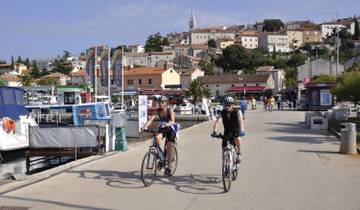
8 days
Cycling from Trieste to Pula
- ✓ Booking needs min. 2 travelers
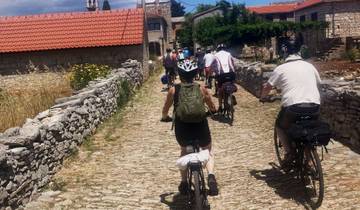
7 days
Istrian Odyssey: A Luxury Culinary Cycling Expedition Through Croatia’s Gourmet Peninsula
- ✓ Comprehensive Istria tour
- ✓ Expert local guides included
- ✓ All accommodation arranged
- ✓ Transportation provided
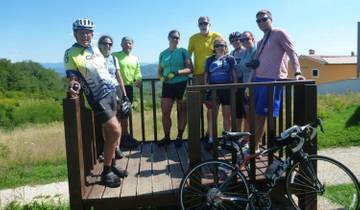
8 days
Road cycling through Terra Magica
- ✓ Booking needs min. 2 travelers

7 days
The Beauties of Istria
- ✓ Booking needs min. 2 travelers
Multi-day tour packages powered by TourRadar. Prices and availability subject to change.
Introduction: The Other Istria
Istria operates on two completely different registers of travel. The version that fills most travel writing — the pastel fishing harbour at Rovinj, the Byzantine mosaics of the Euphrasian Basilica in Poreč, the Roman amphitheatre in Pula — belongs to the coast. It is genuinely beautiful, increasingly well-known, and in July and August, genuinely crowded. The other Istria begins approximately fifteen kilometres inland from any beach and belongs entirely to a different scale of encounter.
Inner Istria is a landscape shaped by geology and patience. The peninsula’s karst topography — limestone plateaus dissected by river gorges, valleys of iron-rich red soil, hillsides of oak and hornbeam — produces the agricultural and ecological conditions in which truffles and wine grapes of exceptional quality grow, and provides the elevated ridgelines on which medieval communities built their hilltop towns. From Motovun’s ramparts on a clear morning, the Mirna River valley unrolls below in a patchwork of oak forest, vineyards, and cultivated fields that appears essentially unchanged from the maps of Venetian cartographers. There are no casino hotels, no resort beach infrastructure, no souvenir corridors. There is very good wine, extraordinary food, and some of the finest surviving medieval monuments in the Adriatic region — quietly waiting for visitors who look past the coast.
The cultural identity of inner Istria is built on deliberate layering. For much of the medieval period the peninsula was divided between competing powers: the Patriarch of Aquileia held ecclesiastical authority over much of the interior; the County of Pazin was an Austro-Habsburg possession from 1374 and remained so into the 18th century; Venice controlled the coastal cities and maintained Venetian Gothic influence across the entire peninsula through trade and administration. The result was a cultural crossroads where Venetian loggias and campaniles rise from villages whose populations spoke Croatian and Istro-Romanian dialects, maintained the Glagolitic alphabet — the oldest Slavic script — long after the rest of Europe had abandoned it, and produced local saints and local art without looking to any single metropolitan centre for authority. All these layers remain visible in the stone.
Slow travel in inner Istria is not a slogan but a structural requirement. Villages are separated by ridge roads with minimal signage, truffle grounds are worked by dogs along trails not on any map, and the best konobas open when the family is ready and close when the food runs out. A traveller in a hurry covers the main circuit in a day and misses everything interesting. A traveller who allows the region to set its own pace — lingering over a three-hour lunch, accepting an unexpected invitation to see a cellar, following a wrong-turn road to a viewpoint with no other cars — leaves with an experience of Istria that coastal visitors never encounter.
Planning Your Inner Istria Road Trip 2026
How Long to Allow in 2026
Four full days is the practical minimum for a meaningful inner Istria circuit. In four days, a well-planned route covers Motovun, Grožnjan, Buzet, Hum and Roč (including the Glagolitic Alley walk), and Pazin with the adjacent Beram chapel — the core of what makes the region distinct. Seven days enables genuine immersion: a truffle-hunting morning, secondary villages like Draguć or Gračišće, a winery afternoon, and the unplanned wandering that produces the trip’s best moments. Ten to fourteen days suits travellers combining inner Istria with coastal Istria (Rovinj, Pula, the Brijuni Islands) or extending east into the Kvarner.
Getting to Inner Istria in 2026
Pula Airport (PUY) is the standard gateway, with car rental desks from all major operators and direct connections from London, Berlin, Vienna, Amsterdam, and other European cities, peak frequency April through October. Trieste Airport (TRS) in Italy provides an alternative roughly 90 minutes from the central Istrian interior by car — useful for travellers combining Istria with the Friuli region or Slovenian coast. Rijeka Airport (RJK) on the island of Krk is 60-80 minutes from Pazin via the Učka tunnel. Zagreb Airport (ZAG) suits travellers combining the circuit with the Croatian capital, adding approximately two hours of drive time.
Entry Requirements and Currency 2026
Croatia is a full EU and Schengen member; no border formalities apply for EU citizens. Citizens of the United Kingdom, United States, Canada, Australia, and most other countries enter visa-free for stays of up to 90 days. Croatia adopted the Euro on 1 January 2023; all prices throughout inner Istria are in EUR. Credit cards are accepted at most agritourism properties and restaurants. Carry €40-60 in cash for small chapels, rural markets, roadside producers, and occasional cash-only konobas in remote villages. ATMs are available in Pazin and Buzet; not in the smaller villages.
The Inner Istria Circuit: Route Overview
The classic inner Istria circuit follows a roughly clockwise loop through the peninsula’s interior, covering key hilltop towns and cultural sites in a logical driving sequence. Starting from Pula or the Poreč coast, the route moves north through Motovun and the Mirna valley, continues northwest to Grožnjan and Oprtalj, swings east through Buzet toward Roč and Hum, then returns south via Pazin and Beram before reconnecting with the coast or airport. Total driving distances are short — the full circuit covers approximately 160-200 kilometres depending on secondary diversions, with individual village-to-village legs rarely exceeding 30-40 minutes. The value is in stopping, not in distance covered.
Getting to and Around Inner Istria 2026
Car Rental in 2026: Booking and Costs
Economy compact cars from Pula Airport cost €20-35 per day in shoulder season (May-June and September-October) with advance booking; peak summer rates (July-August) reach €50-75 or more per day for the same category. For the hilly terrain and narrow ridgeline approaches to hilltop villages, a small crossover or SUV at €45-70 per day in shoulder season provides noticeably greater confidence. Check current 2026 rates on Discovercars, Rentalcars, or directly with operators including Hertz, Sixt, Europcar, and regional operators Oryx and Fleet, as seasonal surcharges vary significantly. Book at least three weeks ahead for May-June travel and two to three months ahead for July-August. Manual transmission is the default for most economy models; request automatic specifically and well in advance if needed — availability is limited and the surcharge is significant.
Driving Conditions and Navigation 2026
Driving inner Istria requires no special qualifications but benefits from attention. Ridge roads connecting hilltop villages are narrow, often single-track on final approaches, and lined by stone walls — not challenging for any experienced driver but not compatible with distraction. GPS navigation is reliable throughout. The Istrian Y-expressway (Istarski ipsilon) connects Pula to the Novigrad and Poreč coast and continues toward the Učka tunnel — pay tolls by cash or card. Inner Istria’s village roads are toll-free. Most hilltop villages park visitors outside the old town gates; Motovun charges a vehicle access fee of approximately €2-5 for cars entering the lower town gate area (confirmed on the official Motovun tourist office site). Walking uphill from the base parking area to Motovun’s summit takes 15-20 minutes through vineyards. Fuel stations operate in Buzet, Pazin, and the larger coast towns; no villages on the circuit have fuel.
The Parenzana Trail: Cycling and Walking Through Inner Istria
Travellers who prefer two wheels follow sections of the Parenzana — the former narrow-gauge railway that operated between Trieste and Poreč from 1902 to 1935, now a well-signed cycling and hiking trail of 123 kilometres crossing inner Istria’s valleys and ridgelines. The route passes through Grožnjan, Oprtalj, and Motovun territory, threading restored tunnels and stone viaducts. Local operators in Motovun and Grožnjan rent bicycles by the day at €15-25 per bike; the Motovun-to-Grožnjan segment is the most popular and most scenic, covering approximately 25 kilometres with panoramic views of the Mirna valley. Dedicated cyclists can complete the full Trieste-to-Poreč trail over three to four days, staying in villages along the route.
The Hilltop Towns of Inner Istria
Motovun: Medieval Walls and the Truffle Heartland
Motovun stands on a 277-metre ridge above the Mirna River valley, its double circuit of Venetian-era walls visible across thirty kilometres of Istrian countryside. The town is the most-visited of inner Istria’s hilltop villages, and for good reason: its setting is theatrical, its medieval fabric exceptionally well-preserved, and its position at the centre of the white truffle zone makes it the gastronomic nucleus of the region.
The town divides physically into three levels: a lower approach road with parking and the Parenzana Museum, a mid-level terrace with agritourism properties and the village of Livade at the valley floor, and the upper medieval walled town accessed through a Venetian gate. The summit piazza opens to a 360-degree panorama across the Mirna valley that constitutes one of the defining views of Croatian inland travel. The 13th-century Church of St. Stephen and its detached Romanesque-Gothic campanile anchor the square; the town walls promenade offers unobstructed views in every direction.
Livade, the village directly below Motovun’s hill, is home to Zigante Tartufi — founded by Giancarlo Zigante, who in 1999 found the world’s largest recorded white truffle (1.31 kilograms) in the Mirna valley oak forest and turned the find into a truffle empire. The Zigante shop and restaurant is a reliable introduction to the truffle spectrum; better individual truffle meals exist at smaller, less-publicised konobas in and around the village that local agritourism owners will identify on request.
The Motovun Film Festival (Motovunski filmski festival) takes place in late July, filling the hilltop with independent cinema screened under the stars on the town walls. During festival week the town reaches capacity and vehicle access is restricted. Book accommodation months in advance for festival attendance, or plan around it if independent exploration is the priority. Outside festival week, Motovun is populated and engaging in summer but genuinely quiet on autumn and spring weekday mornings — the best time for the frescoed church interior, the wall promenade, and an unhurried truffle lunch.
Grožnjan: The Village of Artists
Twenty-five minutes northwest of Motovun, Grožnjan presents inner Istria’s most improbable cultural story. By the late 1950s the village was effectively abandoned — its population had emigrated to the coast or left Istria entirely after the postwar border adjustments, and its Venetian stone buildings were collapsing from decades of neglect. In 1965, the Yugoslav regional authorities invited artists to occupy the empty houses in exchange for undertaking basic restoration. Within a decade Grožnjan had become a functioning artists’ colony. Today it houses approximately thirty active galleries, studios, and cultural workshops inside the same medieval fabric that was nearly lost to demographic emptying.
The old town is compact — walkable end to end in twenty minutes — but the visual arts scene it contains is consistently and seriously high quality. Ceramicists, painters, printmakers, jewellers, and textile artists work side by side in buildings dating to the 13th and 14th centuries. The main street, lined with Venetian Gothic windows and crumbling Baroque portals, leads to a loggia terrace with a view across Mirna valley oak forests and the Adriatic horizon visible on clear days. The Fonticus Cultural Centre organises summer exhibitions and concerts. The Jeunesses Musicales International festival brings young classical musicians in residence throughout July and August, filling the village lanes with rehearsal and performance sound until late evening.
Grožnjan charges no entry fee and generates no queue. Coffee at the bar on the main square, an unhurried hour among three or four galleries, and time on the loggia terrace constitute the Grožnjan visit at its best. The village known in Italian as Grisignana — both names appear on signs throughout — is entirely free to explore and entirely worth the detour from Motovun.
Buzet: Truffle Capital of the Interior
Buzet wears its truffle identity more conspicuously than any other inner Istrian town. Positioned in the Mirna valley’s upper reaches, its hillside forests produce white truffle concentrations that have attracted truffle hunters, chefs, and food journalists for decades. The modern town spreads in the valley below; the historic Buzet — compact, austere, and far less visited than Motovun — sits above on a ridge with views across the karst plateau toward the Ćićarija range and the Julian Alps in Slovenia on clear days.
The Subotina truffle festival, held on the second Saturday of September each year, centres on the preparation of a giant truffle omelette in the old town square — in recent years incorporating over two thousand eggs and multiple kilograms of local truffles — distributed free to all comers. The event draws substantial crowds from across Istria, but the old town itself remains navigable. Book accommodation well ahead for Subotina weekend in September 2026.
Year-round, Buzet provides the best logistical base for truffle-hunting excursions in the Mirna valley forest. Several family operations offer morning hunts with trained dogs — typically ninety minutes in the oak forest followed by a truffle lunch at the family property. Half-day truffle experiences including lunch run €80-90 per person; confirm 2026 rates directly with operators as pricing varies by season and group size. Check current availability with local operators listed on the Central Istria tourist board website (central-istria.com).
Oprtalj: The Overlooked Venetian Village
Ten kilometres northwest of Motovun, Oprtalj (known in Italian as Portole) sees a fraction of its better-known neighbours’ visitor numbers despite offering architecture of equal distinction. A beautiful 16th-century Venetian loggia dominates the central square; the Church of St. George retains a Venetian-style campanile; the village gate carries a carved lion of St. Mark in unusually complete condition. The permanent population hovers around thirty. On a midweek spring morning it is entirely possible to walk the village for an hour without encountering another non-resident visitor.
The access road to Oprtalj passes through prime olive-growing country. The hillsides below the village produce some of inner Istria’s finest cold-pressed olive oil — grassier and more peppery than Puglian oils, closer in character to the best Ligurian production. Several producers sell directly from the farm or from the village’s single cooperative shop; a 500ml bottle of single-estate extra virgin costs €8-15.
Medieval Heritage: Pazin, Beram, and the Glagolitic Trail
Pazin Castle, the Gorge, and the Jules Verne Connection
Pazin is inner Istria’s administrative capital — a working town of approximately 9,000 people that functions as a practical circuit hub — and home to one of Croatia’s most dramatically positioned medieval monuments. The Kaštel Pazin, the largest and best-preserved medieval fortress in Istria, rises on a sheer limestone cliff above the Pazinska jama — the Pazin Abyss — a gorge carved by the Pazinčica River, which disappears into a cave beneath the castle and re-emerges kilometres away in the direction of Lim Channel. First documented in AD 983, the castle served as the administrative seat of the County of Pazin through centuries of Habsburg rule and withstood repeated sieges from Venice without capitulation.
Jules Verne is widely credited with visiting the area in the 1880s and basing the central dramatic sequence of his 1885 novel Mathias Sandorf on the Pazin gorge — the hero escapes by diving into the cave beneath the castle and emerging at the coast. The lookout platform at the end of the zipline course over the gorge is named in Verne’s honour.
The castle today houses the Ethnographic Museum of Istria and the Pazin City Museum. Combined adult admission costs €6; student and pensioner discounts apply. The ethnographic collection covers traditional Istrian village life through approximately 8,000 artefacts including folk costumes, ceramics, agricultural tools, and a notable collection of church bells — the only bells in the region to survive the Second World War, having been removed from village towers to prevent fascist commandeering for munitions. The castle opens April through October, Tuesday to Sunday, 10:00 to 18:00; verify current 2026 opening hours on emi.hr before visiting.
The Pazin Zipline (Zip-line Pazinska jama) runs four lines across the gorge below the castle, the longest 280 metres at speeds reaching 50 km/h, ending above the Jules Verne lookout. The experience operates May through September, daily from 10:00 to 18:00, and costs €24 per person. Children over four years old are eligible; children under 35 kilograms ride with a guide. The 30-minute experience consistently ranks among visitors’ unexpected highlights — the view of the castle from the gorge at speed has a quality that no photograph entirely conveys.
Beram and the Dance of the Dead: Inner Istria’s Masterpiece
The Church of St. Mary of the Rocks (Crkva sv. Marije na Škriljinah) stands alone in a woodland cemetery one kilometre northeast of the village of Beram, 5.6 kilometres west of Pazin. From the outside it is a modest Gothic chapel with a stone portico and a small bell gable. Inside, it is one of the most complete and technically accomplished medieval fresco cycles in Central Europe — and almost entirely unknown outside specialist art historical circles.
The frescoes were painted in 1474 by the workshop of Master Vincent of Kastav and collaborators. They cover the interior walls nearly completely with New Testament scenes, portraits of saints, and decorative borders of exceptional fineness. Vincent’s Latin signature appears above the entrance door. The centrepiece, painted on the west wall above the entrance, is the Danse Macabre — the Dance of the Dead. Ten skeletal figures lead the newly deceased in procession: the Pope, the cardinal, the bishop, the king, the queen, the innkeeper, the child, the maimed, the knight, and the merchant. Each is escorted by a skeleton. The composition reads simultaneously as theological meditation on mortality and pointed commentary on the equality of all before death — the Pope and the merchant receive identical escorts. The colours remain vivid after five and a half centuries. The brushwork is expressive, immediate, and full of observed humanity. At Beram, a medieval painting feels anything but distant.
The chapel is locked; the key is held by a local custodian in the village of Beram. Current key-holder contact: +385 91 580 6083 (Mrs. Sonja Šestan) or the parish office +385 52 687 115. The procedure is straightforward: phone the evening before your intended visit, arrange a meeting time in Beram village, and drive or walk together to the chapel. Entry costs €3 per person with group and student discounts available. No flash photography is permitted inside. Allow forty-five minutes minimum to properly engage with the frescoes. The custodian provides explanations in a combination of Croatian, German, and Italian; English explanatory panels are present inside the chapel. From September 2025, buses are prohibited on the access road from Podberam to Beram and the church — a private vehicle is now required for the visit.
Roč, Hum, and the Glagolitic Alley
Between the village of Roč and the town of Hum — seven kilometres of country road through oak and hornbeam forest — stands the Glagolitic Alley (Aleja glagoljaša). Eleven stone monuments by sculptor Josip Diminić, erected between 1977 and 1985, mark the route in tribute to the Glagolitic script and the culture that maintained it. Glagolitic — the oldest Slavic alphabet, created by Saints Cyril and Methodius in the 9th century — survived in Croatian Catholic liturgical practice long after it was abandoned elsewhere in Europe. Istria was its last stronghold, maintained in village churches and monastery scriptoria through the Ottoman period and beyond. Each of Diminić’s monuments represents a letter of the alphabet as abstract sculpture, positioned at historically or symbolically resonant points along the route.
Roč is a beautifully intact small medieval town with Romanesque-Gothic walls, a 12th-century church, and an unspoiled central piazza. It receives very few foreign visitors despite its architectural quality. Hum, at the Alley’s terminus, claims the distinction of the world’s smallest town by permanent population — between seventeen and thirty inhabitants depending on the season. Its medieval stone gateway carries a carved Glagolitic inscription; its single bar produces biska (the traditional Istrian mistletoe brandy fermented with local herbs) and sells it by the glass and by the bottle (€8-15); its bell tower dates to the 12th century. The town requires approximately twenty minutes to walk end to end and constitutes one of inner Istria’s most concentrated experiences.
Walking from Roč to Hum along the Glagolitic Alley takes ninety minutes at an easy pace, entirely free of charge, on a track largely closed to motor traffic. Driving takes eight minutes. The walk is the correct choice: the scale of Diminić’s sculptures, their placement in the forest, and the rhythm of emergence and arrival that defines the Alley as a cultural walk are only legible at walking speed. The drive conveys almost nothing of what makes the route interesting.
Truffle Culture and the Gastronomic Identity of Inner Istria
Inner Istria’s gastronomy is not a supplement to the cultural journey — it constitutes an equal half of it. The convergence of a specific microclimate (mild winters, dry summers followed by autumn rain), oak and hornbeam forest ecology, and the geological character of the Mirna valley floor creates conditions in which Tuber magnatum pico — white truffle — grows at concentrations found in only two significant locations on earth: the Mirna valley and Piedmont, Italy. The comparison between Istrian and Alba white truffles is a specialist conversation; the practical point for travellers is that Istrian white truffle appears in restaurant dishes at prices substantially below the Italian equivalent and is cooked by families who have hunted it for generations.
White truffle season runs from mid-October through December, peaking through November. Outside this window, black summer truffle (Tuber aestivum) is available April through October, and black winter truffle (Tuber melanosporum) from December through February. For most travellers, any truffle-shaved pasta at a serious Motovun or Buzet konoba in any season represents an experience substantially better than anything accessible at home. A pasta with fresh black truffle at a good konoba costs approximately €20-35; with fresh white truffle in peak autumn season, approximately €35-60. White truffle purchased by weight at producers or at the Livade Zigante shop runs €200-400 per 100 grams in season; quality black truffle €25-60 per 100 grams.
Beyond truffles, inner Istria’s food identity rests on several hyperlocal products. Malvazija Istarska — the peninsula’s indigenous white grape variety — produces an aromatic, full-bodied wine with notes of honey, almonds, and stone fruit that varies meaningfully by producer and soil. It is the default house white at every konoba and almost always good. Teran, the Istrian red, grows in the iron-rich terra rossa soils of the central peninsula and produces a robust, tannic wine best matched to slow-braised lamb, game, and the fatty richness of a truffle ragu. Žminj prosciutto, air-cured in the central Istrian village of the same name, rivals the more famous Dalmatian product and is served as a starter at virtually every inland table — typically with local sheep’s cheese (ovčji sir), pickled vegetables, and olives. The indigenous Boškarin ox — a large pale-coated breed native to Istria — appears on better menus as steak or slow-braised ragu and is worth seeking specifically when available. Biska, the mistletoe brandy of Hum, is the ceremonial conclusion to any proper inner Istrian meal.
The best konobas in inner Istria are family-run, open for lunch and occasionally dinner only, carry no online presence, and are found by following hand-painted signs on roadside stone walls or by asking your agritourism host. Any host who doesn’t spontaneously volunteer a recommendation will identify a specific family konoba on direct request — this produces more useful information than any review aggregator for the most remote dining experiences.
Accommodation in Inner Istria 2026
Inner Istria’s accommodation is dominated by agritourism (agroturizam) — family farmstays that combine lodging with active production of wine, olive oil, or truffles on the same property. This is the defining way to sleep in the region: wake to a view of oak forest and vineyards, eat breakfast from the farm’s own produce, and have the option of joining an evening truffle walk or harvest activity. Quality across the sector spans basic rooms with simple shared facilities to beautifully restored stone buildings with private pools, tasting rooms, and wine cellar dinners by arrangement.
Budget Accommodation Inner Istria 2026
Budget accommodation centres on private room rentals (sobe) in village houses and small family guesthouses in Pazin and Buzet. Double rooms in private houses run €40-70 per night in shoulder season. Pazin, as the regional capital, has the widest mid-budget hotel selection; the Hotel Lovac, positioned at the edge of the gorge above Pazin Cave, combines a dramatic location with accessible pricing at approximately €70-110 per room in shoulder season — verify current 2026 rates on the property’s website or Booking.com. Basic agritourism rooms without meals start from approximately €55-80 per room per night; the lower end typically means simpler furnishings and shared or compact bathrooms rather than any compromise on cleanliness.
Mid-Range Accommodation Inner Istria 2026
The mid-range agritourism — well-appointed rooms with private bathrooms, homemade breakfasts, pastoral settings — is inner Istria’s accommodation sweet spot. Rooms run approximately €85-140 per night for two in shoulder season, with July-August prices typically 20-30% higher. Properties in the Mirna valley near Livade and Motovun place guests directly within the truffle forest zone; properties near Pazin or on the ridge roads between hilltop towns provide central positioning for the full circuit. Many owners speak English or Italian and are genuinely helpful in organising konoba recommendations, truffle hunt bookings, and local orientation. Booking directly with properties by email often secures better rates than booking platform prices; ask specifically about midweek rates.
Luxury Accommodation Inner Istria 2026
Luxury inner Istrian accommodation has expanded significantly over the past decade. Several converted Venetian stone farmhouses and restored country estates now operate as boutique hotels at €170-290+ per room per night, some with vineyards, private pools, and in-house truffle dinners by arrangement. Meneghetti Wine Hotel and Winery near Bale (one hour from the circuit’s centre) is the peninsula’s most celebrated luxury property, offering vineyard suites and a celebrated restaurant at rates starting from approximately €250 per room in shoulder season. Within the inland circuit itself, several small luxury agriturismos near Motovun and Buzet offer premium accommodation with personalised truffle experiences. Check Small Luxury Hotels of the World and leading booking platforms for current 2026 rates, as properties at this level adjust pricing frequently.
Food, Wine, and Dining Costs Inner Istria 2026
A full konoba lunch in inner Istria in 2026 — a starter of prosciutto and cheese, a pasta with fresh black truffle, a main of grilled lamb chop or slow-braised Boškarin, a carafe of house Malvazija, and a dessert of fritule doughnuts with grappa — costs approximately €25-40 per person at most establishments outside the most touristic parts of Motovun. The same meal with white truffle from mid-October through November costs €45-70 per person. Dinner at upscale inner Istrian restaurants serving tasting menus with wine pairing runs €70-120 per person.
Set lunch menus (dnevni menu) at many konobas offer two or three courses for €12-18 per person — a practical and often excellent budget strategy. Most konobas serve lunch from 12:00 to 14:30 and dinner from 19:00 to 22:00; many close entirely on Mondays. At the better small konobas without reservation systems, arriving by 12:15 on any day secures a table; arriving at 13:30 risks finding the kitchen closed or specific dishes sold out.
Self-catering is limited in the smallest villages but solid in Pazin and Buzet, both of which have supermarkets and covered markets. The Pazin market on Tuesday and Friday mornings gathers local producers selling honey, olive oil, vegetables, and seasonal produce — the best place on the circuit for picnic supplies and genuine food gifts at non-tourist prices. Wine purchased at cellar door from Mirna valley producers costs €5-12 per bottle for quality Malvazija Istarska; restaurant markups are modest. Coffee at the bar runs €1.50-2.50 throughout inner Istria. A guided wine tasting session at a producer costs €10-25 per person.
Budget Breakdown: What Inner Istria Costs in 2026
Budget Tier: €65-105 Per Person Daily (Two Sharing)
Budget travellers sharing a guesthouse double room or basic agritourism can cover inner Istria for €65-105 per person daily in 2026. Per-person accommodation (€45-70 room divided between two) runs €22-35. Three daily meals focused on set-menu lunches, market produce, and occasional self-catering cost €15-25. Car rental (€30-50 per day total) split between two people plus fuel adds €23-37 per person for transport. Attractions are mostly free or minimal — Beram €3, hilltop towns free to enter, the gorge walk free — averaging €3-8 per day. These components combine to a per-person daily total of approximately €65-105. A five-day budget circuit totals approximately €325-525 per person. Check current guesthouse and basic agritourism rates on Booking.com for the most current 2026 pricing, as shoulder-season rates can fall meaningfully below summer peak.
Mid-Range Tier: €115-190 Per Person Daily (Two Sharing)
Mid-range inner Istria — agritourism accommodation, daily restaurant meals with truffle dishes, paid experiences including Pazin Castle, the zipline, and one truffle hunt spread across a five-day trip — runs €115-190 per person daily for two sharing. Per-person accommodation at an agritourism double (€85-140 per room) comes to €42-70 per person. Restaurant meals including at least one truffle-based dish daily cost €30-50 per person. Split car rental (€40-60 per day) plus fuel gives €30-45 per person for transport. Paid experiences — castle entry €6, chapel €3, half-day truffle hunt €80 averaged over five days at €16 daily, zipline €24 as a one-off contributing approximately €5 per day — average €15-25. The combined daily total runs approximately €115-190 per person. A five-day mid-range trip totals approximately €575-950 per person.
Luxury Tier: €225-385 Per Person Daily (Two Sharing)
Luxury inner Istria — boutique hotel or premium agritourism, white-tablecloth truffle restaurants, private guided experiences — costs €225-385 per person daily for two sharing. Per-person accommodation at a luxury property (€170-290 per room) runs €85-145 per person. Upscale meals with white truffle in season and wine pairings cost €60-100 per person. A comfortable SUV rental (€60-90 per day) split between two plus fuel provides transport at €42-63 per person. Premium guided truffle hunts with a homemade truffle lunch, private wine cellar tours, and expert-led cultural visits average €40-75 per person daily across the trip. These combine to approximately €225-385 per person daily. A five-day luxury trip totals approximately €1,125-1,925 per person.
Solo Traveller Costs 2026
Solo travellers in inner Istria bear the full car rental cost and a single supplement on accommodation, pushing per-person daily costs to approximately €105-160 (budget), €175-280 (mid-range), and €295-500 (luxury). Some agritourism properties offer single room rates at a modest supplement rather than the full double room rate; ask explicitly when booking. Organising car-sharing or a travel companion for the car rental component alone saves €15-28 per day. Solo truffle hunting is, in practice, a more personalised and intimate experience than joining as part of a couple — most operators run the same quality experience for one participant as for two.
Sample Itineraries for Inner Istria 2026
Four-Day Budget Circuit 2026
This itinerary covers the essential sites in four days, designed for two travellers sharing costs.
Day 1 — Arrival and Motovun: Pick up a compact rental car at Pula Airport (€35/day total, booked three weeks ahead). Drive north to Livade and up to Motovun — approximately 90 minutes. Walk the town walls, visit the Church of St. Stephen and the main piazza. Lunch at a konoba below the gate with black truffle pasta (approximately €22 per person). Afternoon: walk the Mirna valley forest floor paths from Livade. Evening: basic guesthouse room below Motovun (€55/room, €28 per person). Day total approximately €75 per person.
Day 2 — Grožnjan, Oprtalj, and Buzet: Morning drive to Grožnjan (25 minutes). Walk the galleries and the loggia terrace, coffee on the square (€2). Continue to Oprtalj (15 minutes): walk the loggia and Church of St. George, buy olive oil from the village cooperative (€10-12). Drive to Buzet hilltop old town (30 minutes). Walk the empty upper town and truffle product shops. Konoba dinner in or near Buzet (€25 per person). Guesthouse in Buzet (€60/room, €30 per person). Day total approximately €75 per person.
Day 3 — Roč, the Glagolitic Alley, and Hum: Morning: drive to Roč (30 minutes from Buzet). Walk the medieval walls and church. Walk the Glagolitic Alley to Hum on foot (7km, 90 minutes). Visit the Glagolitic gateway, buy biska at the village bar (€8 for a small bottle). Return to Roč (someone stays with the car and drives to meet at Hum, or the 8-minute drive returns efficiently). Lunch or early dinner at a konoba in the area (€20-25 per person). Drive to accommodation near Pazin (30 minutes). Budget accommodation in or near Pazin (€60/room, €30 per person). Day total approximately €70 per person.
Day 4 — Beram and Pazin: Phone the Beram custodian the previous evening. Morning: drive to Beram (10 minutes west of Pazin), visit the Dance of the Dead frescoes (€3 per person, 45 minutes). Return to Pazin for Kaštel Pazin and the Ethnographic Museum (€6 per person, 90 minutes). Afternoon: gorge walk below the castle (free). Optional zipline for the adventurously inclined (€24 — moves the day into mid-range territory). Light grocery shopping for the drive to Pula or the coast. Transport and fuel €18, attractions €9 without zipline or €33 with, meals €15. Day total approximately €45-70 per person without or with zipline.
Four-day budget total: approximately €265-295 per person, consistent with the €65-105 per person daily range.
Seven-Day Mid-Range Immersion 2026
This itinerary adds the secondary cultural sites, a truffle hunt, and a winery visit for a complete slow-travel experience.
Day 1 — Arrival and truffle afternoon: Collect rental car at Pula Airport (mid-range crossover, €55/day). Drive to agritourism in the Mirna valley near Livade (€110/room, €55 per person). Afternoon truffle hunt with local family and trained dogs (€80 per person, half day including forest walk and tasting). Evening dinner at the agritourism or a nearby konoba (approximately €20 per person). Day total approximately €175 per person.
Day 2 — Motovun and Livade: Morning: walk Motovun walls and piazza. Zigante Tartufi tasting room at Livade (free entry, tasting products €10-20). Lunch in Motovun with truffle pasta (€30 per person). Afternoon: Mirna valley walk. Second night same agritourism (€110/room, €55 per person). Day total approximately €115 per person.
Day 3 — Grožnjan, Oprtalj, and a winery afternoon: Morning: Grožnjan galleries and loggia terrace (two hours). Oprtalj: loggia, Church of St. George, olive oil purchase. Afternoon: arranged visit to a Malvazija producer near Buje for a guided cellar tasting (€15 per person). Drive to agritourism near Buzet (€120/room, €60 per person). Dinner on the property or at a nearby konoba (€25 per person). Day total approximately €125 per person.
Day 4 — Buzet, the hilltop, and a ridge drive: Morning: Buzet hilltop old town and truffle market. Free afternoon to drive the ridge road south with panoramic views toward both coasts. Second night near Buzet or move toward the Pazin area (€120/room, €60 per person). Dinner at a family konoba recommended by host (€30 per person). Day total approximately €115 per person.
Day 5 — Roč, Glagolitic Alley, and Hum: Morning: drive to Roč (30 minutes). Walk the full Glagolitic Alley to Hum (90 minutes). Lunch in Hum with biska. Return by car. Drive to agritourism near Pazin for nights 5 and 6 (€100/room, €50 per person). Konoba dinner arranged by host (€30 per person). Day total approximately €105 per person.
Day 6 — Beram, Pazin, and Draguć: Morning: Beram frescoes (€3 per person). Kaštel Pazin and the Ethnographic Museum (€6 per person). Zipline over the gorge (€24 per person). Afternoon: drive to Draguć (20 minutes east of Pazin), visit the 16th-century St. Roch chapel frescoes (small donation, ask in village for key). Evening: dinner at a mid-range restaurant in Pazin (€40 per person). Day total approximately €125 per person.
Day 7 — Gračišće, Pićan, and departure: Morning: Gračišće (20 minutes south of Pazin) — unspoiled Venetian hilltop, Venetian loggia, Gothic church, no tourist infrastructure. Continue to Pićan (former Roman Petina, medieval bishop’s seat, cathedral above the Raša valley). Farewell truffle lunch at a good konoba (€35 per person). Drive to Pula Airport. Transport and fuel for the day €20, meals €35. Day total approximately €60 per person (no accommodation).
Seven-day mid-range total: approximately €820 per person, consistent with the calculated €805-1,330 per person range for a seven-day mid-range trip.
Best Season to Visit Inner Istria 2026
Spring 2026: May and June
May and June are the best overall months for a first inner Istria visit in 2026. Midday temperatures reach 20-25°C with cool mornings and evenings ideal for village walking and the Glagolitic Alley trail. Wildflowers cover the hillsides. Fresh wild asparagus (šparoge) and spring vegetables dominate konoba menus. Accommodation prices run 20-30% below July-August peaks. The hilltop villages are active on weekends and essentially empty during weekday mornings. June sunsets over the Mirna valley viewed from Motovun’s walls count among the finest in the Adriatic region.
Summer 2026: July and August
July and August bring the Motovun Film Festival (late July), the Jeunesses Musicales festival in Grožnjan (throughout summer), and a general animation of the hilltop circuit. The season is viable but demanding. Midday temperatures regularly reach 30-35°C — early morning starts (7:00-10:00) and evening activity (18:00 onwards) bracket the heat effectively. Accommodation prices peak, particularly in August when coastal visitors make day trips inland. Book all accommodation two to three months ahead for July and four to five months ahead for August festival weeks.
Autumn 2026: September Through November
Autumn is the most rewarding season for food-focused visitors. The Subotina truffle festival falls on the second Saturday of September in Buzet. White truffle season begins in mid-October and peaks through November, when Tuber magnatum pico appears on every serious menu in the Mirna valley. Temperatures cool to a pleasant 15-22°C. Autumn light turns golden on the oak forests and the Mirna valley. Accommodation returns to shoulder pricing. November fog settles in valley floors on some days, giving hilltop towns a quality that photographers specifically seek.
Winter 2026: December Through March
Winter inner Istria operates on a reduced schedule — many agritourism properties close December through March, and some konobas shutter in January-February. What remains functions on genuinely local terms: Pazin and Buzet operate year-round as working towns with open restaurants and accommodation. White truffle season extends through December; winter black truffles are available through February. Prices drop to their annual low. The Pazin gorge in winter fog, the castle illuminated above the bare trees, is one of inner Istria’s most atmospheric images and is available to the visitor who arrives in the right frame of mind.
Money-Saving Strategies for Inner Istria 2026
- Book car rental three to four weeks ahead for shoulder season, three months ahead for July-August: The price difference between advance booking and last-minute for the same compact car in peak season reaches €30-50 per day. Shoulder-season savings on advance booking are smaller but consistent.
- Choose midweek stays: Weekend demand from Croatian coastal visitors pushes agritourism rates up by 15-25% on Friday and Saturday nights. A Wednesday or Thursday check-in at the same property often secures the off-peak rate.
- Eat the dnevni menu at lunch: Set lunch menus at most konobas — two or three courses for €12-18 per person — cost substantially less than ordering à la carte. Ask on arrival whether a set menu is available. The quality is typically as good as the regular menu.
- Use Pazin as a budget base: Accommodation in Pazin runs €20-40 per person less per night than equivalent properties near Motovun while placing you within 20-30 minutes of Motovun, Beram, and the Glagolitic Alley. For a five-day circuit this saves €100-200 per person compared to basing near Motovun.
- Buy wine, olive oil, and truffles direct from producers: Cellar-door and farm-gate prices are 30-50% below what the same products cost in Zagreb, coastal Istrian tourist shops, or at Zigante Tartufi’s retail operation. A case of Malvazija from a Mirna valley producer delivers excellent value and excellent wine.
- Visit Beram on a weekday morning: Weekend afternoons occasionally see small groups arriving simultaneously, creating a crowded chapel experience. A Tuesday or Wednesday morning — phone the custodian the previous evening — typically means the Dance of the Dead frescoes entirely to yourself for the full forty-five minutes.
- Walk the Glagolitic Alley, don’t drive it: The Roč-to-Hum walk is free, 7 kilometres, on a largely traffic-free track, and entirely the point. Driving the same route from a car window reveals almost nothing of what makes the Alley culturally and experientially significant.
Hidden Villages Beyond the Tourist Circuit
Travellers who complete the main inner Istria circuit and have days remaining will find a second layer of villages that rarely see foreign visitors and offer a quality of quiet encounter with the landscape and its vernacular architecture that the more-visited places cannot provide during peak season.
Draguć occupies a ridge east of Pazin and holds, in the tiny 16th-century chapel of St. Roch, another cycle of medieval frescoes attributed to the broader workshop circle of Vincent of Kastav. The village population is under fifty permanent inhabitants. No tourist infrastructure exists. Finding the key-holder for St. Roch’s chapel involves asking at the nearest inhabited house; entry is by donation. The village itself — a single lane of Venetian stone buildings, most in picturesque partial ruin — constitutes one of inner Istria’s most complete survivals of pre-modern vernacular architecture, and is visited by a tiny fraction of the people who see the better-publicised Beram frescoes twenty minutes away.
Gračišće stands on a ridge twenty kilometres south of Pazin and preserves its medieval town fabric in exceptional condition with no visible tourist infrastructure whatsoever. A Venetian loggia, Gothic church, and stone palace stand alongside houses still inhabited by local families. On a weekday morning in May or October it is entirely normal to be the only visitor in the village.
Pićan occupies a ridge further south, its episcopal history as the ancient Roman Petina and later medieval bishop’s seat inscribed in a cathedral and bishop’s palace that sit grandly disproportionate to a current population of under a hundred people. The cathedral terrace view across the Raša valley toward the Učka mountain is striking.
Završje (sometimes called Sovinjak) is a partially abandoned hilltop village north of Buzet — several structures restored, others in photogenic ruin, a handful of seasonal residents. Its position above the Mirna valley headwaters and its state of dignified dilapidation make it a compelling photographic destination and an honest reminder of the demographic emptying that affected inner Istria’s villages throughout the 20th century.
Žminj functions as the market town of central Istria, positioned at the geographic heart of the peninsula. Its Monday market (Žminjska tržnica) gathers local farmers, food producers, and artisans in a transaction entirely devoid of tourist staging. Žminj prosciutto, sold by the leg or by the kilogram from market stalls, is among the finest cured meat produced in Croatia and noticeably more affordable than branded coastal tourist equivalents.
Practical Travel Tips Inner Istria 2026
- Phone Beram in advance: Contact the chapel custodian (+385 91 580 6083) the evening before your planned visit. A one-minute call ensures access. Arriving unannounced risks finding nobody available — the custodian is not stationed at the chapel but must come from the village.
- Language: Croatian is the primary language throughout. Italian has official status in parts of the peninsula and is widely understood in all hilltop villages. English is well understood by anyone under forty and in all hospitality contexts. German is a practical backup in the Mirna valley truffle zone, which has attracted German and Austrian food tourists for decades.
- Photography at Beram: Flash is prohibited inside the chapel. A camera capable of clean high-ISO performance handles the dark interior well; a modern smartphone on night or pro mode also works. The custodian enforces the no-flash rule; tripods are impractical in the small space.
- Konoba arrival times: Lunch is served 12:00-14:30 at most konobas; dinner 19:00-22:00. Arrive by 12:15 at well-regarded small konobas with no reservation system — the best dishes sell out. Monday closure is standard.
- Motovun vehicle access: Cars entering the lower gate area of Motovun pay an access fee (approximately €2-5, staffed barrier in season). Most visitors park at the valley base and walk up through the vineyards — a pleasant 15-20 minute ascent that is part of the Motovun experience.
- Zipline seasonality: The Pazin zipline operates May through September only, daily 10:00-18:00. Visits outside this window find the zipline closed; the gorge walk and castle are open independently throughout the year.
- Fuel: Fill the tank in Buzet or Pazin before heading into village circuit roads. No village on the inner Istria circuit has a fuel station.
Frequently Asked Questions About Inner Istria 2026
Is inner Istria accessible without a car in 2026?
Inner Istria is not meaningfully accessible without a rental car in 2026. Buses connect Pazin to Pula, Rijeka, and the coast, but inter-village service between Motovun, Grožnjan, Buzet, Hum, and Beram is absent or seasonal and covers only a fraction of the circuit. From September 2025, buses are prohibited on the Beram chapel access road, making a private vehicle essential for that visit. Organised day tours from coastal bases (Rovinj, Poreč) cover Motovun and Grožnjan at approximately €50-90 per person through GetYourGuide and local operators — but these access none of the secondary circuit, the Glagolitic Alley, or Beram.
How far is inner Istria from Pula Airport?
Pazin, the regional capital and a practical hub for the circuit, is 38 kilometres north of Pula Airport — approximately 40 minutes by car via the Istrian Y-expressway to Kanfanar and then inland. Motovun is 60 kilometres and roughly 70 minutes. Buzet, the northernmost significant stop, is 85 kilometres and approximately 90 minutes. All connections are via good-quality roads with no mountain passes.
What is the Beram Dance of the Dead fresco, and is it worth visiting?
The Dance of the Dead (Danse Macabre) at Beram is a fresco painted in 1474 by the workshop of Master Vincent of Kastav inside the Church of St. Mary of the Rocks. It depicts ten skeletal figures escorting representatives of every social rank — Pope, cardinal, king, queen, merchant, child — into death in equal procession. The composition is one of the finest surviving examples of the Danse Macabre tradition in Europe, comparable to the great examples at La Chaise-Dieu in France and Lübeck’s Marienkirche. The colours remain vivid; the figures are expressive and psychologically observed. Combined with the surrounding New Testament cycle and the physical experience of the woodland chapel setting, Beram is unambiguously worth a half-day detour. Any traveller with interest in medieval art or the cultural history of the Adriatic should treat it as a primary destination.
What is the Glagolitic Alley and why does it matter?
The Glagolitic Alley (Aleja glagoljaša) is a seven-kilometre outdoor sculpture trail between Roč and Hum in northern inner Istria, comprising eleven abstract stone monuments by sculptor Josip Diminić erected between 1977 and 1985. Each monument represents a letter of the Glagolitic alphabet — the oldest Slavic script, created by Saints Cyril and Methodius in the 9th century and maintained in Croatian liturgical and documentary use long after the rest of Europe abandoned it. Istria was the last European stronghold of Glagolitic literacy; village priests and monastery scribes preserved the tradition through the Ottoman period and into the modern era. The Alley memorialises this heritage in a trail through oak forest between two of inner Istria’s most distinctive small towns. Walk it rather than drive it — ninety minutes on foot reveals what eight minutes in a car does not.
When does white truffle season occur in Istria in 2026?
White truffle (Tuber magnatum pico) season in the Mirna valley forests of inner Istria begins in mid-October 2026 and peaks through November, extending into December. The Subotina truffle festival in Buzet — the season’s opening celebration — falls on the second Saturday of September 2026. Outside white truffle season, black summer truffle (Tuber aestivum) is available April through October on most konoba menus, and black winter truffle (Tuber melanosporum) appears December through February. Truffle hunting experiences operate year-round regardless of season; the species encountered and the market value of the find vary, but the forest experience and the family meal component are consistent.
Is inner Istria suitable for family travel with children in 2026?
Inner Istria suits families with children well, with some adjustment to expectations. Children genuinely engage with truffle hunts (dogs, forest, sensory discovery), the Pazin zipline (minimum age four, minimum weight 35 kilograms), the dramatic gorge setting below the castle, and the Glagolitic Alley walk with its distinctive outdoor sculptures. The Beram frescoes are appropriate for older children with historical curiosity; the Dance of the Dead imagery is medieval and symbolic in context. Most agritourism properties actively welcome families and several have farm animals, outdoor space, and farm activities available. The absence of structured beach resort entertainment is the main adjustment — inner Istria rewards active, curious children and makes fewer concessions to passive holiday formats.
Where should I base myself for an inner Istria road trip in 2026?
Pazin is the most practical single base for the full circuit — central position, widest accommodation range, within 40 minutes of Motovun and Beram, within 30 minutes of the Glagolitic Alley at Roč. A Mirna valley agritourism between Livade and Motovun provides the most atmospheric setting for truffle-focused travel. Buzet suits travellers prioritising the northern circuit and autumn truffle season. Splitting accommodation between two properties over a seven-day trip — three to four nights in the Mirna valley zone and three nights near Pazin — delivers the best balance of setting and logistical coverage. Motovun’s hilltop village itself has a handful of rooms and small hotels directly within the old walls: an exceptional experience for one or two nights, though expensive and requiring early booking.
What do truffle hunting experiences cost in inner Istria in 2026?
A guided truffle hunting walk with trained dogs and a local hunter in the Motovun forest runs approximately €75-90 per person for a one-hour walk including equipment and a tasting of found truffles at the end. Full experiences combining the forest walk with a subsequent truffle lunch — hand-rolled pasta with fresh truffle, local wine, family dining room setting — cost approximately €80-90 per person for the combined experience from operators around Motovun. Private full-day truffle experiences from operators based in Pula, Rovinj, or Ljubljana run substantially more (€200+ per person) but include transfers. Direct booking with family operators in Livade, Motovun, and Buzet delivers better value and a more authentic experience. Check current 2026 rates with specific operators, as pricing varies by season and group size.
What are the best villages to visit in inner Istria beyond the main circuit?
Beyond the core five (Motovun, Grožnjan, Buzet, Hum/Roč, Pazin-Beram), the secondary villages that most reward exploration are Draguć (a second medieval fresco site, essentially unvisited), Gračišće (intact Venetian hilltop with zero tourist infrastructure), Oprtalj (overlooked Venetian loggia village and excellent olive oil territory), Pićan (cathedral disproportionate to a village of under a hundred people), Žminj (authentic Monday market and the best-value Istrian prosciutto), and Završje (partially abandoned ghost village on a hilltop above the Mirna headwaters). None requires more than a half-day and several reward a brief stop of thirty to forty-five minutes combined with a longer drive through the surrounding landscape.
What practical Croatian phrases are useful for inner Istria travel in 2026?
Hvala (thank you), molim (please), dobar dan (good day), and govorite li engleski? (do you speak English?) cover most initial social situations. For konobas, jedan stol za dvoje, molim (a table for two, please) and što preporučujete? (what do you recommend?) go further than a menu. Imate li tartuf? (do you have truffle?) is worth knowing in any season. Italian works as a secondary language at virtually every tourist-facing establishment in inner Istria and is widely understood by older residents throughout the peninsula. German functions reliably in the Mirna valley truffle zone.