
Hydra Day Trip from Athens 2026: Car-Free Island Escape
Greece’s car-free jewel Hydra sits just 68 kilometers from Athens across the Saronic Gulf, offering one of the Mediterranean’s most distinctive day trips where donkeys replace taxis and 18th-century stone mansions cascade down pine-covered hills to a crescent harbor. This perfectly preserved island requires no vehicles, no bicycles, no motorcycles—just cobblestone pathways, water taxis, and the unhurried rhythm of island life that has captivated everyone from Leonard Cohen to contemporary travelers seeking authentic Greek experiences within easy reach of the capital.
Key Takeaways for Your Hydra Day Trip 2026
- High-speed ferries depart Piraeus port 11-12 times daily with journey times of 1 hour 5 minutes to 2 hours, costing €30-42 per person one-way with tickets bookable up to three months in advance
- The island operates completely vehicle-free with all transportation via walking, donkey transport (€10-20 per animal), or water taxis (€4-6 per ride to beaches), creating a uniquely peaceful atmosphere
- A full day trip costs €90-150 per person including round-trip ferry (€60-84), lunch (€20-40), water taxi or museum entry (€5-15), and coffee/snacks (€5-10)
- The compact harbor town concentrates museums, restaurants, shops, and most attractions within 15-minute walks, while water taxis reach remote beaches in 10-20 minutes
- Peak season (June-August) brings maximum ferry frequency and full services but also crowds and 40-60% higher costs, while shoulder seasons (April-May, September-October) offer the ideal balance of pleasant weather and manageable visitor numbers
- Arrive at Piraeus port 45-60 minutes before departure during summer as ferries fill to capacity, with Gate E8 serving all Hydra-bound vessels from the sprawling port complex
People Also Ask About Hydra Day Trips 2026
How long does the ferry from Athens to Hydra take in 2026?
Ferry duration from Athens Piraeus port to Hydra ranges from 1 hour 5 minutes on the fastest high-speed vessels operated by Alpha Lines to 2 hours 20 minutes on slower services. The average crossing time across all ferry companies is approximately 1 hour 35 minutes. All ferries on the Athens-Hydra route are high-speed catamarans or flying dolphins—no conventional slow ferries operate this connection. Blue Star Ferries’ Flyingcat 4 completes the journey in the minimum 1 hour 5 minutes, making it the fastest option for day trippers working with tight schedules.
Is one day enough to visit Hydra from Athens in 2026?
One day provides ample time to experience Hydra’s essential character for first-time visitors, particularly given the island’s compact size and concentration of attractions around the harbor town. A typical day trip allows 5-7 hours on the island when taking an 8:00-8:30 AM departure and 4:00-5:00 PM return ferry. This timeframe accommodates harbor exploration, lunch at a waterfront taverna, a museum visit or beach excursion via water taxi, and walking through the stepped alleyways of the historic town. The car-free environment means you cover significant ground on foot without traffic delays. However, the island’s hiking trails to Mount Eros or Profitis Ilias Monastery and multiple remote beaches require overnight stays to fully explore.
How much does a day trip to Hydra cost in 2026?
A budget-conscious day trip to Hydra costs €90-110 per person covering round-trip ferry tickets (€60-84), a taverna lunch (€15-25), water taxi to one beach (€4-6), museum entry (€5), and coffee (€4-6). Mid-range visitors spending on waterfront dining and multiple activities budget €120-150 per person for ferry transport (€60-84), a harbor restaurant meal (€30-45), water taxi rides (€10-15), museum visits (€5-10), and refreshments (€10-15). These costs exclude accommodation as day trips return to Athens the same evening. Prices increase 40-60% during peak summer months (June-August) when ferry demand peaks and restaurant prices rise.
Can you swim at beaches on Hydra during a day trip in 2026?
Hydra offers accessible swimming beaches reachable during a day trip, with the most convenient being Vlichos Beach (15-minute walk from harbor), Kaminia Beach (10-minute walk), and Avlaki Beach (15-minute walk). Water taxis provide quicker access to more remote beaches including Mandraki Beach (10-minute ride, €4-6), Bisti Beach (15-minute ride), and Agios Nikolaos Beach (20-minute water taxi, €6-8). All beaches feature crystal-clear Aegean waters with rocky or pebbly shores rather than sand. Sunbed rental costs €20-25 per set at organized beaches like Agios Nikolaos. Day trippers allocating 2-3 hours for swimming can easily incorporate a beach visit into their itinerary while maintaining time for harbor exploration and lunch.
Extended multi-day tours – 5+ days
Featured Hydra Multi-Day Tour Packages
4 days
4-Day Athens Escape Acropolis, Sounio, Hydra & Culinary Experiences
- ✓ Comprehensive Hydra tour
- ✓ Expert local guides included
- ✓ All accommodation arranged
- ✓ Transportation provided
4 days
4-Day Tour: Athens, Delphi, Meteora & Saronic Islands Cruise
- ✓ Comprehensive Hydra tour
- ✓ Expert local guides included
- ✓ All accommodation arranged
- ✓ Transportation provided
5 days
Dreaming of Classical Greece
- ✓ Comprehensive Hydra tour
- ✓ Expert local guides included
- ✓ All accommodation arranged
- ✓ Transportation provided

7 days
Best of Athens & Classical Greece – 7 days
- ✓ Comprehensive Hydra tour
- ✓ Expert local guides included
- ✓ All accommodation arranged
- ✓ Transportation provided
Multi-day tour packages powered by TourRadar. Prices and availability subject to change.
Introduction: Understanding Hydra’s Unique Appeal for Day Trippers in 2026
Hydra represents one of Greece’s most accessible yet dramatically different island experiences from Athens, combining complete vehicle prohibition with magnificent neoclassical architecture that has remained virtually unchanged since the 18th century when the island’s merchant fleet dominated Mediterranean trade routes. The 68-kilometer distance from Piraeus translates to just over one hour on high-speed ferries, making Hydra the closest car-free Saronic island to the capital and the most popular day trip destination for visitors seeking authentic Greek island atmosphere without overnight commitment.
The island’s protected status as a traditional settlement since 1962 has preserved the architectural integrity of its stone mansions, cobbled alleyways, and harbor-front cannons that once defended against Ottoman naval attacks. This preservation extends to the vehicle ban—strictly enforced since the 1950s—creating an environment where donkeys, mules, and water taxis provide all wheeled transport while pedestrians navigate stepped pathways connecting neighborhoods built vertically up the steep hillsides. The absence of motor vehicle noise creates an almost meditative quiet broken only by church bells, donkey bells, and the gentle lapping of harbor waves.
Modern Hydra balances its historical character with sophisticated tourism infrastructure developed over six decades of international popularity. The harbor concentrates dozens of restaurants, cafés, boutiques, and galleries within a 500-meter waterfront arc, while museums occupy restored mansions of revolutionary-era ship captains. Day trippers benefit from this concentration—most attractions lie within 15-minute walks from the ferry dock, allowing efficient exploration without the sprawl common to larger Greek islands. The compact layout also accommodates beach visits via quick water taxi rides, enabling visitors to combine cultural sightseeing with Aegean swimming in a single day.
The island gained international cultural cachet through its artistic residents including poet Leonard Cohen, who lived here from 1960-1970, and painters Nikos Hatzikyriakos-Ghika and Panagiotis Tetsis. This bohemian legacy continues attracting creative visitors alongside history enthusiasts drawn to Hydra’s critical role in the 1821 Greek War of Independence, when the island’s fleet of 186 ships formed the revolutionary navy that ultimately secured Greek freedom from Ottoman rule. The combination of revolutionary history, artistic heritage, architectural preservation, and modern Aegean resort atmosphere creates unusual depth for a destination reachable as a day trip.
Ferry Transportation Athens to Hydra 2026: Complete Scheduling and Booking Guide
All ferries serving Athens to Hydra operate from Piraeus port, Greece’s largest commercial and passenger harbor located 15 kilometers southwest of Athens city center. The port sprawls across multiple piers serving different island groups, with all Hydra-bound ferries departing exclusively from Gate E8 in the eastern section of the complex. First-time visitors should allocate 45-60 minutes from Athens center to reach Gate E8, accounting for metro or taxi time to Piraeus plus 15-20 minutes walking through the port to find the correct gate—the facility handles over 20 million passengers annually and navigating its layout requires attention to signage.
Four ferry companies operate the Athens-Hydra route year-round in 2026: Hellenic Seaways, Alpha Lines, Blue Star Ferries, and Magic Sea Ferries. All companies deploy exclusively high-speed vessels including catamarans and flying dolphins—no conventional slow ferries serve this connection. Ferry frequency peaks at 11-12 daily departures during summer months (June through September) with approximately 38 crossings per week, while winter service reduces to 22-23 weekly departures spread across 3-4 sailings daily. First departures leave Piraeus between 8:00-8:30 AM while final sailings depart 7:30-8:30 PM, providing day trippers with flexible scheduling for 5-8 hour island stays.
Ferry ticket prices for the Athens-Hydra route range €30-42 per person one-way depending on operator, booking timing, and seat class. Alpha Lines and Magic Sea Ferries typically price at the lower €30-33 range, while Blue Star Ferries and Hellenic Seaways charge €38-42 for equivalent economy seating. Round-trip tickets offer no automatic discount—travelers purchasing return journeys pay double the one-way fare. Tickets become available for booking up to 90 days before departure through ferry operator websites, third-party booking platforms including Ferryhopper and Direct Ferries, or at Piraeus port ticket offices. Advance booking becomes essential during peak summer weekends and Greek public holidays when ferries sell out 1-2 weeks ahead, while off-season departures can be purchased at the port on the day of travel.
Journey duration varies significantly by vessel and route structure. The fastest service—Blue Star Ferries’ Flyingcat 4 on direct routes—completes the crossing in just 1 hour 5 minutes, while slower itineraries making intermediate stops at Poros and Spetses extend travel time to 2 hours 20 minutes. The average crossing time across all operators and routes measures approximately 1 hour 35 minutes. Day trippers should verify whether their selected ferry operates as a direct service or makes island stops, as this dramatically affects the total time available on Hydra. Direct morning departures paired with direct evening returns maximize island exploration time.
All high-speed ferries on this route feature airplane-style numbered seating in air-conditioned cabins, with some vessels offering business class lounges at premium pricing. Onboard amenities typically include café bars serving coffee, soft drinks, snacks, and light meals, plus outdoor deck areas for viewing during the crossing. WiFi availability varies by operator—Alpha Lines vessels provide wireless internet with potential usage fees, while other companies offer limited or no connectivity. Ferry companies permit luggage up to 50 kilograms per passenger at no additional charge, stored in designated luggage areas rather than overhead bins.
Getting to Piraeus Port from Athens in 2026: Transportation Options and Gate Navigation
Athens Metro Line 1 (green line) provides the most reliable and economical connection from central Athens to Piraeus, with trains departing Monastiraki and Thissio stations every 5-10 minutes throughout the day. The journey takes 20-25 minutes to Piraeus station, costing €1.20 for a single 90-minute ticket valid across all Athens public transport. From Piraeus Metro station, Gate E8 lies approximately 1.2 kilometers southeast requiring a 15-20 minute walk along the waterfront through the sprawling port complex. Electronic departure boards positioned throughout the port display current ferry departures and gate assignments—always verify your ferry departs from E8 as printed on your ticket.
Taxis from Athens center to Piraeus port cost €15-25 depending on traffic conditions and precise pickup location, with the journey taking 25-40 minutes during off-peak hours and potentially exceeding one hour during morning rush periods (7:30-9:30 AM). Request drop-off specifically at “Gate E8” rather than general “Piraeus port” to avoid being deposited at incorrect terminals serving Aegean islands or Crete. Pre-booked airport taxis and ride-sharing services offer fixed pricing but rarely provide significant cost advantages over metered taxis for this route.
Athens International Airport to Piraeus port requires either taxi service (€45-60, 45-75 minutes depending on traffic) or a two-stage public transport connection via Metro. The airport-to-port metro journey involves taking the suburban railway or Metro Line 3 to Monastiraki or Syntagma, transferring to Line 1, and continuing to Piraeus—total travel time ranges 75-90 minutes including connection wait, costing €8 for the airport metro ticket. Travelers with early morning ferry departures from Athens accommodations should budget minimum 60 minutes for metro transit or 45 minutes for taxi service, adding 30 minutes during peak traffic periods.
Once inside Piraeus port, clear directional signage in Greek and English guides pedestrians toward Gate E8 through the eastern ferry terminal. The walk from the main port entrance passes numerous other gates (E1-E7) serving different destinations—resist stopping at incorrect gates even if you see ferries boarding. Gate E8 features a dedicated waiting area with benches, ticket offices, and café, where passengers gather 30-45 minutes before departure. Ferry companies post boarding announcements approximately 20 minutes prior to sailing time, with ticket scanning occurring as passengers walk aboard the vessel.
Hydra Harbor Town Exploration 2026: Architecture, Museums, and Walking Routes
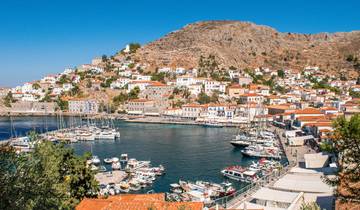
Ferries dock at Hydra’s singular port facility where the crescent-shaped harbor serves as both arrival point and town center, with all services radiating from this waterfront arc. The harbor’s distinctive amphitheater layout places 18th-century stone mansions on ascending tiers up the hillside, creating the iconic view that has defined Hydra’s visual identity since revolutionary times when wealthy ship captains competed to build the most impressive residences. Day trippers disembark directly into this architectural museum, with the port’s eastern and western arms featuring the island’s densest concentration of restaurants, cafés, galleries, and shops within a compact 500-meter waterfront stretch.
The Kountouriotis Mansion stands as Hydra’s premier architectural monument and museum, located on the western harbor heights approximately 200 meters uphill from the waterfront. This palatial residence belonged to Lazaros Kountouriotis, the revolutionary-era ship magnate who donated his entire fortune to finance the Greek independence movement. The mansion operates as a branch of the National Historical Museum, displaying original 18th-century island furniture, family portraits, maritime artifacts, and period rooms recreating the lifestyle of Hydra’s merchant elite. Entry costs €5, with opening hours 10:00 AM-4:00 PM Wednesday through Sunday (closed Monday-Tuesday). The mansion’s elevated position provides panoramic harbor views from its terraces—factor 20-30 minutes for the uphill walk from the ferry dock.
The Historical Archives Museum of Hydra occupies restored buildings adjacent to the harbor, focusing on the island’s critical role in the 1821 Greek War of Independence through ship models, weapons, period paintings, and revolutionary documents. The museum particularly highlights Admiral Andreas Miaoulis, Greece’s equivalent of Admiral Nelson, who commanded fire-ship attacks that devastated the Ottoman fleet in the 1820s. Entry costs €5 with hours 9:30 AM-4:30 PM Tuesday through Sunday during summer months, reduced to weekends only November through March. The compact galleries require 30-45 minutes for thorough examination.
The Monastery of the Dormition of the Mother of God dominates the harbor’s eastern waterfront with its white walls and distinctive twin bell towers visible to all arriving ferries. This fortified monastery dating to the mid-17th century served as both religious center and defensive position during Ottoman times. The complex now houses municipal offices in some sections while the Ecclesiastical and Byzantine Museum occupies the former monastic cells, displaying religious icons, vestments, and manuscripts from Hydra’s 300+ churches and six monasteries. The monastery courtyard provides free access with the museum requiring €3 entry, open 10:00 AM-3:00 PM daily except Monday.
Walking routes through Hydra town center follow the kalderimi—traditional cobblestone pathways stepped into the hillside—connecting the harbor to upper neighborhoods including Kiafa, the island’s oldest settlement positioned above the main port area. The Kiafa district features narrow alleyways between high-walled compounds protecting internal courtyards, with boutique hotels and artist studios occupying renovated historical residences. The 15-20 minute climb from harbor to Kiafa upper district rewards with quieter streets, local grocery stores unchanged for decades, and elevated perspectives over the Saronic Gulf. No motorized transport reaches these upper areas—all movement occurs via stepped pathways wide enough for donkey traffic but impassable to wheeled vehicles.
The western harbor cannon emplacement at Periptero offers one of Hydra’s most photographed viewpoints, where 18th-century naval artillery points seaward from a stone platform. A statue of Admiral Miaoulis stands sentinel at this position, commemorating the naval hero who led Hydra’s revolutionary fleet. The location sits just 300 meters west of the main ferry dock along a level waterfront promenade requiring 5-7 minutes walking from the harbor center. The adjacent Spilia (cave) area features rock formations and swimming access popular with locals during summer afternoons.
Hydra Beach Access and Swimming Locations 2026: Walking and Water Taxi Options
Hydra’s rocky coastline creates numerous small coves and beaches reachable either by coastal footpaths or water taxi services operating from the harbor. The island features no sand beaches—all swimming areas consist of smooth pebbles or flat rock platforms with crystalline Aegean waters ranging 22-26°C during summer months. Day trippers can realistically visit one beach during a standard 5-7 hour island stay when balancing beach time with harbor exploration and dining, with beach selection depending on walking tolerance versus water taxi budget.
Vlichos Beach ranks as Hydra’s most accessible organized swimming area, located 1.5 kilometers east of the harbor along a coastal pathway requiring 20-25 minutes walking at moderate pace. The pebble beach features sunbed and umbrella rentals (€15-20 per set), a beach bar serving drinks and light meals, and calm waters protected by the cove formation. The approach path remains relatively level compared to other Hydra routes, passing through the Kaminia fishing village (10 minutes from harbor) before continuing to Vlichos. Return walking takes identical time, making the round-trip beach visit consume approximately 2.5-3 hours including swimming and refreshment.
Mandraki Beach occupies a scenic bay on Hydra’s southern coast, accessible only via water taxi from the harbor or a challenging 45-minute hiking trail unsuitable for casual day trippers. Water taxis reach Mandraki in 8-10 minutes, charging €4-6 per person one-way with boats accommodating 8-10 passengers. The beach features the Mandraki Beach Resort’s restaurant and facilities open to all visitors, with organized sunbeds, changing rooms, and a beach bar serving full meals. The sandy bottom and gradual depth make this beach particularly suitable for swimming, while the isolated location ensures fewer crowds than harbor-accessible beaches.
Agios Nikolaos Beach sits on Hydra’s western coast requiring 20-minute water taxi service from the harbor, with fares ranging €6-8 per person one-way. This small pebble beach surrounded by green hillsides offers organized facilities including sunbed rental (€25 per set in 2026), a beach bar, and kayak access. The beach operates regular water taxi connections departing approximately every 30 minutes during summer season (May-September), allowing day trippers to plan return timing without chartering private boats. Swimming in Agios Nikolaos’ emerald-green waters and taking refreshments at the beach bar consumes 2-3 hours for a complete beach visit.
Water taxi services operate from the harbor’s eastern corner near the Alpha Bank building and monastery, with boats moored along the quay awaiting passengers. The water taxi association maintains fixed pricing displayed on boards at the embarkation point, with fares charged per boat (maximum 8-10 passengers) rather than per person—solo travelers or couples share boats with other passengers to split costs, while groups can charter entire vessels for exclusive use. The association phone (+30 22980 53690) allows advance booking for return pickups from remote beaches, essential when visiting isolated coves with no regular service.
Alternative swimming access points within walking distance include Spilia near the western harbor (5 minutes), offering rock platform diving spots popular with locals, and Avlaki Beach (15 minutes east), a small pebble cove with basic facilities. These locations lack organized sunbeds and beach bars but provide free swimming access and quieter atmosphere than the developed beaches. Day trippers seeking maximum swimming time without significant walking or water taxi expense find these harbor-adjacent spots most efficient.
Dining Options and Restaurant Recommendations Hydra 2026: Budget to Fine Dining
Hydra’s restaurant scene divides into three distinct categories reflecting both budget ranges and dining atmospheres, with waterfront establishments commanding premium prices for harbor views while backstreet tavernas offer traditional Greek cuisine at more modest costs. Day trippers should budget €20-50 per person for lunch depending on restaurant category and menu choices, with meal timing flexibility allowing either early lunch (12:00-1:30 PM) before beach visits or late lunch (2:30-4:00 PM) after swimming.
Budget tavernas serving traditional Greek dishes at €10-20 per person concentrate in the backstreets behind the harbor’s main waterfront, particularly along the narrow alleyways climbing toward Kiafa. These family-run establishments offer daily specials boards featuring mageirefta (slow-cooked dishes) including moussaka, pastitsio, and stewed meats ranging €8-12 per portion. Souvlaki and gyros—grilled meat skewers or wrapped pitas—cost €4-8 at specialized souvlaki shops including the popular “…and Onion!” near the harbor center. Traditional Greek salad (horiatiki) averages €6-9, while bread, tzatziki, and spreads cost €3-5. House wine by the carafe runs €8-12 for 500ml. These tavernas rarely require reservations even during peak season, with service operating continuously 12:00 PM-11:00 PM.
Mid-range waterfront restaurants charging €25-40 per person line both arms of the harbor crescent, offering fresh seafood, grilled meats, and Mediterranean fusion cuisine with direct harbor views from outdoor terraces. Menu highlights include grilled octopus (€12-16), fried calamari (€10-14), whole grilled fish priced by kilogram (€45-65/kg), and pasta dishes (€14-20). Psaropoula, operating since 1911 near the eastern harbor, specializes in fish platters and traditional seafood preparations with main courses €18-28. Kodylenia’s in Kaminia village (15 minutes west) provides waterside dining in a quieter fishing harbor setting with similar pricing. These restaurants benefit from advance reservations during July-August peak season, bookable by phone or in person upon arrival.
Fine dining establishments including Téchnē, located 10 minutes west of the harbor above Avlaki beach, serve contemporary Mediterranean cuisine in elegant settings with main courses €25-35 and tasting menus €45-60 per person. These restaurants emphasize local ingredients, seasonal menus, and sophisticated wine lists featuring Greek regional selections. Sunset Restaurant near the harbor heights offers modern Mediterranean plates with Aegean views, while Mikra Agglia focuses on refined Greek cooking with attentive service. Reservations prove essential at fine dining venues, particularly for dinner service—however, day trippers typically dine during lunch hours (1:00-3:30 PM) when reservation pressure lightens.
Cafés and bakeries provide budget-friendly options for breakfast, coffee breaks, and light snacks throughout the day. Cappuccino costs €3.40-4.00, espresso €2.40-2.80, and fresh orange juice €4-5. Papagalos on the harbor front serves all-day breakfast, pastries, and casual meals in outdoor terrace seating with harbor views. Traditional Greek pastries including bougatsa (custard-filled phyllo) cost €3-4 at local bakeries. These casual venues require no reservations and accommodate quick refreshment stops between activities.
Transportation Within Hydra 2026: Walking, Donkeys, and Water Taxis
Hydra’s complete vehicle prohibition—enforced strictly since the 1950s and protected by law—means all island transportation occurs via foot, animal, or boat. This restriction applies to all motorized wheeled vehicles including cars, motorcycles, scooters, and bicycles, creating the unusual environment where delivery trucks, ambulances, and police vehicles all utilize donkeys and mules instead of motor transport. For day trippers, this means planning all movements around walking distances, water taxi schedules, or donkey hire for luggage transport.
Walking serves as the primary transportation method for day visitors, with the harbor town’s compact layout placing most attractions within 10-20 minute walks from the ferry dock. The town’s kalderimi (stepped stone pathways) connect different elevation zones, with the main harbor at sea level, mid-level neighborhoods 20-40 meters above, and upper Kiafa district reaching 60-80 meters elevation. Physical fitness requirements remain moderate for harbor-level exploration but increase significantly for upper neighborhoods and distant beaches requiring 30+ minute walks over uneven cobblestone and stepped terrain. Comfortable walking shoes with good traction prove essential—smooth-soled sandals or dress shoes create difficulty on polished stone steps.
Donkey and mule transport operates primarily for luggage hauling rather than passenger riding, with muleteers congregating near the harbor offering luggage transfer services to hotels and residences in upper town areas. Pricing follows zone-based structure with Zone A (harbor level and nearby streets) costing €10 per animal and Zone B (upper neighborhoods) €15-20 per animal. Despite signage indicating “4 pieces of luggage,” the practical limit equals 2 suitcases plus 2 small bags per animal—groups with 4 travelers typically require 2 mules. Day trippers without overnight luggage rarely utilize this service, though photographers occasionally hire donkeys as picturesque subjects for harbor photos.
Water taxi services provide the essential transportation to remote beaches, coastal restaurants, and villages inaccessible via reasonable walking times. The water taxi association operates from the eastern harbor near Alpha Bank, with boats moored along the quay throughout daylight hours. Pricing follows fixed tariffs displayed on boards at the embarkation point: short trips to Kaminia or Spilia cost €4-6, medium-distance routes to Vlichos or Mandraki €6-10, and longer journeys to Agios Nikolaos or Bisti €8-12. Fares apply per boat (maximum 8-10 passengers) rather than per individual—solo travelers and couples typically share boats with other passengers heading the same direction, splitting the total fare. Private charters reserving an entire boat cost the full fare amount regardless of passenger count.
Water taxi operations run daily approximately 8:00 AM-8:00 PM during summer season (May-October) with reduced hours November-April. Popular beach routes operate on informal schedules with departures every 20-30 minutes when demand exists, while less-frequented destinations require specific booking via the association phone (+30 22980 53690) or direct contact with individual captains who distribute business cards. Return trip arrangements prove critical when visiting isolated beaches—either schedule a specific pickup time with the captain or maintain the association phone number to call for return transport. Beach restaurants can assist with calling water taxis for diners requiring return service.
Island hiking trails connecting harbor to remote locations include the 60-minute climb to Profitis Ilias Monastery at 500 meters elevation and the 90-minute trek to Mount Eros summit at 593 meters. These routes suit energetic day trippers allocating 3-4 hours for round-trip hiking, though steep grades and summer heat (temperatures exceeding 35°C June-August) make morning departures essential. Coastal walking paths link harbor to Kaminia (15 minutes), Vlichos (25 minutes), and Molos Bay (50 minutes), providing scenic alternatives to water taxis for visitors prioritizing walking over speed.
Sample Day Trip Itineraries Hydra 2026: Morning, Afternoon, and Full-Day Options
Day trip itineraries for Hydra vary based on ferry departure timing, activity preferences, and physical activity level, with efficient planning maximizing the limited 5-8 hours available on the island. The following itineraries provide tested frameworks accommodating different travel styles while maintaining realistic timing including ferry transport, walking distances, and meal breaks.
Classic Culture and Harbor Itinerary (6 Hours Island Time)
Depart Athens Piraeus 8:30 AM ferry, arriving Hydra 10:00-10:15 AM. Walk harbor waterfront eastward visiting Monastery of the Dormition (15 minutes), then climb to Kountouriotis Mansion museum (30-40 minutes including uphill walk and visit). Descend via Kiafa district backstreets browsing galleries and shops (20 minutes), reaching harbor center 11:45 AM. Lunch at mid-range waterfront restaurant 12:00-1:30 PM (€25-35). Afternoon walk westward to Periptero cannon emplacement and Miaoulis statue (15 minutes), continuing to Spilia swimming area for rock platform diving and swimming 2:00-3:30 PM. Return to harbor center for coffee and pastry at harbor café 3:45-4:15 PM. Depart Hydra 5:00 PM ferry, arriving Athens Piraeus 6:30-7:00 PM.
Costs: Ferry round-trip €60-84, lunch €25-35, museum entries €8, coffee and pastry €7-10. Total day cost: €100-137 per person.
Beach-Focused Itinerary (7 Hours Island Time)
Depart Athens Piraeus 8:00 AM ferry, arriving Hydra 9:15-9:30 AM. Quick coffee at harbor café then catch 10:00 AM water taxi to Agios Nikolaos Beach (€6-8 per person, 20-minute ride). Swimming, sunbathing, and beach bar refreshments 10:30 AM-2:00 PM. Return water taxi to harbor 2:15-2:30 PM (€6-8). Late lunch at harbor taverna 2:45-4:00 PM (€20-30). Afternoon harbor stroll and shopping 4:15-5:00 PM. Depart Hydra 5:30 PM ferry, arriving Athens Piraeus 7:00-7:30 PM.
Costs: Ferry round-trip €60-84, water taxi round-trip €12-16, beach sunbeds €25, beach bar drinks and snacks €15-20, lunch €20-30, coffee €4. Total day cost: €136-179 per person.
Walking and Village Itinerary (8 Hours Island Time)
Depart Athens Piraeus 7:30-8:00 AM ferry, arriving Hydra 8:45-9:30 AM. Early coffee and pastry at harbor bakery then walk coastal path to Kaminia village (15 minutes). Continue to Vlichos Beach via coastal route (20 minutes from Kaminia), arriving 10:00-10:30 AM. Swimming and beach relaxation 10:30 AM-1:00 PM. Walk return to harbor via inland stepped pathways through residential neighborhoods (35 minutes), arriving 1:45 PM. Lunch at backstreet taverna 2:00-3:15 PM (€15-25). Afternoon visit Historical Archives Museum (45 minutes) and harbor exploration 3:30-5:00 PM. Depart Hydra 6:00-6:30 PM ferry, arriving Athens Piraeus 7:30-8:30 PM.
Costs: Ferry round-trip €60-84, breakfast pastry and coffee €7-10, beach bar refreshments €10-15, lunch €15-25, museum entry €5. Total day cost: €97-139 per person.
Photography and Architecture Itinerary (6.5 Hours Island Time)
Depart Athens Piraeus 8:30 AM ferry arriving Hydra 10:00-10:30 AM. Immediate climb to upper Kiafa district for elevated harbor photography (25 minutes). Descend via eastern kalderimi pathways photographing stone mansions and alleyways (30 minutes). Visit Kountouriotis Mansion exterior and terrace viewpoints (20 minutes). Harbor waterfront photography session capturing traditional architecture and fishing boats 11:45 AM-12:30 PM. Lunch at harbor taverna 12:45-2:00 PM (€20-30). Afternoon walk to western harbor Periptero cannon position for golden hour light 2:30-4:30 PM. Return harbor center for departure ferry 5:00 PM, arriving Athens Piraeus 6:30-7:00 PM.
Costs: Ferry round-trip €60-84, lunch €20-30, coffee and snacks €8-12. Total day cost: €88-126 per person.
Costs Breakdown Hydra Day Trip 2026: Complete Budget Planning
Understanding Hydra day trip costs requires separating fixed transportation expenses from variable spending on meals, activities, and services. The following breakdown provides specific 2026 pricing across budget categories, allowing travelers to construct accurate day budgets based on preferences.
Ferry Transportation Costs 2026
Round-trip ferry tickets Athens Piraeus to Hydra constitute the largest fixed expense, ranging €60-84 per person depending on operator selection. Alpha Lines and Magic Sea Ferries price at €30-33 one-way (€60-66 round-trip), while Blue Star Ferries and Hellenic Seaways charge €38-42 one-way (€76-84 round-trip). No multi-journey discounts apply—round-trip purchases equal double the single-journey fare. Booking timing minimally affects pricing except during major Greek holidays when last-minute availability commands premium rates. Children ages 5-10 receive 50% discount on adult fares with infants under 4 traveling free without seat allocation.
Meal and Dining Costs 2026
Lunch represents the primary meal expense during day trips, with budget varying dramatically by restaurant category. Budget taverna meals including main course, Greek salad, and water cost €12-18 per person. Mid-range harbor restaurants with fresh seafood, appetizer, and house wine range €25-40 per person. Fine dining establishments serving contemporary cuisine with full wine service cost €45-65 per person. Coffee and refreshment breaks add €4-8 per stop. A complete day’s food budget spanning breakfast pastry, lunch, beach bar drinks, and afternoon coffee totals €25-75 depending on dining choices.
Museum and Attraction Entry Fees 2026
Kountouriotis Mansion charges €5 entry, Historical Archives Museum €5, and Ecclesiastical Museum €3. Combined museum visits cost €13 per person, though day trippers typically select 1-2 museums rather than comprehensive coverage. Walking tours and harbor exploration remain free, as does swimming at non-organized beaches. Organized beach sunbed rental costs €15-25 per set (2 loungers, 1 umbrella).
Water Taxi Transportation Costs 2026
Water taxi fares follow distance-based structure: short harbor routes (Kaminia, Spilia) €4-6 per boat, medium distances (Vlichos, Mandraki) €6-10 per boat, long routes (Agios Nikolaos, Bisti) €8-12 per boat. Fares apply per vessel (maximum 8-10 passengers) with costs split among all riders—solo travelers sharing boats with other passengers pay proportional amounts. A typical beach day involving round-trip water taxi to Mandraki costs €12-20 per person when sharing with 2-4 other passengers, or €12-16 total when chartering exclusively for couples or small groups.
Complete Day Cost Examples 2026
Budget Day Trip: Ferry €60-66, budget taverna lunch €15-20, museum entry €5, harbor café coffee €4, water €2. Total €86-97 per person.
Mid-Range Day Trip: Ferry €60-84, mid-range restaurant lunch €30-40, water taxi round-trip €8-12 (shared), beach sunbeds €25, beach bar refreshments €12-15, coffee and pastry €7-10. Total €142-186 per person.
Comfort Day Trip: Ferry €76-84, fine dining lunch €45-55, water taxi private charter €20-24, organized beach facilities €25-30, multiple refreshment stops €15-20. Total €181-213 per person.
These totals exclude Athens-Piraeus transport (metro €2.40 round-trip, taxi €30-50 round-trip) and any shopping or discretionary purchases. Peak season pricing (June-August) increases restaurant costs 30-40% above shoulder season rates, while ferry prices remain relatively stable year-round.
Seasonal Considerations and Best Time for Hydra Day Trips 2026
Hydra’s appeal varies significantly across seasons, with weather patterns, tourist crowds, service availability, and pricing all fluctuating monthly. Understanding seasonal dynamics helps day trippers select optimal timing balancing pleasant conditions against manageable crowds and reasonable costs.
Peak Summer Season (June-August 2026)
Summer months deliver maximum sunshine (95%+ sunny days), highest temperatures (28-35°C), warmest sea temperatures (24-26°C), and maximum ferry frequency with 11-12 daily departures including early morning and late evening options. However, peak season brings substantial crowds particularly July-August weekends when day-trippers from Athens combine with overnight hotel guests creating congested harbor conditions. Restaurant reservations become essential, popular beaches reach capacity, and ferry tickets sell out 1-2 weeks in advance requiring early booking. Dining costs increase 40-60% above off-season baseline as waterfront restaurants implement peak pricing. Heat management becomes critical—schedule morning activities before 11:00 AM and afternoon beach time to avoid midday temperatures exceeding 35°C. Peak summer suits travelers prioritizing swimming and beach activities, accepting higher costs and crowds as tradeoffs for guaranteed excellent weather.
Shoulder Season (April-May and September-October 2026)
Shoulder months provide the optimal balance for most day trippers, combining pleasant weather (20-27°C), reduced crowds, moderate pricing, and still-comprehensive ferry service. April-May offers wildflower blooms across hillsides, comfortable walking temperatures, and sea temperatures reaching 18-21°C suitable for hardy swimmers by late May. September-October extends swimming season with sea temperatures 22-25°C while reducing tourist density compared to summer peaks. Ferry frequency remains substantial with 8-10 daily departures, though earliest morning and latest evening sailings may not operate. Restaurants offer full menus without peak pricing, reservations prove unnecessary except Saturday afternoons, and accommodation pressure lightens allowing spontaneous overnight stays. Shoulder seasons suit culture-focused visitors prioritizing museums and walking over intensive beach time, and budget-conscious travelers avoiding summer surcharges.
Low Season (November-March 2026)
Winter months see dramatically reduced tourism with ferry service contracting to 3-4 daily departures, numerous restaurants closing for the season, and cool temperatures (12-18°C) eliminating swimming opportunities. However, architectural and cultural attractions remain open with museums operating weekend-only schedules November-March. Low season appeals to photography enthusiasts seeking empty cobblestone streets, history buffs avoiding crowds at museums and monuments, and budget travelers benefiting from minimum pricing and spontaneous booking. Ferry tickets can be purchased at the port on travel day, no restaurant reservations ever required, and accommodation costs drop 60-70% from summer rates. Disadvantages include limited dining options (many establishments close entirely December-February), cool wet weather reducing outdoor activity appeal, and abbreviated museum hours. Day trippers visiting November-March should verify ferry schedules carefully as some early morning and late evening departures cease operation.
Weather and Climate Patterns 2026
Hydra experiences classic Mediterranean climate with dry summers and mild wet winters. Average rainfall peaks November-January with 8-10 rainy days monthly, dropping to near-zero June-August. Wind patterns intensify summer afternoons with meltemi winds from the north reaching 15-25 knots, creating choppy sea conditions affecting water taxi comfort though rarely canceling ferry service. Optimal weather windows for day trips span late April through June and September through mid-October when temperatures remain comfortable (22-27°C), rainfall stays minimal, and winds remain moderate. July-August heat requires careful sun protection, hydration, and midday shade breaks to avoid heat exhaustion during walking activities.
Practical Planning Tips and Essential Information Hydra 2026
Successful Hydra day trips require attention to specific logistical details distinguishing this car-free island from conventional Greek destinations. The following practical guidance addresses common planning questions and potential complications.
Ferry Booking Strategy and Timing 2026
Book ferry tickets 2-4 weeks in advance during peak season (June-August) when popular departure times sell out, particularly Friday-Sunday and Greek public holidays. Shoulder season (April-May, September-October) allows 3-7 day advance booking while low season permits same-day purchase at Piraeus port. Select morning departures (8:00-9:00 AM range) maximizing island time and avoiding midday arrival heat, paired with late afternoon returns (5:00-6:30 PM) allowing 6-8 hours on Hydra. Verify whether chosen ferry operates direct service or makes intermediate stops at Poros/Spetses—direct routing saves 30-60 minutes each direction. Download ferry company mobile apps or print e-tickets before arrival at Piraeus as port WiFi proves unreliable for last-minute ticket retrieval.
Luggage and Packing Recommendations
Day trippers require minimal luggage given the no-overnight format, but specific items prove essential for Hydra’s unique environment. Bring comfortable walking shoes with grippy soles for cobblestone navigation—stepped pathways with polished stone become slippery when wet. Pack swimming attire, towel, and waterproof bag for beach visits even if not primarily planning swimming as impulse beach stops frequently occur. Sun protection including hat, sunglasses, reef-safe sunscreen (SPF 30+), and light long-sleeve cover-up protects against intense Mediterranean sun during 10:00 AM-4:00 PM peak hours. Carry refillable water bottle as Hydra’s hilly terrain and summer heat require constant hydration—public fountains provide potable water at harbor and main squares. Small backpack or crossbody bag holds essentials while keeping hands free for walking uneven surfaces.
Currency and Payment Methods 2026
Greece operates on euro currency with most Hydra establishments accepting both cash and cards, though smaller tavernas and water taxis prefer cash payment. ATMs operate near the harbor with standard withdrawal fees €3-5 plus foreign transaction charges, making pre-withdrawal in Athens more economical. Notify your bank of Greece travel dates to avoid card blocking due to foreign transaction fraud alerts. Tipping practices follow Greek norms: round up taxi fares to nearest euro, leave 5-10% at restaurants for exceptional service (though service charges are typically included), and tip water taxi captains €1-2 for helpful service particularly when arranging return pickups from remote beaches.
Communication and Connectivity
Mobile phone coverage on Hydra operates reliably for all major Greek carriers with 4G/5G service throughout the harbor town, degrading to 3G in remote beaches and hillside hiking trails. Visitors with EU phone plans enjoy free roaming under EU regulations, while international travelers should verify roaming charges or purchase Greek SIM cards in Athens before departure. WiFi availability exists at most harbor cafés and restaurants though speeds vary—water taxi association and museum staff communicate primarily via phone calls rather than email or apps. Download offline maps of Hydra before arrival as GPS navigation functions without data connection once maps are cached.
Safety and Health Considerations
Hydra presents minimal safety concerns with extremely low crime rates and well-maintained public infrastructure. Primary risks involve heat exposure during summer months—stay hydrated consuming 2-3 liters water daily, seek shade 12:00-3:00 PM, and recognize heat exhaustion symptoms including dizziness, nausea, and excessive fatigue. Walking hazards include smooth stone steps becoming slippery when wet, uneven cobblestone potentially causing twisted ankles in inadequate footwear, and steep grades challenging for visitors with mobility limitations or cardiovascular conditions. The island has one medical center (Koulourio Hospital) near the harbor providing basic emergency care, though serious medical issues require transfer to Athens hospitals via helicopter or high-speed ferry. Pharmacies operate near the harbor selling over-the-counter medications, sunscreen, and basic health supplies, though prices exceed Athens rates by 30-50%.
Accessibility and Mobility Considerations
Hydra’s stepped stone pathways and absence of wheeled transport create significant accessibility challenges for visitors with mobility limitations, wheelchair users, or those requiring walker assistance. The harbor-level area including waterfront restaurants, ground-floor shops, and the Monastery of the Dormition offers relatively flat terrain navigable with mobility aids, while all hillside attractions, museums, and upper neighborhoods require climbing stepped pathways impassable for wheelchairs. Water taxis lack wheelchair accessibility requiring passengers to step down into boats from quay level. Visitors with limited mobility should focus activities on harbor-level exploration, waterfront dining, and potentially water taxi beach visits to Mandraki Beach Resort which offers wheelchair-accessible beach facilities, though boat boarding still requires assistance. Contact hotels and restaurants in advance to confirm ground-floor seating availability and accessible facilities.
Photography Regulations and Etiquette
Photography remains unrestricted throughout Hydra’s public spaces including harbor, streets, beaches, and architectural exteriors. Museum interiors prohibit photography in most cases—verify rules at entrance or ask staff before photographing museum exhibits. Monastery courtyards allow photography though church interiors often restrict camera use, particularly during religious services. Respect private property and residential privacy when photographing harbor mansions and traditional architecture—avoid entering private courtyards or pointing lenses through ground-floor windows into residential spaces. Drone operation requires special permits from Greek civil aviation authorities and is prohibited within Hydra’s traditional settlement boundaries and near all harbor areas due to safety concerns.
Alternative Day Trip Extensions: Multi-Island Itineraries and Overnight Options 2026
Hydra’s position within the Saronic Gulf enables combination day trips visiting multiple islands or extended overnight stays exploring the island’s extensive hiking networks and remote beaches. Understanding these alternatives helps travelers maximize Saronic Gulf exploration within limited timeframes.
Hydra-Poros-Aegina Three-Island Cruise 2026
Organized three-island day cruises operate from Piraeus visiting Hydra, Poros, and Aegina in single-day itineraries, departing Athens 8:00 AM and returning 7:30 PM. These package tours include round-trip ferry transport, guided island commentary, and lunch aboard the vessel, costing €75-95 per person. The format provides 1.5-2 hours on each island—sufficient for harbor walking and quick impressions but limiting deep exploration of any single destination. Three-island cruises suit first-time visitors seeking overview exposure to multiple Saronic islands without commitment to individual island research and independent ferry booking, though serious cultural engagement and beach time prove impossible within the compressed schedule.
Hydra-Spetses Two-Island Day Trip 2026
Independent travelers can construct two-island itineraries visiting Hydra and neighboring Spetses using scheduled ferry services connecting the islands. Morning Piraeus-Hydra ferry (8:00-8:30 AM departure) allows 3-4 hours on Hydra before catching early afternoon ferry to Spetses (1:00-2:00 PM departure, 25-minute journey). This provides 2-3 hours exploring Spetses before evening return ferry to Piraeus (6:00-7:00 PM departures). The two-island format works best for travelers previously familiar with one island seeking exposure to the second destination, though the compressed timing reduces each island visit to highlights-only exploration. Total cost runs €80-100 per person for inter-island ferry tickets plus individual meal and activity expenses on each island.
Overnight Hydra Extension Benefits
Extending Hydra visits to overnight stays unlocks significant additional experiences impossible within day trip timeframes, particularly sunset harbor dining, evening bar scene exploration, sunrise photography, early morning hiking before heat, and access to remote beaches requiring full-day commitments. Overnight accommodation costs €80-200 per night depending on season and hotel category, with budget guesthouses, mid-range boutique hotels, and luxury heritage mansions all operating within walking distance of the harbor. Two-day Hydra itineraries allow comprehensive museum visits, beach relaxation, substantial hiking (Mount Eros summit trek, Profitis Ilias Monastery), and leisurely meals without constant clock-watching necessitated by day-trip ferry schedules. The overnight format particularly suits photography enthusiasts capturing golden hour light, hikers accessing remote island corners, and cultural enthusiasts engaging deeply with Hydra’s revolutionary history and artistic heritage.
Frequently Asked Questions About Hydra Day Trips 2026
Do I need to book Hydra ferry tickets in advance or can I buy at the port in 2026?
Advance ferry booking proves essential during peak season (June-August) and Greek public holidays when popular departure times sell out 1-2 weeks ahead, particularly for morning departures and weekend travel. Shoulder season (April-May, September-October) allows more flexibility with 3-7 day advance purchase generally securing desired schedules, while winter months (November-March) permit same-day ticket purchase at Piraeus port ticket offices. Online booking through ferry company websites or third-party platforms including Ferryhopper and Direct Ferries provides guaranteed pricing and seat selection, with e-tickets downloaded to mobile phones eliminating physical ticket collection requirements. Last-minute travelers arriving at Piraeus without tickets should head directly to ferry company ticket offices near Gate E8 where same-day availability can be checked, though premium pricing and limited seat choice may apply during busy periods.
What’s the minimum amount of time needed to experience Hydra on a day trip?
A minimum 4-5 hour island stay allows basic harbor exploration, lunch at a waterfront restaurant, and either one museum visit or a beach excursion via water taxi, representing the absolute minimum for worthwhile Hydra experience. More realistic 6-7 hour stays accommodate comprehensive harbor walking, museum visits, beach time, and leisurely dining without constant rushing. Ideal day trip scheduling uses 8:00-8:30 AM ferry departures paired with 5:00-6:00 PM returns, providing 7-8 hours on the island enabling two major activities (such as beach visit plus museum tour) combined with relaxed meal service and harbor wandering. Travelers with specific interests requiring extended time—such as hiking to Mount Eros summit (3-4 hours round-trip) or visiting multiple remote beaches—should consider overnight stays rather than attempting comprehensive coverage within day trip constraints.
Are credit cards widely accepted on Hydra or should I bring cash?
Hydra’s tourism-oriented businesses predominantly accept credit and debit cards including Visa, Mastercard, and increasingly American Express, with card payment standard at all mid-range and upscale restaurants, hotels, and established shops. However, budget tavernas in backstreets, water taxi services, donkey transport operators, and small convenience stores often prefer or require cash payment. ATMs operate near the harbor providing euro withdrawals with standard fees €3-5 plus any foreign transaction charges imposed by home banks, though long queues form during peak summer weekends when cash demand exceeds machine capacity. Visitors should carry €50-100 cash per person covering water taxis (€10-20), budget meals (€15-25), small purchases, and tipping, while using cards for major expenses including restaurants and museum entries. Notify your bank of Greece travel dates before departure to avoid anti-fraud card blocking triggered by foreign transactions.
Can I visit Hydra with small children or is it too difficult with the hills and steps?
Hydra accommodates family visits including small children, though parents should prepare for significant physical challenges navigating stepped terrain while managing strollers, tired children, and child-related gear. Standard wheeled strollers prove functionally useless on Hydra’s stepped kalderimi pathways—baby carriers or hiking backpacks provide the only viable child transport option for infants and toddlers unable to walk extended distances. The harbor-level waterfront area offers relatively flat terrain suitable for children’s walking abilities, with harbor-side cafés, the Monastery courtyard, and western cannon emplacement all accessible without stair climbing. Water taxis to beaches including Mandraki provide child-friendly swimming in calm protected coves with gradual depth suitable for young swimmers. Museum visits present challenges due to fragile historic artifacts and children’s limited attention spans for maritime history exhibits. Family-friendly restaurants concentrate along the harbor waterfront with outdoor seating, high chairs available at established venues, and menu options beyond traditional Greek cuisine. Families with children under 5 should focus activities on harbor exploration, beach time via water taxi, and café breaks rather than attempting hillside walking or museum visits.
What happens if I miss my return ferry to Athens?
Missing your scheduled return ferry requires rebooking on the next available departure, which during peak summer season may mean waiting 1-2 hours for subsequent ferries given the 11-12 daily sailing frequency. Visit ferry company ticket offices near the harbor or contact the booking platform used for original purchase (Ferryhopper, Direct Ferries, etc.) to rebook on next available sailing—most companies accommodate same-day rebooking for modest fees (€5-15) or sometimes without penalty if significant time remains before last daily ferry. Low season presents greater challenges as ferry frequency drops to 3-4 daily departures with potentially 3-4 hour gaps between sailings, and last ferries departing 5:00-6:00 PM rather than 8:00-8:30 PM summer schedules. Worst-case scenario requires overnight stay on Hydra—harbor hotels and guesthouses typically maintain some availability for walk-in bookings except peak August weekends, with costs €80-150 for basic accommodation. Travel insurance covering missed transportation should be verified before travel, though standard policies often exclude passenger lateness as covered reason for claims.
Is swimming safe in Hydra’s beaches and what facilities are available?
Swimming in Hydra’s beaches presents minimal safety concerns with clean Aegean waters, absence of dangerous currents in protected coves, and lifeguard presence at major organized beaches during summer season. Water quality meets EU Blue Flag standards at monitored beaches with regular testing ensuring safe swimming conditions free from pollution or contamination. Rocky and pebbly beach composition means no sand but also eliminates muddy water conditions, providing the crystal-clear visibility characteristic of Greek island swimming. Organized beaches including Vlichos, Mandraki, and Agios Nikolaos offer sunbed and umbrella rental (€15-25 per set), changing facilities, beach bars, and lifeguard supervision June-September. Remote beaches reached via hiking trails lack any facilities—swimmers should bring water, shade equipment, and exercise caution without lifeguard oversight. Sea temperature ranges 18-21°C in May, 22-26°C June-September, and 20-23°C in October, with summer months providing warmest and most comfortable swimming conditions. Water shoes or swim sandals prove useful navigating rocky beach entries and protecting feet from sharp stones and sea urchins occasionally present on rock formations.
How do I arrange water taxi service to beaches and what are the typical costs?
Water taxi services operate from the eastern harbor area near Alpha Bank building where boats moor along the quay awaiting passengers. The water taxi association maintains the central booking phone (+30 22980 53690) answered by whichever captain is currently free, allowing advance reservations particularly important for return pickups from remote beaches. Fixed tariffs displayed on boards at the embarkation point establish pricing: short routes to Kaminia or Spilia cost €4-6, medium distances to Vlichos or Mandraki €6-10, and longer journeys to Agios Nikolaos or Bisti €8-12. These fares apply per boat (maximum 8-10 passengers) rather than per person—solo travelers and couples share boats with other passengers heading the same direction, splitting the total cost, while groups charter entire vessels paying the full fare. Communicate clearly with the captain about desired destination, approximate return timing, and whether you want guaranteed return pickup at specific time (recommended for isolated beaches) or plan to call for pickup when ready (works for popular beaches with regular service). Most captains distribute business cards with direct phone numbers enabling future bookings without association phone intermediary.
What Greek holidays or events affect Hydra visiting in 2026?
Greek public holidays significantly impact Hydra transportation and tourism patterns, with domestic Greek tourists flooding the island during three-day holiday weekends creating peak crowding and advance booking requirements. Major holidays affecting 2026 Hydra visits include Greek Easter (Orthodox calendar, April 20 2026) and the associated Easter Monday (April 21), May Day (May 1), August 15 (Assumption of the Virgin, Greece’s largest summer holiday), and October 28 (Ochi Day). Ferry services increase frequency during these periods but sell out weeks in advance due to massive domestic demand—international tourists should book minimum 3-4 weeks ahead for holiday weekend travel. The Miaoulia Festival held the third weekend of June (June 19-21 2026) commemorates Hydra’s naval victories with harbor reenactments, fireworks, and celebrations attracting substantial crowds and requiring advance accommodation booking. Religious feast days including the patron saint celebration November 14 create local observances but minimally affect tourist services. Summer weekends generally (Friday-Sunday June-August) see heightened demand regardless of official holidays, while mid-week visits any season provide quieter experiences and easier spontaneous planning.
Can I do a same-day round trip combining Hydra with other nearby islands?
Combining Hydra with other Saronic islands in single-day round trips proves logistically challenging using public ferries due to scheduling constraints and cumulative travel time, though organized three-island cruise tours provide packaged multi-island experiences. Independent travelers can theoretically link Hydra with nearby Spetses using midday inter-island ferry connections (25-minute crossing), but this compression limits each island to 2-3 hours exploration representing highlights-only coverage. The Hydra-Spetses-Piraeus routing requires checking multiple ferry schedules ensuring connections exist, with total transportation time consuming 4-5 hours of the day leaving limited time for actual island activities. Poros lies on some Athens-Hydra ferry routes as an intermediate stop, potentially allowing brief Poros visit (1-2 hours) during the Athens-Hydra journey, though this depends on specific ferry routing and captain willingness to allow partial journey passengers. Organized three-island cruises (Hydra-Poros-Aegina) operate as all-inclusive packages departing Piraeus 8:00 AM, visiting each island for 1.5-2 hours, and returning Athens 7:30 PM, costing €75-95 per person including lunch and guided commentary. These tours maximize island exposure but minimize deep engagement, suiting overview-oriented travelers rather than cultural depth seekers.
What should I do if weather turns bad during my Hydra day trip?
Adverse weather including rain, strong winds, or rough seas occurs infrequently during main tourism season (May-September) but can impact day trip experiences when present. Light rain showers rarely cancel ferry services though rough seas from strong meltemi winds occasionally delay departures 30-60 minutes or cancel the smallest high-speed vessels. Ferry companies post weather-related schedule changes via mobile apps and website announcements—check status 2-3 hours before planned departure and maintain flexibility for alternative timing. Once on Hydra during rain, indoor options include museum visits (Kountouriotis Mansion, Historical Archives Museum, Ecclesiastical Museum), harbor café sessions for extended coffee and pastries while waiting for weather improvement, and boutique shopping in covered galleries. Extended rain or storms making outdoor walking unpleasant might justify cutting the visit short and catching earlier return ferries, though ferry companies typically waive rebooking fees for weather-related changes. Pack lightweight rain jacket even during dry summer months as brief afternoon thunderstorms occasionally develop, and bring waterproof bag protecting phones, cameras, and valuables during unexpected showers.