
Hungary 3-Day Itinerary 2026: First-Time Visitor Guide
Planning your first visit to Hungary in 2026? Budapest and its surrounding treasures offer an incredible introduction to Central European culture, architecture, and thermal spa traditions. This comprehensive three-day itinerary balances must-see attractions with authentic experiences, practical transportation advice, and realistic budgeting to help you make the most of your Hungarian adventure.
Key Takeaways: Planning Your Hungary 3-Day Adventure 2026
- Budapest-focused itinerary: Three days allows thorough exploration of the capital’s historic districts, thermal baths, and UNESCO sites with optional day trip to nearby heritage destinations
- Efficient public transport: 72-hour travel card (5,500 HUF/~€14) provides unlimited metro, tram, and bus access throughout Budapest for all three days
- Strategic thermal bath timing: Visit Széchenyi Baths on weekdays (11,900 HUF vs 13,500 HUF weekend pricing) and arrive early morning (6-8 AM) to avoid crowds
- Budget-friendly daily costs: Expect 15,000-25,000 HUF (€40-65) per day excluding accommodation, covering meals, transport, and major attractions with mid-range choices
- Mix Buda and Pest experiences: Allocate Day 1 to Pest’s grand boulevards and Parliament, Day 2 to Buda’s Castle District and thermal baths, Day 3 to deeper exploration or day trip
- Advance booking essential: Reserve Parliament tours, thermal bath tickets, and any day trip transportation 2-4 weeks ahead to secure spots and skip entrance queues
People Also Ask About Hungary 3-Day Itinerary 2026
Is 3 days enough to visit Hungary in 2026?
Three days provides excellent coverage of Budapest’s essential highlights including both Buda and Pest districts, major thermal baths, Parliament, Castle District, and key museums. This timeframe allows one full day for deeper exploration or a day trip to nearby UNESCO sites like Esztergom or Visegrád. While you won’t experience the countryside extensively, three days delivers a comprehensive introduction to Hungarian culture, architecture, and thermal spa traditions focused on the capital.
What’s the best way to get around Budapest for a 3-day visit in 2026?
Purchase a 72-hour Budapest travel card (5,500 HUF/~€14) immediately upon arrival, providing unlimited access to all metro lines, trams, buses, and HÉV suburban trains within city limits for three consecutive days starting from validation. Download the BudapestGO app for real-time schedules and route planning. Most major attractions sit within central districts (V, VI, VII on Pest side; I, II on Buda side) accessible within 15-20 minutes by metro or tram. Walking between nearby sites saves time versus constantly using transit.
How much should I budget per day for Hungary in 2026?
Budget travelers can manage on 15,000-18,000 HUF (€40-48) daily covering budget meals, public transport, and select paid attractions. Mid-range visitors should budget 20,000-25,000 HUF (€53-65) daily for sit-down restaurant meals, thermal bath entry, and museum admissions. Comfortable travelers allocating 30,000-40,000 HUF (€80-105) daily can enjoy fine dining, premium bath experiences, and guided tours. All ranges exclude accommodation, which adds 18,000-35,000 HUF (€48-92) nightly depending on hotel category.
Should I include a day trip in my 3-day Hungary itinerary for 2026?
A day trip makes excellent sense if you’ve covered Budapest’s core attractions by Day 2 evening and want countryside or additional UNESCO experiences. Top options within 90 minutes include the Danube Bend (Szentendre, Visegrád, Esztergom) for medieval architecture and river views, or Gödöllő Palace for Habsburg royal history. However, first-time visitors with limited mobility or strong interest in Budapest’s museums, Jewish Quarter, and multiple thermal baths may prefer spending all three days exploring different city neighborhoods and experiences.
Extended multi-day tours – 5+ days
Featured Hungary Multi-Day Tour Packages
3 days
Hungary 3-Day Discovery Tour
- ✓ Comprehensive Hungary experience
- ✓ Expert local guides included
- ✓ All accommodation included
- ✓ Transportation provided

5 days
Hungary 5-Day Highlights Experience
- ✓ Comprehensive Hungary experience
- ✓ Expert local guides included
- ✓ All accommodation included
- ✓ Transportation provided
7 days
Hungary 7-Day Cultural Journey
- ✓ Comprehensive Hungary experience
- ✓ Expert local guides included
- ✓ All accommodation included
- ✓ Transportation provided

10 days
Hungary 10-Day Complete Adventure
- ✓ Comprehensive Hungary experience
- ✓ Expert local guides included
- ✓ All accommodation included
- ✓ Transportation provided
Multi-day tour packages powered by TourRadar. Prices and availability subject to change.
Introduction: Making the Most of Three Days in Hungary 2026
Hungary rewards first-time visitors with an extraordinary concentration of experiences packed into its vibrant capital Budapest, where 2,000 years of thermal bathing culture meets UNESCO World Heritage architecture and thriving contemporary arts scenes. Your three-day visit in 2026 offers the perfect window to grasp this Central European gem’s essential character without feeling rushed, allowing time to soak in thermal pools, explore both sides of the Danube, and savor the cuisine that blends Turkish, Austrian, and distinctly Hungarian influences.
This itinerary takes a strategic approach to Budapest’s split personality. The city divides naturally into Buda (hilly, historic western bank) and Pest (flat, cosmopolitan eastern bank), connected by iconic bridges spanning Europe’s second-longest river. Rather than ping-ponging daily between both sides, we concentrate each day’s activities geographically, minimizing transit time while maximizing the depth of neighborhood exploration. Day 1 immerses you in Pest’s grand boulevards, coffeehouses, and riverside Parliament views. Day 2 climbs to Buda’s Castle District before descending to Europe’s largest thermal bath complex. Day 3 offers flexibility for deeper Budapest exploration or a countryside day trip.
The timing couldn’t be better for visiting in 2026. Recent infrastructure improvements have enhanced metro connectivity, while Budapest Card benefits have expanded to include more museums and discounted bath entries. Spring (April-May) and early fall (September-October) deliver ideal weather with 18-24°C temperatures perfect for walking tours and outdoor thermal pool sessions. Summer brings extended opening hours at major sites and lively terrace culture, though higher prices and crowds. Even winter visits shine thanks to Budapest’s magical Christmas markets and the unforgettable experience of soaking in 38°C thermal waters while snow falls around outdoor pools.
Transportation simplifies beautifully with the 72-hour travel card, your key to unlimited journeys across Budapest’s extensive metro, tram, and bus network. The four color-coded metro lines (M1 historic yellow line, M2, M3, M4) intersect at Deák Ferenc tér, creating a hub that connects you to virtually every itinerary stop. Iconic Tram 2 running along the Pest riverbank offers moving postcard views between Parliament and the Great Market Hall. Your smartphone becomes essential: download the BudapestGO app for real-time schedules and ticket validation, plus offline maps showing metro lines and major landmarks.
Budget considerations prove pleasantly manageable compared to Western European capitals. Meals at authentic Hungarian restaurants (not tourist-trap versions) deliver excellent value: goulash, langos, and chimney cakes satisfy without straining wallets. Museum admissions remain modest (1,500-3,000 HUF for most sites), though premium experiences like Parliament tours (8,000 HUF) and thermal baths (11,900-13,500 HUF) represent larger line items worth budgeting specifically. The key to cost control lies in eating where locals eat (walk 2-3 blocks from major squares), buying 72-hour transport cards rather than single tickets, and booking thermal bath sessions for weekday mornings when prices drop and crowds thin.
This itinerary assumes mid-May through mid-October travel when all outdoor pools, gardens, and riverboat services operate fully. Winter visitors (November-March) should shift Day 2’s outdoor walking emphasis toward more museum time and indoor thermal experiences, while still catching Castle District highlights during daylight hours. The suggested daily budgets of 20,000-25,000 HUF cover meals, transport, and admissions at a comfortable mid-range level; budget-conscious travelers can reduce this to 15,000-18,000 HUF by choosing hostel breakfasts, lunch from markets, and focusing on free attractions.
Day 1 – Pest Exploration 2026: Parliament, Jewish Quarter & Danube Promenade
Morning: Arrival and Pest City Center (8:00 AM – 12:00 PM)
Begin your Hungarian adventure by orienting yourself in central Pest, the vibrant, flat eastern bank that showcases Budapest’s grand 19th-century architecture. Most international flights arrive at Budapest Ferenc Liszt Airport (BUD) by mid-morning, placing you in the city center by 9:00-9:30 AM using the efficient 100E airport bus (2,500 HUF, 45 minutes to Deák Ferenc tér) or shared shuttle services.
Drop luggage at your accommodation and immediately purchase your 72-hour Budapest travel card (5,500 HUF) from any metro station ticket machine or via the BudapestGO app. This single purchase covers all public transport for three full days starting from first validation, eliminating the need for individual tickets and providing excellent value (equivalent to just 11 single rides, while you’ll likely take 20+ journeys).
Start at St. Stephen’s Basilica (Szent István Bazilika), Pest’s most impressive religious building and home to Hungary’s first king’s mummified right hand. Entry to the main basilica is free, though donations appreciated; the panoramic dome visit costs 1,500 HUF and rewards climbers with sweeping city views. The basilica’s interior Neo-Renaissance details, gold mosaics, and massive organ demonstrate the grandeur of late 19th-century Hungarian national identity. Plan 45-60 minutes here including dome ascent.
Walk five minutes northeast to the Hungarian State Opera House (Magyar Állami Operaház) on Andrássy Avenue, Budapest’s most elegant boulevard and a UNESCO World Heritage site. Even if you don’t attend an evening performance, join a guided tour (3,990 HUF, runs hourly 14:00-15:00) to see the Neo-Renaissance auditorium, royal box, and chandelier-lit lobbies that rival Vienna’s opera house for opulence. Tours last 45 minutes and often conclude with a mini-concert by opera students.
Afternoon: Jewish Quarter and Great Market Hall (12:00 PM – 5:00 PM)
Head to the Jewish Quarter (District VII) for lunch at one of the traditional Hungarian restaurants along Kazinczy or Dob streets, away from the ruin bar tourist clusters. A hearty goulash with bread costs 2,500-3,500 HUF, while chicken paprikash runs 3,000-4,000 HUF. Alternatively, grab langos (fried dough topped with sour cream and cheese, 1,200-1,500 HUF) from a street stand for authentic Hungarian street food.
The Dohány Street Synagogue (Nagy Zsinagóga), Europe’s largest synagogue and the world’s second-largest, anchors this neighborhood. Entry tickets (6,000 HUF for adults) include access to the Hungarian Jewish Museum, Heroes’ Temple, and moving Raoul Wallenberg Memorial Park with its weeping willow sculpture commemorating Hungarian Holocaust victims. Audio guides (included) provide essential context for understanding Budapest’s once-thriving Jewish community. Allocate 90-120 minutes for thorough exploration.
Walk or take Tram 47/49 south to the Great Market Hall (Nagyvásárcsarnok), Budapest’s most spectacular market building constructed in 1897. The ground floor sells fresh produce, meats, and local specialties like paprika, salami, and Tokaji wine perfect for souvenirs. Climb to the upper level for prepared foods and craft stalls. Sample traditional chimney cake (kürtőskalács, 1,000-1,500 HUF) or langos while soaking up the market atmosphere. The Great Market Hall closes at 18:00 weekdays, 15:00 Saturdays.
Evening: Danube Promenade and Parliament Views (5:00 PM – 9:00 PM)
Stroll north along the Danube promenade from the Great Market Hall, passing under the Liberty Bridge and Chain Bridge while the late afternoon sun illuminates Buda Castle across the river. This 2-kilometer riverside walk ranks among Europe’s most beautiful urban promenades, earning UNESCO World Heritage status for its coherent architectural ensemble.
Pause at the Shoes on the Danube Bank memorial, sixty pairs of iron shoes marking where Hungarian Jews were shot into the river during World War II. The simple, powerful memorial usually prompts quiet reflection and represents one of Budapest’s most moving historical sites.
Time your arrival at Kossuth Square for the evening illumination of the Hungarian Parliament Building (Országház), Gothic Revival architecture at its most magnificent. The 268-meter-long building glows golden after sunset, creating Budapest’s most photographed scene when reflected in the Danube. While Parliament tours (8,000 HUF, must book weeks ahead) won’t fit today’s schedule, viewing the exterior and square provides excellent Day 1 closure.
Dinner options abound in the nearby Lipótváros district. Seek restaurants on side streets rather than directly on Kossuth Square for better value and quality. A three-course dinner with wine at a good mid-range restaurant runs 8,000-12,000 HUF per person. Try traditional dishes like beef goulash, duck leg, or fisherman’s soup (halászlé) for authentic Hungarian flavors beyond the ubiquitous chicken paprikash.
Day 1 Cost Summary: Airport transfer 2,500 HUF, 72-hour travel card 5,500 HUF, St. Stephen’s Basilica dome 1,500 HUF, lunch 3,000 HUF, Dohány Synagogue 6,000 HUF, afternoon snack 1,500 HUF, dinner 10,000 HUF. Total: 30,000 HUF (~€79) per person excluding accommodation. Budget travelers can reduce to 18,000 HUF by skipping Opera tour, choosing cheaper meals, and limiting paid attractions.
Day 2 – Buda Discovery 2026: Castle District & Thermal Bath Experience
Morning: Castle District Exploration (8:00 AM – 12:30 PM)
Cross to Buda’s hillside Castle District early to beat tour bus crowds that arrive after 10:00 AM. Take Metro M2 to Batthyány tér, then either walk up Castle Hill’s scenic paths (20-25 minutes, free), ride the historic Sikló funicular (1,800 HUF return, 3-minute ascent), or catch Bus 16 from Clark Ádám tér. Early morning light beautifully illuminates the district’s Baroque and Gothic architecture while streets remain relatively quiet.
Begin at Fisherman’s Bastion (Halászbástya), the fairy-tale viewing terrace offering Budapest’s finest panoramic views across the Danube to Parliament and Pest’s skyline. Ground-level access is free, while upper towers cost 1,700 HUF (check official website for current rates). Arrive before 9:00 AM to photograph without crowds. The Neo-Romanesque towers and arcade create instantly recognizable Budapest imagery, though the structure dates only to 1902 despite its medieval appearance.
Adjacent Matthias Church (Mátyás-templom) showcases elaborate roof tiles in colorful Zsolnay ceramics forming geometric patterns visible from street level. Interior entry (2,500 HUF) reveals Gothic revival splendor including frescoes, stained glass, and the ornate altar. The church served as the coronation site for Hungarian kings and later converted to a mosque during Ottoman occupation, creating layered historical significance. Plan 30-40 minutes inside.
Wander the Castle District’s cobblestone streets discovering courtyards, medieval cellars converted to wine bars, and historic houses displaying plaques commemorating famous residents. The Hospital in the Rock Nuclear Bunker Museum (5,500 HUF, guided tours only) offers fascinating Cold War history 10 meters underground, while the Medieval Royal Palace complex houses the Budapest History Museum and Hungarian National Gallery (3,200 HUF each). Choose one museum based on interests, allowing 90 minutes.
Afternoon: Gellért Hill and Buda Neighborhoods (12:30 PM – 4:00 PM)
Descend from Castle Hill toward Gellért Hill for lunch in the residential Tabán district, where local restaurants serve excellent Hungarian food at better prices than Castle District tourist spots. A satisfying meal runs 3,500-5,000 HUF for main course, drink, and dessert.
If energy and weather permit, climb Gellért Hill to the Citadella fortress and Liberation Monument for alternative panoramic views emphasizing southern Budapest and the Danube’s sweeping curve. The 30-minute uphill walk proves moderate effort rewarded with fewer crowds than Fisherman’s Bastion. The Citadella’s Habsburg-era fortifications now host a small museum (1,200 HUF) documenting Budapest’s strategic military importance.
Alternatively, explore the leafy residential streets around Batthyány Square on the Buda riverbank, window-shopping at design boutiques and craft galleries while locals go about daily routines far from tourist throngs. This provides authentic neighborhood atmosphere and recovery time before the afternoon’s thermal bath session.
Late Afternoon/Evening: Széchenyi Thermal Baths (4:00 PM – 8:00 PM)
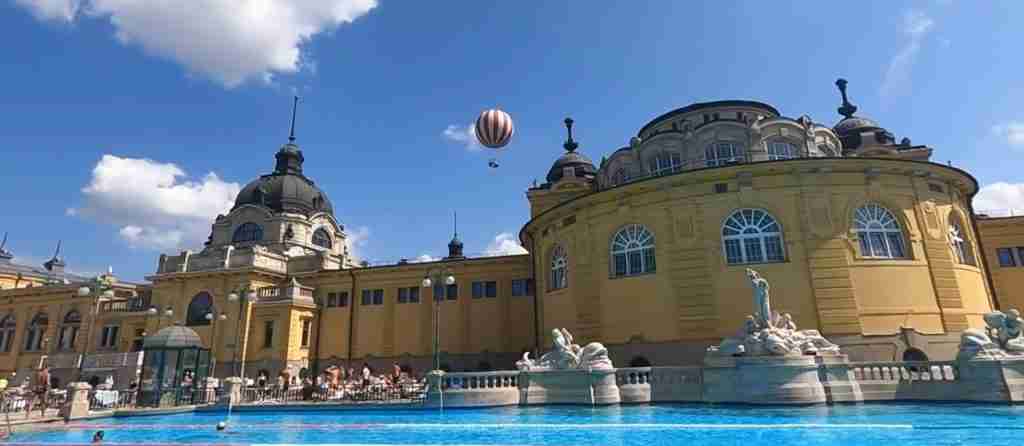
Return to Pest via Metro M2 and transfer to M1 (yellow historic metro line) reaching Széchenyi fürdő station in City Park. Széchenyi Thermal Baths, Europe’s largest medicinal bath complex, offers the quintessential Budapest experience combining wellness, architecture, and social culture in Neo-Baroque surroundings built in 1913.
Entry tickets cost 11,900 HUF weekdays, 13,500 HUF weekends in 2026 (check official website for current rates). Book online 2-3 weeks ahead to guarantee admission and skip entrance queues. Arrive around 16:00-17:00 when morning crowds thin but you still have 3-4 hours before 20:00 closing (22:00 Fridays). Bring your own towel and flip-flops or purchase at the on-site shop (towel 3,000 HUF, flip-flops 2,500 HUF).
The complex features 18 pools ranging from 18°C cold plunge to 40°C hot thermal, plus multiple saunas and steam rooms. The three outdoor pools create the iconic image of steam rising from turquoise waters year-round, where locals famously play floating chess on water-resistant boards. Indoor pools include lap swimming, sitting pools, and whirlpools fed by two thermal springs supplying water naturally heated to 74-77°C before cooling to comfortable bathing temperatures.
Széchenyi operates on a locker system where you receive an electronic bracelet controlling access to changing cabins or lockers, pool entries, and optional spa services. The 30-minute sauna ritual led by sauna masters occurs weekday afternoons (free with entry, check schedule upon arrival). Massage services (20-45 minutes, 6,000-15,000 HUF) should be booked weeks in advance as they sell out quickly.
Plan minimum 2.5 hours at the baths to properly experience the thermal bathing cycle: warm-up in 36°C sitting pool, steam room or sauna session, cool-down in 26-28°C pools, repeat. The outdoor pools particularly enchant during sunset and early evening when illuminated and steam creates atmospheric conditions.
Post-bath dinner options surround City Park including traditional Hungarian restaurants on Állatkerti út and contemporary bistros on Ajtósi Dürer sor. Expect to pay 6,000-10,000 HUF for satisfying dinner after the thermal relaxation.
Day 2 Cost Summary: Sikló funicular 1,800 HUF, Fisherman’s Bastion 1,700 HUF, Matthias Church 2,500 HUF, museum entry 3,200 HUF, lunch 4,500 HUF, Széchenyi Baths 11,900 HUF, dinner 8,000 HUF. Total: 33,600 HUF (~€88) per person excluding accommodation. Budget options reduce to 22,000 HUF by walking up Castle Hill, choosing cheaper meals, and limiting museum visits.
Day 3 – Deep Dive or Day Trip 2026: Choose Your Adventure
Option A: More Budapest Neighborhoods and Museums
Dedicate your final day to experiences missed on Days 1-2 or neighborhoods deserving deeper exploration. The Hungarian Parliament interior tour (8,000 HUF, 45 minutes, book weeks ahead) provides access to the stunning main staircase, Congress Hall, and Crown Jewels including St. Stephen’s Crown. Tours run hourly in English starting 8:00 AM, with first morning slots offering best photography light through the building’s windows.
Heroes’ Square (Hősök tere) at the top of Andrássy Avenue anchors City Park and features the Millennium Monument commemorating Hungary’s founding leaders. The square connects to two major museums: Museum of Fine Arts (3,600 HUF, European masters including significant Spanish collection) and Hall of Art (Műcsarnok, 2,800 HUF, contemporary and modern Hungarian art). Each museum merits 90-120 minutes for highlights.
Városliget (City Park) beyond Heroes’ Square offers the fairy-tale Vajdahunyad Castle (an eclectic architectural showcase built for 1896 millennium celebrations), boating lake in summer, ice skating rink in winter, and numerous restaurants. The park provides relaxing walking among locals rather than constant museum and monument touring.
Margaret Island (Margitsziget) in the Danube’s middle reaches via Tram 4/6 to Margit híd stop, then walking across the bridge. This 2.5-kilometer green oasis features musical fountains, rose gardens, a small zoo, thermal pools (Palatinus Strand, 3,500 HUF), and car-free paths perfect for rented bikes or leisurely strolling. The island works particularly well for families or anyone seeking nature respite from urban intensity.
Consider a second thermal bath experience at smaller, more local venues like Rudas Baths (offering Ottoman-era pools and rooftop pool with Danube views) or Király Baths (authentic 16th-century Turkish bath). These intimate alternatives to Széchenyi provide different architectural styles and primarily Hungarian clientele.
Option B: Danube Bend Day Trip
The Danube Bend region north of Budapest offers stunning river scenery, medieval towns, and multiple UNESCO sites reachable within 90 minutes. This makes an excellent day trip combining nature, history, and countryside atmosphere.
Szentendre (40 minutes by HÉV suburban train from Batthyány tér, 900 HUF return) presents a charming Serbian Orthodox artist town with baroque architecture, craft galleries, and riverside cafés. The compact historic center explores easily in 2-3 hours. Serbian religious art museums, the outdoor Skanzen folk architecture museum (summer only), and marzipan museum provide activity options beyond wandering painted houses and cobblestone lanes.
Visegrád (90 minutes by bus or hydrofoil from Budapest) features dramatic ruins of medieval royal palace and upper fortress perched on hills commanding the Danube’s scenic curve. The fortress ruins (1,900 HUF) require steep climbing but reward with spectacular river and mountain views. The lower palace museum (2,500 HUF) displays Renaissance-era Hungarian royal culture including reconstructed Renaissance fountain.
Esztergom (110 minutes by train from Nyugati station or bus, 2,000 HUF return) hosts Hungary’s largest church (Esztergom Basilica) dominating the skyline where the Danube forms the Slovak border. The basilica’s dome climb (1,500 HUF) provides panoramic views across both countries. The Treasury museum (1,800 HUF) exhibits medieval Hungarian Christian artworks and relics. Esztergom combines well with Visegrád on organized tours or independent travel requires full day commitment.
Organized day trip tours covering multiple Danube Bend sites cost 15,000-22,000 HUF including transportation, guide, and some admissions. These maximize efficiency for visitors with limited time, though independent travel allows flexible pacing and lunch choices.
Return to Budapest by early evening for farewell dinner in the Jewish Quarter’s ruin bars district or along the Danube promenade. Szimpla Kert, Budapest’s original ruin bar, operates daytime café culture before transforming to evening bar atmosphere, making it suitable for family visits or early drinks before dinner.
Option C: Hungarian Countryside – Gödöllő Palace
Gödöllő Royal Palace (45 minutes by HÉV suburban train from Örs vezér tere, 900 HUF return) provides insight into Habsburg royal life at Empress Elisabeth (Sisi’s) favorite summer residence. The restored Baroque palace (3,500 HUF admission) showcases 18th-century royal apartments, period furniture, and extensive English gardens. Audio guides (included) explain the complex relationship between the Austrian Habsburg court and Hungarian nobility. Plan 2.5-3 hours including garden walks.
Combine Gödöllő with suburban Budapest wine country by stopping in Budafok wine cellars (accessible via metro + bus) for Hungarian wine tasting experiences. The historic cellars carved into limestone hills store Tokaji, Egri Bikavér (Bull’s Blood), and other Hungarian wine varieties. Tastings (4,000-8,000 HUF) typically include 5-7 wines with local cheese pairings.
Day 3 Cost Summary (Option A – Budapest): Parliament tour 8,000 HUF, museum 3,600 HUF, lunch 4,000 HUF, afternoon snack 1,500 HUF, second bath entry 6,000 HUF, dinner 9,000 HUF. Total: 32,100 HUF (~€84) per person.
Day 3 Cost Summary (Option B – Danube Bend independent): HÉV/train 2,000 HUF, Visegrád fortress 1,900 HUF, palace museum 2,500 HUF, Esztergom basilica 1,500 HUF, lunch 5,000 HUF, snacks 1,500 HUF, dinner 9,000 HUF. Total: 23,400 HUF (~€61) per person.
Essential Planning Information for Hungary 3-Day Visit 2026
When to Visit Hungary in 2026
Late spring (April-May) and early fall (September-October) deliver optimal conditions with mild temperatures (18-24°C), fewer crowds than summer, and full operation of outdoor attractions including thermal pools and garden terraces. May features blooming parks and comfortable walking weather without summer heat. September offers harvest festivals, wine events, and pleasant conditions as summer tourist waves recede.
Summer (June-August) brings warmest weather (26-32°C), extended museum hours, and vibrant outdoor culture including open-air concerts and Danube riverboat services. However, expect peak pricing, crowded attractions, and occasional heat waves making outdoor walking less comfortable. Book accommodations and major attractions well in advance for summer visits.
Winter (November-March) appeals to visitors seeking Christmas markets (late November-December), thermal bath experiences enhanced by contrast with cold air, and significantly lower prices. Budapest’s thermal pools actually shine brightest in winter when outdoor pools steam dramatically in subfreezing temperatures. Cultural events and opera season peak in winter months. Expect 0-8°C temperatures requiring warm layering for outdoor sightseeing.
Accommodation Strategies for 2026
District V (Belváros-Lipótváros) provides the most central location placing you within walking distance of Parliament, St. Stephen’s Basilica, Danube promenade, and multiple metro lines. Expect to pay premium prices (€80-150 nightly mid-range hotels) for this convenience.
District VI and VII (Terézváros and Erzsébetváros/Jewish Quarter) offer excellent value with proximity to ruin bars, restaurants, and metro connections. Mid-range hotels run €60-100 nightly, with abundant Airbnb apartments and modern hostels (€25-40 per bed). This area suits younger visitors and those prioritizing nightlife accessibility.
Buda districts (I, II, XII) provide quieter residential atmosphere and easy Castle District access but require more public transport use to reach Pest attractions. Mid-range hotels €65-110 nightly appeal to visitors seeking calm evening returns and morning hillside walks.
Book accommodations 4-6 weeks ahead for spring and fall visits, 8-12 weeks for summer or major event weekends (Formula 1, Sziget Festival). Last-minute deals exist in winter months but choice narrows significantly.
Money and Budgeting for 2026
Hungary uses the Hungarian Forint (HUF), with 2026 exchange rates approximately 380-400 HUF per Euro. While many tourist establishments accept Euros, paying in Forints delivers better value and is required for public transport, markets, and authentic local restaurants.
ATMs (bankautomata) are widespread and offer best exchange rates. Avoid airport exchange booths and hotel currency exchanges that charge high commissions. Notify your bank of Hungary travel to prevent card blocks. Major credit cards are accepted at hotels, restaurants, and shops, though smaller establishments prefer cash.
Daily budget ranges per person excluding accommodation: Budget (15,000-18,000 HUF/€40-47) covers hostel breakfast, lunch from markets or casual spots, street food dinner, one paid attraction, public transport. Mid-range (20,000-25,000 HUF/€53-65) includes sit-down meals at good restaurants, thermal bath entry, museum admissions, occasional taxis. Comfortable (30,000-40,000 HUF/€79-105) allows fine dining, premium thermal spa packages, guided tours, and flexibility for spontaneous spending.
Transportation Tips Beyond the 72-Hour Card
The 72-hour travel card covers all BKK (Budapest public transport) services including metro, tram, bus, and trolleybus. It does NOT include the 100E airport bus (separate 2,500 HUF ticket required) or HÉV suburban trains beyond Budapest city limits (supplements needed for destinations like Szentendre or Gödöllő).
Download BudapestGO app for real-time arrivals, route planning, and digital ticket validation. The app functions offline after initial map download. Google Maps also provides accurate Budapest public transport directions with real-time updates.
Taxis are reasonably priced for occasional use (base fare 900 HUF plus 480 HUF per kilometer). Use official companies like Főtaxi, City Taxi, or Bolt/Uber apps to avoid unlicensed operators at tourist sites who charge inflated rates. A typical 15-minute city center taxi runs 2,500-3,500 HUF.
Booking Advance Reservations for 2026
Parliament tours sell out weeks ahead, particularly English-language slots during peak season. Book through the official Hungarian Parliament website or authorized ticket sellers 4-6 weeks before your visit. Tours occur hourly but capacities are limited and cannot be expanded.
Széchenyi Thermal Baths admission is best reserved 2-3 weeks ahead to guarantee entry and bypass purchase queues, especially for weekend visits. Weekday arrival allows more flexibility though summer mornings still fill. Book through the official Széchenyi Bath website to avoid third-party markups.
Restaurant reservations prove essential for Michelin-starred venues and popular traditional restaurants during peak dinner hours (19:00-21:00). Casual eateries and market halls operate walk-in basis. Make reservations 1-2 weeks ahead for significant restaurants.
Day trip organized tours should be booked 1-2 weeks ahead in high season to secure English-language guide availability and preferred departure times.
Frequently Asked Questions: Hungary 3-Day Itinerary 2026
Can I visit Hungary for 3 days without speaking Hungarian?
Absolutely. English is widely spoken in Budapest’s tourist areas, hotels, restaurants, and major attractions. Younger Hungarians and service industry workers typically speak good to excellent English. Public transport apps and ticket machines offer English options. Learning basic phrases (köszönöm – thank you, szia – hello) shows respect but isn’t necessary for successful travel. Outside Budapest, English proficiency drops but tourist sites and hotels maintain English-speaking staff.
Is the Budapest Card worth it for a 3-day visit in 2026?
The 72-hour Budapest Card (typically 30,000-35,000 HUF) includes free public transport plus free/discounted museum entries and attraction admissions. Calculate whether you’ll use enough included benefits to justify the cost versus à la carte purchases. The standard 72-hour BKK travel card (5,500 HUF) plus selective paid entries usually proves more economical unless you plan intensive museum visiting. The Budapest Card makes most sense for visitors hitting 4+ museums daily plus using public transport extensively.
What should I pack for Hungary in different 2026 seasons?
Spring/Fall: Layering clothing (light jacket, sweater, long sleeves), comfortable walking shoes, small umbrella, and swimsuit for thermal baths. Summer: Light breathable clothing, sunhat, sunscreen, sunglasses, and still swimsuit for pools. Bring one long-sleeve layer for air-conditioned museums. Winter: Warm coat, gloves, hat, scarf, waterproof boots, and thermal layers. Still pack swimsuit for outdoor thermal pool experiences. All seasons: Flip-flops or water shoes for thermal baths if you don’t want to purchase on-site.
Can I drink tap water in Budapest?
Yes, Budapest tap water is safe, high-quality, and tastes good thanks to natural spring sources. Restaurants provide tap water on request though many will offer bottled water first (which incurs charges). Carry a refillable water bottle and fill at public fountains, hotel taps, or restaurant bathrooms to save money and reduce plastic waste. The historic “sweet water” fountains marked around the city provide some of Budapest’s finest drinking water directly from springs.
How safe is Budapest for tourists in 2026?
Budapest ranks among Europe’s safer capital cities with low violent crime rates. Pickpocketing occurs in crowded tourist areas (particularly on trams, at markets, and in crowds), so maintain awareness of belongings. Avoid unlicensed taxis at major tourist sites and railway stations by using official companies or ride-sharing apps. The ruin bar district experiences occasional late-night incidents as with any nightlife area; stick to main streets when returning to accommodation. Women traveling solo generally feel safe though normal urban caution applies.
Do I need to tip in Hungarian restaurants and spas?
Tipping is customary and expected in Hungary. Restaurants: 10-15% of the bill if service was satisfactory. Some venues include service charges, so check the bill before adding a tip. State the total amount including tip when paying, rather than leaving cash on the table. Thermal baths: Tipping spa attendants 500-1,000 HUF is appreciated for locker/cabin service. Massage therapists receive 10-15% tips. Taxis: Round up to the next 500-1,000 HUF or add 10%. Hotel staff: 500-1,000 HUF for porters, 2,000-3,000 HUF per day for excellent concierge service.
Can I use euros in Budapest or do I need Hungarian forints?
While some tourist-oriented establishments accept euros, you’ll receive poor exchange rates and change in forints. All public transport, markets, authentic local restaurants, and small shops require Hungarian forints. ATM withdrawals in forints provide best exchange rates. Exchange a small amount at the airport only for immediate transport needs, then use ATMs in the city for better rates. Credit cards are widely accepted for larger purchases, hotels, and sit-down restaurants.
What’s the best way to get from the airport to Budapest city center in 2026?
The 100E airport express bus (2,500 HUF, 45 minutes) runs 24/7 between all airport terminals and Deák Ferenc tér metro hub in the city center, stopping at Kálvin tér en route. Purchase tickets from BKK machines at the bus stop (cards accepted) or via BudapestGO app. Regular public transport (200E bus to metro then metro to center) costs only 450 HUF but takes longer and requires transfers. Official taxis charge fixed 8,500-10,000 HUF to city center. Shared airport shuttles run 3,000-4,500 HUF per person door-to-door. Pre-book private transfers for 12,000-18,000 HUF guaranteeing immediate departure.
Are thermal baths suitable for children and families?
Most major thermal baths require children to be 14+ years old due to hot water temperatures and adult spa atmosphere. However, Palatinus Strand on Margaret Island welcomes families with outdoor pools, slides, and play areas suitable for children. This summer-only facility (May-September) combines thermal pools with family-friendly swimming areas. Some hotel thermal spas accept families with advance notice. Standard thermal baths like Széchenyi and Gellért are not appropriate for young children.
Should I exchange money at Budapest airport or wait?
Exchange only minimal amounts at the airport for immediate needs like the 100E bus ticket (which can be purchased with card anyway). Airport exchange booths charge poor rates with high commissions. ATMs in the arrivals hall provide much better rates for withdrawing forints. Better still, wait until reaching the city center where ATMs offer competitive rates and abundant locations ensure you’re never far from cash access. Notify your bank of Hungary travel dates to prevent international transaction blocks.