
How to Visit Calakmul 2026: Complete Logistics Guide
Key Takeaways
- Xpujil serves as the essential base town 60 kilometers from Calakmul, requiring 2-3 night stays for adequate archaeological and biosphere exploration in 2026
- Transportation logistics demand careful planning: reaching Xpujil from Cancun (5-6 hours), Campeche (4-5 hours), or Chetumal (2.5 hours) with limited daily bus service or self-drive options
- The 60-kilometer Calakmul access road requires dedicated vehicles with early departure (7:00 AM recommended) allowing 90-120 minutes each way plus 4-5 hours on-site exploration
- Total visit costs in 2026 range $250-450 per person for three-day experiences including accommodation, transportation, entries, guides, and meals depending on budget level selected
- Book accommodation 3-4 weeks ahead for December-March peak season when Xpujil’s limited hotel capacity (under 100 rooms total) fills quickly with advance planners
- Self-drive rental cars provide maximum flexibility but require confidence navigating remote roads, adequate Spanish, and acceptance of limited roadside assistance availability
Planning Your Calakmul Visit in 2026
Visiting Calakmul requires more advance planning and logistical consideration than typical Yucatan Peninsula archaeological sites due to its remote location deep within the Calakmul Biosphere Reserve. The site sits 60 kilometers south of Highway 186, accessed via a single-lane road winding through primary tropical forest where cell phone coverage doesn’t exist and services remain nonexistent. This remoteness creates both the appeal—unspoiled ruins, exceptional wildlife viewing, minimal crowds—and the planning challenge that makes preparation essential for successful visits.
The logistics center on Xpujil, a small service town positioned on Highway 186 serving as the gateway to Calakmul and surrounding Rio Bec archaeological sites. Xpujil offers basic tourist infrastructure including 6-8 hotels, several restaurants, fuel stations, and local guides, but lacks the developed tourism ecosystem of major destinations like Playa del Carmen or Merida. This means travelers must arrive self-sufficient with adequate cash, appropriate gear, confirmed accommodation, and realistic expectations about available services and amenities.
Successful Calakmul visits in 2026 require addressing five core logistical elements: reaching Xpujil base town from major transportation hubs, securing appropriate accommodation for 2-3 nights, arranging transportation to Calakmul archaeological site, coordinating guide services and entry logistics, and managing budget across accommodation, transportation, food, and activity costs. Each element demands advance research and booking to avoid disappointing situations or excessive costs from last-minute arrangements.
The planning timeline for 2026 Calakmul visits should begin 4-6 weeks before travel during peak season (December-March) or 2-3 weeks for shoulder season (November, April). This allows adequate time for accommodation booking when selection remains good, transportation arrangement at standard rates, and guide coordination ensuring experienced personnel. Wet season visits (May-October) allow shorter planning windows but require flexibility for potential road closures and weather-related changes.
People Also Ask About Visiting Calakmul 2026
How do you get to Calakmul from Cancun in 2026?
Reach Calakmul from Cancun via Highway 307 south to Bacalar, then Highway 186 west to Xpujil (350 kilometers, 5-6 hours driving). No direct bus service operates this route—travelers take ADO bus Cancun to Chetumal ($25-35 USD, 5-6 hours), then connecting bus Chetumal to Xpujil ($12-18 USD, 2.5 hours). Total bus journey takes 8-9 hours with connection time. Rental cars provide direct routing but require full-day driving with early departure to reach Xpujil before dark. Organized tours from Cancun exist but involve 14-15 hour days with rushed 3-hour site visits.
How many days do you need for Calakmul in 2026?
Allocate minimum 3 days for comprehensive Calakmul region experience in 2026: Day 1 for travel to Xpujil and nearby Rio Bec site exploration, Day 2 for full-day Calakmul archaeological visit, Day 3 for biosphere activities and return travel. Serious archaeology enthusiasts extend to 4-5 days adding remote sites like Hormiguero, specialized wildlife experiences, or additional day trips. Single-day Calakmul visits from Bacalar or Chetumal work logistically but create exhausting 12-14 hour days with limited site time and reduced wildlife viewing opportunities during rushed drives.
Do you need a 4×4 vehicle for Calakmul in 2026?
Standard passenger vehicles handle the Calakmul access road successfully during dry season (November-April) in 2026. The 60-kilometer route includes paved sections and maintained gravel stretches requiring reduced speeds but no off-road capability. Wet season (May-October) conditions deteriorate with mud, potholes, and occasional flooding where higher clearance vehicles provide advantages though not absolute requirements. Rental companies often prohibit taking vehicles on unpaved roads—verify rental agreement terms before attempting self-drive access. Most visitors use organized transportation through hotels avoiding rental restrictions and navigation challenges.
What’s the best base town for visiting Calakmul in 2026?
Xpujil represents the only practical base town for Calakmul visits, positioned 60 kilometers north with adequate hotel options and tour services. Alternative bases in Bacalar (180 kilometers east) or Escarcega (100 kilometers west) require 3+ hour drives each way making day trips exhausting and reducing site exploration time. Two jungle ecolodges located 15-20 kilometers from Calakmul offer closer proximity with premium pricing ($150-250 per night) and immersive biosphere experiences. Xpujil’s central location also enables easy access to secondary archaeological sites like Becan, Chicanna, and Hormiguero within 10-20 kilometer radius.
Extended multi-day tours – 5+ days
Featured Campeche Multi-Day Tour Packages

5 days
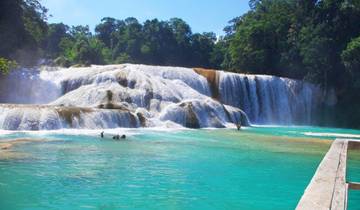
5 Days Mayan Heritage: Turquoise Waterfalls & Ancient Mysteries
- ✓ Comprehensive Campeche tour
- ✓ Expert local guides included
- ✓ All accommodation arranged
- ✓ Transportation provided
7 days
Best of Chiapas & Yucatan with the Maya Train
- ✓ Comprehensive Campeche tour
- ✓ Expert local guides included
- ✓ All accommodation arranged
- ✓ Transportation provided
5 days
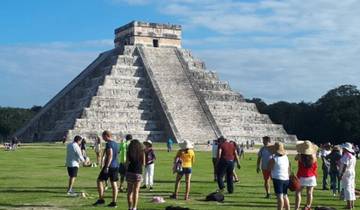
México: Tulum, Kohunlich, Chicanná, Becán, Misol-Há, Palenque, Campeche, Edzná, Uxmal, Mérida, Chichén Itzá – 5 days
- ✓ Comprehensive Campeche tour
- ✓ Expert local guides included
- ✓ All accommodation arranged
- ✓ Transportation provided
6 days
The Mystical Mayan Trail: A Trip Through Mexico's Vibrant Culture and Natural Beauty (spanish/German Guide )
- ✓ Booking needs min. 2 travelers
Multi-day tour packages powered by TourRadar. Prices and availability subject to change.
Transportation Strategies for 2026
Reaching Xpujil: Route Options and Timing
Three primary routes reach Xpujil from major transportation hubs. The eastern approach from Cancun or Playa del Carmen follows Highway 307 south through Tulum to Bacalar, then Highway 186 west to Xpujil covering 350-380 kilometers total. This route takes 5-6 hours driving with good road conditions throughout except occasional speed bumps through small towns. First-class ADO buses serve Cancun-Chetumal (5-6 hours, $25-35 USD) with connecting service Chetumal-Xpujil (2.5 hours, $12-18 USD). Total bus journey requires 8-9 hours including connection wait time in Chetumal.
The western approach from Campeche city covers 300 kilometers via Highway 186 east through Escarcega to Xpujil, taking 4-5 hours driving. This route traverses increasingly remote territory with final 100 kilometers from Escarcega crossing sparsely populated forest. ADO bus service operates Campeche-Xpujil ($25-30 USD, 5 hours) with 3-4 daily departures. This route suits travelers combining Pacific coast beach time or Palenque visits with Calakmul archaeology.
The southern approach from Guatemala crosses at El Ceibo border (45 kilometers south of Xpujil) connecting to Flores and Tikal. This route creates natural pairings of Calakmul with Guatemala’s premier Maya sites. The border crossing processes smoothly for most nationalities though requires more time than major crossings. Colectivo vans run between border and Xpujil ($8-12 USD) meeting incoming travelers and operating irregular schedules based on demand.
Bus schedules require verification on ADO website (www.ado.com.mx) 2-3 weeks before travel as departure times and frequencies change seasonally. Book tickets online for guaranteed seats during peak season when buses sometimes fill completely. The final Chetumal-Xpujil or Campeche-Xpujil legs operate only 2-3 daily departures making schedule coordination critical for smooth connections. Missing connections can strand travelers overnight in Chetumal or Escarcega.
Self-Drive Considerations and Car Rental
Rental cars provide maximum flexibility for Calakmul visits allowing independent scheduling, stops at multiple archaeological sites, and accommodation of luggage without bus transfer hassles. Compact cars cost $40-60 USD daily from major agencies in Cancun, Merida, or Campeche, while SUVs run $60-90 USD daily. Expect additional charges for insurance (liability, collision damage waiver) adding $20-30 USD daily unless covered by credit card benefits.
Fuel costs for the Cancun-Xpujil-Cancun circuit total approximately $60-80 USD covering 700+ kilometers. Mexican fuel stations price gasoline 22-24 pesos per liter ($1.20-1.40 USD per liter, $4.50-5.30 per gallon equivalent). Stations operate in all cities and larger towns but appear infrequently along Highway 186—fill up in Bacalar, Xpujil, and Escarcega rather than risking running low in remote sections.
Navigation requires offline maps loaded before departure as cell coverage drops completely for long stretches. Highway 186 remains straightforward east-west routing with clear signage, though Spanish-language signs predominate. The Calakmul turnoff at Conhuas shows clear archaeological site markers. GPS coordinates for critical points help avoid missed turns: Xpujil town center (18.5089°N, 89.3964°W), Calakmul turnoff (18.5325°N, 89.5380°W), Calakmul parking (18.1053°N, 89.8167°W).
Rental agreements often prohibit unpaved road travel, technically including the Calakmul access road’s gravel sections. Most travelers proceed anyway during dry season without issues, but wet season damage or accidents could trigger coverage disputes. Reading rental terms carefully and photographing vehicle condition thoroughly before departure protects against unfair damage claims.
Organized Transportation from Xpujil
Hotels in Xpujil arrange transportation to Calakmul through two primary options: shared shuttle services ($25-40 USD per person) or private vehicle rental ($90-150 USD total for 2-6 passengers). Shared shuttles require 4-6 person minimums and operate on fixed schedules departing 7:00-7:30 AM, visiting the site until 1:00-2:00 PM, and returning by 4:00-5:00 PM. These work well for solo travelers or couples seeking cost efficiency while accepting group pacing.
Private vehicles provide flexible scheduling allowing earlier departures (6:00-6:30 AM) for enhanced wildlife viewing, longer site exploration time, and customized return timing. The higher cost divides reasonably among 4-6 passengers ($15-25 USD per person) making private arrangements worthwhile for small groups. Drivers typically speak Spanish with basic English and know wildlife spotting locations along the access road.
Book transportation 3-5 days ahead during peak season ensuring vehicle availability and preferred departure times. Hotels commission these services adding 10-15% to direct operator costs—contacting tour operators directly (contact information available at hotels) sometimes reduces costs slightly. However, hotel booking provides accountability and recourse if services fail to materialize.
Tour packages including transportation, guide services, entry fees, and lunch cost $80-120 USD per person for shared group experiences. These comprehensive packages work well for travelers preferring simplified logistics and guaranteed service coordination. Private day tours with dedicated guide and vehicle run $150-200 USD per person for 2-person groups, decreasing per person as group size increases.
Accommodation Planning for 2026
Xpujil Hotel Selection and Booking
Xpujil offers approximately 60-80 total hotel rooms across 6-8 properties ranging from basic budget to comfortable mid-range. No luxury properties operate in town—travelers seeking upscale accommodation stay at jungle ecolodges outside town. This limited inventory requires advance booking during peak season when hotels fill 3-4 weeks ahead. Shoulder season allows 1-2 weeks advance booking, while wet season visits can be arranged days ahead.
Budget hotels ($25-40 per night) provide basic rooms with fans, private bathrooms, cold water showers, and simple furnishings. These properties target backpackers and shoestring travelers prioritizing cost over comfort. Room quality varies dramatically between properties—reading recent reviews on booking platforms helps identify acceptable options. The best budget choices include secure parking, functioning WiFi, and on-site restaurants eliminating need to venture out for meals.
Mid-range hotels ($50-90 per night) offer air conditioning, hot water, swimming pools, on-site restaurants, and more attentive service. The top mid-range properties feature Maya-inspired architecture, garden settings, hammock areas, and knowledgeable staff arranging tours and transportation. These hotels represent the sweet spot for most travelers balancing comfort with reasonable costs. Request rooms away from Highway 186 to minimize traffic noise, though traffic decreases substantially after 9:00 PM.
Book directly with hotels via phone or email rather than exclusively through booking platforms to access lower rates and establish personal relationships with staff who provide valuable local information and assistance with tour arrangements. Many properties offer 5-10% discounts for direct bookings or extended stays. Confirm booking 48 hours before arrival as occasional miscommunications occur with small family-run hotels.
Jungle Ecolodge Experiences
Two established jungle ecolodges operate within 15-20 kilometers of Calakmul offering immersive biosphere experiences with premium pricing. Accommodations feature comfortable bungalows with private bathrooms, screened windows, solar power, ceiling fans, and rustic-elegant decor. Rates run $150-250 per night including breakfast and dinner, with lunch available separately or as packed meals.
The ecolodge experience emphasizes nature immersion with extensive trail systems through primary forest, naturalist-led wildlife walks, bird watching sessions, night safaris, and direct access to pristine habitat. Properties attract serious nature enthusiasts and photographers willing to pay premium rates for exceptional wildlife viewing and atmospheric jungle settings. Social atmosphere develops among guests sharing archaeological and nature interests.
Book ecolodges 4-6 weeks ahead during peak season (December-March) as their limited capacity (8-12 rooms typically) fills completely with advance planners. Shoulder season sometimes allows 2-3 week booking windows, while wet season visits occasionally permit last-minute arrangements. Contact properties directly via email for best rates and to communicate any special requirements including dietary restrictions, photography interests, or specific wildlife viewing goals.
Transportation from ecolodges to Calakmul takes only 30-45 minutes compared to 90 minutes from Xpujil, allowing more flexible scheduling and easier early morning departures for optimal wildlife viewing. However, ecolodge locations isolate guests from alternative dining options and require dependence on included meal plans. The properties provide the only dining within their vicinity, so the meal plans represent genuine value rather than forced purchases.
Budget vs. Mid-Range vs. Ecolodge Comparison
Three-night accommodation costs vary substantially by lodging choice: budget hotels total $75-120, mid-range hotels $150-270, jungle ecolodges $450-750. These base costs exclude meals, tours, and activities. Budget travelers staying in simple hotels and eating at local restaurants achieve complete three-day visits for $250-350 per person including accommodation, food, transportation, entries, and basic guide services.
Mid-range travelers in comfortable hotels with organized tours spend $400-550 per person for comprehensive three-day experiences. This budget level provides significant quality-of-life improvements including air conditioning, hot showers, swimming pools, and reliable tour coordination while maintaining reasonable costs. Most travelers find this middle tier delivers optimal balance of comfort and value.
Premium ecolodge experiences with included meals, guided nature walks, private tours, and immersive wildlife programming run $800-1,200 per person for three days. This level suits serious naturalists, photographers, and travelers for whom nature experiences represent the primary motivation exceeding archaeological interests. The inclusive pricing simplifies budgeting and eliminates meal planning concerns.
Guide Services and Entry Logistics 2026
Arranging Guide Services
Local certified guides operate from the Calakmul visitor center offering services in Spanish and English with some French or German available by advance arrangement. Standard rates run $30-50 USD for groups of 2-4 people covering 3-4 hours of comprehensive site interpretation. Larger groups negotiate proportionally higher rates. Guides explain archaeological significance, identify architectural features, translate hieroglyphic inscriptions, and spot wildlife during the access drive.
Book guides through hotels 3-5 days ahead during peak season ensuring experienced personnel with strong English communication skills. The official guide association maintains quality standards through training and certification, though individual guide knowledge and enthusiasm vary. Requesting specific guides based on other travelers’ recommendations (available through hotel staff) helps secure excellent interpretation.
Specialized naturalist guides focusing on biosphere ecology rather than archaeology charge similar rates ($40-60 USD for half-day sessions) and provide exceptional wildlife identification and ecological interpretation. These guides work independently or through ecolodges and require advance booking through hotels or conservation organizations. Combining archaeological and naturalist guides across multiple days provides comprehensive understanding of Calakmul’s cultural and natural heritage.
Self-guided visits work adequately for travelers comfortable with independent exploration and willing to research archaeological and ecological information beforehand. The site provides minimal interpretive signage, making field guides and reference materials essential. Self-guided visitors save guide costs but miss subtle details, wildlife sightings, and deeper historical context that knowledgeable guides provide. The decision balances budget concerns against educational enhancement.
Entry Fees and On-Site Logistics
Archaeological zone entry costs $8-12 USD (150-200 Mexican pesos) for adults in 2026, with Mexican nationals receiving reduced rates. Check the official INAH website for current rates as pricing may vary. The separate biosphere reserve conservation fee runs $3-5 USD (50-75 pesos). Children under 13 enter free, while students and seniors with valid identification receive 50% archaeological zone discounts. Fees support ongoing conservation and research programs.
The entrance checkpoint at kilometer 0 of the access road collects biosphere fees and provides basic visitor information. The archaeological zone entrance at kilometer 60 processes entry payments and optional guide arrangements. Both facilities operate 8:00 AM – 5:00 PM daily except Christmas and New Year’s Day. Bring exact change in Mexican pesos as credit cards are not accepted and change availability proves limited.
The visitor center at the archaeological zone parking area contains restroom facilities (bring toilet paper as supplies run out), covered picnic tables, and basic interpretive displays. No food or beverages are sold on-site—bring adequate water (3 liters minimum per person), snacks, and packed lunch. The 500-meter trail from parking to site entrance crosses mostly shaded forest requiring only moderate fitness.
Site regulations prohibit single-use plastics, require carrying out all trash, and restrict group sizes to 25 people maximum with one guide. Drone photography requires advance permits from INAH submitted 30-60 days ahead. Professional commercial photography needs similar permitting and potential fees. Personal non-commercial photography faces no restrictions. Climbing the pyramids remains permitted unlike most major Maya sites where access is now prohibited.
Sample 2026 Visit Schedules
Budget Three-Day Schedule
Day 1: Arrival and Rio Bec Exploration – Take morning ADO bus from Chetumal arriving Xpujil 12:30 PM ($15). Check into budget hotel ($30 per night). Lunch at local restaurant ($8-12). Walk to nearby Xpujil ruins (free, 20 minutes walking). Early dinner ($10-15). Evening relaxation at hotel. Bus $15, lunch $8-12, Xpujil ruins free, dinner $10-15. Total day cost: $33-42 per person (excluding accommodation $30).
Day 2: Calakmul Full-Day Visit – Join shared shuttle departing 7:00 AM ($35 per person). Archaeological entry $10, biosphere entry $4. Join group guide service ($15 per person for 4-person group). Explore site 9:00 AM – 2:00 PM: both pyramids, Gran Plaza, secondary structures. Packed lunch from hotel ($8). Return Xpujil 5:00 PM. Dinner at restaurant ($12-18). Shuttle $35, entries $14, guide $15, lunch $8, dinner $12-18. Total day cost: $84-90 per person (excluding accommodation).
Day 3: Becan and Departure – Morning taxi to Becan ruins ($10 round-trip, 7 kilometers). Entry $5, self-guided exploration 2 hours. Return to Xpujil for late breakfast ($8-10). Afternoon ADO bus to Chetumal ($15). Taxi $10, Becan entry $5, breakfast $8-10, bus $15. Total day cost: $38-40 per person (excluding accommodation). Three-day budget total: $155-172 per person excluding two nights accommodation ($60) and any drinks or souvenirs. Complete three-day budget including accommodation: $215-232 per person.
Mid-Range Three-Day Schedule
Day 1: Arrival and Local Sites – Self-drive arrival from Bacalar (2.5 hours). Check into mid-range hotel with pool ($70 per night). Lunch at hotel restaurant ($15-20). Afternoon private vehicle rental ($40 for 4 hours) visiting Becan ($5 entry), Chicanna ($5 entry), and Xpujil ruins with private guide ($60 total for 3-hour tour of all sites). Return to hotel for pool time. Dinner at recommended restaurant ($18-25). Lunch $15-20, vehicle $40, entries $15, guide $60, dinner $18-25, divided by 2 travelers = $74-80 per person. Total day cost: $74-80 per person (excluding accommodation $70).
Day 2: Calakmul Private Tour – Private vehicle and guide ($75 per person for 2-person group) departing 6:30 AM. Archaeological entry $10, biosphere entry $4. Extended site exploration 8:30 AM – 2:30 PM with flexible pacing and photography time. Packed lunch from hotel ($12). Return 5:00 PM. Dinner at hotel ($20-30). Vehicle and guide $75, entries $14, lunch $12, dinner $20-30. Total day cost: $121-131 per person (excluding accommodation).
Day 3: Hormiguero and Departure – Morning expedition to remote Hormiguero ruins ($60 for private vehicle round-trip, 40 kilometers). Entry $5, self-guided exploration. Return for late hotel breakfast (included). Afternoon departure driving to Bacalar. Vehicle $60 divided by 2 = $30, entry $5. Total day cost: $35 per person (excluding accommodation with breakfast included). Three-day mid-range total: $230-246 per person excluding two nights accommodation ($140) and fuel costs ($30-40 per vehicle). Complete three-day total including accommodation and fuel: $385-426 per person (for 2 people sharing).
Premium Five-Day Ecolodge Schedule
Day 1: Arrival and Orientation – Self-drive arrival at jungle ecolodge by 3:00 PM. Check-in and orientation ($200 per night including breakfast and dinner). Afternoon guided nature walk on property trails (included). Sunset viewing from observation platform. Evening wildlife presentation and astronomy session (included). Lunch before arrival $15. Total day cost: $15 per person (excluding accommodation $200 with meals included).
Day 2: Calakmul Archaeological Focus – Early departure 6:15 AM via ecolodge private transport (included in room rate). Archaeological entry $10, biosphere entry $4. Private ecolodge guide ($90 for 2-person group = $45 per person). Extended 5-hour site exploration with comprehensive interpretation. Packed lunch (included). Return 3:30 PM for afternoon pool time. Dinner at lodge (included). Entries $14, guide $45. Total day cost: $59 per person (excluding accommodation with meals included).
Day 3: Rio Bec Archaeological Circuit – Full-day private tour to Becan, Chicanna, and Hormiguero with ecolodge guide ($100 per person). Entries total $15. Packed lunch from lodge (included). Return 4:00 PM. Dinner at lodge (included). Guide and transport $100, entries $15. Total day cost: $115 per person (excluding accommodation with meals included).
Day 4: Biosphere Wildlife Experience – Specialized full-day birding and wildlife tracking with naturalist guide ($95 per person). Visit Dos Lagunas wetlands and remote forest areas. Packed breakfast and lunch (included). Return sunset for night safari from vehicle (included). Dinner at lodge (included). Wildlife guide $95. Total day cost: $95 per person (excluding accommodation with meals included).
Day 5: Morning Birding and Departure – Dawn birding walk 6:00-8:00 AM (included). Breakfast at lodge (included). Mid-morning checkout and departure. Total day cost: $0 (excluding accommodation with breakfast included). Five-day premium total: $284 per person excluding four nights ecolodge accommodation ($800 including meals) and fuel for self-drive access ($40-50). Complete five-day ecolodge experience: $1,124-1,134 per person.
Money and Banking Logistics 2026
Cash Requirements and Access
Bring adequate Mexican pesos in cash as Xpujil ATMs prove unreliable and frequently run empty during peak season. The town has 2-3 ATMs but these often malfunction or lack cash for days at a time. No ATMs exist at Calakmul, along the access road, or at any archaeological sites in the region. Credit card acceptance remains limited to larger hotels and some restaurants—assume cash-only for most transactions including site entries, guides, transportation, and small restaurants.
Withdraw cash in larger cities before reaching Xpujil: Chetumal, Campeche, Bacalar, or Escarcega all have reliable ATMs that rarely run dry. Calculate total cash needs for the region covering 3-5 days of expenses: accommodation (if paying cash), food and drinks, entry fees, guide services, transportation, and 20% contingency. Budget travelers need $200-300 cash; mid-range travelers $350-500; premium travelers $600-800.
Carry small denomination bills (20, 50, 100 peso notes) as vendors frequently lack change for 500 or 1000 peso notes. Break large bills at hotels or larger restaurants before needing to pay guides or entry fees where change availability proves most limited. The archaeological site entrance sometimes runs low on change during busy periods.
US dollars can be exchanged in Xpujil but at unfavorable rates (typically 10-15% below official rates). Better to exchange in major cities or withdraw pesos from ATMs using debit cards with fee-free international withdrawal benefits. Notify banks before travel to prevent fraud blocks on foreign transactions that can disable cards without warning.
Budget Management and Cost Control
Daily costs in the Calakmul region break down as: accommodation $25-200+ per night depending on category selected, meals $20-50 per person daily for three meals and snacks, site entries and guides $30-80 per person for a full Calakmul day, transportation $25-75 per person for organized services to the ruins. Total daily costs run $100-400+ per person depending on budget category and activities.
Significant savings come from self-catering when possible: buying snacks, fruits, and bottled water at Xpujil supermarkets rather than hotel restaurants, bringing packed lunches to archaeological sites rather than eating hotel-prepared meals ($12-15 vs. $5-8), and sharing private transportation costs among multiple travelers rather than booking solo.
The largest single expense categories are accommodation (30-40% of budget), organized transportation and guides (25-35%), and meals (20-25%). Choosing budget accommodation and self-guided site visits cuts costs dramatically but impacts experience quality significantly. Most travelers find mid-range accommodation with at least one guided Calakmul visit provides optimal value balancing costs against comfort and educational enhancement.
Booking Timeline for 2026
Peak Season Planning (December-March)
Begin planning 6-8 weeks before intended travel during peak season to secure optimal accommodation choices and tour coordination. The booking sequence should follow: (1) Accommodation confirmation 4-6 weeks ahead locking in preferred hotels or ecolodges, (2) Transportation arrangement 3-4 weeks ahead including rental car reservation or bus tickets, (3) Guide service coordination 2-3 weeks ahead through hotels requesting experienced English-speaking guides, (4) Final confirmation 1 week ahead verifying all bookings and checking current road conditions.
Accommodation represents the critical first booking as Xpujil’s limited inventory fills completely during Christmas-New Year period and often reaches capacity throughout January-March weekends. Ecolodges book furthest ahead (sometimes 2-3 months for Christmas weeks) given their very limited room counts. Weekday visits during peak season offer more availability than weekends when Mexican domestic tourists supplement international visitors.
Rental car agencies in major cities (Cancun, Merida, Campeche) show adequate vehicle availability even during peak season, but specific vehicle categories (small SUVs particularly) can sell out 2-3 weeks ahead. Book vehicles 3-4 weeks before peak season travel for best selection and rates. Last-minute rentals incur premium pricing and limit vehicle choice to whatever remains available.
Shoulder and Wet Season Flexibility
Shoulder season months (November, April) allow more relaxed planning timelines with 2-3 weeks advance booking typically securing good accommodation choices and standard tour pricing. November offers particular value with post-rainy-season green landscapes, reduced visitor numbers, and comfortable temperatures, though occasional late-season storms can occur. April brings intense heat but dramatic cloud formations and excellent bird migration viewing.
Wet season visits (May-October) permit short planning windows—even 1 week ahead—as visitor numbers drop substantially and hotels rarely fill completely. However, wet season planning requires maximum flexibility for potential road closures, weather delays, and modified itineraries when conditions prevent standard access. Confirm current road status with hotels 24-48 hours before planned Calakmul visits as heavy rainfall can temporarily close the access road.
Wet season travelers should maintain backup plans including alternative archaeological sites (Becan, Chicanna remain accessible even when Calakmul road closes temporarily), flexible accommodation allowing extra nights if needed, and acceptance that planned schedules may require adjustment. The dramatically reduced crowds and lush jungle scenery reward travelers comfortable with uncertainty and willing to work around weather.
Self-Drive Complete Guide 2026
Vehicle Selection and Rental Strategy
Standard passenger cars handle dry season Calakmul access adequately—no SUV or 4×4 required from November through April. Compact sedans provide best fuel economy (important for 700+ kilometer circuits) while offering adequate passenger and luggage space for 2-3 travelers. Larger vehicles improve comfort for extended drives but consume substantially more fuel without providing meaningful capability advantages on maintained roads.
Book rental vehicles through major international agencies (Hertz, Avis, Budget, Europcar) rather than local operators for better vehicle maintenance, more reliable insurance coverage, and English-language customer service. Prices run $40-60 USD daily for compact cars, $60-90 USD for SUVs, plus mandatory insurance ($20-30 USD daily). Some credit cards provide collision damage coverage when used to pay for rental—verify coverage details before declining rental agency insurance.
Inspect vehicles thoroughly before accepting, photographing all existing damage from multiple angles and ensuring rental agent acknowledges damage documentation. Test all lights, horn, spare tire, jack, and emergency equipment. Verify fuel policy (full-to-full most common) and understand kilometer limits if applicable. Get rental agent contact information for roadside assistance—cell coverage limitations mean assistance may require reaching towns for signal.
Navigation and Route Management
Download offline maps before departure using Google Maps offline capability, Maps.me application, or dedicated GPS devices. Cell coverage along Highway 186 appears intermittently with long gaps, and the Calakmul access road has zero coverage requiring complete reliance on downloaded maps and GPS coordinates. The major highways show clear signage in Spanish, though English appears rarely outside major tourist areas.
The route from Cancun follows Highway 307 south for 280 kilometers to Bacalar with excellent road conditions and clear signage. Fill fuel tank in Bacalar (last guaranteed station before Xpujil) then continue west on Highway 186 for 120 kilometers to Xpujil. This section crosses remote forest with no services—verify adequate fuel before proceeding. Highway 186 through this region maintains good pavement though occasional potholes require attention especially during rainy season.
From Campeche, Highway 186 heads east through Escarcega (160 kilometers, good conditions) then continues 140 kilometers to Xpujil through increasingly remote territory. Fill tank in Escarcega as next reliable station appears only in Xpujil. Watch for topes (speed bumps) through small villages requiring reduced speeds. Nighttime driving increases wildlife collision risk substantially—plan itineraries arriving destinations before dark.
Driving the Calakmul Access Road
The 60-kilometer Calakmul access road branches south from Highway 186 at Conhuas junction, clearly marked with archaeological site signage. The road alternates between paved sections (approximately 40% of distance) and maintained gravel (60%), with gravel segments requiring reduced speeds of 30-40 km/h for safety and vehicle protection. Allow minimum 90 minutes one-way though wildlife viewing often extends to 2 hours or more.
Drive slowly scanning road edges and forest canopy for wildlife. Morning drives (6:00-9:00 AM) provide optimal viewing with ocellated turkey, great curassow, toucans, and various monkey species commonly spotted. Stop frequently at observation towers at kilometers 20, 35, and 50 for canopy-level bird watching. Move quietly when stopped as noise scares wildlife before sighting opportunities develop.
The road narrows to single-lane width in many sections requiring careful attention for oncoming traffic. Pull to widest available shoulder when meeting vehicles, communicating via hand signals with other drivers. Local trucks and tour vehicles navigate regularly and understand passing protocols. Mexican driving courtesy emphasizes cooperation and patience rather than aggressive positioning.
Return drive typically proceeds faster (60-75 minutes) as urgency to exit before 5:00 PM gate closure combines with reduced wildlife viewing. However, late afternoon sometimes reveals different animal species emerging for evening activity. Depart the archaeological site parking no later than 3:00 PM to ensure comfortable exit timing with contingency for potential delays from animal crossings or vehicle encounters.
Practical Tips for 2026 Success
What to Pack and Bring
Sturdy hiking footwear with good traction handles pyramid climbing safely—steep irregular stone steps require secure footing. Break in new shoes before travel to avoid blisters during long exploration days. Lightweight, quick-dry clothing in light colors manages heat and humidity while minimizing insect attraction. Long pants and long-sleeve shirts in breathable fabrics protect from sun and insects despite warm conditions.
Wide-brimmed hat provides essential sun protection during extended outdoor exposure. Sunglasses with UV protection reduce glare and eye strain. High-SPF sunscreen (50+ recommended) prevents burning during 4-5 hour site explorations. Reapply sunscreen every 2 hours despite cloudy conditions as tropical sun remains intense. DEET-based insect repellent (30%+ concentration) protects against mosquitoes and biting flies—apply to exposed skin and clothing.
Bring 3-4 liters water capacity per person through multiple bottles or hydration bladders. Dehydration occurs quickly in tropical heat and humidity, and no water sources exist on site. Electrolyte supplements (powder packets) help maintain hydration more effectively than water alone. Pack energy snacks including nuts, dried fruit, protein bars providing quick calories during long active days.
Binoculars (8×40 or 10×42) dramatically enhance wildlife viewing and architectural detail observation. Camera equipment should include spare batteries and adequate memory cards as charging opportunities may be limited. Lens cleaning supplies manage humidity condensation issues. Small flashlight or headlamp assists with early morning departures and potential evening power outages at budget hotels.
Language and Communication
Basic Spanish significantly improves Calakmul region experiences though organized tours provide English-speaking guides. Hotel staff in Xpujil speak functional English adequate for arranging tours and providing information. Restaurants often lack English menus, and limited English prevails among taxi drivers, archaeological site staff, and local service providers.
Learning 30-40 basic Spanish phrases enables essential communication: numbers for pricing, basic questions for directions and services, food vocabulary for ordering meals, and courtesy phrases establishing goodwill. Smartphone translation apps (Google Translate with Spanish language downloaded offline) function when WiFi or cell coverage exists but become useless in remote areas without connectivity.
Writing down key phrases, hotel addresses, and contact numbers helps overcome language barriers when speaking proves difficult. Hotels can write destination addresses in Spanish for showing taxi drivers. Patience and good humor navigate most communication challenges—locals appreciate attempts to speak Spanish even when pronunciation and grammar fall short of fluency.
Health and Safety
Consult travel medicine specialists 4-6 weeks before departure regarding malaria prophylaxis recommendations for the Calakmul region. Risk remains low with few reported tourist infections, but mosquitoes capable of transmission exist. Most travelers choose bite prevention through DEET repellent and protective clothing rather than prophylactic medications. Individual health history and risk tolerance determine appropriate approaches.
Drink only bottled or purified water. Most hotels provide purified water for drinking and tooth brushing. Avoid ice in drinks unless confident of water source. Food safety at established hotels and restaurants remains generally good though exercise normal precautions. Fresh fruits and vegetables served at tourist establishments are typically safe. Street food quality varies—judge cleanliness and food handling practices before eating.
Comprehensive travel insurance including medical coverage and emergency evacuation provides essential protection given remote location and limited local medical facilities. The nearest hospitals with reasonable capabilities operate in Chetumal (120 kilometers east) and Campeche (300 kilometers west). Xpujil has basic clinic for minor issues only. Serious medical emergencies require evacuation to major cities.
Frequently Asked Questions About Calakmul Logistics 2026
Can you do Calakmul as a day trip from Bacalar in 2026?
Calakmul day trips from Bacalar work logistically but create exhausting 12-14 hour experiences with rushed site exploration. The distance covers 180 kilometers each way (3 hours driving minimum) plus 4-5 hours at the ruins totaling 10-11 hours before accounting for stops. Early departure at 5:00-5:30 AM enables arrival by 8:30-9:00 AM, site exploration until 2:00 PM, and return to Bacalar by 6:00-7:00 PM. Organized tours from Bacalar cost $100-150 USD per person but limit site time to 3 hours and eliminate wildlife viewing opportunities during rushed drives. Staying in Xpujil provides vastly superior experiences with more time on site, better wildlife viewing, and reduced driving fatigue.
What’s the road condition between Chetumal and Xpujil in 2026?
Highway 186 between Chetumal and Xpujil maintains generally good paved condition throughout its 120-kilometer length with occasional potholes requiring attention during rainy season. The road runs straight through sparsely populated forest and agricultural areas with light traffic outside peak tourist season. Topes (speed bumps) appear through small villages requiring reduced speeds. Average driving time runs 2-2.5 hours at comfortable pace. The route provides easier access than alternatives from Campeche or Cancun, making Chetumal the most efficient Calakmul gateway for travelers using public transportation.
Is cell phone coverage available at Calakmul in 2026?
No cell phone coverage exists along the Calakmul access road or at the archaeological site. Coverage drops immediately upon leaving Highway 186 at Conhuas junction and doesn’t return until exiting back to the highway. This 120-kilometer round-trip and 4-5 hours at the ruins occurs entirely without connectivity. Inform hotels of planned return times so staff know when to expect you. The complete disconnection represents part of Calakmul’s appeal but requires self-sufficiency and pre-downloaded maps for navigation. Emergency situations would require driving back to Highway 186 to obtain signal for assistance.
How do you handle payment at archaeological sites in 2026?
All archaeological sites in the Calakmul region (Calakmul, Becan, Chicanna, Hormiguero, Xpujil) accept only cash payment in Mexican pesos. No credit card facilities exist. Bring exact change when possible as entry booths sometimes run low on change during busy periods. The sites cannot make change for 500 or 1000 peso notes reliably. Entry fees remain modest ($5-12 USD per site) making cash requirement manageable with adequate peso supply from cities. ATM access before reaching Xpujil region ensures adequate cash for all site entries plus guides, transportation, and other services.
What happens if it rains during your Calakmul visit in 2026?
Light rain doesn’t prevent Calakmul visits—bring rain jacket or poncho and proceed with planned exploration. The pyramids become slippery when wet requiring extra caution during climbing. Heavy rainfall can temporarily close the access road if conditions deteriorate substantially, though this rarely affects dry season visits (November-April). Wet season visits (May-October) face higher rain probability with daily afternoon storms typical. Morning site visits usually avoid storms as rain typically begins 2:00-4:00 PM. Hotels monitor road conditions and advise whether access remains safe during wet weather. Severe storms may require delaying visits 1-2 days until roads dry adequately.
Are there restaurants near Calakmul or must you bring food in 2026?
No restaurants or food services exist at Calakmul, along the access road, or anywhere between Highway 186 and the archaeological site. Visitors must bring all food and beverages. Pack substantial snacks or full packed lunch plus 3+ liters water per person for day visits. Hotels prepare packed lunches ($8-12 USD) if requested evening before. Alternatively, buy supplies from Xpujil supermarkets and prepare your own. The visitor center parking area provides covered picnic tables for eating. Bring more food than you expect needing as the physical activity and heat increase hunger and thirst beyond normal levels.
How crowded does Calakmul get during peak season in 2026?
Calakmul receives only 100-200 daily visitors even during peak season (December-March) compared to thousands at major sites like Chichen Itza or Tulum. The remote location naturally limits visitor numbers to those willing to make the journey effort. Even on busiest days the site feels uncrowded with ample opportunities for solitary pyramid climbs and quiet contemplation. Early arrivals (before 10:00 AM) find the site nearly empty as most tour groups arrive 10:00-11:00 AM. The vast site area spreads visitors across multiple plazas and structure groups, further reducing crowding perception. Wet season visits see perhaps 20-50 daily visitors providing exceptionally private experiences.
What Spanish phrases are most useful for Calakmul visits in 2026?
Essential phrases include: “¿Cuánto cuesta?” (How much does it cost?), “¿A qué hora sale?” (What time does it leave?), “¿Dónde está…?” (Where is…?), “No hablo español” (I don’t speak Spanish), “¿Habla inglés?” (Do you speak English?), “La cuenta, por favor” (The bill, please), “¿Tiene cambio?” (Do you have change?). Learn Spanish numbers 1-1000 for understanding prices and making purchases. Food vocabulary helps restaurant ordering: “pollo” (chicken), “pescado” (fish), “vegetariano” (vegetarian), “agua” (water), “cerveza” (beer). Courtesy phrases demonstrate respect: “Buenos días” (Good morning), “Gracias” (Thank you), “Por favor” (Please), “Disculpe” (Excuse me).
Should you hire a guide for the drive to Calakmul in 2026?
Private transportation through hotels includes drivers who know wildlife spotting locations and can identify animals during the access drive, providing significant value beyond basic transport. These driver-guides point out ocellated turkeys, great curassows, monkeys, and other species easily missed by untrained observers driving independently. Self-drivers sacrifice this guided wildlife component but gain flexibility in timing and stopping frequency. For serious wildlife enthusiasts, hiring dedicated naturalist guides ($40-60 USD) for the drive rather than standard transportation drivers provides expert identification of birds, mammals, and ecology. The choice balances budget against wildlife viewing priorities.
How far in advance should you book Calakmul hotels for 2026?
Book Xpujil hotels 3-4 weeks ahead for peak season (December-March) when the limited inventory fills quickly. Christmas-New Year period requires 6-8 weeks advance booking as these weeks fill earliest. Shoulder season (November, April) allows 1-2 weeks booking time with good selection remaining. Wet season visits can be arranged days ahead though confirming road access becomes critical. Jungle ecolodges need 4-6 weeks minimum during peak season given their very limited capacity (8-12 rooms). Booking directly with hotels via phone or email often secures better rates and service than using booking platforms exclusively. Confirm reservations 48 hours before arrival to catch any miscommunications.