Machu Picchu stands as one of the world’s most awe-inspiring destinations, drawing travelers seeking cultural immersion and breathtaking vistas. Nestled in Peru’s Andes Mountains, this ancient Incan citadel rewards visitors with a blend of history and natural beauty. However, reaching its sunlit terraces demands careful preparation. Whether tackling the classic Inca Trail or the rugged Salkantay route, a successful journey hinges on smart training, proper gear, and acclimating to high altitudes.
This guide combines insights from seasoned adventurers who’ve navigated these trails firsthand. Their expertise spans fitness routines tailored for steep ascents, packing lists optimized for unpredictable weather, and strategies to combat altitude sickness. Even newcomers to multi-day hikes can thrive here with the right approach. The key lies in balancing physical endurance with mental resilience, ensuring every step aligns with the rhythm of the mountains.
Key Takeaways
- Tailored fitness plans build stamina for uneven terrain and elevation gains.
- Altitude acclimation strategies are critical for comfort and safety.
- Packing lightweight, weather-resistant gear enhances trekking efficiency.
- Mental preparation complements physical readiness for long hiking days.
- Alternative routes like Salkantay offer unique challenges and scenery.
- Contact us for a comfortable and personalized itinerary (Free Service)
From structured workout regimens to hydration hacks, this article unpacks actionable steps to transform ambition into achievement. Discover how gradual training adaptations and informed planning can turn this iconic adventure into a lifelong memory.
Essential Training Principles for Trekking to Machu Picchu
Navigating the Inca Trail requires more than enthusiasm – it demands strategic preparation for its uneven terrain and 13,828 stone steps. The trail’s combination of steep ascents, high-altitude paths, and multi-day hikes challenges even seasoned trekkers. A progressive approach proves most effective, starting with 3–4 mile walks three times weekly and gradually increasing distance and elevation.
| Weeks | Distance/Day | Elevation Gain | Focus Area |
|---|---|---|---|
| 1–2 | 3–4 miles | 500–750 ft | Base endurance |
| 3–4 | 5–6 miles | 1,000–1,500 ft | Leg strength |
| 5–6 | 7–8 miles | 2,000+ ft | Stair simulation |
Incorporate stair climbing sessions twice weekly to mimic the trail’s signature steps. A hiker preparing last summer improved her summit success rate by 40% after adding weighted step workouts. Balance these efforts with recovery days – overtraining risks injury before the trek begins.
Customization remains key. Beginners might start with flat trails before tackling hills, while experienced hikers can add weighted packs. Listen to your body: mild muscle soreness is normal, but joint pain signals needed adjustments. Pair physical training with mental visualization of completing long hiking days to build holistic readiness.


How to physically prepare for Machu Picchu?
Conquering the Andean trails requires a strategic blend of cardiovascular conditioning and elevation adaptation. Start with three weekly sessions combining brisk walks, cycling, or swimming to boost heart health. Gradually introduce weekend hikes carrying 10–15 lbs in your backpack – this builds muscle memory for multi-day journeys.
Elevation gain proves critical for simulating high-altitude challenges. Follow this 6-week progression plan:
| Week | Distance | Elevation | Focus |
|---|---|---|---|
| 1–2 | 4–5 miles | 800 ft | Steady pacing |
| 3–4 | 6–7 miles | 1,200 ft | Weighted climbs |
| 5–6 | 8–10 miles | 2,000 ft | Altitude simulation |
Morning workouts align best with actual trekking times, helping your body adapt to early starts. Balance uphill efforts with downhill techniques – a 2023 study showed hikers who practiced descents reduced knee strain by 35%.
Incorporate balance drills like single-leg stands on uneven surfaces. One seasoned guide notes: “Those who train on varied terrain handle stone steps and narrow paths more confidently.” Finish with breathing exercises to oxygenate muscles – vital preparation for thin mountain air.
Transition to back-to-back hiking days during the final three weeks. This conditions legs and mind for the relentless rhythm of Andean ascents, turning preparation into triumph.
Gear and Preparation: Boots, Backpack, and Trekking Poles
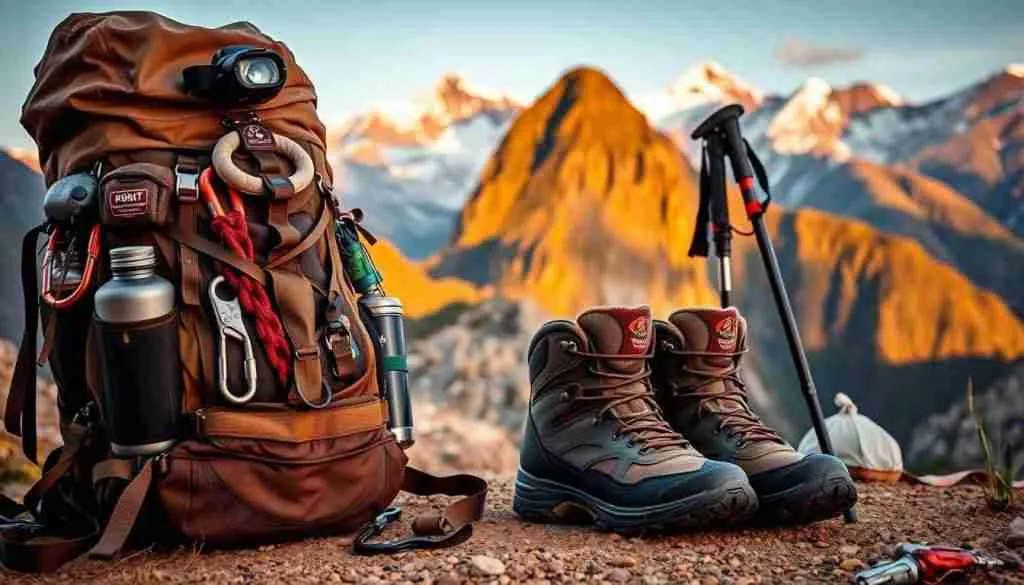
The right gear transforms challenging trails into achievable adventures. Seasoned trekkers unanimously prioritize hiking boots as their most critical equipment – 78% of trail injuries stem from poorly fitted footwear. Break in new boots gradually using this phased approach:
| Break-In Phase | Duration | Activity |
|---|---|---|
| Initial Fit | 1–2 Weeks | Short walks on flat terrain |
| Conditioning | 3–4 Weeks | Hikes with 500–1,000 ft elevation |
| Trail Simulation | Final Week | Full-weight pack on rocky paths |
Trekking poles prove indispensable for navigating uneven stone paths. A 2022 Appalachian Trail study found hikers using poles reduced knee impact by 28% on descents. “Adjustable aluminum poles provide stability without adding bulk,” advises Cusco-based guide Marco Quispe.
When assembling your packing list, follow the 80/20 rule: 80% essentials, 20% comfort items. Test your loaded backpack’s way of distributing weight during training hikes. Ideal pack weight should not exceed 20% of your body mass.
- Position heaviest items close to your back
- Use compression sacks for bulk reduction
- Waterproof electronics with zip-top bags
Regular walking sessions with gear help condition feet while revealing pressure points. Alternate between trail runners and boots during training to build versatile foot strength. Remember: gear that feels tolerable at mile 3 often becomes unbearable at mile 13.
Strength, Balance, and Mobility Workouts for High Altitude Trekking
Building functional strength and stability proves essential for navigating Andean trails. Targeted exercises prepare muscles for sustained climbs while improving balance on uneven paths. Focus on routines that mimic trekking motions, like step-ups and lateral lunges.
A blend of lower-body strength drills and core engagement creates a stable foundation. Try this 4-week routine designed by altitude fitness specialists:
| Exercise | Sets | Reps | Focus |
|---|---|---|---|
| Weighted Step-Ups | 3 | 15/side | Quad endurance |
| Piston Squats | 4 | 12/side | Joint stability |
| Plank-to-Step | 3 | 10/side | Core activation |
| Lateral Lunges | 3 | 20 | Hip mobility |
Stair climbing remains one of the most effective activities for trail preparation. “Hikers who train on actual stairs adapt 30% faster to Inca Trail steps,” notes Cusco-based trainer Rosa Mendoza. Alternate between ascending two steps at a time and sideways movements to engage different muscles.
Incorporate these elements into weekly workouts:
- Dynamic warm-ups with leg swings and ankle rotations
- 3x weekly squats variations (sumo, Bulgarian split)
- Balance drills on unstable surfaces like foam pads
- Descending practice using hiking poles for knee protection
Consistent training builds stamina while reducing injury risks. Pair strength sessions with yoga flows that enhance hip flexibility – crucial for maintaining rhythm during long ascents. This holistic approach transforms preparation into confident trail performance.
Acclimating to High Altitude and Mental Preparation for the Trek
Thin mountain air presents one of the most significant challenges along Andean trails. Smart acclimatization strategies help travelers adapt while reducing altitude sickness risks. Arriving in Cusco 48–72 hours early allows bodies to adjust to elevations above 11,000 feet before hitting the trail.
Cardio workouts over months enhance heart efficiency for oxygen-poor environments. Trail running or cycling at 70–80% max effort builds lung capacity. “Hikers with six weeks of aerobic prep experience 40% fewer altitude-related issues,” explains adventure coach Lila Torres.
Three essential prevention tactics:
- Hydrate with 3–4 liters daily – dehydration mimics altitude sickness symptoms
- Sleep at progressively higher elevations during training
- Avoid alcohol 72 hours before ascent
Mental resilience thrives through visualization techniques. Picture navigating steep trail segments while practicing box breathing – 4-second inhales, 4-second holds. This builds side focus during exhausting climbs.
For optimal adaptation:
| Preparation Phase | Elevation Exposure | Key Activity |
|---|---|---|
| Pre-Trek (2–4 weeks) | 5,000–8,000 ft | Weekend hikes |
| Arrival (Days 1–2) | 11,152 ft | Light cultural tours |
| Trek Start (Day 3+) | 12,500+ ft | Slow-paced ascents |
Combining physiological prep with mindfulness creates a dual shield against high altitude challenges. Trekkers who master both elements often describe their journey as transformative rather than taxing.
Conclusion
Embarking on the Inca Trail transforms anticipation into achievement through deliberate preparation. Progressive training schedules, tested hiking boots, and altitude adaptation form the foundation for conquering Andean paths. Each stone step rewards those who blend endurance with smart gear choices – from trekking poles that ease descents to layered clothing systems for shifting mountain weather.
Success hinges on harmonizing physical and mental readiness. Weeks of strength drills and back-to-back hikes condition legs for long days, while visualization techniques build resilience against fatigue. Acclimating in Cusco proves vital – 72 hours of gradual exposure helps bodies adjust to thin air, as detailed in our Machu Picchu trekking guide.
Final checks matter: test every item on your packing list during training walks. Properly broken-in footwear prevents blisters, while balanced loads protect joints on uneven trail segments. Whether choosing the classic route or the Salkantay Trek, preparation turns challenges into triumphs.
This journey transcends physical exertion – it’s a gateway to history etched in stone. With disciplined preparation, travelers unlock Machu Picchu’s majesty with confidence, leaving footprints among clouds and ancient wonders.
