Machu Picchu, the famous Inca citadel in the Andes, is a dream trip for many. It’s not just a day trip; trekking the Inca Trail is a journey to remember. This guide helps you plan your Machu Picchu trek, covering the Inca Trail, other routes, the best time to go, costs, and tips for your trip.
Key Takeaways
- Machu Picchu is one of the most popular destinations in Peru, attracting over 1.2 million visitors annually.
- The Inca Trail is the most famous trek to Machu Picchu, but there are also alternative routes like the Salkantay and Lares trails.
- The best time to trek to Machu Picchu is during the dry season from May to September, with the peak season being June, July, and August.
- Trekking to Machu Picchu requires advance planning and purchasing tickets, as daily visitor numbers are limited.
- Costs for Machu Picchu treks can vary widely, from around $550 for budget-friendly options to over $2,000 for luxury experiences.
- Contact us for a comfortable and personalized itinerary (Free Service)
Machu Picchu: The Lost City of the Incas
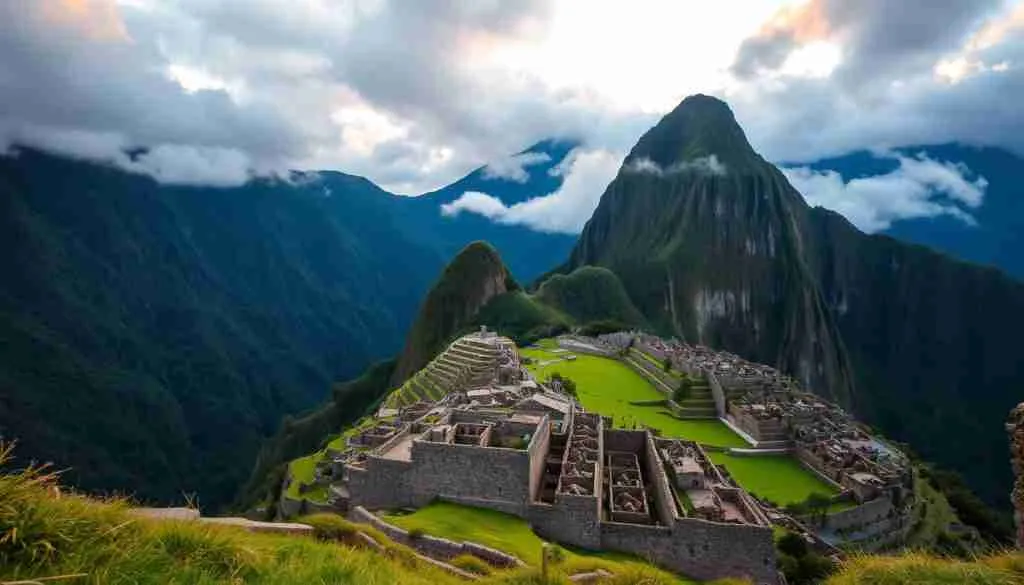
Machu Picchu is a famous Inca citadel in the Andes Mountains. It shows the skill and strength of the Inca people. Built in the 15th century, it was a royal home for the Inca emperor Pachacuti. But, the Spanish conquistadors came, and Machu Picchu was left hidden for many years.
History and Discovery of Machu Picchu
In 1911, Hiram Bingham, an American archaeologist, found Machu Picchu. His discovery showed the world the Inca civilization’s amazing work. Now, Machu Picchu is a UNESCO World Heritage Site and one of the New Seven Wonders of the World. It attracts millions of visitors each year.
Visiting Machu Picchu: Regulations and Limitations
The Peruvian government has rules to protect Machu Picchu. Only 4,500 people can visit each day, split into three time slots. There are also limits on climbing Huayna Picchu and Machu Picchu Mountain. Visitors must have a guide, with no more than 9 people per guide. These rules help keep the site safe while letting visitors see its beauty.
“Machu Picchu is an absolute must-see for any traveler to Peru. The sheer scale and beauty of this ancient Inca city will leave you in awe.”


Trekking to Machu Picchu: The Classic Inca Trail
The classic Inca trail trek to Machu Picchu is a top choice for hikers in South America. It’s a 4-day, 3-night adventure through the Andes. Here, you can dive into the Inca history and see amazing landscapes.
Day 1: Starting the Journey
The journey starts with a gentle climb through the Sacred Valley. You’ll see the Andes’ beauty. On this first day, you’ll hike 14 kilometers (8.7 miles) to an elevation of 3,300 meters (10,827 feet).
Day 2: Conquering Dead Woman’s Pass
The second day is tough, with a 16-kilometer (10-mile) hike to Dead Woman’s Pass. It’s the highest point at 4,215 meters (13,829 feet). The view from the top is worth the hard climb.
Day 3: Descending into the Cloud Forest
Day 3 is easier, with a descent into the cloud forest. You’ll hike 9 kilometers (5.6 miles) down to 2,650 meters (8,694 feet). The campsite is here.
Day 4: Reaching the Sun Gate and Machu Picchu
The last day is a 6-kilometer (3.7-mile) hike to the Sun Gate. Here, you’ll see Machu Picchu for the first time. Then, you’ll go down to explore this famous site.
“The classic Inca Trail trek to Machu Picchu is a once-in-a-lifetime experience that allows you to retrace the steps of the Inca Empire and immerse yourself in the stunning natural beauty of the Andes.”
Alternative Treks to Machu Picchu
While the Inca Trail is famous, there are other treks to Machu Picchu. These paths offer stunning views and dive into the Andean culture around Cusco.
Salkantay Trail
The Salkantay Trail is a 5-day, 4-night journey. It shows off the Andean peaks, including Salkantay mountain. This trail reaches 4,800 meters, with views from glaciers to cloud forests.
It’s less regulated than the Inca Trail. So, it’s perfect for those wanting a more off-the-beaten-path adventure.
Lares Trail
The Lares Trail is a 4-day trek that’s less crowded. It lets you meet local Andean communities. You’ll see the Andean mountains and learn about their traditional life.
This trail doesn’t need a permit for the whole trip. It’s easier to access than the Inca Trail.
These alternative machu picchu treks and cusco hiking trails offer different experiences. You can choose from the high-altitude Salkantay trek to the cultural Lares trail. They’re great alternatives to the Inca Trail.
Best Time to Hike to Machu Picchu
Planning a trip to Machu Picchu needs careful thought about the best time to go. The dry season, from May to September, is the most popular time. This season has less rain, making trails and Machu Picchu easier to access. But, it also means more visitors, leading to bigger crowds.
The shoulder seasons, April-May and October-November, offer a better balance. These times have good weather and fewer people, making your visit more intimate.
It’s key to be ready for changing weather and rain, no matter the season. Good packing and planning are vital for a comfortable and memorable trip to Machu Picchu.
| Season | Optimal Conditions | Crowd Levels |
|---|---|---|
| Dry Season (May – September) | Lower likelihood of rain, good weather | Highest crowds and busiest period |
| Shoulder Season (April-May, October-November) | Good balance of weather and fewer crowds | Moderate crowds, less congested |
The best time to hike Machu Picchu depends on your preferences and plans. By planning well, you can have an unforgettable experience at this magnificent Inca wonder.
Costs and Budgeting for Machu Picchu Trekking
Going on a trek to Machu Picchu is a once-in-a-lifetime experience. But, it’s important to know the costs involved. The price can change a lot, based on the trek type, tour operator, and how luxurious you want it.
The classic Inca Trail costs between $550 and over $2,000 for luxury tours. These prices include the trek, permits, transport, and a guide. Other treks like Salkantay and Lares are cheaper, costing between $750 and $2,000 per person.
Remember to budget for other things too, like:
- Permits: Inca Trail permits cost between $80 to $120, often included in the tour price.
- Transportation: Flights from London to Cusco can cost $425 to $850 round-trip.
- Gear: Renting trekking poles or boots adds $20 to $50 to your budget.
- Accommodation: Staying in Cusco costs $40 to $150 per night.
- Meals and tips: Tips for guides and porters are $10 to $20 daily. You’ll also need money for meals and tips.
- Miscellaneous expenses: Save $200 to $300 for souvenirs, insurance, and unexpected costs.
When planning your Machu Picchu trek, compare different tour operators to find good deals. Start planning 6 months in advance to get the best prices and availability.
| Trek Type | Approximate Cost |
|---|---|
| Inca Trail (4-day) | $739 – $980 |
| Salkantay Trek (8-day) | $1,120 |
| Lares Trek (4-day) | $569 |
With good planning and budgeting, your Machu Picchu trek can be an amazing experience that fits your budget and travel style.
Machu Picchu Trekking Travel Information
If you don’t want to trek, the train from Cusco to Aguas Calientes is the best way to get to Machu Picchu. This scenic ride takes 3.5 hours and costs between 229-1,800 PEN. You can also take a bus from Cusco to Ollantaytambo and then a train to Aguas Calientes.
Machu Picchu, the lost city of the Incas, is 50 miles (80 kilometers) northwest of Cusco. It’s one of the ‘New Seven Wonders of the World’ and a UNESCO World Heritage Site. The Inca Trail to Machu Picchu is famous for its ancient history and stunning views.
| Machu Picchu Travel Information | Details |
|---|---|
| Machu Picchu Visitor Capacity | Machu Picchu allows a maximum of 4,500 visitors per day until 2024. |
| Visitor Entry Time Slots | The daily visitor count is divided into 3 timeslots: early morning (6-8am), morning (9-11am), and afternoon (12-2pm). |
| Ticket Availability | Tickets for visiting Machu Picchu often sell out months in advance, especially for the hike. |
| Exploring Machu Picchu | There are four main circuits for exploring Machu Picchu and visitors must be accompanied by a guide. |
| Inca Trail Duration | The Inca Trail consists of 4 days of hiking, covering approximately 16 kilometers (10 miles) per day. |
| Altitude Variations | Altitude variations are significant during the Inca Trail hike, with ascents and descents of approximately 1,000 meters (3,280 feet) each day. |
| Acclimatization Recommendation | Hotels and guides advise travelers to acclimatize in Cusco for 3-5 days before commencing the Inca Trail hike. |
| Train Ticket Cost | The cost of train tickets from Cusco to Aguas Calientes, the gateway to Machu Picchu, ranges from 229 to 1,800 PEN. |
| Train Journey Duration | The train journey from Poroy to Aguas Calientes takes approximately 3.5 hours. |
The Salkantay trek is a less crowded alternative to the Inca Trail. It attracts a third of the tourists and is less expensive. The Lares Trail offers a unique cultural experience, allowing travelers to interact with local communities.
“The Inca Trail to Machu Picchu trek offers adventurers the chance to walk through 500-year-old Incan archaeological sites.”
Planning Your Machu Picchu Trek
Many travelers dream of trekking to Machu Picchu. Planning your trip is key. You’ll need to book a tour, train, and prepare for the journey.
Booking a Tour
Booking a tour is vital for the Inca Trail. Tour operators manage permits and logistics. PeruRail offers different trains, from the Expedition to the luxurious Belmond Hiram Bingham.
These trains offer a scenic ride to Machu Picchu. With only a few permits available, book early, especially from May to October.
Training and Preparation
Getting your body ready for the trek is important. Start with cardiovascular training and breaking in your hiking boots. This ensures you’re fit for the challenge.
Also, arrive in Cusco several days early. This allows for acclimatization to the high altitude before starting the trek.
With careful planning and preparation, your Machu Picchu trek will be safe, enjoyable, and unforgettable.
Packing and Gear for Machu Picchu Treks
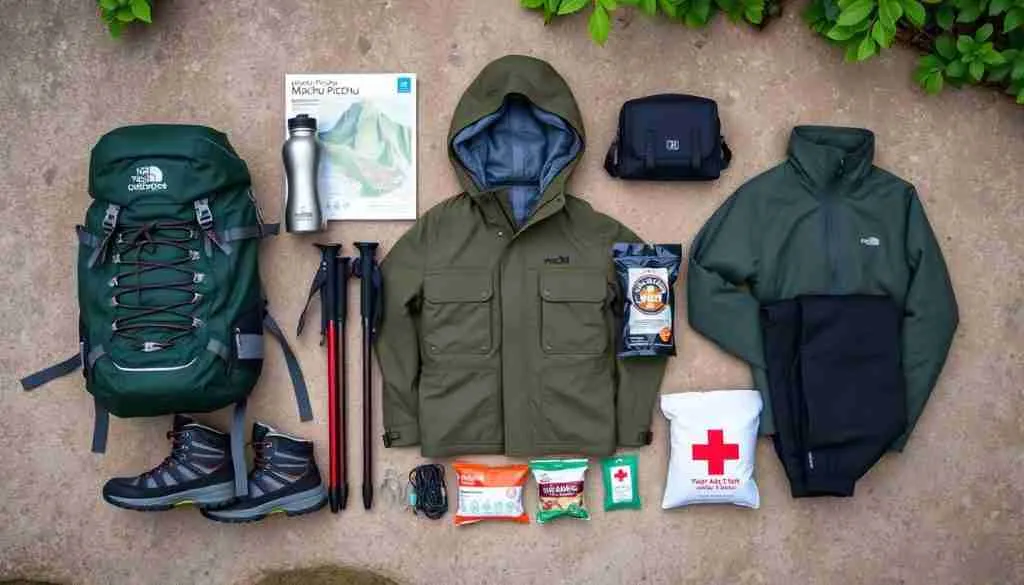
Going on a Machu Picchu trek means you need to pack smart and bring the right gear. You’ll need good hiking boots, layers, and sun protection. Each item in your backpack is important for a comfortable and successful trip.
For your feet, get a pair of sturdy, comfortable hiking boots. Columbia, Keen, Merrell, The North Face, and Salomon are top choices. Wear moisture-wicking socks to keep your feet dry and blister-free.
It’s important to layer up for the changing weather in the Andes. Bring thermal base layers, hiking shirts, fleece jackets, and waterproof outerwear. Columbia, The North Face, and Helly Hansen are good brands. Also, remember a warm hat, gloves, and a scarf for cold winds.
A good daypack is key for carrying your essentials. Look for Osprey for durable, lightweight options. Include snacks, water, sunscreen, and extra clothes in your daypack.
For sleeping, a warm, packable down sleeping bag is essential. Rab is a recommended brand for a cozy night’s sleep.
Other important items are a headlamp, trekking poles, a first-aid kit, and a portable power bank. Check bag size and weight limits for the train to Machu Picchu. Also, know what items are not allowed inside the site.
With the right gear and preparation, you’re ready for an amazing Machu Picchu adventure.
“Packing the right gear is the foundation for a successful Machu Picchu trek. With the right equipment, you can focus on the journey and immerse yourself in the breathtaking beauty of the Andes.”
Tips for Hiking to Machu Picchu
Going on a trek to Machu Picchu in Peru is a dream for many. But, it’s a big challenge due to the high altitude and tough terrain. Here are some key tips to make your Machu Picchu hike fun and successful:
- Arrive early to acclimatize: Spend a few days in Cusco or the Sacred Valley before your trek. This helps your body get used to the high altitude. It can prevent altitude sickness and make the hike easier.
- Break in your hiking boots: Make sure your hiking boots are comfortable. Wear them on long walks before your trip. This avoids blisters and discomfort on the trail.
- Pack extra snacks and hydration: The hike to Machu Picchu is tough. Bring snacks and water to keep your energy up.
- Chew coca leaves: Chewing coca leaves can help with altitude sickness and boost your energy. Many trekkers find it helpful.
- Use a hiking stick: A sturdy hiking stick helps with balance and support. It’s especially useful on the steep, uneven Inca Trail.
- Be prepared for basic hygiene challenges: Toilets along the trail might be basic. Pack biodegradable wipes and hand sanitizer to stay clean.
By following these tips for the Inca trail, Machu Picchu hiking, and Machu Picchu trekking, you’ll have a safe and memorable trip to the Lost City of the Incas.
| Key Statistic | Value |
|---|---|
| Daily Visitors to Machu Picchu (High Season) | Up to 5,000 |
| Annual Visitors to Machu Picchu | Approximately 1 million |
| Length of the Classic Inca Trail | 25 miles/40 kilometers (4-5 days) |
| Highest Point on the Inca Trail | 4,200 meters/13,779 feet |
| Elevation of Machu Picchu | 2,430 meters/7,992 feet |
| Elevation of Cusco | 3,399 meters/11,152 feet |
“The classic four-day hike to Machu Picchu is the most popular means of arrival for backpackers.”
Conclusion
Trekking to Machu Picchu is an amazing adventure. It offers stunning views, a deep dive into culture, and a sense of achievement. With the right planning, gear, and tips from this machu picchu travel guide, your trip will be unforgettable.
Choosing the Inca Trail or another route, your Machu Picchu journey will be memorable. Get your permits early, train for the hike, and pick a good guide. This way, you’ll enjoy the ruins and the rich history of this Incan site.
Start your Machu Picchu adventure with a sense of wonder and challenge. This experience will inspire you to explore more and push your limits. Happy trekking!
