House of Virgin Mary: Pilgrimage Site Near Ephesus
The House of Virgin Mary (Meryemana Evi) stands as one of Christianity’s most significant pilgrimage destinations, a modest stone chapel perched on Mount Koressos 7 kilometers from Selçuk and 5 kilometers from ancient Ephesus ruins, where Catholic tradition holds that Mary, mother of Jesus, spent her final years under the care of St. John the Apostle after Christ’s crucifixion. Discovered in 1881 following the detailed visions of German mystic Anne Catherine Emmerich who never visited Turkey but described the house’s precise location, architectural features, and surrounding landscape with uncanny accuracy, this shrine attracts hundreds of thousands of Christian and Muslim pilgrims annually who venerate Mary as Blessed Mother and honored prophet’s mother respectively, visiting the small cross-shaped chapel with original foundations potentially dating to the 1st century AD, drinking from the sacred spring believed to possess healing properties, and participating in daily Catholic Mass celebrated in this peaceful mountainside sanctuary that three popes have formally visited and blessed since papal recognition in 1896.
Key Takeaways
- Discovery Through Mystical Visions: French priest Abbé Julien Gouyet discovered the house on October 18, 1881, following descriptions from “The Life of the Blessed Virgin Mary” based on visions of Blessed Anne Catherine Emmerich (1774-1824), a bedridden German Augustinian nun who never traveled to Turkey yet provided remarkably accurate details about the house’s hillside location, architectural layout, and surrounding topography that matched the actual site’s characteristics when priests arrived decades after her death.
- Biblical and Traditional Foundation: Christian tradition bases Mary’s presence in Ephesus on Gospel of John 19:27 where crucified Jesus entrusted his mother to “the disciple whom Jesus loved” (John the Apostle), combined with historical records placing John in Ephesus during his final years where he wrote biblical texts and died, leading to logical conclusion that Mary accompanied him from Jerusalem around 37-38 AD and lived in Ephesus until her Assumption (Catholic doctrine) or Dormition (Orthodox belief) approximately 47 AD after spending her final nine years in this mountain house.
- Archaeological and Historical Evidence: The current chapel structure dates to 6th-7th century AD based on construction techniques and materials, but foundations contain stones and building methods consistent with 1st century Roman-era construction according to archaeological assessments, while local Christian communities descended from ancient Ephesians venerated the site for centuries before its “discovery,” calling it Panaya Kapulu (House of the Holy Virgin) and conducting annual August 15th pilgrimages celebrating Mary’s Assumption long before European awareness.
- Papal Recognition and Pilgrimage Status: Pope Leo XIII formally recognized the House of Virgin Mary as official Catholic pilgrimage site in 1896, Pope Pius X granted plenary indulgence for sins to pilgrims visiting the shrine, and three popes have personally visited: Pope Paul VI in 1967 bringing a bronze lamp, Pope John Paul II in 1979 celebrating outdoor Mass, and Pope Benedict XVI in 2006 celebrating Mass and briefly entering the tiny chapel, lending ecclesiastical weight despite the Vatican never officially confirming or denying the house’s authenticity.
- Interfaith Significance: Both Christians and Muslims revere the site, with Islamic tradition honoring Mary (Maryam) as mother of Prophet Isa (Jesus) and one of Islam’s most virtuous women mentioned more frequently in the Quran than in the New Testament, making the House of Virgin Mary one of few religious sites attracting substantial pilgrimage from both faith traditions who share veneration for Mary despite theological differences regarding Jesus’s nature and mission.
- Practical Visitor Information: Entrance costs approximately €12-15 (500 Turkish Lira subject to currency fluctuations), open 8:00 AM – 6:00 PM summer and 8:00 AM – 5:00 PM winter, requiring modest dress covering shoulders and knees respecting the active Catholic chapel function, with daily Mass celebrated Monday-Saturday at 5:15 PM (winter) or 6:15 PM (summer) and Sunday Mass at 10:30 AM in English, easily combined with Ephesus ancient city visits as both sites sit within 10 kilometers allowing half-day or full-day tours encompassing major Ephesian attractions.
People Also Ask About House of Virgin Mary
Did Virgin Mary really live in Turkey?
Christian tradition strongly suggests Virgin Mary lived in Ephesus, Turkey during her final years based on converging biblical evidence, historical records, archaeological findings, and centuries-old local veneration predating modern discovery. The biblical foundation rests on Gospel of John 19:26-27 where crucified Jesus tells his mother “Woman, here is your son” and tells John “Here is your mother,” with verse 27 stating “from that hour the disciple took her into his own home,” establishing John’s responsibility for Mary’s care after Christ’s death. Historical records confirm John the Apostle spent his later years in Ephesus where he wrote Gospel of John, three epistles, and Book of Revelation (written on nearby Patmos island), died of natural causes as the only apostle not martyred, and was buried at what became the Basilica of St. John in Selçuk, making logical that Mary accompanied him as established dependent. Early Christian writers including Irenaeus (130-202 AD) and Eusebius of Caesarea (260-340 AD) reference John bringing Mary to Ephesus, while the ancient Church of St. Mary built around 330 AD during Constantine’s reign represents one of Christianity’s oldest churches dedicated to Virgin Mary, with scholars noting early Church tradition avoided naming churches after saints except in locations made sacred by their residence or death. Local Christian communities descended from ancient Ephesian Christians venerated the mountain house site for centuries before 1881 “discovery,” conducting annual August 15 pilgrimages celebrating Mary’s Assumption and calling it Panaya Kapulu (House of Holy Virgin) in unbroken tradition suggesting authentic historical memory rather than invented devotion. Archaeological evidence shows current chapel foundations contain 1st century construction elements, while the house location matches both Blessed Anne Catherine Emmerich’s detailed visions and geographic logic for residential site outside crowded Ephesus city providing peaceful retirement location. However, competing Jerusalem tradition claims Mary died in the Holy Land, with the Church of Dormition on Mount Zion marking her traditional burial site, and the Catholic Church has never officially declared either location authentic, leaving both traditions valid for faithful adherents. The question ultimately rests on faith and tradition rather than definitive archaeological proof, though the Ephesus evidence represents substantial cumulative support making Mary’s Turkish residence plausible and widely accepted among pilgrims from multiple Christian denominations.
What did Anne Catherine Emmerich see in her visions?
Blessed Anne Catherine Emmerich (1774-1824) experienced extensive mystical visions describing Virgin Mary’s final years in extraordinarily detailed accounts recorded by German poet Clemens Brentano who visited the bedridden nun daily 1819-1824, transcribing her descriptions of Mary’s house near Ephesus, the surrounding landscape, architectural features, and circumstances of Mary’s death with specificity that enabled French priests to locate the actual building decades after Emmerich’s death despite neither she nor Brentano ever visiting Turkey. Emmerich’s visions placed Mary’s dwelling “three to four hours distant” from Ephesus proper rather than within the city, situated “on a hill to the left of the road from Jerusalem” with the hill sloping steeply toward Ephesus, approached via “narrow paths leading southwards to a hill near the top of which is an uneven plateau.” She described the house as built with “rectangular stones, rounded or pointed at the back” featuring “windows high up near the flat roof,” divided into two compartments by a central hearth with the fireplace sunk into ground beside a wall opposite the entrance door, matching the actual discovered structure’s architectural layout closely. Emmerich specified Mary came to Ephesus five years after Christ’s crucifixion (approximately 38 AD) brought by St. John who had built the house for her, where she lived her final nine years until death at age 64 (Jewish calendar age calculation), describing the Assumption where apostles miraculously gathered from distant missions sensing Mary’s impending death, witnessed her peaceful passing, and prepared elaborate funeral with temporary burial in Gethsemane before her bodily assumption into heaven. The visions included minute details about Ephesus’s topography, Mary’s daily routines, her small bedroom converted to the current chapel’s altar location, a natural spring providing water near the house (matching the actual sacred spring at the site), and surrounding vegetation creating secluded peaceful environment hidden from Ephesus city observation. Brentano published “The Dolorous Passion of Our Lord Jesus Christ” in 1833 and posthumously “The Life of the Blessed Virgin Mary” in 1852 containing these Ephesus descriptions that French priest Abbé Julien Gouyet used as literal guide discovering the house on October 18, 1881, finding buildings, topography, and landscape features matching Emmerich’s accounts with remarkable precision despite her never leaving Germany or accessing maps, travel guides, or contemporary descriptions of unexcavated Ephesus. However, Vatican investigations during Emmerich’s beatification process (1892-2004) revealed Brentano had consulted apocryphal biblical sources, maps, and travel guides while editing his notes, raising questions about whether all published material originated purely from Emmerich’s visions or incorporated Brentano’s research enhancements, leading Vatican to base her 2004 beatification by Pope John Paul II on personal sanctity and virtue rather than visions’ authenticity, though the house’s actual existence matching core vision descriptions suggests genuine mystical knowledge beyond available contemporary information regardless of Brentano’s editorial additions.
Why is the House of Virgin Mary important for Muslims?
Muslims revere the House of Virgin Mary because Islamic theology honors Maryam (Mary) as one of the most virtuous women in history, mother of Prophet Isa (Jesus), chosen by Allah for miraculous virgin birth, and exemplar of purity, devotion, and submission to divine will, making any site connected to her earthly life worthy of Muslim pilgrimage and veneration despite theological differences with Christianity regarding Jesus’s nature and mission. The Quran mentions Mary more frequently than the New Testament (34 times versus 19), dedicates an entire surah (chapter 19) to her titled “Maryam,” describes her miraculous virgin birth of Jesus in detail closely paralleling Christian accounts (Quran 3:45-47, 19:16-35), establishes her as one of four perfect women in Islamic tradition alongside Khadija (Muhammad’s first wife), Fatima (Muhammad’s daughter), and Asiya (Pharaoh’s wife who raised Moses), and presents her as chosen above all women for her extraordinary spiritual purity and devotion (Quran 3:42). Islamic tradition teaches Mary’s father was Imran (equivalent to Christian tradition’s Joachim), her mother Hannah (Saint Anne in Christianity), both elderly and childless when Hannah prayed for a child and vowed to dedicate the baby to God’s service, leading to Mary’s birth and childhood in the temple under priest Zechariah’s guardianship where she received miraculous sustenance directly from heaven demonstrating Allah’s favor. When Angel Gabriel announced Jesus’s virgin birth, Mary responded with humble submission accepting divine will despite scandal and difficulty this would create in her community, earning eternal honor for her unwavering faith and trust in Allah’s plan. Muslims visiting the House of Virgin Mary seek blessings (barakah) from connecting to this holy woman’s earthly residence, pray for intercession through her elevated spiritual status, drink from the sacred spring believed to carry healing properties blessed by Mary’s presence, and honor her as bridge between Islamic and Christian faiths representing shared Abrahamic heritage despite theological divergences. The site’s importance for Muslims reflects Islam’s unique position among world religions honoring both Jesus and Mary as significant prophetic figures while maintaining distinct theological framework different from Christianity, creating rare interfaith pilgrimage destination where Muslims and Christians worship alongside each other venerating the same holy woman for partially overlapping but significantly different religious reasons. Turkish Muslim communities have protected and maintained the site for centuries even before formal Christian pilgrimage resumption, with local residents guiding French priests to the house in 1891 explaining its traditional status as Panaya Kapulu (House of Holy Virgin) preserved through Islamic custodianship when Christian population declined following Ottoman conquest, demonstrating Muslim commitment to protecting sites important to other Abrahamic faiths as theological responsibility recognizing shared spiritual heritage connecting Judaism, Christianity, and Islam through common prophetic narratives and veneration of righteous predecessors.
How much time should I spend at the House of Virgin Mary?
Most visitors spend 30-60 minutes at the House of Virgin Mary allowing time for chapel interior exploration, sacred spring visit, prayer or contemplation, grounds walking, and souvenir shopping without rushed experience, though devout pilgrims attending Mass or seeking extended prayer time may allocate 90 minutes to 2 hours particularly during Sunday 10:30 AM English Mass or special religious observances. The chapel interior takes 10-15 minutes to thoroughly view given its modest size containing single main room with central altar and Virgin Mary statue, smaller side room believed to be Mary’s actual bedroom converted to meditation space, walls lined with candles creating peaceful ambiance, and minimal interior decoration respecting shrine’s sacred simplicity and historical authenticity. Visiting the sacred spring located down stone steps from chapel requires additional 5-10 minutes walking to the three-spout fountain where pilgrims drink water believed to possess healing properties, fill bottles for home transport, wash hands and faces in devotional gesture, or simply contemplate the natural spring’s continuous flow maintained throughout centuries connecting contemporary pilgrims to ancient water source Mary herself likely used during her residence. Walking the peaceful grounds surrounding the chapel adds 10-20 minutes exploring well-maintained gardens with religious statuary, benches for contemplation, viewpoints overlooking valley toward distant Ephesus ruins and Aegean Sea, plaques describing papal visits and house history, and general atmosphere of serene mountain sanctuary removed from tourist crowds characterizing nearby Ephesus ancient city. The wish wall outside chapel entrance attracts visitors writing prayer requests on cloth strips tied to metal fence, photographing the colorful display of thousands of pilgrims’ hopes and petitions, and adding personal prayers to the collective tapestry of global faithful seeking Mary’s intercession, requiring 5-10 minutes for participation and documentation. The modest gift shop near entrance sells religious items including rosaries, medals, prayer cards, books about Virgin Mary and Anne Catherine Emmerich’s visions, blessed water bottles for sacred spring collection, and general Ephesus souvenirs, with browsing and purchasing taking 10-15 minutes for those interested in devotional keepsakes or gifts. Photographers allocate extra time capturing chapel exterior featuring distinctive red doors and white walls, mountainside setting with Mediterranean vegetation, spring area’s peaceful atmosphere, and panoramic valley views, particularly during golden hour creating beautiful lighting though the site closes at 6:00 PM summer (5:00 PM winter) limiting late afternoon photography. Combining House of Virgin Mary with Ephesus ancient city visits creates efficient half-day or full-day itinerary since sites sit only 5 kilometers apart, with most organized tours allocating 45 minutes to 1 hour at Virgin Mary house before or after 2-3 hour Ephesus ruins exploration, making combined visits practical for cruise passengers or travelers based in Kuşadası, İzmir, or Selçuk seeking comprehensive Ephesian historical and religious experience in single outing. Independent visitors renting cars or hiring taxis enjoy flexibility extending Virgin Mary house visits according to personal interest and devotional needs, arriving early morning before tour bus crowds (8:00 AM opening) or late afternoon when groups depart creating peaceful contemplation environment, particularly valuable for those attending daily Mass requiring presence during specific celebration times rather than brief tourist stop.
Extended multi-day tours – 5+ days
Featured Kusadasi Multi-Day Tour Packages
1 days
Ephesus Ancient City And House Of Mary Tour from Kuşadasi, Izmir
- ✓ Comprehensive Kusadasi tour
- ✓ Expert local guides included
- ✓ All accommodation arranged
- ✓ Transportation provided
4 days
Kusadasi Essentials – 4 Days with Ephesus & Pamukkale Tours
- ✓ Comprehensive Kusadasi tour
- ✓ Expert local guides included
- ✓ All accommodation arranged
- ✓ Transportation provided
3 days
Kusadasi Essentials – 3 Days with Ephesus & Pamukkale Tours
- ✓ Comprehensive Kusadasi tour
- ✓ Expert local guides included
- ✓ All accommodation arranged
- ✓ Transportation provided
1 days
Daily Pamukkale Tour from Kusadasi
- ✓ Comprehensive Kusadasi tour
- ✓ Expert local guides included
- ✓ All accommodation arranged
- ✓ Transportation provided
Multi-day tour packages powered by TourRadar. Prices and availability subject to change.
Historical Background and Biblical Foundation
Understanding the House of Virgin Mary’s significance requires examining both biblical evidence for Mary’s presence in Ephesus and historical context of early Christian community development in this strategic Mediterranean port city that became Christianity’s Asian headquarters during apostolic age.
Biblical Evidence for Mary in Ephesus
The Gospel of John provides foundation for Mary’s Ephesian residence through the crucifixion narrative where Jesus, suffering on the cross, addresses his mother and beloved disciple: “When Jesus saw his mother and the disciple whom he loved standing beside her, he said to his mother, ‘Woman, here is your son.’ Then he said to the disciple, ‘Here is your mother.’ And from that hour the disciple took her into his own home” (John 19:26-27). This passage establishes John the Apostle’s responsibility for Mary’s care after Jesus’s death, creating filial relationship transcending biological kinship and obligating John to provide housing, sustenance, protection, and companionship for Mary throughout her remaining years. Historical evidence confirms John spent his final decades in Ephesus where he served as bishop, wrote the Gospel of John, three epistles bearing his name, and Book of Revelation (composed on nearby Patmos island during temporary exile), making Ephesus his primary residence from approximately 60s AD until natural death around 100 AD as only apostle not suffering martyrdom according to universal Christian tradition.
The logical conclusion combines Jesus’s crucifixion directive with John’s documented Ephesian residency: if John lived in Ephesus and Jesus commanded him to care for Mary as his own mother, Mary necessarily lived in Ephesus under John’s protection unless evidence demonstrates she remained elsewhere, which no biblical text provides. Early Christian writers support this conclusion, with Irenaeus of Lyon (130-202 AD), student of Polycarp who himself learned directly from John, referencing John’s Ephesian ministry and connections to Mary, while Eusebius of Caesarea (260-340 AD), early Church historian, describes John bringing Mary to Ephesus and establishing Christian community there. These patristic sources create documented chain of testimony linking biblical crucifixion scene to historical Ephesian residence, though specific details about Mary’s house, daily life, and death circumstances remain largely unrecorded in surviving ancient texts beyond general Ephesian location.
Ephesus as Early Christian Center
Ephesus ranked among ancient world’s most important cities, serving as capital of Roman province of Asia with population exceeding 250,000 at its peak, controlling vital trade routes connecting Mediterranean markets with Asian interior, housing magnificent Temple of Artemis (one of Seven Wonders of Ancient World), and functioning as political, commercial, and cultural hub for entire region. This strategic significance made Ephesus natural center for early Christianity’s expansion into Asia Minor, with St. Paul conducting extensive missionary work in Ephesus during his third journey (Acts 19), establishing church community that became one of Christianity’s most important congregations, mentioned in Book of Revelation as first of seven churches receiving messages from heavenly Christ (Revelation 2:1-7).
St. John’s arrival in Ephesus, likely during 60s AD following Jerusalem’s increasing dangers for Christian leaders and eventual Roman destruction in 70 AD, established apostolic authority in city already containing significant Christian population from Paul’s earlier ministry. John’s leadership transformed Ephesus into Christianity’s Asian headquarters where theological disputes were resolved, doctrinal positions clarified, and missionary work coordinated across Asia Minor’s burgeoning Christian communities. The 431 AD Council of Ephesus, third ecumenical council, proclaimed Mary as Theotokos (Mother of God), affirming Christ’s full divinity and humanity while honoring Mary’s role in incarnation, suggesting early Christian community in Ephesus maintained special devotion to Mary possibly derived from her actual residence and local memory of her presence, making Ephesus logical location for ecumenical council addressing Marian theology.
The Church of St. Mary in Ephesus, built around 330 AD during Emperor Constantine’s legalization of Christianity, represents one of world’s oldest churches dedicated to Virgin Mary, constructed during period when Church tradition typically named churches after saints only in locations made sacred by their residence or death according to scholarly interpretation of early Christian naming practices. This dedication suggests strong local tradition associating Mary with Ephesus, predating much later medieval Marian devotion and indicating possible historical memory preserved through oral tradition or written records lost to subsequent centuries. The church’s proximity to St. John’s tomb and Basilica (also Ephesian locations) reinforces interconnected narrative of John and Mary residing together in city where both left lasting spiritual legacy through their presence, teachings, and eventual deaths marking locations as pilgrimage destinations for subsequent generations.
Anne Catherine Emmerich and the House Discovery
The modern rediscovery of the House of Virgin Mary represents one of history’s most unusual archaeological discoveries, resulting not from systematic excavation or scholarly research but from following mystical visions of German nun who never traveled beyond her local region yet described remote Turkish landscape and ancient architecture with uncanny accuracy enabling French priests to locate specific building decades after her death.
The Life and Visions of Anne Catherine Emmerich
Anna Katharina Emmerick was born September 8, 1774, in Flamschen near Coesfeld, Westphalia, Germany, to peasant farming family living in poverty that prevented her from entering religious life until age 29 when Poor Clares monastery in Münster accepted her conditional on learning to play organ. She professed vows in 1803 as Augustinian nun, becoming known for strict observance of monastic rule despite chronic poor health limiting physical activities. From 1812 onward, Emmerich reportedly experienced stigmata—wounds corresponding to Christ’s crucifixion appearing on her hands, feet, and side—attracting widespread attention from religious authorities, skeptics, and curious visitors seeking to witness or debunk the phenomenon. Confined to bed from 1813 until death February 9, 1824, Emmerich spent final decade receiving numerous visitors including clergy, nobility, scholars, and peasants seeking spiritual guidance, healing, or confirmation of her reported mystical experiences.
German Romantic poet Clemens Brentano (1778-1842) visited Emmerich in 1818, initially skeptical of her visions but becoming convinced of their authenticity after extended conversations. Brentano remained in Dülmen, Emmerich’s residence town, from 1819 to 1824, visiting her daily and recording extensive notes from their conversations as Emmerich described visions of biblical events, Mary’s life, Jesus’s passion, and various locations including the Ephesus house. Emmerich spoke only Westphalian dialect, preventing Brentano from transcribing verbatim, so he would listen carefully, leave her presence, then quickly write German summaries from memory in his apartments, creating potential for inaccuracy, embellishment, or unconscious modification of original accounts. Brentano edited these notes extensively over subsequent years, consulting maps, travel guides, and biblical scholarship while preparing manuscripts for publication, raising questions about which material originated purely from Emmerich’s visions versus Brentano’s editorial additions or research-based enhancements.
Brentano published “The Dolorous Passion of Our Lord Jesus Christ According to the Meditations of Anne Catherine Emmerich” in 1833, nine years after Emmerich’s death, followed posthumously by “The Life of the Blessed Virgin Mary” in 1852, ten years after Brentano’s own death. These volumes contained extraordinarily detailed descriptions of Mary’s house near Ephesus including its hillside location specific distance from city, architectural features, interior layout, surrounding landscape, and topographic relationships that provided literal roadmap for future investigators despite containing elements potentially added or modified by Brentano’s editing process. When Vatican investigated Emmerich’s beatification cause beginning 1892, scholarly analysis comparing Brentano’s original notebooks with published books revealed significant editorial modifications, source material consultations, and potential enhancements raising serious doubts about published visions’ authenticity as pure transcriptions of Emmerich’s accounts. The Vatican suspended beatification process in 1928, resuming only after deciding to evaluate Emmerich’s personal sanctity and virtuous life rather than visions’ accuracy, leading to beatification by Pope John Paul II on October 3, 2004, explicitly not as visionary but as exemplary Christian whose holiness merited veneration regardless of visions’ disputed authenticity.
Discovery of the House: 1881-1891
French priest Abbé Julien Gouyet, residing in Paris, read Brentano’s “Life of the Blessed Virgin Mary” and became fascinated by detailed Ephesus house descriptions, deciding to search for the building despite skepticism from colleagues dismissing visionary accounts as pious fiction unworthy of serious investigation. On October 18, 1881, Gouyet traveled to Turkey, located Ephesus ruins (then partially excavated compared to today’s extensive archaeological site), and using Emmerich’s descriptions as guide, climbed Mount Koressos finding small stone building in landscape matching visionary accounts with remarkable precision. The building sat approximately 7 kilometers from ancient Ephesus, positioned on hill sloping toward city, partially hidden by Mediterranean vegetation, featuring rectangular stone construction with distinctive architectural elements matching Emmerich’s descriptions. Gouyet believed he had discovered Mary’s actual house, but his announcement received minimal serious attention from Catholic authorities or scholarly community, with most dismissing his claims as coincidental discovery of random Byzantine-era chapel rather than 1st century apostolic residence.
Sister Marie de Mandat-Grancey, DC (Daughters of Charity), read about Gouyet’s discovery and convinced Lazarist missionaries based in Smyrna (modern İzmir) to organize systematic search using Emmerich’s descriptions. On July 29, 1891, exactly ten years after Gouyet’s discovery, Fathers Eugène Poulin and Henri Jung, accompanied by small expedition team, rediscovered the same building Gouyet had found, conducting more thorough investigation of site, surrounding area, and local residents’ knowledge. They learned crucial information: villagers from nearby Şirince (formerly Greek Christian village Kirkince, 17 kilometers distant) had venerated the ruined building for centuries, calling it Panaya Kapulu (House of Holy Virgin in Turkish-Greek), conducting annual August 15 pilgrimages celebrating Mary’s Assumption with prayers, liturgy, and devotional activities predating any European awareness or Emmerich’s visions. This local tradition suggested authentic historical memory transmitted across generations from ancient Ephesian Christian communities to medieval Greek Christian descendants to Ottoman-era Turkish Christians maintaining devotion despite religious and political changes across centuries.
The 1891 rediscovery attracted immediate attention from Catholic leadership, with Archbishop of Smyrna visiting site, authorizing archaeological investigations, and supporting development as pilgrimage destination. Excavations revealed building foundations containing 1st century construction elements beneath later Byzantine-era chapel additions, suggesting continuous occupation or rebuilding on site sacred from earliest Christian period. Archaeologists identified building materials, construction techniques, and architectural features consistent with Roman-era methods, though conclusive dating to 1st century versus later centuries remained impossible without more extensive excavation potentially damaging fragile structure. The discovery of natural spring near house matching Emmerich’s descriptions provided additional confirmation of visionary accuracy, as did landscape features, topographic relationships, and architectural layout all corresponding to published accounts despite Emmerich and Brentano never visiting Turkey or consulting detailed maps unavailable during early 1800s when visions occurred.
Restoration and Papal Recognition
The Lazarist order assumed responsibility for site management, conducting extensive restoration 1892-1896 to stabilize deteriorating structure, create proper chapel interior, install altar and devotional furnishings, clear surrounding vegetation, and establish access paths enabling pilgrimage visits. Pope Leo XIII formally recognized the House of Virgin Mary as official Catholic pilgrimage site in 1896 based on mounting evidence including archaeological findings, local Christian tradition, correspondence to Emmerich’s descriptions, and spiritual significance for faithful believers regardless of absolute historical certainty about Mary’s actual residence. This papal recognition didn’t declare the house definitively authentic as Mary’s dwelling but acknowledged its legitimate status as pilgrimage destination worthy of Catholic devotion and veneration, careful distinction maintaining theological prudence while permitting popular piety. Pope Pius X granted plenary indulgence to pilgrims visiting the shrine, remitting temporal punishment for sins for those making journey in proper spiritual disposition, elevating site’s official status within Catholic devotional practices.
Annual organized pilgrimages began 1896, though World War I disrupted activities forcing temporary closure and suspension of regular pilgrimages. The Turkish Republic’s establishment under Atatürk created uncertain political environment for Christian religious sites, but government constructed paved access road to the house in late 1940s facilitating pilgrimage resumption, demonstrating secular Turkish state’s commitment to preserving and promoting important religious heritage sites benefiting tourism economy while respecting minority Christian population’s devotional needs. Final major restoration occurred 1951 under Archbishop of İzmir’s supervision, creating current chapel structure while preserving original foundations, installing modern amenities (electricity, restrooms, paths, protective barriers), and landscaping grounds to accommodate increasing tourist and pilgrim traffic without compromising site’s sacred atmosphere or architectural integrity.
Three popes have personally visited the House of Virgin Mary lending supreme ecclesiastical authority to the pilgrimage site: Pope Paul VI in 1967 celebrating Mass and presenting bronze lamp to chapel, Pope John Paul II in 1979 conducting outdoor Mass for thousands of pilgrims gathered on mountainside, and Pope Benedict XVI in 2006 celebrating Mass after briefly entering tiny chapel interior for private prayer. These papal visits represent extraordinary validation for pilgrimage site given Vatican’s careful avoidance of declaring absolute historical authenticity, with popes honoring devotional significance and spiritual value for faithful believers while maintaining theological distinction between confirmed historical fact versus pious tradition worthy of veneration. The Vatican has never officially pronounced for or against the house’s authenticity, maintaining neutral position allowing faithful to embrace tradition based on personal devotion while avoiding doctrinal commitment to specific historical claims lacking definitive archaeological or documentary proof.
The Chapel and Sacred Grounds Today
The modern House of Virgin Mary functions as active Catholic chapel conducting daily Mass and providing pilgrimage destination for hundreds of thousands of annual visitors from diverse Christian denominations and Muslim faithful who share veneration for Mary despite theological differences regarding Jesus’s nature and Christian doctrine.
Chapel Architecture and Interior Layout
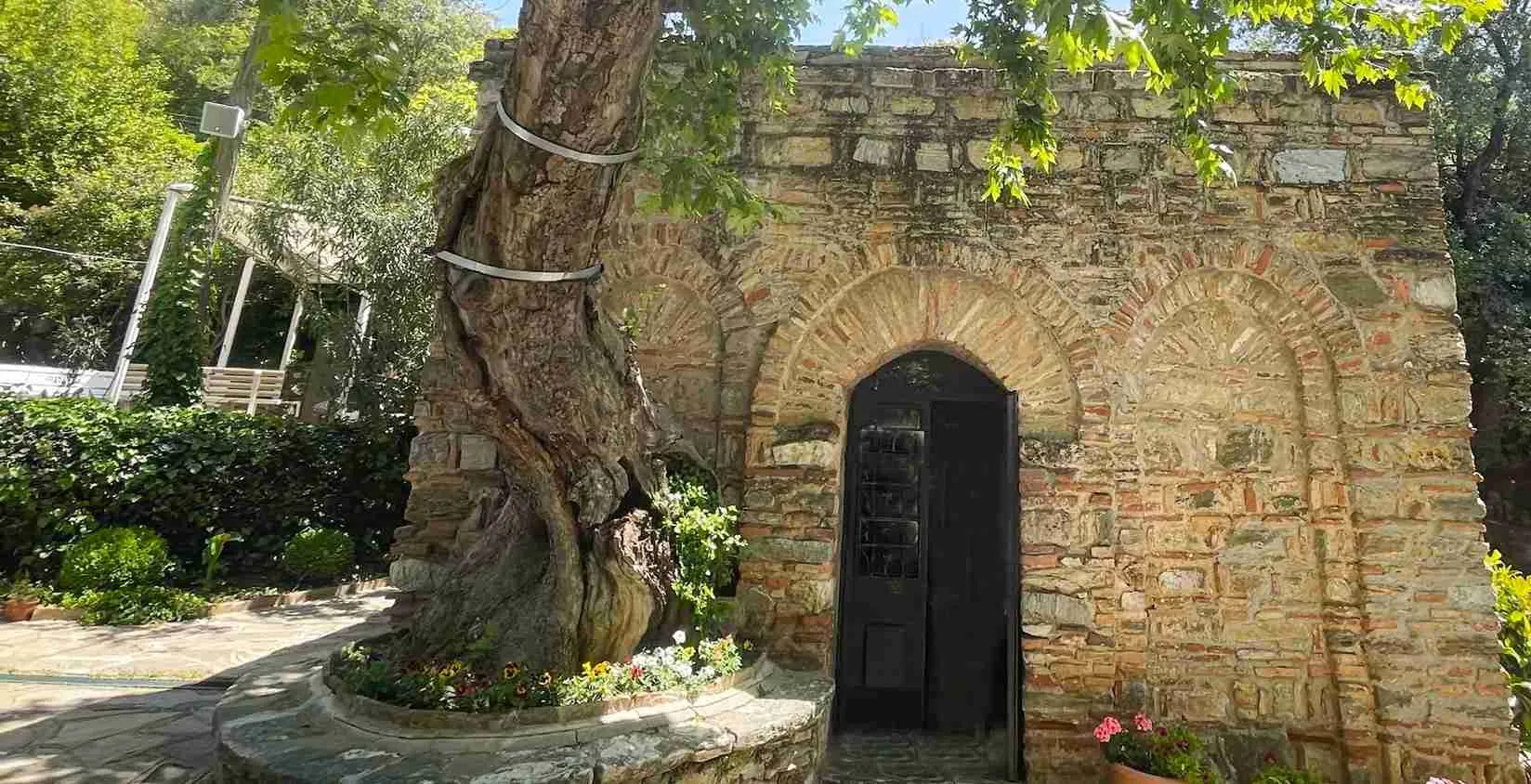
The chapel exterior presents modest stone structure with whitewashed walls, distinctive red entrance doors, cross-shaped architectural plan typical of Byzantine churches, and small dome crowning central nave, creating simple yet dignified appearance appropriate for humble dwelling believed to house Mary during her earthly final years. The building dimensions remain compact with main chapel measuring approximately 12 meters long by 5 meters wide, reflecting house’s original residential scale rather than grand church architecture, preserving authentic sense of intimacy and simplicity consistent with apostolic-era Christian dwellings. Original 1st century foundations visible beneath later Byzantine additions contain rectangular stones with construction techniques matching Roman-era building methods, though extensive renovations and additions across centuries make isolating purely 1st century elements challenging without destructive archaeological investigation Church authorities wisely avoid to preserve structural integrity and devotional function.
Entering the chapel, pilgrims encounter single main room dominated by central altar positioned against far wall beneath circular alcove containing statue of Virgin Mary, surrounded by perpetually burning candles creating warm glow in otherwise dim interior lit only by minimal natural light from high windows preserving contemplative atmosphere. The walls display religious artwork, devotional plaques, and ex-voto offerings from grateful pilgrims attributing healing, answered prayers, or spiritual graces to Mary’s intercession obtained through visiting her house. The floor contains simple stone tiles worn smooth by millions of pilgrims’ footsteps across decades, while wooden benches along side walls provide seating for contemplation, prayer, or Mass attendance in cramped quarters accommodating perhaps 30-40 people comfortably for liturgical celebrations.
The smaller side room accessible from main chapel represents traditionally identified location of Mary’s actual bedroom where she slept during Ephesian residence and possibly died before her Assumption according to pious tradition and Emmerich’s visions. This chamber contains minimal furnishings—simple altar, candles, small kneeler—creating meditative space for pilgrims seeking intimate connection to Mary’s earthly life through prayer in room potentially used by Holy Mother herself. The bedroom’s modest scale and sparse decoration emphasize poverty and simplicity characterizing Mary’s life, contrasting sharply with elaborate Marian shrines in European cathedrals where golden statues, jeweled crowns, and ornate architecture create different devotional atmosphere less connected to historical Jesus movement’s humble origins among working-class Jews in Roman-occupied Palestine.
The Sacred Spring and Healing Waters
Descending stone steps from chapel entrance, pilgrims reach sacred spring emerging from mountainside and flowing through three-spout fountain where visitors drink, collect bottled water, and wash hands/faces in devotional gesture. Christian pilgrims attribute healing properties to the spring water based on popular piety traditions associating Mary’s presence with miraculous healings, viewing physical contact with water from Mary’s household source as potential channel for divine grace, intercessory prayer answered, or spiritual renewal beyond mere physical refreshment. Muslims similarly venerate the spring as blessed by Mary’s (Maryam’s) purity and closeness to Allah, drinking water seeking barakah (blessing) and approaching the spring with respect due to connection with honored prophet’s mother.
Scientific analysis reveals the spring water as potable natural mountain spring water with mineral content typical for Turkish Aegean region, without unusual chemical properties or objectively measurable “healing” characteristics beyond normal hydration and mineral intake benefits. However, pilgrims continue reporting subjective healing experiences, spiritual consolation, answered prayers, or renewed faith after visiting spring and drinking its waters, creating ongoing tradition of miraculous attribution regardless of scientific testing’s negative results for supernatural properties. The spring’s continuous flow for centuries provides tangible connection to ancient past, as water emerging from same underground sources Mary herself would have accessed for household needs creates direct physical link across two millennia connecting contemporary pilgrims to apostolic-era daily life.
Pilgrims collect spring water in bottles for home transport, blessing family members unable to make pilgrimage, distributing to sick friends/relatives hoping for healing, or preserving as treasured devotional object maintaining connection to pilgrimage experience. Some visitors simply photograph the spring, add prayer to wish wall, or sit contemplatively near flowing water without drinking, while others conduct elaborate devotional rituals including prayer recitation, rosary prayers, hymn singing, or personal petitions made in sacred space believed to carry special efficacy given proximity to Mary’s earthly residence and holy spring waters.
Wish Wall and Pilgrimage Traditions
Outside chapel entrance, metal fence serves as “wish wall” where pilgrims tie cloth strips bearing written prayer requests, creating colorful tapestry of thousands of petitions from global faithful seeking Mary’s intercession for healing illnesses, resolving family problems, finding employment, conceiving children, passing examinations, or countless other human needs and desires brought to Mary as Blessed Mother compassionate to human suffering. The tradition likely derives from ancient pagan practices of tying votive offerings to sacred trees or springs, Christianized through Marian devotion reframing practice as prayer requests rather than magical incantations, though folk religion elements persist in popular understanding of wish wall’s function among less theologically sophisticated pilgrims viewing cloth strips as automatic prayer activation rather than symbolic reminder to pray continually for stated intentions.
The wish wall demonstrates universal human impulse to seek transcendent assistance for temporal problems, with prayer requests revealing intimate details of pilgrims’ lives, hopes, fears, relationships, illnesses, financial struggles, and family conflicts shared publicly through written petitions visible to all subsequent visitors creating community of suffering, hope, and mutual intercession. Reading the wish wall becomes moving experience as pilgrims encounter others’ written pain, adding their own struggles to collective cry for help addressed to Mary as Mother of Sorrows who herself witnessed Son’s crucifixion and understands maternal anguish watching loved ones suffer.
Visiting the House of Virgin Mary: Practical Information
Successfully visiting the House of Virgin Mary requires understanding entrance procedures, appropriate behavior for sacred site, Mass schedules, accessibility considerations, and strategies for combining with Ephesus ancient city tours creating comprehensive religious and historical Ephesian experience.
Entrance Fees, Hours, and Access
Entrance costs approximately €12-15 (500 Turkish Lira subject to significant currency fluctuation given Turkish economic volatility), paid at ticket booth near parking area before walking uphill path to chapel entrance. Credit cards are accepted at ticket booth contrary to some outdated information claiming cash-only payment, though carrying Turkish Lira cash provides backup option if card systems malfunction. Children under age 8 enter free with passport presented for age verification. The ticket price does not include Ephesus ancient city entrance (€40 separate fee) or other nearby attractions (St. John’s Basilica, Ephesus Archaeological Museum), making combined visits require multiple separate ticket purchases unless participating in organized tour bundling entrance fees into single package price.
Operating hours follow seasonal schedule: 8:00 AM – 6:00 PM during summer season (April-October) and 8:00 AM – 5:00 PM during winter season (November-March), with last entry permitted 30 minutes before closing time. The site operates daily year-round including Sundays and religious holidays, though Mass schedules vary as described below. Arriving at opening time (8:00 AM) avoids tour bus crowds that begin arriving mid-morning, creating peaceful contemplative atmosphere for early visitors before tourist traffic intensifies. Late afternoon visits benefit from thinning crowds as tour groups depart for scheduled dinner reservations, though summer season’s extended 6:00 PM closing allows adequate exploration time even for late afternoon arrivals.
Accessing the house requires private vehicle, taxi, or organized tour transportation, as public dolmuş (minibus) service does not reach the mountaintop location reliably. From Selçuk (nearest town, 7 kilometers distant), taxis charge approximately €15-20 one-way, making round-trip transportation expensive for budget travelers unless shared among multiple passengers. From Kuşadası (major cruise port and resort town, 18 kilometers distant), taxis cost €25-35 each direction. Organized half-day or full-day tours from Selçuk, Kuşadası, or İzmir typically include House of Virgin Mary combined with Ephesus ancient city, St. John’s Basilica, and sometimes Ephesus Archaeological Museum or Terrace Houses, providing comprehensive Ephesian touring with included transportation and guide services at €50-80 per person depending on group size and tour extent.
Dress Code and Behavioral Expectations
The House of Virgin Mary functions as active Catholic chapel, not merely historical museum, requiring visitors to observe modest dress code respecting sacred space used for Mass celebration, prayer, and religious devotion. Shoulders must be covered (no sleeveless shirts, tank tops, or spaghetti strap dresses), knees must be covered (no shorts above knee length or short skirts/dresses), and low-cut shirts displaying cleavage are prohibited. These requirements apply to both men and women, with men specifically prohibited from wearing athletic shorts, jersey shorts, or sandals with shorts combinations considered disrespectful. Visitors wearing inappropriate clothing may be denied entry or provided covering scarves/wraps at entrance, though better to dress appropriately initially rather than relying on temporary covering options.
Behavioral expectations include maintaining quiet respectful atmosphere inside chapel given ongoing prayer and contemplation by devout pilgrims, limiting photography to non-flash images that don’t disturb others, avoiding eating/drinking inside chapel building (though permitted in outdoor grounds), respecting Mass times by sitting quietly if attending or exiting promptly if not participating, and treating devotional objects, candles, religious artwork, and sacred furnishings with appropriate reverence. Children must be supervised closely to prevent running, shouting, or disruptive behavior inconsistent with chapel’s sacred function. Some visitors unfamiliar with Catholic traditions may require gentle guidance from staff or other pilgrims about appropriate behavior, receiving such correction graciously rather than defensively helps maintain peaceful atmosphere benefiting all visitors.
Mass Schedule and Attendance
Daily Catholic Mass is celebrated at the House of Virgin Mary providing opportunity for devout pilgrims to participate in Eucharistic liturgy at site deeply connected to Mary’s earthly life, creating profound spiritual experience linking contemporary worship to apostolic-era Christian origins. Monday through Saturday, Mass is celebrated at 5:15 PM during winter season (November-March) and 6:15 PM during summer season (April-October), typically in Turkish language unless sufficient international visitors request English, French, German, or other language celebrations arranged through advance coordination with resident priests. Sunday Mass occurs at 10:30 AM celebrated in English specifically accommodating international pilgrims and tourists from cruise ships docking in Kuşadası Sunday mornings seeking Sunday Mass obligation fulfillment combined with Ephesian sightseeing.
Special High Mass celebrates Feast of Assumption on August 15 annually, attracting enormous pilgrimage crowds gathering for outdoor Mass when chapel interior capacity proves insufficient, with Archbishop of İzmir or other high-ranking prelate presiding over solemn liturgy honoring Mary’s bodily assumption into heaven. This celebration represents the site’s most important annual observance, continuing centuries-old local Christian tradition of August 15 pilgrimage predating modern discovery by European Catholics. Visitors planning attendance should arrive several hours early securing seating or standing positions before crowd swells preventing access.
Non-Catholic Christians and respectful non-Christians are welcome to attend Mass as observers, sitting quietly, standing/kneeling when congregation does so (though not required to kneel if physically difficult or religiously inappropriate), and refraining from receiving Holy Communion reserved for practicing Catholics in state of grace. Muslims visiting the site typically do not attend Christian Mass but may pray quietly at wish wall or spring area during Mass times, engaging in Islamic prayer practices while respecting Christian liturgical activity occurring simultaneously creating unusual interfaith sacred space where both traditions venerate Mary through distinct theological frameworks and devotional expressions.
Combining House of Virgin Mary with Ephesus Visits
The House of Virgin Mary sits only 5 kilometers from Ephesus ancient city ruins, enabling efficient half-day or full-day combined touring experiencing both sacred pilgrimage destination and one of Mediterranean world’s best-preserved classical archaeological sites within single excursion, particularly attractive for cruise passengers with limited shore time or travelers based in Kuşadası seeking comprehensive Ephesian cultural immersion.
Typical Combined Itinerary Structure
Most organized tours follow efficient sequence beginning early morning (8:00-9:00 AM) with Ephesus ancient city visit when temperatures remain moderate and tour group congestion lighter, exploring the magnificent ruins for 2-3 hours including Library of Celsus, Great Theater seating 25,000 spectators, Terrace Houses (additional entrance fee), Temple of Hadrian, public latrines, and marble streets revealing Roman urban planning sophistication. Mid-morning departure from Ephesus proceeds to House of Virgin Mary arriving 11:00 AM-12:00 PM for 45 minute-1 hour visit experiencing chapel interior, sacred spring, wish wall, and grounds before lunch break at nearby restaurant. Afternoon options include St. John’s Basilica in Selçuk (built over apostle’s tomb, connected to Virgin Mary house through John’s care for Mary), Ephesus Archaeological Museum displaying artifacts from ancient city excavations, or return to Kuşadası for shopping/free time before cruise ship departure.
Alternative sequencing visits House of Virgin Mary first (8:00 AM arrival avoiding crowds) for peaceful contemplative beginning, then descends to Ephesus ruins mid-morning for extended archaeological exploration when tourist presence intensifies but temperatures remain manageable before afternoon heat peaks. This approach suits pilgrims prioritizing spiritual experience over archaeological interest, ensuring Virgin Mary house receives focused attention before physical fatigue from extensive Ephesus walking diminishes contemplative capacity. Independent travelers renting cars enjoy flexibility adjusting sequence and timing according to personal preferences, Mass attendance desires, photography lighting priorities, or temperature comfort considerations.
Transportation and Logistics
The 5-kilometer distance between House of Virgin Mary and Ephesus ancient city requires vehicular transportation rather than walking given mountainous terrain, limited pedestrian paths, and summer heat making extended outdoor exertion uncomfortable. Organized tours provide comfortable air-conditioned buses or vans with licensed guide providing historical/religious context, included entrance fees, and coordinated timing eliminating logistical concerns. Rental cars offer maximum flexibility with parking available at both sites, though narrow mountain roads approaching Virgin Mary house require confident driving navigating tight curves and steep grades. Taxis provide middle option between tour buses and rental cars, with drivers waiting at both sites during visitor exploration, though negotiate total price including waiting time before departure avoiding payment disputes afterward.
The House of Virgin Mary entrance fee (€12-15) combines with Ephesus ancient city entrance (€40), Terrace Houses if visited (€15 additional), St. John’s Basilica (€7), and Ephesus Archaeological Museum (€5) creating total entrance fees of €70-85 for comprehensive Ephesian cultural/religious touring, with Museum Pass Turkey covering Ephesus, Terrace Houses, St. John’s Basilica, and Archaeological Museum but NOT House of Virgin Mary (municipally operated rather than national cultural ministry). Budget-conscious travelers calculate whether Museum Pass Turkey purchase (approximately €50-60) saves money compared to individual tickets for planned attractions, though Virgin Mary house’s separate payment requirement means pass holders still pay at least €12-15 additional beyond pass cost.
Theological Debates and Historical Authenticity Questions
The House of Virgin Mary’s status as authentic Marian residence remains theologically and historically debated, with scholars, clergy, and pilgrims holding diverse views ranging from confident belief in site’s authenticity to skeptical dismissal as medieval pious legend lacking credible historical foundation, while Vatican maintains neutral position neither confirming nor denying authenticating allowing faithful freedom of devotional choice.
Arguments Supporting Ephesian Residence
Proponents cite converging evidence streams suggesting Mary’s Ephesian residence represents historically plausible if not definitively proven tradition. Biblical foundation begins with John 19:27 establishing John’s filial responsibility for Mary combined with universal Christian tradition placing John in Ephesus during final decades, creating logical conclusion Mary accompanied her adopted son. Patristic sources including Irenaeus and Eusebius reference John bringing Mary to Ephesus, representing early written testimony from authors chronologically closer to apostolic events than later medieval texts. Archaeological evidence shows chapel foundations containing 1st century construction elements beneath Byzantine additions, consistent with continuous sacred site occupation from early Christian period. Local Christian tradition predating European discovery demonstrates unbroken veneration transmitted across generations, suggesting authentic historical memory rather than invented devotion. The 431 AD Council of Ephesus proclaiming Mary as Theotokos (Mother of God) in city containing ancient Church of St. Mary dedicated during Constantine’s reign suggests special Marian devotion rooted in local memory of her residence. Finally, Emmerich’s visions providing accurate landscape/architectural details despite never visiting Turkey creates remarkable correspondence suggesting supernatural knowledge, mystical revelation, or at minimum extraordinary coincidence worthy of serious consideration rather than immediate dismissal.
Arguments Against Ephesian Residence
Skeptics raise substantial objections questioning Ephesian tradition’s historical foundation. No explicit biblical text confirms Mary’s Ephesian residence—John 19:27 merely establishes John’s responsibility without specifying geographical location. Early Christian silence about Mary’s final years in all biblical texts suggests apostolic authors considered her whereabouts unimportant compared to theological significance of Jesus’s life/death/resurrection. Competing Jerusalem tradition enjoys arguably stronger patristic support with multiple early sources placing Mary’s death and burial near Gethsemane before bodily assumption, with Church of Dormition on Mount Zion marking traditional location since at least 5th century. Archaeological dating of house foundations to 1st century remains uncertain—stone construction techniques evolved slowly across centuries making precise dating difficult without more destructive investigation incompatible with site preservation and devotional function. Local Christian veneration might derive from medieval pilgrimage traditions inventing sacred sites based on apocryphal legends rather than authentic apostolic memory, particularly given Byzantine-era building dates suggesting 6th-7th century chapel construction rather than 1st century dwelling. Most significantly, Brentano’s extensive editing and source consultations raise serious doubts about Emmerich’s visions’ authenticity, with Vatican’s refusal to base her beatification on visionary accounts suggesting ecclesiastical skepticism about published vision materials’ reliability as pure mystical revelation versus literary fabrication enhanced by research.
Vatican’s Neutral Position
The Catholic Church has never officially declared the House of Virgin Mary as definitively authentic Mary residence, maintaining careful theological distinction between sites worthy of pilgrimage devotion versus confirmed historical facts. Papal visits, plenary indulgences, and official pilgrimage recognition demonstrate ecclesiastical endorsement of site’s spiritual value and legitimate devotional function without claiming absolute historical certainty about Mary’s Ephesian residence. This neutral position balances competing goods: honoring popular piety drawing spiritual benefit from Mary house pilgrimage, avoiding doctrinal commitment to historically uncertain traditions, respecting scholarly debates about evidence evaluation, and preserving theological humility about gaps in apostolic historical record. The Church teaches that pilgrimage value derives from faith encounter with sacred rather than archaeological certainty about precise locations, making spiritual authenticity more significant than historical authenticity for devotional purposes while maintaining intellectual honesty about evidentiary limitations.
Frequently Asked Questions About House of Virgin Mary
Is the House of Virgin Mary worth visiting?
The House of Virgin Mary merits visiting for multiple compelling reasons making it worthwhile destination for diverse traveler categories despite modest physical size and relatively brief exploration time required. Christian pilgrims especially Catholics, Orthodox, and devotional Protestants find profound spiritual value connecting to sacred site where tradition places Mary’s final earthly residence, participating in Mass at location linked to Blessed Mother, drinking from sacred spring believed to carry healing properties, and experiencing tangible connection to apostolic-era Christianity through physical space potentially occupied by Jesus’s mother herself. The pilgrimage dimension transcends simple tourism creating opportunity for prayer, contemplation, spiritual renewal, and strengthening of Marian devotion through direct encounter with place honoring Mary rather than merely reading about her in scriptures or theological texts. Muslim visitors similarly benefit from venerating site honoring Maryam (Mary) as one of Islam’s most virtuous women, seeking barakah (blessing) from connection to prophet Isa’s (Jesus’s) mother, and experiencing rare interfaith sacred space where Islamic and Christian traditions converge in shared veneration despite theological differences about Jesus’s nature and mission. Non-religious travelers or those from other faith traditions still appreciate the site for historical interest in early Christian history, beautiful mountain setting providing peaceful respite from crowded Ephesus tourist masses, cultural understanding of pilgrimage traditions transcending specific doctrinal positions, and unique archaeological site representing rare potential connection to biblical-era persons and events through preserved structure and centuries-old devotional continuity. The house integrates naturally with Ephesus ancient city touring given close proximity (5 kilometers), creating comprehensive Ephesian experience combining spectacular classical archaeology with intimate sacred shrine in efficient half-day or full-day itinerary particularly valuable for cruise passengers with limited shore time or travelers seeking varied cultural experiences beyond standard ancient ruins circuits. The entrance fee (€12-15) represents modest cost relative to spiritual or cultural value received, making House of Virgin Mary excellent value proposition compared to expensive European cathedral visits or exclusive religious attractions charging premium prices. Criticisms focus on small physical size (30-60 minutes sufficient time for thorough visit), commercial tourist development diminishing contemplative atmosphere during peak hours, questions about historical authenticity raising doubts about site’s validity, and potential disappointment for visitors expecting grand architectural monuments similar to European pilgrimage basilicas rather than simple modest chapel reflecting early Christian poverty and simplicity. Overall, the House of Virgin Mary rewards those approaching with appropriate expectations understanding its value derives from devotional significance and historical tradition rather than architectural splendor or definitive archaeological proof, making it worthwhile destination for faith communities, cultural travelers, and anyone seeking peaceful mountain sanctuary connected to profound religious heritage transcending contemporary tourism commodification.
Can non-Catholics visit the House of Virgin Mary?
Yes, absolutely—the House of Virgin Mary welcomes visitors from all religious backgrounds including non-Catholic Christians (Orthodox, Protestant, Evangelical, Coptic, etc.), Muslims who venerate Mary (Maryam) as honored figure in Islamic tradition, other faith communities, agnostics, atheists, and cultural tourists seeking historical or architectural interest regardless of personal religious beliefs or lack thereof, with only behavioral expectations being respectful conduct appropriate for active sacred site and modest dress covering shoulders/knees as required in all religious worship spaces. The site functions simultaneously as Catholic chapel celebrating daily Mass and religious pilgrimage shrine, but non-Catholics are not excluded from visiting during non-Mass times or even attending Mass as respectful observers sitting quietly without receiving Holy Communion reserved for practicing Catholics. Orthodox Christians find particular resonance given Orthodoxy’s strong Marian devotion and theological acceptance of Virgin Mary’s veneration, with Orthodox pilgrims often visiting House of Virgin Mary as authentic expression of shared Christian heritage despite ecclesial separation from Roman Catholicism. Protestant visitors approach the site with varying attitudes depending on denominational tradition—high church Anglicans/Episcopalians and Lutherans often embrace Marian pilgrimage enthusiastically, while low church Evangelicals and Reformed Protestants may visit primarily for historical interest rather than devotional purposes given theological positions de-emphasizing Mary’s intercessory role and avoiding practices perceived as Marian worship rather than honor, though respectful Protestant visitors still appreciate site’s significance within Christian tradition even if not personally embracing all Catholic Marian doctrines. Muslims represent significant visitor percentage drawn by Quranic veneration of Maryam as exemplar of purity, devotion, and submission to Allah’s will, with Muslim pilgrims drinking from sacred spring, offering prayers at wish wall, and showing reverence for site associated with Jesus’s mother (Prophet Isa’s mother in Islamic understanding) creating unusual interfaith sacred space where Christians and Muslims worship simultaneously using different theological frameworks but shared respect for Mary’s holiness and virtue. Non-religious visitors including cultural tourists, history enthusiasts, and archaeologically-interested travelers visit for educational or aesthetic reasons rather than devotional purposes, appreciating site’s connection to early Christian history, beautiful mountain setting, integration with Ephesus ancient city touring, and opportunity to observe authentic pilgrimage practices providing window into religious devotion transcending specific doctrinal positions. The only restrictions involve behavioral appropriateness (modest dress, quiet respectful atmosphere, photography without disrupting prayer) rather than religious affiliation, making House of Virgin Mary remarkably inclusive pilgrimage destination welcoming all who approach with respect regardless of personal faith background or theological positions about Mary’s role in salvation history, site’s historical authenticity, or Catholic Church’s Marian doctrines including Immaculate Conception, perpetual virginity, and bodily assumption into heaven.
Where else might Virgin Mary have lived after Jesus died?
Competing Jerusalem tradition represents primary alternative to Ephesian residence, claiming Mary remained in Holy Land after Jesus’s crucifixion living in Jerusalem or nearby Bethany until death, assumption, or dormition occurred at locations now commemorated by multiple churches and sacred sites throughout the city. The Church of Dormition on Mount Zion marks traditional location of Mary’s death according to this tradition, built on site believed to house Upper Room where Last Supper occurred and where early Christian community gathered after Pentecost, making it logical location for Mary’s residence among apostles and first believers remaining in Jerusalem. The Tomb of Mary in Kidron Valley near Gethsemane Garden represents another significant Jerusalem site claiming to be Mary’s burial place before her bodily assumption, with Orthodox Christian tradition maintaining particularly strong connection to this location conducting regular liturgies and pilgrimage activities honoring dormition (falling asleep/peaceful death) rather than violent martyrdom. Early Christian sources including Epiphanius of Salamis describe Mary’s Jerusalem death, creating patristic foundation for competing tradition though chronologically later than earliest Ephesian tradition references by Irenaeus. Archaeological evidence in Jerusalem includes ancient churches dedicated to Mary suggesting early veneration traditions, though dating precision remains difficult and continuous Jerusalem occupation/destruction cycles complicate preservation of 1st century sites. The Jerusalem tradition enjoys intuitive appeal given Mary’s Jewish heritage, Jesus’s ministry occurring primarily in Galilee/Judea regions, and natural assumption that grieving mother would remain near her son’s crucifixion site, burial tomb, and resurrection location rather than relocating to distant Asia Minor requiring dangerous sea voyage. However, Acts of Apostles describes severe persecution against Jerusalem Christian community (Acts 8:1) forcing many believers to flee to other regions for safety, creating plausible motivation for John and Mary relocating to Ephesus escaping increasing hostility while John established Christian communities across Asia Minor. Some scholars propose synthetic position suggesting Mary spent time in both Jerusalem and Ephesus, initially remaining in Holy Land during immediate post-crucifixion years then relocating to Ephesus with John during 50s-60s AD as Jerusalem became increasingly dangerous for Christian leaders, spending her final years in peaceful Ephesian retirement before death/assumption around 47-57 AD depending on chronological calculation. The Catholic Church has never officially resolved this debate, accepting both traditions as legitimate pious beliefs worthy of pilgrimage devotion while acknowledging neither location can be definitively proven from biblical texts or conclusive archaeological evidence. Both Jerusalem sites (Dormition Church, Tomb of Mary) and Ephesus house receive significant Catholic/Orthodox pilgrimage traffic, with visitors often touring all locations during Holy Land pilgrimages rather than choosing between competing traditions, recognizing that spiritual value of encountering sacred places connected to Mary transcends absolute historical certainty about precise geographical locations of specific life events.