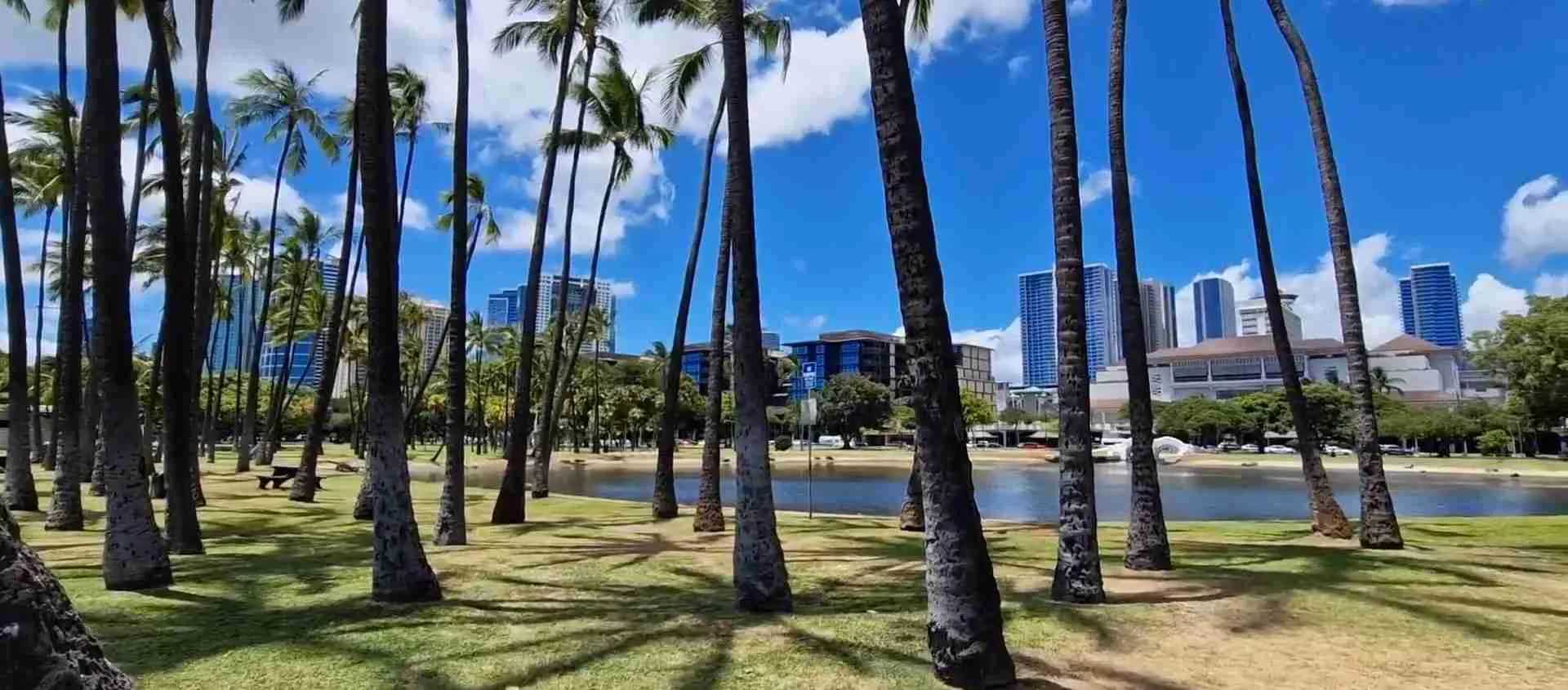
Honolulu Travel Guide 2026: Complete Planning Resource
Honolulu stands as Hawaii’s vibrant capital where Polynesian heritage meets modern American culture against a backdrop of volcanic mountains and legendary beaches. This comprehensive 2026 guide delivers the practical planning information travelers need to navigate costs, transportation, neighborhoods, and experiences in Oahu’s beating heart, from the golden sands of Waikiki to the solemn waters of Pearl Harbor.
Key Takeaways for Honolulu 2026
- Daily Budget Planning: Budget travelers spend $100-165 per person daily (two sharing hostel accommodation), mid-range visitors invest $245-375 per person daily (two sharing mid-range hotel), and luxury travelers allocate $480-715+ per person daily (two sharing luxury accommodation) for comprehensive Honolulu experiences.
- Essential Reservations Required: Diamond Head State Monument and Hanauma Bay Nature Preserve both require advance reservations for non-residents in 2026, with Diamond Head bookings opening 30 days ahead (sunrise slots sell out within hours) and Hanauma Bay reservations available just 48 hours in advance (competitive booking window).
- Transportation Economics: Public transit via TheBus costs $3 per ride with HOLO card or $90 monthly pass (cash fares increased to $3.25 in 2026), while rideshare from Waikiki to airport runs $35-45 and rental cars add $40-70 daily plus $25-35 parking at major hotels—making transit passes excellent value for week-long stays.
- Waikiki Versus Alternative Neighborhoods: Waikiki offers walkable beach access and highest hotel density at $250-500+ nightly, while Ala Moana provides mid-range comfort $180-300 nightly near shopping and locals’ beaches, and neighborhoods like Kaimuki or Manoa deliver authentic residential character with limited accommodation options but proximity to hiking and local dining.
- Peak Season Premium: December through March commands winter premium pricing with hotels 40-60% higher than May or September shoulder seasons, while summer (June-August) brings family travel crowds and moderate pricing—shoulder months offer optimal value with fewer visitors and comfortable weather in the low 80s Fahrenheit.
- Free Versus Paid Experiences Balance: Honolulu delivers exceptional free experiences including Waikiki Beach, Ala Moana Beach Park, Kapiolani Park, downtown historic district walking, and sunset watching at Magic Island, while paid highlights like Pearl Harbor museums ($30-90 for complete experience), Hanauma Bay ($25 entry), and Diamond Head ($5 entry plus $10 parking) justify costs with protected access and world-class significance.
People Also Ask About Honolulu Travel 2026
How Much Does a Week in Honolulu Cost in 2026?
A week in Honolulu costs $700-1,155 per person for budget travelers staying in hostel accommodation and eating mix of local plate lunches and self-prepared meals, $1,715-2,625 per person for mid-range visitors enjoying comfortable hotels and restaurant dining, and $3,360-5,005+ per person for luxury travelers prioritizing premium accommodations and fine dining experiences. These totals assume two people sharing hotel accommodation with per-person costs calculated after dividing nightly room rates by two.
Budget week breakdown: hostel bed or budget hotel share $315-525 total accommodation (averaging $45-75 per person nightly after dividing room cost), meals from food trucks and grocery stores $335-470, public transportation $20-45 using TheBus, and attractions focusing on free beaches plus 1-2 paid sites $30-105. Mid-range week: hotel accommodation $875-1,400 per person (after dividing $250-400 nightly rooms), restaurant meals $560-770, mixed transit and occasional rideshare $105-175, paid attractions and activities $175-280. Luxury week: premium hotel $1,750-2,625 per person (after dividing $500-750 nightly rooms), upscale dining $980-1,400, private transportation $280-420, premium experiences $350-560.
Weekly costs vary significantly based on travel style decisions. Choosing shoulder season (April-May or September-October) rather than peak winter reduces hotel costs 30-40%. Eating breakfast from ABC Store purchases and lunch from plate lunch counters while splurging on dinner cuts food expenses nearly in half compared to three restaurant meals daily. Using monthly TheBus pass ($90) instead of daily rideshare saves $150-250 weekly. Booking Pearl Harbor guided tour versus independent visit adds $60-100 but includes transportation and skip-the-line access.
Is Honolulu Expensive Compared to Other US Cities in 2026?
Honolulu ranks among the most expensive US cities for visitors in 2026, with costs 40-60% higher than mainland destinations like San Diego or Miami for comparable experiences. Hotel rates in Waikiki average $250-400 nightly for mid-range properties versus $150-250 in coastal California cities. Restaurant dining runs 30-50% above mainland prices with casual dinner entrees $30-45 in Honolulu versus $20-30 in comparable mainland tourist districts. However, Honolulu’s unique combination of year-round beach access, Polynesian cultural experiences, and compact walkable geography delivers value unavailable in mainland destinations.
The premium reflects Hawaii’s isolation and import-dependent economy. Roughly 85% of consumer goods arrive by ship or air, adding transportation costs to everything from groceries to hotel linens. Limited buildable land concentrates tourism infrastructure in Waikiki and nearby neighborhoods, creating high demand for finite hotel inventory. Labor costs run higher than mainland averages due to Hawaii’s elevated cost of living affecting service industry wages. Hawaii’s general excise tax of 4.712% applies to nearly all transactions including food, unlike many mainland states’ selective sales taxes.
Smart travelers offset Honolulu’s premium through strategic choices. Shopping at Foodland or Safeway for breakfast and lunch supplies costs 20-30% less than restaurant equivalents. Free beach days at Ala Moana or Sans Souci balance paid attraction days. Using TheBus consistently (versus daily rideshare) saves $30-50 daily. Booking accommodation in shoulder season rather than December-February cuts hotel costs 35-45%. Hawaii’s concentration of world-class free experiences—beaches, hiking, historic sites, cultural events—means careful planning delivers extraordinary value despite high baseline costs.
What Are the Best Neighborhoods to Stay in Honolulu for First-Time Visitors in 2026?
Waikiki serves first-time Honolulu visitors best in 2026 with unmatched walkability to beach, dining, shopping, and transit connections, making it worth the premium pricing $250-500+ nightly for the convenience of exploring without rental car. The neighborhood packs 400+ hotels and vacation rentals into one square mile, putting visitors within 5-10 minute walk of Waikiki Beach, International Marketplace, Royal Hawaiian Center, and dozens of restaurants representing Hawaiian, Japanese, Korean, and American cuisines. TheBus routes blanket the neighborhood with connections to Pearl Harbor, Diamond Head, and downtown Honolulu, while tourist trolleys offer hop-on service to major attractions.
Ala Moana presents compelling mid-range alternative adjacent to Waikiki offering 20-30% lower hotel rates $180-300 nightly while maintaining excellent beach access and transit connections. The neighborhood centers on Ala Moana Beach Park—a locals’ favorite with calmer waters and less tourist density than Waikiki—and Ala Moana Center shopping mall housing 350+ stores and restaurants. Hotels here attract business travelers and return visitors who prioritize value over Waikiki’s resort atmosphere. The tradeoff: fewer hotels to choose from and 15-20 minute walk or short bus ride to Waikiki’s main beach and entertainment district.
Adventurous first-timers might consider neighborhoods like Kaimuki, Manoa, or Kahala for authentic residential character, though accommodation options thin considerably outside Waikiki-Ala Moana corridor. These areas offer proximity to excellent local dining (Kaimuki’s Waialae Avenue restaurant row), hiking trailheads (Manoa Falls), and quieter beaches (Kahala), but require rental car or reliance on less frequent bus routes. Most first-time visitors benefit from Waikiki’s walkability and transit access, saving alternative neighborhoods for return trips when they know the island better.
When Is the Best Time to Visit Honolulu in 2026 for Weather and Value?
April through May and September through October deliver optimal Honolulu visits in 2026, combining excellent weather (daytime highs 78-84°F, minimal rainfall, calm ocean conditions) with shoulder season pricing 30-40% below peak winter rates and manageable tourist crowds. Hotels that command $400-500 nightly in January-February drop to $250-350 in April or September, while attractions like Diamond Head and Hanauma Bay offer better reservation availability without the sunrise slot competition characteristic of peak season.
December through March represents Honolulu’s peak season driven by mainland winter escapees seeking warmth and whale watching season (humpback whales migrate November-April). Weather remains excellent with daytime temperatures 75-82°F, though occasional winter storms bring 2-3 days of rain and surf warnings. Hotels maximize pricing with 50-60% premiums over shoulder months, and popular attractions require booking weeks ahead. The tradeoff justifies costs for travelers prioritizing whale watching, escaping harsh mainland winters, or celebrating holidays in tropical setting.
Summer months June through August bring family vacation crowds with moderate pricing between shoulder and peak seasons. Weather turns slightly warmer and more humid (highs 85-88°F) with increased afternoon trade wind showers, though these typically pass quickly. Ocean conditions remain calm on south shore beaches like Waikiki. Hotel rates run 15-25% above shoulder season but significantly below winter peak. Families appreciate summer’s school vacation alignment despite moderately higher costs. Hurricane season officially runs June-November, though direct hits remain rare (Honolulu averages one hurricane-related event per decade).
Extended multi-day tours – 5+ days
Featured Honolulu Multi-Day Tour Packages

3 days
Honolulu 3-Day Discovery Tour
- ✓ Comprehensive Honolulu experience
- ✓ Expert local guides included
- ✓ All accommodation included
- ✓ Transportation provided
5 days
Honolulu 5-Day Highlights Experience
- ✓ Comprehensive Honolulu experience
- ✓ Expert local guides included
- ✓ All accommodation included
- ✓ Transportation provided
7 days
Honolulu 7-Day Cultural Journey
- ✓ Comprehensive Honolulu experience
- ✓ Expert local guides included
- ✓ All accommodation included
- ✓ Transportation provided
10 days
Honolulu 10-Day Complete Adventure
- ✓ Comprehensive Honolulu experience
- ✓ Expert local guides included
- ✓ All accommodation included
- ✓ Transportation provided
Multi-day tour packages powered by TourRadar. Prices and availability subject to change.
Introduction to Honolulu Travel 2026
Honolulu commands Oahu’s southern shore as Hawaii’s capital and largest city, home to 350,000 residents in the urban core and nearly one million across the metropolitan area. The city evolved from a small Hawaiian fishing village to Polynesian kingdom capital to American territorial headquarters, now standing as the Pacific’s primary cultural and economic crossroads where Asian, Polynesian, and Western influences blend into a distinctive island urbanism found nowhere else in the United States.
Geography shapes Honolulu’s character decisively. The Koolau Mountains rise immediately north of downtown, creating dramatic green ridges that channel trade winds and rainfall while limiting urban expansion inland. This geographic constraint concentrates development along the coastal plain from Pearl Harbor eastward through downtown to Diamond Head crater, creating an elongated urban form where ocean access remains paramount. Waikiki Beach anchors the eastern end of this development corridor, transforming from former wetlands to global tourism icon over the past century.
Modern Honolulu operates as two distinct but interconnected cities. Downtown Honolulu houses state government offices, financial district, Chinatown’s historic commercial core, and working harbor facilities—presenting the business face of Hawaii with high-rises, historic buildings, and daily commerce. Three miles east, Waikiki functions as purpose-built resort district with 400+ hotels hosting 70% of Oahu’s visitors, presenting perpetual vacation atmosphere with beach access, shopping, dining, and entertainment concentrated in one square mile. Understanding this dual nature helps visitors plan strategically, allocating time for both resort relaxation and authentic urban exploration.
Pearl Harbor’s significance transcends typical tourist attraction status, operating as active US Navy installation and World War II memorial site drawing 1.8 million annual visitors. The December 7, 1941 attack transformed American history and global geopolitics, making Pearl Harbor pilgrimage essential for understanding 20th century events. Four distinct museums and memorials occupy the harbor (USS Arizona Memorial, Battleship Missouri, USS Bowfin Submarine, Pacific Aviation Museum), each requiring separate admission and dedicated time. Comprehensive Pearl Harbor visit demands full day commitment, while abbreviated visits focusing on USS Arizona Memorial alone require 3-4 hours minimum.
Climate delivers year-round comfort with minimal seasonal variation. Summer averages 85-88°F daytime highs with nighttime lows around 75°F, while winter runs 78-82°F days and 65-70°F nights. Rainfall concentrates November through March though amounts remain moderate (2-4 inches monthly) compared to Oahu’s windward side. Trade winds provide natural air conditioning, blowing northeast to southwest across the island 80% of the year. Ocean temperatures hover 74-80°F annually, enabling swimming, snorkeling, and water sports every month. Hurricane season runs June through November though direct impacts remain rare.
Honolulu’s multicultural composition reflects successive waves of immigration from China, Japan, Philippines, Portugal, and Pacific Islands, creating population where no single ethnic group claims majority status. This diversity manifests in extraordinary culinary scene blending Hawaiian, Japanese, Chinese, Korean, Filipino, and fusion cuisines. Plate lunch culture exemplifies this integration—combining Asian rice, American macaroni salad, and protein options from multiple traditions into quintessential local meal format. The food scene ranges from $10 plate lunch counters to James Beard-recognized fine dining, with exceptional quality across price spectrum.
Transportation infrastructure serves visitors efficiently through TheBus public transit system and concentrated tourism geography. TheBus operates 80+ routes across Oahu with frequent service connecting Waikiki to Pearl Harbor, downtown, Diamond Head, and eastern shore. Monthly passes ($90) deliver unlimited rides, making transit economical for week-long visits. Waikiki’s walkability eliminates rental car necessity for visitors focusing on beach, dining, and major attractions accessible via transit. Rental cars become valuable for North Shore day trips, windward coast exploration, or visitors prioritizing flexibility over downtown parking expenses ($25-35 daily at hotels).
Honolulu 2026 presents mature tourism destination balancing preservation and growth. Recent implementation of reservation systems at Diamond Head and Hanauma Bay signals shift toward managed tourism protecting fragile resources while maintaining access. Hotel inventory remains robust with options across all price points, though luxury segment continues expanding with new properties in Waikiki and Ko Olina. Restaurant scene strengthens annually with established operations maintaining quality while new concepts introduce innovation. Infrastructure improvements including rail transit expansion (currently serving west Oahu with future Waikiki connection planned) promise enhanced mobility though timelines extend beyond 2026.
Understanding Honolulu Costs and Budget Planning 2026
Honolulu’s reputation as expensive destination holds true in 2026, though strategic planning moderates costs significantly. Three primary factors drive elevated pricing: geographic isolation requiring imported goods, limited buildable land creating high real estate values, and concentrated tourism demand in finite Waikiki corridor. Understanding these cost drivers helps travelers budget realistically while identifying opportunities to optimize spending.
Import dependence affects nearly every purchase. Hawaii imports 85-90% of consumer goods via ocean freight or air cargo, adding transportation costs to groceries, restaurant supplies, retail merchandise, and hotel amenities. This explains why bottled water costs $3-4 versus $1-2 on mainland, restaurant meals run 30-50% above comparable mainland cities, and even chain stores charge premium pricing. The isolation premium applies universally though impacts vary by category—locally produced items like poke bowls or plate lunches offer better relative value than imported steaks or processed foods.
Accommodation costs reflect constrained supply concentrated in Waikiki’s one square mile. Limited coastal land available for development plus strict building height restrictions in many areas create finite hotel inventory facing robust demand. Peak season (December-March) sees hotel rates surge 50-60% above shoulder months as mainland visitors escape winter cold. Mid-range Waikiki hotels averaging $180-250 nightly in April or September spike to $350-450 in January-February. Luxury properties amplify this premium with $500-600 shoulder season rates climbing to $800-1,200+ during peak weeks.
Dining costs separate dramatically between tourist-oriented restaurants and local-focused establishments. Waikiki beachfront restaurants charge $25-40 for breakfast, $35-55 for lunch, $65-95 for dinner entrees targeting visitors on vacation budgets. Three miles away, plate lunch counters serve complete meals $12-18, neighborhood restaurants offer dinner entrees $20-30, and food trucks deliver quality options $10-15. The pricing gap reflects rent differentials (Waikiki beachfront commands premium rents), captive audience economics (tourists lack transportation to seek alternatives), and service level differences (full-service dining versus counter service).
Transportation economics favor public transit dramatically for visitors staying week or longer. TheBus monthly pass ($90) delivers unlimited rides across Oahu’s entire route network, providing access to Pearl Harbor, Diamond Head, Ala Moana, downtown, and eastern beaches. Compare this to rental car economics: $40-70 daily car rental plus $25-35 daily hotel parking plus $3-10 parking fees at attractions equals $70-115 daily—nearly 8-9 times transit pass cost. Rideshare fills gaps economically: Waikiki to airport $35-45, Waikiki to Pearl Harbor $25-35, Waikiki to downtown $12-18.
Attraction costs divide between free exceptional experiences and paid premium sites justifying expense through protected access or historical significance. Free highlights include Waikiki Beach, Ala Moana Beach Park, Kapiolani Park, Magic Island sunset viewing, downtown historic district walking, and numerous hiking trails. Paid attractions charging premium fees deliver corresponding value: Pearl Harbor museums provide comprehensive World War II interpretation ($30-90 depending on sites visited), Hanauma Bay’s $25 admission protects marine conservation district with world-class snorkeling, Diamond Head’s $5 entry plus $10 parking maintains trail infrastructure and limits daily visitors preserving experience quality.
Hidden costs catch unprepared visitors. Hotel resort fees (when charged) add $25-45 daily covering WiFi, pool access, and amenities. Hawaii’s general excise tax (4.712%) applies to nearly all purchases including groceries and restaurant meals. Hotels add 10.25% state transient accommodation tax plus county surcharges (Honolulu adds 3%), totaling 13-14% above quoted rates. Tip expectations run standard 15-20% for table service. Parking fees accumulate quickly: $7 at Pearl Harbor, $10 at Diamond Head, $3 at Hanauma Bay, $25-35 daily at Waikiki hotels, $15-25 at shopping centers. Sunscreen runs $15-25 for reef-safe formulations required at Hawaii beaches.
Currency and payment systems operate identically to mainland United States—US dollar exclusively, credit cards widely accepted, ATMs abundant. International visitors should notify banks of Hawaii travel to prevent fraud alerts blocking transactions. Hawaii follows Pacific Time Zone (2-3 hours behind California depending on daylight saving) though actual time difference from mainland varies based on Hawaii’s year-round non-observance of daylight saving.
Accommodation Costs and Neighborhood Guide 2026
Waikiki dominates Honolulu accommodation inventory with 400+ hotels and vacation rentals ranging from budget properties to luxury resorts, all concentrated in one square mile offering unmatched walkability to beach, dining, shopping, and transit. This density creates competitive pricing across segments while simplifying logistics for first-time visitors who can explore on foot without rental car. Mid-range Waikiki hotels ($250-400 nightly) deliver comfortable rooms with pool access, convenient location within 5-10 minute walk to beach, and standard amenities. Budget properties ($120-200 nightly) trade newer renovations and premium locations for functional accommodation meeting basic needs. Luxury tier ($500-900+ nightly) provides beachfront positions, superior service, upscale dining, and resort amenities justifying premium pricing.
Specific Waikiki properties demonstrate segment options. Budget tier includes Waikiki Beachside Hostel (dormitories $45-65 per bed, private rooms $120-160), Queen Kapiolani Hotel ($150-220 with Diamond Head views but older property), and Shoreline Hotel Waikiki ($140-200 with basic rooms and convenient Kalakaua Avenue location). Mid-range selections feature Hilton Garden Inn Waikiki Beach ($280-380 with modern rooms and rooftop pool), Hyatt Place Waikiki Beach ($250-350 offering apartment-style layouts), and Outrigger Waikiki Beachcomber Hotel ($300-420 with central location and recent renovations). Luxury properties include Halekulani Hotel ($600-900 with legendary service and beachfront setting), Royal Hawaiian ($550-850 offering historic “Pink Palace” ambiance), and Moana Surfrider ($500-750 as Waikiki’s first hotel combining heritage and modern comfort).
Waikiki’s internal geography matters significantly. Beachfront properties command highest prices but deliver immediate sand access and ocean views. One block inland reduces rates 20-30% while maintaining 3-5 minute beach walks. Kalakaua Avenue (main beachfront boulevard) offers convenient shopping and dining access but higher noise levels. Kuhio Avenue (one block inland) parallels Kalakaua with moderate pricing and somewhat grittier character. Diamond Head end of Waikiki (near Kapiolani Park) provides quieter atmosphere and easier beach access compared to busy central Waikiki. Western Waikiki near Hilton Hawaiian Village offers resort isolation within walking distance to action.
Ala Moana neighborhood adjacent to Waikiki presents compelling value proposition with 20-30% lower hotel rates while maintaining beach access and excellent transit connections. Hotels here attract business travelers and return visitors prioritizing value over resort atmosphere. Ala Moana Beach Park offers excellent swimming and less tourist density than Waikiki. The massive Ala Moana Center shopping mall provides 350+ stores and restaurants within walking distance. Representative properties include Ala Moana Hotel ($180-280 with mall connectivity and convention facilities), Prince Waikiki ($220-340 offering harbor views and yacht club atmosphere), and Modern Honolulu ($200-320 with boutique design and nightlife focus). TheBus connects Ala Moana to Waikiki in 10 minutes, making this neighborhood viable base for transit-dependent visitors seeking value.
Downtown Honolulu hotels serve primarily business travelers though tourists seeking authentic urban experience find interesting options. Hotels here cost 30-40% less than comparable Waikiki properties while placing visitors near Iolani Palace, Chinatown, harbor, and financial district. The tradeoff: no beach access (nearest beaches require 15-20 minute bus ride), limited dining within walking distance after business hours, and fewer hotel options overall. Consider downtown stay for visitors prioritizing Pearl Harbor access (direct bus routes), cultural immersion, or combining Honolulu visit with business meetings.
Alternative neighborhoods like Kaimuki, Kahala, or Manoa offer limited vacation rental options providing residential character and local dining access. These areas suit return visitors who know Honolulu well and prioritize authentic experience over tourist convenience. Rental car becomes essential as TheBus service decreases in frequency away from main corridors. Pricing varies widely based on property size and condition ($150-400 nightly typical range for 1-2 bedroom units).
Seasonal pricing patterns dominate budgeting decisions. Peak winter season (December-March) sees rates spike 50-60% above shoulder months. A mid-range Waikiki hotel charging $250 in May increases to $400-450 in January. Summer (June-August) runs 15-25% above shoulder season as families travel during school vacation. True shoulder months (April-May, September-October) deliver optimal value with 30-40% discounts compared to peak winter while maintaining excellent weather.
Vacation rental regulations in Honolulu restrict short-term rentals to designated resort zones (primarily Waikiki) with limited permits issued for residential areas. This constrains vacation rental inventory compared to other tourist destinations, though legal options exist in Waikiki and a few other zones. Vacation rentals work best for groups or families needing multiple bedrooms and kitchen facilities, offering better value than booking multiple hotel rooms. Typical 2-bedroom Waikiki vacation rental runs $350-600 nightly depending on location and amenities, accommodating 4-6 people comfortably.
Resort fees (when charged) add $25-45 daily covering amenities like WiFi, pool access, beach chairs, and fitness center. Not all Honolulu hotels charge resort fees—budget properties typically don’t, while many mid-range and luxury hotels do. Always verify total cost including resort fees when comparing properties. Some hotels bundle resort fee amenities that hold genuine value (beach equipment rental worth $30-40 daily, premium WiFi, fitness classes), while others charge fees for basic services that should be included.
Booking timing impacts pricing significantly. Reserve 3-4 months ahead for peak winter season to secure better rates and property selection. Shoulder season allows more flexibility with 4-6 weeks advance booking sufficient for good selection. Last-minute deals sometimes appear but risk limited availability especially for preferred properties. Hotel loyalty programs deliver tangible value for repeat Honolulu visitors through room upgrades, resort fee waivers, and priority booking.
Food and Dining Costs Honolulu 2026
Honolulu’s dining landscape spans from $10 plate lunch counters to James Beard-recognized fine dining, with exceptional quality across the price spectrum and multicultural influences creating distinctive Hawaiian Regional Cuisine unavailable elsewhere. Understanding restaurant tiers and neighborhood pricing patterns helps visitors balance splurge meals with budget options while experiencing the full breadth of Honolulu’s food culture.
Plate lunch represents quintessential local dining format combining Asian rice, American macaroni salad, and protein options from multiple traditions into complete meal typically costing $12-18. These establishments serve Honolulu’s working population, operating in every neighborhood with authentic preparation and generous portions often sufficient to share or save for second meal. Representative plate lunch destinations include Rainbow Drive-In (operating since 1961 with classic preparation), Ono Hawaiian Foods (traditional Hawaiian plates $14-20), Highway Inn (family-owned since 1947), and L&L Hawaiian Barbecue (reliable chain with island-wide presence). Plate lunch pricing holds consistent across locations—no significant premium in Waikiki versus residential neighborhoods.
Food trucks and casual counters deliver quality meals $10-18 targeting both locals and savvy tourists seeking value. Locations concentrate near beaches, parks, and downtown business district serving breakfast and lunch primarily. Poke bowls (raw fish over rice) cost $12-16 at dedicated poke shops like Ono Seafood or Maguro Brothers, delivering fresh ahi tuna or salmon in traditional Hawaiian preparation. Saimin (Hawaiian noodle soup) runs $8-12 at specialist shops. Food truck parks like Eat the Street events or permanent installations near Kaka’ako offer multiple vendors with diverse cuisines.
Grocery stores and convenience chains provide self-catering options reducing dining costs significantly. Foodland, Safeway, and Times Supermarket operate throughout Honolulu with full grocery selection. ABC Stores blanket Waikiki offering convenience items, snacks, drinks, and pre-made meals at moderate premium over full supermarkets. Sample grocery prices: prepared poke bowl $10-14, bento box lunch $8-12, fresh tropical fruit $3-8 per pound, bottled water $3-4, sunscreen $15-25. Visitors with in-room refrigerators or vacation rental kitchens save $30-50 daily preparing breakfast and lunch while allocating budget to dinner dining experiences.
Mid-range neighborhood restaurants represent Honolulu’s restaurant sweet spot offering excellent quality $20-35 entrees in comfortable settings away from Waikiki tourist premiums. Kaimuki’s Waialae Avenue restaurant row features 12th Avenue Grill (contemporary American), Mud Hen Water (modern Hawaiian), and Town (farm-to-table Italian-inspired), all delivering creative cuisine $22-38 entrees. Chinatown offers exceptional Asian dining with Legend Seafood (dim sum $20-35 per person), Pig and the Lady (Vietnamese fusion $18-32 entrees), and Livestock Tavern (gastropub $24-38 entrees). These establishments attract sophisticated local diners, ensuring quality exceeds tourist-oriented alternatives at comparable or lower pricing.
Waikiki restaurant pricing reflects captive audience economics and premium real estate costs. Beachfront casual dining restaurants charge $18-28 breakfast, $25-40 lunch, $40-65 dinner entrees—essentially doubling neighborhood restaurant pricing for similar quality food. The premium buys ocean views, convenient location within hotel properties, and full-service dining experience. Examples include Duke’s Waikiki (beachfront institution with $32-52 dinner entrees and lively atmosphere), Hula Grill (casual beachfront with $28-48 entrees), and House Without a Key (sunset cocktails and live music with $35-55 entrees). These restaurants deliver excellent ambiance justifying occasional splurge but poor value for every meal.
Fine dining and Hawaii Regional Cuisine restaurants command premium pricing $65-150 per person before drinks, delivering innovative interpretation of local ingredients and cultural traditions. Chef Mavro represents Honolulu’s fine dining pinnacle with tasting menus $145-185 showcasing French technique applied to Hawaiian products. La Mer at Halekulani offers French haute cuisine with ocean views in formal setting ($135-185 tasting menus). Alan Wong’s Honolulu pioneered Hawaii Regional Cuisine movement with $48-78 entrees celebrating local ingredients. These experiences suit special occasions or serious food enthusiasts willing to invest in memorable meals.
Japanese dining in Honolulu matches quality found in Tokyo or Osaka, reflecting Hawaii’s substantial Japanese population and centuries of cultural exchange. Sushi restaurants range from casual kaitenzushi (conveyor belt sushi) $15-25 per person to traditional omakase $85-150 per person. Marukame Udon serves authentic sanuki udon noodles $8-12 with perpetual lines testifying to quality and value. Izakaya (Japanese gastropubs) offer small plates and sake $30-50 per person at establishments like Izakaya Torae Torae or Imanas Tei. Yakitori (grilled skewers) specialists like Torishin provide intimate counter seating with $45-75 set menus.
Breakfast costs vary dramatically by venue choice. Hotel breakfast buffets charge $25-45 per person for extensive spreads convenient but expensive. ABC Store offers continental breakfast supplies (pastries, yogurt, fruit, coffee) $8-12 per person. Local cafes serve breakfast plates $12-18 including eggs, rice, meat, and coffee. Starbucks and mainland chains maintain standard pricing. McDonald’s breakfast runs 30-40% above mainland pricing ($10-13 for meal combo versus $7-9 mainland).
Drinks and alcohol follow premium island pricing. Beer costs $7-10 at restaurants and bars, cocktails run $14-20, wine by glass $12-18, full bottles $40-120 at restaurants. Grocery store beer pricing: $15-22 for six-pack craft beer, $10-15 for mainstream brands. Liquor stores offer better selection and pricing than grocery stores for wine and spirits. Happy hour specials (typically 3-6pm) reduce drink pricing 25-40% at many bars, with some including discounted pupu (appetizers).
Tipping follows mainland United States standards: 15-20% for table service, $1-2 per drink at bars, 15% for food delivery. Some restaurants add automatic gratuity for parties of 6+ or on certain occasions—verify bill before adding additional tip. Hawaii’s general excise tax (4.712%) appears on all restaurant bills, distinct from tip.
Dietary accommodations work smoothly in cosmopolitan Honolulu. Vegetarian and vegan options appear on most menus, with dedicated vegetarian restaurants in neighborhoods like Kaimuki and downtown. Gluten-free awareness runs high with many restaurants offering dedicated menus or knowledgeable staff. Japanese, Vietnamese, and Thai cuisines provide naturally gluten-free rice-based options. Hawaii’s abundant fresh fish and produce supports healthy eating regardless of dietary philosophy.
Transportation Guide Honolulu 2026
TheBus operates Honolulu’s extensive public transit system serving the entire island of Oahu with 80+ routes, frequent service, and economical fares making it primary transportation for budget and mid-range travelers. Adult single ride costs $3 using HOLO card (reloadable transit card purchased at ABC Stores, Foodland, Times Supermarket, or online for $2 initial card fee). Cash fares increased to $3.25 in 2026 following city council approval, though HOLO card maintains $3 fare representing 7% savings plus convenience of tap-and-go payment. Youth riders (6-17) pay reduced $1.50 fare with youth HOLO card. Children under 6 ride free with paying adult.
Monthly HOLO card pass costs $90 and delivers unlimited rides across all TheBus routes for calendar month, making it exceptional value for visitors staying week or longer. Purchase monthly pass during first week of month to maximize days of use. Fare capping feature automatically applies—after paying equivalent of day pass ($7.50) or monthly pass ($90) in single rides, remaining rides that period become free. This protects occasional riders from overpaying while encouraging pass purchase for frequent users. Passes purchased after the 20th of month activate on the 1st of following month rather than immediately.
Key routes for visitors include Route 19 and 20 (Airport-Waikiki express service, $3 per ride, departures every 20 minutes during daytime), Route 2 (Waikiki-Downtown-Chinatown-School Street), Route 13 (Waikiki-Ala Moana), Route 23 (Waikiki-Diamond Head-Kahala), and Route 42 (Ewa Beach-Arizona Memorial-Ala Moana). Pearl Harbor visitors use Route 20 or 42, exiting at Arizona Memorial stop with 5-minute walk to visitor center. Diamond Head hikers take Route 23 toward Hawaii Kai, exiting at Diamond Head Road stop for uphill walk to trailhead (or use Route 2/13 to KCC and walk).
TheBus operates 4:30am-1:00am daily with 30-minute frequencies on major routes decreasing to hourly on secondary routes and weekends. Night Owl service runs limited routes 1am-4:30am. Real-time arrival information available via DaBus app showing GPS-tracked bus locations and estimated arrival times. Google Maps integrates TheBus routes for trip planning though dedicated DaBus app provides more detailed service information and alerts.
Bus stop etiquette and operations follow mainland transit norms. Signal driver when bus approaches to indicate boarding intent. Board through front door, tap HOLO card or pay cash (exact change required, driver cannot make change). Exit through rear doors. Buses accommodate wheelchairs and strollers with accessible ramps. Large suitcases allowed if space permits though prohibited during peak commute hours (6-9am, 3-6pm weekdays). Surfboards prohibited entirely. Food and drink permitted if properly covered. Air conditioning keeps buses comfortable despite tropical heat.
Waikiki Trolley operates separate tourist-oriented service with hop-on hop-off format targeting visitors prioritizing convenience over cost. Pink Line (Historic Honolulu and Waikiki), Red Line (Honolulu Highlights), Blue Line (Ala Moana Shopping), and Green Line (Diamond Head and Kahala) cover major attractions with narrated commentary. All-line passes cost $50-65 per person daily, $65-85 for 7-day pass. Waikiki Trolley works best for visitors uncomfortable navigating TheBus routes or traveling with young children benefiting from continuous narration, though cost runs 3-4 times TheBus equivalent. Senior discounts and multi-day passes improve value somewhat.
Rideshare services (Uber, Lyft) operate throughout Honolulu with competitive pricing and widespread driver availability. Sample fares from Waikiki: to airport $35-45 (15-25 minutes depending on traffic), to Pearl Harbor $25-35 (25-35 minutes), to downtown/Chinatown $12-18 (10-15 minutes), to Ala Moana $8-12 (5-8 minutes). Surge pricing during peak hours (morning/evening commute, weekend evenings) increases fares 1.5-2x standard rates. Rideshare makes sense for airport transfers with luggage, late-night returns avoiding limited bus service, or groups of 3-4 splitting fares approaching bus cost.
Taxi service operates from hotel stands, airport queues, and phone dispatch though rideshare apps largely replaced traditional taxis for routine trips. Taxi rates start at $3.50 flag drop plus $2.60 per mile and $0.60 per minute of waiting time. Airport to Waikiki runs $40-50 by taxi versus $35-45 by rideshare, making taxis slightly less economical plus less convenient without app-based payment and tracking. Taxis remain relevant for travelers who prefer traditional service or lack smartphones for rideshare apps.
Rental cars offer flexibility for North Shore day trips, windward coast exploration, or visitors prioritizing independence over economy. Daily rates run $40-70 for compact/economy class, $60-90 for midsize/SUV depending on season and booking timing. Advance reservations 2-3 weeks ahead secure better rates and vehicle selection. Major agencies (Hertz, Enterprise, Avis, Budget) operate at airport and select Waikiki locations. Insurance costs add $15-30 daily unless covered by personal auto policy or credit card travel benefits.
Parking economics strongly favor avoiding rental car for Waikiki-focused visits. Waikiki hotel parking costs $25-35 daily (valet) or $20-28 daily (self-parking where available). Street parking in Waikiki remains extremely limited with 2-3 hour meters costing $1-2 per hour when available. Attraction parking fees accumulate: $7 at Pearl Harbor, $10 at Diamond Head, $3 at Hanauma Bay. Ala Moana Center charges $5-10 for multi-hour parking. Downtown garages run $2-4 per hour or $15-25 daily maximum. Monthly parking downtown costs $150-250 if needed for extended stays.
Gas prices in Hawaii consistently rank among nation’s highest at $4.50-5.50 per gallon in 2026, reflecting isolated island economics and fuel transportation costs. Costco and Sam’s Club offer member pricing $0.30-0.50 below standard stations. Oahu’s compact size means even circumnavigating the island uses just one tank—gas costs remain minor compared to rental and parking fees.
Bicycle rentals provide active exploration option suitable for fit travelers comfortable riding in traffic. Waikiki bike shops rent cruisers $25-35 daily, road bikes $40-60 daily. Biki bikeshare operates station-based system with 130+ stations concentrated in urban Honolulu (Waikiki, Ala Moana, downtown, university area). Biki charges $4 per 30-minute trip or offers unlimited 30-minute rides through 300-minute pass ($25) or monthly subscription ($20). Bike lanes exist on some major streets though Honolulu lacks comprehensive cycling infrastructure requiring defensive riding skills.
Walking serves as primary transportation within Waikiki where most destinations fall within 15-20 minute walks. Kalakaua Avenue provides continuous sidewalks with pedestrian-friendly commercial frontage. Beach access points appear every 2-3 blocks. International Marketplace, Royal Hawaiian Center, and Waikiki Beach Walk create pedestrian-priority zones. Heat and humidity require hydration and sun protection—carry water and wear hat during midday walking. Crosswalk signals give pedestrians adequate time though Honolulu drivers can be aggressive.
Airport transportation from Daniel K. Inouye International Airport to Waikiki spans public transit ($3), rideshare ($35-45), taxi ($40-50), or shared shuttle ($16-20 per person). TheBus Routes 19 and 20 serve airport with limited luggage space potentially problematic for visitors with large bags. Most hotels restrict baggage to one standard suitcase plus carry-on per passenger on bus. Rideshare or taxi makes most sense for visitors with multiple bags, arriving late at night (limited bus service after 11pm), or traveling as couple where two bus fares ($6) approach shared rideshare cost ($35-45 split). Shared shuttles (Roberts Hawaii, SpeediShuttle) operate set routes with multiple hotel stops, trading time (45-75 minutes) for moderate savings over rideshare.
Attractions and Activities Costs 2026
Pearl Harbor National Memorial stands as Honolulu’s most significant historical attraction, commemorating the December 7, 1941 attack that brought the United States into World War II and transformed global geopolitics. The complex encompasses four distinct museums and memorials requiring separate admissions and dedicated time. USS Arizona Memorial visit remains free though requires advance reservation through Recreation.gov with $1 non-refundable service fee. This 75-minute program includes documentary film, boat shuttle to memorial built over sunken battleship, and time paying respects to 1,177 sailors and marines entombed below. Reservations open 60 days in advance with popular time slots (8am-10am) booking within hours of release. Standby line offers walk-up access though waits can reach 2-3 hours with no guarantee of entry.
Pearl Harbor’s paid museums deliver comprehensive World War II interpretation justifying admission costs. Battleship Missouri Memorial costs $35 adults with guided tours or self-guided audio tour of ship where Japan signed surrender documents ending Pacific War. USS Bowfin Submarine Museum and Park charges $18 adults for submarine tour and museum exhibits (children under 4 prohibited inside submarine for safety). Pacific Aviation Museum costs $30 adults for aircraft displays in historic hangars on Ford Island. Passport to Pearl Harbor offers combined admission to all three paid attractions plus USS Arizona for $90 adults (versus $83 purchasing separately), representing modest savings with convenience of single ticket covering all sites.
Pearl Harbor visit logistics require planning. Visitor center opens 7am daily, closing at 5pm. Arrive by 9am for best experience avoiding afternoon crowds. Security restrictions prohibit bags larger than 1.5 inches thick (wallets and small cameras allowed), necessitating $7 bag storage fee for purses, backpacks, or camera bags. Parking costs $7 cash or card payment at automated kiosks. Food options limited to visitor center café and vending machines—consider eating before arrival or bringing allowed snacks. Allow 4-5 hours for USS Arizona plus one paid museum, full day for comprehensive visit including all sites. TheBus Route 20 or 42 provides direct service from Waikiki taking 45-50 minutes.
Hanauma Bay Nature Preserve offers world-class snorkeling in protected marine conservation district requiring $25 non-resident admission (Hawaii residents free with ID, children under 12 free, active military free with ID). Entry includes mandatory 9-minute educational video covering reef conservation and safety rules. Parking costs $3 additional if driving. Bay opens 6:45am and closes 4pm daily except Mondays and Tuesdays when closed for reef recovery. Last entry 1:30pm to ensure adequate snorkeling time before closure. Reservations required for non-residents, available just 48 hours in advance through city website starting 7am Hawaii time—competitive booking window with popular times selling out within minutes of release. Walk-in tickets available early morning for those arriving 6:45-7:10am though not guaranteed.
Hanauma Bay additional costs include snorkel gear rental $20 at concession operated near beach, though bringing personal equipment saves this expense. Lockers available $10 for valuables storage. Tram service from parking lot to beach included in admission (steep walk otherwise). Reef-safe sunscreen mandatory—chemical sunscreens prohibited to protect coral (enforcement through ranger inspection and fines). TheBus Route 22 serves Hanauma Bay from Waikiki though limited service and steep walk from bus stop make rideshare ($25-35) or tour package more practical for most visitors. Allow 3-4 hours minimum for meaningful snorkeling experience.
Diamond Head State Monument requires advance reservations for all non-resident visitors with $5 per person entry fee plus $10 per vehicle parking (Hawaii residents free with ID). Reservations open 30 days in advance through state parks website with popular sunrise slots (6am-8am entry) selling out within hours of release. Walk-in visitors or those arriving by bus/rideshare book entry-only reservation (no parking), reducing cost to $5 per person. Monument opens 6am daily, closes 6pm with last entry 4pm. Reservations assigned in 2-hour time blocks with arrival required within first 30 minutes or risk denied entry.
Diamond Head hike climbs 760 feet over 0.8 miles one-way from crater floor to summit, taking 30-45 minutes up and 25-35 minutes down for moderately fit hikers. Trail includes uneven surfaces, steep stairways (99 steps in longest continuous section), and lighted tunnel creating technical challenges requiring appropriate footwear and mobility. Summit delivers 360-degree views encompassing Waikiki, downtown Honolulu, Pacific Ocean, and Koolau Mountains—justifying the effort and fees through exceptional panorama. Bring water (available at kiosks before trailhead), wear sunscreen and hat (minimal shade), and start early (6am-8am) to avoid midday heat. TheBus Route 23 serves Diamond Head area requiring uphill walk to entrance, while rideshare drops directly at gate.
Iolani Palace serves as only royal palace on American soil, functioning as official residence of Hawaiian Kingdom monarchy before overthrow in 1893. Grand Tour admission costs $27 adults with guided 90-minute tour including palace interior, throne room, and royal quarters. Audio Tour option costs $20 adults for self-paced exploration. Basement Galleries Tour (focusing on exhibits and artifacts rather than furnished rooms) costs $18 adults. Palace opens Tuesday-Saturday with advance reservations required through website. Located in downtown Honolulu within walking distance of King Kamehameha statue, state capitol, and Kawaiahao Church creating historic district walking opportunity. TheBus Routes 2, 13 connect Waikiki to Iolani Palace area in 15-20 minutes.
Bishop Museum houses world’s premier collection of Hawaiian and Pacific Islander artifacts with comprehensive natural history and cultural exhibits. Admission costs $28 adults for general entry including planetarium shows. Museum opens daily 9am-5pm with 3-4 hours recommended for thorough visit. Located in Kalihi neighborhood requiring bus or rideshare from Waikiki (no walkable route). Excellent educational value especially for families with children or visitors interested in Hawaiian cultural depth beyond tourist surface.
Honolulu Museum of Art displays excellent Asian, European, and American collections housed in historic building with beautiful courtyard. Admission costs $20 adults (Hawaii residents $10, children under 18 free). Museum opens Tuesday-Sunday 10am-4:30pm. Located in downtown area accessible via TheBus. Special exhibitions sometimes require timed entry or additional fees. Art enthusiasts find genuine quality rivaling mainland museum collections.
Polynesian Cultural Center operates on North Shore (45 miles from Waikiki) as large-scale attraction presenting Pacific Island cultures through villages, demonstrations, and evening show. Admission packages range $80-250 per person depending on inclusions (standard admission versus buffet dinner versus luau package versus behind-scenes tours). Full-day commitment required (depart Waikiki 8-9am, return 9-10pm) with transportation included in most packages. Represents major expense and time investment suitable for visitors prioritizing cultural entertainment over beach time or limited to single Oahu visit wanting comprehensive Polynesian exposure.
Luau experiences range from hotel shows to beachside productions, costing $90-180 per person for dinner and Polynesian entertainment. Paradise Cove Luau ($130-160) operates on western shore with beach setting and traditional imu (underground oven) ceremony. Royal Hawaiian Luau ($150-180) provides convenient Waikiki location with oceanfront setting. Chief’s Luau ($110-140) at Wet’n’Wild Hawaii offers family-friendly atmosphere. Luau quality varies—read recent reviews before booking as some operations prioritize tourist volume over authentic presentation.
Free attractions deliver exceptional experiences without admission fees. Waikiki Beach offers world-famous shoreline with swimming, sunbathing, surfing, and sunset viewing completely free. Ala Moana Beach Park provides calmer waters and locals’ atmosphere. Magic Island peninsula adjacent to Ala Moana delivers sunset views rivaling paid lookouts. Kapiolani Park (Waikiki’s eastern edge) encompasses 300 acres with free outdoor concerts, tennis courts, and Diamond Head backdrop. Downtown historic district walking tour covers Iolani Palace exterior, King Kamehameha statue, Kawaiahao Church, state capitol, and missions houses at no cost beyond bus fare.
Hiking trails throughout Oahu remain free including Manoa Falls (1.6 miles round trip to 150-foot waterfall), Makapuu Lighthouse Trail (2 miles paved trail with coastal views), and Lanikai Pillbox (1 mile steep climb to military bunkers with panoramic vistas). These trails require no reservations or fees though some lack parking requiring bus access or rideshare to trailheads.
Snorkeling at public beaches costs nothing beyond equipment rental or purchase. Sans Souci Beach (Waikiki’s eastern end) offers calm shallow water with tropical fish. Electric Beach (near Ko Olina) provides excellent snorkeling near power plant outflow attracting marine life. Shark’s Cove (North Shore) delivers dramatic underwater topography with abundant sea life. Reef-safe sunscreen mandatory at all beaches ($15-25 if purchasing in Hawaii).
Surfing lessons cost $70-100 for 2-hour group lesson with board rental included, offered by dozens of operators along Waikiki Beach. Private lessons run $150-200 per person. Board rentals alone cost $20-30 for 2-4 hours, available from beach concessions and surf shops. Waikiki’s gentle waves suit beginners learning fundamentals—experienced surfers head to North Shore (winter) or eastern beaches (summer) for more challenging conditions.
Stand-up paddleboard (SUP) rentals cost $25-35 for 2 hours at Waikiki beach concessions. Kayak rentals run similar pricing. Outrigger canoe rides offered by beach boys cost $15-20 per person for 20-minute rides sharing large canoe with 4-6 passengers plus captain. These traditional experiences connect to Hawaiian culture while delivering ocean thrills at moderate cost.
Sample Budget Breakdowns and Itineraries 2026
Budget 5-Day Honolulu Itinerary: Total $500-825 per person assuming two sharing hostel accommodation and prioritizing free experiences with selective paid attractions. Accommodation: Waikiki hostel 4 nights at $45-75 per person nightly equals $180-300 total. Meals: Breakfast from ABC Store supplies $6-10 daily, lunch from plate lunch counters $12-18 daily, dinner from food trucks or casual restaurants $20-30 daily equals $190-290 total food. Transportation: Monthly TheBus HOLO pass $90 covering all 5 days. Attractions: Pearl Harbor USS Arizona free (plus $1 reservation), one additional museum $18-30, hiking Diamond Head $5 entry, Waikiki Beach free, Ala Moana Beach free equals $25-35 total attractions. Miscellaneous: sunscreen, water, snacks $15-30. Grand total: $500-825 per person.
Budget itinerary day-by-day breakdown: Day 1 arrives afternoon, checks into hostel, explores Waikiki Beach (free), sunset at Magic Island (free), dinner from food truck $15-20. Day 2 wakes early for Diamond Head hike (entry $5, TheBus access), returns for plate lunch $14-18, afternoon snorkeling Sans Souci Beach (free with borrowed/purchased snorkel gear), evening walk through Kapiolani Park (free). Day 3 dedicates to Pearl Harbor (TheBus to site, USS Arizona free plus one paid museum $18-30, bag storage $7), returns Waikiki for beach time and casual dinner $20-28. Day 4 explores downtown via TheBus (Iolani Palace exterior viewing free, King Kamehameha statue, Chinatown walking), lunch in Chinatown $12-18, afternoon Ala Moana Beach, evening plate lunch dinner. Day 5 final beach morning, departure.
Mid-Range 7-Day Honolulu Itinerary: Total $1,715-2,625 per person assuming two sharing mid-range hotel and balancing restaurant dining with budget meals. Accommodation: Waikiki mid-range hotel 6 nights at $250-400 per room equals $125-200 per person nightly, total $750-1,200. Meals: Mix of restaurant breakfasts $15-22, lunch from plate lunch or casual restaurants $20-30, dinner at mid-range restaurants $40-60 equals $75-112 daily, total $525-785. Transportation: Monthly TheBus pass $90 plus occasional rideshare $30-50 equals $120-140 total. Attractions: Pearl Harbor comprehensive visit $90, Hanauma Bay $25 plus gear rental $20, Diamond Head $5 plus parking $10, Bishop Museum $28, one luau $130-160, surfing lesson $80-100 equals $380-540 total attractions. Miscellaneous: sunscreen, beach gear, souvenirs $80-120. Grand total: $1,855-2,785 per person.
Mid-range day-by-day: Day 1 afternoon arrival, hotel check-in, Waikiki Beach walk, sunset cocktails and dinner in Waikiki $60-85. Day 2 full Pearl Harbor day (all sites), evening casual dinner $35-50. Day 3 Hanauma Bay morning snorkeling (reservation required, arrive 7am), afternoon rest and beach, dinner at neighborhood restaurant Kaimuki $40-60. Day 4 Diamond Head sunrise hike, breakfast at local cafe $15-20, shopping and beach afternoon, evening luau $130-160. Day 5 North Shore day trip by car rental or tour (additional cost), sunset return. Day 6 surfing lesson morning $80-100, lunch and beach afternoon, upscale dinner $65-90. Day 7 Bishop Museum morning, Chinatown lunch and exploration, afternoon Ala Moana Beach, departure evening.
Luxury 4-Day Weekend Getaway: Total $1,920-2,860 per person assuming two sharing luxury hotel with premium experiences. Accommodation: Beachfront luxury resort 3 nights at $600-900 per room equals $300-450 per person nightly, total $900-1,350. Meals: Upscale breakfast $25-35, lunch at quality restaurants $45-65, fine dining dinner $85-125 equals $155-225 daily, total $620-900. Transportation: Airport transfers via rideshare or taxi $70-90, occasional taxi during stay $40-60 equals $110-150 total. Attractions: Private Pearl Harbor tour $180-220, Diamond Head private guide $150-180, spa treatment $180-250, premium luau $180-220 equals $690-870 total attractions. Miscellaneous: beach cabana rental, premium cocktails, resort fees $200-290. Grand total: $2,520-3,560 per person.
Solo Traveler Budget Adjustments: Solo travelers pay full accommodation rates (no sharing benefit) significantly increasing daily costs. Budget solo: hostel dormitory bed $45-75 nightly (no room sharing penalty), meals same as couples budget, attractions same, equals $125-200 daily. Mid-range solo: hotel room full rate $250-400 nightly (not divided), meals same, attractions same, equals $350-550 daily. Solo travelers optimize costs through hostel dorm bookings, strategic meal planning (breakfast and lunch budget, occasional dinner splurge), and free attraction emphasis.
Family of Four (2 Adults, 2 Children Ages 8 and 11) 6-Day Budget: Total $3,200-4,800 family. Accommodation: 2-bedroom vacation rental $350-550 nightly (more economical than two hotel rooms) equals $2,100-3,300 total. Meals: Grocery shopping for breakfast and lunch $50-75 daily, restaurant dinners $80-120 daily equals $780-1,170 total food. Transportation: Rental car $350-450 week total including parking and gas (more practical with children than bus reliance). Attractions: Pearl Harbor family admission $70-110 (two adults, children free Arizona or reduced paid museums), Hanauma Bay $50 (two adults, children under 12 free), Diamond Head $20 (two adults, children free), beach days free, one family activity like snorkel cruise $200-300 equals $340-530 total attractions. Grand total: $3,570-5,450 for family of four.
Three-Day Quick Visit Focused Pearl Harbor and Waikiki: Minimum viable Honolulu experience for time-constrained travelers. Day 1: Arrive morning, hotel check-in, afternoon Waikiki Beach familiarization, sunset cocktails, casual dinner. Day 2: Full Pearl Harbor day (depart hotel 7:30am, return 2-3pm), afternoon rest, evening quality dinner in Waikiki or Kaimuki. Day 3: Diamond Head sunrise hike (reserve 6am slot), breakfast, final beach hours, afternoon departure. Total cost mid-range: $735-1,125 per person (two nights hotel $250-400, meals $120-180, transportation $30-50, attractions $35-95 Pearl Harbor plus $5 Diamond Head). This compressed itinerary captures Honolulu essentials but sacrifices Hanauma Bay, North Shore, cultural sites, and leisure beach time.
Seasonal Pricing and Weather Guide 2026
Peak winter season December through March delivers premium pricing driven by mainland visitors escaping cold weather and pursuing whale watching opportunities. Hotels increase rates 50-60% above shoulder months with mid-range Waikiki properties jumping from $250 shoulder season to $400-450 peak winter. Luxury beachfront resorts escalate from $600 shoulder to $900-1,200 peak periods. Christmas week and New Year’s represent absolute peak with rates maxing 70-80% above typical winter levels. Advance booking essential 3-4 months ahead for preferred properties and reasonable rates.
Winter weather remains excellent despite “rainy season” designation. Daytime temperatures range 75-82°F, nighttime lows 65-70°F creating comfortable conditions for beach activities and outdoor exploration. Rainfall increases to 3-4 inches monthly compared to 0.5-1.5 inches summer months, though rain typically arrives as brief passing showers rather than all-day events. Winter storms occur periodically bringing 2-3 consecutive rainy days, though these remain exceptional rather than routine. Ocean water temperature holds steady 74-76°F supporting year-round swimming. Winter surf on North Shore reaches 20-40 feet attracting world-class surfers to competitions like Vans Triple Crown, though Waikiki’s south shore maintains calm 2-4 foot conditions suitable for beginners.
Whale watching represents winter’s unique natural phenomenon as humpback whales migrate from Alaska to Hawaiian waters November through April, with peak numbers January through March. Boat tours ($80-120 for 2-3 hour cruises) offer guaranteed whale sightings during peak months. Shore viewing works from elevated coastal points like Diamond Head Lighthouse or Makapuu Lookout, though boats provide closer encounters and expert interpretation. Whale presence adds seasonal dimension justifying winter premium for wildlife enthusiasts.
Shoulder season April through May and September through October delivers optimal value proposition combining excellent weather, reduced pricing, and manageable crowds. Hotel rates drop 30-40% below winter peak with mid-range properties falling to $250-320 from winter’s $400-450. Luxury resorts offer $550-700 versus winter’s $900-1,200. Weather remains ideal with April-May averaging 78-82°F days and September-October delivering 80-85°F temperatures. Rainfall minimal (1-2 inches monthly) with predominantly sunny days. Ocean conditions calm on south shore beaches. Tourist density decreases noticeably making beach access, restaurant reservations, and attraction visits more relaxed.
Shoulder season timing matters strategically. Late April through May provides post-Easter availability after spring break crowds depart but before summer vacation season begins. September offers immediate post-Labor Day value before October’s increased visitor flow. These specific weeks deliver best shoulder season economics and least crowded experiences. Advance booking 4-6 weeks ahead secures good selection without winter’s 3-4 month requirement.
Summer season June through August brings family vacation crowds with moderate pricing between shoulder and peak levels. Hotels run 15-25% above shoulder rates but significantly below winter peak. Weather turns slightly warmer and more humid with daytime highs 85-88°F and higher humidity levels creating more tropical feel. Brief afternoon trade wind showers increase in frequency though rarely disrupt beach plans significantly. Ocean temperature warms to 78-80°F—warmest annual period. Summer surf on south shore (Waikiki) increases to 3-5 feet with sets occasionally reaching 6-8 feet during south swells, creating more challenging conditions for beginner swimmers though generally remaining manageable.
Hurricane season runs officially June 1 through November 30, with peak activity August through October. Direct hurricane impacts remain rare—Honolulu averages one significant hurricane event per decade. Tropical storms and hurricanes more commonly pass north or south of Hawaiian islands without direct landfall. Weather forecasting provides 5-7 days advance warning allowing visitors to monitor approaching systems. Travel insurance covering weather disruptions provides peace of mind during hurricane season at modest cost ($40-80 for typical week-long trip).
Monthly temperature and rainfall patterns: January-February 75-80°F days, 3-4 inches rain. March-April 78-82°F, 2-3 inches rain. May-June 80-85°F, 1-2 inches rain. July-August 85-88°F, 1-2 inches rain. September-October 82-86°F, 2-3 inches rain. November-December 78-82°F, 3-4 inches rain. These represent Waikiki coastal averages—inland areas and mountain valleys receive significantly more rainfall while leeward coasts remain drier.
Special events influence seasonal pricing beyond weather considerations. Honolulu Marathon (December) brings 25,000+ participants creating hotel pressure. Pro Bowl (late January/early February when scheduled in Hawaii) adds demand. Merrie Monarch Festival (Easter week, Big Island event) increases inter-island travel. Triple Crown of Surfing (November-December, North Shore) attracts surf enthusiasts. Book well ahead if visiting during major events or expect limited availability and premium pricing.
Shoulder season advantages extend beyond pricing to experience quality. Restaurant reservations easier to secure at popular establishments requiring weeks advance notice during peak season. Diamond Head and Hanauma Bay reservations show better availability without sunrise slot competition. Beach access more pleasant with reduced density allowing easier parking, towel space, and water entry. TheBus operates less crowded making rides more comfortable. Overall pace feels more relaxed allowing spontaneity versus peak season’s advance planning requirements.
Money-Saving Strategies and Budget Tips 2026
Monthly TheBus HOLO pass purchase represents single highest-impact budget decision for visitors staying 5+ days, delivering $90 unlimited island-wide transit versus $200-400+ weekly rental car costs including parking fees. Pass pays for itself after 30 rides (10 days at 3 rides daily), making it exceptional value for active explorers visiting Pearl Harbor, Diamond Head, beaches, and neighborhoods throughout week-long stay. Purchase pass during first week of visit to maximize usage days. Combine transit with strategic rideshare (airport transfers, late-night returns, grocery runs with heavy bags) optimizes mobility while containing costs.
Grocery shopping for breakfast and lunch supplies cuts daily food costs 40-60% compared to restaurant dining for all meals. ABC Store continental breakfast (pastries, yogurt, fruit, coffee) runs $8-12 versus $18-28 restaurant breakfast. Foodland deli prepared lunch (poke bowl, bento box, sandwich) costs $10-14 versus $25-40 restaurant lunch. Vacation rental or hotel room with refrigerator enables this strategy—even mini-fridge accommodates yogurt, drinks, fruit. Allocate restaurant budget to memorable dinners maximizing dining value while controlling total food spend.
Free beach days balanced with paid attraction days creates sustainable activity rhythm while managing costs. Waikiki Beach, Ala Moana Beach Park, Sans Souci Beach deliver world-class beach experiences without admission fees. Schedule 2-3 beach days per week interspersed with paid sites (Pearl Harbor, Hanauma Bay, Bishop Museum) spreads attraction costs across week. Beach days support rest and recovery from activity-intensive attraction days while providing genuine Hawaii experience at zero incremental cost beyond sunscreen and refreshments.
Shoulder season booking (April-May, September-October) reduces total trip cost 25-35% through hotel savings alone—$250 shoulder versus $400 peak winter for same mid-range property equals $150 nightly savings, $900 saved across 6-night stay for couple. Combined with reduced restaurant crowding (shorter waits, better service) and attraction availability (easier reservations), shoulder season delivers superior value and often better experience than peak winter despite minimal weather difference.
Plate lunch and local restaurant emphasis over tourist-oriented dining cuts food costs nearly in half while providing authentic Hawaii culinary experience. Plate lunch $14-18 delivers generous portions often shareable versus Waikiki beachfront restaurant charging $35-50 for comparable food. Neighborhood restaurants in Kaimuki, Chinatown, or Moiliili offer dinner entrees $22-35 with superior quality to tourist restaurants charging $45-65. The savings accumulate quickly—$30 daily food savings across week-long stay equals $210 available for splurge experiences or attraction admissions.
Accommodation location flexibility expands options and pricing. Waikiki beachfront commands premium rates while properties one block inland reduce costs 20-30% with minimal convenience sacrifice (3-5 minute walk to beach). Ala Moana neighborhood offers 20-30% savings versus equivalent Waikiki hotels while maintaining beach access and excellent transit connectivity. Consider priorities: beach proximity worth premium for beach-focused trips, while visitors prioritizing Pearl Harbor and attractions benefit from value-oriented accommodation with transit access.
Group travel economics improve dramatically through shared accommodation costs. Family of four booking 2-bedroom vacation rental ($350-550 nightly) pays $88-138 per person nightly versus two hotel rooms at $250-400 each totaling $125-200 per person nightly. Three couples sharing 3-bedroom rental ($500-750 nightly) achieve $83-125 per person nightly costs unreachable through individual hotel bookings. Vacation rentals add kitchen facilities supporting grocery shopping strategy for additional savings.
Activity bundling through tour operators sometimes delivers better value than independent bookings despite convenience fees. Pearl Harbor tours including transportation, admission, and skip-the-line access cost $90-110 versus independent bus transit $6, admission $30-90, and potential wait times—the premium buys time savings and guaranteed entry valuable to time-constrained visitors. Compare bundled costs against independent pricing accounting for time and convenience value.
Advance reservation commitment for Diamond Head and Hanauma Bay (30 days and 48 hours respectively) prevents disappointment but requires planning. Book Diamond Head sunrise slots immediately when 30-day window opens—sunrise times sell fastest leaving midday heat slots available. Hanauma Bay’s 48-hour window demands 7am Hawaii time readiness on booking day (2pm Eastern, 11am Pacific previous day). Missed reservations force expensive guided tour alternatives or complete activity elimination.
Rental car avoidance saves $300-500 weekly through eliminated rental fees ($280-490), parking charges ($140-245 at hotels), and gas costs ($30-50)—total $450-785 saved by relying on transit, rideshare, and walking. Most Honolulu attractions remain accessible via TheBus. Rental car makes sense for North Shore day trips or windward coast exploration but becomes liability for Waikiki-focused visits where parking fees and limited availability create frustration.
Hotel loyalty program enrollment delivers tangible benefits even for occasional travelers. Free WiFi (saving $15-25 daily resort fee component), room upgrades (potentially worth $50-100 nightly), priority reservation access, and points toward free nights accumulate value. Concentrate bookings with single chain when possible to maximize status benefits. Some programs offer status matching allowing rapid tier advancement.
HOLO card versus cash payment saves 7% on every transit ride ($3.00 HOLO versus $3.25 cash). The $2 initial card fee pays for itself after 8 rides (3 days typical usage). Card also enables fare capping feature automatically converting to day pass ($7.50) or monthly pass ($90) value once equivalent paid in single fares, protecting against overpayment while encouraging transit use.
Reef-safe sunscreen purchased before Hawaii arrival costs $8-12 at mainland retailers versus $18-25 in Hawaii, saving $10-15. Similarly, snorkel gear purchased on mainland ($25-40 for basic mask, snorkel, fins) eliminates $20 daily rental fees at Hanauma Bay or beaches—gear pays for itself after 2-3 uses. Water bottles, beach towels, and other supplies follow same principle: mainland purchase saves island premium.
Happy hour timing (typically 3-6pm) reduces restaurant and bar costs 25-40% through discounted drinks ($5-8 versus $10-15 regular pricing) and reduced pupu (appetizers) pricing. Many restaurants extend happy hour food deals making light dinner economical. Duke’s Waikiki, Mai Tai Bar, and numerous Chinatown establishments offer substantial happy hour value worth timing evening plans around.
Free walking tour of downtown historic district (Iolani Palace exterior, King Kamehameha statue, Kawaiahao Church, state capitol, mission houses) delivers cultural and historical education without admission fees. Self-guided exploration takes 2-3 hours covering quarter-mile radius. Combine with Chinatown lunch for complete authentic Honolulu day at minimal cost—TheBus fare plus lunch equals $15-20 total versus $50-75 guided tour.
Practical Planning Information 2026
Packing for Honolulu emphasizes beach and casual wear with single outfit suitable for upscale dining if planning fine restaurants. Men need shorts, t-shirts, swimwear, sandals, sneakers for hiking, and optional collared shirt for nicer restaurants. Women pack sundresses, shorts, tank tops, swimwear, sandals, athletic shoes, and one dressier outfit if desired. Light jacket or sweater handles occasional evening chill or over-air-conditioned restaurants. Reef-safe sunscreen mandatory (chemical sunscreens prohibited at beaches—zinc oxide or titanium dioxide formulations required). Sun hat, sunglasses, reusable water bottle, and daypack complete essentials. Honolulu shopping addresses forgotten items though prices run premium—purchase basics on mainland before arrival.
Electronic devices work identically to mainland United States—same voltage (110V), same outlet configuration, same cellular networks. No adapters or converters needed for visitors from US mainland. International visitors require standard US plug adapters and voltage converters if devices don’t support 110V. Cellular service operates on US networks (T-Mobile, AT&T, Verizon) with domestic plans covering Hawaii without roaming charges for mainland visitors. WiFi available at most hotels, cafes, and public spaces.
Currency operates exclusively in US dollars. Credit cards widely accepted at hotels, restaurants, shops, and attractions. Contactless payment (Apple Pay, Google Pay) works at most establishments. Cash useful for food trucks, some plate lunch counters, bus fare if lacking HOLO card, and small purchases. ATMs abundant throughout Waikiki and urban areas with standard mainland fees. No currency exchange needed for US visitors; international visitors exchange at airport or banks (competitive rates versus hotel exchanges).
Tipping follows mainland US standards: 15-20% restaurant table service, $1-2 per drink at bars, 15-20% tour guides, $2-5 daily hotel housekeeping, $3-5 hotel bellhop per bag, 15-20% rideshare/taxi. Some restaurants add automatic gratuity for parties of 6+ or during certain periods—verify bill before adding additional tip. Hawaii’s general excise tax (4.712%) appears on restaurant bills as “GET” separate from tip.
Health and safety considerations include sun protection (UV index regularly exceeds 11 requiring SPF 50+ reef-safe sunscreen, hat, protective clothing during midday hours), ocean hazards (strong currents, sharp coral, jellyfish during certain lunar phases, Portuguese man-o-war occasionally), and hiking risks (dehydration, heat exhaustion, unstable terrain). Drink water abundantly—Hawaii’s heat and humidity increase dehydration risk even during seemingly mild activity. Ocean swimming requires caution assessing conditions and respecting lifeguard warnings. Emergency services dial 911 identically to mainland.
Travel insurance covering medical emergencies, trip cancellation, and hurricane disruption provides valuable protection for $40-80 typical week-long trip premium. Hawaii’s medical facilities match mainland quality though costs run premium. Mainland health insurance typically covers Hawaii as domestic destination though verify coverage details. Prescription medications should be packed in original containers with adequate supply for trip duration plus few days buffer.
Family travel considerations include kid-friendly beaches (Waikiki, Ala Moana, Ko Olina lagoons with calm protected waters), attractions with child admission discounts (many offer free entry under 12), and vacation rental advantages (separate bedrooms, kitchen, laundry facilities supporting family logistics). Stroller navigation works well on Waikiki’s main streets though beaches require baby carriers. High chairs available at most restaurants. Drugstores sell diapers, formula, and baby supplies at premium pricing—bring adequate supply or plan grocery shopping expedition.
Senior travelers benefit from reduced TheBus fares ($1 with senior HOLO card obtained at pass office), senior discounts at many attractions (10-20% typical), and generally relaxed pace suitable for Honolulu’s walkable geography and public transit access. Heat management becomes more critical—schedule outdoor activities early morning or late afternoon avoiding midday peak. Hotels offer accessibility features and many properties provide shuttle services reducing walking distances.
Accessibility infrastructure serves mobility-challenged visitors well. TheBus operates wheelchair-accessible vehicles with ramps or lifts. Major attractions including Pearl Harbor, Diamond Head crater floor (trail to summit not accessible), and museums provide accessible facilities. Waikiki’s main streets feature curb cuts and wide sidewalks. Beach accessibility varies—Waikiki Beach has accessible mats and beach wheelchairs available through some hotels and concessions, though advance arrangement recommended. Accessible parking permits from home state generally honored though verify specific requirements.
Language consists primarily of English though Hawaiian phrases appear in place names, greetings, and local conversation. Key Hawaiian terms: Aloha (hello, goodbye, love), Mahalo (thank you), Ohana (family), Keiki (child), Makai (toward ocean), Mauka (toward mountains), Pau (finished), Ono (delicious). Pidgin (Hawaiian Creole English) appears in casual conversation among locals mixing English, Hawaiian, and Asian language elements—visitors need not understand but should respect as legitimate local dialect.
Internet connectivity remains robust throughout Honolulu with hotel WiFi, cafe internet, and cellular data coverage enabling routine connectivity. Public WiFi at Ala Moana Center, libraries, and some parks provides free access. Cellular coverage extends throughout urban Honolulu and major highways though remote hiking trails may lack signal. Honolulu operates on Pacific Time Zone year-round without observing daylight saving time, creating 2-3 hour difference from California depending on season.
Postal services operate via US Postal Service with standard domestic rates and delivery times. FedEx and UPS provide shipping services with Hawaii considered domestic destination. Mailing souvenirs or purchases home costs standard domestic rates without international customs complications. Post offices concentrate in downtown and neighborhood commercial areas with limited Waikiki presence.
Honolulu’s casual dress culture accepts beach attire and shorts throughout most contexts. Upscale restaurants request resort casual (collared shirt for men, sundress or nice top for women) though enforcement varies. No formal attire required anywhere tourists typically visit. Bare feet acceptable on beach and casual venues but shoes required in restaurants, shops, and public buildings.
Frequently Asked Questions About Honolulu Travel 2026
Do I Need a Rental Car for Honolulu Vacation in 2026?
Rental car remains unnecessary for Waikiki-focused Honolulu vacations emphasizing beach access, Pearl Harbor, Diamond Head, and urban attractions accessible via TheBus public transit. Monthly TheBus pass ($90) combined with strategic rideshare for airport transfers and occasional convenience provides comprehensive mobility at fraction of rental car costs ($280-490 weekly rental plus $140-245 hotel parking). Waikiki’s walkability allows beach, dining, and shopping access entirely on foot within neighborhood. TheBus Routes 19/20 connect airport to Waikiki, Route 20/42 serve Pearl Harbor, Route 23 accesses Diamond Head area. Rental car becomes valuable for North Shore day trips, windward coast exploration (Kailua, Lanikai), or visitors prioritizing maximum flexibility despite parking expenses and urban driving challenges.
Is Waikiki Beach Crowded and Worth Visiting in 2026?
Waikiki Beach experiences significant density during peak hours (10am-4pm) especially December through March winter season and summer weekends, though quality and accessibility justify crowds for first-time visitors seeking iconic Hawaii beach experience. Two-mile Waikiki Beach encompasses multiple sections with varying character: central Waikiki near Duke Kahanamoku statue sees highest density, while eastern end near Kapiolani Park and western sections near Hilton Hawaiian Village offer more space. Early morning (6-9am) and late afternoon (4-7pm) reduce crowds substantially while delivering excellent swimming conditions and dramatic sunrise/sunset lighting. Alternative beaches including Ala Moana Beach Park, Sans Souci Beach, and Magic Island provide local atmosphere and reduced tourist density within 10-15 minute bus ride from Waikiki, making Waikiki convenient base while enabling beach variety throughout stay.
How Much Should I Budget for Week in Honolulu in 2026?
Budget $700-1,155 per person weekly for hostel accommodation, plate lunch dining, public transit, and selective paid attractions. Mid-range travelers allocate $1,715-2,625 per person for comfortable hotel, restaurant meals, and comprehensive attraction access. Luxury visitors invest $3,360-5,005+ per person for premium accommodation, fine dining, and exclusive experiences. These ranges assume two people sharing hotel accommodation with per-person costs calculated after dividing nightly room rates by two. Solo travelers pay full accommodation rates increasing daily costs significantly (no room sharing benefit), while families of four achieve economies through vacation rental booking and shared activity costs. Season dramatically impacts costs with December-March peak winter commanding 50-60% premiums over April-May or September-October shoulder months for identical experiences.
What Are Best Neighborhoods to Stay in Honolulu for First-Time Visitors?
Waikiki serves first-time visitors best through unmatched walkability to beach, dining, shopping, and transit connections despite premium pricing $250-500+ nightly. The neighborhood’s hotel density (400+ properties) ensures availability across price ranges while 5-10 minute walks access Waikiki Beach, International Marketplace, restaurants representing Hawaiian through Asian cuisines, and TheBus routes connecting to Pearl Harbor, Diamond Head, downtown. Ala Moana presents compelling alternative offering 20-30% lower rates $180-300 nightly while maintaining excellent beach access (Ala Moana Beach Park), shopping (Ala Moana Center), and transit connectivity—suitable for value-conscious travelers willing to trade Waikiki’s resort atmosphere for residential character. Downtown suits business travelers or cultural enthusiasts prioritizing proximity to Iolani Palace, Chinatown, harbor at 30-40% discounts versus Waikiki though lacking beach access. Most first-timers benefit from Waikiki’s convenience, exploring alternative neighborhoods on return visits.
When Is Best Time to Visit Honolulu for Good Weather and Lower Prices?
April through May and September through October deliver optimal combination of excellent weather and value pricing 30-40% below peak winter rates. These shoulder months offer daytime temperatures 78-84°F, minimal rainfall (1-2 inches monthly), calm ocean conditions, and reduced tourist crowds making beach access, restaurant reservations, and attraction visits more relaxed. Mid-range Waikiki hotels drop from winter’s $400-450 to shoulder’s $250-320 while weather remains nearly identical to peak season. December through March represents peak season driven by mainland winter escapees and whale watching, commanding premium pricing but justifying costs through guaranteed whale sightings and escape from harsh mainland winter. Summer (June-August) brings moderate pricing and family vacation crowds with slightly warmer temperatures (85-88°F) and increased humidity but maintains excellent beach conditions.
Are Diamond Head and Hanauma Bay Reservations Really Necessary in 2026?
Advance reservations remain mandatory for both attractions with no walk-up entry permitted for non-residents. Diamond Head requires reservations up to 30 days ahead through state parks website ($5 entry plus $10 parking), with popular sunrise slots (6am-8am) selling out within hours of becoming available. Visitors without reservations get turned away at gate regardless of willingness to pay—no exceptions. Hanauma Bay operates even more restrictive 48-hour advance booking window opening daily at 7am Hawaii time for entry two days ahead ($25 admission), with competitive booking requiring readiness exactly at opening time as slots fill within minutes. Walk-in tickets available early morning 6:45-7:10am for those arriving at opening though not guaranteed and requiring early wake-up. These systems protect natural resources and control visitor density—plan accordingly or risk missing these signature Honolulu attractions entirely.
Can I Visit Pearl Harbor Without Advance Reservations in 2026?
USS Arizona Memorial program requires advance reservations through Recreation.gov ($1 service fee) booking up to 60 days ahead, though standby line offers walk-up access with no guarantees and potential 2-3 hour waits during busy periods. Popular morning time slots (8am-10am) book quickly especially during winter peak season December-March. Paid museums (Battleship Missouri $35, USS Bowfin $18, Aviation Museum $30) accept walk-up purchases without advance booking though Passport combination ticket ($90) purchased online saves time at admission counters. Strategic approach books USS Arizona reservation weeks ahead securing guaranteed entry, then purchases paid museum tickets upon arrival or online day-before. Pearl Harbor security prohibits bags larger than 1.5 inches thick requiring $7 bag storage for purses or backpacks—arrive with minimal belongings or budget storage fee.
Is Honolulu Safe for Solo Travelers and Families in 2026?
Honolulu operates as safe destination for solo travelers and families with low violent crime rates and tourist-friendly infrastructure, though standard urban precautions apply. Waikiki and Ala Moana neighborhoods see heavy police presence and maintain safe atmosphere day and night. Avoid isolated areas after dark, secure valuables in hotel safes, and remain aware of surroundings in crowded tourist areas where pickpocketing occasionally occurs. Beach theft happens when belongings left unattended while swimming—bring minimal valuables or arrange beach towel sharing with companions. Car break-ins at scenic lookout parking areas (Tantalus, Pali Lookout, beach parks) require removing all visible items from vehicles. Solo female travelers report comfortable experience with Hawaii’s generally respectful culture. Families find excellent infrastructure with kid-friendly beaches, accessible attractions, and welcoming restaurant atmosphere.
What Else Should I See Beyond Waikiki and Pearl Harbor?
North Shore day trip showcases rural Oahu character with legendary surf beaches (Waimea Bay, Pipeline, Sunset Beach commanding 20-40 foot winter waves), charming Haleiwa town offering shave ice at Matsumoto’s and plate lunch, and snorkeling at Shark’s Cove or Three Tables. Round-trip requires rental car or tour (45 miles each way from Waikiki). Windward coast features Kailua Beach and Lanikai Beach ranking among Oahu’s finest with powdery white sand and turquoise waters, plus Lanikai Pillbox hike delivering panoramic views. Manoa Falls Trail provides accessible 1.6-mile rainforest hike to 150-foot waterfall near University of Hawaii. Chinatown offers authentic Asian dining, lei shops, historic architecture, and cultural immersion within 15-minute TheBus ride from Waikiki. Kaimuki neighborhood presents local restaurant scene on Waialae Avenue with exceptional dining away from tourist crowds. These diversions balance Waikiki resort atmosphere with authentic Oahu character.
Do I Need Travel Insurance for Honolulu Trip in 2026?
Travel insurance provides valuable protection for $40-80 per person typical week-long trip, covering medical emergencies, trip cancellation/interruption, lost luggage, and weather-related disruptions particularly relevant during June-November hurricane season. Mainland health insurance typically covers Hawaii as domestic destination though verify coverage details before travel—Hawaii medical facilities match mainland quality but costs run premium. Trip cancellation coverage protects non-refundable hotel deposits and airfare if family emergency, illness, or hurricane forces trip cancellation. Medical evacuation coverage provides security for serious injuries or illnesses requiring mainland transport. Hurricane season visitors particularly benefit from weather-related disruption coverage as tropical storms can disrupt flights and force hotel evacuations though direct hits remain rare. Compare policy details focusing on coverage limits, deductibles, and exclusions before purchasing.