Hokkaido Travel Guide 2026: Sapporo & Northern Japan
Hokkaido, Japan’s northernmost island, transforms dramatically across seasons from February’s spectacular snow sculptures at Sapporo Snow Festival to July’s purple lavender fields blanketing Furano’s hillsides, offering travelers world-class powder skiing, pristine national parks, fresh seafood markets, and temperatures averaging 10-15°C cooler than Tokyo year-round. The 2026 season presents exceptional opportunities with the 76th Sapporo Snow Festival scheduled February 4-11, optimal lavender viewing mid-July through early August, and accommodation costs ranging $31-94 nightly with strategic booking creating memorable northern Japan experiences unavailable elsewhere in the archipelago.
Key Takeaways
- Sapporo Snow Festival 2026 runs February 4-11: The 76th edition showcases massive snow and ice sculptures across three venues (Odori Park, Susukino, Tsudome) with free admission, nightly illuminations until 22:00, and international sculpture competitions attracting over 2 million visitors annually requiring 3-6 months advance hotel booking
- Peak lavender season spans mid-July to early August: Furano’s Farm Tomita and Lavender East plus Biei’s Shikisai no Oka create purple hillside panoramas best viewed between July 15-31 when early morning visits (before 9 AM) avoid peak crowds and provide optimal photography lighting
- Accommodation costs double during peak seasons 2026: Average Sapporo hotels range $48-94 nightly increasing to $90-131 during Snow Festival (February) and summer lavender season (July-August), with budget options from $31 and luxury properties exceeding $222 per night
- Winter skiing operates December through April 2026: Niseko United delivers legendary powder snow attracting international skiers, while Furano Ski Resort and Sapporo Kokusai offer excellent terrain within day-trip distance from Sapporo, with January-February providing peak snow conditions
- Regional transportation requires strategic planning: New Chitose Airport sits 40 minutes from central Sapporo via express train (¥1,150 / $9), while rental cars prove essential for accessing Furano, Biei, and remote national parks where limited train schedules create 3-4 hour journeys versus 2 hour drives
- Hokkaido’s cool summers escape mainland humidity: July-August temperatures range 20-26°C (68-79°F) without the oppressive humidity affecting Tokyo and Kyoto, creating comfortable conditions for hiking Daisetsuzan National Park, exploring Shiretoko Peninsula’s wilderness, and cycling through flower-covered countryside
People Also Ask About Hokkaido Travel 2026
When is the best time to visit Hokkaido in 2026?
The best time to visit Hokkaido depends entirely on travel priorities, with February 4-11 optimal for experiencing the world-renowned Sapporo Snow Festival’s spectacular ice sculptures and winter atmosphere when average temperatures range -7°C to 0°C (19-32°F). Mid-July through early August represents peak summer season when Furano’s lavender fields reach maximum bloom alongside comfortable 20-26°C (68-79°F) temperatures perfect for outdoor activities without mainland Japan’s oppressive humidity. Late September through mid-November delivers spectacular autumn foliage coloring Daisetsuzan National Park’s mountains and lakeside areas with minimal crowds and pleasant 10-18°C (50-64°F) conditions. January-February provides Japan’s best powder skiing conditions at Niseko United and other resorts when “Japow” (Japanese powder snow) accumulation peaks. Each season offers distinct advantages: winter for snow activities and festivals, summer for flowers and hiking, autumn for foliage and comfortable weather, spring for late cherry blossoms (early May) and emerging landscapes.
How many days should I spend in Hokkaido?
A comprehensive Hokkaido visit requires minimum 5-7 days allowing adequate time for Sapporo’s urban attractions (2-3 days), Otaru day trip (1 day), and either winter skiing at Niseko (2-3 days) or summer flower field exploration in Furano and Biei (2 days). Travelers wanting to experience both western Hokkaido’s cities plus eastern wilderness areas including Shiretoko National Park, Lake Akan, and Daisetsuzan require 10-14 days given the island’s vast size and transportation time between regions. Sapporo alone deserves 2-3 days covering the Beer Museum, Odori Park, Historic Village, Susukino nightlife district, and nearby Jozankei Onsen, while day trips to Otaru (35 minutes by train) and Lake Toya (2 hours) extend urban exploration. Summer travelers combining Sapporo with Furano lavender fields typically spend 5-6 days, while winter ski-focused trips concentrating on Niseko require 4-5 days minimum for worthwhile resort time. The island’s remote eastern regions (Shiretoko Peninsula, Abashiri, Kushiro) add 3-4 days to any itinerary given limited transportation options requiring rental cars and overnight stays in regional towns.
Is Hokkaido expensive to visit in 2026?
Hokkaido’s costs align with mainland Japan for most expenses, with accommodation ranging $31-94 nightly for budget-to-mid-range hotels increasing to $90-131 during peak seasons (Snow Festival, lavender season) when prices double and availability tightens. Daily food costs run ¥3,000-6,000 ($24-48) combining convenience store meals with restaurant dining featuring Hokkaido specialties including fresh seafood, soup curry, miso ramen, and Jingisukan grilled lamb. Winter ski resort accommodations command premium pricing with Niseko hotels reaching $200-500+ nightly during January-February peak season versus $80-150 during off-peak periods. Transportation costs vary dramatically based on approach, with JR rail passes covering Sapporo-Hakodate routes but excluding most ski resorts, while rental cars cost ¥5,000-8,000 ($40-64) daily plus gas proving essential for summer flower field tours and eastern national park access. Attractions maintain reasonable pricing with Sapporo Snow Festival offering free admission, ski lift tickets averaging ¥5,000-7,000 ($40-56) daily, and most museums charging ¥500-1,000 ($4-8). Budget travelers manage ¥8,000-12,000 ($64-96) daily including hostel accommodation, convenience store meals, and free attractions, while mid-range visitors budget ¥15,000-25,000 ($120-200) daily for comfortable hotels, restaurant dining, and paid activities.
Do I need a car to travel around Hokkaido?
A rental car proves essential for accessing Hokkaido’s most spectacular destinations including Furano and Biei flower fields, Shiretoko National Park wilderness, Lake Akan and Mashu scenic areas, and remote hot spring resorts where train service operates infrequently or not at all. Sapporo itself functions perfectly without a car through excellent subway and bus networks connecting urban attractions, while Otaru sits just 35 minutes by frequent express trains making it an easy carless day trip. However, visiting Farm Tomita in Furano requires either a rental car (2 hour drive from Sapporo) or joining organized bus tours, as local trains only reach Furano town requiring additional buses or taxis to access actual flower fields. The scenic Biei Blue Pond and Patchwork Road viewing areas remain inaccessible via public transportation, while eastern Hokkaido’s Shiretoko Peninsula, Daisetsuzan National Park, and coastal areas like Abashiri require cars for meaningful exploration. Winter ski resorts including Niseko operate shuttle buses from Sapporo and airports, though schedules limit flexibility for multi-resort skiing. Travelers prioritizing Sapporo, Otaru, Hakodate, and Noboribetsu hot springs manage comfortably via trains and buses, while those seeking flower fields, national parks, or comprehensive regional touring should rent cars for 4-7 days of their Hokkaido visit to access areas where public transportation creates 3-4 hour journeys that driving completes in 90-120 minutes.
Extended multi-day tours – 5+ days
Featured Sapporo Multi-Day Tour Packages
6 days
6 Days Hokkaido Onsen & Autumn Leaves (private guide & driver)Family Tour-Customized
- ✓ Booking needs min. 2 travelers
5 days
Customized 5 Days Japan Hokkaido Charms Tour with 4-stars Hotel, Private Guide
- ✓ Comprehensive Sapporo tour
- ✓ Expert local guides included
- ✓ All accommodation arranged
- ✓ Transportation provided
6 days
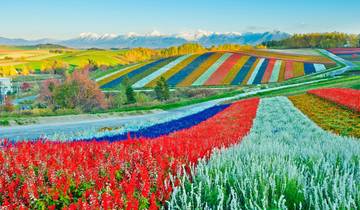
6 Days Hokkaido's Floral Symphony Tour (private guide & driver)The best time to visit falls between June and August in summer.
- ✓ Booking needs min. 2 travelers
7 days
【Japan】Hokkaido 7 Days Noboribetsu, Asahikawa, Biei Package
- ✓ Booking needs min. 2 travelers
Multi-day tour packages powered by TourRadar. Prices and availability subject to change.
Understanding Hokkaido’s Geography and Climate 2026
Hokkaido spans 83,424 square kilometers as Japan’s second-largest island and northernmost prefecture, featuring dramatically different climate patterns than mainland Japan through lower humidity, cooler summers, and heavy winter snowfall creating Japan’s premier skiing destinations. The island’s vast wilderness preserves three major national parks (Daisetsuzan, Shiretoko, Shikotsu-Toya) alongside agricultural landscapes producing Japan’s finest dairy products, seafood harvests, and summer flower crops. Understanding regional climate variations and seasonal timing proves essential for maximizing 2026 travel experiences.
Climate Patterns and Seasonal Temperatures 2026
Hokkaido experiences four distinct seasons with winter dominating December through March when average temperatures range -7°C to 0°C (19-32°F) in Sapporo and -15°C to -5°C (5-23°F) in inland areas like Asahikawa. Coastal cities including Hakodate maintain slightly milder conditions while mountainous regions receive Japan’s heaviest snowfall, with some areas accumulating over 10 meters annually creating world-renowned powder skiing conditions. Sapporo averages 485 centimeters of annual snowfall transforming the city into a winter wonderland from November through March.
Spring arrives late in Hokkaido with cherry blossoms blooming early May versus late March-early April in Tokyo, while temperatures gradually warm from 5-12°C (41-54°F) in April to 12-20°C (54-68°F) by late May. This delayed spring creates extended cold-weather conditions requiring warm clothing through mid-May even as mainland Japan experiences summer-like temperatures. Summer spans June through August with comfortable 20-26°C (68-79°F) temperatures and significantly lower humidity than Tokyo or Kyoto, making Hokkaido Japan’s premier summer escape destination for outdoor activities without oppressive heat.
Autumn transforms Hokkaido earliest in Japan with fall foliage beginning late September in mountain areas and progressing through lowlands until mid-November. Temperatures drop from 18-24°C (64-75°F) in September to 3-12°C (37-54°F) by November, creating crisp conditions perfect for hiking and photography before winter’s arrival. This climate diversity allows year-round travel with dramatically different seasonal experiences.
Major Regions and Geographic Divisions 2026
Western Hokkaido centers on Sapporo (population 1.9 million) serving as the island’s transportation hub, commercial center, and primary tourist gateway. This region includes Otaru’s historic canal district 35 minutes northwest, Niseko ski resort areas 90 minutes southwest, and Noboribetsu hot spring resort 90 minutes south. Hakodate sits at Hokkaido’s southern tip offering historic architecture, night views from Mount Hakodate, and morning seafood markets, connected to Sapporo via 3.5 hour express train or 4 hour drive.
Central Hokkaido encompasses Furano and Biei’s agricultural areas famous for summer lavender fields and rolling patchwork farmland located 2-2.5 hours from Sapporo. Asahikawa, Hokkaido’s second-largest city (population 330,000), serves as gateway to Daisetsuzan National Park and hosts the popular Asahiyama Zoo. This region delivers classic Hokkaido countryside scenery with accessible day trips or overnight stays from Sapporo.
Eastern Hokkaido remains Japan’s most remote and wild region featuring Shiretoko Peninsula (UNESCO World Heritage Site), Akan-Mashu National Park’s volcanic lakes, and Kushiro Marshland. This area requires dedicated 4-5 days with rental car given limited public transportation and vast distances between destinations. The eastern region rewards adventurous travelers with untouched wilderness, wildlife encounters (brown bears, red-crowned cranes), and dramatic coastal scenery unavailable in more accessible western areas.
Sapporo Snow Festival 2026: February 4-11
The 76th Sapporo Snow Festival runs February 4-11, 2026 across three venues showcasing massive snow and ice sculptures, international competitions, winter activities, and nightly illuminations attracting over 2 million domestic and international visitors. This week-long celebration represents Japan’s premier winter festival and Hokkaido’s signature annual event, requiring advance planning for accommodation, transportation, and optimal viewing strategies. The festival’s free admission and central Sapporo location create accessible winter wonderland experiences impossible elsewhere in Japan.
Odori Site: Main Venue and Massive Snow Sculptures 2026
Odori Park’s 1.5 kilometer stretch spanning 12 city blocks serves as the festival’s main venue featuring approximately 12 large-scale snow sculptures measuring up to 25 meters wide and 15 meters high alongside over 100 smaller statues created by citizens and professional teams. These massive creations recreate famous buildings, castles, anime characters, and cultural icons through thousands of cubic meters of snow, with previous years showcasing Japan’s iconic structures, international landmarks, and popular culture themes. The sculptures illuminate nightly from sunset until 22:00 creating magical evening atmospheres with colored lights transforming white snow into vibrant displays.
International Snow Sculpture Contest occupies 11-chome where teams from around the world compete creating intricate designs, with visitors watching artists work during daytime hours before final judging determines winners. Concerts and events use sculptures as stages throughout the week, while food stalls line the park offering warming specialties including miso ramen, soup curry, grilled corn with Hokkaido butter, baked potatoes, and hot sake. The Odori venue operates continuously allowing visitors to experience sculptures in daylight (revealing intricate details) and illuminated evening conditions (creating dramatic visual effects).
Access requires simple walking from Odori Station on Sapporo’s subway, with the park’s linear layout allowing systematic exploration from 1-chome through 12-chome in 2-3 hours depending on crowd conditions and photography time. Weekday visits before 10 AM or after 20:00 offer thinner crowds, while weekends (February 8-9) attract maximum domestic visitors creating dense conditions around popular sculptures.
Susukino Site: Ice Sculptures and Evening Illumination 2026
Susukino Site in Sapporo’s largest entertainment district displays approximately 100 ice sculptures carved from crystal-clear ice blocks creating transparent artworks illuminated with colored lights. The Ice Sculpture Contest showcases emerging ice artists competing for recognition, with sculptures ranging from abstract art to detailed character representations. Located one subway stop south of Odori Park, Susukino’s venue integrates seamlessly into multi-site festival touring requiring just 5 minutes travel time between locations.
Ice sculptures illuminate nightly from sunset until 23:00 (22:00 on final day February 11), with the entertainment district’s surrounding bars, restaurants, and clubs creating lively evening atmosphere complementing frozen artwork displays. An ice bar operates during the festival serving drinks in ice glasses, while the area’s famous ramen shops and izakayas provide warming food options after viewing sculptures in frigid February conditions.
Tsudome Site: Family Activities and Snow Play 2026
Tsudome Site located 10 kilometers from central Sapporo offers family-oriented attractions including giant snow slides, snow rafting, snow sculptures, and indoor playgrounds with food stands. This venue operates daily 10:00-16:00 providing daytime activities particularly appealing to families with children who enjoy hands-on snow play beyond passive sculpture viewing. The indoor dome provides heated rest areas escaping Hokkaido’s February cold averaging -7°C to 0°C (19-32°F).
Access requires riding shuttle buses operating frequently between Sakaemachi Station and Tsudome (200 yen one-way) or walking 15 minutes from Sakaemachi Station on the Toho Subway Line (10 minutes, 250 yen from Sapporo Station). Most international visitors prioritize Odori and Susukino sites given Tsudome’s suburban location and family-activity focus versus artistic sculpture emphasis, though families traveling with children under 12 find the interactive experiences valuable additions to traditional viewing venues.
Practical Planning for Snow Festival 2026
Book accommodation 3-6 months advance for February 4-11 period when Sapporo hotels fill completely and rates double from typical $48-94 to $90-131+ per night. Properties within walking distance of Odori Park command premium pricing while hotels near Susukino Station offer nightlife proximity. Consider staying slightly outside central areas for lower costs, as Sapporo’s excellent subway system provides easy festival access from any station along the Namboku, Tozai, or Toho lines.
Dress for extreme cold with layered thermal clothing, down jackets, insulated boots with non-slip soles (icy sidewalks create hazardous conditions), warm gloves, and winter hats covering ears. Temperatures average -7°C to 0°C (19-32°F) with wind chill creating feels-like temperatures 5-10 degrees lower. Convenience stores throughout Sapporo sell disposable hand warmers (kairo) providing supplemental heat during extended outdoor viewing. Plan 4-6 hours total festival time split between afternoon sculpture viewing, dinner break for warming food, and evening return for illumination photography, maximizing both daytime detail visibility and nighttime lighting drama.
Summer Season and Lavender Fields 2026
Hokkaido’s summer season from June through August delivers comfortable temperatures (20-26°C / 68-79°F), minimal humidity, and spectacular flower displays across Furano and Biei’s agricultural regions when lavender fields reach peak bloom mid-July through early August. This period represents Hokkaido’s busiest tourist season after winter skiing, requiring advance accommodation booking and early-morning attraction visits avoiding crowds drawn to Instagram-famous purple hillside panoramas. The combination of perfect weather, vibrant colors, and outdoor activity opportunities creates Japan’s premier summer escape from mainland humidity.
Furano Lavender Season: Mid-July Peak Timing 2026
Furano’s lavender fields typically peak July 15-31 though exact timing varies based on June weather patterns affecting bloom progression, with early varieties flowering from late June while later varieties extend viewing through mid-August. Farm Tomita represents Hokkaido’s most famous and oldest lavender farm featuring multiple color fields combining lavender with poppies, lupines, and other flowers creating rainbow panoramas across hillside plantings. The farm operates free admission year-round with peak season (July) attracting massive crowds requiring 7-8 AM arrival for parking availability and photography without tourist interference.
Lavender East (Higashinaka) maintains Japan’s largest single lavender field spanning former rice paddies converted to purple flower production, located in Kamifurano offering less crowded alternative to Farm Tomita’s popularity. This 14-hectare field creates endless purple vistas best viewed from mid-morning through afternoon when sunlight illuminates flower colors, with visitor facilities including observation decks, tractor-pulled cart rides through fields (¥200 / $1.60), and lavender product shops. Both farms offer lavender-flavored ice cream, honey, and freshly made products capitalizing on the region’s signature crop.
Accessing Furano from Sapporo requires either rental car (2 hour drive) offering flexibility to visit multiple farms and viewpoints, or JR train to Furano Station (2.5 hours requiring one transfer at Takikawa or Asahikawa) followed by local bus or taxi to farms located 10-15 minutes outside town. Organized bus tours from Sapporo combine Furano and Biei in single-day itineraries (¥8,000-12,000 / $64-96) eliminating transportation logistics though limiting time at each location. Overnight stays in Furano allow extended flower field touring plus access to local wineries, cheese factories, and farm-to-table restaurants showcasing Hokkaido’s agricultural bounty.
Biei Scenic Roads and Blue Pond Summer 2026
Biei town’s rolling hills create patchwork agricultural landscapes with different crop colors forming natural mosaics photographed from two scenic driving routes: Patchwork Road and Panorama Road. These areas feature iconic lone trees including Ken and Mary Tree, Seven Stars Tree, and Parent-Child Tree becoming photography subjects against flower-covered hillside backgrounds. Summer visits (July-August) showcase maximum color variety when potato flowers, wheat fields, sunflowers, and various crops create multi-colored patterns visible from elevated viewpoints including Shinei-no-Oka observation pyramid offering panoramic Tokachi Mountain Range views.
Blue Pond (Aoiike) sits 20 minutes by car from central Biei displaying ethereal blue-green water created by aluminum hydroxide particles reflecting sunlight, with dead larch trees standing in shallow water creating surreal compositions. The pond’s blue intensity varies seasonally with summer generally providing strongest coloration, though weather conditions affect visibility with overcast days diminishing color vibrancy. Peak summer crowds (July-August) fill parking lots by 9 AM requiring very early visits or afternoon timing after tour buses depart. Shirahige Falls nearby complements Blue Pond visits with white water cascading into the Biei River creating combined natural attraction touring.
Shikisai no Oka (Hill of Colors) in Biei operates a massive flower field theme park cultivating tulips (May), lupines (June), lavender (July), sunflowers (August), and cosmos (September) across rolling hills with tractor rides, alpaca farm, and observation decks. Admission costs approximately ¥500 ($4) adults with longer viewing seasons than Furano’s lavender-focused farms. Biei requires rental car for efficient touring as public buses connect only central town with limited schedules preventing comprehensive scenic road exploration within practical timeframes.
Summer Activities and Outdoor Adventures 2026
Daisetsuzan National Park’s hiking trails fully open June through October when snow melts from mountain passes, offering Japan’s most pristine alpine hiking with routes ranging from easy 2-hour nature walks to challenging multi-day traverses across volcanic peaks. Sounkyo Gorge provides dramatic cliff scenery accessible via Kurodake Ropeway cable car eliminating strenuous climbing while delivering mountain views, with autumn colors peaking late September transforming mountainsides into brilliant reds and golds. Summer temperatures at elevation remain cool (10-18°C / 50-64°F) requiring light jackets even during valley heat.
Lake Toya offers summer fireworks displays nightly during peak season (late April-October) creating unique summer tradition, while rental boats, cycling paths, and hot spring resorts create multi-activity destination 2 hours south of Sapporo. Shiretoko Peninsula’s UNESCO wilderness supports guided nature walks spotting brown bears, red fox, and sika deer, with boat tours along dramatic coastline revealing waterfalls cascading directly into sea and remote areas inaccessible by road. These eastern Hokkaido destinations require 3-4 days minimum given distances from Sapporo and overnight accommodation needs in regional towns.
Winter Activities and Skiing 2026
Hokkaido’s winter season from December through March attracts international visitors seeking legendary powder snow conditions, world-class ski resorts, winter festivals, and hot spring experiences enhanced by snow-covered mountain scenery. January and February deliver peak snow accumulation when “Japow” (Japanese powder snow) reaches maximum depth and quality, though December and March offer excellent conditions with smaller crowds and lower accommodation costs. Winter transforms Hokkaido into snowy paradise where outdoor activities combine with warming culinary specialties and onsen soaking creating comprehensive cold-weather experiences.
Niseko United: International Ski Resort 2026
Niseko United comprises four interconnected ski areas (Grand Hirafu, Niseko Village, Annupuri, Hanazono) creating Japan’s most internationally-developed resort with English-speaking staff, western-style accommodations, and infrastructure catering to Australian, Chinese, and global ski tourism. The resort averages 15 meters of annual snowfall producing consistently deep powder conditions from early December through late April, with January-February peak season delivering the lightest, driest snow covering terrain ranging from gentle beginner slopes to challenging backcountry access gates.
Full-day lift tickets cost approximately ¥7,000-8,000 ($56-64) for adults with multi-day passes reducing per-day rates, while equipment rental adds ¥5,000-7,000 ($40-56) daily for skis or snowboard with boots. Accommodation prices reflect international demand with peak season (mid-December through February) commanding $200-500+ nightly for hotels and condominiums near slopes, while village-area properties and pensions 10-15 minutes from lifts cost $100-200 nightly. Niseko’s pedestrian village features numerous restaurants, bars, and shops creating après-ski atmosphere rare in Japanese resorts, with shuttle buses connecting accommodation areas to four mountain bases.
Access from Sapporo requires 2.5-3 hour bus journey (¥2,500-3,000 / $20-24 one-way) or rental car driving similar duration, with New Chitose Airport offering direct resort shuttles (3 hours, ¥3,500 / $28) for arriving skiers. Most visitors stay minimum 3-5 days justifying travel time and experiencing multiple resorts connected by free shuttle buses operating every 15-20 minutes during operating hours.
Furano and Regional Ski Resorts 2026
Furano Ski Resort offers excellent tree skiing through birch forests creating more intimate Japanese resort atmosphere versus Niseko’s international development, with quality powder snow and lower accommodation costs attracting domestic skiers and international visitors seeking authentic Japanese mountain experiences. The resort features varied terrain across two mountains connected by gondola, with day tickets approximately ¥5,500-6,500 ($44-52) and rental equipment $35-45 daily. Furano town provides accommodation options ranging from budget pensions to resort hotels, with summer flower season infrastructure supporting winter visitors at reduced rates.
Sapporo Kokusai Ski Resort sits just 60 minutes from central Sapporo enabling day trips from city hotels, eliminating resort accommodation costs while providing excellent powder skiing and night skiing operations. Day tickets cost ¥4,500-5,500 ($36-44) with equipment rental available on-mountain. Rusutsu Resort southeast of Niseko combines large ski area with indoor waterpark, amusement facilities, and family-friendly atmosphere appealing to mixed-ability groups and families with non-skiing members. These regional options complement Niseko’s international prominence with distinctly Japanese resort cultures and lower overall costs.
Winter Festivals and Seasonal Activities 2026
Lake Shikotsu Ice Festival creates illuminated ice sculptures from late January through mid-February (approximately January 31-February 23, 2026) at lakeside location south of Sapporo, with nighttime illumination creating magical frozen wonderland complementing Sapporo Snow Festival’s urban celebration. Otaru Snow Light Path Festival (mid-February) decorates the canal district with candles and lanterns creating romantic winter atmosphere in the historic port town. Jozankei Onsen operates winter illumination January 27-February 3, 2026 coordinating with Snow Festival timing for combined winter tourism.
Ice fishing experiences target smelt and other species on frozen lakes, with guided tours providing equipment, heated shelters, and cooking facilities preparing fresh catches. Snowshoeing through winter forests accesses areas impassable during snowless seasons, while winter wildlife spotting focuses on red-crowned cranes (Kushiro area) and sika deer populations active during cold months. These activities complement skiing and festivals creating diverse winter programming throughout Hokkaido’s snowy season.
Sapporo City Attractions and Experiences 2026
Sapporo combines urban sophistication with outdoor access, featuring museums, parks, shopping districts, and food scenes showcasing Hokkaido’s culinary specialties alongside convenient transportation to regional destinations. The city deserves 2-3 dedicated days exploring downtown attractions, sampling local cuisine, and experiencing nightlife before venturing to surrounding areas. Sapporo’s grid street layout simplifies navigation, while excellent English signage in tourist areas accommodates international visitors.
Sapporo Beer Museum and Brewery Tours 2026
Sapporo Beer Museum occupies a historic brick brewery building constructed during the Meiji era, offering free self-guided tours explaining Japanese beer history and Sapporo Beer’s 150-year brewing tradition. The attached Beer Garden operates year-round serving all-you-can-drink Sapporo beer with Jingisukan (grilled lamb) set meals in a festive hall atmosphere, while the Sapporo Beer Garden Restaurant provides more refined dining experiences. Guided premium tours (¥1,000 / $8) include tasting of limited-edition beers not available in standard self-guided visits.
The museum sits in eastern Sapporo requiring 10-minute bus ride from Sapporo Station or 8-minute walk from Higashi-Kuyakusho-mae subway station, with combined bus-museum-beer garden visits requiring 2-3 hours. The Beer Garden’s Jingisukan specialty represents Hokkaido’s signature dish featuring thin-sliced lamb grilled with vegetables on domed cast-iron pans, best enjoyed with fresh Sapporo beer acknowledging the brewery’s historical role in Hokkaido’s development. Reservations recommended for Beer Garden dinner during peak summer and Snow Festival periods when locals and tourists fill the large dining halls.
Odori Park and Sapporo TV Tower 2026
Odori Park stretches 1.5 kilometers through central Sapporo creating year-round gathering space hosting seasonal festivals including the Snow Festival (February), Lilac Festival (May), YOSAKOI Soran Festival (June), Beer Garden (July-August), and Autumn Festival (September). The linear park features fountains, flower gardens, and sculptures providing urban green space for relaxation between sightseeing activities, with underground shopping arcades connecting subway stations along the park’s length offering weather-protected movement during winter cold or summer rain.
Sapporo TV Tower rises 147.2 meters at Odori Park’s eastern end with observation deck (¥1,000 / $8 admission) providing 360-degree city views and distant mountain panoramas. The tower’s design by architect Tachu Naito (who also designed Tokyo Tower) creates architectural icon photographed against seasonal park landscapes, with evening illumination creating romantic atmosphere popular for dates and nighttime photography. The tower operates extended hours during Snow Festival for elevated sculpture viewing, while summer visits showcase park’s flower displays and surrounding urban development from aerial perspective.
Historic Village of Hokkaido and Cultural Sites 2026
Historic Village of Hokkaido (Hokkaido Kaitaku-no-Mura) recreates Meiji and Taisho-era buildings across 54-hectare outdoor museum, showcasing farmhouses, shops, fishing facilities, and public buildings preserved from Hokkaido’s pioneering settlement period. The village operates free horse-drawn sleigh rides in winter and trolley transport in summer, with interpreters demonstrating traditional crafts and lifestyles. Admission costs ¥800 ($6.40) adults with half-day visits sufficient for comprehensive touring. The site sits 40 minutes from central Sapporo requiring bus from Shin-Sapporo Station, making it afternoon activity after morning downtown sightseeing.
Former Hokkaido Government Office Building (Red Brick Office) occupies central Sapporo location near Sapporo Station, offering free admission to neo-baroque architecture housing exhibition rooms explaining Hokkaido’s administrative history. The distinctive red brick exterior creates popular photography subject surrounded by maintained gardens. Sapporo Clock Tower, another Meiji-era landmark, displays historical exhibits in compact museum (¥200 / $1.60 admission) explaining the building’s educational origins and preservation story.
Susukino Nightlife and Food District 2026
Susukino ranks as Japan’s largest entertainment district north of Tokyo, featuring over 4,000 bars, restaurants, clubs, and karaoke establishments concentrated in blocks south of Odori Park. The district specializes in seafood izakayas serving fresh Hokkaido catches, ramen shops offering Sapporo’s miso ramen style, and soup curry restaurants featuring the local specialty combining Indian curry spices with Japanese dashi broth. Narrow side streets hide intimate bars and gastropubs popular with locals, while main thoroughfares display neon-lit facades creating photogenic urban landscapes particularly striking during winter snow.
Nijo Market near Susukino operates morning seafood market where vendors sell fresh crab, sea urchin, salmon, and other Hokkaido marine products, with attached restaurants preparing market purchases into sashimi bowls (kaisendon) and grilled seafood meals. The market opens 7 AM allowing early breakfast or pre-departure meals for travelers heading to airports or regional destinations. Evening Susukino visits combine dinner at specialty restaurants (budget ¥2,000-4,000 / $16-32 per person for quality meals) with bar hopping experiencing local nightlife culture, though solo travelers should exercise caution in entertainment areas where aggressive touts may pressure unwilling customers into expensive establishments.
Regional Destinations from Sapporo 2026
Hokkaido’s regional destinations extend beyond Sapporo through historic port towns, hot spring resorts, national parks, and remote wilderness areas requiring strategic planning balancing travel time against available vacation days. Day trips from Sapporo include Otaru (35 minutes), Jozankei Onsen (1 hour), and Lake Toya (2 hours), while overnight stays enable deeper exploration of Furano/Biei (2 hours), Hakodate (3.5 hours), or eastern regions (4-6 hours). Transportation choices between rental cars, trains, and organized tours significantly impact itinerary flexibility and total costs.
Otaru: Historic Canal Town 2026
Otaru sits 35 minutes northwest of Sapporo via frequent rapid trains (¥750 / $6 one-way) running every 15-20 minutes from Sapporo Station, creating easy half-day or full-day excursion from city base accommodations. The town’s historic canal district features preserved merchant warehouses converted to museums, restaurants, and shops, with the canal’s stone-lined banks creating photogenic scenes particularly striking during winter’s Otaru Snow Light Path Festival or summer evening walks. Otaru Music Box Museum claims Japan’s largest music box collection with multiple floors displaying antique and modern musical instruments, while glassware shops showcase local glass-blowing traditions producing decorative objects and practical household items.
Seafood restaurants along Sankaku Market and canal district serve fresh catches including sea urchin (uni), crab, and sushi prepared from morning market purchases, with lunch budgets averaging ¥1,500-3,000 ($12-24) for quality seafood meals. The LeTAO chocolate shop originated in Otaru creating rich cheesecakes and confections using Hokkaido dairy, with flagship store offering cafe seating overlooking canal. Walking the canal district, visiting museums, browsing shops, and enjoying seafood lunch requires 4-6 hours before returning to Sapporo for evening activities, making Otaru perfect day trip complementing Sapporo urban tourism without overnight stays.
Noboribetsu Onsen: Hot Spring Resort 2026
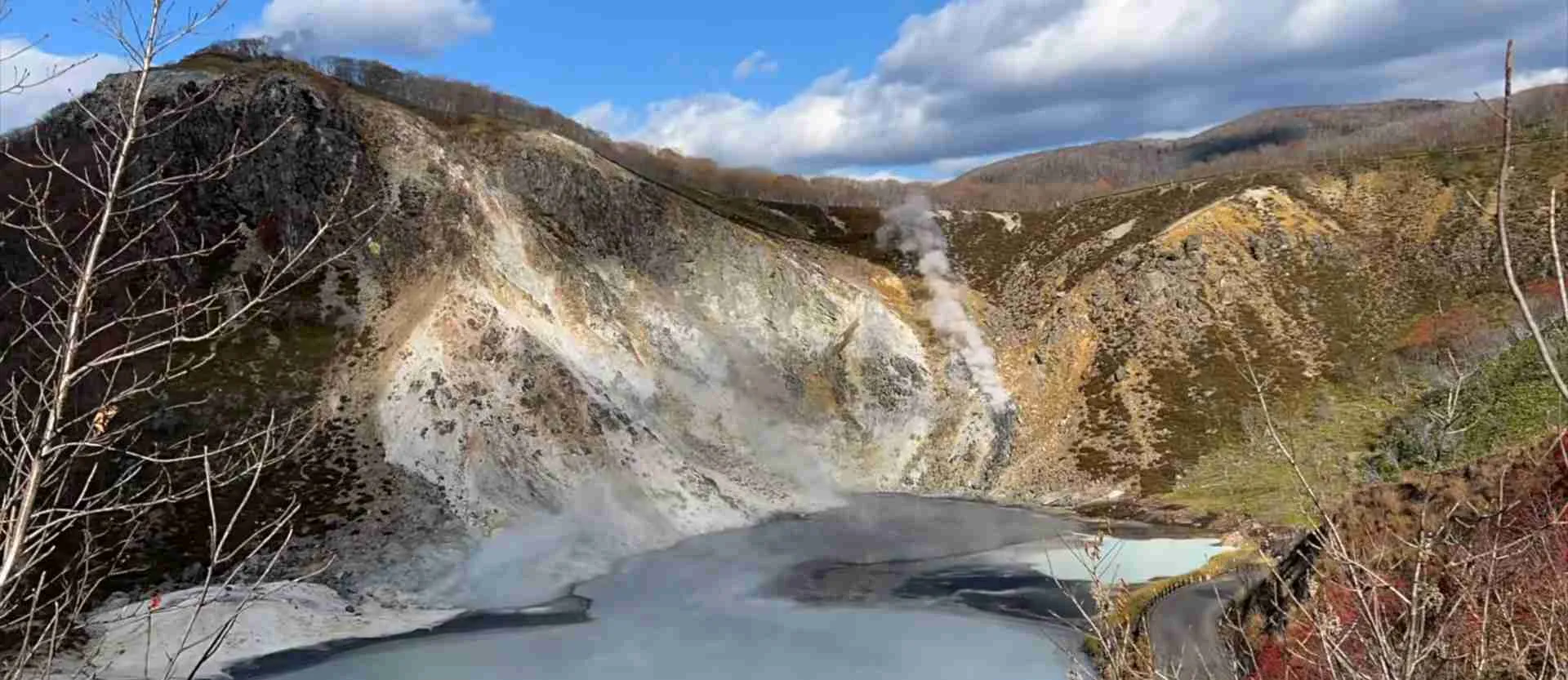
Noboribetsu Onsen ranks among Japan’s most famous hot spring resorts featuring sulfurous waters sourced from Jigokudani (Hell Valley) where volcanic activity creates steaming vents, colored mineral deposits, and boiling pools visible along walking trails. The resort area concentrates traditional ryokan inns and modern hotels offering onsen facilities fed by multiple spring sources with varying mineral compositions and temperatures. Day trip bus tours from Sapporo (¥3,000-4,000 / $24-32) combine Jigokudani walking with short onsen bathing, while overnight stays enable comprehensive hot spring experiences with kaiseki dinners and multiple soaking sessions.
Jigokudani walking trail operates free admission year-round with 1.5 kilometer boardwalk loop requiring 30-45 minutes traversing volcanic terrain, though winter conditions create slippery surfaces requiring careful footing. The dramatic landscape features continuous steam vents, sulfur smell, and barren ground where vegetation cannot survive extreme heat and mineral concentrations. Nearby attractions include Orofure Pass scenic drive (summer only) and bear park cable car accessing forest viewing areas, though these secondary sites appeal less than the primary onsen and Jigokudani experiences. Noboribetsu sits 90 minutes from Sapporo via express bus or train to Noboribetsu Station plus 15-minute local bus to resort area.
Hakodate: Southern Hokkaido Port City 2026
Hakodate occupies Hokkaido’s southern tip connected to main island Honshu via undersea Seikan Tunnel, featuring historic foreign settlement area, star-shaped Goryokaku Fort, morning seafood market, and renowned Mount Hakodate night view ranking among Japan’s top three urban panoramas. The city requires minimum 1-2 nights given 3.5-4 hour travel time from Sapporo via express train or 5 hours by highway bus, though overnight ferry service provides alternative transportation option departing Niigata on western Honshu arriving Otaru near Sapporo.
Motomachi district preserves Western-style buildings constructed during Hakodate’s treaty port period when foreign consulates, churches, and merchant houses created international community, with evening illumination highlighting architecture including Orthodox Church, British Consulate, and Old Public Hall. Goryokaku Fort’s star shape remains visible from adjacent tower (¥900 / $7 admission) or ground level park walks beneath cherry trees blooming early May. Hakodate Morning Market operates 5 AM-noon offering fresh seafood including live squid, sea urchin, king crab, and salmon sold raw or prepared as kaisendon rice bowls at market restaurants (¥1,500-3,500 / $12-28).
Mount Hakodate’s ropeway cable car (¥1,500 / $12 round-trip) accesses summit observation deck where million-dollar night views showcase city lights spreading across the narrow peninsula bordered by harbors on both sides, creating distinctive geography visible from 334-meter elevation. Evening visits (sunset through 21:00) provide optimal viewing conditions, though summer and autumn weekends attract crowds requiring 30-60 minute cable car queues. Clear weather proves essential for quality views as fog and rain obscure visibility common during certain seasons.
Accommodation Planning Sapporo and Hokkaido 2026
Hokkaido accommodation spans budget hostels, business hotels, resort properties, traditional ryokan, and vacation rentals with costs varying dramatically by season, location, and property type. Strategic booking timing and neighborhood selection significantly impact total trip costs, with peak seasons (Snow Festival February, summer lavender July-August, autumn foliage September-October) requiring 3-6 months advance reservations securing availability and avoiding premium last-minute pricing. Understanding accommodation categories and booking strategies optimizes comfort and budget balance.
Sapporo Hotel Costs and Neighborhoods 2026
Sapporo budget hotels and hostels range $31-48 nightly for basic rooms with shared or private bathrooms, concentrated around Sapporo Station and Susukino districts offering convenient subway access. Mid-range business hotels cost $70-94 nightly providing compact but efficient rooms with private facilities, breakfast options, and reliable chains including Richmond Hotel, Daiwa Roynet, and APA Hotels maintaining consistent quality standards. Premium properties including JR Tower Hotel Nikko Sapporo, Cross Hotel Sapporo, and Keio Plaza Hotel command $150-250+ nightly for larger rooms, upscale amenities, and prime locations, though these rates double during Snow Festival reaching $200-400+ when demand peaks.
Staying near Sapporo Station maximizes transportation convenience accessing JR trains for regional travel, airport express service, and three subway lines connecting city attractions. The station area’s underground shopping arcades, department stores, and restaurants create self-contained environment during winter cold. Odori Park neighborhood centrally positions hotels between station and Susukino nightlife, walking distance to TV Tower and park events. Susukino hotels provide immediate nightlife access though noisier environments potentially disturbing light sleepers, while residential areas like Maruyama offer quieter stays requiring 10-15 minute subway rides to central attractions.
Ski Resort Accommodation Costs 2026
Niseko accommodation during peak season (mid-December through February) ranges $100-200 nightly for budget pensions and village hotels located 10-15 minutes from slopes via free shuttle, $200-350 for ski-in/ski-out hotels and condominiums offering slope access, and $350-600+ for luxury properties featuring full-service amenities, multiple restaurants, and premium locations. These prices drop 40-50% during early season (December 1-20) and late season (March-April) when snow conditions remain excellent but demand decreases. Booking 6-12 months advance secures preferred properties and lower rates before inventory tightens.
Furano resort hotels cost $80-150 nightly during ski season maintaining more affordable pricing than Niseko’s international resort, with town accommodation (10 minutes from slopes) offering budget alternatives $50-80 nightly. Rusutsu and other regional resorts provide similar pricing structures with package deals combining lift tickets, accommodation, and meals delivering value versus separate bookings. All ski areas increase rates during Japanese holiday periods (New Year, mid-February) and decrease prices during weekday periods attracting budget-conscious skiers avoiding weekend crowds.
Regional and Hot Spring Accommodation 2026
Noboribetsu onsen ryokan ranges $150-400+ per person including elaborate kaiseki dinners and breakfast, with higher pricing reflecting meal quality, room size, and private onsen facilities versus shared communal baths. Day-use onsen bathing costs ¥1,000-2,000 ($8-16) for 2-3 hours accessing resort facilities without overnight stay, creating budget-friendly hot spring experiences. Lake Toya resort hotels offer similar pricing structures with lake views commanding premiums over mountain-side rooms.
Furano and Biei summer accommodation (July-August lavender season) increases 30-40% above shoulder season rates, with farm stays and pensions offering budget alternatives to resort hotels. Eastern Hokkaido’s remote locations limit accommodation options requiring advance booking even during off-peak periods, with basic business hotels in Abashiri, Kushiro, and Shiretoko gateway towns charging $60-100 nightly. National park lodges and mountain huts provide rustic accommodation for hikers accessing remote trailheads, typically requiring reservations several months advance for summer hiking season.
Getting to and Around Hokkaido 2026
Hokkaido’s transportation infrastructure combines frequent flights to New Chitose Airport, shinkansen rail service extending from Tokyo, comprehensive JR rail networks connecting major cities, and rental car availability enabling wilderness access where trains don’t reach. Understanding transportation options and booking strategies optimizes travel efficiency while managing costs, with choices between speed (flying), economy (overnight buses), and comprehensive access (rental cars) depending on itinerary priorities and budget constraints.
Flights to New Chitose Airport 2026
New Chitose Airport serves as Hokkaido’s primary international gateway located 40 minutes from central Sapporo, receiving frequent domestic flights from Tokyo Haneda (1 hour 35 minutes, ¥15,000-30,000 / $120-240), Osaka (2 hours, ¥20,000-40,000 / $160-320), and other major Japanese cities plus limited international service from Asian destinations. Low-cost carriers including Peach, Jetstar Japan, and AirDo often price below full-service ANA and JAL, with advance booking 2-3 months prior securing lowest fares particularly avoiding peak periods.
Airport express trains depart every 15 minutes connecting New Chitose to Sapporo Station in 37 minutes (¥1,150 / $9 reserved seats, ¥1,070 unreserved) providing fastest city access, while airport limousine buses serve hotels throughout Sapporo in 60-90 minutes (¥1,100 / $9) offering door-to-door service though slower than trains. Rental car pickup at airport eliminates city transit for travelers heading directly to regional destinations, while some Niseko and other ski resorts operate direct shuttle buses during winter season (¥3,500-4,000 / $28-32) bypassing Sapporo entirely.
Train Travel Within Hokkaido 2026
JR Hokkaido operates rail networks connecting major cities including Sapporo-Hakodate (3.5 hours, ¥9,440 / $75), Sapporo-Asahikawa (1.5 hours, ¥4,810 / $38), and Sapporo-Otaru (35 minutes rapid train, ¥750 / $6), though limited service reaches Furano (2.5 hours requiring transfer, ¥3,000+ / $24+) and no trains serve Biei’s flower field areas, Niseko ski resorts, or eastern Hokkaido’s national parks. The JR Pass covers Hokkaido rail travel for tourists holding national pass or regional Hokkaido Pass (¥18,000 / $144 for 5 days, ¥24,000 / $192 for 7 days) delivering value for travelers making multiple long-distance journeys.
Sapporo’s subway system comprises three lines (Namboku, Tozai, Toho) connecting central attractions, with day passes (¥830 / $6.60) offering unlimited rides economical when making 3+ trips. IC cards (Kitaca, Suica, Pasmo) work throughout Hokkaido’s public transportation eliminating individual ticket purchases, though fare calculations automatically charge per ride without special pricing. Buses serve areas beyond rail coverage though infrequent schedules and Japanese-only route information create challenges for foreign visitors, making rental cars preferable for regional exploration.
Rental Cars and Driving in Hokkaido 2026
Rental cars prove essential accessing Furano/Biei flower fields, eastern national parks, remote hot springs, and scenic routes where public transportation operates rarely or not at all. Major rental companies (Toyota Rent a Car, Nippon Rent a Car, Times Car Rental, Nissan Rent a Car) maintain offices at New Chitose Airport and Sapporo Station with compact cars starting ¥5,000-6,000 ($40-48) daily, mid-size vehicles ¥7,000-8,000 ($56-64), and winter 4WD models commanding ¥9,000-12,000 ($72-96) during snow season when all-wheel-drive and studded tires become essential for safe driving.
International Driving Permits (IDP) issued by home country AAA or equivalent organizations enable foreign visitors to drive legally in Japan, required alongside original driver’s license when renting vehicles. Navigation systems in most rentals offer English language options, while Google Maps provides reliable routing throughout Hokkaido including real-time traffic data. Highway tolls add costs with Sapporo-Furano expressway charging approximately ¥2,500 ($20), though scenic alternative routes avoid tolls while adding travel time through countryside landscapes.
Winter driving requires extreme caution with black ice, heavy snowfall, and reduced visibility creating hazardous conditions particularly for drivers inexperienced with snow. Rental companies provide winter tires (mandatory) and chains (optional), with comprehensive insurance recommended covering potential accidents given challenging conditions. Alternative approaches include hiring private drivers (approximately ¥30,000-50,000 / $240-400 daily) or joining organized bus tours eliminating driving responsibilities while accessing remote destinations.
Frequently Asked Questions About Hokkaido 2026
What is Hokkaido famous for?
Hokkaido gained fame for world-class powder skiing at resorts including Niseko United where annual snowfall exceeding 15 meters creates legendary “Japow” (Japanese powder) conditions attracting international skiers from December through April. The Sapporo Snow Festival represents Japan’s premier winter event, showcasing massive snow and ice sculptures across three venues during one week in February when over 2 million visitors experience the island’s signature celebration. Summer lavender fields in Furano create purple hillside panoramas impossible elsewhere in Japan, with Farm Tomita and surrounding flower farms operating free admission attracting photographers and nature lovers mid-July through early August. Hokkaido’s seafood reputation derives from cold Pacific and Sea of Japan waters producing exceptional crab, sea urchin, salmon, and other marine species served fresh at morning markets in Sapporo, Hakodate, and coastal towns. The island claims Japan’s finest dairy products leveraging cool climate and extensive grasslands for cattle raising, creating premium milk, cheese, butter, and ice cream distinctly richer than mainland products.
How cold does Hokkaido get in winter?
Sapporo winter temperatures average -7°C to 0°C (19-32°F) from December through February with daily highs occasionally reaching 5°C (41°F) on sunny days and overnight lows dropping to -10°C to -15°C (14-5°F) during cold snaps, requiring full winter clothing including down jackets, thermal layers, insulated boots, and warm accessories. Inland cities like Asahikawa and Furano experience more extreme cold with January averages -15°C to -5°C (5-23°F) creating conditions where exposed skin freezes within minutes during wind chill, while coastal areas including Hakodate remain milder averaging -3°C to 3°C (27-37°F). Heavy snowfall rather than extreme cold defines Hokkaido winter, with some mountain areas receiving over 10 meters annual accumulation transforming landscapes into continuous white covering from November through April. Sapporo’s 485 centimeters annual snowfall creates persistent snow cover requiring daily shoveling and snow removal throughout winter, though modern heating systems in all buildings, trains, and public spaces maintain comfortable 20-22°C (68-72°F) indoor temperatures. Visitors experience cold primarily during outdoor activities at ski resorts, festival viewing, or sightseeing between heated buildings, with proper layering and breaks in warm spaces managing winter conditions comfortably.
Can you visit Hokkaido without speaking Japanese?
Major tourist areas including Sapporo, Niseko ski resorts, and popular attractions feature English signage, menus, and staff accommodating international visitors through basic English communication or translation apps, while rural regions and eastern Hokkaido require more self-sufficiency navigating Japanese-only environments. Sapporo’s subway, JR trains, and buses display English route information alongside Japanese, with ticket machines offering English language options simplifying transportation purchases. Niseko’s international development created English-speaking staff at most businesses, Western-style services, and infrastructure specifically catering to foreign skiers making it Japan’s most foreigner-friendly ski destination. Google Translate’s camera function translates restaurant menus, signs, and written instructions by pointing smartphones at Japanese text, while combination of gestures, pointing, and patience facilitates most interactions in areas without English speakers. Booking hotels online through international platforms (Booking.com, Expedia, Agoda) eliminates language barriers during reservation process, while major chains employ staff with basic English at front desks. Organized tours operate with English-speaking guides eliminating communication challenges while visiting Furano flower fields, national parks, or other destinations where independent travel requires Japanese language ability. Solo travelers managing Tokyo and Kyoto successfully possess sufficient skills for Hokkaido given its well-developed tourist infrastructure, though eastern regions and rural hot spring towns test comfort levels for monolingual English speakers navigating entirely Japanese environments.
What food specialties should I try in Hokkaido?
Miso ramen originated in Sapporo featuring rich pork bone broth flavored with fermented soybean paste creating Hokkaido’s signature noodle style served throughout the island with toppings including corn, butter, bean sprouts, and chashu pork. Soup curry developed as Sapporo specialty combining Indian curry spices with Japanese dashi broth creating lighter, brothier curry served with large vegetable pieces, chicken or lamb, and rice for dipping rather than mixing. Jingisukan (grilled lamb) represents Hokkaido’s most iconic dish featuring thin-sliced lamb grilled with vegetables on domed cast-iron pans at tableside, traditionally paired with fresh Sapporo beer acknowledging the region’s sheep raising history. Fresh seafood including sea urchin (uni), king crab, salmon roe (ikura), and other Pacific catches reach peak quality in Hokkaido waters, served as sashimi, sushi, or grilled at morning markets and izakaya restaurants. Kaisendon (seafood rice bowls) pile fresh sashimi atop rice creating colorful presentations at morning markets in Hakodate, Sapporo’s Nijo Market, and coastal towns, with prices ranging ¥1,500-4,000 ($12-32) depending on seafood quality and quantity. Dairy products including milk, soft-serve ice cream, cheese, and butter leverage Hokkaido’s cool climate and extensive grasslands creating products noticeably richer and creamier than mainland equivalents, with roadside soft cream stands throughout countryside showcasing local dairy. Shiroi Koibito cookies manufactured by Ishiya in Sapporo combine white chocolate with langue de chat cookies creating Hokkaido’s most famous souvenir snack, while LeTAO cheesecakes from Otaru represent premium confections using island dairy.
Is Hokkaido good for families with children?
Hokkaido excels as family destination offering outdoor activities, seasonal festivals, wildlife encounters, and kid-friendly attractions across all age groups, with safe cities, clean facilities, and family-oriented infrastructure simplifying travel logistics. Sapporo Snow Festival’s ice sculptures, slides, and winter play areas at Tsudome venue engage children directly through hands-on activities beyond passive viewing, while summer flower fields provide open spaces for running and exploration. Asahiyama Zoo in Asahikawa ranks among Japan’s most innovative zoos featuring penguin walks, polar bear underwater viewing tunnels, and seal cylinders creating close animal encounters children remember, reachable via 1.5 hour train or organized tours from Sapporo. Skiing accommodates families through beginner slopes, ski schools offering children’s lessons, and resort facilities including childcare and kids’ clubs providing parent breaks, with Niseko, Rusutsu, and Furano maintaining family-friendly infrastructure. Lake Toya’s summer fireworks, rental boats, cycling paths, and hot spring resorts combine activities appealing to varied ages, while Noboribetsu’s bear park cable car and Jigokudani volcanic landscape create memorable natural experiences. Accommodation options including apartment-style hotels and connecting rooms ease family lodging challenges common in compact Japanese hotel rooms, while convenience stores provide reliable backup food options for picky eaters uncomfortable with unfamiliar Japanese cuisine. Public transportation welcomes families with priority seating, elevator access, and children under 6 riding free on all trains and buses throughout Hokkaido.
What is the cheapest month to visit Hokkaido?
April and late May represent Hokkaido’s cheapest travel periods when accommodation costs drop 30-40% below summer and winter peaks, with $31-48 budget hotels widely available and mid-range properties charging $50-70 versus $90-131 during high season. November through mid-December also delivers low pricing before ski season begins in earnest, with autumn foliage ending by early November creating shoulder period until pre-Christmas travelers arrive. These off-peak months feature unpredictable weather with April experiencing lingering winter conditions including snow and cold (5-12°C / 41-54°F), while late November brings early winter onset with temperatures dropping rapidly and potential early snowfall. Flight costs decrease during these periods with fewer tourists traveling to Hokkaido, creating additional savings beyond accommodation discounts. Attractions operate reduced hours or close entirely during off-season with some flower farms, cable cars, and mountain roads shutting until warmer weather returns, limiting activity options compared to summer or winter peaks. January immediately after New Year holiday (January 5-31) offers ski season savings with accommodation 20-30% cheaper than February’s Snow Festival period while maintaining excellent snow conditions, appealing to flexible travelers prioritizing value over festival experiences. These budget periods require accepting weather uncertainties, limited operating hours, and fewer crowds creating quieter but potentially challenging travel conditions.
How far is Hokkaido from Tokyo?
Flying between Tokyo and Hokkaido’s New Chitose Airport requires 1 hour 35 minutes for the 830 kilometer distance, with 40+ daily flights from Haneda Airport (closer to central Tokyo) and additional service from Narita Airport serving international connections. Train travel via shinkansen bullet train and conventional rail extends journey to approximately 8.5 hours covering Tokyo to Sapporo, starting with Tohoku/Hokkaido Shinkansen from Tokyo Station to Shin-Hakodate-Hokuto Station (4 hours) then transferring to Hokuto Limited Express for the remaining journey to Sapporo (3.5 hours), with total costs ¥27,000-30,000 ($216-240) comparable to round-trip flights during sale periods. Overnight bus services operate Tokyo-Sapporo routes departing evening (19:00-20:00) and arriving early morning (8:00-9:00) in approximately 16-17 hours, offering budget option around ¥8,000-12,000 ($64-96) though uncomfortable sleeping conditions and long duration make this approach suitable only for extremely budget-conscious travelers. Driving proves impractical with ferry service from Tokyo area requiring first reaching western Honshu ports (Niigata or Tomakomai) then overnight ferry to Hokkaido adding 18-24 hours total travel time. Most visitors fly given speed, comfort, and competitive pricing versus rail alternatives, with advance booking 2-3 months prior securing lowest airfares particularly avoiding peak periods when demand drives prices upward.
What should I pack for Hokkaido in winter?
Winter clothing for Hokkaido February requires full arctic gear starting with insulated down jacket rated for -20°C to -30°C temperatures, with waterproof outer shell protecting against snow and wind during outdoor festival viewing and skiing activities. Thermal base layers (top and bottom) create foundation for layering system trapping body heat, while mid-layers including fleece or wool sweaters add insulation removing or adding as activity levels change. Insulated winter boots with non-slip soles prove essential navigating icy sidewalks common throughout Sapporo during Snow Festival when accumulated snow compacts into slippery surfaces causing frequent falls for unprepared visitors wearing inadequate footwear. Warm accessories including knit hat covering ears, insulated gloves (mittens provide warmer option than fingered gloves), and scarf protecting neck and face from wind chill complete basic winter kit. Disposable hand and toe warmers (kairo) purchased at convenience stores throughout Japan provide supplemental heat during extended outdoor exposure, easily inserted into gloves and boots for several hours warmth. Ski-specific clothing for resort visits requires waterproof jacket and pants, ski gloves, goggles, and face covering (buff or balaclava) protecting against wind at speed, with most resorts offering rental equipment including skis, snowboards, boots, and outerwear for travelers avoiding luggage weight. Indoor heating maintains 20-22°C (68-72°F) throughout buildings, trains, and accommodations allowing lighter clothing indoors, with layering system enabling quick adjustments moving between heated indoor and cold outdoor environments throughout day.
Are there cherry blossoms in Hokkaido?
Cherry blossoms bloom significantly later in Hokkaido than mainland Japan with peak viewing typically occurring early-to-mid May (approximately May 1-10) in Sapporo versus late March-early April in Tokyo and Kyoto, creating extended Japan cherry blossom season for travelers visiting multiple regions. Goryokaku Park in Hakodate ranks as Hokkaido’s premier viewing location where 1,600 cherry trees circle the star-shaped fort creating spectacular panoramic displays visible from adjacent tower, with evening illumination extending viewing into nighttime hours. Maruyama Park in Sapporo and Matsumae Park along southern coast also attract significant crowds during brief 7-10 day peak bloom period when locals gather for hanami picnic parties beneath pink canopies. Hokkaido’s cherry blossom season escapes the overcrowding plaguing Tokyo and Kyoto where millions of tourists converge creating impossible conditions at famous viewing spots, allowing more relaxed photography and picnic experiences. Late blooming creates scheduling advantages for travelers wanting cherry blossoms but unable to visit mainland Japan during late March-early April, effectively extending Japan’s cherry blossom season by one month. The combination of cherry blossoms with spring emergence (trees leafing out, early flowers blooming) creates vibrant seasonal transition less dramatic in warmer regions where cherry blossoms bloom while winter dormancy persists. Hokkaido’s brief spring concentrates seasonal changes into compressed timeframe creating intensive natural displays as winter transforms to summer within weeks rather than gradual seasonal progression.
What is Hokkaido’s relationship with indigenous Ainu culture?
The Ainu represent Hokkaido’s indigenous people with distinct language, culture, and traditions predating Japanese settlement, with small populations primarily in eastern regions including Akan, Shiraoi, and Biratori maintaining cultural practices through museums, cultural centers, and traditional arts. Upopoy National Ainu Museum and Park in Shiraoi opened July 2020 as comprehensive facility explaining Ainu history, displaying traditional artifacts, demonstrating crafts, and hosting cultural performances, located 50 minutes from Sapporo by express train making it accessible day trip. The museum provides essential context understanding Hokkaido’s indigenous heritage before mainstream Japanese colonization, with exhibits covering traditional lifestyles, spiritual beliefs, and modern Ainu community efforts preserving endangered cultural practices. Lake Akan area maintains significant Ainu population with Akan Ainu Kotan village offering craft shops, restaurants serving traditional dishes, and evening cultural shows featuring traditional dancing, music, and storytelling. Ainu place names persist throughout Hokkaido with rivers, mountains, and settlements retaining indigenous names despite Japanese language dominance, with suffixes including “-betsu” (river), “-nai” (stream), and “-nupuri” (mountain) indicating Ainu linguistic origins. Visiting Ainu cultural sites and museums demonstrates respect for indigenous heritage often overlooked by tourists focused solely on skiing, festivals, and scenic attractions, while purchases supporting Ainu artisans making traditional crafts (wood carvings, embroidery, jewelry) contribute to cultural preservation efforts. Government recognition of Ainu as indigenous people (2008 legislation) and subsequent cultural support initiatives increased visibility and resources for preservation activities, though community members continue advocating for greater recognition and protection of traditional lands and practices.