Lima was founded in 1535 by Spanish conquistador Francisco Pizarro. It became a key center of Spanish power in South America. The city’s churches tell a story of religious conquest and cultural change. These buildings show the detailed Spanish colonial architecture that shaped the area’s spiritual scene during colonial times.
The historic center of Lima is a UNESCO World Heritage site. It showcases the Spanish colonial design’s architectural genius. The churches have wooden box balconies and mix styles like baroque, art nouveau, and neoclassical. This mix shows how European and indigenous cultures blended.
In Peru, 89% of people are Catholic, and two-thirds are active in church life. These buildings are still important for Lima’s spiritual and cultural identity.
Key Takeaways
- Lima’s colonial churches represent a unique blend of Spanish architectural styles
- The historic center is a UNESCO World Heritage site with significant cultural importance
- Architectural designs reflect a complex cultural fusion between European and indigenous traditions
- Catholic religious practices remain deeply ingrained in Peruvian society
- Wooden box balconies are a distinctive feature of Lima’s colonial structures
- Contact us for a comfortable and personalized itinerary (Free Service)
The Religious Legacy of Colonial Lima
The Spanish conquest of Peru changed Lima’s look and feel, leaving a lasting religious mark. Francisco Pizarro founded Lima in 1535, bringing conquistadors and a mission to convert and change culture.
Catholic orders were key in Lima’s growth, building important religious sites. These sites became landmarks, shaping the city’s culture and spirit.
Spanish Conquest and Religious Architecture
The Spanish conquest changed how buildings were made and how people worshipped. Pizarro and others replaced native temples with Catholic churches, showing their power.
- First church foundations laid in 1535
- Replacement of indigenous temples with Catholic churches
- Strategic urban planning centered around religious sites
Role of Catholic Orders in Lima’s Development
Catholic orders like Franciscans, Dominicans, and Jesuits helped shape Lima. They built key institutions that supported the colony.
| Catholic Order | Year Established | Key Contribution |
|---|---|---|
| Franciscans | 1546 | Established San Francisco Monastery |
| Dominicans | 1535 | Built Santo Domingo Church |
| Jesuits | Early 1600s | Founded San Pedro Church |
Impact of the Spanish Inquisition
The Spanish Inquisition in South America had a big impact. It started in Lima in 1569, watching over religious beliefs. It changed the city’s culture and spirit.
The inquisition was not just a religious institution, but a complex mechanism of social control and cultural transformation.
Lima’s religious history shows the mix of Spanish power, Catholic mission, and Peru’s culture.
Cathedral of Lima: The Crown Jewel of Colonial Architecture
The Lima Cathedral is a stunning example of colonial architecture. It’s right in the city’s Plaza de Armas. It was built on an ancient Inca shrine site, showing centuries of history and culture.
Francisco Pizarro chose the site for the cathedral. This was the start of a major religious building in Peru. The current cathedral took 195 years to finish, from 1602 to 1797.
- Coordinates: 12°02′49″S 77°01′47″W
- Construction timeline: Groundbreaking in 1535
- Initial construction cost: 15,000 golden pesos
- Architectural features: 3 main naves and 2 side chapels
The cathedral’s design is very complex. It has three naves and ten chapels. The two towers, finished in 1649, are a key part of Lima’s skyline.
“A sacred space where history and spirituality converge” – Colonial Architectural Review
The Lima Cathedral also has the tomb of Francisco Pizarro. This tomb shows the complex history of Peru’s colonial era.
| Significant Event | Year |
|---|---|
| UNESCO World Heritage Site Designation | 1991 |
| Papal Visits | 1985, 1988 |
Today, the Lima Cathedral is a key part of Lima’s culture. It draws visitors from all over the world.
Architectural Styles Through the Centuries
Lima’s religious buildings tell a story of cultural change and artistic growth. They show how the city’s churches evolved from the Renaissance to Baroque and Neoclassical styles. This journey highlights the city’s architectural innovation.
The Renaissance in Peru started in the 16th and 17th centuries. It brought European designs to the Americas. Spanish conquistadors brought styles that changed Lima’s look forever.
Renaissance Period Characteristics
- Symmetrical building designs
- Geometric precision in architectural elements
- Influenced by classical Greek and Roman architectural principles
- Simplified decorative elements compared to later styles
Baroque Churches in Lima
The Baroque era changed Lima’s buildings in the 17th and 18th centuries. Ornate decorations, dramatic features, and detailed sculptures defined this time.
“Baroque architecture in Lima represents the pinnacle of colonial artistic expression” – Peruvian Architectural Historical Society
Neoclassical Religious Buildings
Neoclassical styles came in the late 18th and 19th centuries. They brought a simpler, more elegant look to religious buildings. These buildings had clean lines, symmetry, and were inspired by ancient Greece and Rome.
- Simplified architectural ornamentation
- Emphasis on geometric precision
- Reduced decorative complexity
- Incorporation of classical architectural elements
Each style marked a different chapter in Lima’s cultural story. They show how buildings changed to reflect new tastes and ideas.
Historic Churches of Lima: Colonial Architecture Compared
Lima’s colonial churches are a journey through time. They show off amazing architectural features that highlight the city’s deep religious roots. These buildings, from Renaissance to Baroque, tell of the cultural mix of the Spanish colonial era.
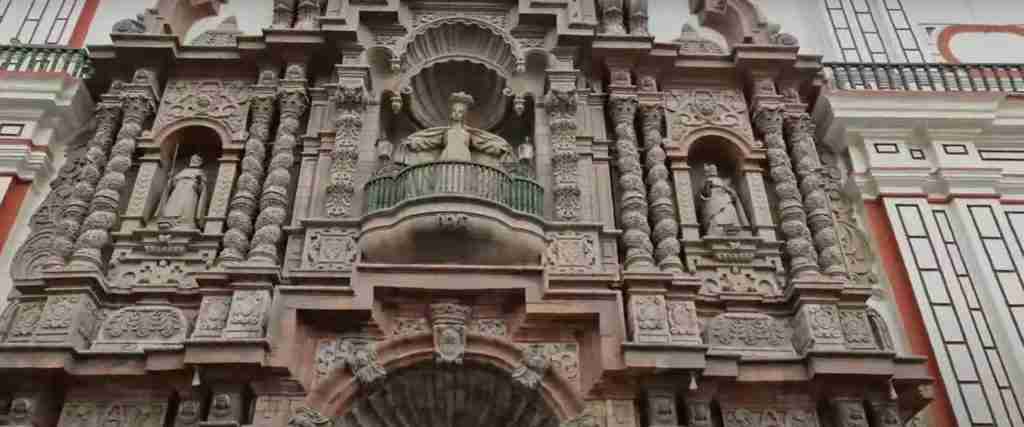
When we compare Lima’s churches, we see a world of architectural diversity. Each one has its own story of art and history.
- Renaissance period churches feature symmetrical designs
- Baroque structures showcase ornate decorative elements
- Neoclassical influences introduced more geometric precision
| Church Name | Architectural Style | Key Features |
|---|---|---|
| Cathedral of Lima | Spanish Renaissance | Symmetrical facade, intricate stone carvings |
| San Francisco Church | Baroque | Elaborate interior, complex geometric patterns |
| Santo Domingo | Mixed Baroque/Renaissance | Oldest choir stalls, intricate altar design |
These churches are more than places of worship. They are architectural wonders. Their walls tell stories of colonial Lima’s complex cultural landscape. They show how Spanish architecture met local traditions.
Thanks to preservation, today’s visitors can see Lima’s architectural past. They learn how these buildings changed over time.


San Francisco Church and Monastery Complex
In the heart of San Francisco Lima, the San Francisco Church and Monastery Complex is a stunning example of colonial architecture. It’s a UNESCO World Heritage site that takes visitors on a journey through centuries of history.
Founded in 1546, this complex is a masterpiece of Baroque architecture. It has survived many earthquakes and changes over the years. Its size is impressive, covering about 600 meters long and 300 meters wide, making it Lima’s largest religious complex.
Catacombs and Underground Architecture
Underneath the monastery, a network of catacombs offers a glimpse into the past. These tunnels were a cemetery until 1810 and hold the remains of up to 70,000 people. Visitors can see:
- Meticulously organized burial chambers
- Preserved archaeological remnants
- Unique underground architectural design
Baroque Elements and Design Features
The church is known for its Baroque design, showcasing the artistry of colonial architecture. It features:
- A mudéjar dome built in 1546 and rebuilt in 1655
- An eleven-arch cloister with large pillars
- Seville tiles from 1620, decorated with Franciscan saints
Library and Artistic Heritage
The monastery’s library is a treasure with about 25,000 volumes. Rare editions and Franciscan chronicles from the 15th to 18th centuries offer deep insights into colonial intellectual life.
The San Francisco Convent represents a pinnacle of cultural preservation and architectural magnificence in Lima’s historic landscape.
The San Francisco Church and Monastery Complex is a must-see for its history, architecture, and cultural importance. It attracts visitors from all over the world.
Santo Domingo Church: Dominican architectural Heritage
The Santo Domingo Church is a stunning example of Lima’s rich history and Dominican architecture. It’s in the heart of Lima’s historic center. This Basilica and Maximus Convent of Nuestra Señora del Rosario is a top example of colonial religious design in Peru.
Architectural highlights of the Santo Domingo Church include:
- Distinctive Baroque bell tower
- Ornate altars showcasing intricate Dominican craftsmanship
- Unique fusion of Spanish colonial and local architectural elements
The church is very important in Peruvian saint veneration. It’s a spiritual home for two key saints: Santa Rosa de Lima and San Martín de Porres. These saints are closely tied to the Dominican order’s history in Lima.
| Architectural Feature | Historical Significance |
|---|---|
| Baroque Entrance | Exemplifies colonial religious design |
| Interior Decorations | Reflects Dominican artistic traditions |
| Religious Artwork | Highlights Peruvian cultural heritage |
The Santo Domingo Church also has a special connection to the University of San Marcos. This is Latin America’s oldest university. This shows the church’s importance in Lima’s colonial history.
“A living museum of Dominican architectural heritage and spiritual significance” – Colonial Lima Historians
Visitors to the Santo Domingo Church can see a place of beauty, faith, and history. It’s a key spot for understanding Lima’s rich culture.
La Merced Church: Mercedarian Architectural Innovation
The La Merced Church is a key example of colonial architecture in Lima. It was founded on April 13, 1534. This church shows the best of Mercedarian architecture in Peru’s capital.
It reflects Lima’s early colonial culture. It uses new construction methods and artistic designs.
Baroque Entrance and Architectural Significance
The church’s facade is a masterpiece of colonial brick work. Its entrance, from 1591, has detailed Baroque designs. These designs show the artistic style of that time.
Key features include:
- Elaborate stone carvings
- Ornate sculptural details
- Distinctive granite composition
Construction Techniques and Materials
Mercedarian builders were skilled in using local materials. The church mainly uses adobe and brick. This shows the colonial period’s building methods.
After the 1746 earthquake, the church was restored. Now, it’s a mix of strength and beauty.
| Architectural Element | Material | Significance |
|---|---|---|
| Facade | Grey local granite | Unique color combination |
| Structural Walls | Adobe and brick | Traditional colonial construction |
| Ornamental Details | Panamanian pink granite | Decorative architectural innovation |
Historical Impact on Lima’s Development
The La Merced Church was important for Lima’s growth. It was one of the first religious buildings in the city. It became a center for community and spiritual life.
The Mercedarian order’s focus on architecture changed Lima’s look. It left a lasting mark on the city’s culture.
Preservation Challenges and Restoration Efforts

Lima’s colonial churches face big challenges in keeping them safe. The city’s weather and pollution make it hard to preserve these buildings. They need special care to stay standing.
The main problems in fixing Lima’s churches are:
- Earthquakes damage the buildings’ foundations
- City air pollution harms the old materials
- There’s not enough money for big fixes
- It’s hard to keep the old look while adding new features
Experts have come up with new ways to save these buildings. Advanced stabilization techniques help strengthen them. Teams use new tech to check and protect the buildings’ parts, keeping them safe for a long time.
Some key ways to fix the churches include:
- Creating detailed plans of the buildings
- Using special methods to make them safer from earthquakes
- Keeping the old materials in good shape
- Getting the community involved in saving the buildings
Lima’s effort to save its old buildings shows a deep respect for its history. By fixing them up carefully, the city keeps its heritage alive. It also makes sure these special buildings are here for people to see in the future.
Indigenous Influence on Colonial Church Design
The architecture of Lima’s colonial churches shows a deep connection between Spanish and Peruvian traditions. The Andean Baroque style is a beautiful mix of European and native art. It shows how different cultures came together in design.
Indigenous artists changed how churches were built with their unique designs. They used their cultural heritage in every detail.
Pre-Columbian Architectural Elements
Indigenous artisans brought their own style to building churches. They used:
- Intricate stone masonry techniques
- Symbolic decorative motifs from Incan culture
- Natural landscape-inspired architectural details
Fusion of Spanish and Native Artistic Traditions
The mix of Spanish and Andean art created a new style. This style was seen in:
- Ornate altar designs
- Sculptural decorations
- Symbolic representations of religious imagery
| Cultural Element | Indigenous Contribution | Spanish Influence |
|---|---|---|
| Architectural Style | Stone Construction Techniques | Baroque Decorative Principles |
| Religious Symbolism | Native Spiritual Representations | Catholic Iconography |
| Artistic Decoration | Local Flora and Fauna Motifs | European Artistic Conventions |
This mix of cultures created stunning architecture. It shows the rich history of colonial Peru, blending European and Andean styles.
Seismic Considerations in Church Architecture
Lima’s buildings show how they can stand up to earthquakes. The city’s old churches are a great example of how to build strong against nature’s power. They show the mix of old building methods and new survival strategies.
Peru shakes a lot, with about 200 earthquakes every year. This makes keeping buildings safe a big challenge. But, the old builders learned to make their buildings strong against these shakes.
- Traditional adobe construction proved surprisingly resilient
- Thick walls became a primary defense against structural collapse
- Innovative building techniques emerged from necessity
The way buildings were made in Lima changed a lot. Incan construction methods were better at handling earthquakes than the early Spanish ones. Builders mixed local wisdom with European styles to make buildings that could handle big shakes.
“Architecture is not just about buildings, but about survival in challenging environments” – Anonymous Peruvian Architect
Today, we work hard to keep these old buildings safe and strong. Experts use new ways to make them better, keeping their original look and feel.
The Bell Tower of the Basilica de la Merced is a great example of strong design. It has lasted through many big earthquakes over 400 years. This shows how smart the early builders were about making buildings strong.
Conclusion
Lima’s colonial heritage is a deep story of architectural and cultural change. The religious architecture tour shows how Spanish and indigenous styles mixed to shape Peruvian cultural history for centuries. Buildings like the Basilica Cathedral, built in 1535, and Santo Domingo’s Baroque designs, show Lima’s rich history.
The churches in Lima are more than just buildings. They show the mix of Spanish and local art that came after the conquest. The Basilica y Convento San Francisco, with its catacombs, shows the layers of history in Lima’s religious sites.
Efforts to save these buildings are ongoing. They make sure we can still see and learn from Lima’s old churches. Each church has its own story of survival, creativity, and cultural blending, offering a journey through time.
These churches are not just old buildings. They are alive, showing Lima’s culture and history. They encourage us to explore, think, and understand the city’s complex past.
