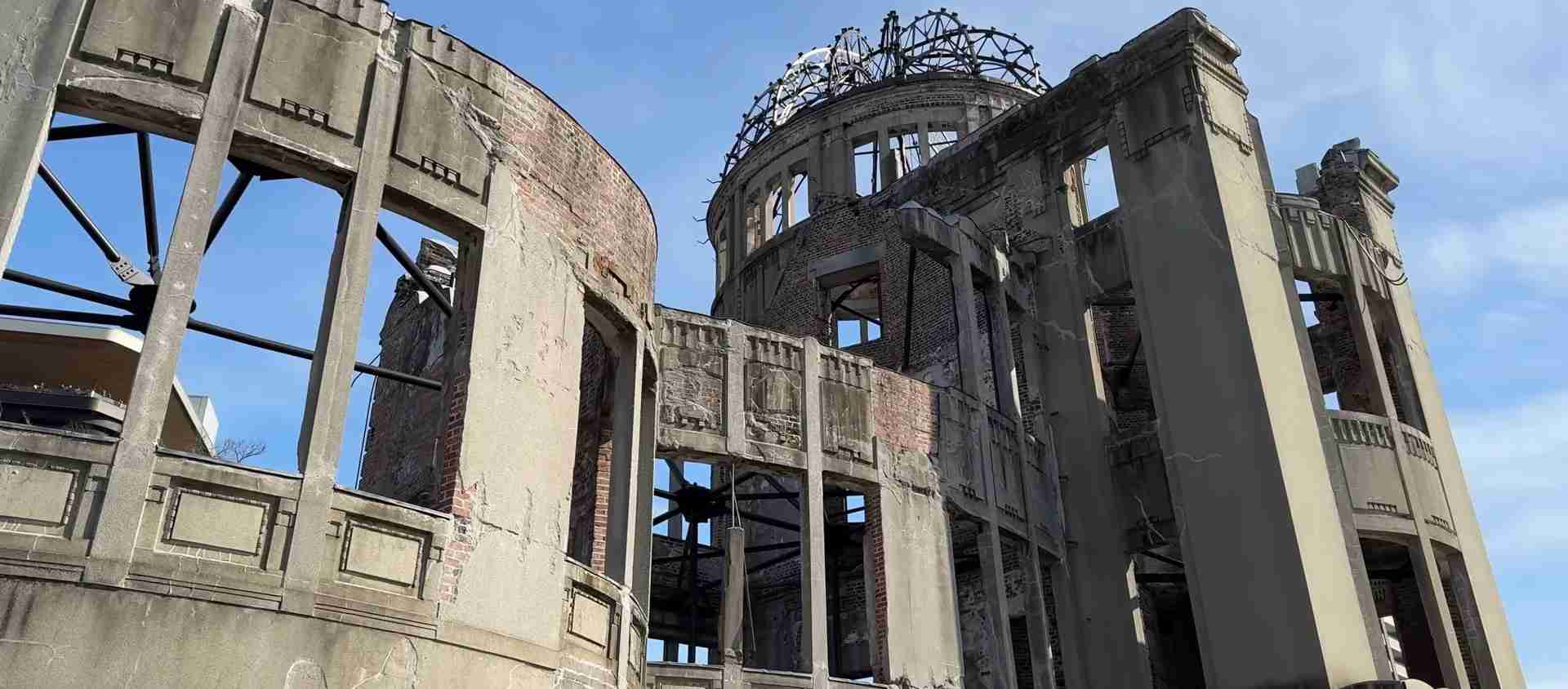
Hiroshima Peace Memorial: A-Bomb Dome & Park Guide
The Hiroshima Peace Memorial stands as humanity’s most powerful reminder of nuclear devastation and the imperative for lasting peace. Inscribed as a UNESCO World Heritage Site in December 1996, the skeletal remains of the A-Bomb Dome, together with the expansive Peace Memorial Park, preserve the memory of over 140,000 victims while serving as a global symbol for nuclear disarmament and reconciliation.
Key Takeaways
- Unique UNESCO Recognition: The Hiroshima Peace Memorial (Genbaku Dome) is the only structure left standing near the hypocenter of the first atomic bomb, inscribed on the World Heritage List in December 1996 under criterion (vi) for its exceptional symbolic value
- Preserved in Original State: The A-Bomb Dome remains exactly as it appeared immediately after the August 6, 1945 bombing, with all structural elements preserved as a stark testament to nuclear destruction
- Comprehensive Memorial Complex: The 120,000-square-meter Peace Memorial Park contains multiple monuments including the Cenotaph for A-Bomb Victims (with over 220,000 names), Children’s Peace Monument, Flame of Peace, and the Hiroshima Peace Memorial Museum
- Powerful Museum Experience: The Peace Memorial Museum presents victims’ personal belongings, photographs, and testimonies documenting the catastrophic aftermath, attracting over 2 million visitors annually with exhibits in multiple languages
- Living Memorial: The site hosts the annual Peace Memorial Ceremony every August 6 at 8:15 AM, the exact moment of detonation, with speeches, wreath-laying, and moments of silence observed by thousands
- Symbol of Hope: Beyond commemorating tragedy, the memorial expresses humanity’s pledge never to repeat the evil of war and represents the ultimate goal of eliminating all nuclear weapons from the planet
People Also Ask About Hiroshima Peace Memorial
Why is the A-Bomb Dome the only building that survived in Hiroshima?
The A-Bomb Dome (originally the Hiroshima Prefectural Industrial Promotion Hall) survived because the atomic bomb exploded almost directly above it, approximately 160 meters southeast of the building at an altitude of 600 meters. The blast wave traveled nearly vertically downward through the building’s center rather than horizontally, which would have completely flattened it. The structure’s stone and steel construction, particularly its reinforced concrete frame and steel dome, provided exceptional resistance compared to the predominantly wooden buildings surrounding it. While the interior was completely destroyed and everyone inside was killed instantly, the building’s walls and skeletal dome framework remained standing. This vertical blast trajectory created a phenomenon where structures directly beneath the hypocenter had marginally better survival chances than those farther away, which experienced the full horizontal force of the blast wave.
What does the inscription on the Hiroshima Cenotaph mean?
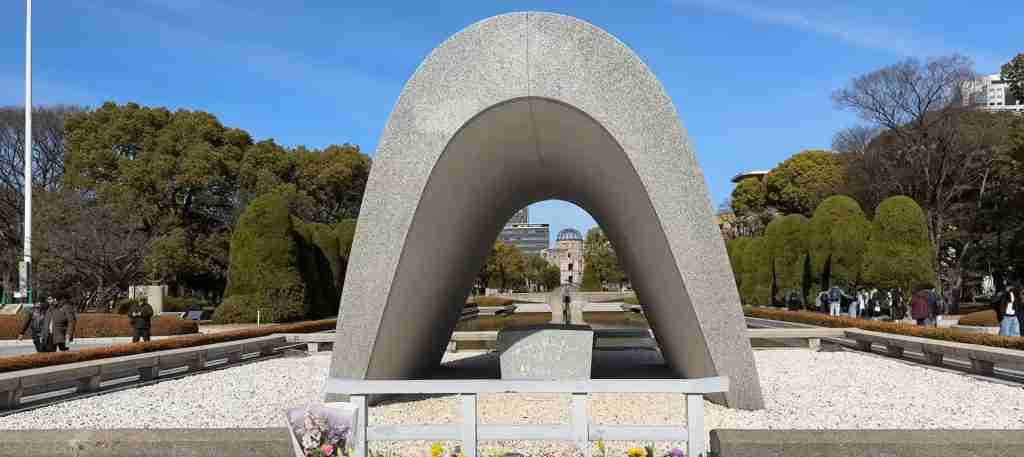
The Cenotaph for the Atomic Bomb Victims bears the inscription “安らかに眠って下さい 過ちは 繰返しませぬから” (Yasuraka ni nemutte kudasai ayamachi wa kurikaeshimasen kara), which translates to “Let all the souls here rest in peace, for we shall not repeat the evil.” Written by Professor Tadayoshi Saika of Hiroshima University, the inscription deliberately uses polite Japanese ambiguity regarding the subject “we.” An English explanation plaque added in 1983 clarifies that “we” refers to all humanity, not specifically Japanese or Americans, and that the “error” or “evil” is war itself. The inscription expresses Hiroshima’s enduring spirit: transcending grief and hatred, pursuing harmony and prosperity for all people, and yearning for genuine, lasting world peace. The arched stone monument shelters a chest containing a register of victims’ names, which grows annually as delayed radiation-related deaths are confirmed.
How did Sadako Sasaki’s story influence the Children’s Peace Monument?
Sadako Sasaki was two years old when the atomic bomb exploded, living just 1.7 kilometers from the hypocenter. She survived the initial blast but developed leukemia ten years later, in 1955, as a result of radiation exposure. While hospitalized, Sadako began folding origami cranes, inspired by the Japanese legend that folding 1,000 cranes would grant a wish. She hoped to recover and become a runner. Sadako folded over 1,000 cranes before her death on October 25, 1955, at age twelve. Her classmates were deeply affected by her death and initiated a national campaign to build a monument for all children who died from the atomic bombing. The Children’s Peace Monument, unveiled in 1958, features a statue of Sadako holding a golden crane atop a granite pedestal. The monument receives millions of origami cranes annually from schoolchildren worldwide, displayed in glass cases surrounding the structure. Sadako’s story transformed her into an international symbol of the innocent victims of nuclear warfare and inspired global peace education initiatives.
What architectural significance did the original building have before it became the A-Bomb Dome?
The Hiroshima Prefectural Industrial Promotion Hall, designed by Czech architect Jan Letzel and completed in April 1915, represented bold architectural innovation for early 20th-century Japan. The building introduced European architectural elements rarely seen in Japanese cities at that time: a three-story reinforced concrete and brick structure with a distinctive five-story central section crowned by an elliptical copper dome (later called the A-Bomb Dome due to its exposed steel framework). The 25-meter-tall building featured Art Nouveau and Secession style elements, large arched windows, and decorative stonework. It served as an exhibition hall promoting Hiroshima Prefecture’s industrial development and commercial products, hosting trade shows and cultural events. The building’s modern European aesthetic made it a prominent landmark in Hiroshima’s downtown commercial district. Letzel’s design combined aesthetic appeal with structural durability, incorporating stone foundations, brick walls, and steel-reinforced concrete frames. This robust construction ultimately allowed portions of the structure to survive the atomic blast, though ironically, the building that once symbolized industrial progress became a memorial to industry’s most destructive achievement.
Extended multi-day tours – 5+ days
Featured Hiroshima Multi-Day Tour Packages
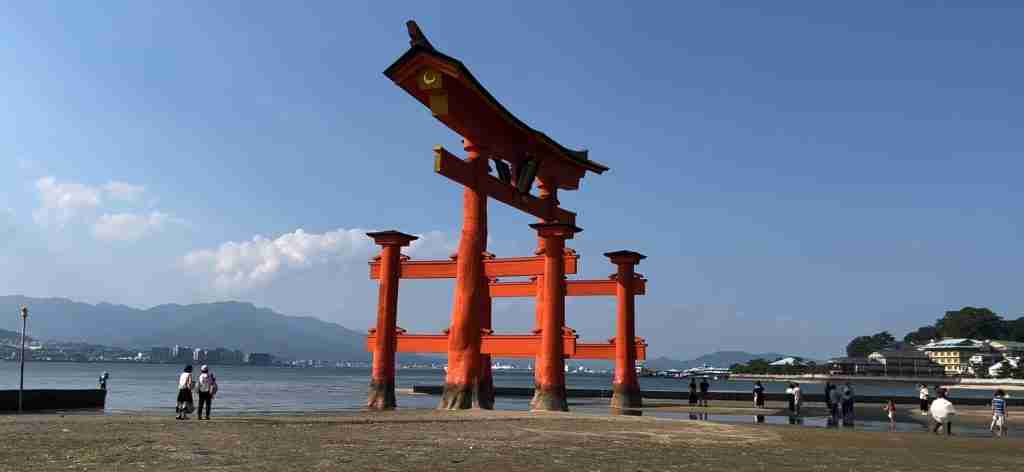
3 days
Hiroshima 3-Day Discovery Tour
- ✓ Comprehensive Hiroshima experience
- ✓ Expert local guides included
- ✓ All accommodation included
- ✓ Transportation provided
5 days
Hiroshima 5-Day Highlights Experience
- ✓ Comprehensive Hiroshima experience
- ✓ Expert local guides included
- ✓ All accommodation included
- ✓ Transportation provided
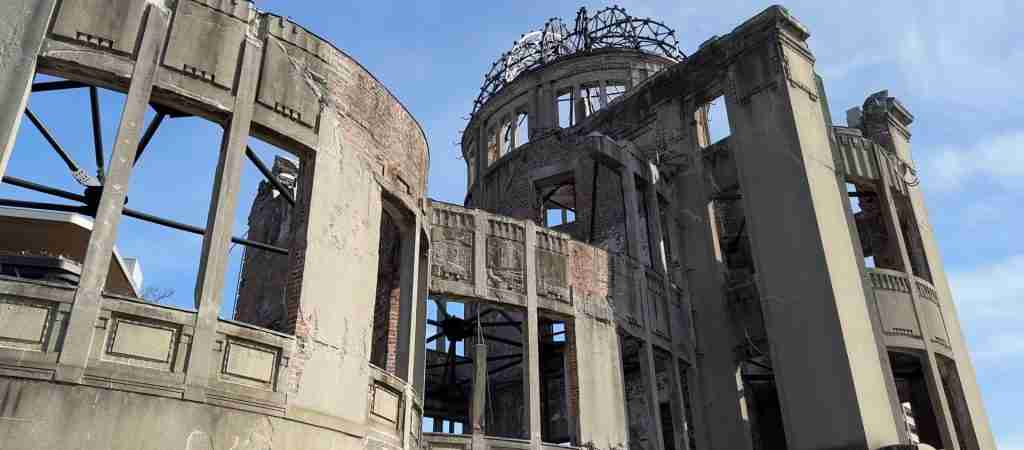
7 days
Hiroshima 7-Day Cultural Journey
- ✓ Comprehensive Hiroshima experience
- ✓ Expert local guides included
- ✓ All accommodation included
- ✓ Transportation provided
10 days
Hiroshima 10-Day Complete Adventure
- ✓ Comprehensive Hiroshima experience
- ✓ Expert local guides included
- ✓ All accommodation included
- ✓ Transportation provided
Multi-day tour packages powered by TourRadar. Prices and availability subject to change.
Introduction: Understanding the Hiroshima Peace Memorial’s Global Significance
On August 6, 1945, at 8:15 AM, the United States Army Air Forces detonated the world’s first atomic bomb used in warfare over Hiroshima, Japan. The bomb, nicknamed “Little Boy,” exploded at an altitude of approximately 600 meters above the Shima Surgical Clinic, instantly creating temperatures exceeding one million degrees Celsius at the hypocenter and generating blast winds reaching 440 meters per second. The immediate fireball incinerated everything within a 2-kilometer radius, while the subsequent shockwave and firestorm devastated the city across 13 square kilometers. Conservative estimates place the immediate death toll at 80,000 people, with total casualties reaching 140,000 by the end of 1945 when including those who died from radiation exposure and injuries in the following months.
Three days later, a second atomic bomb destroyed Nagasaki, and on August 15, Japan surrendered, ending World War II. These events fundamentally altered human history, introducing the nuclear age and establishing precedents that would shape international relations, military strategy, and ethical debates for generations. Hiroshima’s experience became the primary reference point for understanding nuclear weapons’ humanitarian consequences, influencing disarmament movements, international law, and peace education worldwide.
The Hiroshima Peace Memorial emerged from this unprecedented catastrophe not as a celebration of victory or a condemnation of specific actors, but as a universal statement about the horrors of nuclear warfare and humanity’s collective responsibility to prevent its recurrence. The memorial’s significance extends beyond Japanese national memory to encompass global warnings about nuclear proliferation and appeals for international cooperation toward abolishing nuclear weapons entirely.
The site’s UNESCO World Heritage inscription in December 1996 acknowledged this universal value. Unlike most World Heritage Sites recognized for outstanding aesthetic, historical, or cultural achievements, the Hiroshima Peace Memorial was inscribed under criterion (vi) for its associative value: it is “directly and tangibly associated with events or living traditions, with ideas, or with beliefs, with artistic and literary works of outstanding universal significance.” The World Heritage Committee noted that the memorial is a “stark and powerful symbol of the achievement of world peace for more than half a century following the unleashing of the most destructive force ever created by humankind.”
The inscription process itself was controversial. The United States and China initially expressed reservations about including the site on the World Heritage List, concerned that the memorial’s designation might be interpreted as assigning blame for the bombing’s decision. After diplomatic discussions clarifying that the site’s significance lay in its symbolic call for peace and nuclear disarmament rather than political judgment, these objections were withdrawn. The successful inscription demonstrated international consensus that Hiroshima’s experience transcends national narratives and belongs to all humanity as a cautionary lesson.
Today, the Hiroshima Peace Memorial encompasses two distinct but interconnected components: the A-Bomb Dome (the preserved ruins of the Hiroshima Prefectural Industrial Promotion Hall) and the broader Peace Memorial Park, which contains multiple monuments, museums, and memorial structures. The entire complex functions as an integrated space for mourning, education, and advocacy. The A-Bomb Dome provides a tangible architectural witness to the atomic explosion’s destructive power, while the park’s various facilities contextualize this destruction through historical documentation, personal testimonies, and calls for future action.
The memorial receives over 1 million visitors annually to the park, with more than 2 million visiting the Peace Memorial Museum. International visitors comprise approximately one-third of museum attendance, representing every continent and numerous countries. Educational groups, particularly schoolchildren, form a significant portion of visitors, as the memorial plays a central role in peace education curricula throughout Japan and increasingly worldwide.
The memorial’s influence extends far beyond those who physically visit the site. Images of the A-Bomb Dome have become internationally recognized symbols appearing in countless textbooks, documentaries, and peace education materials. The annual Peace Memorial Ceremony on August 6 receives extensive media coverage, with the mayor of Hiroshima’s Peace Declaration broadcast globally and often cited in international disarmament discussions. Survivor testimonies recorded and preserved at the memorial have informed academic research, literary works, and policy debates about nuclear weapons for nearly eight decades.
The A-Bomb Dome: Architecture of Survival and Memorial
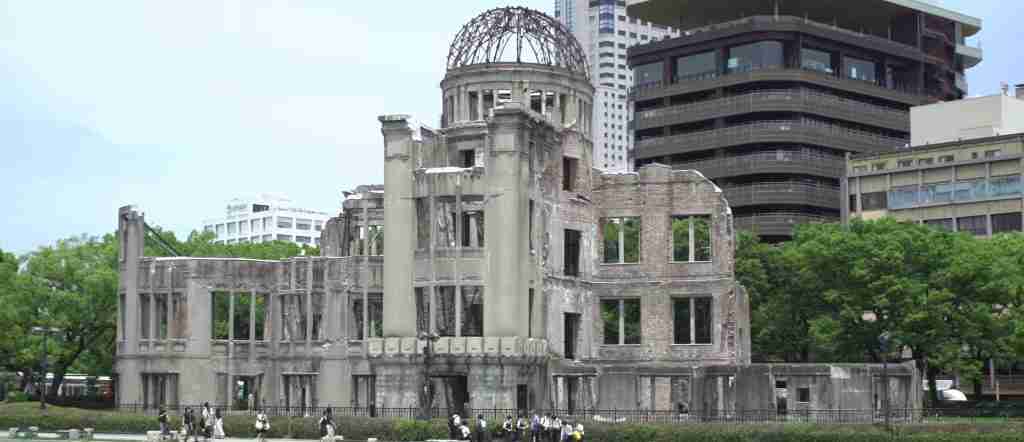
The A-Bomb Dome stands as the memorial’s most iconic element, a skeletal structure whose preservation in its post-bombing state creates immediate visceral impact. Understanding the building’s original purpose, its survival circumstances, and its transformation into a memorial requires examining both architectural and historical contexts.
Original Design and Construction of the Industrial Promotion Hall
The Hiroshima Prefectural Industrial Promotion Hall was commissioned in 1914 as part of Hiroshima’s modernization efforts during the Taisho period, when Japan was rapidly adopting Western architectural styles and industrial technologies. The prefectural government sought a prominent exhibition space that would showcase local commercial products, facilitate trade exhibitions, and demonstrate Hiroshima’s progressive character. Czech architect Jan Letzel (1880-1925), who had established a practice in Japan designing Western-style buildings, received the commission and created a design that introduced European architectural elements unprecedented in the city.
Completed in April 1915 at a cost of 45,000 yen (approximately $3 million in current value), the building featured a three-story rectangular structure with a distinctive five-story central section topped by an elliptical copper dome measuring 11 meters in diameter and reaching 25 meters above ground level. The construction utilized reinforced concrete frames, brick walls faced with stone and mortar, and steel structural elements in the dome framework. Large arched windows provided natural lighting for exhibition spaces, while decorative moldings and Art Nouveau-influenced details created an elegant aesthetic.
The building’s location on the east bank of the Motoyasu River, in Hiroshima’s bustling commercial district, ensured maximum visibility. The copper-clad dome, painted green, became a prominent landmark visible across the flat delta landscape surrounding the city. The hall’s ground floor contained exhibition spaces for industrial products, while upper floors housed administrative offices and meeting rooms. The building hosted numerous trade fairs, art exhibitions, and cultural events, becoming central to Hiroshima’s commercial life.
During the 1930s and early 1940s, as Japan mobilized for war, the building’s function shifted from commercial exhibitions to government offices. By 1945, several organizations occupied the structure, including prefectural industrial bureaus and commercial associations. The building’s central location, distinctive appearance, and height made it a recognizable landmark, which paradoxically contributed to both its destruction and its survival.
The Atomic Bomb Explosion and the Building’s Survival
At 8:15 AM on August 6, 1945, the B-29 bomber Enola Gay released the atomic bomb nicknamed “Little Boy” over Hiroshima. The bomb’s intended target was the T-shaped Aioi Bridge, chosen for its distinctive shape’s visibility from high altitude. However, wind drift caused the bomb to detonate approximately 160 meters southeast of the Prefectural Industrial Promotion Hall, at an altitude of about 600 meters above the Shima Surgical Clinic. This positioned the hall almost directly beneath the hypocenter.
The explosion created an immediate fireball reaching temperatures exceeding one million degrees Celsius, followed by a massive blast wave traveling at supersonic speeds. Buildings within 2 kilometers of the hypocenter were subjected to pressures exceeding 35 tons per square meter and thermal radiation capable of causing instant combustion. The heat rays scorched surfaces, ignited fires throughout the city, and caused catastrophic burns to anyone exposed.
The Prefectural Industrial Promotion Hall, being nearly directly beneath the explosion’s hypocenter, experienced a unique set of forces. The blast wave descended almost vertically through the building rather than striking it horizontally. This vertical trajectory, combined with the building’s robust stone-and-steel construction, allowed the structural skeleton to partially survive. The copper dome’s framework, being metal, remained standing despite losing its copper cladding, which melted and blew away in the blast.
The building’s interior was completely incinerated. All occupants—estimated at between 30 and 40 government workers and visitors—were killed instantly by the fireball’s heat and radiation. Wooden floors, furniture, and interior walls were vaporized or burned away, leaving only the reinforced concrete columns, the brick exterior walls (partially standing), and the steel framework of the dome exposed against the sky.
Eyewitness accounts from survivors who approached the building in the blast’s aftermath describe a haunting scene: the skeletal structure standing amid total devastation, with fires burning throughout the city and the distinctive dome framework silhouetted against smoke-filled skies. The building’s recognizable shape, despite its ruined state, provided one of the few landmarks survivors could use to orient themselves in a landscape rendered unrecognizable by the explosion and subsequent fires.
The building soon became known colloquially as the “Genbaku Dome” (Atomic Bomb Dome) due to its exposed dome framework. This name, initially used informally by Hiroshima residents, eventually became the structure’s official designation and its primary identity in global consciousness.
Preservation Decisions and Conservation Efforts
In the immediate post-war period, Hiroshima faced monumental reconstruction challenges. The city’s infrastructure was destroyed, hundreds of thousands of residents were dead or homeless, and resources were scarce. Initial plans called for clearing all bomb damage, including the Industrial Promotion Hall ruins, to facilitate rebuilding. However, the dome’s iconic appearance and symbolic resonance prompted debates about preservation.
Local residents held divergent views. Some, particularly atomic bomb survivors (hibakusha), found the dome’s presence emotionally painful, a constant reminder of their trauma and losses. They advocated for its removal to allow Hiroshima to move forward. Others recognized the structure’s potential value as a tangible witness to the bombing’s reality, arguing that future generations needed physical evidence to understand the atomic bomb’s destructive power beyond photographs and testimonies.
The debate intensified through the 1950s and 1960s as reconstruction proceeded around the dome. The structure remained standing partly due to practical factors—its steel-and-concrete construction required more resources to demolish than wooden debris—and partly due to growing awareness of its memorial potential. In 1964, Hiroshima resident Kiyoshi Tanimoto initiated a petition calling for the dome’s permanent preservation, collecting thousands of signatures and donations to support conservation efforts.
On July 11, 1966, the Hiroshima City Council officially adopted a resolution for the dome’s permanent preservation, naming it the Hiroshima Peace Memorial (Genbaku Dome). The resolution committed the city to maintaining the structure in its immediate post-bombing condition, neither rebuilding it to its original state nor allowing further deterioration. This decision established the dome as a “preserved ruin”—intentionally maintained in a damaged state to communicate the destruction’s reality.
The Japanese national government designated the dome a historic site under the Law for the Protection of Cultural Properties in 1995, providing legal protection and funding for conservation. This designation preceded the UNESCO World Heritage inscription by one year, demonstrating national recognition of the site’s exceptional importance before international acknowledgment.
Conservation work occurs regularly to stabilize the structure without altering its appearance. Engineers conduct detailed condition surveys every three years, monitoring cracks, structural stability, and weathering effects. Specialized conservation techniques preserve the exposed steel framework, preventing excessive corrosion while maintaining the authentic patina of age and damage. Concrete consolidation stabilizes crumbling sections, and steel reinforcements, carefully concealed, prevent collapse while keeping the structure’s damaged appearance intact.
The conservation approach balances authenticity with safety. Unlike typical architectural restoration, which aims to return structures to original or ideal states, the dome’s conservation specifically preserves its post-bombing condition. This philosophy recognizes that the building’s significance lies not in its original architectural merits but in its damaged state as evidence of nuclear destruction. Every conservation decision prioritizes maintaining the visual and emotional impact of seeing a structure destroyed by atomic force.
Architectural Analysis and Structural Details
The A-Bomb Dome’s surviving elements reveal both the original building’s construction quality and the atomic blast’s immense force. The structure measures approximately 19 meters wide and 25 meters tall, with the dome framework rising above the three-story rectangular base. Reinforced concrete columns, spaced at regular intervals, supported the original floors and roof structure. These columns, while damaged, remain standing and bear the structural load.
The dome’s steel framework consists of curved ribs converging at an apex, creating the elliptical shape. The steel members show warping and distortion from the explosion’s forces and subsequent fires, with some sections bent at acute angles while others remain remarkably intact. The framework’s survival demonstrates both the construction’s quality and the peculiar physics of the blast’s vertical trajectory through the structure.
Brick exterior walls, which formed the building’s facade, survive partially on the northern and eastern sides. These walls show characteristic blast damage: surfaces facing the hypocenter are scorched black from thermal radiation, mortar joints are compromised, and sections have collapsed or bulged outward. The southern and western walls suffered more severe damage and largely collapsed, exposing interior structural elements.
Window openings, which originally contained glass and frames, now appear as empty voids. The arched window shapes remain visible in the standing wall sections, providing architectural continuity with the original design despite the destruction. These empty windows contribute to the structure’s haunting appearance, suggesting both the building’s former occupancy and the human lives lost within.
The foundation and lower portions of the structure remain relatively intact, demonstrating that blast forces were less severe near ground level directly beneath the hypocenter. This phenomenon, where structures immediately below the blast suffered somewhat less lateral force than those farther away experiencing the full horizontal shockwave, saved the dome from complete collapse.
Visitors viewing the dome from the western side of the Motoyasu River, the most common vantage point, see the structure framed against the sky with the river in the foreground. This view emphasizes the dome’s skeletal nature and creates strong visual impact, particularly during sunrise or sunset when backlighting silhouettes the framework. The surrounding Peace Memorial Park’s open spaces ensure unobstructed views, preventing visual clutter from diminishing the dome’s symbolic presence.
The Dome’s Role Within the Broader Memorial Complex
The A-Bomb Dome functions as both an independent monument and the anchor point for the entire Peace Memorial Park complex. Urban planners intentionally positioned other memorial structures in visual relationship to the dome, creating sight lines and spatial connections that reinforce the site’s integrated narrative.
The Motoyasu River separates the dome from the main memorial park, creating physical and symbolic separation. Visitors crossing the river to approach the dome make a deliberate transition from the museum and other facilities into the immediate proximity of the hypocenter. This spatial arrangement sequences the visitor experience: education and context in the park, followed by confrontation with the bombing’s physical evidence at the dome.
The Cenotaph for the A-Bomb Victims, located in the park’s center, was deliberately positioned so that looking through its arched opening directly frames the A-Bomb Dome across the river. This alignment, created by architect Kenzo Tange, establishes a visual and symbolic connection between the memorial to the victims and the physical evidence of their deaths. During the annual Peace Memorial Ceremony, participants at the Cenotaph look directly toward the dome, reinforcing this connection.
Illumination strategies enhance the dome’s symbolic presence. At night, subtle lighting highlights the structure’s framework without creating harsh shadows or artificial effects that might diminish its somber character. During the annual August 6 lantern floating ceremony, thousands of illuminated lanterns released on the Motoyasu River create a pathway of light flowing past the dome, visually connecting the structure to contemporary peace commemoration practices.
Peace Memorial Park: A Landscape of Remembrance and Education
The Hiroshima Peace Memorial Park transforms 120,000 square meters of land into an integrated memorial landscape containing museums, monuments, memorials, and contemplative spaces. The park occupies the area that was once the Nakajima district, Hiroshima’s political and commercial heart before the bombing, making the location’s selection deeply meaningful—where vibrant urban life once thrived, a space for remembrance and peace advocacy now exists.
Park Design and Spatial Organization by Kenzo Tange
Architect Kenzo Tange (1913-2005), who would later become one of Japan’s most internationally celebrated architects, designed the Peace Memorial Park in 1949-1952 at the beginning of his career. The 1949 Hiroshima Peace Memorial City Construction Law designated the bomb-damaged area for reconstruction as a peace memorial city, providing the legal framework for creating the park. Tange’s design won a national competition, selected for its powerful integration of memorial functions with modernist architectural principles.
Tange organized the park along a clear north-south axis running from the Hiroshima Peace Memorial Museum (located at the southern end) through the Cenotaph to the A-Bomb Dome (visible across the river at the northern end). This linear arrangement creates a processional quality, guiding visitors through a sequence of experiences from educational engagement at the museum, through contemplative mourning at the Cenotaph, to direct confrontation with the bombing’s physical evidence at the dome.
The park’s open, spacious character contrasts deliberately with typical Japanese memorial sites, which often feature dense plantings and enclosed spaces. Tange created broad lawns, wide pathways, and unobstructed sight lines that prevent visual clutter and allow each memorial element to maintain individual presence while contributing to the overall composition. This openness evokes the post-bombing landscape’s devastation—the erasure of the dense urban neighborhood that preceded it—while providing contemplative space appropriate for mourning and reflection.
The Motoyasu River’s incorporation into the design adds natural elements that soften the memorial’s architectural components. The river’s flowing water provides continuous movement and sound, creating calming sensory experiences that balance the site’s heavy emotional content. River banks with planted trees and walkways offer alternative pathways through the site, allowing visitors to engage with the memorial landscape from multiple perspectives.
Tange’s design received international recognition and established principles later applied to memorial projects worldwide: the integration of educational facilities with contemplative spaces, the use of axial organization to create narrative sequences, and the balance between architectural monumentality and human-scaled spaces for individual reflection.
The Cenotaph for the Atomic Bomb Victims
The Cenotaph for the Atomic Bomb Victims, officially titled “Memorial Monument for Hiroshima, City of Peace,” occupies the central position in Tange’s design axis. Completed in 1952 and also designed by Kenzo Tange, the cenotaph features a distinctive saddle-shaped arch constructed from reinforced concrete. The arch’s form references ancient Japanese haniwa burial objects and traditional protective roof shapes, creating cultural resonance while maintaining modern architectural expression.
The arch spans approximately 9 meters and rises several meters above a stone platform. Within the arch’s shelter sits a stone chest containing a register listing the names of all individuals known to have died from the atomic bombing, including immediate casualties and delayed deaths from radiation exposure and injuries. The register, inscribed on handmade paper, grows continuously as additional deaths are confirmed and family members report previously unrecorded victims. As of 2024, the register contains over 220,000 names.
The cenotaph’s inscription, discussed earlier, reads “Let all the souls here rest in peace, for we shall not repeat the evil.” This text, centered on the stone chest visible through the arch’s opening, provides the entire memorial complex’s philosophical foundation. The inscription’s deliberate ambiguity regarding responsibility (“we” meaning all humanity rather than specific nations) reflects Japan’s complex relationship with the war’s history while focusing the memorial’s message on future peace rather than past blame.
The cenotaph’s positioning creates the previously mentioned alignment with the A-Bomb Dome. Looking north through the arch, visitors see the Peace Flame (described below) in the middle distance and the A-Bomb Dome beyond, framing both elements within the cenotaph’s arch. This sight line operates symbolically: the flame represents the ongoing commitment to nuclear abolition, while the dome represents the catastrophe that necessitates this commitment. The cenotaph itself, containing victims’ names, humanizes this abstract nuclear debate by centering it on individual lives lost.
The annual Peace Memorial Ceremony on August 6 focuses on the cenotaph. The Hiroshima mayor delivers the Peace Declaration from a podium facing the cenotaph, addressing both the gathered crowd and, symbolically, the victims whose names rest within. At precisely 8:15 AM, the moment of the bomb’s detonation, the Peace Bell rings and attendees observe a moment of silence. Wreaths from government officials, international dignitaries, and peace organizations are placed around the cenotaph, creating temporary floral displays that contrast poignantly with the monument’s austere concrete form.
The Peace Flame and Its Symbolism
The Peace Flame burns continuously in a distinctive sculptural pedestal located between the Cenotaph and the Peace Memorial Museum. Lit on August 1, 1964, the flame represents Hiroshima’s pledge to continue burning until all nuclear weapons are eliminated from Earth. The flame’s design, created by sculptor Kazuo Kikuchi and architect Kenzo Tange, features a pedestal resembling two hands pressed together with palms facing upward, from which the flame rises.
The hands-joined gesture (gassho in Japanese) carries multiple meanings: prayer, offering, and humble petition. The sculptural form suggests hands offering the flame to heaven while also invoking Buddhist prayer positions. This multivalent symbolism allows diverse interpretations—religious, secular, cultural—making the flame accessible to visitors from various backgrounds.
The flame’s perpetual burning creates a living, changing element within the otherwise static memorial landscape. Weather conditions affect the flame’s appearance: wind causes flickering and movement, rain creates steam, and winter cold produces different combustion characteristics than summer heat. This variability reminds visitors that the peace commitment the flame represents requires continuous attention and cannot be taken for granted.
The flame’s fuel source, ordinary propane gas, reinforces that maintaining the commitment to peace requires practical, ongoing effort rather than dramatic one-time gestures. Regular maintenance ensures the flame never extinguishes accidentally, symbolizing the vigilance required to prevent nuclear warfare’s recurrence.
Visitors often photograph the Peace Flame, particularly when it appears in the same frame as the A-Bomb Dome in the background. This visual pairing creates powerful imagery: the flame representing hope and commitment burns in the foreground while the dome’s ruins represent the catastrophe that hope must prevent.
The Children’s Peace Monument
The Children’s Peace Monument, unveiled in 1958, commemorates Sadako Sasaki and all children who died from the atomic bombing. The monument features a bronze statue of a young girl (representing Sadako) holding a golden origami crane above her head, standing atop a granite pedestal approximately 9 meters tall. Two additional figures—a boy and younger girl—flank the central column at ground level, representing all child victims.
The monument’s base bears the inscription “This is our cry. This is our prayer. Peace in the world.” This text, chosen through consultation with student groups who fundraised for the monument’s construction, expresses children’s perspective on the bombing’s legacy. The emphasis on “our” cry and “our” prayer positions young people as active agents in peace advocacy rather than passive victims of historical tragedy.
The monument receives extraordinary quantities of origami cranes throughout the year. Schoolchildren from across Japan and increasingly from around the world fold strings of paper cranes (typically in sets of 1,000, referencing the Japanese tradition that folding 1,000 cranes grants a wish) and send them to Hiroshima with messages of peace. Glass display cases surrounding the monument contain these crane offerings, which are rotated regularly as new contributions arrive. The sheer volume—millions of cranes annually—testifies to Sadako’s story’s global resonance and its effectiveness in engaging young people with peace education.
The Children’s Peace Monument has become a primary destination for school groups visiting the memorial park. Japanese schools frequently include Hiroshima Peace Memorial visits in their curricula, and the monument provides a focal point for these educational experiences. Students gather around the monument, present their origami crane offerings, sing peace songs, and participate in moments of reflection guided by teachers. This practice ensures that each new generation of Japanese children develops direct, personal connections to the bombing’s history and the peace commitment it demands.
International school groups increasingly visit as well, having learned Sadako’s story through books like “Sadako and the Thousand Paper Cranes” by Eleanor Coerr, which has been translated into numerous languages and is widely used in peace education curricula globally. For many international visitors, particularly children, the Children’s Peace Monument represents their primary emotional connection point within the memorial complex, as Sadako’s story provides a relatable, age-appropriate entry point into the bombing’s otherwise overwhelming tragedy.
The Atomic Bomb Memorial Mound
The Atomic Bomb Memorial Mound, located north of the Cenotaph, contains the cremated remains of approximately 70,000 unidentified victims of the atomic bombing. The mound’s simple circular form, covered with grass and marked by a central stone monument, contrasts with other memorial structures’ architectural expression, suggesting the mass anonymity of death in the bombing’s immediate aftermath.
The mound’s creation addressed practical and humanitarian concerns in the post-bombing period. The explosion’s intensity incinerated many victims beyond recognition, while the subsequent chaos prevented proper identification and burial for thousands more. The city collected unidentified remains and eventually interred them in this collective memorial, providing at least some form of honorable burial and a location where families could mourn even when specific individual graves could not be maintained.
The number of unidentified victims—70,000—represents approximately half of the total immediate death toll, illustrating the bombing’s catastrophic scope. Family structures were shattered, identification documents were destroyed, and the burns’ severity often prevented visual recognition of victims even by family members. The memorial mound testifies to these overwhelming circumstances that exceeded society’s capacity for individualized mourning and remembrance.
The site receives continuous offerings of origami cranes, flowers, and prayer items from visitors. The accumulated offerings, constantly refreshed, transform the mound into a living memorial despite representing anonymous death. This ongoing attention demonstrates the principle that all victims deserve remembrance and mourning, regardless of whether their individual identities can be established.
The Hiroshima National Peace Memorial Hall for the Atomic Bomb Victims
Opened in 2002, the Hiroshima National Peace Memorial Hall for the Atomic Bomb Victims provides a contemporary addition to the memorial park focused specifically on collecting and preserving survivor testimonies and victim memories. The hall occupies an underground structure, deliberately minimizing above-ground visual presence to avoid disrupting Kenzo Tange’s original park design while providing substantial interior space.
The memorial hall’s entrance features a gently sloping ramp descending below ground level, creating a meditative transition from the park’s open spaces to the hall’s intimate interior. This descent symbolizes approaching the hypocenter and engaging with the bombing’s immediate human experiences rather than maintaining the memorial park’s broader perspective.
The hall’s central circular room contains 140,000 tiles arranged in a panoramic display, representing each victim and creating a powerful visualization of the death toll’s magnitude. The tiles, varying subtly in color, suggest individual human lives while their collective arrangement emphasizes the catastrophe’s mass scale. Visitors standing in the room’s center are surrounded by this representation of the dead, creating an immersive experience of being encompassed by loss.
The facility’s primary function is preserving and providing access to victim testimonies and photographs. Visitors can use computer terminals to search the database of victim portraits and names, read handwritten testimonies from survivors describing their experiences, and watch video recordings of survivor interviews. This digital approach ensures that testimonies remain accessible even as the survivor generation ages and passes away, addressing concerns about maintaining direct human connection to the bombing’s reality once all firsthand witnesses are gone.
The memorial hall operates a testimony collection program, continuously recording survivor accounts while survivors remain alive. Professional interviewers trained in oral history methodology conduct these sessions, ensuring testimonies are collected comprehensively and sensitively. The urgency of this work intensifies as survivors age—the youngest survivors, who were infants in 1945, are now approaching 80 years old—making the program critical for preserving firsthand accounts before they become impossible to obtain.
Special exhibition spaces within the memorial hall rotate displays of artifacts, photographs, and thematic presentations exploring specific aspects of the bombing and its aftermath. These exhibitions complement the Peace Memorial Museum’s permanent displays while allowing more experimental approaches to presentation and interpretation.
The Hiroshima Peace Memorial Museum: Documentation and Education
The Hiroshima Peace Memorial Museum serves as the memorial complex’s primary educational facility, presenting comprehensive documentation of the atomic bombing, its consequences, and the historical context. Opened in 1955 and substantially renovated in 2019, the museum attracts over 2 million visitors annually, with approximately one-third traveling from outside Japan. The museum’s exhibits combine historical documentation with personal artifacts and testimonies to create emotionally powerful yet factually rigorous presentations.
Museum Structure and Exhibition Organization
The museum consists of two buildings connected by a corridor: the Main Building (West Building) focuses on the bombing itself and victims’ experiences, while the East Building provides historical context, explains nuclear weapons’ effects, and addresses contemporary nuclear issues. The two-building approach separates emotionally intense content from contextual information, allowing visitors to process traumatic material at the Main Building before engaging with broader analysis at the East Building.
Visitors enter through the East Building, beginning with an introductory exhibition space featuring a large-scale model of Hiroshima before the bombing. This detailed diorama recreates the city’s urban fabric as it existed on August 5, 1945, showing streets, buildings, residential areas, and landmarks. The model then displays computer-generated overlays showing the blast’s impact radius, the hypocenter’s location, and the devastation patterns. This presentation grounds visitors in pre-bombing Hiroshima’s reality—a thriving city of 340,000 residents—before revealing what the atomic bomb destroyed.
The East Building’s exhibitions continue with historical context explaining World War II’s progression, Hiroshima’s role as a military logistics center, the Manhattan Project’s development, the decision to use atomic weapons, and the bombing’s immediate aftermath. These exhibitions employ photographs, documents, maps, and multimedia presentations to establish factual frameworks necessary for understanding the bombing’s historical circumstances.
Nuclear weapons technology receives detailed explanation through models, diagrams, and interactive displays showing how atomic bombs function, comparing different nuclear weapon types, and documenting nuclear arsenals’ global development during the Cold War and beyond. This section transforms abstract nuclear threat into comprehensible technical reality, helping visitors understand what nuclear weapons actually are and why their elimination matters.
The corridor connecting the two buildings provides a transitional space where visitors prepare mentally for the Main Building’s more intense emotional content. The corridor’s design deliberately slows movement and creates contemplative atmosphere through subdued lighting, minimal decoration, and views toward the Peace Memorial Park outside.
The Main Building: Victims’ Personal Experiences
The Main Building focuses intensely on individual human experiences, displaying victims’ personal belongings, photographs, and testimonies. This exhibition strategy grounds the atomic bombing’s massive scale in specific human stories, making the 140,000 death toll comprehensible through particular lives rather than overwhelming statistics.
The exhibition begins with a section titled “The Day of the Bombing,” presenting artifacts recovered from the ruins: charred lunch boxes carried by schoolchildren killed while mobilized for building demolition work, a watch stopped at 8:15 by the blast, melted glass bottles, clothing burned by heat rays, and roof tiles showing shadows where human bodies blocked thermal radiation before being vaporized. Each artifact carries an accompanying story identifying the victim, describing their circumstances on August 6, and explaining the item’s condition.
One of the most emotionally affecting displays presents children’s possessions: a scorched school uniform belonging to a 13-year-old student killed while working at a demolished building site, a lunch box containing carbonized rice its owner never ate, shoes worn by a child walking to school. These child-related artifacts particularly impact visitors with children, forcing confrontation with the bombing’s total disregard for age or innocence.
Photographs of victims before and after the bombing provide devastating contrast. Pre-bombing photos show healthy, ordinary people—smiling family groups, students in school uniforms, workers in professional attire. Post-bombing photos, where they exist, show severe burn injuries, radiation sickness effects, and the suffering of survivors receiving treatment in overwhelmed medical facilities. The visual contrast between “before” and “after” communicates the bombing’s human impact more immediately than written descriptions possibly could.
Survivor testimonies appear throughout the exhibition as text panels and video recordings. Survivors describe their experiences in meticulous detail: the brilliant flash, the blast wave’s force, the fires’ spread, searching for family members, encountering severely injured people, and long-term suffering from radiation effects and psychological trauma. These first-person accounts provide emotional authenticity and specificity that third-person historical narrative cannot achieve.
The exhibition section titled “Radiation Effects” documents immediate and long-term health consequences: acute radiation syndrome symptoms, keloid scarring from burns, increased cancer rates among survivors, genetic concerns about radiation exposure effects on survivors’ children, and ongoing medical monitoring of aging survivors. Medical photographs, diagnostic images, and clinical documentation establish the bombing’s biological legacy extending decades beyond the explosion itself.
The Main Building’s design creates emotionally demanding experiences. The exhibition route provides no easy shortcuts—visitors must engage with the full sequence of material to reach the exit. This deliberate design ensures that museum visitors confront the bombing’s reality rather than selectively avoiding difficult content. However, the museum provides rest areas where overwhelmed visitors can pause, and staff are trained to assist visitors experiencing emotional distress.
Educational Programs and Resources
The museum operates extensive educational programs beyond permanent exhibitions. Survivor testimony sessions, held regularly, allow visitors to hear firsthand accounts directly from atomic bomb survivors (hibakusha) who volunteer to share their experiences. These sessions provide opportunities for questions and discussion, creating personal connections between survivors and visitors that deepen understanding beyond what exhibitions alone achieve.
English-language testimony sessions occur regularly, with other languages available during special programs. The museum trains “A-bomb Legacy Successors”—younger people who study intensively with survivors and learn to relate their testimonies after the survivors themselves can no longer appear publicly. This succession program addresses the inevitable loss of direct witnesses while attempting to maintain some personal quality in testimony transmission beyond recorded videos.
School group programs provide age-appropriate educational experiences for students from elementary through university levels. Museum educators conduct pre-visit preparation sessions, guided exhibition tours adapted to different age groups’ comprehension levels, and post-visit discussion programs helping students process what they’ve learned. Japanese schools frequently include Hiroshima memorial visits in peace education curricula, making these programs critical for engaging the nation’s youth with this history.
The museum library and archive contain extensive research materials: historical documents, photographs, maps, survivor testimonies, academic papers, and documentary materials. Researchers, journalists, educators, and interested individuals can access these collections by appointment. The archive’s digitization program makes materials increasingly available online, expanding access globally while preserving fragile original documents.
Audio guides available in 14 languages provide narration for non-Japanese visitors. The guides explain exhibits’ content, provide additional historical context, and include survivor testimony excerpts. English, Chinese, Korean, French, German, Spanish, Italian, Portuguese, Russian, Thai, Vietnamese, Indonesian, Tagalog, and Arabic audio guides ensure accessibility for major language groups represented among international visitors.
Recent Renovations and Contemporary Presentation
The museum underwent comprehensive renovation between 2010 and 2019, modernizing exhibitions while strengthening focus on victims’ individual experiences. The renovation incorporated contemporary museum design principles: clearer narratives, improved accessibility for visitors with disabilities, better environmental controls protecting artifacts, and interactive technologies enhancing engagement.
The renovated exhibitions employ more transparent display cases with minimal visual barriers between visitors and artifacts, creating more intimate viewing experiences. LED lighting precisely illuminates exhibits while minimizing heat and light damage to fragile materials. Climate control maintains stable temperature and humidity protecting organic materials like clothing and paper from deterioration.
Interactive digital elements supplement traditional displays: touchscreen terminals providing deeper information, virtual reality experiences recreating pre-bombing Hiroshima street scenes, and interactive maps showing individual survivors’ locations and movements during the bombing. These technologies engage younger visitors accustomed to digital media while offering optional depth for visitors wanting more detailed information than physical exhibits can provide.
The renovation also strengthened multilingual support. All major exhibition texts appear in Japanese, English, Chinese, and Korean, while additional languages receive coverage through audio guides and printed guides. This multilingual approach acknowledges the museum’s international importance and the global implications of nuclear weapons issues.
Annual Peace Memorial Ceremony and Commemorative Practices
The annual Peace Memorial Ceremony held on August 6 represents the memorial complex’s primary public function, gathering tens of thousands of participants for formal commemoration. The ceremony maintains consistent elements established soon after the war while incorporating contemporary concerns about nuclear proliferation and disarmament.
Ceremony Structure and Participants
The ceremony begins early on August 6, with participants gathering at the Peace Memorial Park from dawn. Official proceedings commence at 8:00 AM, with opening remarks by Hiroshima City officials and acknowledgment of dignitaries present. Attendees include atomic bomb survivors, victims’ family members, Hiroshima residents, national government representatives (including the Prime Minister), foreign ambassadors, international peace organization representatives, and general visitors who specifically travel to Hiroshima for the commemoration.
At 8:14 AM, one minute before the bombing’s exact moment, the ceremony pauses all activity. The Peace Bell rings at precisely 8:15 AM, the moment the bomb detonated, and all participants observe one minute of silent prayer. This moment of silence, observed simultaneously across Hiroshima and broadcast nationally, creates a temporal connection to the bombing moment itself—standing in the same location, at the same time, participants symbolically inhabit that historical moment while honoring those who died there.
Following the moment of silence, the mayor of Hiroshima delivers the Peace Declaration, an annual address outlining current nuclear weapons issues, calling for nuclear disarmament, and reaffirming Hiroshima’s commitment to peace advocacy. Each year’s declaration addresses contemporary concerns: nuclear weapons modernization programs, international disarmament treaties’ status, nuclear tensions between nations, and appeals for renewed commitment to abolishing nuclear weapons entirely.
The Peace Declaration receives significant media coverage domestically and internationally, particularly when addressing current international tensions or responding to specific nuclear policy developments. Mayors of Hiroshima treat the declaration as an important responsibility, working with advisors and peace researchers to craft statements that balance commemorative solemnity with relevant contemporary advocacy.
Children representing Hiroshima’s elementary and junior high school students deliver a Commitment to Peace, a statement expressing young people’s perspective on the bombing’s legacy and their generation’s peace responsibilities. This youth participation emphasizes that peace commitment must be intergenerational, passed from survivors and older generations to young people who will carry it into the future.
The Japanese Prime Minister or a designated government representative delivers remarks acknowledging the victims, expressing the government’s commitment to peace, and outlining Japan’s nuclear policy positions. These remarks often address tensions between Japan’s identity as the only nation subjected to nuclear attack and its security alliance with the United States, which maintains nuclear weapons. Prime Ministers must navigate these tensions carefully, honoring survivors’ calls for nuclear abolition while maintaining government policies that accept nuclear deterrence under the U.S. security umbrella.
Representatives of foreign governments, particularly nuclear weapons states and major powers, deliver greetings when present. Their participation signals international recognition of Hiroshima’s symbolic importance and, potentially, commitment to nuclear disarmament goals. The presence or absence of representatives from specific countries carries political significance that observers and media analyze carefully.
The ceremony concludes with wreath-laying at the Cenotaph by various delegations: government officials, foreign representatives, hibakusha organizations, peace groups, and others. Participants then gradually disperse, though many remain in the park throughout the day for informal remembrance and reflection.
The Lantern Floating Ceremony
Each evening on August 6, the lantern floating ceremony (tōrō nagashi) occurs on the Motoyasu River beside the A-Bomb Dome. Participants write messages and prayers on paper lanterns, light them, and set them floating down the river. Thousands of illuminated lanterns drift past the A-Bomb Dome, creating a visually stunning scene that combines Buddhist memorial tradition with specific commemoration of atomic bomb victims.
The lantern floating tradition derives from Japanese Obon practices, where floating lanterns guide deceased ancestors’ spirits. Applied to Hiroshima commemoration, the practice suggests honoring victims’ spirits while also symbolizing peace messages flowing outward from Hiroshima to the world. The lanterns’ gentle drifting movement contrasts poignantly with the violence they commemorate, emphasizing peace and calm as antidotes to destruction.
Participation is open to anyone, and the ceremony attracts both Hiroshima residents and visitors. International visitors increasingly participate, writing peace messages in their native languages. The accumulated lanterns create a multilingual testament to Hiroshima’s global resonance, with Japanese characters, English phrases, Chinese ideograms, Korean hangul, and various other scripts appearing on the floating lights.
Photographers and media extensively document the lantern ceremony, producing widely circulated images that become visual emblems of Hiroshima commemoration. The combination of illuminated lanterns, the A-Bomb Dome silhouetted against twilight sky, and participants’ reflective presence creates emotionally resonant imagery that effectively communicates Hiroshima’s memorial character.
Visiting the Hiroshima Peace Memorial: Practical Information
The Hiroshima Peace Memorial accommodates over 1 million annual visitors to the park and over 2 million to the museum, requiring careful logistical planning to maintain both accessibility and appropriate memorial atmosphere. Understanding practical details helps visitors prepare for meaningful, respectful engagement with the site.
Location and Transportation Access
The Hiroshima Peace Memorial Park occupies the northern tip of a narrow island formed by the Motoyasu and Honkawa rivers in central Hiroshima. This central location makes the memorial easily accessible from throughout the city using Hiroshima’s efficient streetcar (tram) system and other public transportation.
From Hiroshima Station, visitors take Hiroshima Electric Railway (Hiroden) streetcar line 2 (heading toward Miyajima-guchi) or line 6 (heading toward Eba) to the “Genbaku Dome-mae” stop. The journey takes approximately 15-17 minutes and costs ¥240 one way. Streetcars operate frequently throughout the day, typically with 5-10 minute intervals during daytime hours. The Genbaku Dome-mae stop places visitors immediately beside the A-Bomb Dome on the eastern bank of the Motoyasu River, providing a powerful first impression as visitors step off the streetcar and see the dome’s ruins directly before them.
Alternative streetcar stops serving the memorial area include “Chuden-mae” and “Fukuro-machi,” both within short walking distance of the park’s eastern side. These stops may be convenient depending on visitors’ specific destinations within the park or accommodation locations.
The Hiroshima Sightseeing Loop Bus (Meipuru-pu) provides another transportation option, specifically designed for tourists visiting major city attractions. This bus makes stops at the Peace Memorial Park and Museum, along with Hiroshima Castle, Shukkeien Garden, and other tourist sites. A one-day pass costs ¥400 for adults and ¥200 for children, offering good value for visitors planning to see multiple attractions. The loop bus operates from approximately 9:00 AM to 5:00 PM with buses every 20-30 minutes.
Taxis provide the most convenient but expensive option, particularly for visitors with mobility limitations or those traveling in groups. Taxi fares from Hiroshima Station to the Peace Memorial Park typically range ¥1,000-1,500 depending on traffic. Taxi drivers universally understand requests for “Heiwa Kinen Koen” (Peace Memorial Park) or “Genbaku Dome” (A-Bomb Dome).
Visitors staying in central Hiroshima hotels often find the memorial within comfortable walking distance, typically 10-20 minutes depending on specific locations. Walking routes along the riverside parks provide pleasant approaches with views of the rivers and urban landscape.
The park has no dedicated parking facilities, as providing automobile parking would be inappropriate for a memorial site and would disrupt the contemplative atmosphere. Visitors driving to Hiroshima must use commercial parking facilities in the surrounding area and walk to the memorial. This limitation intentionally prioritizes pedestrian experience and discourages automobile-centric visitation that might commercialize or trivialize the memorial.
Peace Memorial Museum Hours, Admission, and Visiting Guidelines
The Hiroshima Peace Memorial Museum maintains extended operating hours to accommodate high visitor volumes while preserving exhibition quality. Regular hours vary by season: March through July and September through November, the museum opens 7:30 AM to 7:00 PM; August, the museum opens 7:30 AM to 8:00 PM (until 9:00 PM on August 5-6); and December through February, the museum opens 7:30 AM to 6:00 PM. Admission closes 30 minutes before the museum’s closing time each day.
The museum closes only on December 30 and 31 annually, remaining open throughout the year otherwise. A temporary closure period for maintenance and exhibition updates typically occurs for several days in mid-February, with specific dates announced in advance on the museum website.
Admission fees are remarkably modest: ¥200 for adults (university students and older), ¥100 for high school students and seniors aged 65 and over, and free for junior high school students and younger children. Group discounts apply: adult groups of 30 or more pay ¥160 per person, while high school student groups of 20 or more enter free. These low admission fees reflect the museum’s educational mission and the belief that financial barriers should not prevent anyone from accessing this important historical documentation.
Audio guides rent for ¥400 and are available in 14 languages: Japanese, English, Chinese (Simplified and Traditional), Korean, French, German, Spanish, Italian, Portuguese, Russian, Thai, Vietnamese, Indonesian, Tagalog, and Arabic. The audio guides provide narration for major exhibits, additional historical context, and survivor testimony excerpts, significantly enhancing non-Japanese visitors’ understanding.
The museum receives exceptionally high visitor volumes, particularly during spring and fall tourism seasons, school group visiting periods, and around the August 6 anniversary. Wait times for ticket purchase can exceed one hour during peak periods. To address congestion, the museum offers online ticket purchasing through its website, allowing visitors to buy tickets in advance and enter without waiting in ticket lines. Extended morning hours (7:30-8:30 AM) and evening hours (final 90 minutes before closing) require advance online reservation but offer significantly less crowded visiting conditions. The museum strongly recommends using these reservation periods for visitors wanting to explore exhibitions at their own pace without crowds.
International visitors outside Japan purchase online tickets through the Klook platform, while visitors within Japan use the Asoview ticketing system. Both platforms provide English-language interfaces and accept international payment methods.
Photography is permitted throughout the museum for personal, non-commercial purposes without requiring advance permission. However, flash photography is prohibited to protect light-sensitive artifacts and avoid disturbing other visitors. Tripods and selfie sticks are not allowed inside exhibition spaces due to space constraints and potential interference with other visitors’ experiences. Visitors using smartphone cameras should mute shutter sounds to avoid disrupting the contemplative atmosphere. Commercial photography, professional video recording, and publication-intended photography require advance application and permission from museum administration.
Large bags and luggage cannot be brought into exhibition spaces. Coin-operated lockers are available on the first floor of the East Building for storing bags during museum visits. Standard-size lockers accommodate typical daypacks and shoulder bags, while larger lockers fit rolling suitcases and backpacks.
Wheelchairs are available free of charge for visitors with mobility limitations. The entire museum complex is barrier-free with elevators connecting all levels, wheelchair-accessible restrooms, and exhibition designs accommodating wheelchair users’ sight lines. Accessible parking spaces exist in nearby commercial parking facilities.
Visitors may not eat or drink within exhibition spaces to protect artifacts from potential spills and contamination. Food and beverages are permitted in designated areas: the Visitor’s Lounge on the first floor of the East Building and the Peace Memorial Park Rest Area. Vending machines are available in these areas.
Mobile phone use should be minimized within exhibition spaces. Visitors should silence phones and avoid making calls in exhibitions to maintain appropriate atmosphere. The museum provides free Wi-Fi throughout both buildings, allowing visitors to access additional online information or share experiences on social media from designated rest areas.
The A-Bomb Dome and Peace Memorial Park Access
The A-Bomb Dome itself stands on public land and is always visible from exterior viewing positions. Visitors cannot enter the dome structure—protective fencing prevents access to ensure both visitor safety and structure preservation. The optimal viewing location is from the western bank of the Motoyasu River, directly across from the dome, where Kenzo Tange’s design intentionally positioned viewing areas.
The Peace Memorial Park is accessible 24 hours daily without admission fees. The park’s open design and multiple entry points allow visitors to enter from various directions and explore freely. While formal visiting routes exist connecting major monuments in logical sequences, visitors are free to explore the park according to personal preferences and interests.
Park facilities include public restrooms (accessible restrooms available), drinking fountains, benches, and shaded rest areas. Vending machines selling drinks are located at several points throughout the park. Information boards with maps in Japanese, English, Chinese, and Korean help visitors orient themselves and locate specific monuments.
The park’s public nature means it experiences diverse uses beyond formal memorial visiting. Local residents use the park for exercise, lunch breaks, and casual relaxation. This integration of memorial function with everyday urban park use reflects deliberate design philosophy: the memorial should exist as part of living urban fabric rather than isolated as a separated sacred precinct. This approach honors victims by ensuring their memory remains integrated into contemporary life rather than segregated from it.
Recommended Visiting Duration and Route
First-time visitors should allocate at least 3-4 hours for a comprehensive experience encompassing the Peace Memorial Museum, major park monuments, and the A-Bomb Dome. More engaged visitors interested in reading extensive exhibit texts, watching all video presentations, and spending contemplative time at various monuments may prefer allocating 5-6 hours or even a full day.
A logical visiting sequence begins at the Peace Memorial Museum (East Building entrance) for historical context and education, proceeds through the museum’s exhibitions, exits to the park, visits the Cenotaph and Peace Flame, explores other park monuments (Children’s Peace Monument, Atomic Bomb Memorial Mound, Peace Bell), walks to the Motoyasu River viewing area for the A-Bomb Dome, and concludes with reflection time sitting in the park or beside the river.
This sequence provides narrative flow from education and context through contemplative engagement with memorials to confrontation with the bombing’s physical evidence at the dome. The progression allows emotional processing between different types of content, preventing overwhelming experiences that might result from encountering the dome’s ruins before understanding their historical context.
Alternative sequences may suit different visitor preferences. Some visitors prefer approaching the A-Bomb Dome first for immediate emotional impact, then proceeding to the museum for contextual understanding. Others prioritize specific monuments based on personal interests: those moved by children’s experiences focus on the Children’s Peace Monument and related museum exhibits; visitors interested in architectural and technical aspects concentrate on the A-Bomb Dome and nuclear weapons technology exhibits; those seeking survivor testimonies prioritize testimony sessions and the Peace Memorial Hall.
Seasonal Considerations and Best Visiting Times
Hiroshima experiences four distinct seasons affecting memorial visiting conditions. Spring (March-May) brings comfortable temperatures, cherry blossoms blooming in the park (particularly striking along the river banks), and moderate humidity. Spring represents one of peak visiting seasons, coinciding with Japanese school holiday periods and international tourism season, resulting in higher visitor numbers and potential museum crowding.
Summer (June-August) brings hot, humid conditions with temperatures frequently exceeding 30°C (86°F) and high humidity creating uncomfortable outdoor conditions. August sees the highest visitor numbers surrounding the August 6 anniversary, with the Peace Memorial Ceremony attracting tens of thousands and the entire city experiencing elevated tourism. Summer visitors should prepare for heat with appropriate clothing, sun protection, and hydration. Early morning visiting (taking advantage of the museum’s 7:30 AM opening) avoids peak heat and crowds.
Fall (September-November) provides ideal visiting conditions with comfortable temperatures, lower humidity, and autumn foliage color. Fall represents another peak tourism season but typically with somewhat lower visitor numbers than spring. The weather allows comfortable extended outdoor time in the park without heat stress.
Winter (December-February) brings cooler temperatures, less humidity, and the lowest annual visitor numbers. Winter visiting offers advantages of minimal crowding and reflective atmosphere enhanced by the season’s quieter character. Temperatures rarely drop below freezing, making outdoor memorial visiting manageable with appropriate clothing. The museum’s reduced hours (closing at 6:00 PM) should be considered when planning winter visits.
The annual Peace Memorial Ceremony on August 6 represents a unique but challenging visiting opportunity. The ceremony provides powerful commemorative experience and demonstrates the memorial’s living significance for Hiroshima residents and the broader Japanese public. However, visitor numbers peak dramatically, accommodation becomes scarce and expensive, and the emotional intensity may overwhelm some visitors. Those specifically interested in experiencing the anniversary commemoration should book accommodation months in advance and prepare for crowds, heat, and emotionally demanding experiences.
Respectful Behavior and Memorial Etiquette
The Hiroshima Peace Memorial, while publicly accessible and integrated into urban life, remains fundamentally a memorial to massive human tragedy and ongoing suffering. Visitors should maintain behavior appropriate to this character: speaking quietly, avoiding boisterous behavior, refraining from eating or drinking while walking through memorial areas, and approaching monuments with contemplative attention rather than rushed tourism.
Photography is permitted and encouraged as a means of sharing the memorial’s message globally. However, photography should respect the site’s memorial character: avoid selfies or posed photographs that treat the memorial as tourism backdrop rather than solemn site, be mindful of other visitors in photographs, and avoid photography that might trivialize or commercialize victims’ memory. Particularly at monuments like the Children’s Peace Monument, where offerings of origami cranes represent mourning and hope, photography should capture these elements respectfully rather than as colorful tourism imagery.
Interaction with atomic bomb survivors (hibakusha) who may be present at the memorial or participating in testimony programs requires particular sensitivity. Survivors have generously shared traumatic personal experiences for decades, motivated by commitment to peace education and preventing nuclear warfare’s recurrence. Visitors should approach survivor testimonies with gratitude, attention, and respect. Questions should be considered carefully regarding their appropriateness and value rather than motivated by mere curiosity. Survivors are not obligated to answer all questions, particularly those that might retraumatize or reduce their experiences to spectacle.
The memorial’s international character means visitors from nations involved in World War II’s Pacific theater—including the United States, United Kingdom, Australia, China, Korea, and others—may experience complex emotions. The memorial intentionally avoids assigning blame or demanding apologies, instead focusing on universal peace messages and nuclear weapons abolition. This approach allows all visitors to engage with the site productively regardless of nationality. However, visitors should recognize that survivors and local residents may hold diverse views about the bombing’s justification and legacy, and respectful dialogue requires acknowledging these perspectives’ validity even when not sharing them.
The Memorial’s Role in Peace Education and Nuclear Disarmament Advocacy
The Hiroshima Peace Memorial extends its impact far beyond physical visitation through extensive peace education programs, international advocacy, and cultural influence. The memorial functions as the primary institutional voice for nuclear disarmament advocacy grounded in firsthand experience of nuclear weapons’ humanitarian consequences.
Mayors for Peace and Hiroshima’s International Advocacy
Mayors for Peace, an international organization of cities committed to nuclear weapons abolition, operates from Hiroshima with the Hiroshima mayor serving as president and the Nagasaki mayor as vice president. Founded in 1982, the organization has grown to include over 8,000 member cities from 166 countries, representing over 1 billion people globally. The organization advocates for nuclear disarmament through municipal networks, submits policy proposals to national governments and international bodies, and conducts public education campaigns.
The Hiroshima mayor’s annual Peace Declaration at the August 6 ceremony serves as the organization’s primary policy statement, addressing current nuclear weapons developments and calling for specific actions by nuclear weapons states and the international community. Recent declarations have urged nuclear weapons states to ratify the Treaty on the Prohibition of Nuclear Weapons, opposed nuclear weapons modernization programs, condemned threats to use nuclear weapons, and called for strengthened international institutions supporting disarmament.
Mayors for Peace organizes international delegations to nuclear weapons states’ capitals, presents petitions with millions of signatures calling for disarmament, and conducts public awareness campaigns during significant political moments like Nuclear Non-Proliferation Treaty Review Conferences. The organization’s municipal focus emphasizes that nuclear weapons threaten cities and civilian populations specifically, making urban leaders appropriate advocates for elimination of weapons designed to destroy cities.
The Hibakusha Testimony Legacy and Succession Programs
Atomic bomb survivors (hibakusha) have played irreplaceable roles as living witnesses, sharing testimony about their experiences and advocating for nuclear weapons abolition. Organizations like the Japan Confederation of A- and H-Bomb Sufferers Organizations (Nihon Hidankyo), which received the 2024 Nobel Peace Prize, coordinate survivor advocacy and provide support services for aging survivors dealing with ongoing health effects and trauma.
Survivor testimony programs at the Peace Memorial Museum and other educational contexts have engaged millions of students and visitors over decades. Survivors overcome personal trauma to relive painful experiences, motivated by the conviction that sharing their stories might prevent nuclear warfare’s recurrence. This testimony tradition represents an extraordinary act of service, transforming personal suffering into educational resource for humanity’s benefit.
The survivor generation’s aging and inevitable passing creates urgent concerns about maintaining personal testimony’s power once direct witnesses are gone. The Peace Memorial Museum’s “A-bomb Legacy Successors” program trains younger people to relate specific survivors’ stories after those survivors can no longer testify personally. Successors study intensively with individual survivors, learning their stories in detail, and then present these accounts in educational settings. While acknowledging that second-hand testimony cannot replicate survivors’ direct presence, the program attempts to maintain some personal quality beyond recorded videos alone.
Video testimony documentation accelerated in recent decades as the survivor population aged. Comprehensive video archives preserve hundreds of survivor interviews for future researchers and educators. These recordings include both formal testimony and extended biographical interviews exploring survivors’ entire lives, documenting not just August 6, 1945, but also pre-war childhood, post-war reconstruction experiences, careers, families, and reflections on life’s meaning after surviving catastrophe. This broader documentation ensures that survivors are remembered as complete human beings with full lives rather than reduced to their bombing experiences alone.
Educational Programs and Curriculum Development
The Hiroshima Peace Memorial collaborates with educational institutions worldwide developing peace education curricula. Educational materials developed by museum staff and partner organizations provide age-appropriate content for elementary through university levels, including lesson plans, primary source documents, photographs, survivor testimony excerpts, and discussion frameworks.
International outreach programs send traveling exhibitions, speakers, and educational materials to schools, museums, and community organizations globally. These programs bring Hiroshima’s message to audiences unable to visit Japan, significantly expanding the memorial’s educational reach. Traveling exhibitions have appeared in dozens of countries across all continents, adapted to local languages and cultural contexts.
Teacher training programs prepare educators to effectively teach about Hiroshima and nuclear weapons issues. These programs address pedagogical challenges: presenting traumatic historical content to young students, managing classroom discussions of controversial topics like the bombing’s justification, connecting historical events to contemporary nuclear threats, and motivating students toward constructive engagement rather than despair or apathy.
Digital educational resources increasingly supplement physical programs. The Peace Memorial Museum’s website provides extensive online content including virtual exhibitions, digitized artifacts, survivor testimony videos, and educational materials downloadable for classroom use. These digital resources make Hiroshima education accessible globally to any teacher or student with internet access, democratizing access beyond those with resources for physical travel to Japan.
Cultural Impact and Representation in Arts and Media
The Hiroshima Peace Memorial and survivors’ experiences have profoundly influenced literature, film, visual arts, and music worldwide. Cultural representations have shaped global understanding of nuclear warfare’s reality and contributed to nuclear weapons’ taboo status in international relations.
Literary works include John Hersey’s “Hiroshima” (1946), a New Yorker article (later expanded to a book) presenting survivors’ accounts that introduced American readers to the bombing’s human consequences shortly after the war. Hersey’s narrative journalism approach, following specific individuals through their experiences, established a model for humanizing large-scale catastrophes through personal stories. The book’s impact on American public opinion demonstrated literature’s power to challenge official narratives and generate empathy across national boundaries.
Japanese literature extensively addresses the atomic bombings. Works like Masuji Ibuse’s “Black Rain” and survivor-authors’ autobiographical accounts provide Japanese perspectives on the experience and its aftermath. These works explore not just the bombing itself but also radiation sickness, social discrimination against survivors, and long-term psychological effects.
Visual arts include survivor-created artworks depicting their experiences, professional artists’ responses to the bombing, and contemporary artists engaging with nuclear weapons themes. The Hiroshima Panels by artists Iri and Toshi Maruki, a series of large-scale paintings created over decades, combine traditional Japanese artistic techniques with modernist approaches to represent the bombing’s horror and survivors’ suffering. These panels have toured internationally, bringing visual representation of nuclear warfare to audiences worldwide.
Film representations range from documentary accounts to dramatic features. “Hiroshima” (1953), “Children of Hiroshima” (1952), and numerous documentaries have explored various aspects of the bombing and its aftermath. More recent films like “In This Corner of the World” (2016) present the bombing within broader wartime civilian experiences, contextualizing it within ordinary lives disrupted by war.
Music commemorating Hiroshima includes classical compositions like Krzysztof Penderecki’s “Threnody for the Victims of Hiroshima” and popular songs across many genres. The annual Hiroshima Peace Concert brings international musicians to perform at the memorial, using music’s universal language to communicate peace messages.
These cultural representations extend the memorial’s reach far beyond those who physically visit Hiroshima, creating global awareness of nuclear weapons’ humanitarian consequences and maintaining public attention to disarmament issues. Cultural works’ emotional power often achieves what policy documents and statistics cannot: generating empathy, moral reflection, and commitment to preventing nuclear warfare.
Contemporary Challenges and Future Preservation
The Hiroshima Peace Memorial faces ongoing challenges balancing preservation of historical evidence with contemporary advocacy, maintaining relevance as survivor witnesses pass away, and addressing nuclear weapons issues in changing geopolitical contexts.
Physical Preservation of the A-Bomb Dome
The A-Bomb Dome’s preservation presents unique technical challenges. Unlike typical architectural conservation maintaining structures in stable condition, the dome must be preserved in its damaged state while preventing further deterioration. This requires ongoing monitoring, stabilization work, and occasional reinforcement.
Steel framework corrosion represents a primary concern. Exposed steel members corrode naturally over time, accelerated by rain, humidity, and air pollution. Conservation specialists clean and apply protective coatings to steel elements, slowing corrosion while avoiding treatments that would alter the dome’s appearance. Some corroded sections require replacement with new steel members fabricated to match original profiles, carefully integrated to be structurally sound but visually consistent with surrounding damaged elements.
Concrete and brick deterioration progresses through weathering, seismic activity, and natural aging. Conservation work includes crack repair, spalling concrete consolidation, and brick repointing. These interventions must maintain the structure’s damaged appearance while ensuring stability and safety. The balance between authenticity and safety is delicate: too much intervention risks creating a too-perfect appearance inconsistent with the bomb damage, while insufficient intervention risks structural collapse.
Seismic concerns are particularly significant given Japan’s earthquake-prone geology. The dome must withstand earthquakes without collapse, yet seismic reinforcement cannot compromise the structure’s damaged character. Engineers have installed discreet internal reinforcements that strengthen the structure against earthquake forces while remaining largely invisible from exterior viewing positions. These interventions proved effective during the March 2001 earthquake that struck the Hiroshima area; the dome sustained no damage, validating conservation strategies.
Climate change impacts include more intense rainfall events, increased humidity, and potential sea level rise affecting groundwater levels. These environmental changes may accelerate deterioration, requiring adaptation of conservation strategies. Long-term climate monitoring and predictive modeling inform conservation planning to anticipate and address climate-related challenges proactively.
Generational Transition and Testimony Preservation
The survivor generation’s aging creates urgent challenges for maintaining testimony’s power and authenticity. The youngest survivors, who were infants in August 1945, are now approaching their 80s. Within coming decades, direct witnesses will be gone entirely, requiring new approaches to preserving and transmitting their experiences.
Video documentation preserves survivor testimony for future generations but cannot replicate the power of personal presence and direct dialogue. Museum staff recognize that video recordings, however comprehensive, transform living testimony into historical document, potentially reducing emotional impact and interactive engagement. The A-bomb Legacy Successors program attempts to maintain some personal quality beyond videos alone, but even this represents second-hand transmission lacking survivors’ direct authority.
Younger generations’ engagement with Hiroshima history requires new approaches addressing changed media consumption patterns, different historical perspectives, and competing demands on attention. Educational programs must balance preserving historical accuracy with presentation styles that engage digital-native audiences accustomed to interactive media and visual communication.
The peace memorial increasingly emphasizes universal human rights and humanitarian law frameworks rather than specifically Japanese national narratives. This approach positions Hiroshima as relevant to global audiences regardless of nationality, emphasizing that nuclear weapons’ humanitarian consequences matter to all humanity, not just Japanese victims. This framing helps maintain the memorial’s relevance even as direct survivor testimony becomes impossible.
Nuclear Weapons Issues in Contemporary Geopolitics
The global nuclear weapons landscape has evolved significantly since the Cold War’s end, presenting both challenges and opportunities for Hiroshima’s disarmament advocacy. Nuclear weapons states maintain approximately 12,500 warheads globally, far fewer than Cold War peaks exceeding 70,000 but still representing enormous destructive potential. Nuclear weapons modernization programs by the United States, Russia, China, and other nuclear powers indicate that nuclear arsenals will remain significant factors in international security for decades.
The Treaty on the Prohibition of Nuclear Weapons, adopted by the United Nations in 2017 and entered into force in 2021, represents a significant milestone for disarmament advocacy. The treaty prohibits nuclear weapons development, possession, and use, providing a legal framework for abolition similar to chemical and biological weapons conventions. Hiroshima and Nagasaki advocacy organizations strongly support the treaty and urge nations to ratify it.
However, no nuclear weapons state has joined the treaty, and some argue that it lacks practical impact given this absence. Nuclear weapons states generally contend that security conditions do not permit abandoning nuclear deterrence, citing threats from other nuclear-armed states. This impasse between disarmament advocacy’s moral clarity and security policy’s practical complexities challenges Hiroshima’s messaging.
Recent geopolitical tensions, including Russia’s invasion of Ukraine and accompanying nuclear threats, North Korea’s nuclear program development, and U.S.-China strategic competition, have renewed focus on nuclear weapons’ role in international relations. Some analysts argue these developments demonstrate nuclear deterrence’s necessity, while others contend they highlight nuclear weapons’ dangers and the urgency of disarmament. Hiroshima advocacy organizations emphasize that nuclear weapons’ use risk increases during international tensions, strengthening the case for abolition rather than justifying continued reliance on nuclear deterrence.
Frequently Asked Questions
How many people died from the atomic bombing of Hiroshima?
The immediate death toll from the atomic bombing on August 6, 1945, was approximately 80,000 people killed instantly by the fireball, blast wave, and thermal radiation. By the end of 1945, the total death toll reached approximately 140,000 as radiation exposure, burns, and injuries claimed additional lives in the weeks and months following the explosion. Long-term casualties from radiation-induced cancers, other health effects, and ongoing suffering continue being documented decades later. The exact total death toll may never be known precisely, as chaotic conditions prevented accurate record-keeping, entire families were killed leaving no one to report their deaths, and Korean forced laborers and other marginalized populations were not systematically counted. The Cenotaph register containing victims’ names holds over 220,000 names as of 2024, including both immediate casualties and confirmed long-term radiation-related deaths.
Why was Hiroshima chosen as the atomic bomb target?
Hiroshima was selected as the first atomic bomb target for several strategic and practical reasons. The city served as an important military logistics center containing the headquarters of the Second General Army defending southern Japan and numerous military supply depots. Hiroshima’s flat geography and surrounding mountains created a bowl-like terrain that military planners believed would concentrate the blast’s effects, maximizing destruction. The city had been largely spared from conventional bombing raids, ensuring that atomic bomb damage could be clearly assessed without confusion from earlier destruction. Hiroshima’s size (population approximately 340,000) was substantial enough to demonstrate the weapon’s power against a major urban area but not so large that bombing it would appear excessively cruel. The Target Committee evaluating potential cities specifically sought locations where a single bomb could demonstrate overwhelming destructive power, believing this might shock Japan into surrender and avoid a prolonged invasion.
Can you visit the inside of the A-Bomb Dome?
No, visitors cannot enter the A-Bomb Dome structure. Protective fencing surrounds the building preventing any access to ensure both visitor safety and structure preservation. The dome’s interior contains no floor systems (these were destroyed in the bombing), making access inherently dangerous, and the damaged walls and framework require protection from human contact that could accelerate deterioration or cause structural damage. The optimal viewing location is from the western bank of the Motoyasu River, directly across from the dome, where viewing areas provide unobstructed sight lines. This vantage point allows visitors to see the dome’s framework, damaged walls, and overall structure while maintaining safe distance. The exterior-only viewing approach serves conservation purposes while ensuring that visitors can still experience the structure’s powerful visual impact. Photographs and detailed documentation available at the Peace Memorial Museum provide close-up views of architectural details and damage patterns not visible from ground-level viewing positions.
Is the Peace Memorial Museum suitable for children?
The Peace Memorial Museum addresses extremely difficult content including graphic photographs of burn injuries, descriptions of traumatic experiences, and artifacts demonstrating nuclear warfare’s horrors. Parents should carefully consider children’s ages, maturity levels, and emotional resilience before visiting. The museum does not provide specific age restrictions, recognizing that families vary in their approaches to discussing difficult historical topics with children. Japanese schools regularly bring elementary and junior high school students to the museum as part of peace education curricula, typically with advance classroom preparation and post-visit discussion sessions helping students process what they learn. For international visitors, parents should consider whether children have sufficient historical context to understand the bombing within World War II’s broader narrative, emotional maturity to handle disturbing content without excessive trauma, and attention spans for the museum’s extensive exhibitions. Parents can preview museum content through the website’s online exhibitions to judge appropriateness for their specific children. If visiting with children, parents might consider viewing exhibitions in advance and selecting specific sections appropriate for their children while skipping the most graphic content.
How does Japan’s perspective on the atomic bombing differ from American views?
Japanese and American perspectives on the atomic bombing reflect different historical experiences, national narratives, and ongoing debates about the bombing’s necessity and morality. Most Americans, particularly older generations, were taught that atomic bombing prevented a catastrophic invasion of Japan that would have cost hundreds of thousands of American and Japanese lives, making the bombings tragic but justified military decisions. This narrative emphasizes Pearl Harbor, Japanese wartime atrocities, and Japan’s refusal to surrender despite conventional bombing, framing atomic bombing as necessary to end the war quickly. Many Americans view criticizing the bombing as dishonoring the sacrifices of U.S. military personnel. Contemporary American views are more diverse, with younger generations more likely to question whether bombing civilian populations with nuclear weapons was morally justifiable regardless of strategic rationale. Japanese perspectives generally emphasize suffering and victimization, viewing Hiroshima and Nagasaki as civilian populations subjected to unprecedented weapons causing mass death and long-term suffering. The focus centers on nuclear weapons’ humanitarian consequences rather than debating whether bombing was militarily justified. Survivors and their descendants tend to avoid assigning national blame, instead emphasizing universal peace messages and nuclear weapons abolition. However, some Japanese citizens view Hiroshima commemoration as insufficient in acknowledging Japan’s own wartime aggression and atrocities that provided the war’s context. The Hiroshima Peace Memorial navigates these perspectives by emphasizing future-focused advocacy rather than adjudicating past decisions, allowing visitors from any nation to engage constructively with nuclear weapons issues.
What is the Treaty on the Prohibition of Nuclear Weapons and why doesn’t Japan support it?
The Treaty on the Prohibition of Nuclear Weapons (TPNW), adopted by the United Nations in July 2017 and entered into force in January 2021, comprehensively prohibits nuclear weapons development, testing, production, acquisition, possession, stockpiling, use, and threat of use. The treaty represents a humanitarian approach to nuclear disarmament, focusing on weapons’ catastrophic humanitarian consequences rather than traditional security frameworks. As of 2024, 93 states have signed and 70 have ratified the treaty. Hiroshima and Nagasaki strongly support the TPNW and urge Japan to join. However, Japan has not signed the treaty, creating tension between the nation’s identity as the only atomic bomb victim and its security policy. Japan’s official position argues that the TPNW lacks participation from nuclear weapons states and therefore cannot achieve practical disarmament, and that Japan’s security alliance with the United States includes reliance on the U.S. nuclear umbrella for deterrence against potential threats from North Korea and China. The Japanese government contends that bridging the gap between nuclear weapons states and non-nuclear weapons states requires different approaches than the TPNW provides. This position frustrates atomic bomb survivors and Hiroshima/Nagasaki peace advocates who view Japan’s non-participation as betraying the cities’ legacies. The debate continues within Japan, with civil society organizations, peace researchers, and some political parties supporting TPNW ratification while the government maintains its current policy.
How long should I plan to spend at the Hiroshima Peace Memorial?
First-time visitors should allocate at least 3-4 hours for a comprehensive experience including the Peace Memorial Museum (approximately 2 hours for thorough exhibition viewing), major park monuments (Cenotaph, Peace Flame, Children’s Peace Monument, approximately 45 minutes), and the A-Bomb Dome viewing (approximately 30 minutes), with additional time for walking between sites and personal reflection. Visitors wanting deeper engagement with museum content, including reading all exhibit texts, watching video presentations, and potentially attending a survivor testimony session, should allocate 5-6 hours or even a full day. The museum’s extended early morning hours (7:30-8:30 AM, reservation required) provide less crowded conditions ideal for contemplative, thorough viewing. Combining Peace Memorial visiting with other Hiroshima attractions like Miyajima Island (UNESCO World Heritage site featuring Itsukushima Shrine) or Hiroshima Castle requires planning a multi-day Hiroshima stay, as each major attraction warrants several hours. The Peace Memorial’s central location and excellent public transportation connections make it easily accessible from city accommodations, allowing visitors to return for additional visits if initial experiences prompt further exploration.
Are there English-speaking guides or tours available?
The Peace Memorial Museum provides audio guides in 14 languages including English (¥400 rental fee), offering narration for major exhibits, historical context, and survivor testimony excerpts. These audio guides significantly enhance non-Japanese visitors’ understanding and are highly recommended. Hiroshima Peace Volunteers, a group of trained volunteer guides, offer free guided tours of the Peace Memorial Park in English and other languages. These volunteers provide personal perspectives, answer questions, and facilitate deeper engagement with monuments’ meanings. Tours typically last 60-90 minutes and are available by advance reservation through the Peace Memorial Museum website. Commercial tour operators in Hiroshima offer various guided experiences including Peace Memorial visits as part of broader Hiroshima city tours or combined with Miyajima Island visits. These tours provide transportation, English-speaking professional guides, and structured itineraries convenient for visitors with limited time. International tour companies also include Hiroshima Peace Memorial in multi-city Japan itineraries. Educational groups can arrange specialized programs with museum staff, including extended Q&A sessions and detailed presentations on specific topics. The museum’s website maintains current information about available programs, volunteer guide schedules, and booking procedures for different tour options.
What other atomic bomb-related sites exist in Hiroshima beyond the Peace Memorial Park?
Several additional sites throughout Hiroshima relate to the atomic bombing and its aftermath. The Hiroshima Peace Memorial Park Rest House, located within the park, was originally a kimono merchant’s building that stood 170 meters from the hypocenter. The building burned during the bombing but its basement survived, protecting one occupant who was in the basement at the explosion moment. Restored and reopened in 2020, the Rest House now serves as a visitor center with exhibits about its history. The Shima Hospital Site marker indicates the intended aiming point for the atomic bomb, directly beneath the explosion’s hypocenter. A plaque and small monument mark this location, now occupied by modern buildings. Red brick remnants from the former Hiroshima Branch of the Bank of Japan, damaged by the blast, remain visible as preserved ruins within a modern building. Shukkeien Garden, a traditional Japanese garden located 1.3 kilometers from the hypocenter, suffered significant damage and served as a refuge for injured survivors seeking water. The garden has been restored but maintains memorial elements acknowledging its bombing history. Several schools, temples, and other buildings throughout the city preserve bomb-damaged sections, incorporate memorial elements, or maintain exhibits documenting their August 6 experiences. The Hiroshima National Peace Memorial Hall for the Atomic Bomb Victims Annex in Nobori-cho preserves the basement of the Former Nakajima District Fuel Hall, allowing visitors to see an authentic hypocenter basement space. These scattered sites demonstrate that Hiroshima’s atomic bomb legacy extends throughout the entire city rather than concentrating exclusively in the Peace Memorial Park, though the park remains the primary memorial and educational focus.
How has Hiroshima’s reconstruction been portrayed and what role does the memorial play in the city’s identity?
Hiroshima’s post-war reconstruction represents one of history’s most remarkable urban recovery stories. From a city of ruins in August 1945, Hiroshima rebuilt into a thriving metropolis of 1.2 million people with modern infrastructure, successful industries, and vibrant cultural life. This transformation is a source of pride for Hiroshima residents, demonstrating resilience and determination to overcome catastrophic destruction. However, the relationship between reconstruction and memory is complex. Some feared that excessive focus on the bombing’s tragedy might define Hiroshima solely as a victim city, overshadowing reconstruction achievements and contemporary vitality. Others worried that prioritizing economic development might lead to forgetting or minimizing the bombing’s significance. The Peace Memorial Park’s creation in the 1950s represented a deliberate balance: dedicating the hypocenter area exclusively to memorial purposes while allowing surrounding areas to redevelop commercially and residentially. This approach preserved memory’s physical space while permitting the city to move forward economically and socially. Today, Hiroshima successfully maintains dual identity: a forward-looking, prosperous city proud of its reconstruction while also serving as a global peace symbol and nuclear disarmament advocate. The Peace Memorial functions as Hiroshima’s international identity marker—when people worldwide think of Hiroshima, they think of the atomic bombing and the memorial’s peace message. This recognition brings both burdens and opportunities: moral authority in peace advocacy, international attention, tourism revenue, but also ongoing responsibility to honor victims’ memory and maintain the memorial’s integrity. Hiroshima has embraced this complex identity, positioning itself as a “City of Peace” where reconstruction success and peace advocacy reinforce rather than contradict each other, demonstrating that societies can recover from catastrophic violence while maintaining commitment to preventing its recurrence.