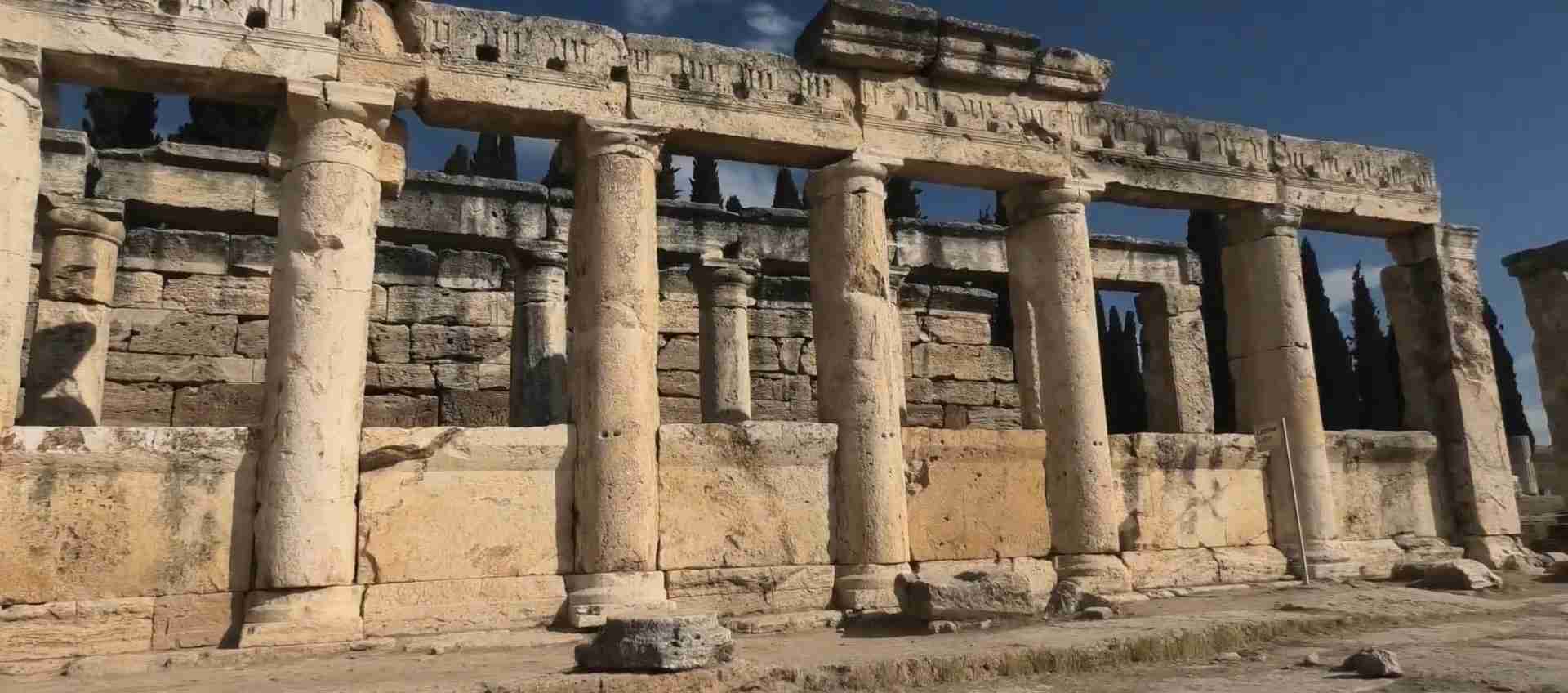
Hierapolis Ancient City Guide: Pamukkale Roman Spa Resort
Hierapolis stands as one of the ancient world’s most celebrated spa cities, where Romans traveled across the Mediterranean seeking therapeutic cures in thermal waters cascading from Pamukkale’s white travertines above southwestern Turkey’s Lycus Valley. Founded around 190 BCE by Eumenes II of Pergamon and flourishing for nearly a millennium until medieval earthquakes and changing trade patterns led to its gradual abandonment, this remarkably preserved UNESCO World Heritage Site reveals how thermal springs shaped urban development, attracted religious pilgrims, supported elaborate bathing culture, and created a necropolis containing thousands of tombs documenting ancient attitudes toward death and the afterlife.
Key Takeaways About Hierapolis
- Hierapolis developed specifically around natural thermal springs believed to possess healing powers granted by Apollo, growing from a modest Hellenistic settlement into a thriving Roman city of 100,000 residents serving as antiquity’s premier therapeutic bathing destination
- The remarkably preserved Roman theater seats 12,000 spectators with ornate stage building featuring carved reliefs depicting Dionysus and Apollo, representing one of Asia Minor’s finest examples of Roman theatrical architecture still substantially intact today
- The North Necropolis extends nearly 2 kilometers containing over 1,200 tombs spanning Hellenistic through early Christian periods, documenting burial customs, social hierarchies, and religious beliefs through architectural variety from simple sarcophagi to elaborate multi-chamber monuments
- The Hierapolis Archaeological Museum occupies restored Roman bath buildings, displaying elaborate sarcophagi carved with mythological scenes, architectural fragments from destroyed temples, sculptures, and objects documenting the city’s role as a healing sanctuary attracting visitors from across the Roman Empire
- Cleopatra’s Antique Pool occupies sacred thermal springs where ancient Hierapolis residents bathed, featuring submerged Roman columns from the 7th-century earthquake that toppled the Temple of Apollo into the waters creating today’s unique swimming-among-ruins experience
- Italian archaeological teams have conducted systematic excavations since 1957, gradually uncovering bath complexes, temples, public buildings, and residential areas while stabilizing monuments threatened by earthquakes and weathering that damaged structures over centuries of abandonment
People Also Ask About Hierapolis Ancient City
Why was Hierapolis built at Pamukkale?
Hierapolis was deliberately founded at Pamukkale around 190 BCE specifically to exploit the natural thermal springs that created the white travertine terraces, with the city’s entire economic and cultural foundation resting on these hot mineral waters believed to possess healing powers granted by the gods Apollo and Asclepius. The springs emerge from the earth at temperatures around 35°C carrying dissolved minerals including calcium carbonate, sulfur, and various trace elements that ancient physicians credited with therapeutic properties treating arthritis, digestive disorders, skin conditions, respiratory ailments, and general debilitation from chronic illness. King Eumenes II of Pergamon recognized the economic potential of establishing a planned city at this natural spa location, understanding that wealthy Romans and Greeks would travel great distances seeking thermal cure treatments if proper facilities and accommodations could be provided. The site’s elevated plateau location offered strategic advantages including defensive positions overlooking the Lycus Valley, proximity to major trade routes connecting the Aegean coast with interior Anatolia, and sufficient flat land for urban development despite the challenging foundation conditions created by ongoing thermal water deposits. The thermal springs’ sacred character added religious significance beyond practical healing functions, with ancient belief systems attributing the waters’ curative powers to divine intervention rather than natural mineral content, making Hierapolis both a medical spa and a pilgrimage destination where visitors sought healing through combination of bathing rituals and prayers to healing deities whose temples occupied prominent positions near the thermal sources.
What is the significance of Hierapolis’s necropolis?
The Hierapolis necropolis represents one of ancient Anatolia’s most extensive and archaeologically significant burial grounds, containing over 1,200 tombs spanning nearly eight centuries from the city’s Hellenistic founding through the early Christian period, documenting evolving burial customs, social stratification, religious beliefs about the afterlife, and the diverse population that inhabited this cosmopolitan spa city. The necropolis extends approximately 2 kilometers along the main road approaching Hierapolis from the north, deliberately positioned outside the city walls following ancient customs that separated the living city from burial grounds while maintaining visual and ceremonial connections through elaborate tomb architecture visible from the city gates. Tomb types vary dramatically reflecting the deceased’s wealth, social status, cultural background, and historical period, ranging from simple limestone sarcophagi carved with basic inscriptions identifying the occupant, to elaborate temple-tombs featuring architectural embellishments including columns, pediments, and carved reliefs depicting mythological scenes, funerary banquets, and the deceased’s professional activities. The architectural diversity documents Hierapolis’s cosmopolitan character as a spa destination attracting Greeks, Romans, native Anatolians, Jews, and eventually Christians whose distinct burial practices appear in the archaeological record through changing tomb styles, epitaph languages shifting from Greek to Latin to Christian inscriptions, and decorative programs evolving from pagan mythological scenes to early Christian symbols. Many tombs include elaborate epitaphs recording biographical information, professional accomplishments, family relationships, and occasionally humorous or touching personal messages that humanize the ancient inhabitants beyond anonymous archaeological remains, creating intimate connections across two millennia as visitors read a mother’s grief for her lost child, a merchant’s pride in his business success, or warnings against tomb violation threatening divine retribution. The necropolis’s preservation resulted from Hierapolis’s gradual abandonment rather than violent destruction, allowing tombs to survive largely intact through medieval and modern periods until systematic archaeological documentation began in the 20th century.
How did Hierapolis function as a healing center?
Hierapolis operated as the ancient world’s equivalent of a modern medical spa, combining therapeutic bathing in mineral-rich thermal waters with religious healing rituals, professional medical treatments from resident physicians, and extended stays in accommodations designed to support the lengthy cure regimens that ancient medicine prescribed for chronic conditions. The city’s numerous bath complexes processed thermal waters through sophisticated engineering systems that regulated temperature, directed flow to different pools serving various therapeutic functions, and created the elaborate bathing sequences that Roman medicine considered essential for effective treatment – progression through rooms of increasing heat followed by cold plunges, massage with scented oils, exercise in palaestra courtyards, and relaxation in shade-covered rest areas. Resident physicians including followers of Galen and other medical schools examined arriving patients, diagnosed their conditions according to humoral theory that dominated ancient medicine, and prescribed individualized treatment plans specifying which thermal pools to use, how long to bathe daily, what dietary restrictions to follow, and which religious offerings to make seeking divine assistance with healing. The Temple of Apollo and smaller shrines dedicated to Asclepius, the healing god, provided settings for religious healing rituals including incubation sleep where patients spent nights in temple precincts hoping for divine dreams revealing cures, sacrifice offerings thanking the gods for successful treatments, and votive dedications documenting miraculous healings that enhanced the sanctuary’s reputation. The city’s commercial infrastructure supported the healing industry through hotels and guesthouses accommodating long-term visitors, restaurants serving prescribed therapeutic diets, shops selling votive offerings and medicinal herbs, and entertainment venues including the theater where recuperating patients attended performances during their extended stays. Patient testimonials carved on stone inscriptions and recorded in ancient medical literature document the treatments and sometimes remarkable recoveries experienced at Hierapolis, creating marketing materials that enhanced the spa’s reputation and attracted additional patients willing to undertake arduous journeys seeking cures when local physicians had exhausted their remedies.
What happened to Hierapolis after the Roman period?
Hierapolis continued functioning through the Byzantine period after the Western Roman Empire’s collapse in 476 CE, adapting to Christianity’s dominance by converting pagan temples into churches, constructing new Christian basilicas including the Martyrium of St. Philip commemorating the apostle’s execution in Hierapolis, and maintaining the thermal bath operations that remained economically vital despite the changing religious context. The city’s prosperity gradually declined from the 6th century onward as changing trade routes diverted commerce away from interior Anatolian cities toward coastal ports, Arab raids disrupted the region’s stability, and successive earthquakes damaged buildings and infrastructure that became increasingly difficult to repair as the tax base contracted and population declined. A particularly devastating earthquake in 1334 CE destroyed significant portions of the city including the collapse of remaining public buildings, rupture of the water supply systems that fed the thermal baths, and widespread destruction that made rehabilitation impractical for the reduced population. The surviving inhabitants abandoned the earthquake-damaged city, relocating to safer locations including the emerging settlement that would become modern Pamukkale village, leaving Hierapolis’s ruins to gradual decay as stone robbing for new construction, agricultural encroachment, and natural weathering obliterated surface structures while burying others beneath accumulating soil. The city disappeared from European consciousness during the medieval and early modern periods, known only through brief mentions in classical texts and Christian pilgrimage accounts referencing St. Philip’s martyrdom, with the physical remains forgotten beneath vegetation and silt deposits. European travelers rediscovered Hierapolis in the 18th and 19th centuries, documenting the visible monuments and beginning the archaeological interest that led to systematic German and Italian excavations in the early 20th century, transforming scattered ruins into the comprehensively studied and partially restored archaeological park that visitors explore today.
Extended multi-day tours – 5+ days
Featured Pamukkale Multi-Day Tour Packages
4 days
Kusadasi Essentials – 4 Days with Ephesus & Pamukkale Tours
- ✓ Comprehensive Pamukkale tour
- ✓ Expert local guides included
- ✓ All accommodation arranged
- ✓ Transportation provided
3 days
Kusadasi Essentials – 3 Days with Ephesus & Pamukkale Tours
- ✓ Comprehensive Pamukkale tour
- ✓ Expert local guides included
- ✓ All accommodation arranged
- ✓ Transportation provided
1 days
Daily Pamukkale Tour from Kusadasi
- ✓ Comprehensive Pamukkale tour
- ✓ Expert local guides included
- ✓ All accommodation arranged
- ✓ Transportation provided
3 days
3 Days – Seven Churches of Revelation Tour
- ✓ Comprehensive Pamukkale tour
- ✓ Expert local guides included
- ✓ All accommodation arranged
- ✓ Transportation provided
Multi-day tour packages powered by TourRadar. Prices and availability subject to change.
Introduction: Hierapolis’s Role in the Ancient World
Hierapolis emerged in the 2nd century BCE as a calculated urban development project designed to exploit natural thermal springs for economic gain, transforming a remote Anatolian plateau into one of antiquity’s most celebrated spa destinations where the wealthy and afflicted traveled seeking cures that conventional medicine could not provide. The city’s founding by Eumenes II of Pergamon reflected sophisticated understanding of urban economics and the growing Roman market for luxury therapeutic tourism – by the 1st century CE, prosperous Romans regularly undertook extended journeys to renowned healing sanctuaries, creating demand for well-appointed spa cities offering both effective treatments and comfortable accommodations. Hierapolis successfully positioned itself in this competitive therapeutic tourism market through strategic location at spectacular thermal springs producing the white travertine cascades that attracted visitors’ wonder, aggressive promotion of healing miracles documented in inscriptions and medical writings, and infrastructure investment creating bath complexes, temples, entertainment venues, and residential quarters that could accommodate thousands of simultaneous visitors during peak seasons.
The city’s name derives from Hiera, wife of the legendary founder Telephus, or alternatively from the Greek word “hieros” meaning sacred, reflecting the thermal springs’ religious significance in ancient belief systems that attributed natural phenomena to divine agency. Ancient visitors understood their healing journeys to Hierapolis as pilgrimages combining physical therapy with spiritual purification, bathing in waters sanctified by Apollo and Asclepius while offering prayers and sacrifices seeking divine intervention to supplement the minerals’ therapeutic effects. This religious dimension distinguished Hierapolis from purely commercial bath establishments in Rome and other cities, creating a sacred healing landscape where the boundary between medicine and religion dissolved into integrated treatment regimens addressing both body and soul. The Plutonium, a cave emitting toxic volcanic gases that killed animals but spared eunuch priests of Cybele who entered without apparent harm, demonstrated the gods’ active presence at Hierapolis, enhancing the site’s reputation for supernatural power that drew curious visitors alongside genuine patients.
Archaeological evidence reveals Hierapolis at its peak in the 2nd and 3rd centuries CE as a thriving city of approximately 100,000 residents including permanent inhabitants, long-term patients undergoing extended cure treatments, seasonal visitors, and the service workforce supporting the therapeutic tourism industry. The urban landscape featured all amenities expected in a major Roman provincial city – colonnaded main streets lined with shops and public buildings, multiple bath complexes of varying sizes and luxury levels serving different economic classes, theaters and entertainment venues, gymnasia for exercise regimens prescribed as part of therapeutic treatments, temples to civic deities and healing gods, an agora serving as commercial and social center, and extensive residential neighborhoods accommodating diverse populations from wealthy villa owners to modest apartment dwellers. The city’s exceptional preservation stems from gradual abandonment rather than violent destruction, leaving monuments standing above ground through centuries of neglect until modern archaeology began systematic documentation and selective restoration.
Understanding Hierapolis requires appreciating its dual nature as both practical medical establishment and religious sanctuary, commercial enterprise and sacred landscape, cosmopolitan Roman city and distinctly Anatolian cultural environment where pre-Greek traditions persisted beneath Hellenistic and Roman cultural overlays. The ruins visible today represent the culmination of nearly a millennium of continuous development, with earlier Hellenistic structures buried beneath Roman renovations, and Roman monuments modified during the Byzantine Christian period. Italian archaeological teams working systematically since 1957 have gradually revealed this complex stratigraphic history, uncovering successive building phases that document the city’s evolution from modest Hellenistic foundation through Roman imperial splendor to Byzantine contraction and medieval abandonment. The following sections examine Hierapolis’s major monuments, archaeological discoveries, historical development, and cultural significance, providing comprehensive understanding of this unique ancient city where thermal springs created an urban civilization dedicated to healing, bathing, and the pursuit of health in antiquity’s most celebrated spa resort.
Historical Development: From Hellenistic Foundation to Byzantine Decline
Hierapolis was founded around 190 BCE by Eumenes II of Pergamon following his kingdom’s expansion into the Lycus Valley after the Romans granted Pergamon control over former Seleucid territories in western Anatolia. Eumenes II pursued an aggressive urban development program establishing new cities throughout his expanded realm, with Hierapolis representing a strategic foundation exploiting the natural thermal springs’ economic potential while securing Pergamene control over this agriculturally rich region. The initial Hellenistic city occupied a modest area around the sacred springs and early bath installations, with simple fortification walls, a small agora, residential blocks following Hippodamian grid planning, and temples to Greek deities adapted to local worship traditions. Archaeological evidence for this earliest phase remains limited as subsequent Roman rebuilding buried or incorporated Hellenistic structures, though foundation remains, pottery sequences, and coins document the city’s 2nd-century BCE origins.
Pergamon’s incorporation into the Roman province of Asia in 133 BCE after Attalus III bequeathed his kingdom to Rome placed Hierapolis under Roman administration, initiating the city’s transformation into a major spa destination serving the empire’s growing therapeutic tourism industry. The 1st century BCE and early 1st century CE witnessed initial Roman investment in thermal infrastructure including expanded bath complexes, improved water distribution systems, and monumental architecture announcing Hierapolis’s importance to approaching travelers. A devastating earthquake in 60 CE destroyed significant portions of the city, prompting comprehensive rebuilding that created the urban landscape whose ruins dominate the modern archaeological site. The post-earthquake reconstruction coincided with the Flavian dynasty’s investment in Asia Minor’s infrastructure, resulting in the monumental theater, expanded bath complexes, colonnaded streets, and imposing city gates that transformed Hierapolis from a prosperous provincial town into a showcase Roman spa city.
The 2nd and 3rd centuries CE marked Hierapolis’s golden age as therapeutic tourism peaked under the Pax Romana, bringing wealthy patients from Rome, Greece, North Africa, and throughout the Mediterranean seeking treatments unavailable in their home cities. The Antonine and Severan dynasties’ favorable policies toward eastern provinces encouraged urban development, with Hierapolis benefiting from imperial patronage, wealthy benefactors funding public buildings, and prosperous merchants investing in commercial enterprises serving the tourism economy. The city’s population reached its maximum around 100,000, residential neighborhoods expanded beyond the original fortification walls, multiple bath complexes operated simultaneously serving different clientele and treatment specialties, and the necropolis extended along approach roads with increasingly elaborate tombs documenting the accumulated wealth concentrated in this therapeutic center. This prosperity attracted religious diversity including substantial Jewish and early Christian communities whose presence appears in synagogue remains, Christian basilicas, and the martyrdom tradition associating the apostle Philip’s execution with Hierapolis during the 1st century CE.
The 3rd-century crisis disrupted Hierapolis’s prosperity as Roman Empire-wide political instability, economic contraction, and barbarian invasions reduced long-distance travel and the discretionary wealth supporting therapeutic tourism. The city survived this period but at reduced scale, with some public buildings falling into disrepair, population declining from its 2nd-century peak, and economic focus shifting toward more localized functions serving regional rather than empire-wide clientele. Constantine’s adoption of Christianity as favored religion in the early 4th century CE initiated Hierapolis’s transformation from pagan spa city to Christian center, with temple conversions, new church construction including the octagonal Martyrium of St. Philip, and Christian bishops assuming civic leadership previously held by pagan priests and city councilors. The Byzantine period (5th-7th centuries CE) maintained Hierapolis as a regional center though with contracting population, reduced monumental construction, and gradual shift from the elaborate therapeutic culture that had defined the city for eight centuries.
Successive earthquakes in the Byzantine and medieval periods progressively damaged Hierapolis’s infrastructure without the resources or will to undertake comprehensive repairs, while Arab raids in the 7th-9th centuries disrupted the region’s stability and further undermined the city’s economic foundations. The final catastrophic earthquake in 1334 destroyed remaining public buildings and ruptured water systems, prompting the surviving population’s evacuation to safer locations and ending Hierapolis’s nearly 1,500-year occupation history. The abandoned city gradually disappeared beneath vegetation and soil deposits, with stone robbing for nearby construction removing portable architectural elements while larger monuments collapsed from weathering and seismic activity. This gradual decay through benign neglect paradoxically preserved Hierapolis better than violent destruction would have, leaving structures standing for modern archaeologists to study and selectively restore for visitors exploring today’s UNESCO World Heritage Site.
The Roman Theater: Architecture and Significance
The Roman theater dominates Hierapolis’s archaeological landscape, occupying a hillside location that provides both structural support for the seating tiers and spectacular views across the Lycus Valley to distant mountains. Constructed during the post-earthquake rebuilding in the late 1st and early 2nd centuries CE, the theater accommodated approximately 12,000 spectators in a cavea (seating area) that extends in a semicircle beyond the standard Greek semicircular plan to create the Roman preference for audience positions wrapping further around the orchestra. The seating divided into three horizontal sections separated by walkways (diazomata) that facilitated crowd movement, with further vertical divisions creating wedge-shaped seating blocks (cunei) accessible through radial stairways. The lowest seating tier (ima cavea) featured wider, more comfortable seats reserved for elite citizens, honored guests, and civic officials, while middle and upper tiers (media and summa cavea) provided narrower benches for ordinary citizens in a spatial arrangement that physically manifested social hierarchies.
The stage building (scaenae frons) represents the theater’s most architecturally impressive element, rising three stories high with elaborate decorative program featuring carved relief panels depicting mythological scenes, architectural orders progressing from Doric at ground level through Ionic to Corinthian at the top, and niches displaying statues of emperors, civic benefactors, and deities associated with theatrical performances. The relief panels concentrate on Dionysus, god of theater and wine, showing scenes from his mythology including his birth, adventures, and divine powers, while Apollo appears in panels referencing his patronage of music and prophetic powers relevant to Hierapolis’s healing function. The architectural orders’ progression from robust Doric through refined Ionic to ornate Corinthian created vertical visual hierarchy guiding viewers’ eyes upward while demonstrating sophisticated understanding of classical architectural theory. The three doorways (valvae) in the stage building provided actor entrances from backstage areas, with the central door (valva regia) reserved for protagonists while side doors (hospitalia) admitted supporting characters and chorus members according to theatrical conventions.
The theater’s exceptional preservation stems from earthquake damage that paradoxically protected the structure by causing partial collapse that buried architectural elements, preventing further decay and stone robbing that destroyed less-fortunate monuments. Italian archaeological teams conducted extensive restoration work beginning in the 1960s, reassembling fallen architectural elements, stabilizing damaged sections, and reconstructing portions of the stage building to convey its original appearance while distinguishing modern restoration from authentic ancient masonry. The restoration philosophy balanced authenticity with visitor comprehension, reconstructing sufficient elements to communicate the theater’s architectural magnificence while leaving obvious gaps and modern materials marking restored portions to prevent confusion about what survives from antiquity versus modern reconstruction.
The theater functioned beyond entertainment to serve civic, religious, and social purposes central to Roman urban life. Annual festivals honoring various deities included theatrical performances ranging from Greek tragedies and comedies to Roman pantomimes and mime shows, creating occasions when the entire citizen body gathered in shared cultural experience. Political assemblies occasionally convened in the theater when the agora proved too small for important civic meetings requiring broad citizen participation, transforming the theatrical space into political arena where citizens debated and voted on consequential issues. Gladiatorial combats and wild beast shows that Romans enthusiastically supported occurred in amphitheaters rather than theaters, though Hierapolis’s theater may have occasionally hosted less violent athletic competitions and musical performances that didn’t require specialized amphitheater facilities. The theater’s prominent hillside position made it visible from much of the ancient city and approaching roads, serving as architectural landmark announcing Hierapolis’s prosperity and cultural sophistication to arriving visitors.
The Necropolis: Tombs and Burial Customs
The North Necropolis extends approximately 2 kilometers along the main road approaching Hierapolis from the plateau, containing over 1,200 identified tombs with additional monuments continuing to emerge from soil deposits as archaeological excavation progresses. Ancient custom dictated that burial grounds occupy extramural locations outside city walls, separating the living from the dead while maintaining visual and ceremonial connections through prominent tomb architecture lining approach roads. The necropolis’s linear arrangement along the principal access route ensured that arriving visitors encountered this monumental cemetery before reaching the city gates, creating a powerful transition zone where contemplation of mortality preceded entry into the healing city dedicated to prolonging life and alleviating suffering.
Tomb architecture varies dramatically reflecting the deceased’s economic status, cultural background, professional identity, and historical period. Simple sarcophagi represent the most common tomb type, carved from local limestone with gabled lids resembling house roofs and modest inscriptions identifying the occupant by name, family relationships, and occasionally profession or accomplishments. These basic tombs concentrated burial expenses on the limestone container itself rather than elaborate superstructure, making them accessible to middling economic classes who could afford permanent stone burial but not monumental architecture. Temple tombs represent the architectural opposite, elaborate multi-story structures featuring columned facades, pediments with carved relief decoration, and interior chambers designed to resemble miniature temples housing the deceased. These expensive monuments demonstrated extreme wealth, with some examples rivaling small temples in architectural sophistication and decorative richness.
Tumulus tombs consisting of circular stone platforms supporting earth mounds represented another burial tradition, particularly associated with native Anatolian populations maintaining pre-Hellenistic customs despite Greek and Roman cultural influences. Chamber tombs cut into bedrock provided family burial facilities accommodating multiple generations, with underground rooms accessed through stairs and sealed with stone doors carved with warnings against tomb violation threatening divine punishment against robbers. The chamber tomb tradition reflected Roman practices while adapting to local geological conditions that made bedrock excavation practical, creating permanent family burial grounds that concentrated multiple related individuals rather than the scattered individual burials characterizing simpler sarcophagi arrangements.
Tomb inscriptions provide invaluable historical information documenting social structures, professional activities, family organizations, religious beliefs, and personal sentiments that humanize ancient Hierapolis beyond architectural remains. Occupational references identify physicians, bath attendants, merchants, textile workers, civic officials, and numerous other professions composing the city’s diverse economy. Family relationships appear in epitaphs specifying the deceased’s parents, spouse, children, and occasionally extended relations, documenting family structures and inheritance practices. Personal messages occasionally transcend formulaic epitaphs with touching expressions of grief, pride in accomplishments, or philosophical reflections on mortality and memory. Warnings against tomb violation appear frequently, threatening legal penalties, divine retribution, or both against anyone who would disturb the burial, open the sarcophagus, or reuse the tomb for unauthorized burials.
The necropolis’s chronological depth spanning Hellenistic through early Christian periods documents evolving burial customs reflecting religious transformation. Pagan tombs predominate in earlier sections, with mythological relief decoration, references to afterlife beliefs involving journey to Hades, and votive offerings to Chthonic deities governing the underworld. Christian tombs appearing from the 4th century onward feature cross symbols, chi-rho monograms, biblical inscriptions, and changed decorative programs replacing pagan mythology with Christian imagery and messages of resurrection hope. Jewish tombs constitute a smaller but significant category, identified through menorah symbols, Hebrew inscriptions, and architectural features reflecting Jewish burial customs including special emphasis on family tomb chambers and specific orientation preferences.
Bath Complexes: Therapeutic Architecture
Hierapolis featured numerous bath complexes of varying sizes, architectural elaboration, and specialized therapeutic functions, with the largest establishments processing thousands of daily visitors during peak seasons while smaller neighborhood baths served local residents and less affluent visitors. The Roman bath followed standardized sequences progressing through rooms of increasing temperature – apodyterium (changing room), frigidarium (cold room), tepidarium (warm room), caldarium (hot room), and sometimes laconicum (steam room) – creating elaborate bathing rituals that ancient medicine considered essential for effective therapeutic treatment. Hierapolis’s thermal springs simplified heating requirements that elsewhere demanded elaborate hypocaust systems burning enormous quantities of fuel, with the natural hot water providing ready heat source requiring only distribution systems and temperature regulation rather than artificial heating.
The bath complexes closest to the thermal spring sources processed the hottest water directly from the ground, creating specialized treatment facilities where physicians prescribed exposure to waters at their maximum therapeutic temperature and mineral concentration. These elite establishments catered to wealthy patients willing to pay premium prices for treatments using the most potent thermal waters, with elaborate architectural decoration, skilled attendants, associated medical consultation facilities, and exclusive clientele. Larger bath complexes serving broader populations received thermal water after initial temperature reduction through mixing with cold water or distance-cooling in distribution channels, creating temperatures suitable for extended bathing sessions rather than the brief exposures that maximum-temperature springs required.
The Cathedral Bath, partially excavated and restored, demonstrates the architectural scale and decorative richness characterizing Hierapolis’s major bathing establishments. This complex featured vast vaulted halls accommodating multiple simultaneous bathing pools, elaborate marble revetment covering walls and floors, mosaic decoration in geometric and figural patterns, and sophisticated water distribution systems managing flow from thermal sources through various pools to final drainage. The architectural remains reveal the engineering challenges of building large-scale structures in a thermally active landscape where ground temperatures, ongoing mineral deposition, and earthquake risks required innovative construction techniques and continuous maintenance to prevent structural failure.
Bath attendants constituted a specialized workforce managing the therapeutic bathing industry, with inscriptions and artistic representations documenting their professional activities including regulating water temperatures, assisting bathers with entry and exit from pools, applying massage and oil treatments, supervising exercise facilities, and maintaining cleanliness standards essential for public health. Physicians often maintained offices adjacent to bath complexes, examining patients, diagnosing conditions, prescribing individualized treatment regimens, and monitoring progress through repeated consultations during extended cure stays. This integration of bathing facilities with medical practice created comprehensive therapeutic environments addressing both physical treatments and medical supervision within unified architectural complexes.
Cleopatra’s Antique Pool: Ancient and Modern Bathing
Cleopatra’s Antique Pool occupies sacred thermal springs that served as Hierapolis’s original cult center and primary water source for the city’s bath complexes, making this location the spiritual and practical foundation upon which the entire spa city developed. The sacred character predated Greek colonization, with archaeological evidence suggesting indigenous Anatolian populations worshipped at these springs before Hierapolis’s formal founding, attributing supernatural powers to waters emerging hot from the earth and attributing healing properties to divine agency rather than natural mineral content. The Temple of Apollo occupied the area surrounding the springs, creating an architectural setting where bathing rituals combined physical therapy with religious devotion, worshippers seeking Apollo’s healing intercession while immersing themselves in the sacred waters.
The distinctive character of today’s Antique Pool resulted from a catastrophic 7th-century earthquake that toppled the Temple of Apollo, causing massive marble columns, elaborately carved capitals, pediment sculptures, and architectural fragments to crash into the sacred pools. Rather than extracting these submerged ruins, subsequent populations left them in place where they created the underwater archaeological landscape that makes swimming in Cleopatra’s Pool uniquely memorable. The submerged columns range from intact examples extending several meters underwater to broken fragments and scattered architectural elements creating an artificial reef-like environment where swimmers navigate among genuine ancient ruins while absorbing the thermal water’s mineral content.
The legendary association with Cleopatra VII of Egypt stems from romantic traditions claiming Mark Antony presented the Hierapolis thermal springs to Cleopatra as a gift during their love affair, though historical evidence for the Egyptian queen’s actual visits remains debated among scholars. The legend persists because it enhances the pool’s mystique and provides marketing narrative connecting modern visitors to famous historical figures, even if the story reflects imaginative historical fiction more than documented fact. Regardless of Cleopatra’s actual presence, the springs certainly attracted elite Roman visitors including emperors, senators, wealthy merchants, and notable cultural figures seeking therapeutic treatments, making the pool genuinely significant in Roman social history even without Egyptian royal associations.
Modern operations manage the Antique Pool as a commercial swimming facility while preserving its archaeological character, charging admission fees beyond the base Hierapolis site ticket and providing changing facilities, showers, and locker rental for securing valuables. The constant 36°C water temperature derives from natural thermal flow maintaining consistent conditions year-round regardless of seasonal air temperature variations. The mineral content includes calcium, magnesium, bicarbonate, and sulfate at concentrations creating the distinctive “champagne effect” as natural carbon dioxide escapes from solution creating fine bubbles that dance along swimmers’ skin. The therapeutic claims surrounding these minerals reflect ancient medical theories more than modern scientific evidence, though the heat, buoyancy, and relaxing environment provide genuine stress relief and minor musculoskeletal benefits even if specific mineral absorption through skin remains physiologically limited.
The Martyrium of St. Philip: Christian Hierapolis
The Martyrium of St. Philip occupies a prominent hillside location above the main ancient city, constructed in the early 5th century CE to commemorate the apostle Philip’s martyrdom which tradition places at Hierapolis during the 1st century CE. The octagonal structure represents Byzantine architectural innovation, with eight radiating chambers surrounding a central octagonal space that created complex geometric planning unusual in early Christian architecture. The building’s sophisticated design required advanced engineering to manage the structural challenges of vault construction over octagonal spaces, with the resulting architecture creating dramatic interior volumes and lighting effects that enhanced the sacred atmosphere appropriate for a major pilgrimage shrine.
The Philip tradition claims the apostle traveled to Hierapolis during his missionary journeys, preached Christianity to the pagan population, performed miracles including healing sick visitors who had come seeking thermal cure treatments, and ultimately suffered martyrdom when hostile authorities executed him for undermining the pagan religious practices that formed the economic foundation of the therapeutic tourism industry. This martyrdom narrative places Philip among Christianity’s most significant early witnesses, whose death defending the faith merited architectural commemoration and established Hierapolis as a Christian pilgrimage destination competing with its established identity as a therapeutic spa city. Archaeological excavations in 2011 claimed to discover Philip’s tomb at a location near but separate from the Martyrium, raising questions about whether the elaborate octagonal structure actually marked the burial location or served as a memorial shrine without containing the apostle’s remains.
The Martyrium’s construction in the early 5th century coincided with Christianity’s consolidation as the Roman Empire’s dominant religion, creating opportunities and incentives for building impressive churches and pilgrimage shrines that would attract Christian travelers previously drawn to pagan healing sanctuaries. The architectural investment demonstrated Hierapolis’s successful adaptation to religious transformation, redirecting the city’s economic model from pagan therapeutic tourism toward Christian pilgrimage while maintaining continuity in the fundamental business of hosting and serving long-distance religious travelers. The thermal baths continued operating under Christian administration, reframed as God’s natural gifts for healing rather than pagan deities’ sacred waters, allowing Hierapolis to preserve its spa economy within the new Christian religious context.
The building’s current condition reflects both ancient earthquake damage and modern restoration efforts, with Italian archaeological teams stabilizing surviving walls, reconstructing portions of the octagonal chambers to convey the original architectural form, and creating visitor access allowing exploration while protecting fragile remains. The hilltop location provides spectacular views across Hierapolis and the Lycus Valley, rewarding the steep climb required to reach this remote monument that most visitors overlook in favor of more accessible ruins near the main site entrances. Those making the effort discover relative solitude compared to crowded areas near the theater and travertines, experiencing Hierapolis’s ruins in peaceful atmosphere conducive to contemplating the city’s complex religious history spanning pagan healing cults, early Christianity’s arrival, martyrdom narratives, and Byzantine pilgrimage traditions.
Hierapolis Archaeological Museum: Discoveries and Collections
The Hierapolis Archaeological Museum occupies restored Roman bath buildings near the site’s South entrance, repurposing ancient thermal bathing facilities to display artifacts discovered during systematic excavations conducted by Italian teams since 1957. The museum’s three main exhibition halls organize materials chronologically and thematically, progressing from prehistoric and archaic periods through Hellenistic and Roman imperial phases to late Roman and Byzantine periods, documenting the region’s human occupation spanning several millennia beyond Hierapolis’s formal urban history. The building itself represents significant Roman architecture, with the massive vaulted halls that once accommodated bathing pools now providing atmospheric settings for displaying sarcophagi, statues, architectural fragments, and small objects recovered from excavations.
The sarcophagus collection constitutes the museum’s most impressive component, featuring elaborately carved marble coffins ranging from simple examples with basic relief decoration to spectacular examples carved with mythological scenes demonstrating sculptural mastery. Dionysian themes predominate reflecting the god’s associations with death, rebirth, and the afterlife journey, with relief panels depicting the god’s triumphal processions, his followers’ ecstatic celebrations, and symbolic elements including grapevines, theatrical masks, and wild animals. Battle scenes appear on some sarcophagi showing conflicts between Greeks and Amazons, Romans and barbarians, or mythological contests, creating dynamic compositions that transform functional burial containers into narrative artworks. The portrait sarcophagi featuring carved representations of the deceased demonstrate ancient sculptural techniques for capturing individual likenesses, with idealized features conforming to period beauty standards while incorporating sufficient individualization to suggest genuine portraiture rather than generic types.
The architectural fragment collection documents Hierapolis’s lost monuments through surviving decorative elements, column capitals, relief panels, and inscribed blocks that allow architectural historians to reconstruct vanished temples, public buildings, and residential structures. The carved relief panels from the theater’s stage building demonstrate the decorative richness that characterized major public monuments, with mythological scenes executed in sophisticated sculptural styles showing movement, anatomical accuracy, and emotional expression. The collection of Corinthian capitals displays the ornate vegetative carving characteristic of this architectural order, with acanthus leaves, volutes, and floral elements carved with botanical precision and undercut to create dramatic shadow effects. Inscribed blocks preserve dedication texts, building inscriptions, honorary decrees, and funerary epitaphs that provide historical documentation supplementing the physical remains, identifying building sponsors, civic benefactors, construction dates, and architectural elements’ original positions within lost structures.
The small objects collection includes pottery, jewelry, medical instruments, coins, lamps, and everyday domestic items that document daily life beyond monumental architecture. Medical instruments including surgical tools, pharmaceutical containers, and treatment implements demonstrate the sophisticated medical practice that supported Hierapolis’s therapeutic reputation, with specialized instruments for various surgical procedures, drug preparation equipment, and diagnostic tools. The coin collection documents Hierapolis’s monetary economy and broader Mediterranean commercial connections, with local city coinages featuring images of thermal springs, healing deities, and civic symbols alongside imperial Roman issues and Greek city coinages representing the diverse currency circulating in this cosmopolitan spa destination. Personal adornment objects including jewelry, cosmetics containers, and grooming implements document the material culture of wealthy visitors and residents who invested in luxury goods reflecting their economic status and cultural sophistication.
The Plutonium: Sacred Cave and Toxic Gases
The Plutonium consisted of a small cave or grotto emitting toxic volcanic gases, identified by ancient writers including Strabo as one of Hierapolis’s most remarkable features demonstrating divine power and the site’s sacred character. The cave’s name derived from Pluto (Greek Plouton), ruler of the underworld, whose realm the toxic gases seemed to connect with the surface world, creating a literal gateway to Hades where the boundary between living and dead dissolved. Ancient accounts describe birds and small animals dying instantly when exposed to the gases, while eunuch priests of Cybele entered the cave without apparent harm, either holding their breath, positioning themselves above the heaviest gas concentrations, or benefiting from natural immunity to the toxic effects – ancient observers interpreted this survival as divine protection demonstrating the priests’ sacred status.
Scientific analysis identifies the toxic gases as carbon dioxide and hydrogen sulfide emitted through volcanic vents, with concentrations reaching lethal levels in the confined cave environment where gases accumulated rather than dispersing. Carbon dioxide, being heavier than air, settled in low areas creating invisible death zones where animals succumbed to asphyxiation, while humans standing upright could breathe relatively cleaner air above the concentrated gases. The eunuch priests likely understood this phenomenon empirically without modern chemical knowledge, developing techniques for surviving cave entry including rapid movement minimizing exposure time, breathing through wet cloths filtering some toxic elements, or positioning themselves strategically to avoid maximum gas concentrations. The priests’ apparent immunity enhanced the Plutonium’s mystique and supported broader religious claims about Hierapolis’s sacred character, with the deadly cave serving as proof of divine presence that validated the thermal springs’ supernatural healing powers.
The Plutonium operated as religious spectacle and tourist attraction, with priests staging demonstrations showing animals dying in the toxic gases while they survived unharmed, creating powerful visual evidence of divine power that impressed credulous visitors and enhanced Hierapolis’s reputation for supernatural phenomena. The demonstrations served both religious and commercial functions, reinforcing faith in the healing gods’ active presence while attracting curious tourists whose entrance fees and offerings generated revenue for the temple operations. The cave’s location near the Temple of Apollo and thermal spring sources created a sacred precinct where multiple manifestations of divine power – healing waters, toxic gases, and priestly miracles – concentrated in small geographic area, making this zone Hierapolis’s spiritual center.
Italian archaeologists rediscovered the Plutonium’s location in 2013 after decades of searching based on ancient textual descriptions, excavating the cave entrance and confirming ongoing toxic gas emissions that continue 2,000 years after ancient accounts documented the phenomenon. The rediscovery required careful archaeological detective work combining ancient geographical descriptions, geological analysis of likely volcanic vent locations, and systematic excavation of promising areas near the Apollo temple complex. The cave remains closed to public access due to the genuine danger from toxic gas concentrations, with only controlled scientific studies permitted under safety protocols preventing accidental exposure. The rediscovery enhanced understanding of Hierapolis’s sacred landscape and ancient religious practices while confirming the accuracy of ancient textual sources that modern skepticism sometimes dismissed as exaggerated or fictional.
Archaeological Excavations: Italian Research Since 1957
Systematic archaeological excavation at Hierapolis began in 1957 under Italian direction, initially led by Paolo Verzone and subsequently directed by scholars including Daria De Bernardis, Francesco D’Andria, and current teams from the University of Salento. The Italian commitment to long-term research at Hierapolis reflects both scientific interest in this exceptionally preserved Roman city and diplomatic/cultural connections between Italy and Turkey facilitating sustained international collaboration. The excavations have proceeded methodically across decades, gradually uncovering different zones of the ancient city while conducting conservation and restoration work on previously excavated monuments, creating a comprehensive archaeological understanding impossible through brief exploratory campaigns.
Early excavation phases focused on major public monuments including the theater, bath complexes, and sections of the necropolis, clearing these impressive structures of soil deposits and vegetation while conducting initial documentation and stabilization work. The theater restoration consumed substantial effort given the building’s partial collapse and the challenge of reassembling thousands of architectural fragments into coherent reconstruction, with the work continuing episodically from the 1960s through 1990s as funding and technical capabilities allowed progressively more ambitious restoration. The bath complex excavations revealed the sophisticated engineering underlying Hierapolis’s thermal industry, uncovering water distribution systems, heating installations, drainage networks, and architectural elaboration demonstrating the economic resources invested in therapeutic infrastructure.
More recent excavation campaigns have emphasized residential areas, commercial zones, and less monumental features that reveal daily life beyond the public architecture dominating earlier research priorities. The residential excavations uncovered housing ranging from modest apartments to elaborate peristyle villas, documenting architectural variation reflecting social stratification, construction techniques adapting to the challenging foundation conditions, and domestic activities including food preparation, textile production, and household industries. Commercial zone excavations identified shop arrangements, production facilities for goods including textiles and ceramics, and the infrastructure supporting Hierapolis’s role as regional economic center beyond the therapeutic tourism that dominated the city’s identity. These broader investigations create more complete understanding of Hierapolis as a functioning city rather than merely a collection of impressive monuments.
Conservation and restoration work constitute major components of the ongoing Italian archaeological project, addressing damage from earthquakes, weathering, stone robbing, and previous inadequate restoration efforts. The conservation philosophy balances authenticity with visitor comprehension, stabilizing endangered structures to prevent further collapse, reconstructing sufficient architectural elements to communicate original appearance, and employing modern materials distinguishable from ancient fabric to prevent confusion about what survives versus what represents modern intervention. The restoration work serves educational purposes allowing visitors to understand ancient architecture’s scale and elaboration while maintaining scholarly standards preventing falsification of the archaeological record through excessive reconstruction.
Hierapolis in Ancient Literature
Ancient writers documented Hierapolis extensively, providing textual evidence complementing archaeological remains and offering historical context unavailable from physical ruins alone. Strabo, the Greek geographer writing in the 1st century CE, described Hierapolis’s thermal springs, the Plutonium with its toxic gases, and the city’s role as a spa destination attracting visitors seeking therapeutic treatments. Strabo’s account emphasizes the thermal phenomena that made Hierapolis remarkable, documenting the springs’ temperatures, mineral content effects on the landscape, and the religious interpretations attributing the waters’ healing powers to Apollo’s divine agency. The geographic precision in Strabo’s descriptions allows modern scholars to locate specific features and verify ancient accounts against archaeological evidence.
Pliny the Elder mentioned Hierapolis in his Natural History, noting the thermal springs and the city’s reputation for producing high-quality textiles, particularly purple-dyed fabrics that ranked among the ancient world’s luxury goods. The textile industry derived from Hierapolis’s location in the Lycus Valley where sheep raising supported wool production, while the thermal springs provided water supplies for dyeing operations and the processing stages transforming raw wool into finished fabrics. Pliny’s account documents Hierapolis’s economic diversification beyond therapeutic tourism, with textile production and trade providing additional revenue sources that stabilized the urban economy against fluctuations in the spa industry.
Christian writers including Eusebius documented the Philip martyrdom tradition, establishing Hierapolis’s significance in early Christian history and justifying the Byzantine period’s architectural investment in churches and pilgrimage facilities. The Acts of Philip, an apocryphal text circulating in early Christian communities, provided elaborate narrative of the apostle’s miracles at Hierapolis, his conflicts with pagan authorities, and his martyrdom through crucifixion – though modern scholarship questions the historical accuracy of these accounts, they influenced medieval and Byzantine perceptions making Hierapolis an important Christian pilgrimage destination. The Christian textual tradition created parallel identity for Hierapolis as both pagan healing sanctuary and Christian martyrdom site, with these competing narratives reflecting the religious transformation reshaping Mediterranean urban culture during late antiquity.
Inscriptions discovered through archaeological excavation supplement literary sources with contemporary documentary evidence including building dedications, honorary decrees, funerary epitaphs, and administrative documents that provide unfiltered primary sources. The epigraphic evidence documents specific individuals, construction dates, civic institutions, religious practices, and social relationships that literary sources overlooked or simplified. Building inscriptions identify sponsors, architects, construction dates, and building functions, allowing precise reconstruction of Hierapolis’s architectural development. Honorary inscriptions record benefactors who funded public amenities, distinguished visitors who received civic honors, and local elites who dominated urban politics through generations of family prominence. Funerary inscriptions preserve biographical information, professional identities, family relationships, and personal sentiments creating intimate human connections across two millennia.
Frequently Asked Questions About Hierapolis
How long does it take to explore Hierapolis ruins?
Thoroughly exploring Hierapolis ruins requires 3-4 hours walking through the 2.7-kilometer archaeological zone from the North necropolis through the city center to the travertines, including the theater, major bath complexes, colonnaded streets, museums, and significant monuments along the route. Visitors prioritizing only the most impressive highlights including the theater, Cleopatra’s Antique Pool, and a representative necropolis section can accomplish meaningful visits in 2 hours, though this condensed approach misses substantial portions of the site and creates rushed exploration preventing appreciation of smaller monuments and architectural details. Those combining Hierapolis with the Pamukkale travertines in the same visit should budget full-day schedules allowing 3-4 hours in the ancient city plus 1-2 hours on the white terraces, with additional time for the archaeological museum (30-60 minutes) and Cleopatra’s Pool swimming (60-90 minutes including changing time). Photography enthusiasts, archaeology specialists, and visitors genuinely interested in Roman urban civilization can easily spend 5-6 hours exploring Hierapolis’s extensive remains, examining necropolis monuments individually, reading interpretive signs explaining architectural features, and discovering less-visited areas including the Martyrium of St. Philip requiring additional hiking beyond the main tourist circuits. The vast archaeological zone’s exposure to sun without substantial shade makes summer visits physically demanding, requiring breaks in the limited shaded areas near the museum and under trees in the necropolis, while spring and autumn temperatures allow comfortable full-day exploration without heat exhaustion risks.
Is Hierapolis included in the Pamukkale entrance ticket?
The Pamukkale-Hierapolis entrance ticket grants access to both the white travertine terraces and the complete Hierapolis ancient city ruins including the theater, necropolis, all visible monuments, and the Hierapolis Archaeological Museum, making these nominally separate attractions actually components of a unified UNESCO World Heritage Site covered by single admission. The current entrance fee of €30 for adults includes all components except Cleopatra’s Antique Pool which requires additional swimming fee beyond base site admission, though accessing the pool area without swimming incurs no extra charge for those wishing to observe without bathing. Museum Pass Türkiye and regional museum passes covering the Aegean or Mediterranean regions include Pamukkale-Hierapolis, providing skip-the-line access and economic value for travelers visiting multiple Turkish archaeological sites during their trip. The combined ticket reflects the sites’ geographic and historical integration – Hierapolis developed specifically because the travertine-creating thermal springs provided the economic foundation for the spa city, making the natural phenomenon and ancient urban civilization inseparable components of the same cultural landscape. Visitors enter through one of three gates (Pamukkale village entrance, South entrance, North entrance) purchasing tickets valid for single-day admission across the entire archaeological zone, with no re-entry permitted after exiting, requiring visitors to bring everything needed for full-day exploration or accept inability to retrieve forgotten items without forfeiting admission.
What is the best entrance to use for visiting Hierapolis?
The optimal Hierapolis entrance depends on whether you prioritize the ancient city ruins or Pamukkale travertines, with the North entrance providing best access for archaeology-focused visits beginning with the impressive necropolis, while the South entrance suits those emphasizing travertines and Cleopatra’s Pool. The North entrance deposits visitors at the necropolis’s beginning, allowing systematic progression through 2 kilometers of tombs while reading interpretive signs explaining architectural types and burial customs, continuing to the city center with its theater and public monuments, then concluding at the travertines and Cleopatra’s Pool before exiting – this logical flow moves from historical context through major monuments to natural phenomena, creating coherent narrative progression. The South entrance provides quickest access to the most crowded highlights including Cleopatra’s Pool and the main travertine terraces, making it suitable for visitors with limited time or those joining tours that allocate insufficient hours for comprehensive exploration. The Pamukkale village entrance at the travertines’ base serves visitors staying in Pamukkale village who can walk from accommodation, requiring barefoot ascent through the white terraces before reaching the upper plateau where Hierapolis monuments concentrate, creating physically demanding approach that rewards effort with dramatic travertine experience before ruins exploration. Tour buses predominantly use the South entrance due to parking availability and quick access to priority attractions, concentrating crowds in that zone particularly during morning hours (9:00 AM-12:00 PM) when multiple groups arrive simultaneously, while the North entrance receives fewer visitors making it preferable for those seeking quieter archaeological exploration. Strategic visitors combine different entrances for entry and exit: enter via North gate for systematic necropolis and city exploration, exit through village entrance descending the travertines for concluding dramatic walk, or reverse this sequence depending on whether morning belongs to ruins (entering North) or travertines (entering village). Those arriving by minibus from Denizli can request stops at either North entrance or Pamukkale village, while rental car users enjoy complete flexibility choosing any entrance and potentially moving vehicles between gates during extended visits.
Can you swim in the ancient baths at Hierapolis?
Swimming in Hierapolis’s ancient bath ruins is not permitted as these archaeological monuments require preservation preventing damage from modern use, with only Cleopatra’s Antique Pool offering swimming opportunities in thermal waters within the archaeological zone. The ancient bath complexes visible throughout Hierapolis exist as architectural ruins with exposed foundations, partial wall sections, and scattered architectural fragments documenting original structures without functional pools, making swimming physically impossible even if conservation concerns didn’t prohibit the activity. Cleopatra’s Antique Pool occupies the sacred thermal springs that fed Hierapolis’s ancient bathing establishments, providing authentic bathing experience in the same water sources ancient Romans used, with the submerged columns and architectural fragments creating swimming-among-ruins atmosphere that evokes if not replicates the ancient bathing culture. The pool operates as commercial facility charging swimming fees, providing changing rooms and showers, and managing capacity to prevent overcrowding that would degrade the experience or endanger the submerged archaeological elements. Several hotels in modern Pamukkale village feature thermal pools fed by the same calcium-rich springs that created the white travertines and supplied ancient Hierapolis’s baths, offering swimming opportunities without crowds or additional fees beyond accommodation costs, though lacking the historical atmosphere and archaeological setting that distinguish Cleopatra’s Pool. The Karahayıt thermal village 5 kilometers from Pamukkale features distinctive red thermal waters from different mineral content creating rust-colored pools and mud baths, with multiple hotels operating thermal facilities accessible to day visitors for modest fees. These modern thermal bathing options allow experiencing the therapeutic waters that made Hierapolis famous without requiring access to protected archaeological monuments or creating conservation conflicts between tourism use and scientific preservation of irreplaceable ancient structures.
What happened to Hierapolis’s famous Temple of Apollo?
The Temple of Apollo that occupied the sacred thermal spring area near Cleopatra’s Antique Pool suffered catastrophic damage during the 7th-century earthquake that toppled the structure, sending massive marble columns, elaborately carved capitals, pediment sculptures, and architectural fragments crashing into the sacred pools below where they remain submerged creating today’s distinctive underwater archaeological landscape. The temple’s original appearance can be reconstructed from surviving foundation remains, scattered architectural fragments, and ancient descriptions, revealing a substantial structure featuring colonnaded facade, carved relief decoration depicting Apollo’s mythology, and interior cella housing the god’s cult statue. The temple occupied central position in Hierapolis’s religious landscape as the principal sanctuary of the city’s patron deity, with the thermal springs’ healing powers attributed to Apollo’s divine gift making the temple both religious center and therapeutic focal point. Archaeological excavation has revealed the temple platform and foundation remains near the pool complex, allowing scholars to determine the structure’s original location, orientation, and approximate dimensions though the standing architecture disappeared through earthquake collapse and subsequent stone robbing. The temple’s destruction created the paradoxical outcome that modern visitors swimming in Cleopatra’s Pool experience more dramatic encounter with temple remains than if the structure had survived intact – the submerged columns and fragments create unique underwater archaeological environment impossible to replicate, transforming catastrophic destruction into distinctive tourist attraction. Other temple remains visible throughout Hierapolis include foundation platforms where structures once stood, scattered column drums and capitals documenting architectural orders and decorative styles, and inscribed blocks recording dedications and building information. The systematic stone robbing that dismantled fallen monuments to provide construction material for new buildings, combined with earthquake damage across centuries and weathering of exposed remains, eliminated most of Hierapolis’s temple architecture leaving only foundations and scattered fragments requiring archaeological expertise to interpret for visitors lacking background in Roman architecture and urban planning.
Why are there so many tombs at Hierapolis?
Hierapolis’s extensive necropolis containing over 1,200 identified tombs results from the city’s role as therapeutic destination attracting elderly and chronically ill patients who came seeking cures but often died during extended treatment stays, creating concentrated mortality that required extensive burial facilities beyond typical city populations’ demands. Ancient medical understanding viewed thermal cure treatments as lengthy processes requiring weeks or months of daily bathing, prescribed diets, and medical supervision, with patients relocating to spa cities for extended stays rather than brief visits, creating semi-permanent resident populations of the sick and elderly whose mortality rates exceeded healthy populations. Those dying during cure stays received burial at Hierapolis rather than transport home to distant cities, with their families either purchasing tombs in the necropolis or using existing family monuments if prior generations had similarly died while seeking treatments. The concentration of wealth at this therapeutic tourism destination meant many patients came from prosperous backgrounds capable of affording elaborate tomb monuments, creating the architecturally impressive necropolis whose tomb quality exceeded typical provincial cities through the deceased’s elevated economic status. Hierapolis residents including physicians, bath attendants, hotel operators, merchants, and service workers supporting the therapeutic industry also required burial facilities, adding permanent population mortality to the visitor deaths creating sustained demand for burial space across the city’s millennium of occupation. Cultural importance of commemorative burial architecture in Roman society encouraged investment in impressive tombs as permanent monuments ensuring memory preservation, with wealthy families competing to demonstrate status through increasingly elaborate burial monuments that simultaneously honored the deceased and advertised family prestige to approaching travelers. The necropolis’s linear arrangement along the main approach road ensured maximum visibility for tomb monuments, allowing families to broadcast their wealth and accomplishments to the steady stream of arriving visitors while creating impressive monumental gateway announcing Hierapolis’s prosperity before travelers reached the city proper. The accumulation of tombs across eight centuries without systematic clearance or reuse created the archaeological layering visible today, with Hellenistic tombs, Roman monuments, and Christian burials coexisting in chronological sequence documenting evolving burial customs and religious transformation from pagan practices through early Christianity’s adoption.
How does Hierapolis compare to Ephesus?
Hierapolis and Ephesus represent different types of Roman cities with distinct functions, preservation states, and visitor experiences, making comparison reveal contrasts rather than similarities despite both sites ranking among Turkey’s most impressive ancient ruins. Ephesus functioned primarily as commercial port city and provincial capital, with economy based on Mediterranean trade, agricultural processing, and administrative functions serving Rome’s Asian province, while Hierapolis operated as specialized therapeutic destination whose economy centered on spa tourism, medical treatments, and religious pilgrimage supporting narrower but more distinctive urban identity. Ephesus’s urban scale exceeded Hierapolis substantially, with population reaching 250,000 at its peak compared to Hierapolis’s 100,000, reflected in the archaeological zones’ relative sizes and the quantity of monumental architecture. The preservation quality differs significantly, with Ephesus featuring more extensive standing architecture including the famous Library of Celsus façade, substantial terrace house remains with intact mosaics and frescoes, and longer stretches of colonnaded streets, while Hierapolis presents primarily foundations and partially restored monuments requiring more archaeological imagination to visualize original appearance. Hierapolis’s theater surpasses Ephesus’s theater in preservation quality and decorative elaboration, with the stage building’s carved reliefs and architectural reconstruction allowing clear understanding of Roman theatrical architecture, while Ephesus’s theater, though larger, survives in less ornate condition. The necropolis constitutes Hierapolis’s unique strength, with its 2-kilometer extent and architectural variety creating burial ground displays unmatched at Ephesus where cemeteries received less archaeological attention and visitor access. Both sites suffer from tour bus crowds during peak season, though Ephesus receives substantially heavier visitor pressure due to proximity to Kuşadası cruise port and İzmir airport making it more accessible for day-trippers, while Hierapolis’s more remote location requires greater commitment filtering out the most casual tourists. The combined Pamukkale-Hierapolis experience offers natural wonder (white travertines) alongside archaeological ruins, creating more diverse attraction than Ephesus’s purely archaeological focus, though this combination disperses visitor attention across multiple features rather than concentrating on urban architecture.
What should I wear when visiting Hierapolis?
Comfortable, sturdy walking shoes prove essential for navigating Hierapolis’s ancient paved streets, uneven archaeological terrain, and the 2-3 kilometer distances required for comprehensive site exploration, with closed-toe shoes protecting feet from rough stone surfaces, potential ankle-twisting on uneven ground, and the summer heat absorbed by ancient paving stones. Sun protection including wide-brimmed hat, sunglasses, and high-SPF sunscreen becomes critically important during summer visits when temperatures exceed 35°C and the exposed archaeological zone offers minimal shade beyond limited areas near the museum and scattered trees in the necropolis, with inadequate sun protection risking sunburn, heat exhaustion, and dehydration during extended outdoor exposure. Lightweight, breathable clothing in natural fabrics works best for hot weather visits, with loose-fitting styles allowing air circulation and light colors reflecting rather than absorbing solar radiation, though modest coverage remains advisable both for sun protection and cultural sensitivity in this predominantly Muslim country where overly revealing clothing can attract unwanted attention or disapproval. Layers prove valuable for shoulder season visits (April-May, September-October) when morning temperatures start cool (10-15°C) before afternoon warming creates comfortable conditions (20-25°C), allowing adjustment as temperatures change throughout the exploration day. Bringing extra clothing enables Cleopatra’s Pool swimming opportunities, with swimsuit and towel allowing thermal bathing followed by change back into dry clothes for continuing archaeological exploration, noting the site prohibits re-entry after exiting meaning you cannot return to accommodation for forgotten items without purchasing new admission ticket. A small daypack carries essentials including water (absolutely necessary during summer when dehydration risks are severe), snacks or packed lunch, sunscreen for reapplication, hat when not wearing it, camera equipment, and backup clothing layers, with waterproof covering protecting electronics if visiting during spring or autumn when brief showers occasionally occur. Visitors should avoid valuable jewelry, elaborate accessories, or expensive items that could be lost, damaged, or stolen during barefoot travertine walking, extended archaeological exploration, or swimming in Cleopatra’s Pool where secure locker rental costs extra beyond swimming admission.
Are there guided tours of Hierapolis available?
Guided tours of Hierapolis operate regularly from Pamukkale village, Denizli city, and distant locations including İzmir, Antalya, and Istanbul, ranging from half-day local tours focusing exclusively on Hierapolis and Pamukkale to multi-day packages combining the site with Ephesus, Cappadocia, and other major Turkish attractions. Local guides available for hire at the site entrances provide personalized tours tailored to specific interests, time constraints, and language preferences, typically charging €50-100 for 2-3 hour guided walks through the ruins depending on group size and tour comprehensiveness, with negotiation expected and advance booking through hotels potentially securing better rates than hiring guides spontaneously at the gate. Group tours organized by travel agencies in coastal resort cities typically allocate 4-6 hours total for Pamukkale-Hierapolis within full-day excursions involving 6-8 hours of transportation, creating rushed schedules that prioritize photogenic highlights (travertines, theater, Cleopatra’s Pool) over comprehensive archaeological exploration, though the included transportation, lunch, and professional narration provide value for travelers lacking rental cars or preferring organized rather than independent exploration. The guided tours enhance understanding substantially for visitors without archaeology backgrounds, as the extensive ruins’ meaning remains opaque without explanation of architectural functions, historical context, and cultural significance that professional guides provide, transforming scattered foundations and partial walls into comprehensible ancient urban environment. Audio guides available for rent at the site entrance offer self-paced alternative to live guides, providing recorded narration keyed to numbered stations throughout the archaeological zone, allowing independent exploration while still receiving expert commentary explaining monuments, though the impersonal recorded format lacks the flexibility and question-answering capability of live guides. Archaeological enthusiasts and those with strong background in Roman history may prefer independent exploration using guidebooks and interpretive signs rather than guided tours, finding the freedom to linger at personally interesting features and skip less relevant monuments preferable to following groups at predetermined pace with standardized narration. The optimal approach for many visitors combines brief orientation tour providing historical overview and identifying major monuments, followed by independent exploration allowing personal interests to determine time allocation and route choices without guide constraints.