
Pamukkale Travel Guide 2026: UNESCO Cotton Castle Travertines
Pamukkale’s surreal white travertine terraces cascade down the hillside like frozen waterfalls in southwestern Turkey, creating one of the world’s most photographed natural wonders and a UNESCO World Heritage Site that combines spectacular geological formations with the extensive ruins of ancient Hierapolis. Planning a 2026 visit requires understanding entrance logistics, optimal timing to avoid crowds, transportation from gateway cities, and strategies for experiencing both the iconic white terraces and the 2,000-year-old thermal spa city in a single day or extended stay.
Key Takeaways for Planning Pamukkale 2026
- Pamukkale-Hierapolis entrance costs €30 for adults with Cleopatra’s Antique Pool requiring an additional €6 swimming fee, while Museum Pass Türkiye (€165 for 15 days) provides skip-the-line access to both sites plus 350+ museums nationwide
- The site opens 6:30 AM to 9:00 PM in summer (April-October) and 8:00 AM to 6:00 PM in winter (November-March), with three entrance gates serving different access strategies for travertine walking and ruins exploration
- Base yourself in Pamukkale village (walking distance to site) or Denizli city 19 kilometers away connected by frequent minibuses departing every 15-20 minutes for 50 TL, with accommodation ranging €20-150 per night depending on category and season
- April-May and September-October offer optimal visiting conditions with moderate temperatures, fewer crowds, and fuller travertine pools compared to scorching summer or limited winter water flow
- Walking barefoot across the travertines is mandatory for conservation, requiring 20-30 minutes ascending from Pamukkale village entrance or quick access from upper South/North gates with different crowd levels and photographic opportunities
- Budget a full day (6-8 hours) to thoroughly explore white terraces, swim in Cleopatra’s Pool among submerged Roman columns, examine Hierapolis ruins including the massive theater and necropolis, and visit the archaeological museum
People Also Ask About Pamukkale 2026
How much does visiting Pamukkale cost in 2026?
Visiting Pamukkale in 2026 costs €30 for the combined Pamukkale-Hierapolis entrance ticket covering the travertine terraces, ancient city ruins, and archaeological museum, with official pricing set in euros to avoid Turkish lira volatility. Children under 8 enter free while those 8-12 pay reduced rates, and visitors wishing to swim in the famous Cleopatra’s Antique Pool pay an additional €6 beyond the base admission. The Museum Pass Türkiye at €165 provides an economical alternative for travelers visiting multiple Turkish sites, granting 15-day access to over 350 museums and archaeological sites including Pamukkale, Ephesus, Cappadocia attractions, and Istanbul’s major museums with skip-the-line privileges that prove valuable during peak season. Regional museum passes offer more limited access at lower prices: Museum Pass The Aegean (€95 for 7 days) covers 40+ sites in İzmir, Aydın, Muğla, and Denizli provinces including both Pamukkale and Ephesus, while Museum Pass The Mediterranean (€90 for 7 days) includes Pamukkale plus Antalya region attractions. Parking at the North and South entrances costs 5 TL for visitors arriving by car, though Pamukkale village entrance lacks dedicated parking requiring street parking in town. Cleopatra’s Pool locker rental adds 5 TL, and the on-site shuttle service between distant sections of the Hierapolis ruins costs 2 TL per journey for those preferring not to walk the full 2.7-kilometer archaeological zone. Budget travelers can reduce costs by bringing their own food and water rather than purchasing from on-site cafeterias, though modest spending on refreshments and souvenirs typically adds €10-20 to the base admission costs.
What is the best time to visit Pamukkale in 2026?
The best months to visit Pamukkale in 2026 are April through May and September through October when temperatures range 15-25°C creating comfortable conditions for walking barefoot across travertines and exploring extensive Hierapolis ruins without the extreme heat that characterizes summer months. Spring (April-May) brings blooming wildflowers across the plateau, fuller travertine pools from winter and spring rainfall, and moderate crowd levels as European tourism season begins but hasn’t yet peaked. September-October provides similar advantages with warm but not scorching temperatures, reduced visitor numbers after August crowds disperse, and autumn light that enhances photography of the white terraces against blue sky. Summer months (June-August) present challenges despite extended daylight hours and guaranteed sunny weather: temperatures frequently exceed 35-40°C making barefoot walking painful on sun-heated calcium deposits, crowds peak with European summer holidays and domestic Turkish tourism, and reduced water flow in travertines diminishes the cascading pools’ visual impact. Winter (November-March) offers the lowest prices and smallest crowds but comes with shorter daylight hours limiting photography opportunities, cooler temperatures (5-15°C) making thermal pool swimming less appealing, occasional rainfall that can close sections of the travertines for safety, and significantly reduced water flow in the white terraces. The travertines photograph most dramatically in early morning (6:30-9:00 AM) and late afternoon (5:00-7:30 PM) when low-angle sunlight creates texture and shadow rather than the harsh midday overhead light that washes out the white calcium deposits. Sunrise visits from the South entrance allow photographers to capture the terraces glowing in golden hour light before tour bus crowds arrive around 10:00 AM, while sunset approaches from the Pamukkale village entrance provide dramatic backlighting opportunities. Turkish and international holidays including Eid celebrations, European summer holidays (July-August), and New Year periods bring peak crowds and higher accommodation prices, while weekdays generally see fewer visitors than weekends when domestic tourists from İzmir, Antalya, and Istanbul make weekend trips.
Can you swim in the Pamukkale travertines in 2026?
Swimming in the Pamukkale travertines is not permitted in 2026 as Turkish authorities restrict access to preserve the fragile calcium carbonate formations that require decades to develop through mineral-rich thermal water deposits. Visitors walk through shallow pools (typically 2-10 centimeters deep) along designated paths across the white terraces, allowing them to experience the warm mineral water and photograph the iconic landscape while barefoot walking requirements and roped pathways prevent erosion and damage. The mandatory barefoot policy serves conservation purposes by eliminating abrasive shoe soles that would accelerate travertine degradation, though the rough calcium deposits and occasional sharp edges make the 20-30 minute ascent from Pamukkale village entrance challenging for those with sensitive feet or mobility limitations. For actual swimming in thermal mineral waters, Cleopatra’s Antique Pool within the Hierapolis complex offers the authentic bathing experience with a constant 36°C temperature year-round in a pool featuring submerged Roman columns from the 7th-century earthquake that toppled the Temple of Apollo into the sacred springs. The additional €6 swimming fee beyond base site admission grants access to changing facilities, lockers (5 TL extra), and the unique experience of floating among 2,000-year-old marble column fragments while absorbing minerals including calcium, magnesium, and bicarbonate believed to offer therapeutic benefits. Several Pamukkale village hotels operate private thermal pools fed by the same calcium-rich springs as the famous white terraces, providing swimming opportunities without crowds or additional entrance fees beyond accommodation costs, though these lack the historical ambiance and scenic travertine backdrop of Cleopatra’s Pool. The nearby village of Karahayıt, 5 kilometers from Pamukkale, features distinctive red travertines and red-tinted thermal waters from higher iron content, with several hotels offering thermal pool access and mud bath facilities for those seeking less crowded bathing alternatives to the main Pamukkale complex.
How long should I spend at Pamukkale in 2026?
Most visitors require 6-8 hours to comprehensively experience Pamukkale’s travertines and Hierapolis ruins when visiting in 2026, making it suitable for either a full-day trip from nearby cities or a relaxed exploration based from Pamukkale village accommodation with a second day for regional attractions. The travertine terraces themselves require 1-2 hours depending on entrance choice and walking pace: ascending from Pamukkale village entrance takes 20-30 minutes of barefoot walking through cascading pools to reach the upper plateau, while entering from upper South or North gates allows 10-15 minute descents to the most photogenic terraces with less physical exertion. Hierapolis archaeological ruins demand 2-3 hours for thorough exploration including the remarkably preserved Roman theater seating 12,000 spectators, the extensive necropolis containing hundreds of sarcophagi and tomb monuments, the colonnaded main street, and remains of the Temple of Apollo, gymnasium, and various bath complexes. The archaeological museum near the site entrance merits 30-60 minutes to examine artifacts including elaborate sarcophagi, sculptures, architectural fragments, and objects documenting Hierapolis’s role as a healing sanctuary attracting Roman-era visitors seeking thermal cure treatments. Swimming in Cleopatra’s Antique Pool typically occupies 30-90 minutes depending on how long visitors wish to soak in the thermal waters, with additional time required for changing, securing lockers, and navigating crowds during peak periods. Photography enthusiasts should budget extra time for optimal lighting conditions, particularly if attempting both sunrise photography from upper entrances and sunset shots from the Pamukkale village side. Those staying overnight in Pamukkale village can adopt a more leisurely two-day approach: dedicating the first afternoon to travertines and sunset photography, then covering Hierapolis ruins and Cleopatra’s Pool the following morning before departing, or using the second day to visit nearby attractions including Laodicea ancient city (15 minutes away), Karahayıt red travertines and thermal baths (5 kilometers), or Kaklik Cave with its underground travertine formations. Day-trippers from Denizli, Selçuk/Ephesus, or Antalya should expect 3-4 hours of travel time in addition to on-site exploration, making 10-12 hour days standard for these excursions, while those undertaking hot air balloon flights over the travertines at sunrise should arrive the evening before to ensure early morning launch readiness.
Extended multi-day tours – 5+ days
Featured Pamukkale Multi-Day Tour Packages
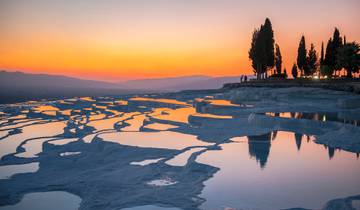
4 days
Kusadasi Essentials – 4 Days with Ephesus & Pamukkale Tours
- ✓ Comprehensive Pamukkale tour
- ✓ Expert local guides included
- ✓ All accommodation arranged
- ✓ Transportation provided
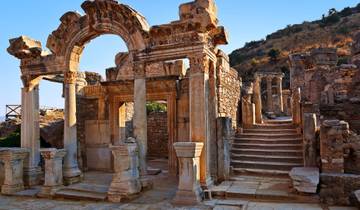
3 days
Kusadasi Essentials – 3 Days with Ephesus & Pamukkale Tours
- ✓ Comprehensive Pamukkale tour
- ✓ Expert local guides included
- ✓ All accommodation arranged
- ✓ Transportation provided
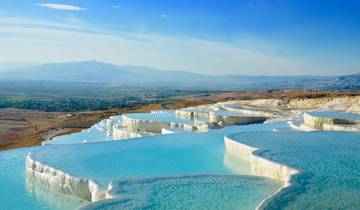
1 days
Daily Pamukkale Tour from Kusadasi
- ✓ Comprehensive Pamukkale tour
- ✓ Expert local guides included
- ✓ All accommodation arranged
- ✓ Transportation provided

2 days
2 Days Ephesus And Pamukkale Tour from İstanbul by plane
- ✓ Comprehensive Pamukkale tour
- ✓ Expert local guides included
- ✓ All accommodation arranged
- ✓ Transportation provided
Multi-day tour packages powered by TourRadar. Prices and availability subject to change.
Introduction: Planning Your Pamukkale Experience in 2026
Pamukkale’s gleaming white travertine terraces have captivated travelers for millennia, attracting ancient Greeks and Romans who established Hierapolis as one of the ancient world’s most celebrated spa cities, and continuing today to draw over 2 million annual visitors to this UNESCO World Heritage Site in Turkey’s Denizli Province. The name “Pamukkale” translates literally as “Cotton Castle” in Turkish, perfectly describing the surreal landscape where calcium carbonate-rich thermal waters have deposited brilliant white travertine formations cascading down a 160-meter hillside across 2.7 kilometers of terraced pools, creating a geological phenomenon that resembles frozen waterfalls or snowdrifts against the arid Anatolian plateau. Planning a 2026 visit requires coordinating multiple elements: timing your arrival to balance weather conditions, crowd levels, and photographic lighting; choosing between Pamukkale village accommodation within walking distance of the terraces versus larger Denizli city 19 kilometers away; deciding entry strategy among three gates that offer different approaches to the site; and allocating sufficient time to explore both the natural travertines and the extensive 2,000-year-old Hierapolis ruins that occupy the plateau above.
The travertines formed through a precise geological process occurring over 14,000 years as thermal waters at 35°C flow from 17 springs at the top of the ridge, depositing calcium carbonate as the water cools and carbon dioxide escapes, gradually building up the brilliant white terraced pools at a rate of 4.8 millimeters per year. This ongoing process continues today, with thermal water flowing across sections of the terraces while other areas temporarily dry to allow calcium deposits to harden and stabilize, creating the constantly evolving landscape that requires active conservation management to prevent erosion from millions of footsteps. The ancient city of Hierapolis, founded by Eumenes II of Pergamon around 190 BCE, developed specifically to exploit these thermal springs for therapeutic bathing, growing into a major spa destination where Romans traveled seeking cures for various ailments in waters believed to possess healing powers granted by Apollo and Asclepius. The city flourished for nearly a millennium until earthquakes and changing trade patterns led to its gradual abandonment after the 14th century, leaving remarkably preserved ruins including one of antiquity’s best-preserved Roman theaters, an extensive necropolis demonstrating ancient burial practices, and the foundations of elaborate bath complexes that processed thousands of visitors annually.
Modern conservation efforts initiated after UNESCO World Heritage designation in 1988 have transformed visitor management at Pamukkale, eliminating the hotels built directly on the travertines in the 1980s, restricting swimming to designated shallow pools along marked paths, and implementing the mandatory barefoot walking requirement that initially strikes many visitors as inconvenient but proves essential for preserving formations that would otherwise erode under shoe traffic within decades. The 2026 visiting experience balances accessibility with preservation: paths guide visitors across the most scenic sections of travertines, artificial water supply supplements natural flow during dry periods to maintain the visual spectacle of cascading pools, and restrictions on certain sections allow calcium deposits to rebuild in areas damaged by decades of unrestricted access. Three entrance gates serve different visitor strategies: the Pamukkale village entrance at the base requires ascending the terraces on foot, providing the most dramatic approach but demanding 20-30 minutes of barefoot climbing; the South entrance near the top offers quick access to both terraces and ruins with large parking and shuttle service; and the North entrance provides the longest walk through Hierapolis necropolis before reaching the travertines, favored by those prioritizing archaeological ruins over natural formations.
Understanding Pamukkale’s dual nature as both natural wonder and archaeological treasure proves essential for planning an effective visit in 2026. Most day-trippers focus overwhelmingly on the travertines, allocating 1-2 hours for barefoot walking and photography while giving minimal attention to the extensive Hierapolis ruins that represent an equally significant component of the UNESCO designation. This imbalanced approach misses the fascinating context of how these thermal springs shaped human settlement for 2,000 years, supported a thriving ancient city of 100,000 residents at its peak, and continue to provide the thermal waters that created the travertines and still feed Cleopatra’s Antique Pool. Those dedicating a full day or staying overnight in Pamukkale village can achieve a more complete experience, visiting the travertines during optimal lighting conditions for photography while thoroughly exploring the archaeological sites that many rushed visitors barely glimpse. The following sections provide comprehensive practical information for 2026 planning including current entrance fees and passes, detailed transportation options, accommodation strategies, optimal timing recommendations, entrance gate comparisons, and specific guidance for experiencing Cleopatra’s Pool, Hierapolis ruins, and the travertines themselves in ways that maximize enjoyment while respecting conservation requirements essential for preserving this unique landscape for future generations.
Understanding Pamukkale Entrance Fees and Passes 2026
Pamukkale-Hierapolis charges €30 entrance fee in 2026 for adults and children over 8 years old, with pricing set in euros rather than Turkish lira to provide price stability amid Turkey’s currency fluctuations, translating to approximately $33 USD or 1,130 Turkish lira at current exchange rates. Check official rates before visiting as the site may adjust pricing annually. This single admission ticket grants access to all components of the Pamukkale-Hierapolis UNESCO site including the white travertine terraces, complete Hierapolis archaeological ruins, and the Hierapolis Archaeological Museum, making it a comprehensive pass for full-day exploration. Children under 8 enter free with passport or identification proving age, while Turkish citizens under 18 and over 65 also receive free admission, and disabled Turkish citizens plus one companion enter without charge. The ticket allows single entry only – exiting and re-entering requires purchasing another full-price ticket, making it essential to bring everything needed for a full day including food, water, sun protection, and swimming gear if planning to use Cleopatra’s Pool.
Cleopatra’s Antique Pool requires an additional €6 swimming fee beyond the base site admission, granting access to the thermal pool with its submerged Roman columns plus changing facilities and shower areas, though locker rental costs an extra 5 TL for securing valuables while swimming. Children ages 6-12 pay reduced swimming rates while children under 6 enter the pool complex free, though the additional 5 TL locker fee applies regardless of age if using secure storage. Swimming in Cleopatra’s Pool represents an optional add-on rather than a required component of the Pamukkale visit, with many visitors choosing to walk through the travertines and explore Hierapolis ruins without swimming, particularly during cooler months when the constant 36°C pool temperature feels less appealing or when time constraints limit activities to the most essential attractions. The pool operates independently with its own ticket booth near the entrance, accepting payment in euros, US dollars, or Turkish lira with change provided in the currency of payment.
Museum Pass Türkiye offers substantial value for travelers visiting multiple Turkish archaeological sites and museums during a 2026 trip, costing €165 for 15-day unlimited access to over 350 sites nationwide including Pamukkale-Hierapolis, Ephesus, all major Istanbul museums (Topkapı Palace, Hagia Sophia, Istanbul Archaeology Museums), Cappadocia’s Göreme Open Air Museum, Pergamon, Aphrodisias, and dozens of other significant attractions. The pass provides skip-the-line privileges at participating sites, allowing holders to bypass ticket queues and proceed directly to turnstiles where the pass scans for entry – a significant advantage at popular sites like Ephesus and Pamukkale where ticket lines can extend 30-60 minutes during peak season. Purchasing the pass makes economic sense for travelers visiting four or more major sites (€30 each at standard rates) within the 15-day validity period, with break-even occurring around the fifth site and substantial savings accumulating for comprehensive Turkey itineraries covering Istanbul, Aegean coast, and Cappadocia regions. The pass can be purchased at the first participating site visited (showing passport at ticket office) or online through official Turkish Ministry of Culture website, though advance online purchase requires navigating Turkish-language interfaces that may challenge non-Turkish speakers.
Regional museum passes provide more limited alternatives at lower cost for travelers focusing on specific Turkish regions. Museum Pass The Aegean costs €95 for 7-day access to 40+ museums and archaeological sites in İzmir, Aydın, Muğla, and Denizli provinces, covering both Pamukkale-Hierapolis and Ephesus plus lesser-known sites including Laodicea, Aphrodisias, Priene, Miletus, and Didyma that constitute an excellent Aegean archaeological circuit. Museum Pass The Mediterranean at €90 for 7 days includes Pamukkale plus Antalya region attractions including Perge, Aspendos, Side, and Termessos, suitable for travelers combining Pamukkale with beach resort stays in Antalya or surrounding coastal areas. These regional passes lack the nationwide coverage and extended validity of the full Museum Pass Türkiye but offer better value for focused itineraries that remain within specific geographic areas, with break-even occurring around the third or fourth site visited. Turkish citizens can purchase Müzekart for substantially lower prices providing similar access to participating sites, though foreign visitors must use the museum pass system at international pricing.
Parking at Pamukkale’s North and South entrances costs 5 TL for visitors arriving by private or rental car, with payment at attended booths before entering parking areas that can fill completely during peak season summer mornings when tour buses and individual visitors converge simultaneously. The Pamukkale village entrance lacks dedicated parking facilities, requiring visitors arriving by car to find street parking in the village before walking to the entrance gate – generally feasible outside peak hours but challenging when summer crowds fill available spaces. On-site shuttle service operates between distant sections of the sprawling Hierapolis archaeological site, charging 2 TL per journey for those preferring motorized transport to walking the full 2-3 kilometers between North entrance necropolis and the travertines, though most visitors find the archaeological zone walkable and prefer spending the nominal fee on refreshments instead. The site accepts euros, US dollars, and Turkish lira for all transactions including entrance tickets, Cleopatra’s Pool swimming fees, parking, and shuttle service, with change provided in the currency of payment though exchange rates for dollar and lira transactions may be less favorable than official rates.
Pamukkale Opening Hours and Seasonal Variations 2026
Pamukkale-Hierapolis operates extended summer hours from April 1 through October 1, opening 6:30 AM to 9:00 PM daily to accommodate maximum visitor access during Turkey’s peak tourism season when long daylight hours and warm weather create ideal conditions for travertine exploration. The 6:30 AM opening allows dedicated photographers to reach the terraces for sunrise at approximately 6:00-6:30 AM depending on time of year, capturing the white calcium formations glowing in golden hour light before the first tour buses arrive around 9:00-10:00 AM. Last entry occurs one hour before closing at 8:00 PM, providing sufficient time to walk the travertines and reach viewing areas for sunset around 8:00-8:30 PM in summer months, though visitors already inside can remain past closing time to complete photography and make their way to exits. Winter hours from October 1 through April 1 contract to 8:00 AM to 6:00 PM, reflecting shorter daylight hours and reduced visitor numbers during cooler months when temperatures range 5-15°C compared to summer’s 30-40°C heat.
The three entrance gates operate slightly different hours even within the same season, creating strategic considerations for planning entry and exit routes. The Pamukkale village entrance (lower gate) follows the standard 8:00 AM opening in summer and winter, requiring visitors wishing for sunrise photography to use upper entrances instead. The South entrance (upper gate) opens earliest at 6:30 AM year-round, making it the preferred access point for photographers and early risers seeking to explore the terraces before crowds arrive, though reaching this entrance requires private transportation or pre-arranged taxi as public minibuses from Denizli don’t operate at that early hour. The North entrance (upper gate) opens at the standard times aligned with South entrance hours, providing another upper plateau access point with the added advantage of walking through the impressive necropolis before reaching the main travertines and Hierapolis city center. All entrances remain open until the posted closing time, but visitors should plan to enter at least 2-3 hours before closing to accomplish meaningful exploration rather than rushing through highlights in fading light.
Seasonal variations affect not only operating hours but also the visitor experience itself in ways that impact planning decisions for 2026 trips. Summer months (June-August) see the travertines at their visually most impressive with maximum water flow creating full cascading pools and the bright white calcium deposits contrasting dramatically against blue sky, but extreme heat makes barefoot walking painful when afternoon temperatures raise travertine surface temperatures to levels that can burn feet, and crowds peak with European summer holidays bringing tour buses in constant succession. Spring (April-May) provides moderating temperatures (15-25°C) ideal for comfortable barefoot walking, good water flow from winter and spring rainfall filling the travertines attractively, and increasing but not yet overwhelming crowds as tourism season builds. Autumn (September-October) offers similar advantages to spring with warm but not scorching temperatures, reduced visitor numbers after summer crowds disperse, and still-adequate water flow in the terraces before winter rainfall reduction. Winter (November-March) brings the lowest visitor numbers and accommodation prices but significantly reduced water flow in the travertines that can leave many pools dry or barely filled, limiting the visual spectacle compared to other seasons, though the Hierapolis ruins remain equally impressive year-round and Cleopatra’s Pool maintains consistent 36°C temperature making winter swimming actually more appealing than scorching summer heat.
The site remains open daily throughout the year including all Turkish public holidays and international holidays, though major religious celebrations like Eid al-Fitr and Eid al-Adha bring increased domestic Turkish tourism that can crowd the site more heavily than typical days. Unexpected closures occasionally occur due to severe weather, particularly heavy rainfall that can make the travertines dangerously slippery or cause flooding in the lower sections, and very rare snowfall (every 5-10 years) that temporarily blankets the white terraces in actual snow creating otherworldly scenes but making barefoot walking impossible. Such closures are announced on-site rather than in advance, affecting only the specific day of severe weather rather than causing extended shutdowns. The archaeological museum maintains slightly different hours than the outdoor site, typically opening 8:30 AM to 7:00 PM in summer and 8:30 AM to 4:45 PM in winter, with Monday closures in some seasons – visitors should verify current museum hours if this component ranks as a priority for their visit.
Transportation to Pamukkale 2026: Getting There and Around
Reaching Pamukkale in 2026 requires traveling to Denizli city 19 kilometers away, then transferring to the site by minibus, taxi, or rental car since Pamukkale village itself lacks long-distance bus terminal or railway station facilities. Denizli serves as the regional transportation hub with a large otogar (bus terminal) receiving intercity buses from Istanbul (10-11 hours, €15-25), İzmir (4 hours, €6-10), Antalya (4-5 hours, €5-8), Ankara (7 hours, €10-15), and other major Turkish cities on frequent schedules throughout the day. Denizli Çardak Airport located 65 kilometers from Pamukkale offers the fastest access for international and domestic travelers, with daily flights from Istanbul (1 hour, €40-100) on Turkish Airlines, Pegasus, and AnadoluJet providing the quickest connection from Turkey’s largest city, though limited international flights require most European or American visitors to connect through Istanbul or İzmir. The airport connects to Denizli city and Pamukkale through Havaş shuttle buses costing 450 TL per person operating on flight schedules, or private taxis and transfers charging €30-50 for the 70-kilometer journey depending on negotiation and vehicle type.
Denizli to Pamukkale minibus (dolmuş) service operates continuously throughout the day from Platform Gate 76 on the otogar’s lower level, departing every 15-20 minutes from approximately 7:00 AM to 9:00 PM covering the 19-kilometer distance in 25-30 minutes for 50 TL per person. The minibuses seat about 20 passengers and can fill completely during peak travel times (morning arrivals, evening returns), requiring standing or waiting for the next departure when full. Minibuses make multiple stops along the route including Laodicea archaeological site (announce “Laodikya’da inecek var” to the driver for this stop) and Karahayıt thermal village before reaching Pamukkale village and continuing to the North entrance upper parking area. Passengers staying in Pamukkale village should exit at the village center stop near the main mosque, while those heading directly to the site’s upper entrances should remain on the minibus and request either North entrance (“Örenyeri Kuzey Giriş”) or South entrance stops depending on preferred entry point. Return minibuses from Pamukkale to Denizli otogar operate on the same 15-20 minute frequency from the village center and upper entrance areas, making day trips from Denizli easily manageable without advance scheduling.
Taxis between Denizli and Pamukkale charge €10-15 (400-600 TL) depending on negotiation, destination within Pamukkale (village vs. upper gates), and whether the taxi waits or simply drops passengers, with waiting time adding substantially to costs if the driver remains on-site rather than returning to Denizli for other fares. Hotels in both Denizli and Pamukkale village can arrange taxi pickups and drop-offs, often at pre-negotiated rates lower than hailing taxis independently at the otogar where drivers target less price-conscious tourists. For visitors planning to explore multiple sites in the region including Laodicea (15 minutes from Pamukkale), Karahayıt red travertines (5 kilometers), Kaklik Cave (30 minutes), or day trips to Aphrodisias (2 hours), renting a car in Denizli provides flexibility and can prove more economical than multiple taxi trips, with rental costs starting around €25-40 daily for economy vehicles through international agencies (Avis, Budget, Europcar) at Denizli airport or city center offices.
Denizli railway station located adjacent to the otogar offers scenic and comfortable connections to İzmir (Selçuk for Ephesus access) with 6 daily trains covering the route in 3-3.5 hours through picturesque Aegean countryside, making a same-day trip from Ephesus to Pamukkale and return theoretically possible with careful timing though requiring departure on the 6:00-7:00 AM train from Selçuk and return on the evening service. The Pamukkale Ekspresi daytime train connects Denizli with Eskişehir via Afyon and Kütahya, meeting high-speed rail services to Istanbul and Ankara at Eskişehir for travelers preferring rail connections over long-distance buses. Turkish State Railways (TCDD) operates modern, air-conditioned trains with comfortable seating, power outlets, and café service at prices generally lower than intercity buses for equivalent routes, making rail an attractive option for those without tight schedules or rental cars. Train tickets can be purchased online through the TCDD website (available in Turkish and English), at station ticket offices, or through travel agencies, with advance booking recommended during Turkish holidays when trains can sell out.
Within Pamukkale village and the archaeological site, walking suffices for most visitors with the village compact enough to traverse in 10-15 minutes and the archaeological zone covering approximately 2.7 kilometers from the village entrance to the North entrance via travertines and Hierapolis ruins. The on-site shuttle minibus operates between distant points within the Hierapolis complex for 2 TL per journey, useful for those with mobility limitations, families with young children, or visitors who exhaust themselves in heat and prefer mechanical assistance to walking the full archaeological zone. Bicycle rentals exist in Pamukkale village though the site’s barefoot walking requirement on travertines and extensive ruins requiring leaving bicycles unattended make cycling less practical than in archaeological sites permitting wheels throughout. Most visitors find the combination of minibus access from Denizli, walking within Pamukkale village and site, and selective use of shuttle service between upper entrances and main travertines provides the optimal balance of economy, flexibility, and convenience for 2026 visits.
Accommodation Strategies Pamukkale 2026: Village vs Denizli
Staying in Pamukkale village places you within 5-15 minute walking distance of the lower travertine entrance, enabling sunrise and sunset photography without transportation arrangements, providing immediate access for multiple site visits across two days, and creating a quieter evening atmosphere compared to Denizli city. Pamukkale village accommodation ranges from budget pensions at €20-30 per night with basic rooms and shared facilities to mid-range hotels at €40-80 featuring private thermal pools fed by the same calcium-rich springs as the famous white terraces, and upscale properties at €100-150 offering full spa facilities, rooftop restaurants with travertine views, and shuttle services to all three site entrances. Many village hotels incorporate thermal pools as standard amenities rather than extra-cost additions, recognizing that visitors traveling specifically to experience Pamukkale’s thermal waters expect bathing opportunities beyond Cleopatra’s Pool, with pool temperatures typically maintained at 30-36°C year-round. The village supports approximately 30-40 hotels and pensions concentrated along the main street leading toward the travertines, plus numerous restaurants, cafes, and shops catering to tourist needs though at prices generally higher than equivalent services in Denizli.
Denizli city accommodation costs less for equivalent quality levels, with budget hotels available at €15-25, mid-range properties at €30-60, and upscale hotels at €70-120, while offering substantially more dining variety, shopping options, evening entertainment, and authentic local atmosphere beyond the tourist-focused Pamukkale village environment. The 19-kilometer distance to Pamukkale requires transportation planning either through frequent minibuses (50 TL each way, 25-30 minutes), hotel shuttle services that many Denizli properties offer for guests visiting the travertines, or rental car providing flexibility for exploring regional sites. Denizli serves as the practical base for multi-day regional exploration including Pamukkale, Laodicea, Aphrodisias, Kaklik Cave, and Karahayıt, with better selection of car rental agencies, more intercity bus connections, and the railway station for onward travel to İzmir or connections toward Istanbul and Ankara. Business hotels in Denizli cater primarily to Turkish commercial travelers rather than international tourists, offering reliable if characterless accommodation with strong wifi, work desks, and efficient service but limited personality or tourism expertise compared to Pamukkale village properties where staff specialize in advising visitors about optimal site visit strategies.
The Pamukkale village versus Denizli city accommodation decision hinges on whether you prioritize proximity to the travertines or lower costs and authentic local atmosphere. Visitors planning a single focused day at Pamukkale who arrive mid-morning and depart late afternoon can base themselves in Denizli, taking the morning minibus to the site and returning on the evening service without needing overnight accommodation in the village. Those wishing to photograph the travertines at both sunrise and sunset, explore Hierapolis thoroughly across two days, or simply experience the site at a leisurely pace without time pressure should stay in Pamukkale village despite higher costs, as the convenience of walking to the entrance and flexibility of spontaneous visits at optimal lighting times outweighs the €20-40 nightly price premium over equivalent Denizli lodging. Families with children appreciate Pamukkale village accommodation for eliminating transportation logistics and providing thermal pools where kids can swim after site visits, while budget backpackers often prefer Denizli’s lower prices and livelier atmosphere despite the minibus commute.
Booking accommodation well in advance proves essential for peak season April-May and September-October when Pamukkale village hotels can fill completely with tour groups and independent travelers, leaving late bookers relegated to remaining Denizli options or expensive last-minute village rooms. Summer months see adequate availability despite being peak season because many visitors find the heat oppressive and prefer spring/autumn visits, while winter accommodation availability exceeds demand significantly with hotels offering discounts 30-50% below peak season rates to fill rooms during slower months. Package tours combining Istanbul, Cappadocia, and Aegean coast itineraries typically include one night in Pamukkale village, pre-booking entire hotel allocations that limit room availability for independent travelers – checking accommodation availability before finalizing 2026 travel dates rather than assuming village hotels will have space upon arrival prevents the frustration of scrambling for last-minute bookings or settling for suboptimal properties.
Entrance Strategy 2026: Choosing Between Three Gates
Pamukkale-Hierapolis provides three distinct entrance gates serving different access strategies and visitor priorities, with no objectively “best” choice but rather optimal selections depending on photography goals, physical capabilities, time constraints, and whether you prioritize travertines or archaeological ruins. Understanding each gate’s advantages and disadvantages enables strategic entry and exit planning that maximizes site enjoyment while minimizing crowds and physical demands specific to individual visitor circumstances and preferences.
Pamukkale Village Entrance 2026 (Lower Gate)
The Pamukkale village entrance at the base of the travertines offers the most dramatic and photogenic approach, requiring 20-30 minutes of barefoot walking steadily uphill through cascading travertine pools that become progressively more impressive as you ascend. This entrance provides the iconic Pamukkale experience with the white terraces rising above you, mineral-rich thermal water flowing around your ankles, and the village and agricultural plains spreading below as you gain elevation. Photographers favor this entrance for capturing the terraces from below looking upward, creating images where the white formations appear to climb toward the sky, and the afternoon/evening lighting illuminates the terraces from behind enhancing texture and creating the glowing effect visible in classic Pamukkale photographs. The entrance opens 8:00 AM in both summer and winter, later than the upper gates’ 6:30 AM opening, making it unsuitable for sunrise photography but ideal for late afternoon arrivals who can ascend during the final hours before closing and potentially remain for sunset if timing works favorably.
Physical demands of the village entrance exceed the upper gates substantially, with continuous uphill walking on surfaces ranging from smooth wet calcium deposits that become slippery, to rough, sharp formations that can hurt sensitive feet, to deeper pools (10-15 centimeters) requiring careful placement to avoid stumbling. Families with young children, elderly visitors, and those with mobility limitations often find this entrance challenging or impossible, instead opting for upper gates that offer downhill or level walking across shorter travertine sections. The reward for the physical exertion comes in experiencing the travertines most intimately – water flowing continuously, ability to pause in pools to photograph and absorb the setting, and accomplishing the ascent as locals did historically when the village entrance represented the only access before modern roads reached the upper plateau. Crowds remain lighter at this entrance than upper gates during morning hours when most tour buses deposit passengers at convenient upper entrances, but village entrance can become congested during late afternoon when independent travelers and some tour groups descend after exploring the plateau, creating bottlenecks on narrow sections of the pathway.
Logistically, the village entrance suits travelers staying in Pamukkale village who can walk from accommodation in 5-15 minutes, arriving at the entrance without transportation needs. Those based in Denizli take minibuses to Pamukkale village stop, walk through the village to the entrance gate, purchase tickets, and begin the ascent. Exiting through the village entrance after spending the day exploring the plateau and Hierapolis allows a downhill walk through the travertines that proves easier than the ascent, putting you in Pamukkale village for dinner and return transportation to Denizli without needing taxis from remote upper entrances. The strategic approach for fit visitors combines village entrance ascent in late afternoon (4:00-5:00 PM arrival), sunset photography from the upper plateau, exploration of Hierapolis ruins in fading light, and descent through travertines the following morning when lighting favors downhill views, staying overnight in Pamukkale village between the two site visits.
South Entrance 2026 (Upper Gate)
The South entrance provides the quickest, easiest access to Pamukkale’s most photogenic travertine sections, located on the upper plateau near extensive parking areas and opening earliest at 6:30 AM year-round for sunrise photography and early morning visits before crowds accumulate. This entrance positions you within 10-15 minutes’ walking (largely level or slightly downhill) of the main travertines cascading down the hillside, allowing immediate photography and travertine exploration without the 20-30 minute uphill approach required from the village entrance. Tour buses predominantly use this entrance, parking in the large lots and depositing groups who spend 45-90 minutes walking through the highlighted travertine section, visiting Cleopatra’s Pool, and photographing key viewpoints before reboarding for the next destination. Independent travelers arriving by rental car or taxi similarly favor this entrance for its parking convenience and rapid access to priority sites.
The South entrance’s main disadvantage stems from the tour bus crowds that concentrate here, particularly during peak season mornings (9:00 AM – 12:00 PM) when multiple large groups converge simultaneously on the travertines creating congestion on pathways, compromising photography with people unavoidably visible in frames, and generating noise that detracts from the natural setting’s serenity. Early morning arrivals (6:30-8:00 AM) or late afternoon visits (4:00 PM onward) largely avoid these crowds as most tour buses operate mid-morning to early afternoon schedules that concentrate visitor pressure during that period. The on-site shuttle minibus connects the South entrance to distant sections of the Hierapolis archaeological zone for 2 TL, useful for reaching the necropolis, theater, and other ruins without walking the full 2-3 kilometer distance, though most visitors find the archaeological area walkable and prefer spending time exploring rather than waiting for shuttles.
Photographers seeking sunrise shots should use the South entrance, arriving by rental car or pre-arranged taxi at 6:30 AM opening (no minibuses operate that early from Denizli), accessing the travertines as first light illuminates the white terraces and before any other visitors arrive. The combination of golden hour lighting and empty terraces creates the spectacular images impossible during midday when harsh overhead sun washes out the white calcium deposits and crowds fill every frame. Those without vehicles can ask Denizli or Pamukkale village hotels to arrange taxi transfers for sunrise photography, typically costing €15-25 for the ride but delivering you to the site in optimal conditions worth the transportation expense for serious photographers. The strategic approach for South entrance users involves early morning photography, mid-morning Hierapolis ruins exploration while letting travertine crowds build, midday lunch and possible swim in Cleopatra’s Pool, and late afternoon return to the now-quieter travertines for additional photography before exiting.
North Entrance 2026 (Upper Gate)
The North entrance serves visitors prioritizing Hierapolis archaeological ruins over travertines, opening onto the vast North Necropolis containing hundreds of Roman-era sarcophagi, elaborate tomb monuments, and architectural remains that extend for nearly 2 kilometers before reaching the main ancient city center. Walking from the North entrance through the necropolis to the city center, theater, and travertines requires 45-60 minutes of steady walking (2-3 kilometers), making this entrance suitable for archaeology enthusiasts willing to invest time exploring the burial ground that most visitors barely glance at from tour buses. The necropolis represents one of ancient Anatolia’s most extensive and best-preserved cemeteries, with tombs ranging from simple sarcophagi to elaborate multi-chamber monuments, their variety reflecting Hierapolis’s prosperity and the diversity of its population including native Anatolians, Greek colonists, Roman administrators, and merchants from across the Mediterranean.
The North entrance receives fewer tour buses than the South entrance, creating quieter conditions for those willing to walk the longer distance to reach highlighted attractions. Minibuses from Denizli stop at the North entrance upon request (announce destination to driver), dropping passengers at the parking area before continuing to Pamukkale village, while return minibuses similarly collect passengers from the North entrance area for the journey back to Denizli. The entrance location on the upper plateau eliminates any travertine climbing requirements, with the site layout allowing visitors to explore Hierapolis ruins first, then walk across the plateau to the travertines, and finally descend through the white terraces to exit at the village entrance – a logical progression that moves from historical context through natural formations to the dramatic concluding descent.
The optimal North entrance strategy combines arrival by minibus from Denizli in mid-morning (avoiding pre-dawn hours when no minibuses run), systematic exploration of the necropolis spending 45-60 minutes photographing tombs and reading interpretive signs, continuing to the Hierapolis city center with its theater, bath complexes, and colonnaded streets (90-120 minutes), breaking for lunch at on-site cafeterias or packed food, visiting Cleopatra’s Pool for swimming (60-90 minutes including changing time), exploring the main travertine terraces during late afternoon optimal lighting (60-90 minutes), and descending through the white formations to exit at Pamukkale village in early evening. This comprehensive circuit requires 6-8 hours total and delivers the complete Pamukkale-Hierapolis experience encompassing archaeology, thermal bathing, and natural wonders in logical geographic progression.
Walking the White Travertines 2026: Barefoot Requirements and Conservation
Walking barefoot across Pamukkale’s travertines is mandatory throughout the site’s designated visitor pathways, with shoes strictly prohibited on the white calcium carbonate formations to prevent accelerated erosion that abrasive shoe soles would cause on surfaces requiring decades to form through gradual mineral deposition. Visitors must remove shoes before entering the travertines from any of the three gates, carrying footwear in hands or bags throughout the barefoot section that extends 500-800 meters depending on entry point and route chosen. The barefoot walking policy initially strikes many visitors as inconvenient, uncomfortable, or even dangerous, but represents the essential conservation measure that allows public access while protecting formations that would otherwise deteriorate rapidly under shoe traffic from 2+ million annual visitors.
The travertine surface texture varies substantially across different sections, creating walking conditions ranging from comfortable smooth calcium deposits covered by flowing water, to rough sharp formations that can hurt sensitive feet, to slippery wet areas requiring careful footing to avoid falls. The designated visitor pathway follows the smoothest available route through the travertines, avoiding the most challenging terrain while still providing scenic views and photographic opportunities, but even the optimized path includes sections that test foot resilience especially for visitors unaccustomed to barefoot walking. The 20-30 minute ascent from Pamukkale village entrance proves most physically demanding, combining continuous uphill walking with surface variety that requires constant attention to footing, occasional pools 10-15 centimeters deep requiring careful stepping, and gradual fatigue as unshod feet work harder than shoe-protected feet on uneven surfaces. Descending from upper entrances causes less fatigue but requires equal attention to avoid slipping on wet calcium deposits where the smooth surface combined with flowing water creates genuinely slippery conditions.
Preparing for barefoot travertine walking involves several practical considerations that enhance comfort and safety during the 2026 visit. Bring waterproof bags or dry bags to protect shoes, electronics, and other water-sensitive items from splashing and spray as you walk through flowing pools, with some visitors placing phones and cameras in sealed bags between photographs to prevent accidental water damage. Consider packing non-slip sandals or water shoes to wear immediately before and after the barefoot section, as the pavement approaching the travertines can be hot enough to burn feet during summer afternoons, though you must carry these sandals through the barefoot section rather than wearing them. Those with particularly sensitive feet sometimes bring lightweight cotton socks to wear across the roughest sections, though this isn’t traditionally done and may attract disapproval from site staff enforcing barefoot requirements – testing your foot resilience on a small section before committing to the full route helps determine if protection becomes necessary.
Children generally handle barefoot travertine walking better than adults, with resilient feet, lower weight reducing pressure on rough surfaces, and enthusiasm for the novelty of walking through warm pools overcoming any discomfort from challenging sections. Elderly visitors and those with mobility limitations should carefully assess their capability before attempting the barefoot sections, particularly the village entrance ascent that combines physical demands with uneven footing that can cause falls if balance becomes compromised. The upper entrance descents offer more manageable barefoot walking for those with concerns, providing shorter distances over less challenging terrain while still delivering the travertine experience. Some visitors with severe mobility limitations skip the travertine walking entirely, focusing instead on Hierapolis ruins and Cleopatra’s Pool which allow normal footwear, viewing the white terraces from upper viewpoints rather than walking across them.
Exploring Hierapolis Ancient City 2026
Hierapolis ruins sprawl across the plateau above Pamukkale’s travertines, encompassing the remains of a thriving Greco-Roman city founded around 190 BCE that grew wealthy exploiting the thermal springs for therapeutic bathing and attracting health-seeking visitors from across the Mediterranean world. The archaeological zone extends approximately 2.7 kilometers from the North necropolis through the city center to the South gate, requiring 2-3 hours for thorough exploration beyond the brief photo stops that tour groups typically allocate. The most impressive monument, the Roman theater, seats 12,000 spectators in remarkably preserved condition with ornate stage building featuring carved reliefs and architectural details demonstrating Roman theatrical architecture at its finest. The theater occupies a hillside location providing panoramic views across the modern landscape to distant mountains, allowing visitors to appreciate the geographic setting that made Hierapolis an attractive destination for ancient travelers seeking both healing waters and scenic beauty.
The North necropolis contains one of ancient Anatolia’s most extensive burial grounds, with over 1,200 tombs spanning the Hellenistic through early Christian periods documenting changing burial practices, architectural styles, and the diverse population that inhabited Hierapolis during its millennium of prosperity. Tomb types range from simple sarcophagi carved with the deceased’s name and occupation, to elaborate multi-chamber monuments featuring architectural embellishments, carved reliefs depicting the afterlife journey, and inscriptions recording the tomb owner’s achievements and social status. Walking through the necropolis provides fascinating insight into ancient attitudes toward death, commemoration, and the afterlife, with interpretive signs (in Turkish and English) explaining significant tombs and the burial customs they represent. Most visitors barely glance at the necropolis from tour buses, dedicating their limited time to the more photogenic travertines, but archaeology enthusiasts find this extensive cemetery among Pamukkale-Hierapolis’s most rewarding components deserving the 45-60 minutes required for meaningful exploration.
The colonnaded main street runs through Hierapolis’s center, flanked by the foundations of shops, houses, and public buildings that served the ancient city’s 100,000 peak population and countless visitors arriving for thermal cure treatments. The street leads to the monumental Domitian Gate marking the city’s ceremonial entrance, passing the agora (marketplace), various bath complexes that processed the thermal waters for therapeutic use, and the foundations of temples dedicated to healing gods Apollo and Asclepius who ancients credited with the springs’ curative powers. The Hierapolis Archaeological Museum occupies the restored Roman bath building near the site entrance, displaying artifacts including elaborate sarcophagi carved with mythological scenes, architectural fragments from destroyed monuments, sculptures of gods and emperors, and small objects documenting daily life – jewelry, pottery, coins, medical instruments, and votive offerings left by grateful patients attributing their healing to the therapeutic waters. The museum merits 30-60 minutes for visitors interested in understanding Hierapolis beyond the visible ruins, with exhibits explaining the city’s development, thermal bathing culture, and eventual decline after medieval earthquakes and changing trade patterns eliminated the economic foundations supporting its prosperity.
Conservation and ongoing excavation shape the Hierapolis visitor experience, with Italian archaeological teams conducting systematic excavations since 1957 gradually uncovering and restoring additional structures while stabilizing previously exposed ruins threatened by weathering and earthquake damage. Some areas remain closed to visitors pending stabilization work or ongoing excavation, while restored sections showcase the appearance of original monuments through reconstructed column sections, partial wall rebuilding, and architectural elements reassembled from scattered fragments. Interpretive signs throughout the site (Turkish and English) provide historical context and explain visible features, though the extensive ruins can overwhelm visitors lacking background in Roman urban planning and architecture – guided tours or audio guides available for rent at the entrance help decode the ruins’ significance and reconstruct the vanished city’s appearance at its zenith. The strategic approach for Hierapolis exploration involves first walking the necropolis to understand burial customs, then visiting the museum to gain historical context, and finally touring the city center with theater and other monuments while applying the background knowledge acquired from the museum to interpret visible remains.
Swimming in Cleopatra’s Antique Pool 2026
Cleopatra’s Antique Pool offers the unique experience of swimming among submerged Roman columns in constant 36°C thermal waters, located within the Hierapolis complex near the archaeological museum and accessible after paying the €6 swimming fee beyond base site admission. The pool occupies the site of sacred thermal springs where ancient Hierapolis residents and visiting cure-seekers bathed in waters believed to possess healing properties granted by Apollo, with the submerged marble columns, capitals, and architectural fragments creating the underwater archaeological wonderland that distinguishes this pool from ordinary thermal bathing facilities. Legend claims Mark Antony presented these springs to Cleopatra VII as a romantic gift, though historical evidence for the Egyptian queen’s actual visits remains debated – regardless of the legend’s accuracy, the pool’s 2,000+ year history of continuous thermal bathing and the dramatic 7th-century earthquake that toppled the Temple of Apollo into the springs create genuine historical significance beyond the promotional mythology.
The pool maintains consistent 36°C temperature year-round through natural thermal water flow from multiple springs feeding the pool at a rate ensuring complete water replacement several times daily. The temperature feels pleasantly warm without being uncomfortably hot, allowing extended soaking sessions of 30-90 minutes that many visitors use for therapeutic relaxation after walking the travertines and exploring Hierapolis ruins. The pool’s mineral content includes calcium, magnesium, bicarbonate, and sulfate at concentrations believed to benefit various health conditions including arthritis, circulatory problems, skin conditions, and digestive issues, though modern medical science views these therapeutic claims with skepticism compared to ancient certainty about the waters’ healing powers. The continuous bubbling creates the “champagne effect” that gives the water its distinctive sparkling appearance, with natural gas release from underground sources producing streams of fine bubbles that dance along swimmers’ skin creating sensory interest beyond ordinary thermal bathing.
The pool complex provides changing facilities, showers, and locker rental (5 TL extra beyond the €6 swimming fee) for securing valuables while in the water, though towels are not provided requiring visitors to bring their own or purchase overpriced replacements from the on-site shop. The facilities adequate for basic needs but lack the polish and amenities of commercial spa facilities, reflecting the pool’s operation as an archaeological attraction with swimming privileges rather than a dedicated bathing establishment. Crowds significantly impact the Cleopatra’s Pool experience, with peak season midday (11:00 AM – 3:00 PM) bringing 100+ simultaneous swimmers creating congested conditions where finding space to float peacefully among the columns becomes challenging and photography captures masses of other tourists rather than the atmospheric underwater ruins. Early morning swimming (8:00-10:00 AM) or late afternoon sessions (4:00-7:00 PM) provide quieter conditions with 20-40 swimmers creating manageable crowd levels that still allow appreciating the pool’s unique character.
Photography rules for Cleopatra’s Pool prohibit professional equipment including tripods and professional cameras, while allowing smartphones and basic cameras for personal documentation, with on-site photographers offering professional photo sessions for purchase though their persistent presence and requests to vacate preferred spots for commercial shoots can annoy independent visitors. The pool reaches varying depths from 1.5 to 3 meters, requiring reasonable swimming capability or use of the shallower sections where non-swimmers can stand while enjoying the thermal waters and viewing the submerged columns. Children particularly enjoy the pool’s novelty of swimming with ancient ruins, though parents should supervise carefully as the varying depth, underwater obstacles, and crowds create safety considerations beyond ordinary swimming pools. The pool operates during the same hours as the main Pamukkale-Hierapolis site (6:30 AM – 9:00 PM summer, 8:00 AM – 6:00 PM winter) with last swimming entry one hour before closing to allow time for changing and vacating facilities.
Photography Guide Pamukkale 2026: Optimal Timing and Techniques
Photographing Pamukkale’s white travertines presents unique technical challenges stemming from the brilliant calcium carbonate formations that reflect intense sunlight creating exposure difficulties, the constantly moving crowds that appear in virtually every frame during peak hours, and the seasonal variations in water flow and lighting that dramatically affect the scene’s visual impact. Understanding optimal timing, technical approaches, and strategic positioning maximizes photographic results during your 2026 visit while minimizing frustration from crowds, harsh lighting, and the barefoot walking requirement that complicates equipment carrying.
Sunrise photography (6:30-8:00 AM summer, 8:00-9:30 AM winter) delivers the most dramatic lighting for the white travertines, with low-angle golden light illuminating the formations from the side creating texture and shadow impossible in harsh midday overhead sun that washes out the white calcium deposits. Access the South or North entrances at 6:30 AM opening (requiring rental car or pre-arranged taxi as no minibuses operate that early) to photograph the empty terraces before any other visitors arrive, capturing the pristine white formations without human figures compromising the natural setting. The village entrance opens later (8:00 AM) making it unsuitable for sunrise photography, while the upper gates’ 6:30 AM opening allows positioning on the travertines as sunrise occurs around 6:00-6:30 AM depending on season. Sunset photography (6:30-8:30 PM summer, 4:30-5:30 PM winter) provides similarly attractive lighting conditions with the added advantage of backlighting the terraces when shooting from certain angles, creating glowing translucent effects in the water and calcium formations, though sunset access requires entering well before closing time and possibly remaining slightly past official hours to complete photography.
Midday photography (10:00 AM – 4:00 PM) faces severe challenges from overhead sun that eliminates shadow and texture in the white formations creating flat, lifeless images, combined with peak crowds filling every frame and harsh light creating deep shadows on human subjects that require fill flash or reflectors to balance exposure. Those visiting midday should focus photography on Hierapolis ruins where architectural forms create inherent shadow and texture regardless of sun angle, saving travertine photography for early morning or late afternoon when lighting improves and crowds thin. The white travertines create extreme exposure challenges for cameras, with the brilliant calcium deposits reflecting so much light that automatic exposure systems often underexpose the scene making the formations appear gray rather than pristine white – using +1 to +2 exposure compensation or manually exposing to maintain highlight detail addresses this technical issue, though overexposure must be avoided to prevent blown highlights that cannot be recovered in post-processing.
Drone photography over Pamukkale remains prohibited as of 2026, with Turkish authorities banning unmanned aerial vehicles over UNESCO World Heritage Sites and archaeological zones to prevent disturbance, accidents, and unauthorized commercial filming – attempting to fly drones risks confiscation, fines, and potential criminal charges, making this approach inadvisable regardless of the spectacular aerial perspectives drones could theoretically capture. Tripods require special consideration given the barefoot walking requirement and flowing water across the travertines – lightweight travel tripods carried in weatherproof bags prove manageable for photographers willing to carry equipment while navigating the pools, though the necessity of removing shoes and the slippery surfaces make tripod use challenging compared to ordinary photography locations. Many serious photographers visit twice, doing handheld photography during their initial travertine walking to understand the location and lighting, then returning another day with tripod and full equipment for planned compositions at optimal times.
The strategic photography approach for Pamukkale combines early South entrance access (6:30 AM) for sunrise travertine shots with empty terraces, mid-morning Hierapolis ruins photography while travertine crowds build, midday break during worst lighting, late afternoon return to the terraces as crowds thin and light improves, and sunset photography from upper viewpoints or descending through the village entrance route. This schedule requires full-day commitment and potentially overnight Pamukkale village accommodation to facilitate early start and late finish, but delivers comprehensive photographic coverage impossible during brief tour bus visits or day trips constrained by transportation schedules. Smartphone photographers face fewer technical challenges than DSLR users given phones’ wider exposure latitude and automatic processing, though the brilliant whites still benefit from manual exposure adjustment to prevent gray-appearing travertines in final images.
Day Trip or Overnight: Planning Your Pamukkale 2026 Visit Duration
Day trips to Pamukkale work logistically from nearby cities including Denizli (30 minutes away), Selçuk/Ephesus area (3.5 hours by train), and even Antalya (4-5 hours by bus or organized tour), though the compressed timeline forces rushed exploration prioritizing travertines over thorough Hierapolis ruins examination and eliminating optimal lighting photography opportunities. Visitors basing in Denizli can take the 7:00-8:00 AM minibus to Pamukkale, arriving at the site by 8:30-9:00 AM for 6-8 hours of exploration before catching return minibuses departing until 9:00 PM, allowing sufficient time to walk the travertines, swim in Cleopatra’s Pool, examine Hierapolis theater and major ruins, and complete a satisfying if not exhaustive visit. This approach works well for travelers on tight schedules who need to visit Pamukkale during a broader Turkey itinerary without dedicating multiple days to a single destination, accepting the trade-offs in photographic lighting and comprehensive site coverage that overnight stays would enable.
Overnight stays in Pamukkale village transform the visit from rushed sightseeing to relaxed exploration, enabling sunrise and sunset photography at optimal lighting times, spreading travertine and Hierapolis exploration across two days to avoid fatigue, visiting during both crowded and quiet periods to appreciate the difference, and potentially incorporating second-day excursions to nearby attractions including Laodicea, Karahayıt red travertines, and Kaklik Cave. The typical two-day approach involves afternoon arrival on day one via the village entrance, ascending the travertines during late afternoon optimal lighting, sunset photography from the upper plateau, dinner in Pamukkale village, and overnight accommodation. Day two begins with sunrise South entrance access for early travertine photography in empty conditions, comprehensive Hierapolis ruins exploration, midday Cleopatra’s Pool swimming, and early afternoon departure via minibus back to Denizli or onward to the next destination. This schedule maximizes photographic opportunities, minimizes crowd exposure, and allows thorough exploration without the time pressure that day trips impose.
Tour group visits typically allocate 4-6 hours at Pamukkale within day trips from Antalya, İzmir, or Istanbul (via flight to Denizli), concentrating activity in the South entrance travertines and Cleopatra’s Pool with limited Hierapolis ruins coverage and midday arrival that guarantees crowds and poor photography lighting. These tours suit travelers prioritizing convenience over comprehensive exploration, accepting guided narration and group schedules rather than independent discovery, and viewing Pamukkale as one highlight among many in a broader Turkey experience rather than a destination deserving focused attention. The large tour buses that dominate Pamukkale during peak season contribute significantly to crowding problems, delivering 40-50 passengers simultaneously who walk similar routes at similar times creating congestion on the travertine pathways that independent travelers can largely avoid through early morning or late afternoon visits.
The optimal visit duration for Pamukkale depends on individual priorities: photography enthusiasts should stay overnight to access sunrise/sunset lighting, history buffs need full day or overnight to thoroughly explore Hierapolis ruins beyond rushed photo stops, and casual visitors can accomplish satisfying half-day or day trip coverage focusing on travertines and Cleopatra’s Pool. Those combining Pamukkale with Ephesus (3-4 hours away) might allocate 1.5 days to Pamukkale and 1.5 days to Ephesus creating a 3-day Aegean archaeological circuit, or dedicate full days to each site with overnight stays in Selçuk (for Ephesus) and Pamukkale village maximizing exploration time at both UNESCO World Heritage locations. The question “is Pamukkale worth visiting” that many travelers ask receives a definitive yes for those who allocate adequate time to appreciate both travertines and ruins, but becomes more ambiguous for rushed visitors who see only crowded terraces during harsh midday lighting without understanding the archaeological context Hierapolis provides.
Best Months for Visiting Pamukkale 2026: Seasonal Guide
April and May constitute Pamukkale’s optimal visiting months in 2026, combining moderate temperatures (15-25°C) comfortable for barefoot travertine walking and ruins exploration, spring rainfall ensuring full water flow across the white terraces creating maximum visual impact, blooming wildflowers adding color to the plateau landscape, and building but not yet overwhelming tourist crowds as European spring travel season begins. The longer daylight hours (sunrise around 6:00-6:30 AM, sunset around 7:30-8:00 PM by late May) allow extended exploration without rushing, while hotel prices remain moderate before summer peak season rates take effect in June. April weather can include occasional rainfall that temporarily closes travertine sections for safety when wet calcium becomes dangerously slippery, but the rain also fills the terraces attractively and clears air pollution creating crisp visibility for photography.
September and October offer similar advantages to spring months with warm but not scorching temperatures (20-28°C), reduced crowds as summer holiday travelers return home and autumn tourism hasn’t yet peaked, still-adequate water flow in travertines before winter reduction, and autumn light quality that photographers favor for its clarity and warmth. Early September retains summer’s heat making barefoot walking more challenging on sun-heated calcium deposits, while late October temperatures begin dropping toward winter levels (15-20°C) that can feel cool during morning and evening hours though remaining pleasant for midday exploration. Turkish domestic tourism increases during October school holidays bringing more visitors than September but still fewer than July-August peak, while international tourist numbers decline creating a favorable balance.
June, July, and August bring Pamukkale’s peak crowds, highest temperatures (30-40°C), most expensive accommodation, and least comfortable visiting conditions despite extended daylight hours and guaranteed sunshine. The extreme heat makes barefoot walking painful during afternoon hours when sun-heated calcium deposits can burn feet, ruins exploration becomes exhausting in temperatures exceeding 35°C with minimal shade, and photography suffers from harsh overhead lighting washing out the white formations. Tour buses arrive in constant succession from 9:00 AM through 4:00 PM filling the South entrance parking lot and creating congestion on travertine pathways where narrow sections force walkers to queue single-file. Summer visits work best for those who arrive at 6:30 AM opening to photograph the travertines before heat builds, then retreat to air-conditioned accommodation or Cleopatra’s Pool during scorching midday hours (12:00-4:00 PM), emerging again for late afternoon and sunset photography as temperatures moderate. Water flow in the travertines reaches its annual minimum during late summer after months without significant rainfall, though artificial supplementation maintains adequate water for visual effect even if natural flow alone proves insufficient.
November through March constitute Pamukkale’s low season with smallest crowds, lowest accommodation prices (30-50% below peak season rates), and most challenging weather conditions including cool temperatures (5-15°C), short daylight hours limiting photography opportunities, frequent rainfall that can close travertine sections, and significantly reduced water flow creating less impressive cascading pools compared to spring and summer. The Hierapolis ruins remain equally accessible and interesting regardless of season, while Cleopatra’s Pool’s constant 36°C temperature actually makes winter swimming more appealing than summer when air temperatures approach the water temperature eliminating the refreshing contrast. Serious archaeology enthusiasts who prioritize Hierapolis over travertines and care less about photography may prefer winter visits for the empty sites and opportunity to explore ruins without crowds, accepting the weather trade-offs as worthwhile for the enhanced experience of examining monuments in solitude.
Sample Budget Breakdown Pamukkale 2026
Budget travelers visiting Pamukkale in 2026 can manage daily costs of €35-50 per person excluding accommodation through strategic choices on entrance fees, meals, and activities. Entrance fee €30, Denizli-Pamukkale return minibus 100 TL (€2), simple lunch €5-8, dinner €8-12, bottled water and snacks €3-5, miscellaneous €5. Total day cost: €35-50 per person excluding accommodation. Accommodation adds €20-30 for Pamukkale village budget pension or €15-25 for Denizli budget hotel. Those staying overnight and visiting Cleopatra’s Pool add €6 swimming fee plus 5 TL locker rental to daily costs.
Mid-range travelers spending €80-120 per person daily excluding accommodation can upgrade meals to better restaurants, hire private taxis for convenience, and purchase Museum Pass for future site access. Entrance fee €30 or Museum Pass The Aegean €95 amortized across multiple sites, private taxi Denizli-Pamukkale return €20-30, restaurant lunch €12-18, dinner €15-25, Cleopatra’s Pool swimming €6, bottled beverages and snacks €8-12, souvenirs and incidentals €10-15. Total day cost: €80-120 per person excluding accommodation. Accommodation adds €40-80 for Pamukkale village mid-range hotel with thermal pool or €30-60 for Denizli mid-range property.
Luxury travelers allocating €200-300+ per person daily can afford upscale Pamukkale village accommodation, guided tours, fine dining, and comprehensive activities. Private guided tour €100-150 per person including entrance and transportation, upscale restaurant lunch €25-40, fine dining dinner €40-60, Cleopatra’s Pool swimming and spa treatments €30-50, premium beverages and refreshments €15-25, professional photography services €50-100, shopping and memorabilia €50-100. Total day cost: €200-300+ per person excluding accommodation. Accommodation adds €100-150 for upscale Pamukkale village hotel with full spa facilities and travertine views.
Free activities supplementing paid entrance reduce overall costs while enriching the experience: walking through Pamukkale village exploring local shops and cafes without purchasing, photographing the travertines from village viewpoints without entering the site, visiting Denizli city markets and local neighborhoods, hiking in surrounding countryside, and observing sunset over the travertines from village vantage points. These complementary activities particularly benefit budget travelers and those staying multiple nights who can mix paid site access with free exploration spreading entrance costs across multiple days of enjoyment.
Regional Day Trips from Pamukkale 2026
Laodicea (Laodikeia) ancient city lies 15 minutes from Pamukkale, accessible by the same Denizli-Pamukkale minibus that stops at the archaeological site upon request or by rental car following well-marked signs from the main highway. The extensive ruins of this prosperous Roman city include two theaters, stadium, multiple bath complexes, colonnaded streets, and the remains of one of the Seven Churches of Revelation mentioned in the Biblical book, making it significant for both archaeology enthusiasts and Christian heritage tourists. Laodicea entrance costs approximately €10-15 (confirm current pricing) and requires 2-3 hours for thorough exploration, making it an ideal morning or afternoon addition to a Pamukkale overnight stay. The site receives far fewer visitors than Pamukkale despite its extensive monuments and historical importance, allowing peaceful exploration of impressive ruins without crowds.
Karahayıt thermal village 5 kilometers from Pamukkale features distinctive red travertines formed by iron-rich thermal waters creating rust-colored formations contrasting dramatically with Pamukkale’s white calcium terraces. Multiple hotels in Karahayıt operate thermal pool facilities and offer mud bath treatments using the mineral-rich thermal mud believed to benefit skin conditions, arthritis, and circulation problems. Day visitors can use hotel thermal facilities for €5-15 per person depending on the property and facilities included, making Karahayıt an affordable alternative to crowded Pamukkale travertines for those prioritizing thermal bathing over sightseeing. The Denizli-Pamukkale minibuses continue to Karahayıt beyond Pamukkale village, or rental cars cover the distance in 10 minutes allowing easy independent access.
Kaklik Cave located 30 kilometers from Pamukkale contains underground travertine formations creating a subterranean version of Pamukkale’s surface terraces, with thermal waters depositing white calcium formations in cave chambers illuminated by natural light from collapsed ceiling sections. The cave entrance fee (approximately €5-8) grants access to wooden walkways allowing visitors to observe the formations while protecting the fragile deposits, with the entire visit requiring 30-45 minutes making it suitable for morning or afternoon excursions. Rental car access proves most practical though tour operators in Pamukkale village offer half-day excursions combining Kaklik Cave with other regional attractions. The cave’s cooler temperatures provide refreshing relief during summer heat while remaining accessible year-round regardless of surface weather conditions.
Aphrodisias lies approximately 2 hours from Pamukkale via scenic mountain roads, ranking among Turkey’s most impressive archaeological sites with remarkably preserved stadium seating 30,000 spectators, elaborate Temple of Aphrodite converted into a church during Byzantine times, and world-class museum displaying sculptures from the ancient city’s renowned workshops that supplied statuary across the Roman Empire. Aphrodisias merits a full-day excursion from Pamukkale requiring rental car or organized tour, with entrance fee around €30 (covered by Museum Pass options) and on-site exploration requiring 3-4 hours. The combination of Pamukkale and Aphrodisias creates an excellent two-day archaeological program showcasing different aspects of ancient Anatolian civilization, though transportation between sites and adequate exploration time require careful schedule planning.
Frequently Asked Questions Pamukkale 2026
Is Pamukkale worth visiting in 2026 or is it too touristy?
Pamukkale absolutely merits visiting in 2026 despite significant tourist crowds, as the white travertine formations represent a globally unique natural phenomenon that photographs and popular media cannot fully convey, while the extensive Hierapolis ruins provide fascinating archaeological context often overlooked by rushed day-trippers who focus exclusively on the Cotton Castle terraces. The site’s crowds can be largely avoided through strategic timing – arriving at 6:30 AM South entrance opening provides 2-3 hours of nearly empty travertines before tour buses arrive around 9:00-10:00 AM, while late afternoon visits from 5:00 PM onward see crowds thinning as day-trippers depart. Staying overnight in Pamukkale village enables these optimal timing strategies impossible for rushed day trips, transforming the experience from crowded tourist attraction to peaceful natural wonder. Those visiting during low season (November-March) encounter minimal crowds even during midday though trade-offs include reduced water flow in travertines, shorter daylight hours, and cooler temperatures. The question shifts from “is it too touristy” to “am I willing to time my visit strategically to avoid crowds,” with those answering yes finding Pamukkale thoroughly rewarding while those insisting on midday July visits will face the worst crowding and may come away disappointed. The site’s UNESCO World Heritage designation recognizes both the natural travertines and cultural significance of Hierapolis ancient city, making comprehensive visits that explore both components far more meaningful than brief travertine photo stops that characterize most tour group itineraries.
Can I visit Pamukkale and Ephesus in the same day in 2026?
Visiting both Pamukkale and Ephesus in a single day proves technically possible but results in an exhausting 14-16 hour marathon that allows only superficial exploration of two sites each deserving 4-6 hours of attention, making this combination inadvisable for travelers who value meaningful site engagement over destination counting. The train connection between Selçuk (Ephesus access point) and Denizli (Pamukkale access point) requires approximately 3-3.5 hours each direction, with morning departure around 7:00 AM from Selçuk arriving Denizli around 10:30 AM, quick taxi transfer to Pamukkale for 2-3 hour rushed visit, return to Denizli for evening train departing around 5:00-6:00 PM and arriving Selçuk around 9:00 PM. This grueling schedule allows experiencing both sites but neither thoroughly, spending as much time in transit as at the destinations, and arriving exhausted without energy to appreciate either location. The far better approach allocates one full day to Ephesus (staying in Selçuk), travels to Denizli in the evening, and dedicates the following full day to Pamukkale before continuing to the next destination, or reverses this sequence depending on itinerary direction. Those absolutely constrained to a single day should choose one site and explore it properly rather than attempting both inadequately – Ephesus offers superior archaeological ruins with minimal natural features, while Pamukkale combines natural wonder with less extensive but still significant ancient city remains. Tour operators from Kuşadası and İzmir coastal resorts sometimes advertise single-day “Pamukkale and Hierapolis” tours, but these involve 6-8 hours of bus travel round-trip for 3-4 hours at the site, representing even worse value than the train-based independent approach and appealing primarily to cruise passengers or resort visitors who lack time for proper multi-day exploration of interior Turkey destinations.
What should I bring for a day at Pamukkale in 2026?
Essential items for Pamukkale day visits in 2026 include swimsuit and towel for Cleopatra’s Pool if planning to swim (the site doesn’t provide towels and on-site purchases cost 3-5x normal prices), waterproof bag or dry bag to protect electronics and shoes during barefoot travertine walking through flowing pools, sun protection including hat, sunglasses, and high-SPF sunscreen as the white calcium reflects intense light and the site offers minimal shade, comfortable walking shoes to wear before and after the mandatory barefoot sections (lightweight sandals work well), and adequate drinking water as on-site cafeteria prices significantly exceed normal retail (1-liter bottles cost €2-3 at the site versus €0.50 in village shops). Consider packing lunch and snacks particularly for families or budget travelers, as on-site food options are limited to basic cafeterias with mediocre quality at inflated prices – acceptable in a pinch but not worth paying premium rates when superior options exist in Pamukkale village 15 minutes away. Bring extra clothing layers for cooler months (November-March) when morning temperatures can start around 5-10°C before warming to 15-18°C by afternoon, and pack a light rain jacket during spring and autumn when brief showers occasionally occur. Photography enthusiasts should bring camera equipment in waterproof cases given the flowing water across travertines, extra batteries as the site’s extended hours and constant shooting drains power quickly, and lightweight tripod if planning sunrise/sunset serious photography though this requires careful carrying during barefoot sections. Create a small “barefoot walking kit” with your phone, wallet, and essential electronics sealed in a waterproof bag, shoes tied together and carried by laces or placed in a separate dry bag, and a small microfiber towel to dry feet before putting shoes back on when exiting the travertine sections. Medical supplies including blister treatment and basic first aid prove valuable for addressing rough calcium deposits’ effects on feet, minor cuts from sharp formations, or general discomfort during extended barefoot walking – Band-Aids and moleskin padding solve most problems that arise. Those staying overnight should pack appropriately for extended site hours, bringing headlamp for evening travertine walking after sunset, extra water and snacks for long exploration days, and charging cables to replenish drained phone and camera batteries at hotel before returning for sunset photography.
Are there any health benefits from swimming in Pamukkale’s thermal waters in 2026?
Pamukkale’s thermal waters contain dissolved minerals including calcium, magnesium, bicarbonate, sulfate, and trace elements at concentrations that traditional belief credits with therapeutic properties treating arthritis, circulatory problems, skin conditions, digestive disorders, and general stress relief, though modern medical science views these claims with skepticism requiring more rigorous clinical evidence than anecdotal reports provide. The ancient Greeks and Romans certainly believed in the healing powers of Hierapolis thermal springs, constructing elaborate bath complexes and traveling across the Mediterranean specifically to take the waters for medical conditions their physicians recommended treating through thermal bathing, but this historical confidence reflected pre-scientific medical understanding that attributed health effects to divine intervention or humoral balance rather than biochemical mechanisms. Contemporary scientific research on balneotherapy (therapeutic bathing in mineral waters) shows some conditions including certain types of arthritis, fibromyalgia, and skin disorders can benefit from regular thermal bathing, though benefits stem primarily from the heat, buoyancy, and hydrostatic pressure rather than specific mineral absorption through skin. The 36°C water temperature promotes muscle relaxation, improves circulation through vasodilation, reduces joint stress through buoyancy allowing easier movement, and provides psychological benefits through the relaxing environment, making thermal bathing genuinely beneficial for stress reduction and minor musculoskeletal complaints even if specific mineral therapeutic effects remain unproven. Visitors shouldn’t expect miraculous cures from brief swimming sessions in Cleopatra’s Pool, but can reasonably anticipate relaxation, mild muscle tension relief, and the pleasure of bathing in warm mineral waters within an historically significant and aesthetically pleasing setting. Those with serious medical conditions should consult physicians before using thermal waters, as the heat can stress cardiovascular systems, the minerals may interact with certain medications or conditions, and the public bathing environment creates hygiene considerations particularly for open wounds or compromised immune systems. The therapeutic ritual of bathing in waters that countless generations have used for similar purposes provides psychological and cultural benefits beyond measurable physiological effects, making Cleopatra’s Pool swimming worthwhile for the experience itself regardless of health claims.
How difficult is walking the Pamukkale travertines in 2026 for elderly visitors or those with mobility issues?
Walking Pamukkale’s travertines presents moderate to challenging difficulty for elderly visitors and those with mobility limitations due to the mandatory barefoot requirement, uneven calcium carbonate surfaces ranging from smooth to rough/sharp, slippery wet sections creating fall risks, and the 20-30 minute continuous uphill climb required when using the Pamukkale village entrance. The upper South and North entrances provide more accessible alternatives, offering shorter downhill or level routes across the travertines that reduce physical demands while still delivering the essential Pamukkale experience, though even these easier approaches require careful footing on wet calcium deposits where slipping remains possible despite the smoother gradient. Visitors with severe mobility limitations using canes, walkers, or wheelchairs will find the barefoot travertine sections largely inaccessible given the flowing water, uneven surfaces, and narrow pathways that prevent rolling mobility aids, instead needing to focus their visit on Hierapolis ruins where normal footwear is permitted and paved paths allow wheelchair and mobility aid use with assistance on rougher archaeological zone sections. Those with moderate mobility concerns who can walk but struggle with uneven terrain or have balance issues should carefully assess their capabilities before attempting travertine walking, potentially testing their comfort on a small section before committing to the full route, and considering skipping the travertines entirely to concentrate on accessible components including Cleopatra’s Pool (which allows normal entry and has steps with handrails into the water), the Hierapolis Archaeological Museum (fully accessible), and viewing the white terraces from upper viewpoints without walking across them. Elderly visitors in good health generally manage the travertines successfully, with 65-75 year-olds regularly completing the walks though at slower pace than younger visitors and with more attention to careful footing on wet sections. The critical factors determining accessibility are balance, foot resilience (ability to walk barefoot on rough surfaces), and cardiovascular fitness for the uphill village entrance route – visitors possessing all three can likely accomplish the travertines regardless of age, while deficiency in any factor should prompt serious consideration of alternative site access strategies that prioritize Hierapolis ruins, Cleopatra’s Pool, and viewpoint photography over direct travertine walking.
Can I bring food and drinks into Pamukkale-Hierapolis in 2026?
Pamukkale-Hierapolis allows visitors to bring food and non-alcoholic beverages into the site for personal consumption, making packed lunches and snacks an economical alternative to on-site cafeterias charging inflated prices for mediocre quality meals and refreshments. The single-entry ticket policy means you cannot exit for lunch in Pamukkale village restaurants and re-enter without purchasing another full ticket, making bringing food particularly important for those planning full-day visits who want meal options beyond expensive on-site facilities. Several cafeterias operate within the archaeological zone near the South entrance, Cleopatra’s Pool complex, and museum area serving basic Turkish fast food including kebabs, pide (Turkish pizza), sandwiches, and salads at prices 2-3x normal village restaurant rates – acceptable when you forgot to pack food but not worth paying premium prices when the quality doesn’t justify the cost. Bringing adequate drinking water proves especially important during summer when temperatures exceed 35°C and the site’s exposed conditions with minimal shade create significant dehydration risk – purchasing 1.5-liter water bottles in Pamukkale village for €0.50 before entering makes far more sense than paying €2-3 for equivalent bottles at on-site kiosks. The site provides trash receptacles throughout, though visitors should practice Leave No Trace principles packing out all food waste, bottles, and packaging rather than contributing to litter that detracts from the UNESCO World Heritage Site’s natural beauty. Cleopatra’s Pool area includes café tables and benches where visitors can picnic after swimming, while the archaeological zone offers numerous stone blocks, ancient structure foundations, and shaded spots under trees where you can spread out lunch while exploring the Hierapolis ruins. Those traveling by tour bus from coastal resorts should verify whether the tour includes lunch – some packages provide meals at affiliated restaurants while others leave dining to individual responsibility, requiring clarification before departure to avoid arriving hungry with no packed food and facing expensive on-site options. The freedom to bring food allows scheduling meal breaks optimally around site exploration rather than conforming to cafeteria operating hours, enabling early morning arrivals who pack breakfast to eat while watching sunrise over the travertines, or afternoon visitors who picnic during the midday heat before resuming exploration when temperatures moderate.
What’s the difference between Pamukkale and Hierapolis in 2026?
Pamukkale and Hierapolis represent two distinct but geographically overlapping components of the same UNESCO World Heritage Site, with Pamukkale referring specifically to the white calcium carbonate travertine terraces formed by thermal water deposits (“pamukkale” means “cotton castle” in Turkish describing the terraces’ appearance), while Hierapolis denotes the ancient Greco-Roman city founded around 190 BCE that developed above the travertines to exploit the thermal springs for therapeutic bathing. The single €30 entrance ticket grants access to both the Pamukkale travertines and complete Hierapolis archaeological ruins including the theater, necropolis, colonnaded streets, bath complexes, and archaeological museum, making them unified from a visiting perspective even though they represent fundamentally different attraction types – natural geological formation versus historical archaeological site. Many tourists know the destination as “Pamukkale” without realizing Hierapolis exists, focusing their visits overwhelmingly on the photogenic white terraces while barely glancing at the extensive ancient city ruins that UNESCO designated as equally significant components of the World Heritage listing. Understanding this dual nature proves essential for planning adequate visit time and developing appropriate expectations – those expecting only travertines may be surprised discovering massive archaeological ruins requiring hours to explore properly, while history enthusiasts who researched Hierapolis may not realize the white terraces represent a separate natural phenomenon rather than constructed elements of the ancient city. The Hierapolis name derives from Hiera, wife of Telephus the legendary founder, combined with “polis” meaning city in ancient Greek, identifying the settlement as “Holy City” or “Hiera’s City” depending on interpretation. The ancient inhabitants certainly understood the thermal springs as sacred gifts from healing deities Apollo and Asclepius, constructing temples honoring these gods near the sources and developing elaborate bathing rituals combining physical cleansing with religious purification. Modern preservation efforts manage Pamukkale and Hierapolis as integrated landscape where natural thermal activity created the travertines that attracted ancient settlers who built a city exploiting the springs, with both components essential to understanding the site’s complete significance. Tour operators sometimes advertise “Pamukkale and Hierapolis tours” implying two separate sites, when actually they’re simply emphasizing the dual nature of a single UNESCO location – clarifying this prevents confusion about whether entrance fees cover one or both components (the single ticket covers everything).
Is Pamukkale safe to visit in 2026 given Turkey’s location?
Pamukkale ranks among Turkey’s safest tourist destinations in 2026, experiencing virtually no crime beyond occasional petty theft targeting inattentive tourists, no terrorism concerns affecting the Denizli Province interior region, and well-established tourism infrastructure supporting millions of annual visitors without significant safety incidents. The site’s location in southwestern Turkey’s interior agricultural region positions it far from any border zones, conflict areas, or regions experiencing political instability, with Denizli Province enjoying peaceful conditions conducive to tourism throughout recent decades. Standard traveler precautions prove entirely adequate – securing valuables in hotel safes or locked luggage, watching belongings while distracted by photography or exploration, avoiding displaying expensive jewelry or electronics unnecessarily, and maintaining awareness of surroundings particularly in crowded areas where pickpockets occasionally operate. The travertines’ slippery surfaces create the site’s primary safety concern, with visitors occasionally falling on wet calcium deposits particularly when rushing, wearing inappropriate footwear in areas requiring barefoot walking, or failing to watch footing carefully while distracted by scenery or photography – simple attention to where you step prevents virtually all travertine-related injuries. Swimming in Cleopatra’s Pool presents minimal risk given the supervised environment, though varying depths (1.5-3 meters) require reasonable swimming capability and parents should supervise children carefully around the deeper sections and underwater column obstacles. Solo female travelers report feeling safe in Pamukkale with cultural norms respecting tourists and the tourism-dependent economy creating local investment in visitor comfort and security, though standard solo travel precautions including avoiding isolated areas after dark and trusting instincts about uncomfortable situations remain advisable as in any destination worldwide. Emergency services in Denizli respond effectively to the rare incidents requiring medical attention or police assistance, with hospitals in Denizli city providing adequate care for minor issues and serious cases benefiting from Ankara and Istanbul’s world-class medical facilities accessible via domestic flights from Denizli airport. The primary safety consideration involves pre-existing medical conditions potentially exacerbated by heat exposure during summer visits when temperatures exceed 35-40°C creating dehydration and heat exhaustion risks for visitors inadequately prepared with water, sun protection, and pacing that includes rest breaks during peak temperature hours – proper preparation eliminates these self-created risks. Overall, Pamukkale proves as safe as any major tourist destination in Europe or North America, with the natural setting’s inherent hazards (wet surfaces, heat exposure) being easily managed through common sense and standard precautions.
Can I use drones at Pamukkale in 2026 for aerial photography?
Drone operation remains strictly prohibited at Pamukkale-Hierapolis in 2026 under Turkish regulations banning unmanned aerial vehicles over UNESCO World Heritage Sites, archaeological zones, and protected natural areas to prevent disturbance to other visitors, protect fragile sites from accidents, and eliminate unauthorized commercial filming that could exploit Turkey’s cultural heritage without proper permissions. Attempting to fly drones at Pamukkale risks immediate confiscation by site security who actively monitor for unauthorized drone use, potential fines for violating heritage protection regulations, and possible criminal charges for more serious violations including filming restricted areas or operating drones in ways that endanger other visitors. The prohibition applies regardless of drone size, whether recreational or commercial use, and whether the operator possesses general drone operating licenses – the site-specific ban overrides any broader permissions that might allow drone flight elsewhere in Turkey. Site security actively patrols for drone operators given the increasing popularity of aerial photography and numerous past violations requiring enforcement action, with confiscated drones typically returned only after paying fines and potentially facing charges depending on violation circumstances. The drone ban extends throughout the archaeological zone including the travertines, Hierapolis ruins, and surrounding buffer areas designated in the UNESCO protection plan, effectively eliminating any legal drone photography opportunities within the protected landscape. Those desiring aerial perspectives of Pamukkale should purchase professionally produced drone footage and photography widely available through stock photo services, souvenir shops in Pamukkale village, and online sources, or consider hot air balloon flights over the travertines offered by local operators that provide legal elevated viewpoints for aerial-perspective photography without violating drone prohibitions. The strict enforcement reflects Turkish authorities’ commitment to protecting UNESCO World Heritage Sites from the growing problems that unauthorized drones create globally including visitor disturbance, wildlife disruption, accident risks, privacy violations, and the commercialization of heritage sites without proper oversight and benefit to local communities. Photographers should explore the many legal approaches to capturing Pamukkale’s beauty including optimal timing for ground-level photography, strategic positioning on upper plateau viewpoints, and use of longer telephoto lenses to compress perspective creating dramatic compositions – all delivering spectacular images without risking legal violations that drone operation would entail.
What are the best sunrise and sunset spots at Pamukkale in 2026?
Sunrise photography from the South entrance at 6:30 AM opening delivers optimal results, positioning you on the upper plateau overlooking the white travertines as golden hour light illuminates the formations from the east creating texture and shadow impossible during midday, with completely empty terraces before any other visitors arrive allowing uninterrupted composition without human figures in frames. Walk quickly from the South entrance gate to the main travertine cascade viewpoints, stake out positions for the most dramatic perspectives, and begin shooting as sunrise occurs around 6:00-6:30 AM (varying by month) casting warm light across the white calcium deposits that glow against blue sky. The approximately 90-minute window from pre-dawn blue hour through sunrise and into golden hour provides constantly changing light qualities from cool blue tones pre-sunrise through warm golden hour before harsh midday sun begins degrading the scene around 8:00-9:00 AM. Rental car or pre-arranged taxi proves necessary for 6:30 AM South entrance access as no minibuses operate that early from Denizli or Pamukkale village, making this optimal timing practical primarily for overnight Pamukkale village guests who can arrange taxi pickups (€10-15) or serious photographers who understand the value justifies the transportation expense. Alternative sunrise approaches include staying in Pamukkale village and photographing the travertines from village viewpoints and rooftop terraces as morning light illuminates the white formations from below – less dramatic than being on the travertines themselves but requiring no special access and allowing spontaneous photography whenever lighting appears favorable. Sunset photography works beautifully from the Pamukkale village entrance route, walking up through the travertines during late afternoon and reaching the upper plateau as sunset approaches around 7:30-8:30 PM summer (earlier in winter), capturing the terraces from above as they glow in golden hour backlight creating translucent effects in the white calcium and flowing water. The village entrance’s 8:00 AM opening accommodates sunset photography (enter by 6:00 PM to ensure adequate time reaching the upper plateau) unlike sunrise which requires earlier access, making sunset approaches more logistically manageable for travelers without rental cars or taxi budgets. The optimal comprehensive photography strategy combines South entrance sunrise access (6:30 AM arrival) for morning travertine shots, full-day Hierapolis exploration while midday crowds occupy the terraces, and return to the travertines around 5:00-6:00 PM for sunset photography as crowds thin and light quality improves again – this requires overnight Pamukkale village accommodation enabling the early start and late finish impossible during day trips from Denizli or distant cities.